1st Grade Adding 0-20 Worksheets
Adding 1 (10 questions)
Adding 1 (20 questions)
Adding 1 (50 questions)
Adding 2 (10 questions)
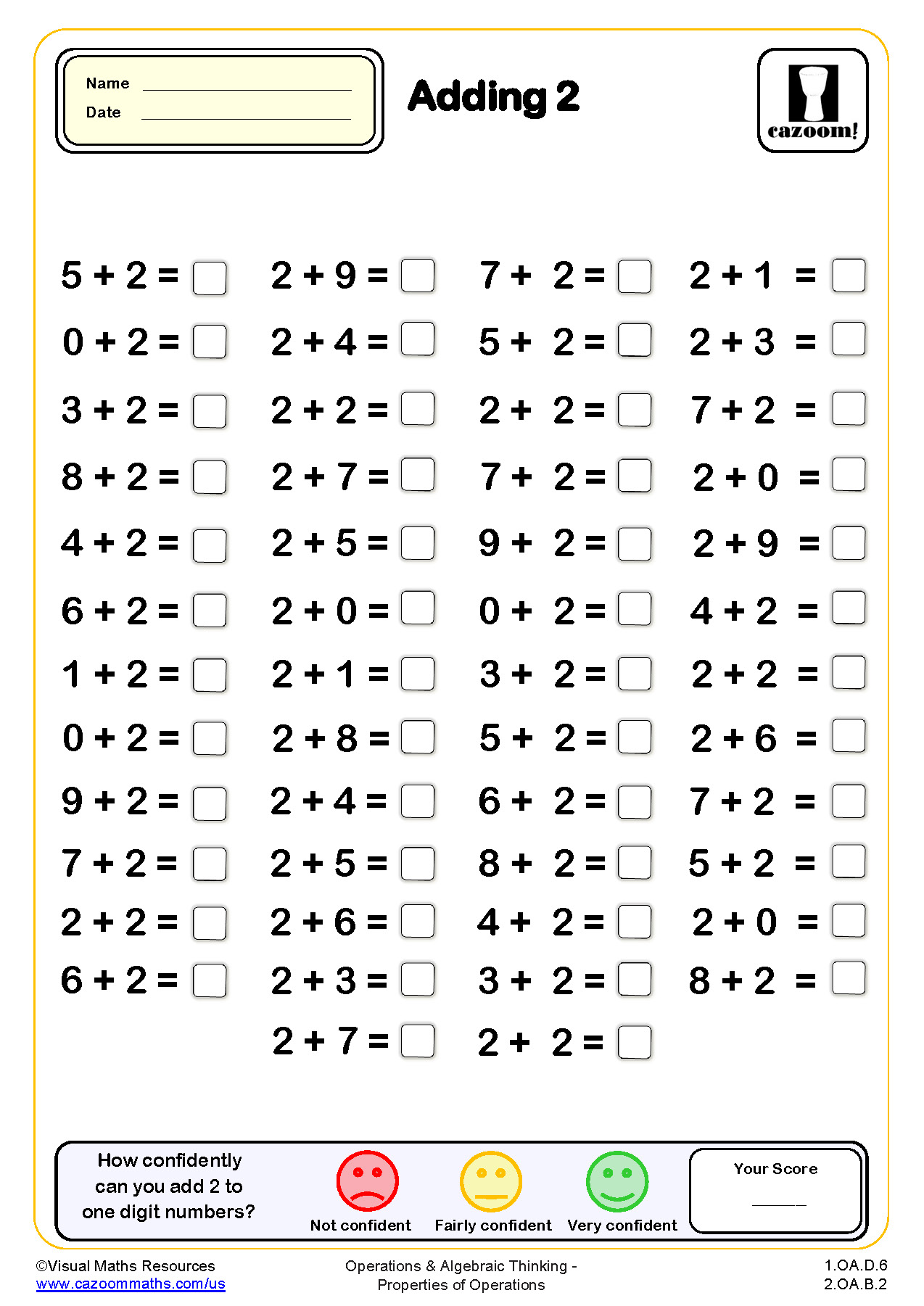
Adding 2 (20 questions)
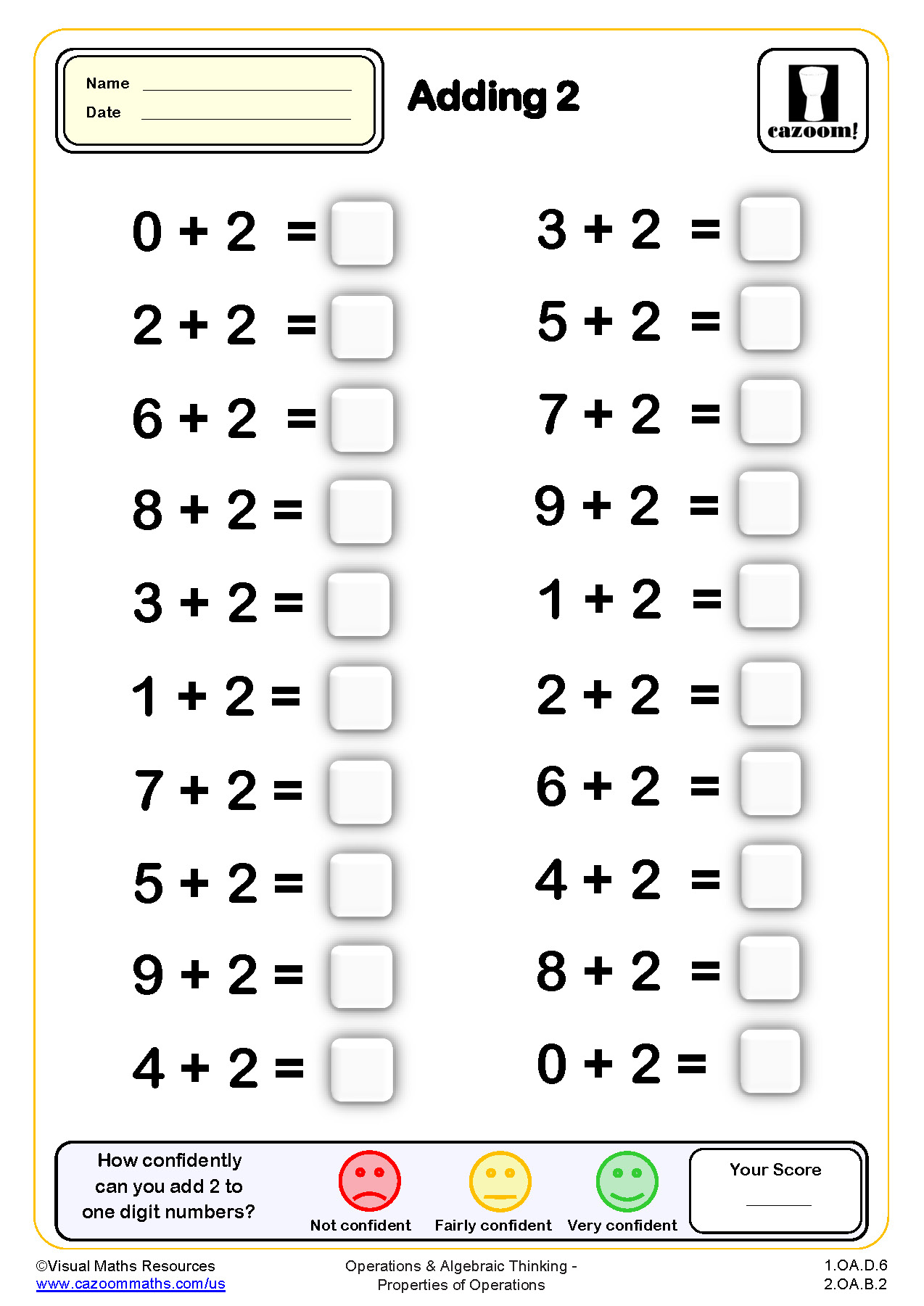
Adding 2 (50 questions)
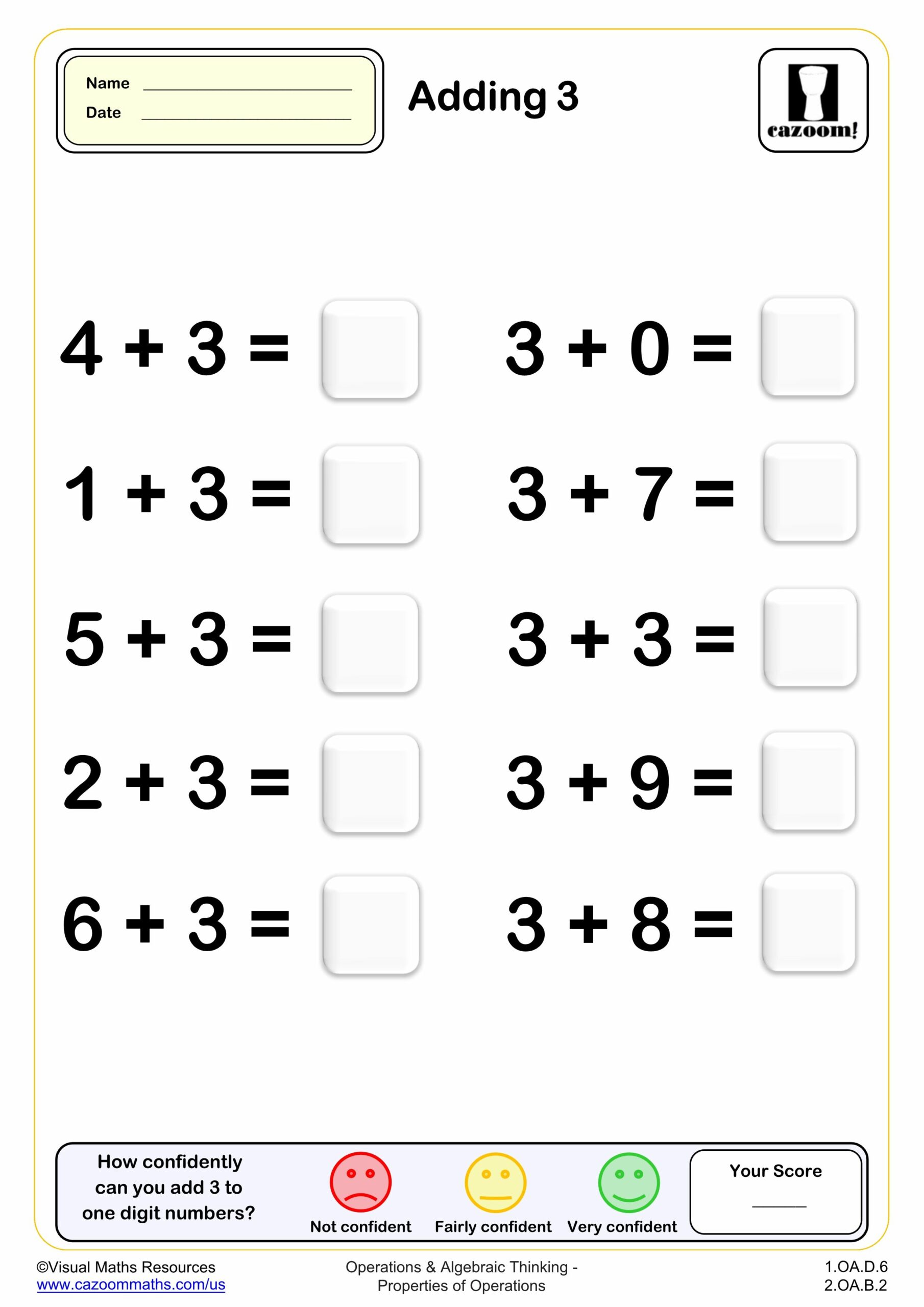
Adding 3 (10 questions)
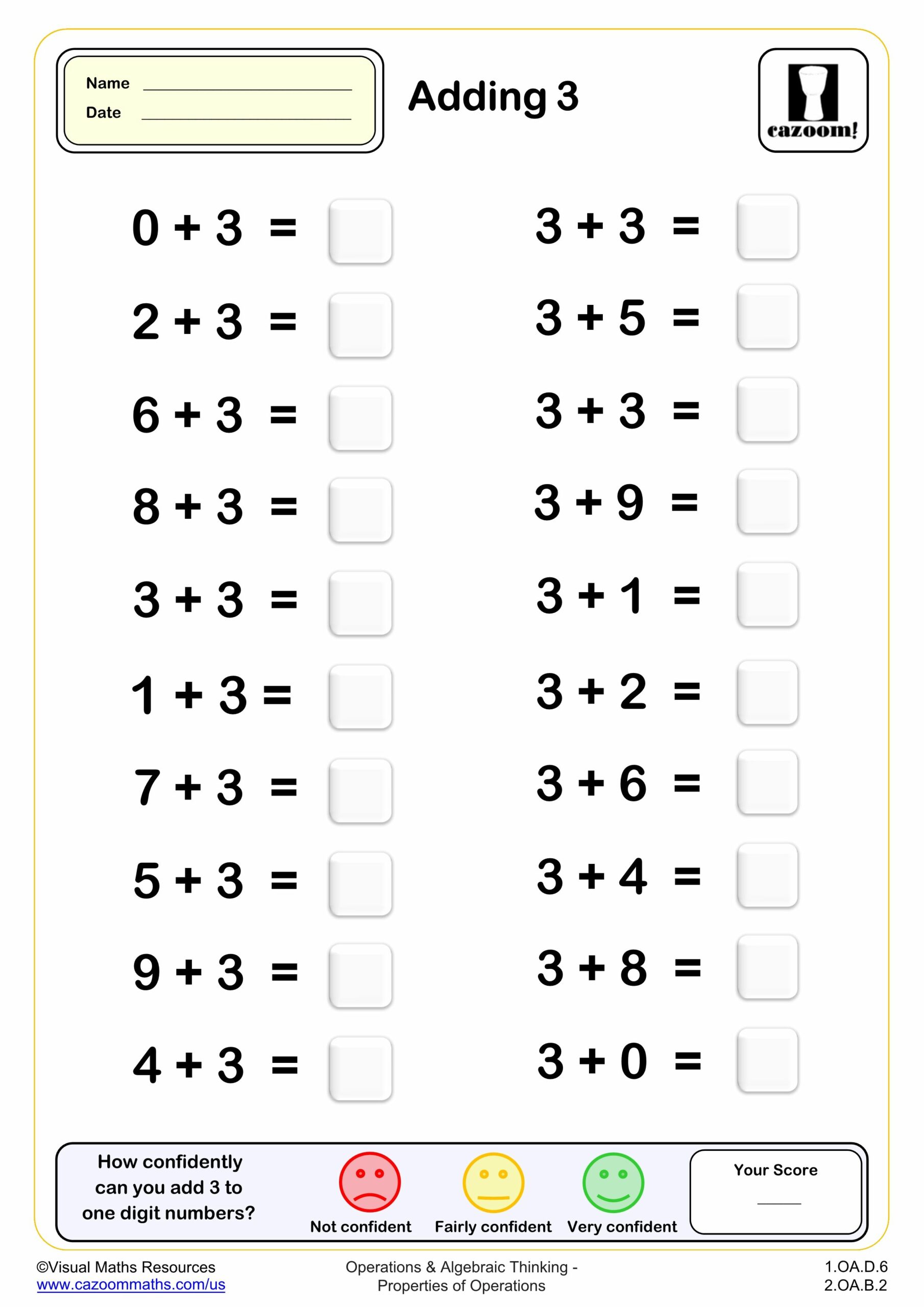
Adding 3 (20 questions)
Adding 3 (50 questions)
Adding 4 (10 questions)
Adding 4 (20 questions)
Adding 4 (50 questions)
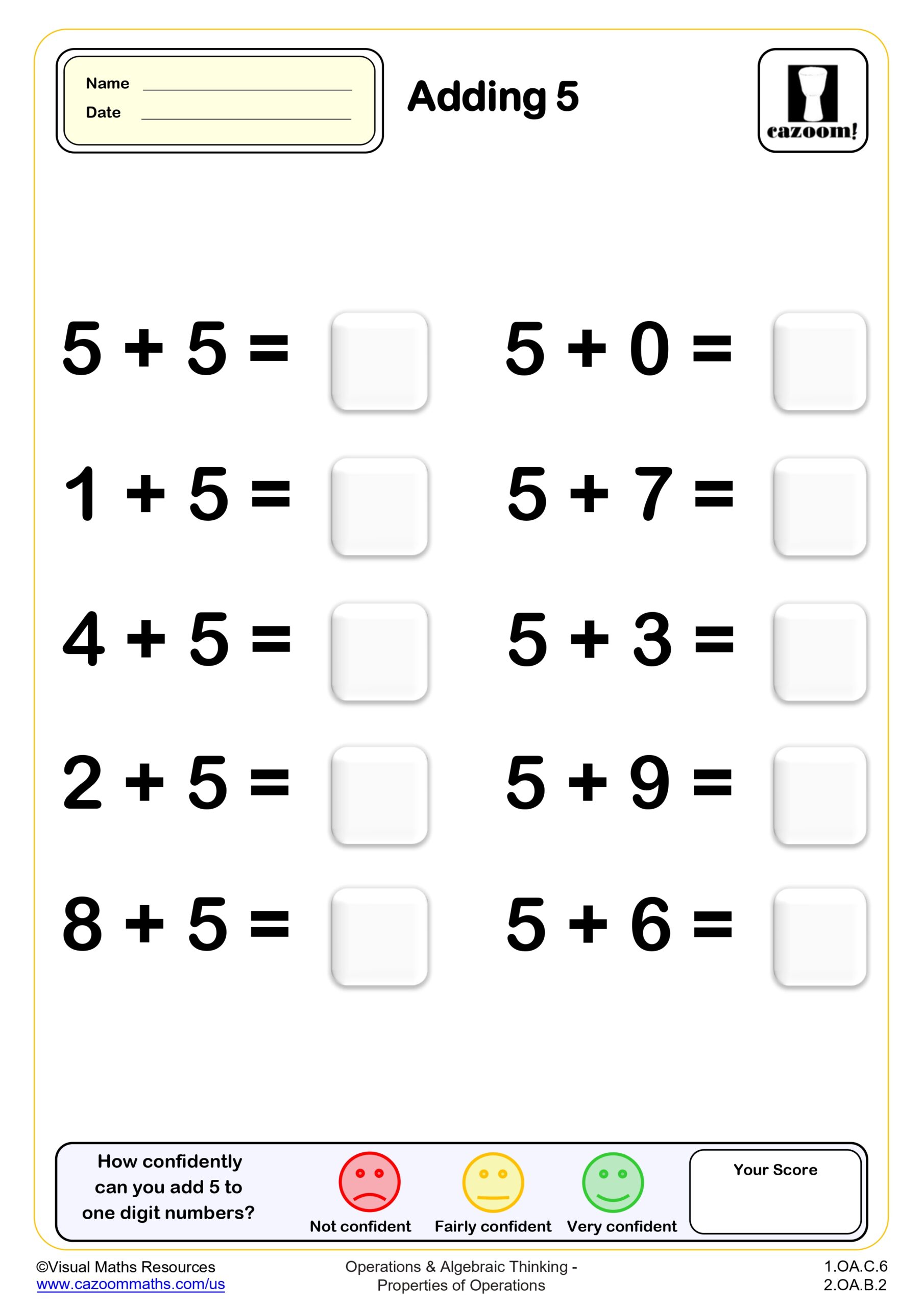
Adding 5 (10 questions)
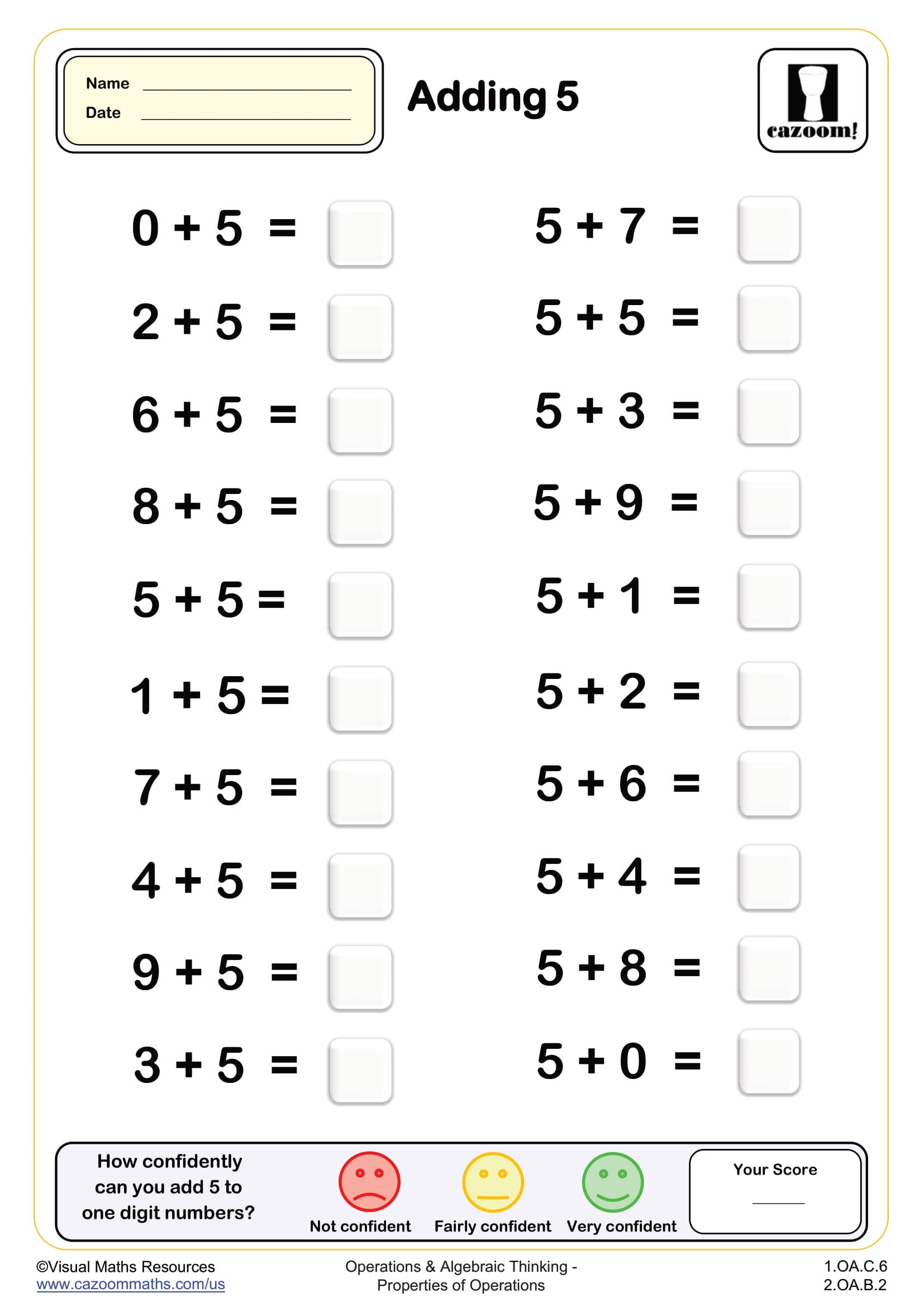
Adding 5 (20 questions)
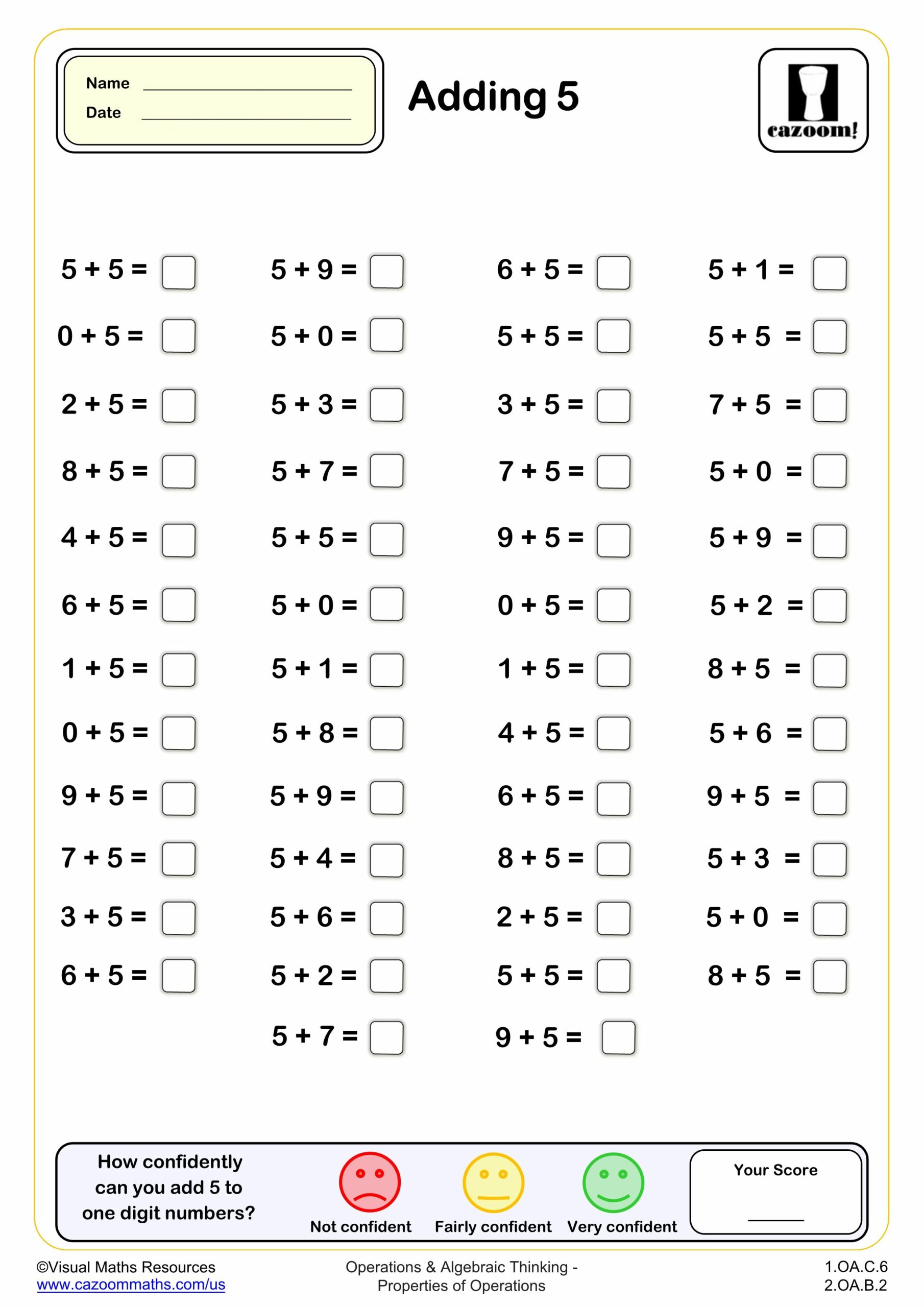
Adding 5 (50 questions)
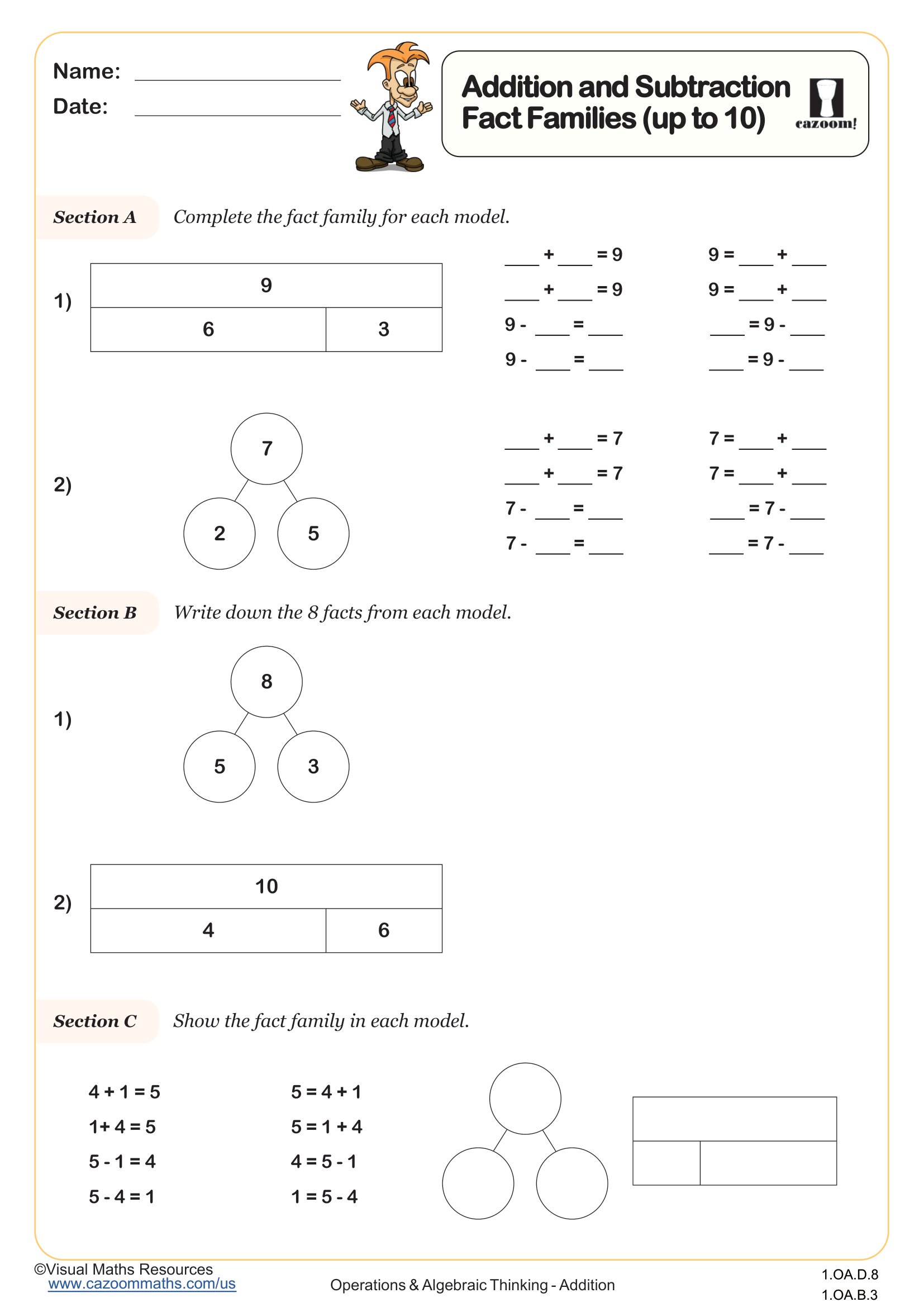
Addition and Subtraction Fact Families (up to 10)
Addition Coloring (A) Single Digits
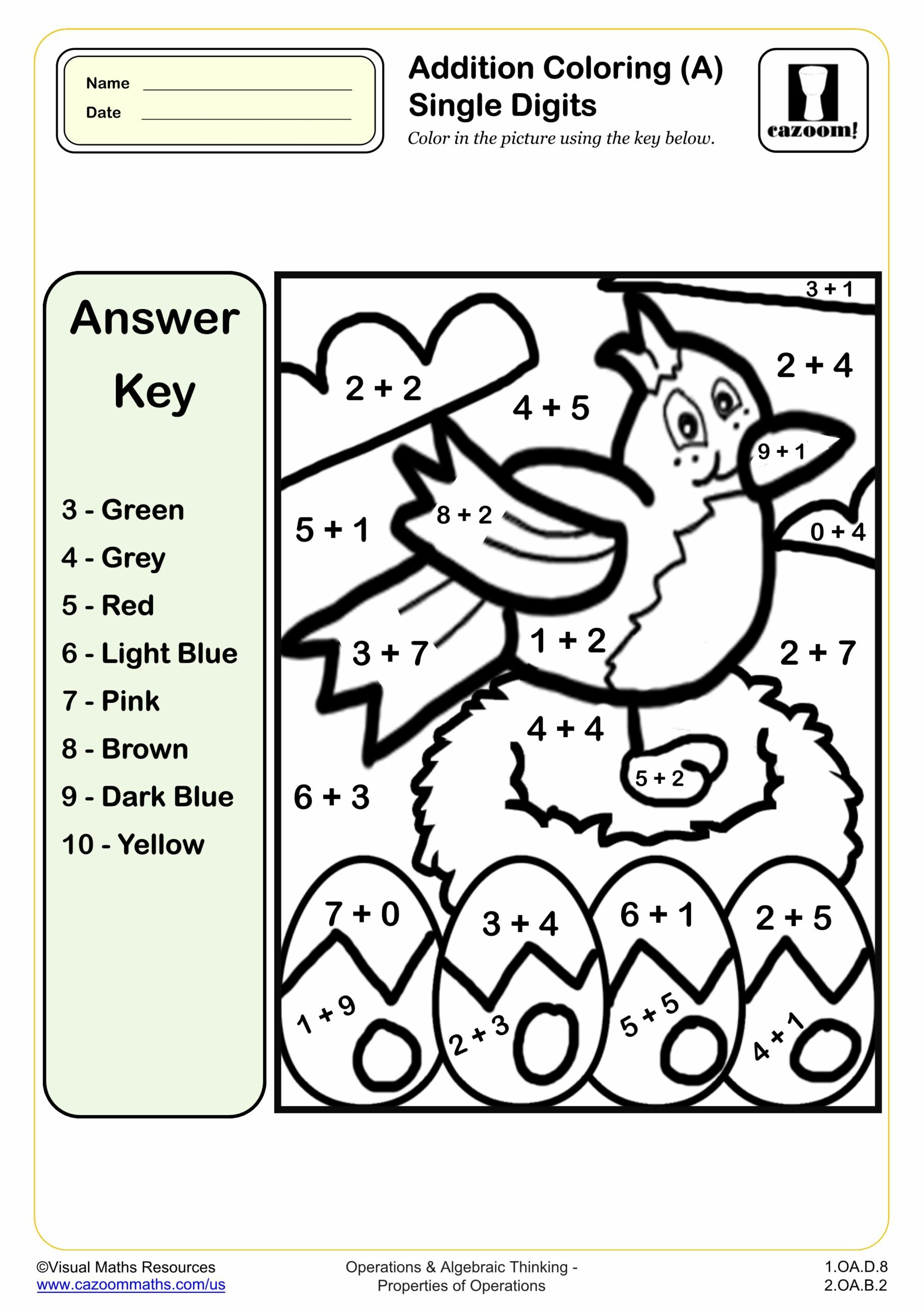
Addition Coloring (B)
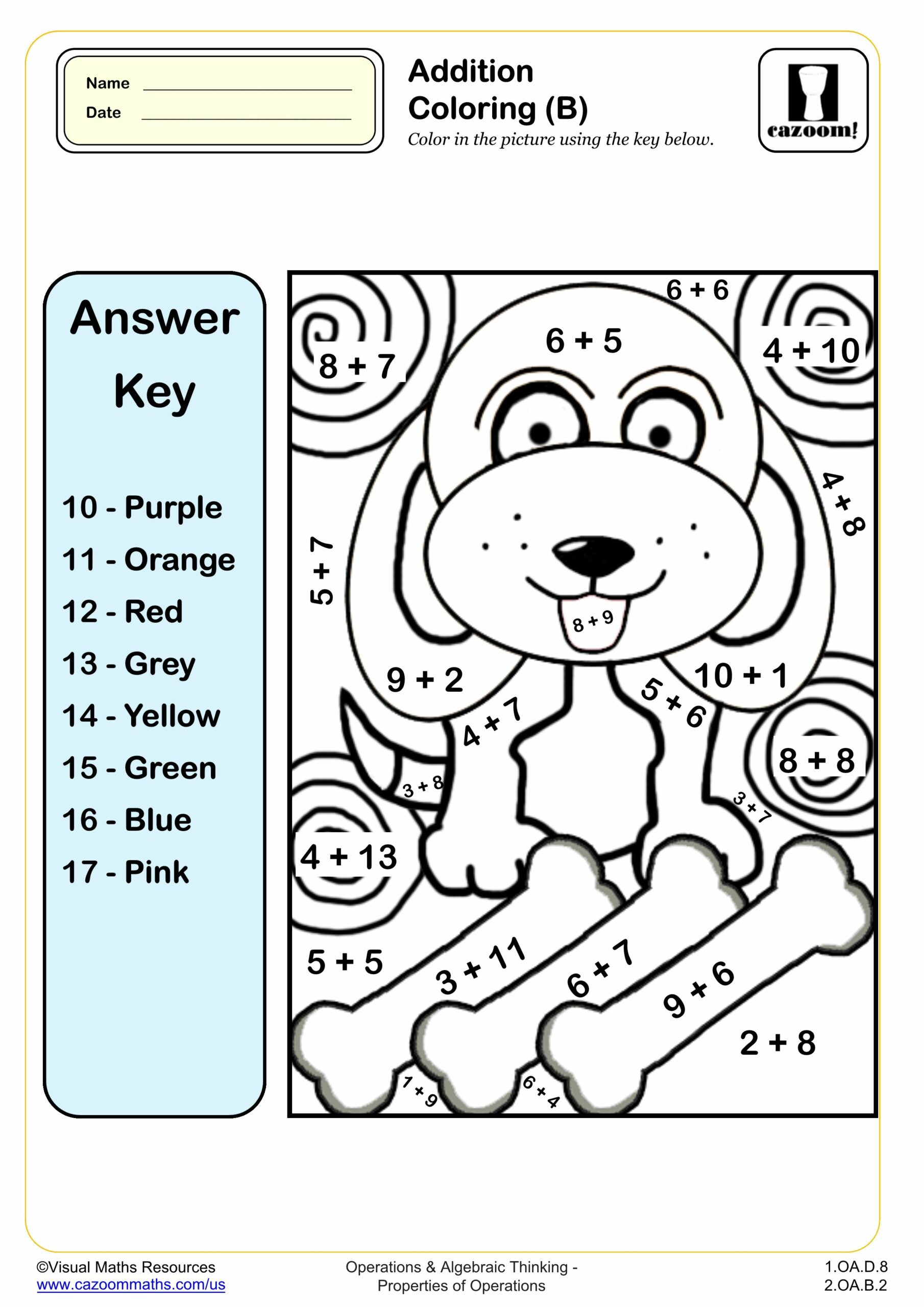
Addition Tables up to 10
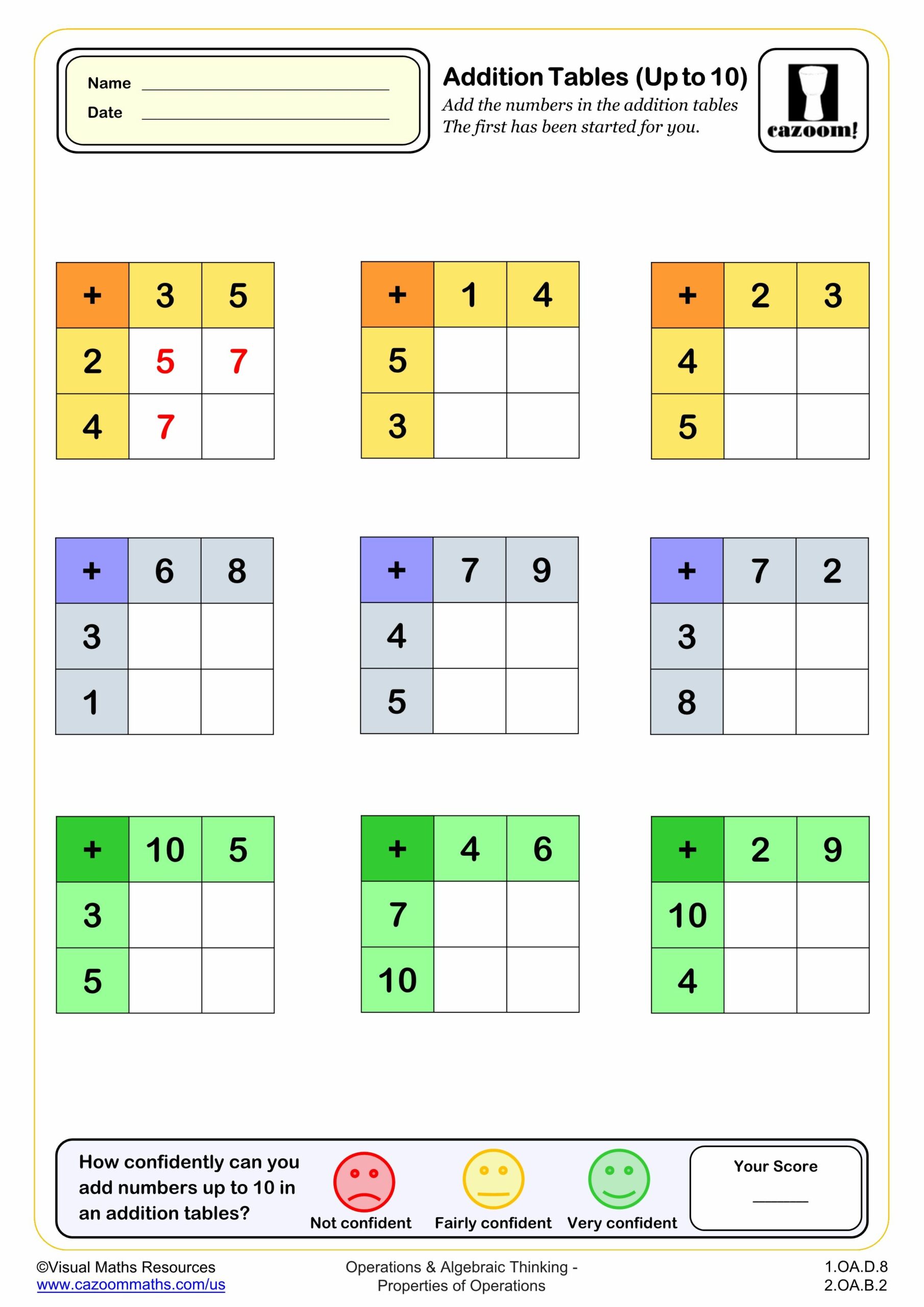
Addition Tables up to 5
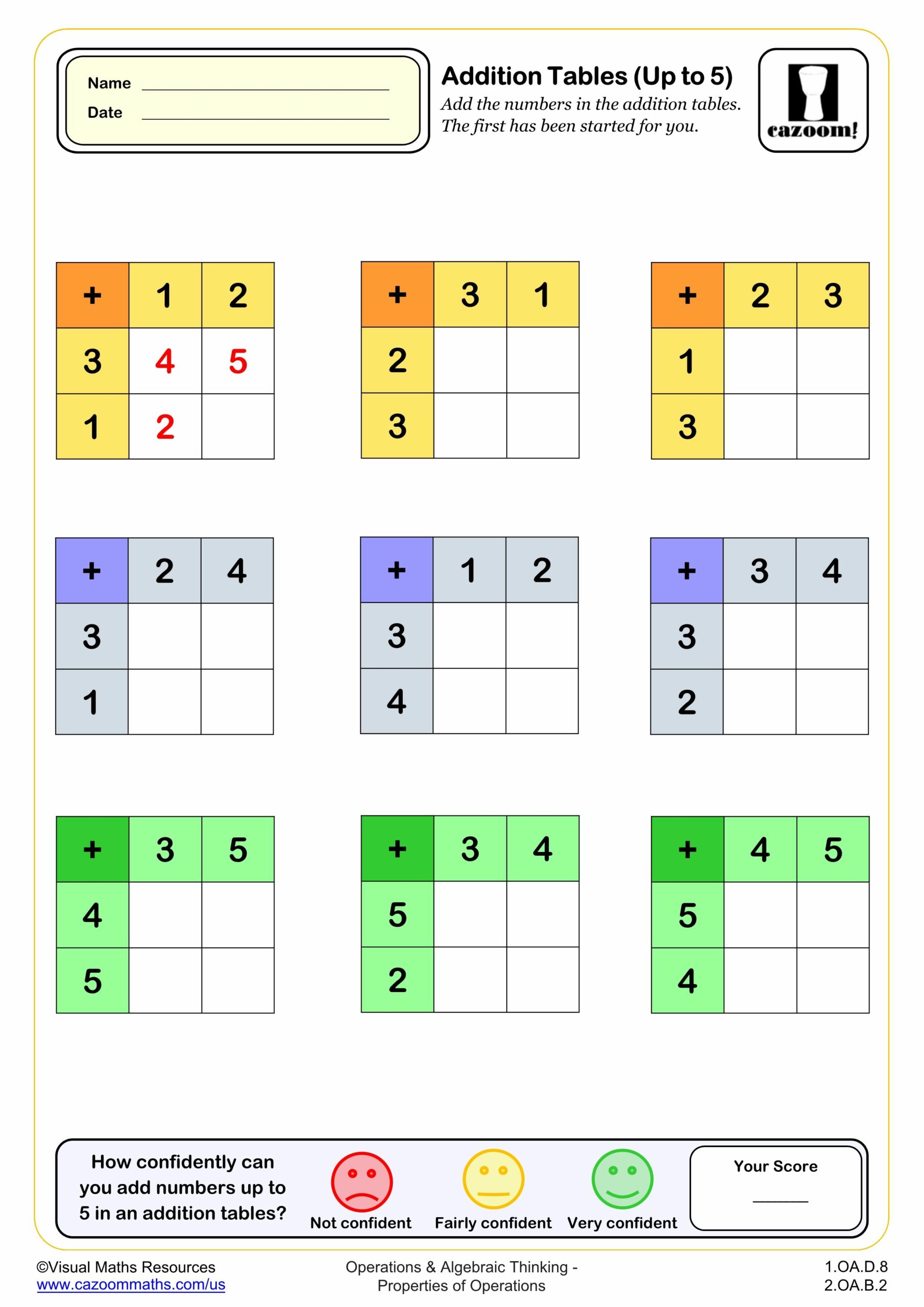
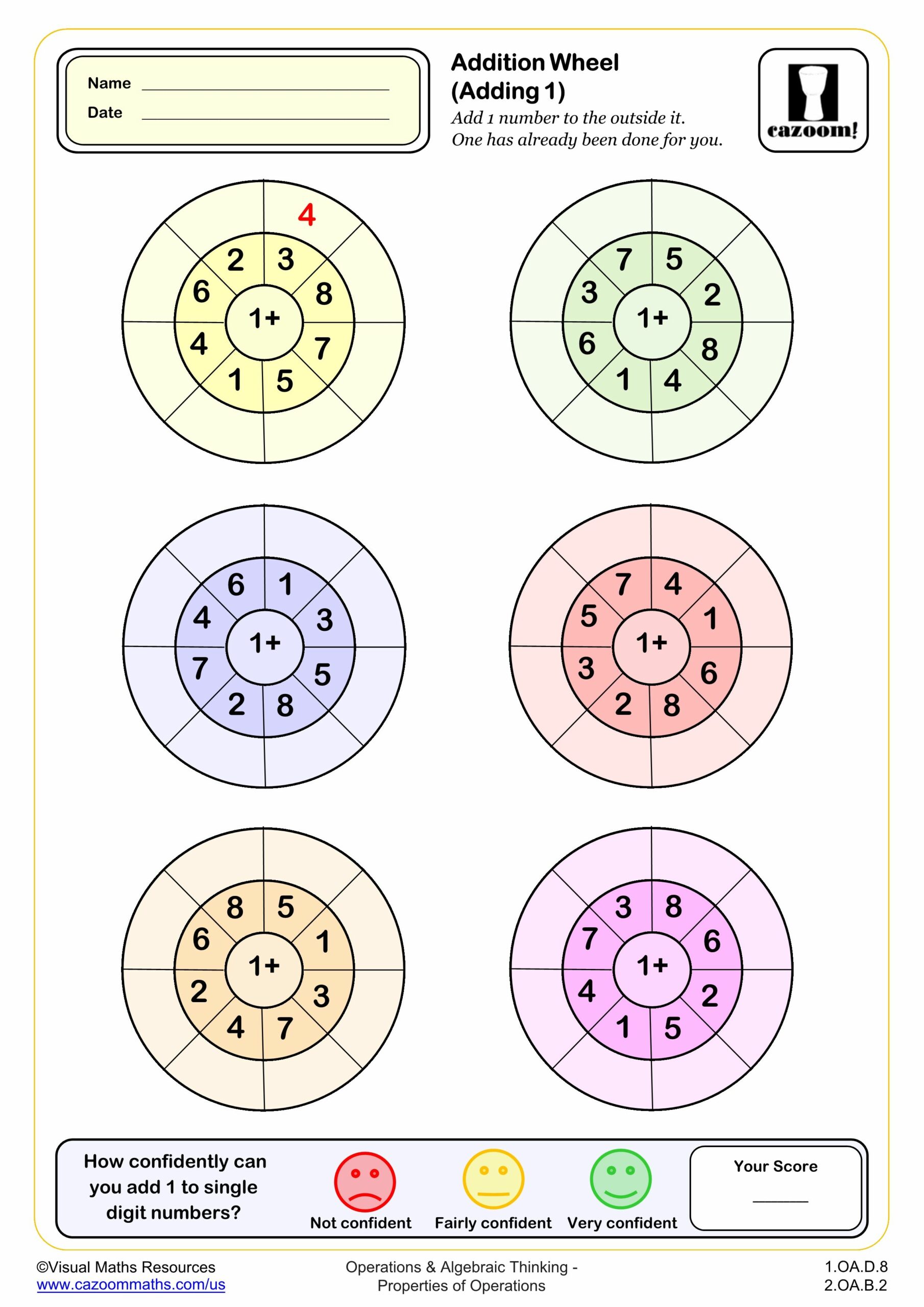
Addition Wheels (adding 1)
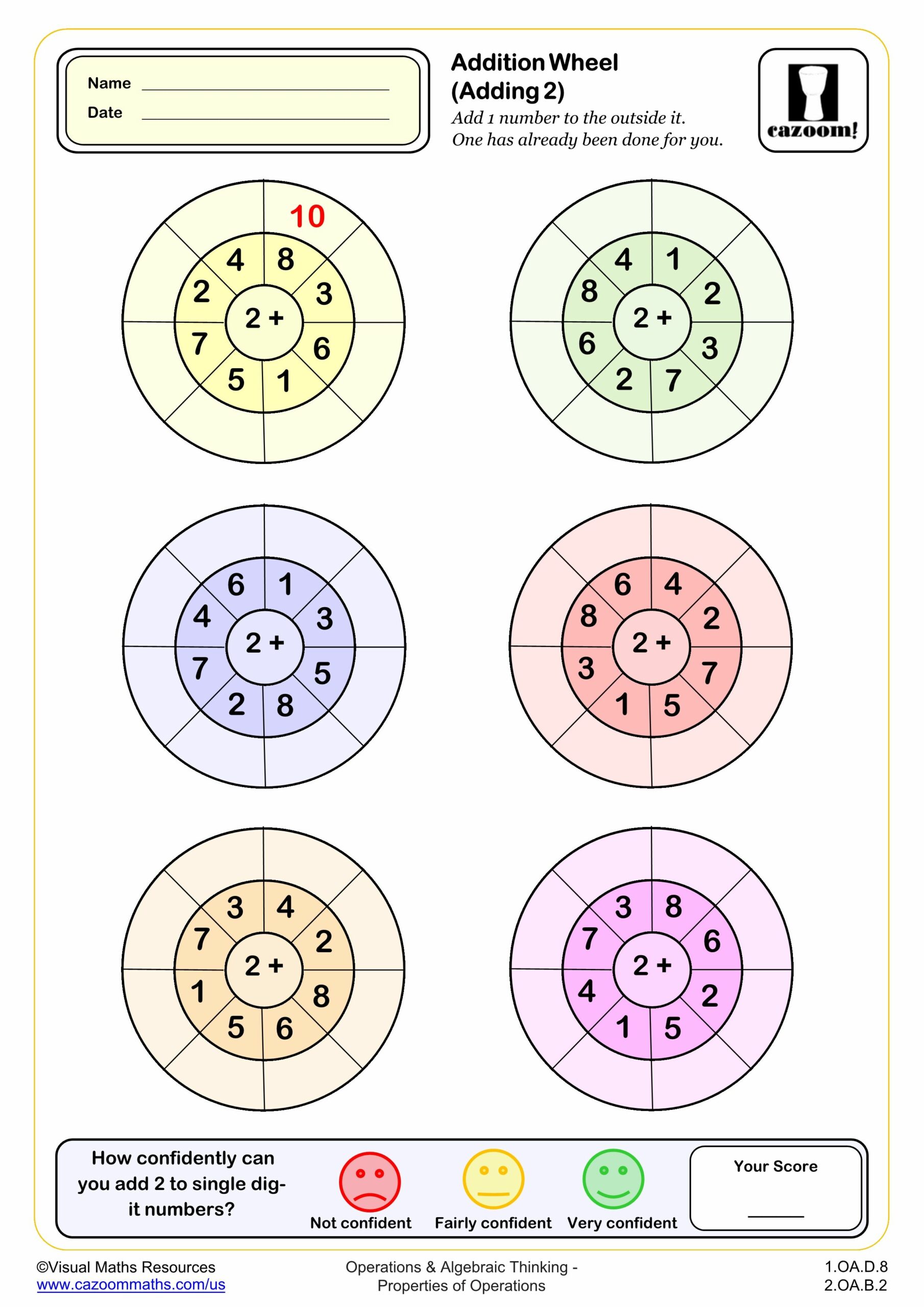
Addition Wheels (adding 2)
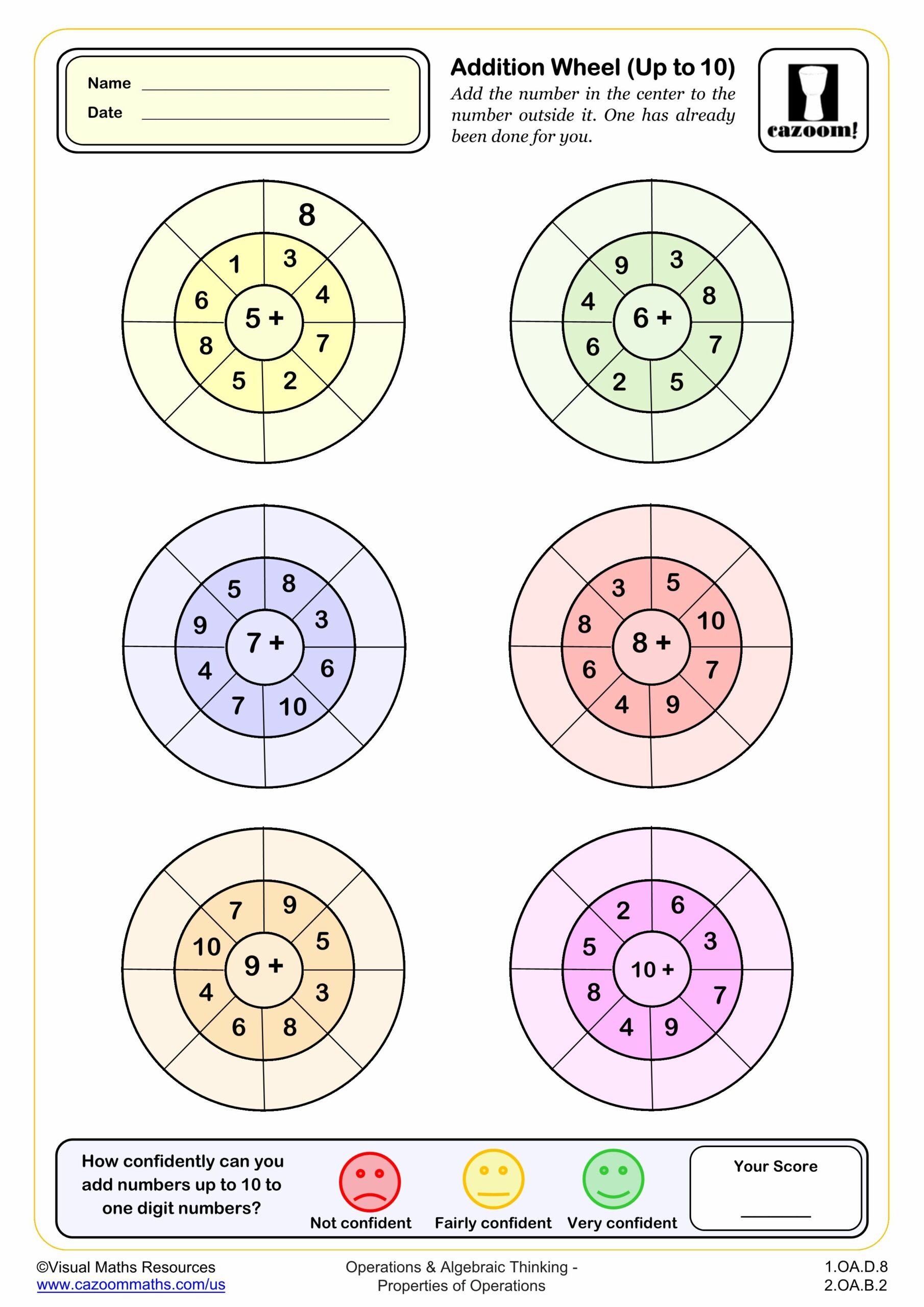
Addition Wheels (Up to 10)
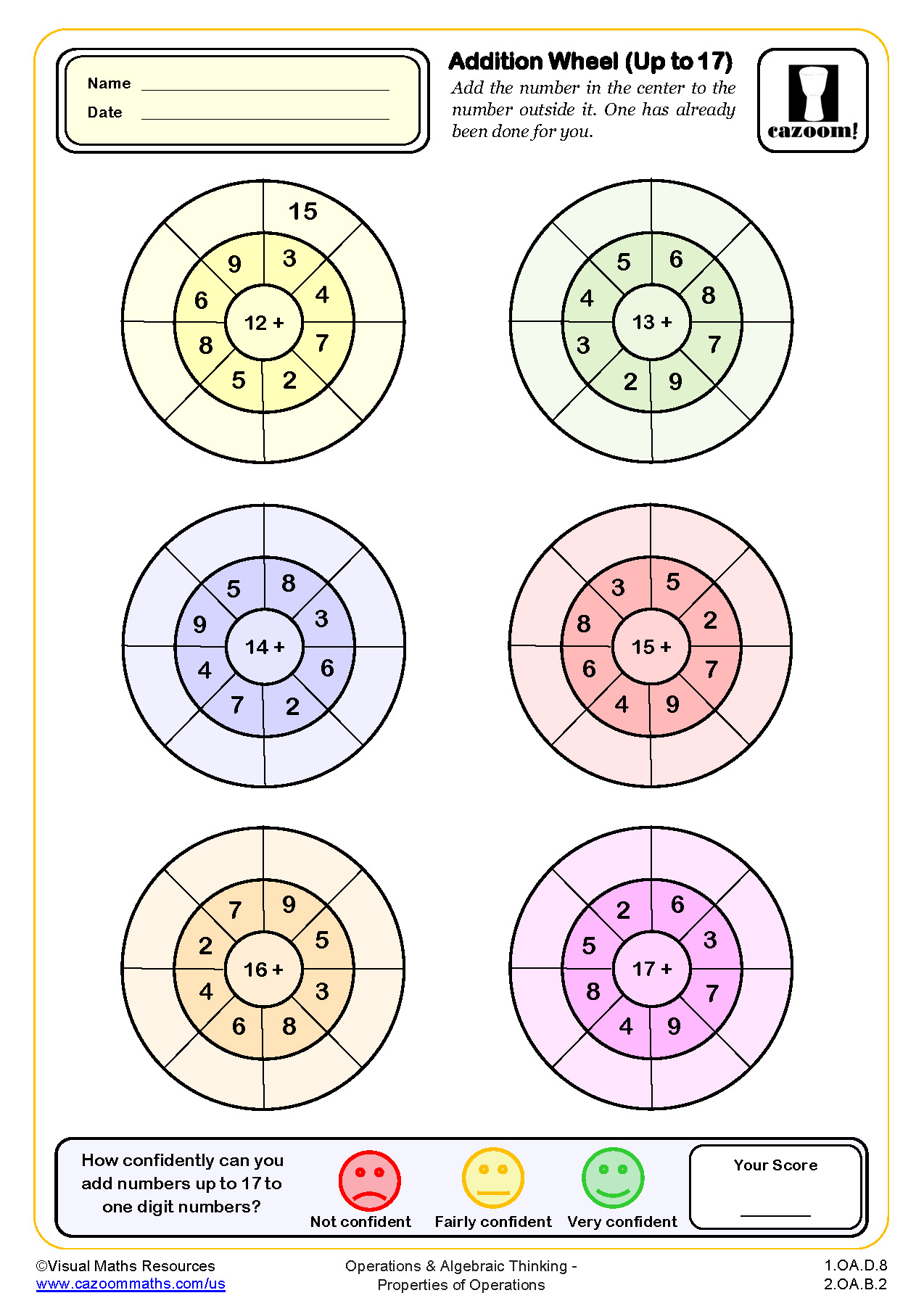
Addition Wheels (Up to 17)
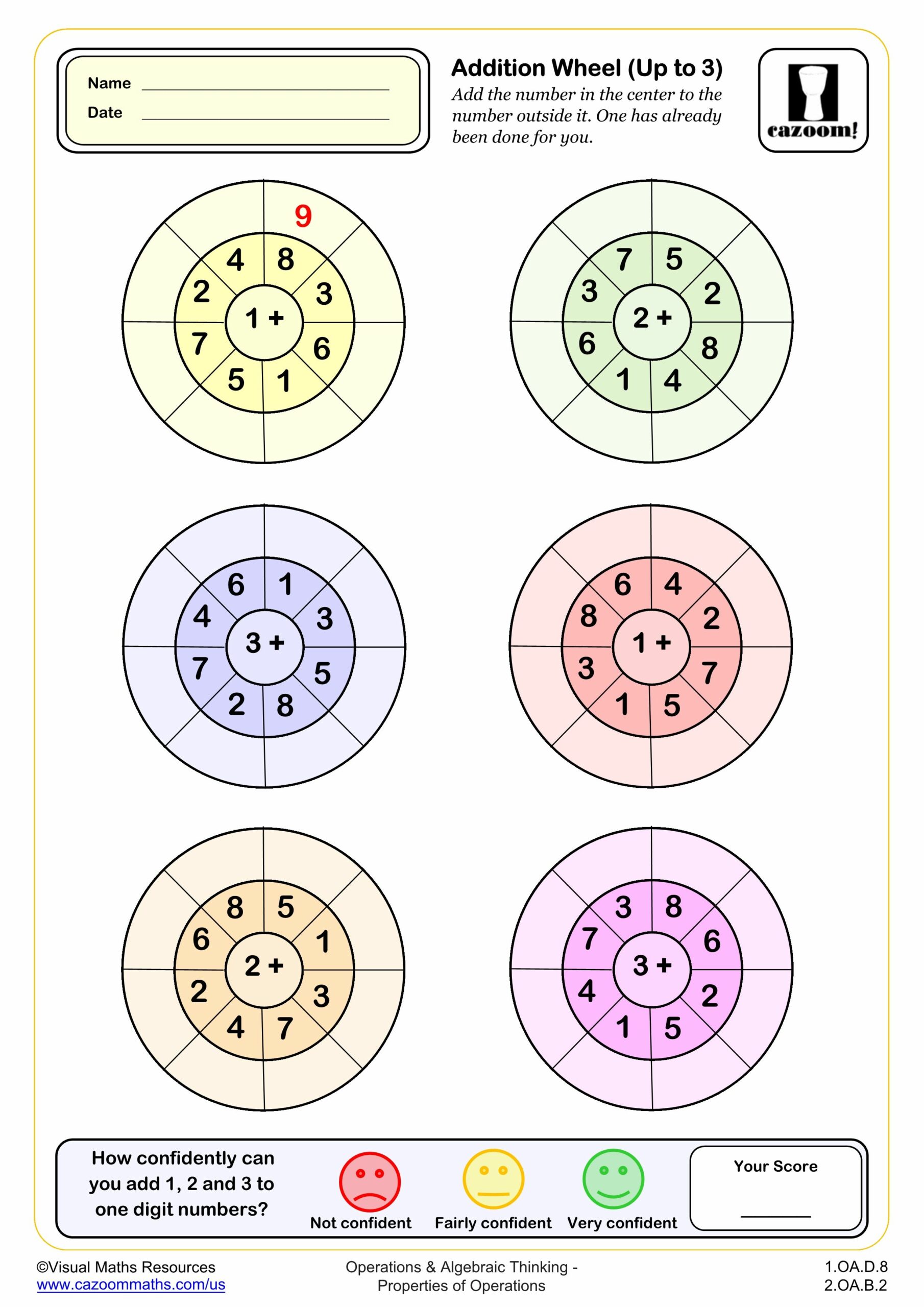
Addition Wheels (Up to 3)
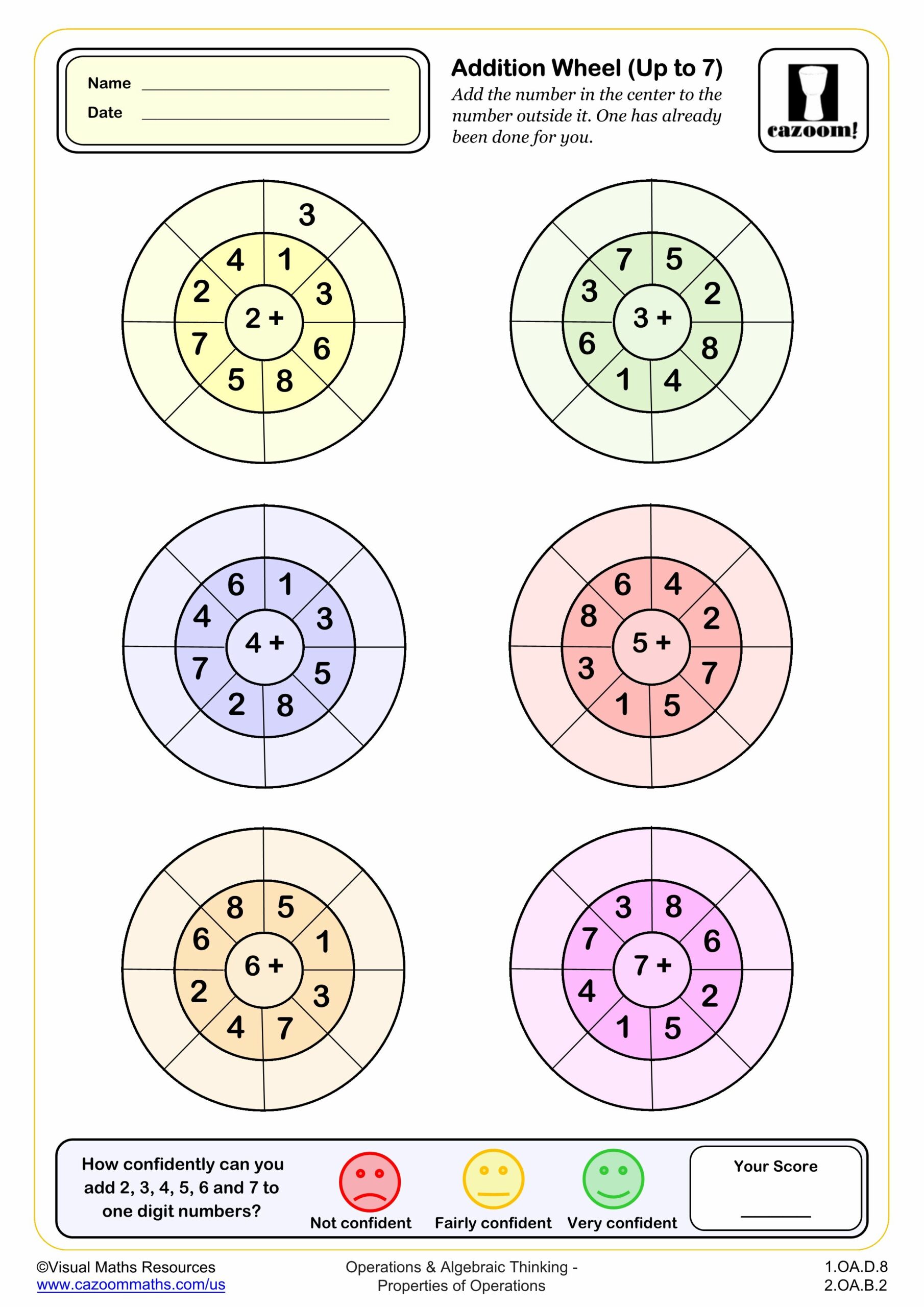
Addition Wheels (Up to 7)
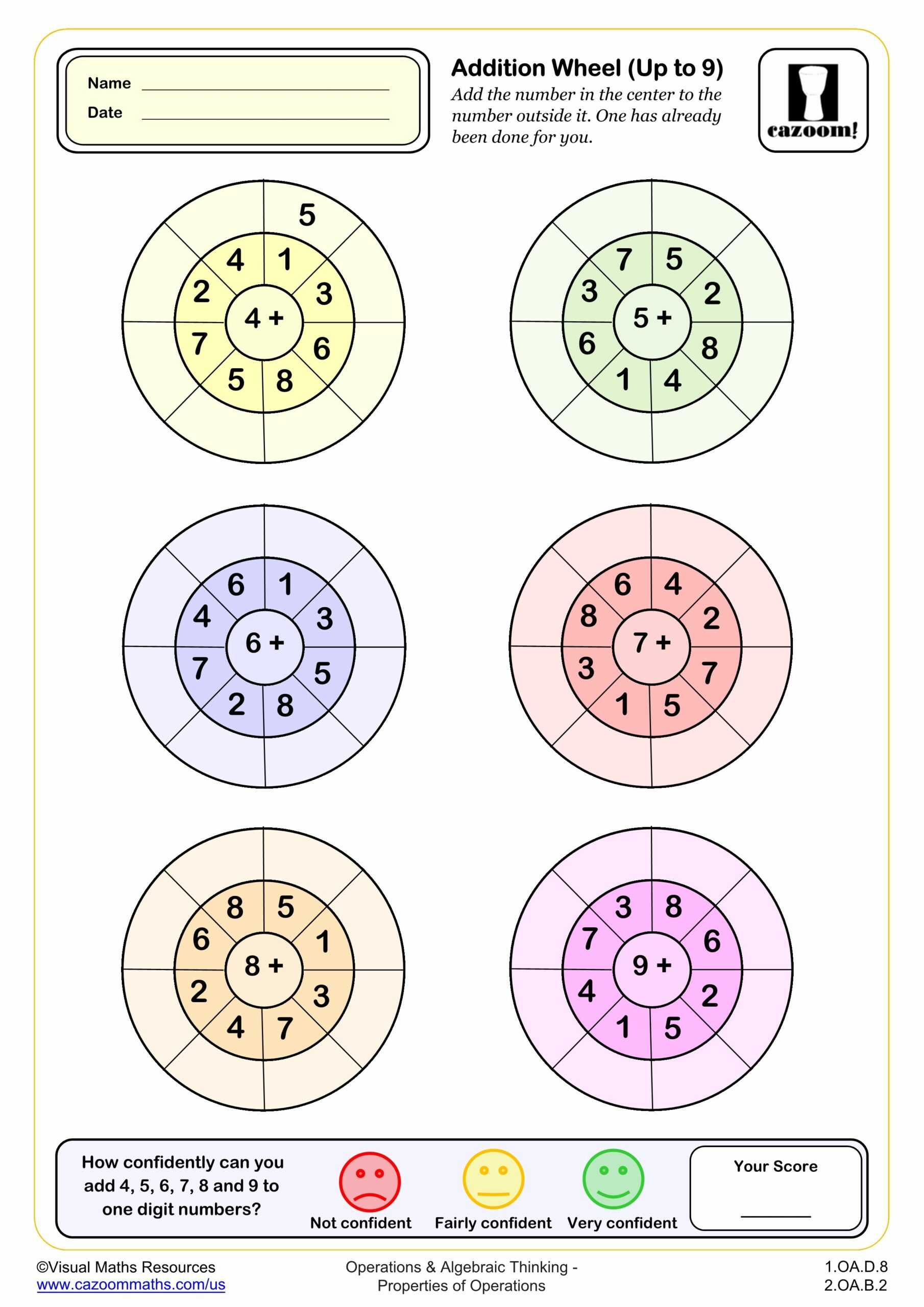
Addition Wheels (Up to 9)
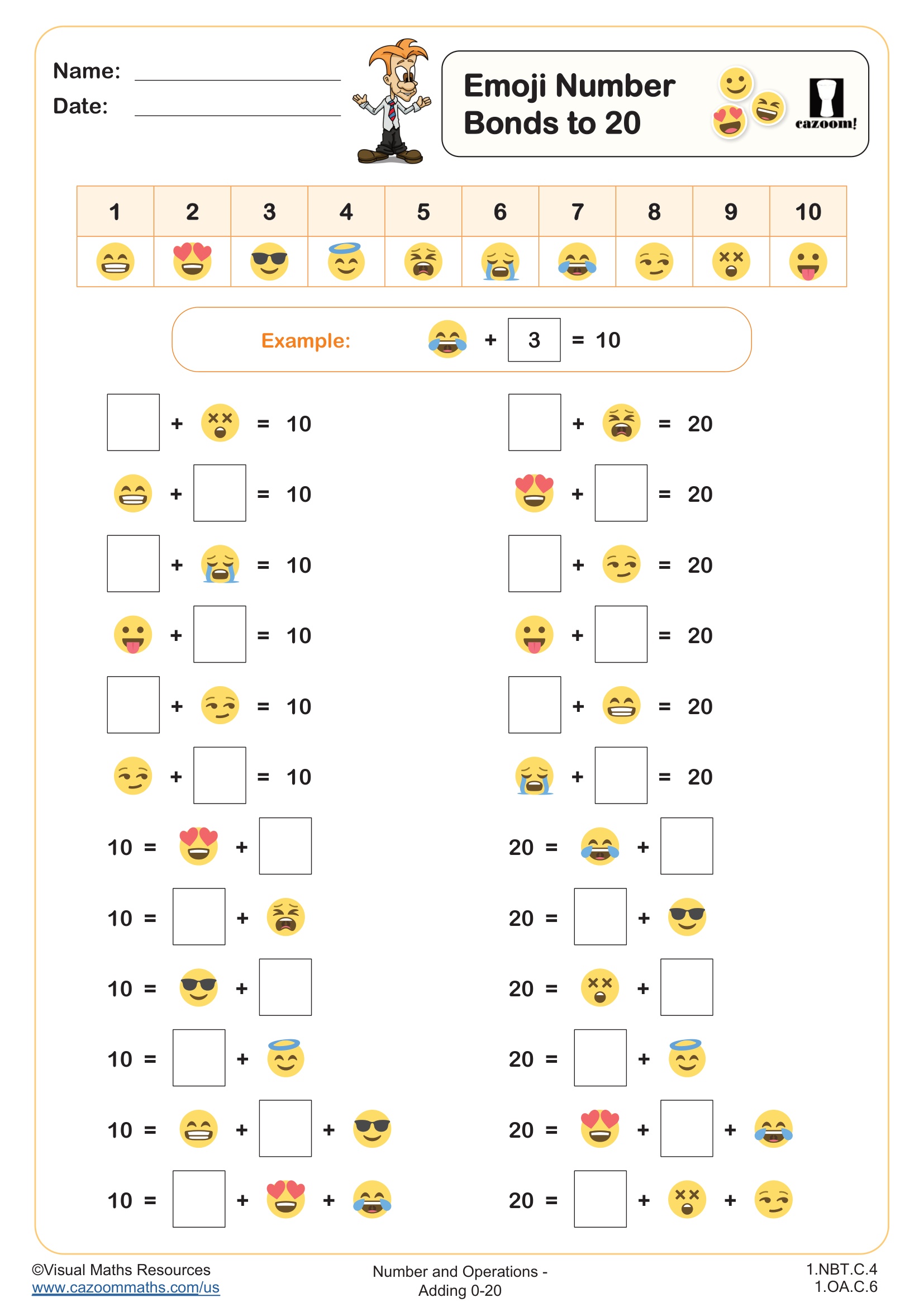
Emoji Number Bonds to 20
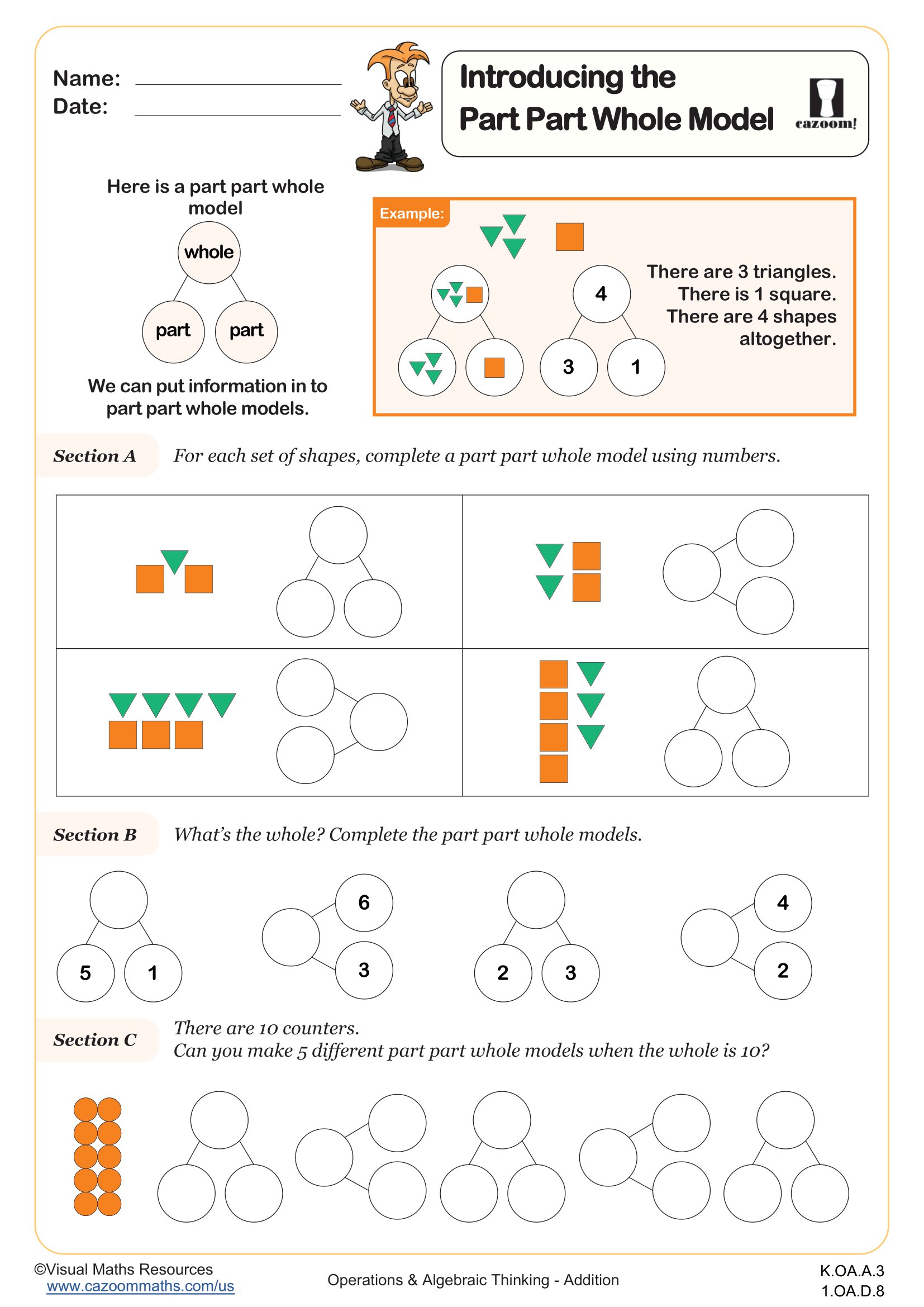
Introducing the Part Part Whole Model
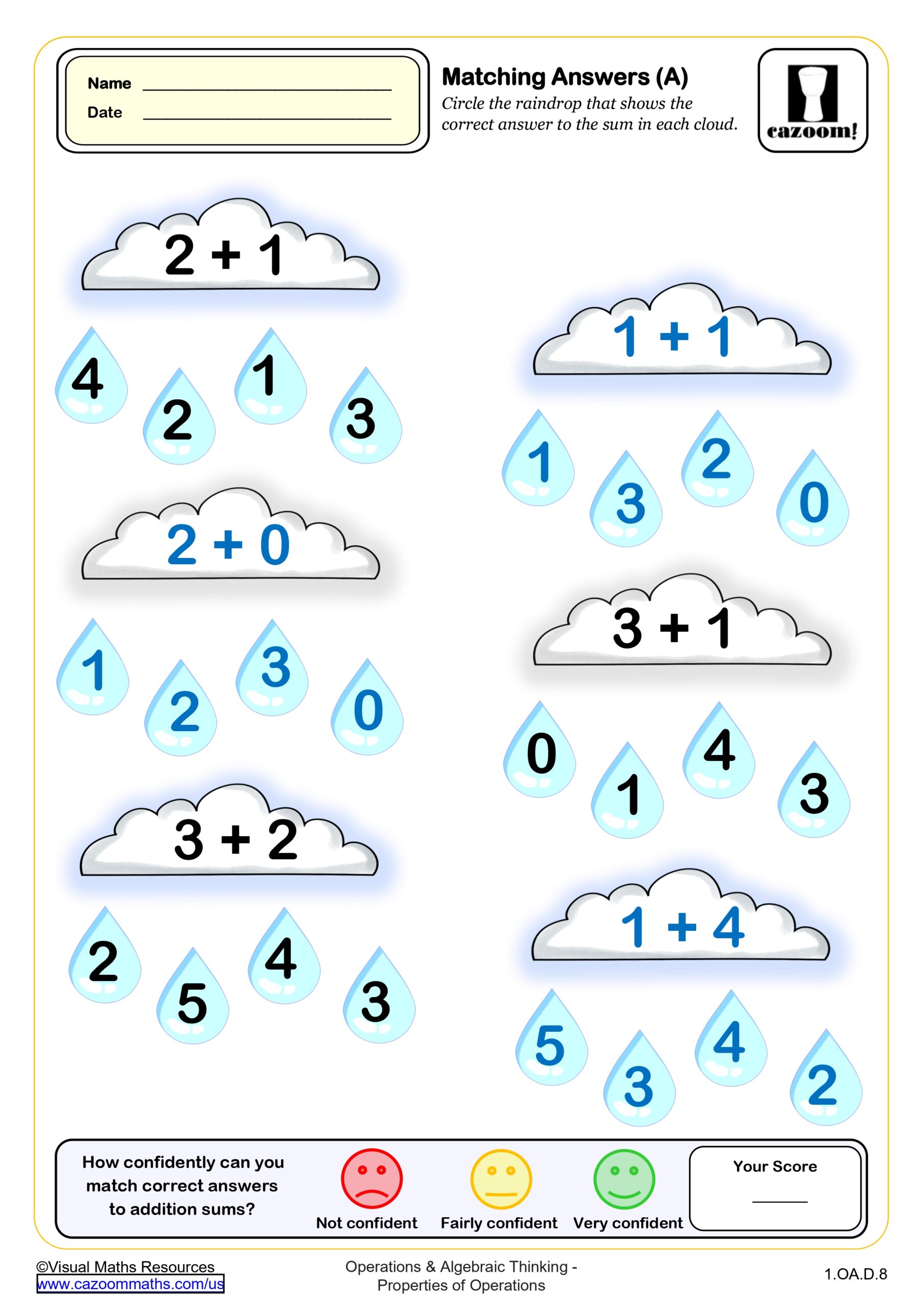
Matching Answers (A)
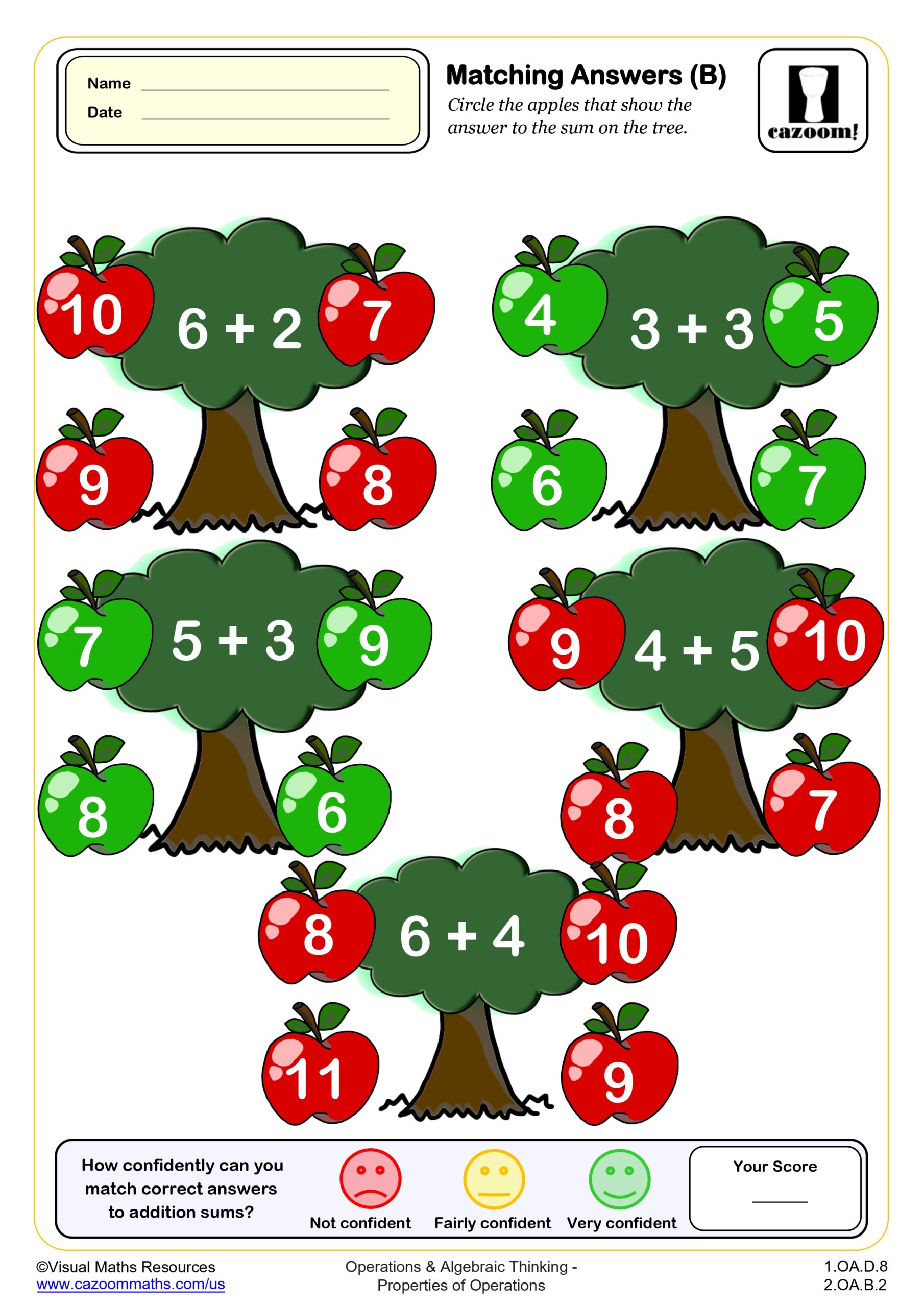
Matching Answers (B)
All worksheets are created by the team of experienced teachers at Cazoom Math.
What Addition Skills Do First Graders Need to Master?
First graders work toward fluency with addition facts within 20, as outlined in Common Core Standard 1.OA.C.6. This includes using strategies like counting on, making ten, and decomposing numbers rather than relying solely on counting fingers or objects. Students should recognize addition as combining quantities and understand that the order of addends doesn't change the sum.
Teachers frequently notice students lose points on assessments when they haven't memorized basic facts like adding 1 or 2, which should become automatic by mid-year. A common error occurs when students count all objects from one rather than counting on from the larger addend. For example, when solving 8 + 3, students who count "1, 2, 3, 4, 5, 6, 7, 8, 9, 10, 11" waste time and make more mistakes than those who start at 8 and count on three more.
Which Grade Levels Practice Adding Numbers 0-20?
These addition worksheets target first grade students in elementary school, aligning with the expectation that students become fluent with addition within 20 by the end of first grade. This skill bridges the gap between kindergarten counting work and the more complex two-digit addition students encounter in second grade.
The difficulty progression within these worksheets reflects typical first grade development. Students begin with adding 1 and 2, which builds directly on counting skills. As confidence grows, they tackle adding 4 and work with varied addends that require different mental strategies. Many students make the breakthrough connection between addition patterns once they recognize that adding 2 is really just counting by twos, and adding 4 follows predictable patterns when they break it into adding 2 twice.
How Does the "Make Ten" Strategy Work for Addition?
The make ten strategy helps students add numbers that cross the tens boundary by decomposing one addend to create a friendly ten first. For example, when solving 8 + 5, students recognize that 8 needs 2 more to reach 10, so they break apart 5 into 2 and 3, make 10, then add the remaining 3 to get 13. This mental math approach appears throughout elementary mathematics and reduces reliance on finger counting.
This strategy connects directly to how cash registers and digital systems process transactions. Cashiers mentally use make ten when giving change, engineers apply the concept when balancing loads to round numbers, and scientists round measurements to benchmarks of 10 for quick estimations. Students who master make ten in first grade find multi-digit addition, mental math, and even algebraic thinking more intuitive because they understand how numbers can be flexibly decomposed and recomposed.
How Can Teachers Use These Addition Worksheets Effectively?
These worksheets support differentiated instruction through their varied problem quantities and focused skill practice. The answer keys allow students to self-check their work during independent practice or enable quick grading for teachers tracking mastery. The progression from 10-question sets to 50-question sets gives teachers flexibility to match practice length to student attention spans and skill levels.
Teachers often use shorter worksheets for warm-up activities or timed fluency practice, while longer sets work well for homework or extended center rotations. Pairing students to complete worksheets together encourages mathematical discourse as they explain their strategies to each other. The worksheets also serve intervention purposes during small group instruction, where teachers can observe which addition strategies students apply and address misconceptions immediately before they become ingrained habits.