1st Grade Adding 2 Digit Numbers to 100 Worksheets
Adding 10 to 2 digit numbers (10 questions)
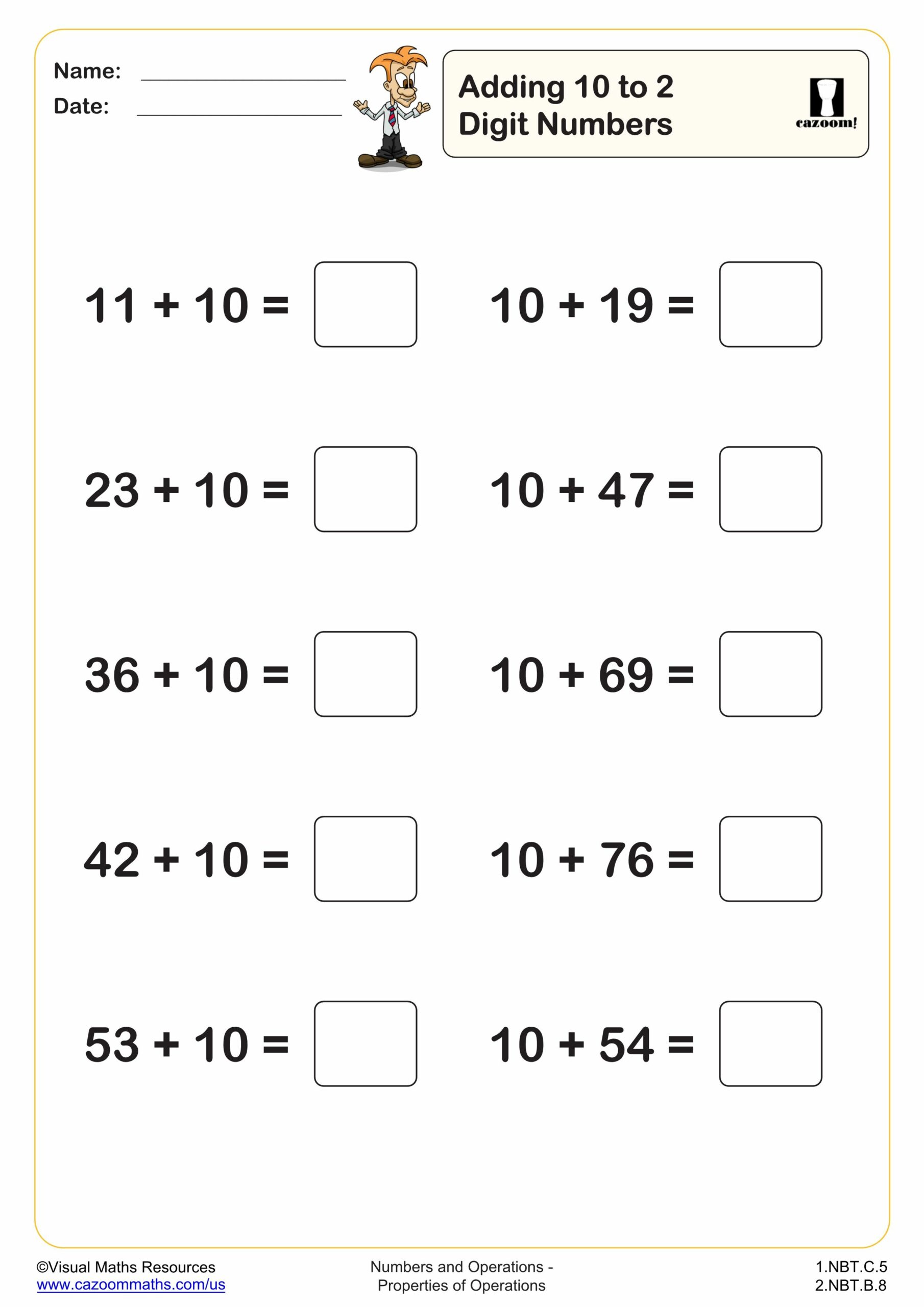
Adding 10 to 2 digit numbers (20 questions)
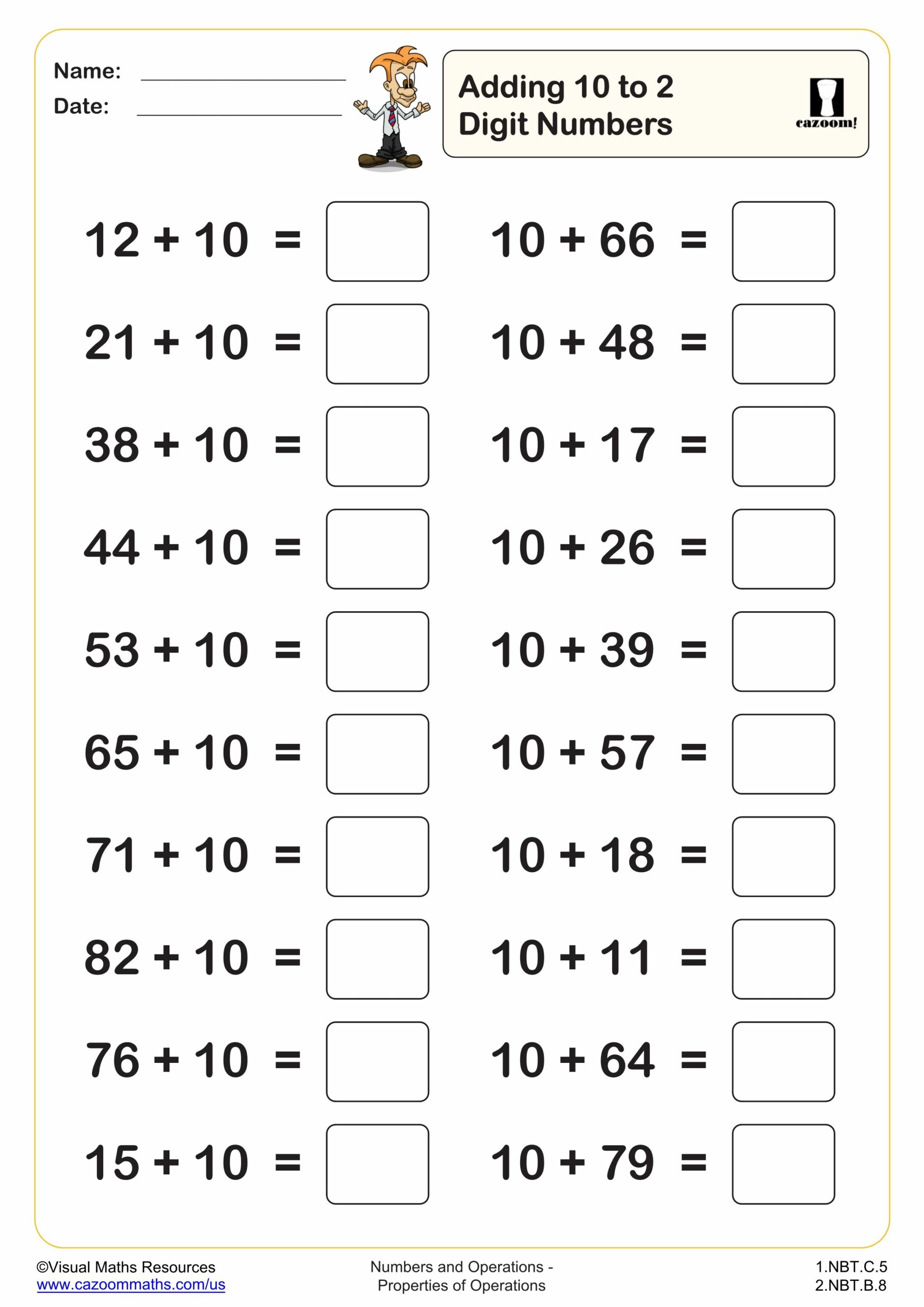
Adding 10 to 2 digit numbers (50 questions)
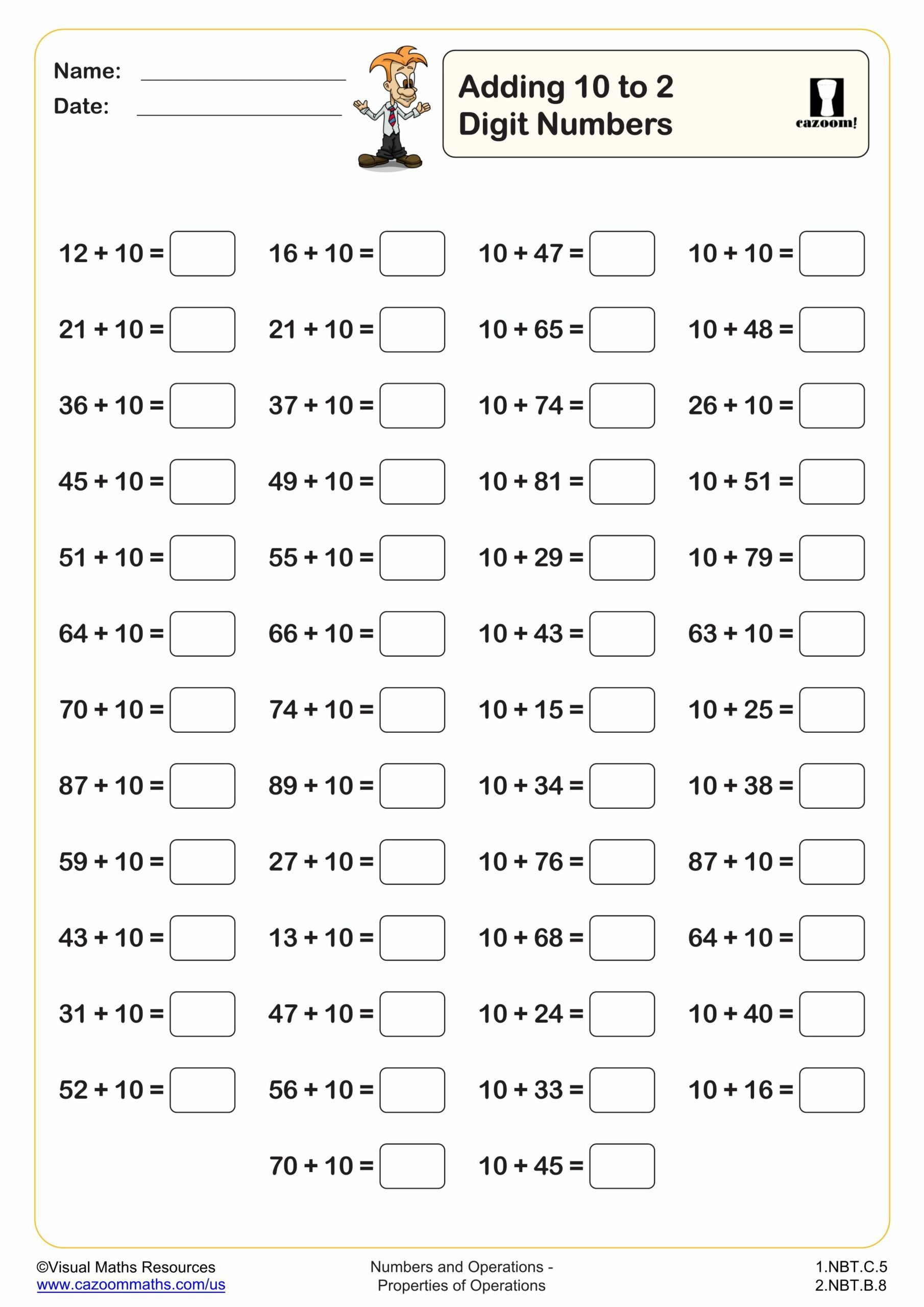
Adding 11 to 2 digit numbers (10 questions)
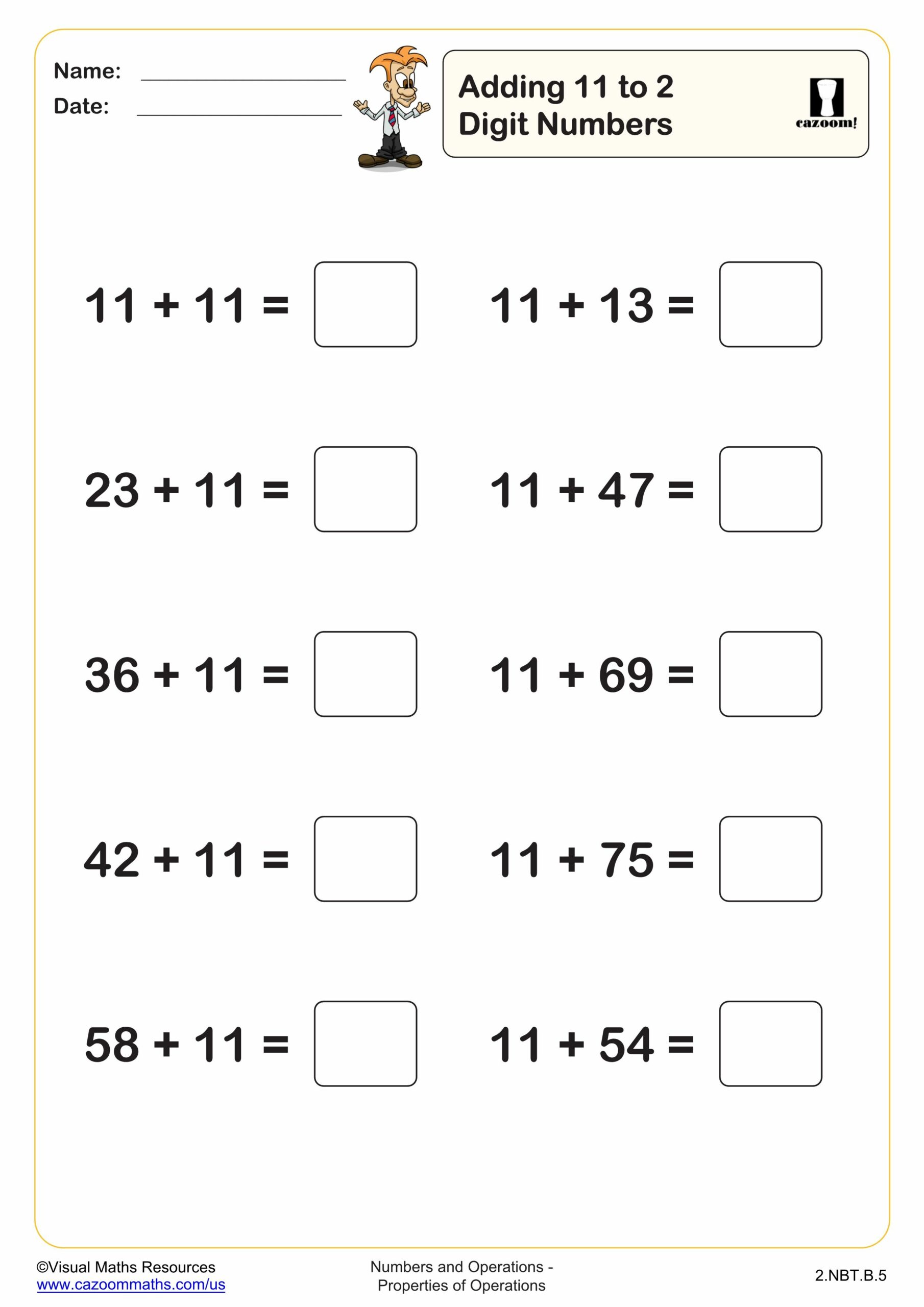
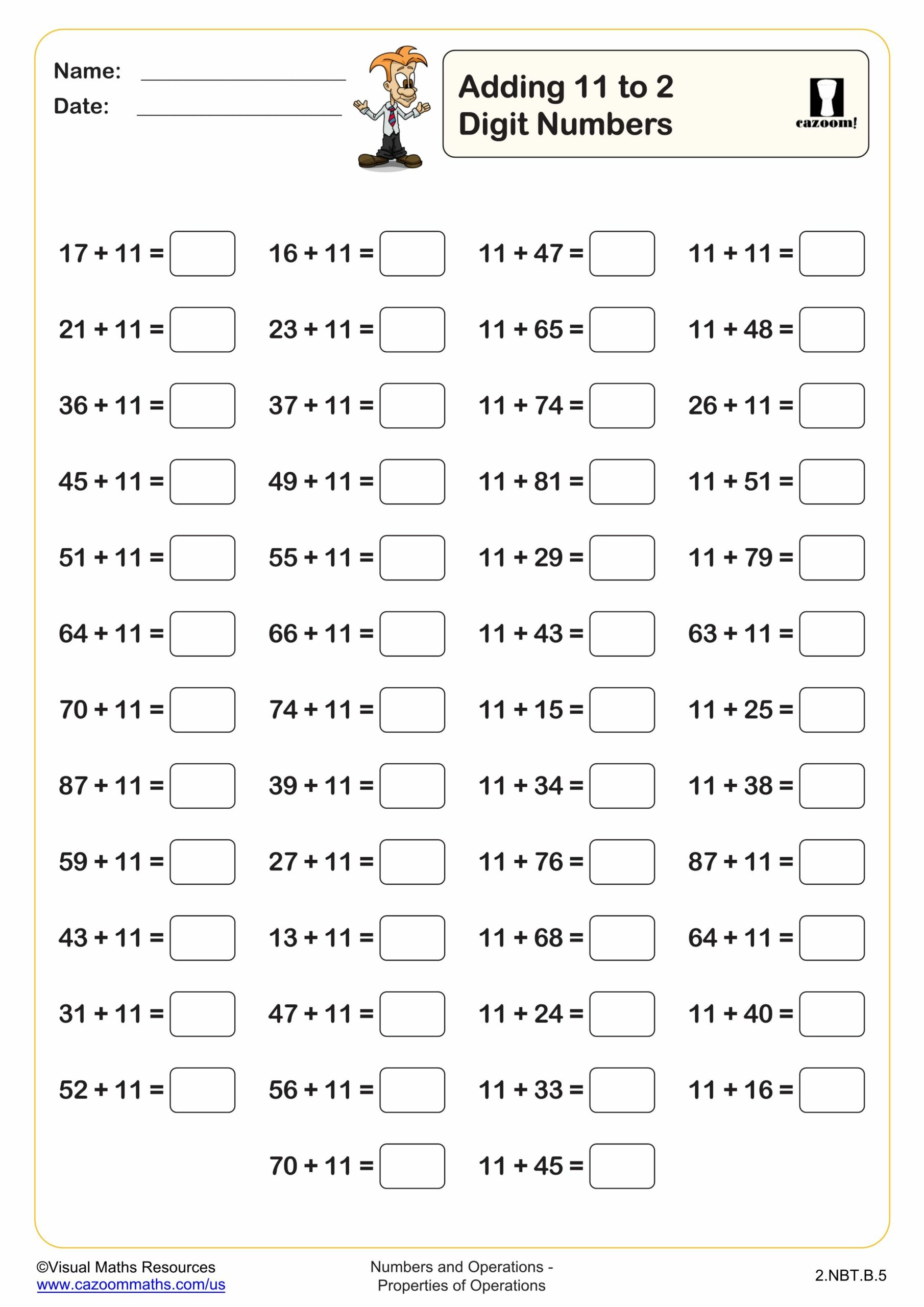
Adding 11 to 2 digit numbers (20 questions)
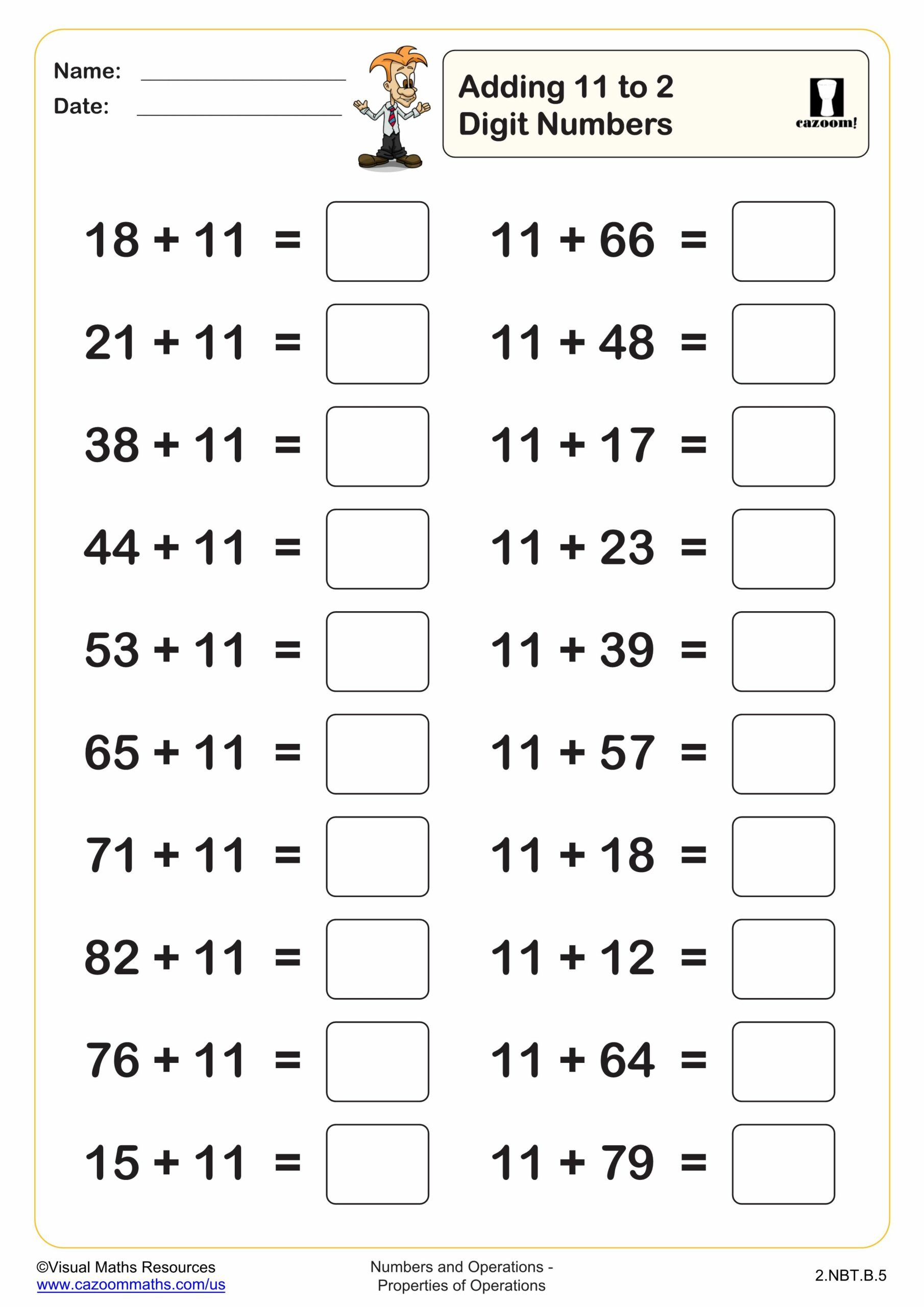
Adding 11 to 2 digit numbers (50 questions)
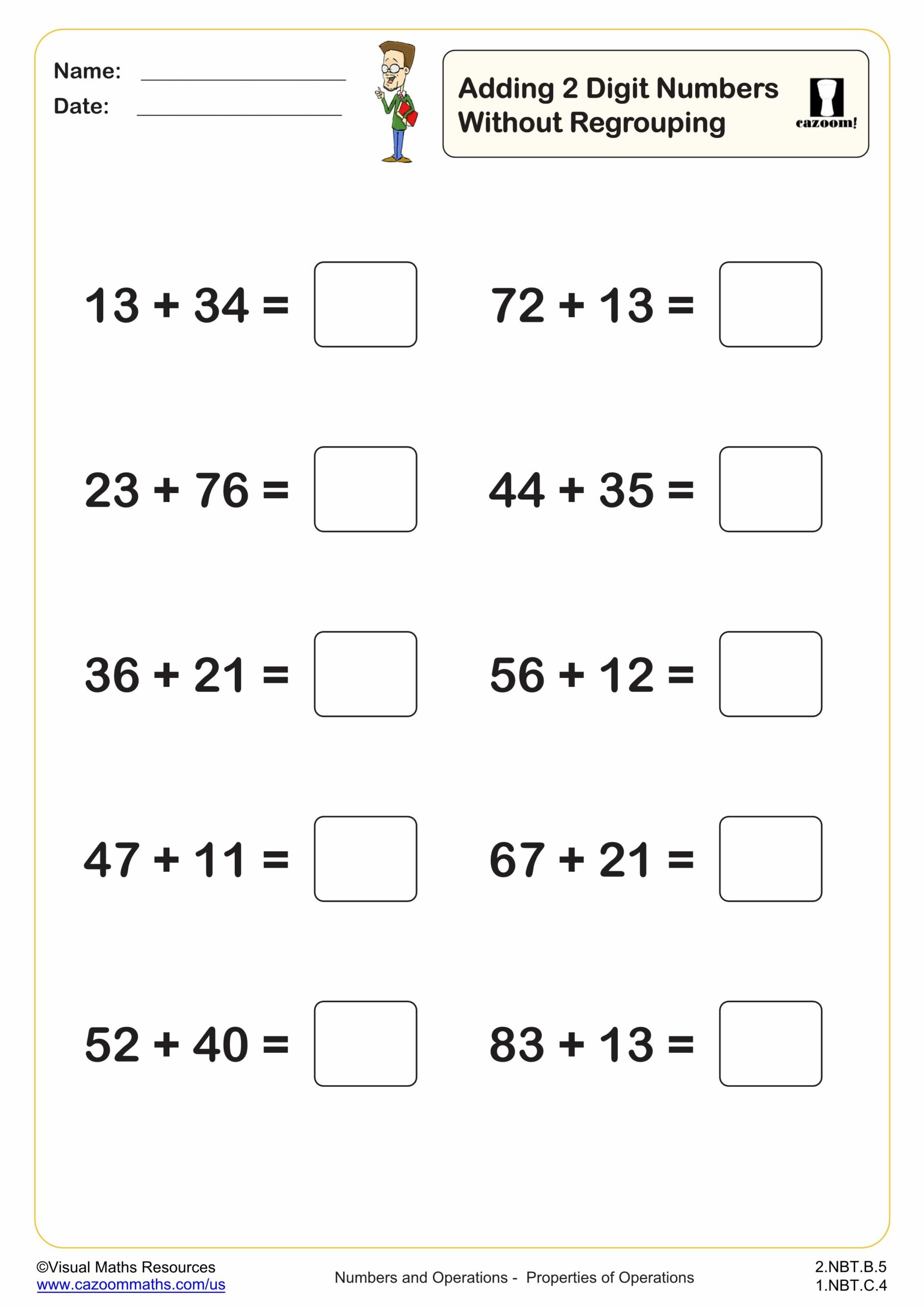
Adding 2 digit numbers without regrouping (10 questions)
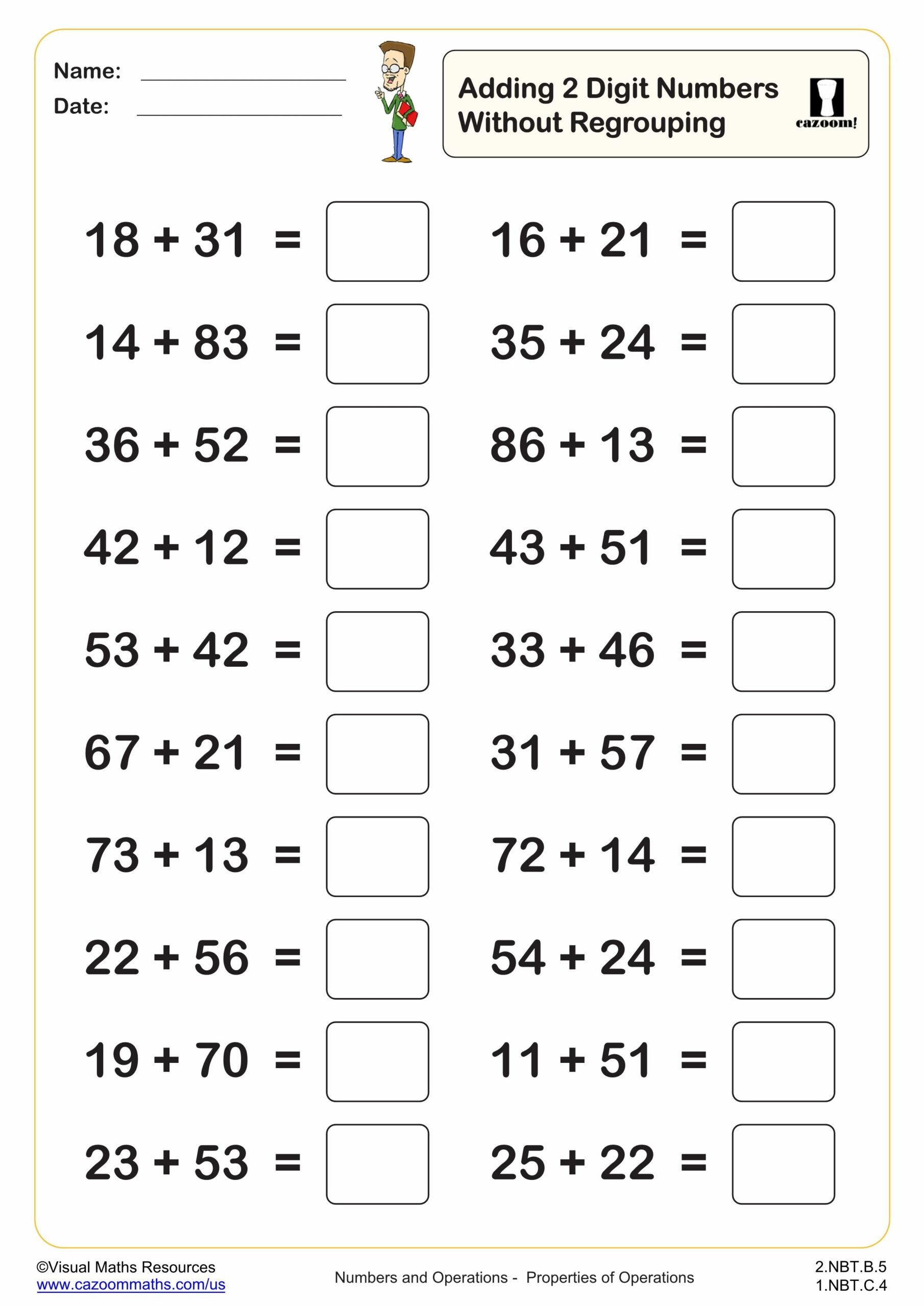
Adding 2 digit numbers without regrouping (20 questions)
Adding 2 digit numbers without regrouping (50 questions)
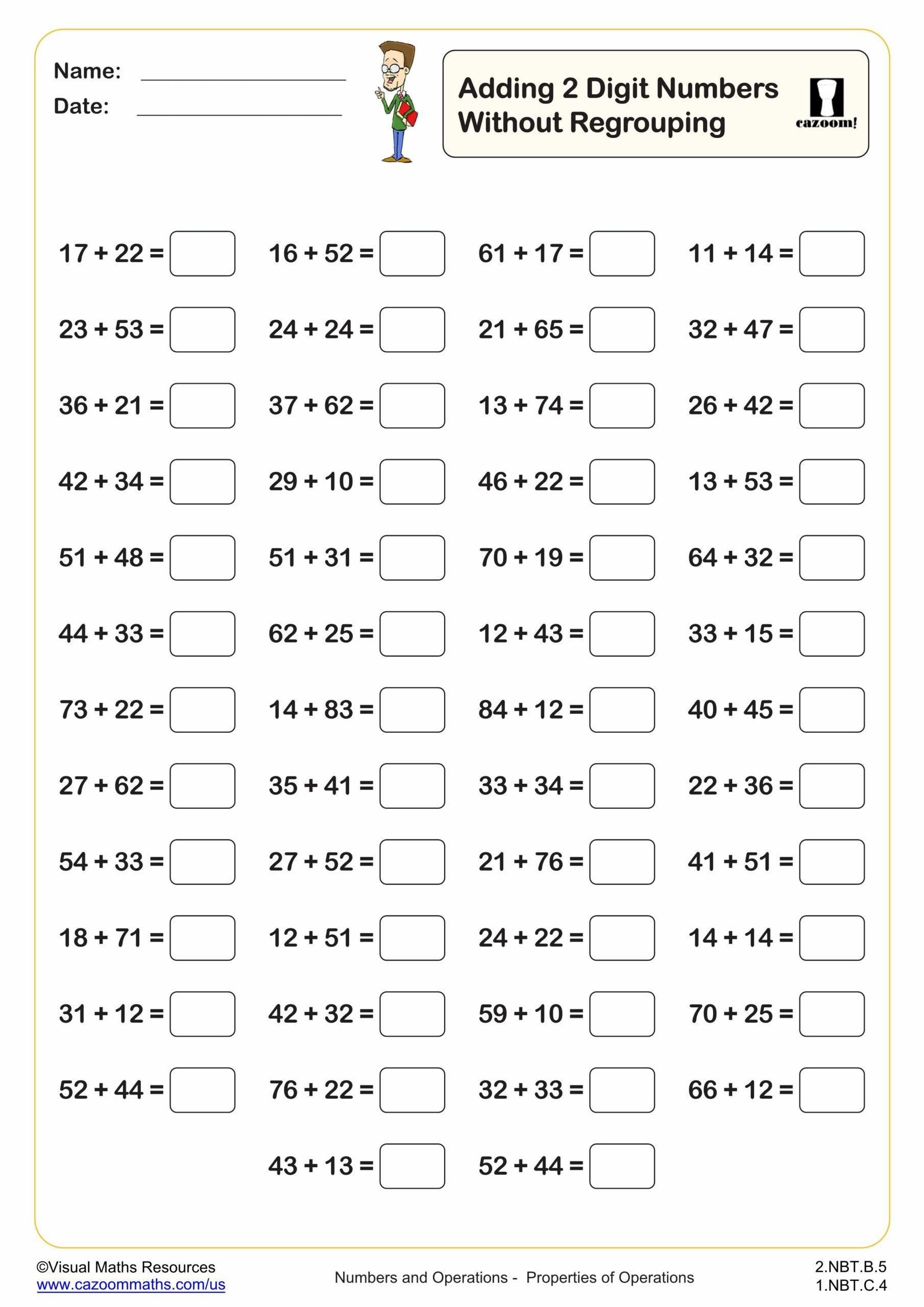
Adding 5 to 2 digit numbers (10 questions)
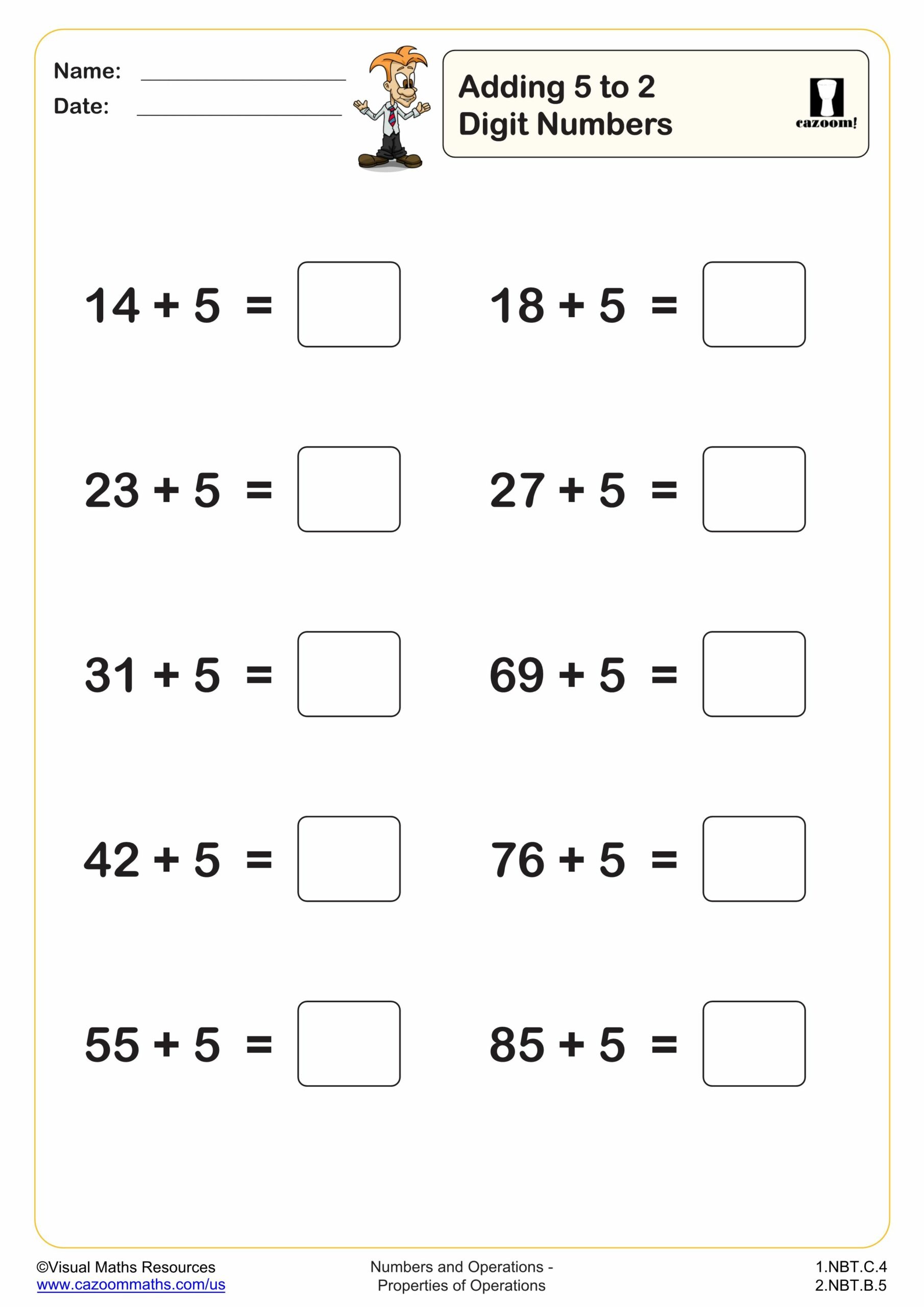
Adding 5 to 2 digit numbers (50 questions)
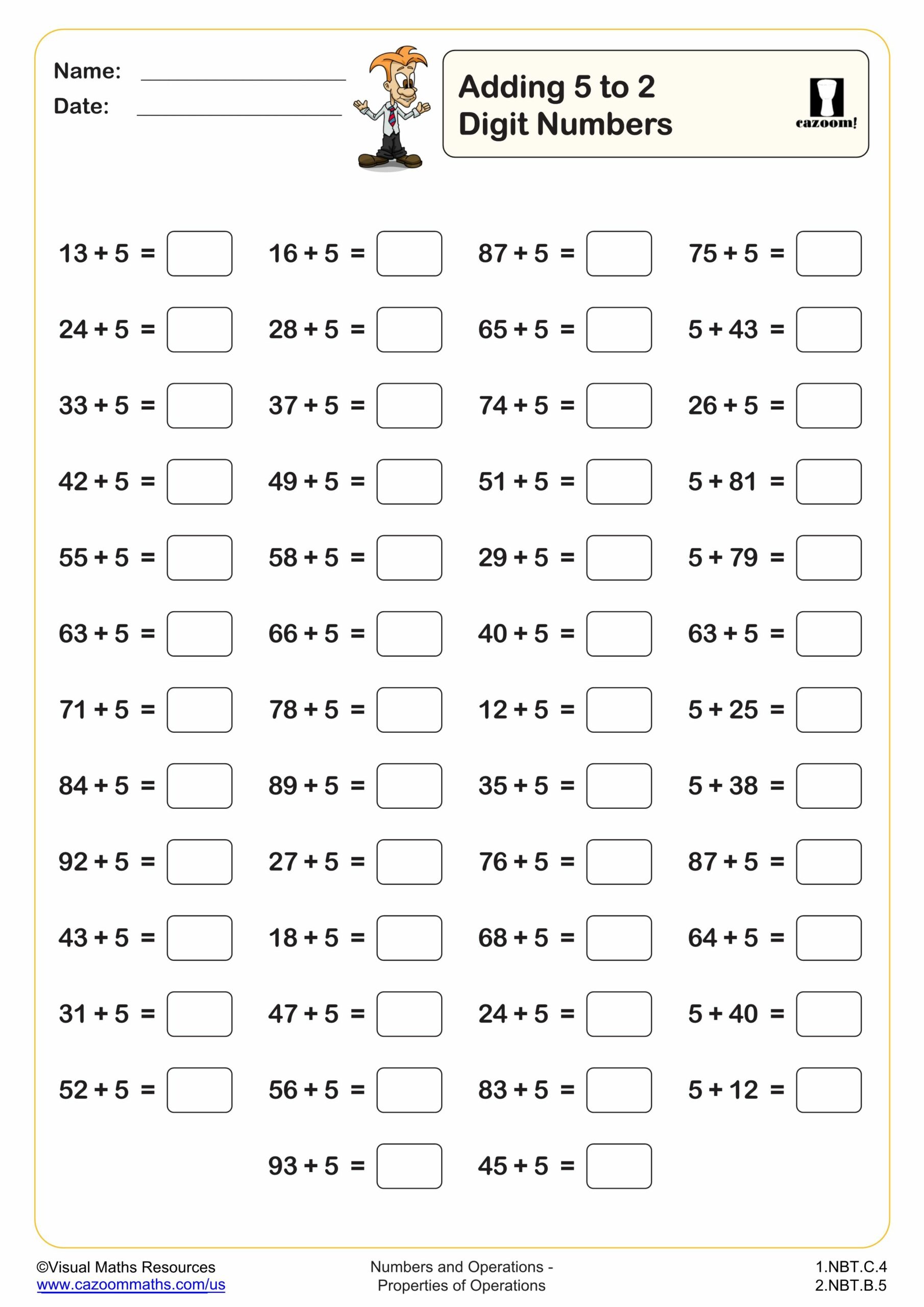
Adding 6 to 2 digit numbers (10 questions)
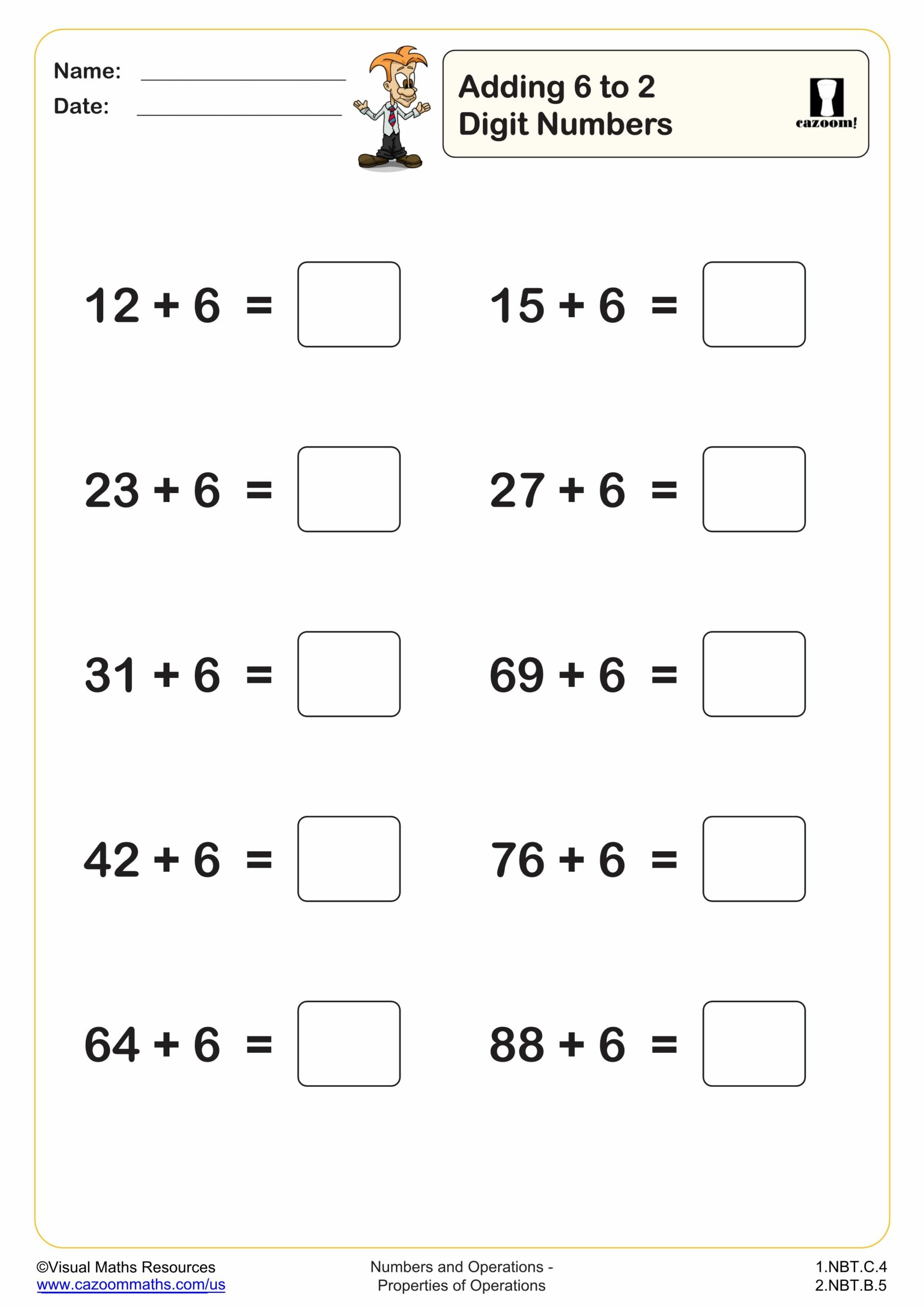
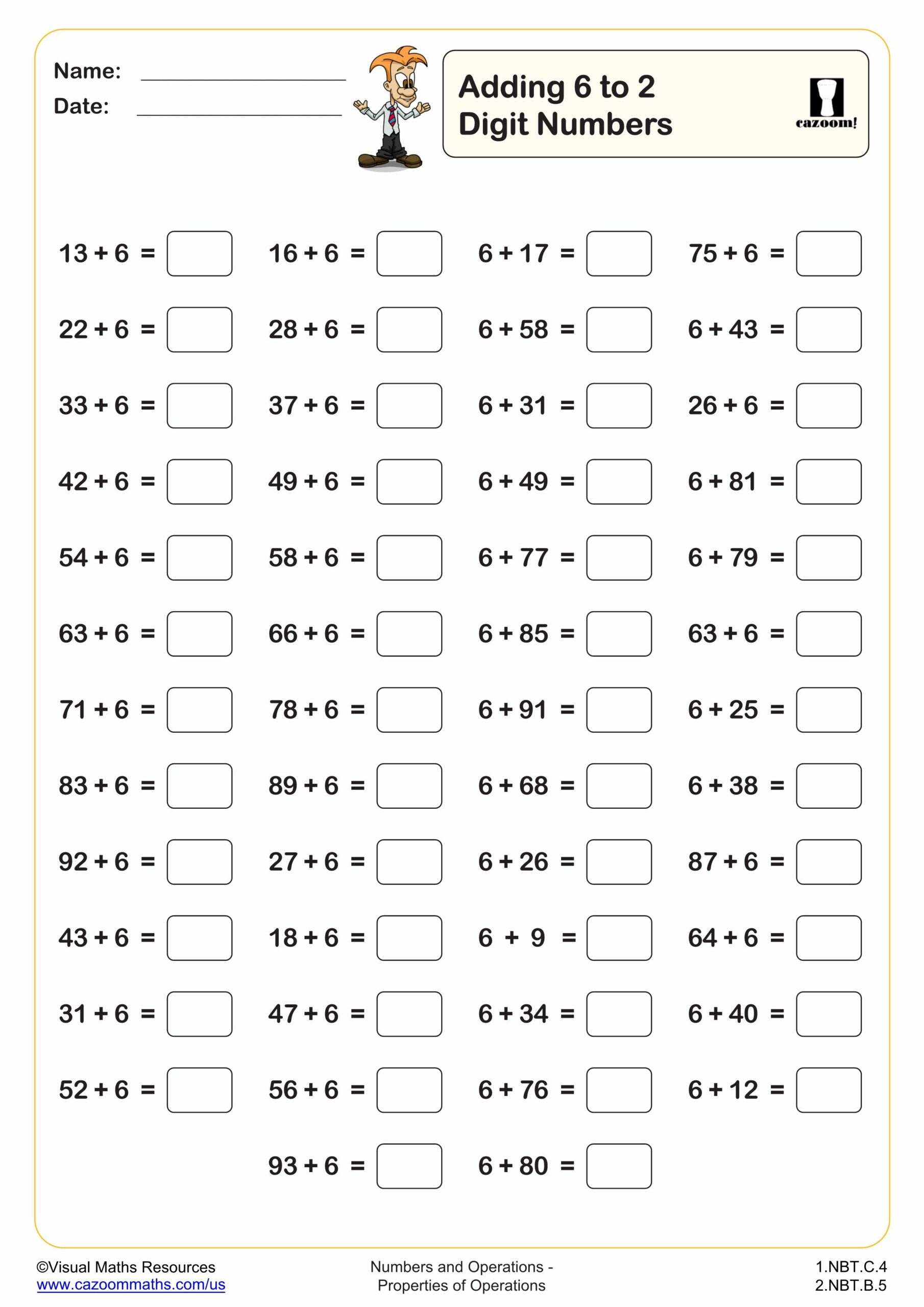
Adding 6 to 2 digit numbers (20 questions)
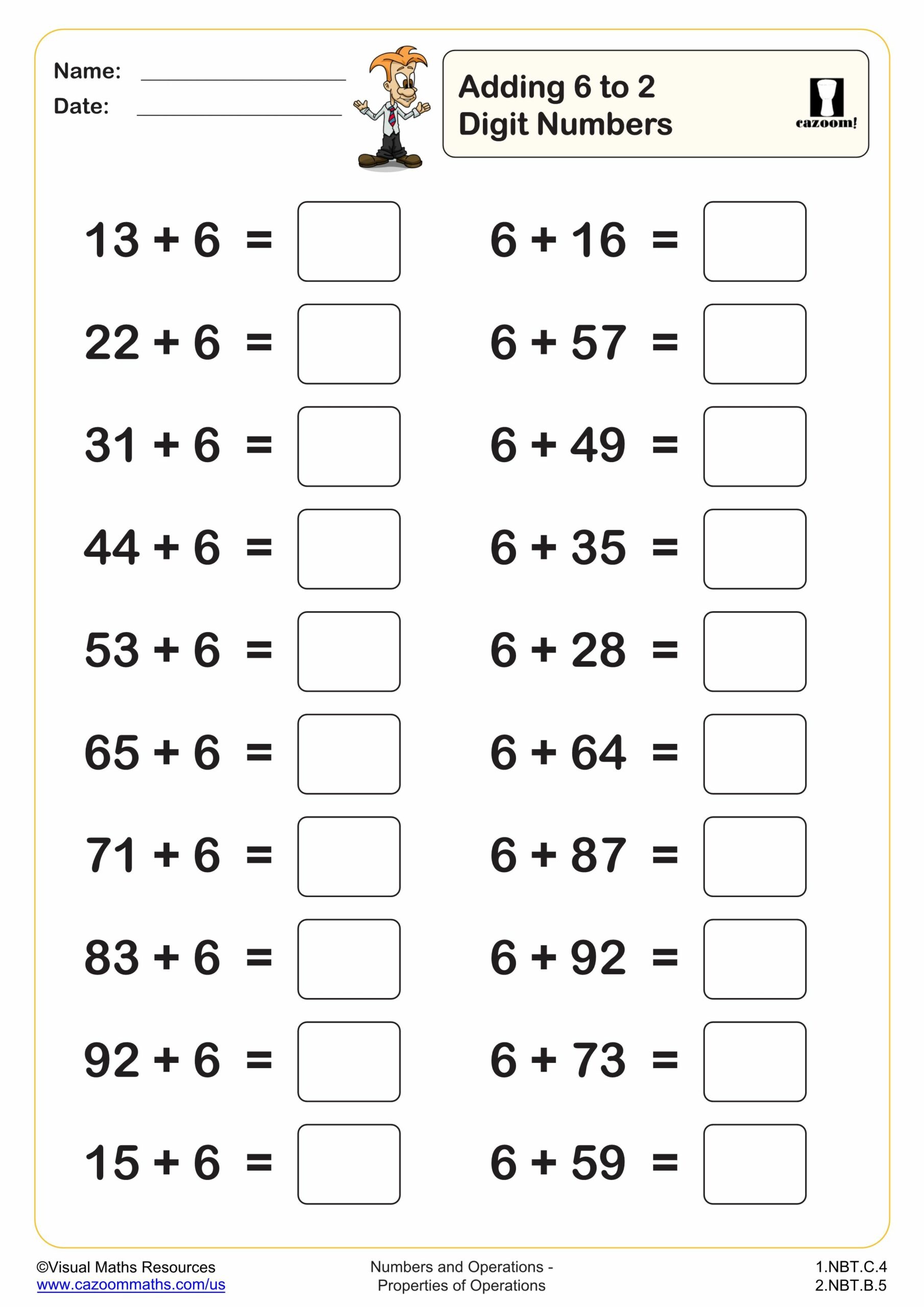
Adding 6 to 2 digit numbers (50 questions)
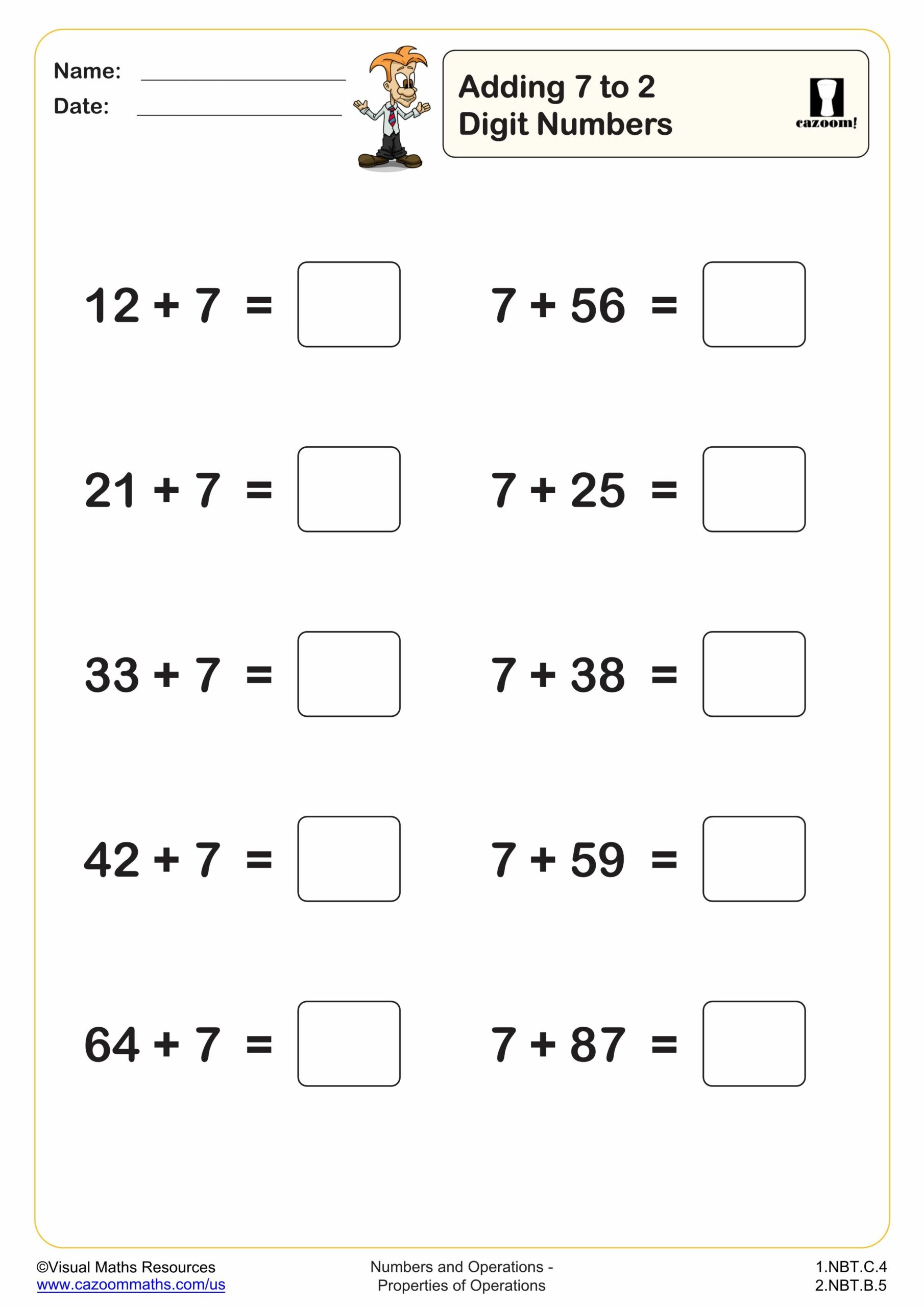
Adding 7 to 2 digit numbers (10 questions)
Adding 7 to 2 digit numbers (20 questions)
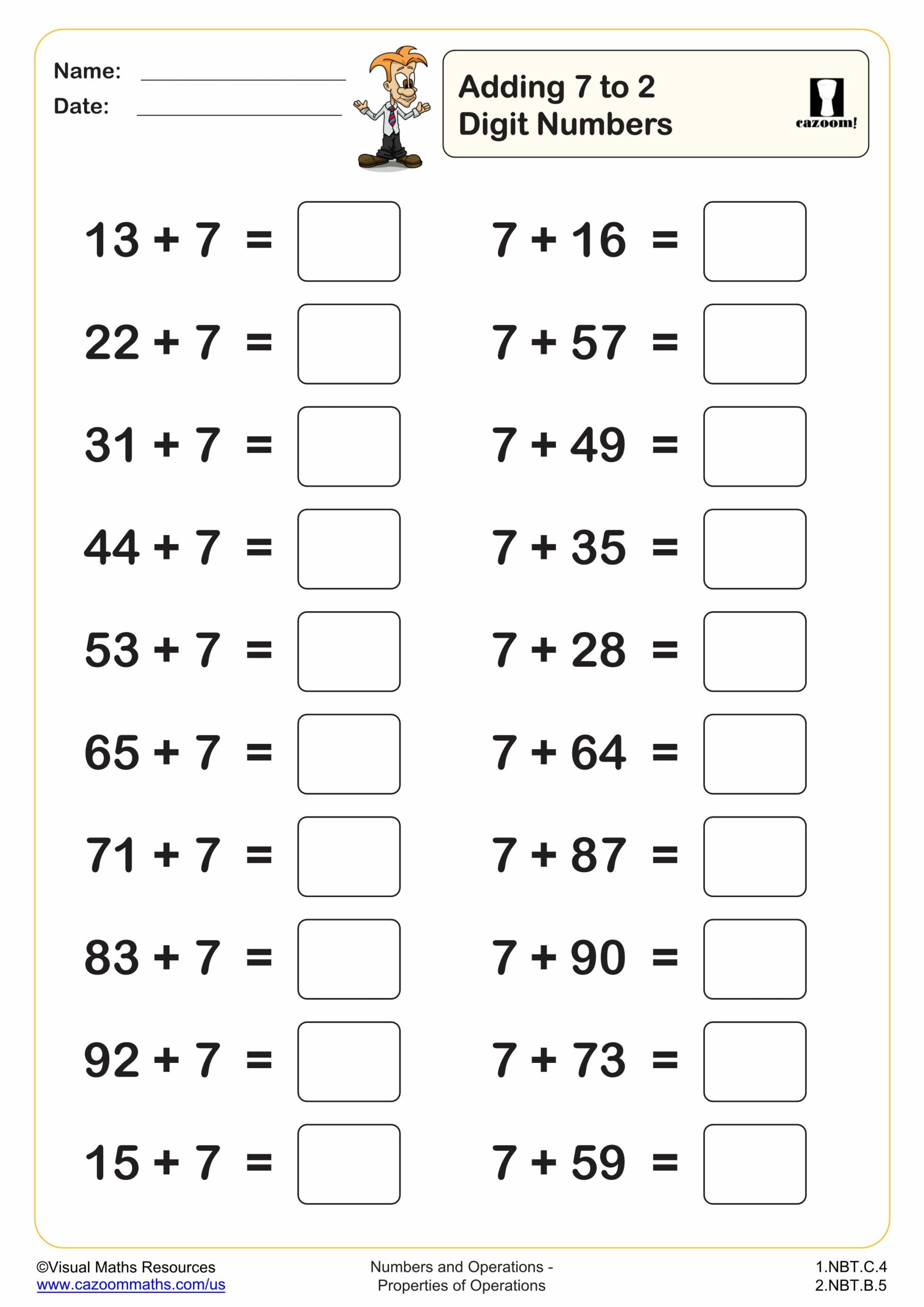
Adding 7 to 2 digit numbers (50 questions)
Adding 8 to 2 digit numbers (10 questions)
Adding 8 to 2 digit numbers (20 questions)
Adding 8 to 2 digit numbers (50 questions)
Adding 9 to 2 digit numbers (10 questions)
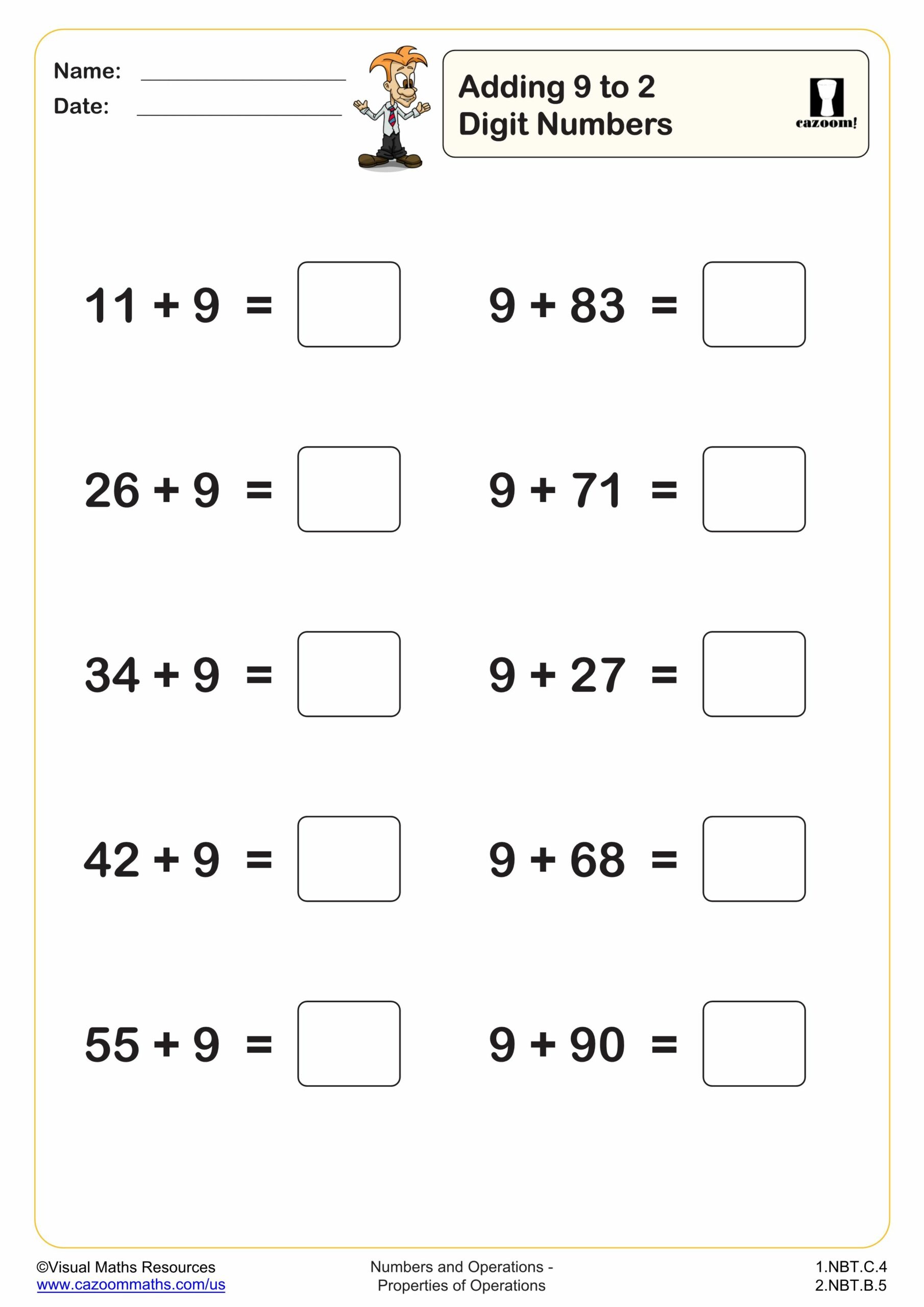
Adding 9 to 2 digit numbers (20 questions)
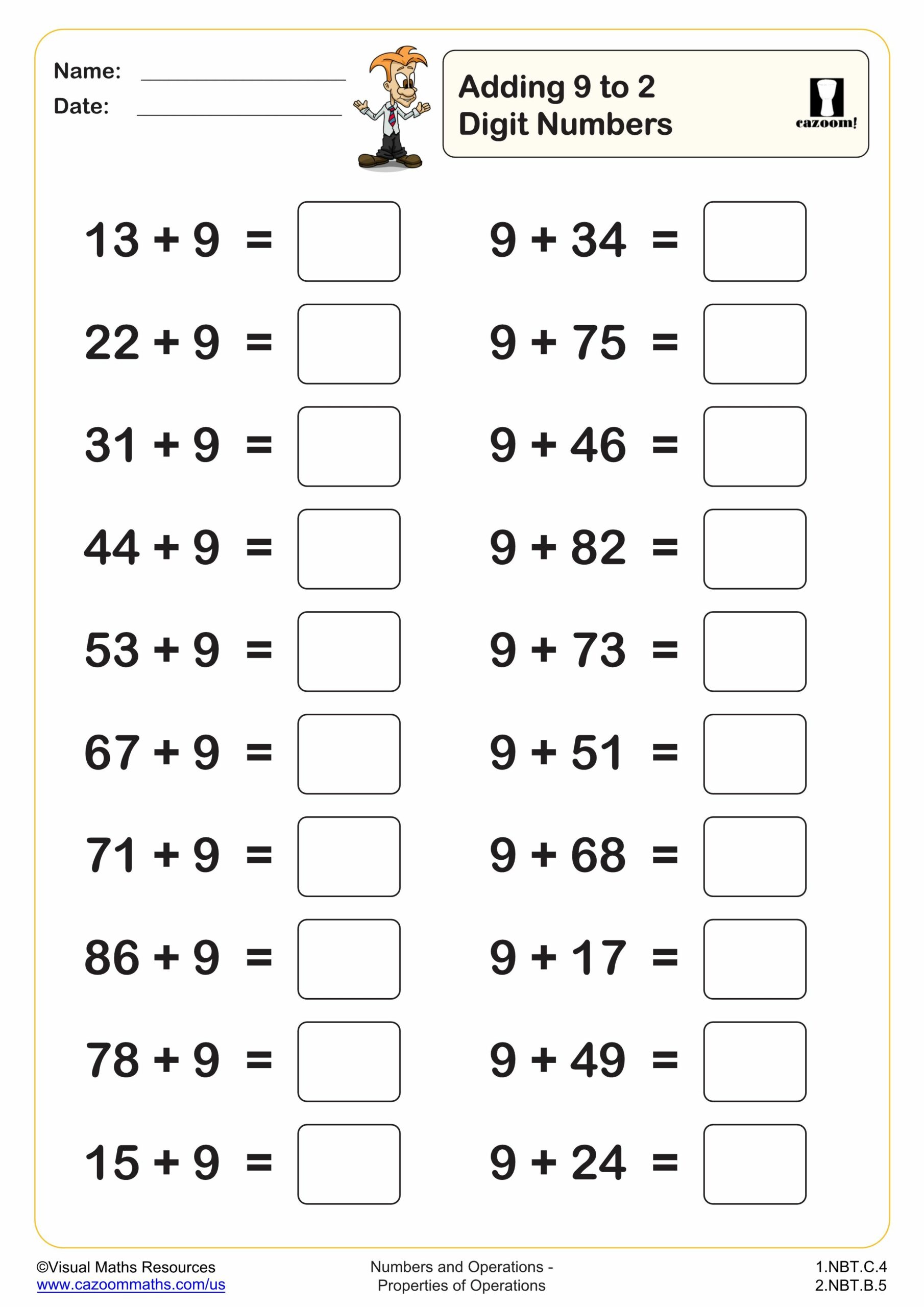
Adding 9 to 2 digit numbers (50 questions)
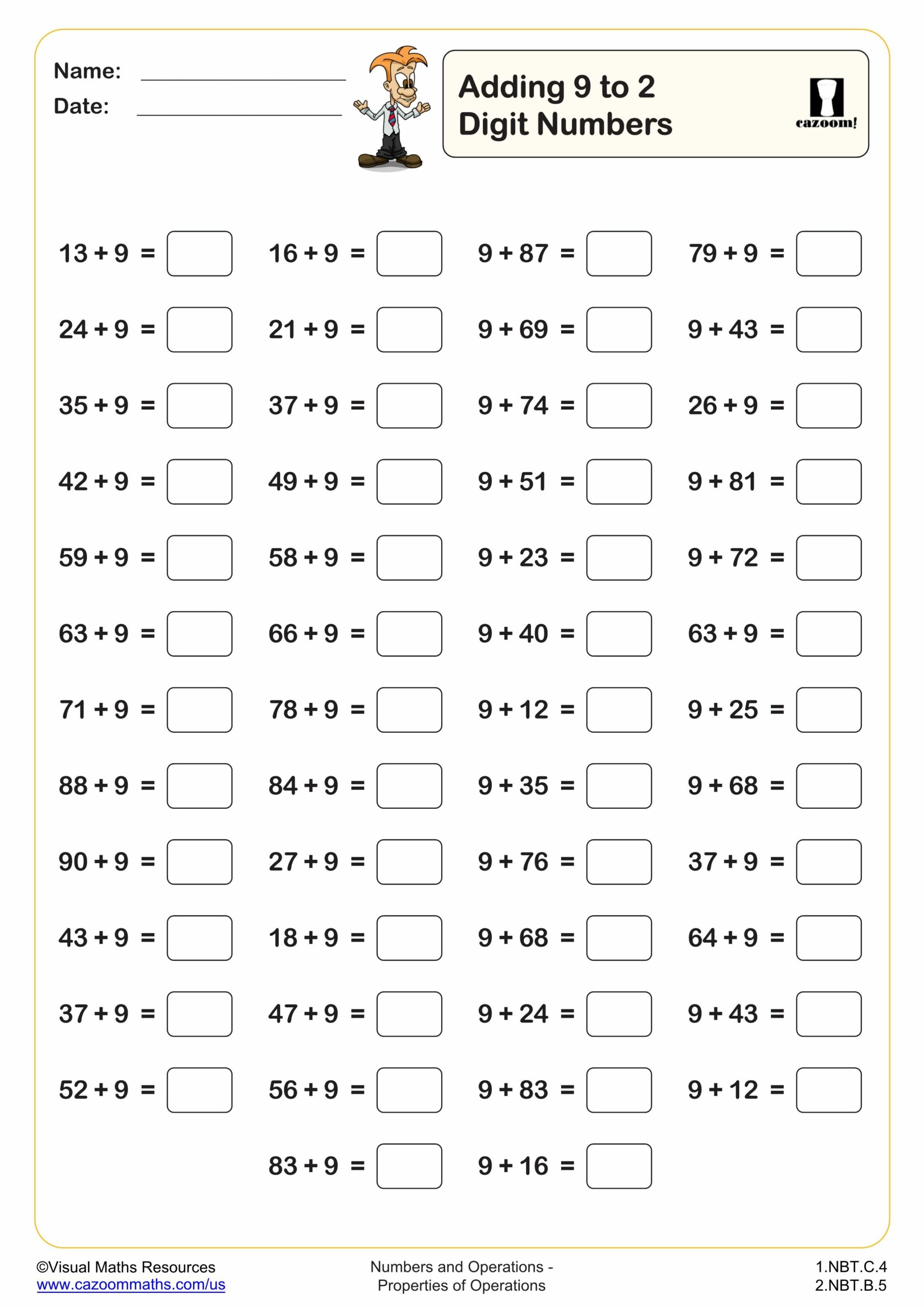
Adding mulitples of 10 to a 2 digit number (10 questions)
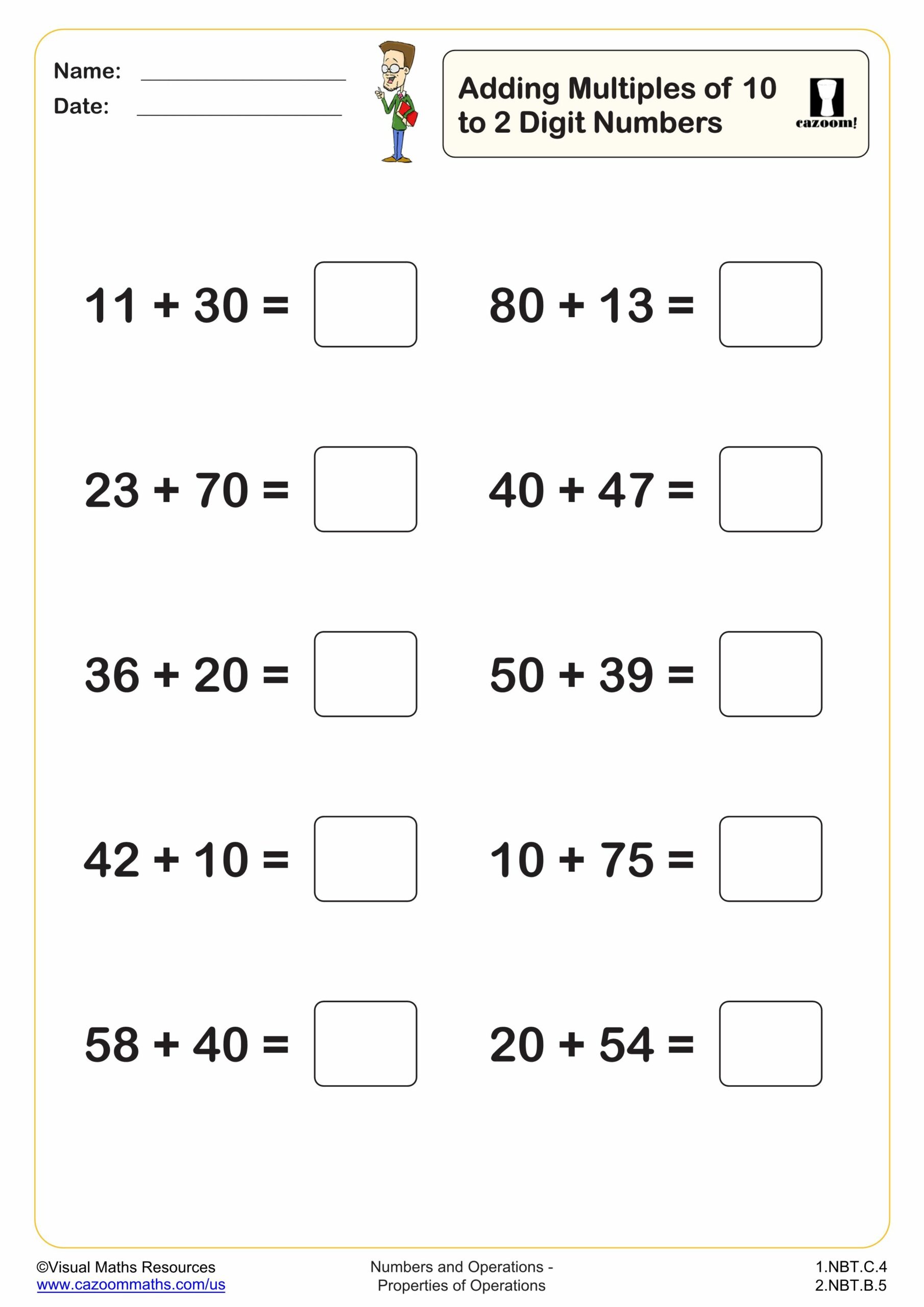
Adding mulitples of 10 to a 2 digit number (20 questions)
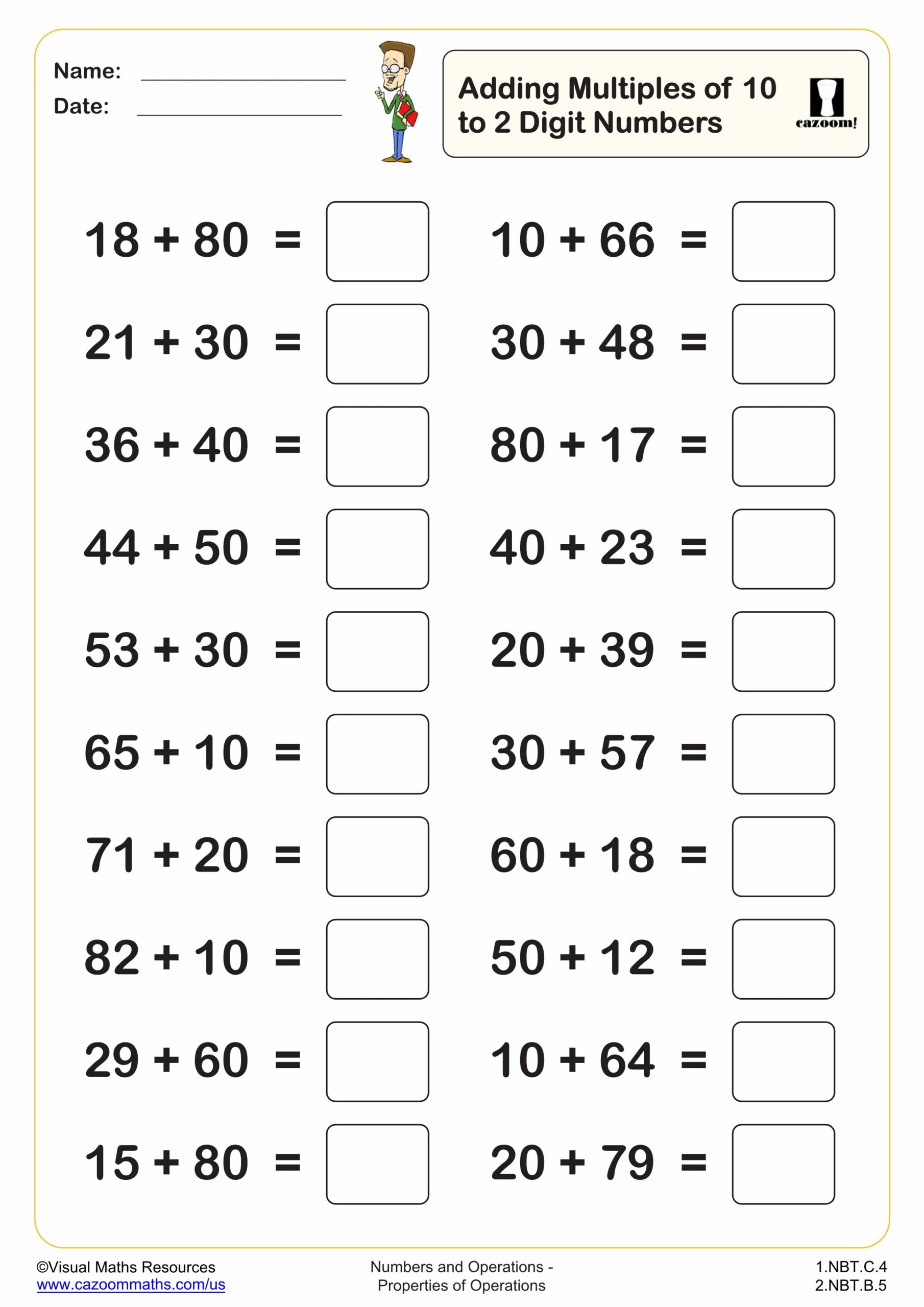
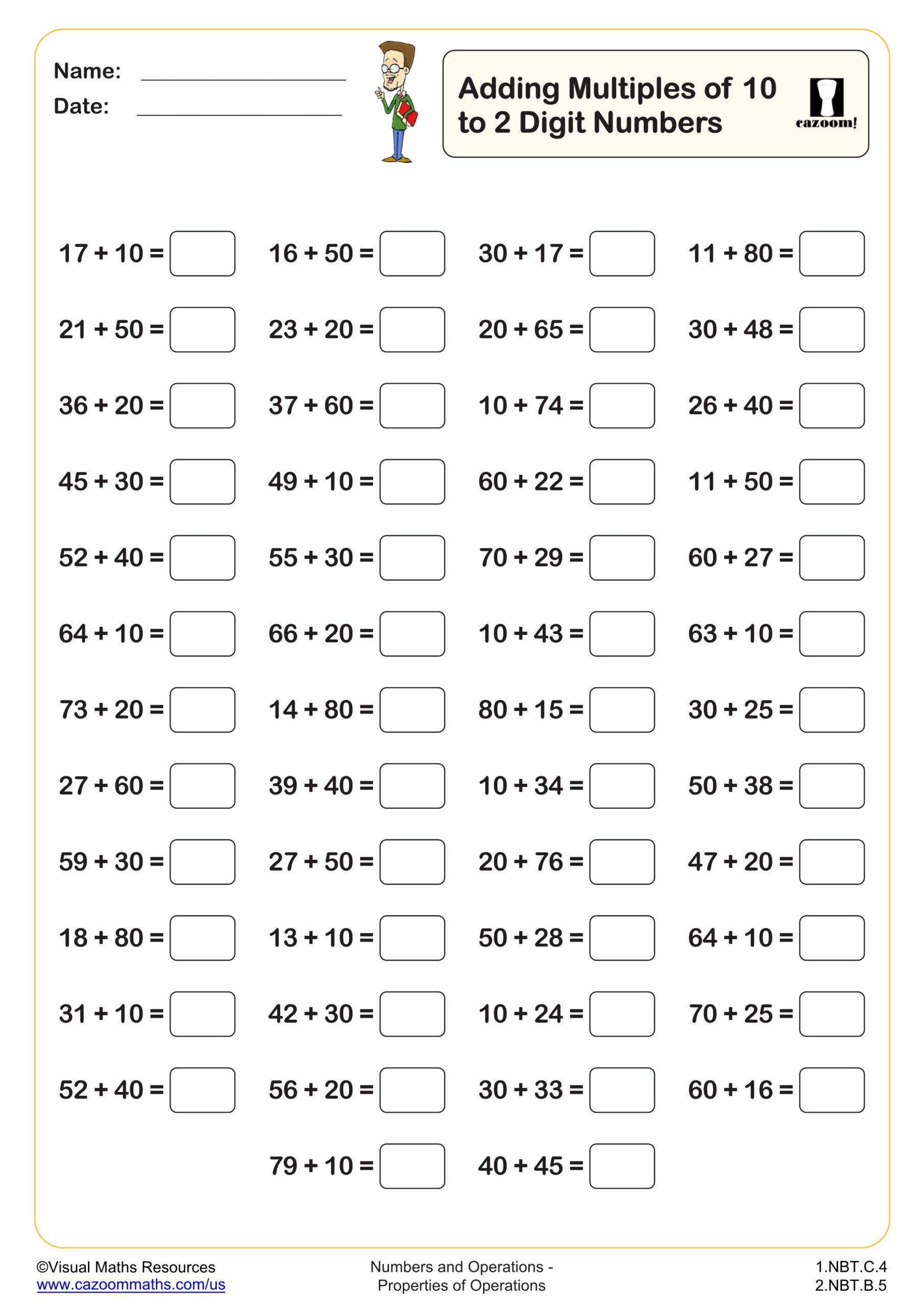
Adding mulitples of 10 to a 2 digit number (50 questions)
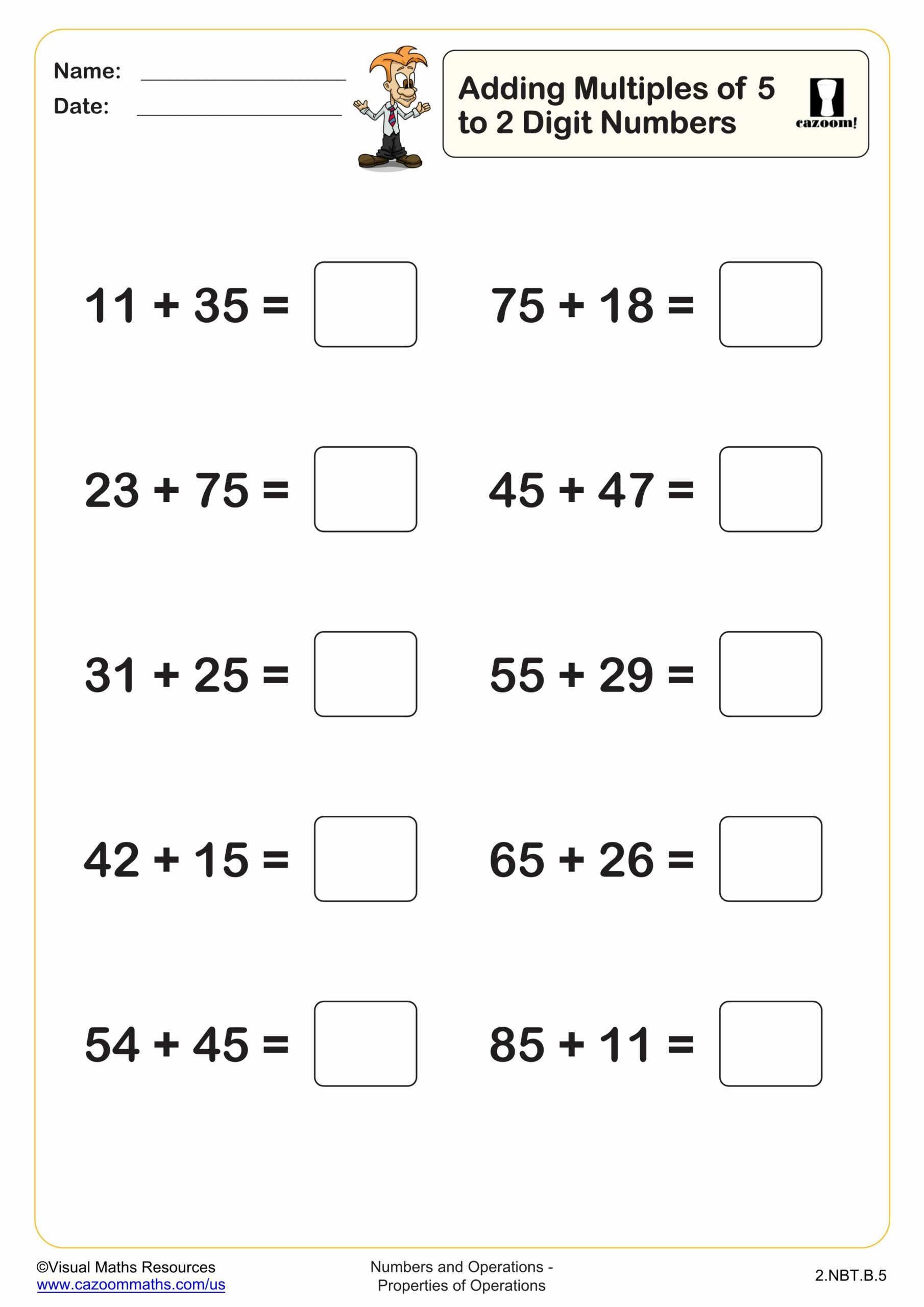
Adding mulitples of 5 to a 2 digit number (10 questions)
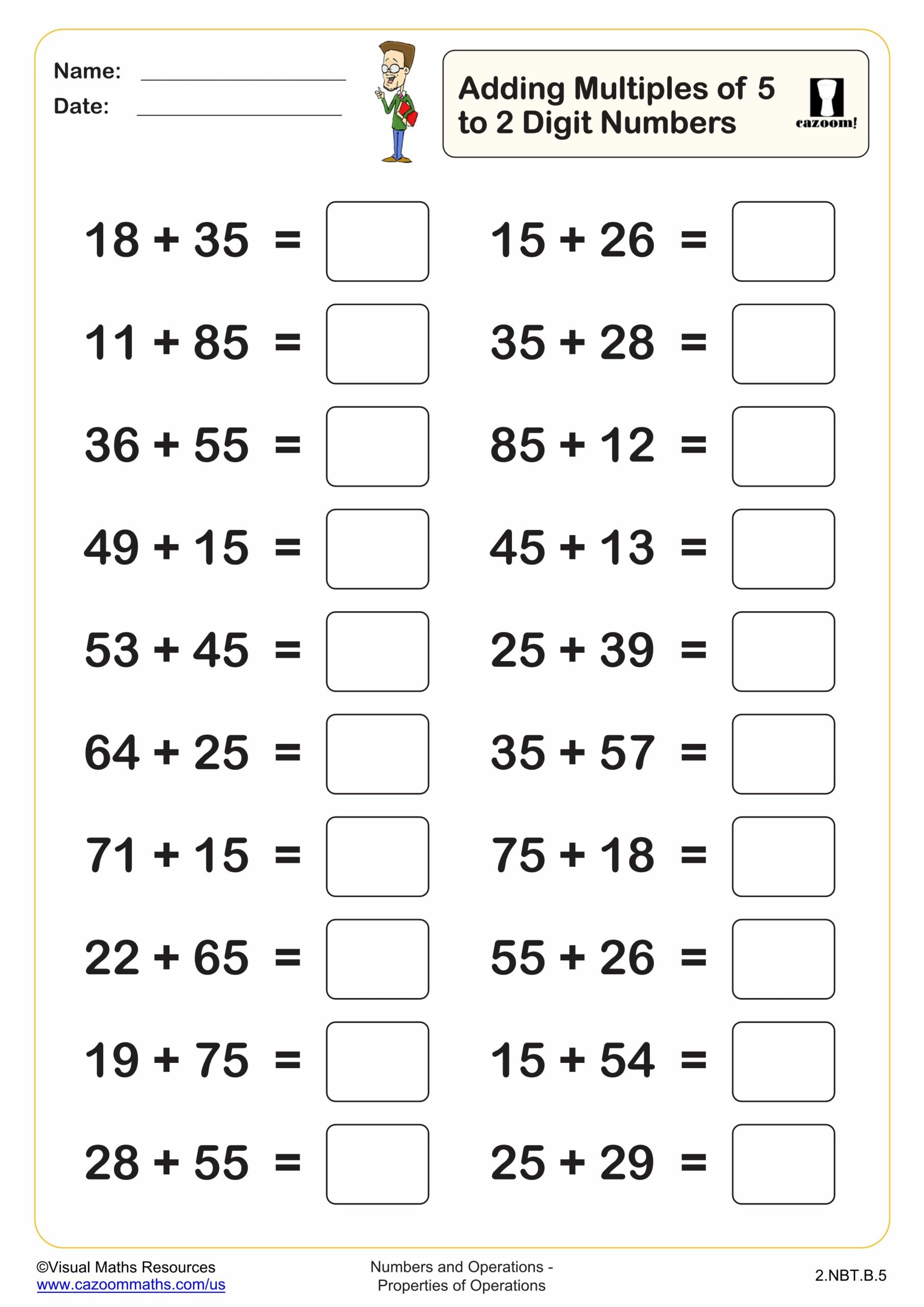
Adding mulitples of 5 to a 2 digit number (20 questions)
Adding mulitples of 5 to a 2 digit number (50 questions)
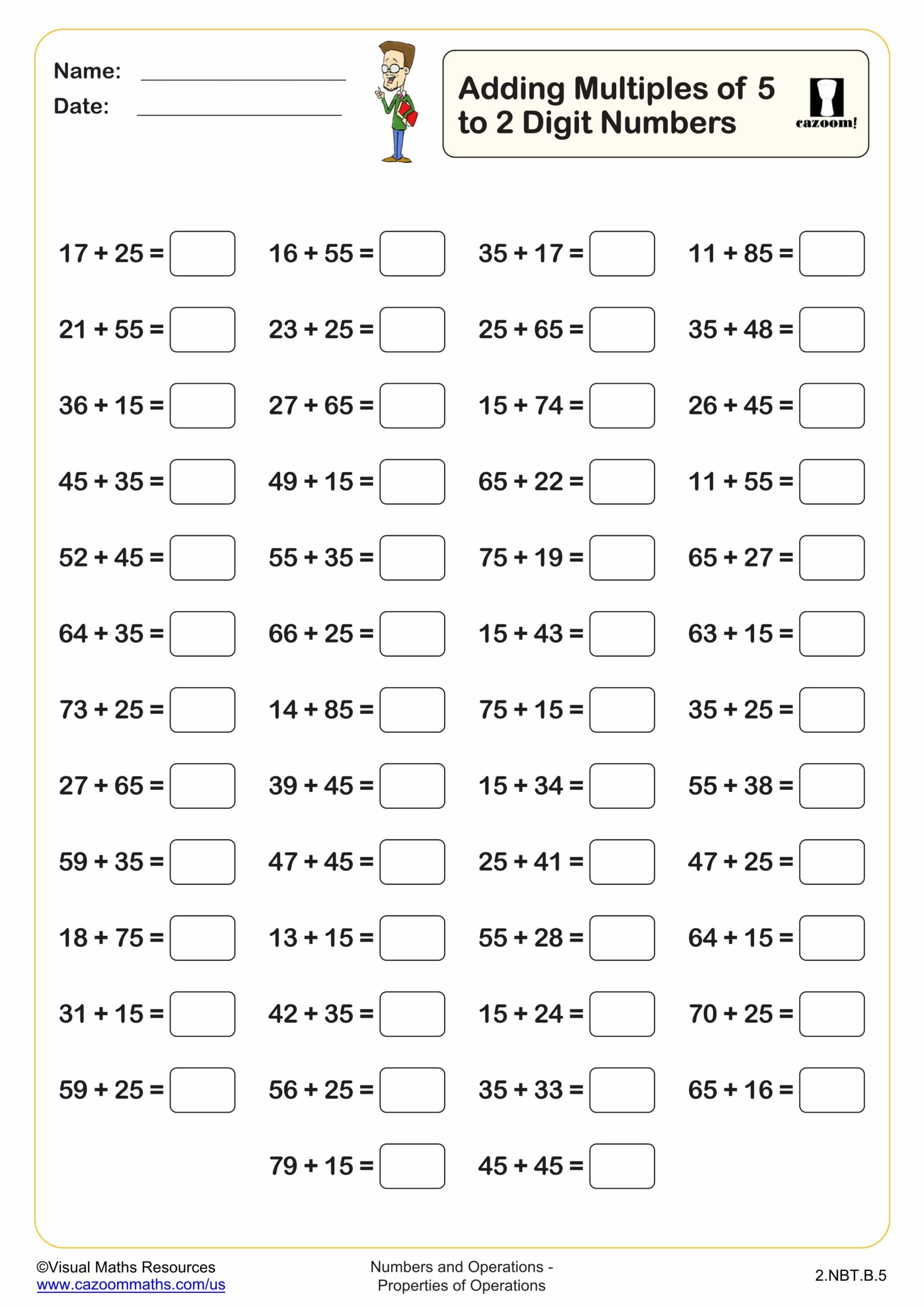
Adding Single Digits to Two Digit Numbers (No Regrouping)
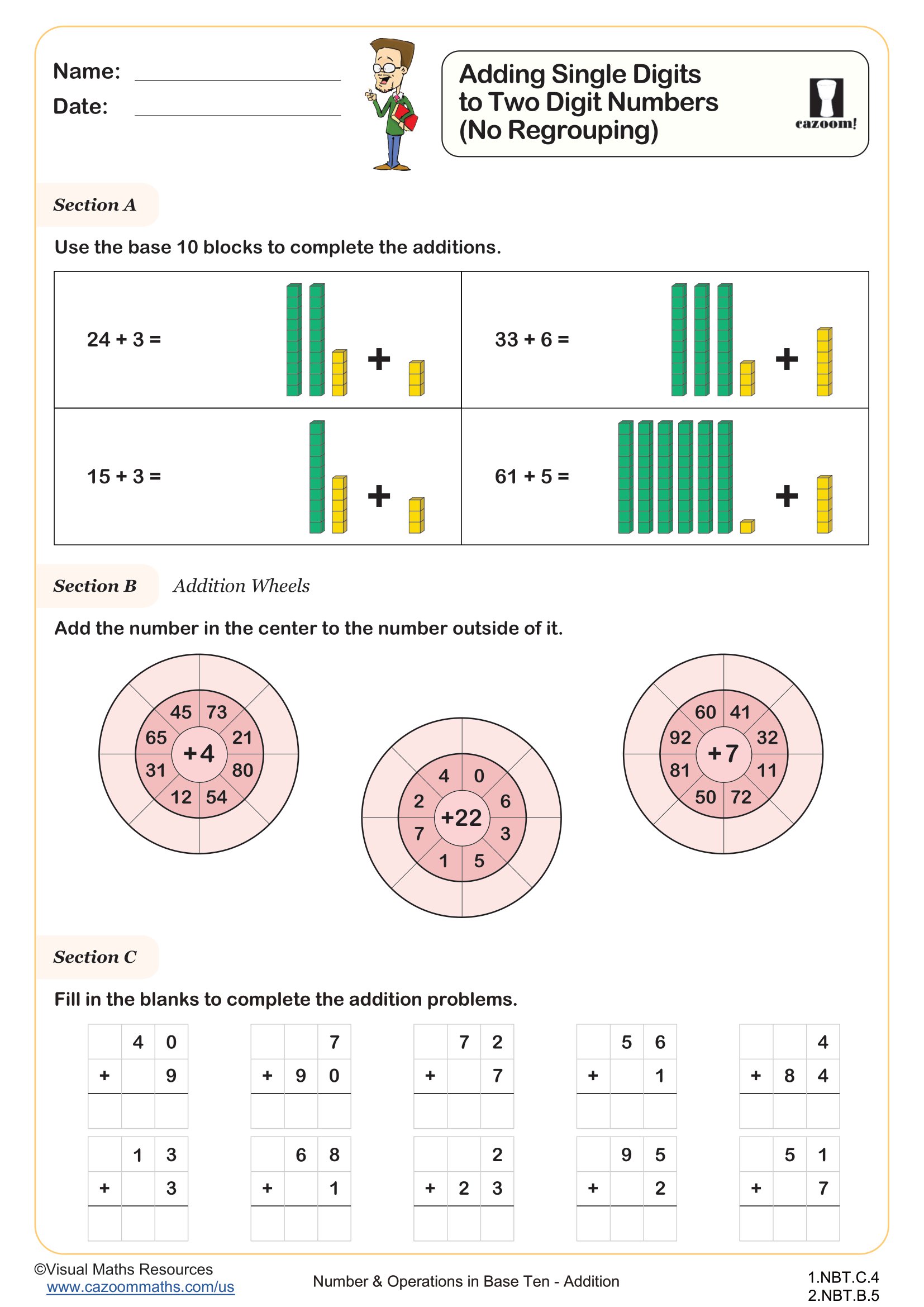
Adding Single Digits to Two Digit Numbers (With Regrouping)
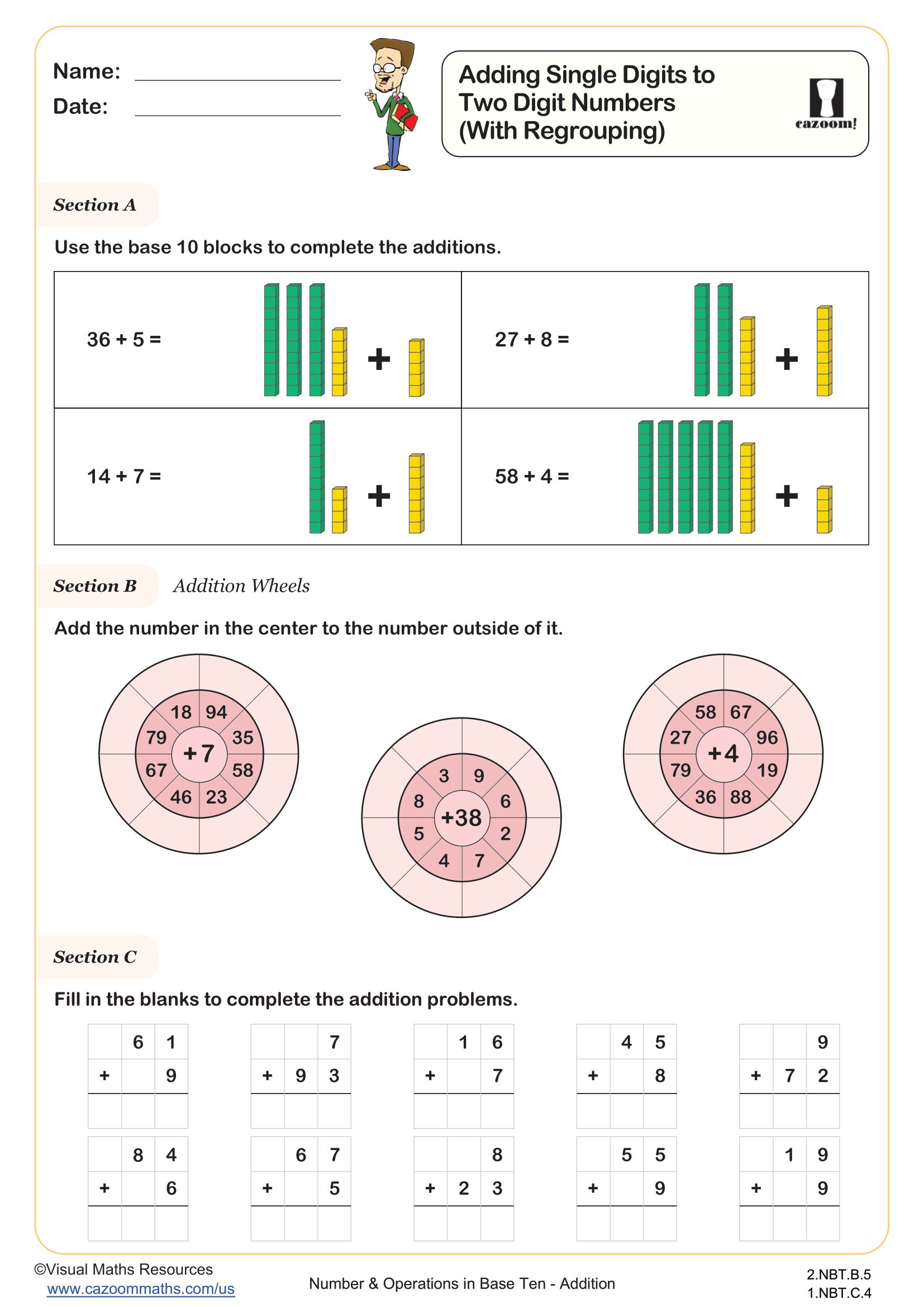
Addition Drills with three numbers (A)
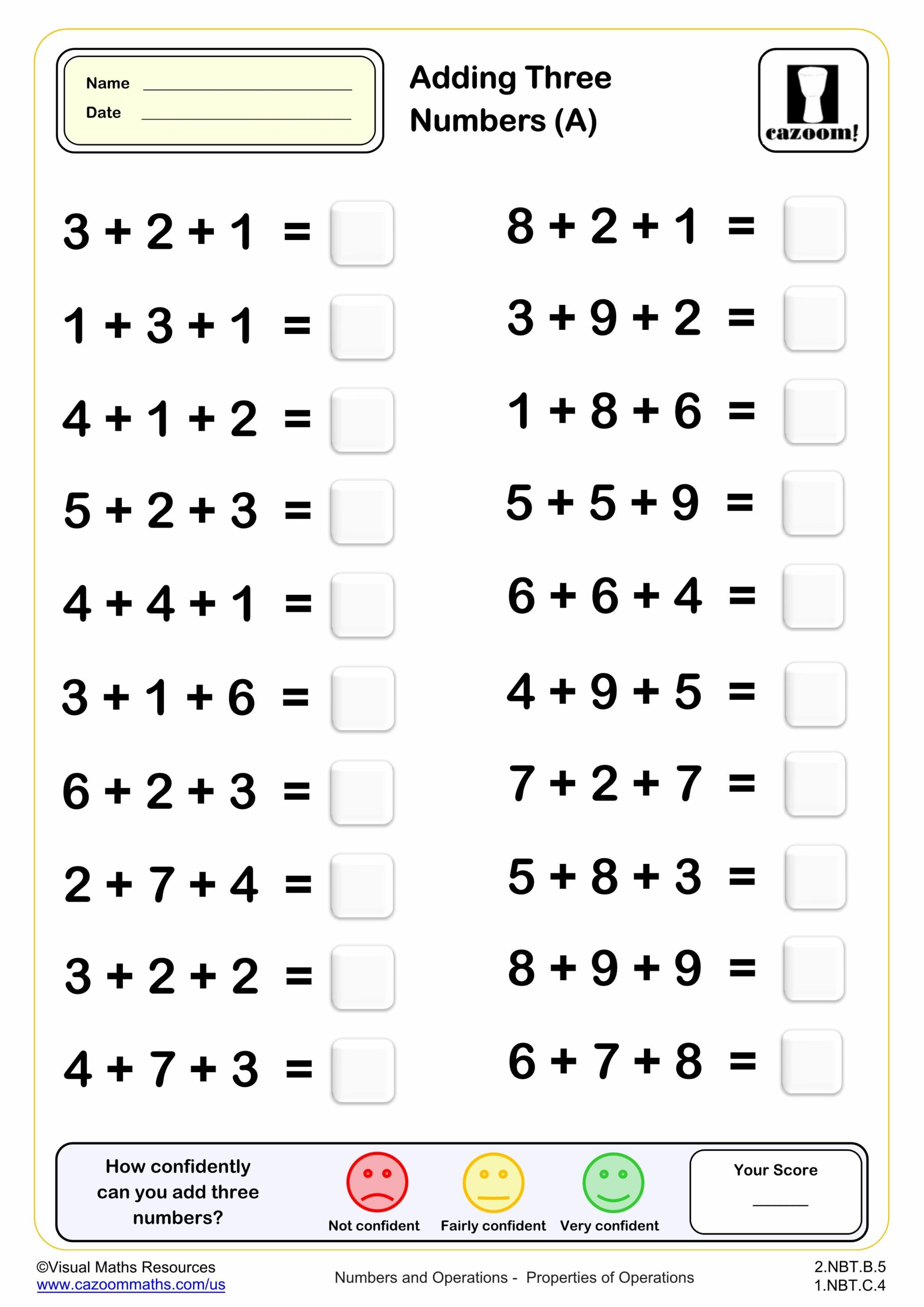
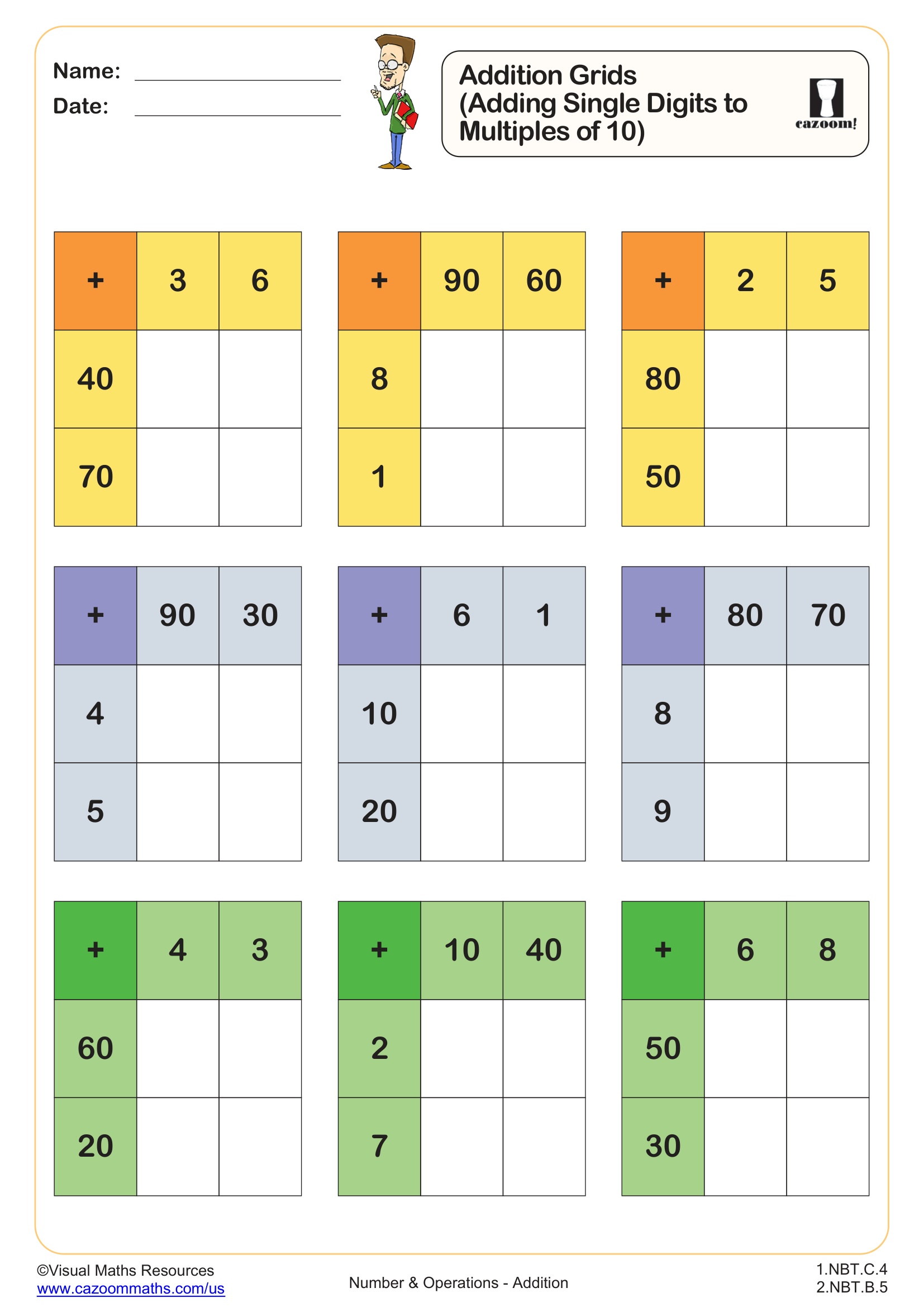
Addition Grids (Adding Single Digits to Multiples of 10)
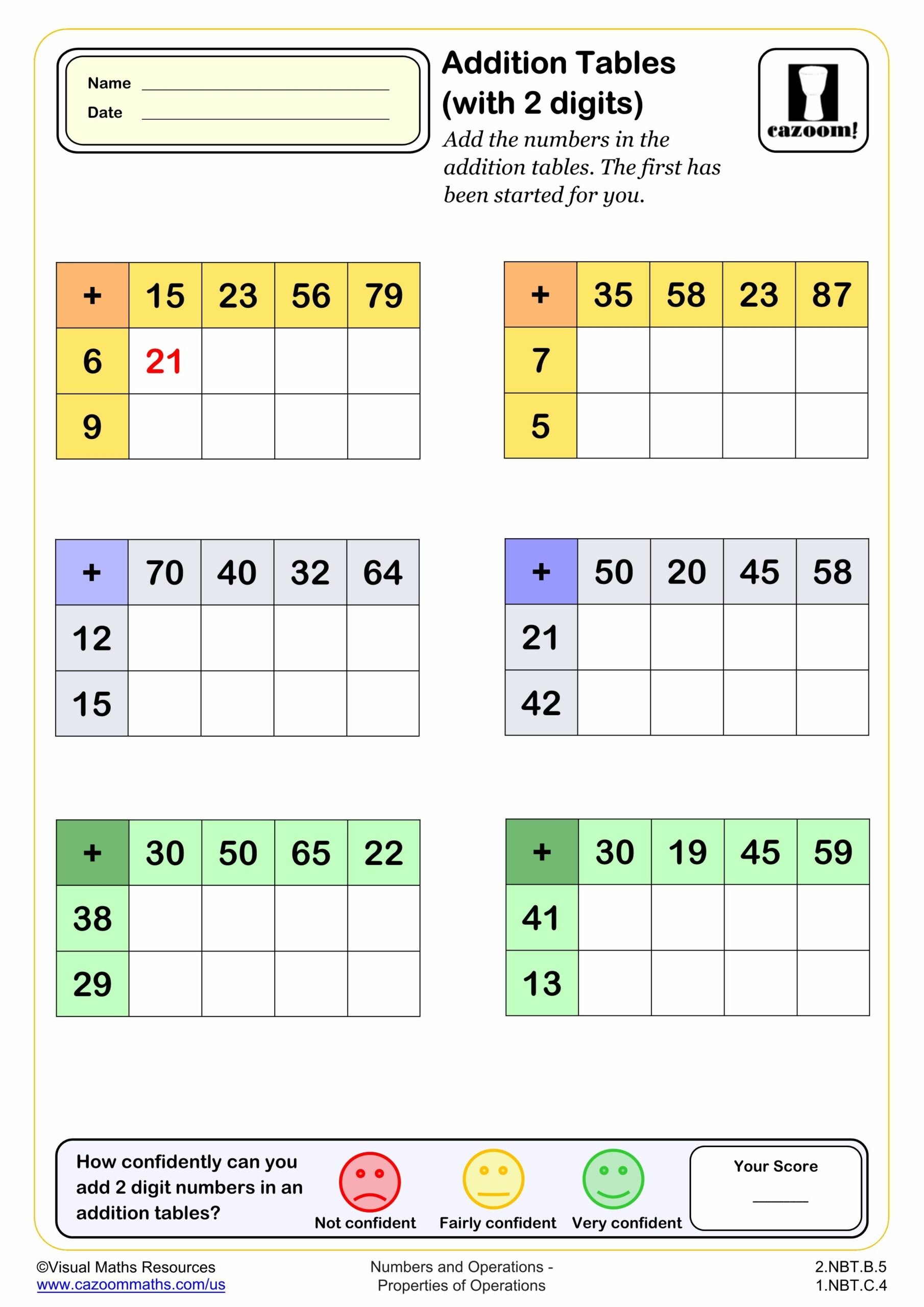
Addition Tables (2 digits)
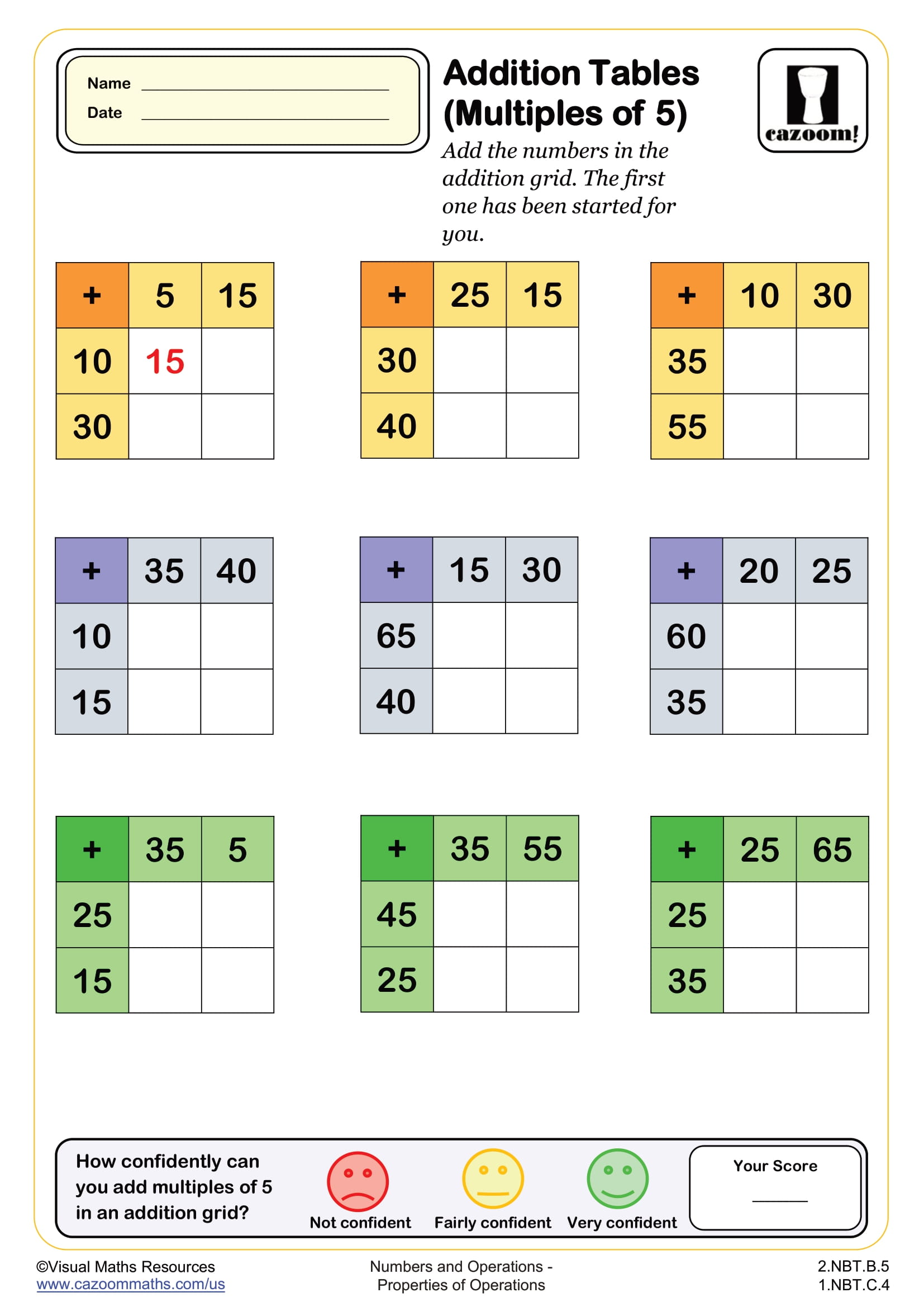
Addition Tables (Multiples of 5)
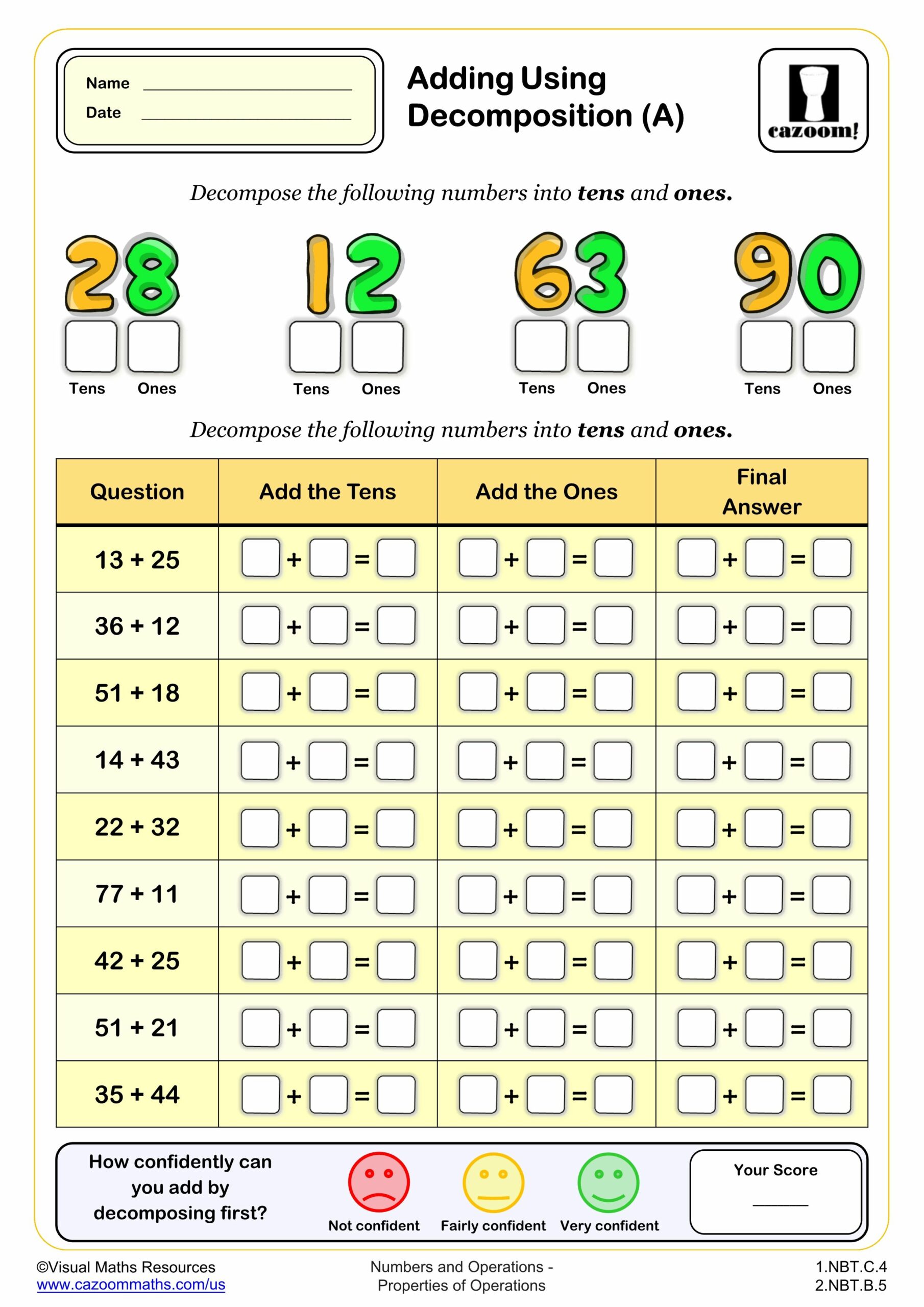
Addition using Decomposition (A)
Addition using Decomposition (B)
Addition Using Number Cubes (A)
Addition Wheel (adding 10 to 2 digits)
Addition Wheels (1 digit to 2 digits)
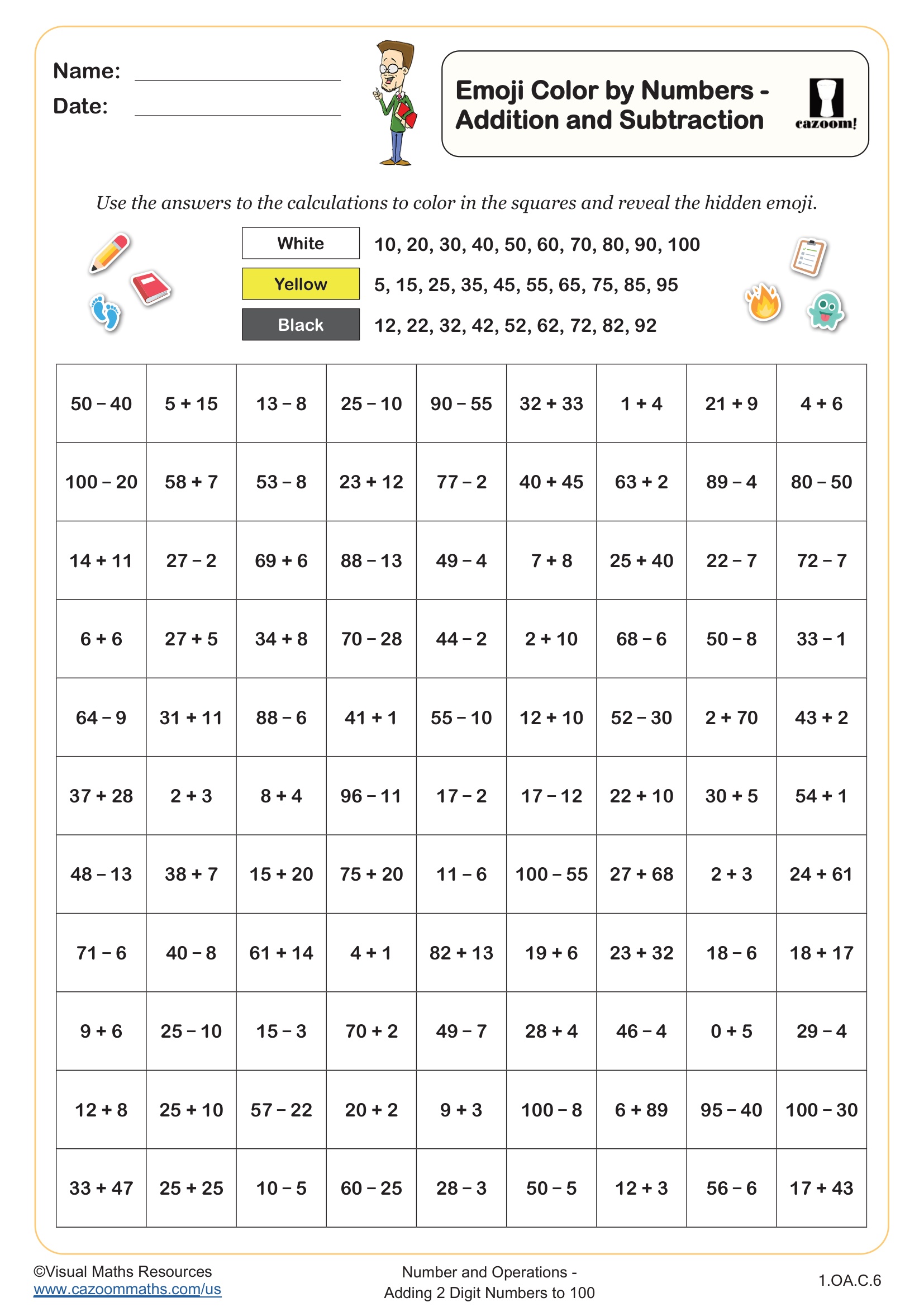
Emoji Colour by Numbers - Addition and Subtraction
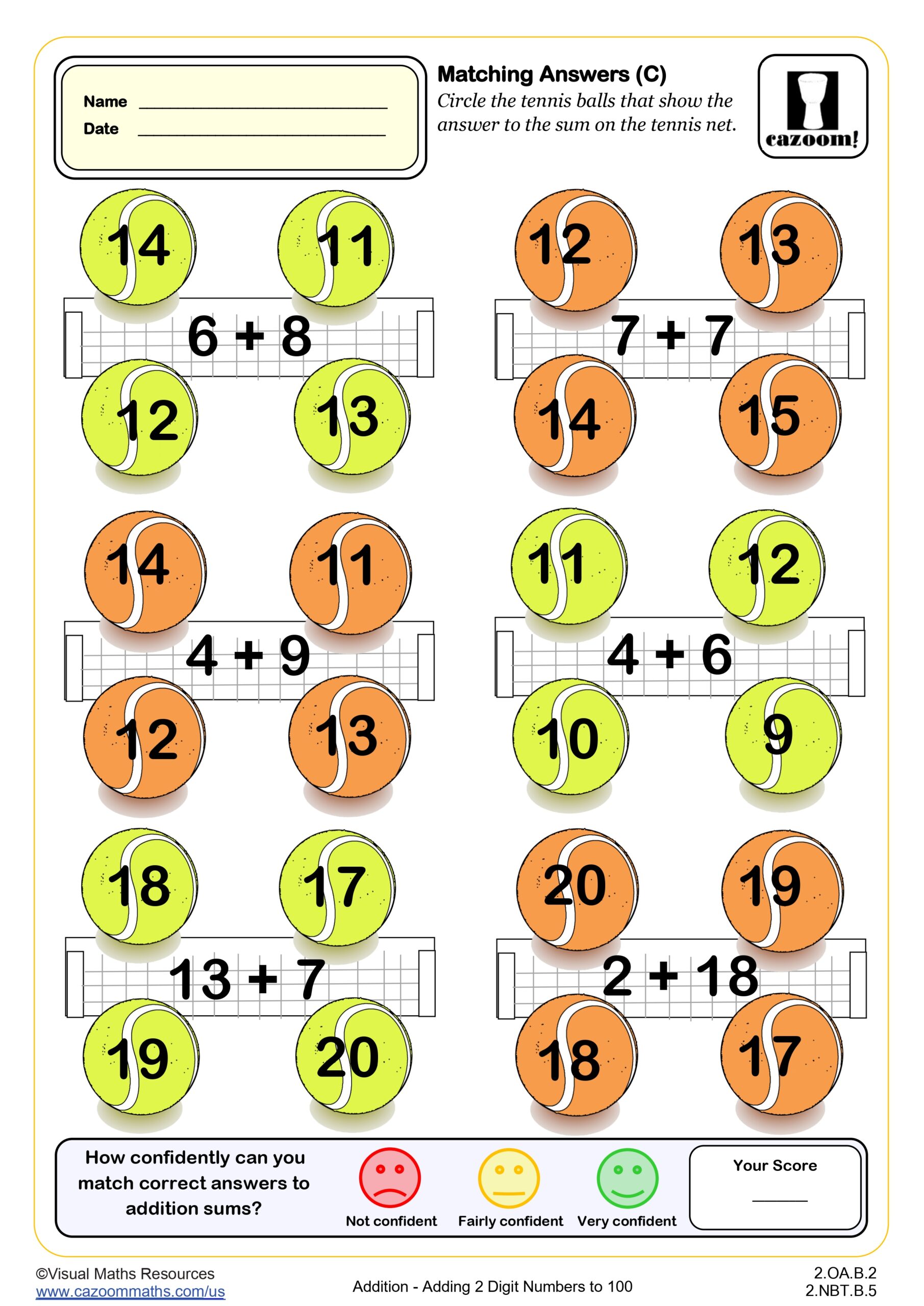
Matching Answers (C)
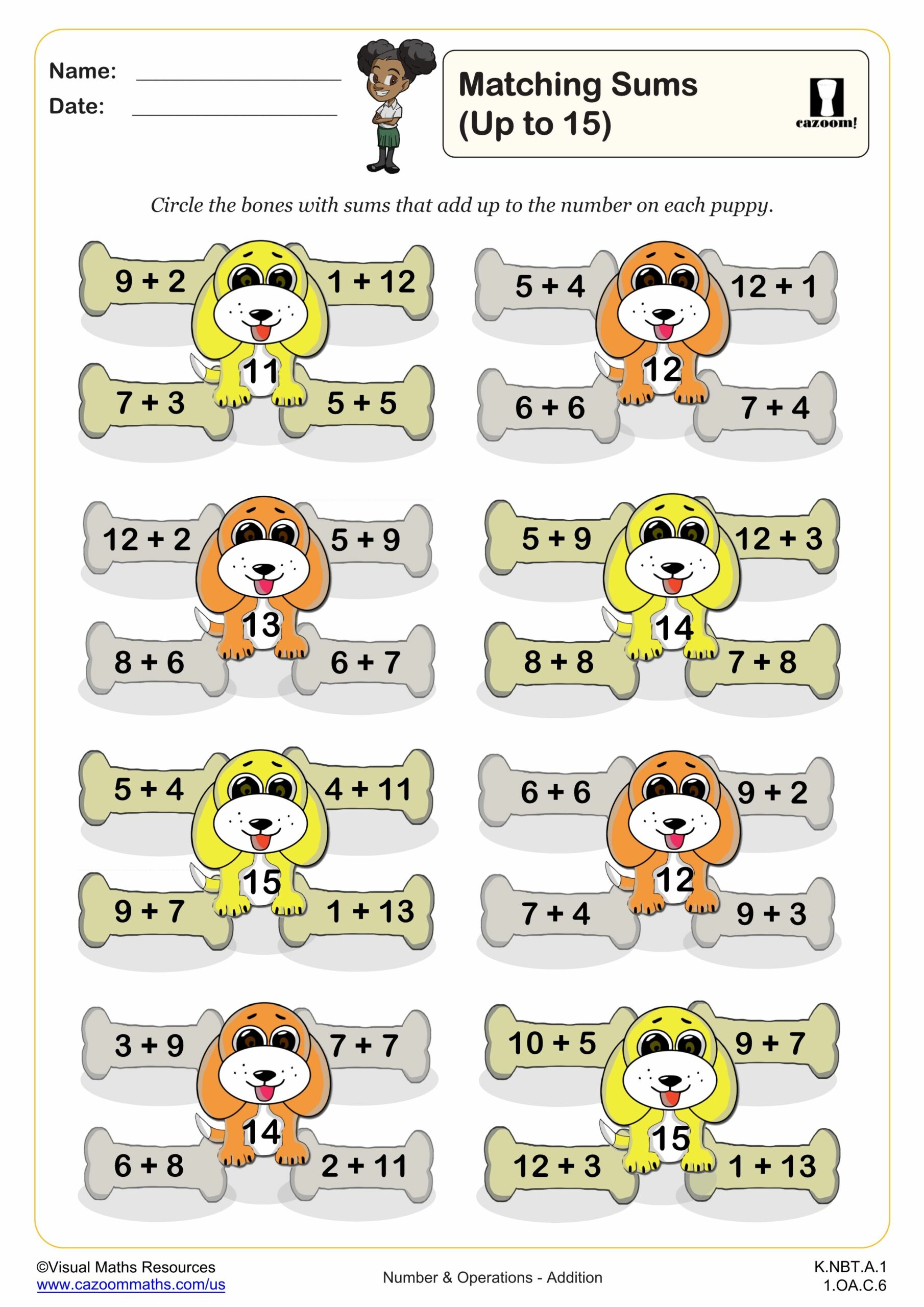
Matching sums (Up to 15)
All worksheets are created by the team of experienced teachers at Cazoom Math.
What Are Two-Digit Addition Problems Without Regrouping?
Two-digit addition without regrouping involves combining numbers where the sum of the ones place and the sum of the tens place both stay under 10. For example, 23 + 45 works without regrouping because 3 + 5 = 8 (no carrying needed) and 2 + 4 = 6. This approach aligns with first-grade standards that introduce multi-digit addition before students tackle the more abstract concept of regrouping in second grade.
Students often struggle when they add the tens place first instead of starting with the ones place, which becomes problematic once regrouping is introduced later. Teachers frequently use color-coded worksheets or vertical alignment to emphasize that ones must be added to ones and tens to tens. A breakthrough typically happens when students recognize the connection between counting by tens and the tens column, making 40 + 30 feel as natural as 4 + 3.
What Grade Level Practices Adding Two-Digit Numbers to 100?
These worksheets target first-grade students in elementary school, specifically addressing Common Core standard 1.NBT.C.4, which requires students to add within 100 using concrete models, drawings, and strategies based on place value. First graders work extensively with two-digit addition as they transition from single-digit fact fluency to understanding how numbers are composed of tens and ones.
The worksheets increase in difficulty through problem quantity rather than complexity, starting with 10-question sets that allow careful attention to each problem and advancing to 50-question practice that builds stamina and automaticity. Some collections also include focused practice adding specific single digits (like 5 or 6) to two-digit numbers, which helps students recognize patterns and develop mental math strategies they'll apply when regrouping is introduced in second grade.
Why Practice Adding Single Digits to Two-Digit Numbers?
Adding a single digit like 5 or 6 to two-digit numbers helps students isolate the ones place while keeping the tens place constant, reinforcing place value understanding without the visual clutter of two full addends. This targeted practice builds number sense as students notice patterns: adding 5 to any number ending in 3 always produces a number ending in 8, for example. It also strengthens the mental math pathways needed for quick calculations.
This skill connects directly to real-world money situations that first graders encounter. When a child has 42 cents and receives a nickel, they're adding 5 to 42 to find their new total. Similarly, measuring activities in science class—adding 6 inches to a plant that was 24 inches tall last week—require this exact computational skill. These practical applications make the abstract numbers meaningful and show students why accuracy matters beyond the worksheet.
How Should Teachers Use These Addition Worksheets?
The worksheets scaffold learning through graduated practice, starting with shorter sets that allow teachers to observe student strategies and address misconceptions before moving to longer practice sets. The included answer keys enable quick formative assessment, helping teachers identify which students confuse place values or make consistent calculation errors. Many teachers use the 10-question sheets for initial instruction or small-group intervention, while the 50-question versions work well for students ready to build speed.
These worksheets serve multiple classroom purposes throughout the week. Teachers assign them during math centers while working with guided math groups, use them as morning work to activate prior knowledge, or send them home as meaningful practice that parents can support. The variety of question counts also makes them practical for differentiation—students who need more time work through fewer problems with the same rigor, while advanced learners tackle extended practice or time themselves to build computational fluency.