1st Grade Adding Numbers up to 100 Worksheets
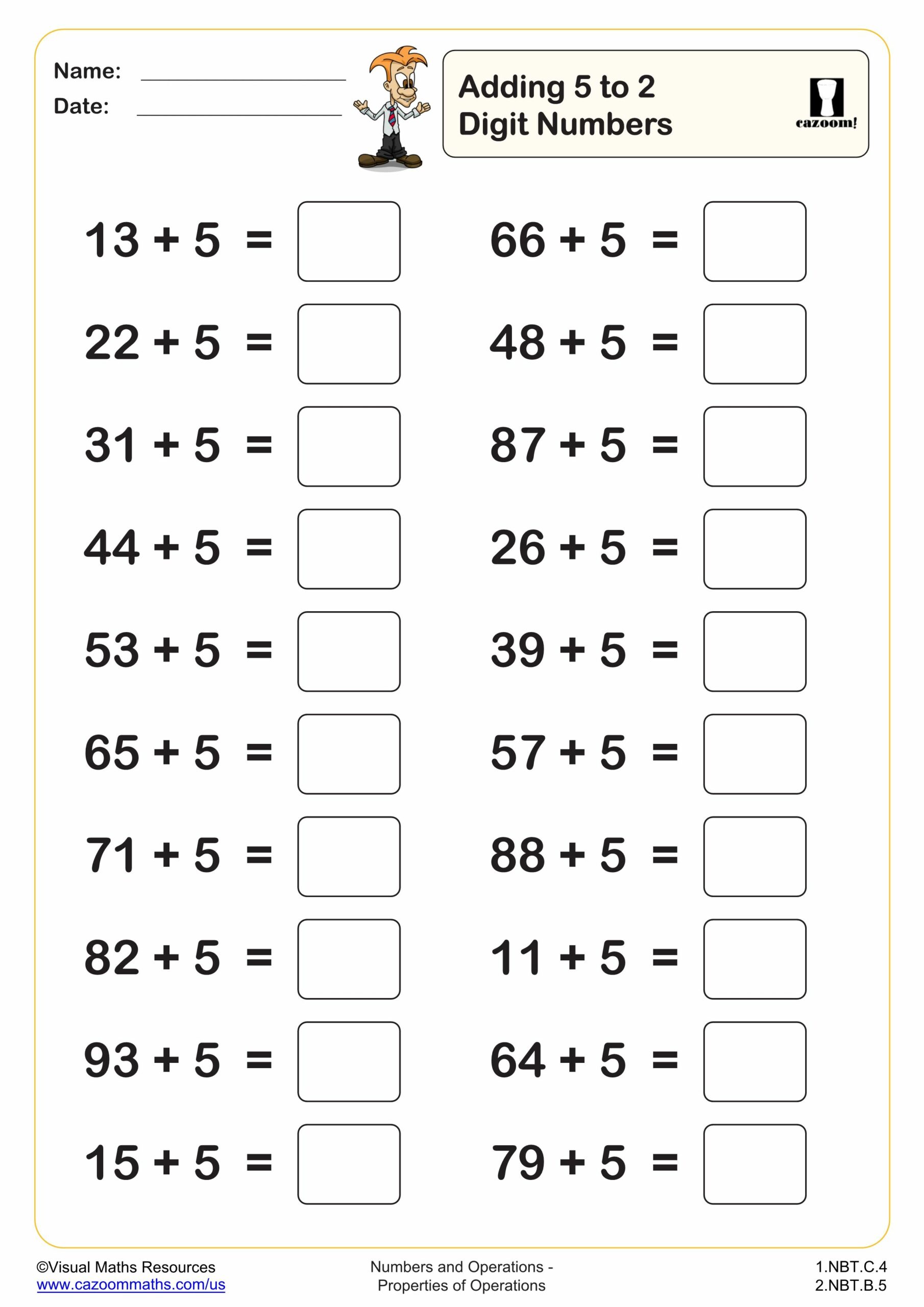
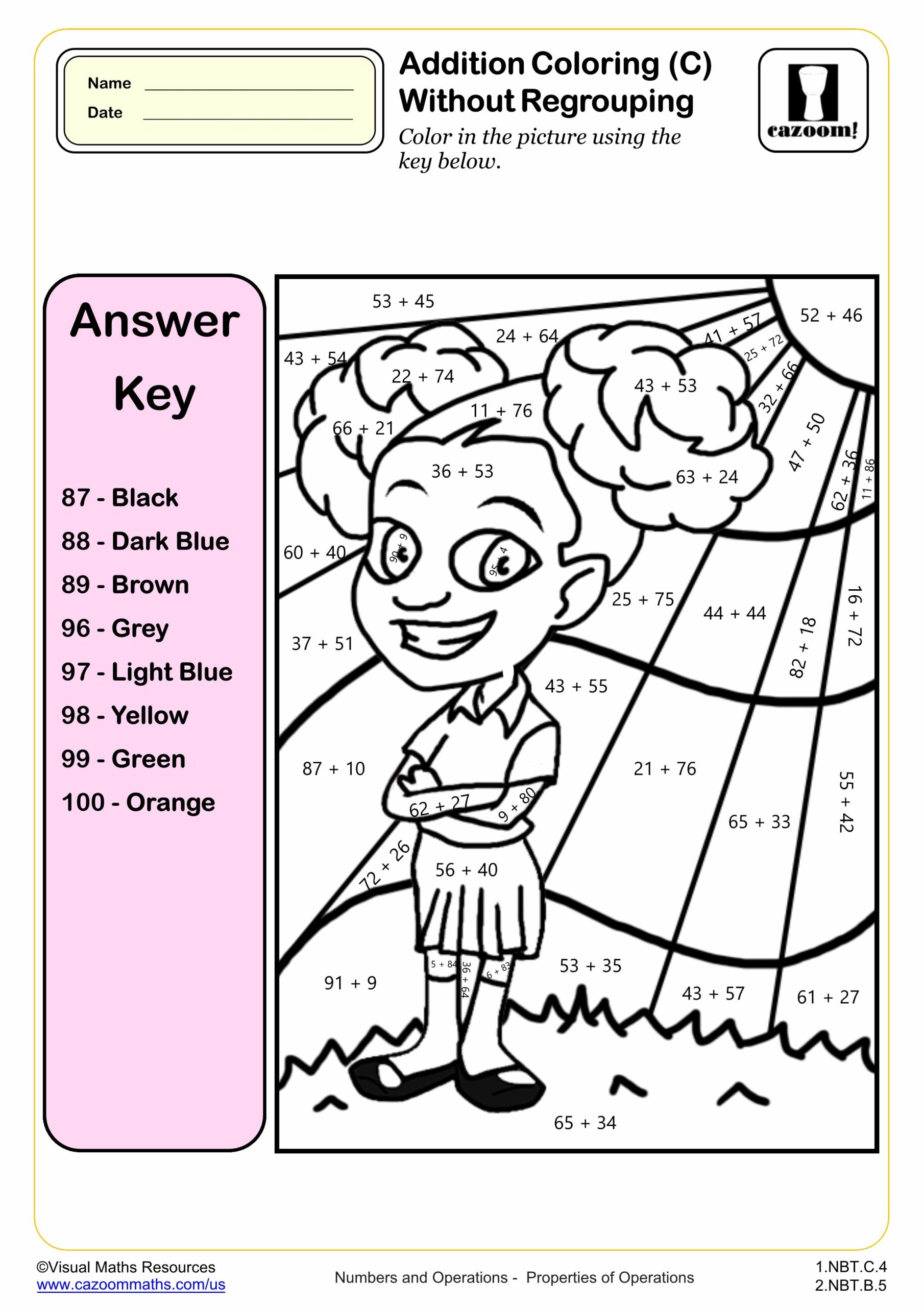
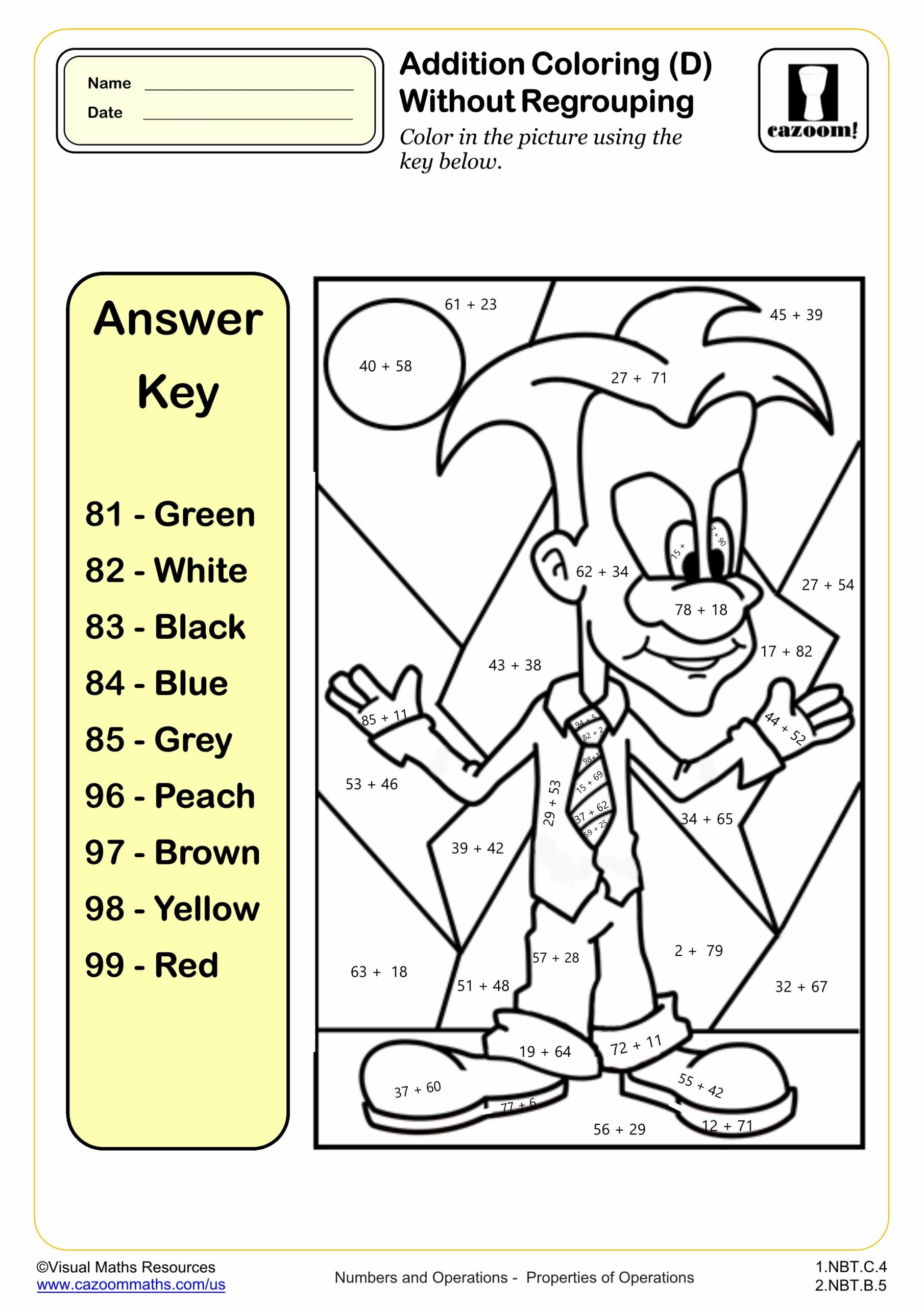
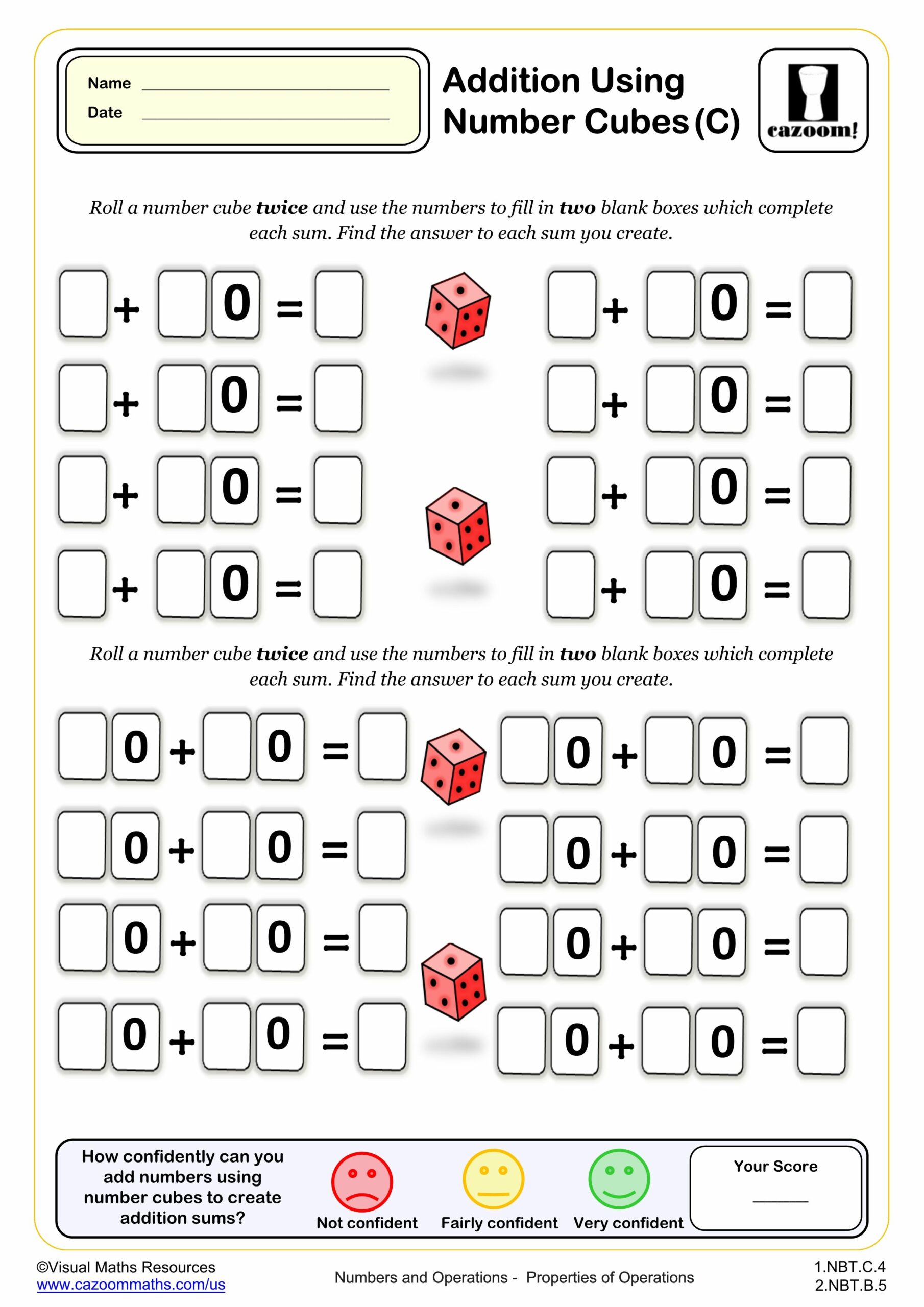
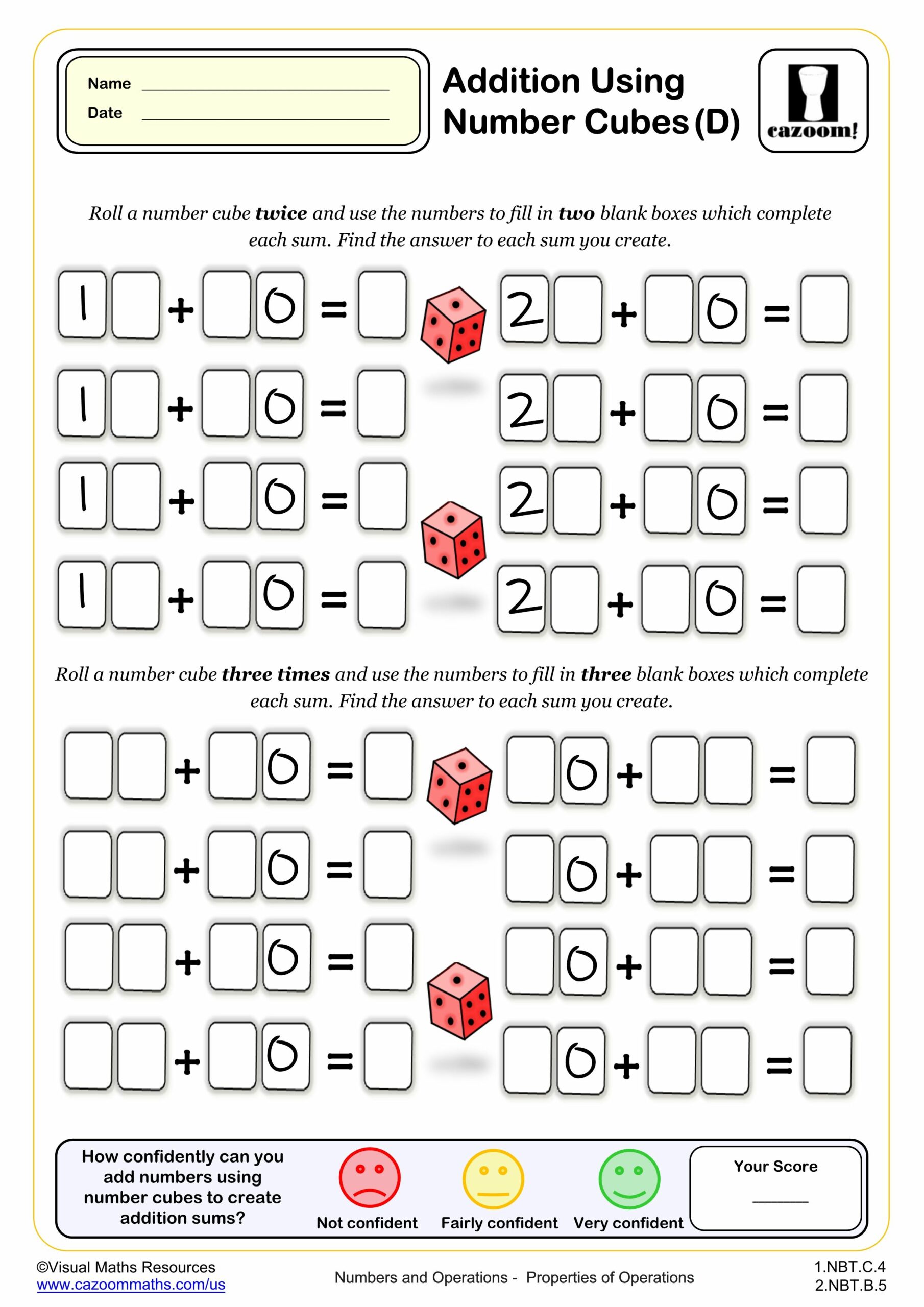
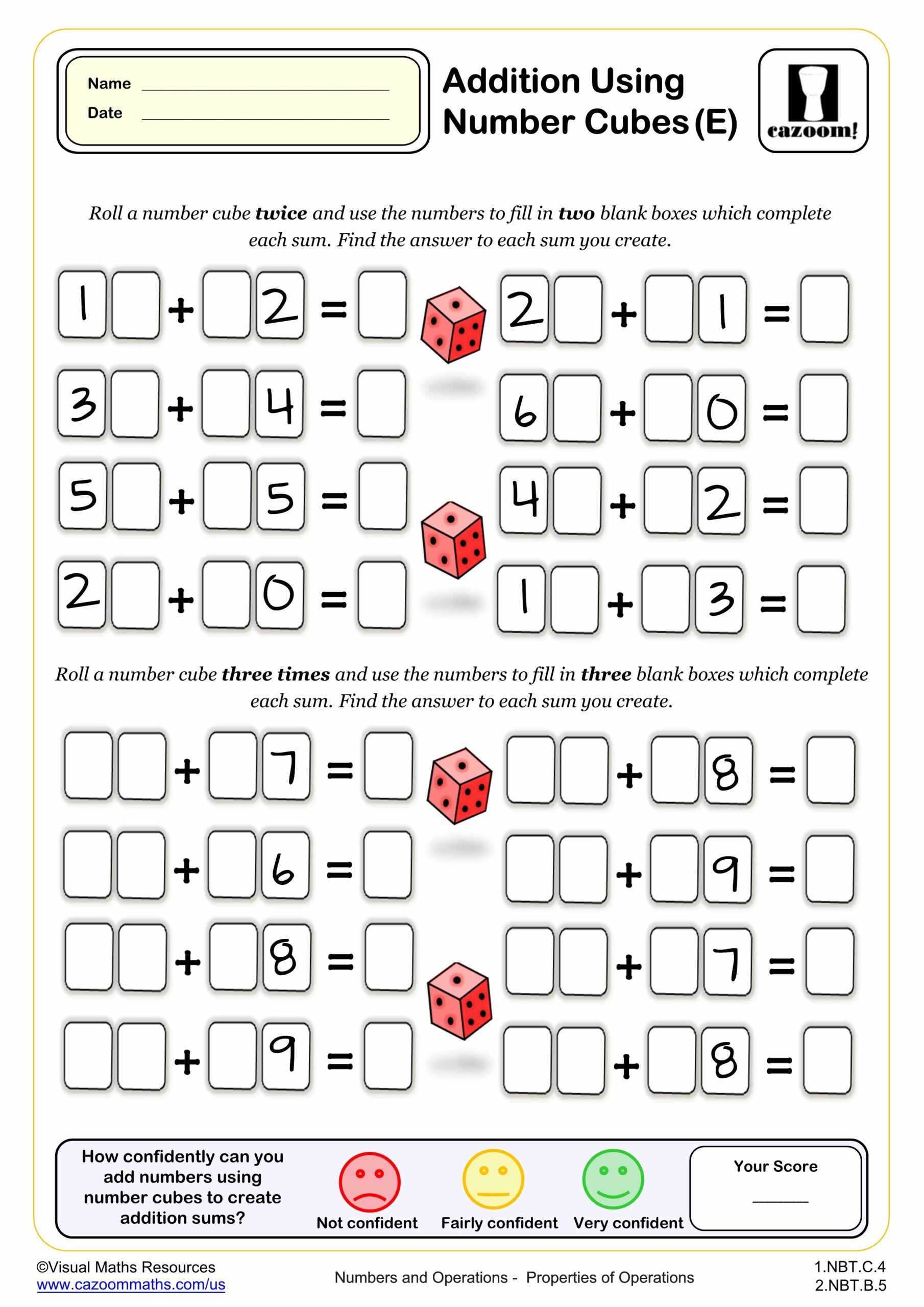
All worksheets are created by the team of experienced teachers at Cazoom Math.
What Addition Skills Do First Graders Need for Numbers Up to 100?
First grade addition up to 100 aligns with Common Core standard 1.NBT.C.4, which requires students to add within 100 using concrete models, drawings, and strategies based on place value and properties of operations. Students move beyond memorized single-digit facts to apply flexible thinking with larger numbers, understanding how tens and ones combine.
A common error pattern emerges when students add the digits in each place value position but forget to regroup—writing 8 + 7 = 15 correctly in isolation, but recording 48 + 27 as 615 instead of 75. Worksheets that incorporate visual models like base-ten blocks or number cubes help students see why regrouping ten ones into a new ten makes mathematical sense, reducing this procedural mistake.
Which Grade Levels Practice Adding Numbers Up to 100?
These worksheets target first grade students in elementary school, the year when students transition from addition within 20 to working with larger two-digit numbers. First grade represents a critical developmental stage where students apply their understanding of place value to computation for the first time.
The difficulty progression within first grade addition to 100 typically starts with adding multiples of ten (30 + 20), then moves to two-digit plus one-digit with no regrouping (34 + 5), advances to two-digit plus two-digit without regrouping (42 + 37), and finally incorporates problems requiring regrouping across the tens place. Students who master these stages systematically show greater confidence on standardized assessments than those who jump directly to regrouping problems.
How Do Number Cubes Support Addition Learning?
Number cubes (also called base-ten blocks or unit cubes) provide concrete visual representations where individual cubes represent ones and connected rods of ten cubes represent tens. Students can physically manipulate these models to combine quantities, seeing how 34 + 28 means joining 3 tens and 4 ones with 2 tens and 8 ones, then regrouping 12 ones into 1 ten and 2 ones.
This visualization skill directly connects to estimation and measurement in real-world contexts. When students understand that 34 + 28 is approximately 30 + 30 = 60 by focusing on the tens, they're developing the same mental math skills needed to estimate whether $34 and $28 together exceeds the $50 in their wallet, or whether combining 34 centimeters and 28 centimeters of ribbon gives them enough for a 60-centimeter project.
How Can Teachers Use These Addition Worksheets Effectively?
These worksheets provide scaffolded practice opportunities that move from highly visual supports (addition coloring and number cube problems) to more abstract numerical representations. The coloring activities particularly engage reluctant learners by embedding computation practice within an art-based task, reducing math anxiety while building automaticity with two-digit addition.
Teachers find these worksheets valuable for differentiated math centers, allowing students who've mastered basic addition to work independently while the teacher provides small-group instruction for students needing intervention. The complete answer keys make these worksheets equally effective as homework assignments, enabling families to check understanding at home, or as pre-assessment tools to identify which students need additional place value review before tackling regrouping problems.