1st Grade Addition with Visual Aids Worksheets
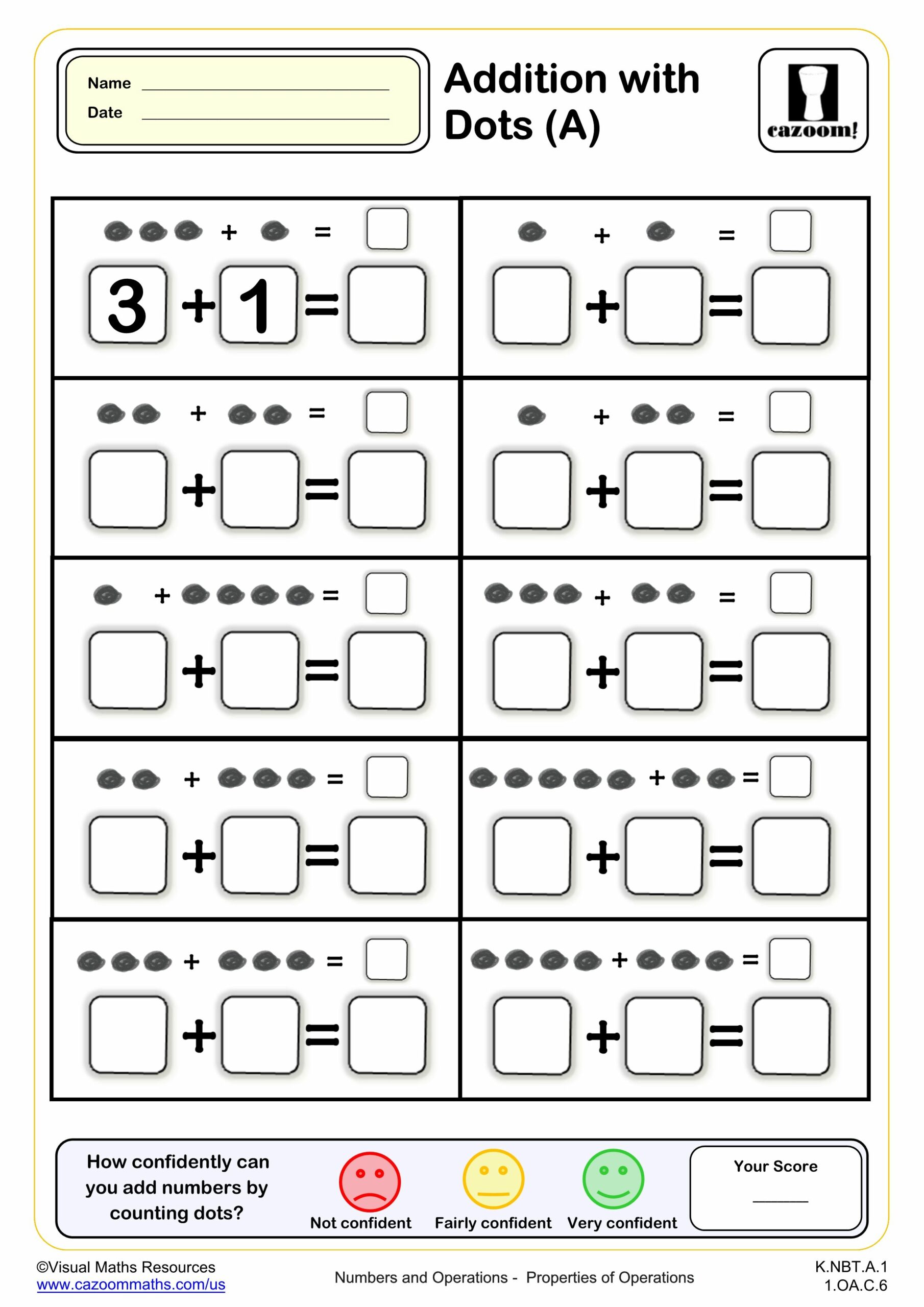
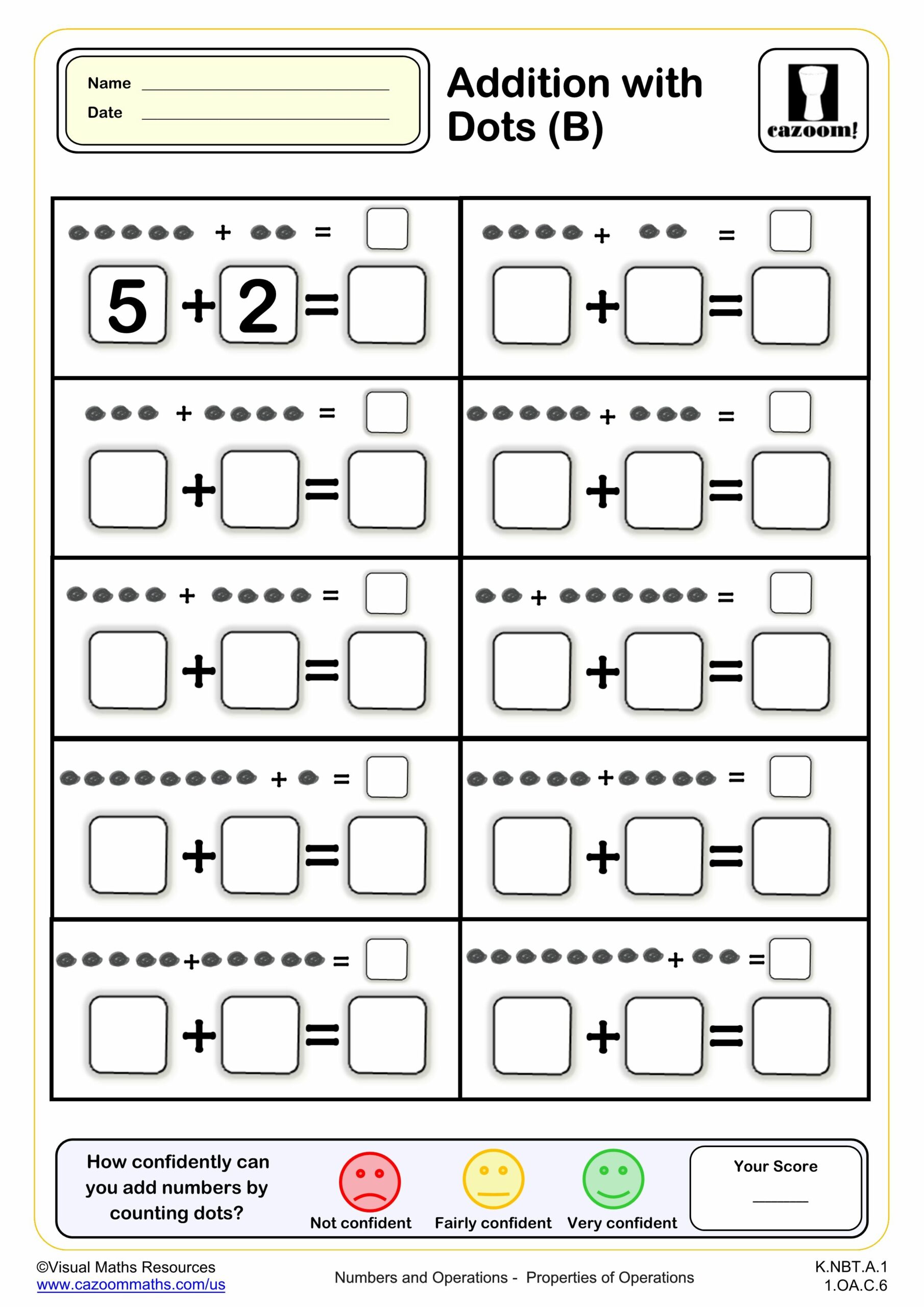
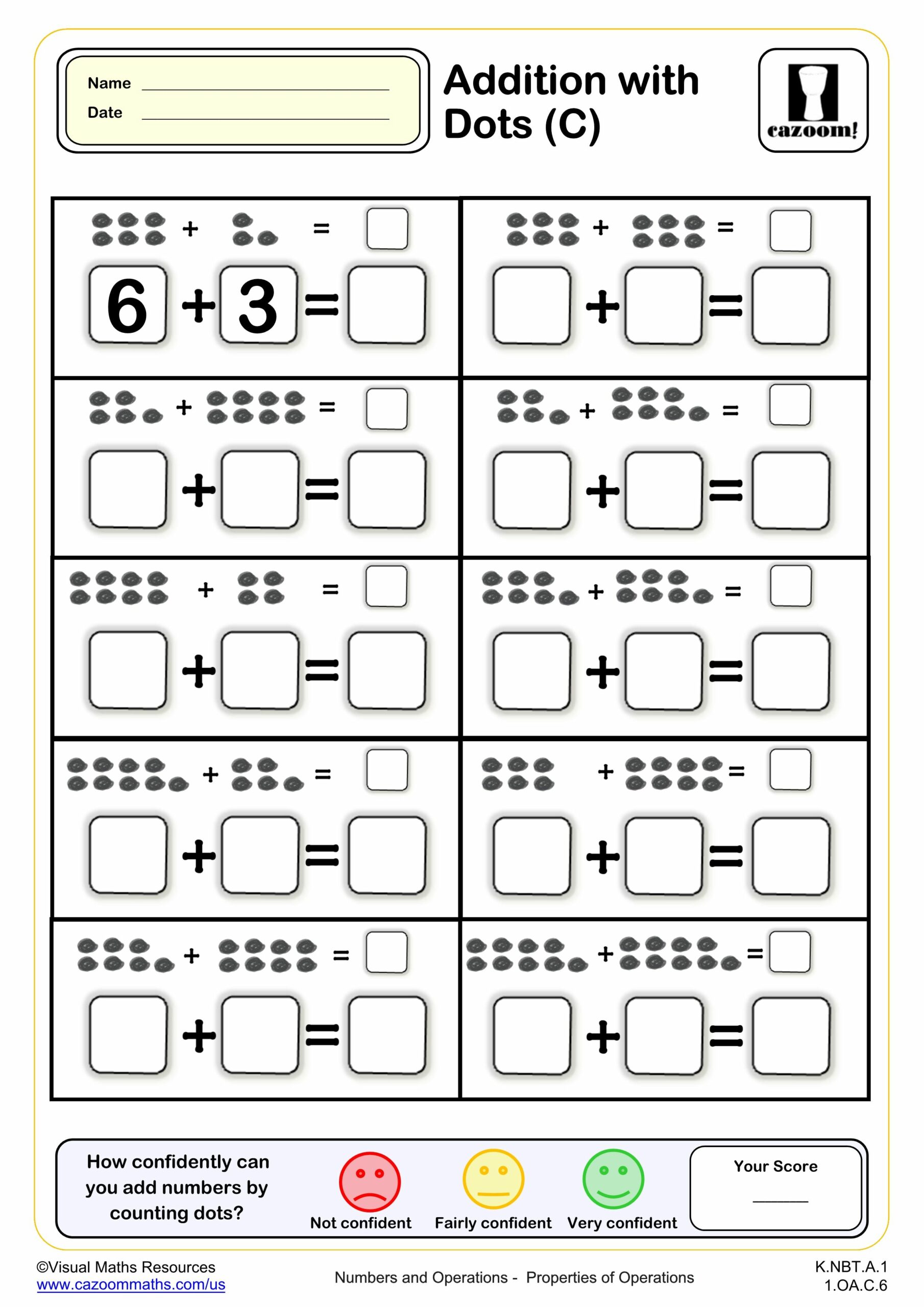
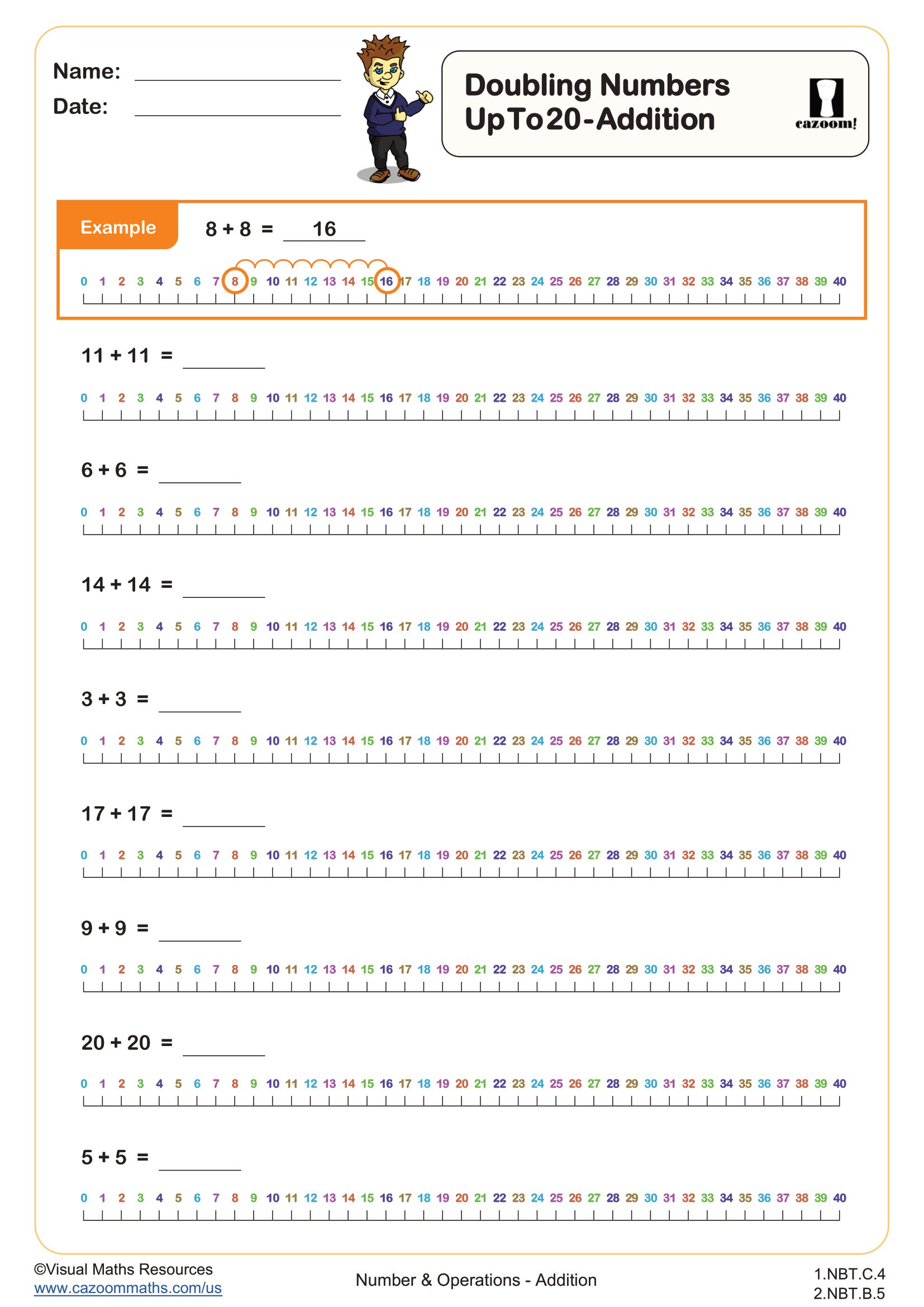
All worksheets are created by the team of experienced teachers at Cazoom Math.
Why Are Visual Aids Important for First Grade Addition?
Visual aids provide first graders with concrete references as they transition from manipulatives to abstract number work. Pictures, counters, and number lines help students understand what addition means rather than just applying memorized facts. The Common Core State Standards emphasize using drawings and equations to solve addition problems within 20, recognizing that visual representations deepen conceptual understanding.
A common misconception occurs when students count all items from one rather than counting on from the larger number. For example, when solving 8 + 3 with pictures, many first graders will count from 1 to 8, then continue to 11, instead of starting at 8 and counting forward three more. Worksheets with number lines help students visualize the counting-on strategy, which significantly improves efficiency and reduces finger-counting dependency.
What Grade Level Uses Addition Worksheets with Visual Aids?
These worksheets target first grade students in elementary school, aligning with the developmental stage when children build foundational addition skills. First graders typically work with sums within 20, using visual supports to understand how quantities combine and to develop automaticity with basic addition facts.
As students progress through first grade, visual aids gradually become more abstract. Early worksheets might show detailed pictures of objects to count, while later materials introduce ten-frames, simplified dots, or number lines that require students to visualize quantities mentally. This progression prepares students for second grade addition without visual supports, where they'll work with larger numbers and multi-digit problems using place value understanding.
How Do Number Lines Help Students Learn Addition?
Number lines to 20 teach students to visualize addition as movement along a sequence, reinforcing that addition means moving forward or increasing quantity. Students place their finger on the first number and make jumps forward to find the sum, which builds understanding of number relationships and prepares them for mental math strategies. This method particularly helps students see patterns, like adding 10 simply means jumping to the next decade.
Number lines connect directly to real-world measurement applications that students will encounter in STEM contexts. When children eventually measure distances, track temperatures, or read rulers and thermometers, they're using the same number line thinking developed through these addition exercises. Scientists and engineers constantly use number line reasoning when working with scales, timelines, and coordinate systems, making this foundational skill relevant far beyond elementary arithmetic.
How Should Teachers Use These Addition Worksheets in the Classroom?
These worksheets provide scaffolded practice that moves students from concrete representation to symbolic understanding. The variety of visual formats addresses different learning preferences while reinforcing the same addition concepts, allowing teachers to differentiate instruction based on student readiness. The included answer keys make independent work feasible, freeing teachers to work with small groups or individual students who need targeted support.
Many teachers use these worksheets during math centers or stations, pairing students strategically so stronger counters can model counting-on strategies for peers still counting all. They work equally well for morning work, allowing teachers to quickly assess which students have mastered counting strategies versus those still relying on inefficient methods. The visual nature makes these worksheets particularly effective for intervention with struggling learners or English language learners who benefit from picture-supported instruction.