1st Grade Counting Worksheets
All worksheets are created by the team of experienced teachers at Cazoom Math.
What Counting Skills Do First Graders Need to Master?
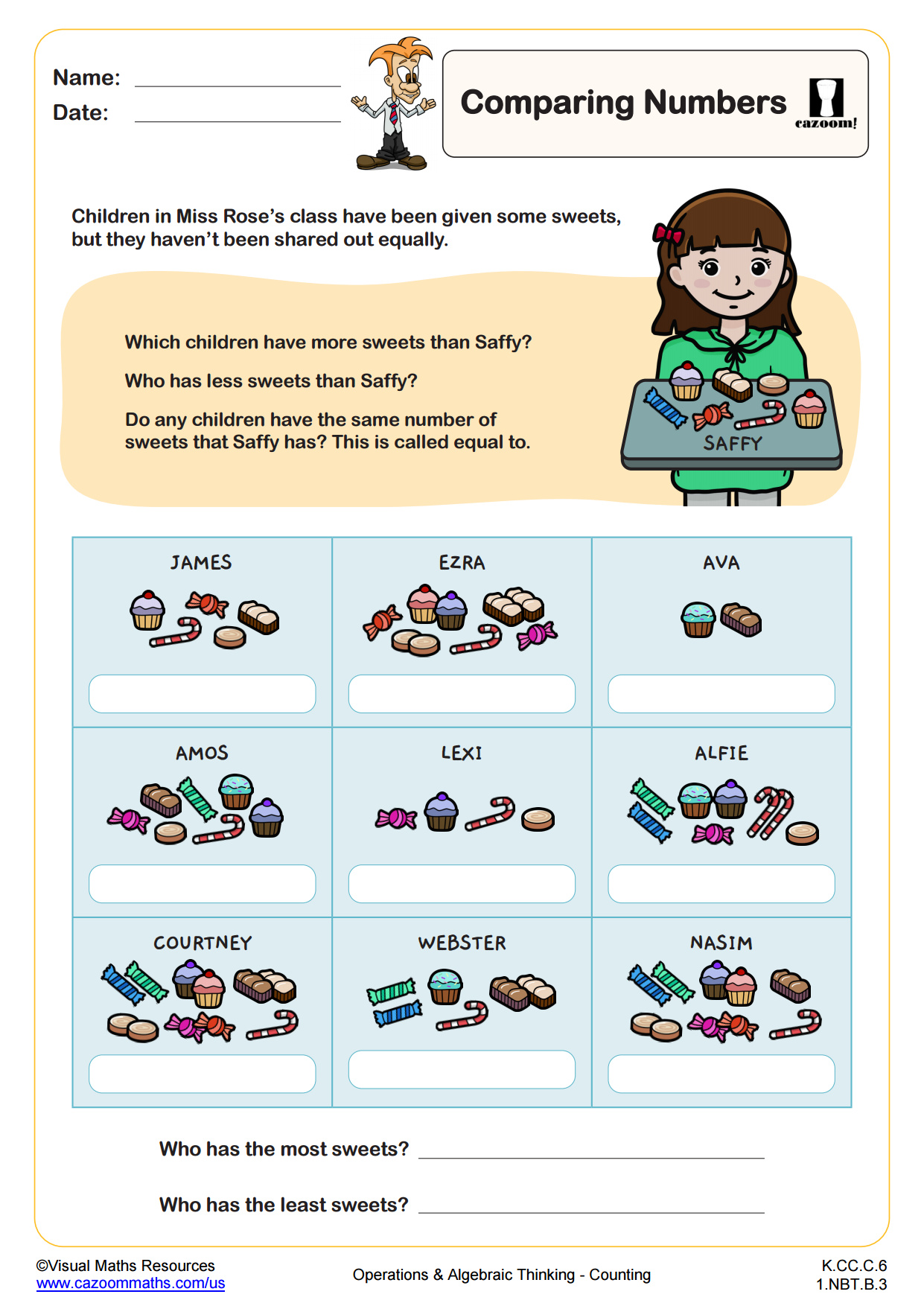
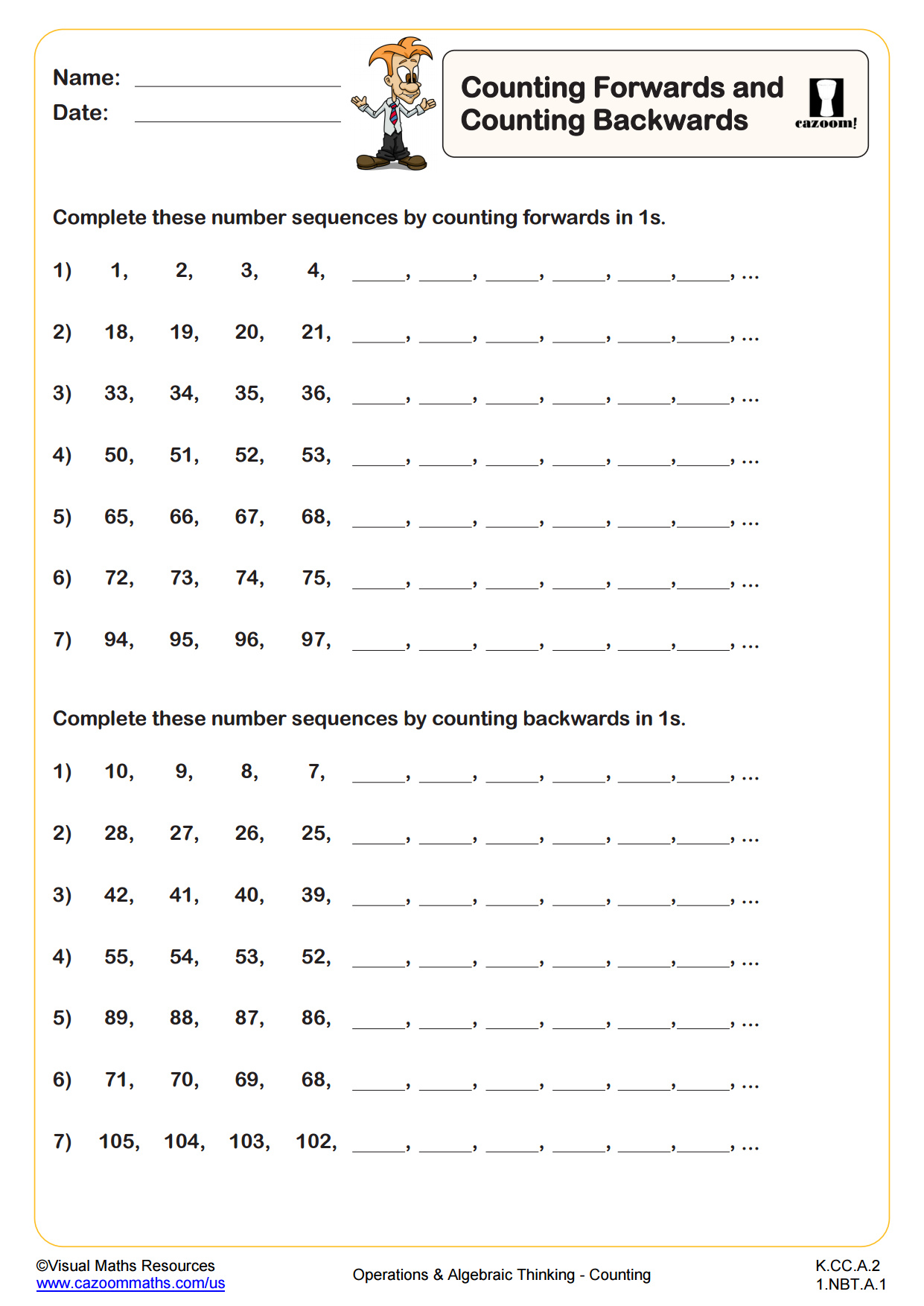
First graders need to count forward and backward within 120, compare two-digit numbers using greater than, less than, and equal to symbols, and understand the relationship between numbers and quantities. These foundational skills align with Common Core State Standards for first grade mathematics and directly support addition and subtraction strategies students will use throughout the year.
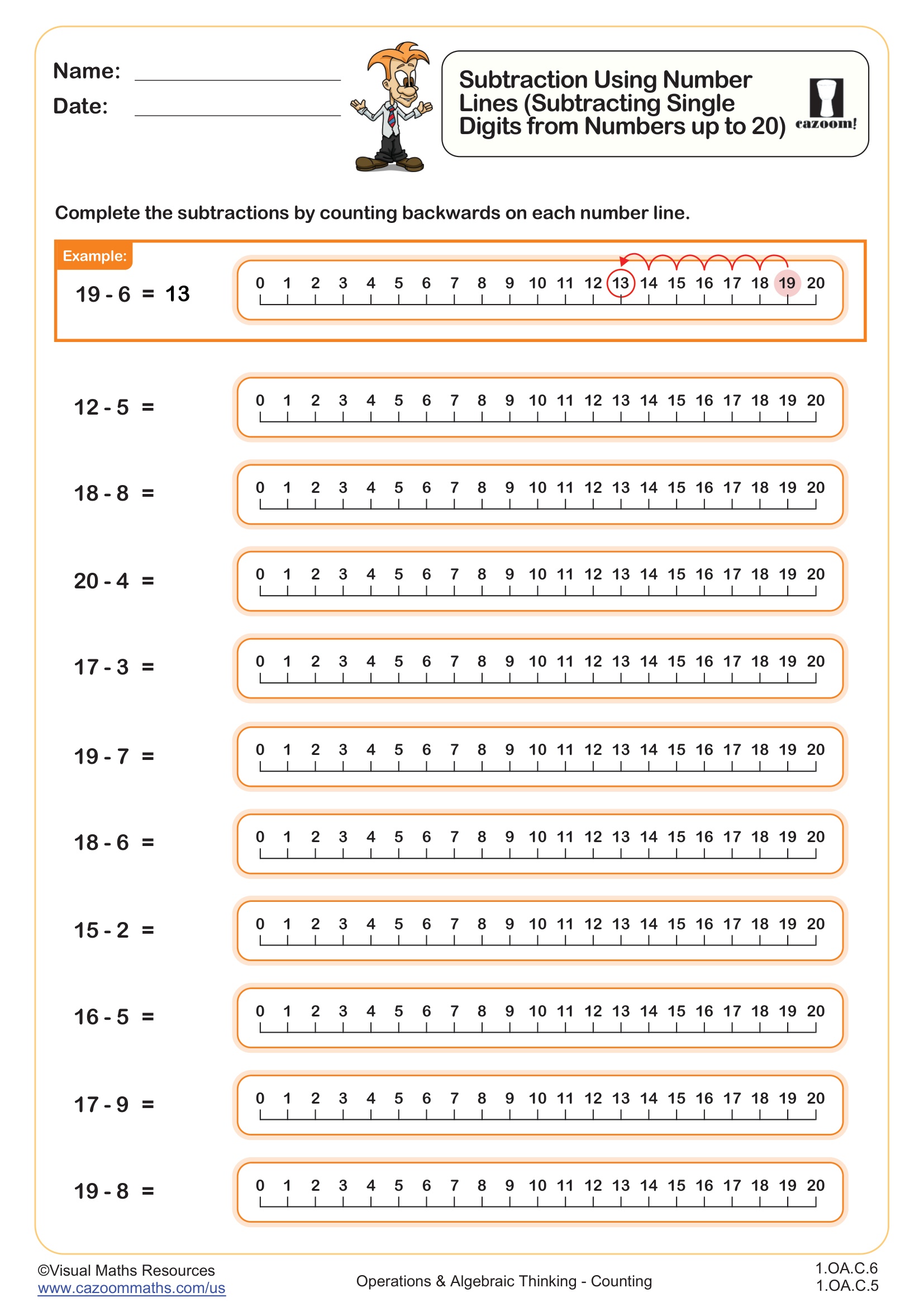
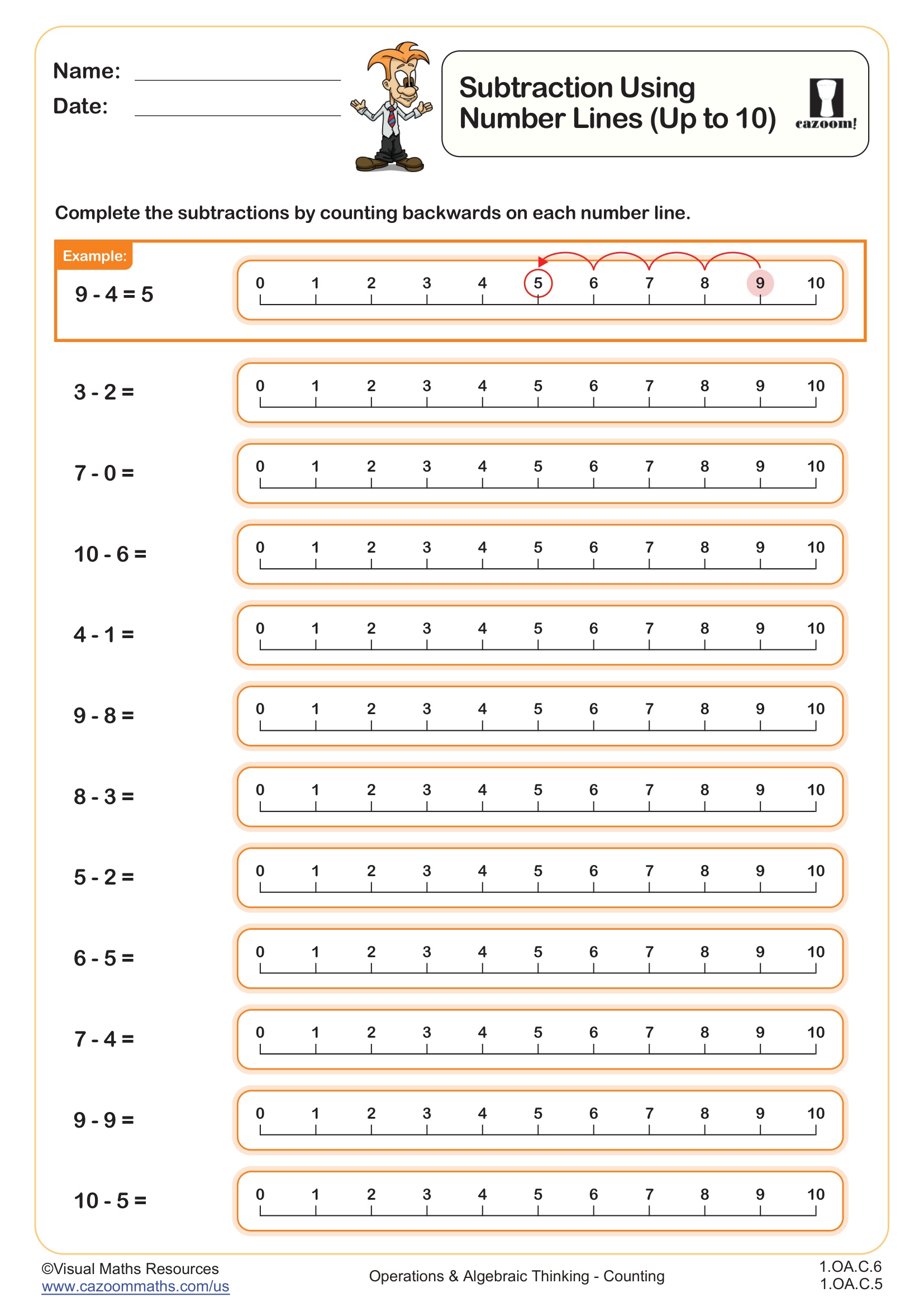
Students often lose points on assessments when they confuse the direction of comparison symbols, remembering that the "mouth" opens toward the larger number helps most students make this connection. The number line work with subtraction creates a visual model that bridges counting backward with actual subtraction facts, helping students see that subtracting 3 means moving three spaces to the left on the number line.
What Grade Levels Are These Counting Worksheets For?
These worksheets target first grade students in elementary school, covering the counting and number comparison skills expected at this level. The materials align with typical first grade curriculum standards where students extend their counting range and develop more sophisticated number sense than they had in kindergarten.
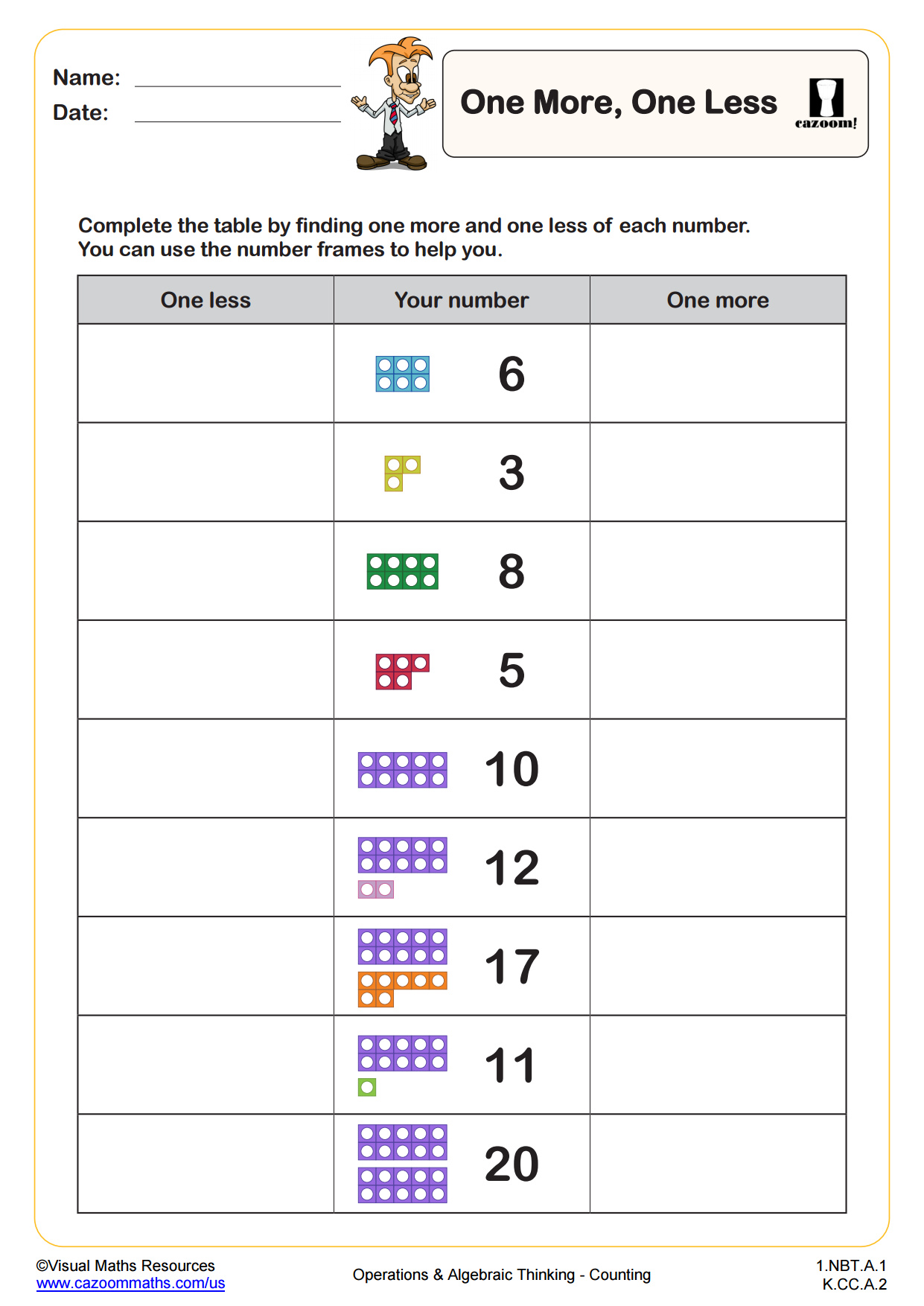
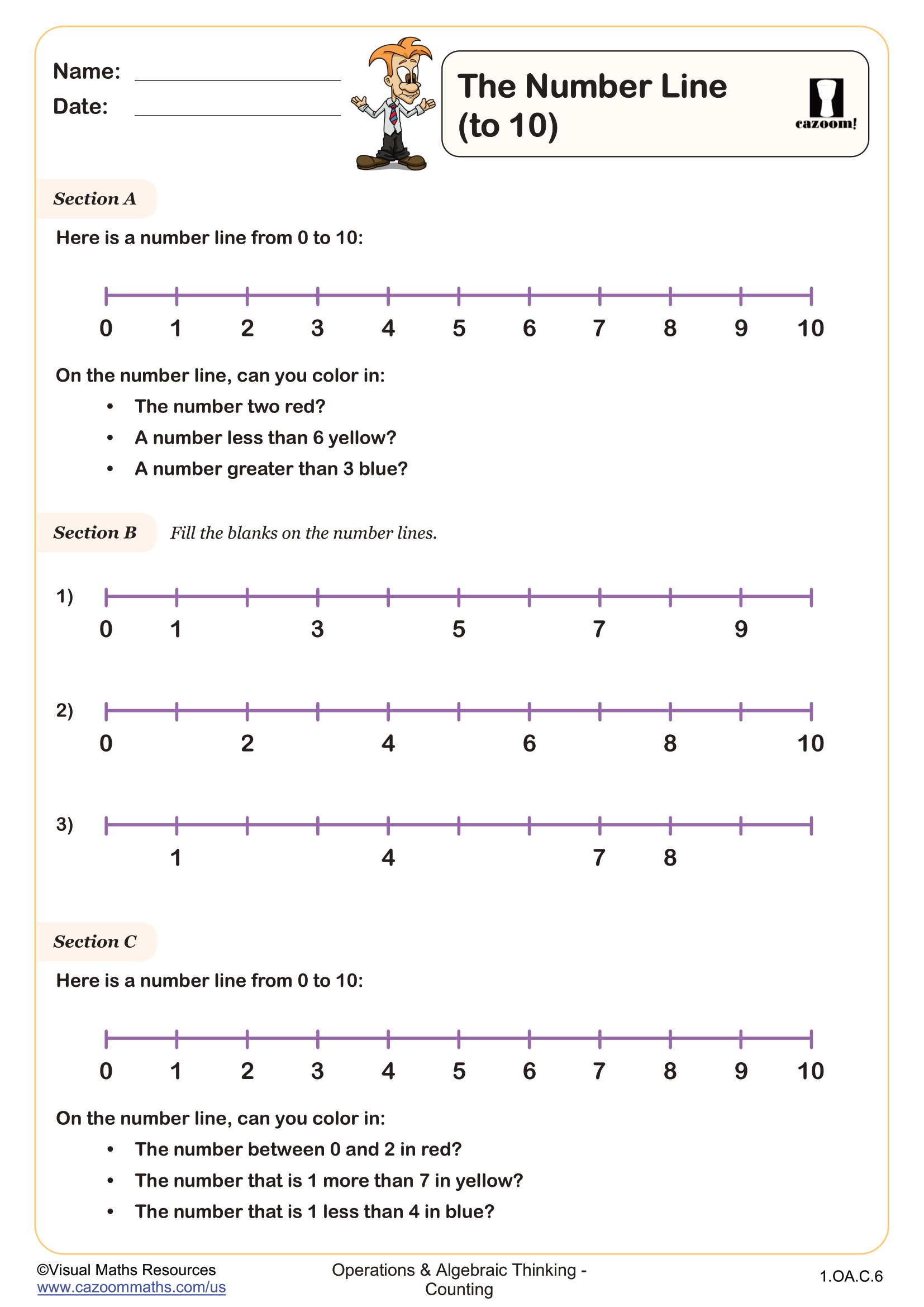
The difficulty progression starts with comparing single-digit and teen numbers, then moves to counting sequences forward and backward within 20, and builds toward subtraction using number lines as a visual strategy. Teachers notice that students who master one more and one less relationships typically find mental math strategies easier to grasp later in the year, since they've developed flexibility in how they think about numbers rather than just memorizing isolated facts.
How Do Number Lines Help Students Understand Subtraction?
Number lines provide a visual representation of subtraction as movement or distance, showing that subtracting means counting backward or finding the difference between two points. Students see subtraction problems like 8 - 3 as starting at 8 and hopping three spaces left to land on 5, which connects the abstract operation to concrete movement they can track with their finger or pencil.
This visual strategy appears frequently in elementary STEM activities where students measure, compare lengths, or track changes over time. When students later work with thermometers showing temperature changes or rulers measuring how much longer one object is than another, they're applying the same number line reasoning they practiced with these subtraction problems. The number line becomes a universal tool for understanding quantities that increase or decrease.
How Can Teachers Use These Counting Worksheets in the Classroom?
The worksheets provide structured practice that moves from basic number comparison to more complex counting sequences and number line subtraction. Answer keys let teachers quickly identify which students grasp each concept and which need additional small-group instruction or manipulative-based practice before moving forward with the written work.
Many teachers use these worksheets for morning work to activate number sense before the main lesson, as intervention materials for students who need extra practice with specific skills, or as homework that parents can support using the answer keys. The variety of subtopics allows teachers to assign different worksheets to different students based on formative assessment results, ensuring each student works at their appropriate challenge level rather than everyone completing identical practice.