1st Grade Describe and Compare Shapes Worksheets
All worksheets are created by the team of experienced teachers at Cazoom Math.
What Are Defining and Non-Defining Attributes of Shapes?
Defining attributes are the characteristics that make a shape what it is, such as the number of sides and vertices. A triangle always has three sides and three corners, regardless of its size, color, or orientation. Non-defining attributes include color, size, and position, which can change without changing what shape it is. First graders learn to focus on defining attributes when identifying and comparing shapes, a key skill in the Common Core State Standards for geometry.
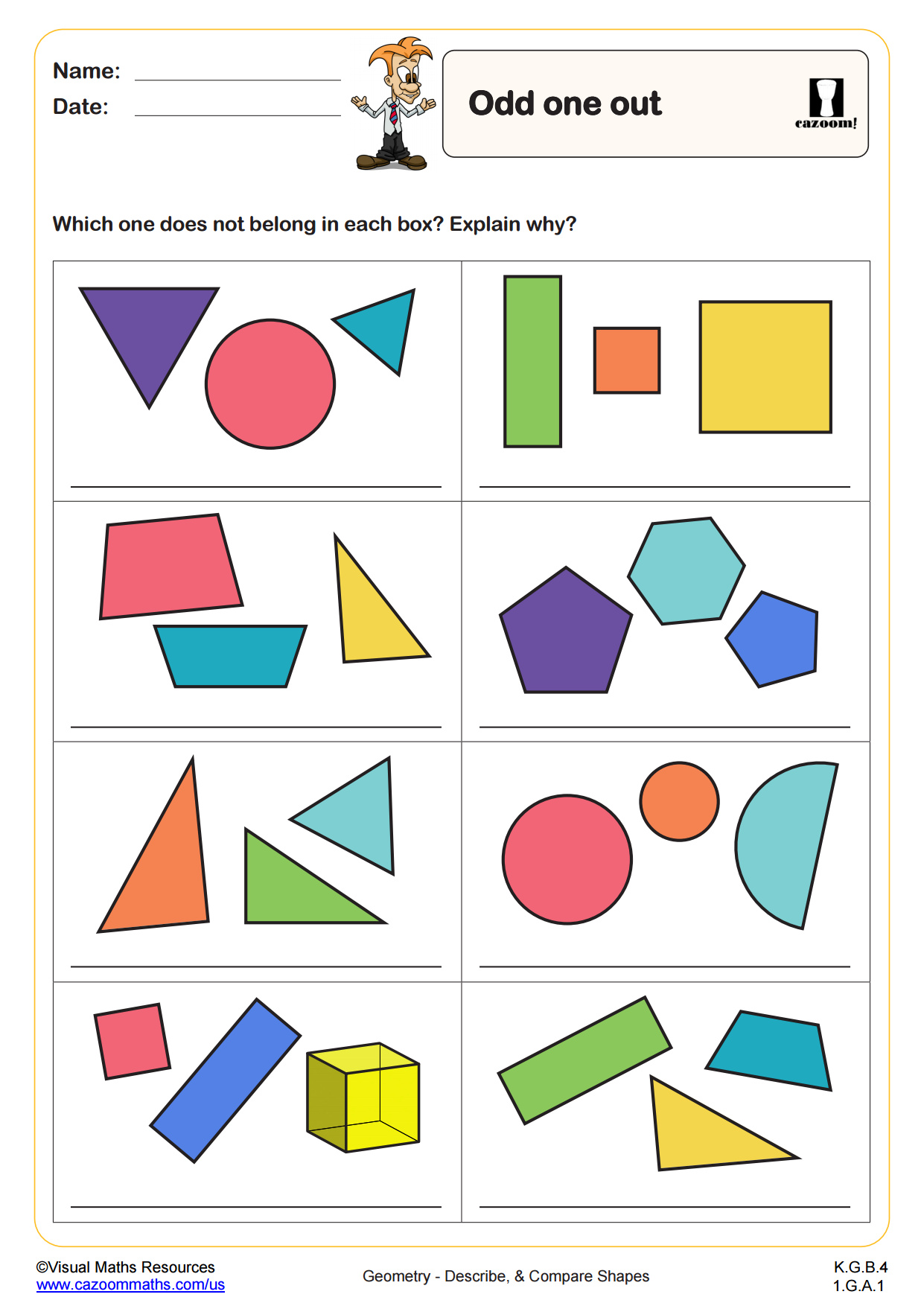
Students frequently make the error of using non-defining attributes to classify shapes, claiming that a small red triangle is different from a large blue triangle. Teachers notice breakthrough moments when students recognize that rotating or flipping a shape doesn't change its identity. Worksheets that ask students to find all the triangles in a mixed collection, regardless of size or orientation, help reinforce this critical distinction between what defines a shape and what simply describes its appearance.
What Grade Level Covers Describing and Comparing Shapes?
These worksheets specifically target first grade geometry standards within elementary school. At this level, students build on kindergarten shape recognition by moving beyond simple naming to analyzing and comparing shape attributes. First graders develop precise vocabulary for describing shapes and begin understanding how shapes relate to each other based on their defining characteristics.
The progression at this grade focuses on systematic observation skills. Students start by identifying basic attributes like counting sides and vertices, then advance to describing how shapes move through space with rotations and position changes. By the end of first grade, students confidently compare shapes based on their attributes and can explain why two different-looking triangles are both triangles. This analytical approach to geometry creates a foundation for more formal geometric definitions and classifications in second and third grade.
How Do Students Learn About Describing Rotations and Movement?
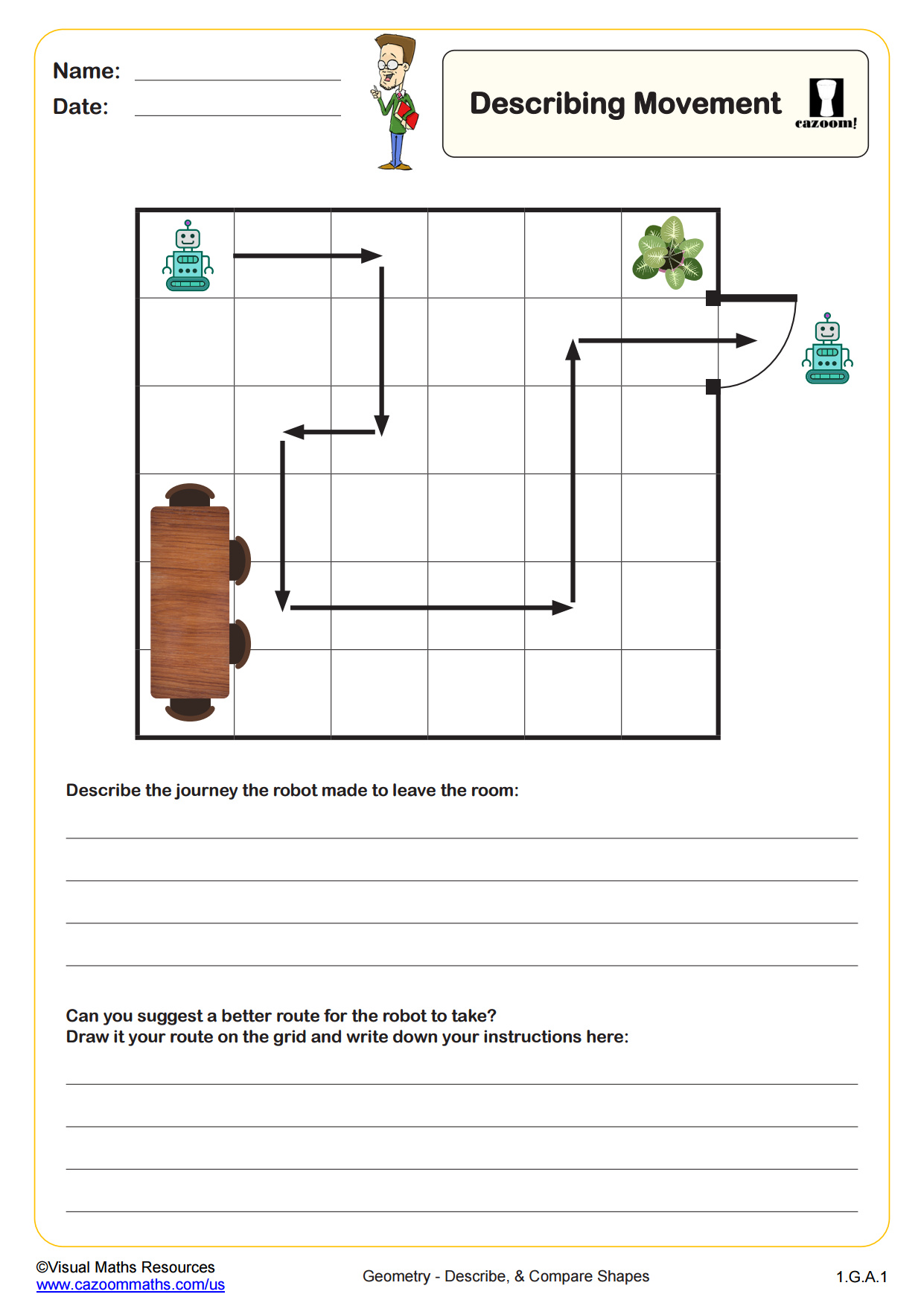
Describing rotations and movement helps first graders understand that shapes maintain their identity even when their position or orientation changes. Students learn vocabulary like turns, flips, and slides to describe how shapes move in space. This spatial reasoning skill involves visualizing how a shape looks after being rotated, reflected, or translated, which develops mental manipulation abilities that extend far beyond basic geometry.
These spatial skills connect directly to real-world applications in engineering, architecture, and computer programming. When architects design buildings, they rotate and position shapes to create floor plans. Video game designers use these same transformations to animate characters and objects on screen. Students who understand that a rotated rectangle is still a rectangle develop the flexible thinking needed for CAD software, robotics programming, and any STEM field requiring spatial visualization. Teachers notice that hands-on practice with physical shape manipulatives before worksheet practice significantly improves student understanding of these transformations.
How Can Teachers Use These Worksheets in the Classroom?
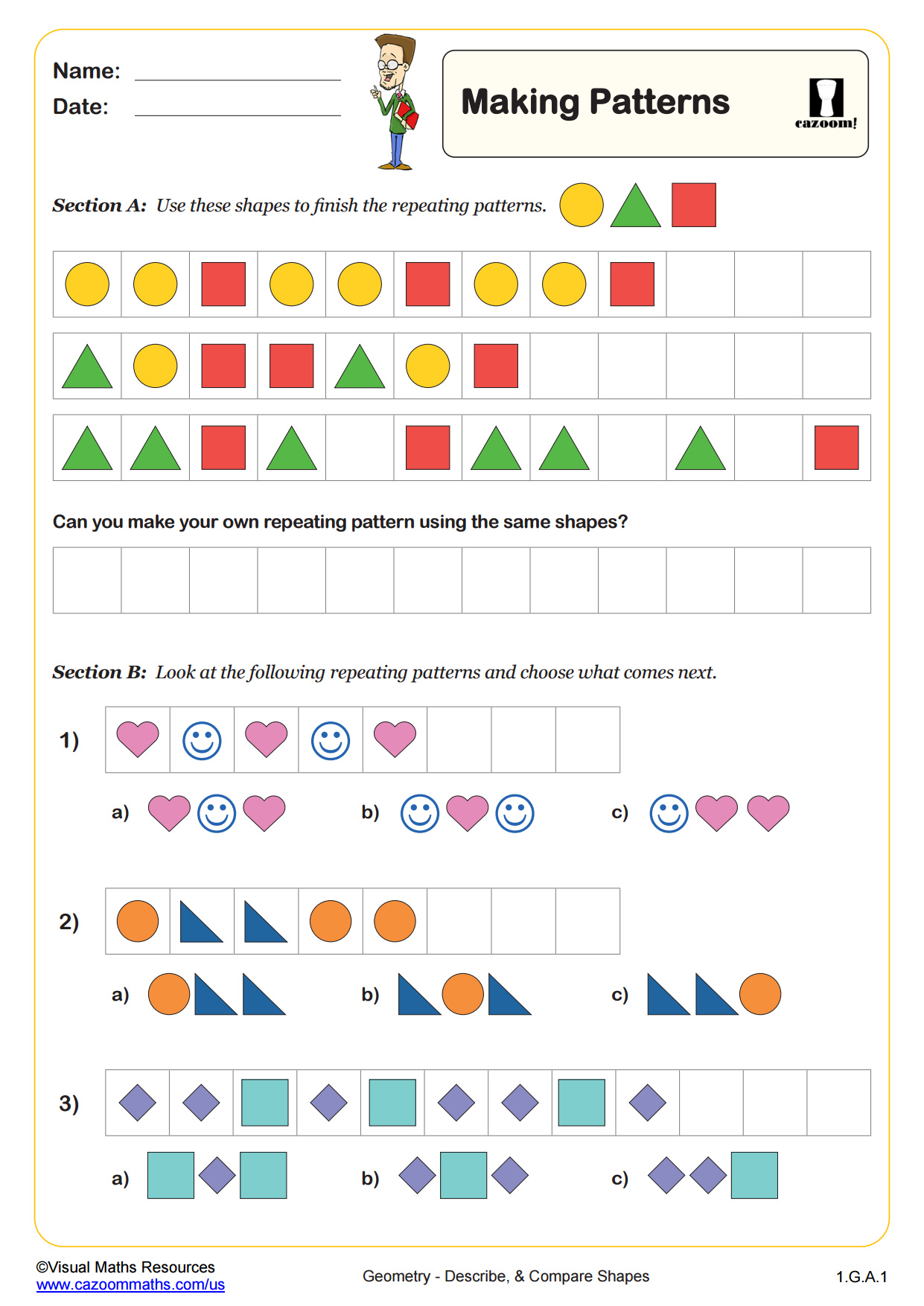
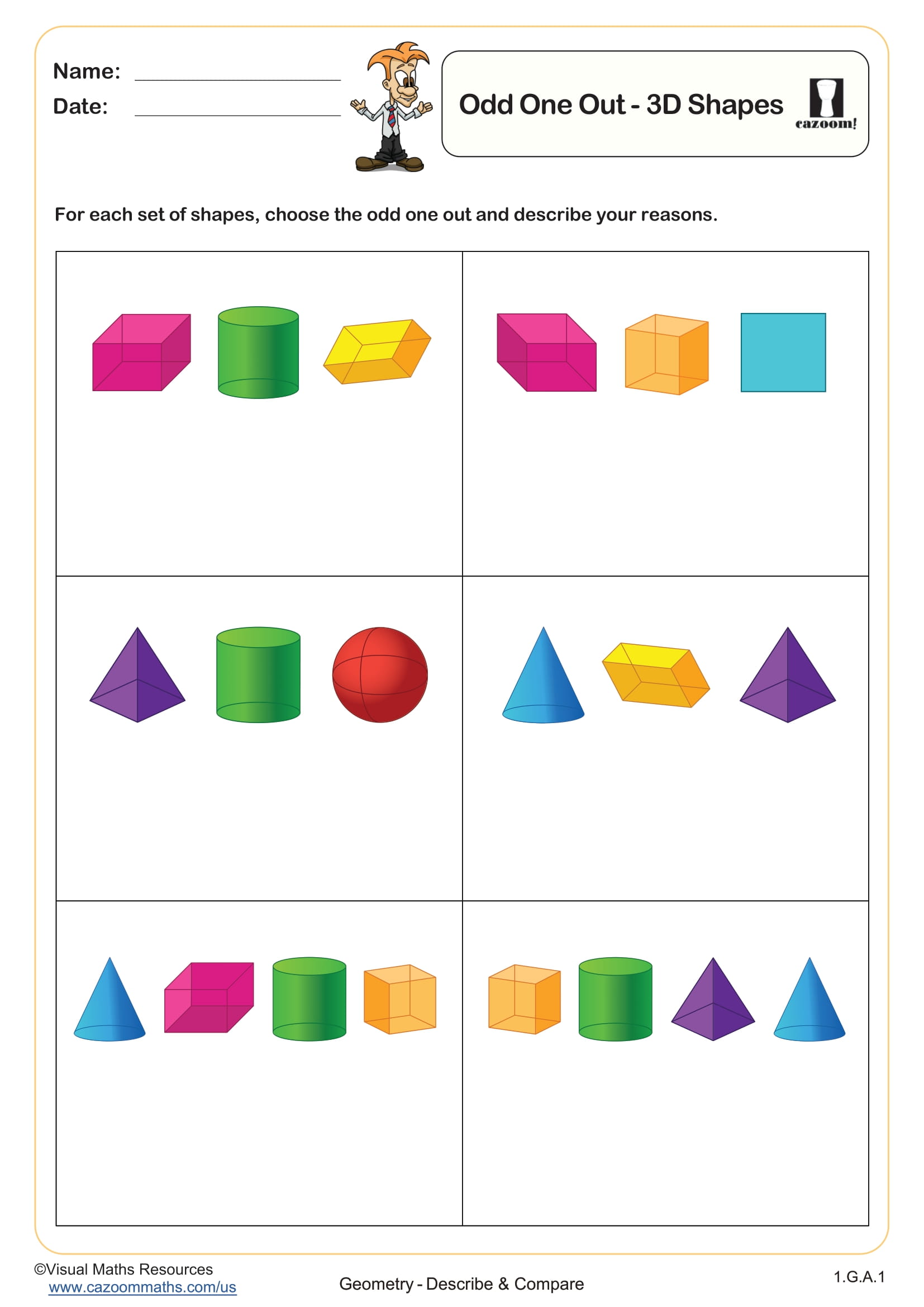
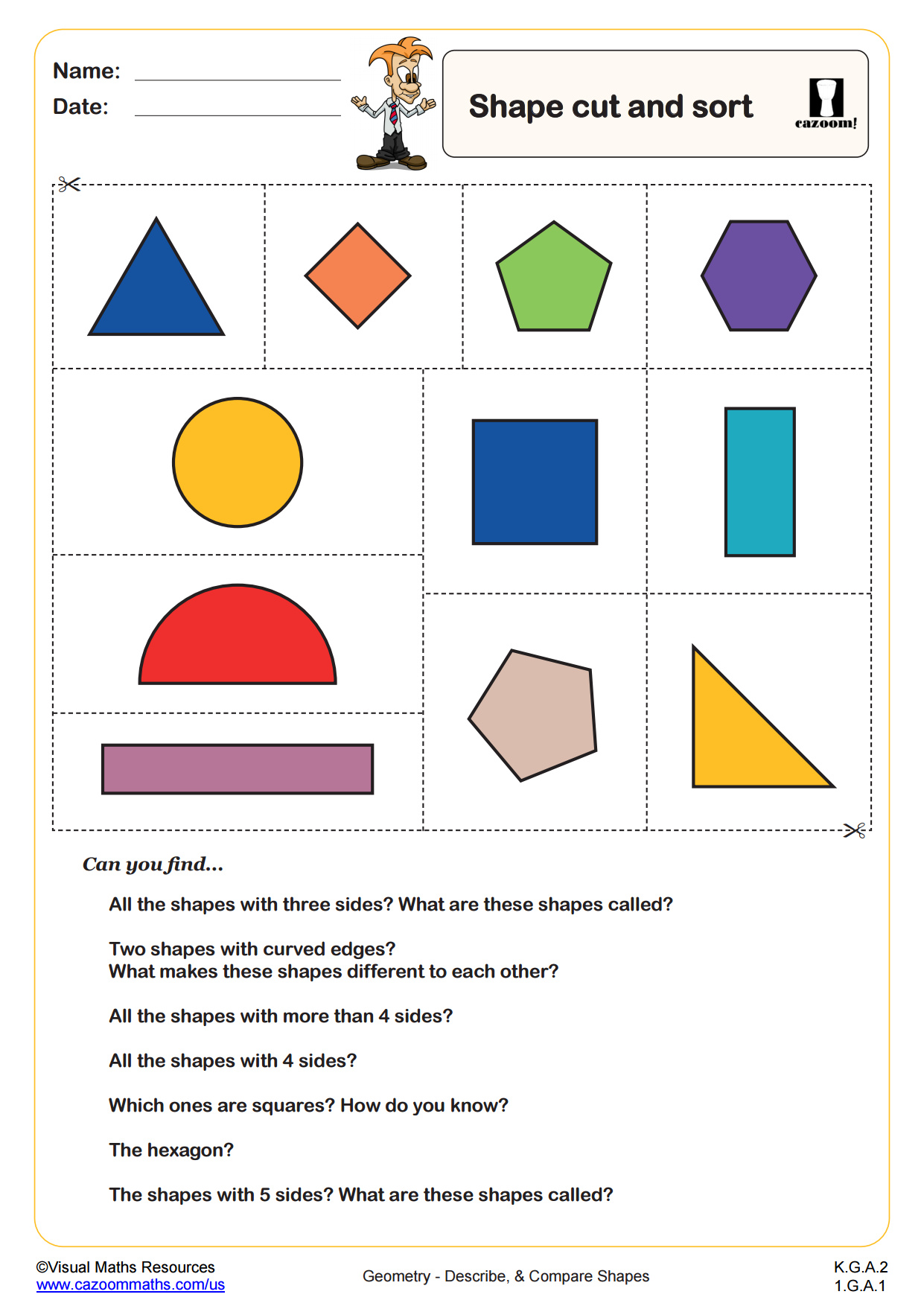
The worksheets provide scaffolded practice that moves from concrete shape identification to more abstract comparison tasks. Activities like counting sides and vertices build observation skills, while shape coloring exercises reinforce attribute recognition through hands-on engagement. The variety of subtopics allows teachers to target specific skills where individual students need support, making differentiation straightforward during math centers or small group instruction.
These worksheets work well for morning work warm-ups, homework assignments that parents can easily support, and quick formative assessments to check understanding before moving to more complex geometry topics. Teachers frequently use them during intervention time with students who struggle with shape vocabulary or during partner activities where one student describes a shape while another finds matching examples. The included answer keys make them practical for independent practice stations, allowing teachers to circulate and provide targeted support while students self-check their work and build confidence with geometric reasoning.