1st Grade Factors and Multiples Worksheets
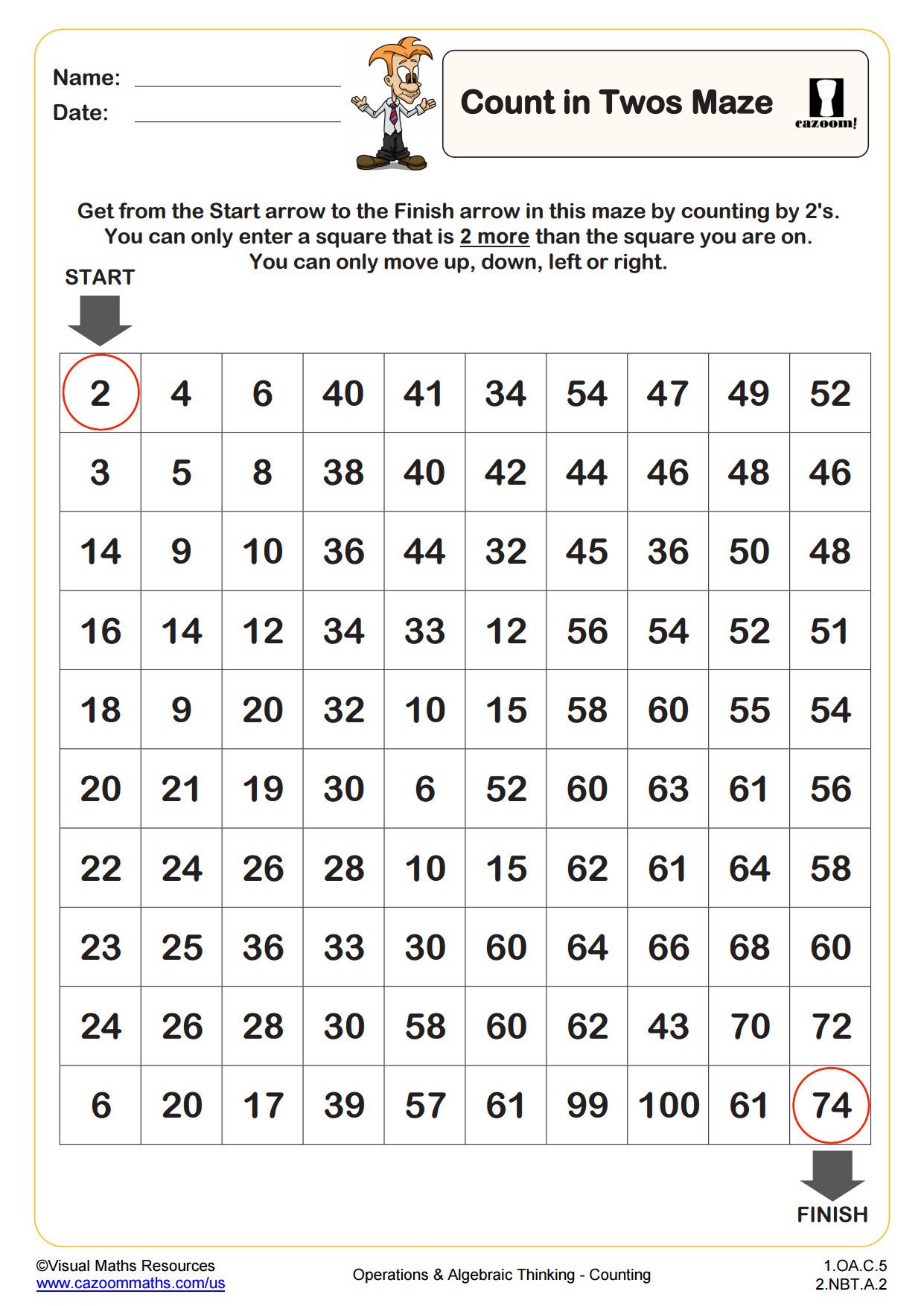
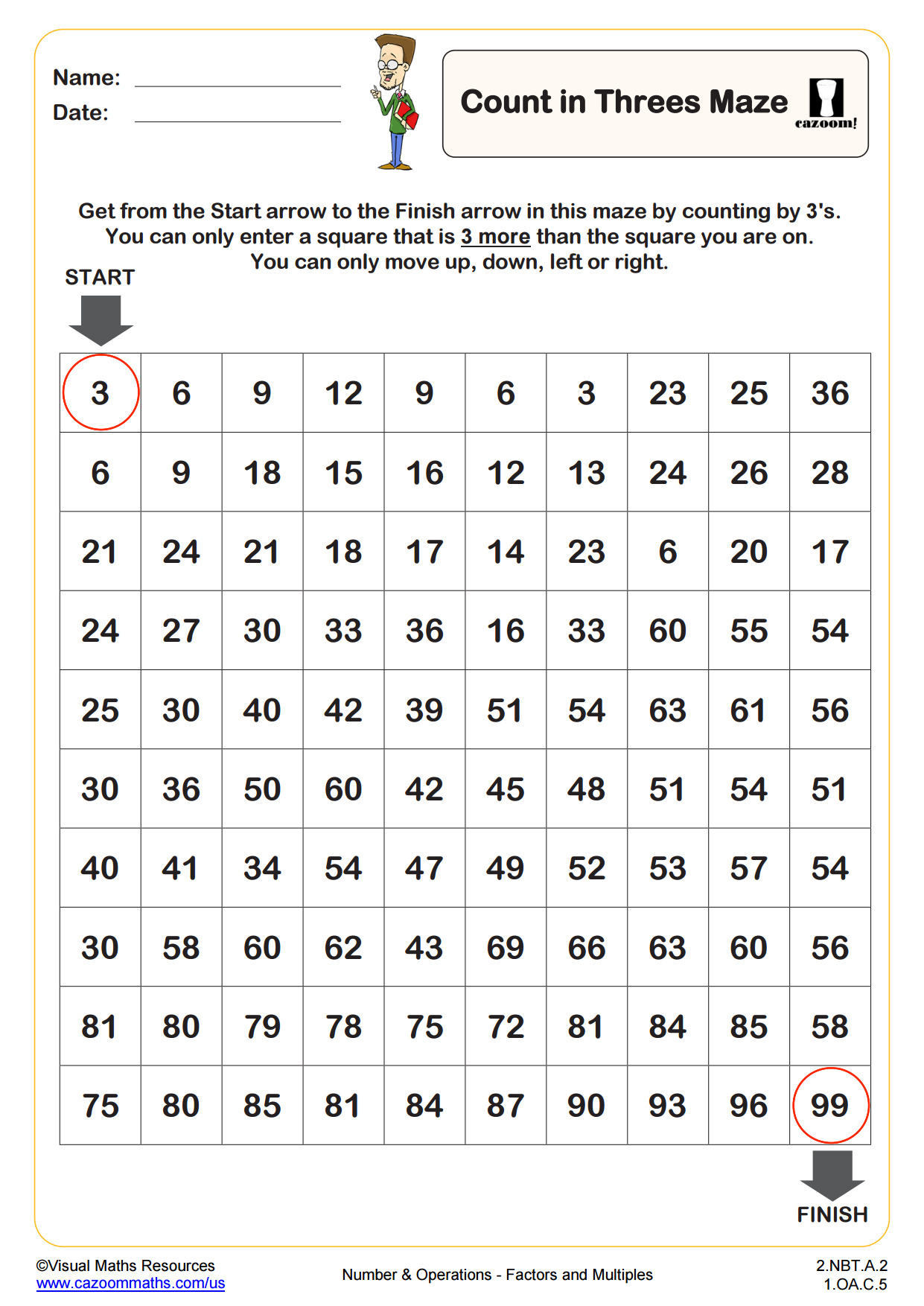
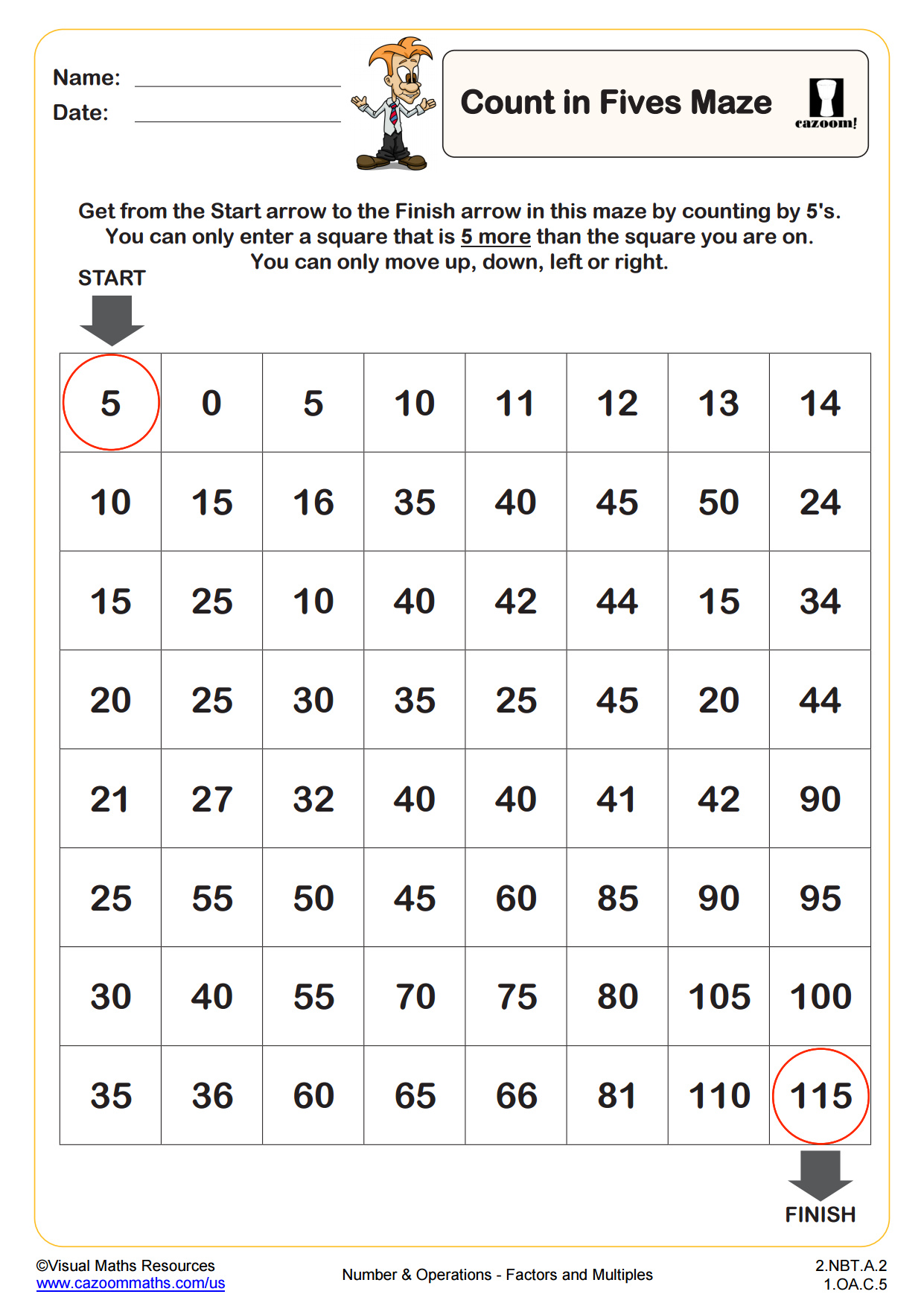
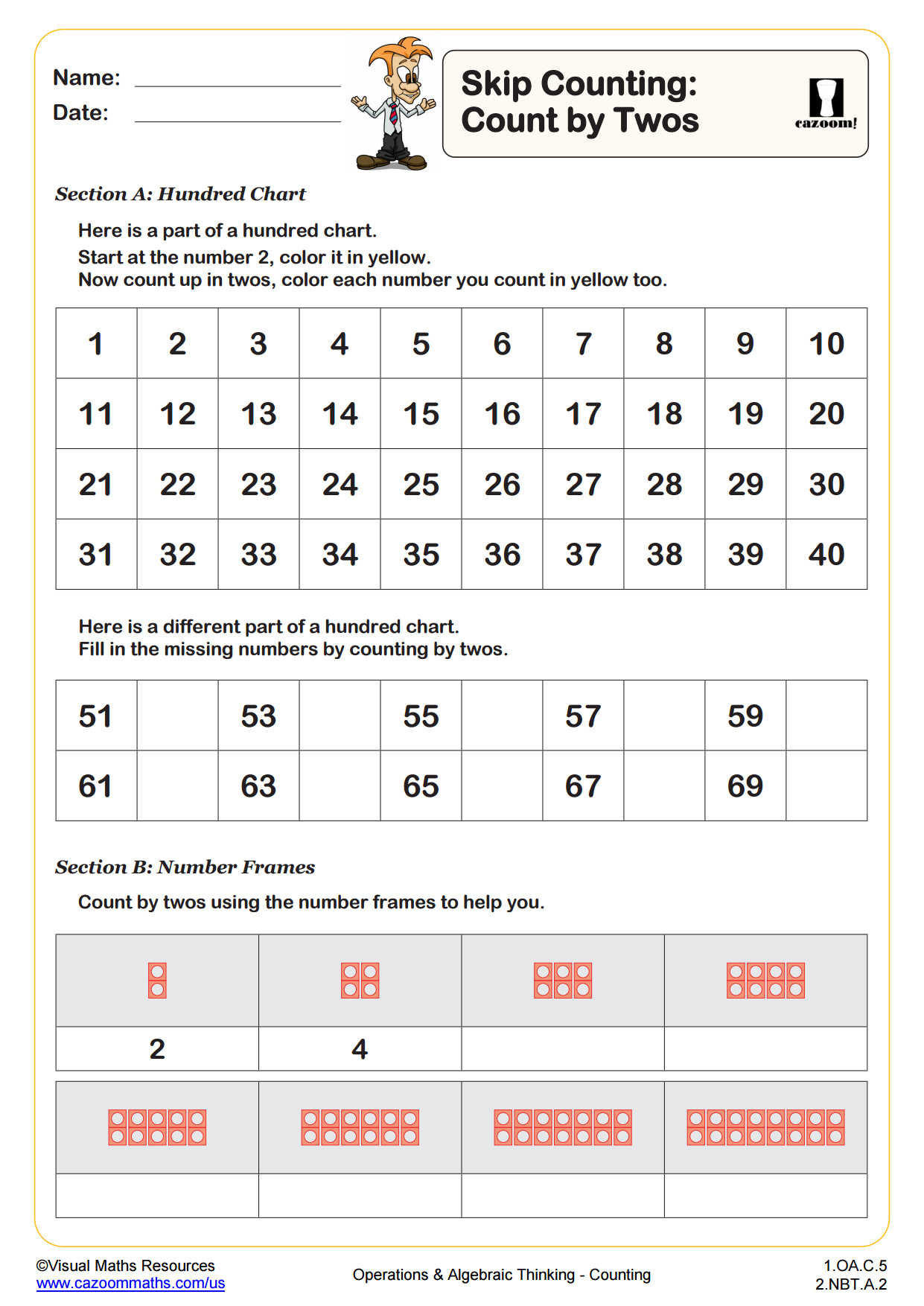
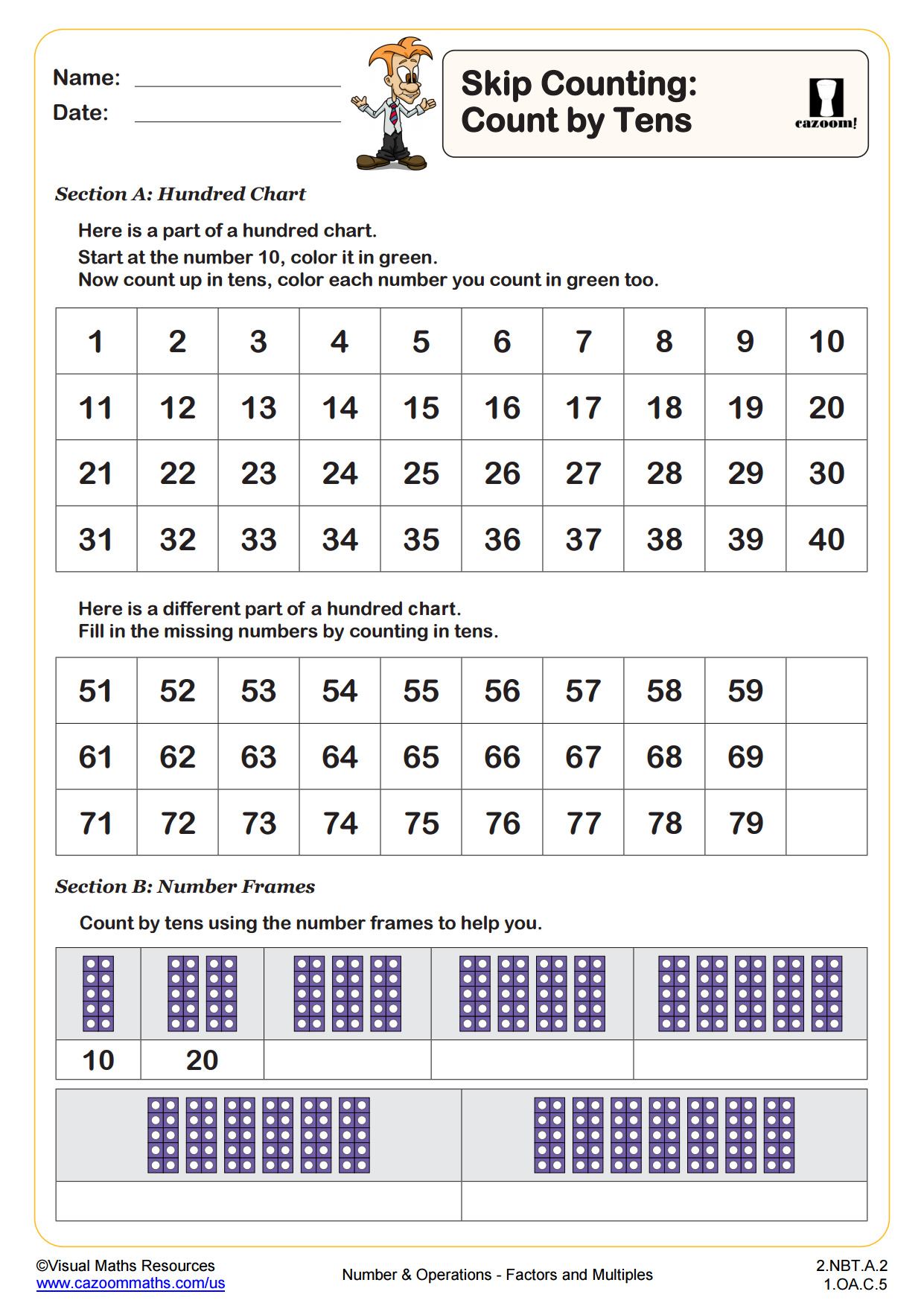
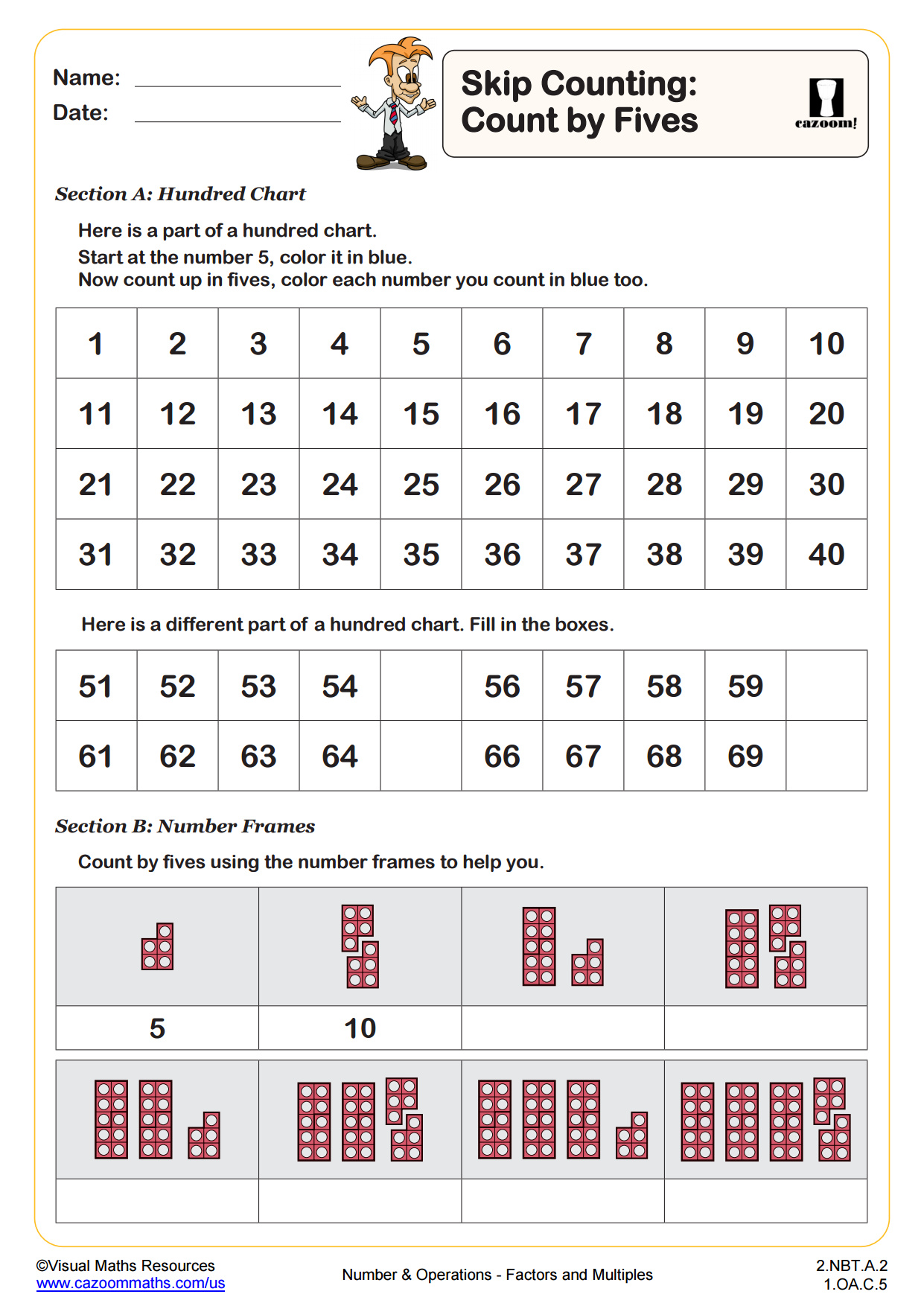
All worksheets are created by the team of experienced teachers at Cazoom Math.
What Are Factors and Multiples in First Grade Math?
In first grade, students don't typically work with the formal terminology of factors and multiples. Instead, they develop the prerequisite skills through skip counting activities that establish pattern recognition. Skip counting by 2s, 3s, 5s, and 10s introduces students to the multiples of these numbers, even though they're simply learning counting sequences at this stage.
A common misconception is that students understand why they're skipping certain numbers. Many first graders can recite "2, 4, 6, 8" but don't yet grasp that they're counting groups of two. Teachers find that using manipulatives like counters or linking cubes to physically create groups helps students see the pattern rather than just memorizing a chant. This concrete understanding becomes crucial when students transition to multiplication concepts in later grades.
What Should First Graders Know About Skip Counting?
According to Common Core State Standards (1.OA.C.5), first grade students should recognize and extend counting patterns, particularly counting by 2s and 10s. Most first graders enter the year able to count to 100 by ones, and skip counting builds on this foundational skill. By the end of first grade, students should confidently skip count by 2s, 5s, and 10s up to 100, with counting by 10s typically being the easiest pattern to master.
This work directly builds on kindergarten's focus on counting to 100 by ones and prepares students for second grade, when they'll count by 5s, 10s, and 100s to 1,000. More importantly, these patterns create the mental framework for understanding equal groups, which transitions into multiplication and division in second and third grade. Students who struggle with skip counting often have difficulty later when multiplication tables are introduced.
How Does Skip Counting by 10s Help Students?
Skip counting by 10s reinforces place value understanding as students recognize that each number in the sequence increases by one ten. When students count "10, 20, 30, 40," they're building awareness that the tens place changes while the ones place stays zero. This pattern recognition strengthens their understanding of our base-ten number system and makes mental addition and subtraction more accessible.
This skill connects directly to money concepts, a practical application first graders encounter regularly. When students count dimes, they're skip counting by 10s. Teachers often use coin counting as a real-world context that makes the abstract number pattern more meaningful. Understanding groups of ten also supports STEM activities involving measurement, such as counting centimeters on a ruler or organizing classroom materials into groups of ten for efficient counting and distribution.
How Can Teachers Use These Skip Counting Worksheets?
These worksheets provide varied practice formats that maintain student engagement while building automaticity with counting patterns. The maze activities add a problem-solving element that motivates students who might otherwise find repetitive counting tedious. Teachers can differentiate instruction by starting students with the counting pattern they find most accessible (usually 10s) before progressing to more challenging sequences like counting by 3s.
Many teachers use these worksheets during math centers or stations, allowing students to work at their own pace while the teacher provides small-group instruction. The answer keys make these sheets valuable for independent practice, homework assignments, or morning work that students can self-check. They also work well as quick formative assessments to identify which students have mastered specific counting patterns and which need additional support with manipulatives or number lines before continuing with worksheet practice.