1st Grade Money and Time Worksheets
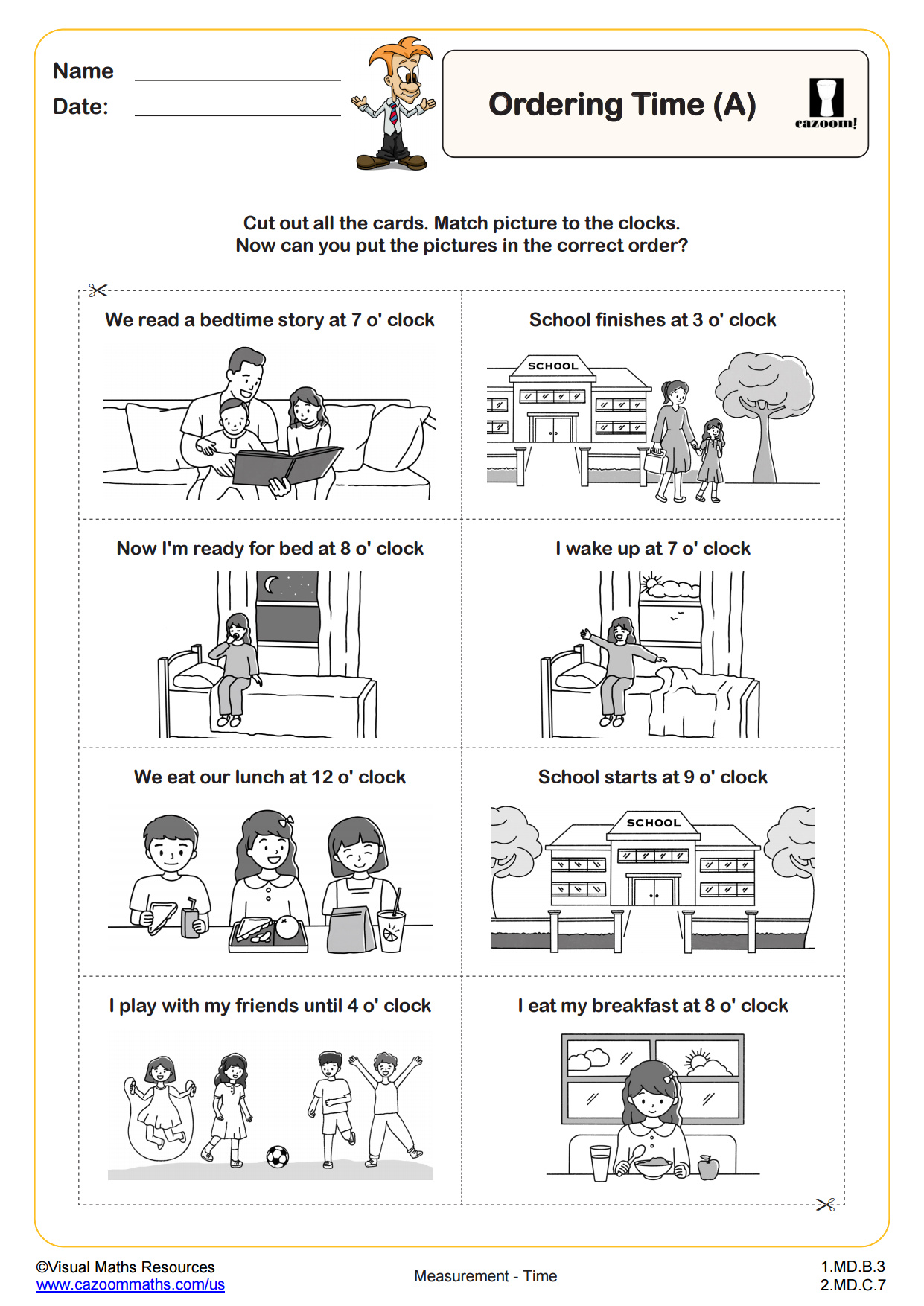
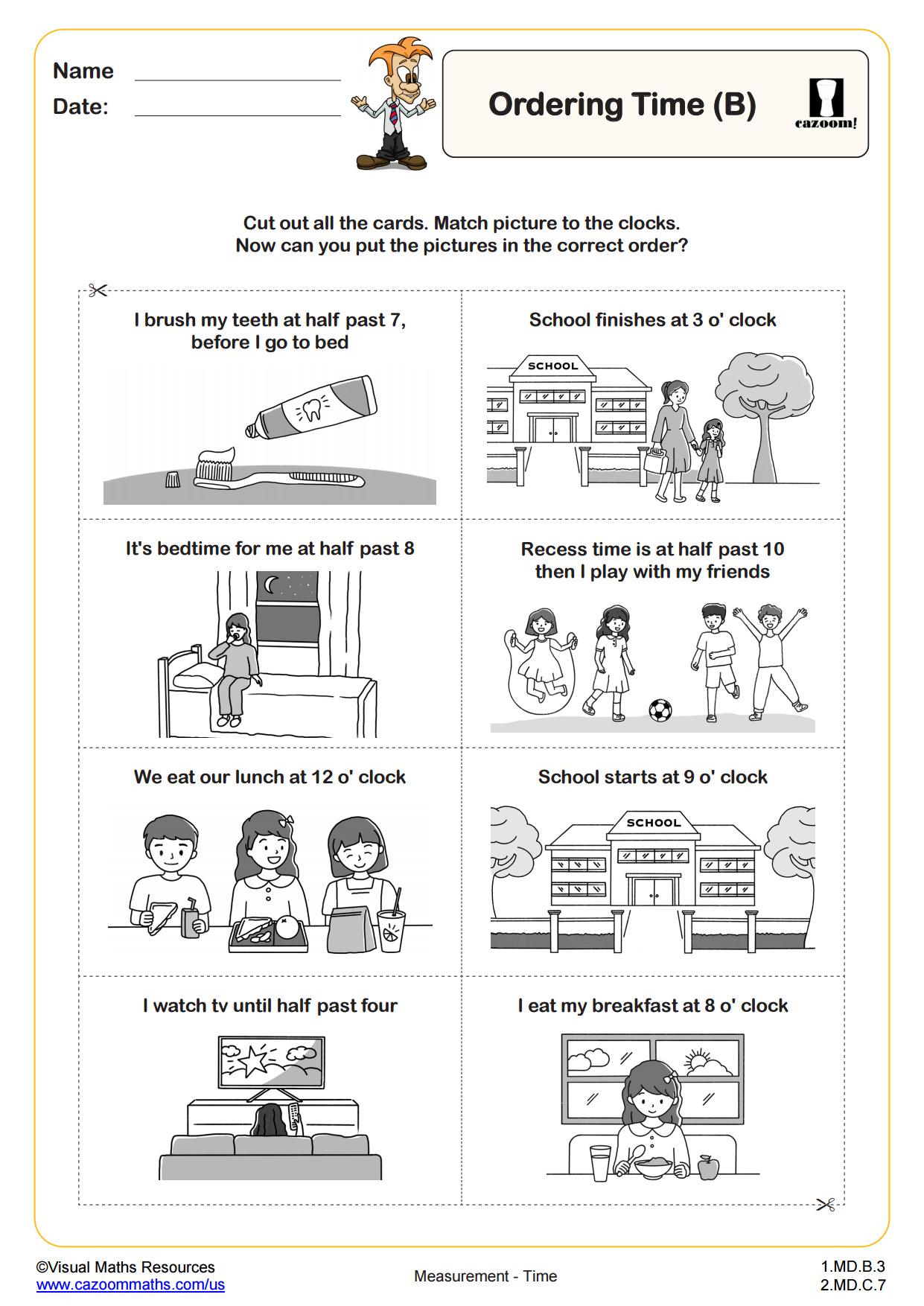
All worksheets are created by the team of experienced teachers at Cazoom Math.
What Time Concepts Should 1st Graders Master?
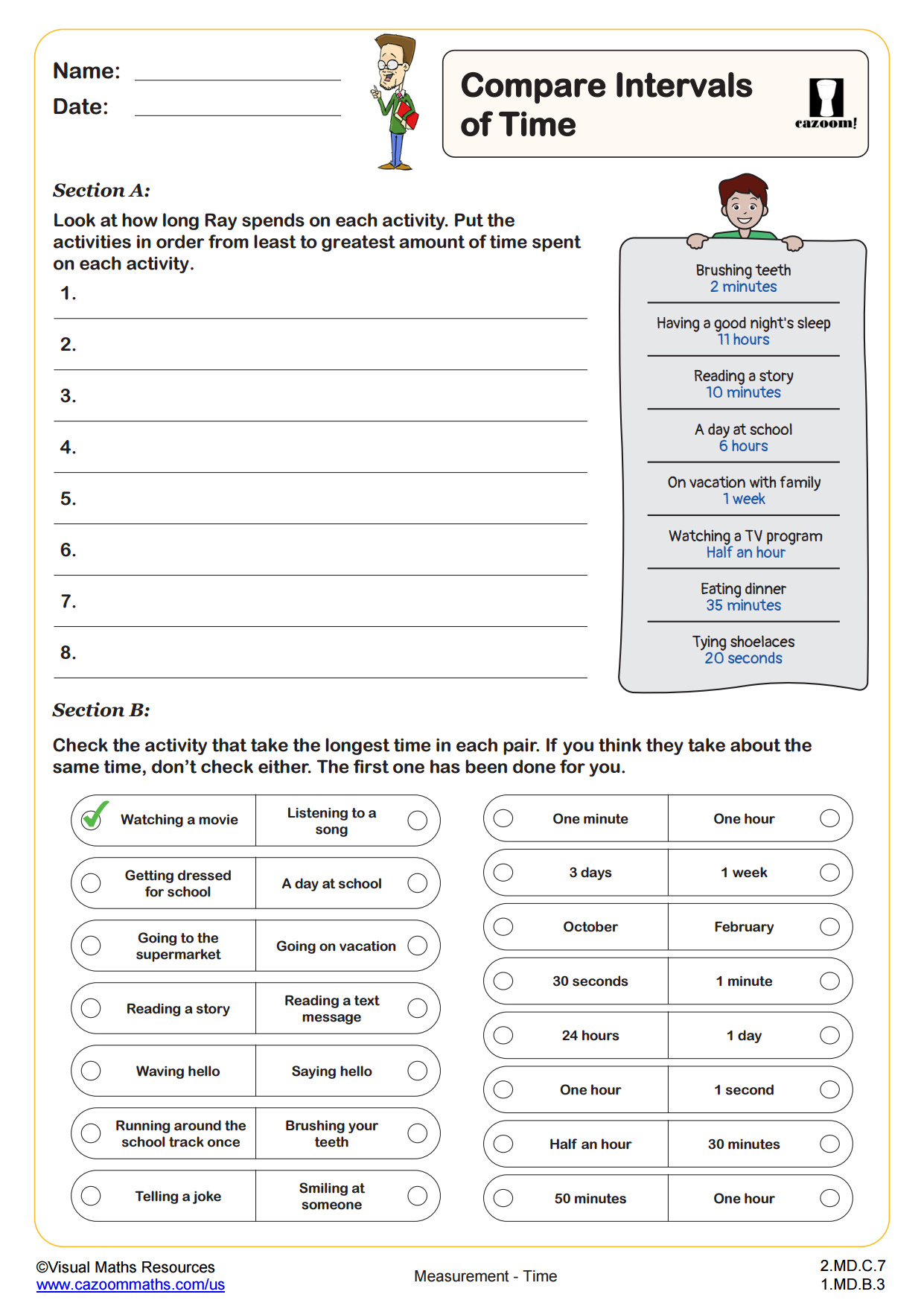
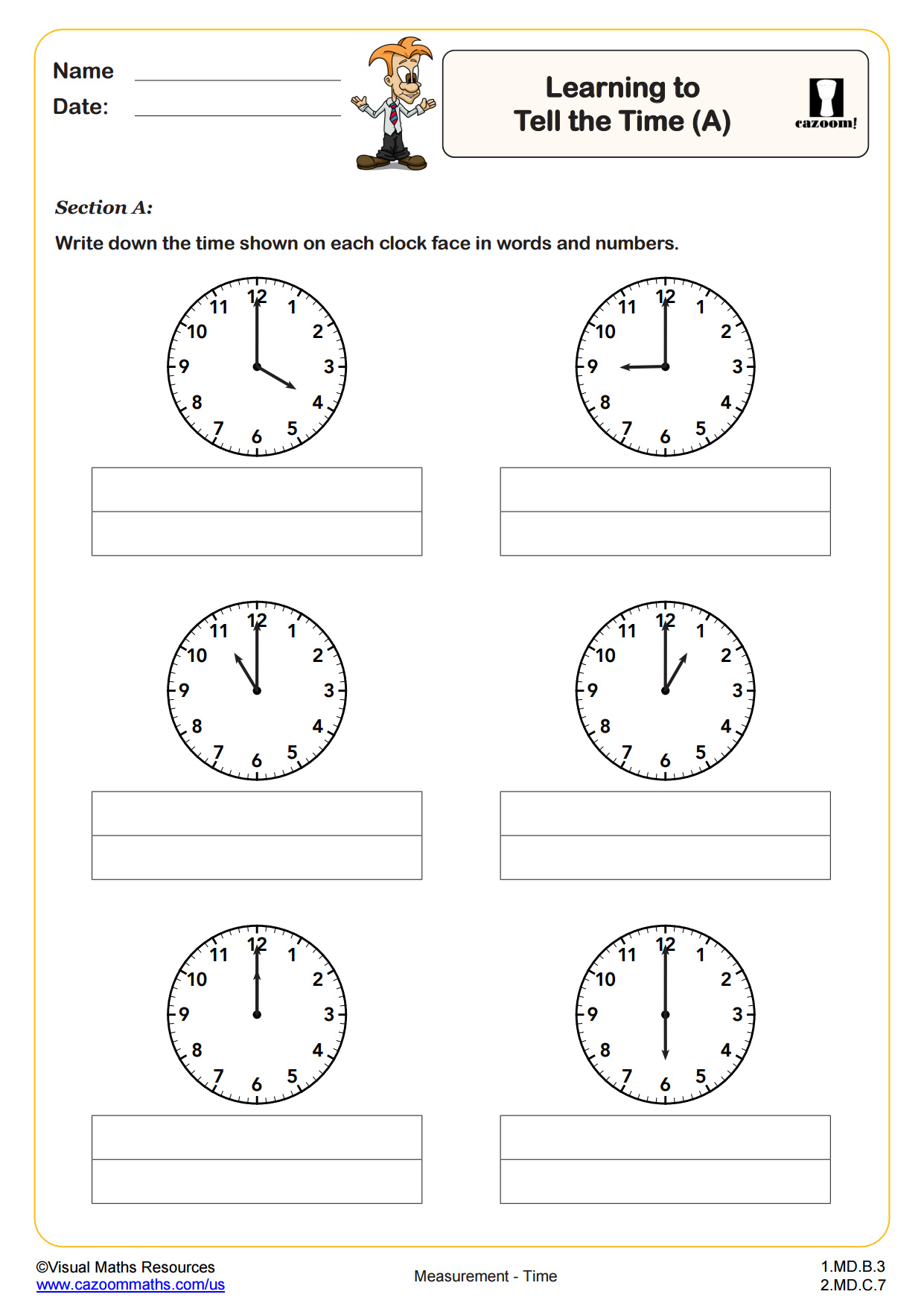
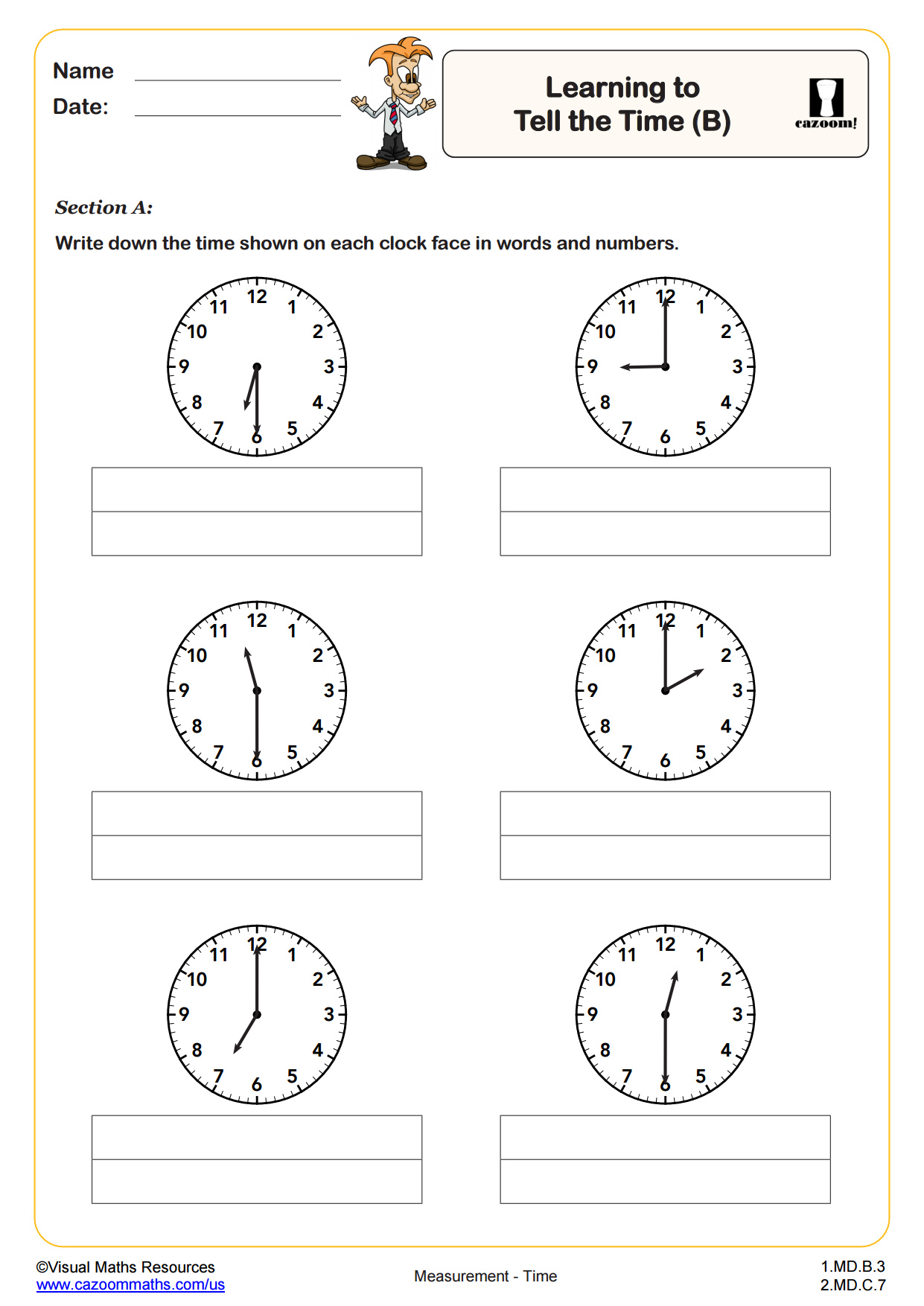
First grade time standards focus on telling and writing time to the nearest hour and half-hour using analog and digital clocks, according to Common Core Math Standard 1.MD.B.3. Students also learn to order events in sequence and compare intervals such as shorter or longer durations. These skills build number sense as children recognize patterns in how clock hands move and understand that numbers on a clock represent specific positions.
Many students initially confuse the hour and minute hands, particularly when the minute hand points to 6 for half-past times. Teachers frequently notice students need repeated practice distinguishing which hand is longer and understanding that the shorter hand indicates the hour. Worksheets that show multiple clock faces side-by-side help students compare hand positions and recognize patterns in how analog time displays work.
How Does 1st Grade Money and Time Connect to Other Math Skills?
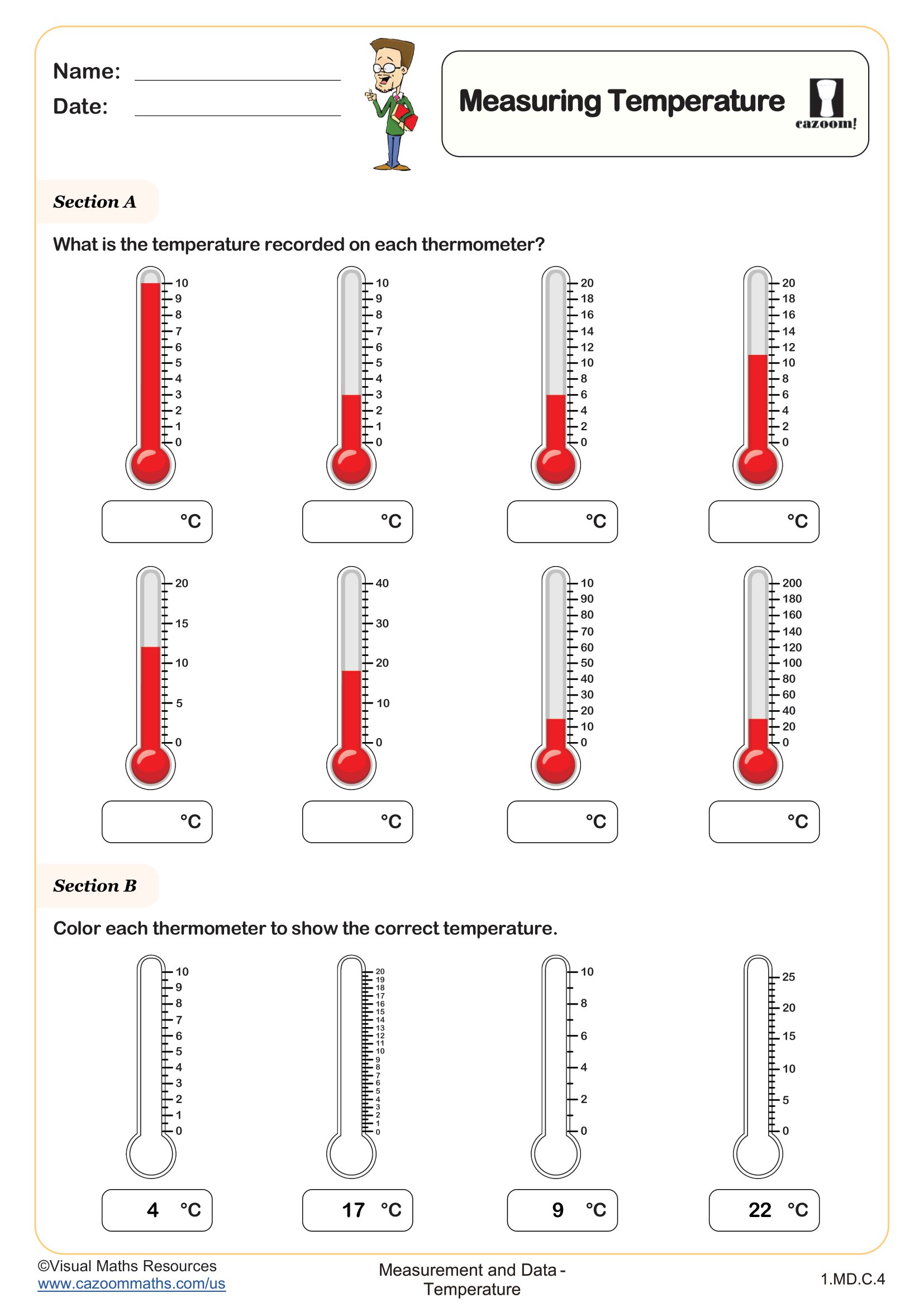
In 1st grade, money and time instruction reinforces counting skills, number recognition to 100, and understanding measurement units. Students apply skip-counting by fives when reading minutes on a clock and recognize coin values while building place value understanding. Temperature measurement introduces students to scales and units, connecting to data collection skills they develop through graphs and charts.
These measurement topics prepare students for 2nd grade standards where they'll tell time to the nearest five minutes, solve word problems involving money, and work with standard measurement units. The sequencing and comparison skills practiced with time intervals also support students' developing understanding of addition and subtraction as they compare durations. Students who master telling time to the hour in 1st grade typically transition smoothly to quarter-hour and five-minute intervals in subsequent grades.
Why Do Students Practice Ordering Time Events?
Ordering time events teaches sequencing skills that help students understand temporal relationships and cause-and-effect patterns. When students arrange activities chronologically, such as brushing teeth before breakfast or getting dressed before going outside, they develop logical thinking and narrative comprehension. This skill connects directly to reading comprehension standards where students must sequence story events and understand plot progression.
Real-world applications appear constantly in students' lives, from following multi-step directions in science experiments to understanding schedules for special classes like art or PE. Students who can sequence events accurately navigate their school day more independently, recognizing when transitions happen and anticipating what comes next. These organizational skills extend beyond math class into time management habits that support academic success across subjects as students learn to plan ahead and estimate how long activities take.
How Can Teachers Use These Money and Time Worksheets Effectively?
The worksheets provide structured practice that moves from concrete time-telling skills to more abstract concepts like comparing intervals and ordering events. Teachers find the variety of formats helpful for differentiation, allowing students who need more foundational work on clock-reading to practice alongside peers who are ready for comparison tasks. The answer keys enable quick assessment of which students grasp hour versus half-hour times and which need additional small-group instruction with manipulative clocks.
Many teachers use these worksheets during math centers, pairing students to discuss their reasoning when ordering events or comparing time intervals. The temperature measurement problems work well for cross-curricular connections during science lessons on weather observation. Worksheets also serve effectively as morning work to activate prior knowledge before introducing new time concepts, or as homework that families can support since telling time appears in everyday contexts like bedtime routines and meal schedules.