1st Grade Number Bonds Over 20 Worksheets
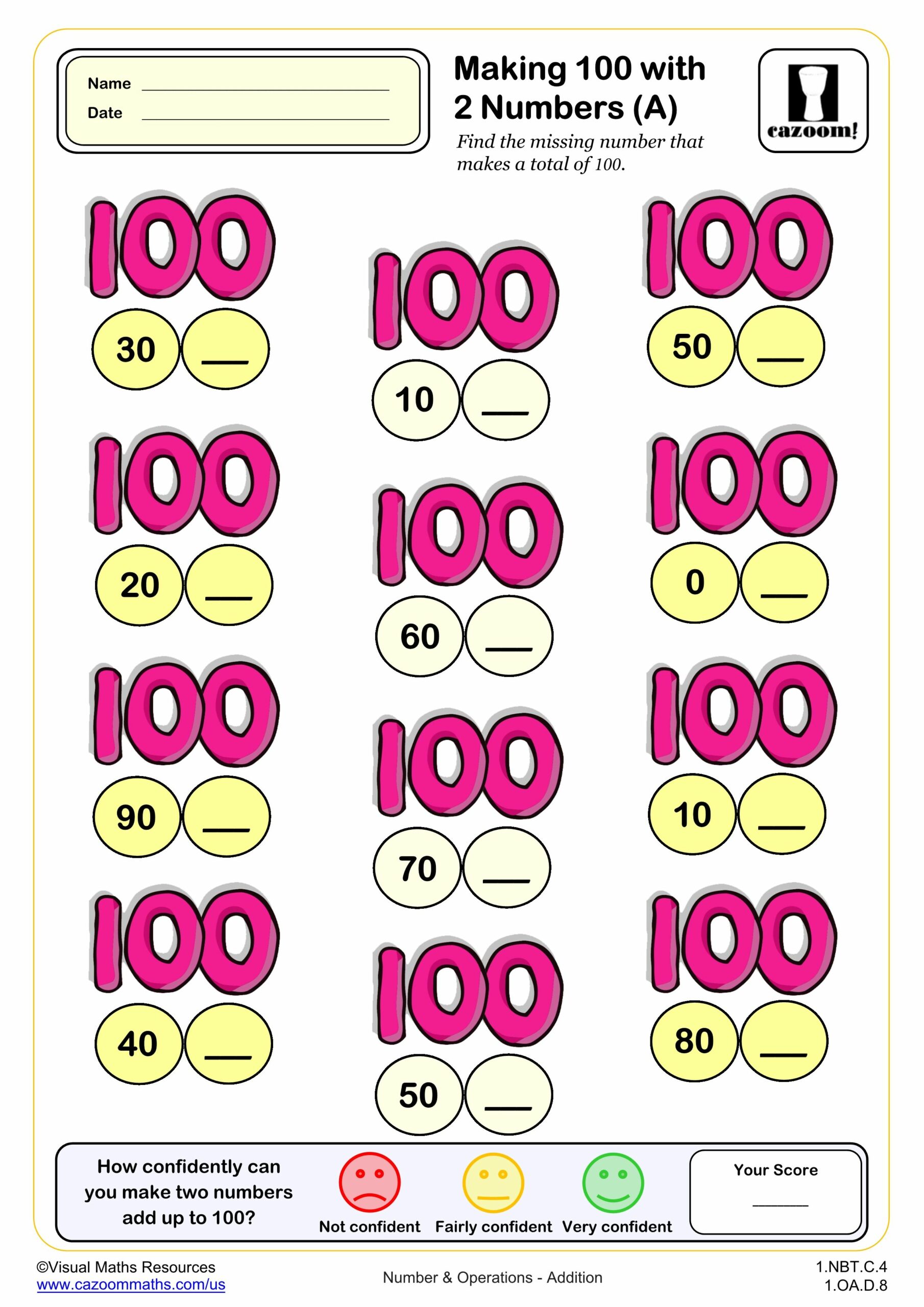
Making 100 with 2 Numbers (A) (multiples of 10)
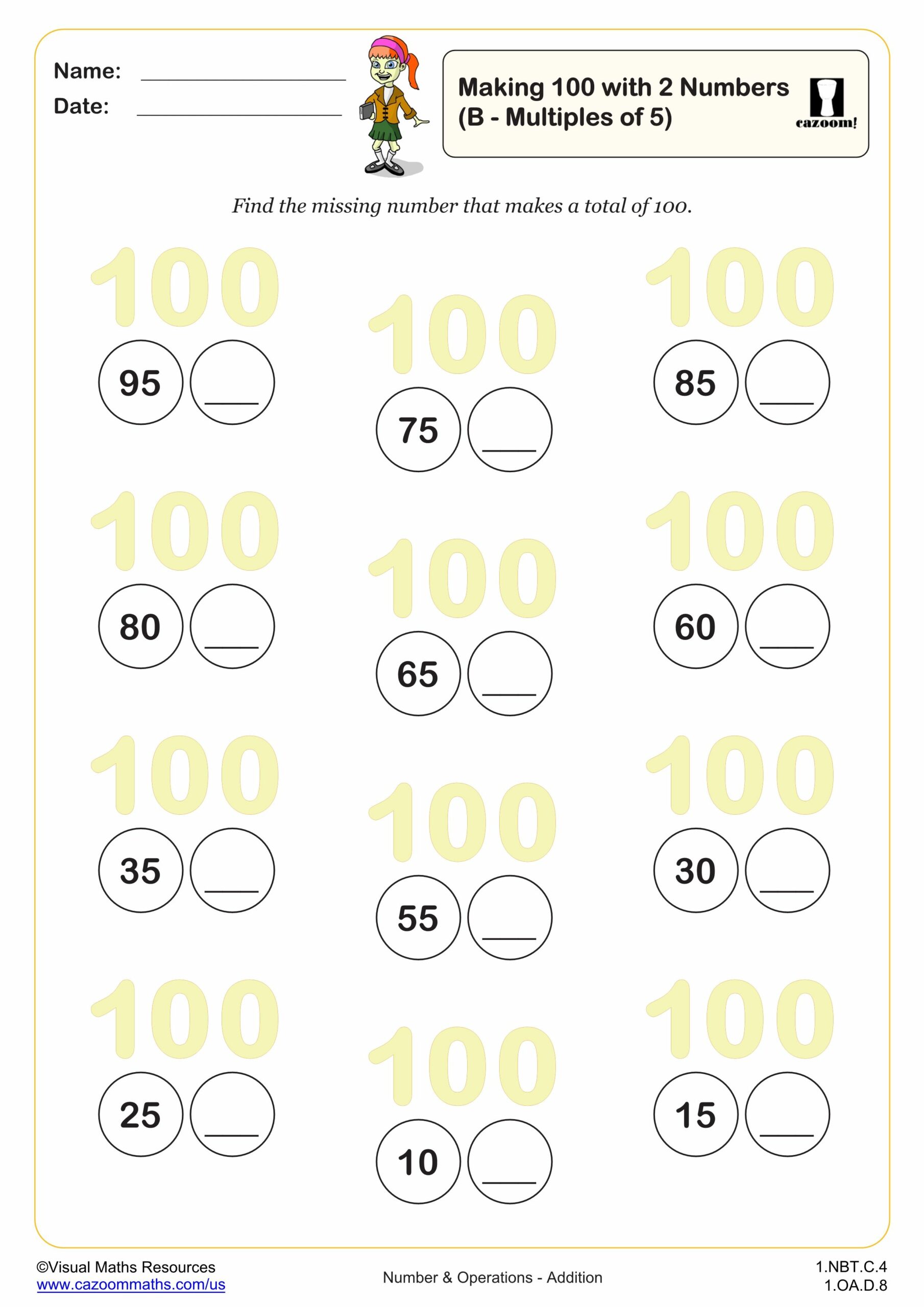
Making 100 with 2 numbers (B) (multiples of 5)
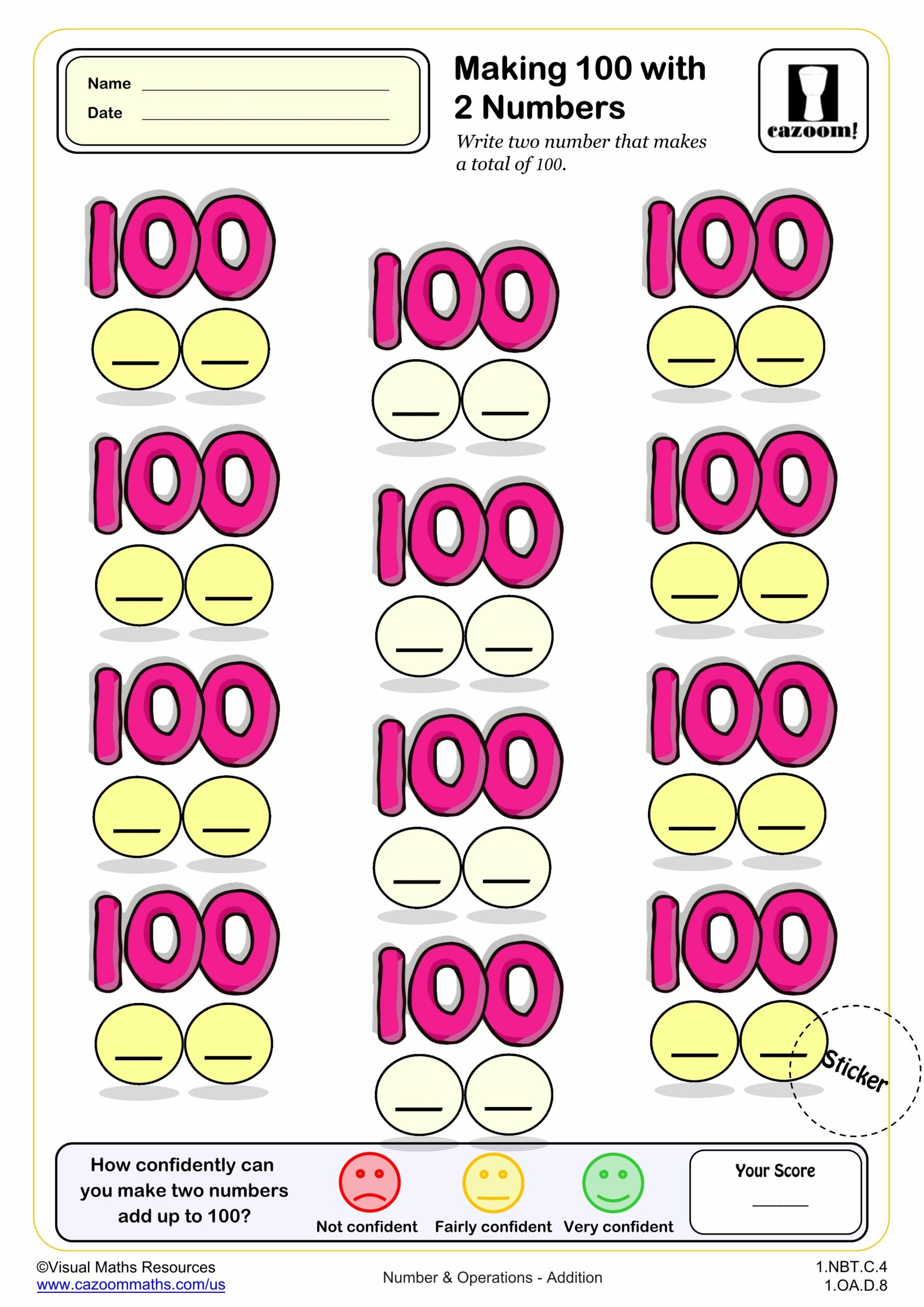
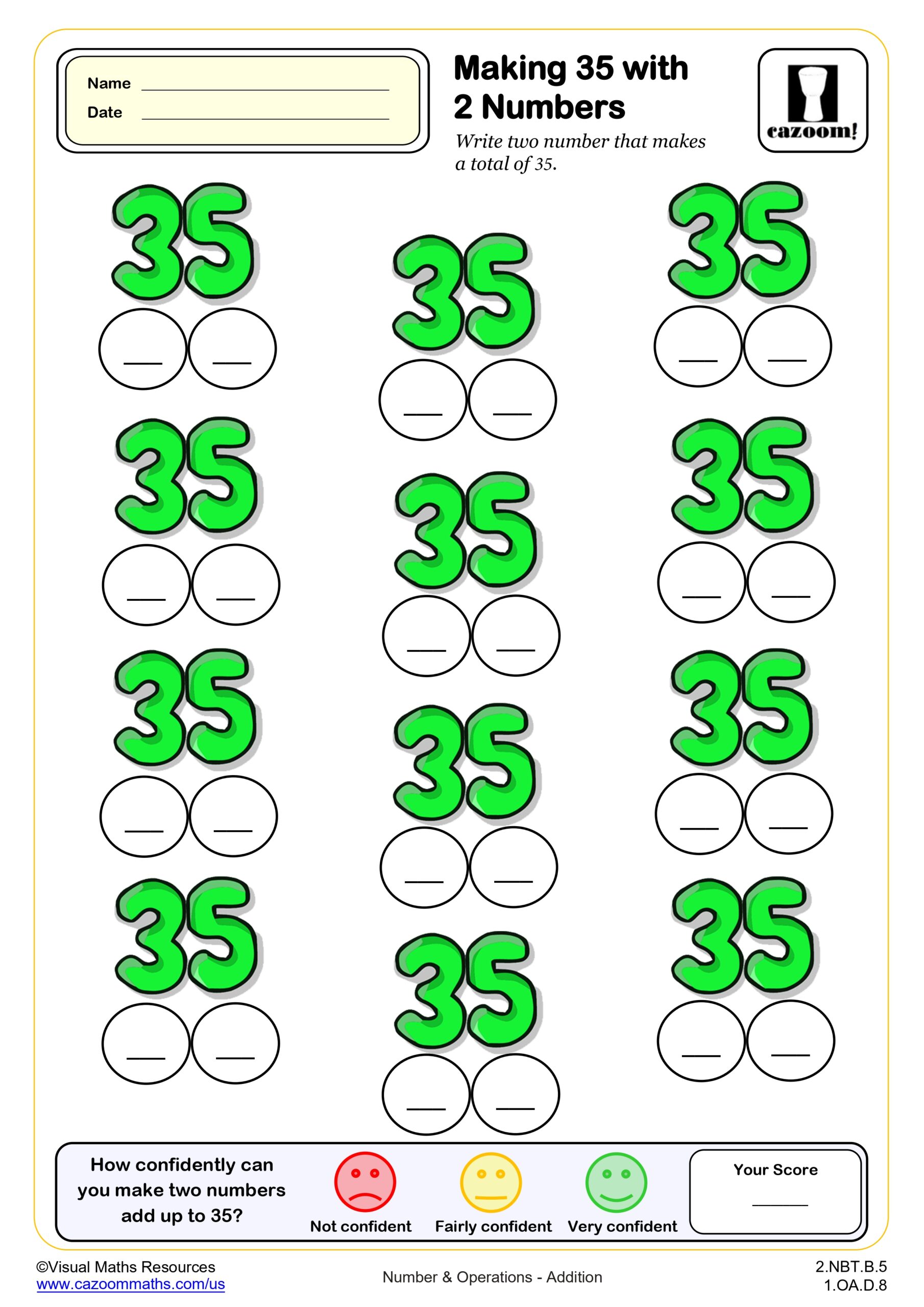
Making 100 with 2 numbers (blanks)
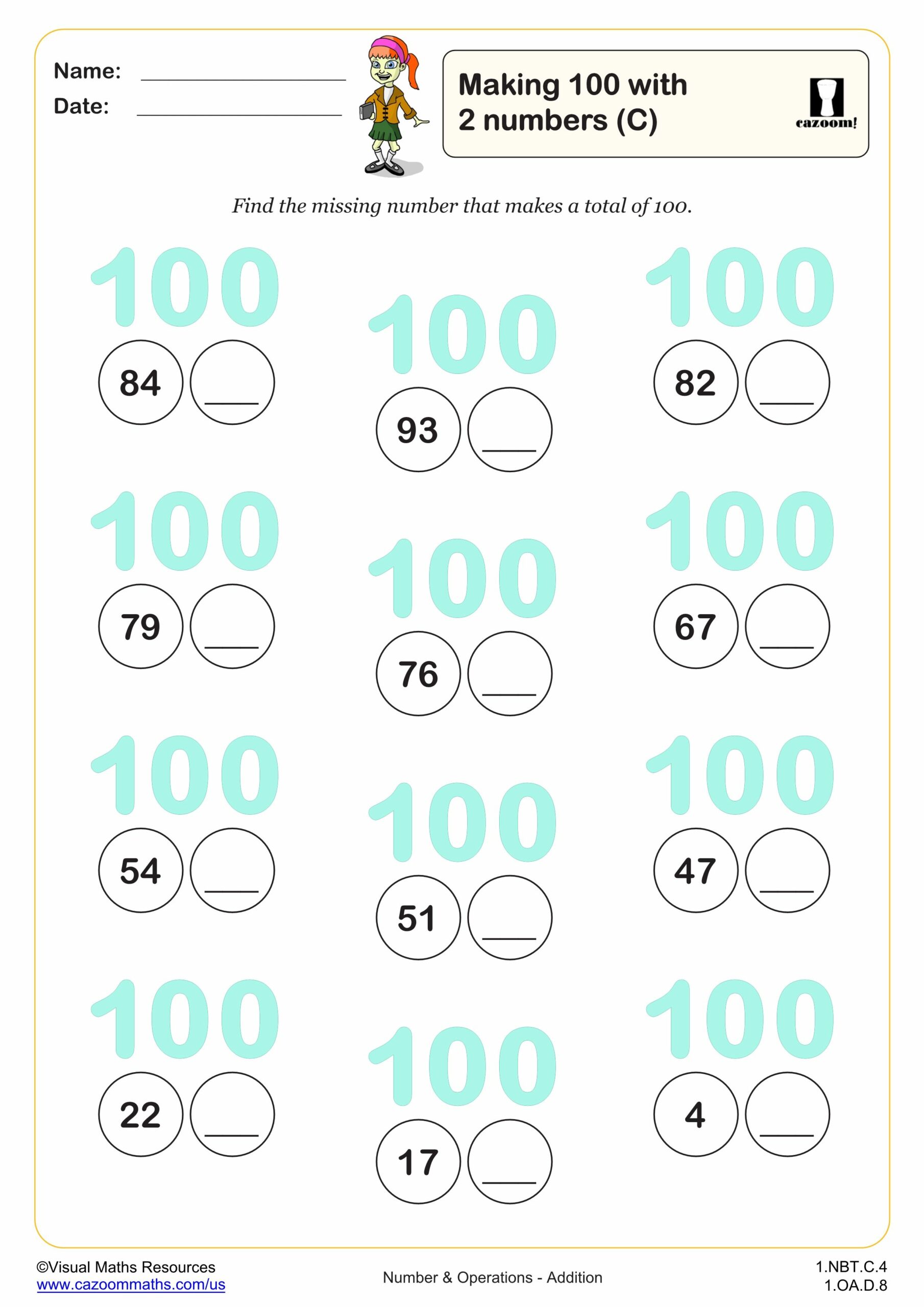
Making 100 with 2 numbers (C)
Making 25
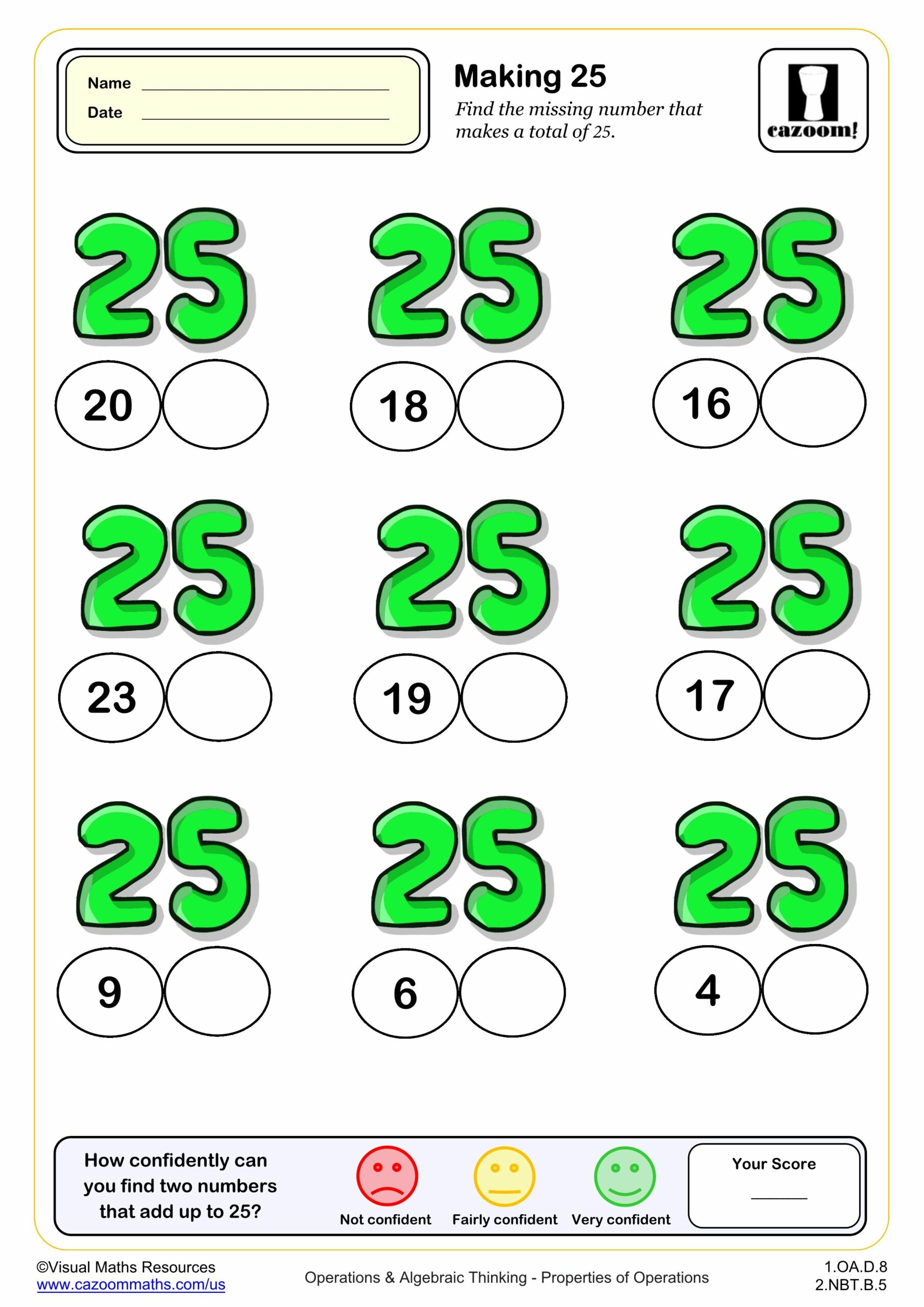
Making 25 (Blanks)
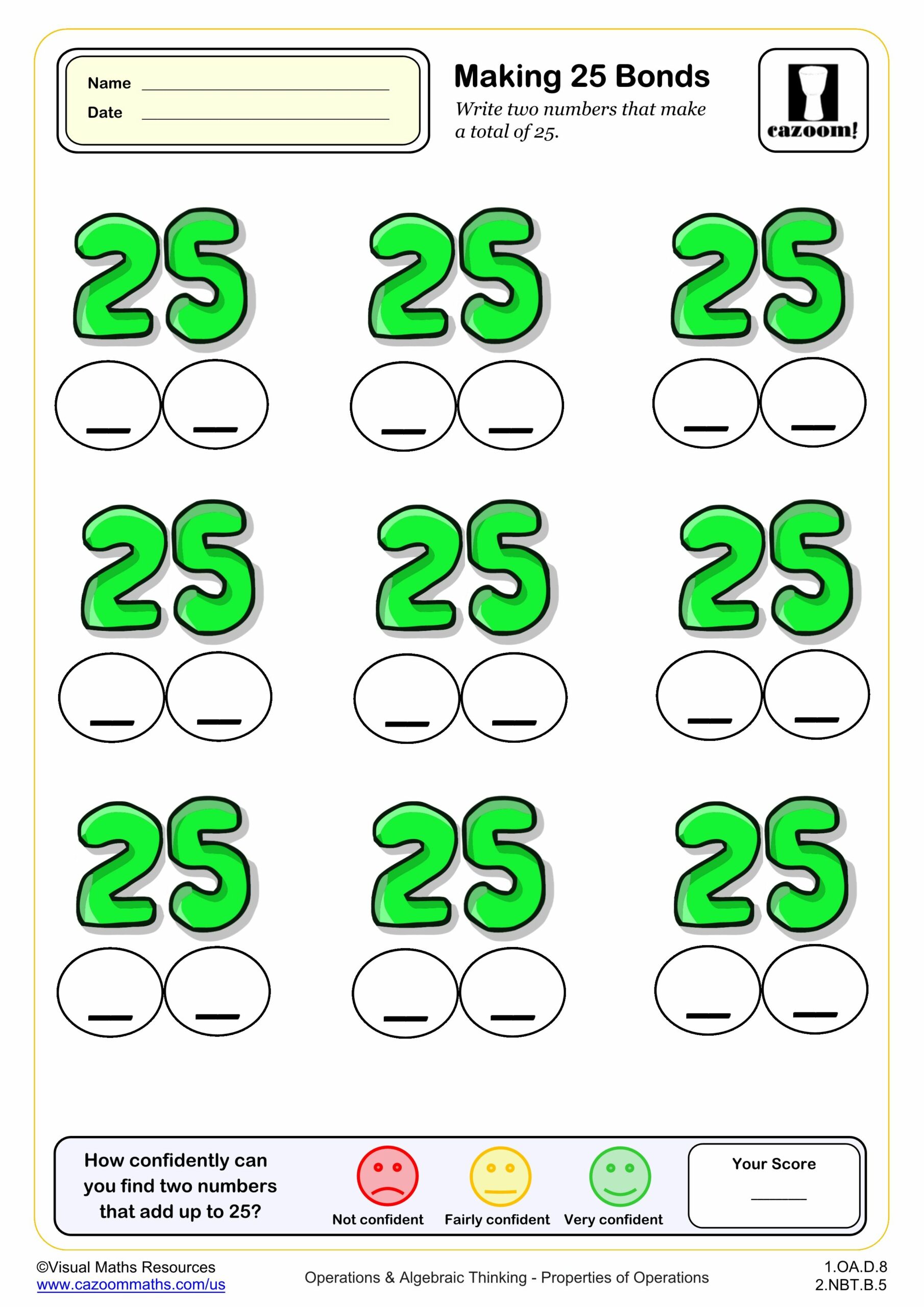
Making 28
Making 28 (Blanks)
Making 35 (blanks)
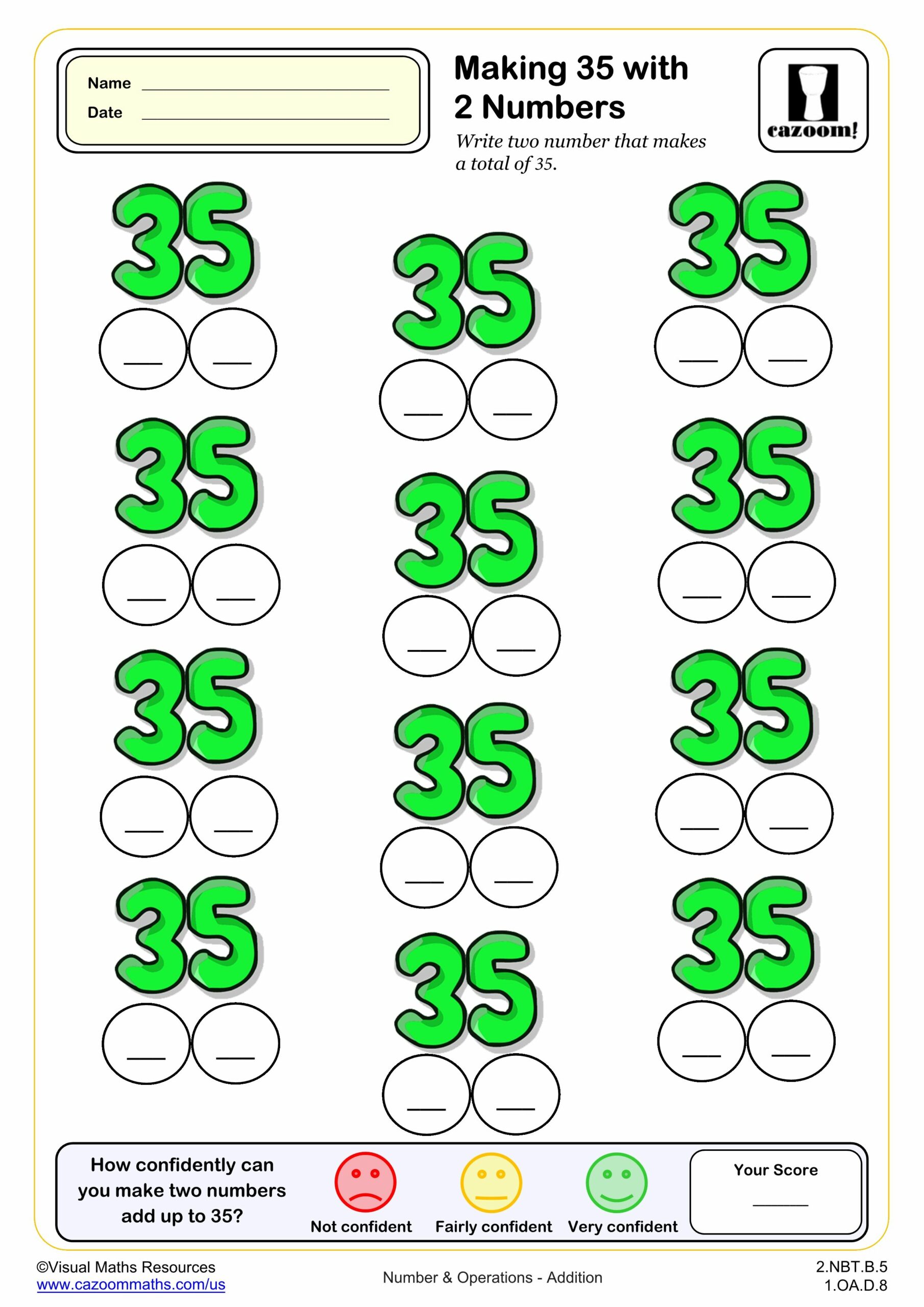
Making 35 with 2 numbers
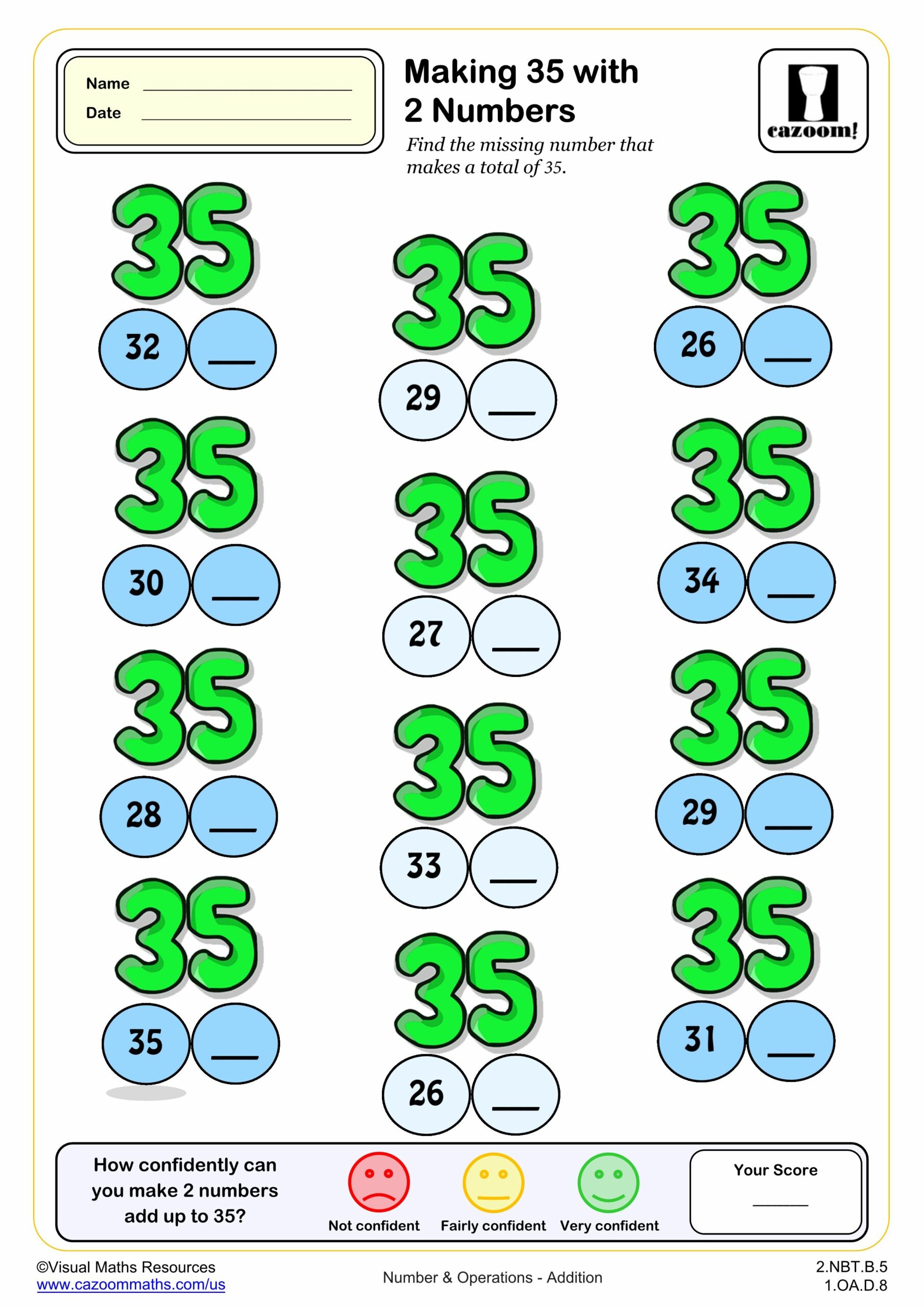
Making 35 with 2 Numbers (BONDS)
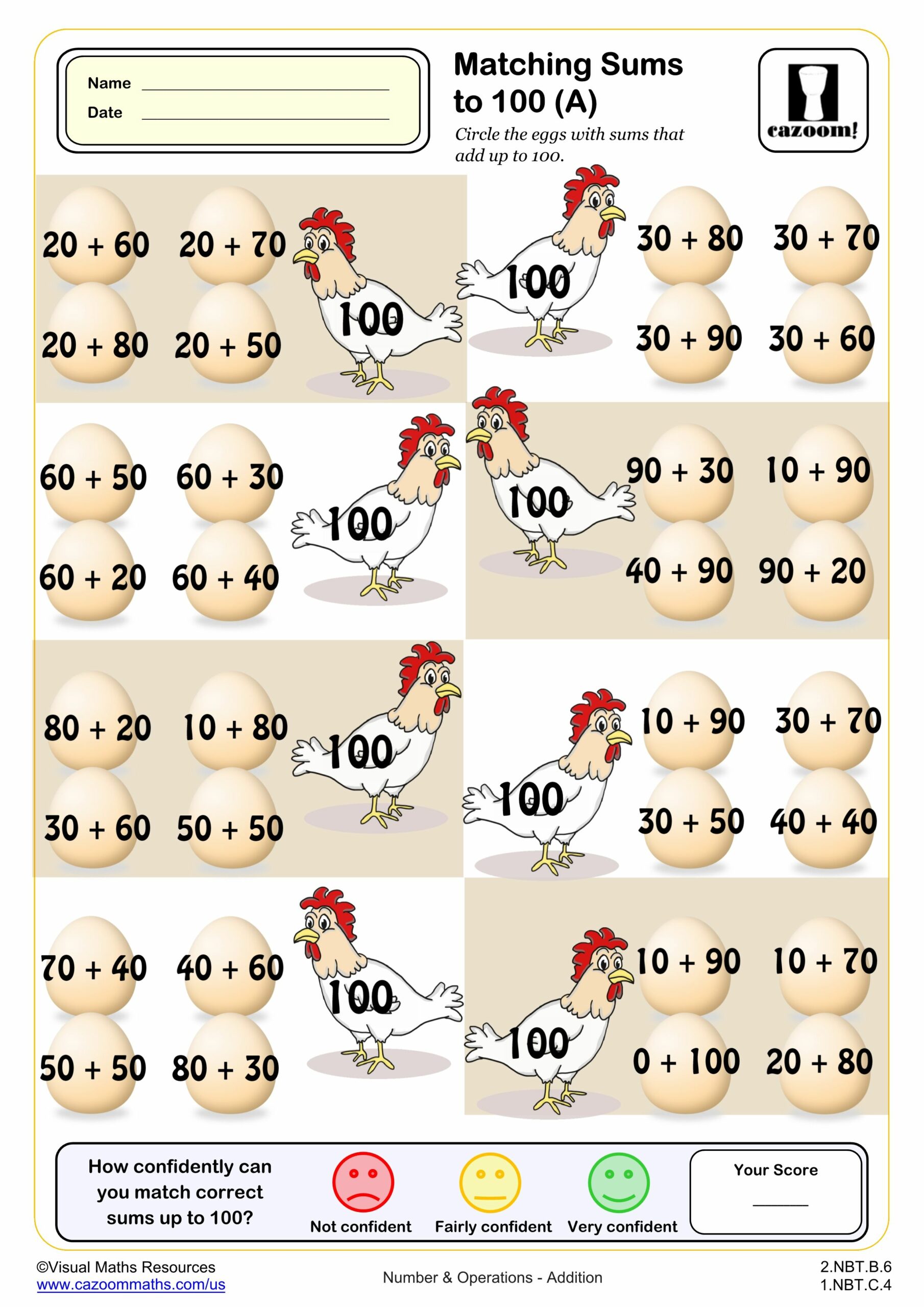
Matching sums to 100 (A)
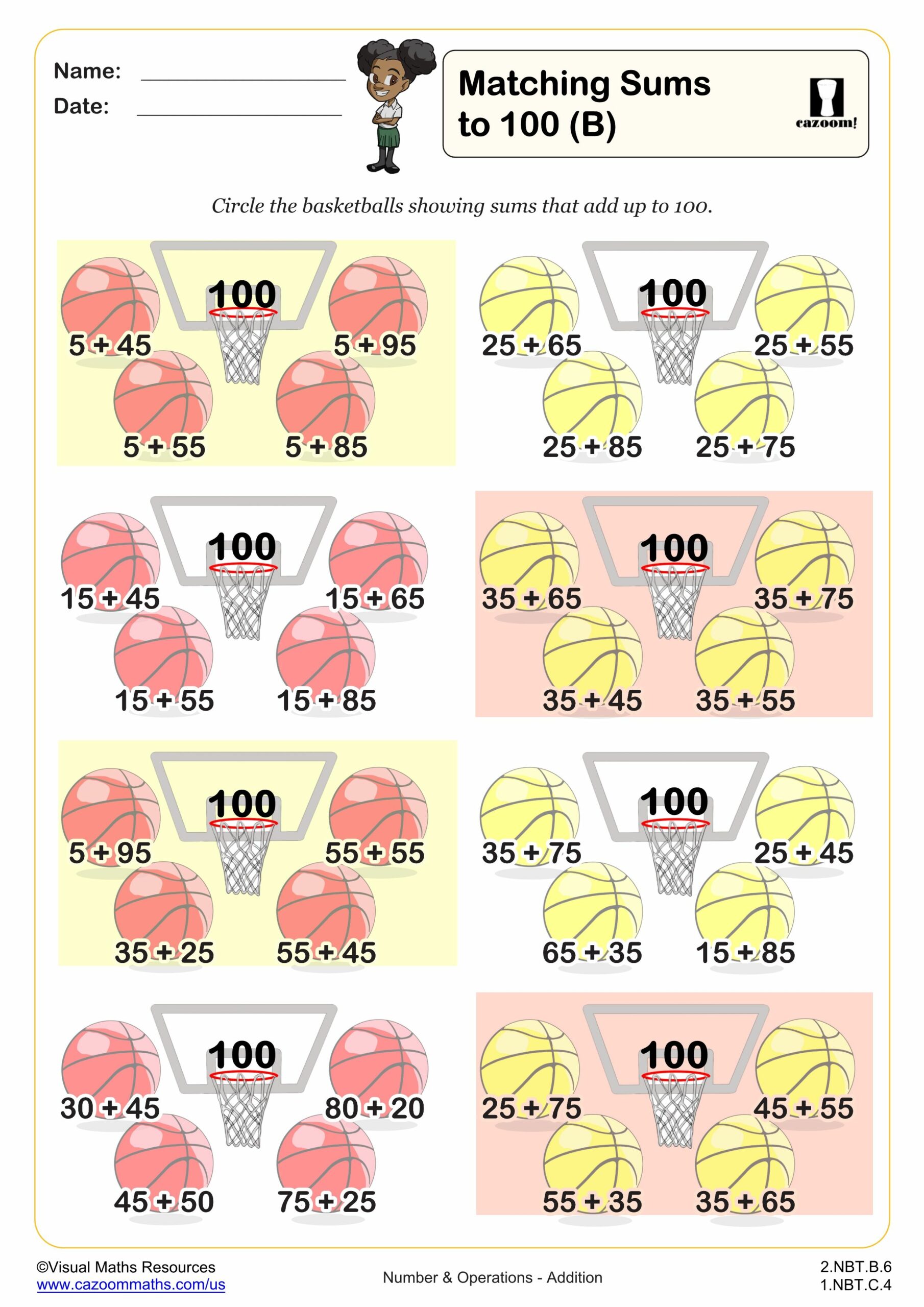
Matching sums to 100 (B)
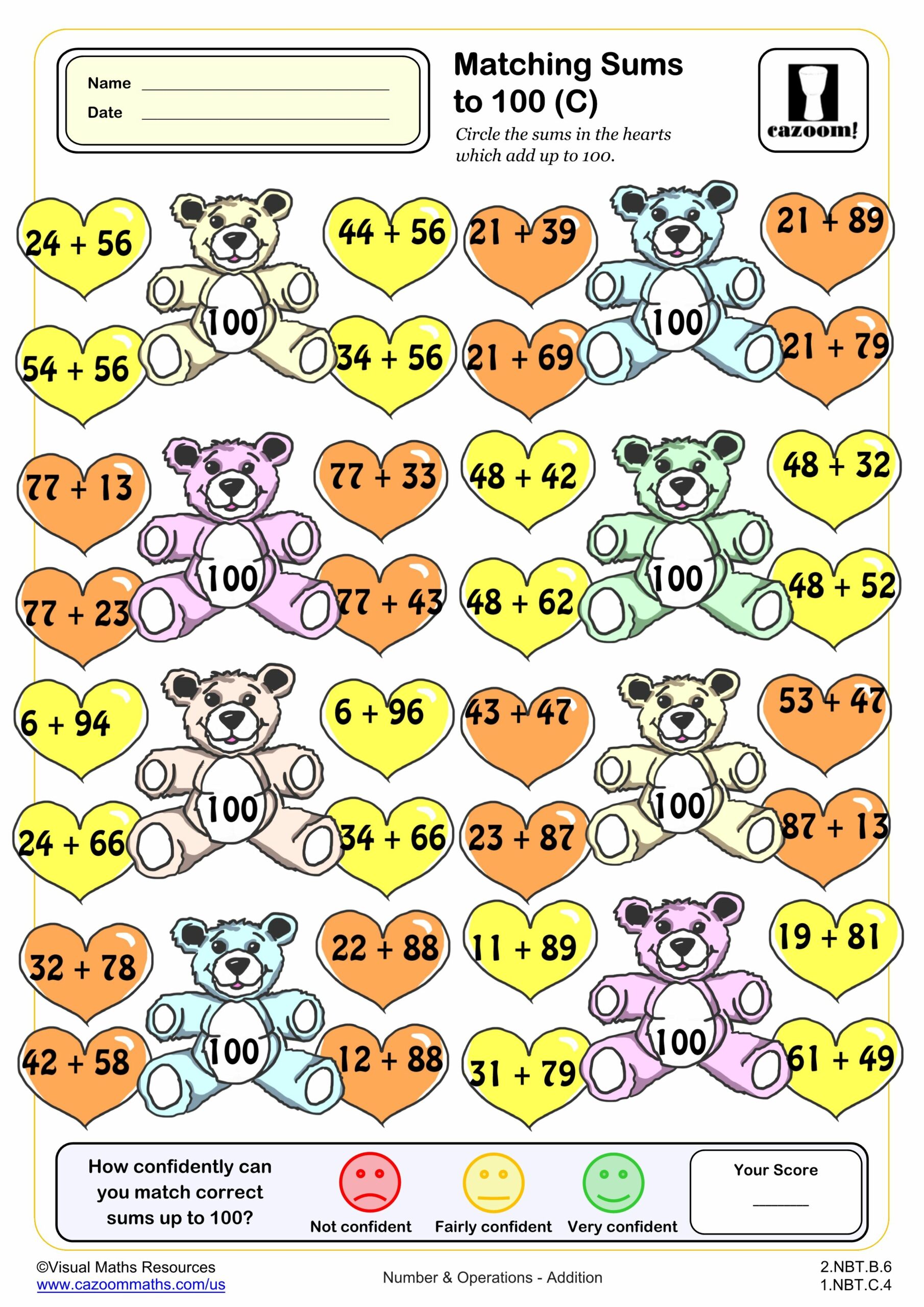
Matching sums to 100 (C)
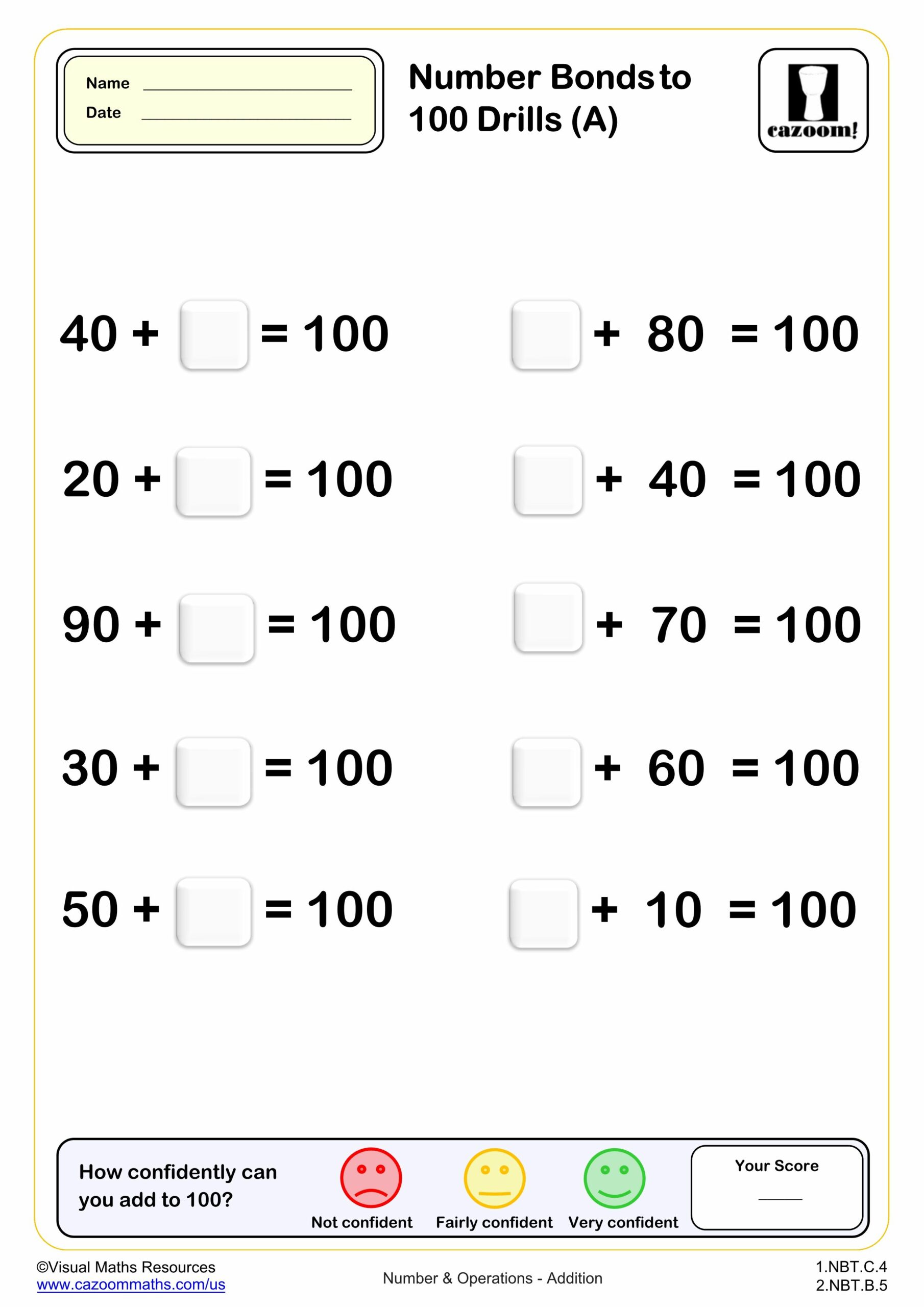
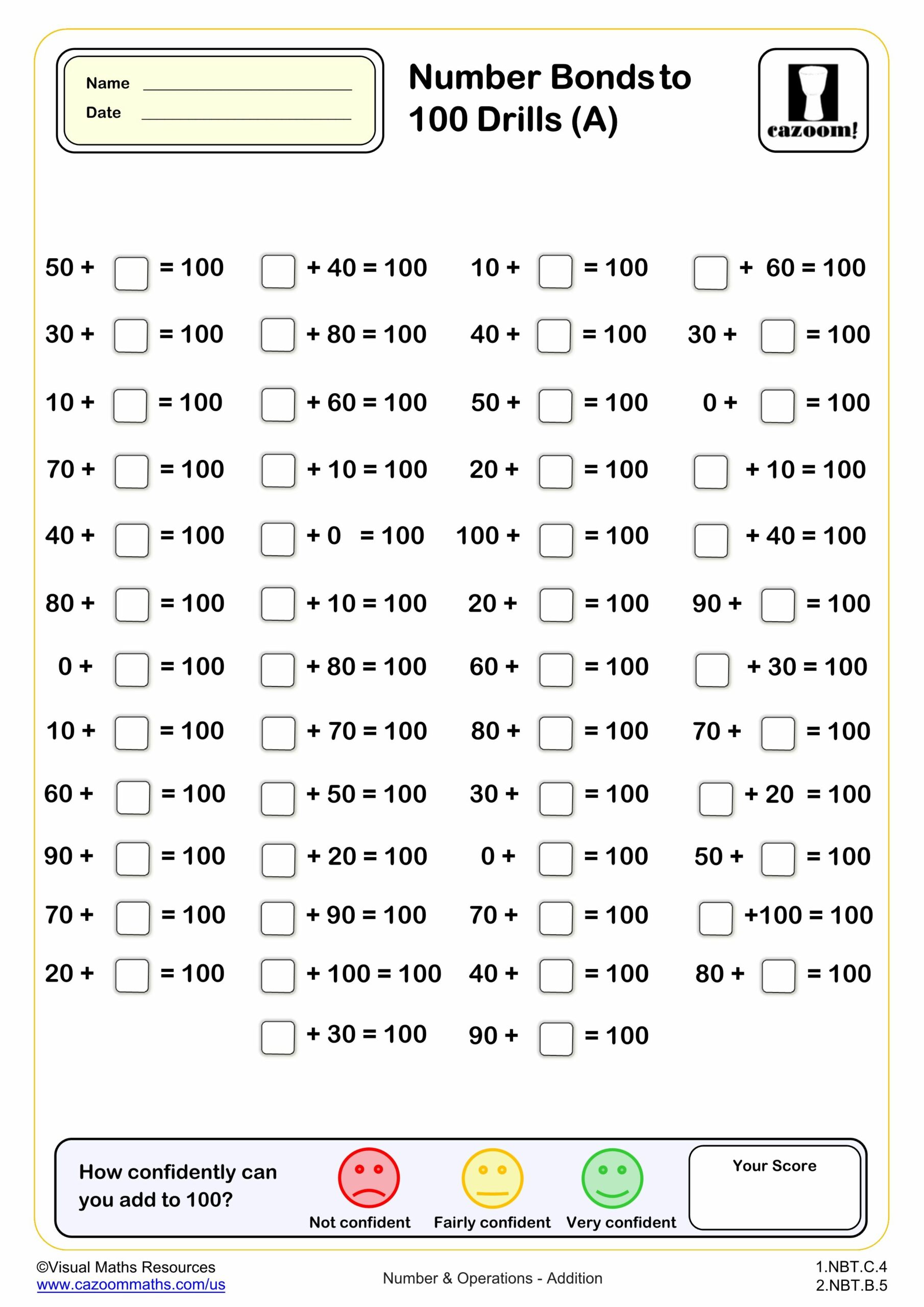
Number bond to 100 Drills (A) (10 questions)
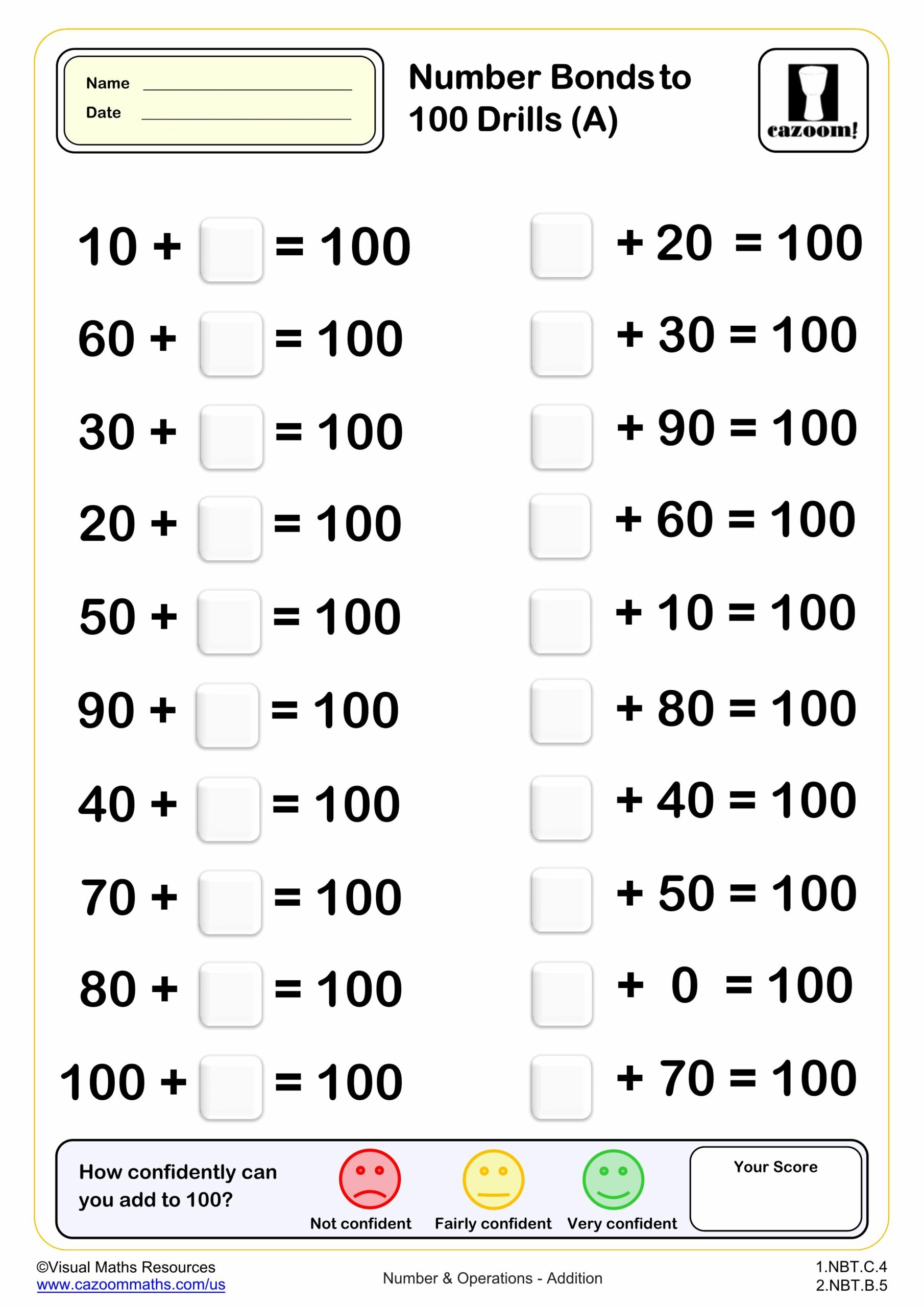
Number bond to 100 Drills (A) (20 questions)
Number bond to 100 Drills (A) (50 questions)
All worksheets are created by the team of experienced teachers at Cazoom Math.
What Are Number Bonds Over 20?
Number bonds over 20 extend the part-whole model students learned with smaller numbers to larger targets like 35, 100, and 1000. These bonds show how numbers can be decomposed and recombined, forming the conceptual foundation for place value understanding and fluency with larger numbers. In first grade, students work with friendly numbers—primarily multiples of 10 and 100—to develop pattern recognition before tackling more complex combinations.
A common misconception emerges when students treat making 100 as an entirely different skill from making 10, rather than recognizing it as the same decomposition thinking applied to a larger number. When students complete bonds like 40 + __ = 100, they're actually using the same strategy as 4 + __ = 10, just scaled up by a factor of ten. Teachers notice that pointing out this parallel explicitly helps students transfer their existing knowledge rather than starting from scratch.
Which Grade Levels Practice Number Bonds Over 20?
These worksheets target first grade students in elementary school, aligning with standards that require students to understand two-digit numbers and develop fluency with addition and subtraction within 100. First graders use number bonds over 20 as a bridge between basic fact fluency and more complex mental math strategies they'll need in second grade.
The difficulty progression moves strategically from accessible entry points to more challenging applications. Students typically begin with making 100 using two numbers that are multiples of 10 (like 30 + 70), then advance to making 35 where one addend is given. The collection extends to making 1000 with three numbers, using both multiples of 100 and multiples of 10, which prepares students for place value work with hundreds. This scaffolded approach ensures students build confidence before tackling bonds with greater numbers or more addends.
How Do Students Make 1000 with Multiple Numbers?
Making 1000 with three numbers teaches students to think strategically about combining parts to reach a target, applying their understanding of place value and compensation strategies. When working with multiples of 100 (like 300 + 400 + 300), students recognize patterns in hundreds place addition. With multiples of 10 (such as 320 + 450 + 230), they engage with more complex mental math that requires attending to both the hundreds and tens places simultaneously.
This skill connects directly to budgeting and financial literacy contexts students will encounter throughout their lives. When families plan expenses—allocating money for groceries, utilities, and entertainment to stay within a monthly budget—they're essentially solving number bond problems to reach a target amount. In STEM fields, engineers regularly decompose project budgets or material quantities into component parts that must sum to specific totals, making this seemingly abstract first-grade skill a practical foundation for real-world problem-solving.
How Can Teachers Use These Number Bond Worksheets Effectively?
These worksheets provide structured practice that moves from concrete number relationships to more abstract thinking. The blank-filling format encourages students to apply inverse operations and think flexibly about number composition rather than just memorizing facts. Problems featuring multiples of 10 and 100 help students recognize place value patterns, while mixed formats prevent rote completion and require genuine mathematical reasoning on each problem.
Teachers find these worksheets valuable for differentiated math centers, allowing some students to work on basic bonds to 100 while others tackle bonds to 1000. The answer keys make them practical for independent practice or homework, since students can self-check their work and identify patterns in their errors. Many teachers use these during intervention time to diagnose whether student struggles with larger numbers stem from weak basic fact knowledge or difficulty with place value concepts, informing targeted instruction.