1st Grade Single Digit Subtraction Worksheets
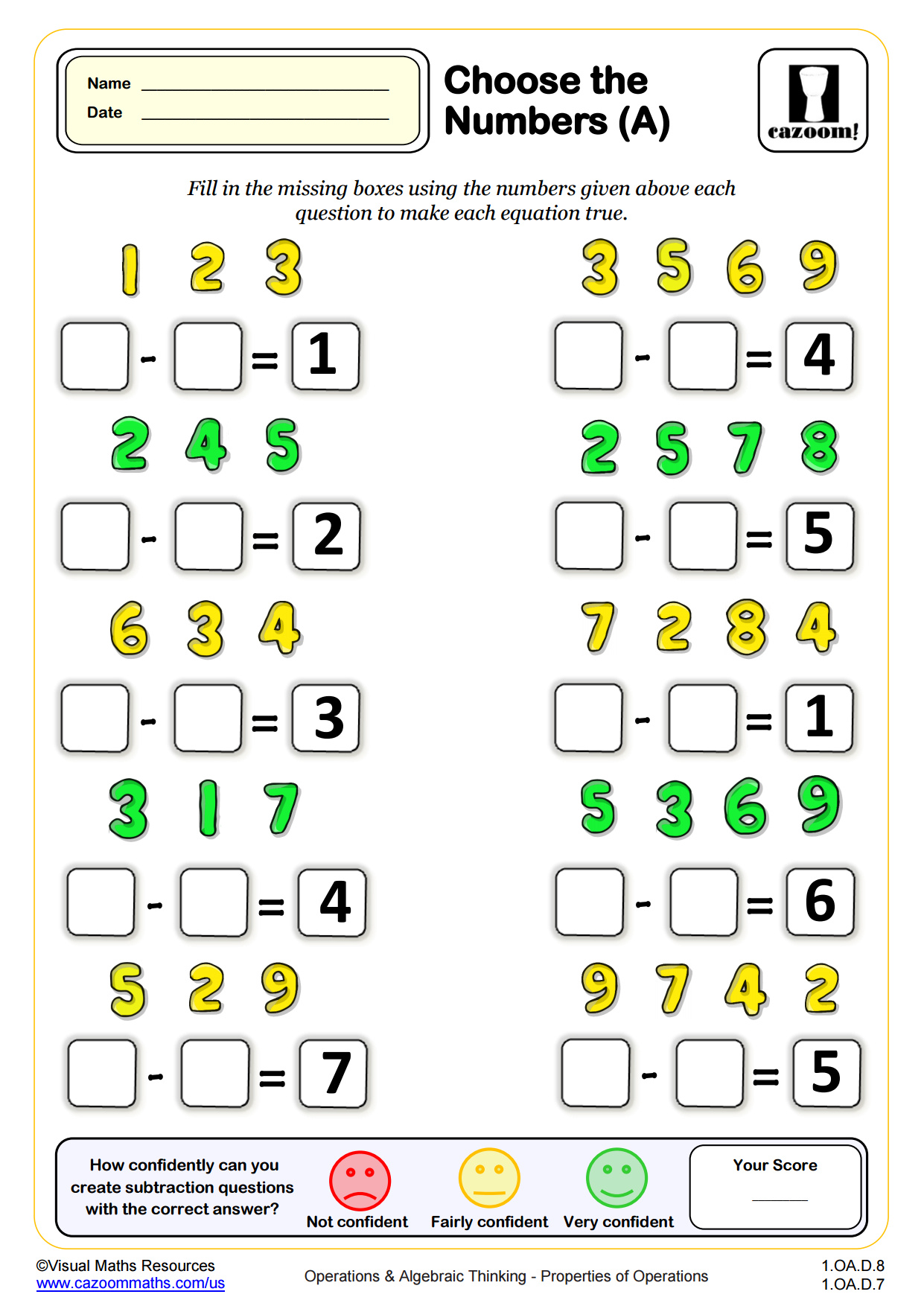
Choose the Numbers (A)
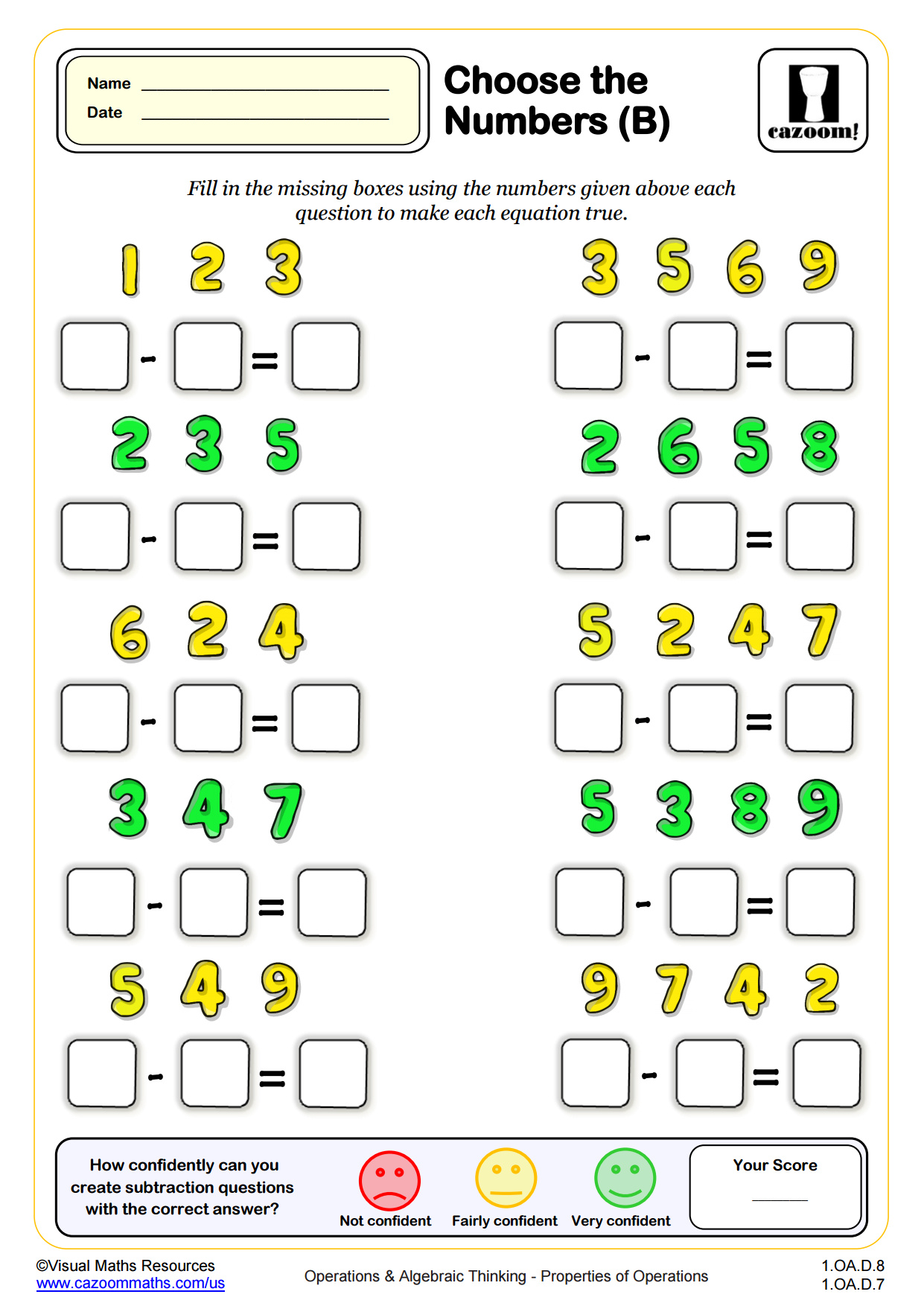
Choose the Numbers (B)
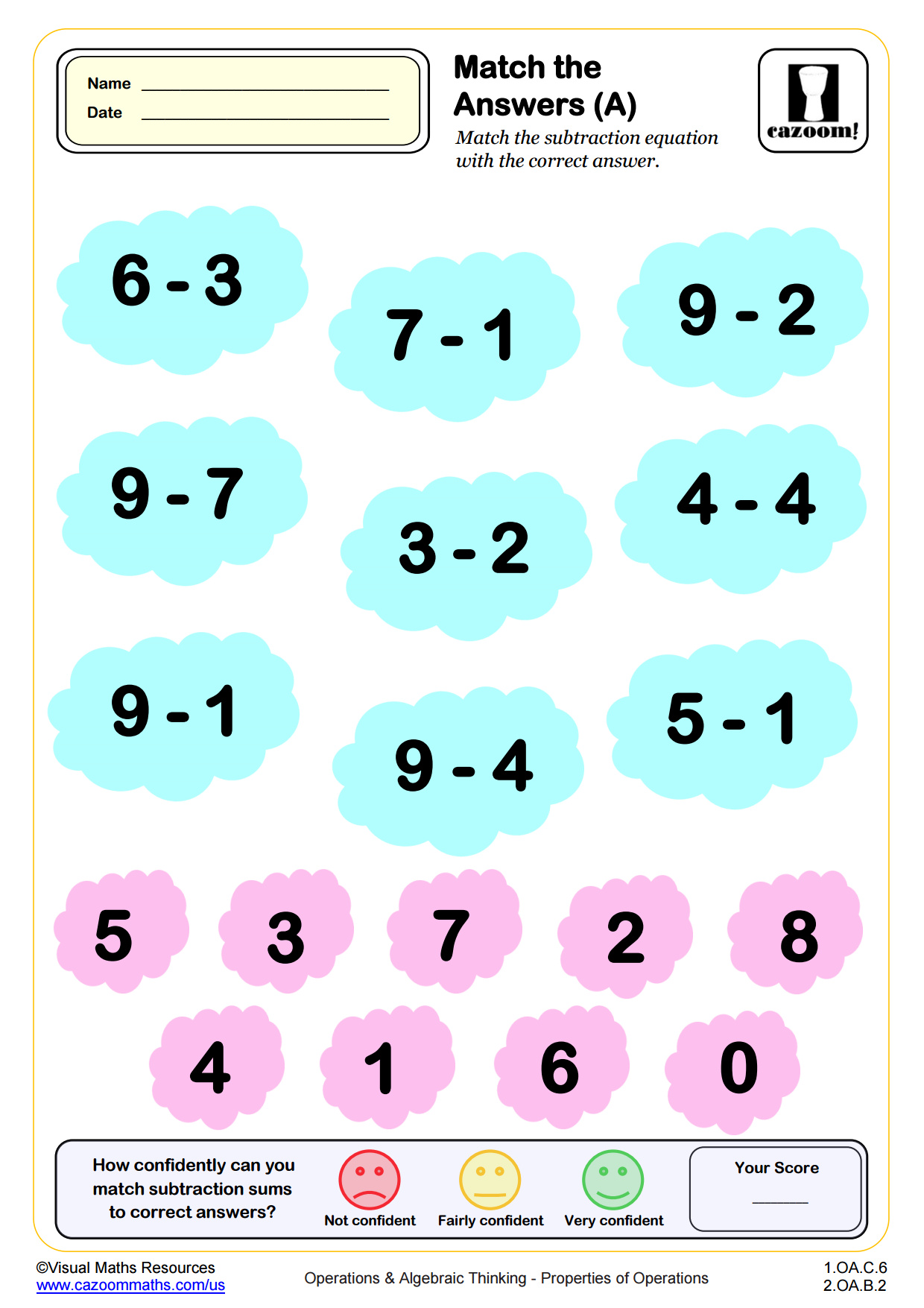
Match the Answers (A)
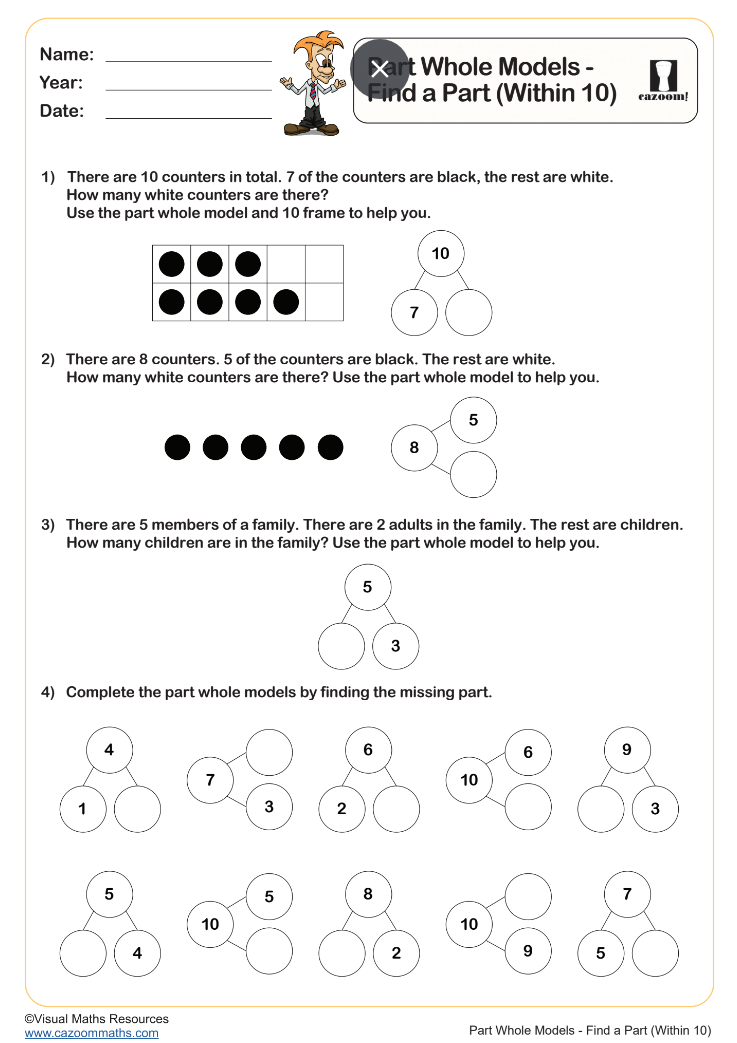
Part Part Whole Models - Find a Part (Within 10)
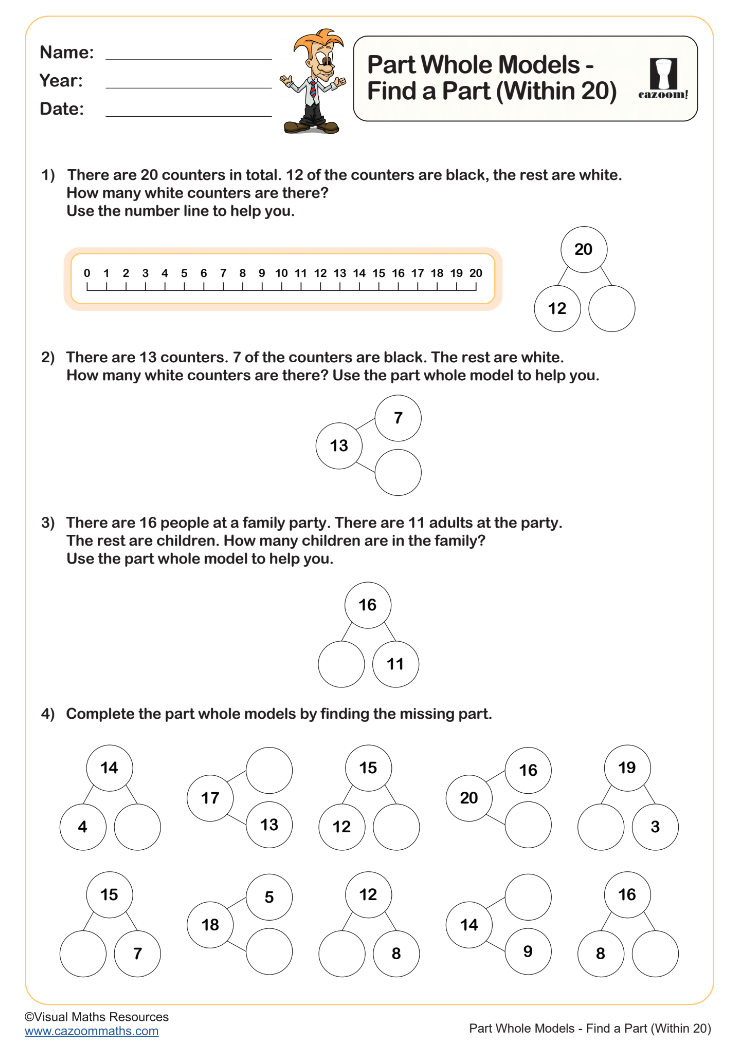
Part Part Whole Models - Find a Part (Within 20)
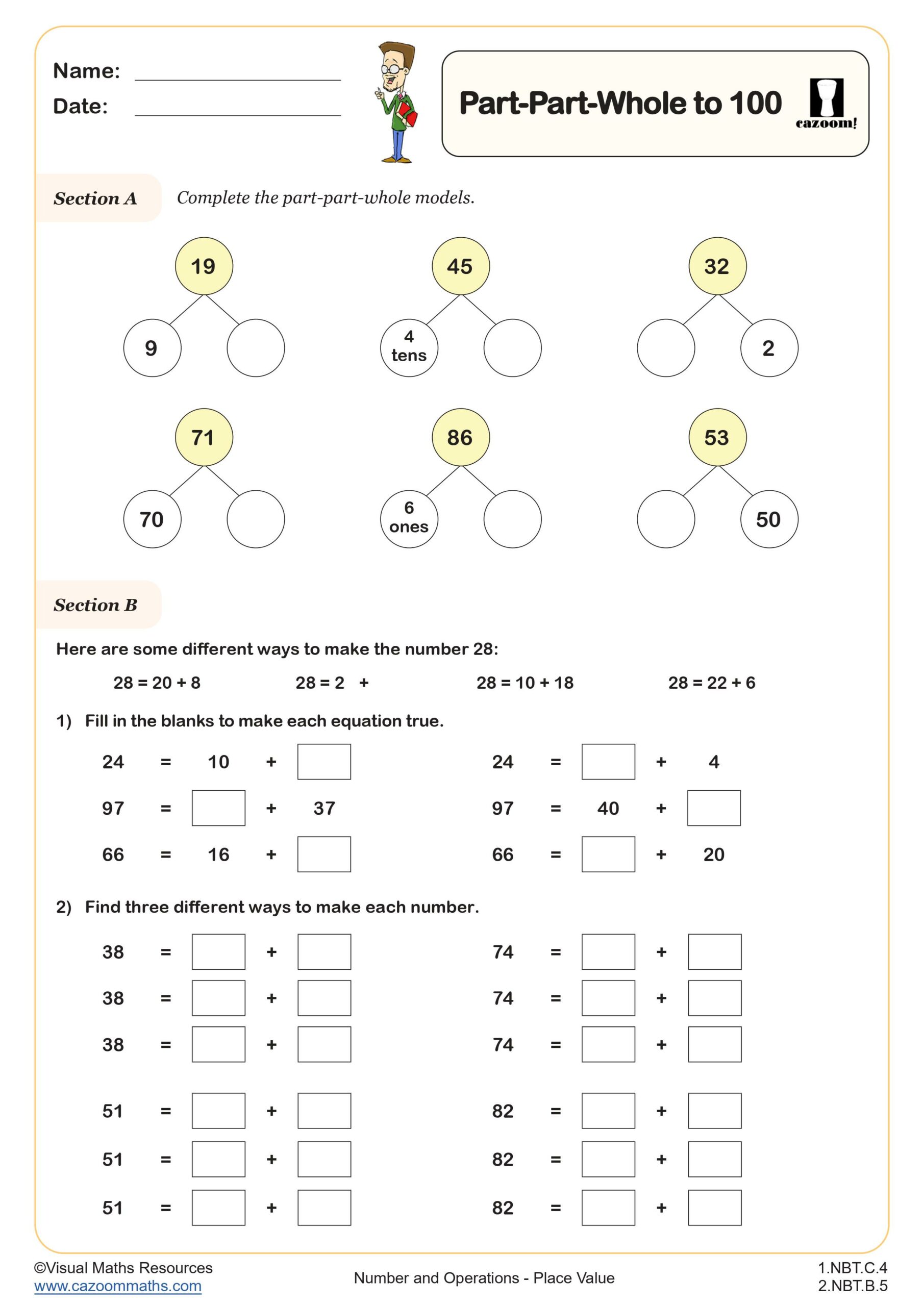
Part Part Whole to 100
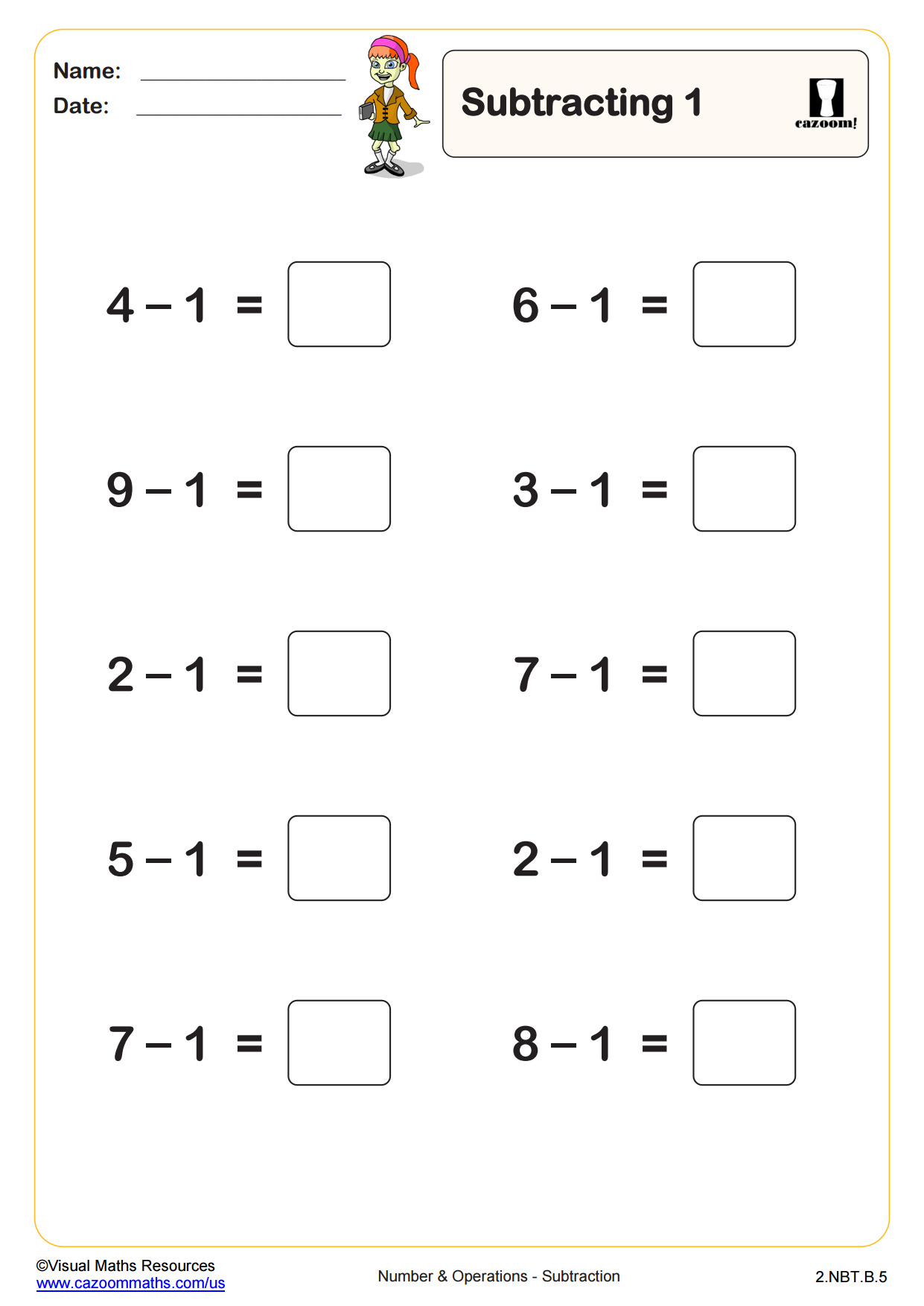
Subtracting 1 (10 questions)
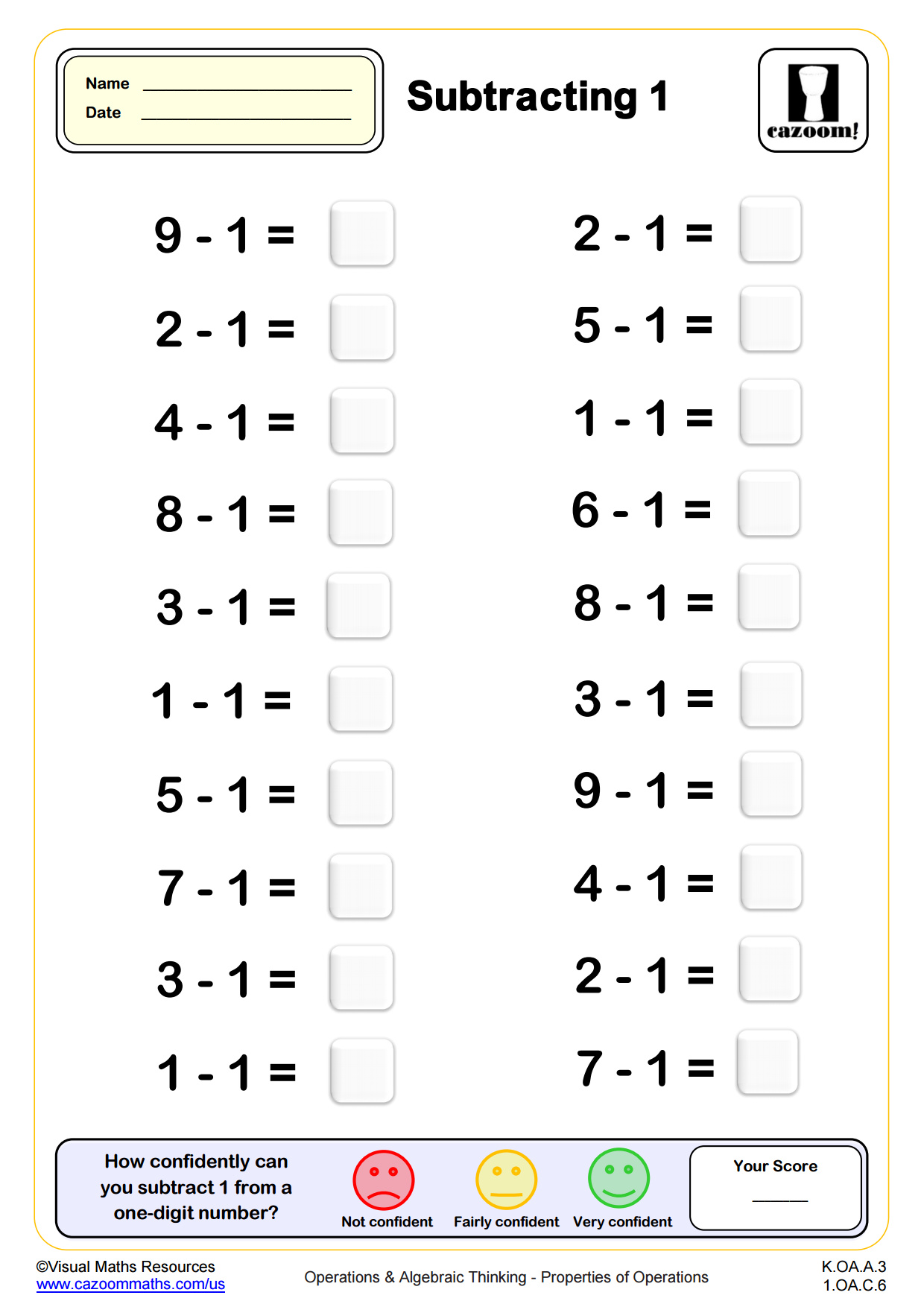
Subtracting 1 (20 questions)
Subtracting 1 (50 questions)
Subtracting 2 (10 questions)
Subtracting 2 (20 questions)
Subtracting 2 (50 questions)
Subtracting from 10 Drills (10 questions)
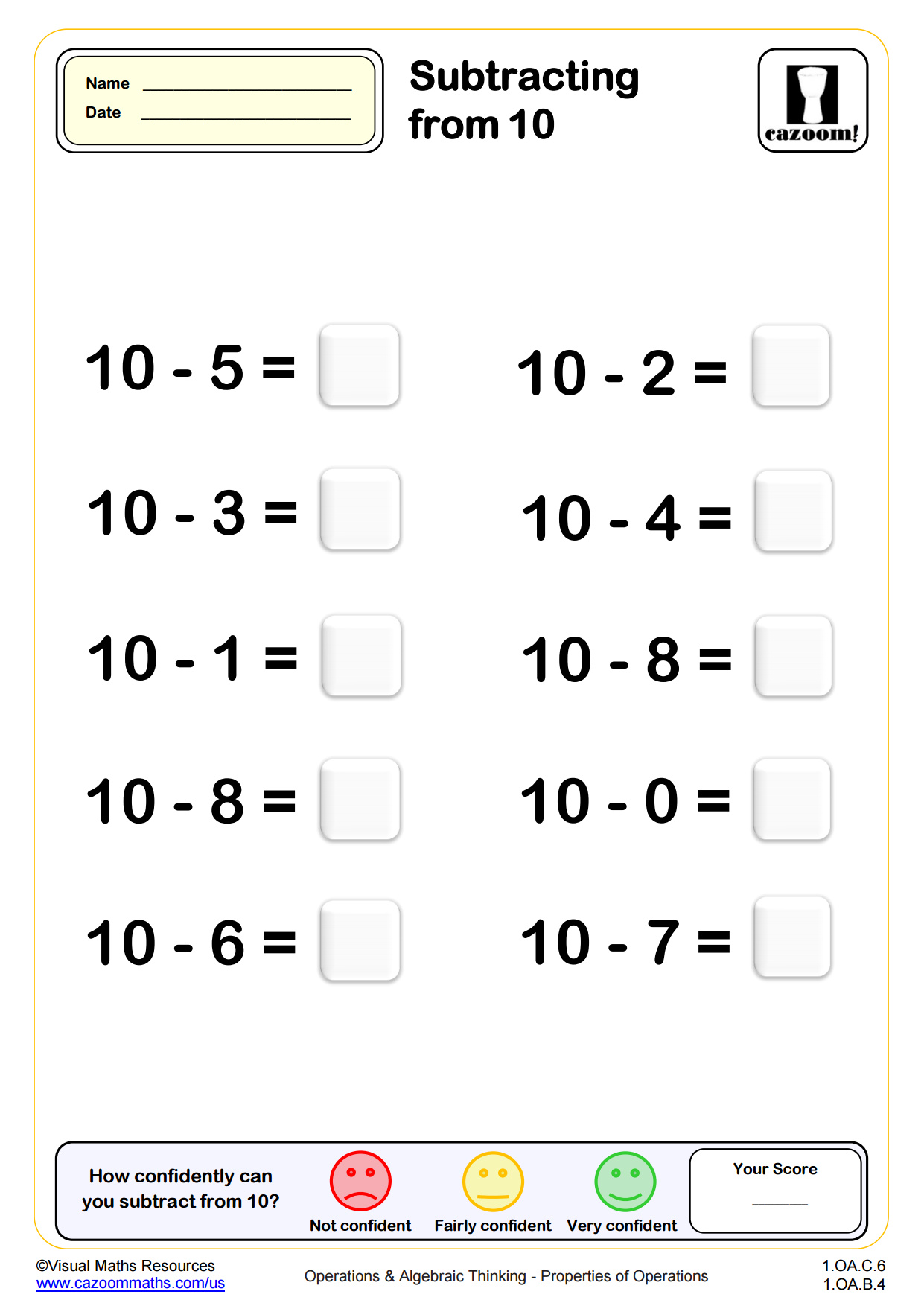
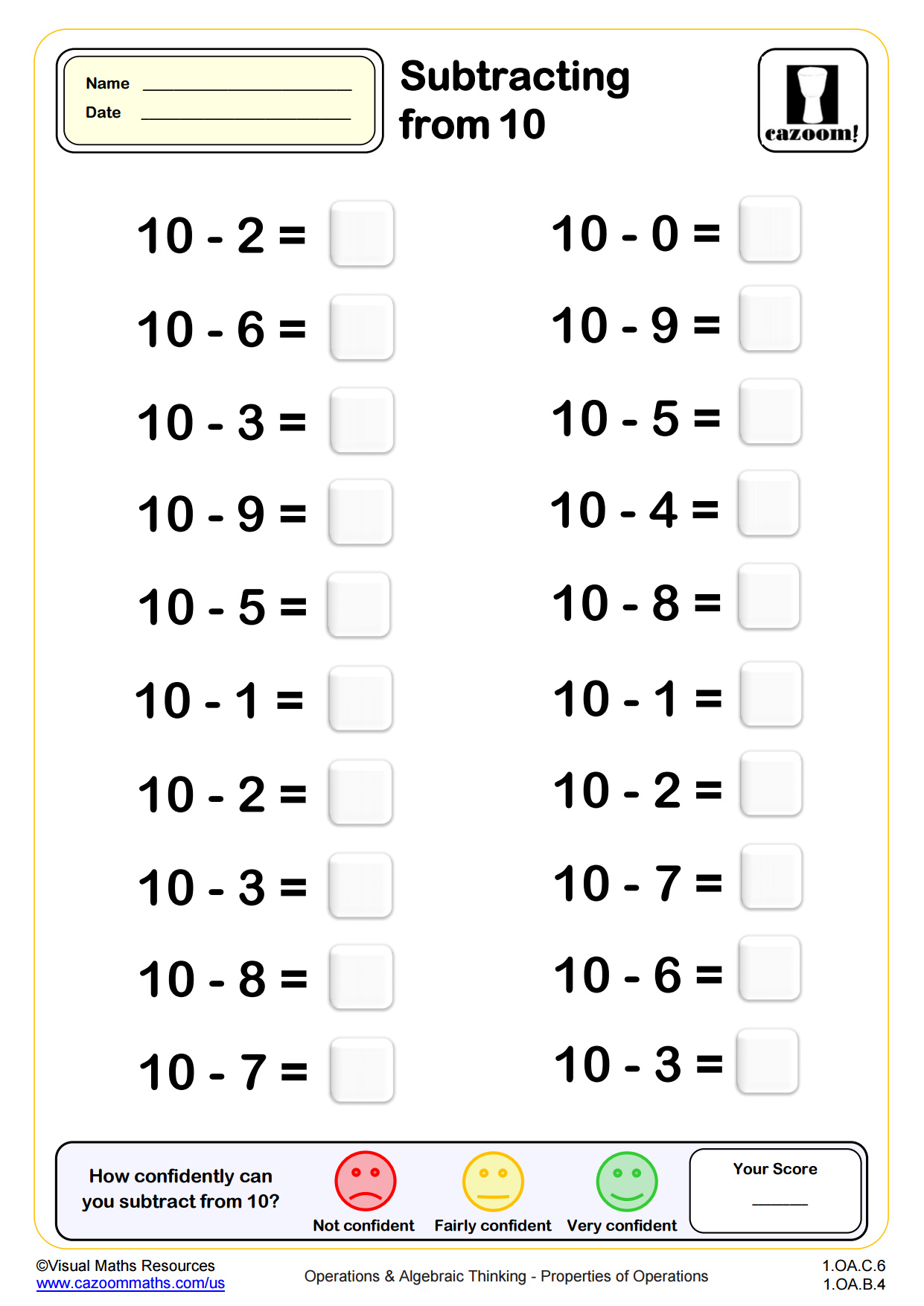
Subtracting from 10 Drills (20 questions)
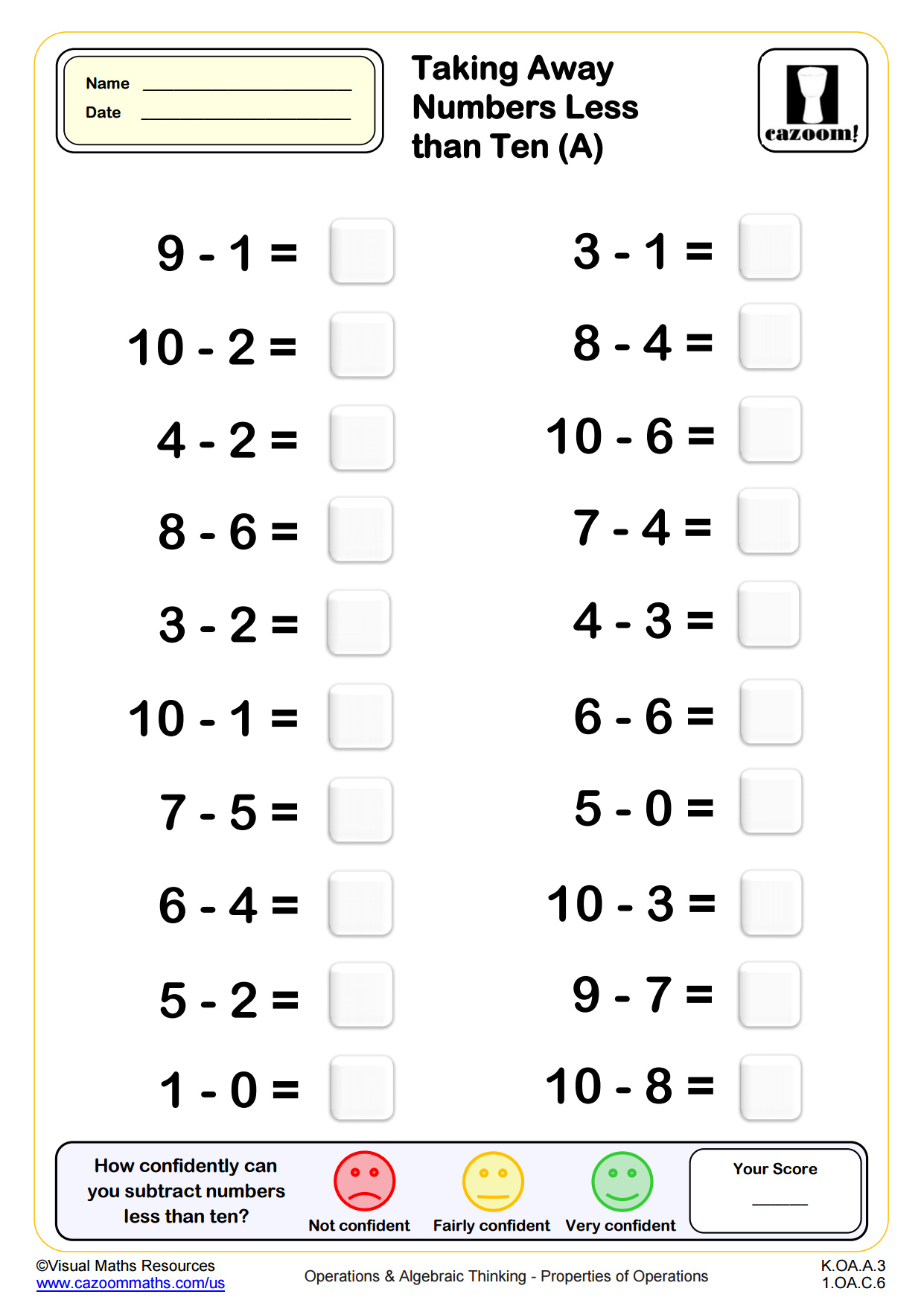
Subtracting Numbers Less Than 10 (A)
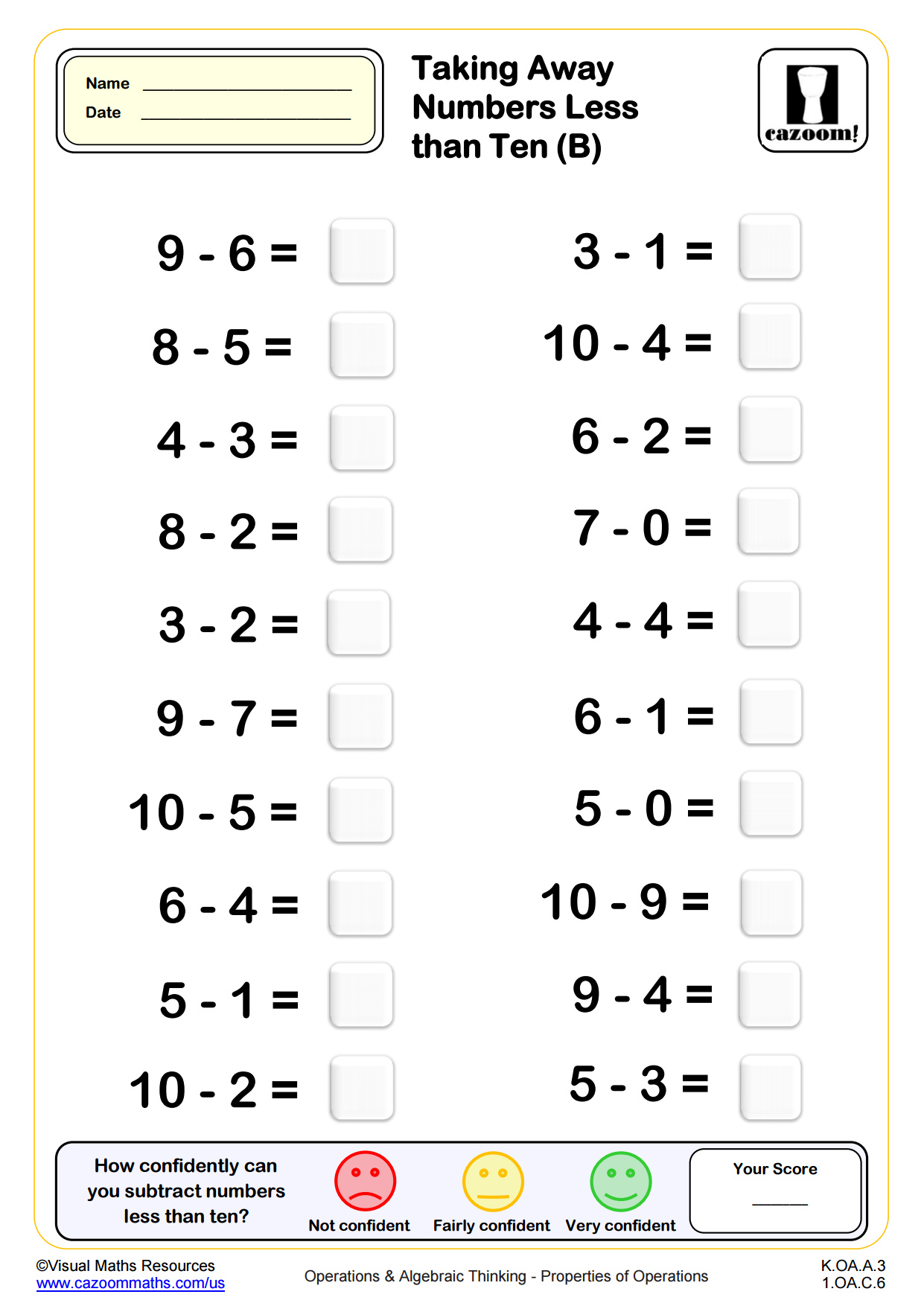
Subtracting Numbers Less Than 10 (B)
Subtracting Numbers Less Than 10 (C)
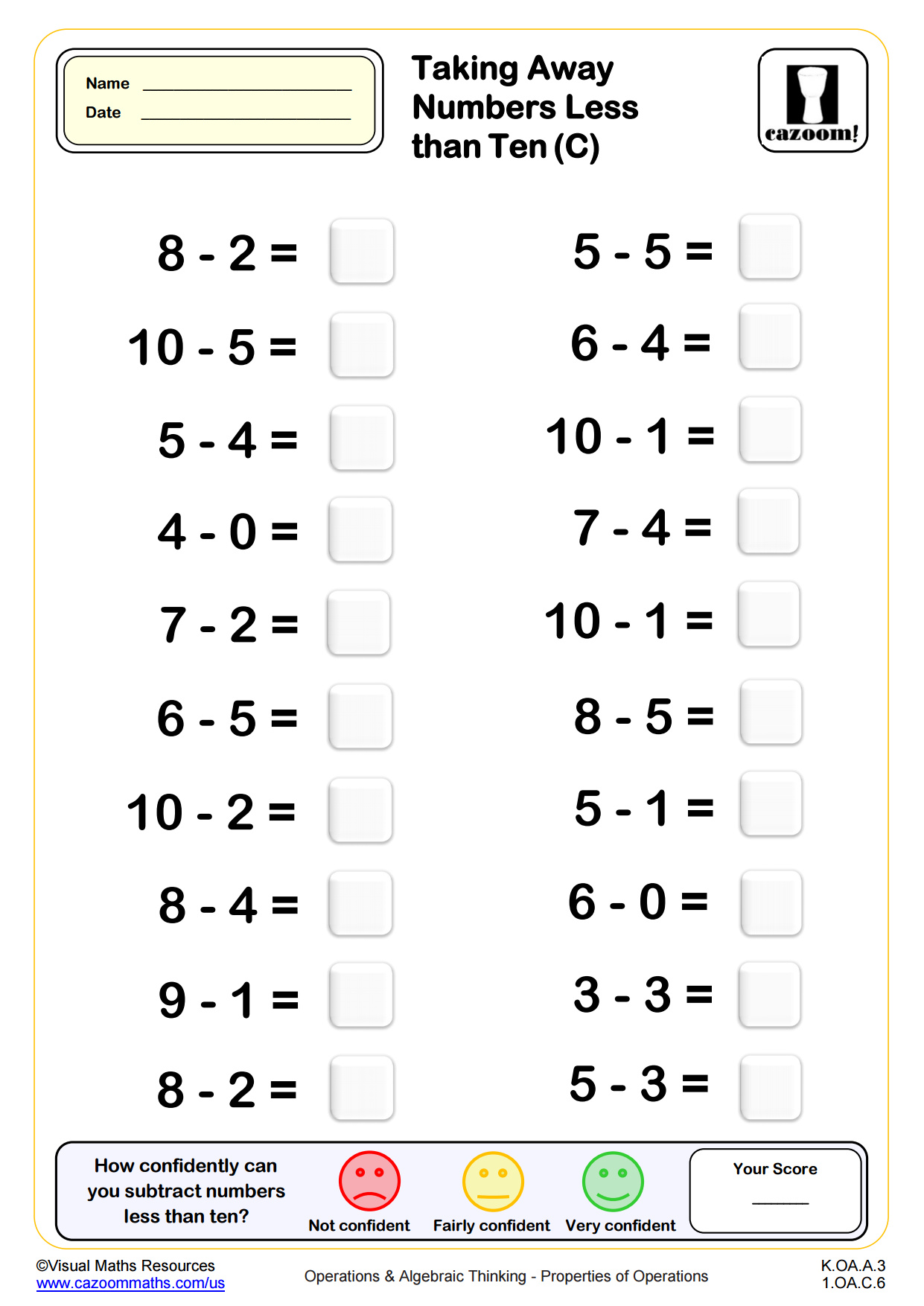
Subtracting Numbers Less Than 6 (A)
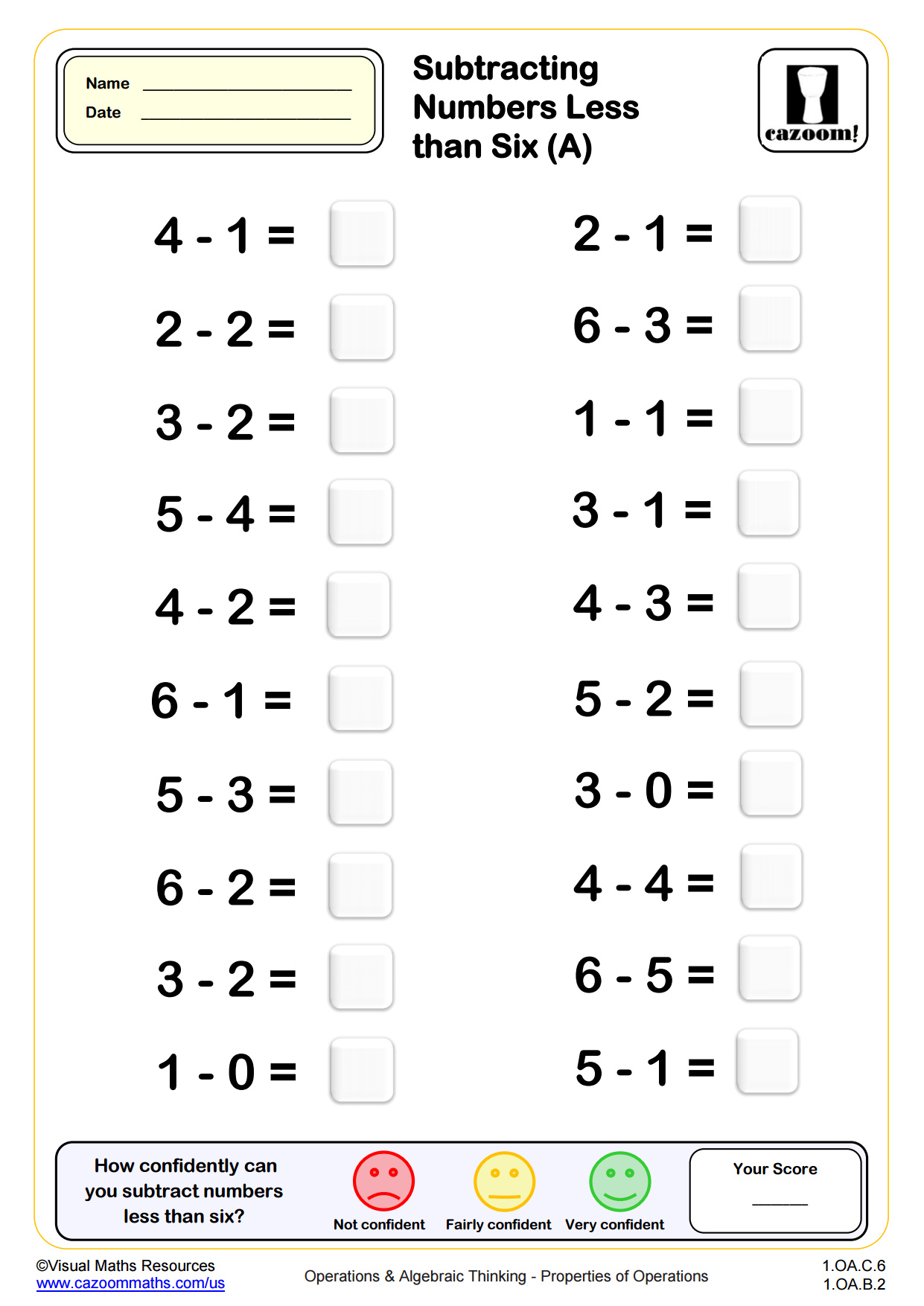
Subtracting Numbers Less Than 6 (B)
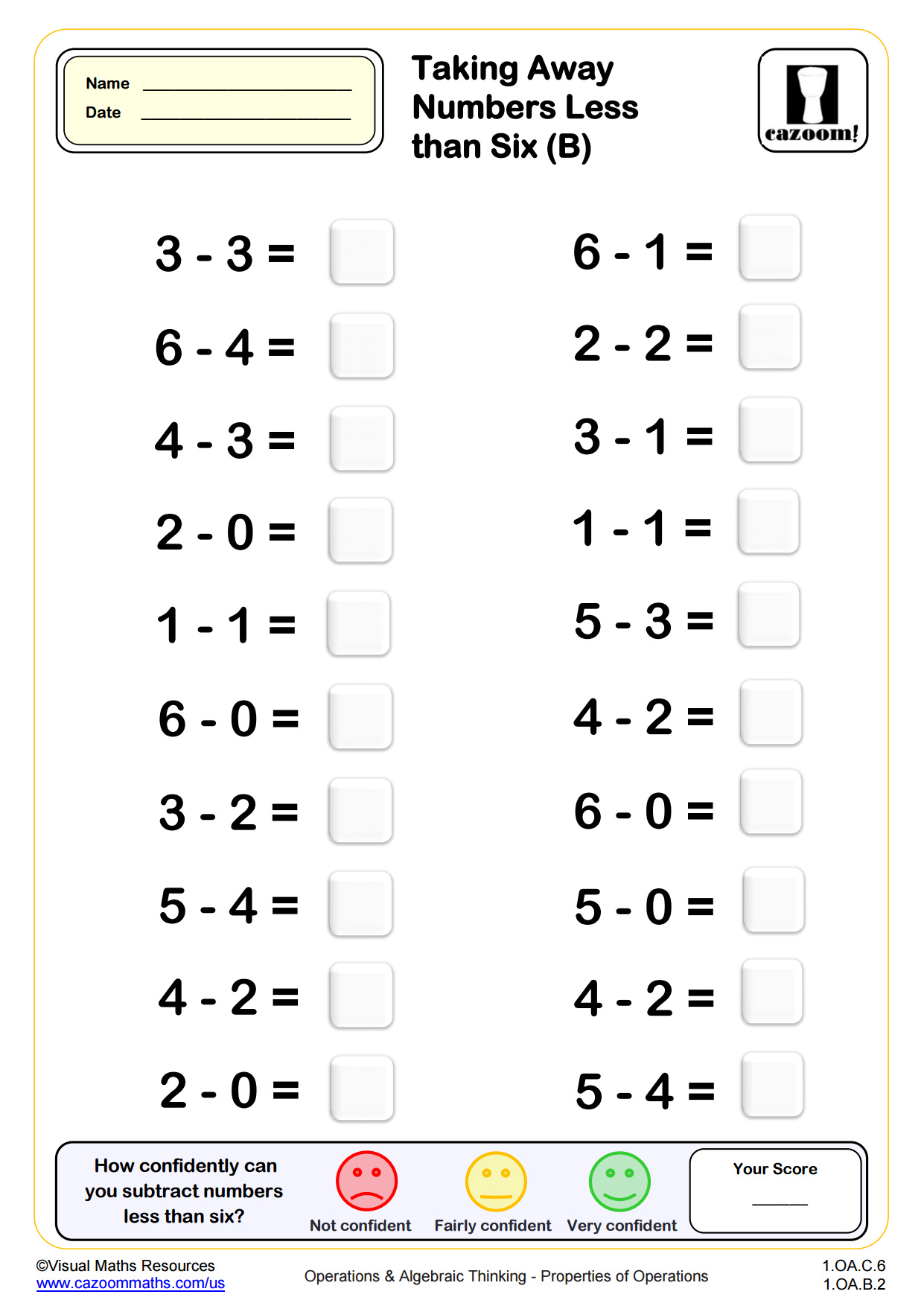
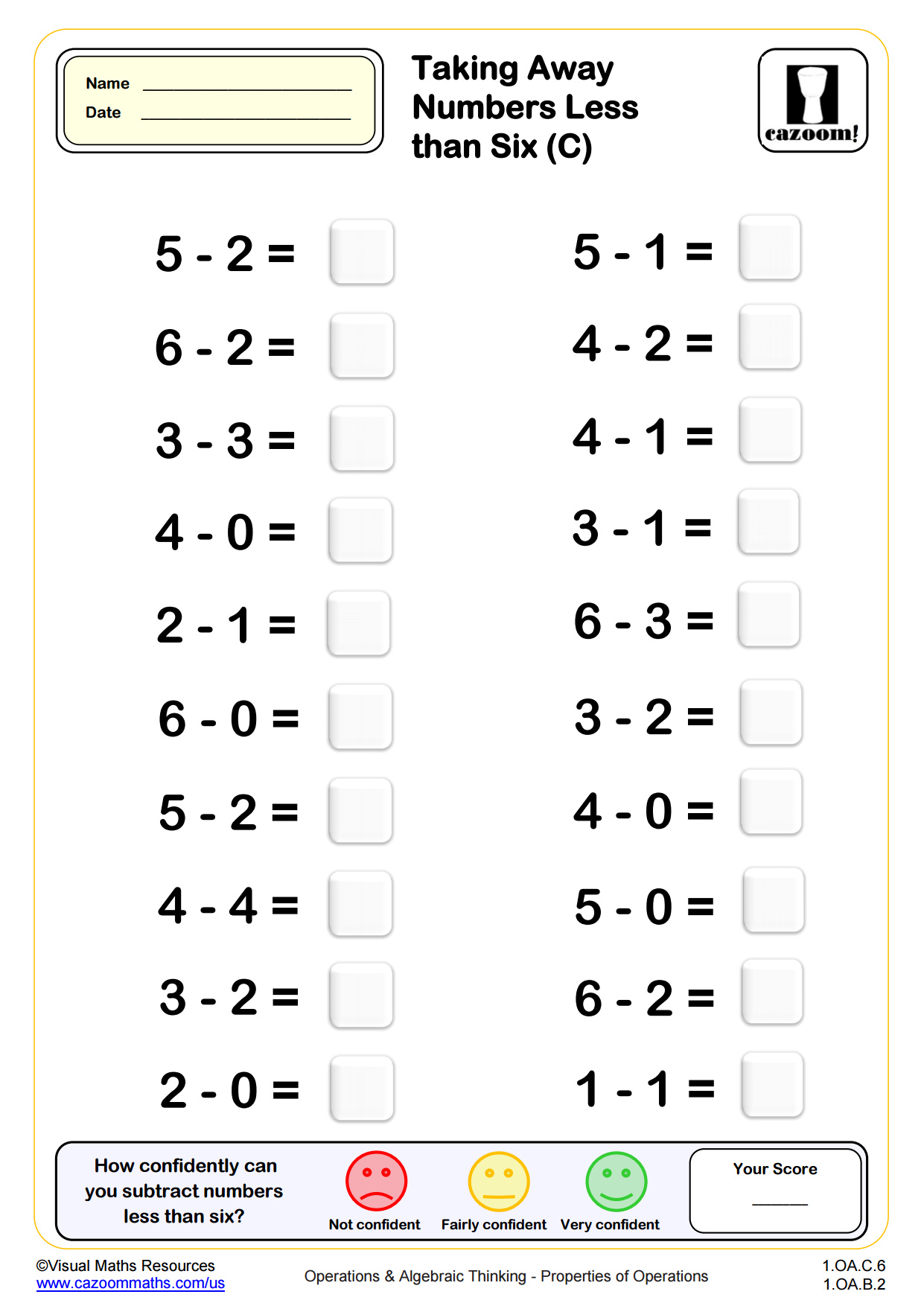
Subtracting Numbers Less Than 6 (C)
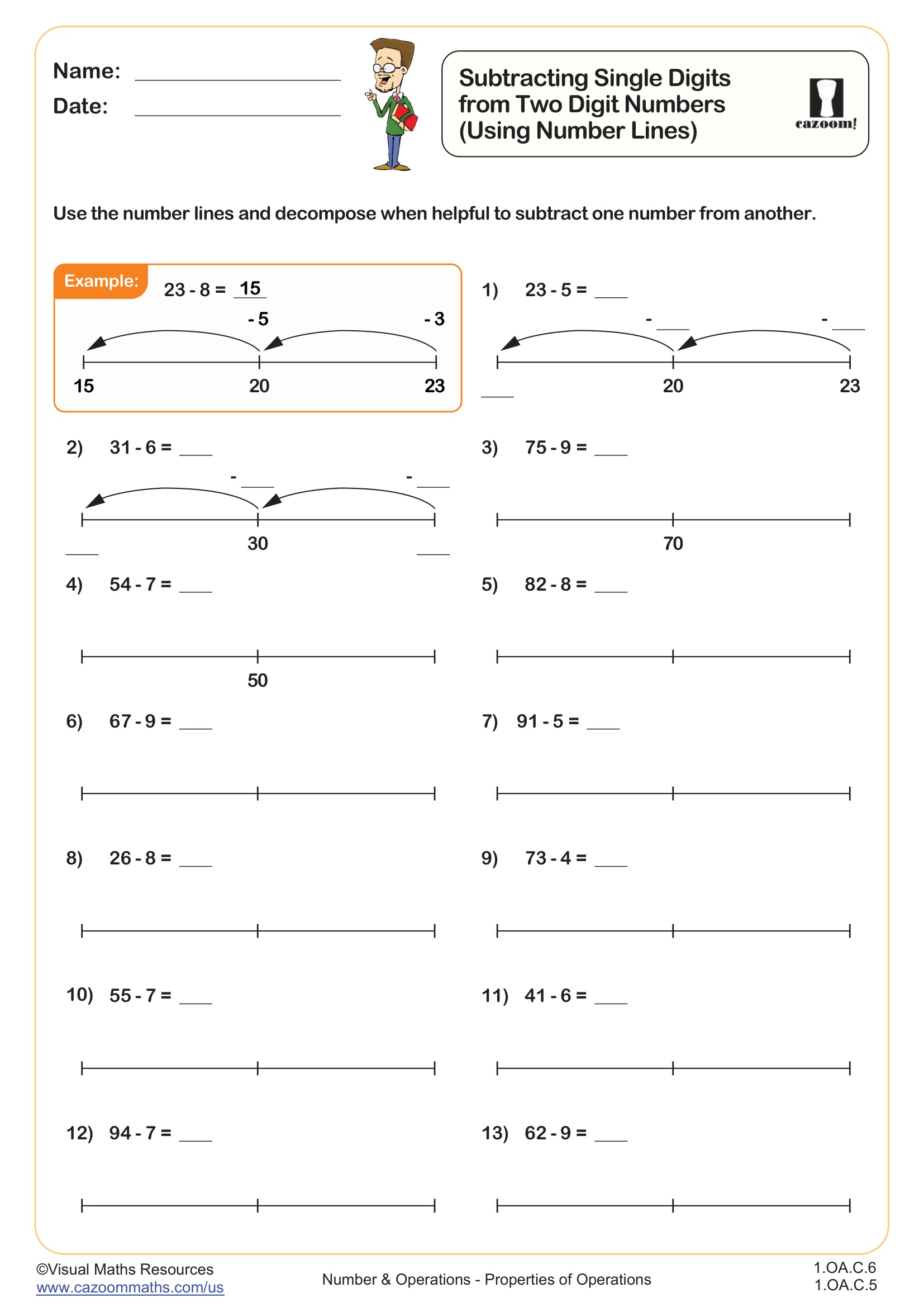
Subtracting Single Digits from Two Digit Numbers (Using Number Lines)
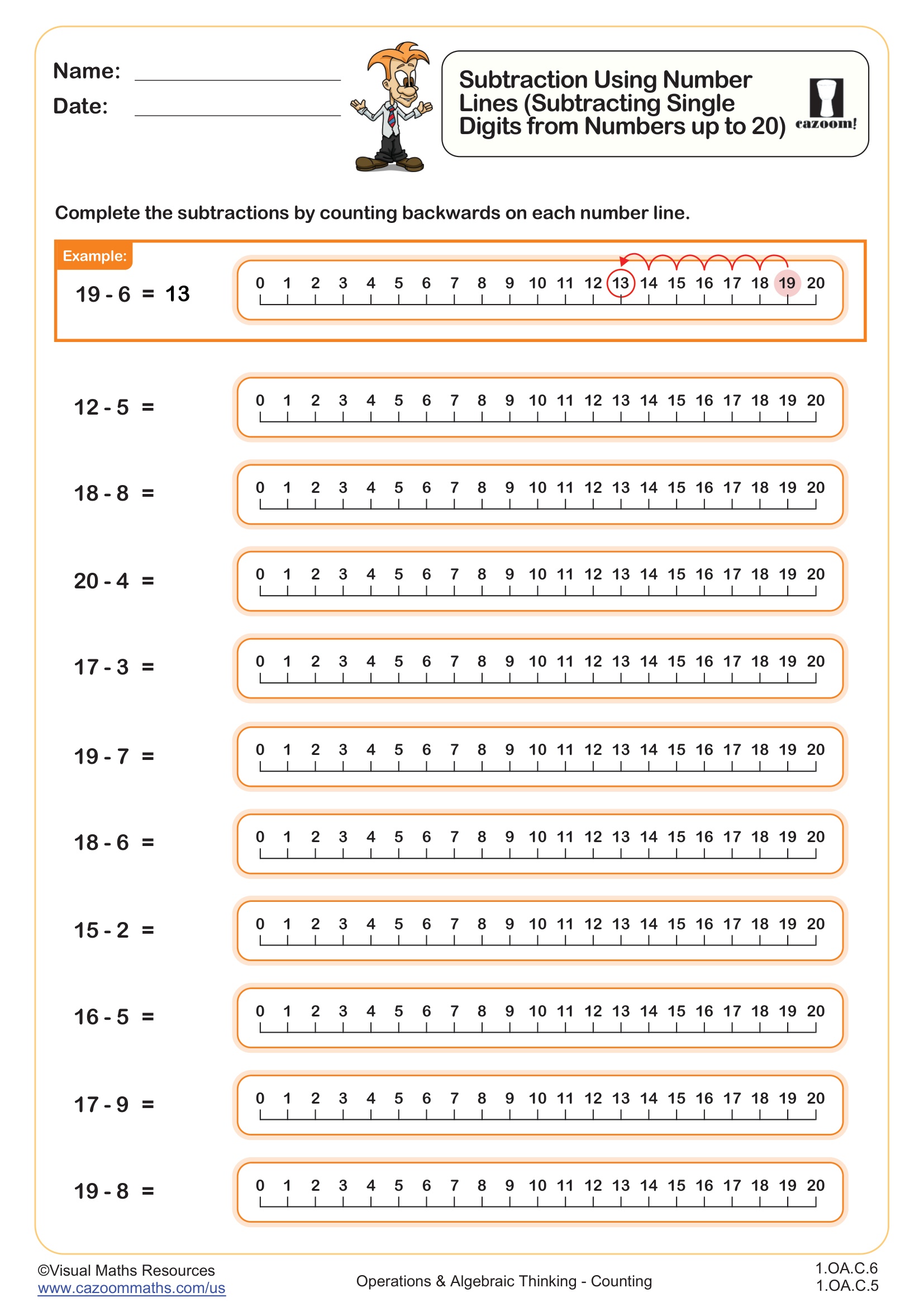
Subtraction Using Number Lines (Subtracting Single Digits from Numbers up to 20)
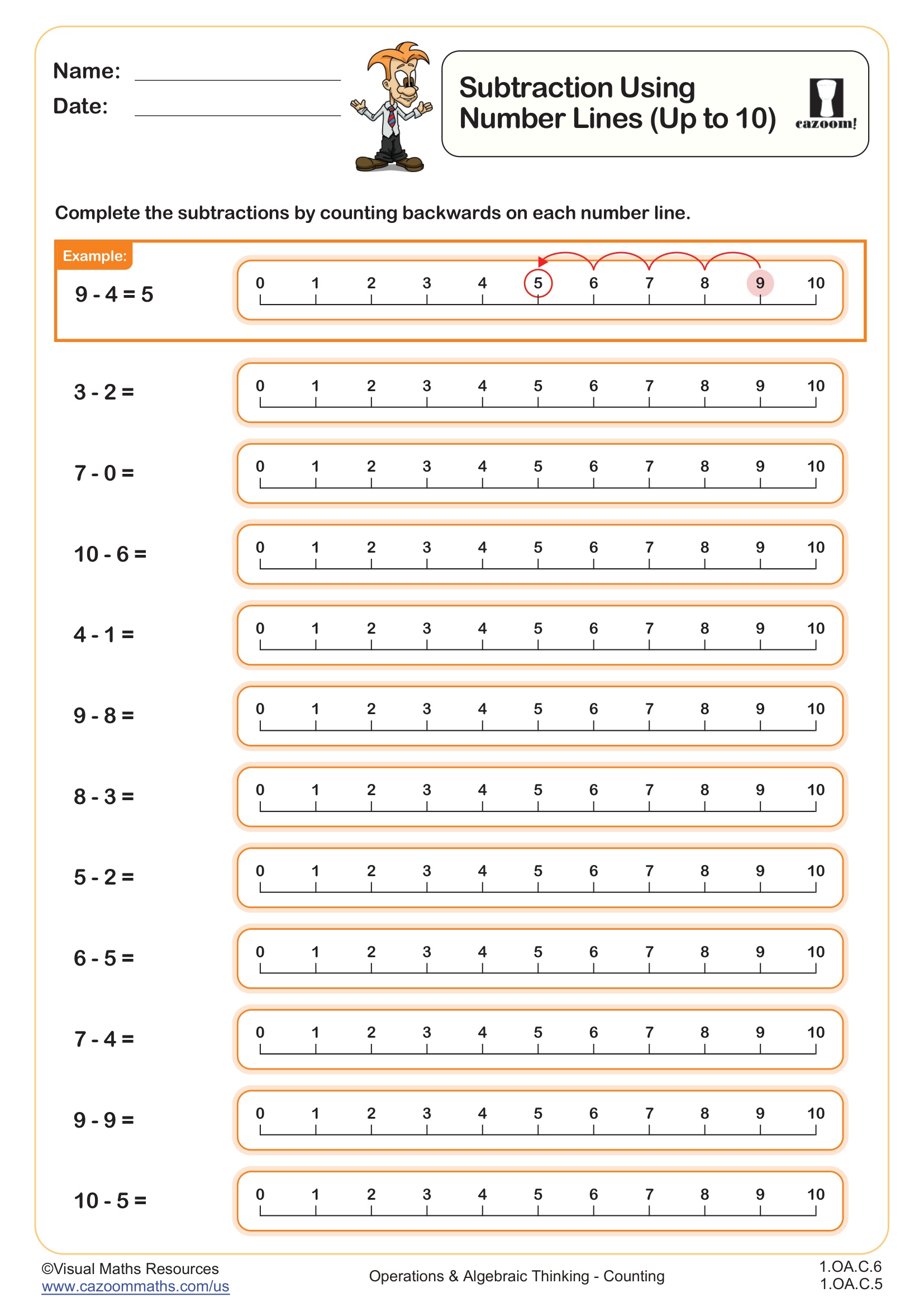
Subtraction Using Number Lines (Up to 10)
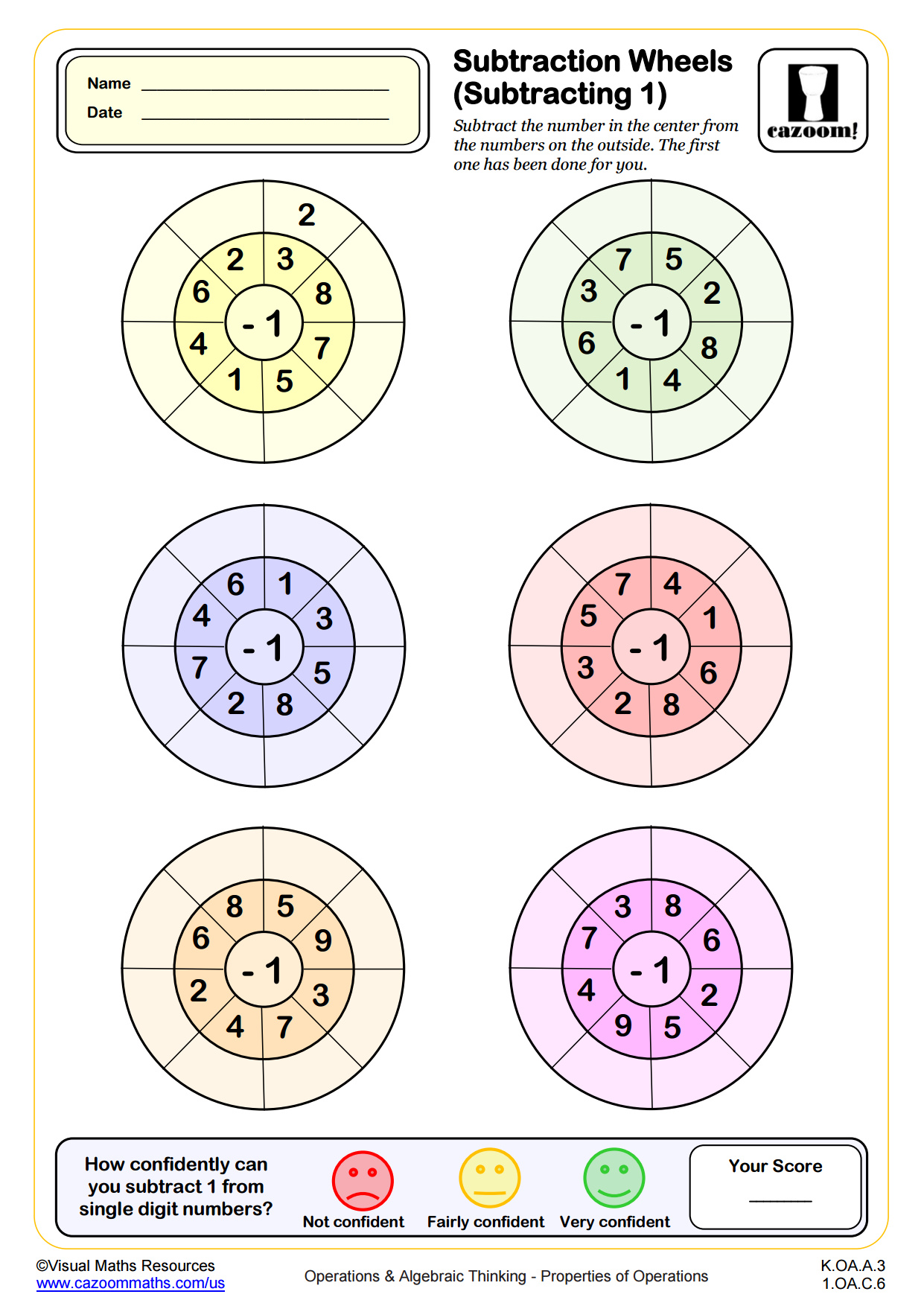
Subtraction Wheels (Subtracting 1)
Subtraction Wheels (Subtracting 2)
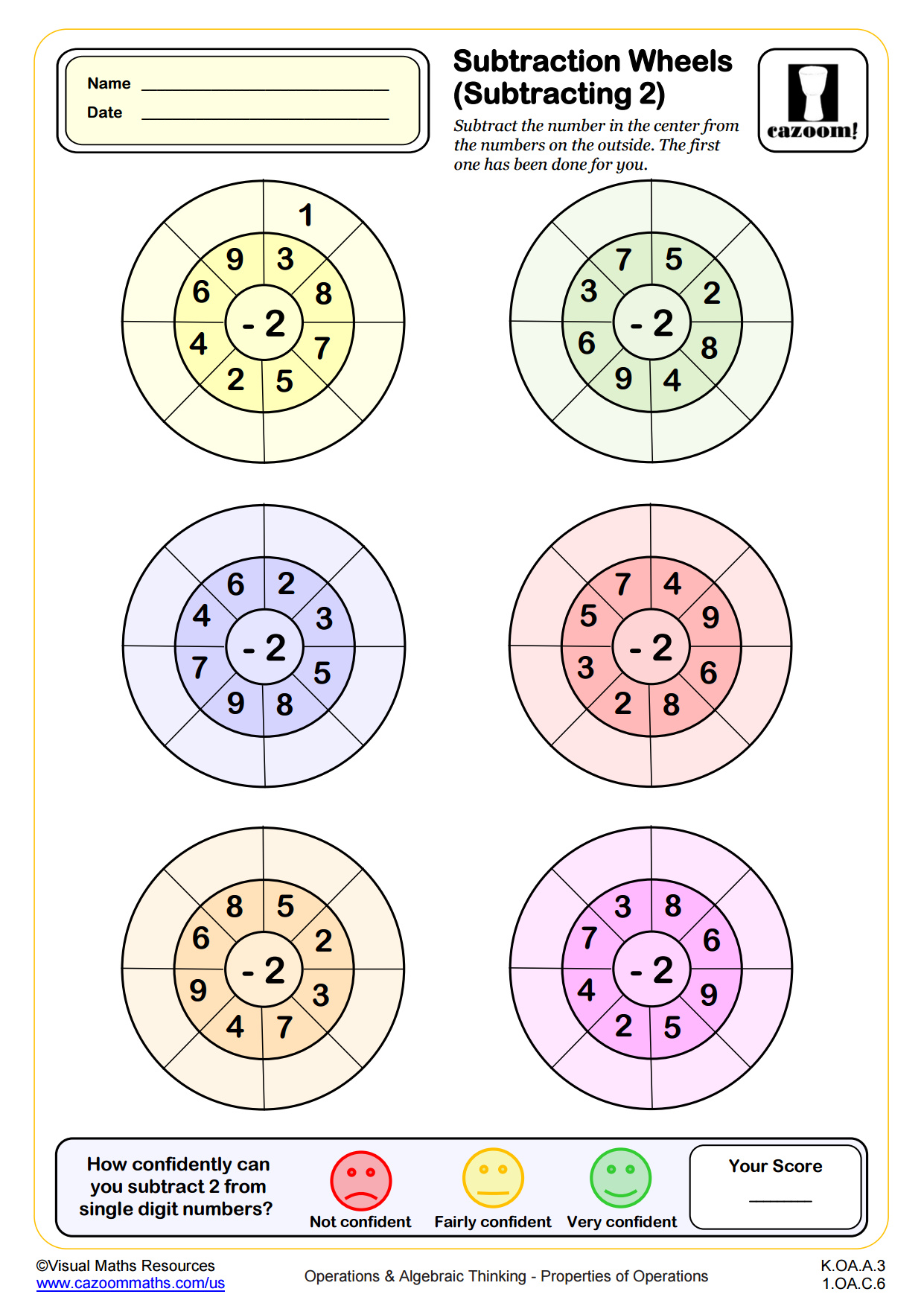
Subtraction Wheels (Subtracting 5)
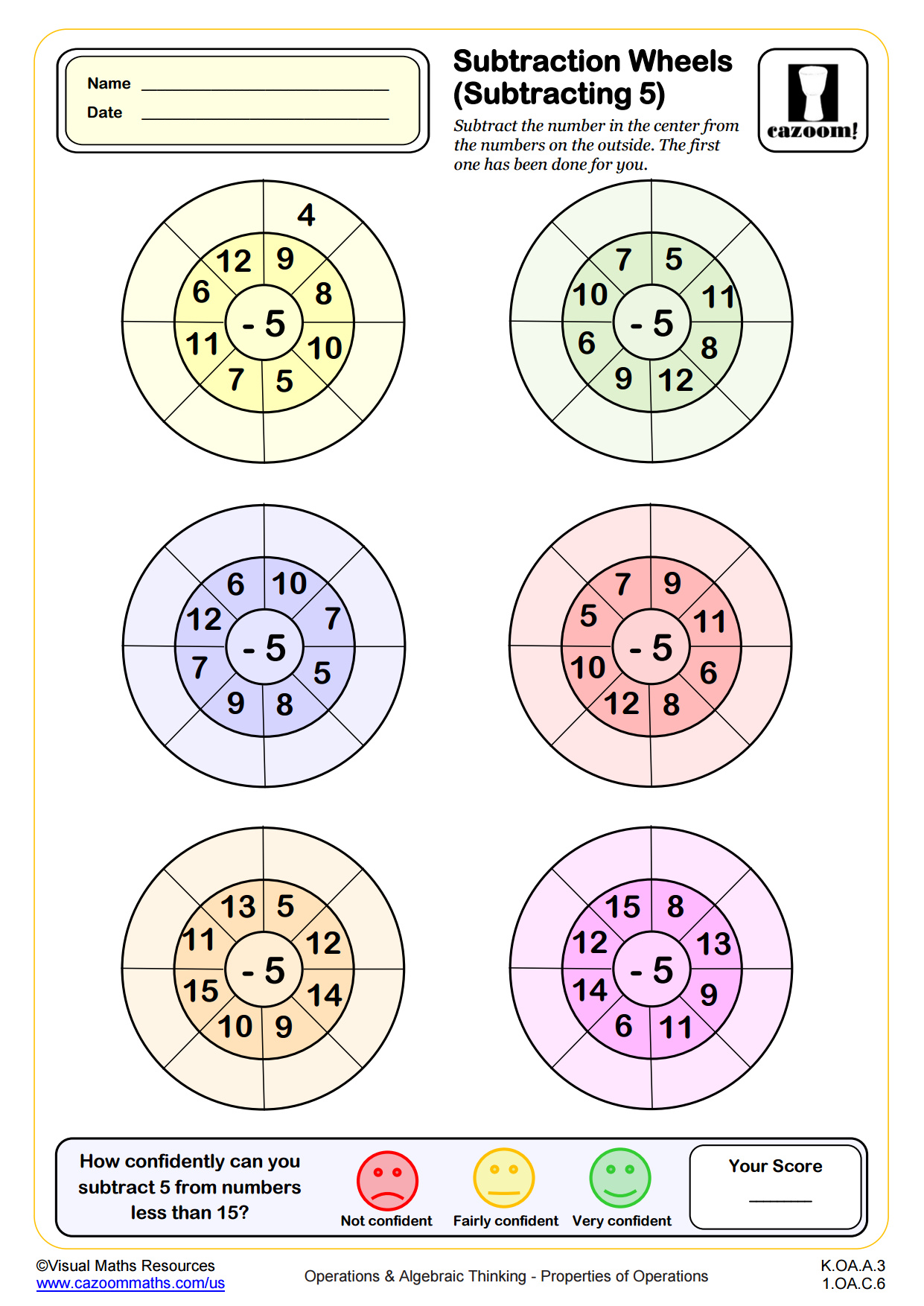
Subtraction Wheels (Subtracting up to 10) A
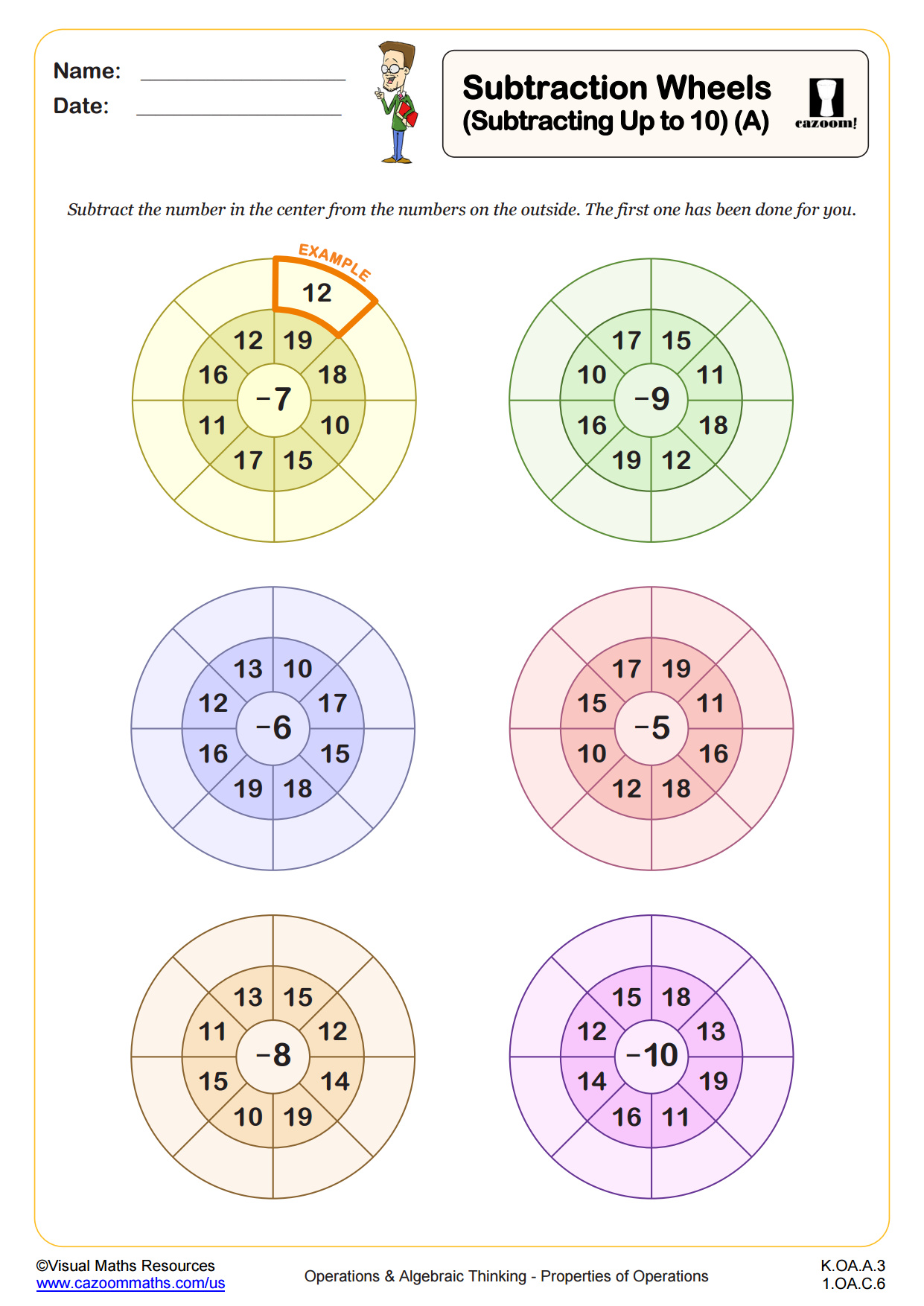
Subtraction Wheels (Subtracting up to 4)
All worksheets are created by the team of experienced teachers at Cazoom Math.
What Are Single Digit Subtraction Facts?
Single digit subtraction facts are subtraction problems where both the minuend (starting number) and subtrahend (number being subtracted) are between 0 and 9, resulting in answers from 0 to 9. These 100 basic facts align with first grade Common Core standards (1.OA.C.6) that expect students to add and subtract within 20 with fluency for problems within 10 by year's end.
Students often confuse which number to start with, writing 3 - 5 = 2 instead of recognizing that 3 - 5 requires a larger starting number. Teachers notice this reversal error disappears once students practice physically removing objects from a set and consistently identify the total (minuend) before determining how many to take away (subtrahend). The subtopics Match the Answers and Choose the Numbers specifically target this conceptual understanding by requiring students to analyze relationships between numbers rather than just compute.
Which Grade Levels Use Single Digit Subtraction Worksheets?
These single digit subtraction worksheets are designed for first grade students in elementary school. First graders work intensively on subtraction within 10 as a foundational skill before progressing to subtraction within 20 and eventually regrouping in second grade.
The progression within first grade moves from concrete subtraction using manipulatives to pictorial representations and finally to abstract number sentences. Early in the year, students might solve 7 - 3 by drawing seven circles and crossing out three, while by spring they recall the fact automatically. This fluency development directly impacts their readiness for second grade topics like two-digit subtraction with regrouping, where quick recall of basic facts prevents cognitive overload during multi-step procedures.
How Do Students Match Subtraction Answers?
Matching subtraction answers requires students to solve multiple subtraction problems and then identify which equations produce the same difference. For example, students recognize that 8 - 3, 9 - 4, and 7 - 2 all equal 5, demonstrating understanding beyond rote memorization. This approach builds number sense by highlighting the relationship between different fact families and reinforcing the concept that various combinations can yield identical results.
This skill connects directly to real-world inventory and budgeting scenarios that students will encounter in STEM fields. Engineers checking measurements, scientists analyzing data sets, and programmers debugging code all rely on recognizing equivalent outcomes from different starting points. When first graders match 6 - 4 with 5 - 3, they're developing the same comparative thinking that data analysts use when verifying that different calculation methods produce consistent results.
How Can Teachers Use These Subtraction Worksheets?
The worksheets provide scaffolded practice through varied formats that address different aspects of subtraction understanding. The Choose the Numbers activities develop problem-solving by requiring students to select appropriate numbers to complete equations, while Match the Answers builds fact fluency and pattern recognition. Complete answer keys allow students to self-check during math centers or enable quick grading during whole-class reviews.
Teachers frequently use these worksheets for differentiated small group instruction, assigning different subtopic pages based on diagnostic assessment results. They work effectively as morning work for students who need additional fact practice, as homework that parents can easily support, or as intervention materials for students still building automaticity. Many teachers also use them for paired practice, where one student solves while their partner checks against the answer key, promoting mathematical discussion and error analysis.