2D Shapes Worksheets with Answers
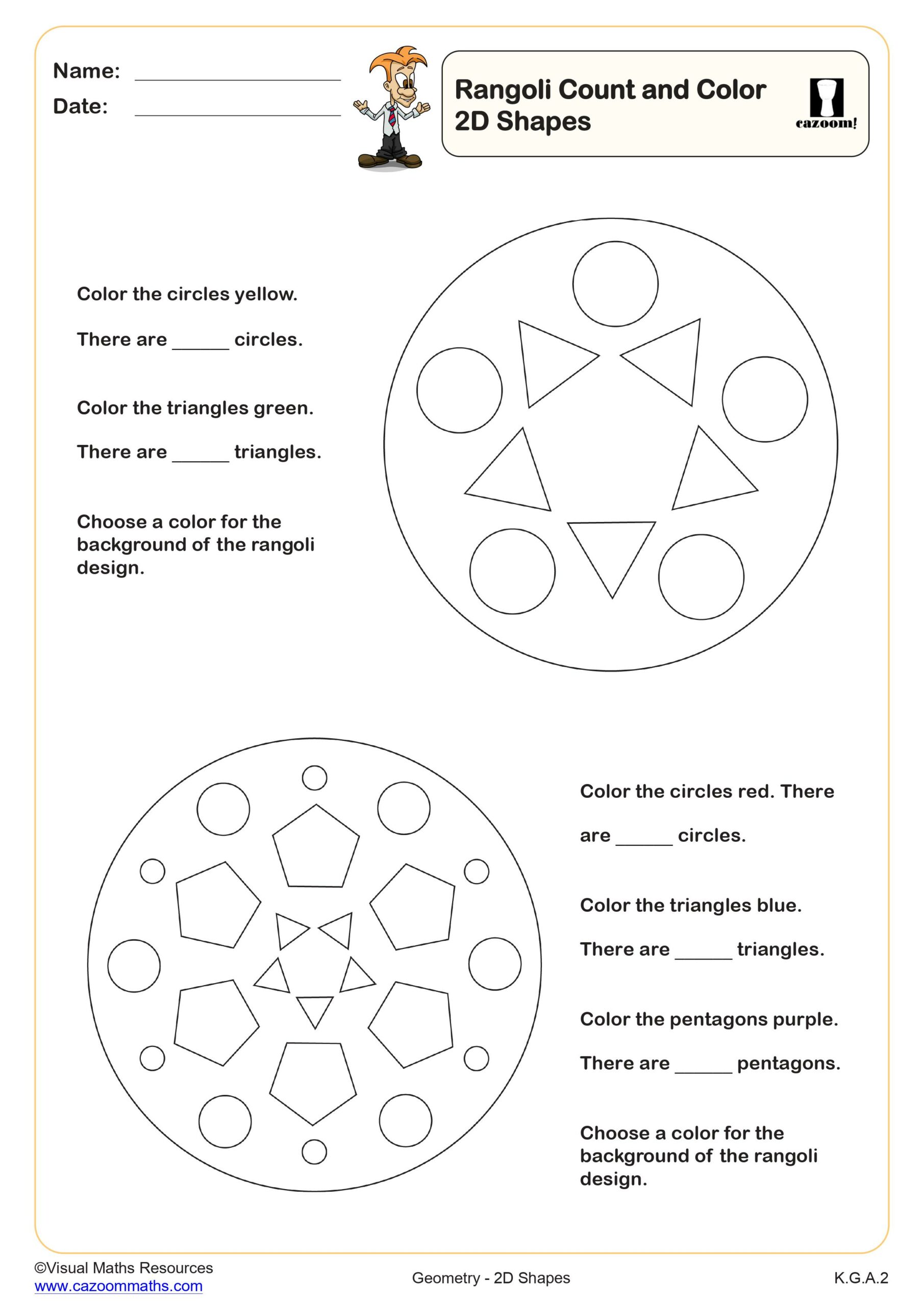
Rangoli Count and Color 2D Shapes
Grades: Kindergarten
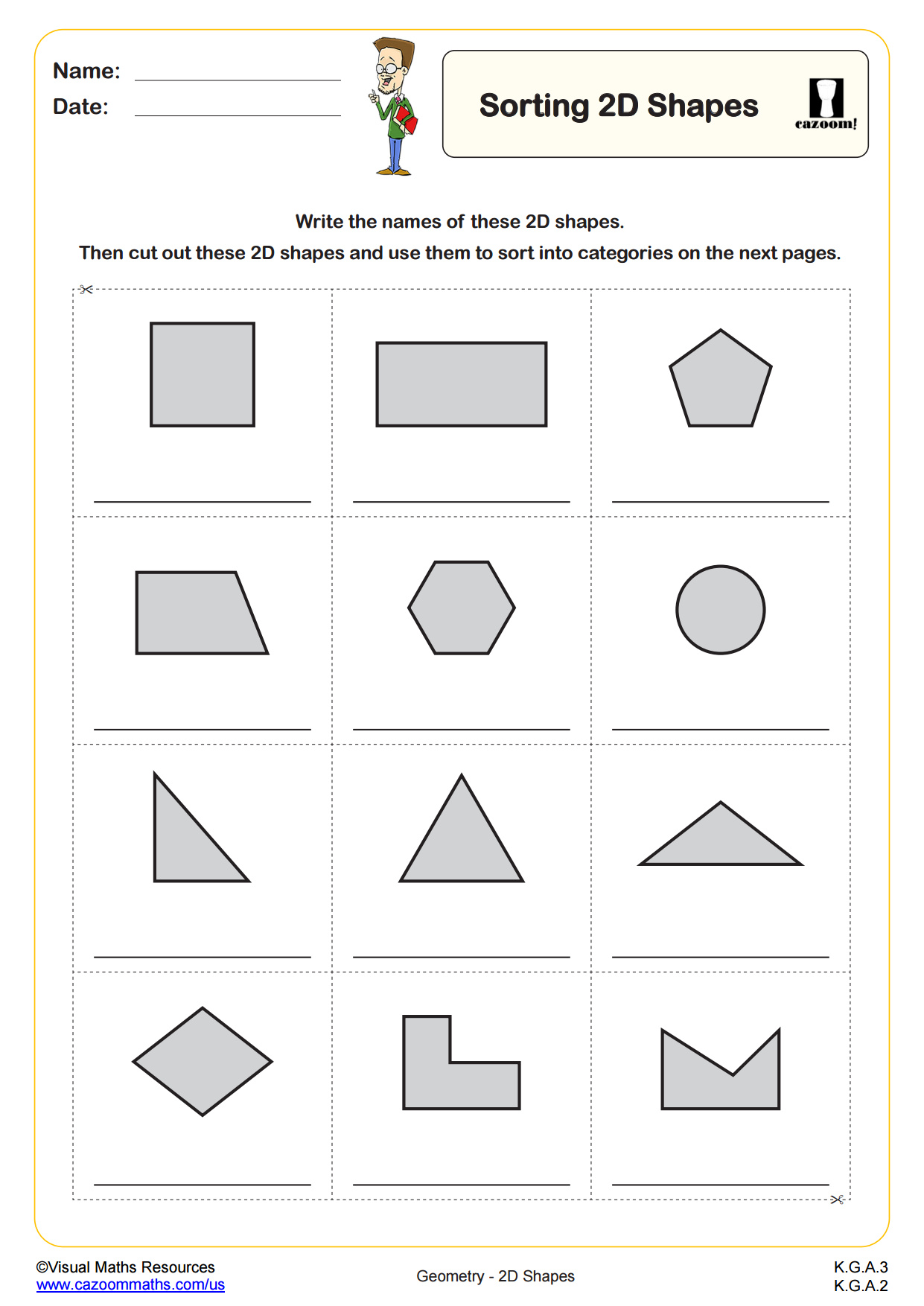
Sorting 2D Shapes
Grades: Kindergarten
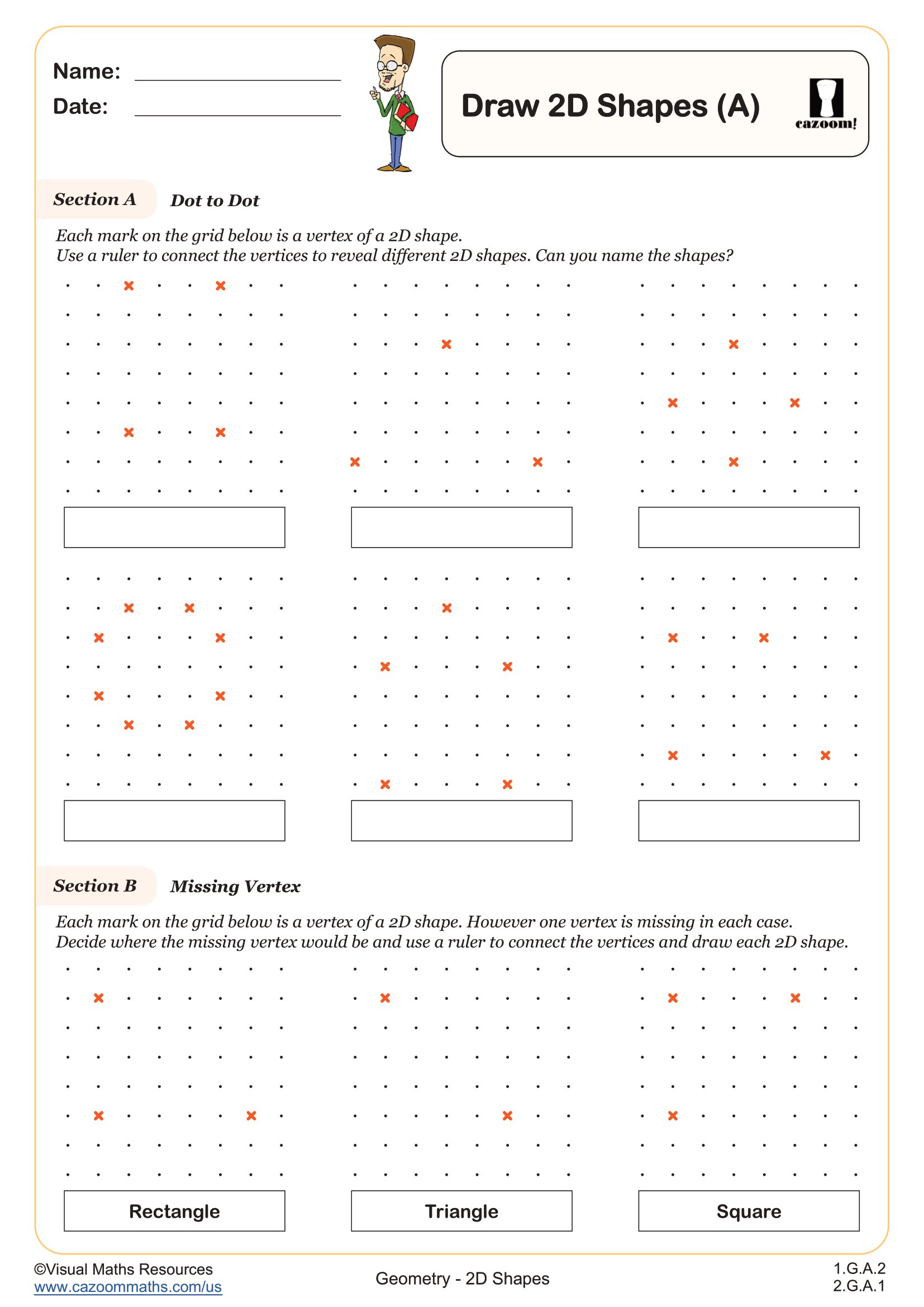
Draw 2D Shapes (A)
Grades: 1st Grade, 2nd Grade
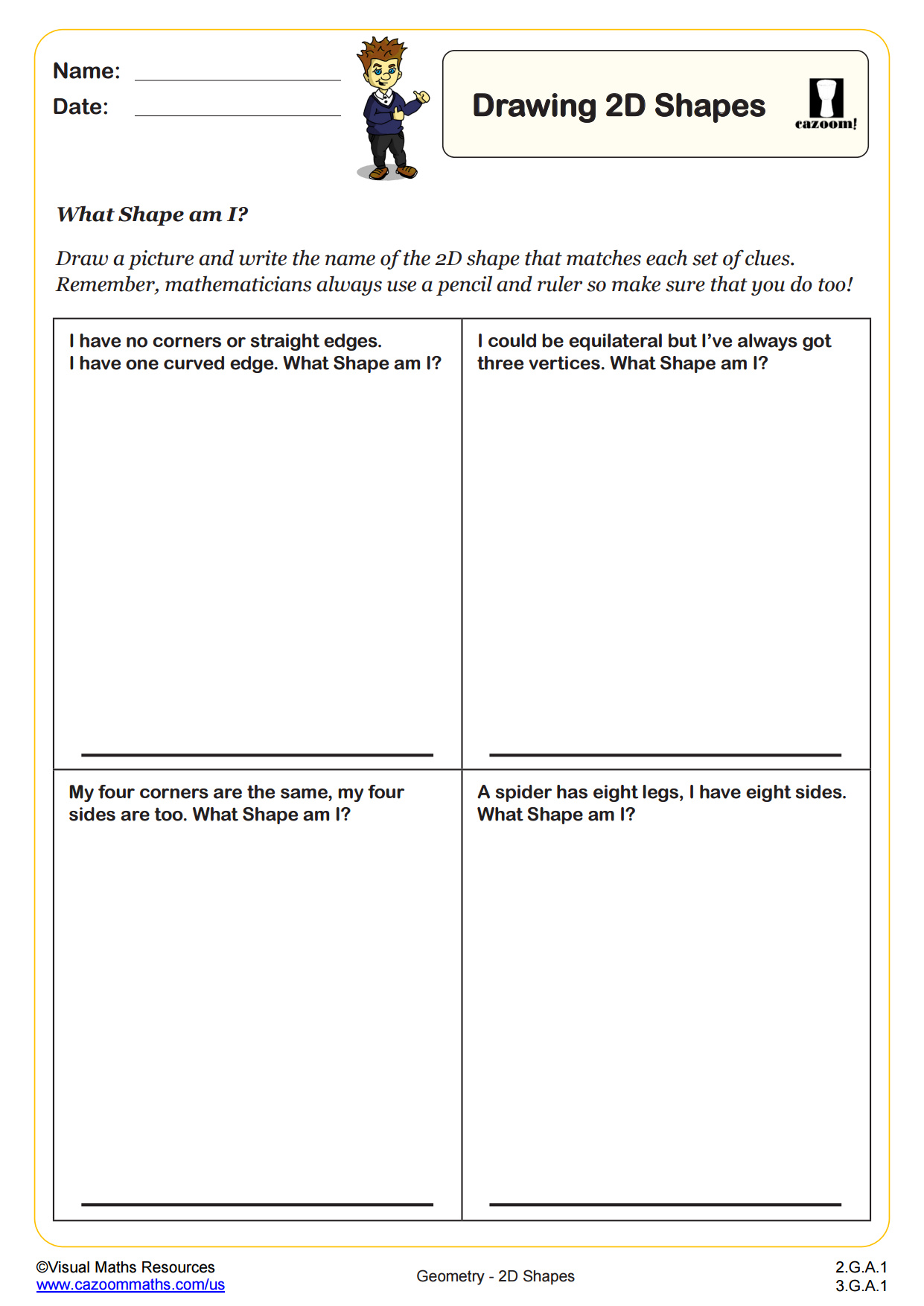
Drawing 2D Shapes
Grades: 2nd Grade, 3rd Grade
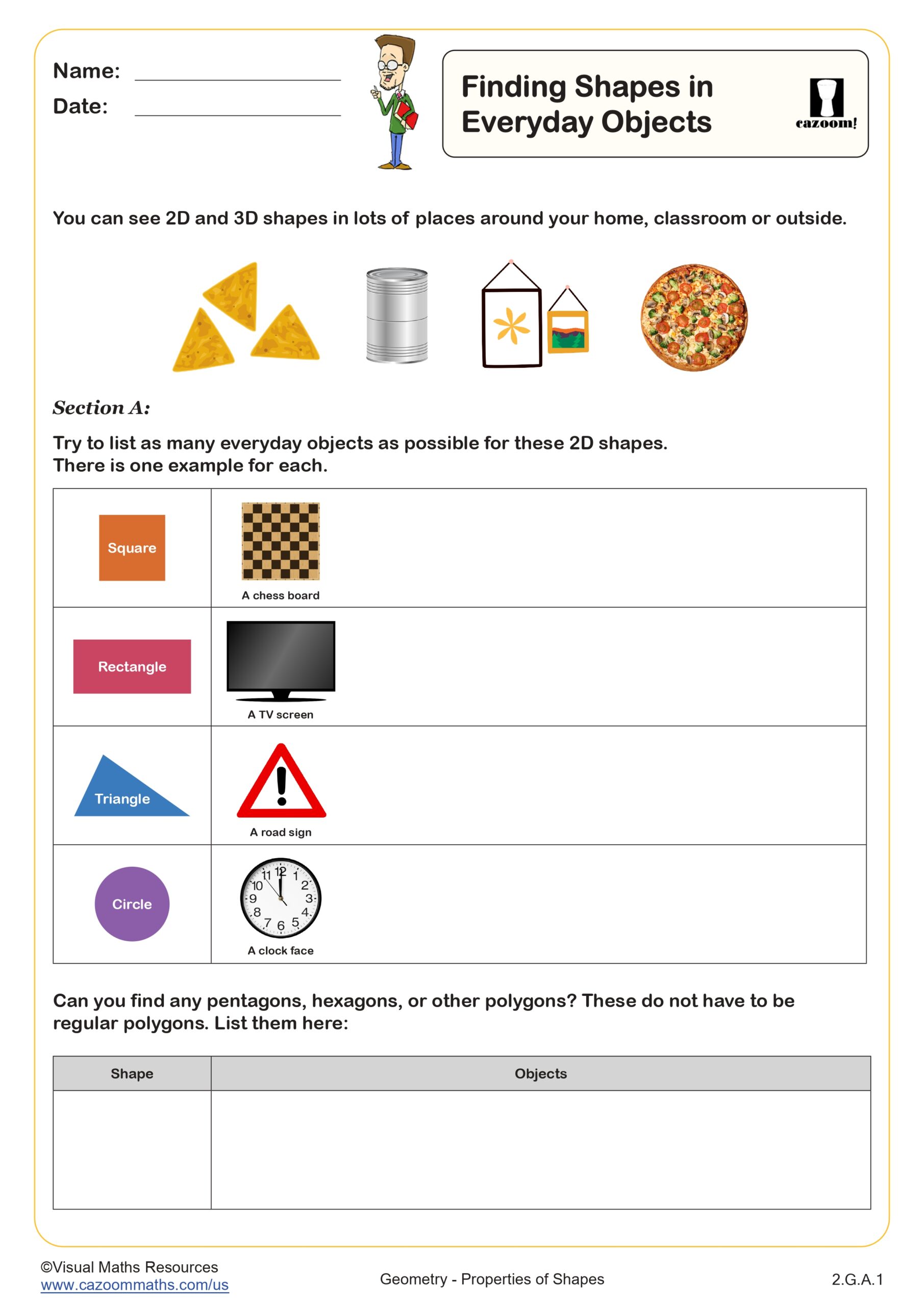
Finding Shapes In Everyday Objects
Grades: 2nd Grade
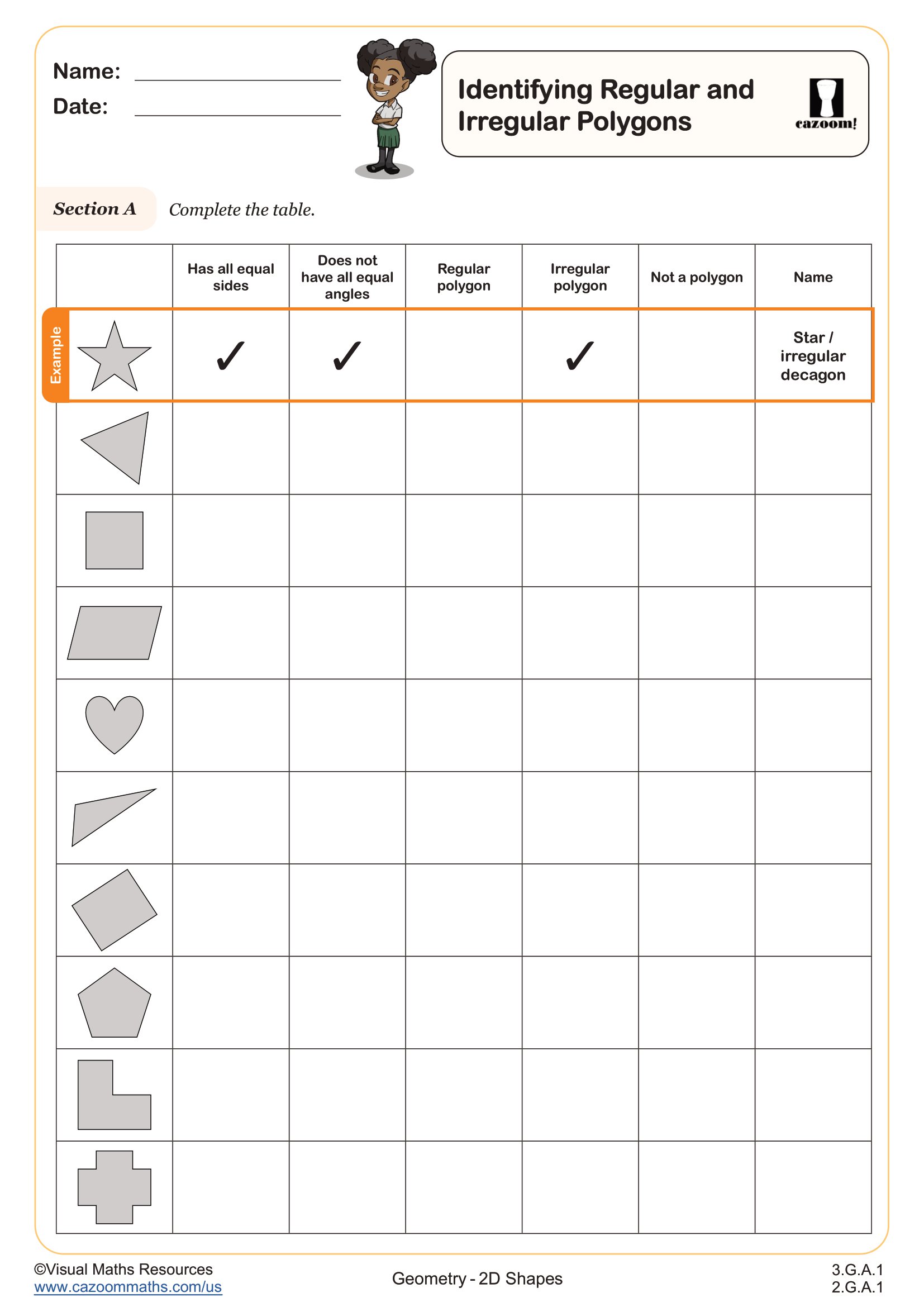
Identifying Regular and Irregular Polygons
Grades: 2nd Grade, 3rd Grade
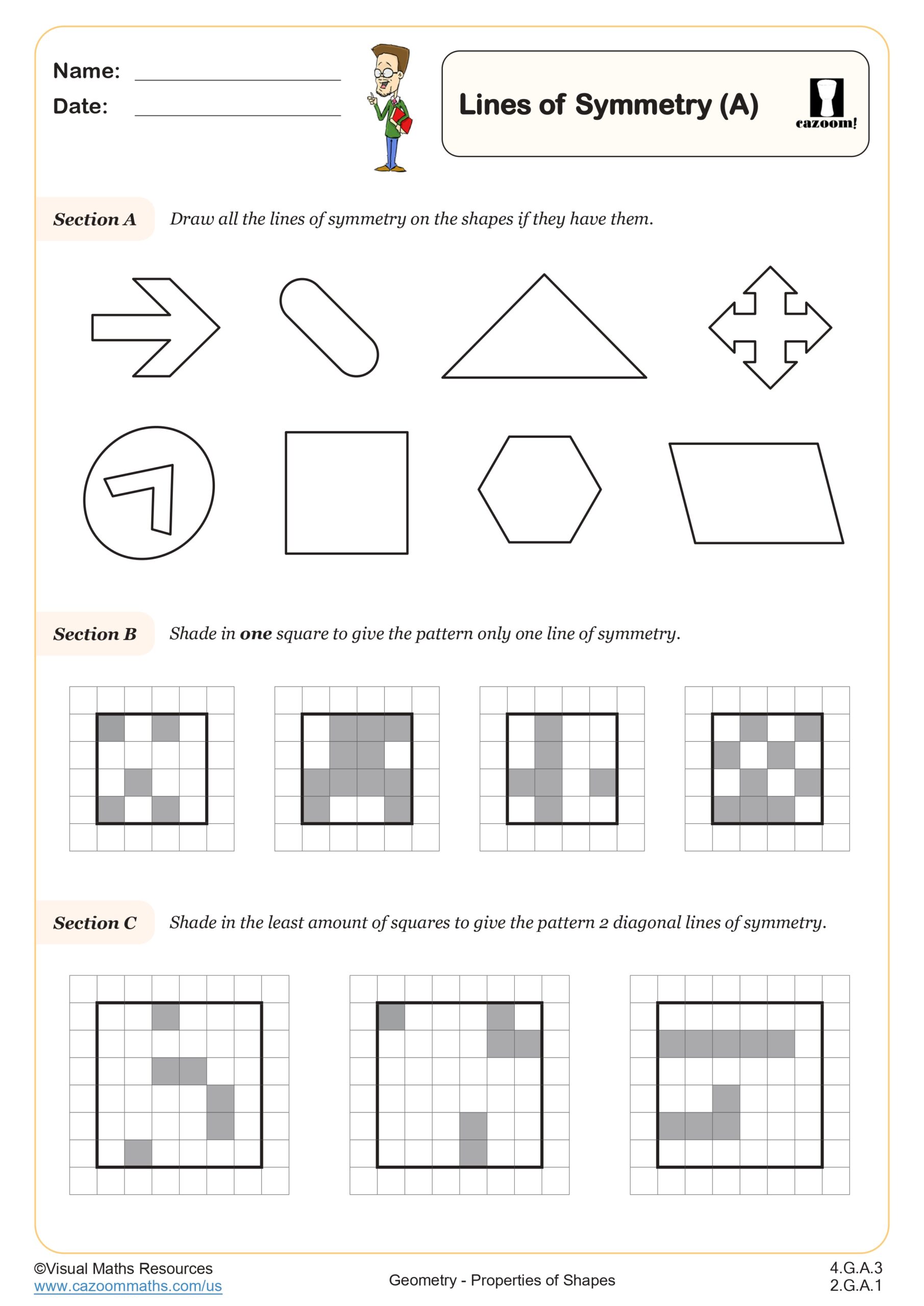
Lines of Symmetry (A)
Grades: 2nd Grade, 4th Grade
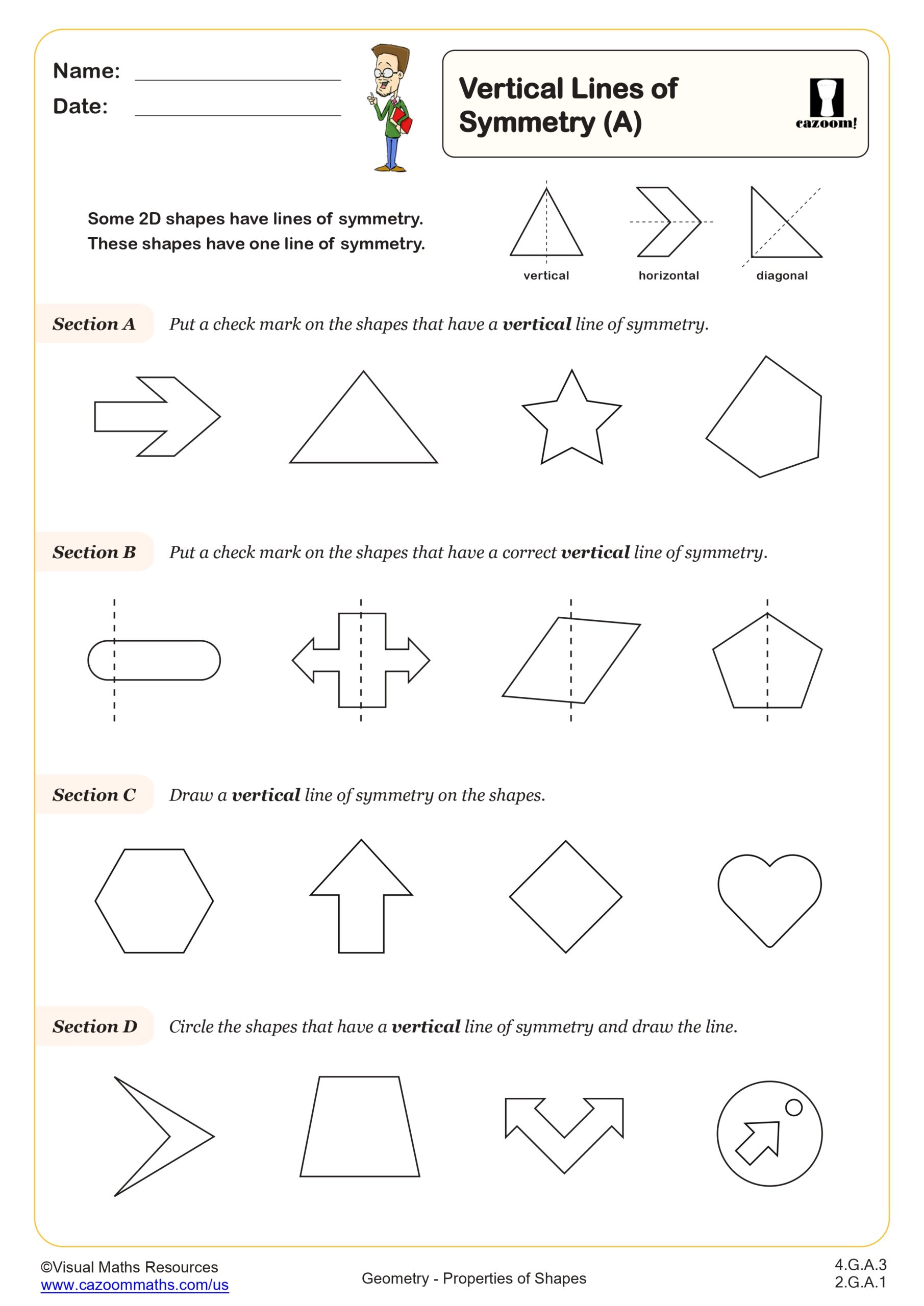
Vertical Lines of Symmetry (A)
Grades: 2nd Grade, 4th Grade
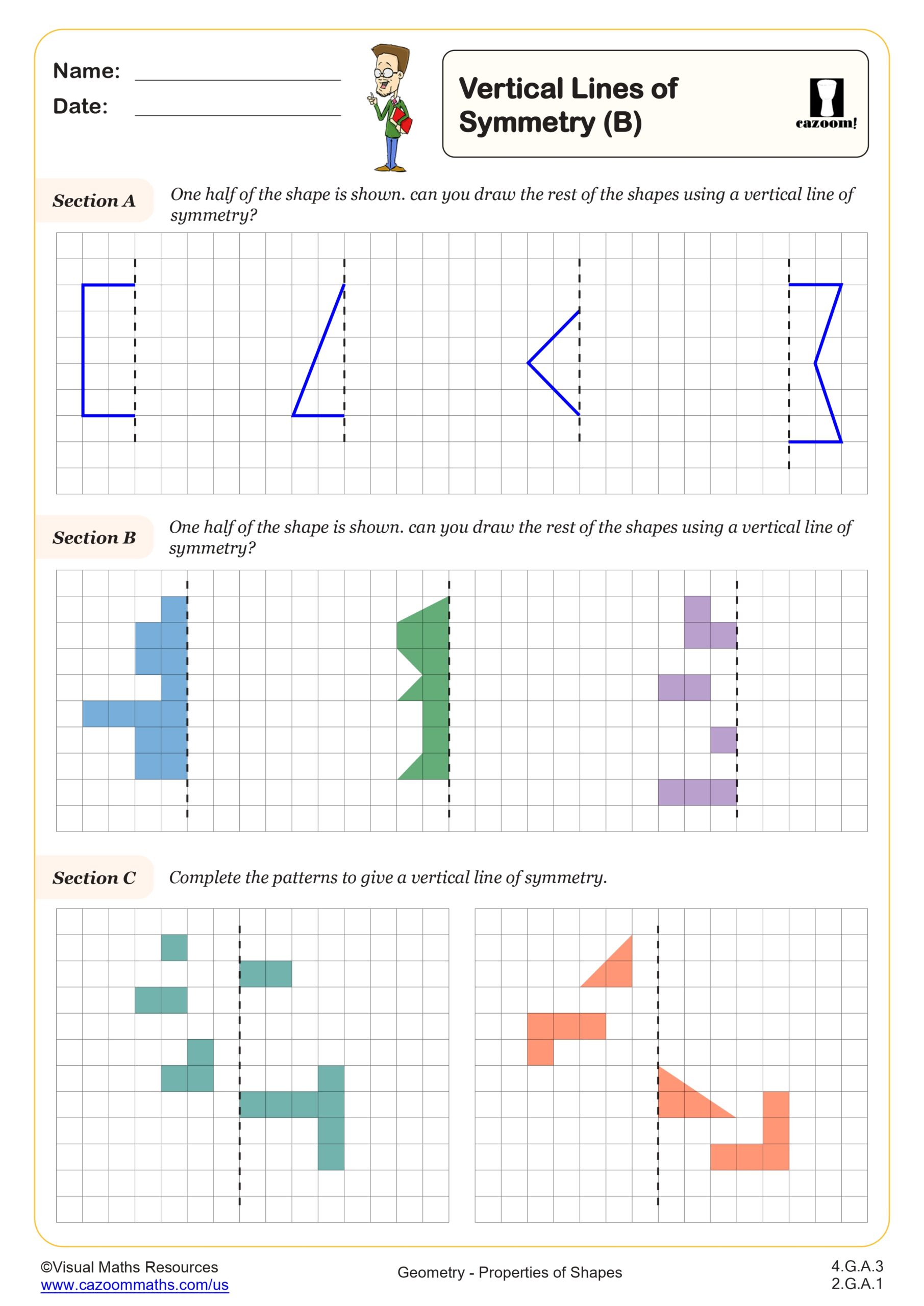
Vertical Lines of Symmetry (B)
Grades: 2nd Grade, 4th Grade
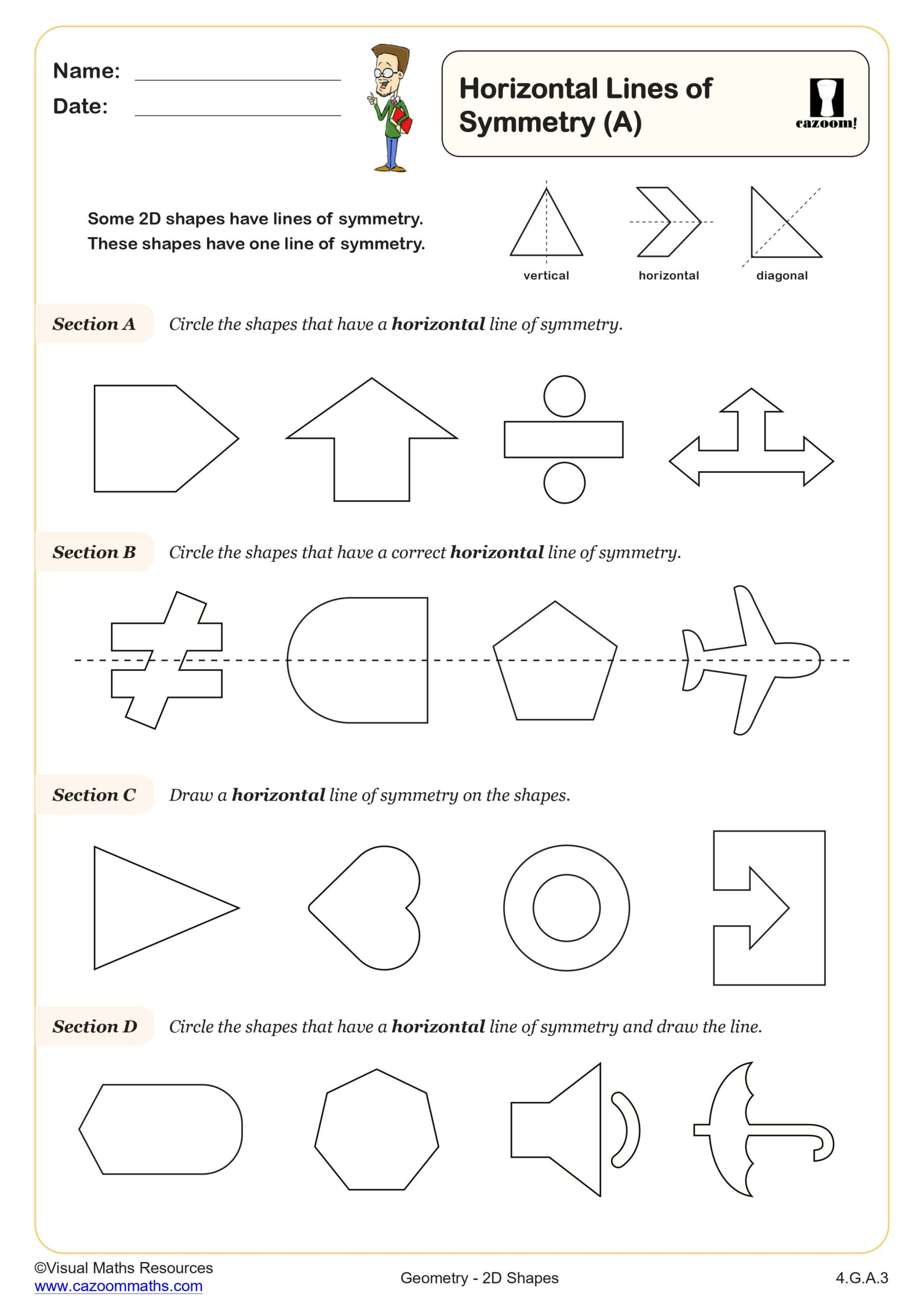
Horizontal Lines of Symmetry (A)
Grades: 4th Grade
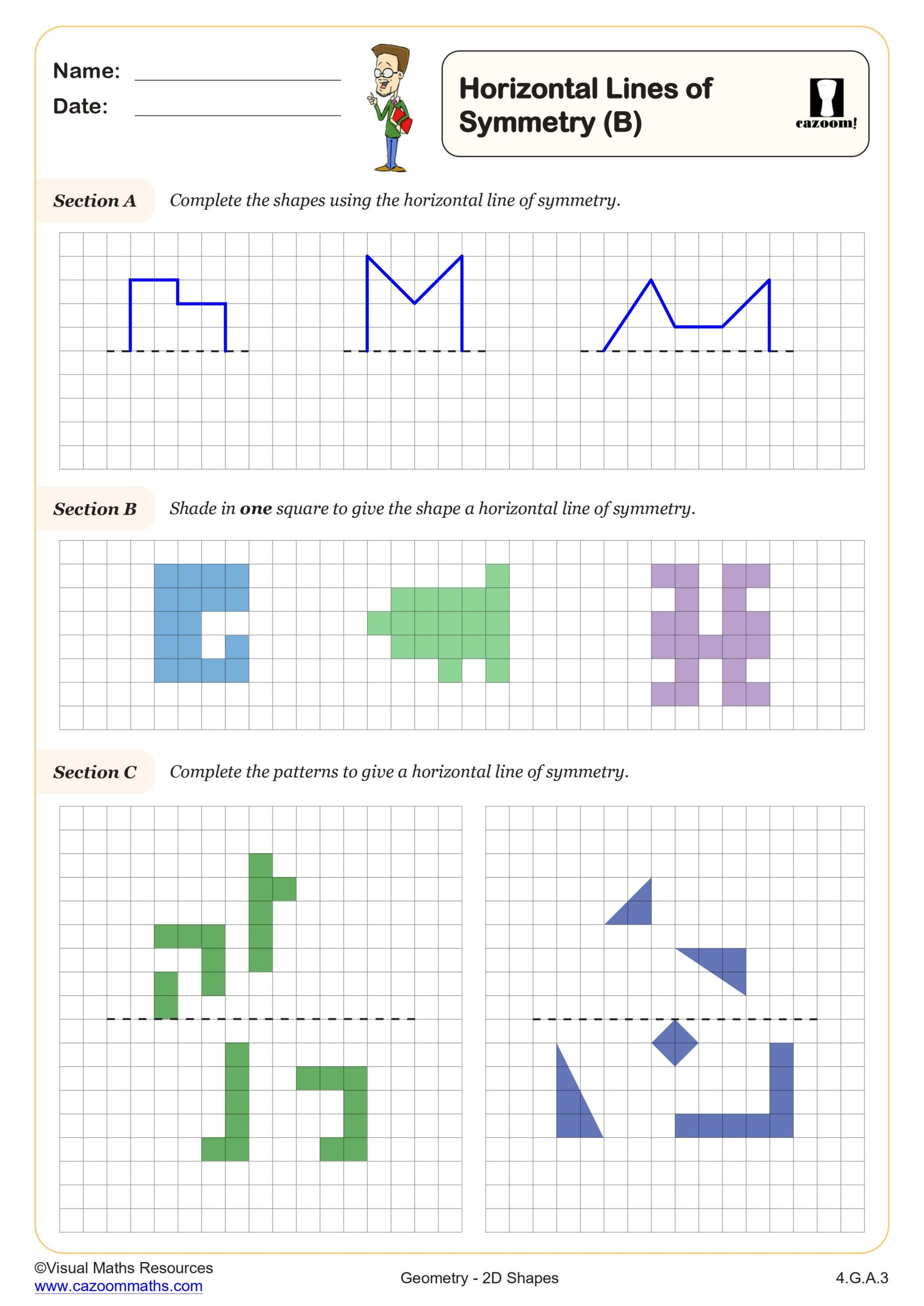
Horizontal Lines of Symmetry (B)
Grades: 4th Grade
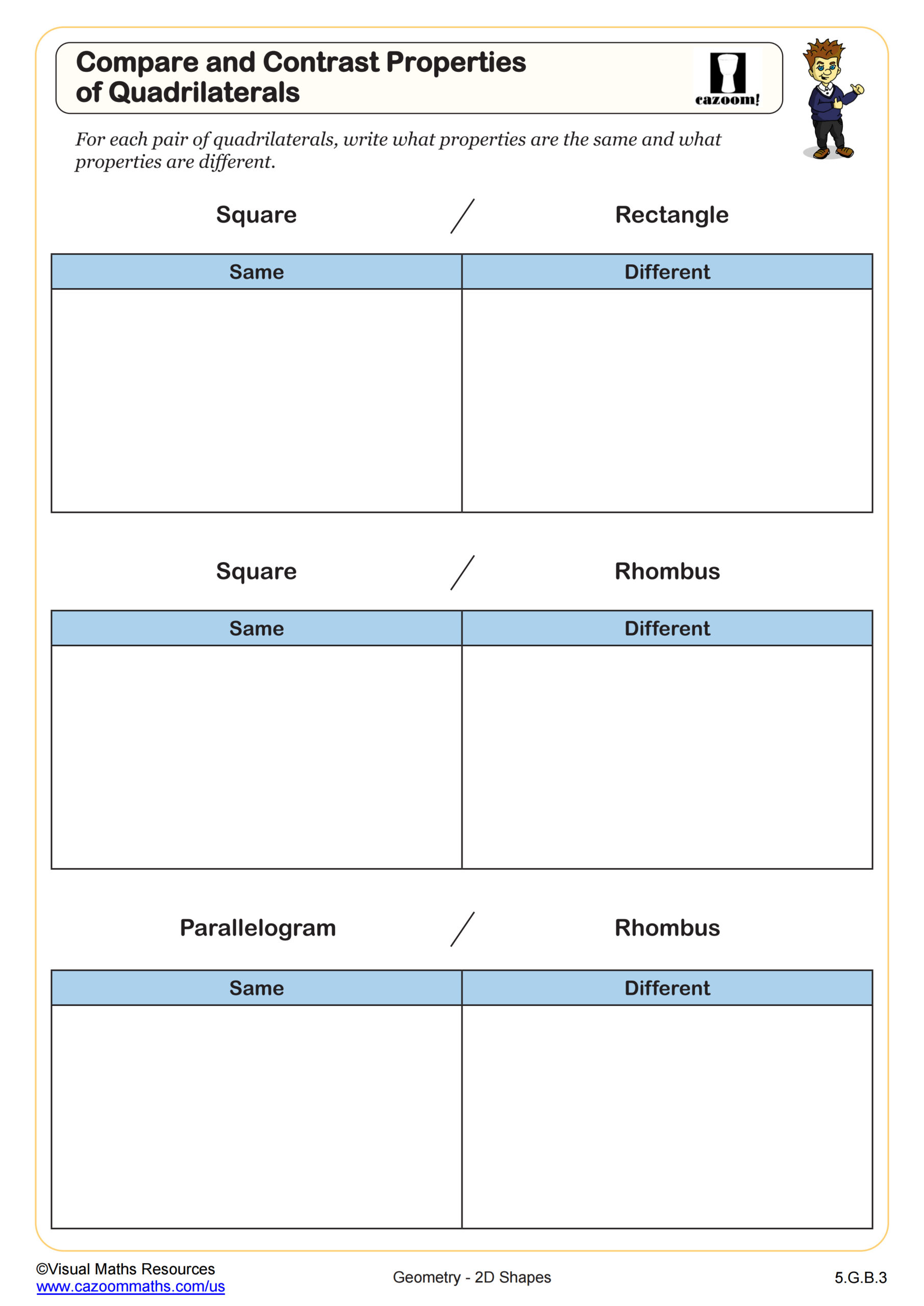
Compare and Contrast Properties of Quadrilaterals
Grades: 5th Grade
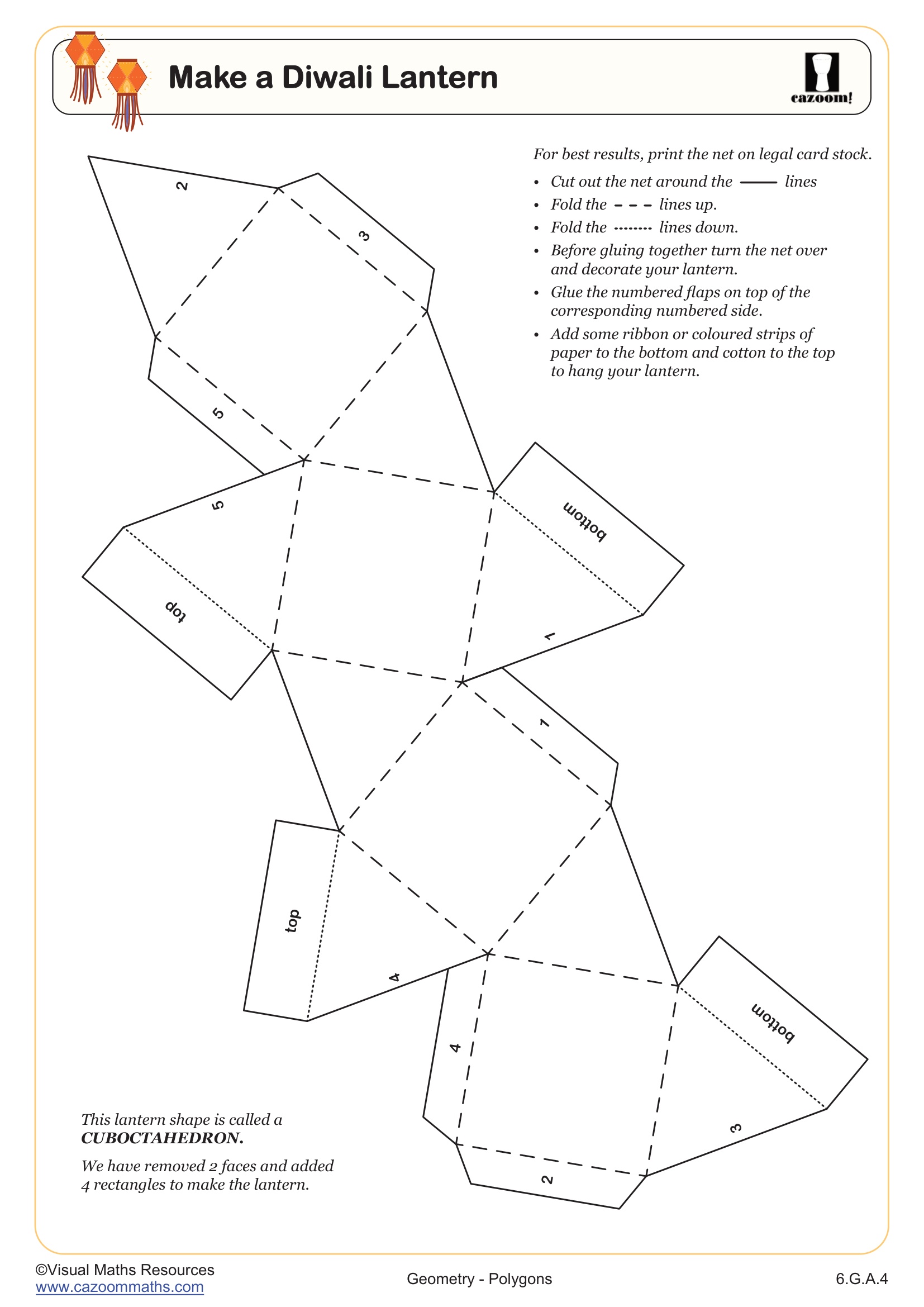
Make a Diwali Lantern
Grades: 6th Grade
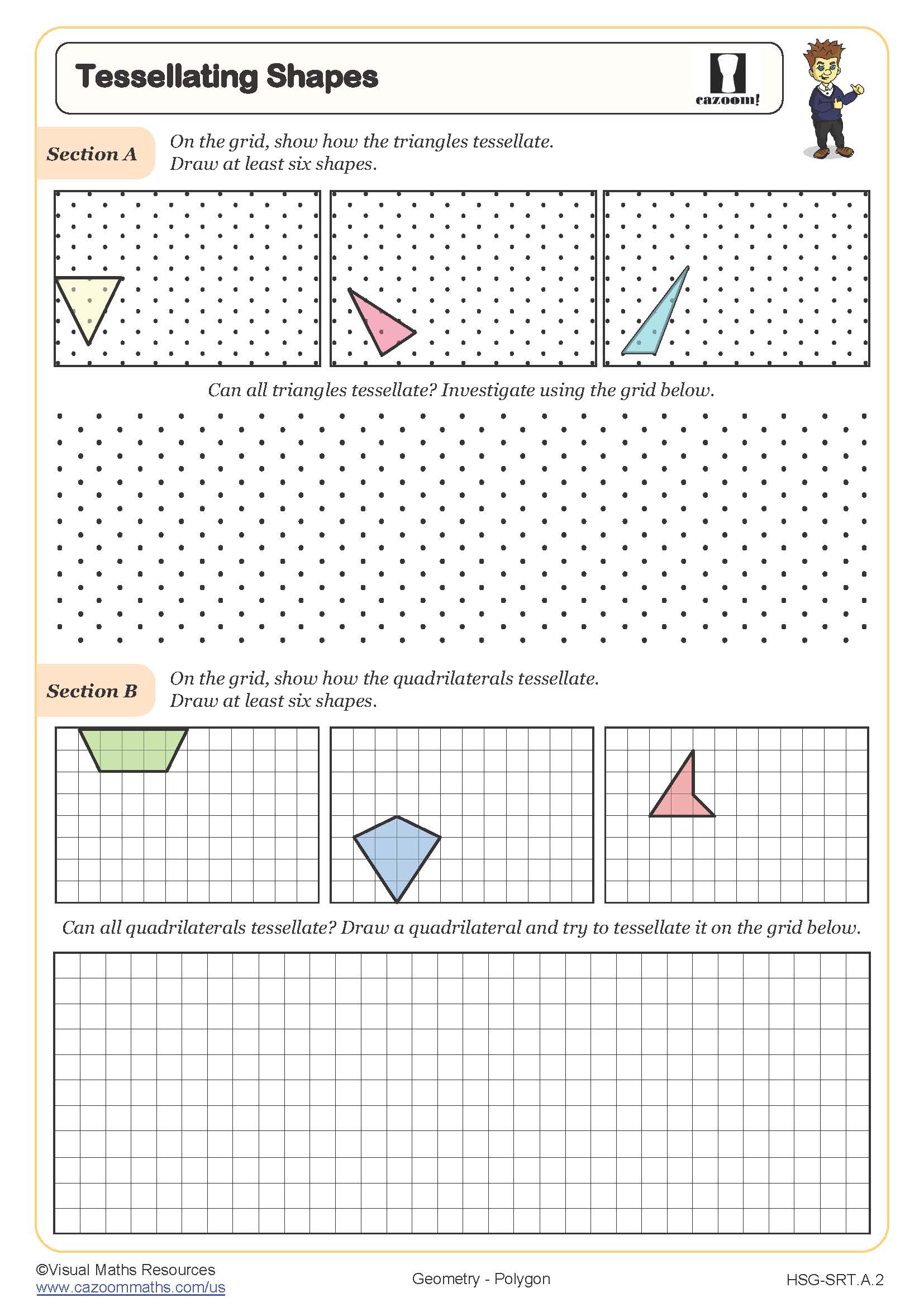
Tessellating Shapes
Grades: Geometry, IM 1
All worksheets are created by the team of experienced teachers at Cazoom Math.
What topics are covered in 2d shapes worksheets?
The 2d shapes worksheets cover fundamental geometric concepts aligned with Common Core standards, including shape identification, properties analysis, angle measurement, perimeter and area calculations, and symmetry exploration. Students work through identifying triangles, quadrilaterals, pentagons, hexagons, and other polygons while learning to classify them by sides, angles, and special properties.
Teachers notice students often confuse rhombi with squares or struggle to identify trapezoids when presented in non-standard orientations. The worksheets address these challenges through varied presentations and explicit practice with shape properties rather than visual appearance alone.
Which grade levels use two dimensional shapes worksheets?
Elementary grades typically start with basic shape identification and sorting activities, while middle school students analyze properties, calculate measurements, and explore coordinate geometry applications. High school courses extend into trigonometry applications and geometric proofs involving 2D shapes.
The progression moves from concrete manipulation in early grades to abstract reasoning in later years. Teachers find that students who master foundational shape properties in elementary school demonstrate stronger performance in algebra and geometry courses, making early exposure to two dimensional shapes worksheet practice particularly valuable for long-term mathematical development.
How do these worksheets help with polygon classification?
Students develop systematic approaches to polygon classification by analyzing sides, angles, parallel lines, and symmetry properties rather than relying on visual recognition alone. The worksheets guide students through decision trees and classification charts that build logical reasoning skills structured for geometric proofs.
Teachers observe that students initially classify shapes based on familiar orientations, calling a diamond-oriented square a different shape than an upright square. The worksheets specifically address this misconception through rotation exercises and property-based identification tasks that emphasize mathematical definitions over visual appearance.
How can teachers maximize student success with 2D shapes practice?
Teachers achieve better outcomes by connecting shape properties to real-world examples like architectural features, road signs, and everyday objects that students recognize. Starting each lesson with hands-on manipulation using physical shapes helps students internalize properties before moving to worksheet practice.
Successful implementation involves checking student understanding of vocabulary terms before worksheet completion and providing immediate feedback using the included answer keys. Teachers report that students retain concepts longer when they explain their reasoning for shape classification rather than simply completing identification exercises in isolation.