2nd Grade 2D Shapes Worksheets
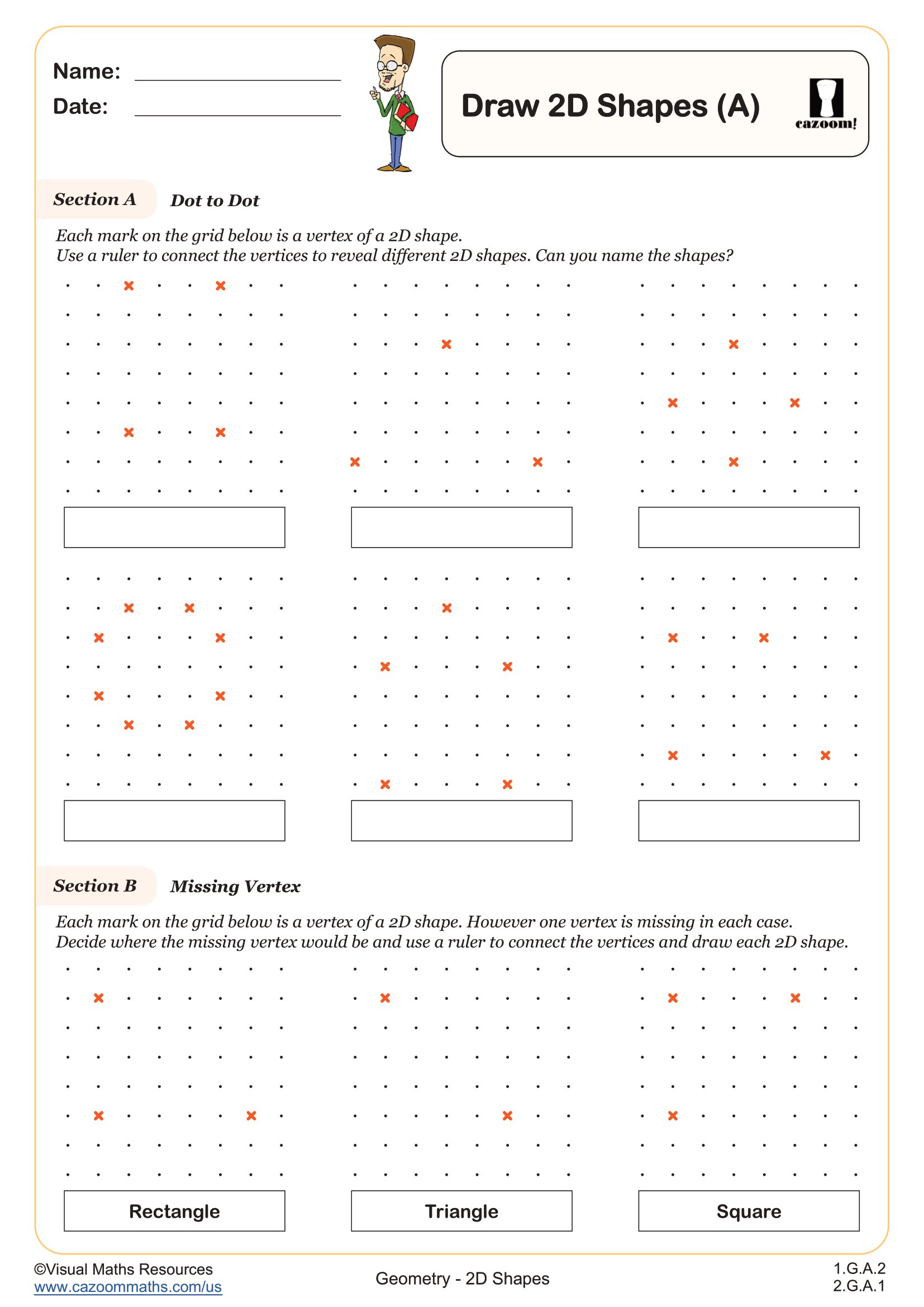
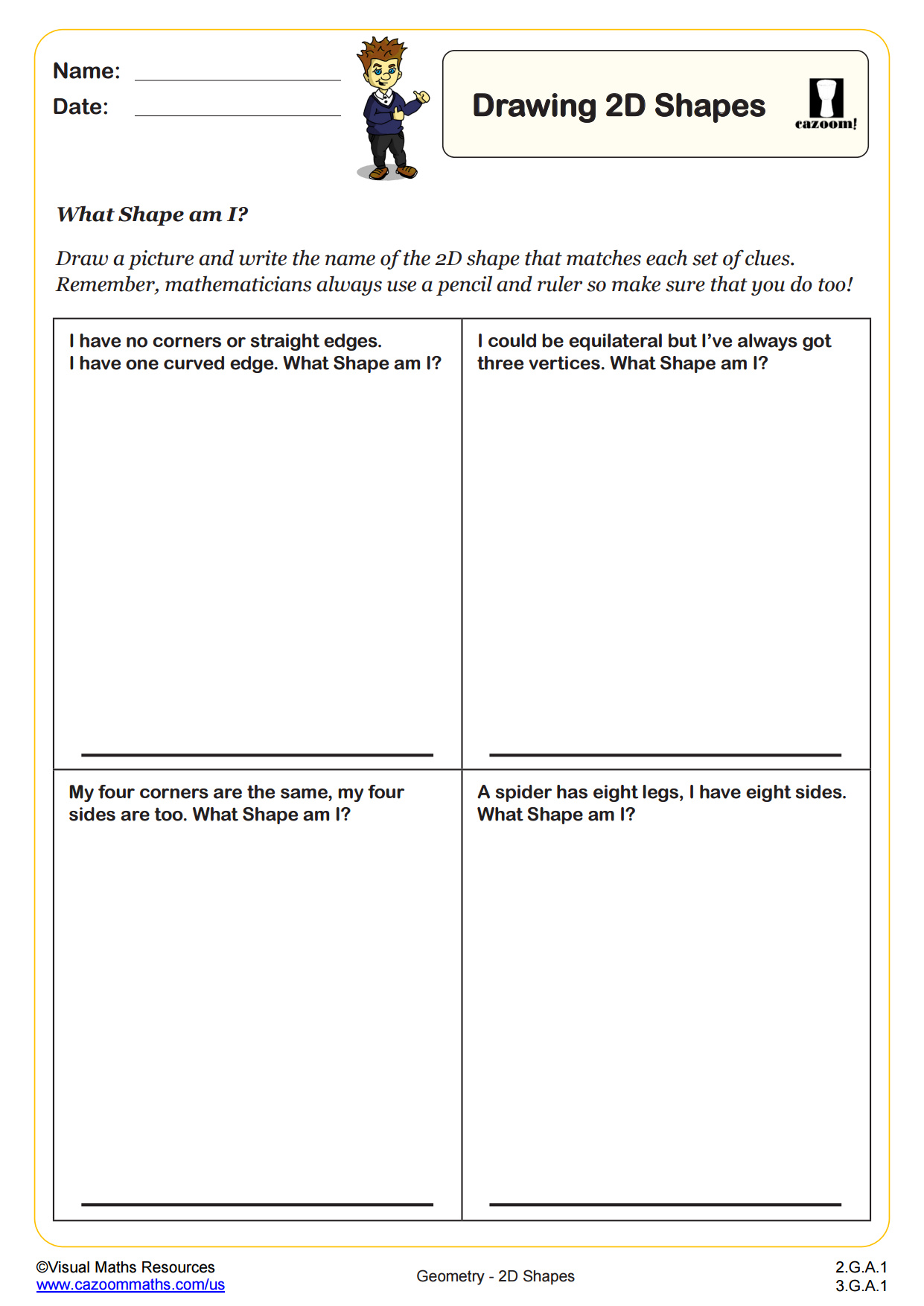
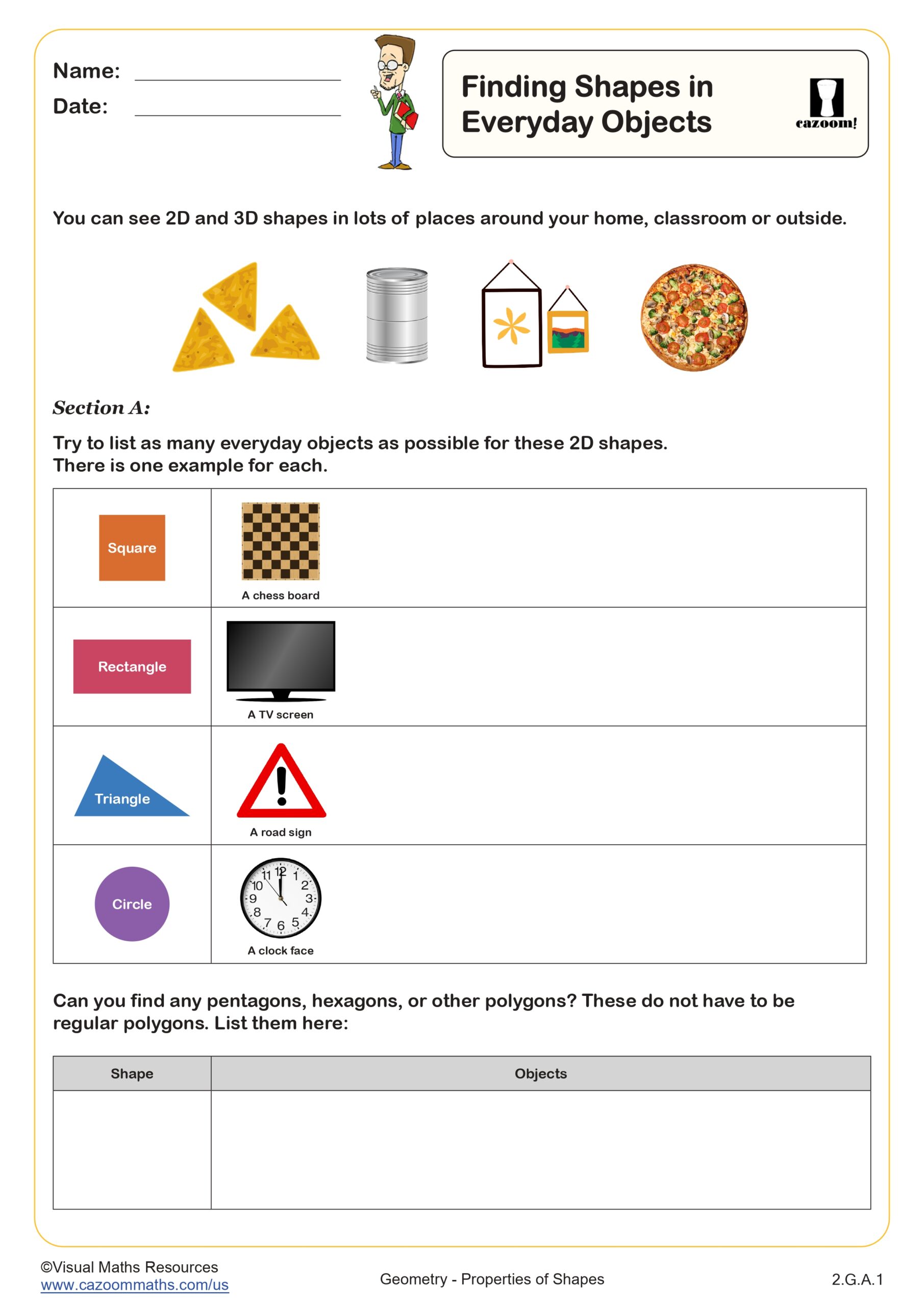
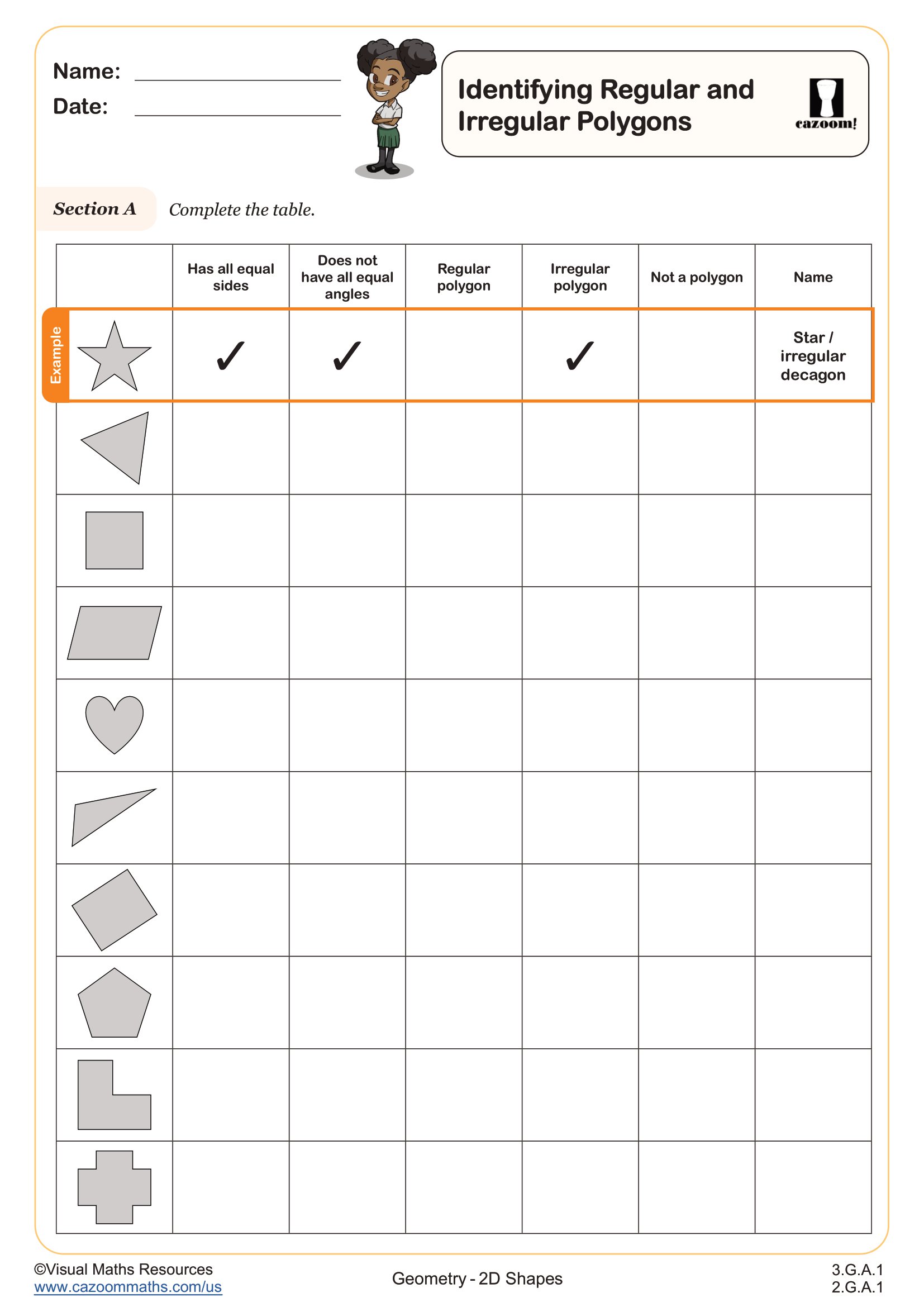
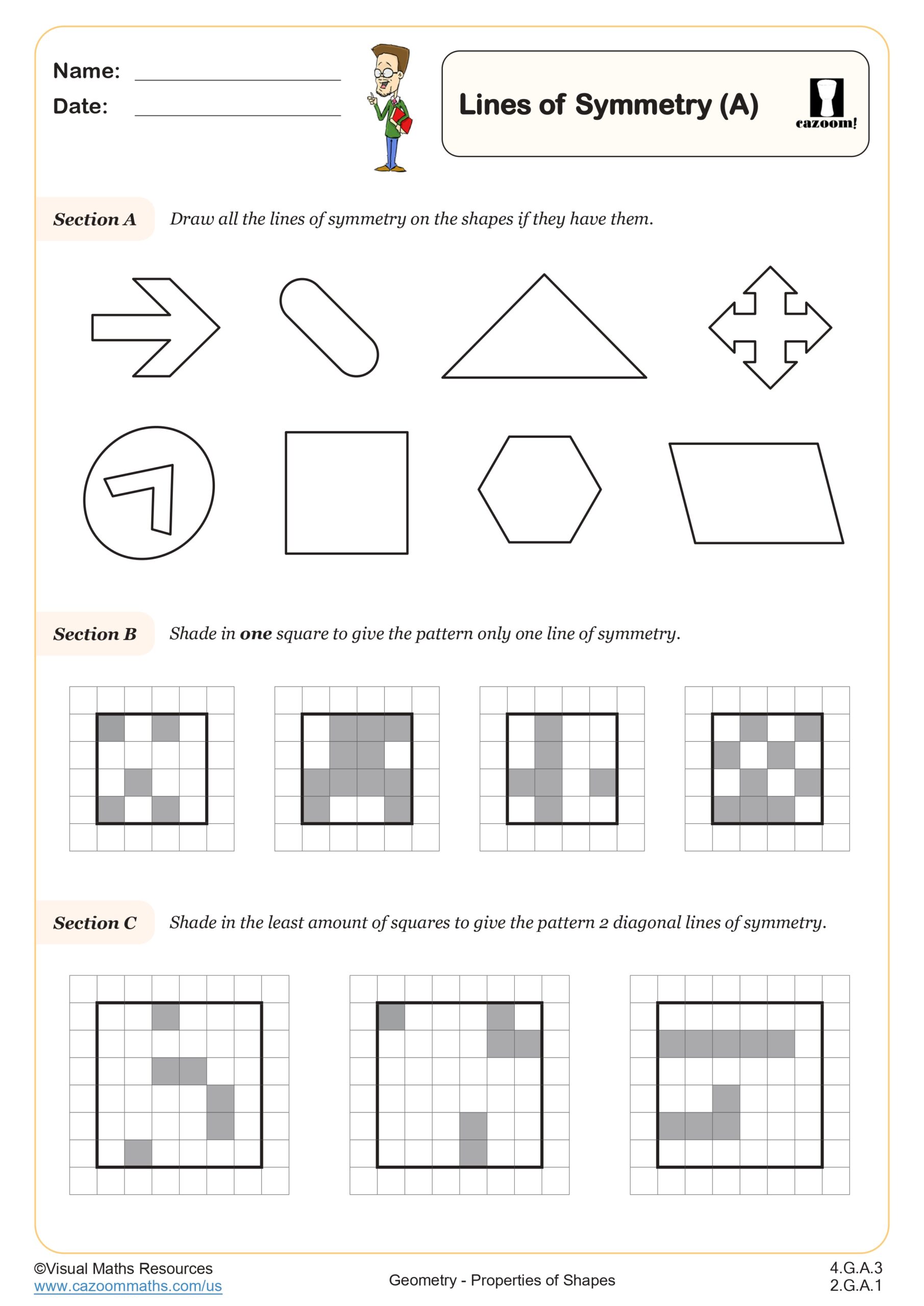
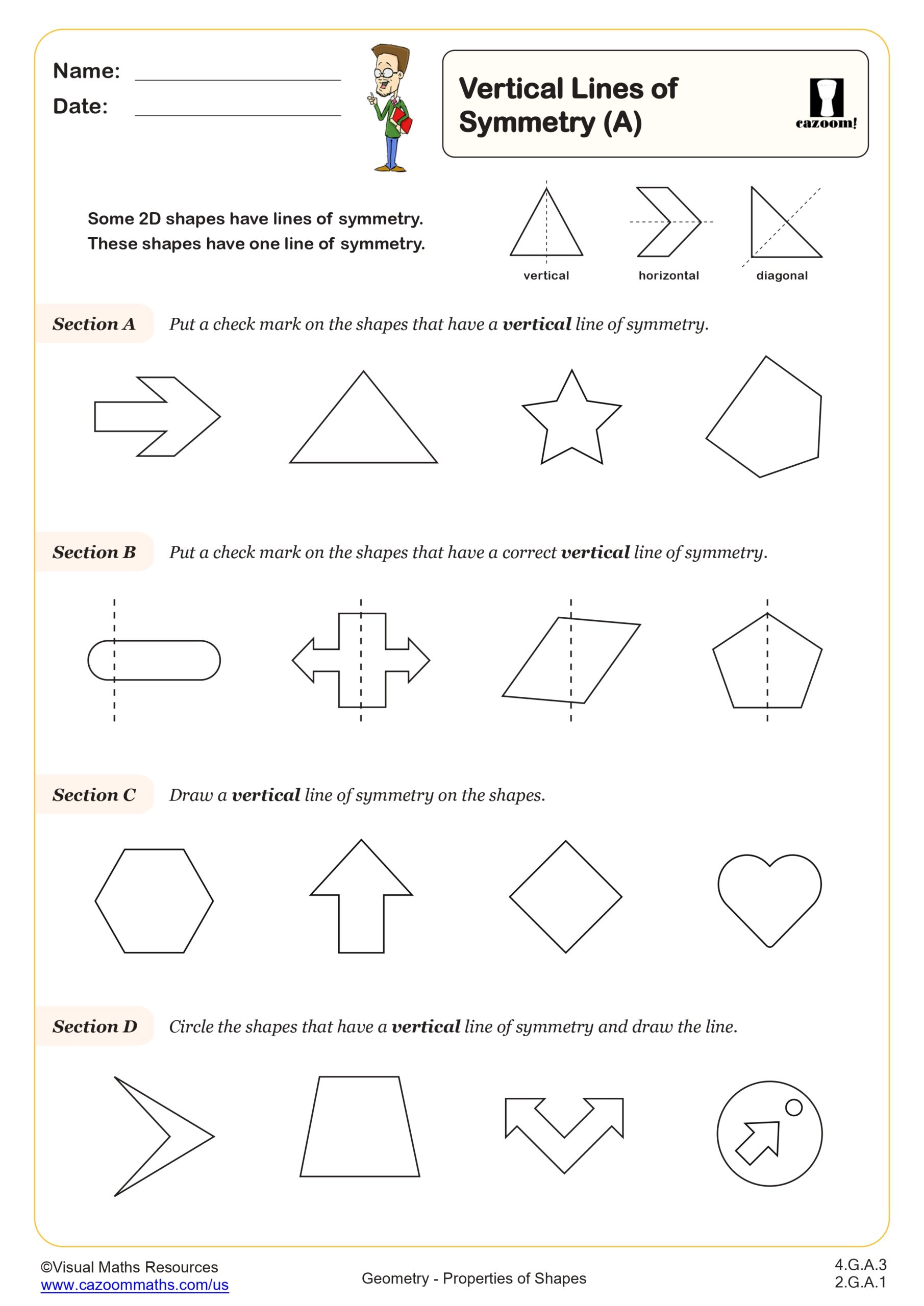
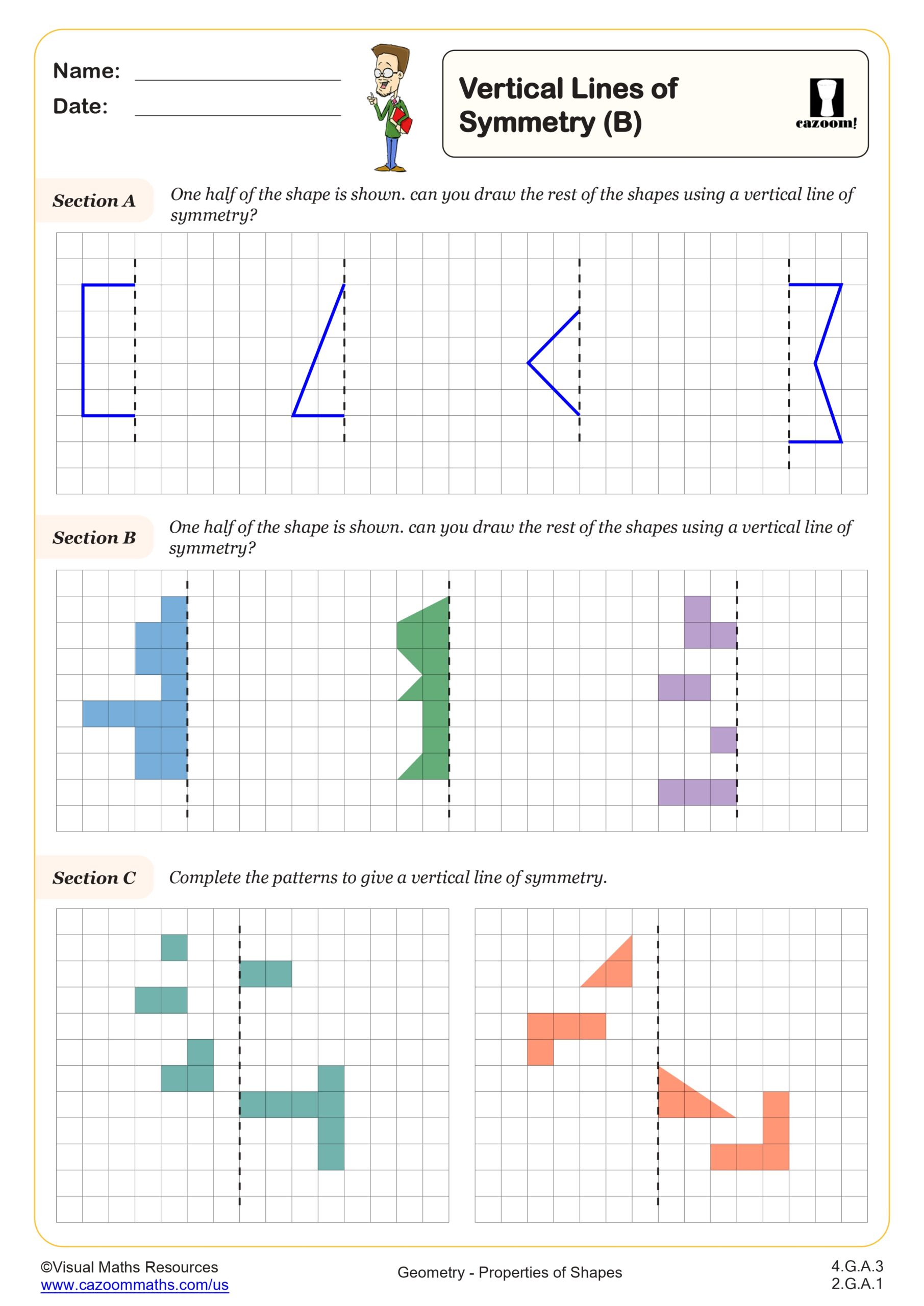
All worksheets are created by the team of experienced teachers at Cazoom Math.
What 2D Shape Concepts Do Second Graders Need to Master?
Second grade geometry standards require students to recognize and draw shapes based on specific attributes such as the number of sides, vertices (corners), and angles. Students learn to identify circles, triangles, quadrilaterals, pentagons, and hexagons while understanding that shapes within categories can vary in size and orientation. The curriculum emphasizes describing shapes using precise mathematical language rather than relying solely on visual recognition.
Many students lose points on assessments when they fail to recognize that a rotated square is still a square or when they confuse the terms "sides" and "corners." Teachers notice that breakthrough moments happen when students physically manipulate shape cutouts and discover that flipping or turning a hexagon doesn't change its six-sided identity. This hands-on exploration helps students understand that defining attributes remain constant regardless of position or size.
Which Grade Levels Use These 2D Shape Worksheets?
These worksheets specifically target 2nd grade elementary school students, aligning with Common Core geometry standards for this grade level. Second graders encounter 2D shapes as a core component of their mathematics curriculum, building on the informal shape recognition they developed in kindergarten and 1st grade. At this stage, students transition from simply naming shapes to analyzing their properties and understanding how shapes relate to one another.
The progression within 2nd grade moves from identifying individual shapes like circles and squares toward more complex tasks such as comparing quadrilaterals and recognizing that some shapes share properties while differing in others. Teachers observe that students who master basic shape identification early in the year can tackle more sophisticated classification tasks by spring, including understanding that all squares are rectangles but not all rectangles are squares—a concept that challenges many second graders initially.
How Do Students Learn to Compare Quadrilateral Properties?
Comparing quadrilaterals requires students to examine multiple attributes simultaneously—counting sides, checking for right angles, and determining whether opposite sides are parallel or equal in length. Second graders learn that while all quadrilaterals share the common feature of having four sides, rectangles have four right angles, squares have four equal sides and four right angles, and trapezoids have at least one pair of parallel sides. This comparative analysis develops critical thinking skills beyond rote memorization.
This skill connects directly to architecture and construction, where understanding quadrilateral properties matters for structural stability. Builders rely on the rigid strength of squares and rectangles with right angles when framing houses, while designers use trapezoids in roof lines and bridge supports. Students make meaningful connections when they notice these shapes in their school building, playground equipment, or neighborhood structures, recognizing that geometric properties serve practical purposes in the physical world around them.
How Can Teachers Use These 2D Shape Worksheets Effectively?
The worksheets provide scaffolded practice that moves from basic shape recognition with printable hexagons, squares, and circles toward more analytical tasks involving property comparison. Teachers can use the large shape printables as templates for cutting and sorting activities before students complete written exercises. The answer keys allow for self-checking during math centers or enable quick grading when worksheets serve as exit tickets or formative assessments to gauge understanding.
Many teachers assign these worksheets after hands-on exploration with pattern blocks or geoboards, using them to solidify concepts introduced through manipulatives. They work effectively as differentiated practice—students who need additional support can start with shape identification printables while others tackle quadrilateral comparison tasks. The worksheets also function well as homework that reinforces classroom learning without requiring extensive parent explanation, since the visual nature of geometry makes the tasks accessible for independent practice at home.