2nd Grade 3D Shapes Worksheets
All worksheets are created by the team of experienced teachers at Cazoom Math.
What 3D shapes do second graders need to know?
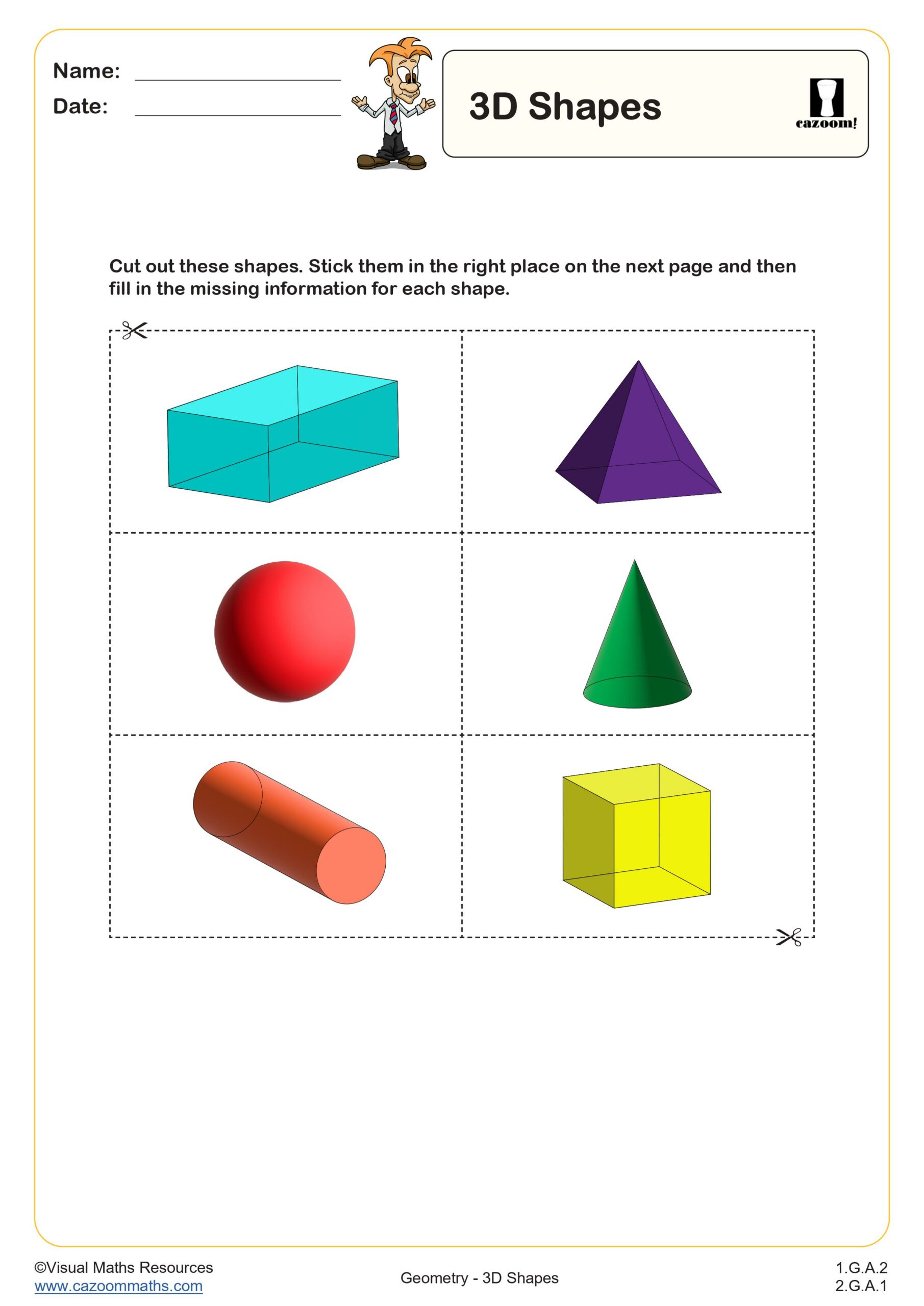
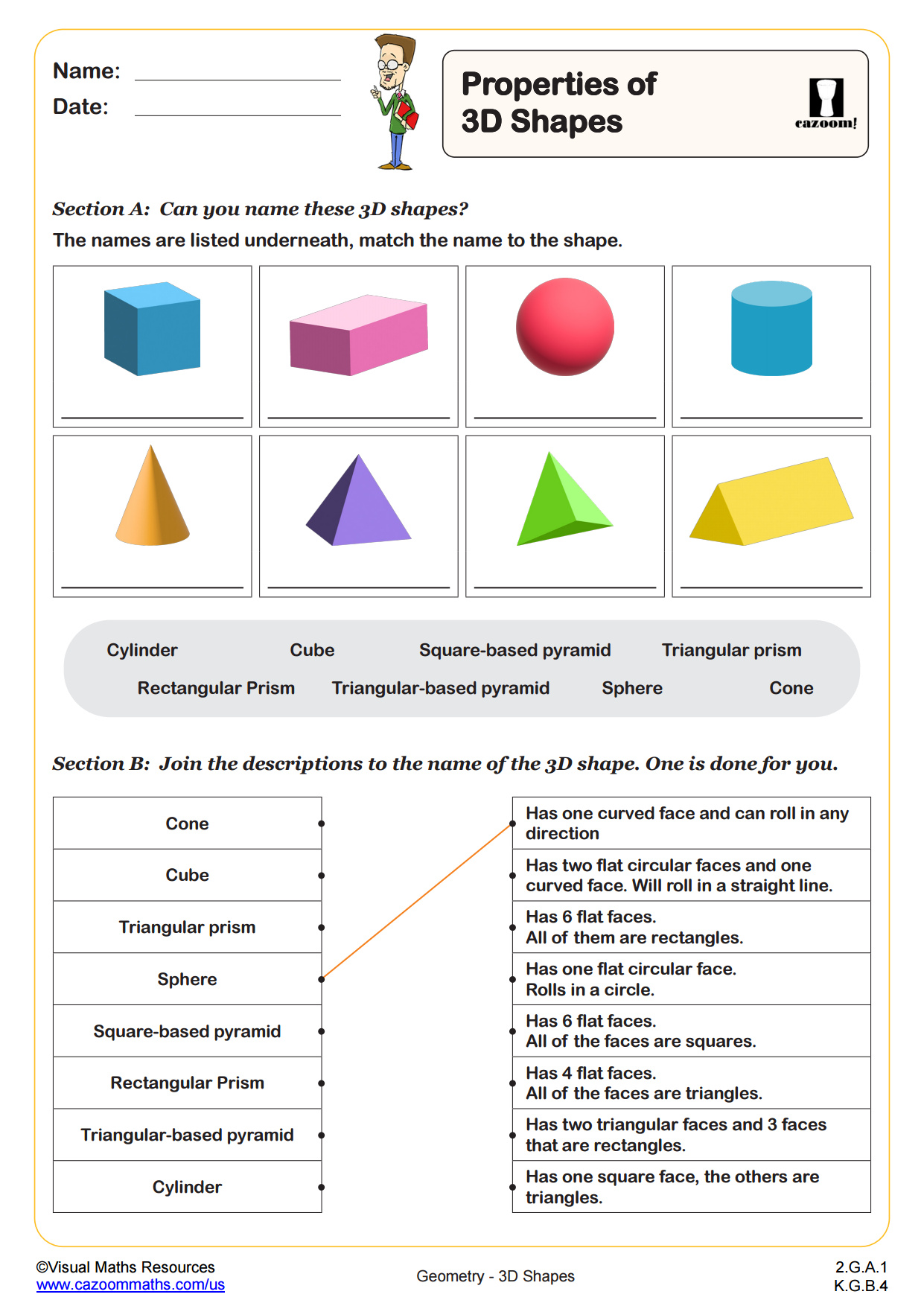
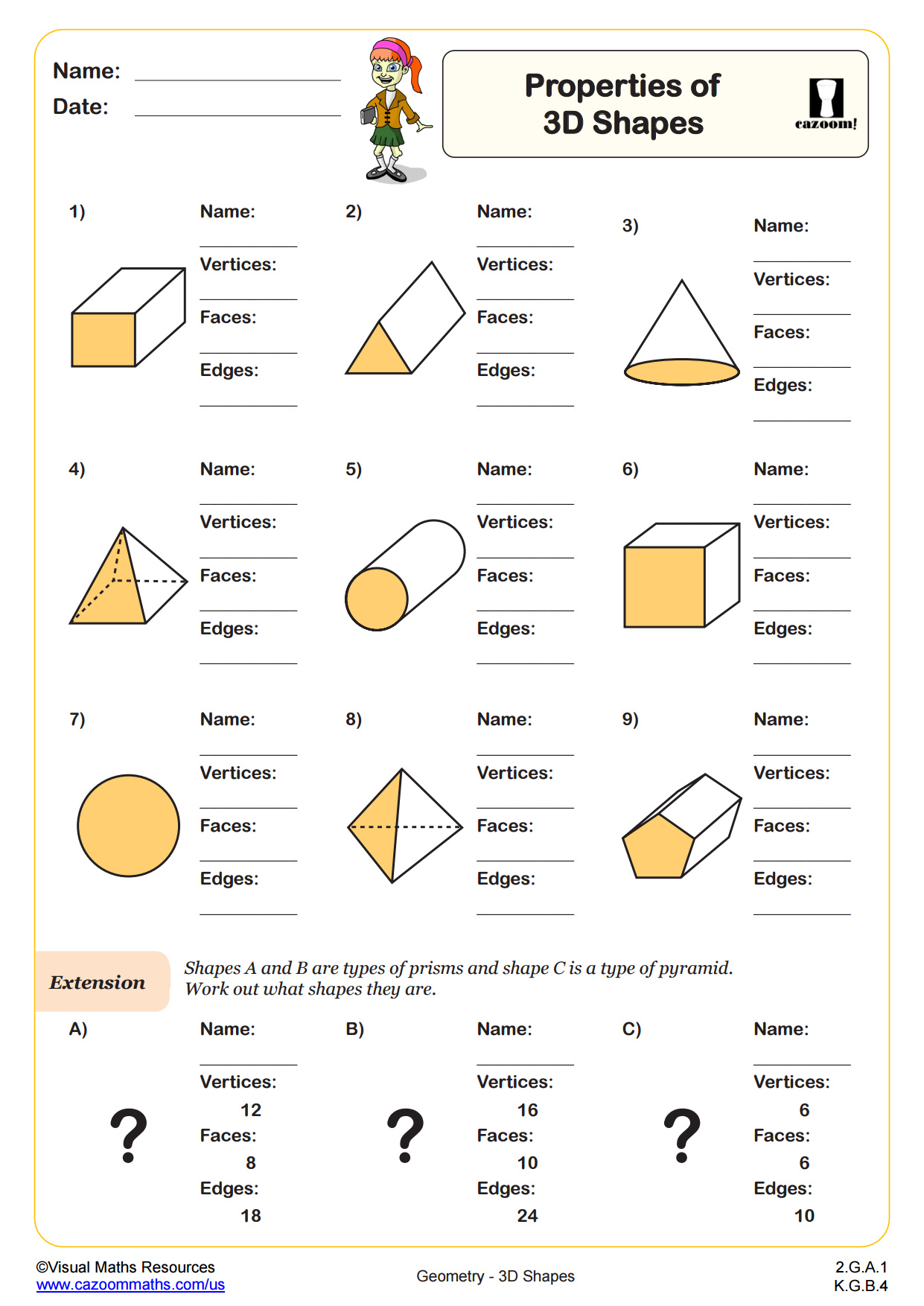
Second grade geometry standards require students to recognize and name common three-dimensional shapes including cubes, rectangular prisms, spheres, cones, cylinders, and pyramids. Students should identify these shapes in their environment and begin describing their attributes using mathematical vocabulary such as faces, edges, and vertices.
Many students confidently tackle 3D shape identification once they recognize that these objects have thickness or depth, unlike the flat 2D shapes they studied earlier. Teachers find that having students handle physical models before working with worksheets significantly improves their ability to visualize and draw these shapes on isometric or triangle grid paper, bridging the gap between concrete objects and abstract representations.
What grade level are these 3D shapes worksheets for?
These worksheets target 2nd grade students in elementary school, aligning with Common Core State Standards for geometry at this level. Second graders build on their kindergarten and first grade experience with basic shape recognition to develop more sophisticated spatial reasoning skills.
The worksheets progress from identifying 3D shapes in everyday objects to more complex tasks like drawing shapes on specialized paper and beginning to understand different views of the same object through plans and elevations. This foundational work prepares students for more advanced geometry concepts in third grade and beyond, where they'll analyze attributes in greater depth and work with volume and surface area in later elementary years.
How does isometric paper help students draw 3D shapes?
Isometric paper features a grid of equilateral triangles arranged in a repeating pattern, providing guide lines that help students draw three-dimensional shapes with proper perspective. Unlike regular squared paper, the angled lines on isometric paper make it easier to show depth and create realistic representations of cubes, prisms, and other geometric solids without requiring advanced drawing skills.
This skill connects directly to STEM fields where professionals use isometric drawings for technical illustrations, architectural plans, and engineering designs. Video game designers use isometric perspectives to create game environments, and architects rely on these drawings to communicate building concepts to clients. When students practice on isometric paper in second grade, they're developing the same spatial visualization skills that engineers and designers use to transform flat sketches into three-dimensional products.
How can teachers use these 3D shapes worksheets in the classroom?
The worksheets provide scaffolded practice that moves from concrete identification tasks to more abstract drawing and analysis activities. Triangle grid paper and isometric paper give students the structure they need to successfully represent 3D shapes on a flat surface, while the everyday objects worksheets help them make real-world connections that deepen understanding of geometric properties.
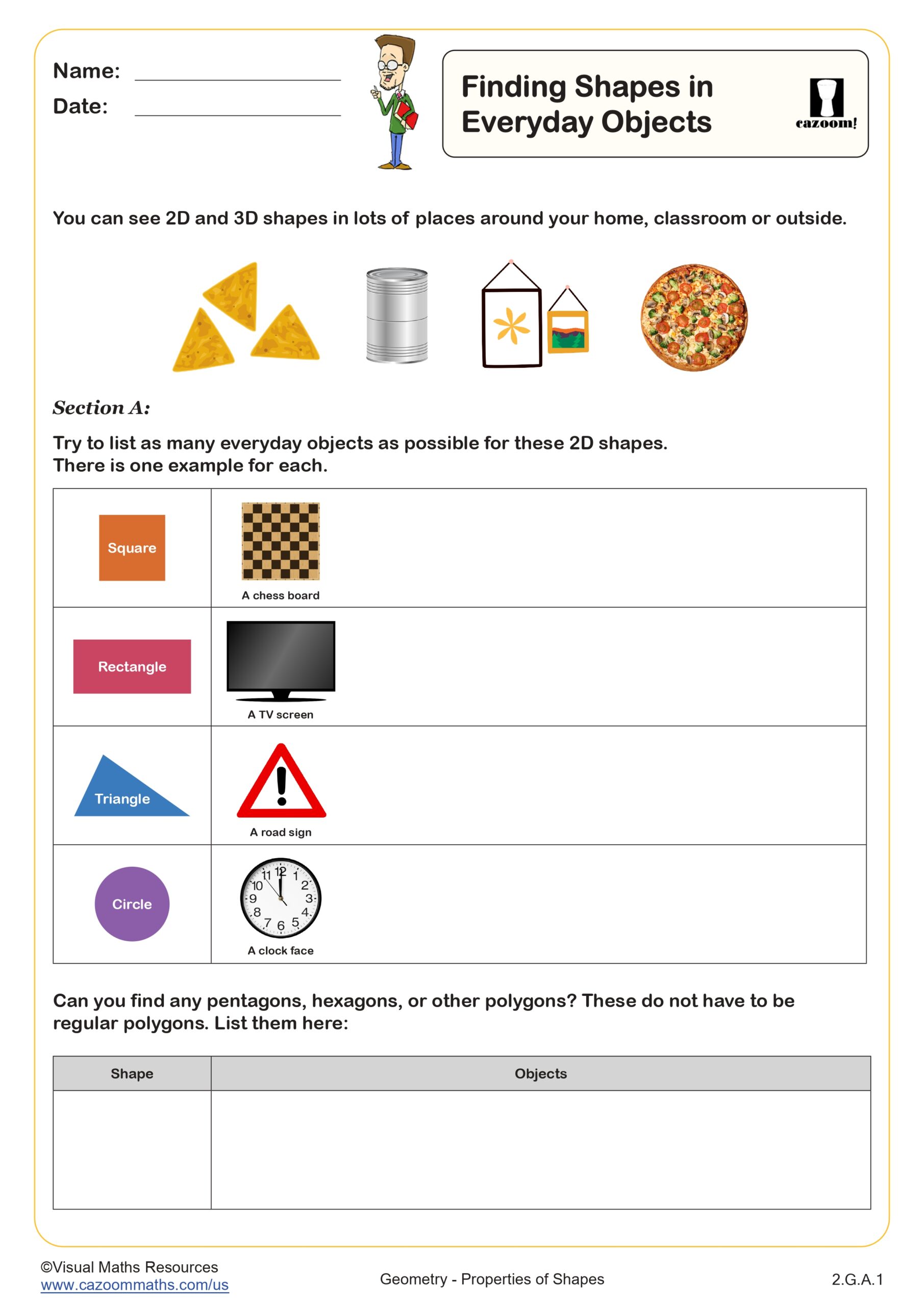
Teachers often use these worksheets during math centers for independent practice after introducing concepts with physical manipulatives. The answer keys make them particularly useful for intervention work, allowing students to self-check their progress or enabling parent volunteers to assist small groups. Many teachers assign the everyday objects worksheets as homework since students can complete them by observing items around their homes, reinforcing that geometry exists beyond the classroom walls.