2nd Grade Adding 2 Digit Numbers to 100 Worksheets
Adding 10 to 2 digit numbers (10 questions)
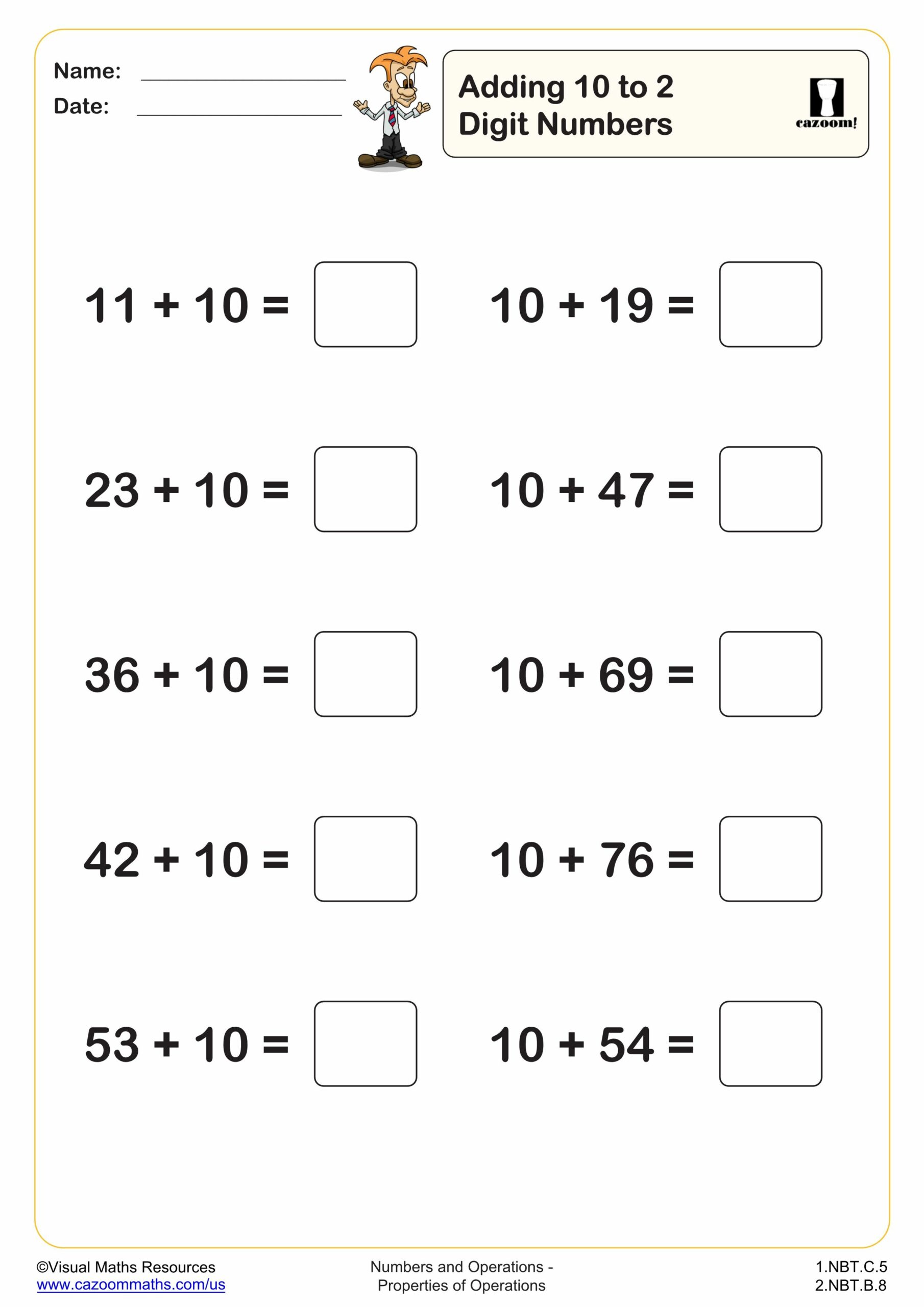
Adding 10 to 2 digit numbers (20 questions)
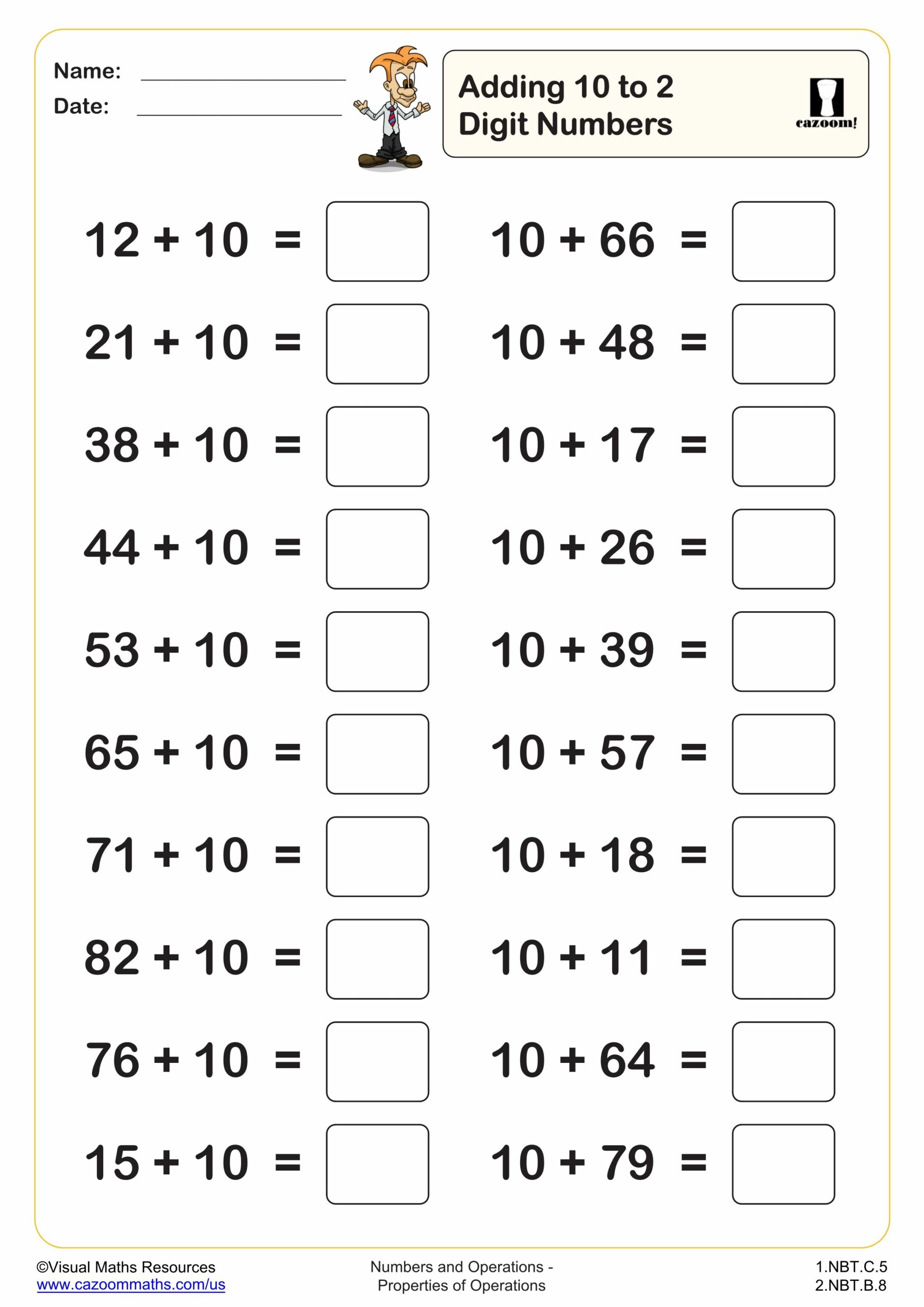
Adding 10 to 2 digit numbers (50 questions)
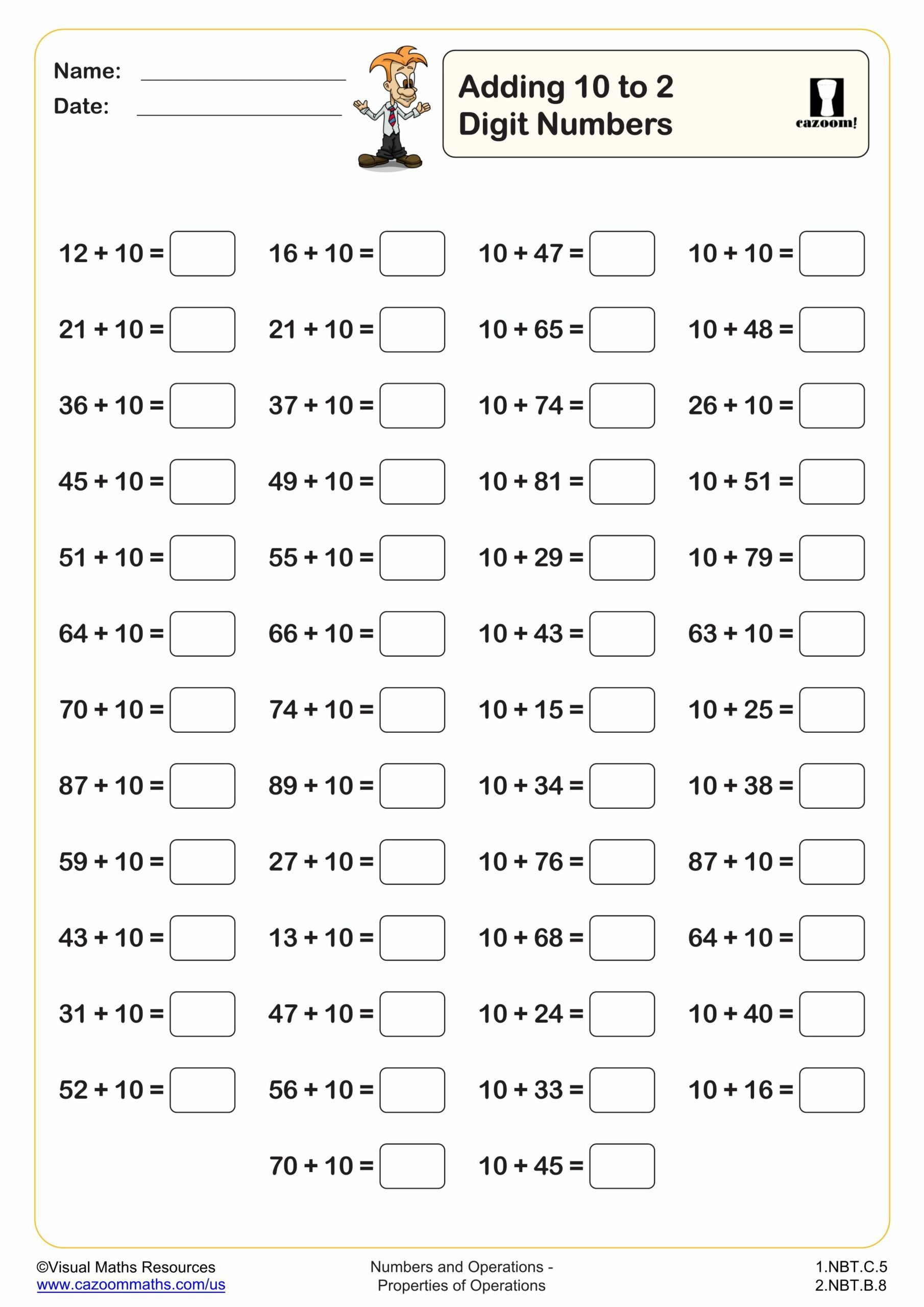
Adding 11 to 2 digit numbers (10 questions)
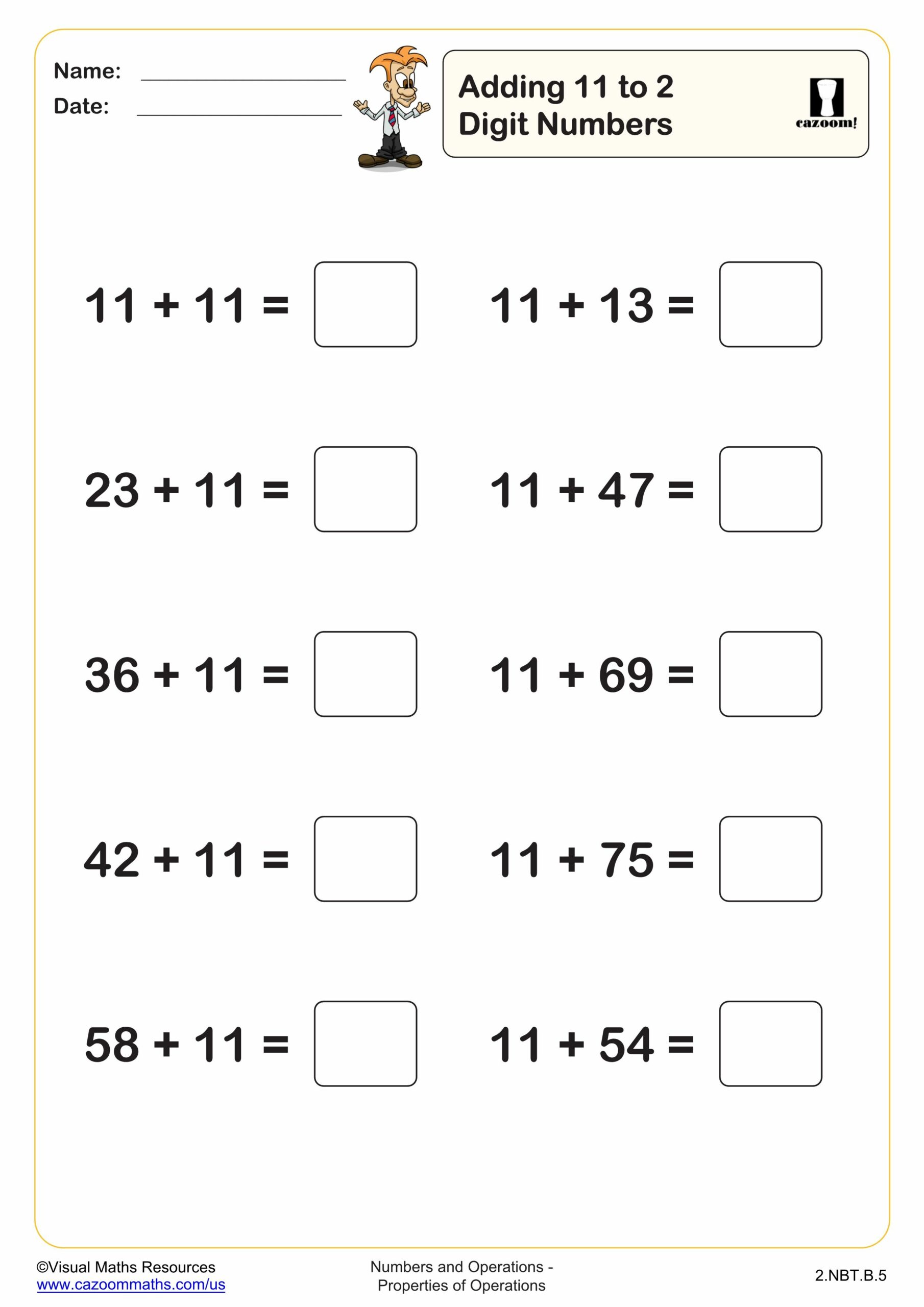
Adding 11 to 2 digit numbers (20 questions)
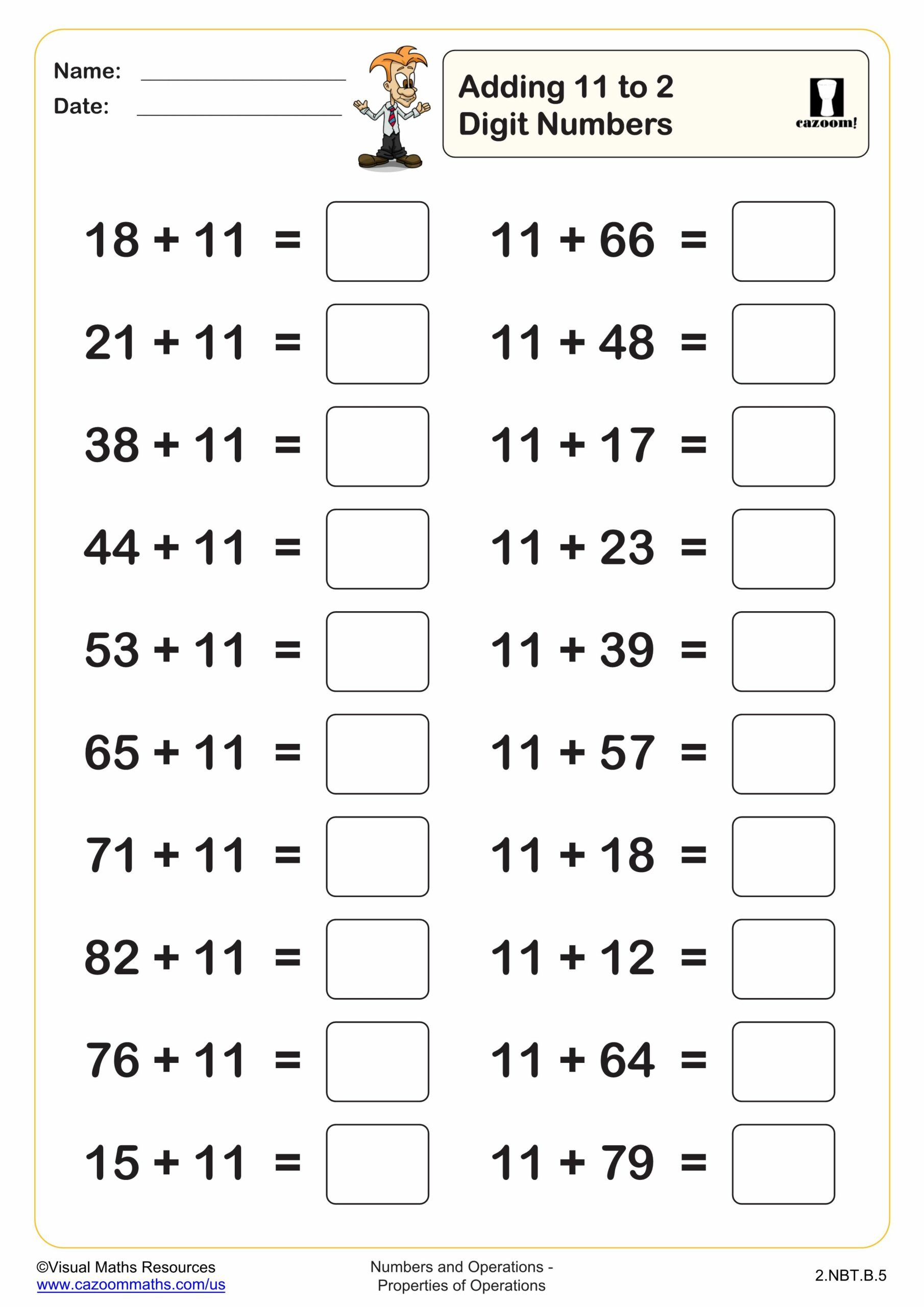
Adding 11 to 2 digit numbers (50 questions)
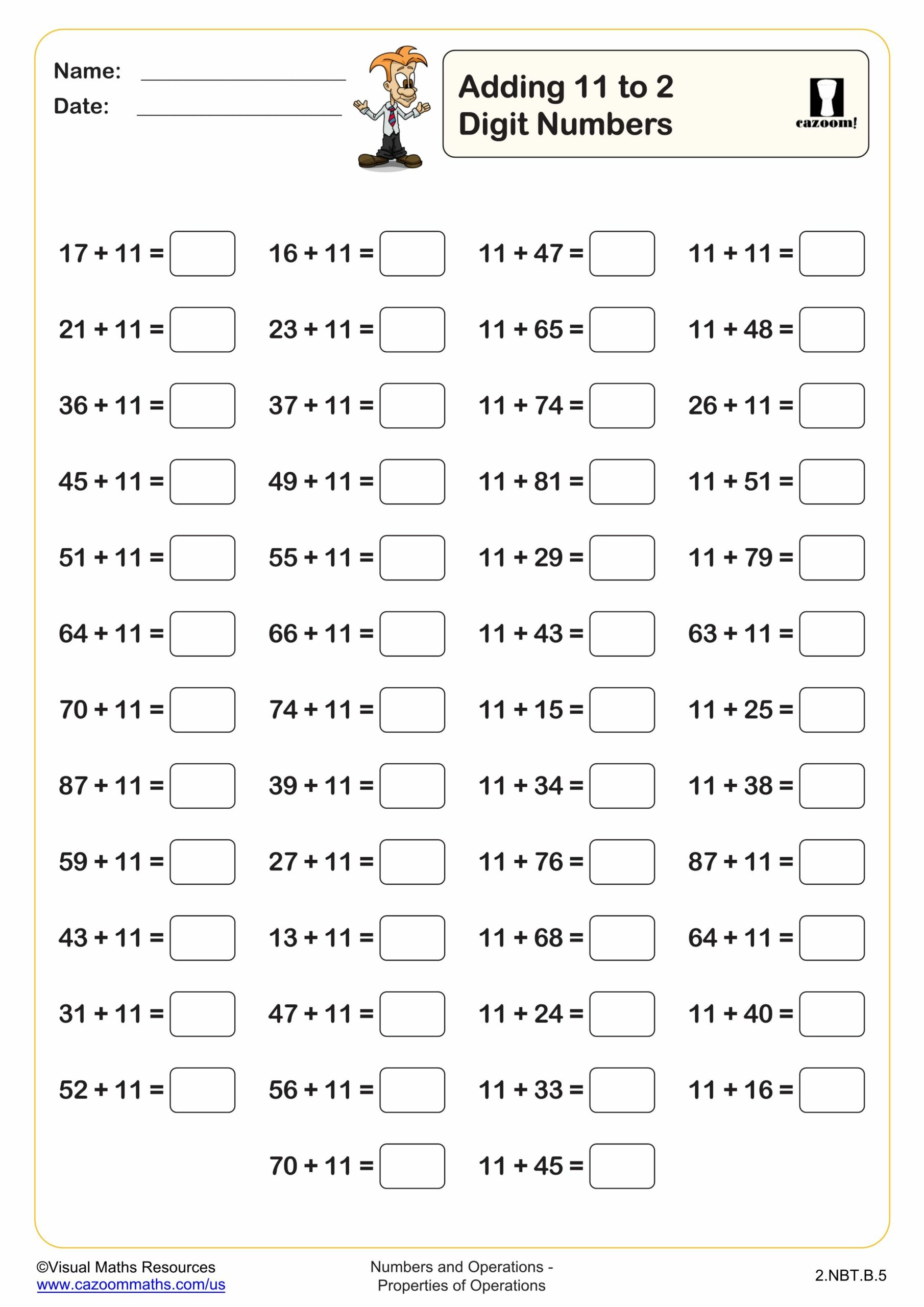
Adding 2 digit numbers without regrouping (10 questions)
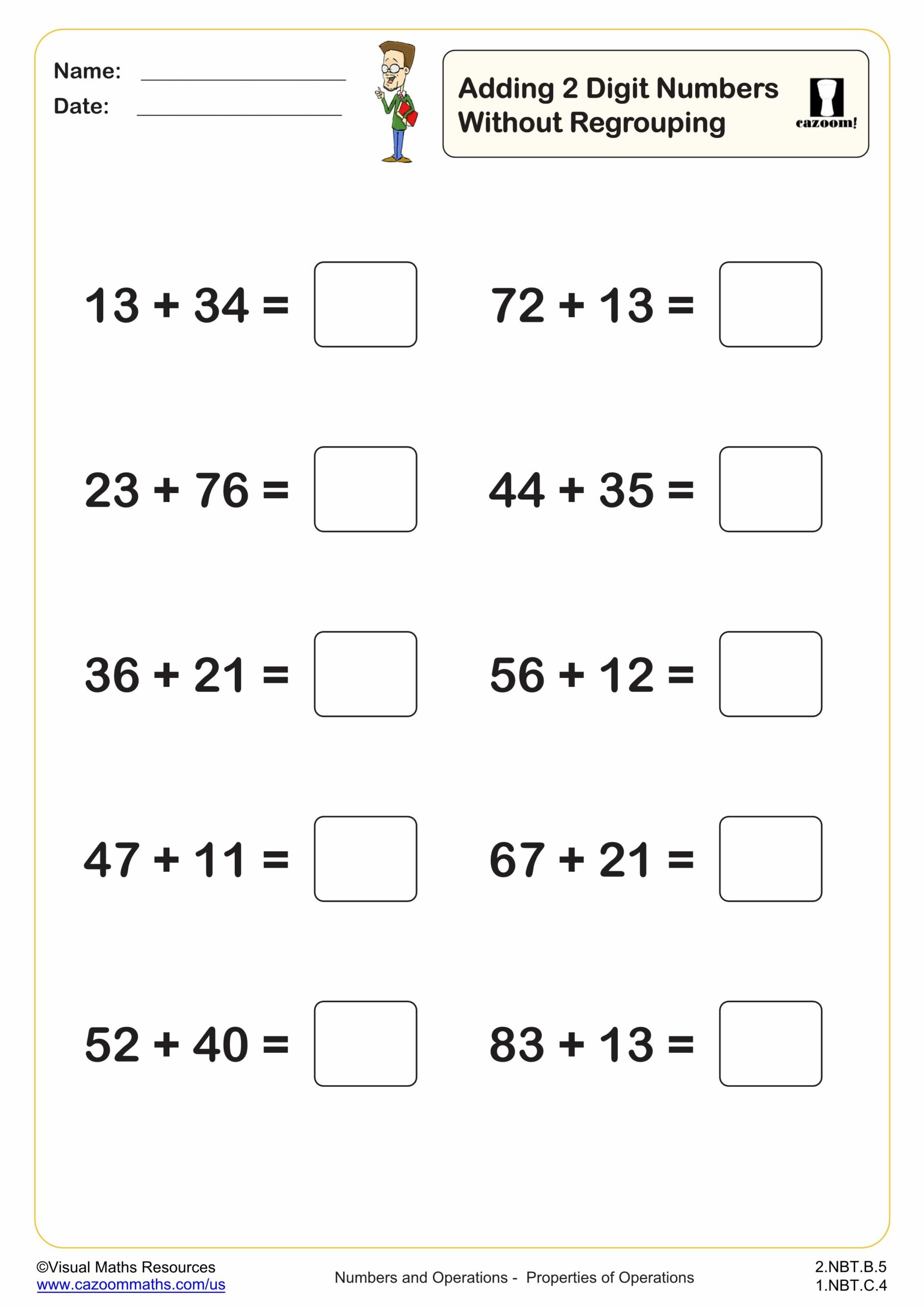
Adding 2 digit numbers without regrouping (20 questions)
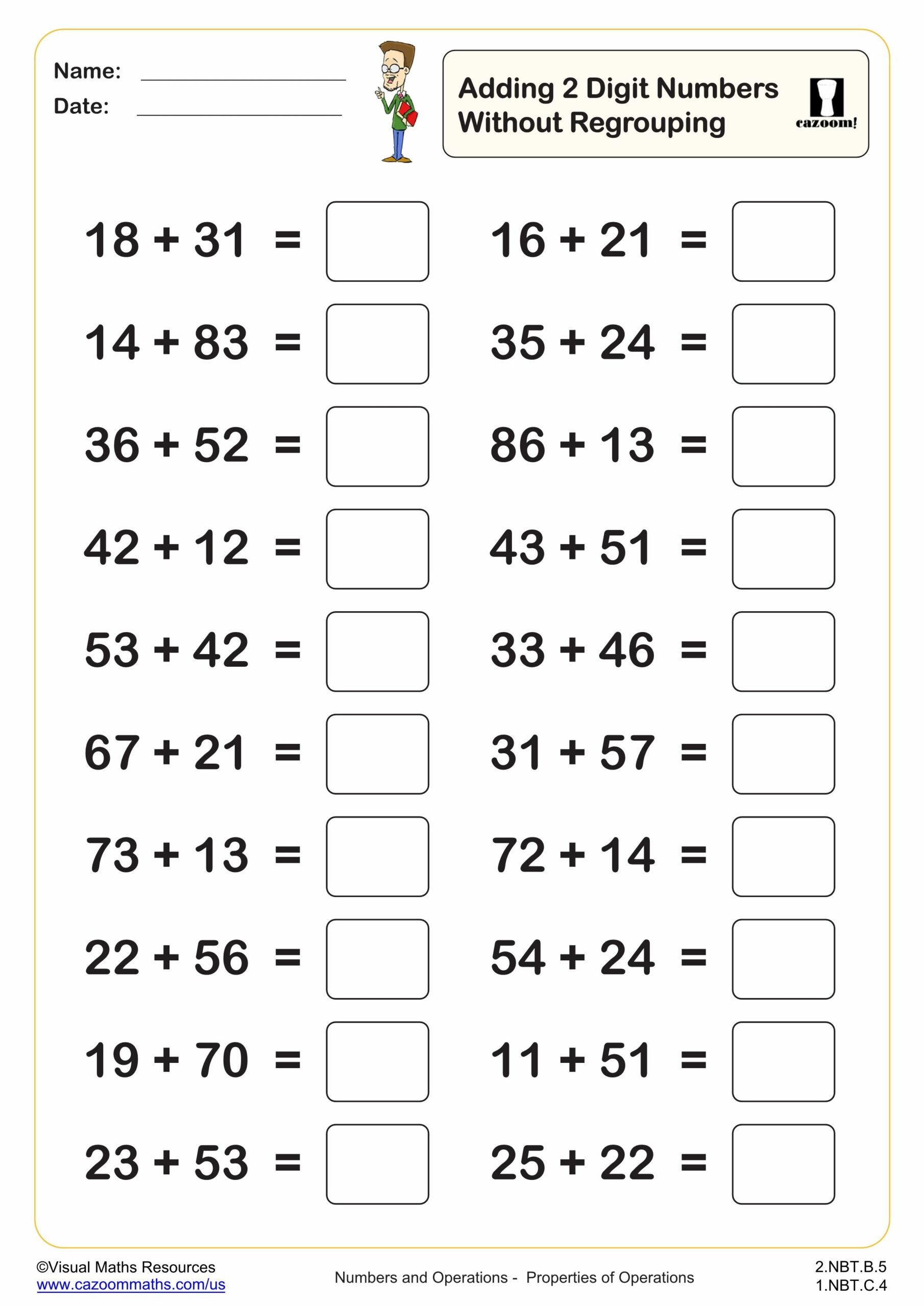
Adding 2 digit numbers without regrouping (50 questions)
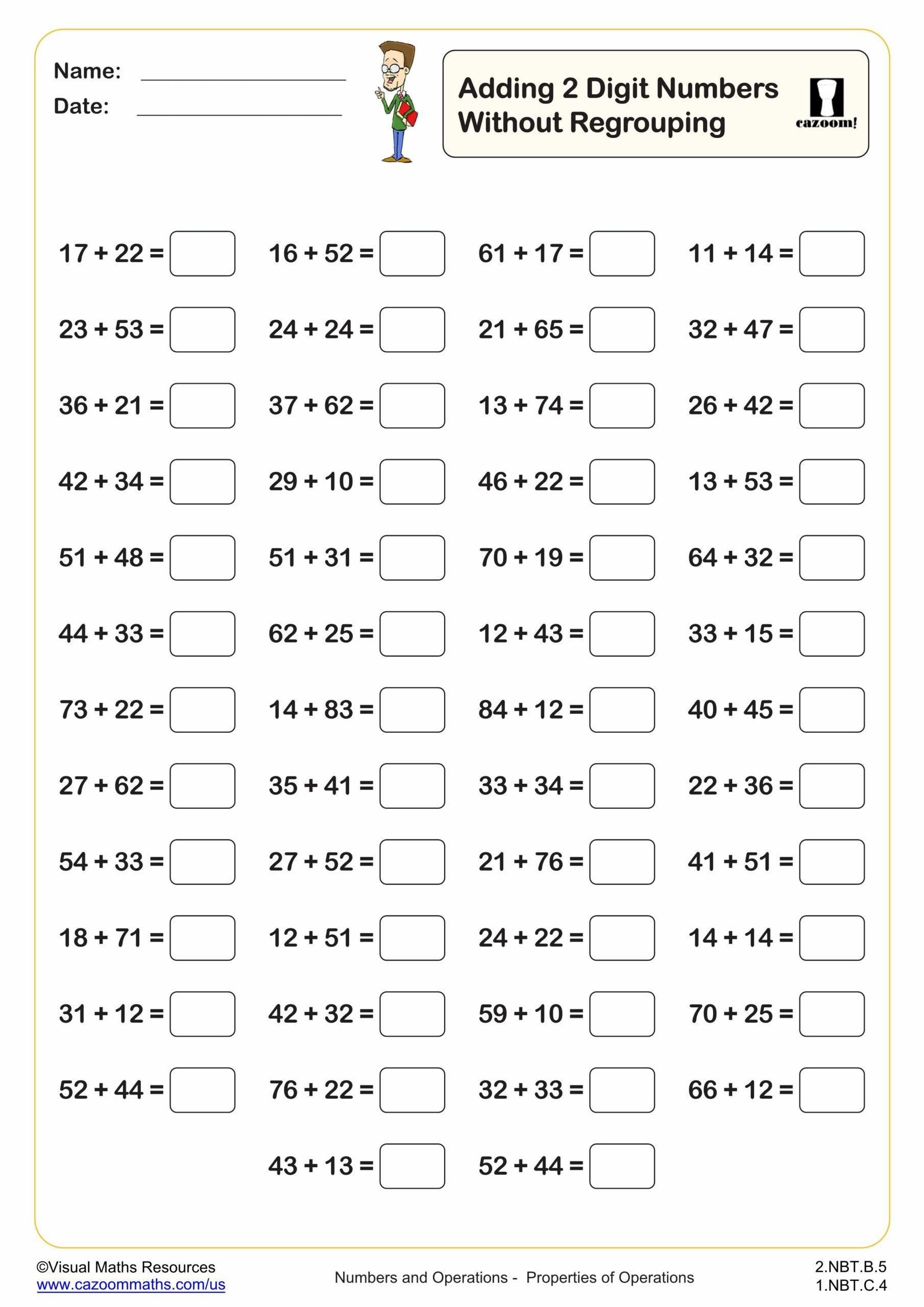
Adding 5 to 2 digit numbers (10 questions)
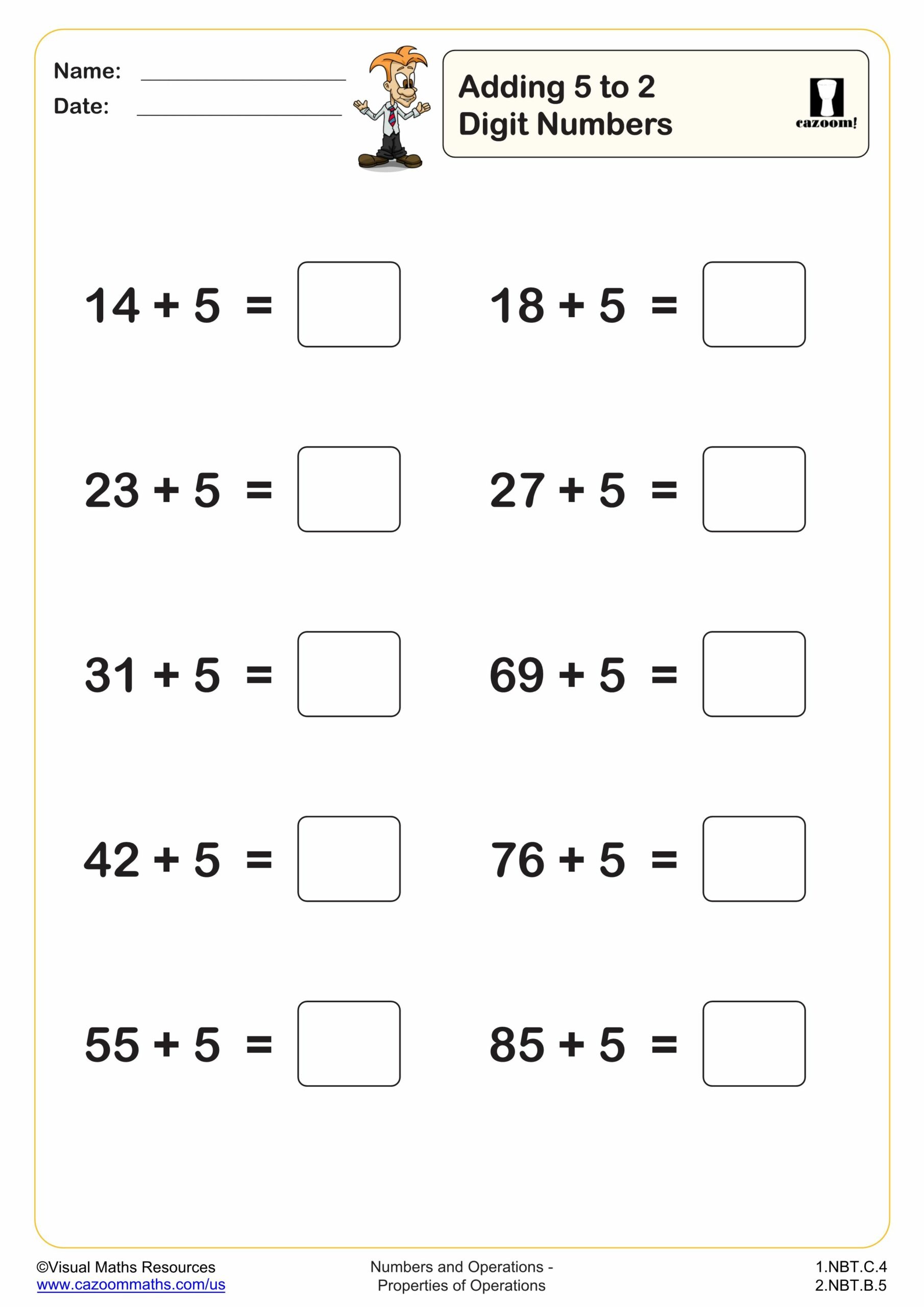
Adding 5 to 2 digit numbers (50 questions)
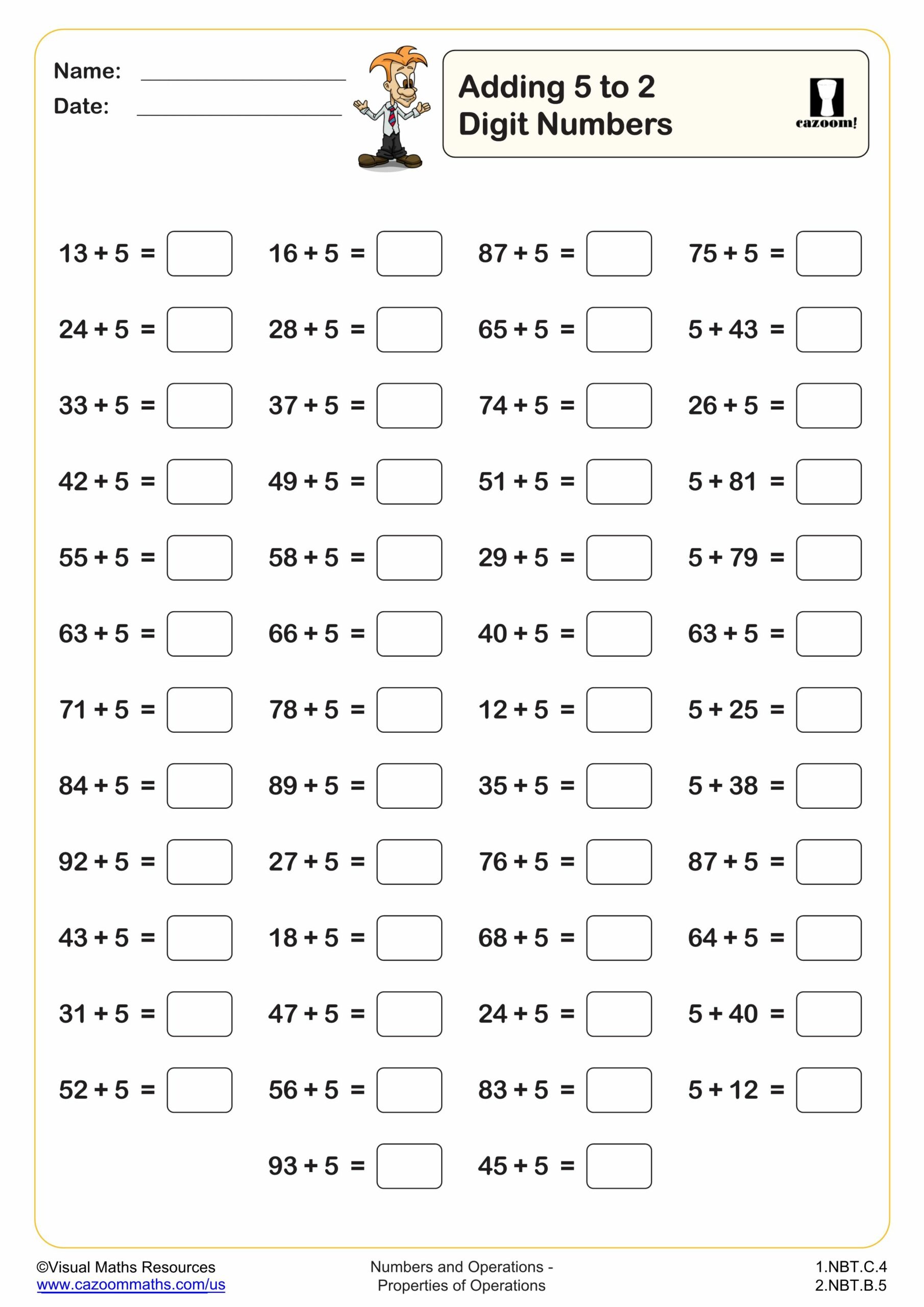
Adding 6 to 2 digit numbers (10 questions)
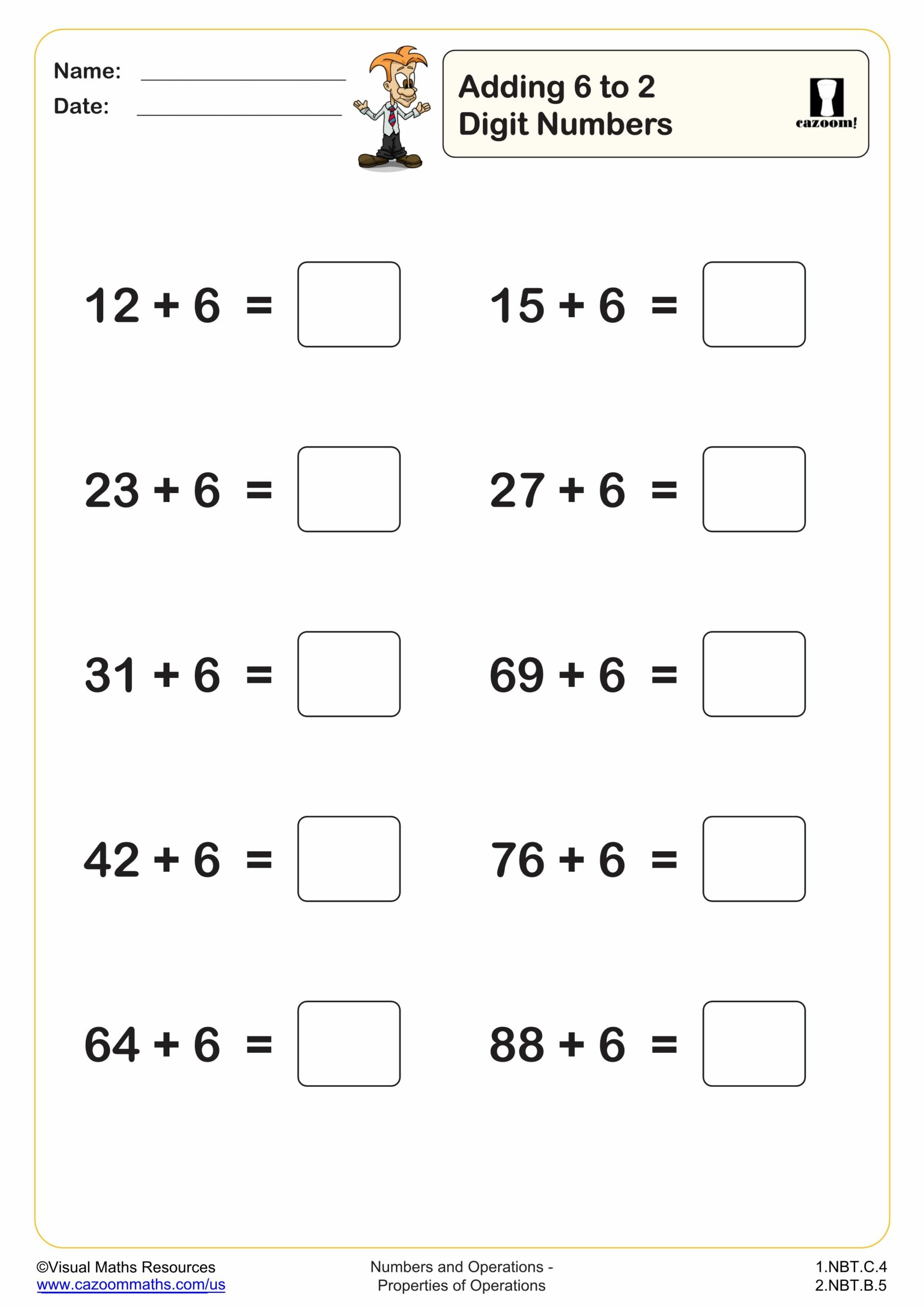
Adding 6 to 2 digit numbers (20 questions)
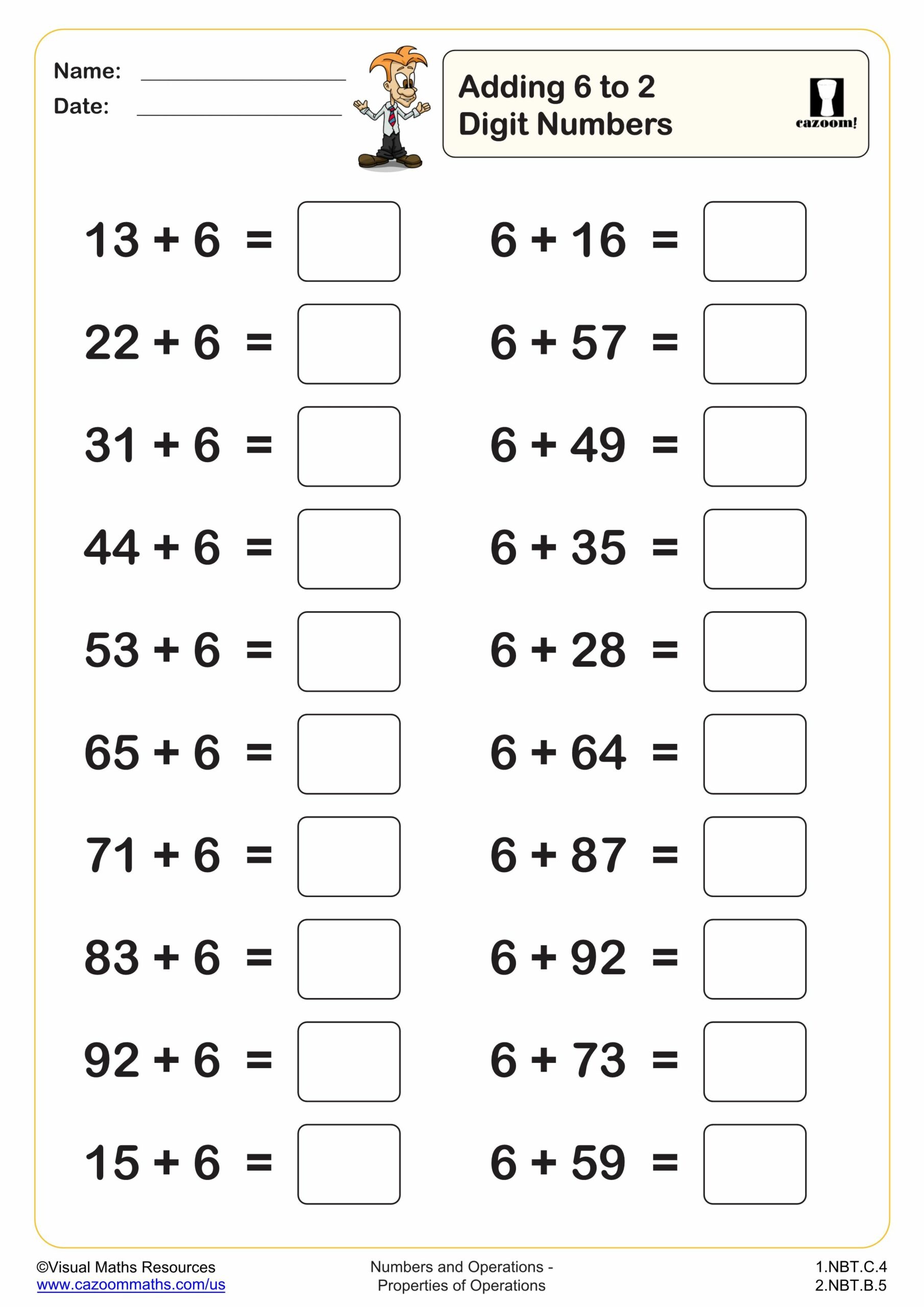
Adding 6 to 2 digit numbers (50 questions)
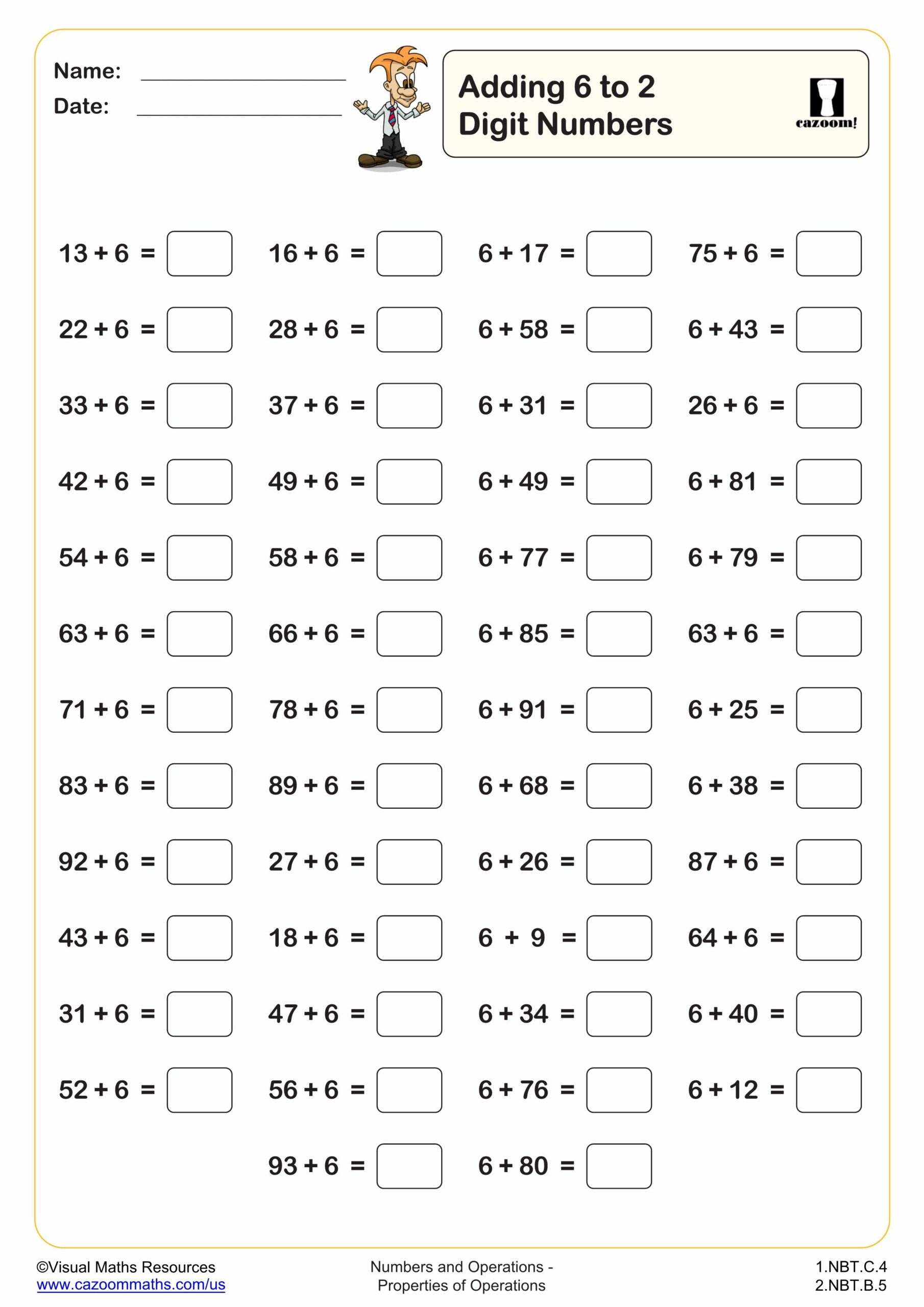
Adding 7 to 2 digit numbers (10 questions)
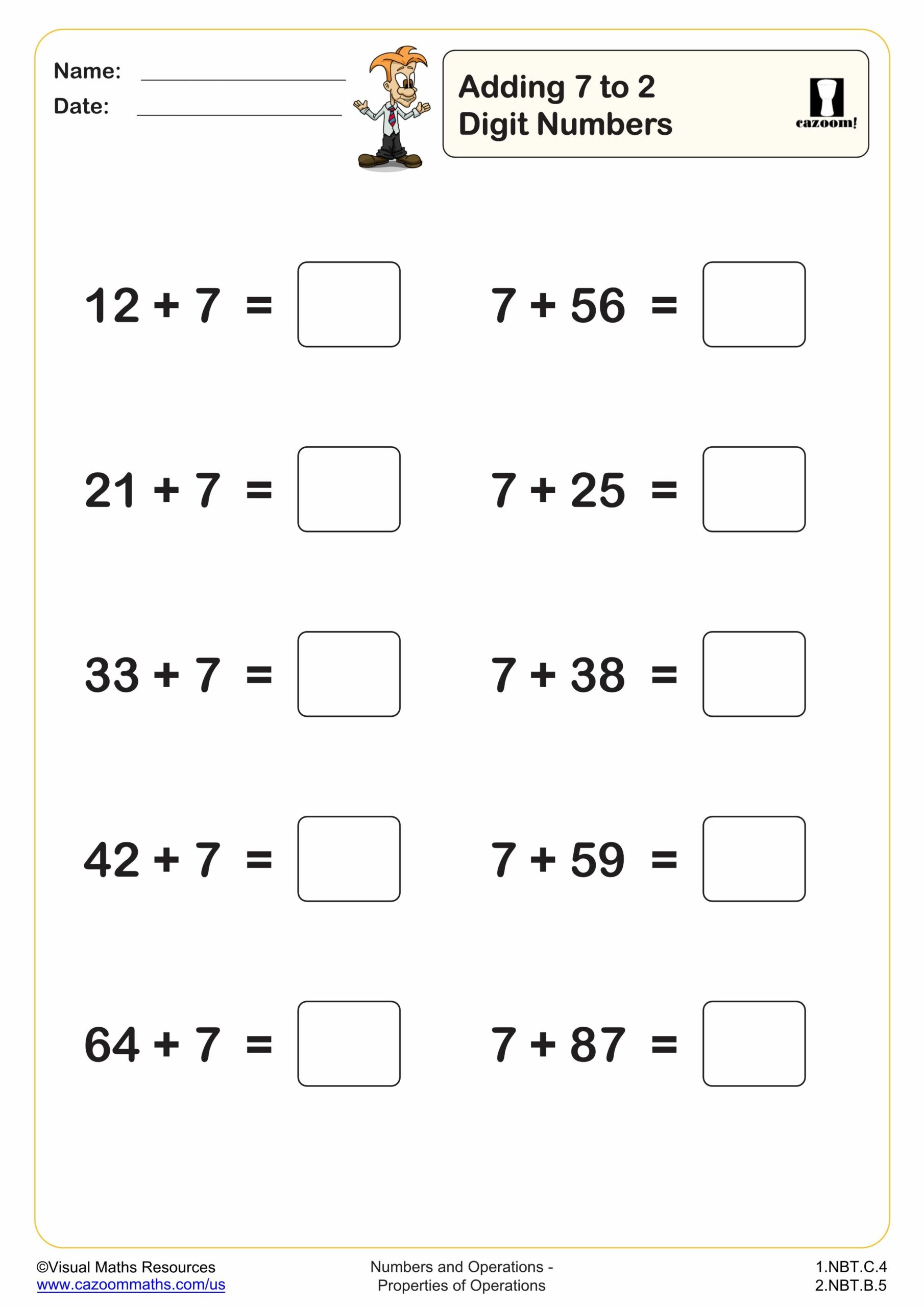
Adding 7 to 2 digit numbers (20 questions)
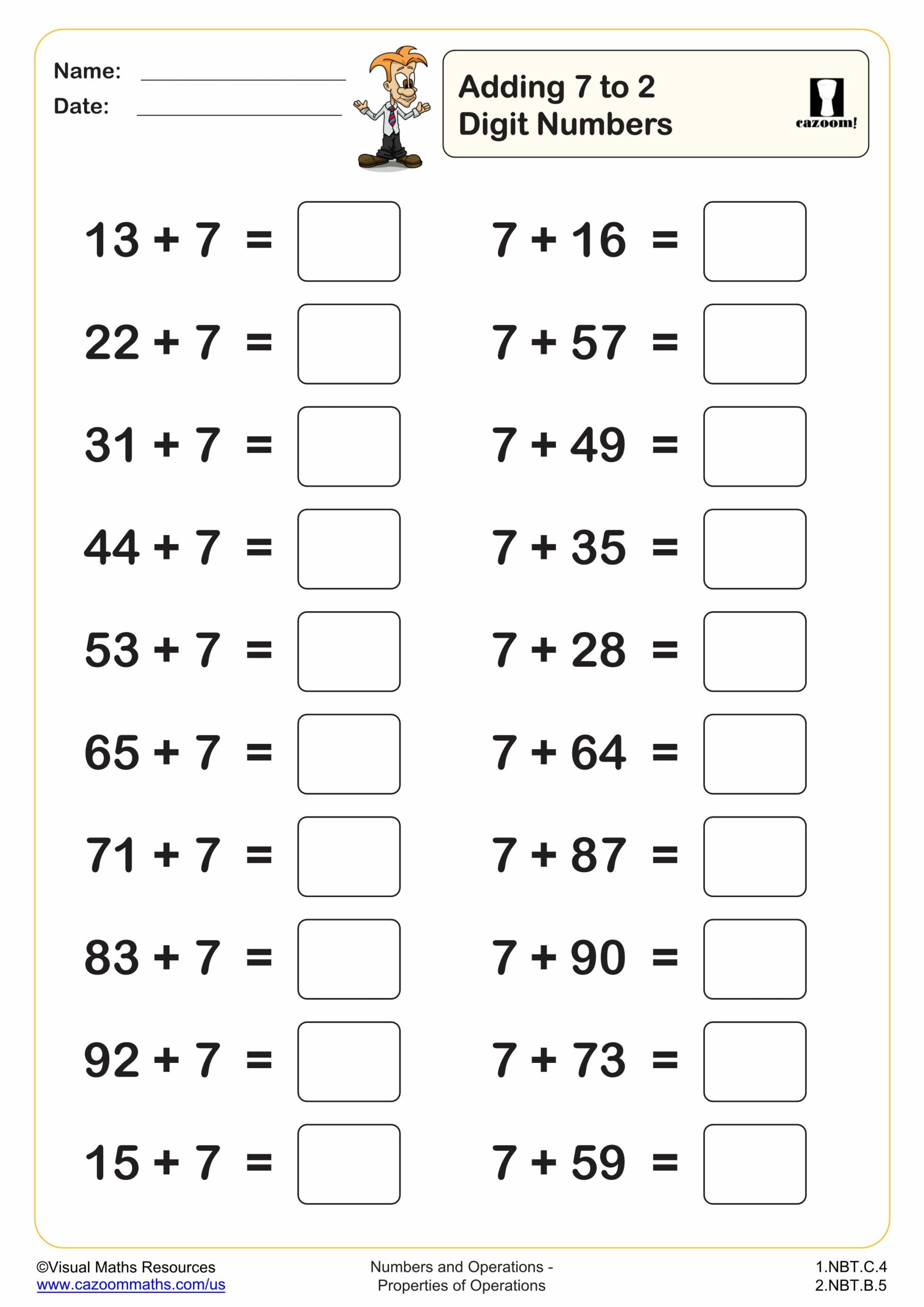
Adding 7 to 2 digit numbers (50 questions)
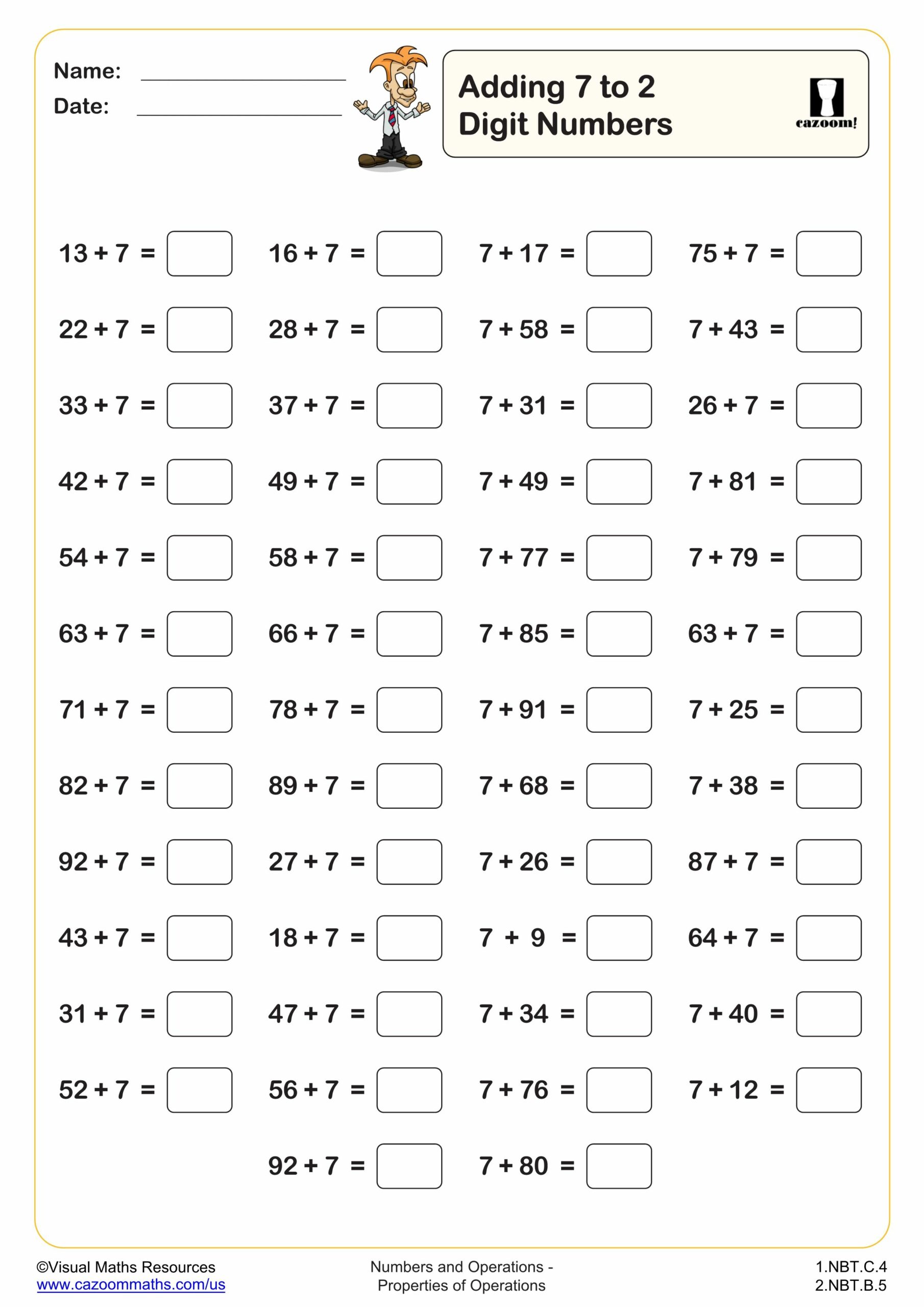
Adding 8 to 2 digit numbers (10 questions)
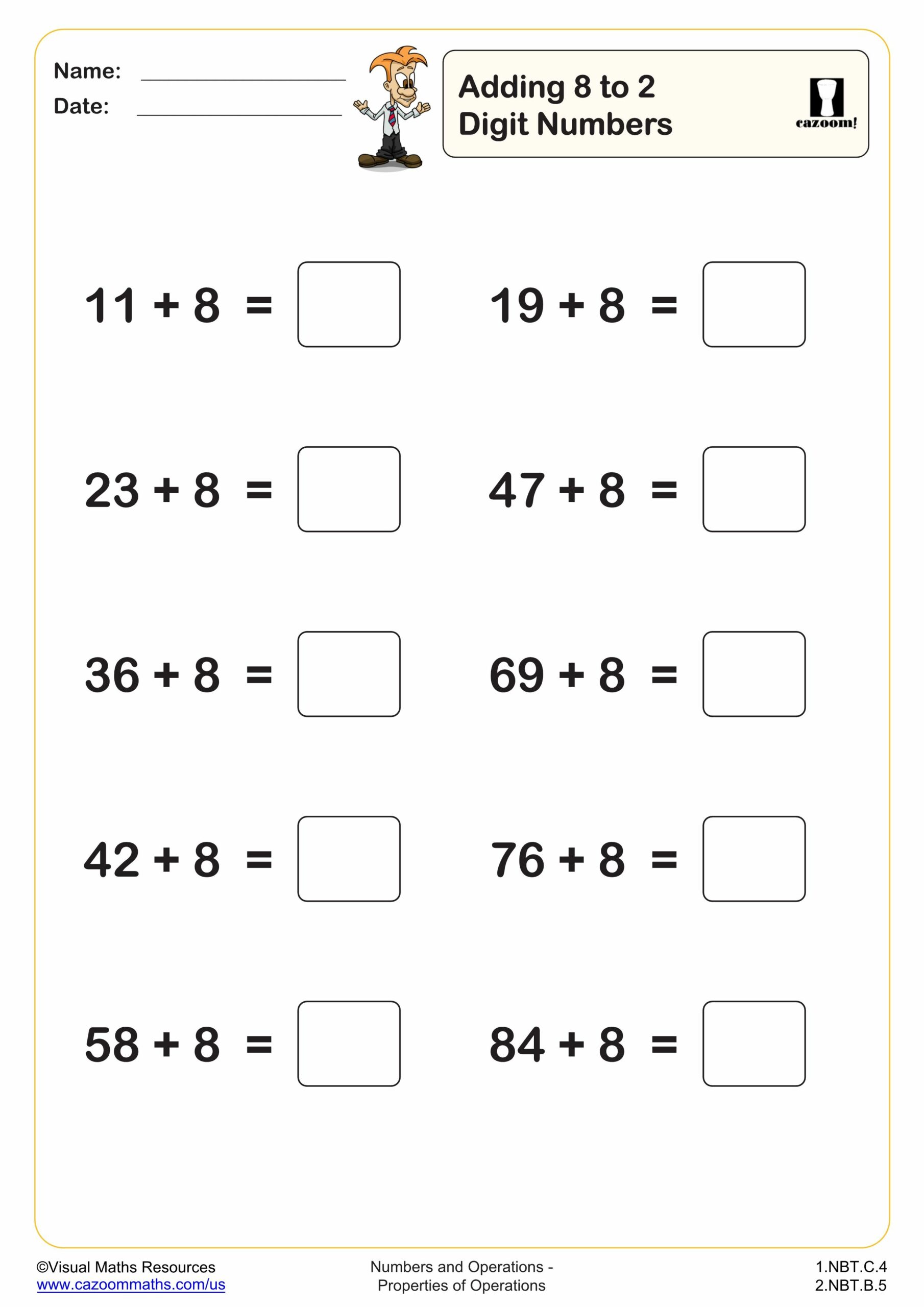
Adding 8 to 2 digit numbers (20 questions)
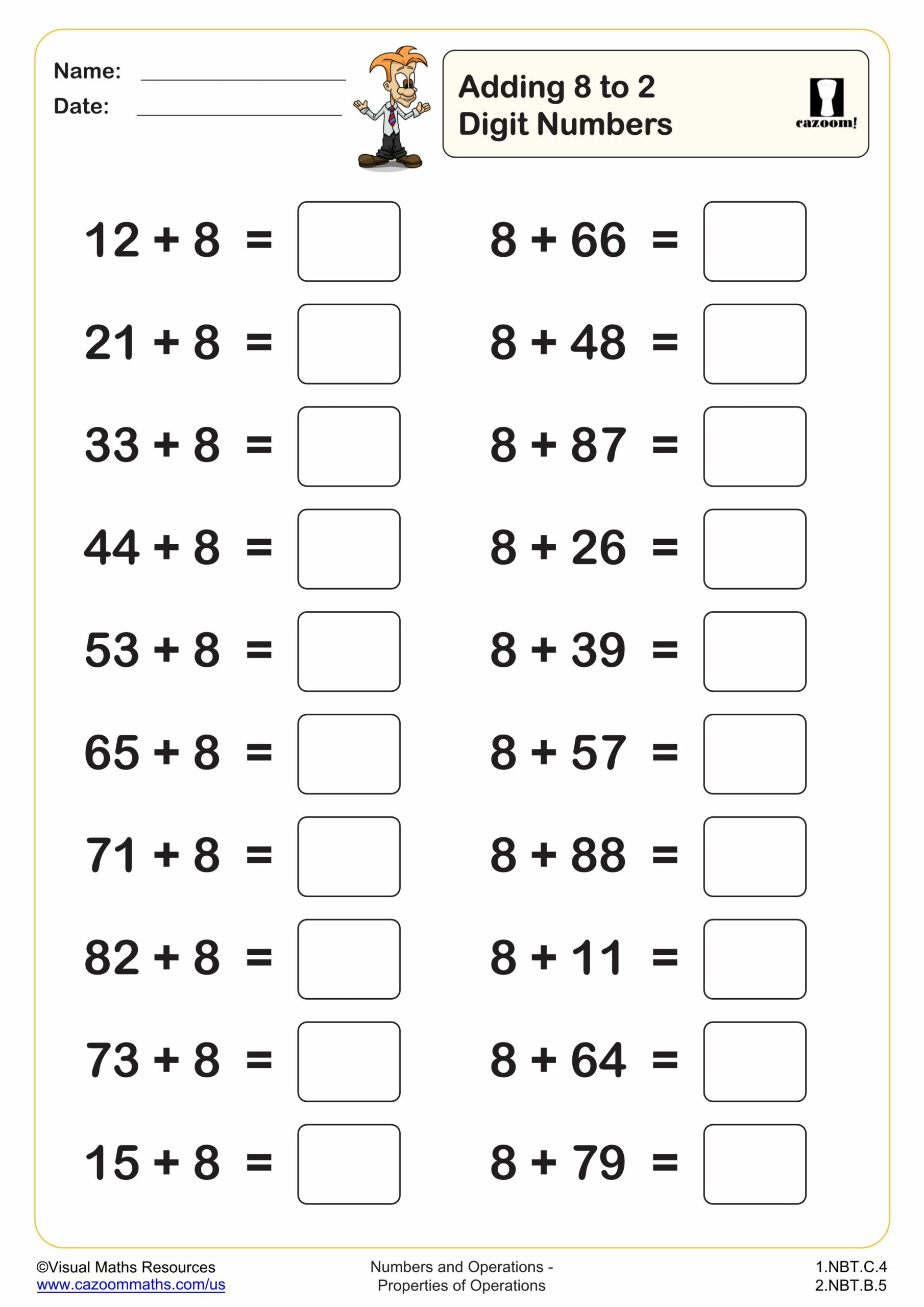
Adding 8 to 2 digit numbers (50 questions)
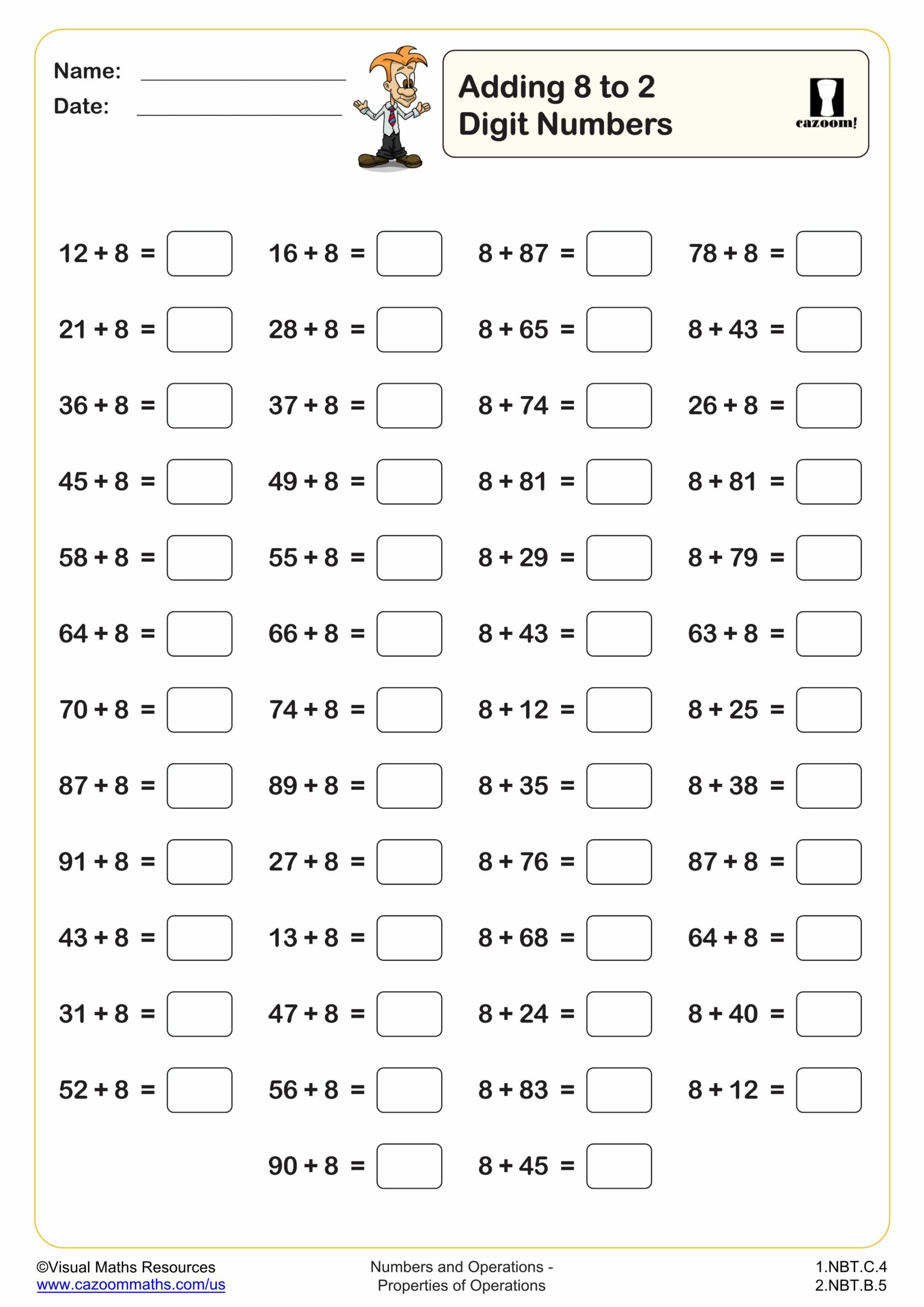
Adding 9 to 2 digit numbers (10 questions)
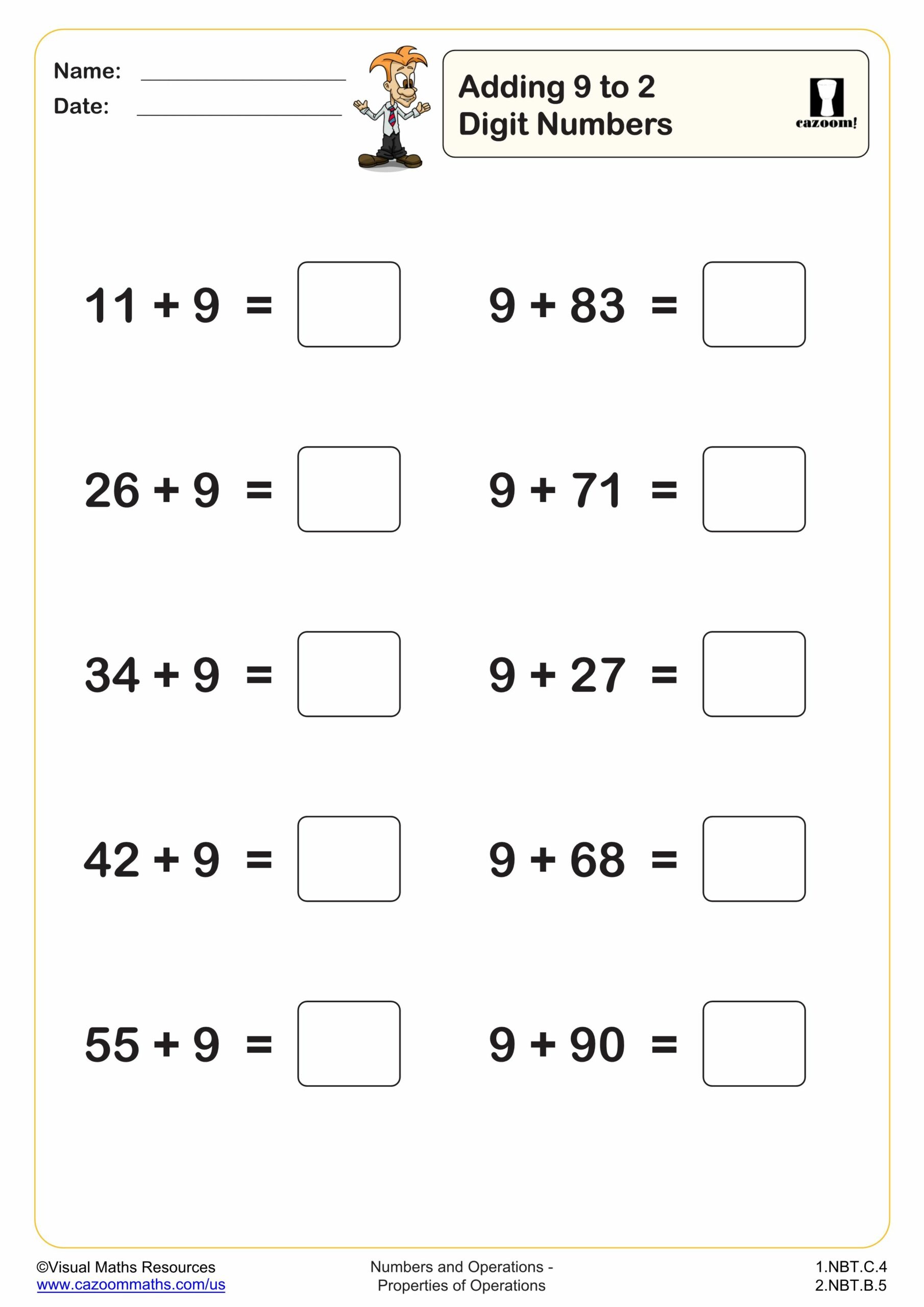
Adding 9 to 2 digit numbers (20 questions)
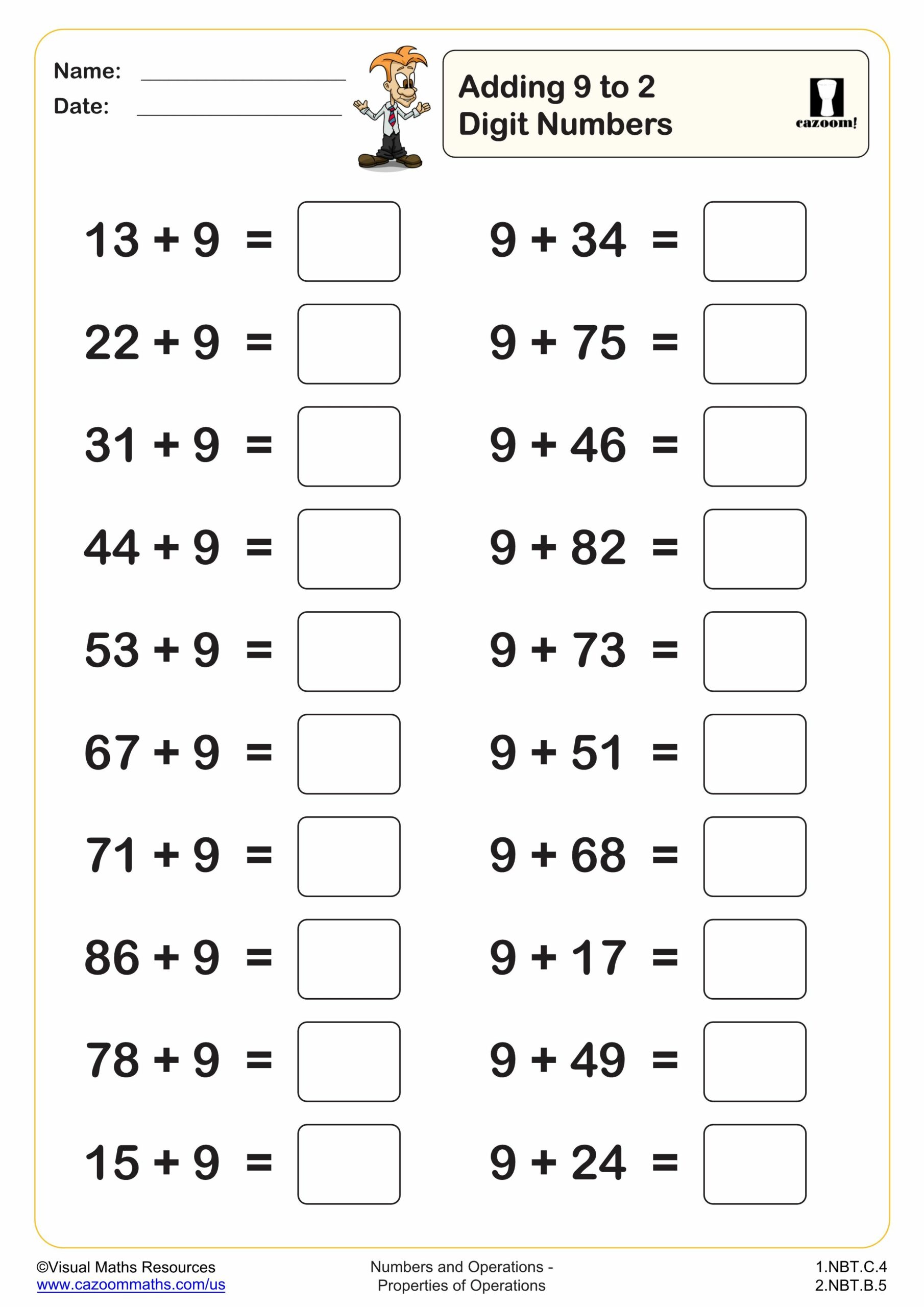
Adding 9 to 2 digit numbers (50 questions)
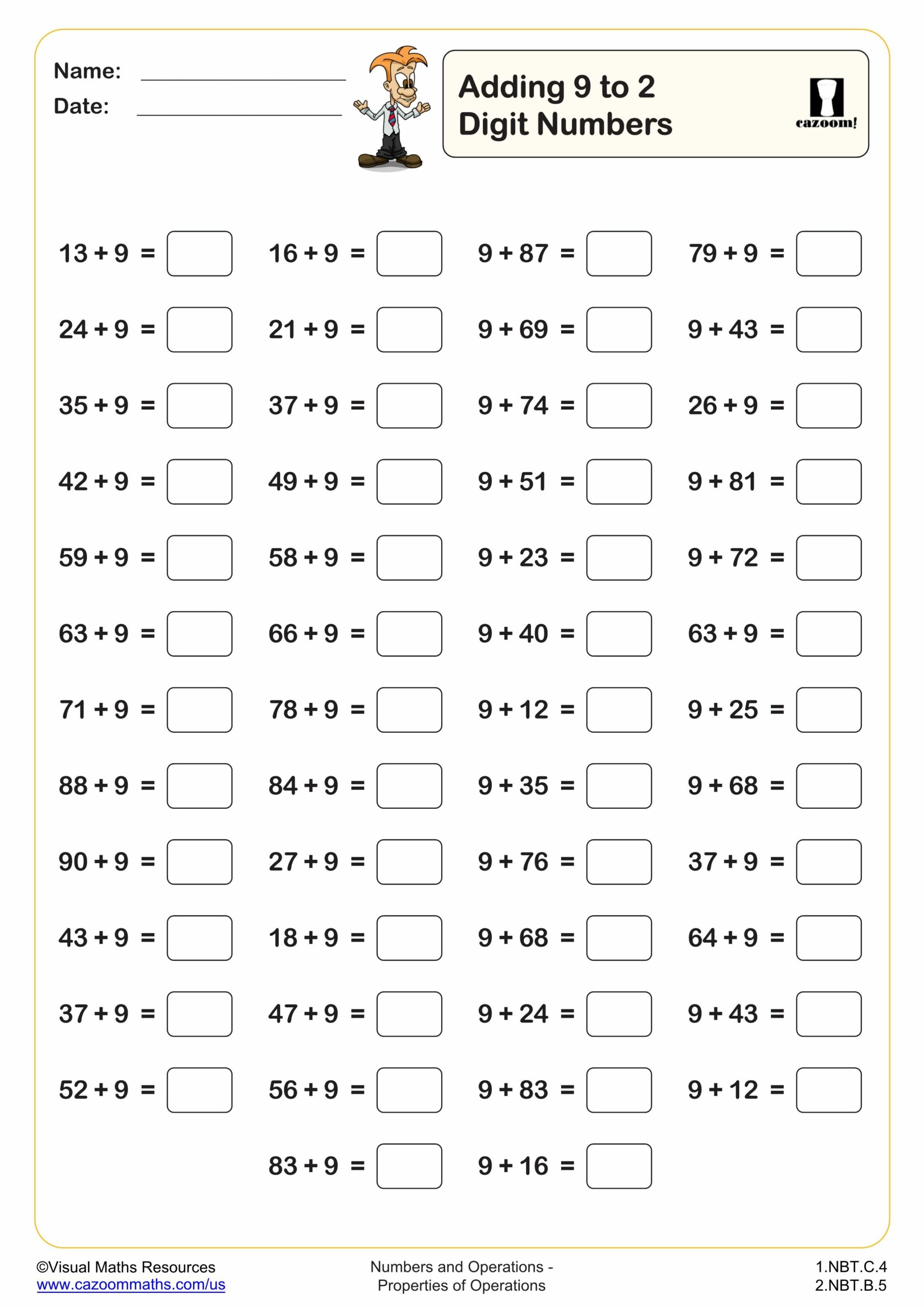
Adding mulitples of 10 to a 2 digit number (10 questions)
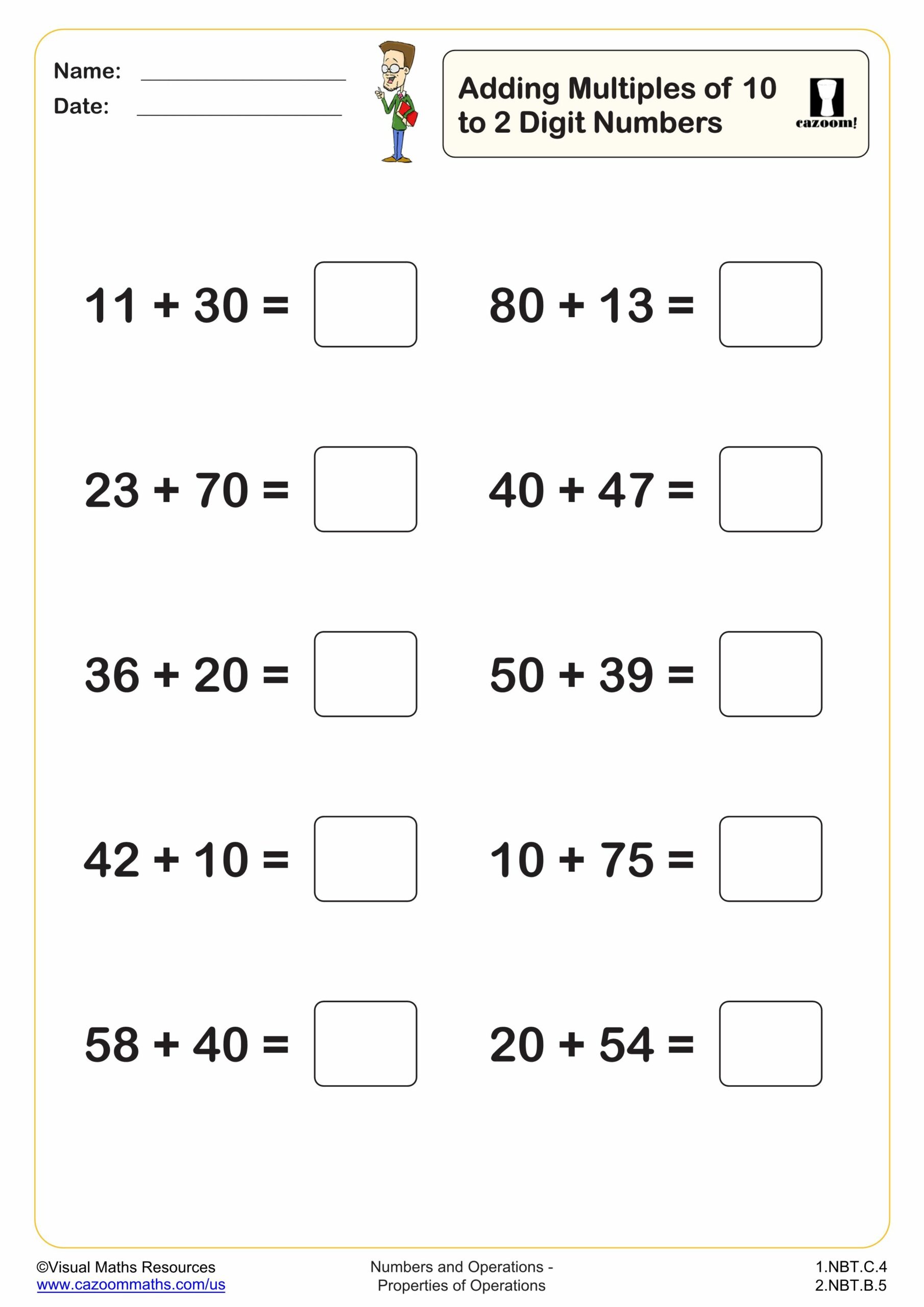
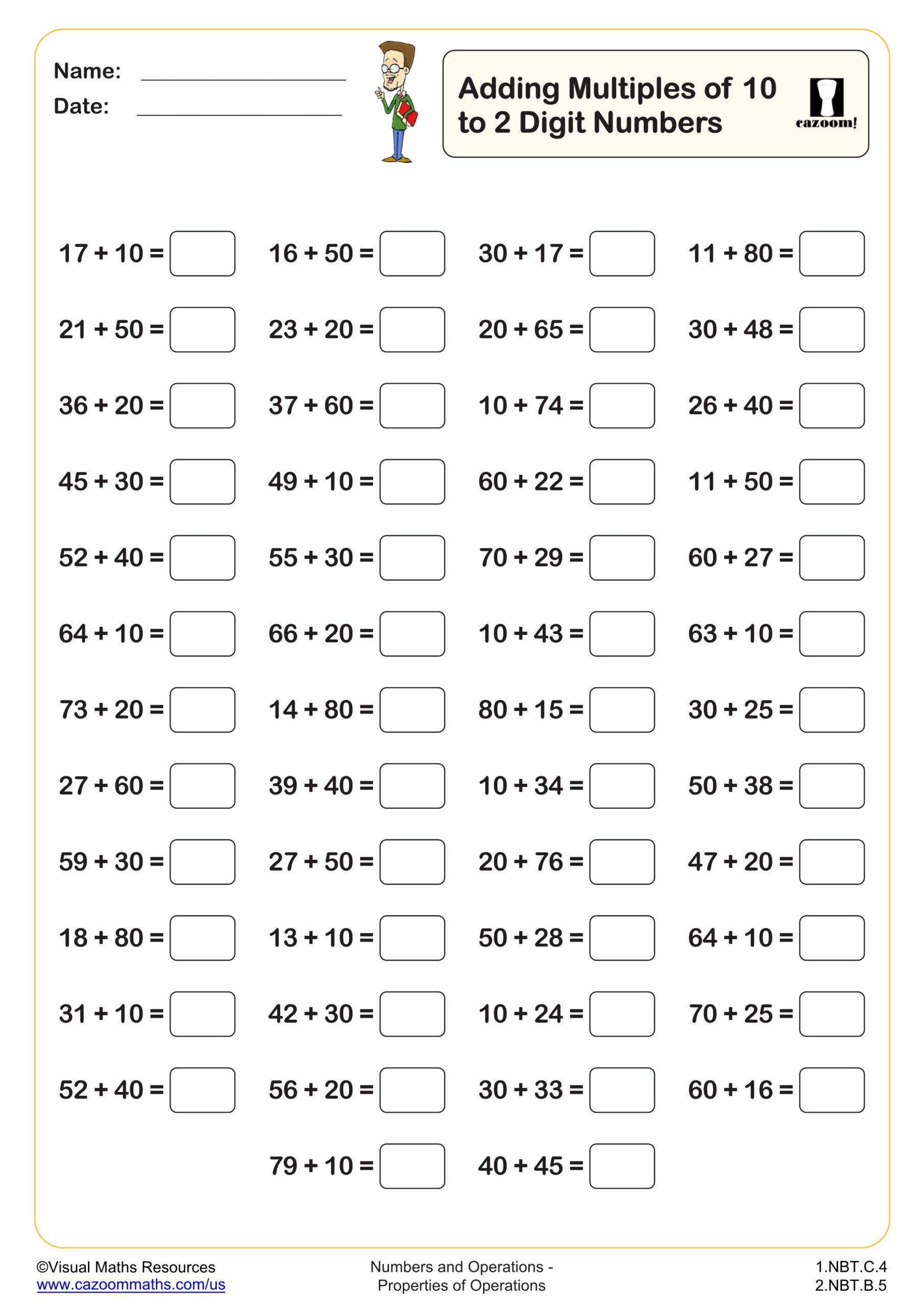
Adding mulitples of 10 to a 2 digit number (20 questions)
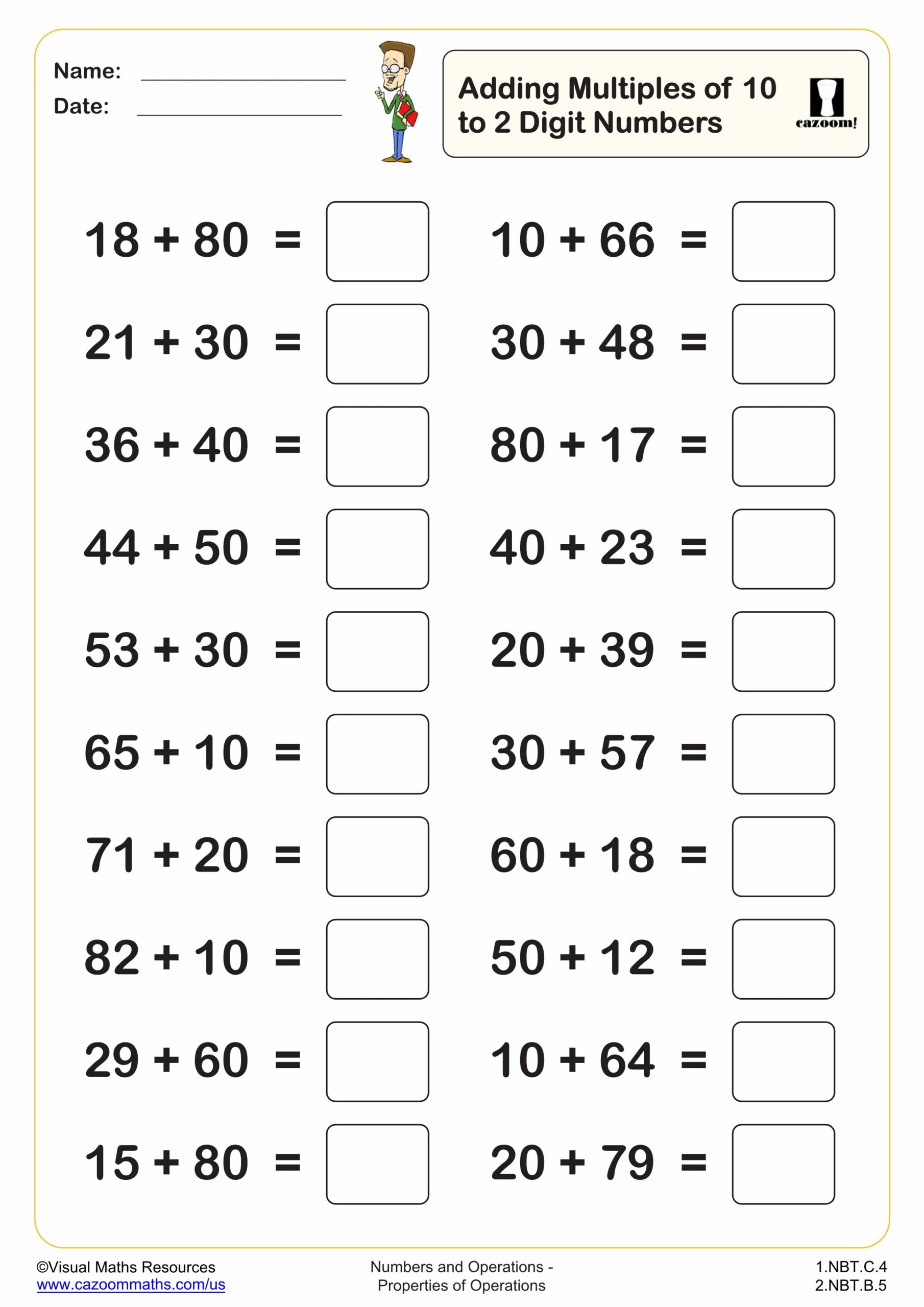
Adding mulitples of 10 to a 2 digit number (50 questions)
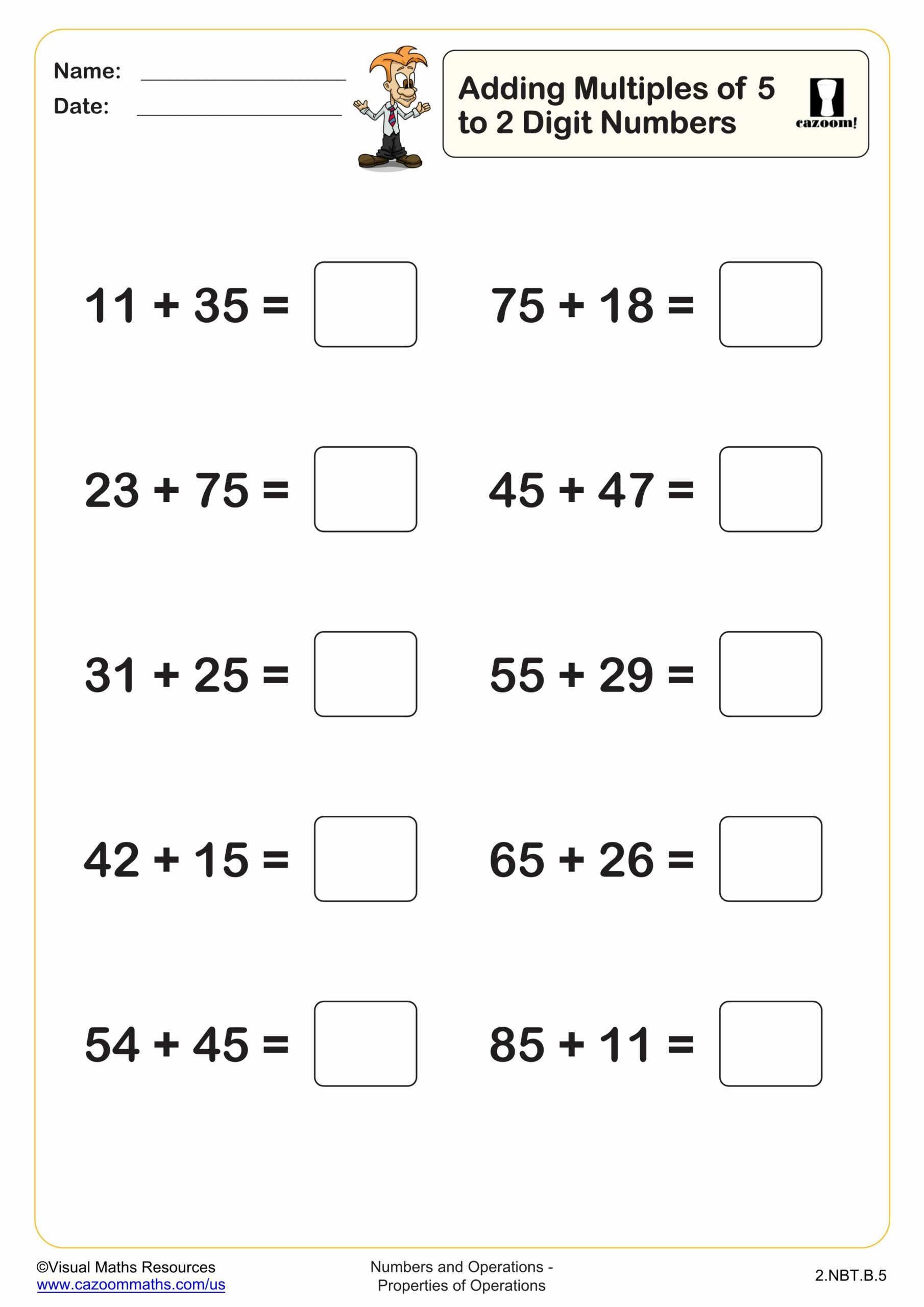
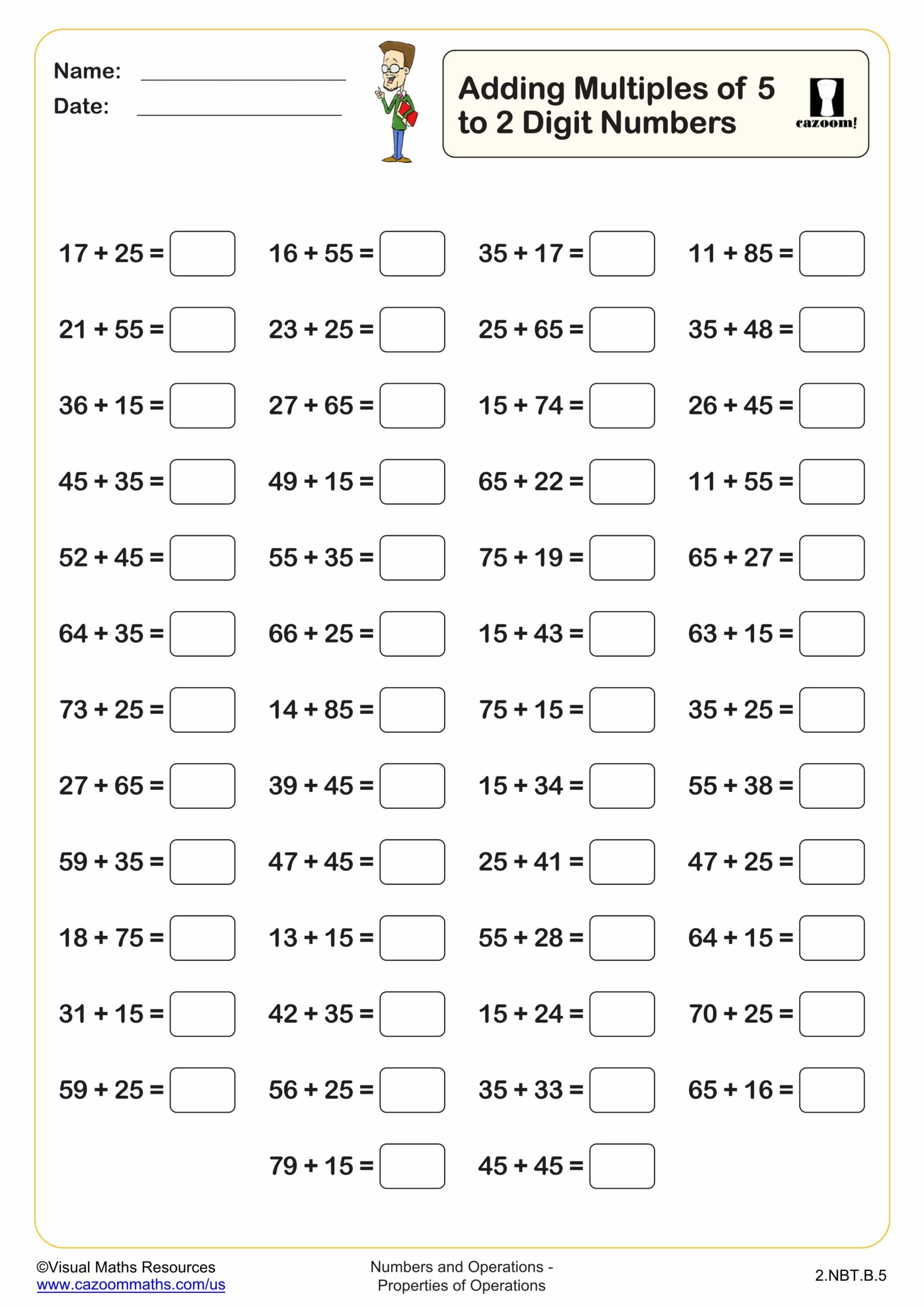
Adding mulitples of 5 to a 2 digit number (10 questions)
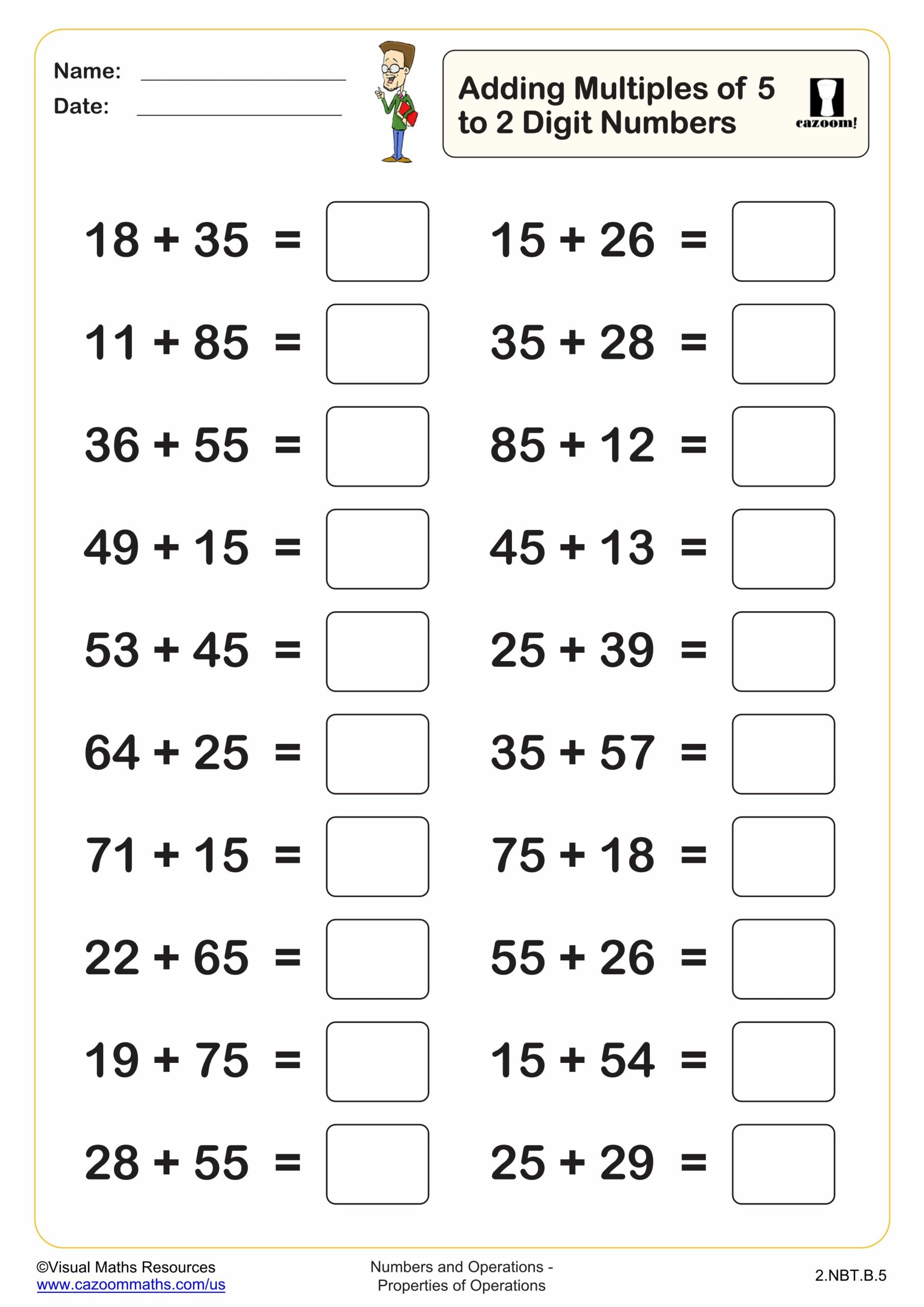
Adding mulitples of 5 to a 2 digit number (20 questions)
Adding mulitples of 5 to a 2 digit number (50 questions)
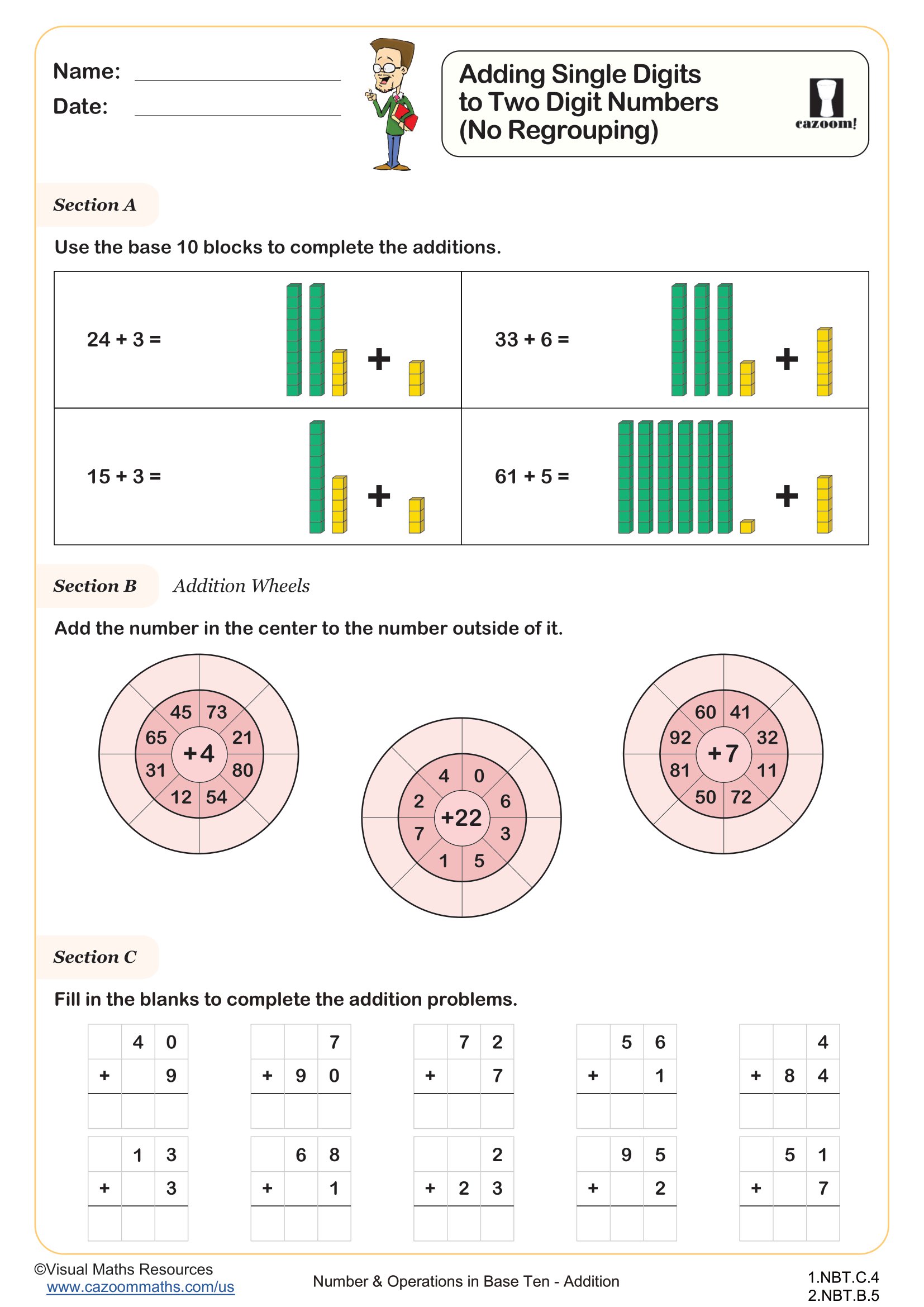
Adding Single Digits to Two Digit Numbers (No Regrouping)
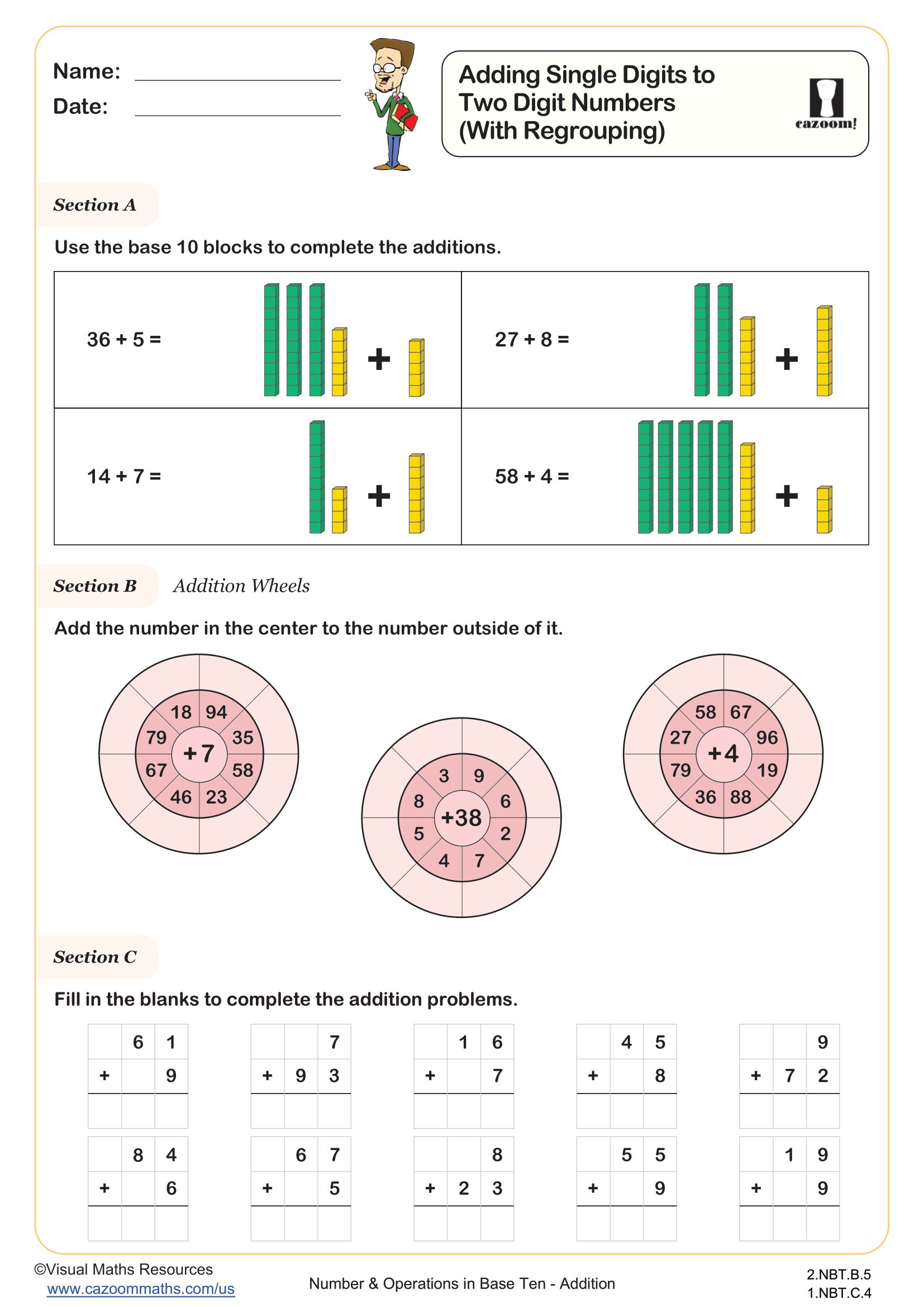
Adding Single Digits to Two Digit Numbers (With Regrouping)
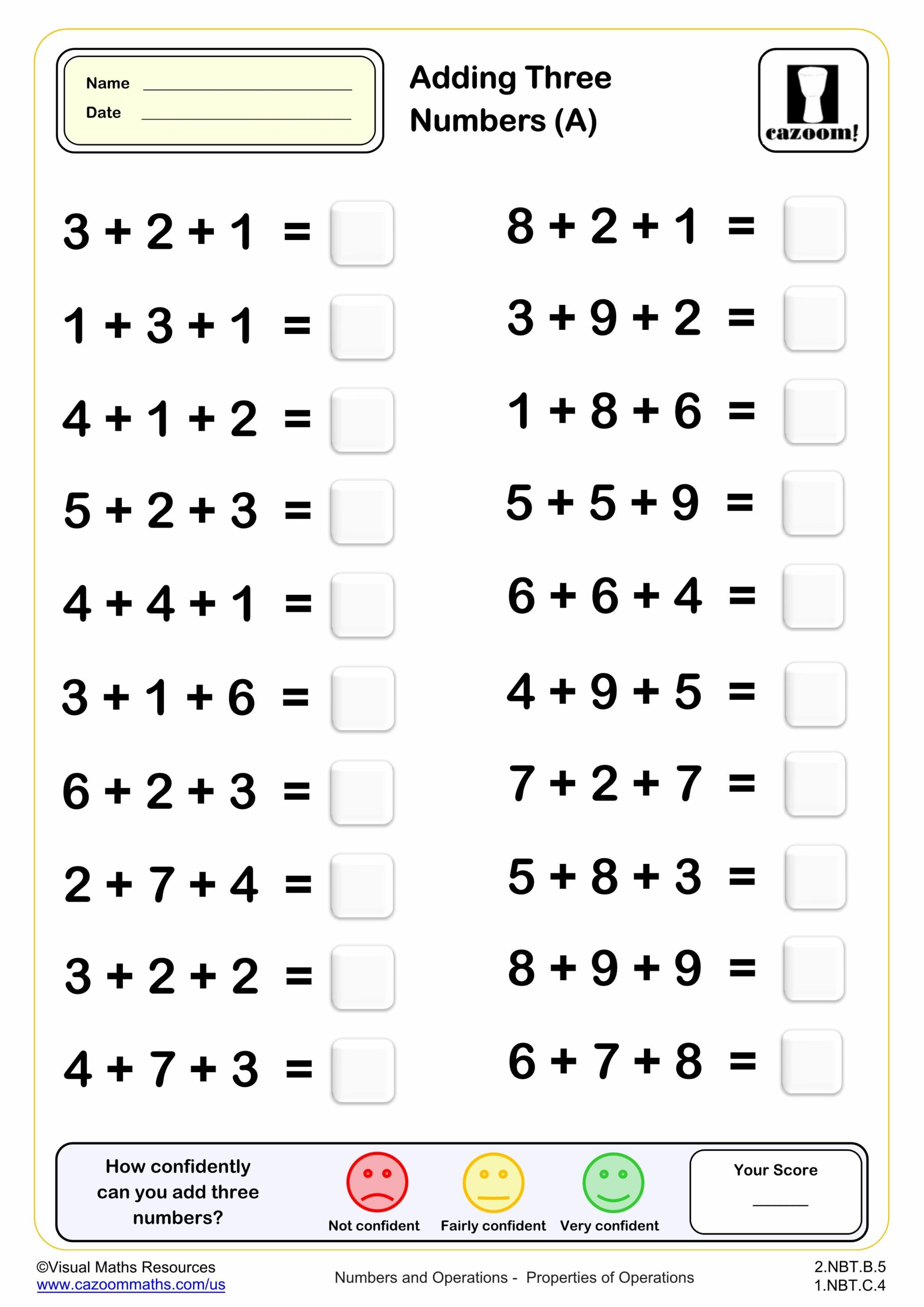
Addition Drills with three numbers (A)
Addition Drills with three numbers (B)
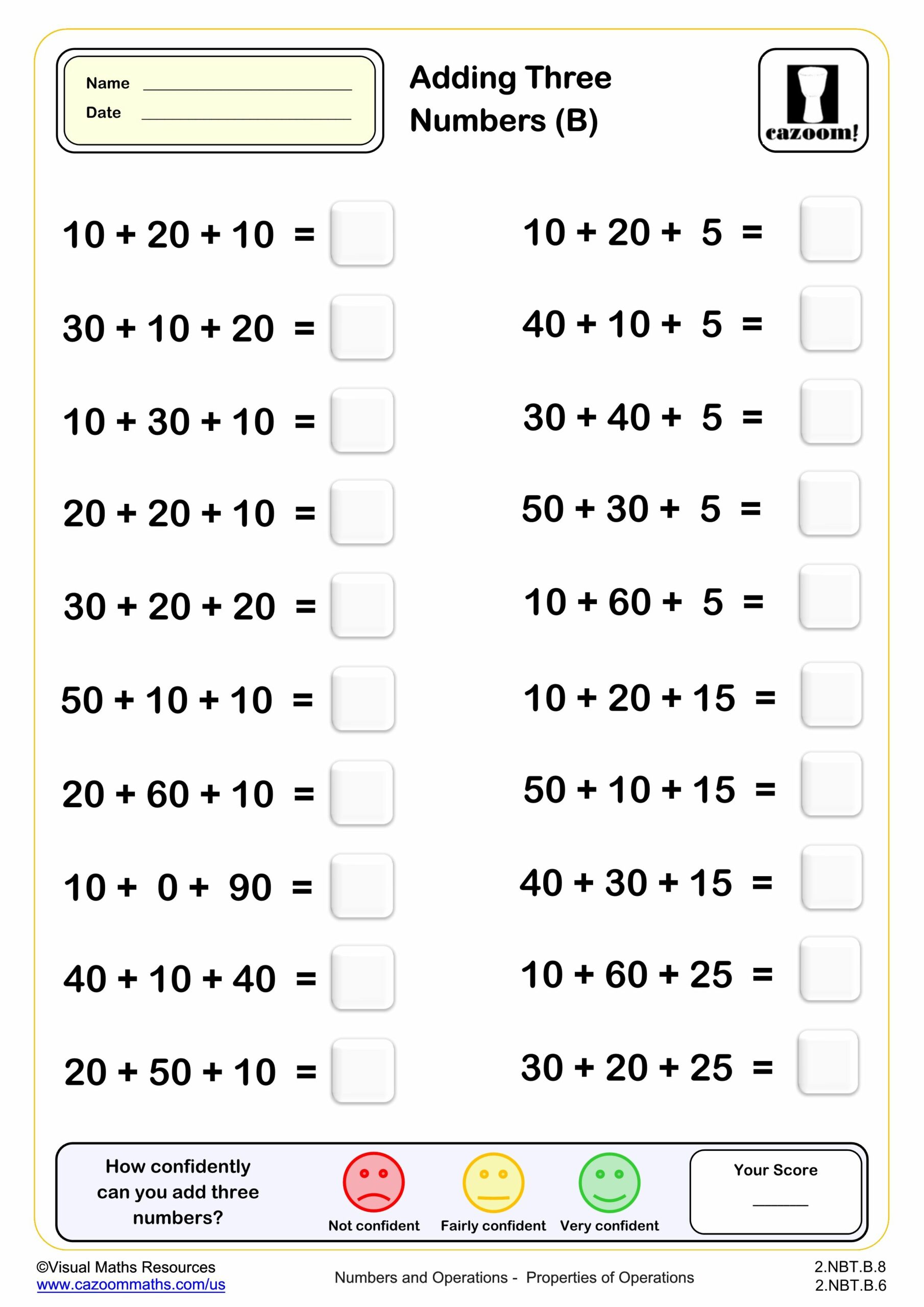
Addition Drills with three numbers (C)
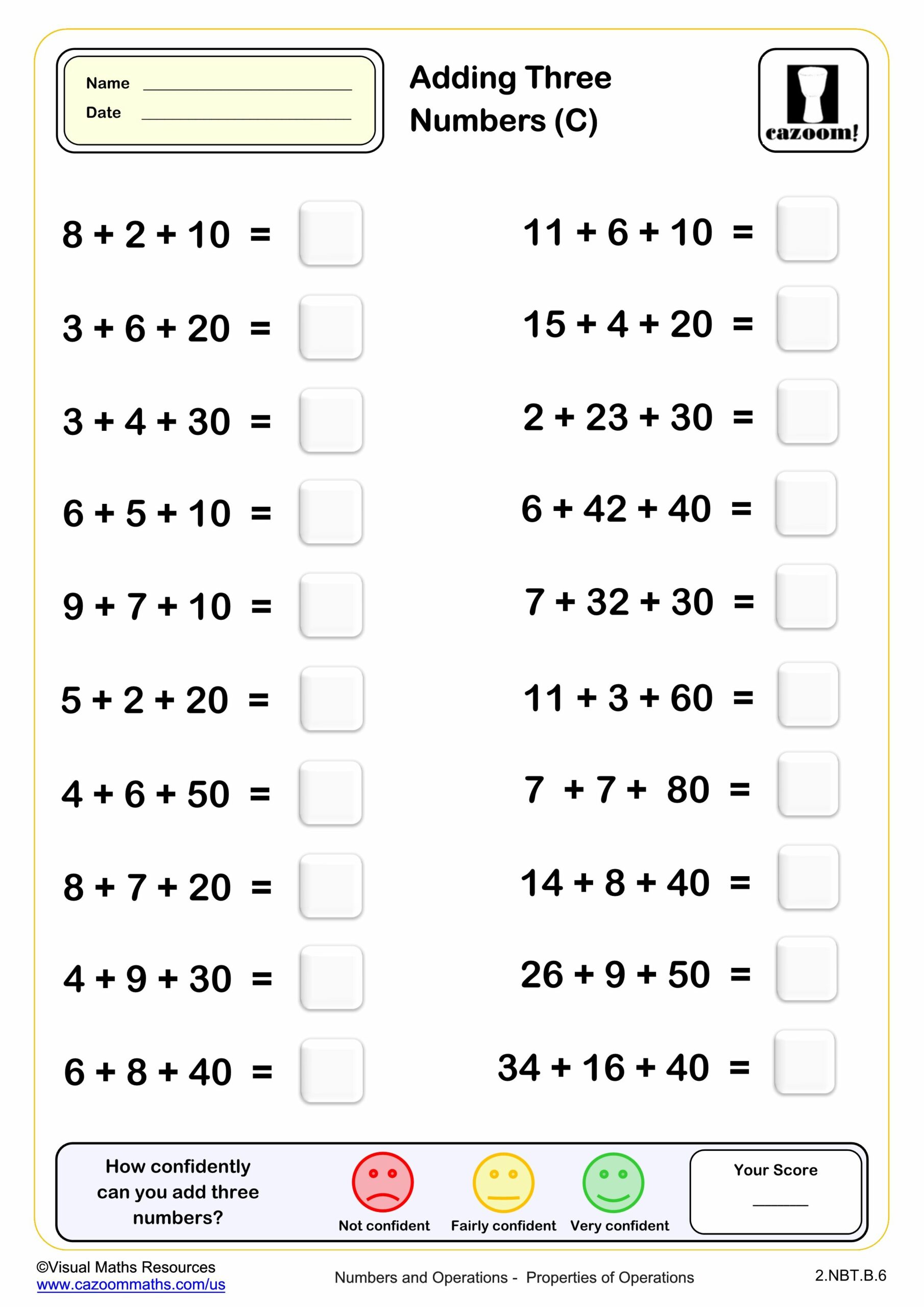
Addition Grids (Adding Single Digits to Multiples of 10)
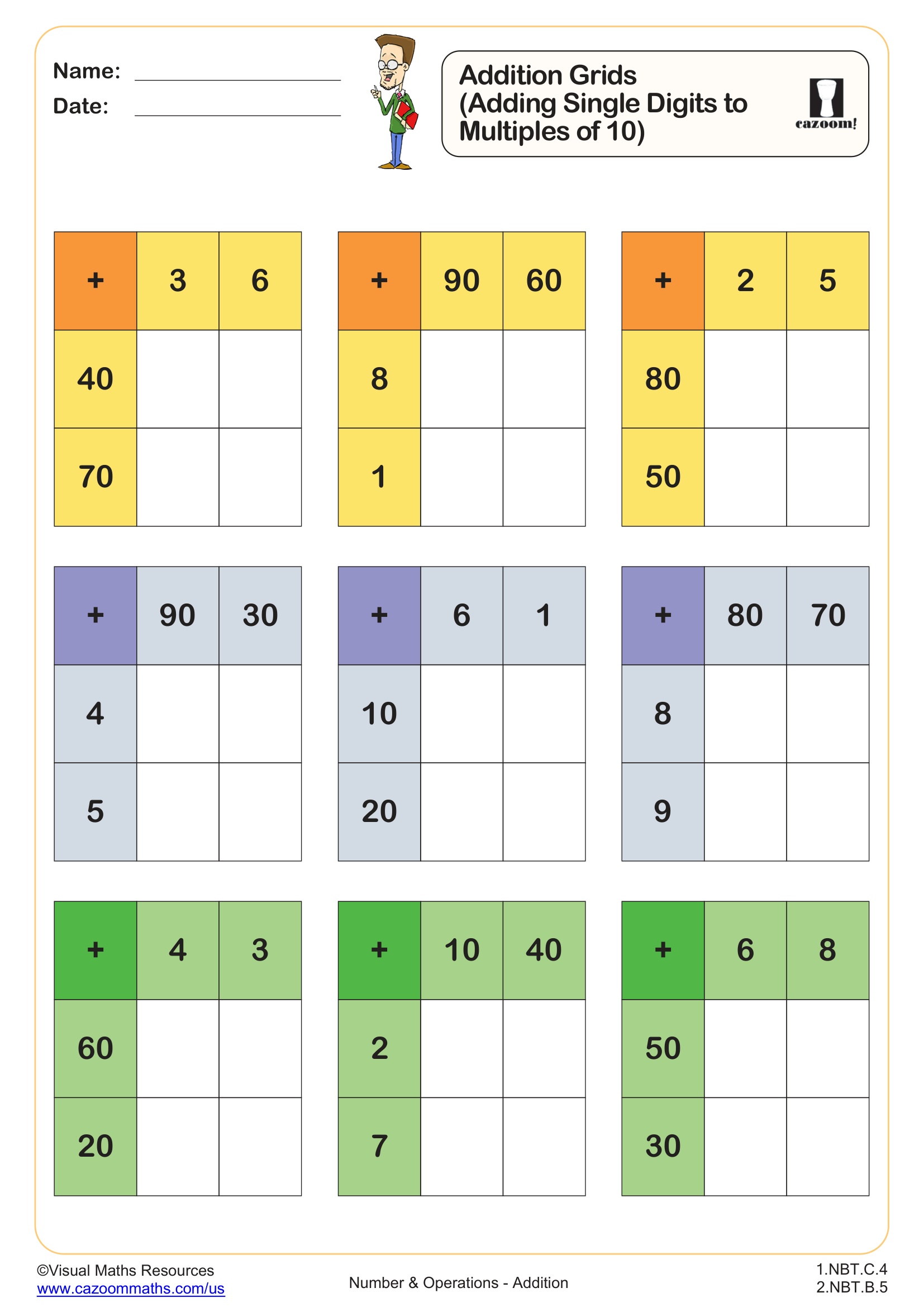
Addition Tables (2 digits)
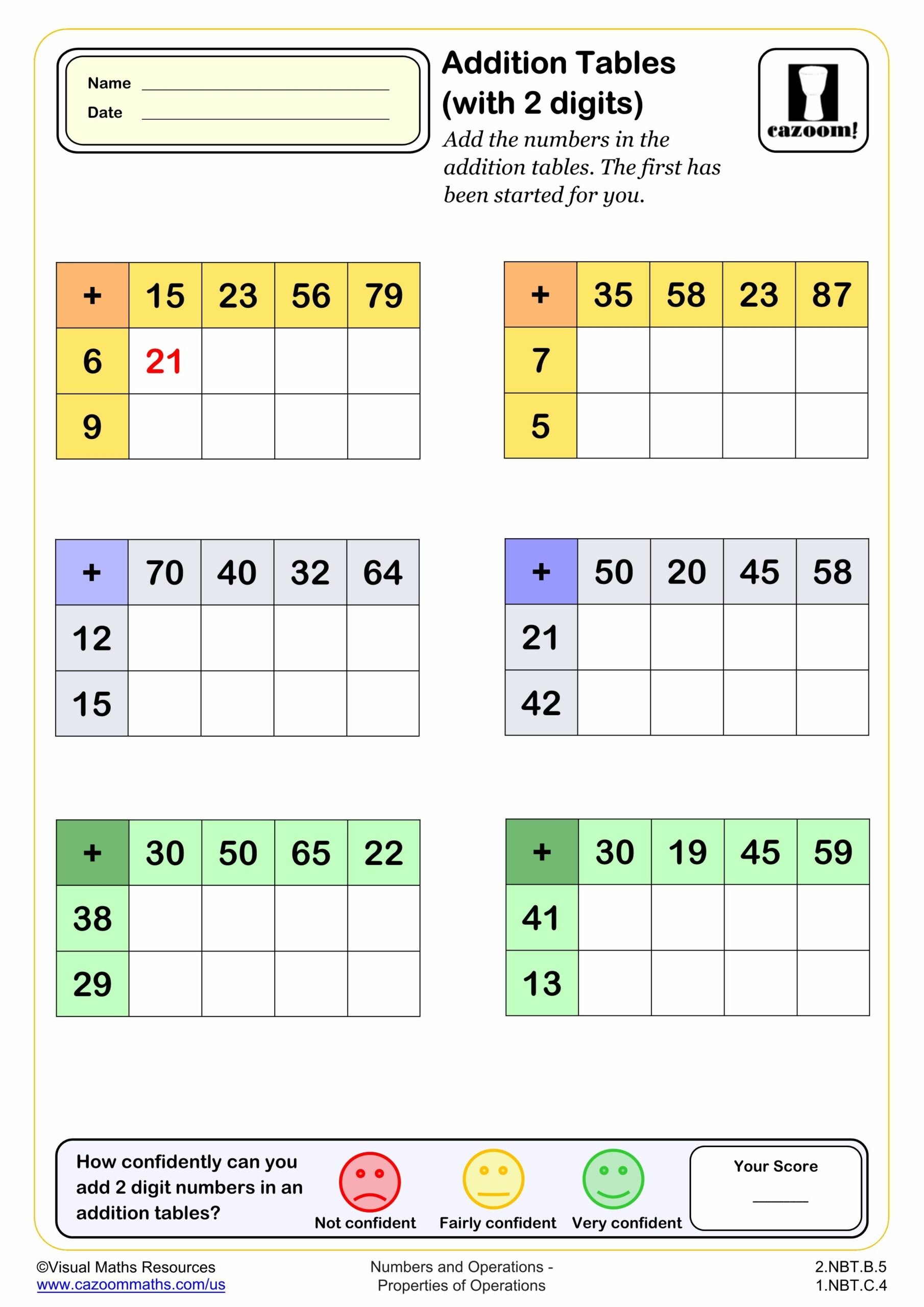
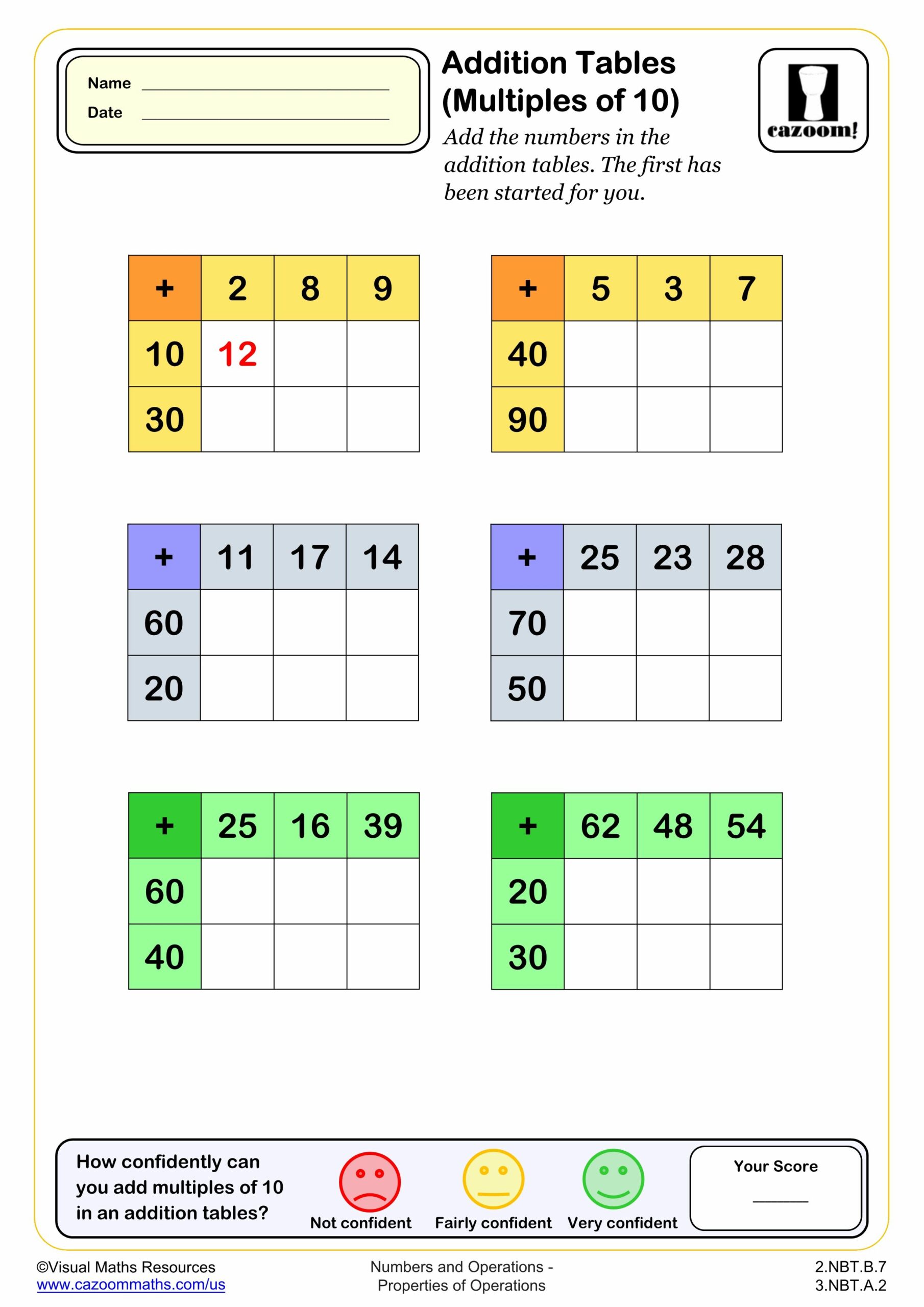
Addition Tables (Multipes of 10)
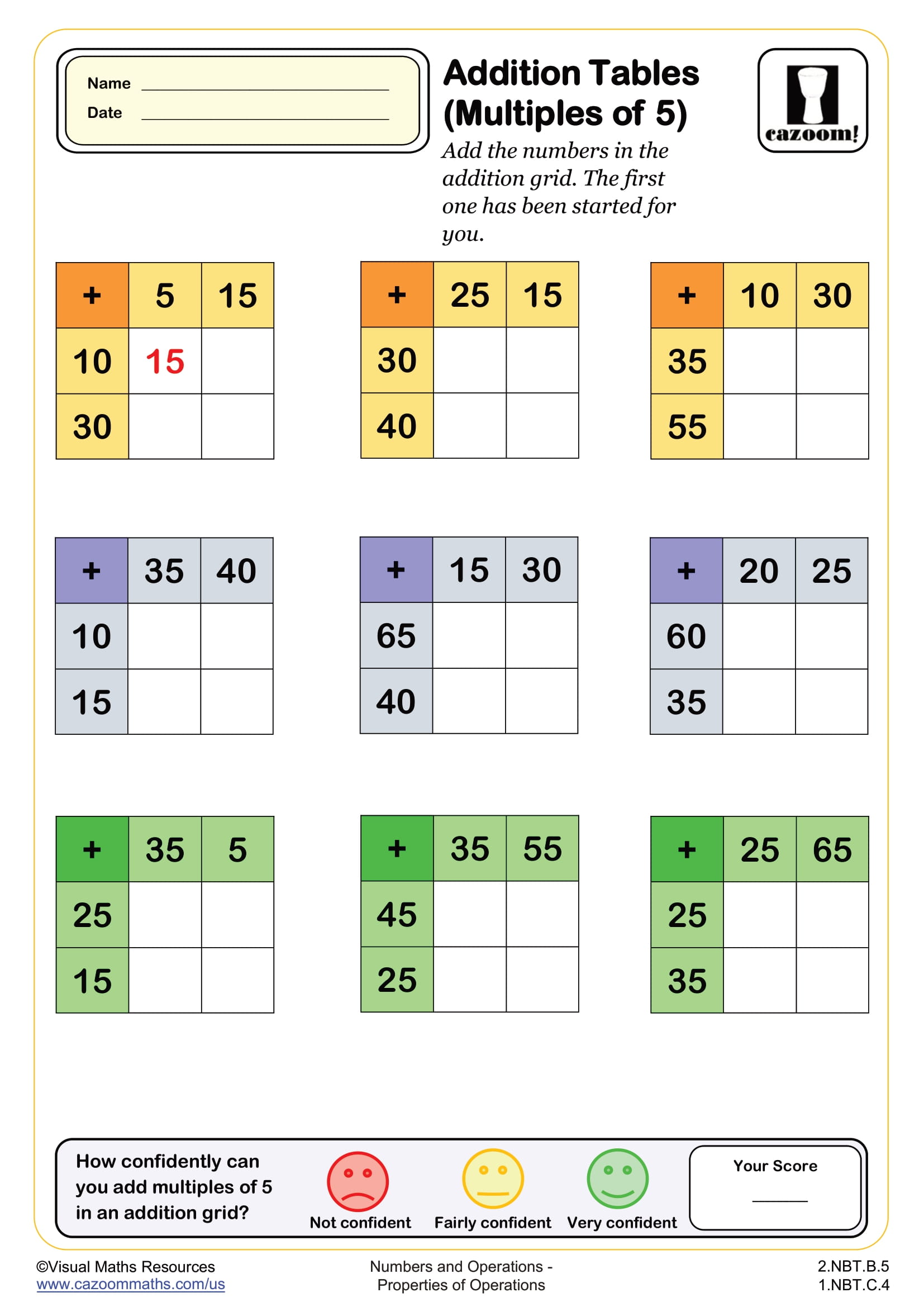
Addition Tables (Multiples of 5)
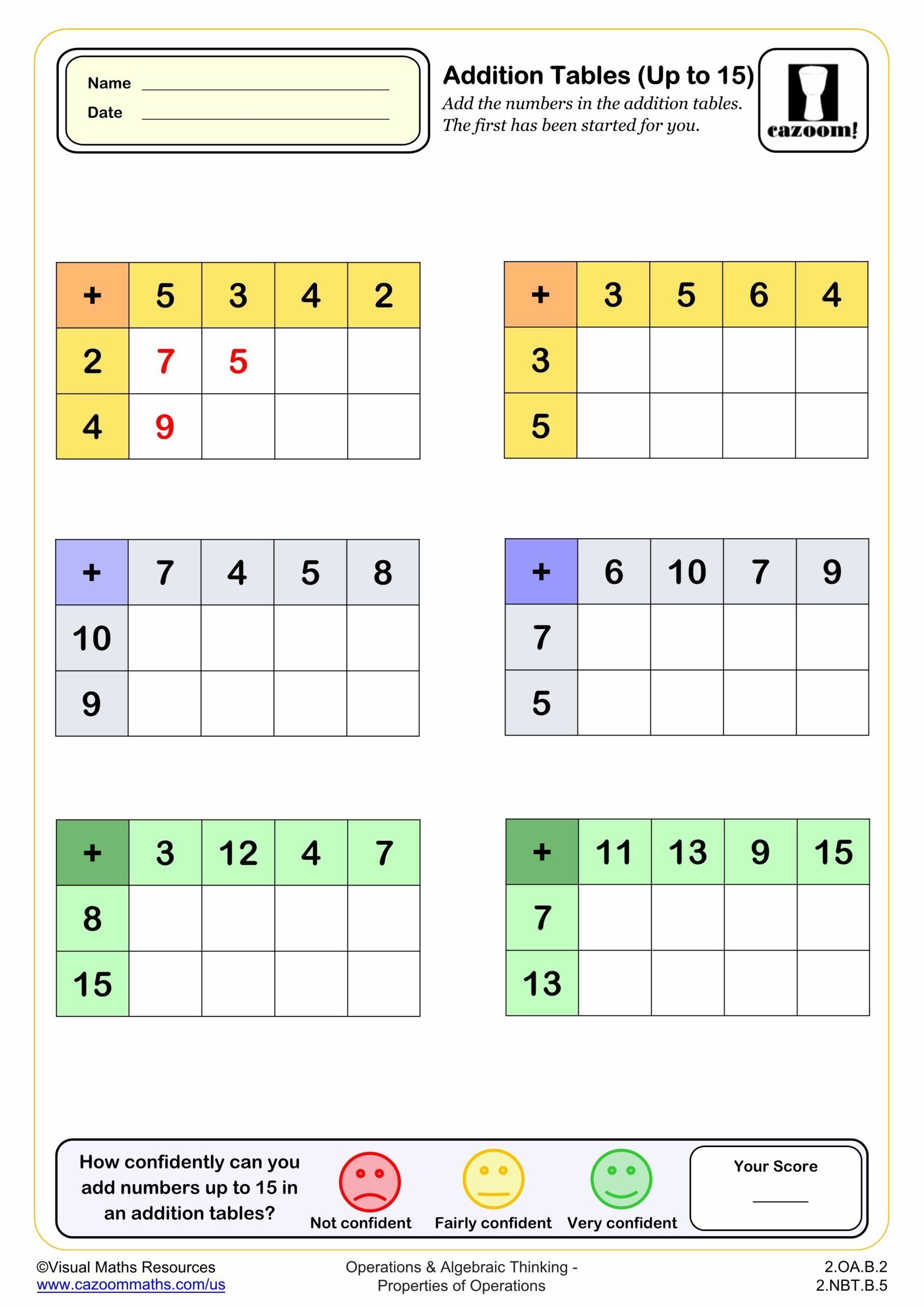
Addition Tables (Up to 15)
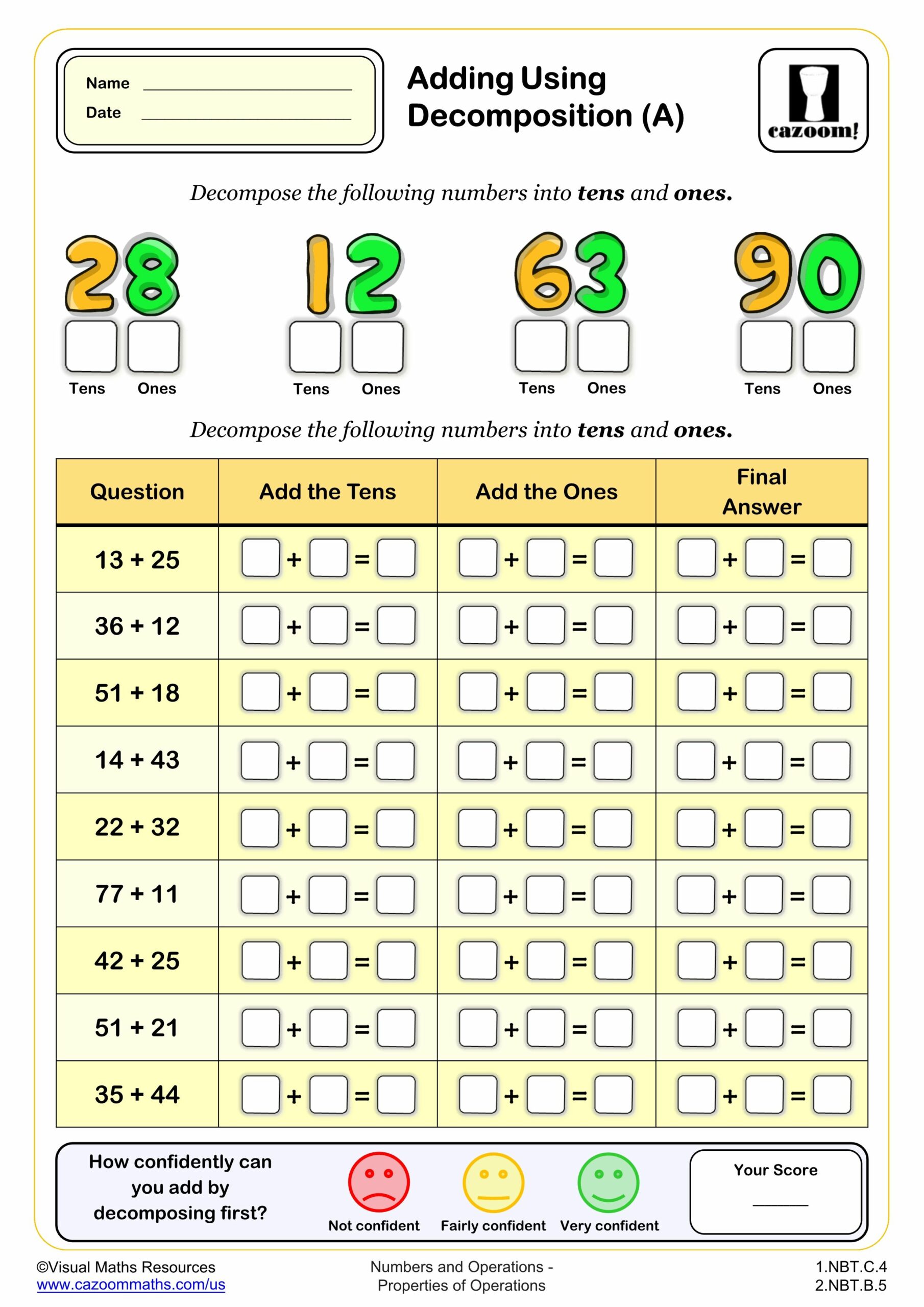
Addition using Decomposition (A)
Addition using Decomposition (B)
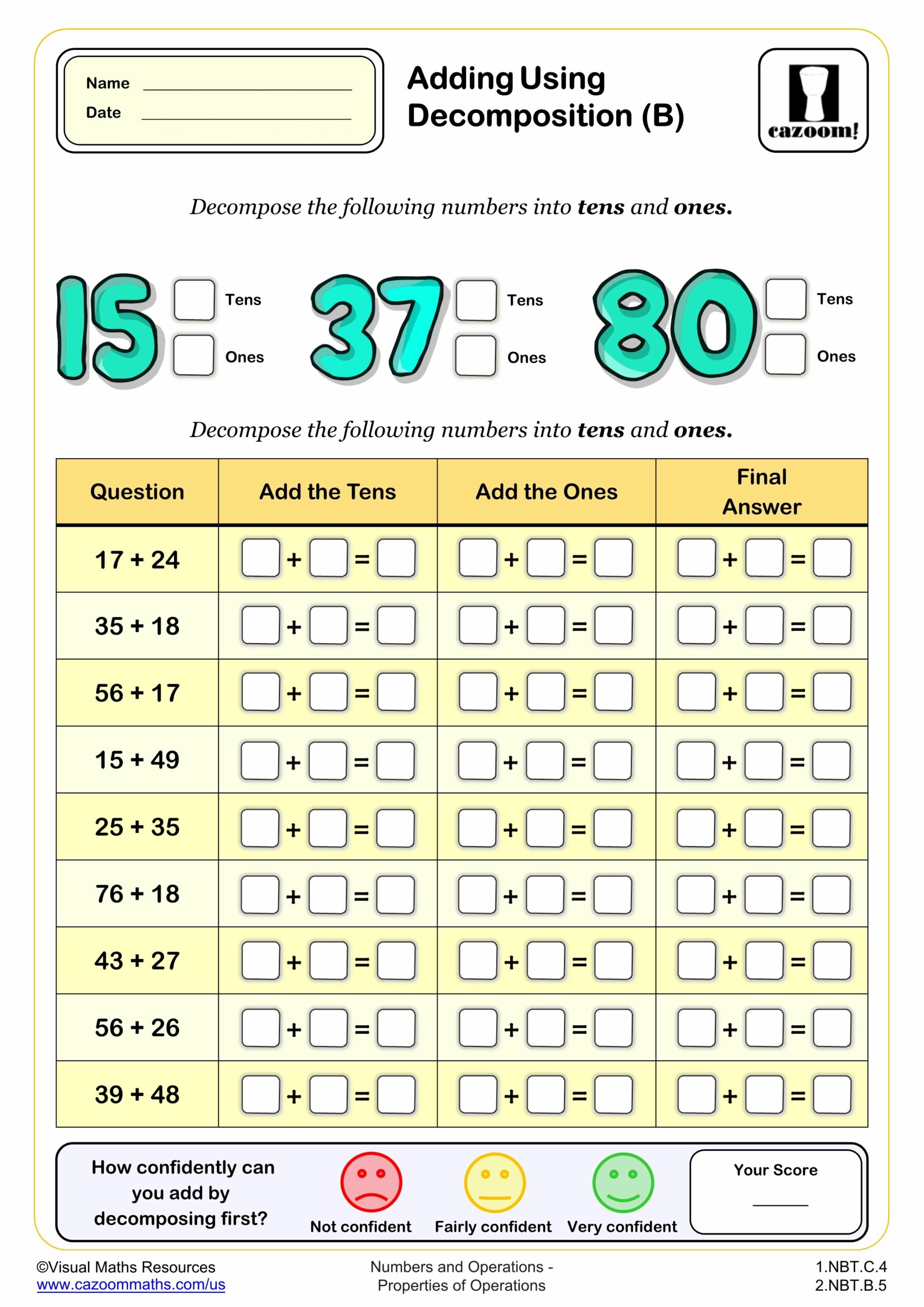
Addition Using Number Cubes (A)
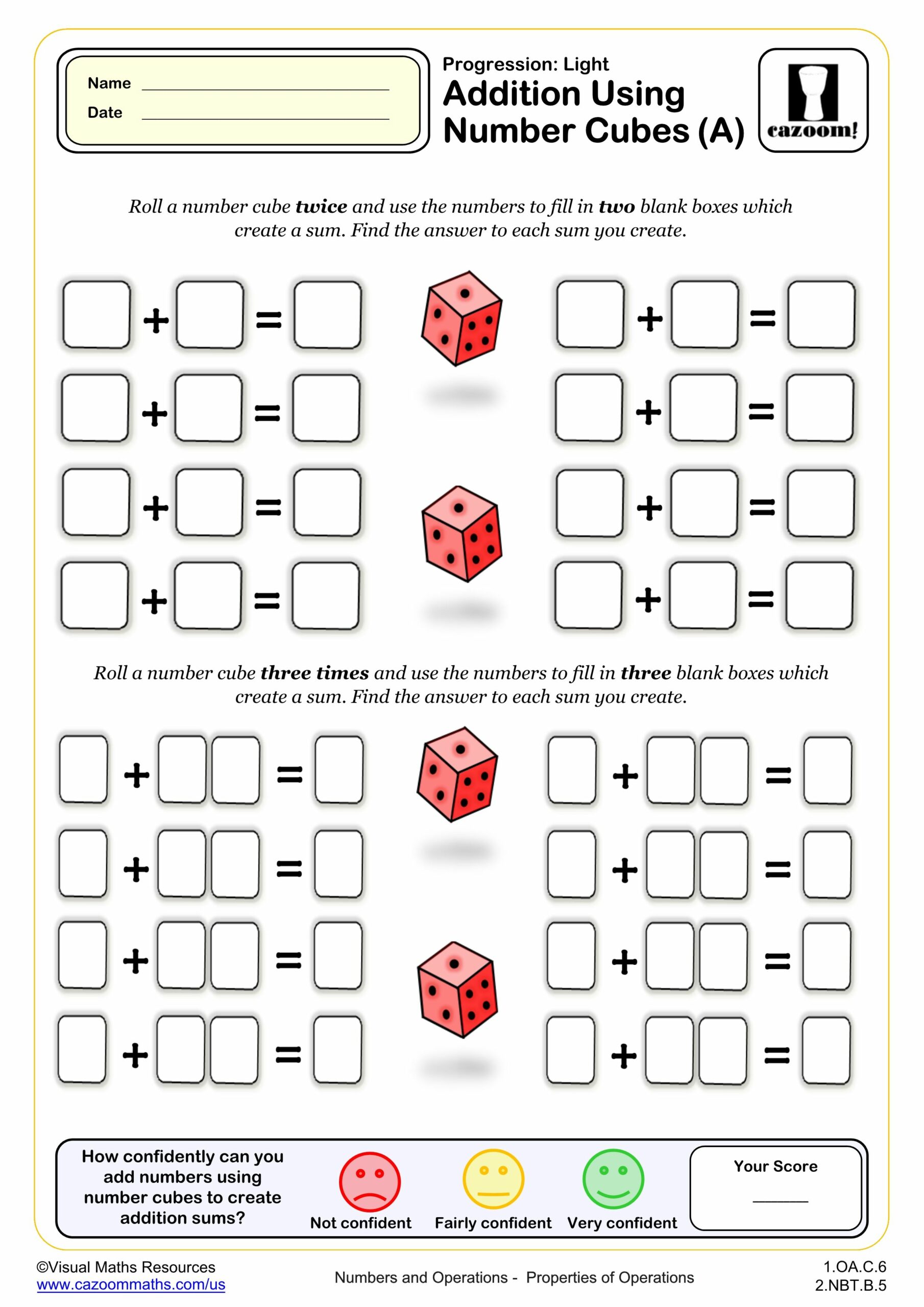
Addition Using Number Cubes (B)
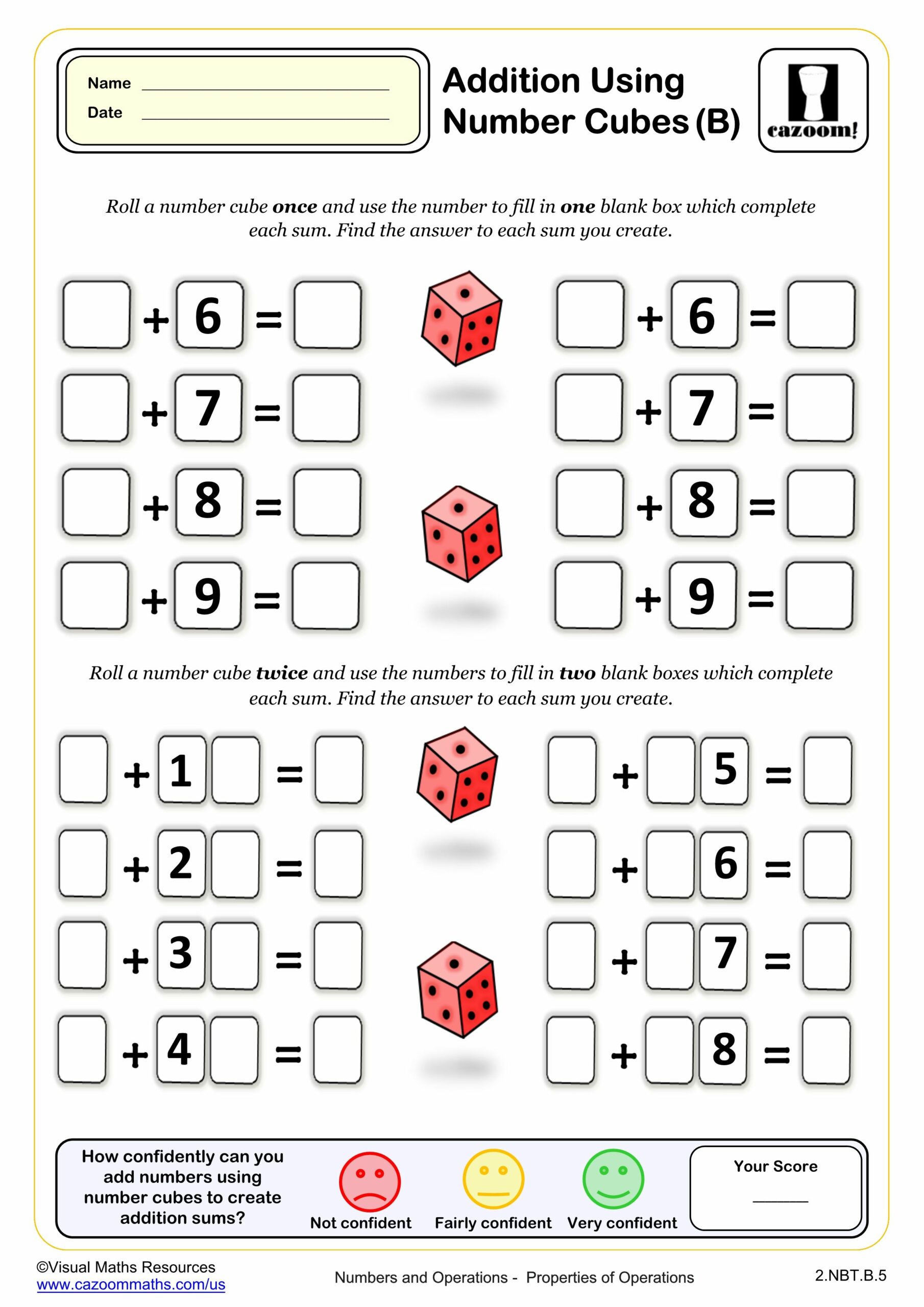
Addition Wheel (adding 10 to 2 digits)
Addition Wheel (adding 9 - 11 to 2 digits)
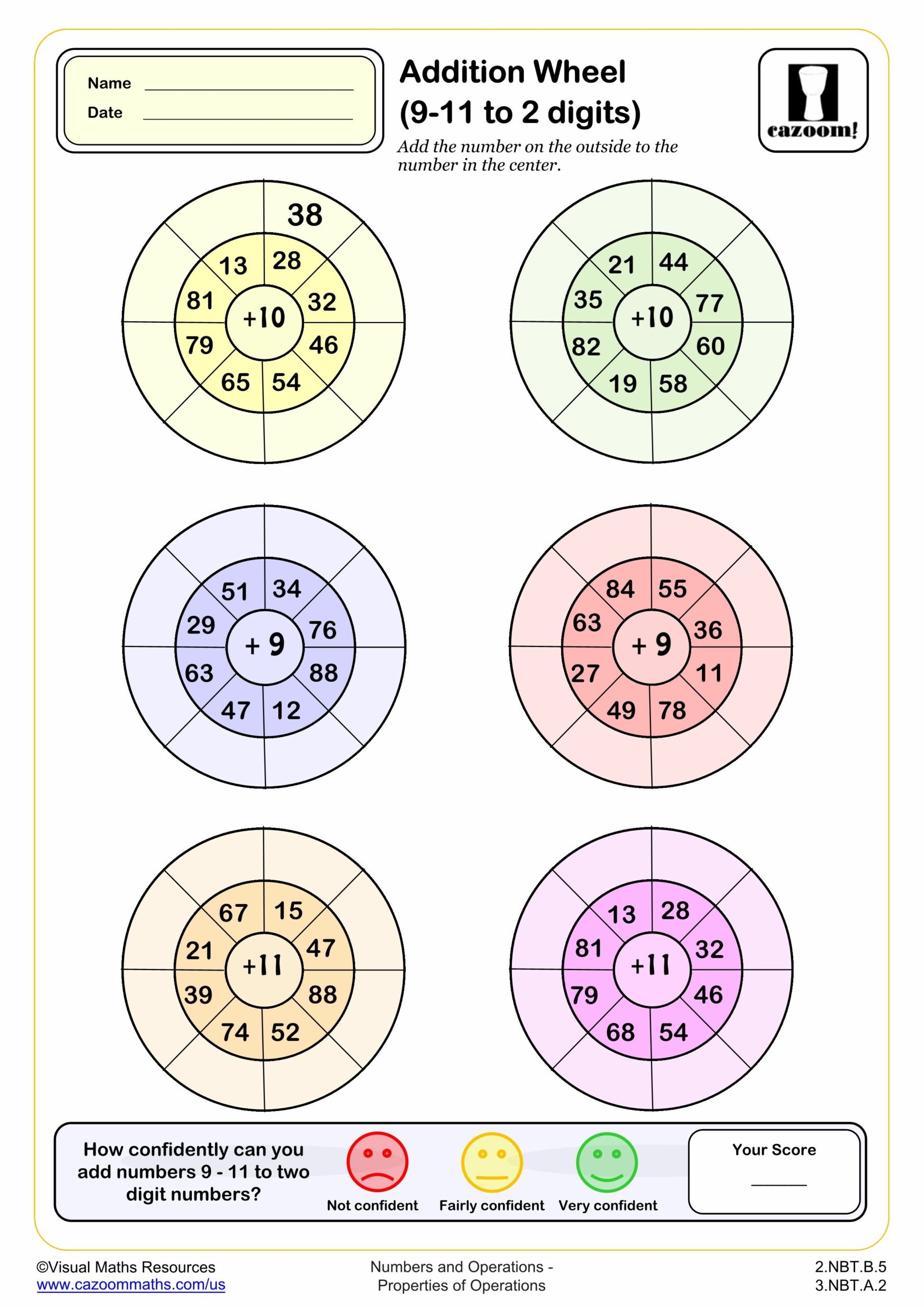
Addition Wheel Adding Three Numbers (A)
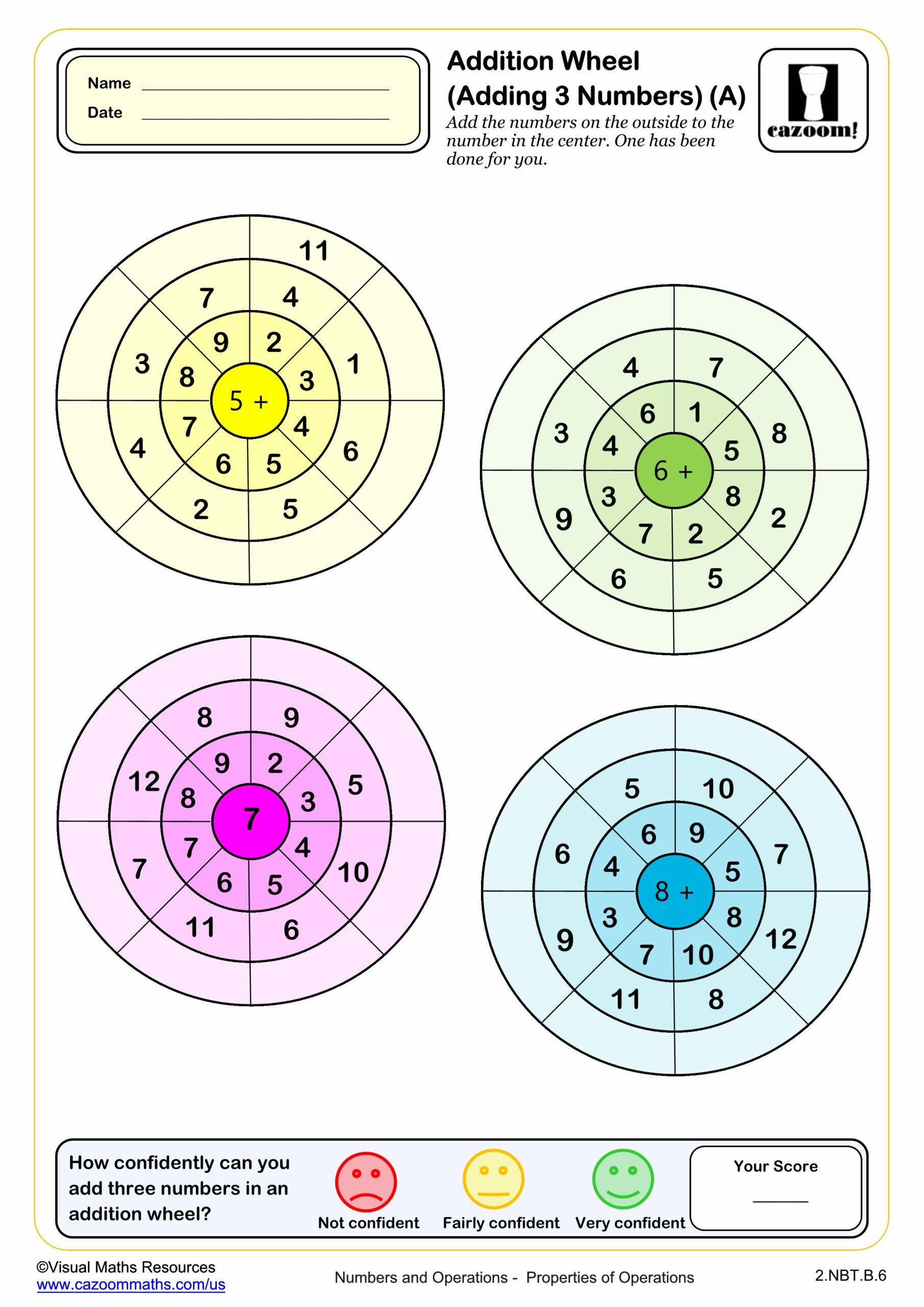
Addition Wheels (1 digit to 2 digits)
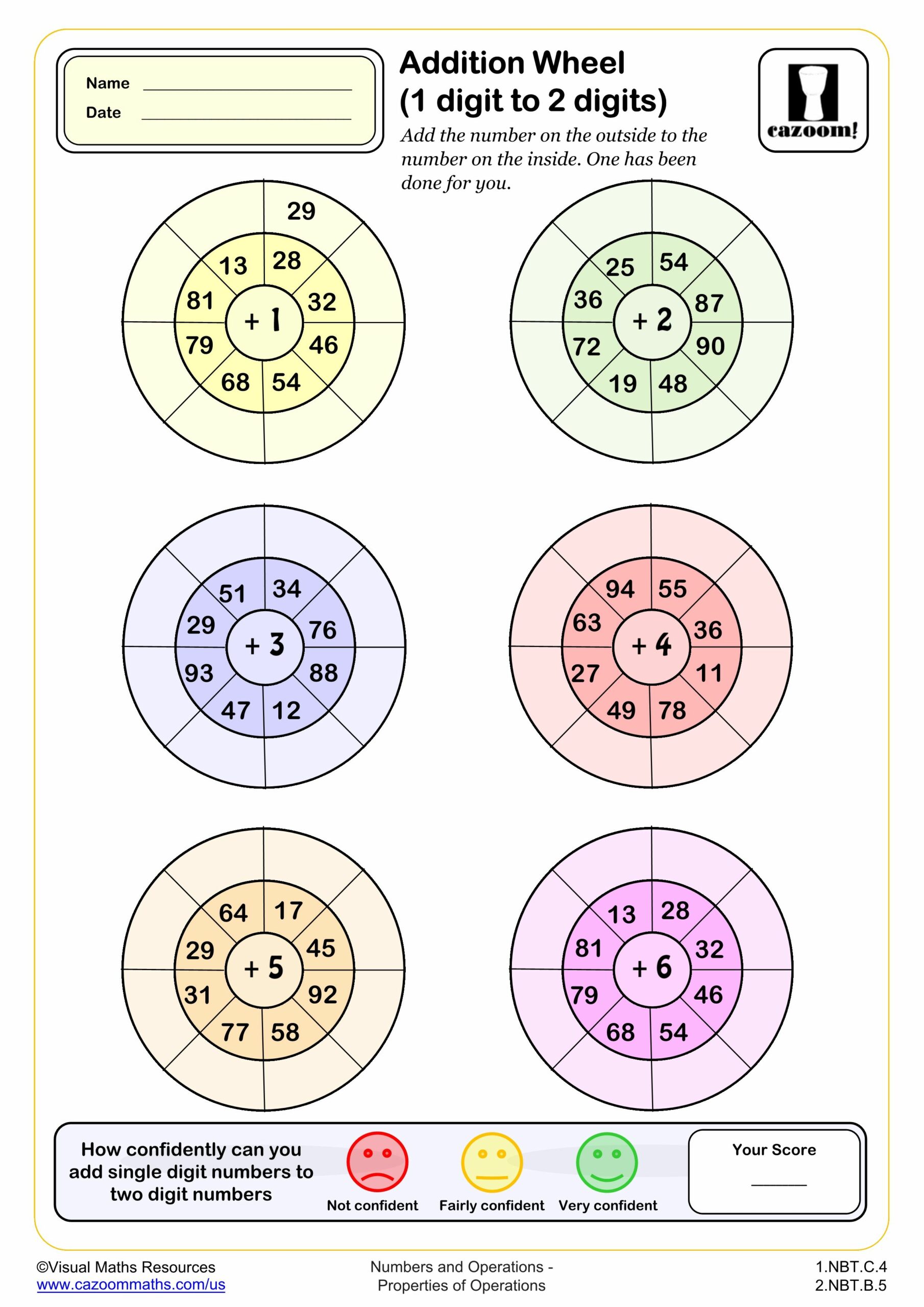
Addition Wheels (adding multiples of 10 to 2 digits)
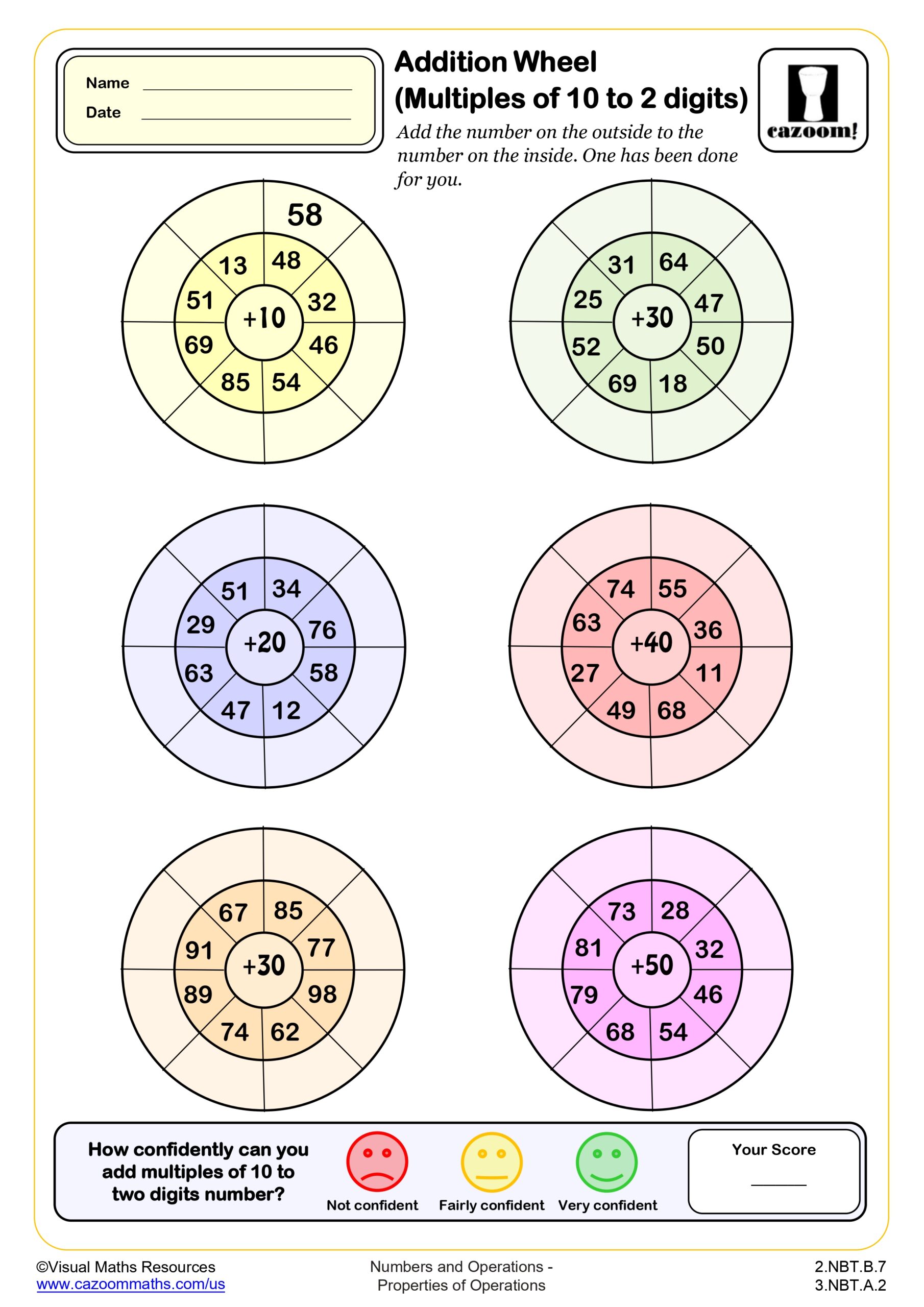
Addition wheels (multiples of 5 to 2 digits)
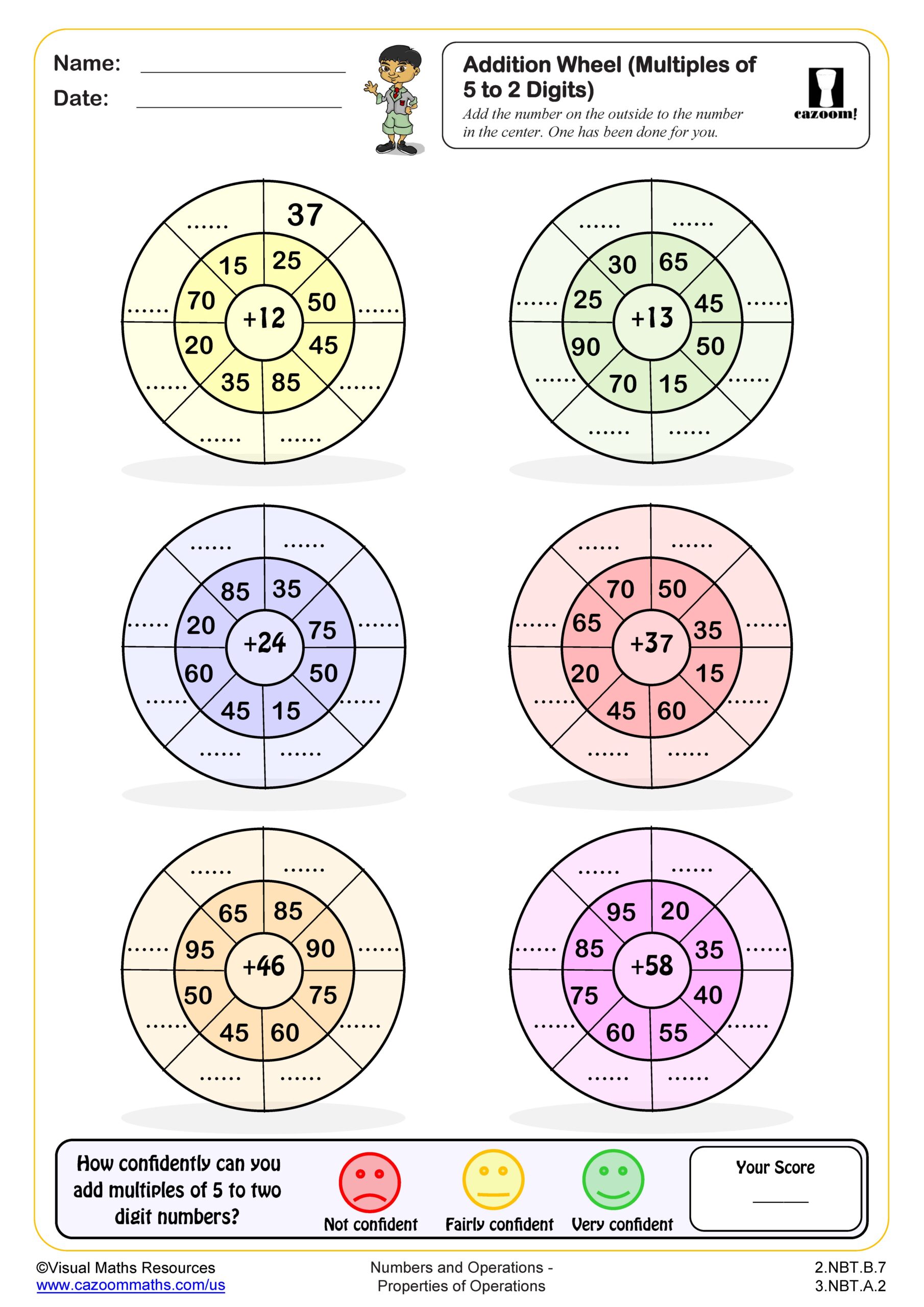
Addition Wheels adding three numbers (B)
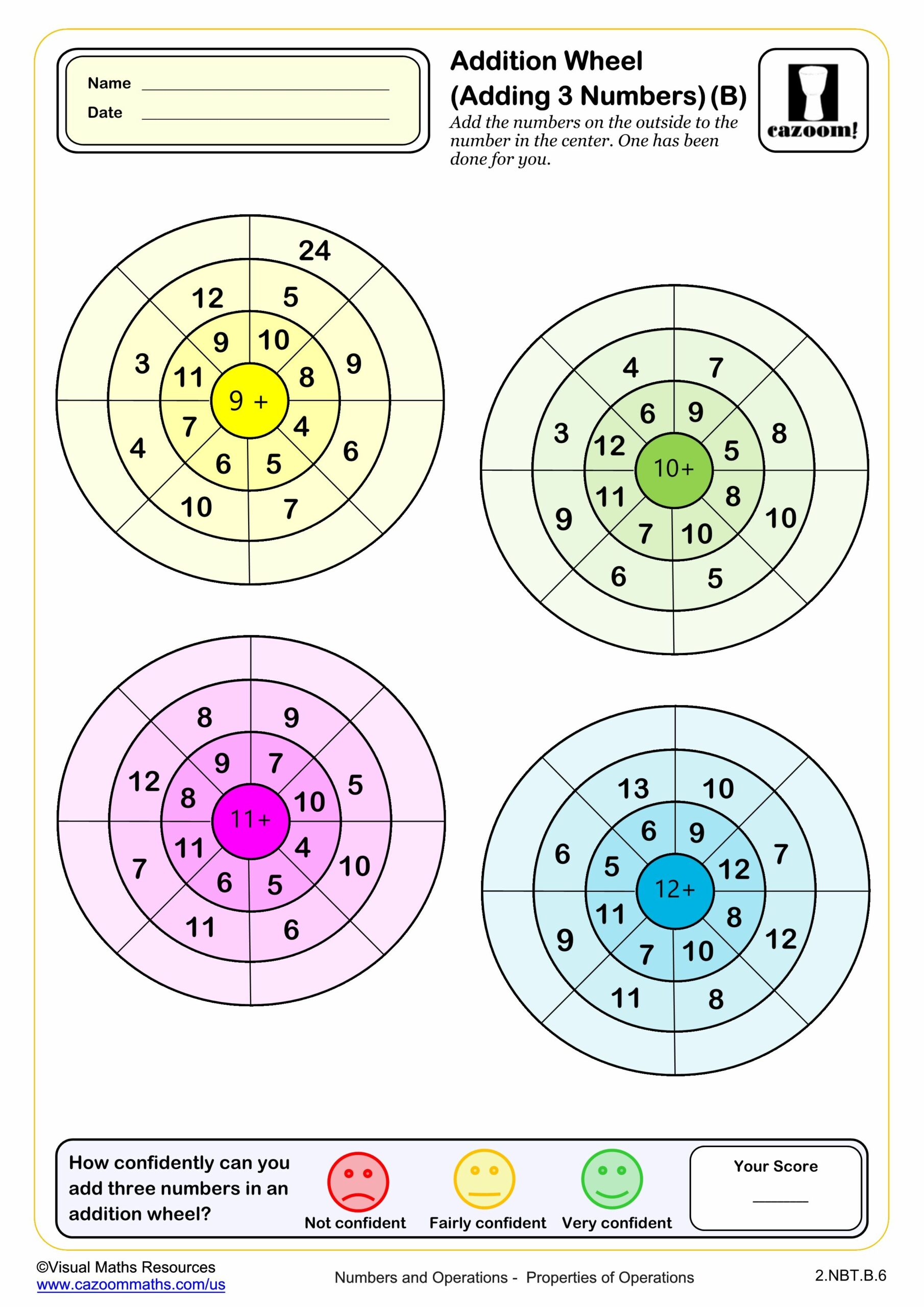
Addition Wheels adding three numbers (C)
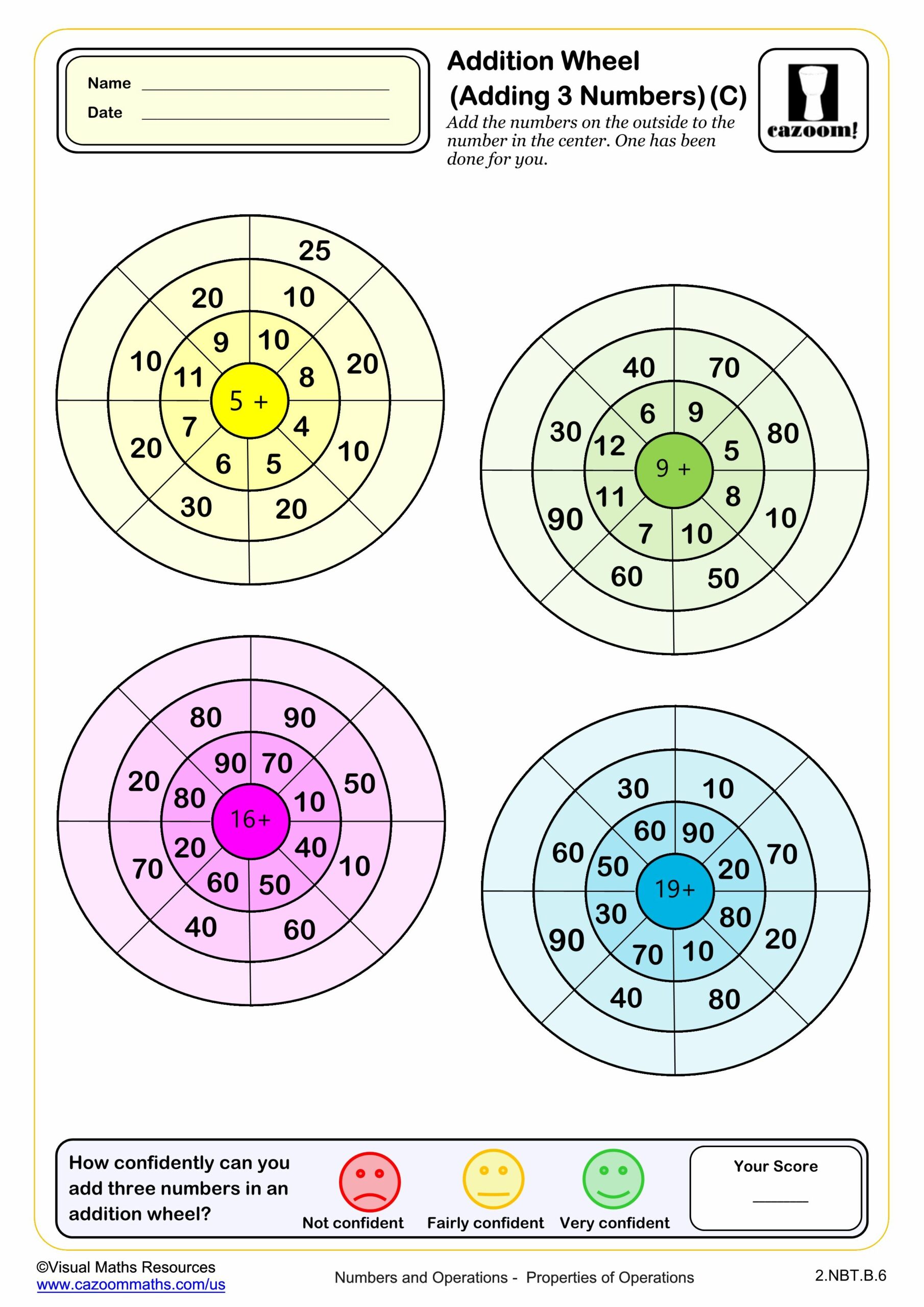
Matching Answers (C)
All worksheets are created by the team of experienced teachers at Cazoom Math.
What Are the Key Skills for Adding 2 Digit Numbers Without Regrouping?
Adding 2 digit numbers without regrouping requires students to add the ones place separately from the tens place, combining results without carrying over. This skill reinforces place value concepts aligned with Common Core Standard 2.NBT.B.5, where second graders add and subtract within 100 using strategies based on place value. Students work with problems like 23 + 45, where they add 3 + 5 in the ones place and 20 + 40 in the tens place.
A common misconception occurs when students see numbers stacked vertically but forget to align digits by place value, leading to errors like adding the bottom ones digit to the top tens digit. Teachers often see students writing 68 as the answer because they added 2 + 4 and 3 + 5 without considering place value. Consistent practice with clearly formatted problems helps students internalize the vertical alignment that makes addition accurate and efficient.
Which Grade Levels Use Adding 2 Digit Numbers to 100 Worksheets?
These worksheets target 2nd grade students in elementary school, aligning with the developmental stage where students transition from single-digit addition to more complex two-digit operations. Second grade marks a critical year for building number sense and computational fluency that supports all future arithmetic. Students at this level typically have mastered basic addition facts and are ready to apply those skills to larger numbers.
The progression within 2nd grade moves from shorter problem sets with 10 questions to extended practice with 50 problems, building both accuracy and speed. Some advanced 1st graders may benefit from these worksheets as enrichment, while struggling 3rd graders might use them for remediation before moving to addition with regrouping. The difficulty increases as students encounter numbers closer to 100 and develop strategies for mental math alongside written methods.
How Does Adding Single Digits to 2 Digit Numbers Build Number Flexibility?
Adding single digits like 5 or 6 to two-digit numbers helps students recognize patterns and develop mental math strategies that don't require formal algorithms. This skill teaches students to think flexibly about numbers, determining whether adding to the ones place will stay within the same decade or cross into the next ten. Problems like 34 + 5 or 47 + 6 strengthen understanding of how the ones place behaves and prepare students for regrouping concepts introduced later.
This skill connects directly to real-world situations where quick mental calculations matter, such as combining money amounts or measuring ingredients in cooking. When students help calculate the total cost of a $23 toy and a $6 book, they apply the same addition strategies practiced in these worksheets. Engineers and scientists regularly use mental math to estimate measurements and check whether calculated results make sense, making this elementary skill foundational for STEM thinking throughout a student's education.
How Can Teachers Use These Addition Worksheets in the Classroom?
These worksheets provide scaffolded practice that moves from shorter problem sets to longer endurance challenges, allowing teachers to match worksheet difficulty to individual student needs. The variety of formats from 10-question quick checks to 50-question comprehensive practice supports differentiated instruction in mixed-ability classrooms. Teachers can use answer keys to quickly identify which students understand place value versus those who need reteaching before moving to regrouping concepts.
Many teachers assign shorter worksheets as warm-up activities to activate prior knowledge at the beginning of math lessons, while longer sets work well for independent practice or homework. The worksheets also serve effectively during math intervention blocks, where small groups can work at their own pace with immediate feedback from answer keys. Paired work encourages peer teaching, as students explain their addition strategies to classmates and catch each other's place value errors before checking answers.