2nd Grade Adding 2 Digit Numbers to 1000 Worksheets
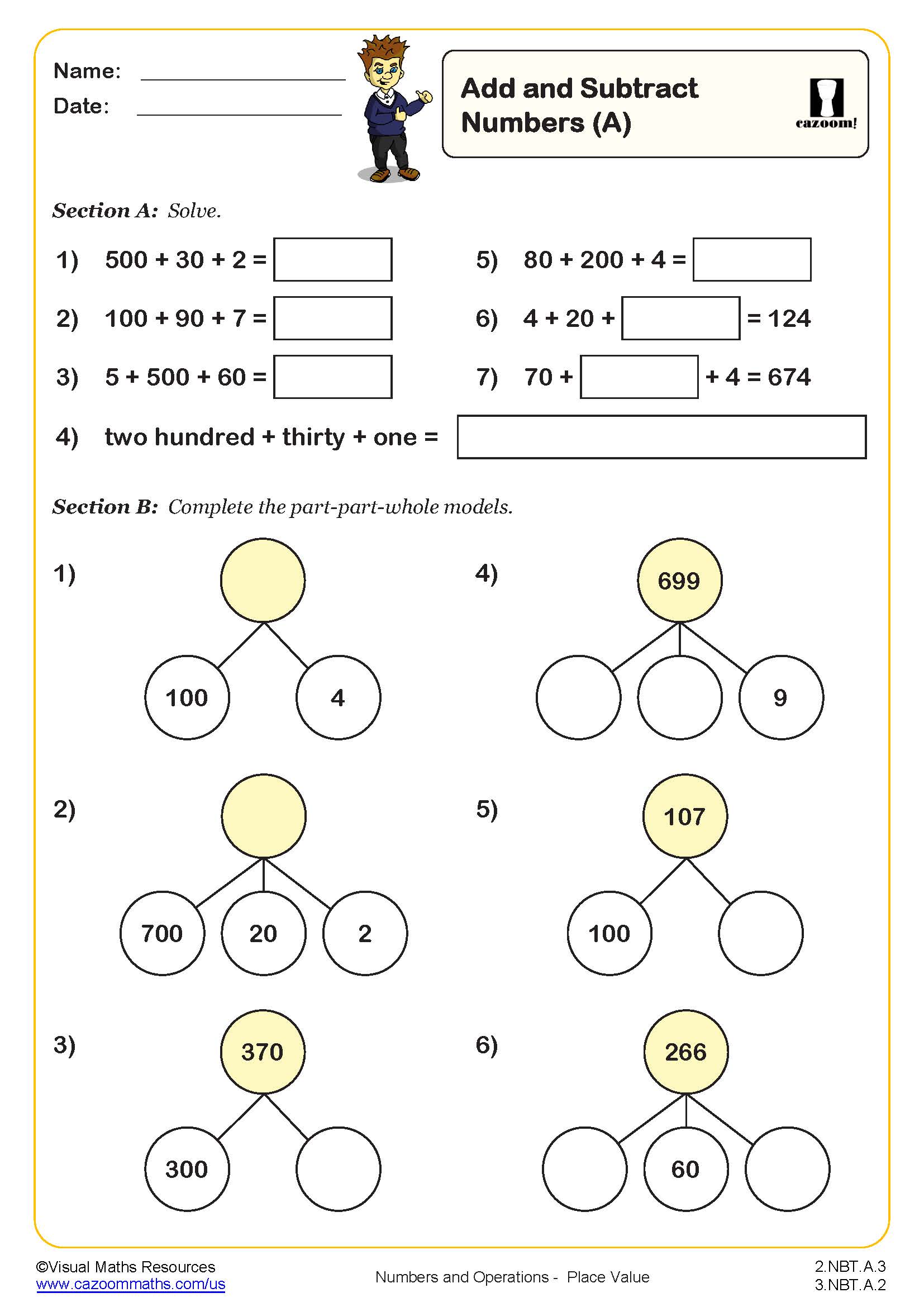
Add and subtract numbers (A)
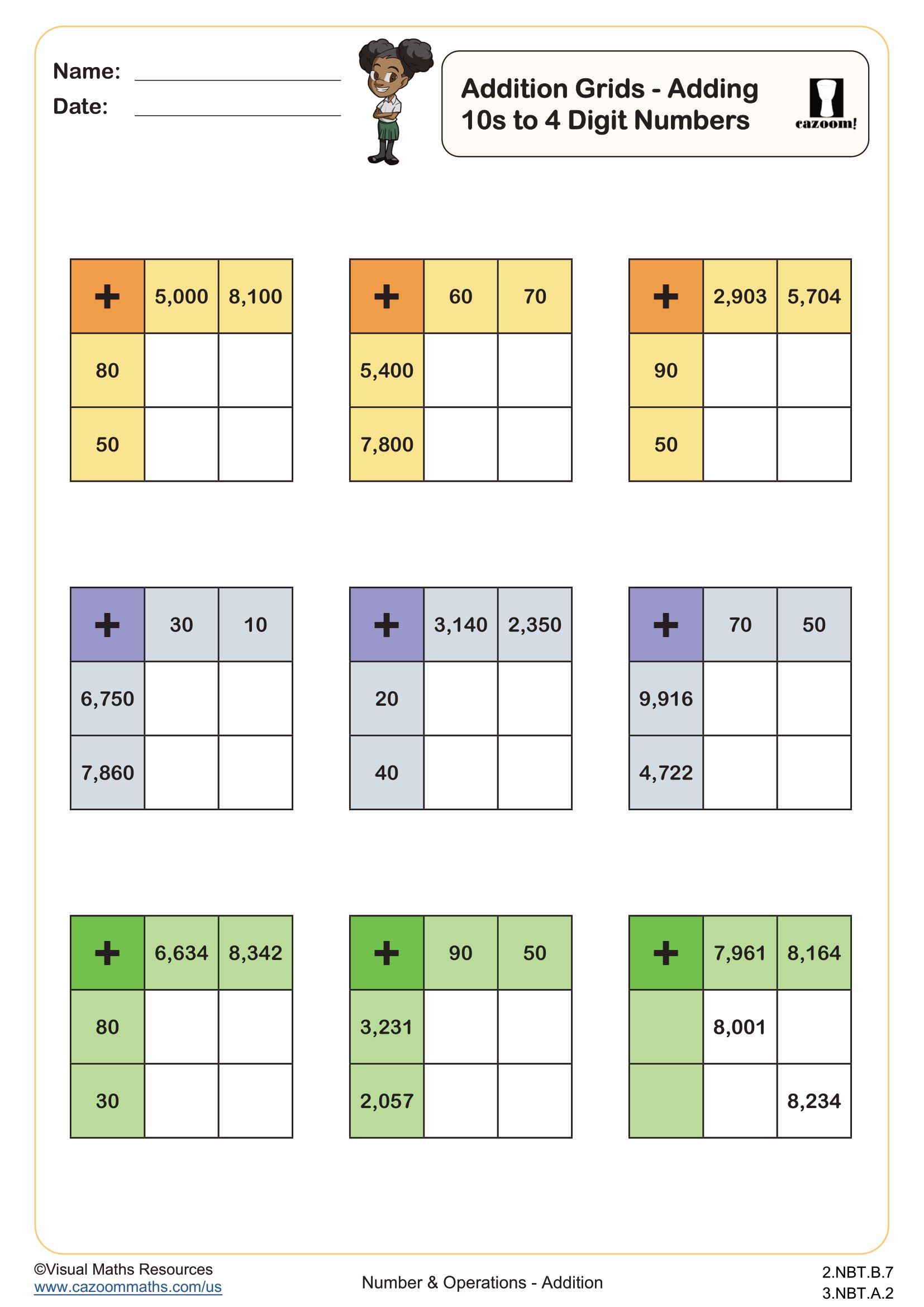
Addition Grids Adding 10s to 4 Digit Numbers
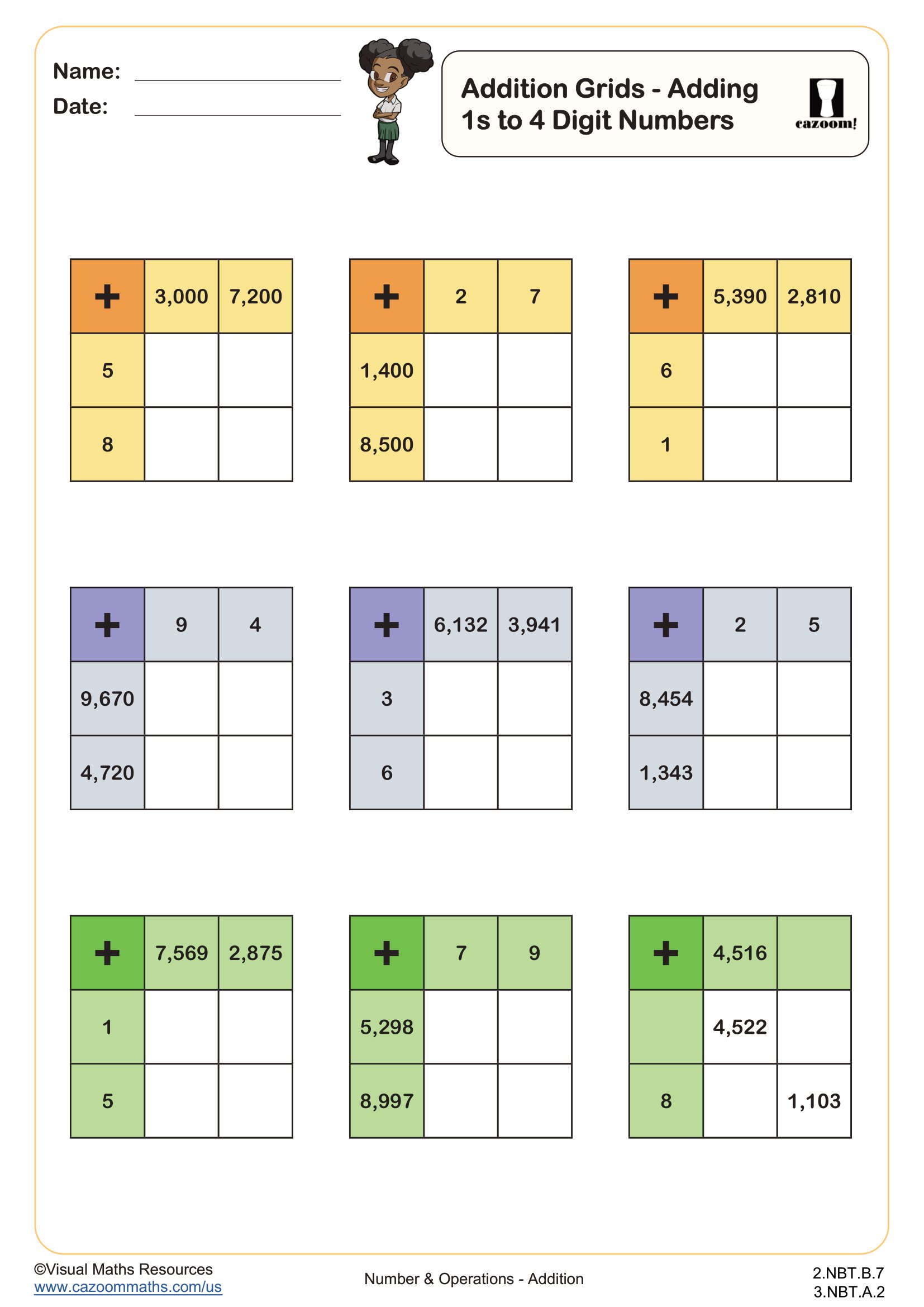
Addition Grids Adding 1s to 4 Digit Numbers
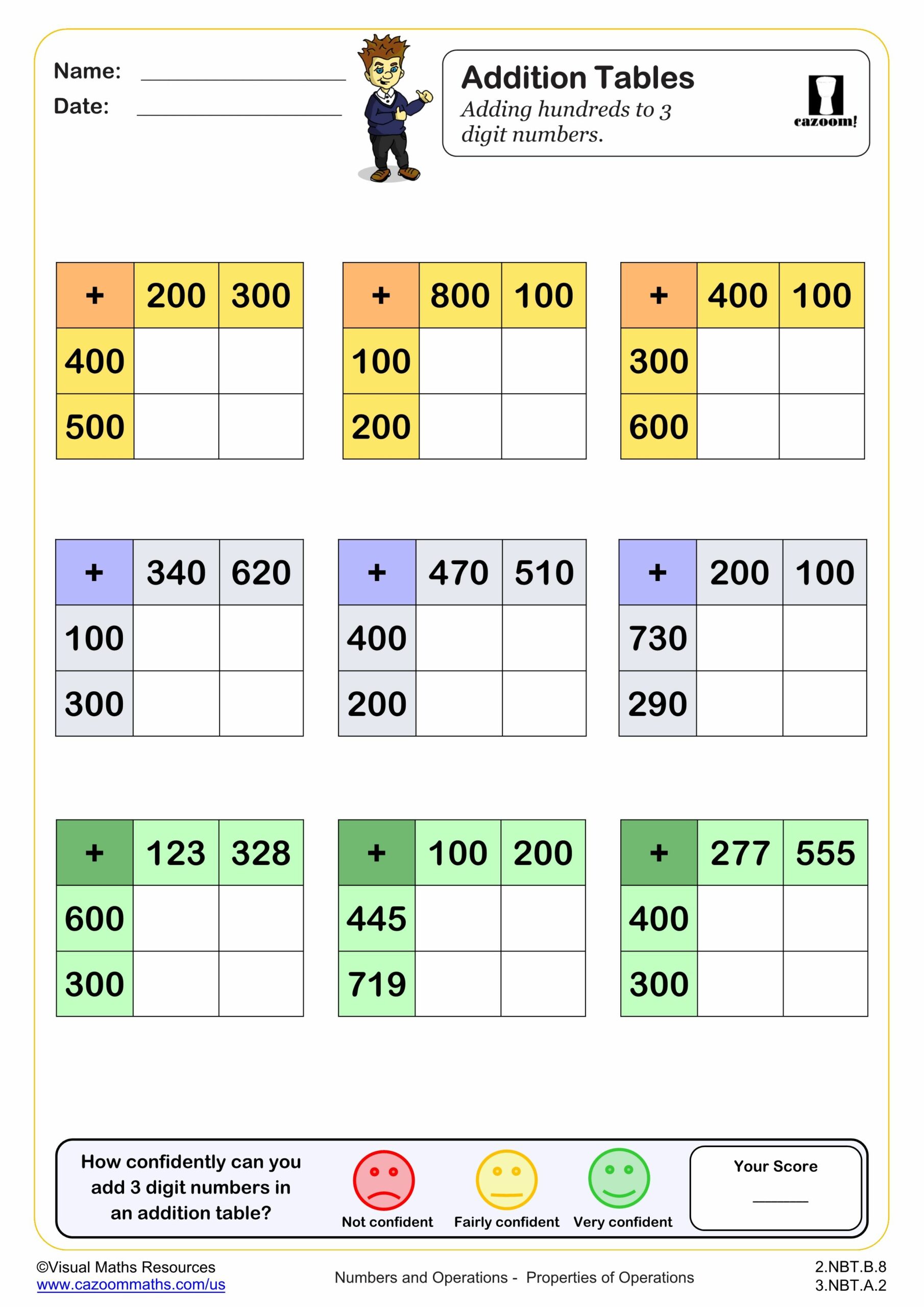
Addition Tables (adding hundreds to a 3 digit number)
Addition Tables (adding ones to a 3 digit number)
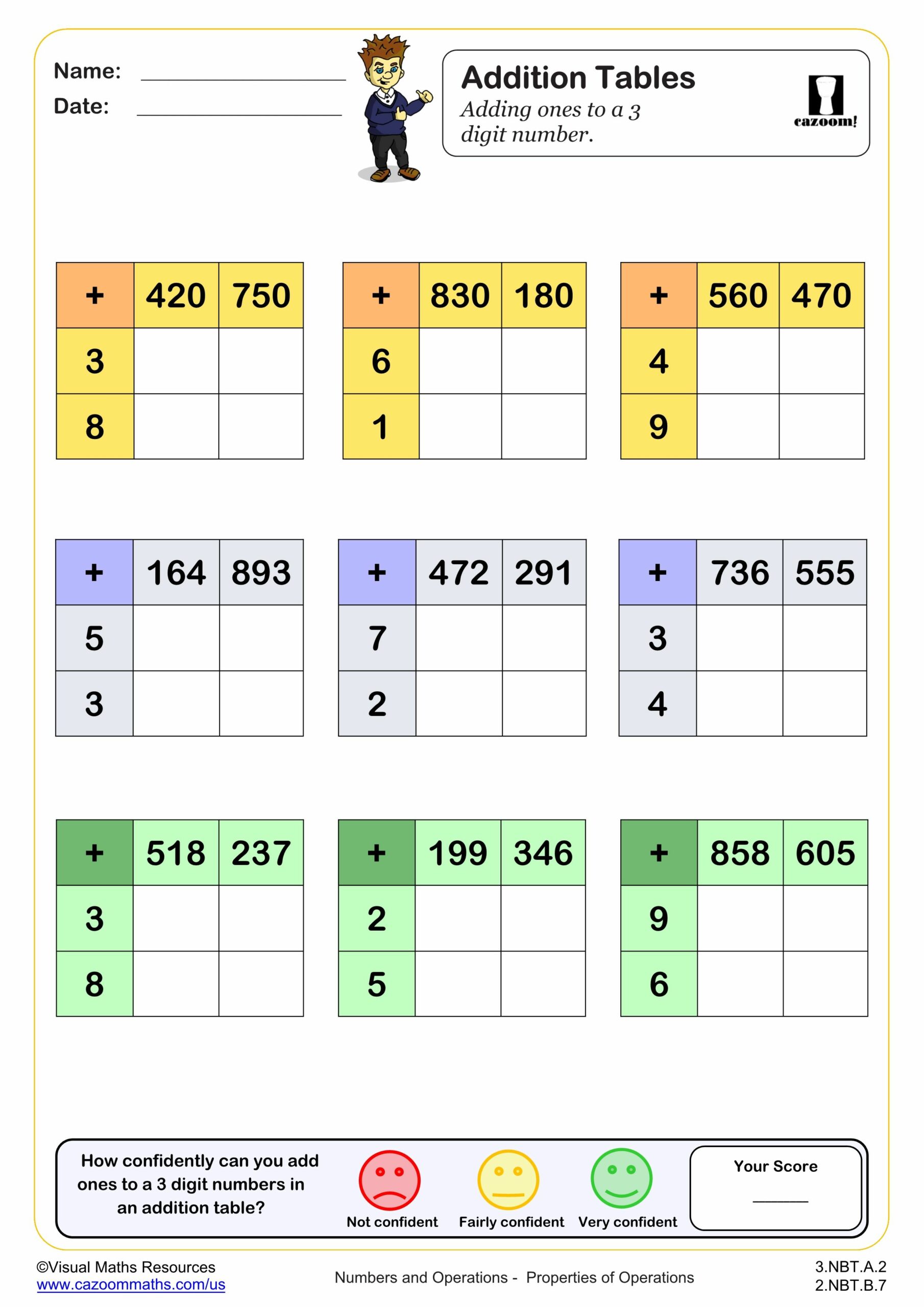
Addition Tables (adding ones, tens and hundreds to 3 digit numbers)
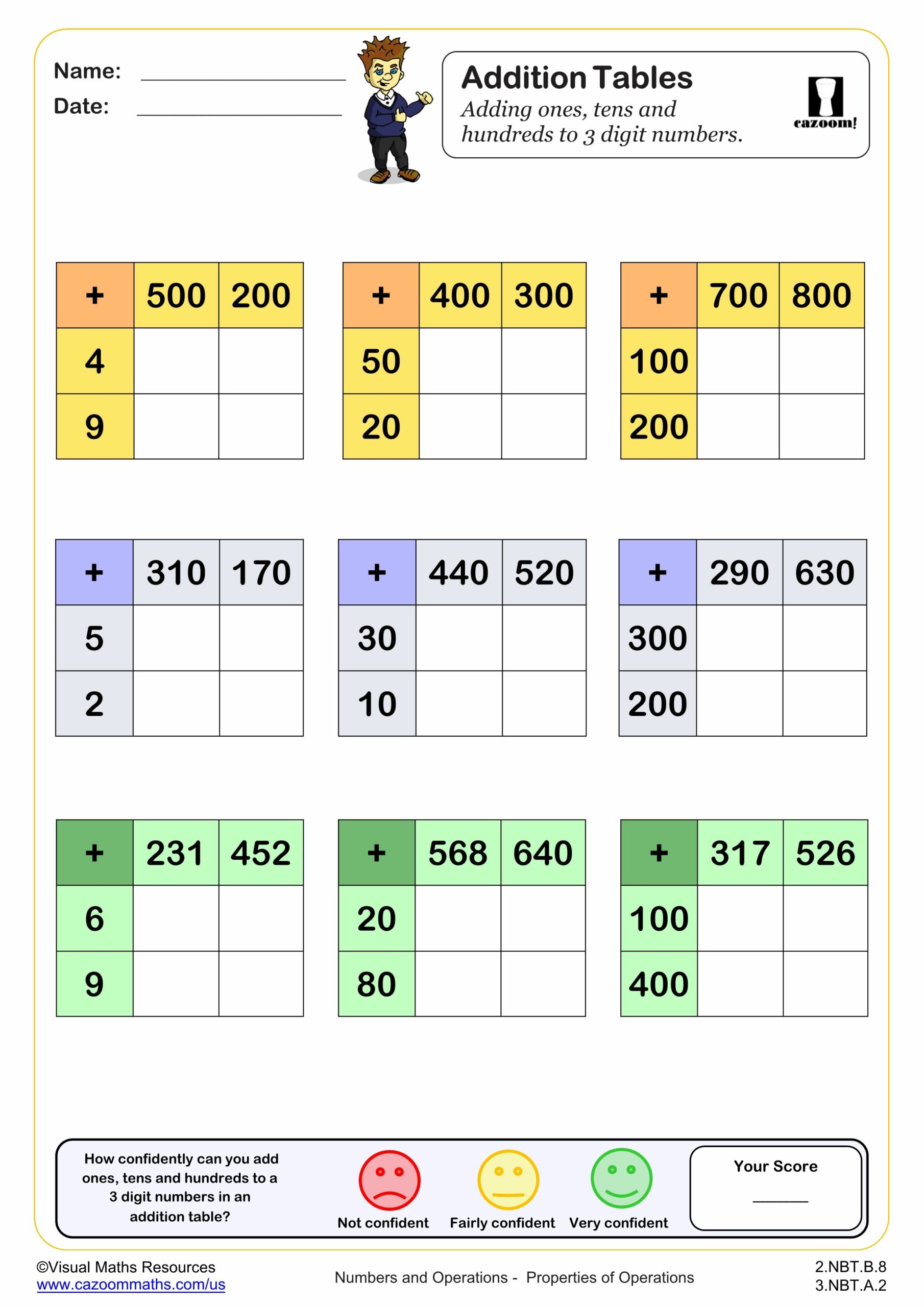
Addition Tables (adding tens to 3 digit numbers)
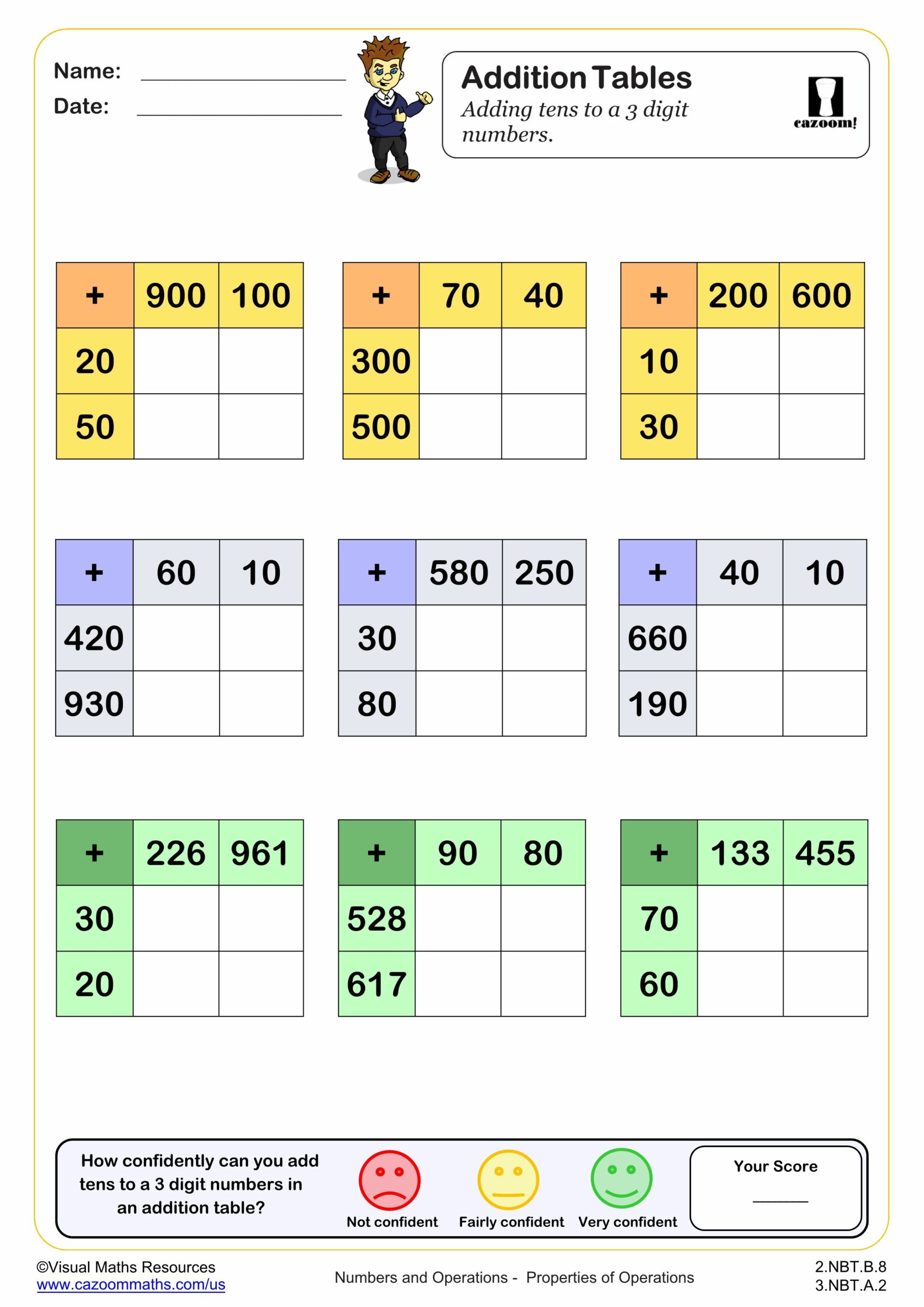
Addition Wheels (adding hundreds to 3 digit numbers)
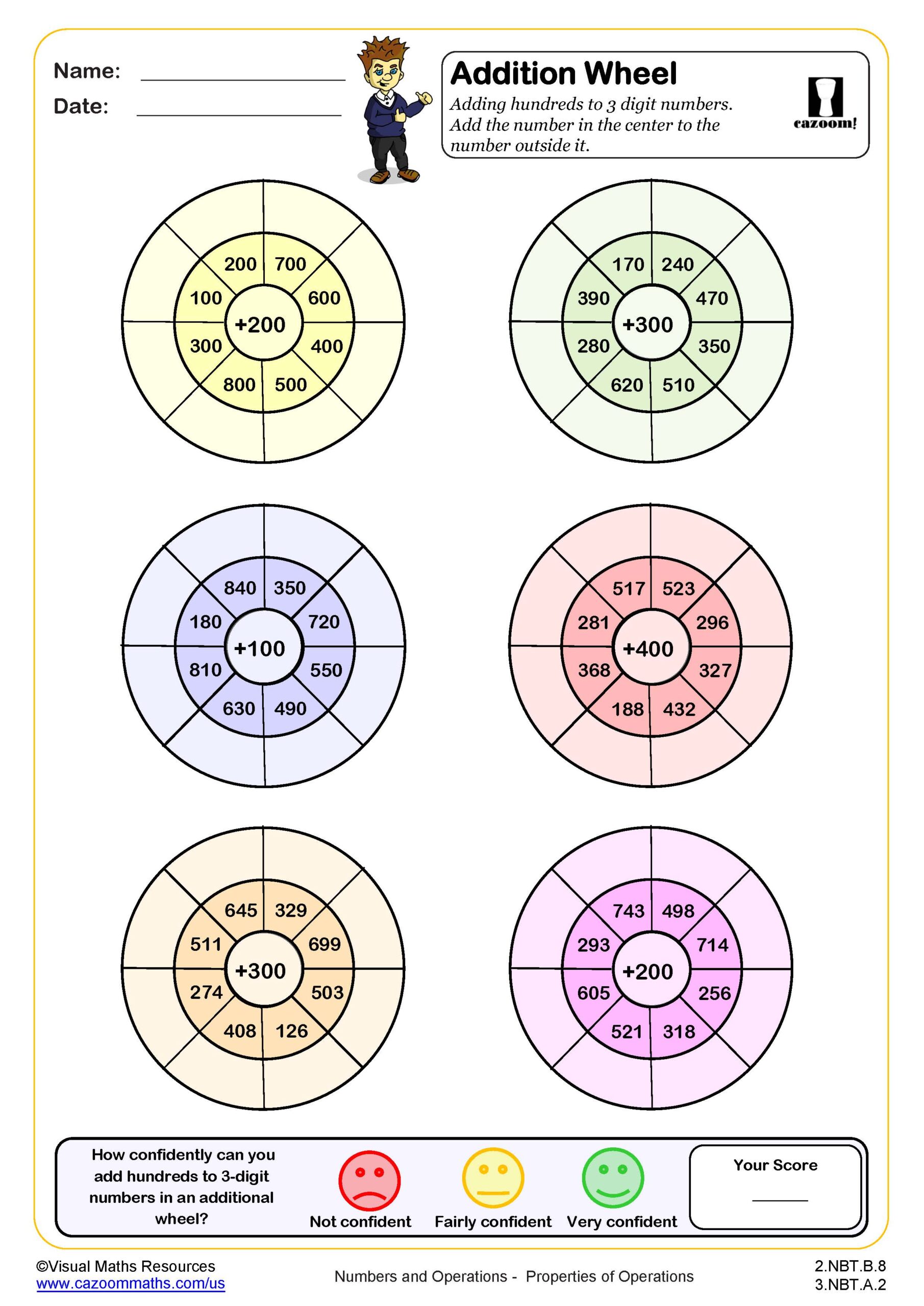
Addition Wheels (adding ones to 3 digit numbers)
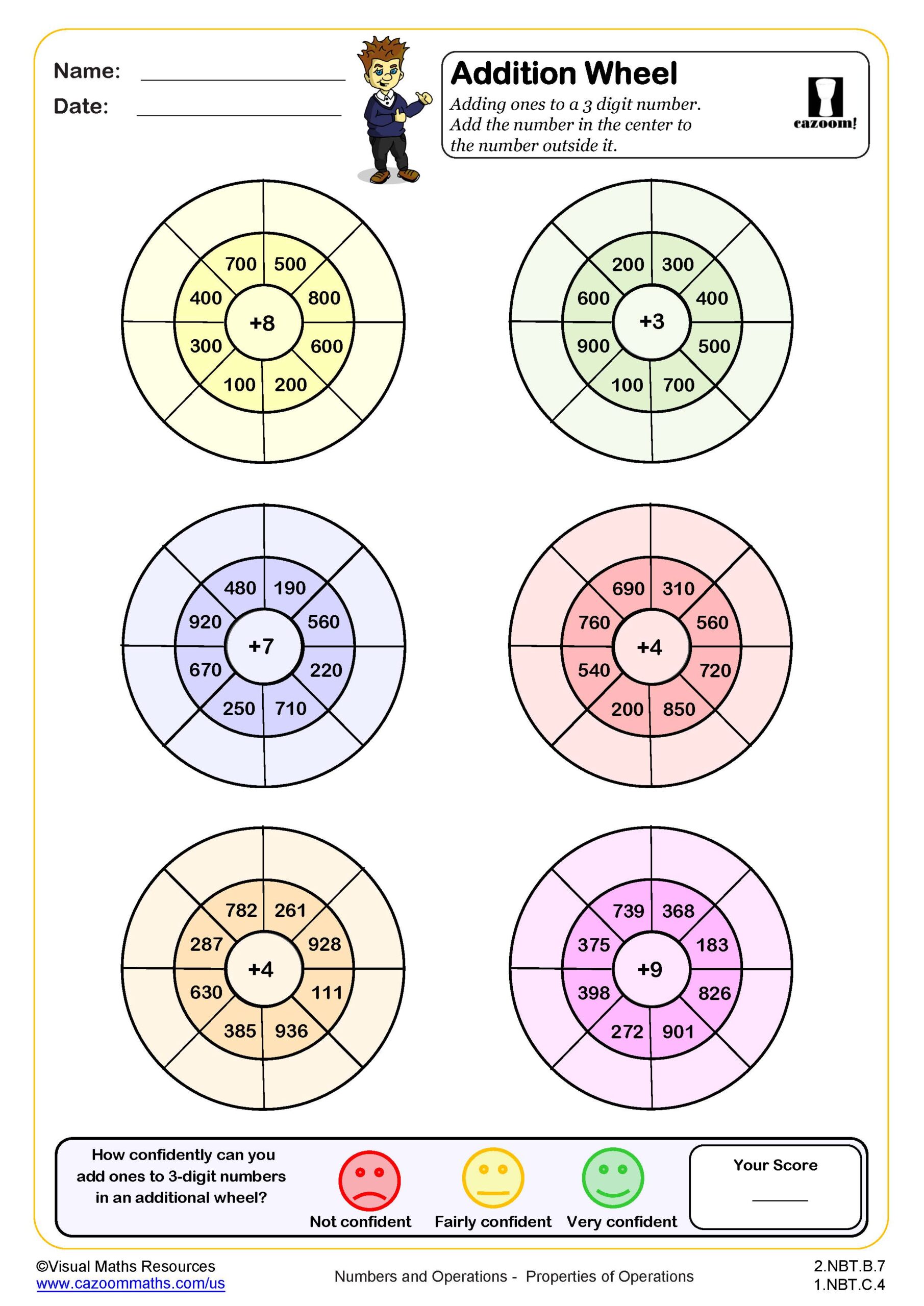
Addition Wheels (adding ones, tens and hundreds to 3 digit numbers)
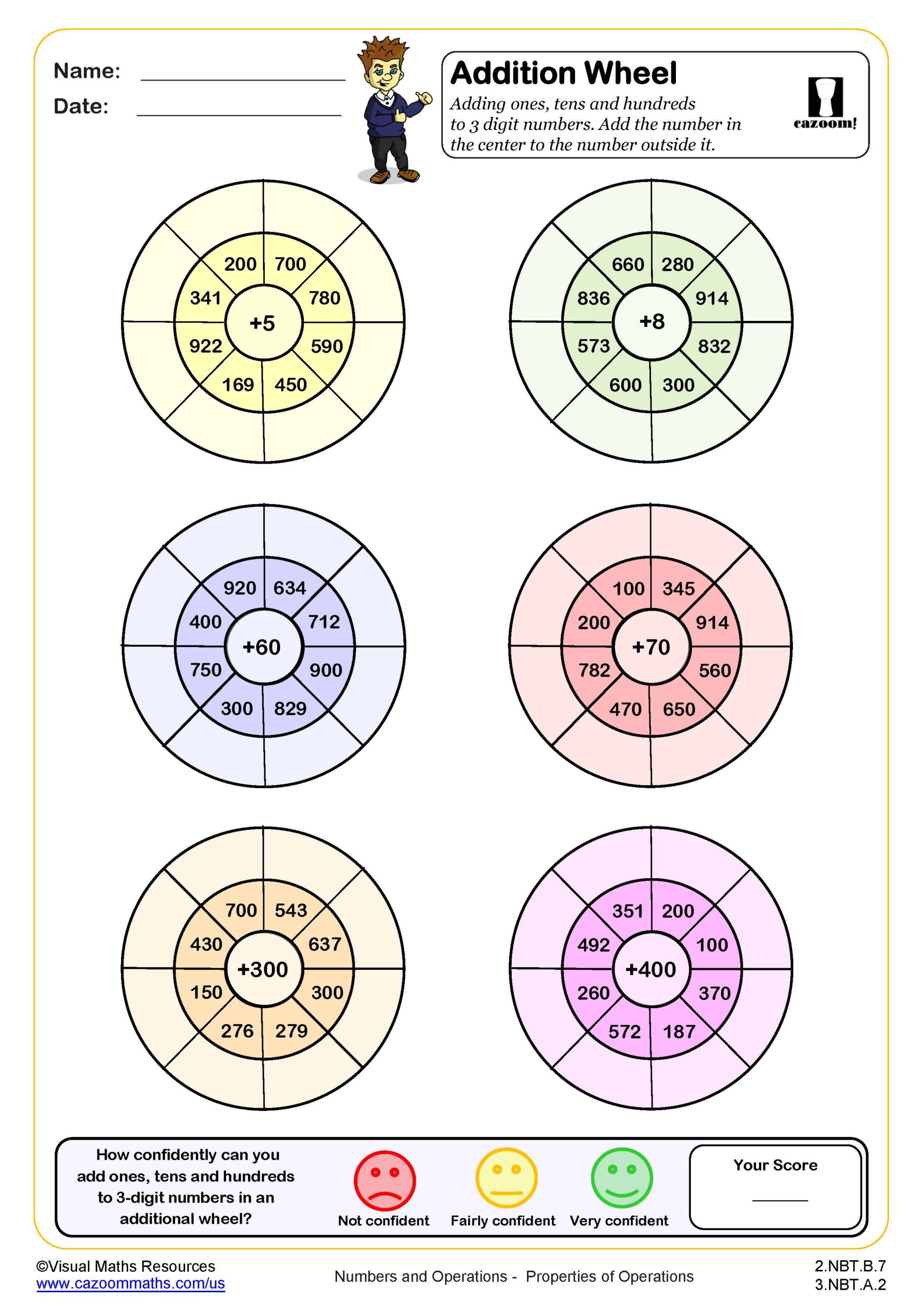
Addition Wheels (adding tens to 3 digit numbers)
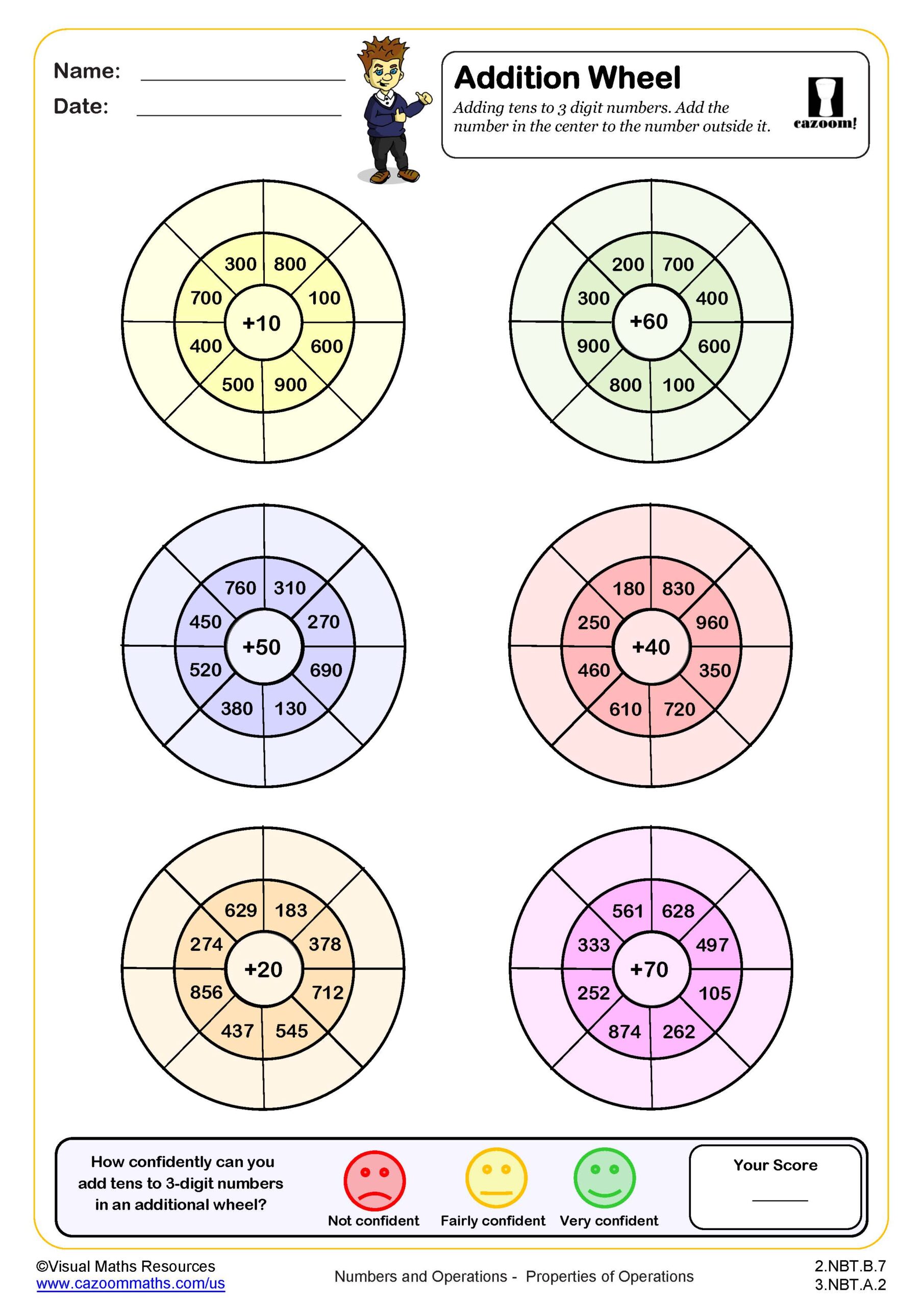
Estimating Answers Addition and Subtraction
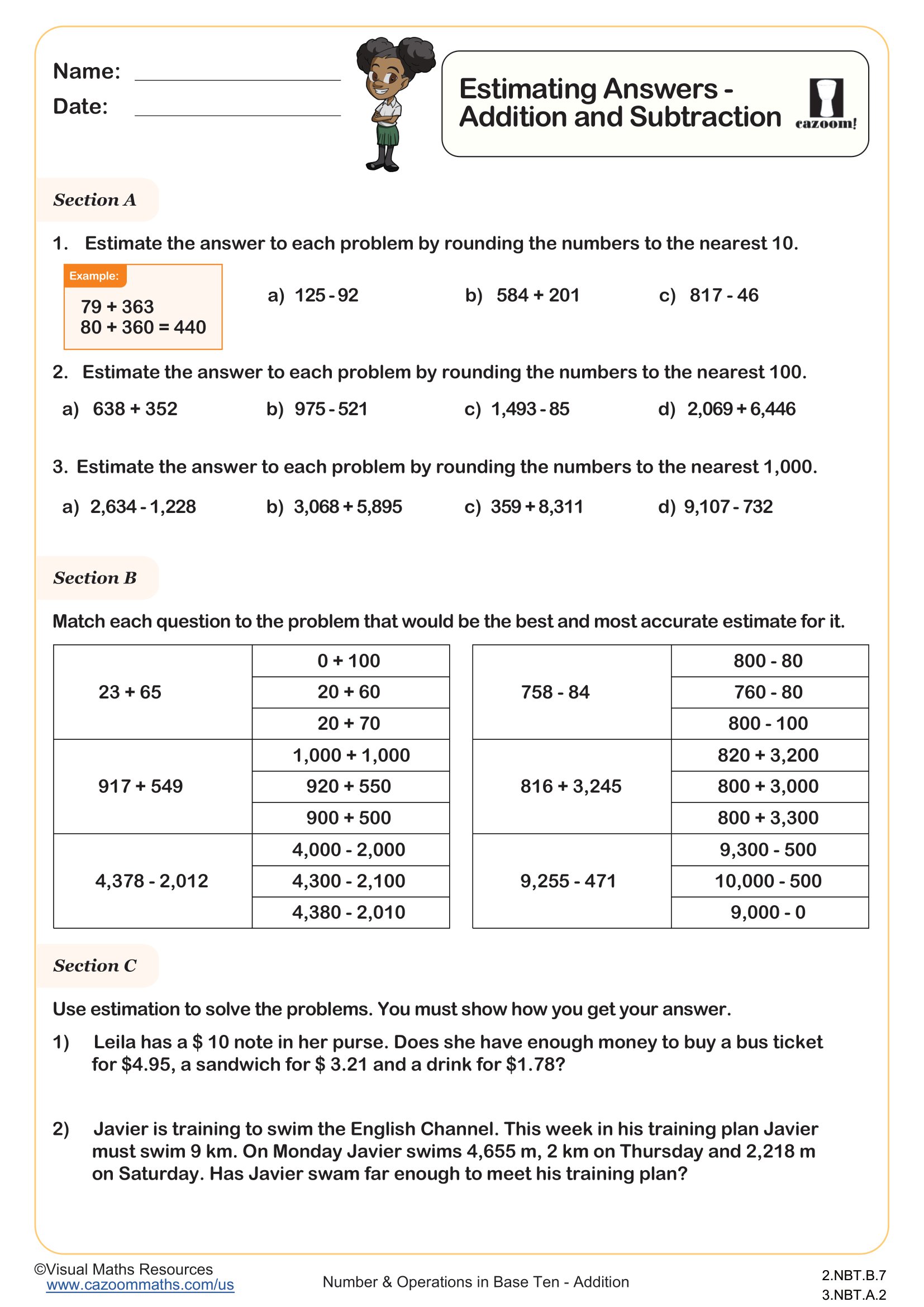
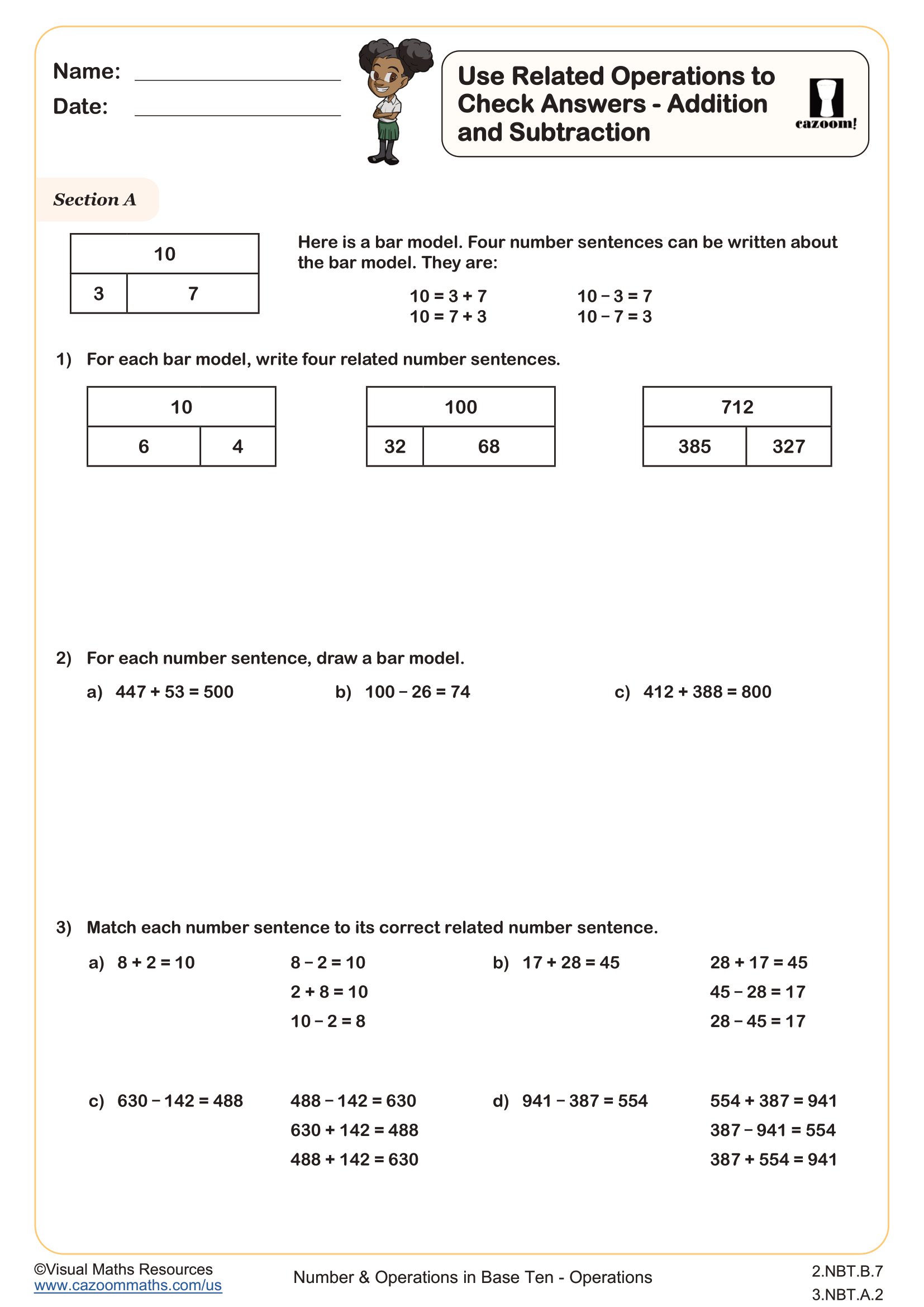
Using Related Operations to Check Answers Addition and Subtraction
All worksheets are created by the team of experienced teachers at Cazoom Math.
What Addition Strategies Do Students Learn When Adding 2 Digit Numbers to 1000?
Students develop multiple strategies for adding two-digit numbers to larger values up to 1000, including mental math techniques, place value decomposition, and standard algorithm approaches. The worksheets emphasize adding by place value, where students separately combine ones, tens, and hundreds before synthesizing the final answer. This method builds number sense and prepares students for the regrouping demands they'll encounter in third grade multi-digit addition.
A common error pattern emerges when students add digits without regard to place value, treating 45 + 123 as if all five digits can simply combine in any order. Teachers frequently notice students writing answers like 558 instead of 168 because they've added 4 + 1 + 2 + 3 + 5 rather than properly aligning tens with tens and ones with ones. The addition grid format specifically addresses this misconception by visually separating place value columns.
Which Grade Levels Practice Adding 2 Digit Numbers to 1000?
These worksheets align with second grade elementary school curriculum standards, where students extend their addition skills beyond basic single-digit and two-digit problems. Second graders work extensively with three-digit numbers and develop computational strategies that prepare them for the Common Core expectations of fluently adding within 1000 using strategies based on place value and properties of operations.
The progression across second grade worksheets moves from simpler combinations like adding multiples of 10 to four-digit numbers, then adding just ones to three-digit numbers, before advancing to more complex problems that combine ones, tens, and hundreds simultaneously. State assessments typically evaluate whether students can accurately add within 1000 and explain their reasoning, making systematic practice with these varied problem types essential for meeting grade-level benchmarks.
How Do Addition Grids Help Students Understand Place Value?
Addition grids organize numbers into clearly defined columns for thousands, hundreds, tens, and ones, allowing students to visualize exactly which digits belong in each place value position. When adding 10s to four-digit numbers or 1s to four-digit numbers, the grid structure prevents the common mistake of misaligning digits. Students see that adding 30 to 2,456 means changing only the tens column, while the hundreds and thousands remain constant, reinforcing the concept that each place value operates independently until regrouping becomes necessary.
This place value understanding connects directly to measurement and data applications students encounter in science and everyday life. When measuring lengths in centimeters and millimeters, students apply the same place value logic—adding 45 millimeters to 238 millimeters requires the same computational thinking as adding 45 to 238 in abstract number problems, making addition grids practical preparation for STEM measurement tasks.
How Can Teachers Use These Worksheets for Differentiated Instruction?
The worksheets provide natural differentiation through their varied subtopic focus, allowing teachers to assign specific pages based on individual student needs. Students struggling with basic place value concepts can begin with addition grids that isolate adding 10s or 1s, while more advanced learners can tackle the comprehensive addition tables that combine ones, tens, and hundreds simultaneously. The included answer keys enable quick formative assessment, helping teachers identify which place value positions cause confusion for particular students.
These worksheets work effectively for math workshop rotations, homework assignments, early finisher activities, or intervention sessions with small groups. Many teachers find success using them as partner practice where one student solves while another checks using the answer key, then they switch roles. The clear structure also makes these worksheets valuable for substitute teacher days or parent volunteers assisting with math centers, since the format requires minimal explanation once students understand the basic addition grid and table layouts.