2nd Grade Adding Numbers up to 100 Worksheets
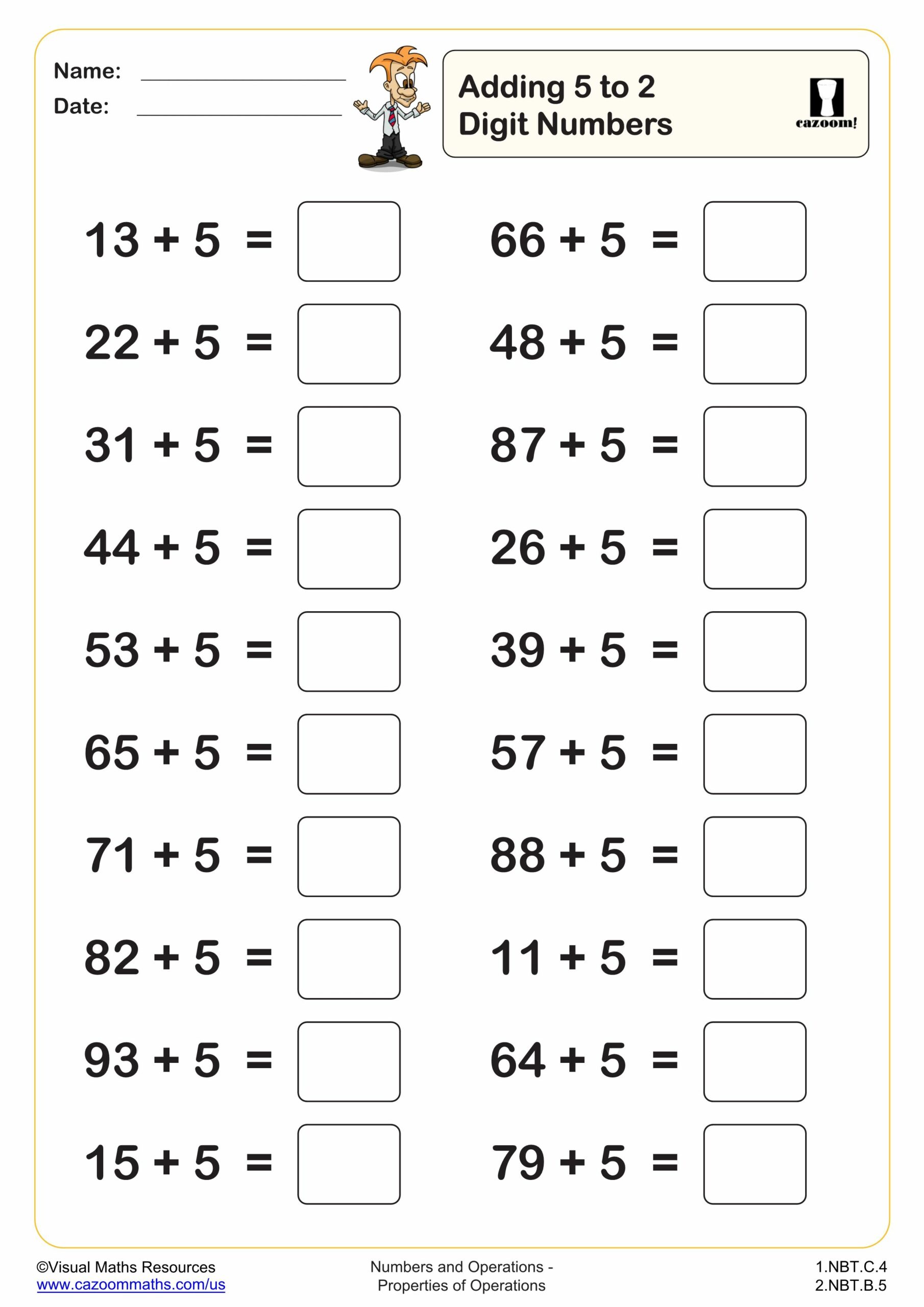
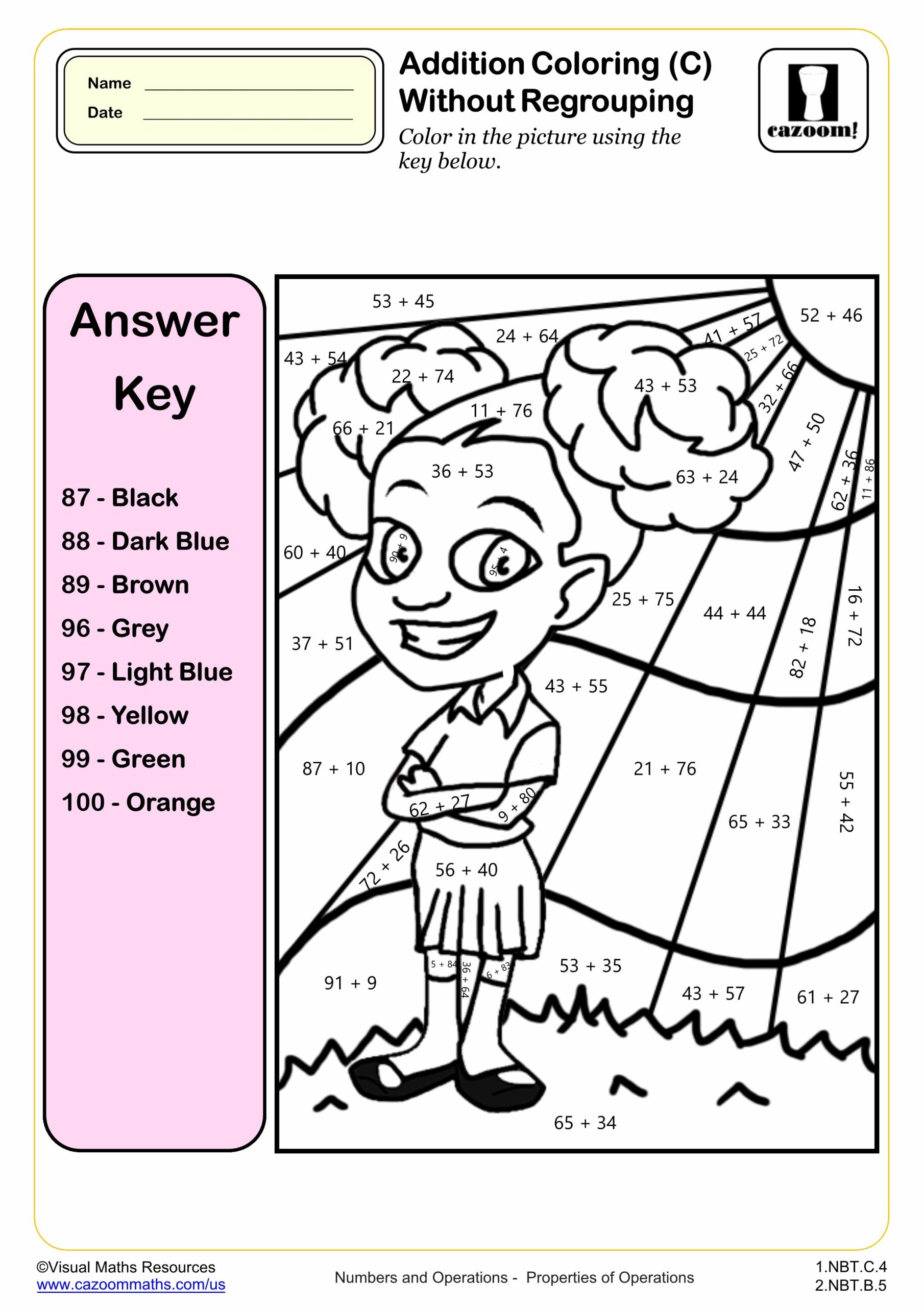
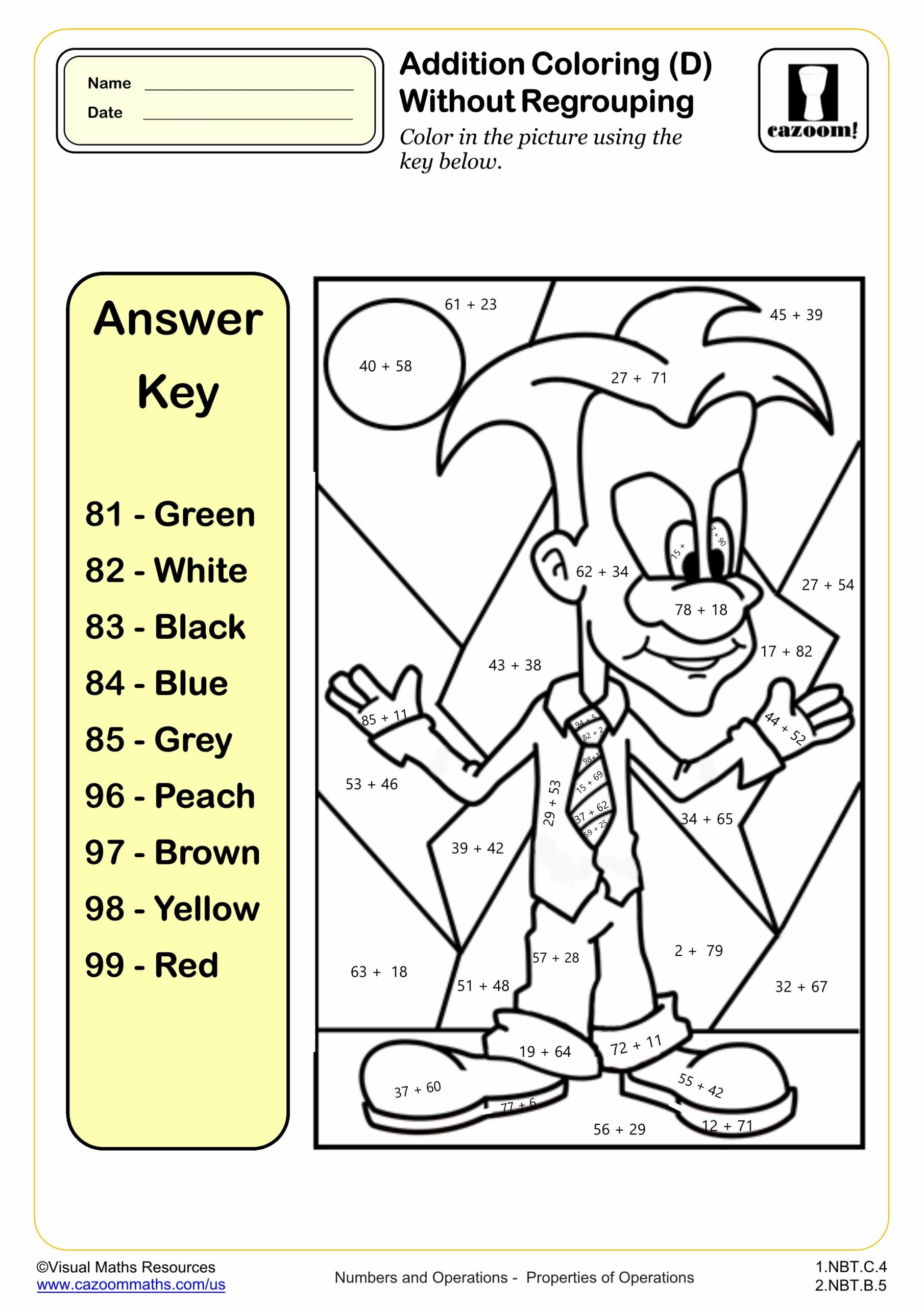
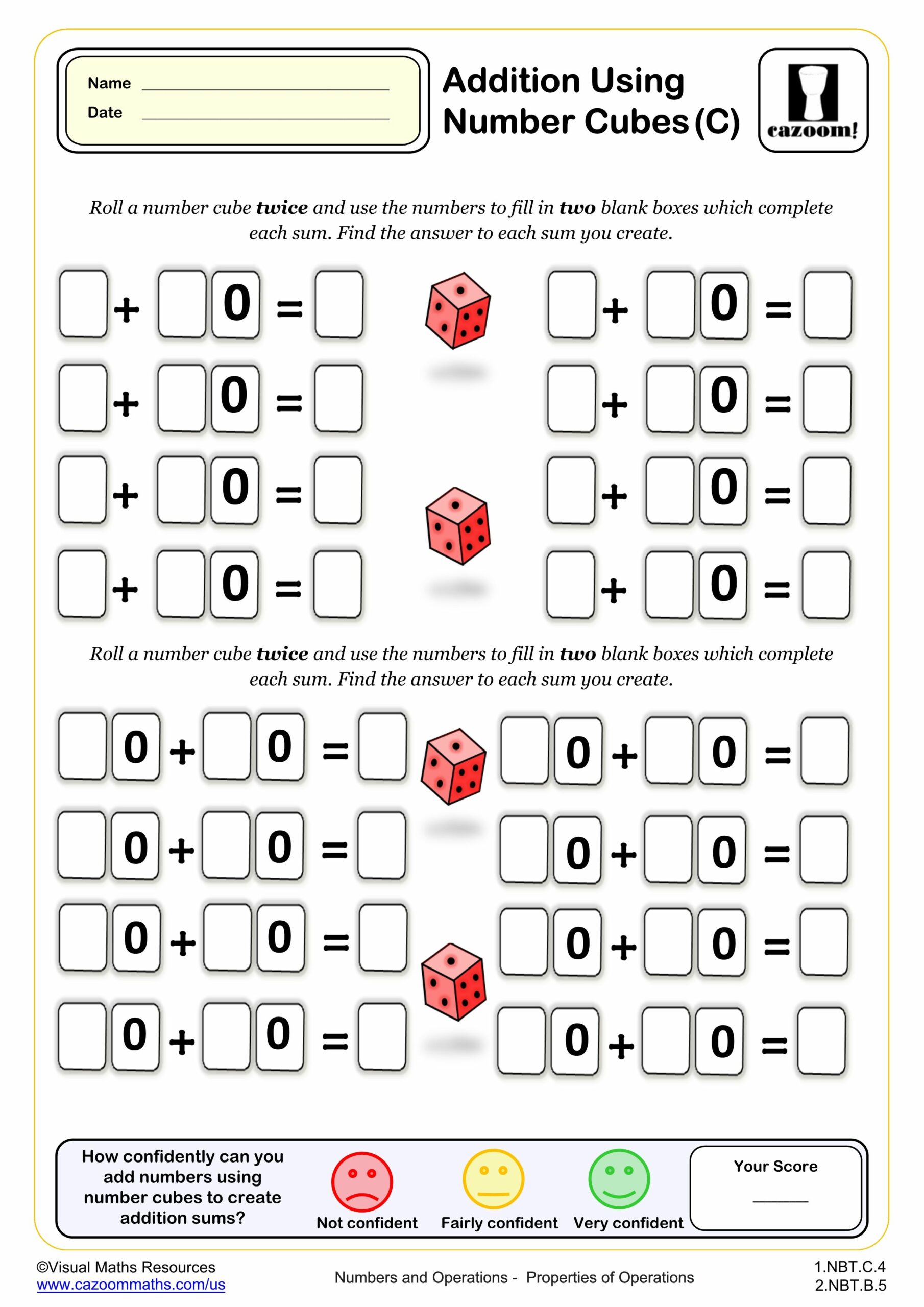
All worksheets are created by the team of experienced teachers at Cazoom Math.
What Addition Strategies Do Second Graders Learn When Adding Numbers up to 100?
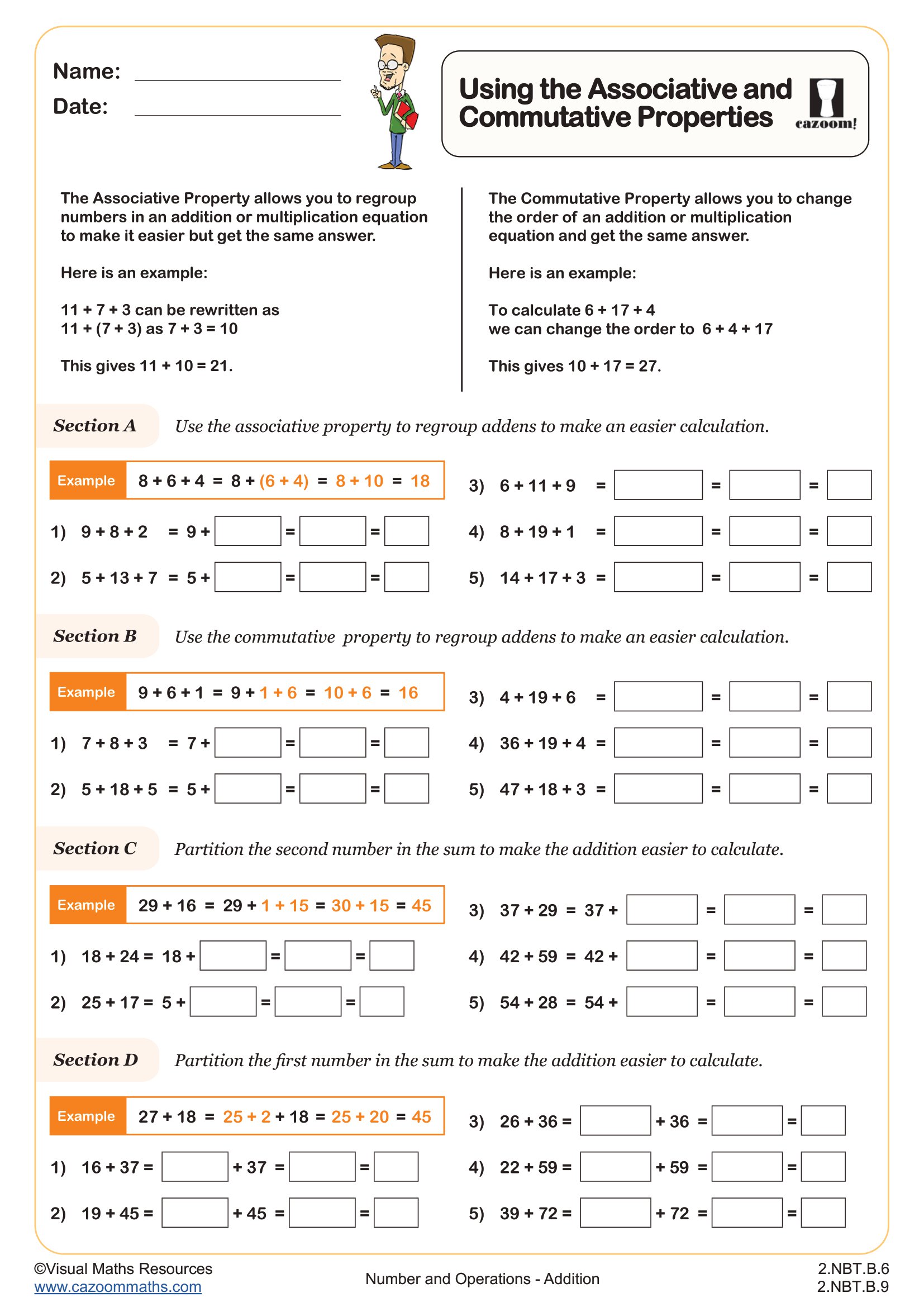
Second graders typically learn several strategies when adding numbers up to 100, including counting on, making tens, using number lines, and breaking numbers into tens and ones (decomposition). These strategies align with Common Core Standard 2.NBT.B.5, which expects students to fluently add and subtract within 100 using strategies based on place value and properties of operations. Students also begin applying the commutative and associative properties, recognizing that 34 + 29 gives the same result as 29 + 34.
Many students lose points on assessments when they attempt to use mental math for problems requiring regrouping but forget to carry the ten. For example, when solving 48 + 37, students might correctly calculate 8 + 7 = 15 but then write 85 instead of 85, forgetting to add the regrouped ten to the tens column. Structured practice with visual supports helps students develop more reliable calculation habits before transitioning to purely mental strategies.
What Grade Level Practices Adding Numbers up to 100?
Adding numbers up to 100 is primarily a second grade skill in elementary school, where it serves as the central focus of place value and addition instruction during the school year. Second graders are expected to add two-digit numbers fluently by the end of the year, building on the single-digit addition facts and adding within 20 that they mastered in first grade. This skill prepares students for the more advanced three-digit addition they'll encounter in third grade.
The progression within second grade typically moves from adding multiples of ten (30 + 40) to adding two-digit numbers without regrouping (23 + 45), and finally to problems requiring regrouping across the tens place (47 + 36). Teachers notice that students who struggle with basic addition facts within 20 find the jump to two-digit addition particularly challenging, as they're simultaneously processing place value concepts while still calculating basic sums. Reinforcing fact fluency alongside place value understanding creates the strongest foundation for success.
How Do Number Cube Activities Help with Addition Practice?
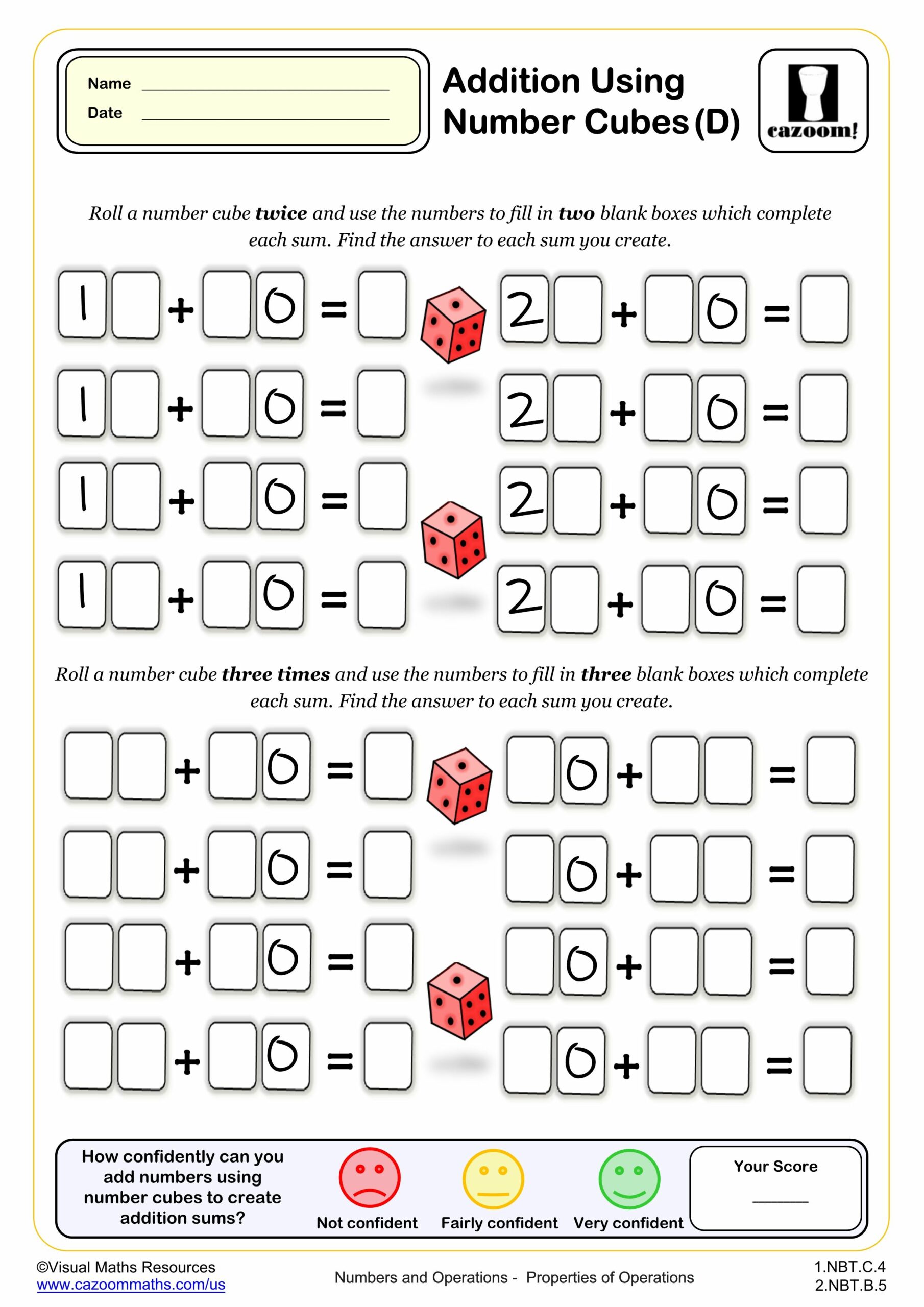
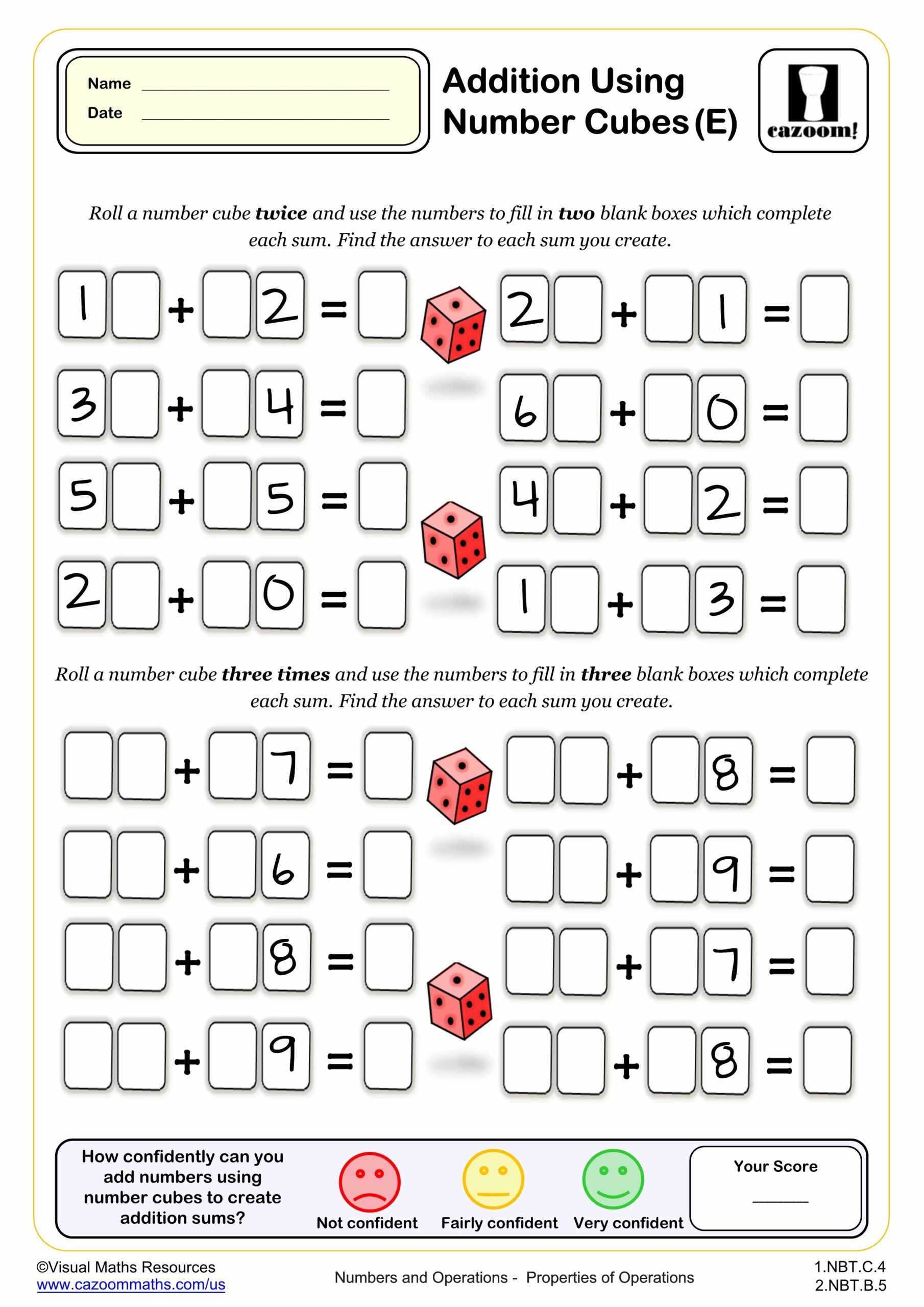
Number cube activities provide hands-on, randomized practice that keeps addition exercises fresh and engaging for second graders. Students roll number cubes to generate addends, then solve the resulting addition problems, which creates variety and an element of game-based learning. This approach helps students develop flexibility with numbers rather than memorizing answers to specific problems, strengthening their understanding of addition as an operation rather than a set of facts to memorize.
The random nature of number cube activities mirrors real-world scenarios where addition happens spontaneously rather than in predetermined sequences. For example, when a student collects 38 rocks on Monday and 45 rocks on Tuesday for a science project about erosion patterns, they need to add those specific numbers regardless of difficulty level. Similarly, when tracking temperatures, rainfall measurements, or plant growth in STEM activities, students encounter authentic two-digit addition problems that require the same flexible thinking that number cube exercises develop through repeated, varied practice.
How Can Teachers Use These Addition Worksheets Effectively in the Classroom?
These worksheets support differentiated instruction through varied approaches to the same skill, allowing teachers to match activities to student learning preferences and readiness levels. The coloring worksheets provide built-in self-checking features where incorrect answers become obvious when the picture doesn't match the key, while number cube worksheets offer more traditional practice formats. Teachers can use the answer keys to quickly assess understanding during independent work time or to create model examples on document cameras during whole-group instruction.
Many teachers assign these worksheets during math centers or small group rotations, pairing students of similar ability levels to work collaboratively and discuss their strategies. The worksheets also work well as targeted intervention materials for students who need additional practice beyond the core curriculum, or as homework assignments that parents can easily support using the provided answer keys. Some teachers use the coloring versions as Friday review activities or early finisher tasks, since they're engaging enough to maintain student interest while reinforcing essential computational skills.