2nd Grade Describe and Compare Shapes Worksheets
All worksheets are created by the team of experienced teachers at Cazoom Math.
What Shape Attributes Should Second Graders Be Able to Describe?
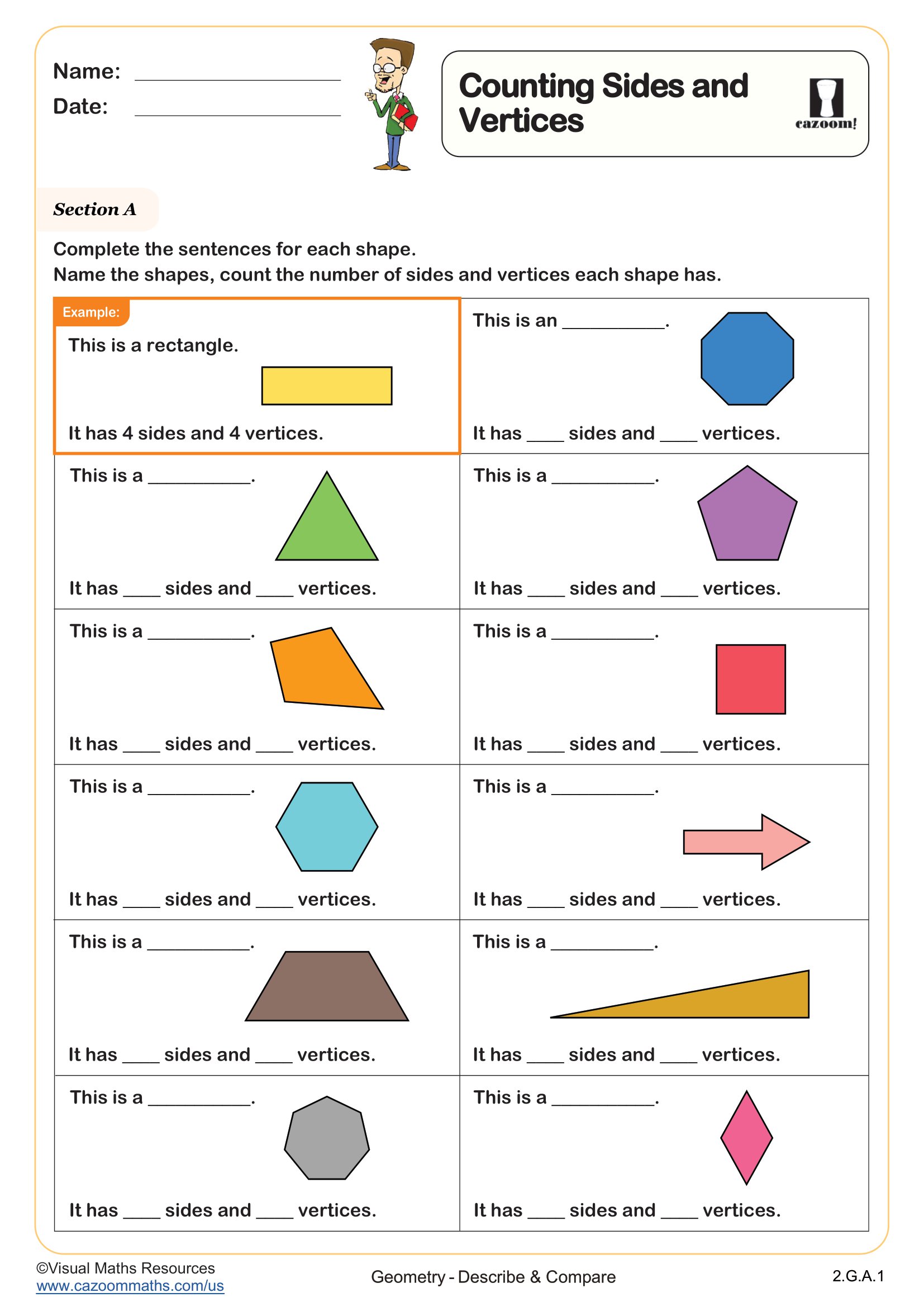
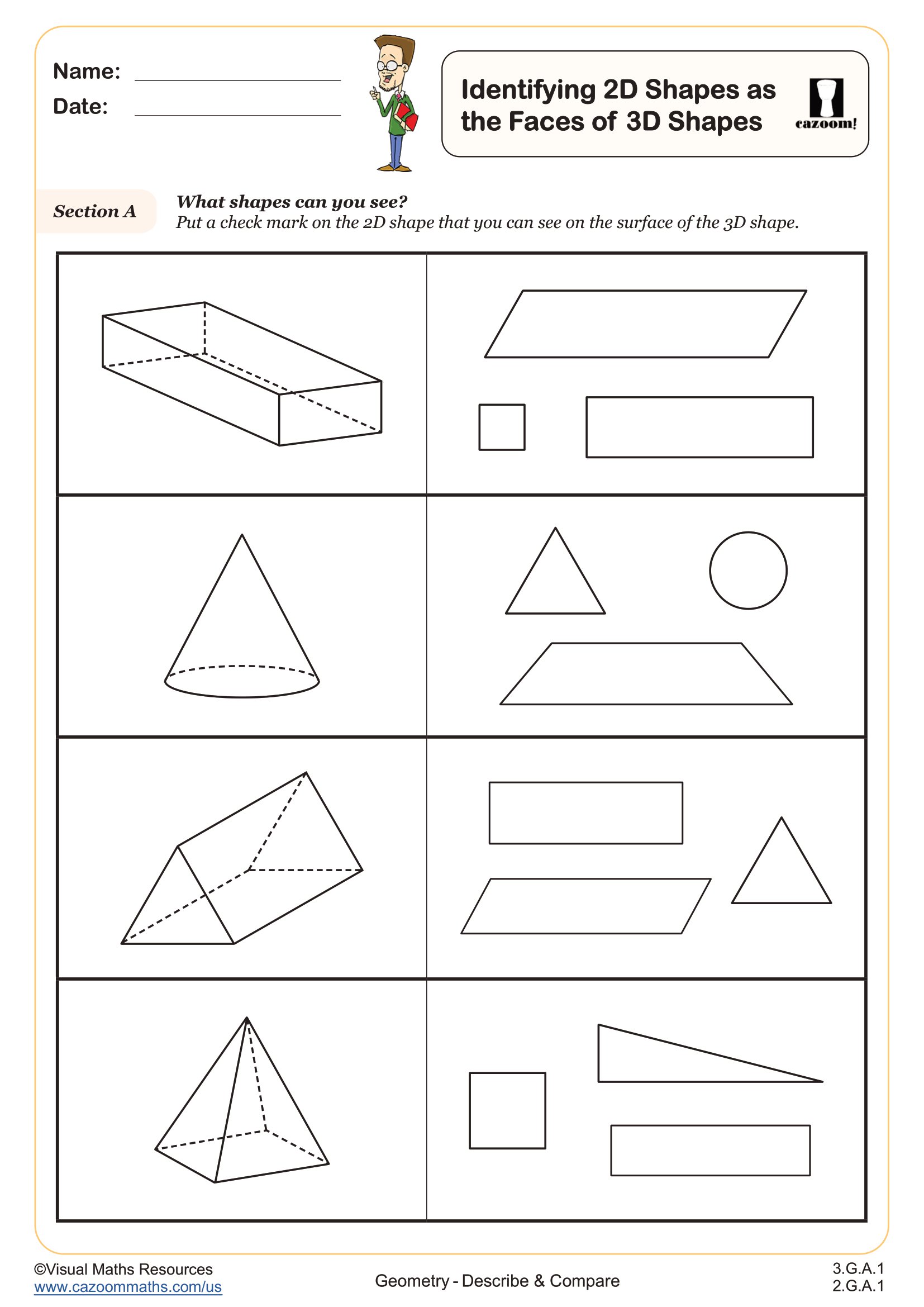
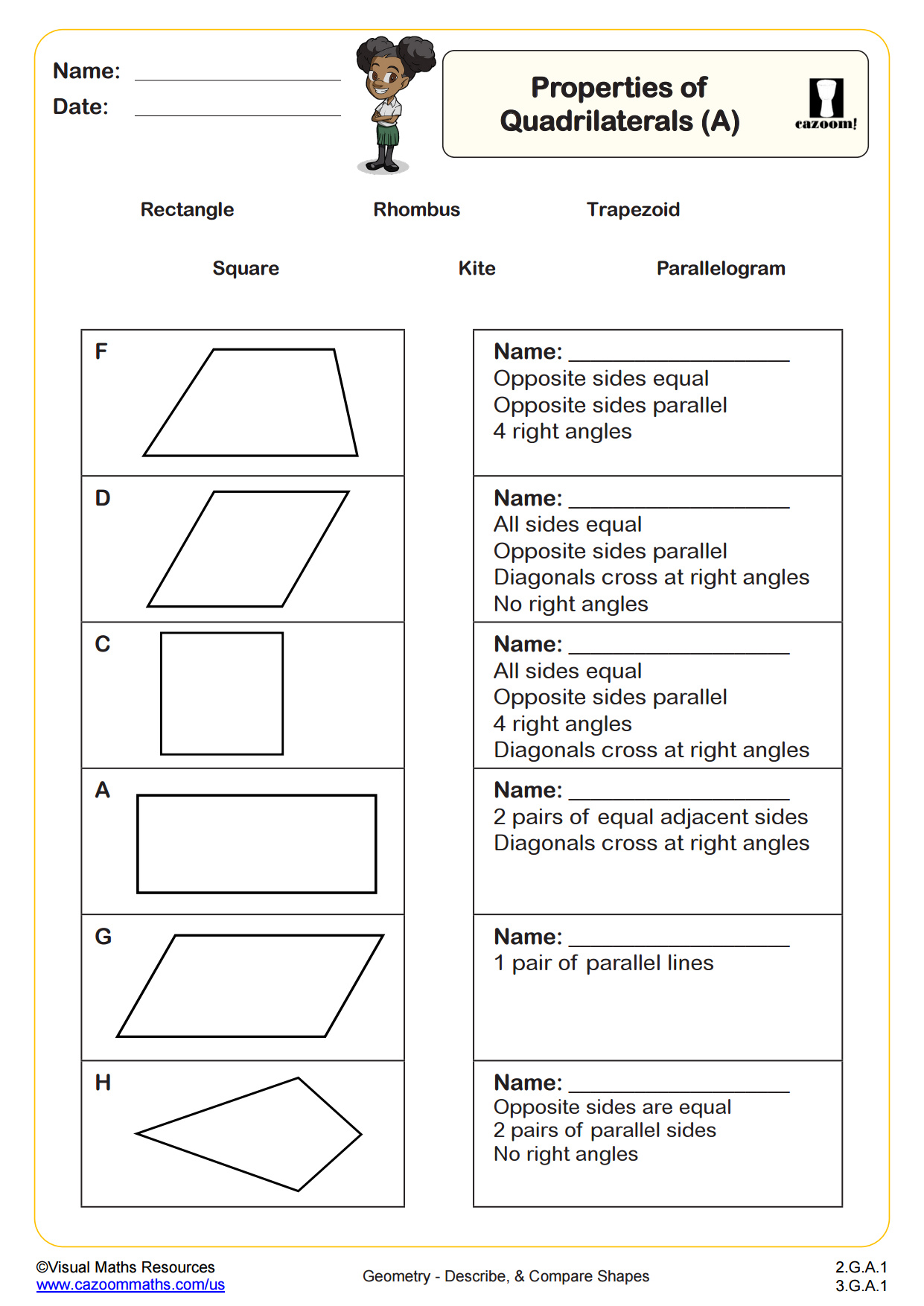
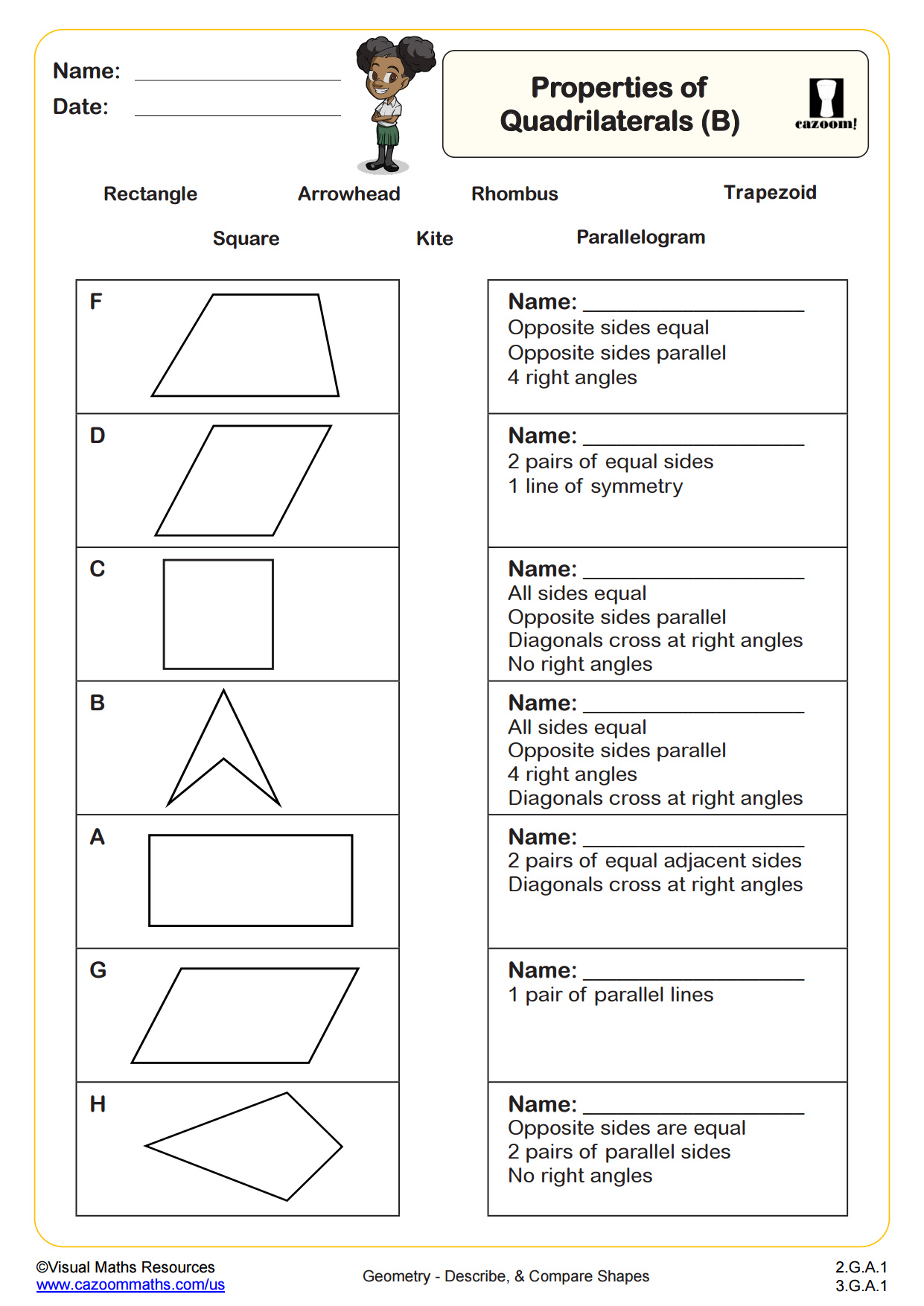
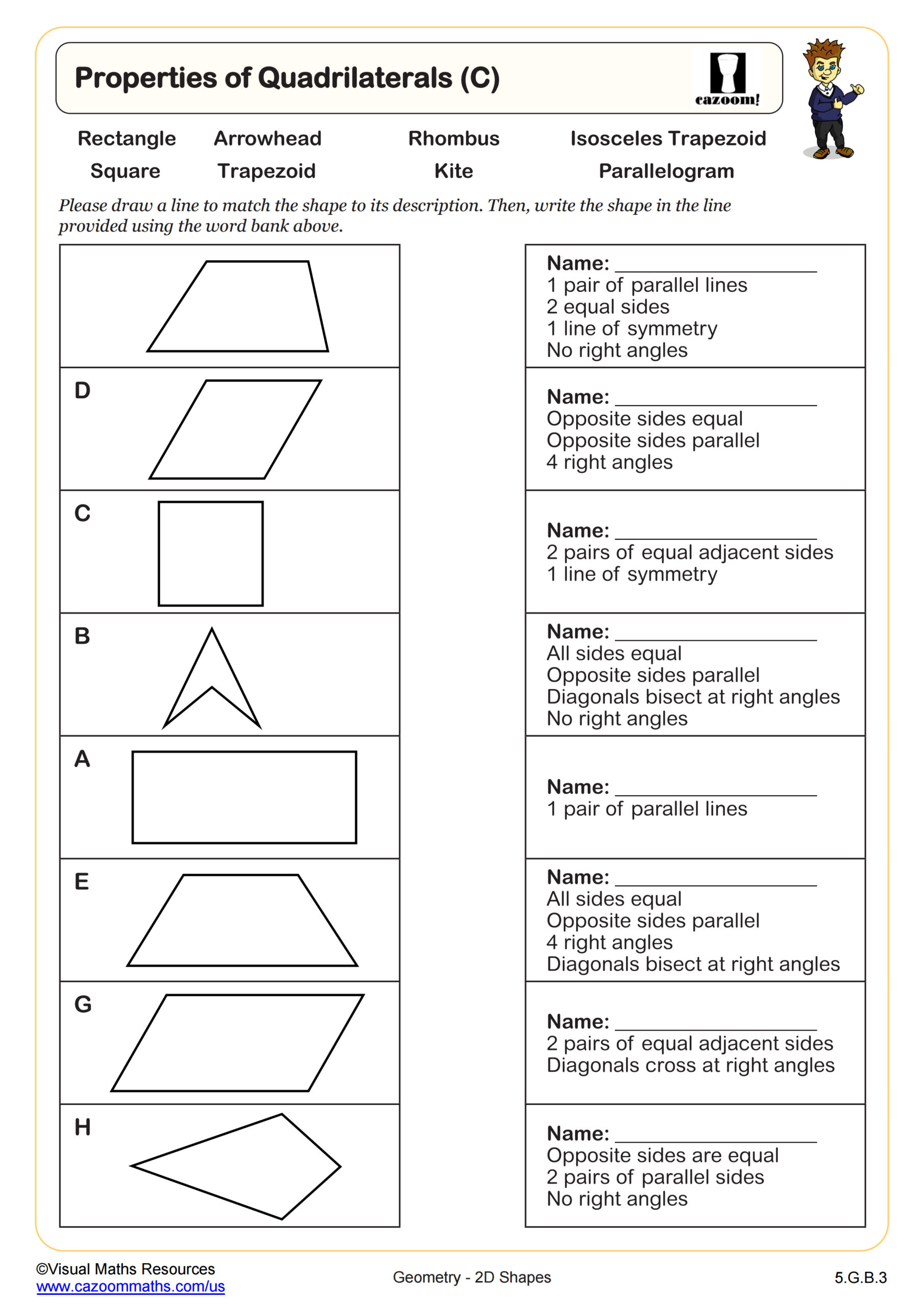
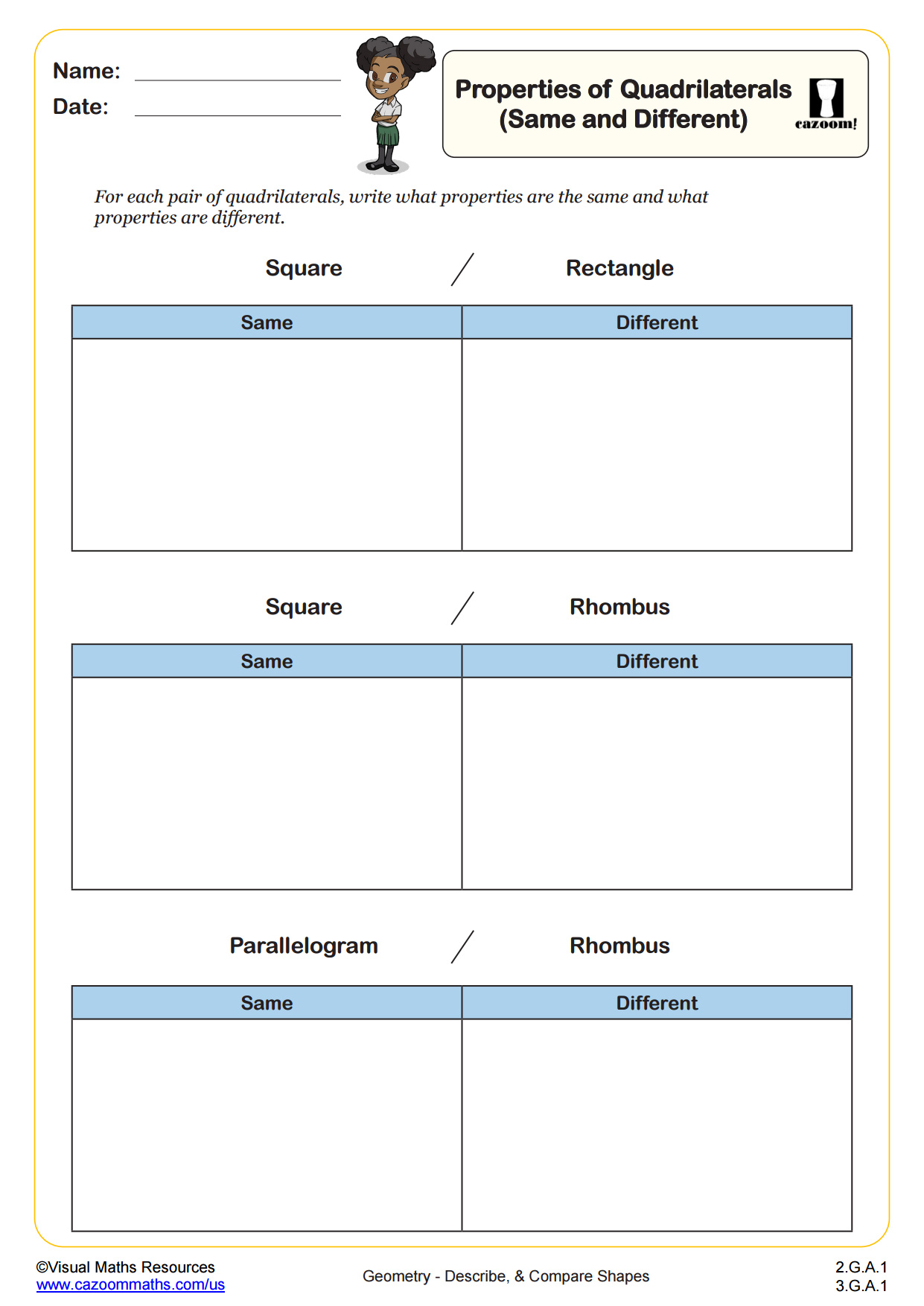
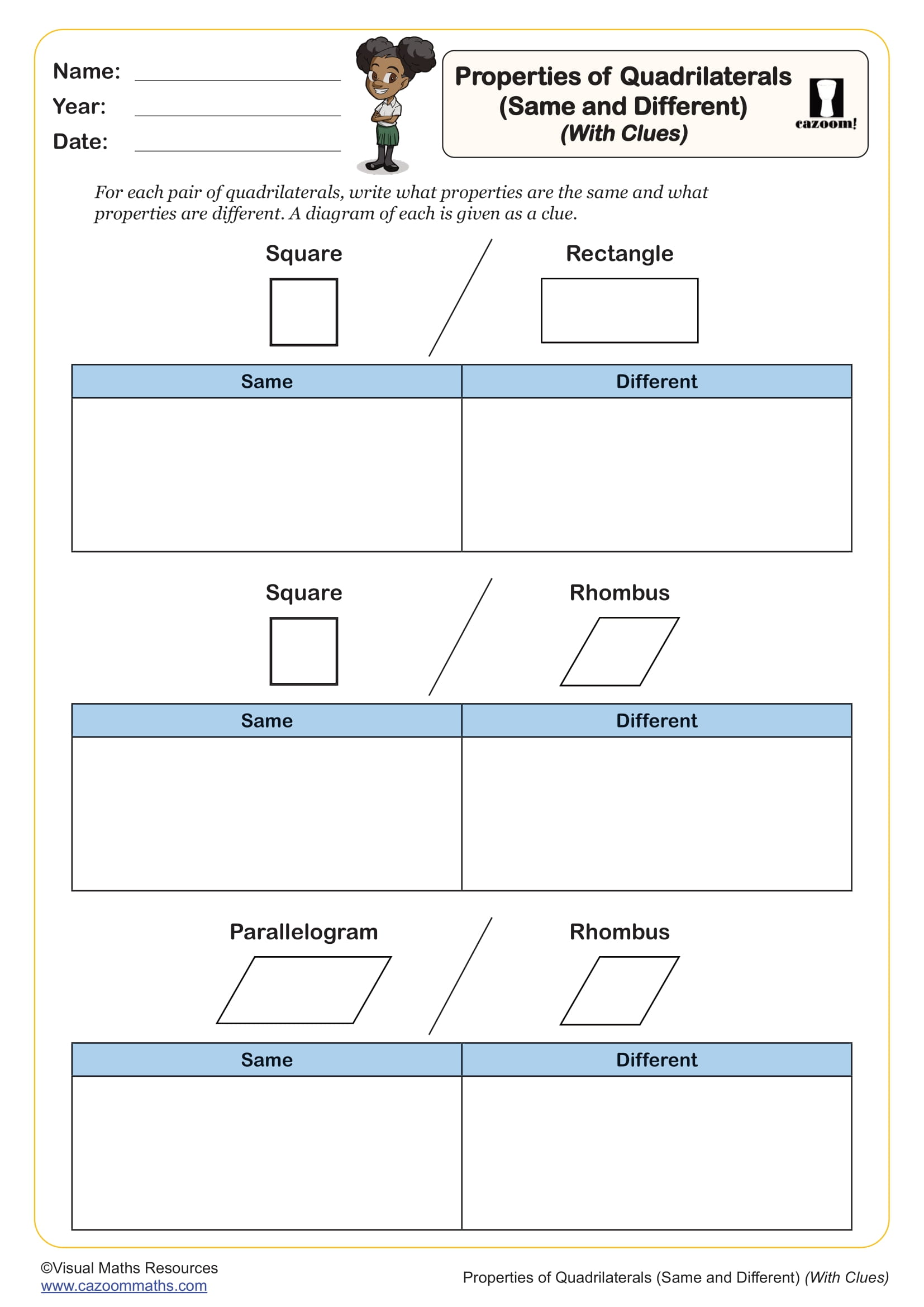
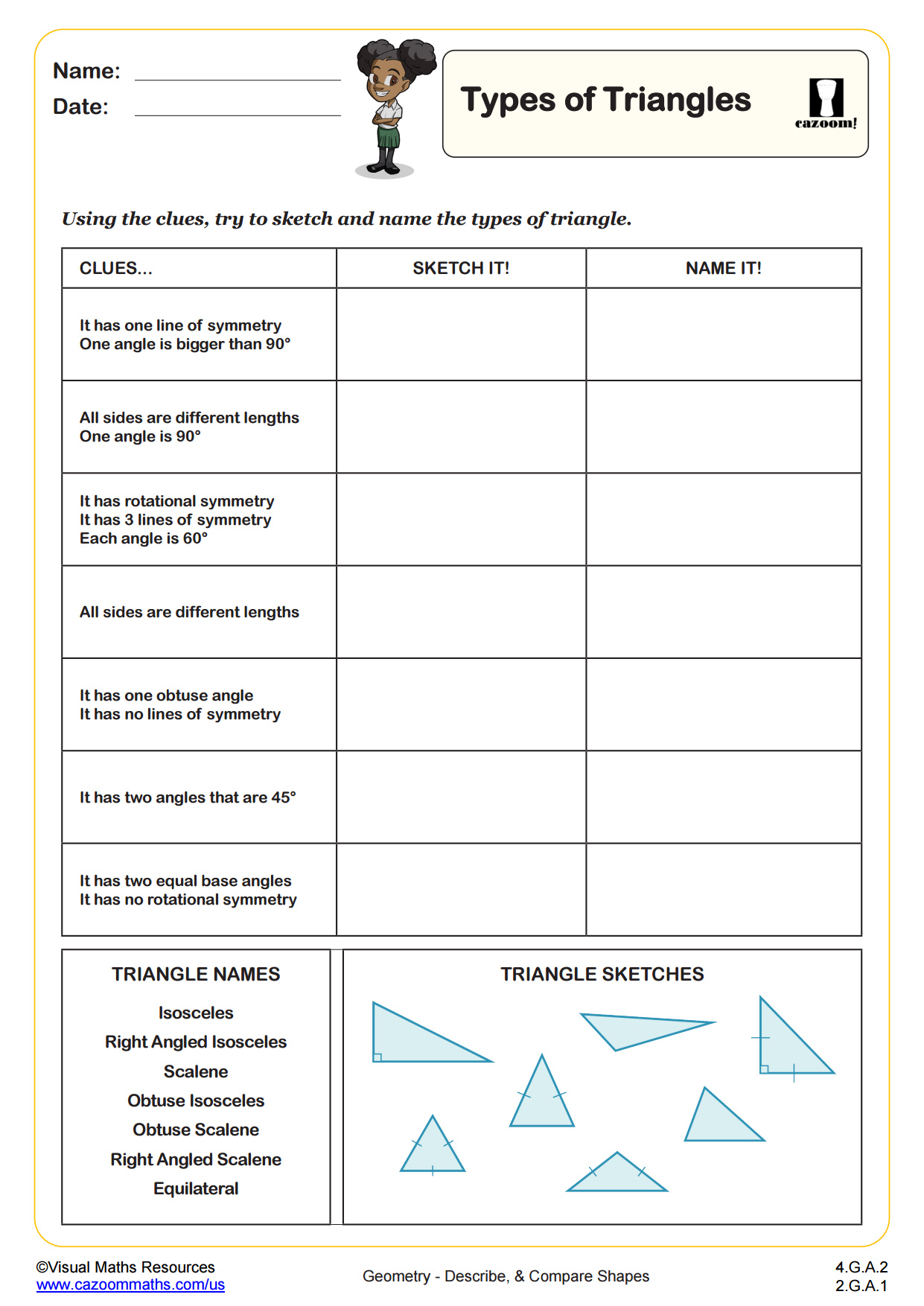
Second graders should describe shapes by counting and naming specific attributes including sides, vertices (corners), and angles. According to Common Core standards for grade 2 geometry (2.G.A.1), students identify and draw shapes based on the number of angles or number of equal faces. They should recognize triangles, quadrilaterals, pentagons, and hexagons, and distinguish between attributes that define a shape versus those that don't, such as color or orientation.
A common error occurs when students confuse vertices with sides, especially when counting quickly. Teachers often notice students counting the same vertex twice when tracing around a shape, leading to incorrect totals. Worksheets that ask students to mark each vertex with a dot before counting help eliminate this confusion and build accuracy with shape analysis.
What Grade Level Learns to Describe and Compare Shapes?
These worksheets target second grade students in elementary school, aligning with the geometry standards introduced at this level. Second grade represents a critical transition from simply naming shapes to analyzing their properties and understanding how shapes relate to one another. Students at this stage begin using mathematical vocabulary to communicate their observations about geometric figures.
The progression within second grade moves from counting basic attributes like sides and vertices to describing transformations such as rotations and movements. Early worksheets focus on static shape identification, while later exercises challenge students to recognize the same shape in different positions or orientations. This builds the foundation for third grade work with fractions, area, and perimeter, where understanding shape properties becomes essential for measurement tasks.
How Do Students Learn About Rotations and Movement of Shapes?
Describing rotations and movements helps students understand that a shape's identity doesn't change when it moves or turns. Second graders learn to recognize slides (translations), flips (reflections), and turns (rotations) while maintaining that a triangle remains a triangle regardless of its position. This concept, part of spatial reasoning development, requires students to focus on defining attributes rather than superficial appearance or orientation.
This skill connects directly to real-world applications in coding and robotics, where programmers give precise movement instructions to objects on screen or physical robots. Video game designers use these same geometric transformations to move characters and objects. When students describe how a shape moved or rotated, they're practicing the sequential thinking required in STEM fields, particularly computer programming where precision in direction and degree of rotation determines whether code executes correctly.
How Can Teachers Use These Geometry Worksheets in the Classroom?
These worksheets provide structured practice that builds from basic shape recognition to more complex analysis and comparison tasks. The variety of subtopics allows teachers to target specific skills students need, whether that's reinforcing vertex counting or introducing transformation vocabulary. The included answer keys make these resources efficient for both independent practice and quick formative assessment, helping teachers identify which students need additional support with particular attributes.
Many teachers use these worksheets during math centers or stations, pairing them with manipulatives like pattern blocks so students can physically handle shapes while completing exercises. They work well for morning work when reviewing previously taught concepts or as exit tickets to check understanding after a lesson. The coloring activities provide a quieter alternative for students who finish other work early, while the counting and describing exercises offer targeted intervention for students who struggled during whole-group instruction.