2nd Grade Measurement Worksheets
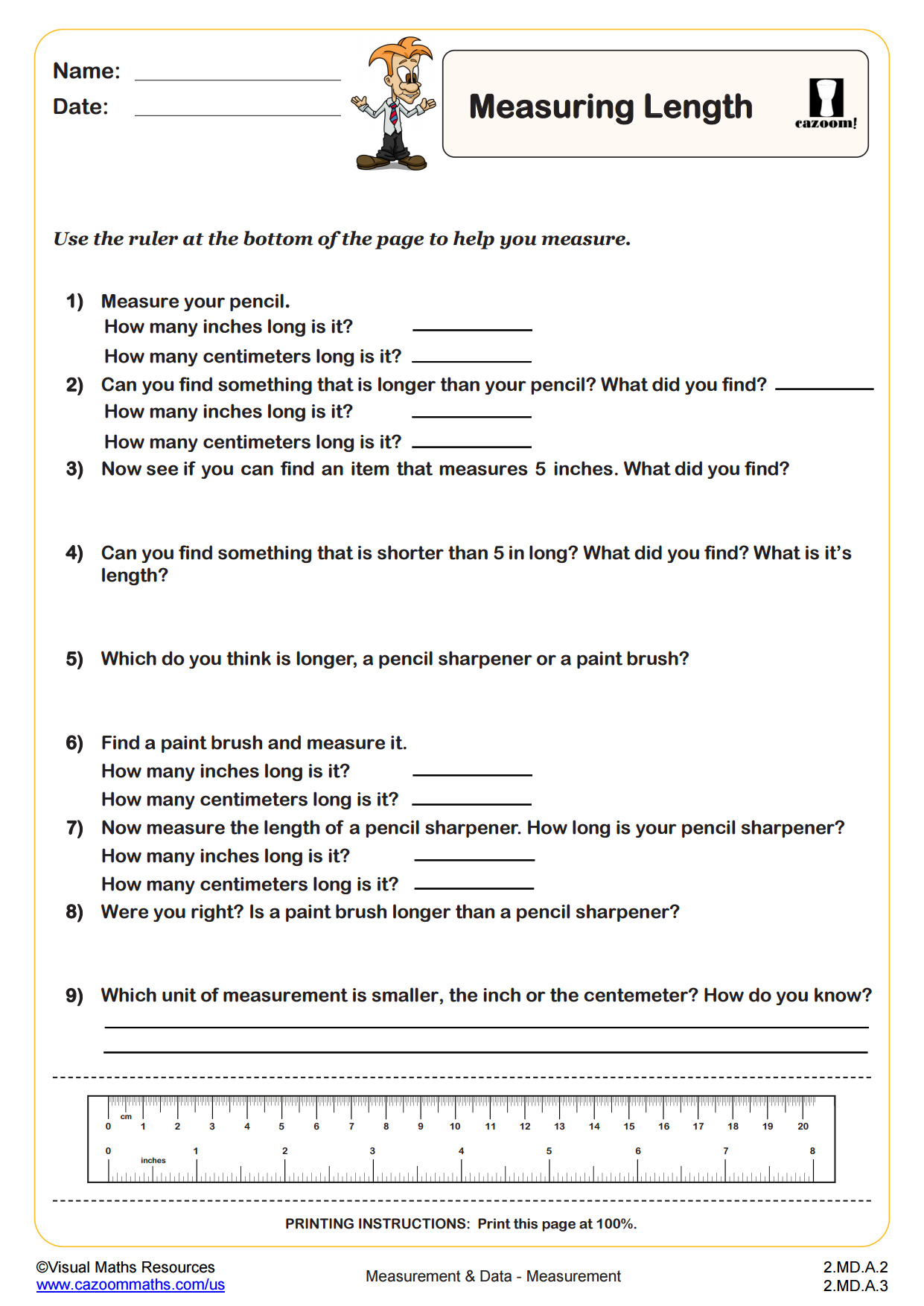
All worksheets are created by the team of experienced teachers at Cazoom Math.
What Measurement Skills Do 2nd Graders Need to Master?
Second graders focus on comparing and ordering measurements, understanding standard and non-standard units, and beginning to work with angles as a geometric concept. The Common Core State Standards expect 2nd graders to measure and estimate lengths in standard units, relate addition and subtraction to length, and work with time and money. While formal angle measurement typically appears in 4th grade, introducing angle vocabulary and comparison in 2nd grade builds important geometric reasoning.
Students often lose points on assessments when they confuse the tool with the unit—measuring with a ruler but recording the answer as "5 rulers" instead of "5 inches." Teachers notice that students make significant progress when they practice selecting the appropriate unit before measuring, which helps them develop measurement sense alongside procedural skills. Weight comparison activities particularly help students understand that measurement involves more than just length.
What Grade Levels Cover These Measurement Concepts?
This collection targets 2nd grade students in elementary school, aligning with the measurement and data standards for this grade level. At this stage, students transition from using non-standard units (paperclips, blocks) to working confidently with standard measurement tools like rulers, scales, and eventually protractors as they progress through elementary school.
The progression in measurement follows a clear developmental path. Second graders compare weights and begin recognizing that different objects require different measurement units. By 3rd grade, they measure more precisely with fractions of units. Fourth graders formally calculate and draw angles using protractors. Teachers observe that students who develop strong estimation skills in 2nd grade show greater confidence and accuracy when tackling more abstract measurement concepts in upper elementary grades.
How Do Students Learn to Choose the Correct Imperial Units?
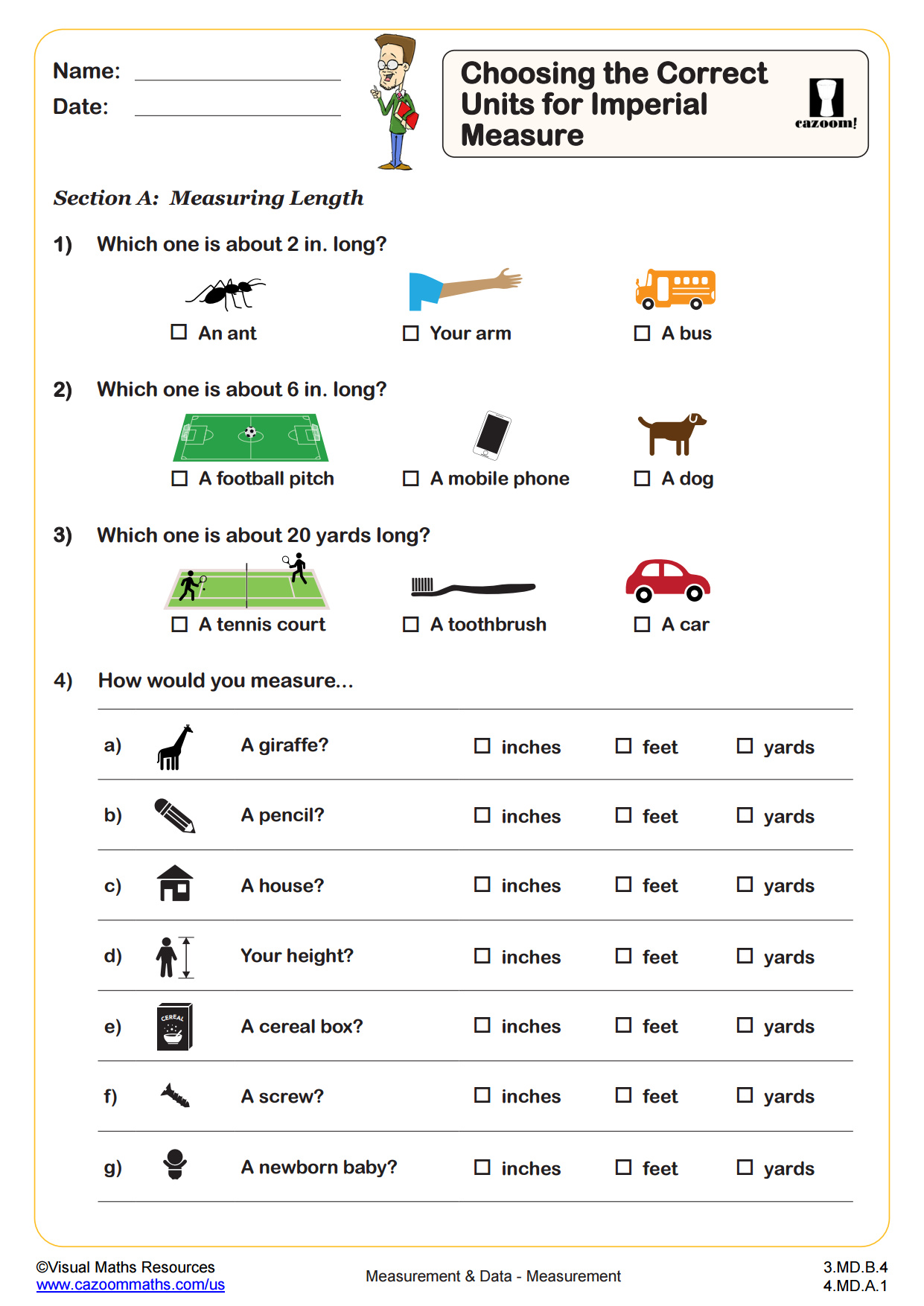
Choosing appropriate imperial units requires students to match the size of what they're measuring with the right unit—inches for small objects, feet for medium distances, yards for larger spaces, and miles for long distances. Students develop this skill through repeated exposure to real objects and their measurements, building mental benchmarks like "a paperclip is about one inch" or "a doorway is about 7 feet tall." Common errors include using inches to measure a football field or miles to measure a pencil.
This skill connects directly to construction, carpentry, and engineering fields where professionals must select tools and units based on project scale. Architects use feet and inches for room dimensions, while city planners use miles for transportation routes. When students practice selecting units, they're developing the same decision-making process that surveyors, builders, and landscape designers use daily to ensure accurate measurements and material estimates.
How Can Teachers Use These Measurement Worksheets in the Classroom?
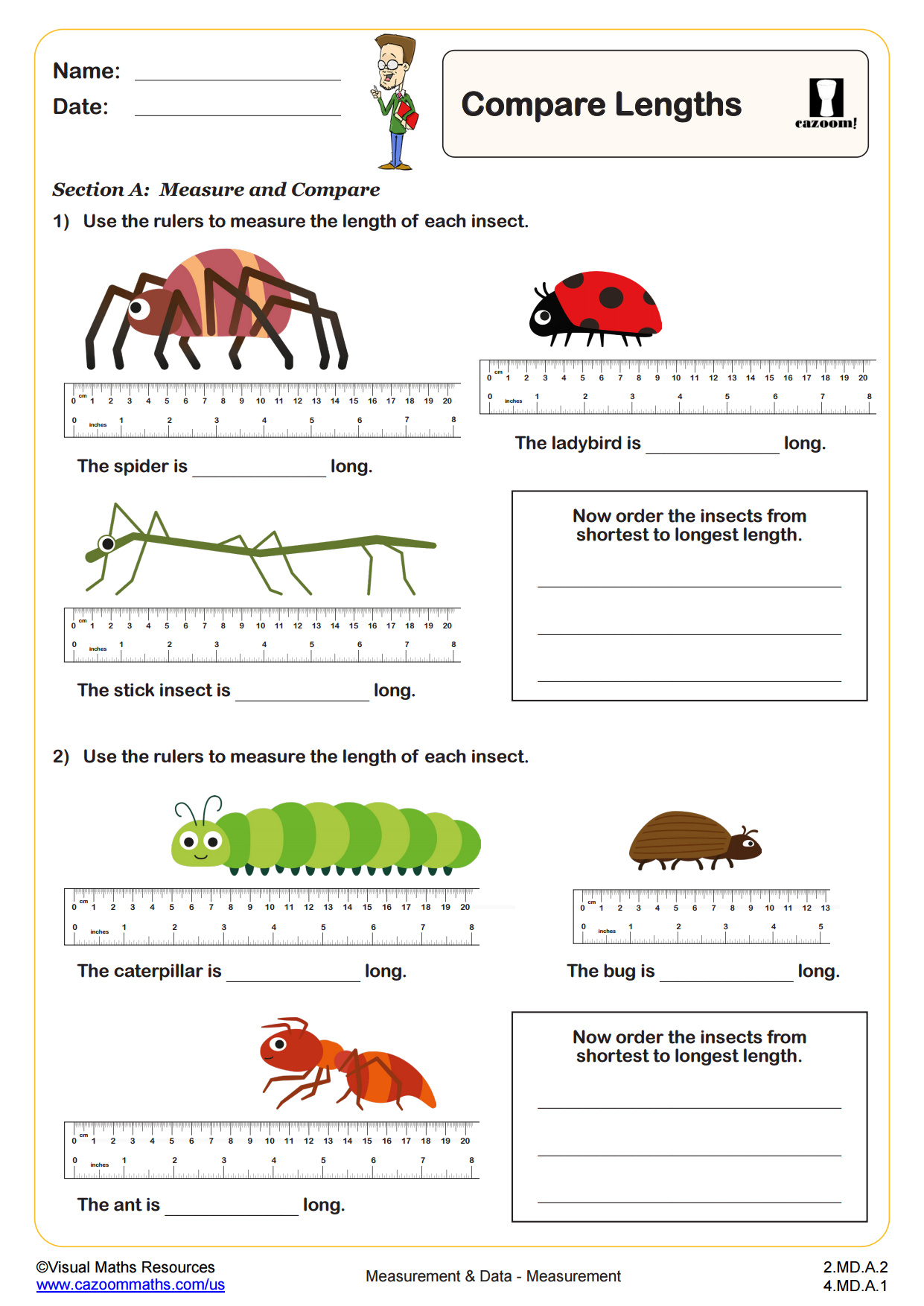
The worksheets scaffold measurement concepts by starting with visual comparisons before moving to calculations and unit selection. Many include diagrams and real-world contexts that help students visualize measurement scenarios. The angle worksheets introduce basic angle vocabulary and comparison before students encounter formal protractor use in later grades, building geometric intuition that pays dividends in 4th and 5th grade.
Teachers use these worksheets effectively during math stations, pairing them with physical measurement tools so students can verify their paper answers with hands-on measuring. They work well for differentiated instruction since struggling students can focus on comparison and estimation activities while advanced learners tackle angle calculations. The complete answer keys make them practical for independent practice, homework, or quick assessments to check understanding before moving to the next measurement concept.