2nd Grade Methods for Addition Worksheets
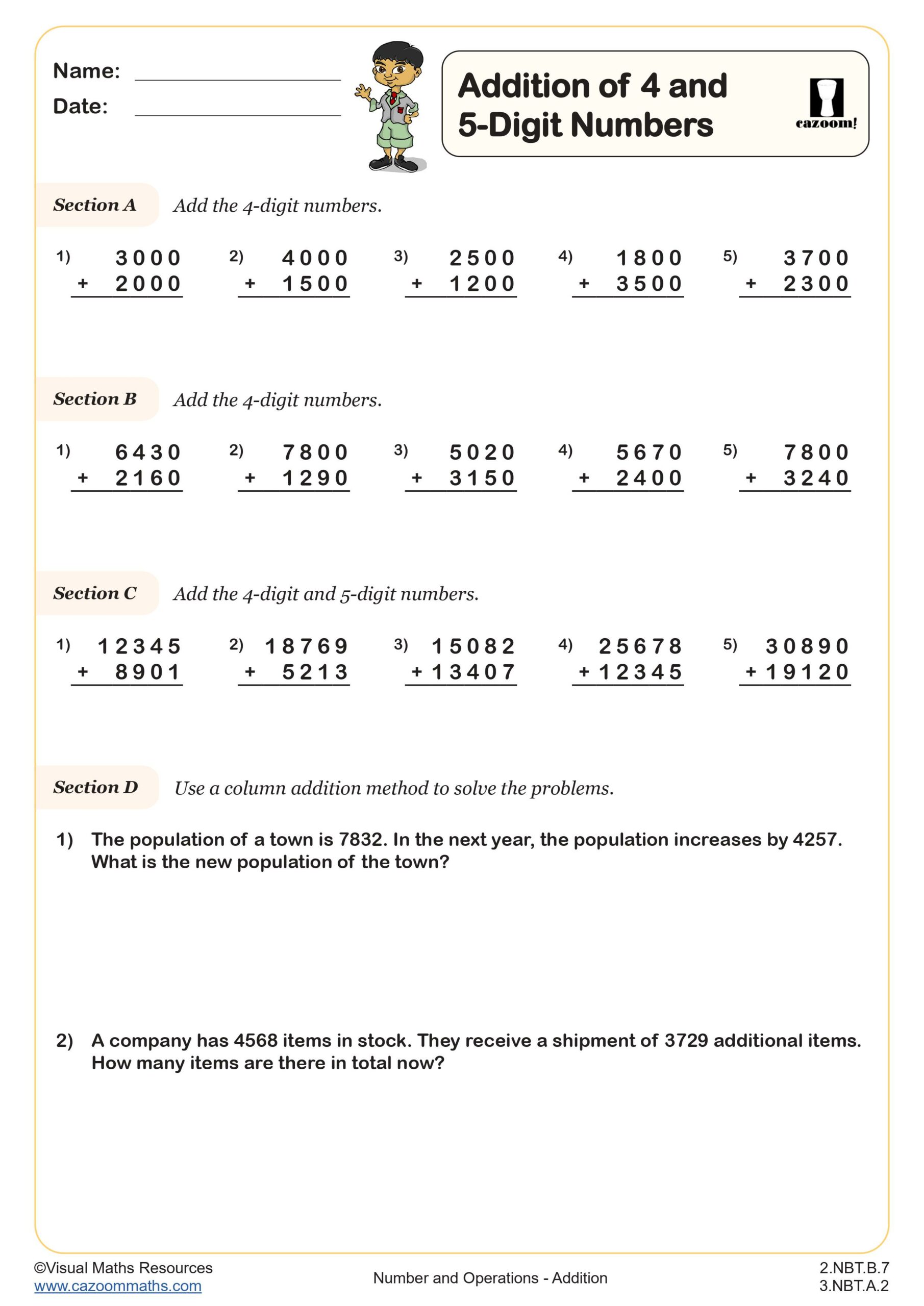
Addition of 4 and 5-digit Numbers
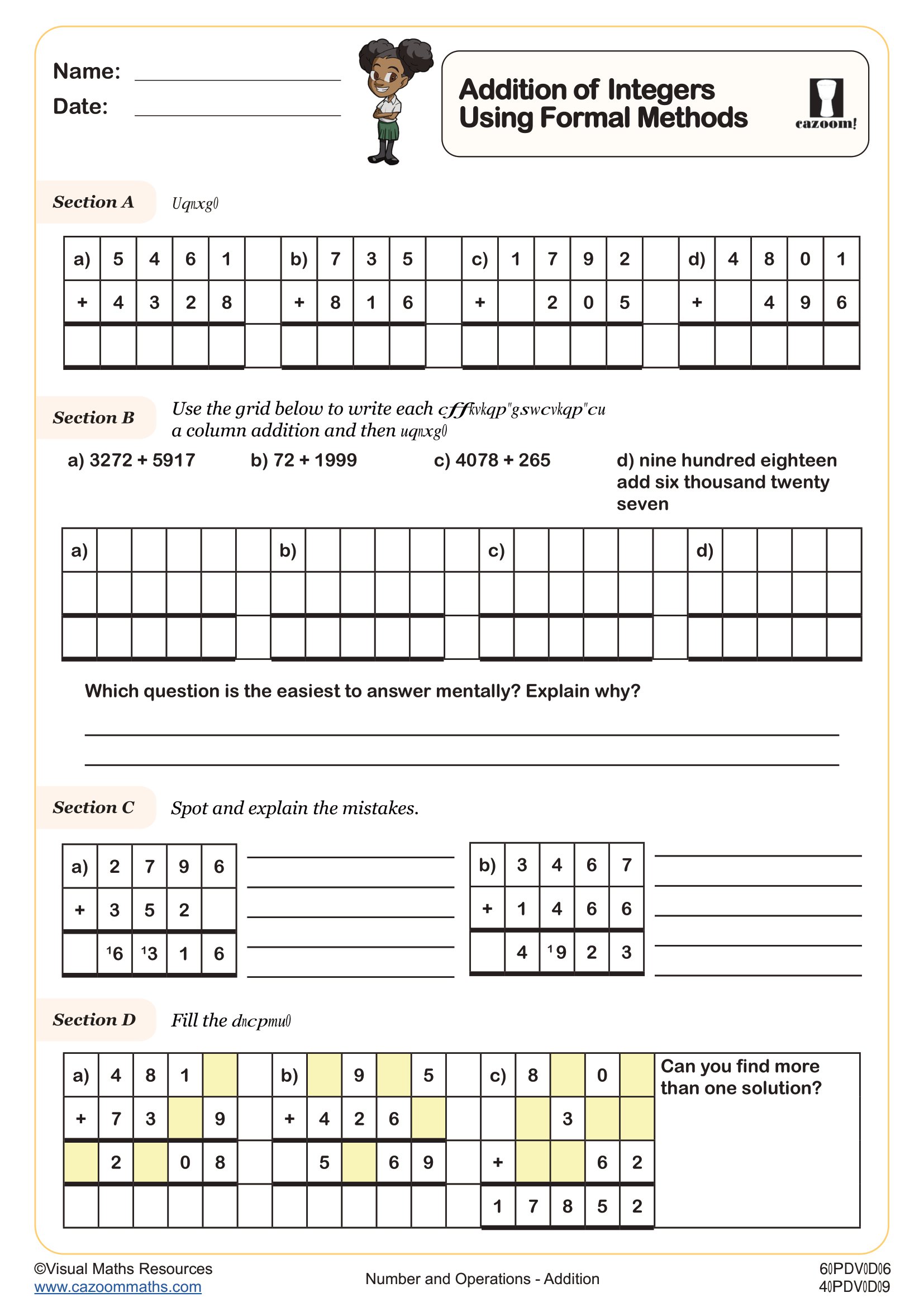
Addition of Integers Using Formal Methods
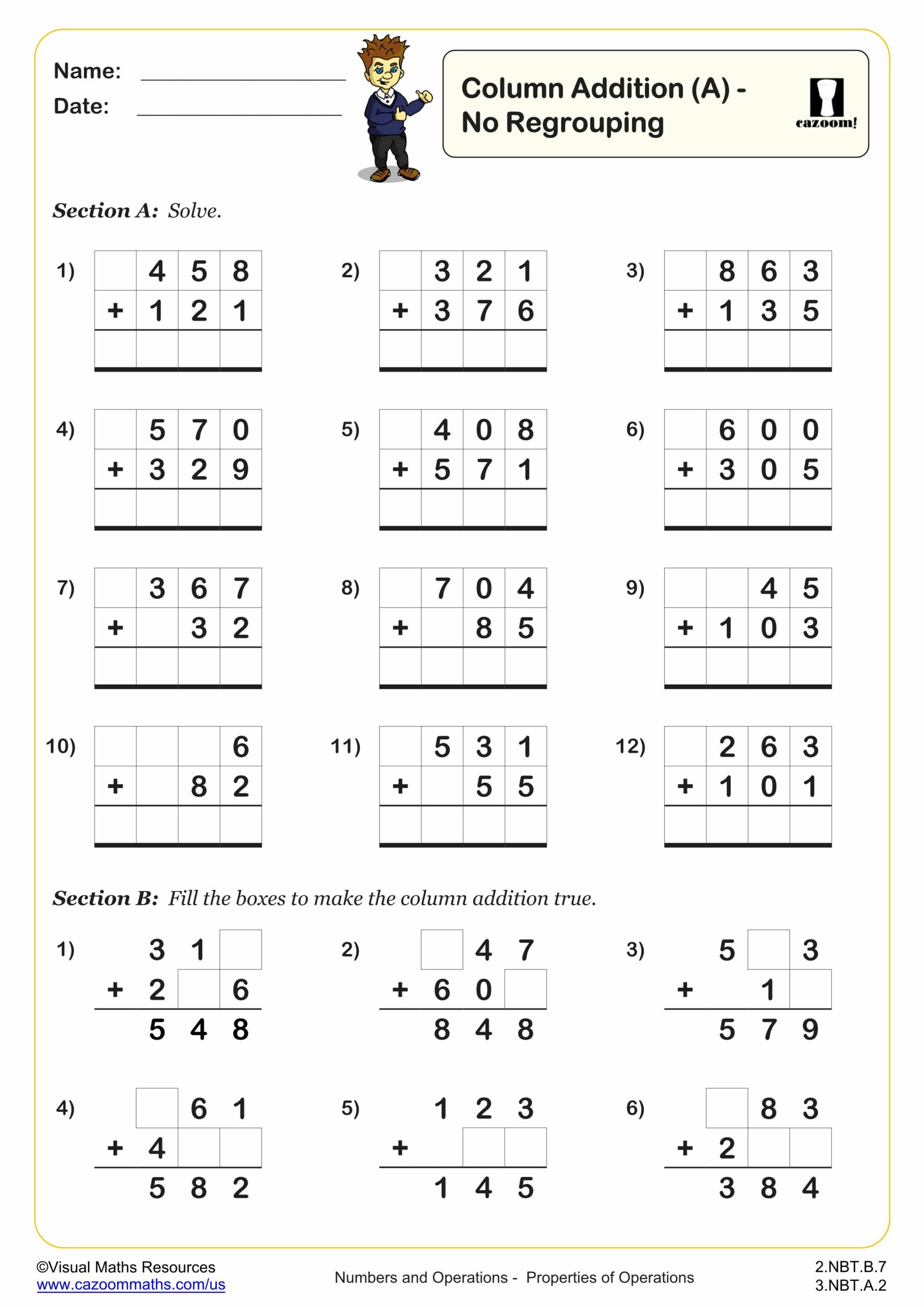
Column Addition (A)
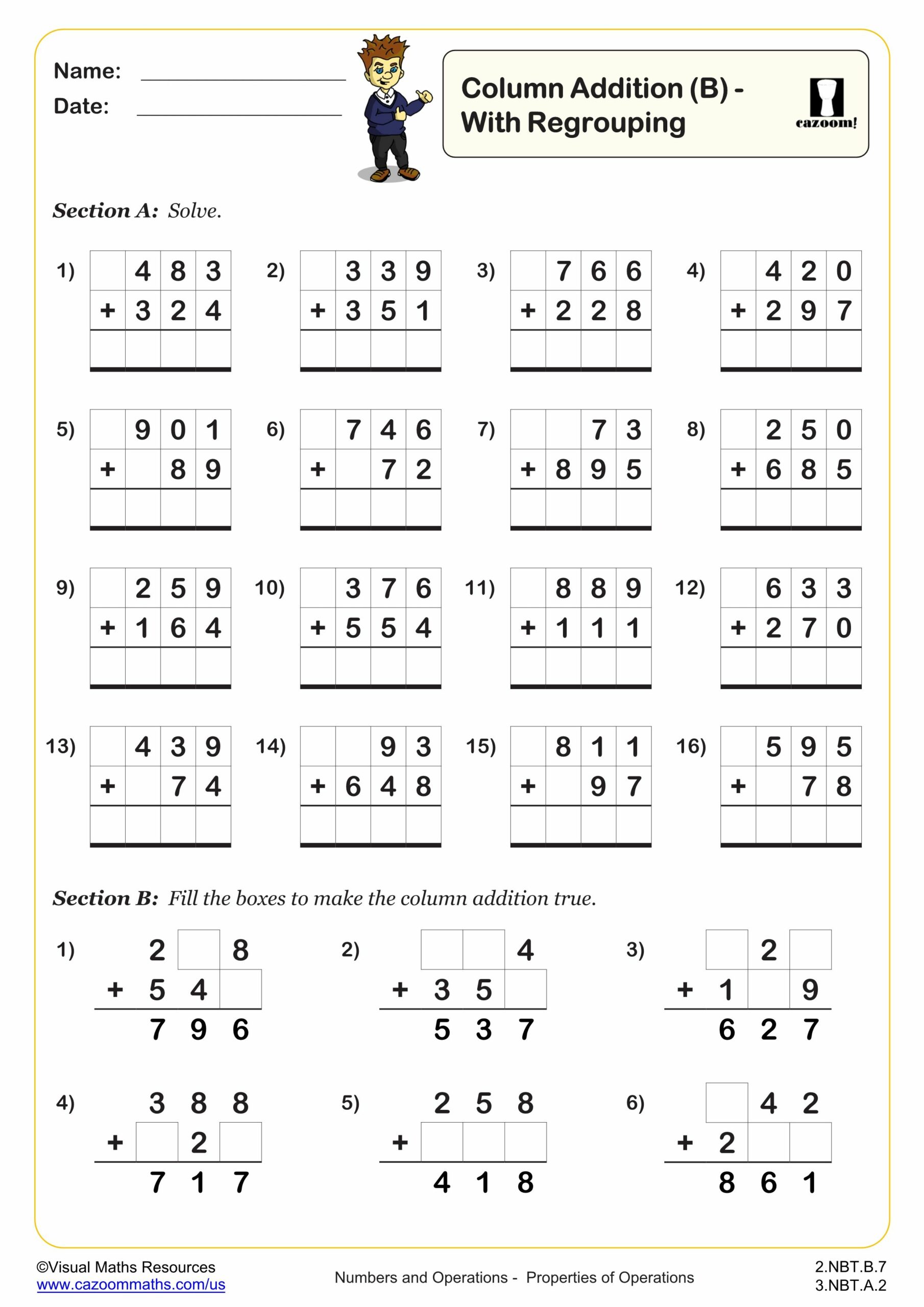
Column Addition (B)
Column Addition (C)
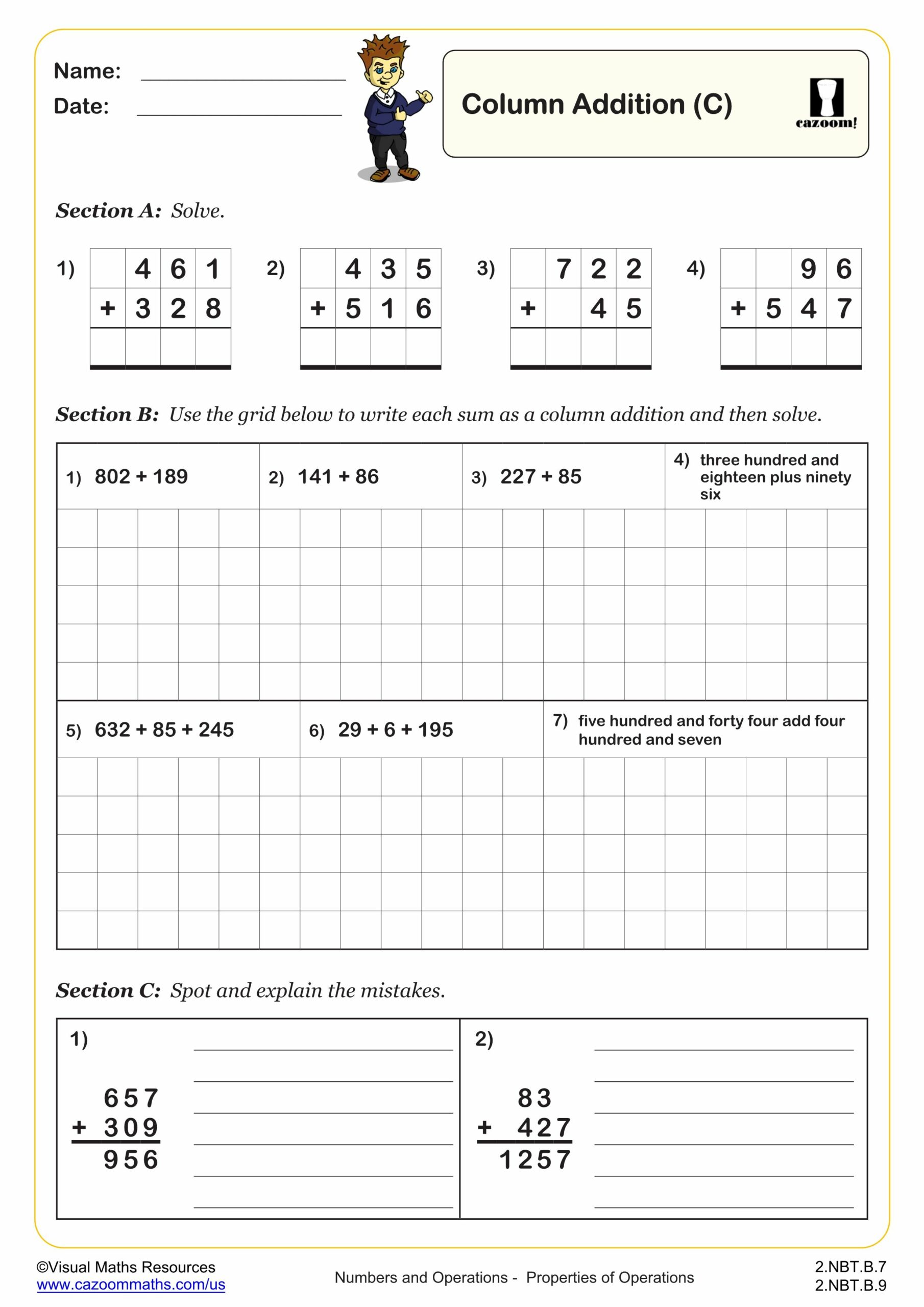
Column Addition Challenge
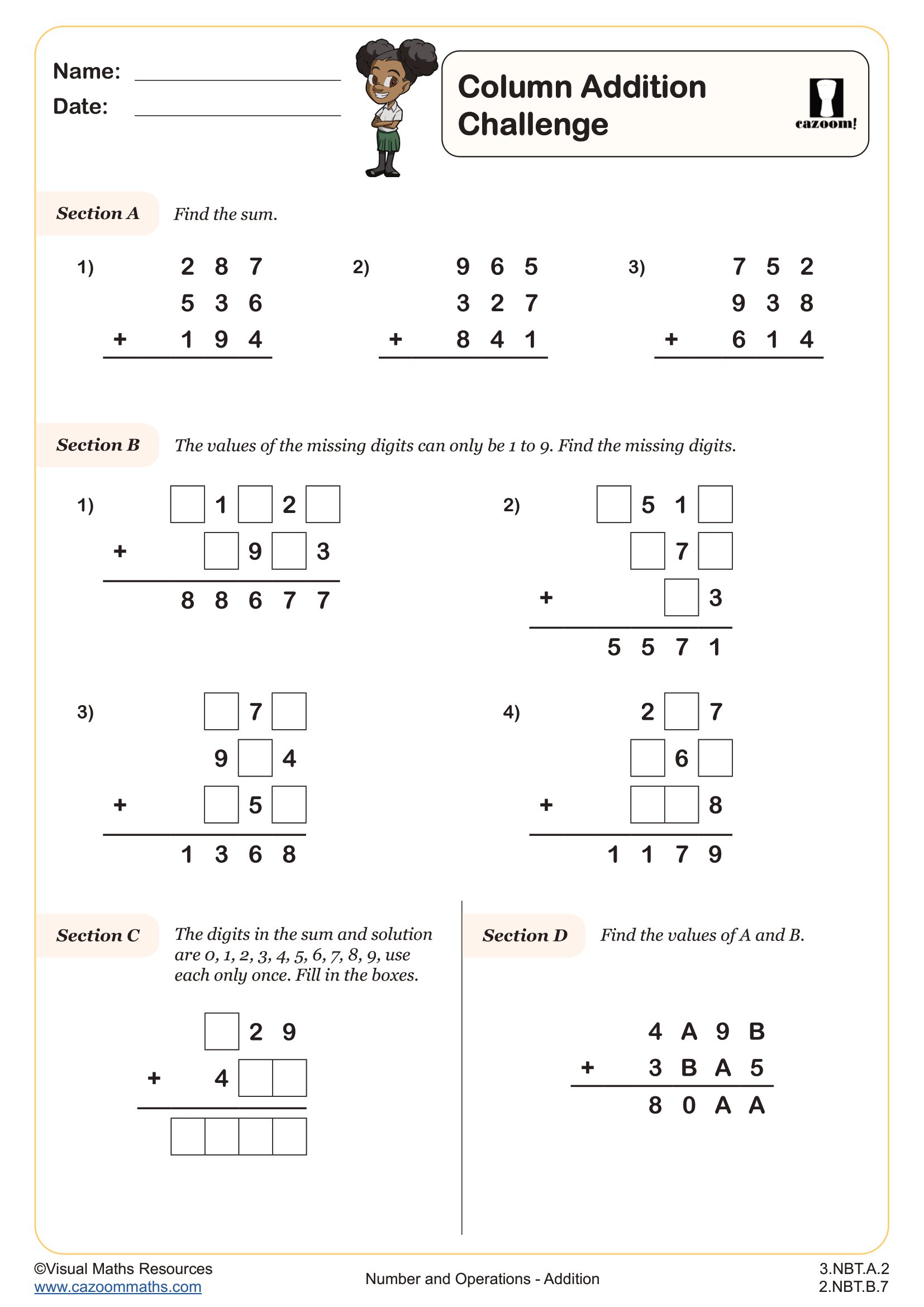
Column Addition of up to 3 Digits - No Regrouping
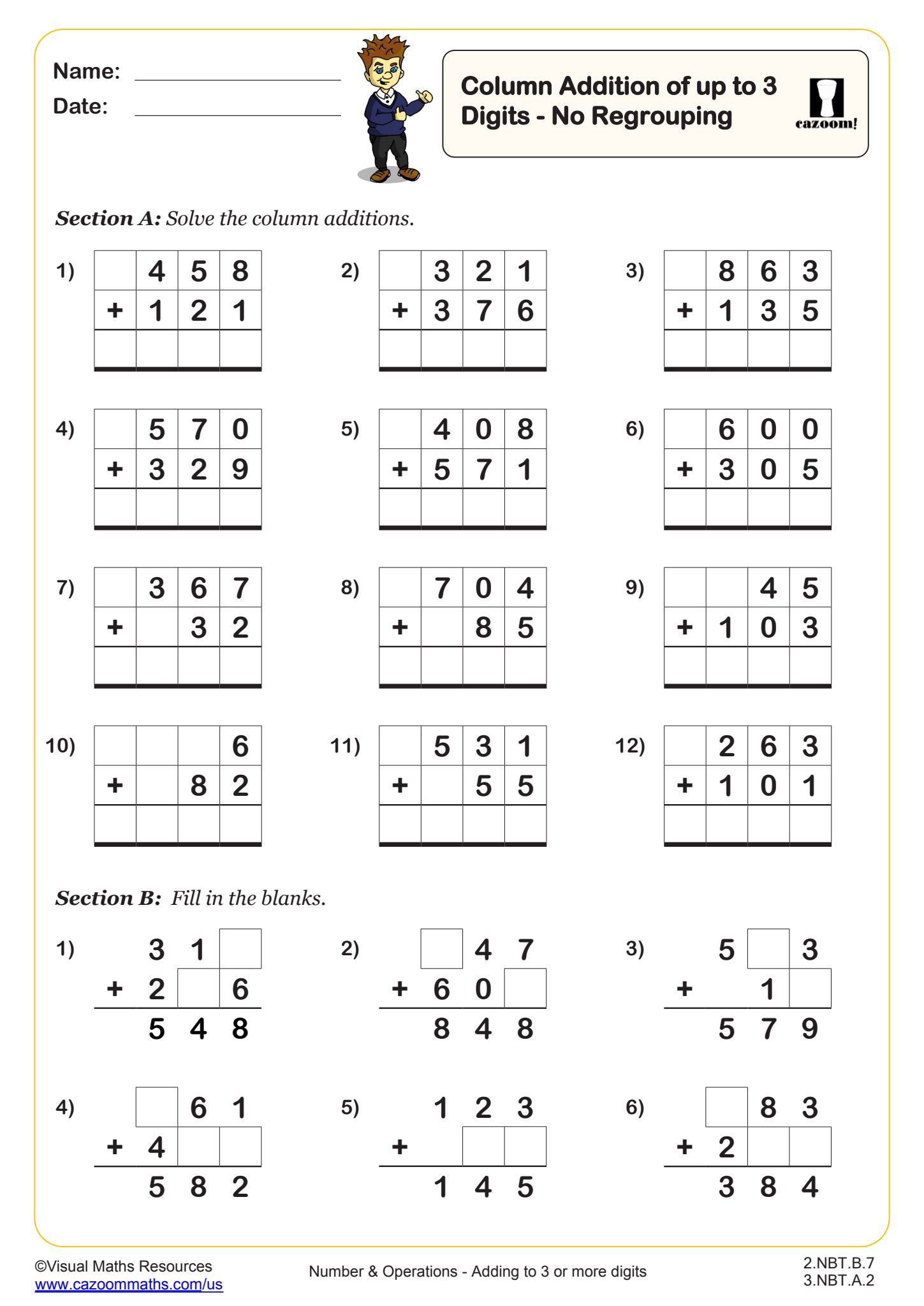
Column Addition of up to 3 Digits - With Regrouping (A)
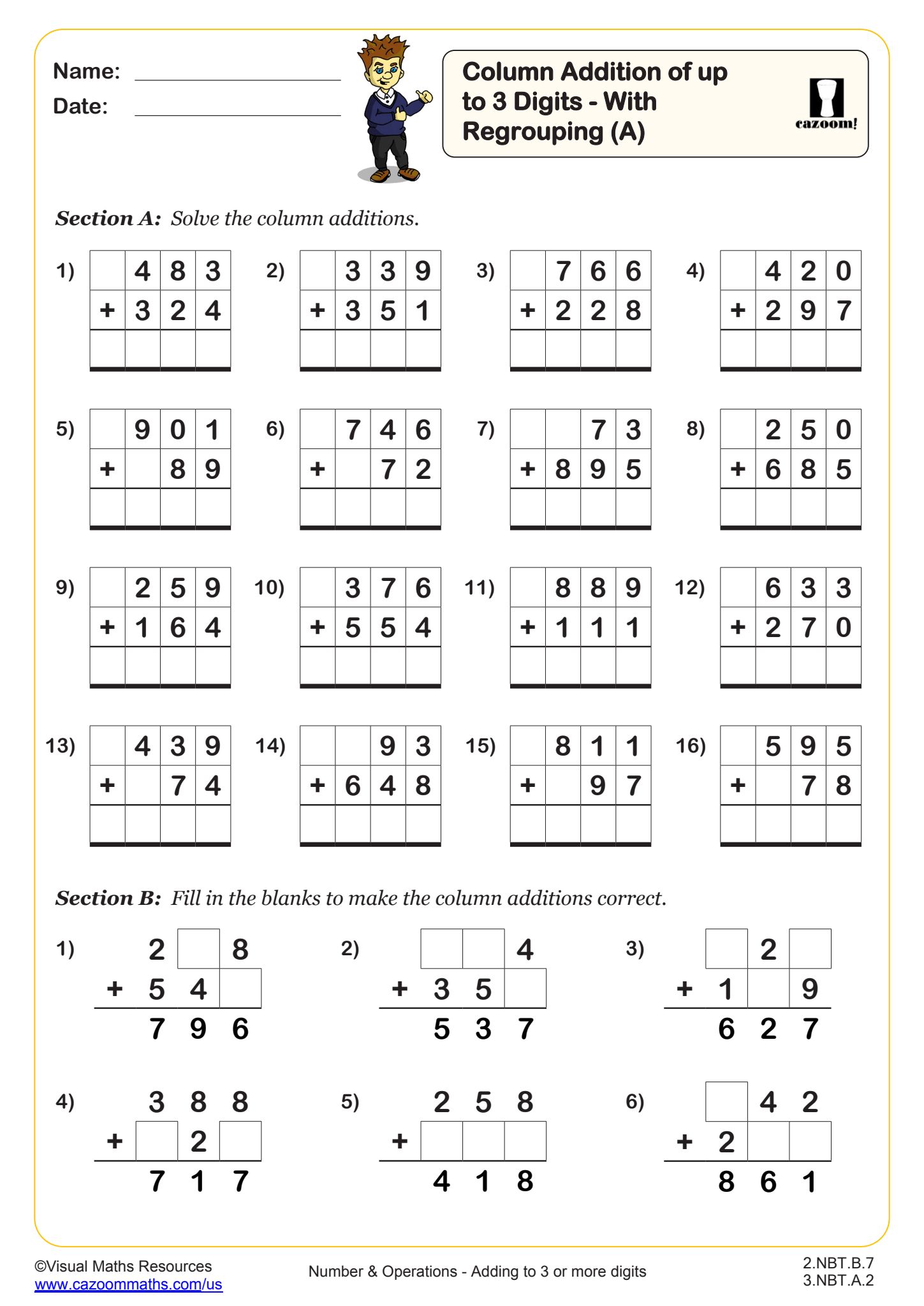
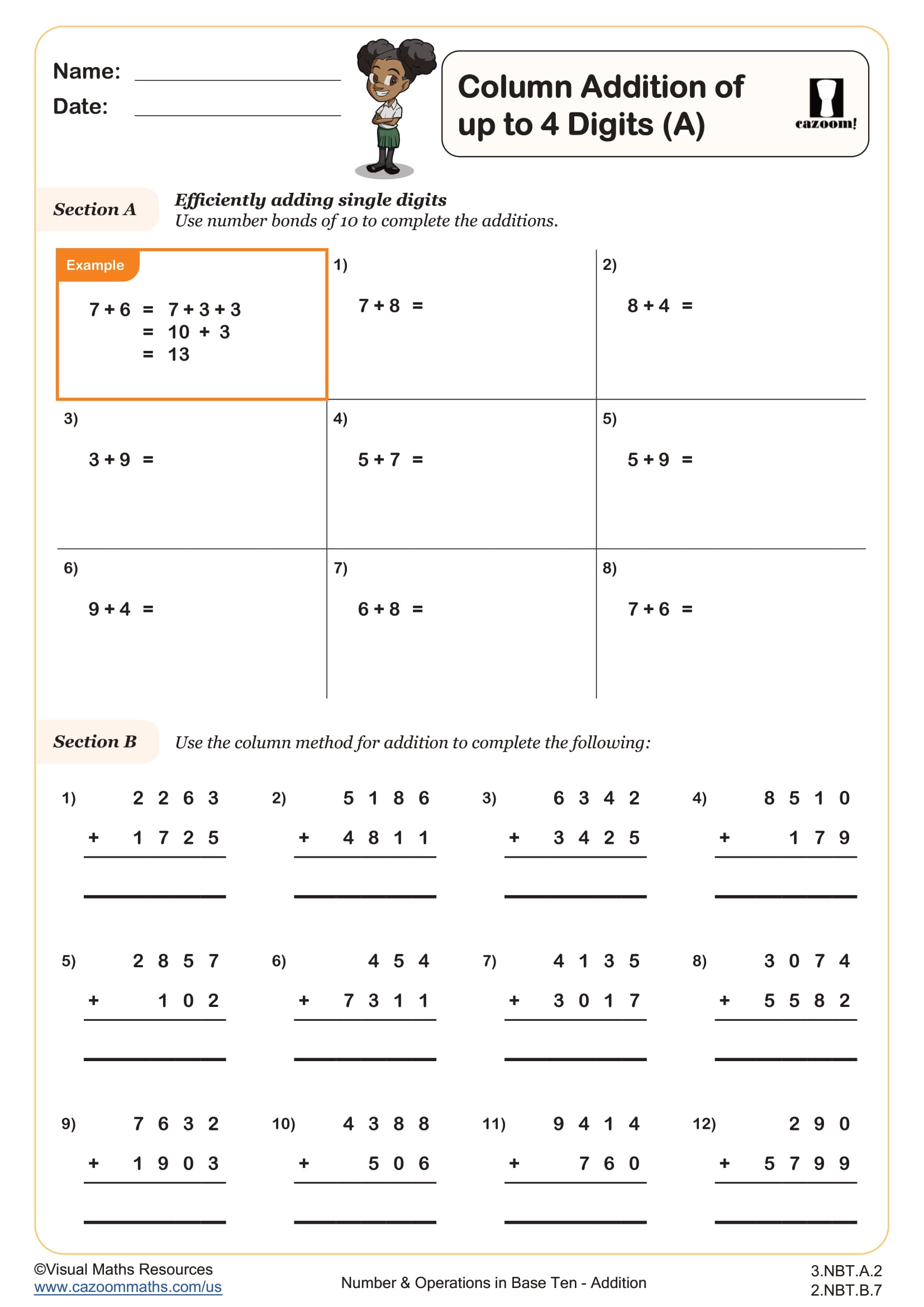
Column Addition of up to 4 Digits (A)
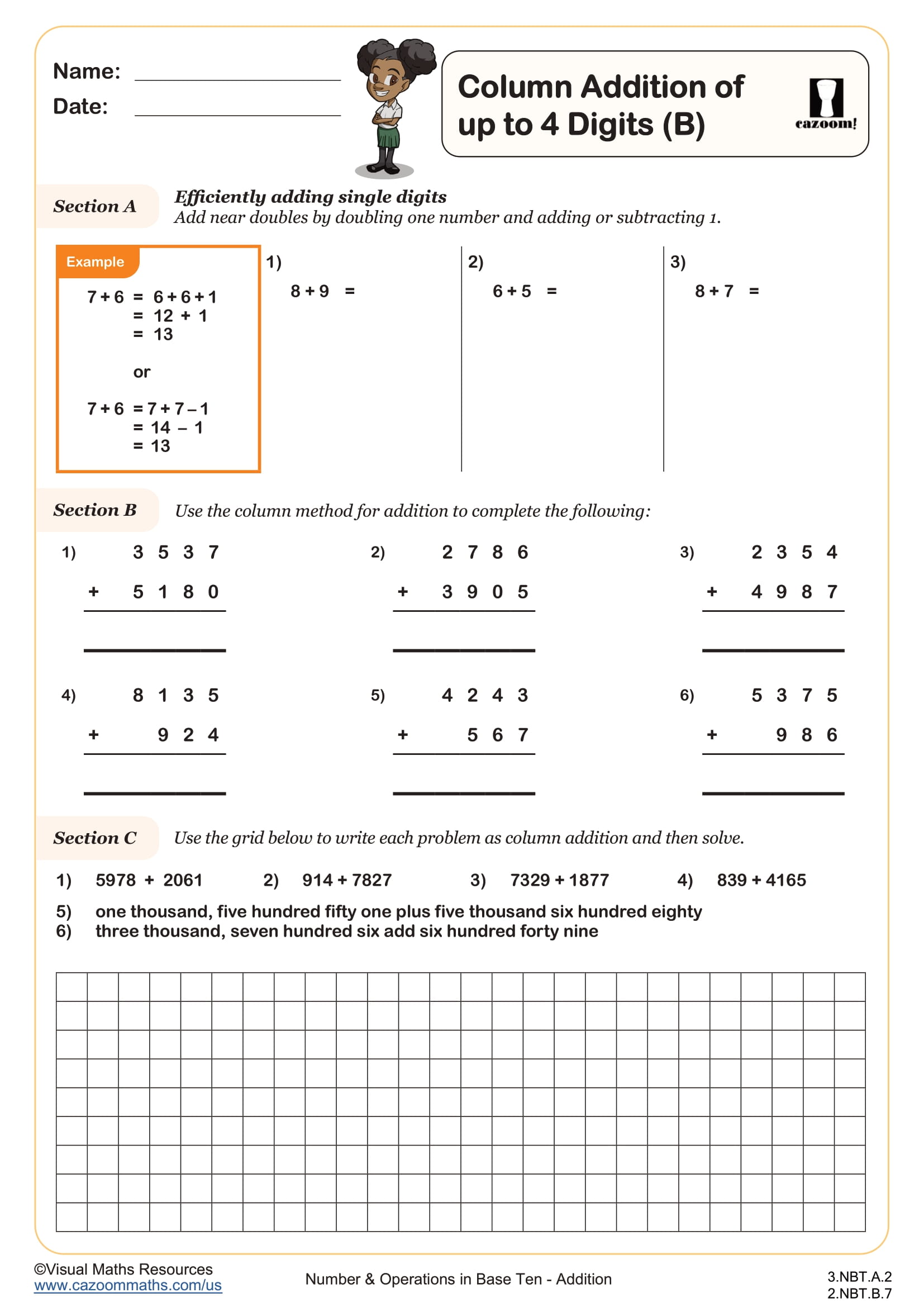
Column Addition of up to 4 Digits (B)
All worksheets are created by the team of experienced teachers at Cazoom Math.
What Are Methods for Addition in Second Grade Math?
Methods for addition refers to different strategies second graders use to solve addition problems beyond finger counting. These methods include breaking numbers apart (decomposition), using number lines, making tens, applying doubles facts, and recognizing that repeated addition connects to multiplication. According to Common Core State Standards for grade 2 (2.OA.B.2), students should fluently add within 20 using mental strategies and know all sums of one-digit numbers from memory by end of second grade.
Students often struggle when asked to explain their thinking about addition, even when they arrive at correct answers. The "products and sums" approach specifically helps students see patterns—for instance, recognizing that 2 × 3 gives the same result as 3 + 3. Teachers frequently notice that students who understand this connection develop stronger fact fluency because they can use what they know about one operation to support the other.
Which Grade Levels Use Methods for Addition Worksheets?
These worksheets specifically target second grade elementary school students who are developing computational fluency and learning to work with numbers within 100. At this stage, students transition from concrete counting methods to more abstract strategies, building the foundation for multi-digit addition and basic multiplication concepts introduced later in the year.
While second grade is the primary focus, students confidently tackle these concepts once they've mastered basic addition facts within 10 in first grade. Teachers often use these materials as review for struggling third graders who haven't yet developed automatic recall of addition facts. The progression within second grade moves from simple sums with smaller numbers to more complex combinations, helping students recognize that different addition expressions can equal the same total.
How Do Products and Sums Connect in Elementary Math?
Products and sums worksheets help students discover the relationship between multiplication (products) and repeated addition (sums). For example, students explore how 4 × 2 produces the same answer as 2 + 2 + 2 + 2, building conceptual understanding that multiplication is efficient repeated addition. This approach aligns with second grade standards that introduce the foundational concepts of multiplication through equal groups and arrays.
This connection appears throughout STEM fields, particularly in calculating area and understanding patterns in nature. When students measure garden plots or count items arranged in rows, they're using both products and sums to quantify what they observe. Engineers use these same principles when calculating materials needed for projects—recognizing that 5 sections needing 8 bolts each can be solved through repeated addition or multiplication. Understanding this relationship early makes algebraic thinking more accessible in later grades.
How Can Teachers Use These Addition Method Worksheets?
The worksheets provide systematic practice with multiple problem types, allowing students to recognize patterns across different representations of the same mathematical relationships. Each PDF includes varied examples that progress from straightforward problems to those requiring deeper thinking about number relationships. The consistent format helps students focus on the mathematical concepts rather than decoding new directions with each problem.
Teachers frequently use these worksheets during math centers or stations, allowing students to work independently while small groups receive targeted instruction. The answer keys make them particularly valuable for homework assignments, enabling families to support practice at home with confidence. Many teachers also find them effective for quick warm-up activities or as informal assessments to identify which students need additional support with fact fluency before moving to more complex operations.