2nd Grade Methods for Subtraction Worksheets
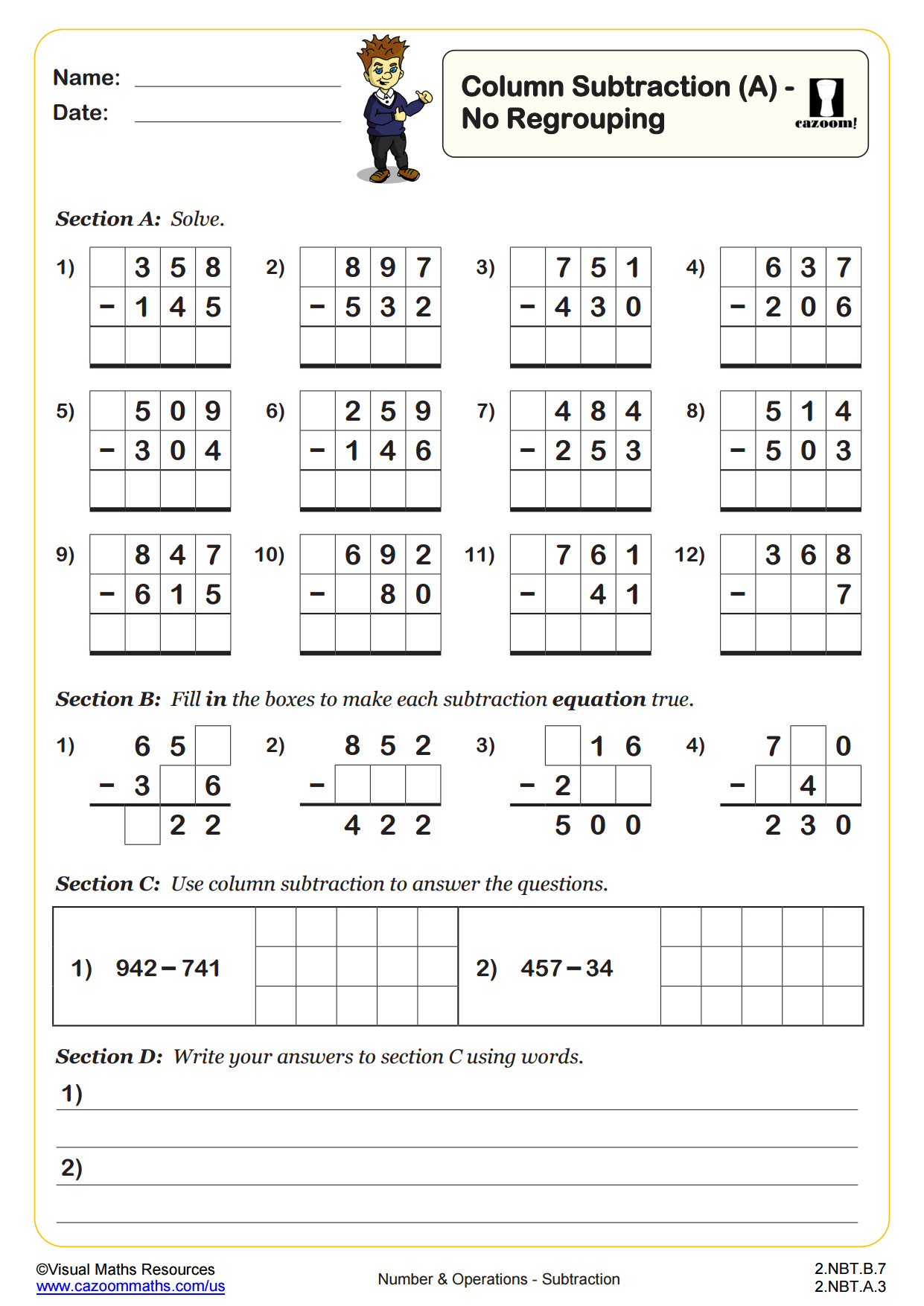
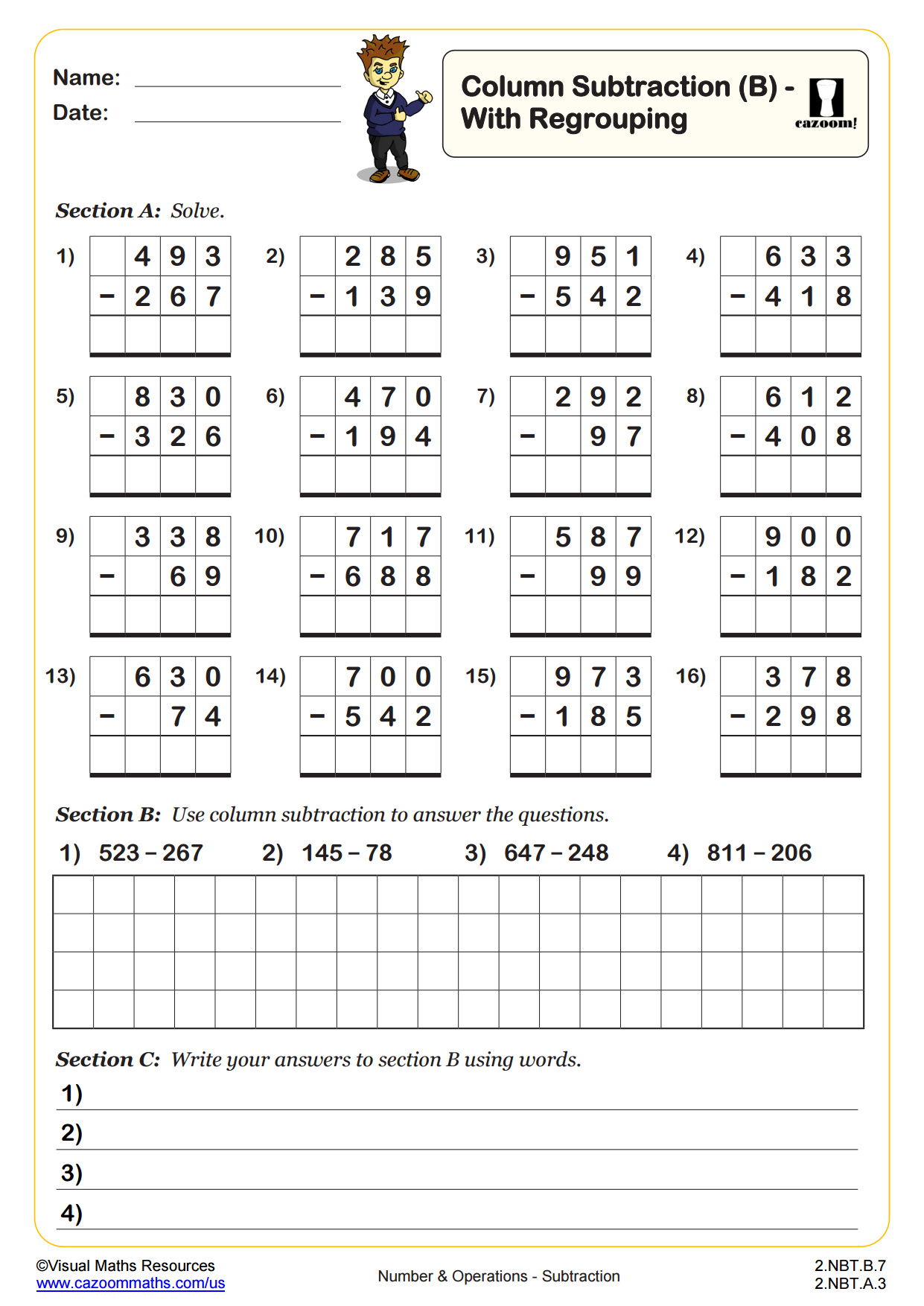
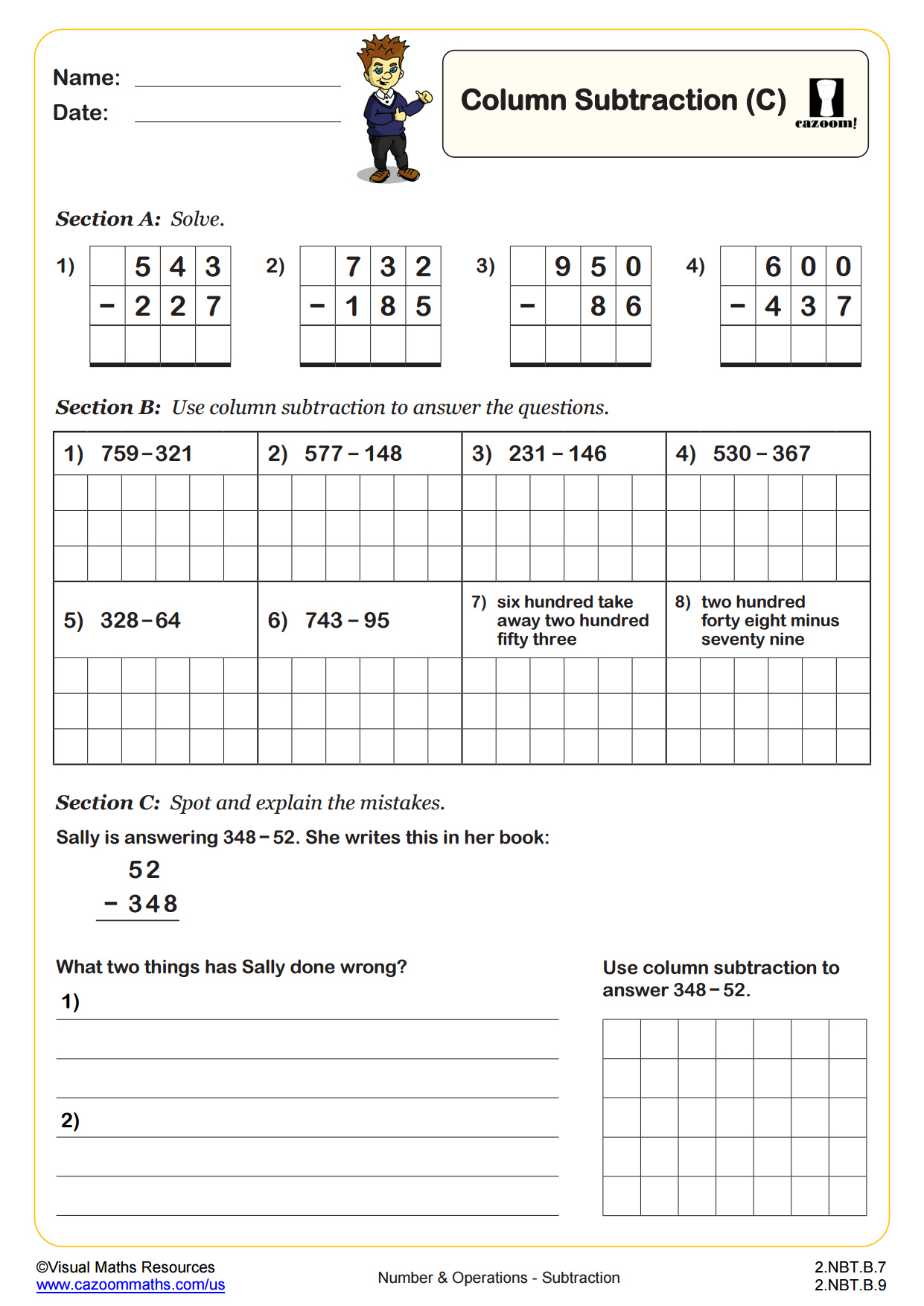
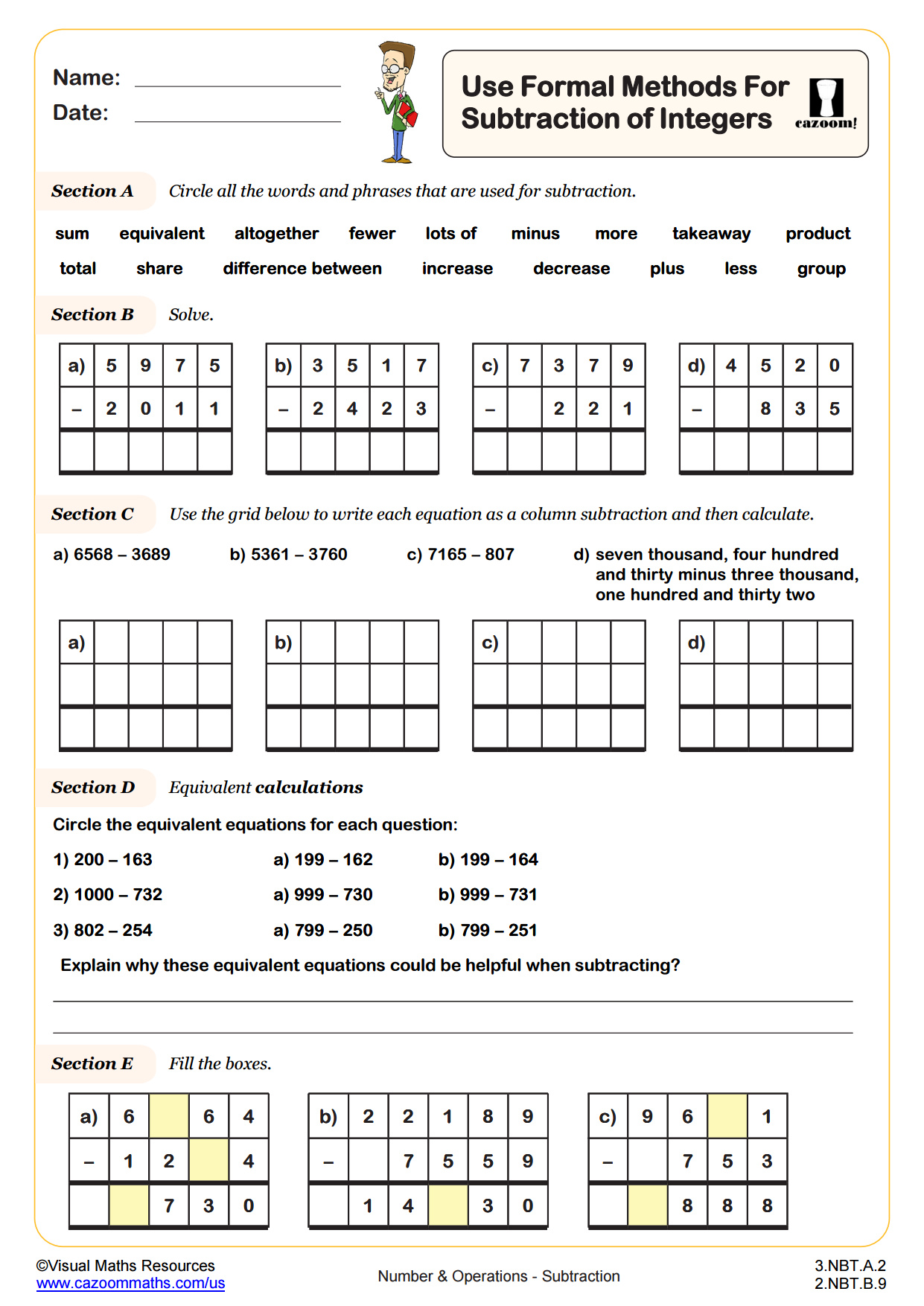
All worksheets are created by the team of experienced teachers at Cazoom Math.
What Are the Different Methods for Subtraction in Second Grade?
Second grade students learn several subtraction strategies aligned with Common Core standards, including counting back, using number lines, decomposing numbers, and most importantly, the standard algorithm with column subtraction. The formal column method teaches students to line up place values vertically and subtract from right to left, regrouping when necessary. This algorithm becomes their primary tool for solving problems beyond basic facts.
Many teachers notice students lose points on assessments when they subtract the smaller digit from the larger digit in each column regardless of position—for example, computing 52 - 37 as 25 instead of 15 because they calculate 7 - 2 rather than recognizing the need to regroup. Worksheets that emphasize proper alignment and regrouping steps help students catch these errors before they become habits.
Which Grade Levels Use These Subtraction Method Worksheets?
These worksheets target second grade students in elementary school, the critical year when students transition from concrete subtraction strategies to formal algorithms. Second graders work with two-digit and three-digit numbers, learning to regroup across one or more place values and developing fluency with the standard subtraction algorithm.
The progression within second grade moves from basic column subtraction without regrouping to increasingly complex problems requiring multiple borrowing steps. Students who master column subtraction in second grade enter third grade ready to tackle subtraction with larger numbers and apply these skills to word problems, measurement contexts, and eventually algebraic thinking where understanding the inverse relationship between addition and subtraction becomes essential.
What Is Column Subtraction and Why Does It Matter?
Column subtraction, also called the standard algorithm, arranges numbers vertically by place value and subtracts each column starting from the ones place. When a digit in the top number is smaller than the digit below it, students regroup by borrowing from the next column to the left. This method works efficiently for any size numbers and prepares students for multi-digit operations throughout their math education.
Engineers and accountants rely on this algorithm daily when calculating differences in measurements, budgets, and data sets. For example, construction workers subtract measurements when determining how much material remains after cutting—if they need to cut 47 inches from a 92-inch board, column subtraction quickly shows 45 inches remain. Understanding regrouping in subtraction also builds number sense that transfers to decimals and money calculations in later grades.
How Can Teachers Use These Subtraction Worksheets Effectively?
The worksheets scaffold learning by progressing from simpler column subtraction problems to more complex multi-digit scenarios requiring multiple regrouping steps. Students benefit from working through problems systematically, using the answer keys to self-check their work and identify where regrouping errors occur. Teachers can use earlier worksheets as formative assessments to determine which students understand place value alignment before moving to advanced problems.
These materials work well for differentiated instruction—students who grasp the concept quickly can move to later worksheets while others receive targeted small-group instruction with the foundational sheets. Many teachers assign one worksheet for independent practice after whole-group instruction, then use another for homework to reinforce the day's learning. The worksheets also serve effectively as intervention tools during RTI sessions or as warm-up activities to maintain subtraction fluency throughout the school year.