2nd Grade Number Bonds Over 20 Worksheets
Making 100 with 3 Numbers (A) (multiples of 10)
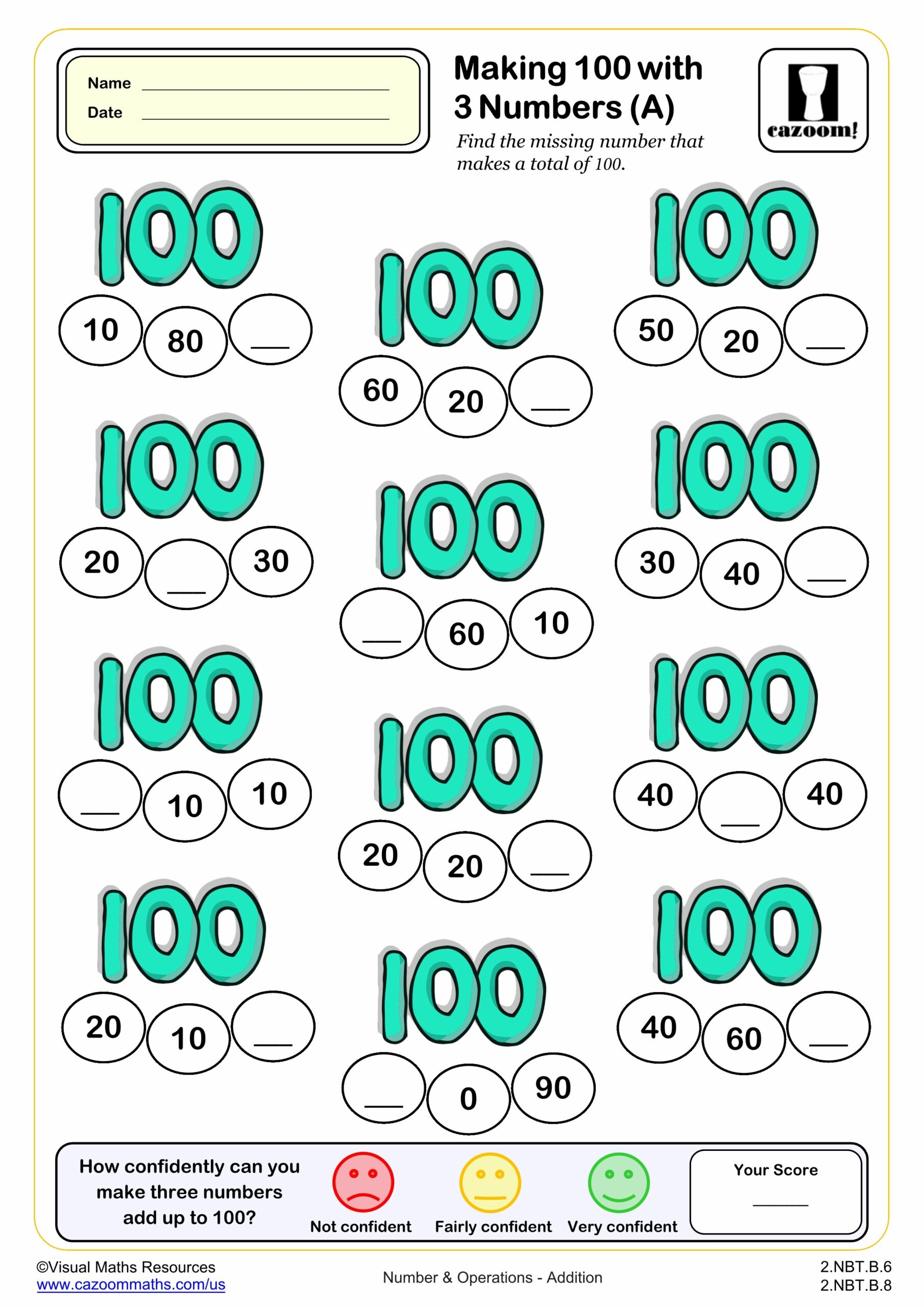
Making 100 with 3 numbers (B) (multiples of 5)
Making 100 with 3 numbers (blanks)
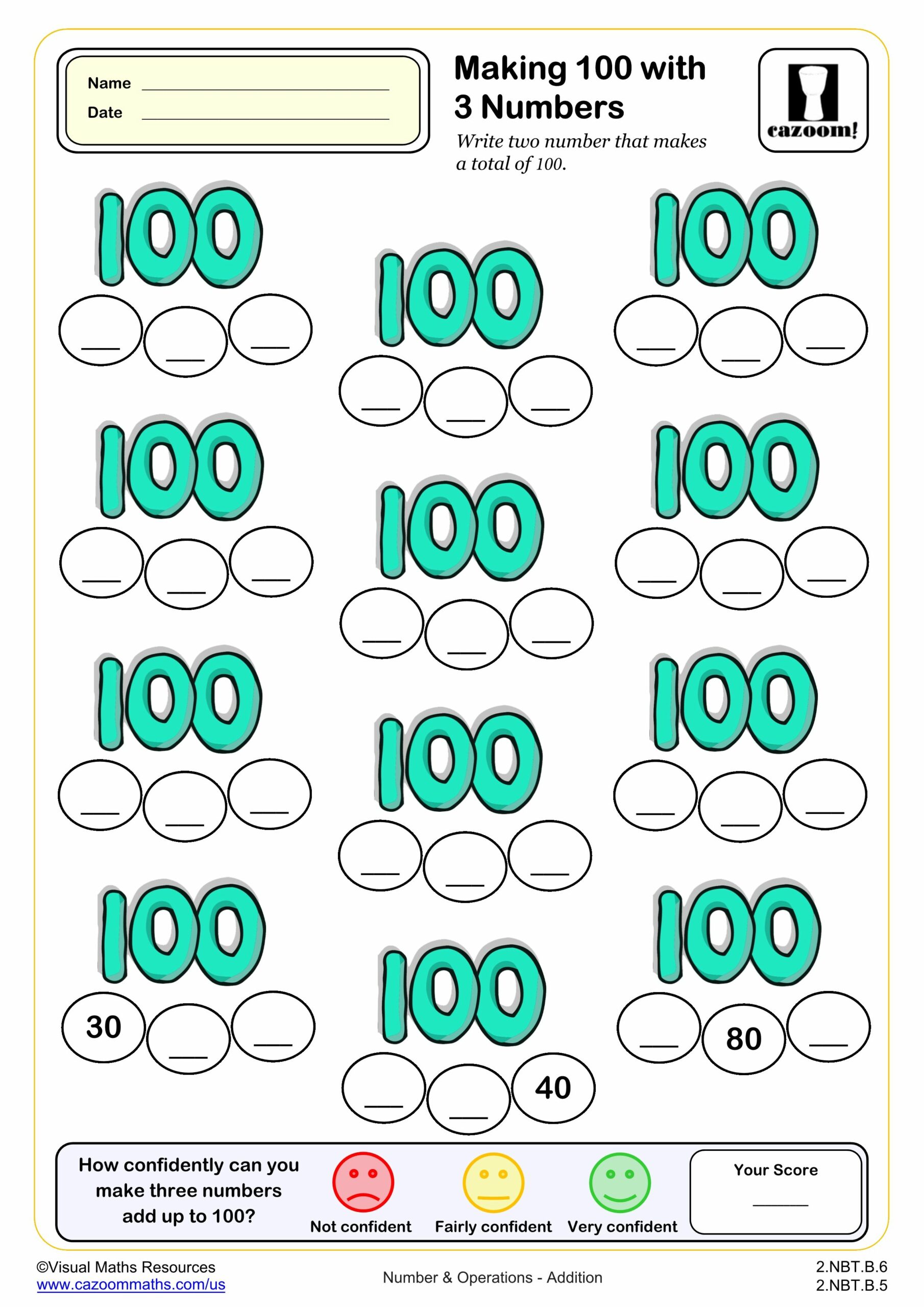
Making 100 with 3 numbers (C)
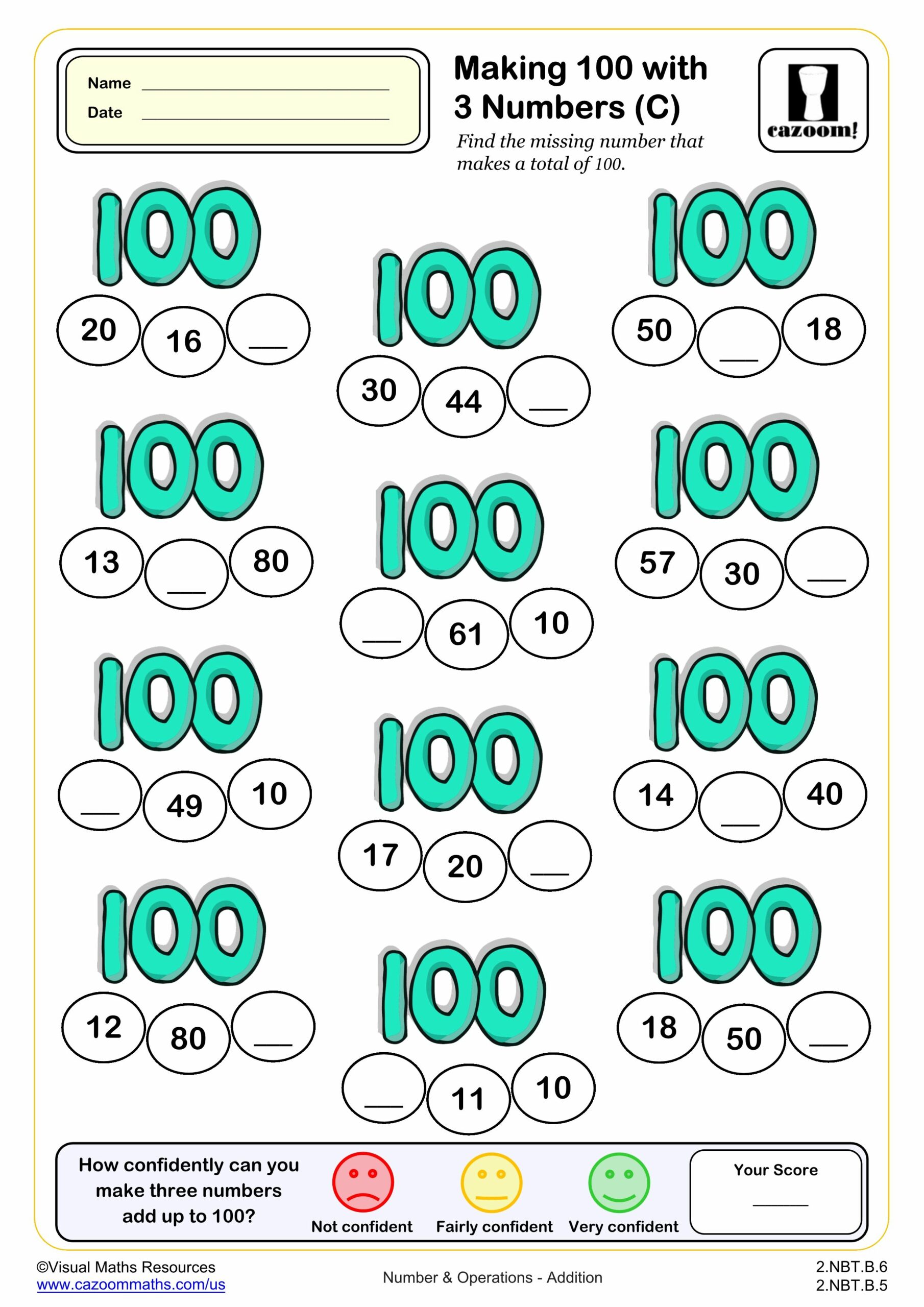
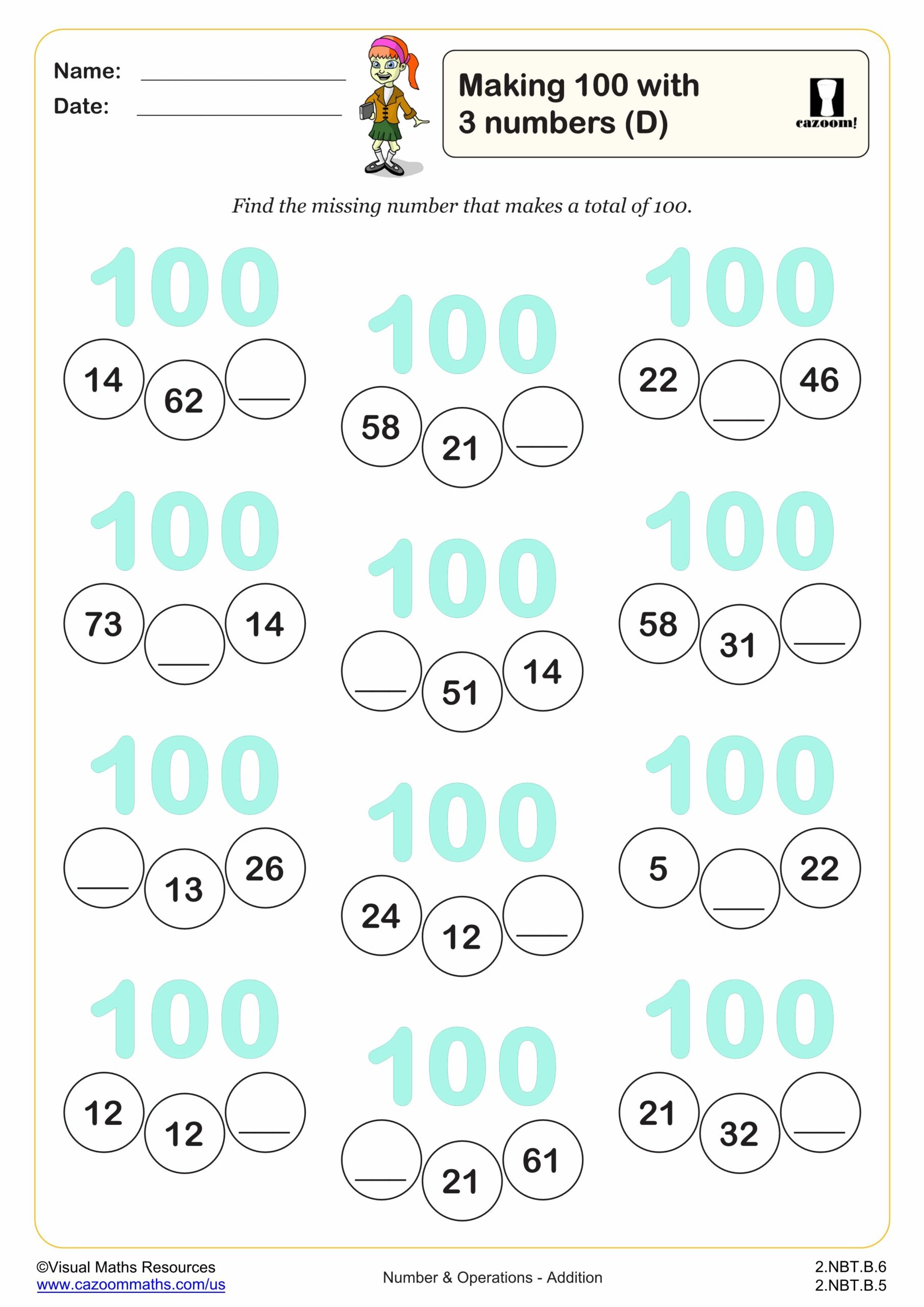
Making 100 with 3 numbers (D) (no regrouping)
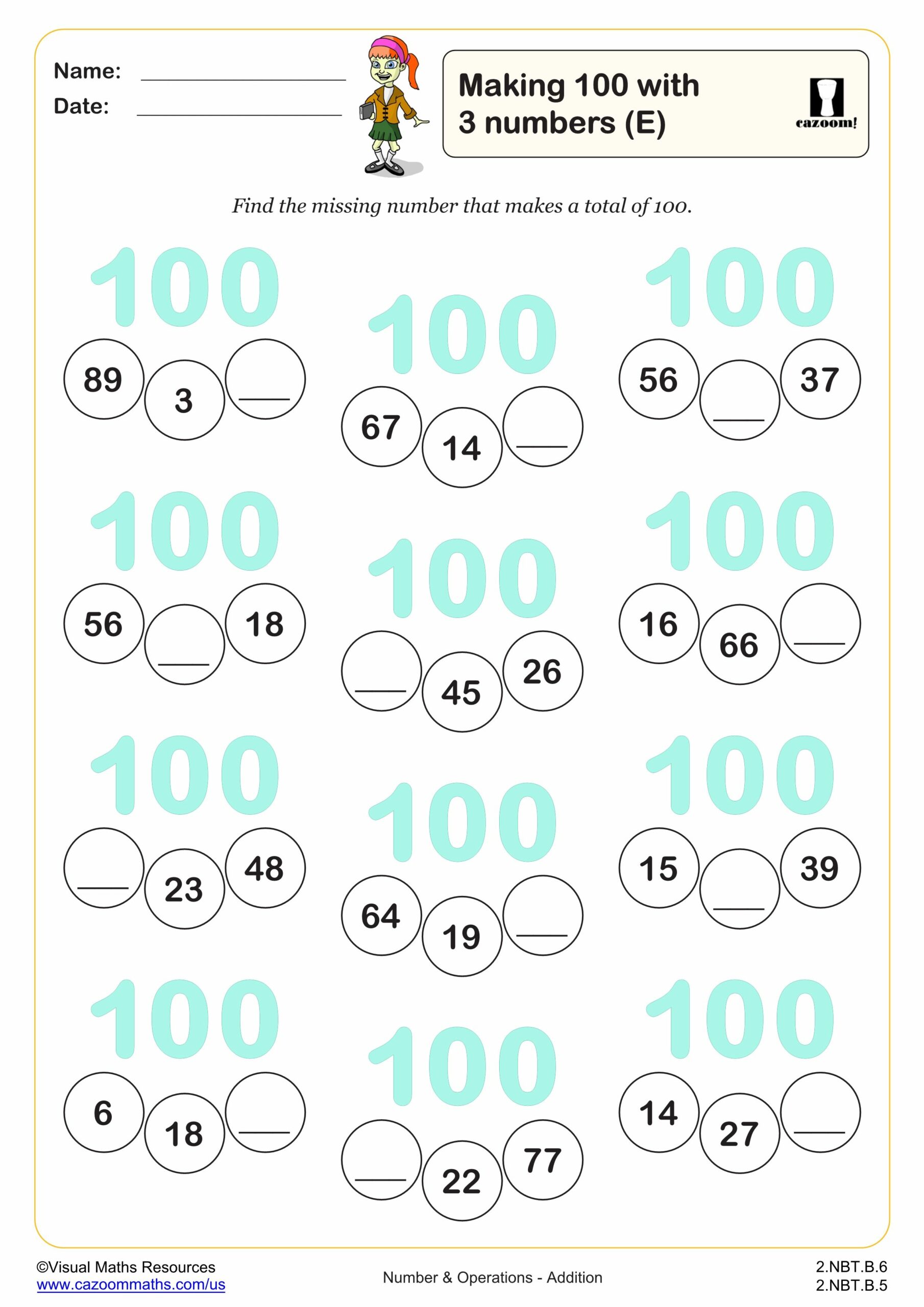
Making 100 with 3 numbers (E) (with regrouping)
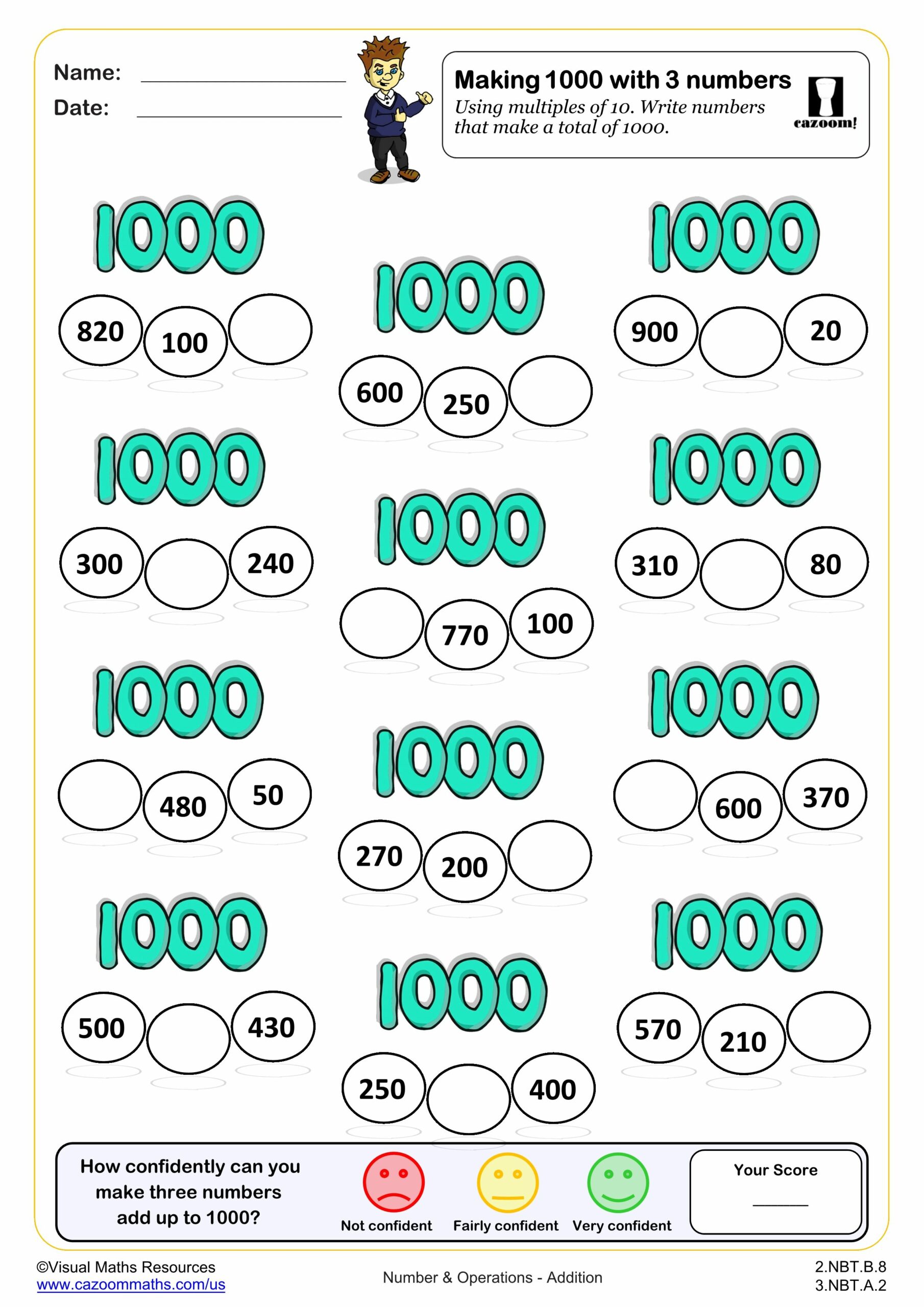
Making 1000 with 3 numbers using multiples of 10
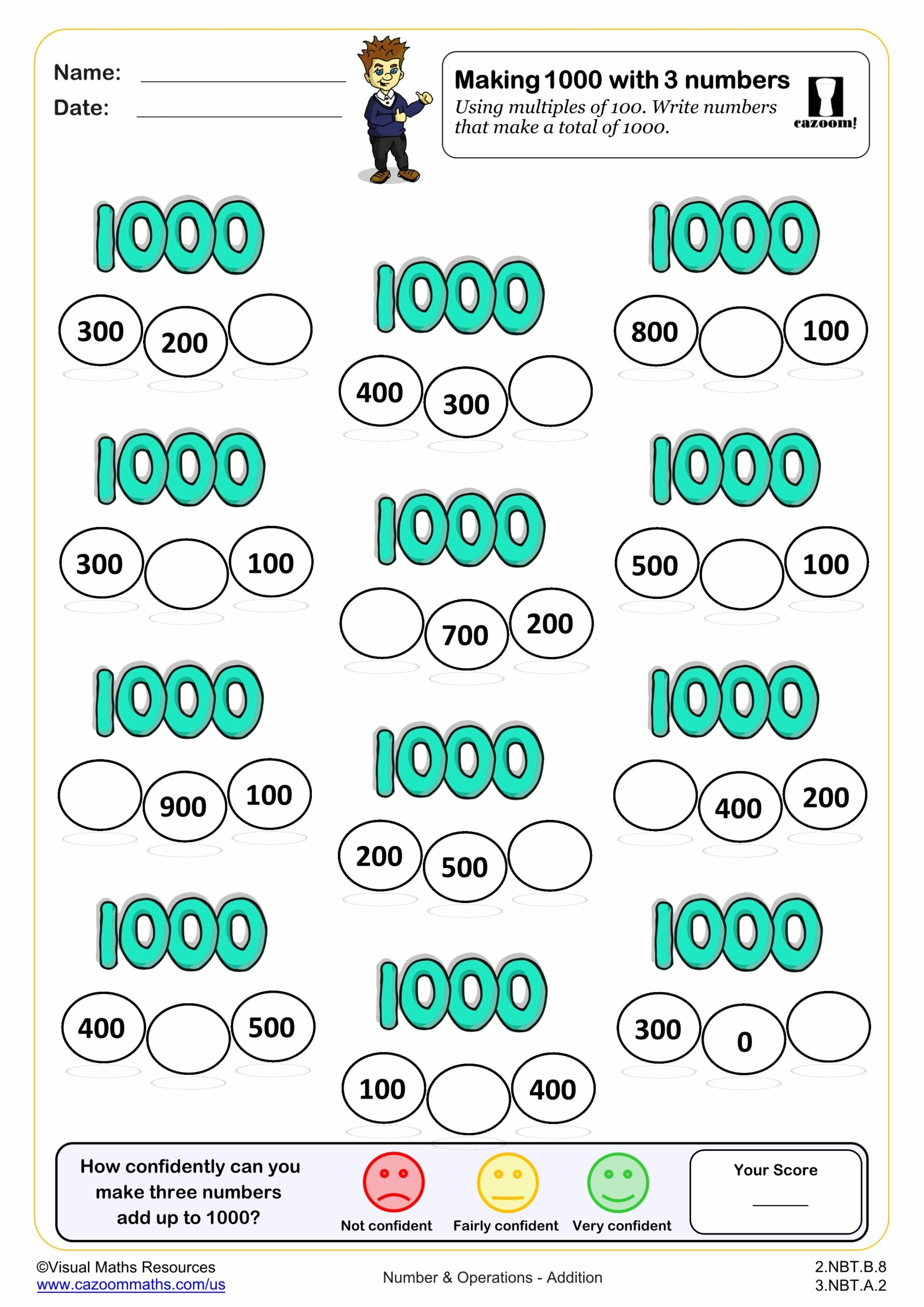
Making 1000 with 3 numbers using multiples of 100
Making 25
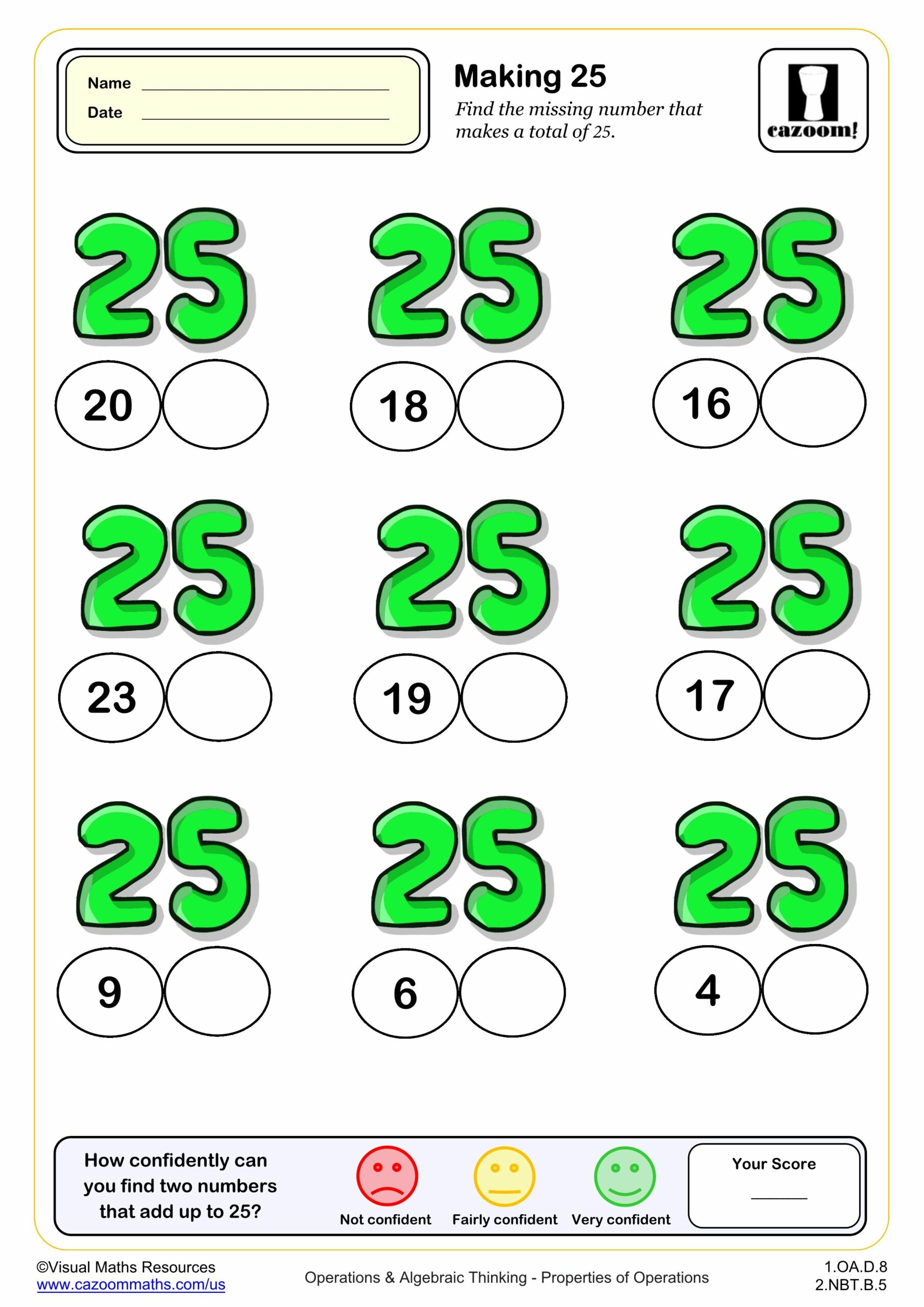
Making 25 (Blanks)
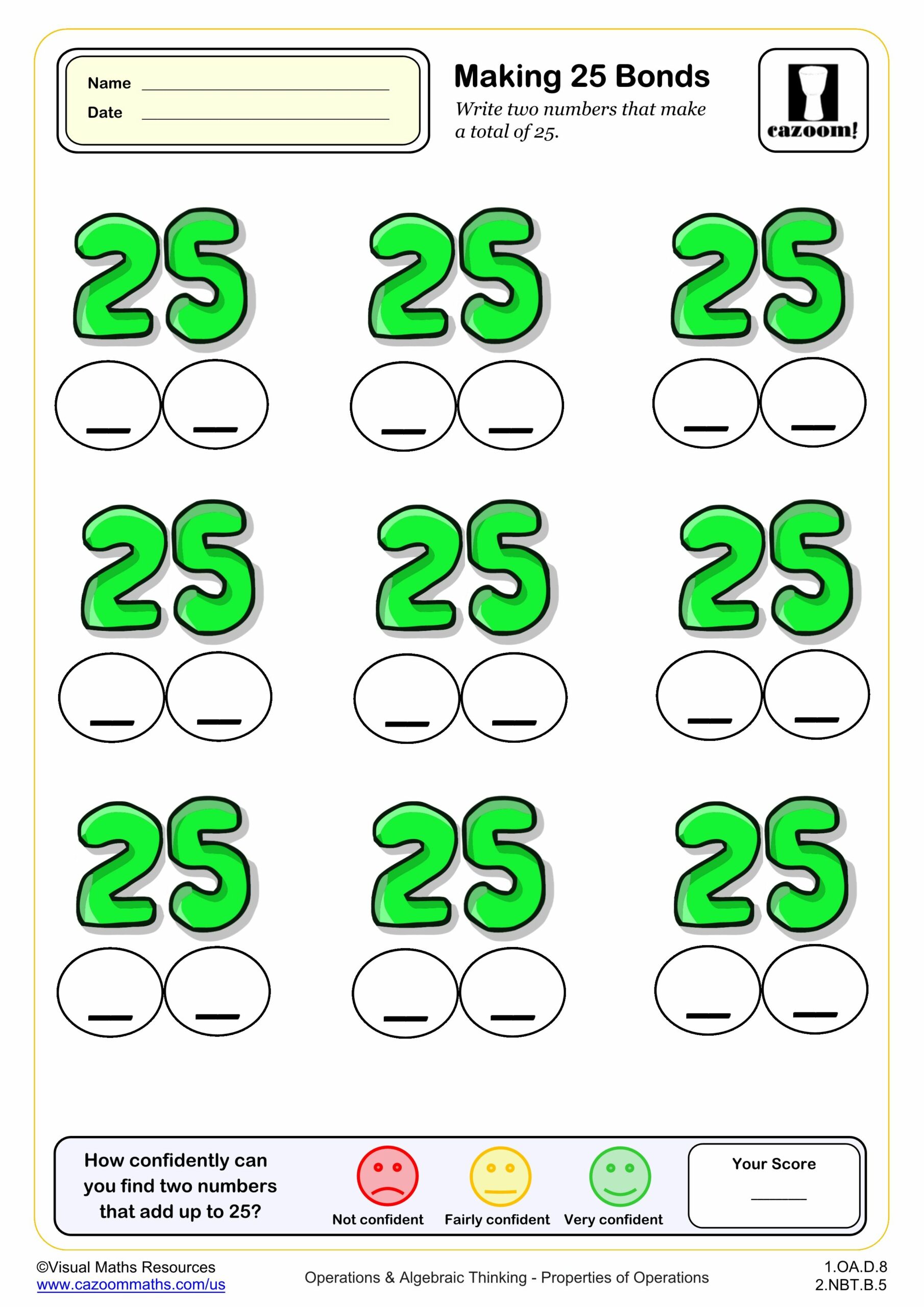
Making 28
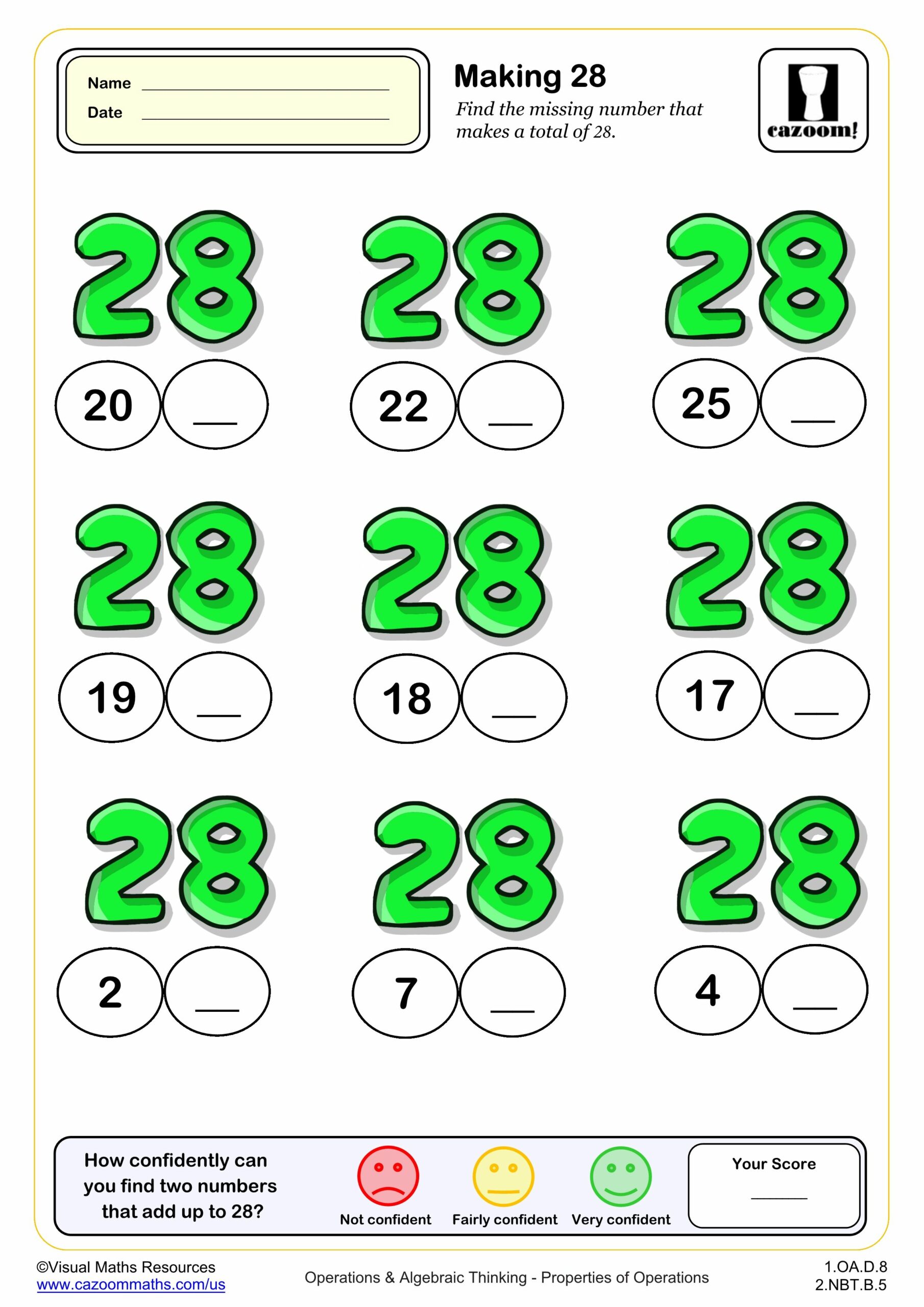
Making 28 (Blanks)
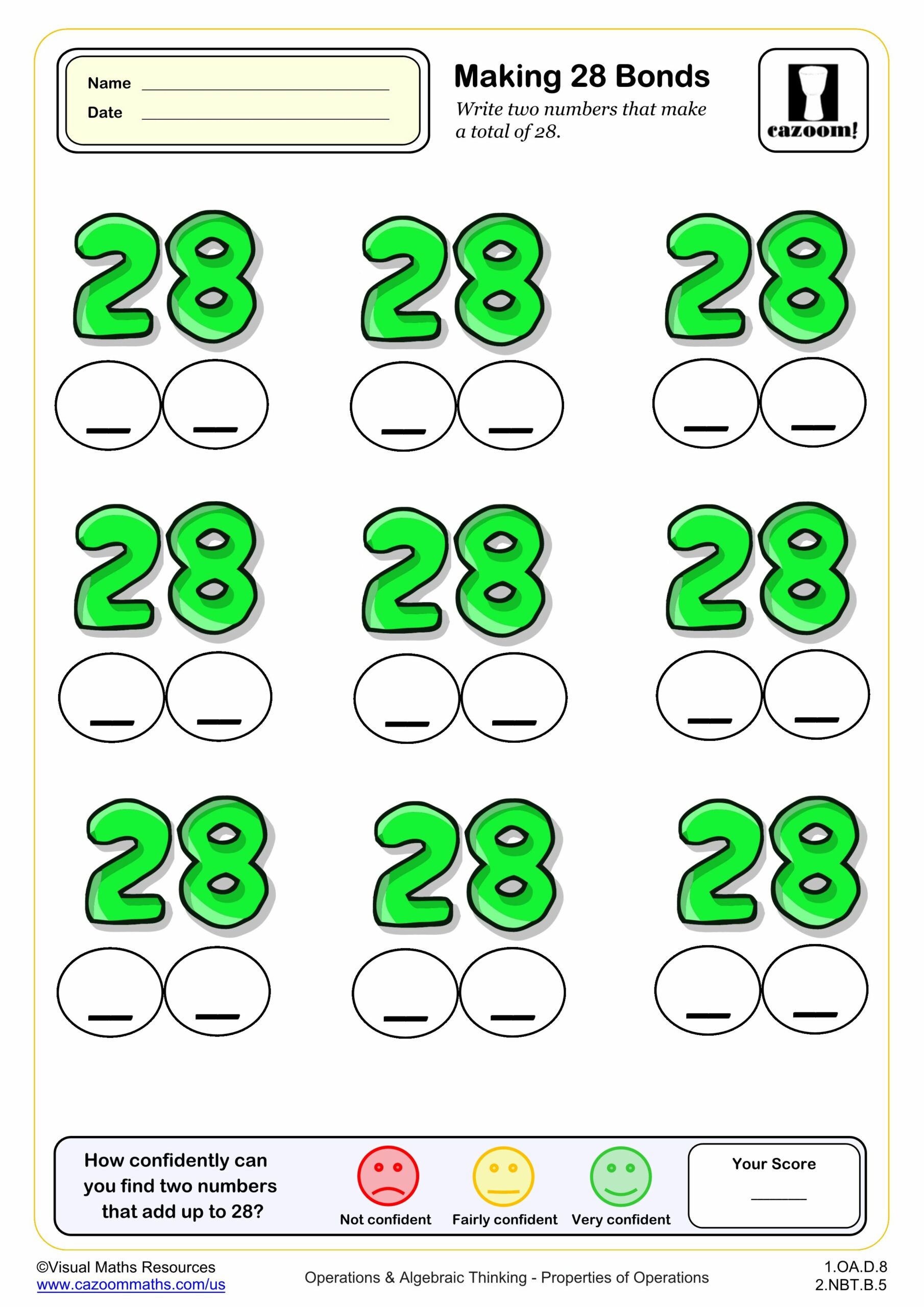
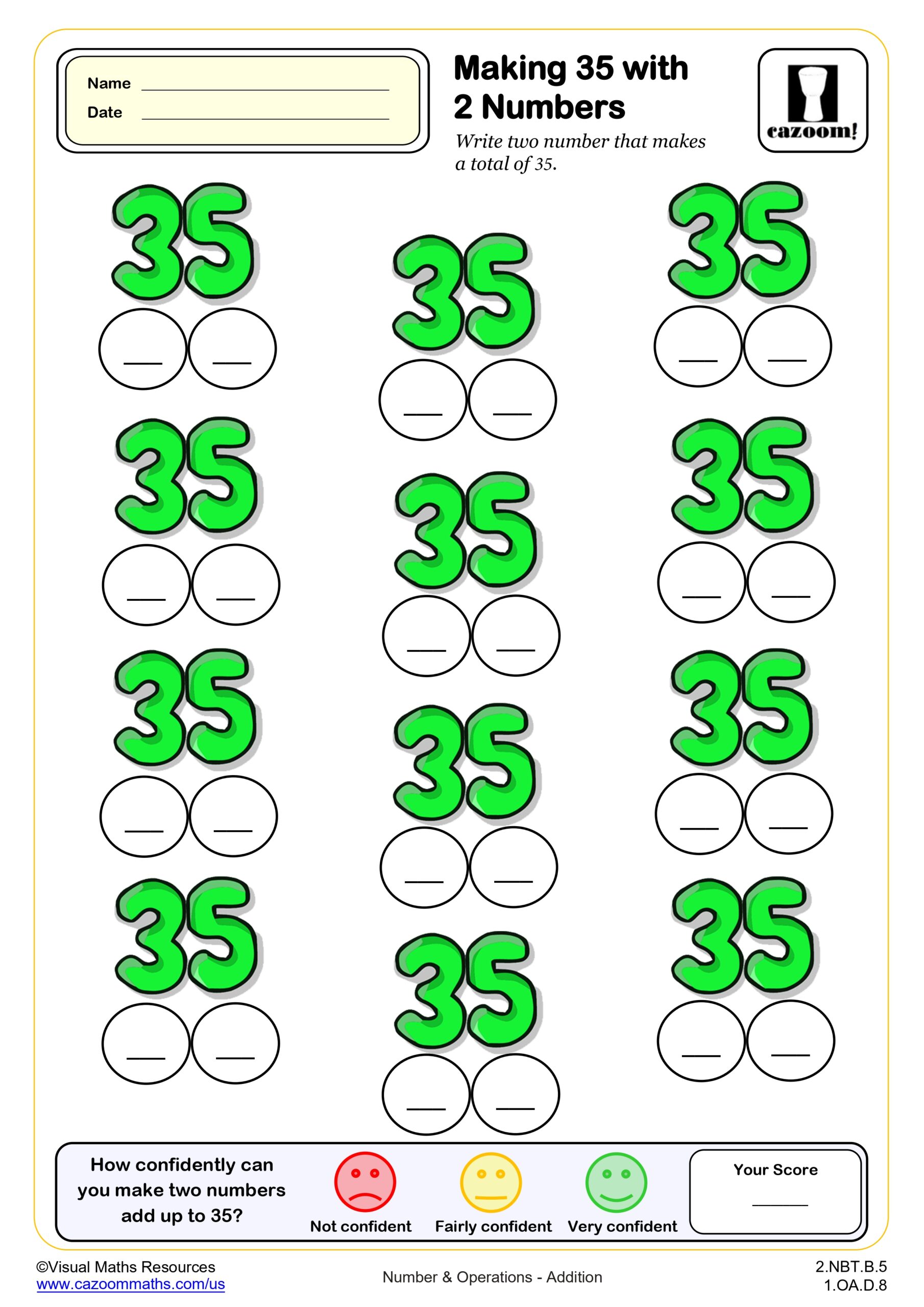
Making 35 (blanks)
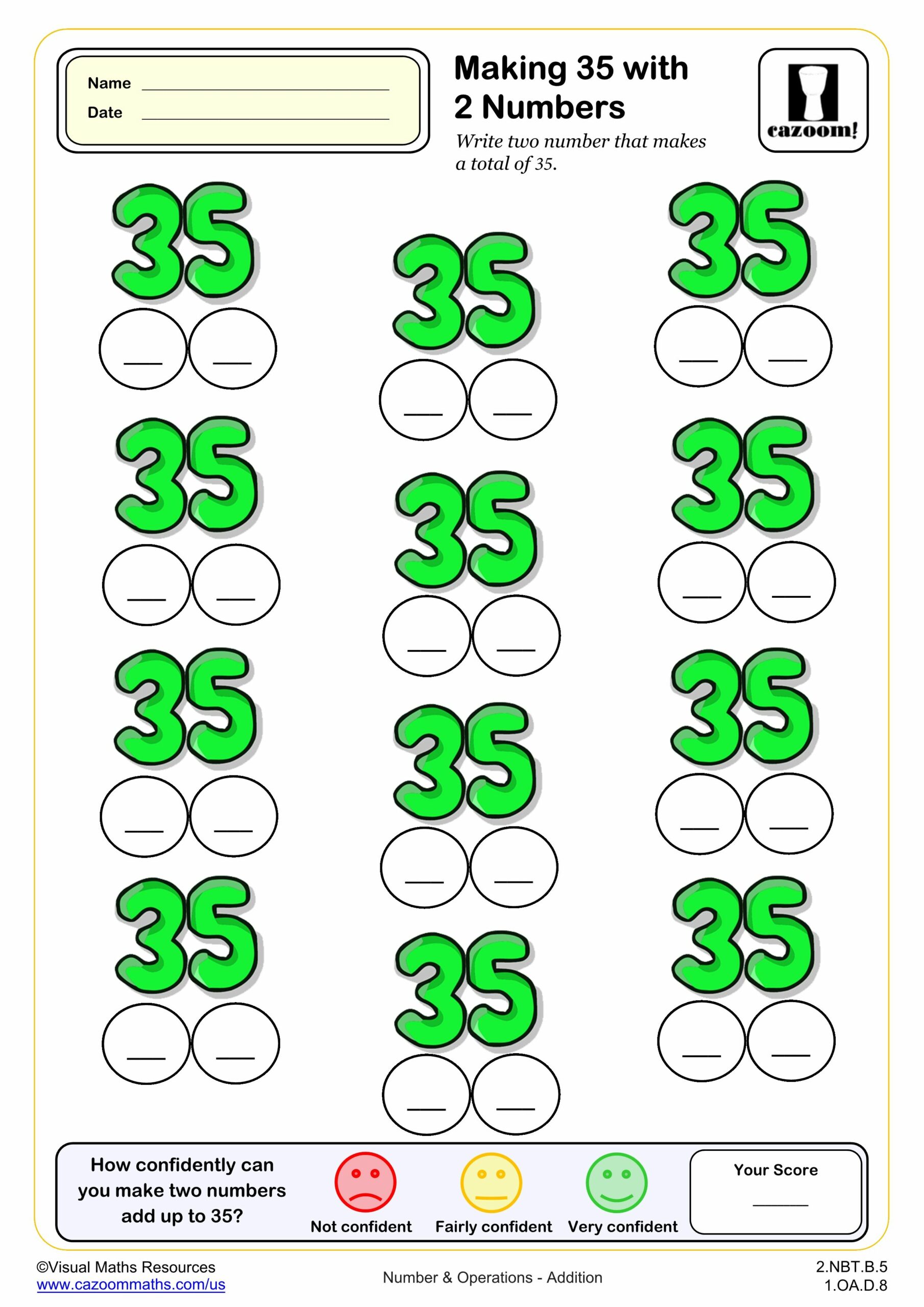
Making 35 with 2 numbers
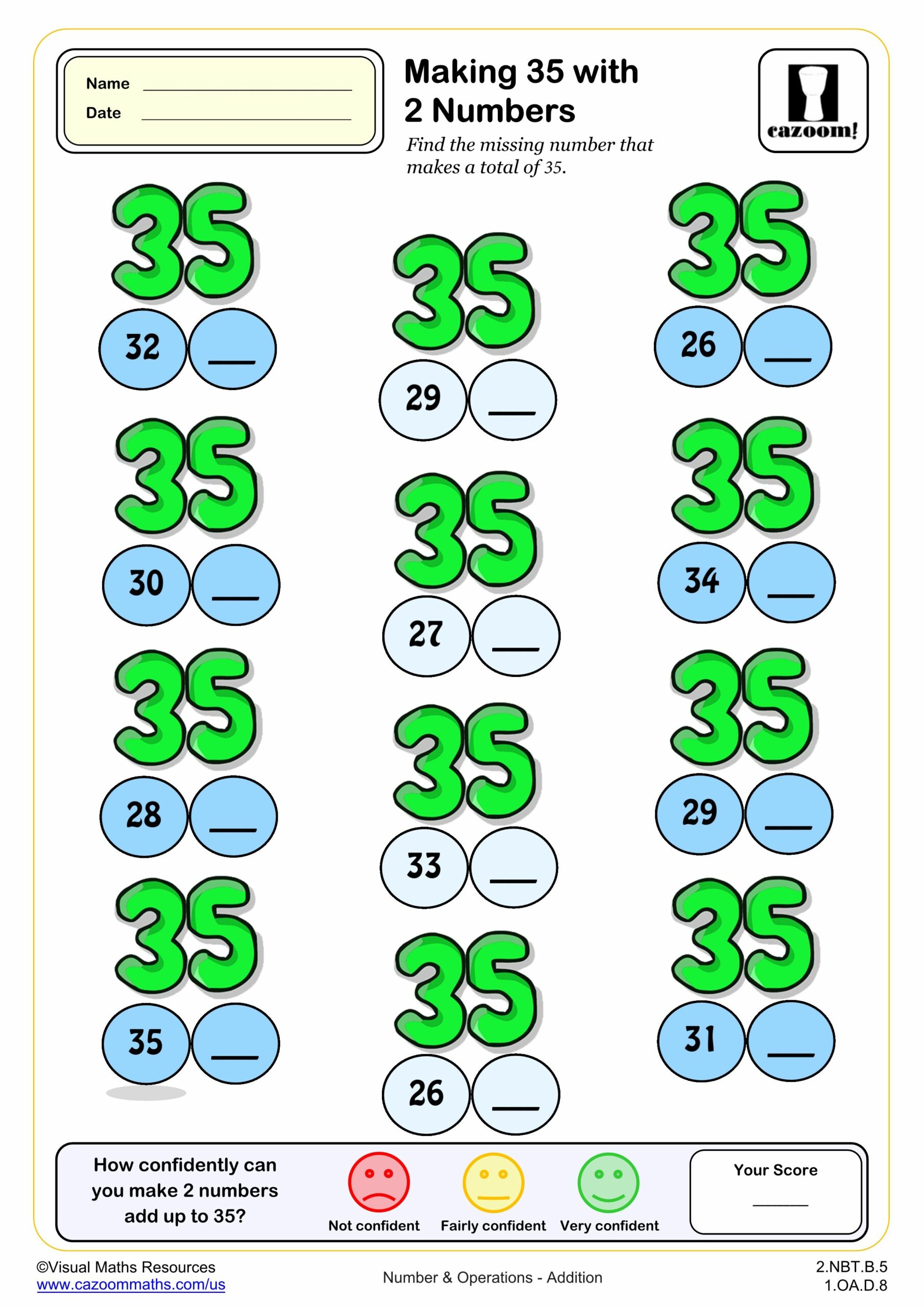
Making 35 with 2 Numbers (BONDS)
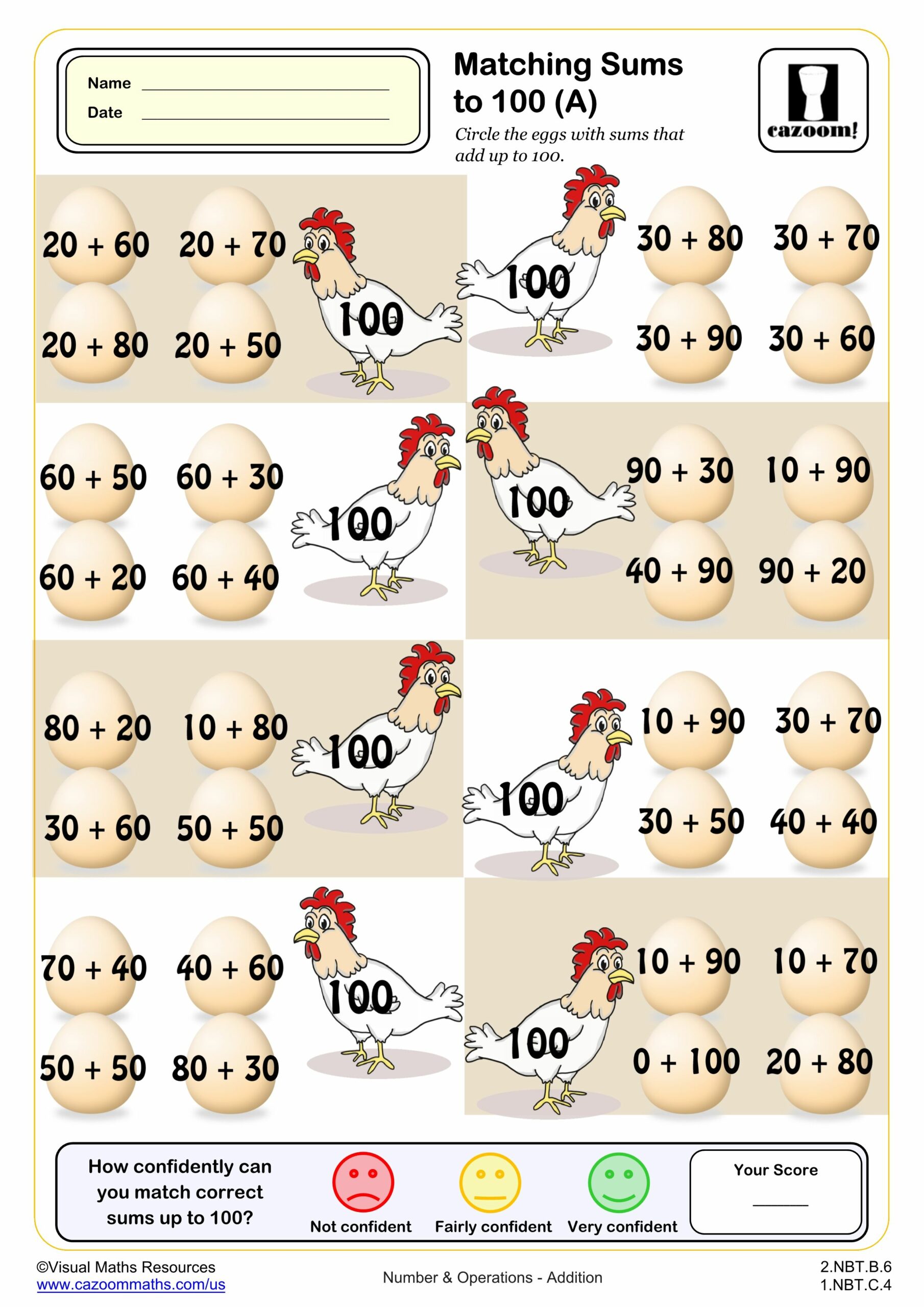
Matching sums to 100 (A)
Matching sums to 100 (B)
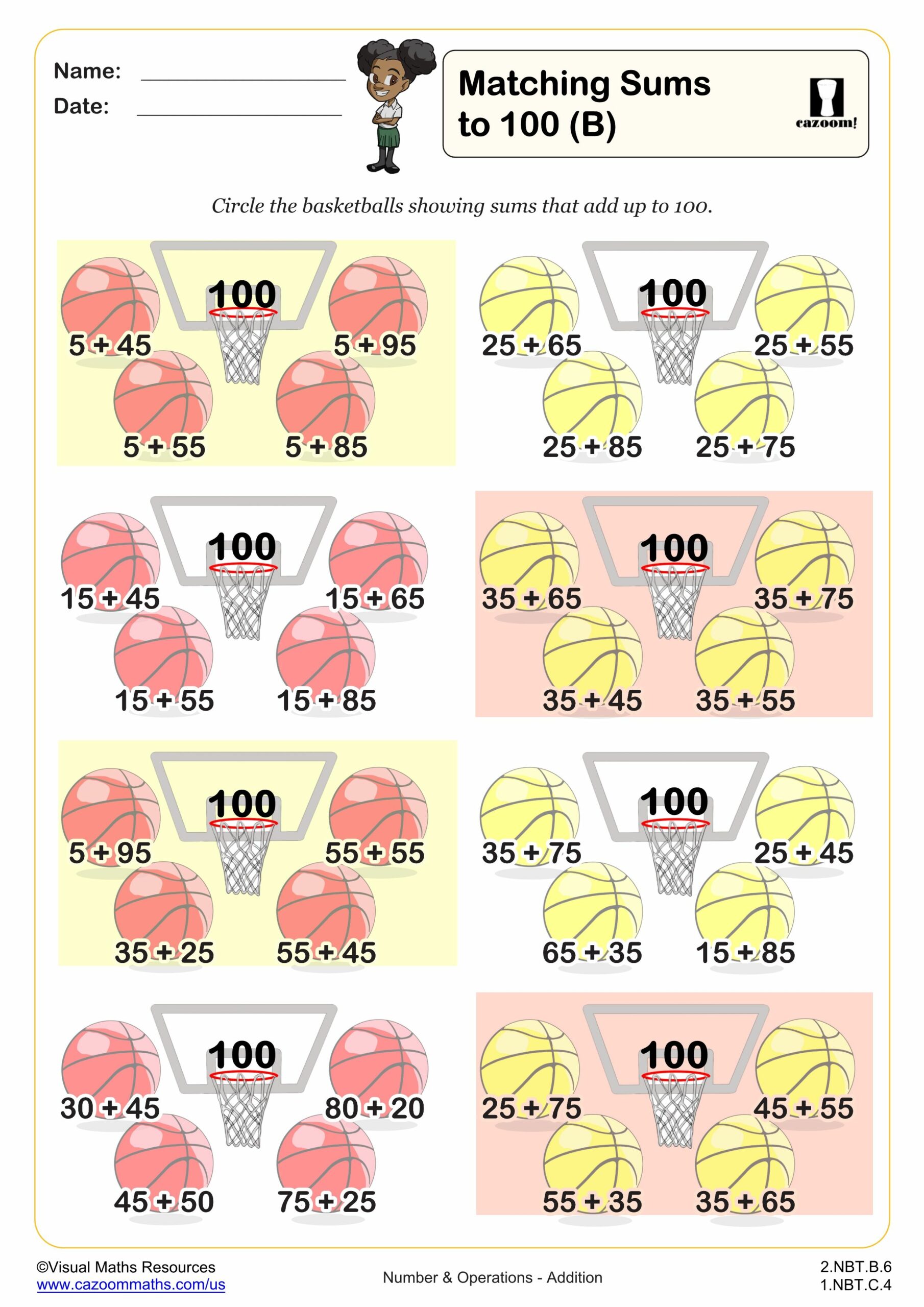
Matching sums to 100 (C)
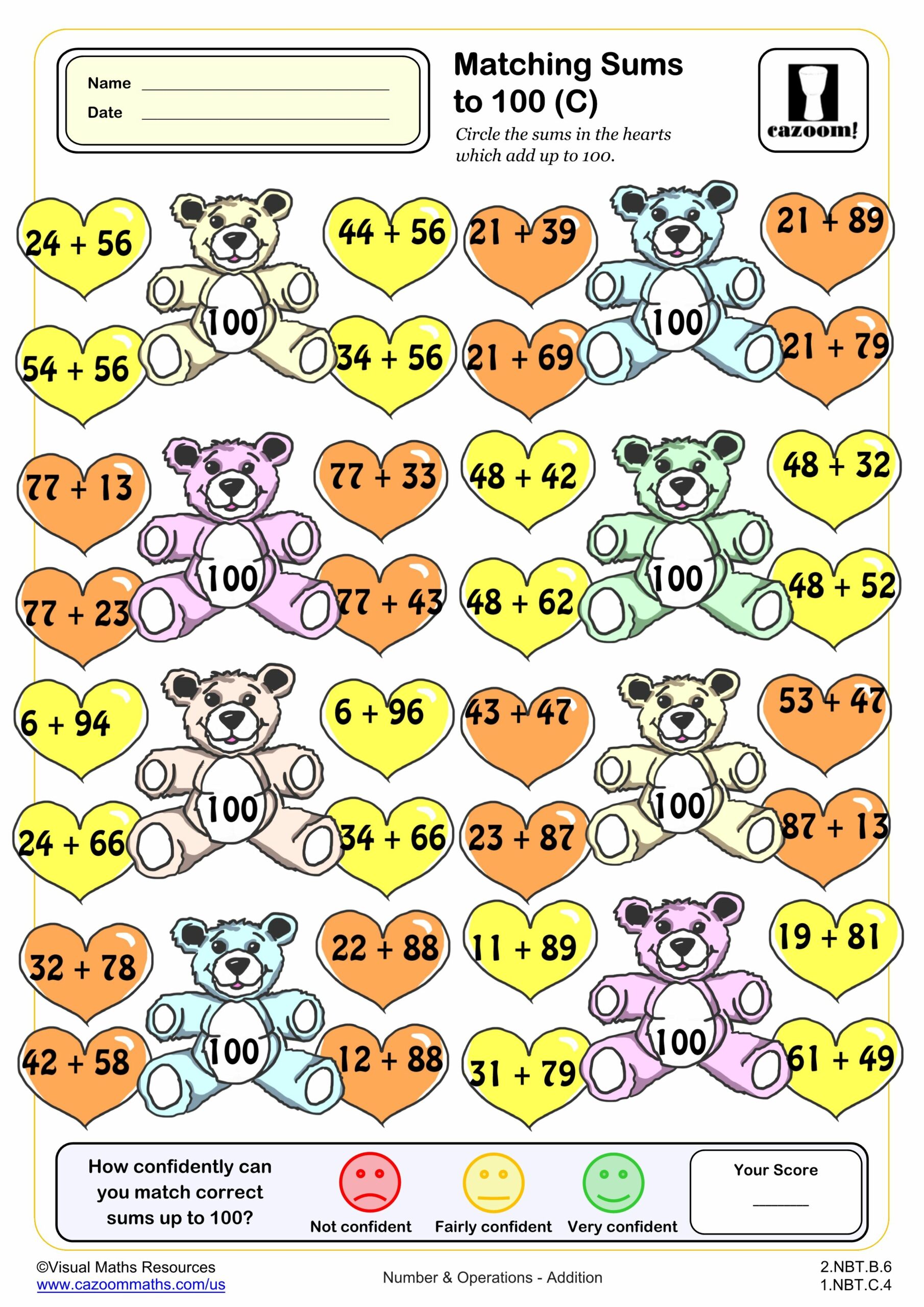
Number bond to 100 Drills (A) (10 questions)
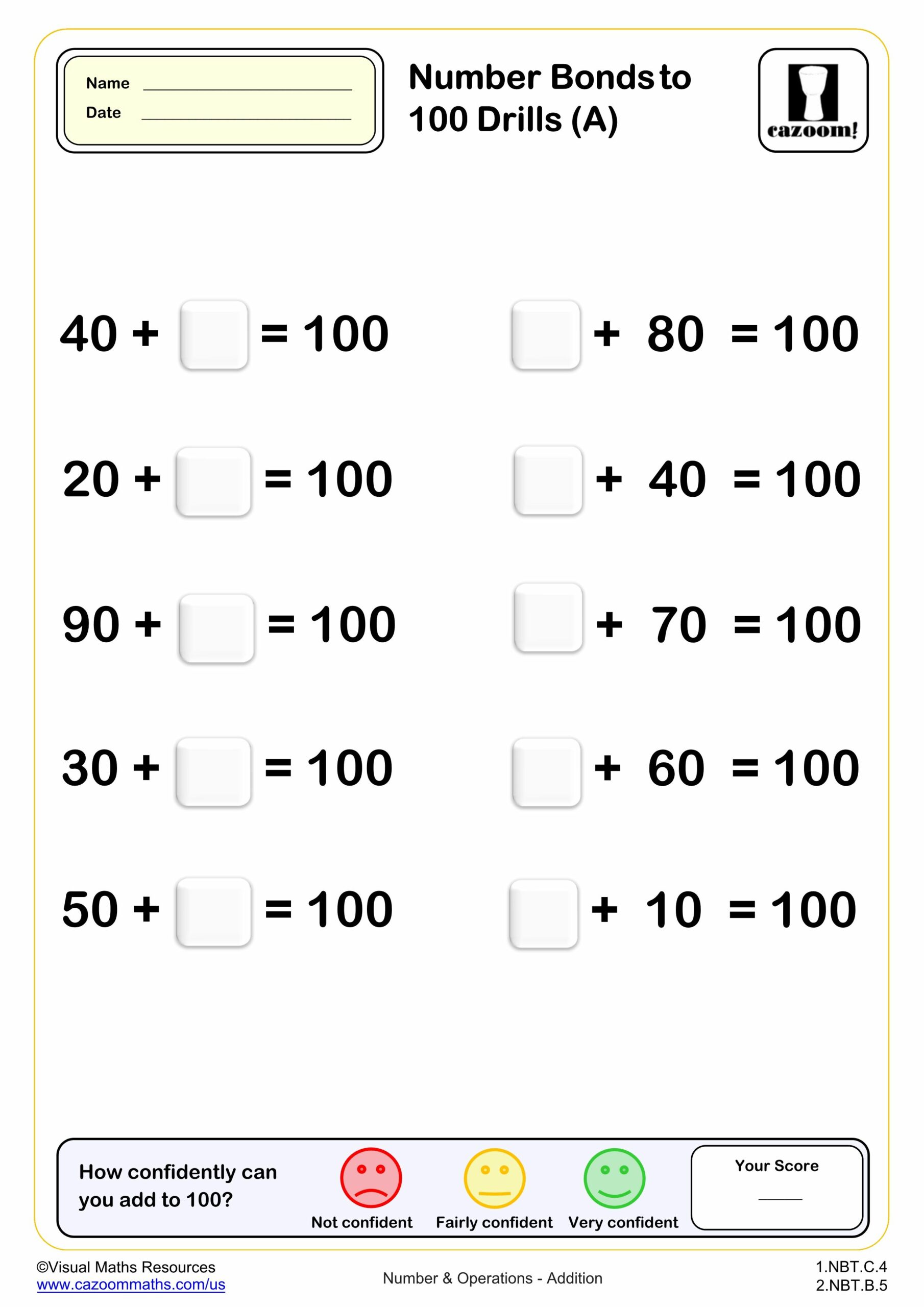
Number bond to 100 Drills (A) (20 questions)
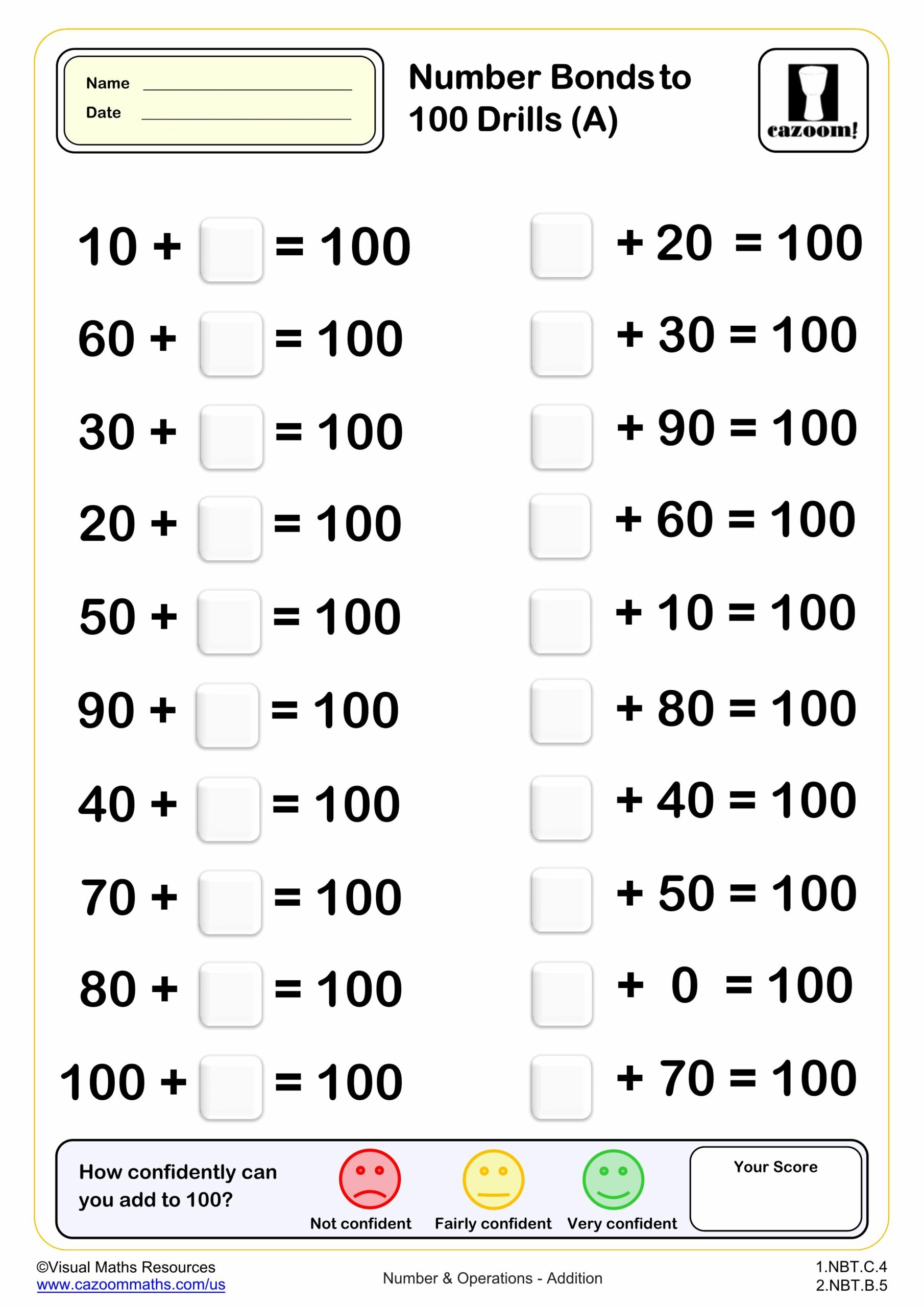
Number bond to 100 Drills (A) (50 questions)
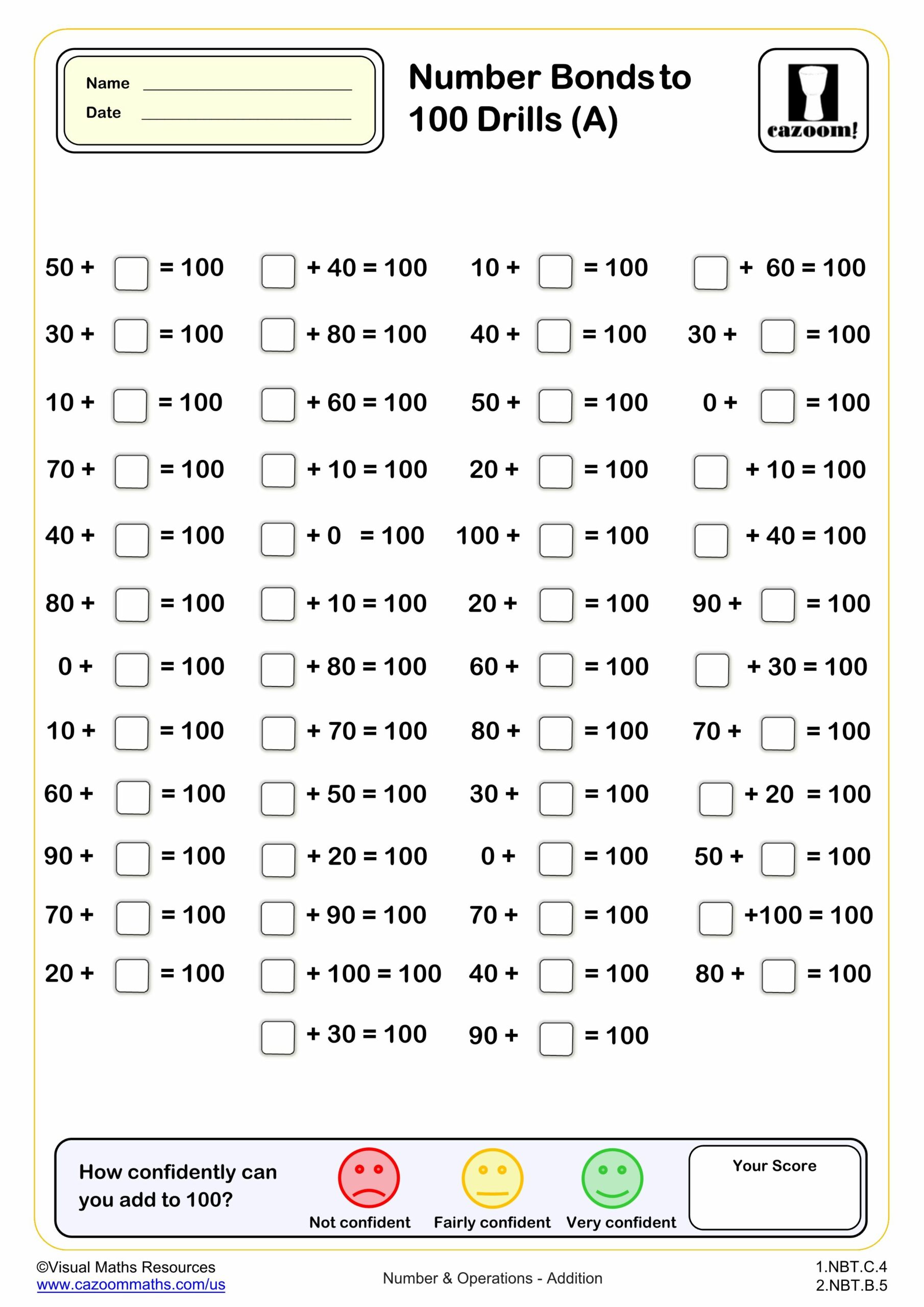
Number bond to 100 Drills (B) (10 questions)
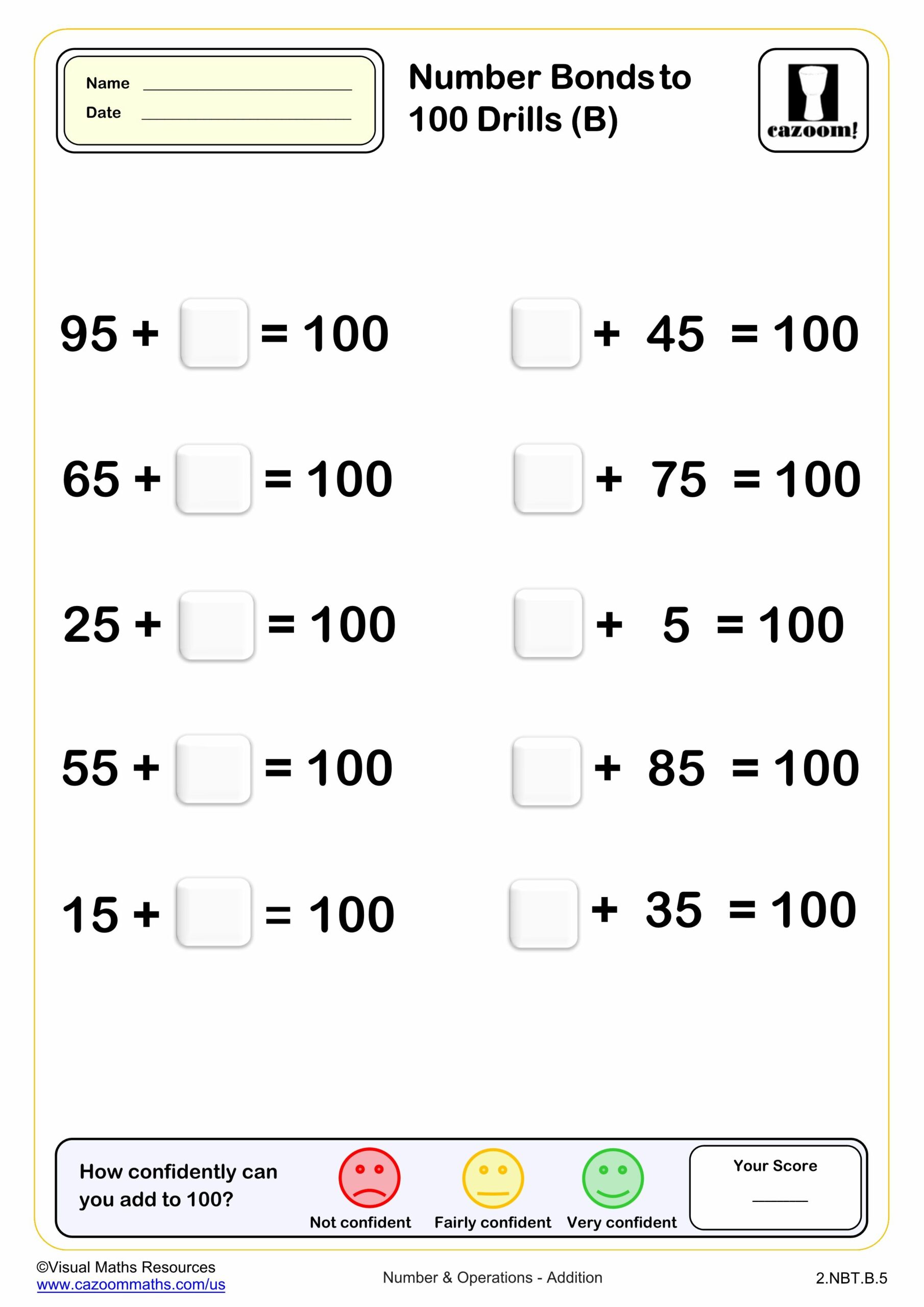
Number bond to 100 Drills (B) (20 questions)
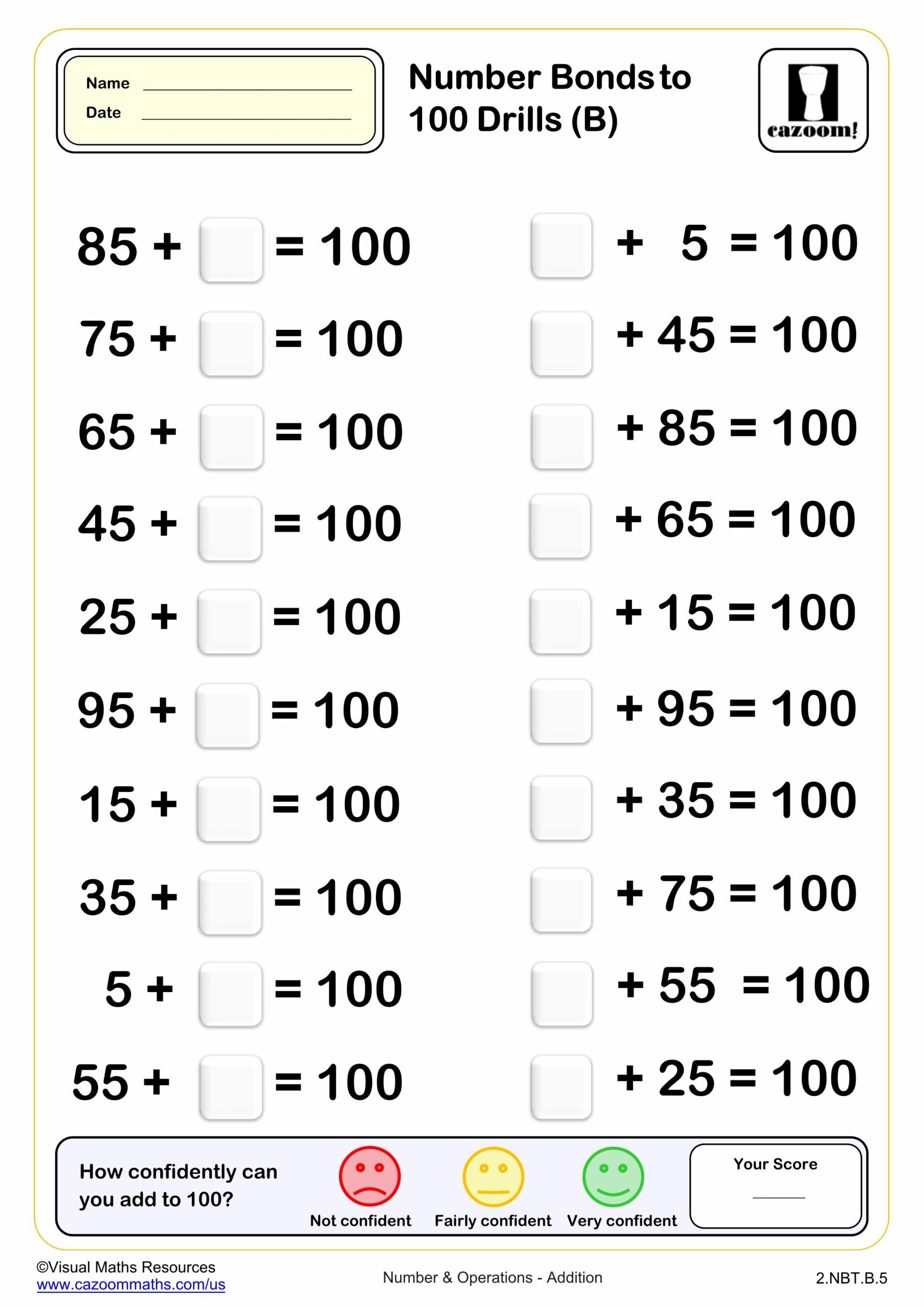
Number bond to 100 Drills (B) (50 questions)
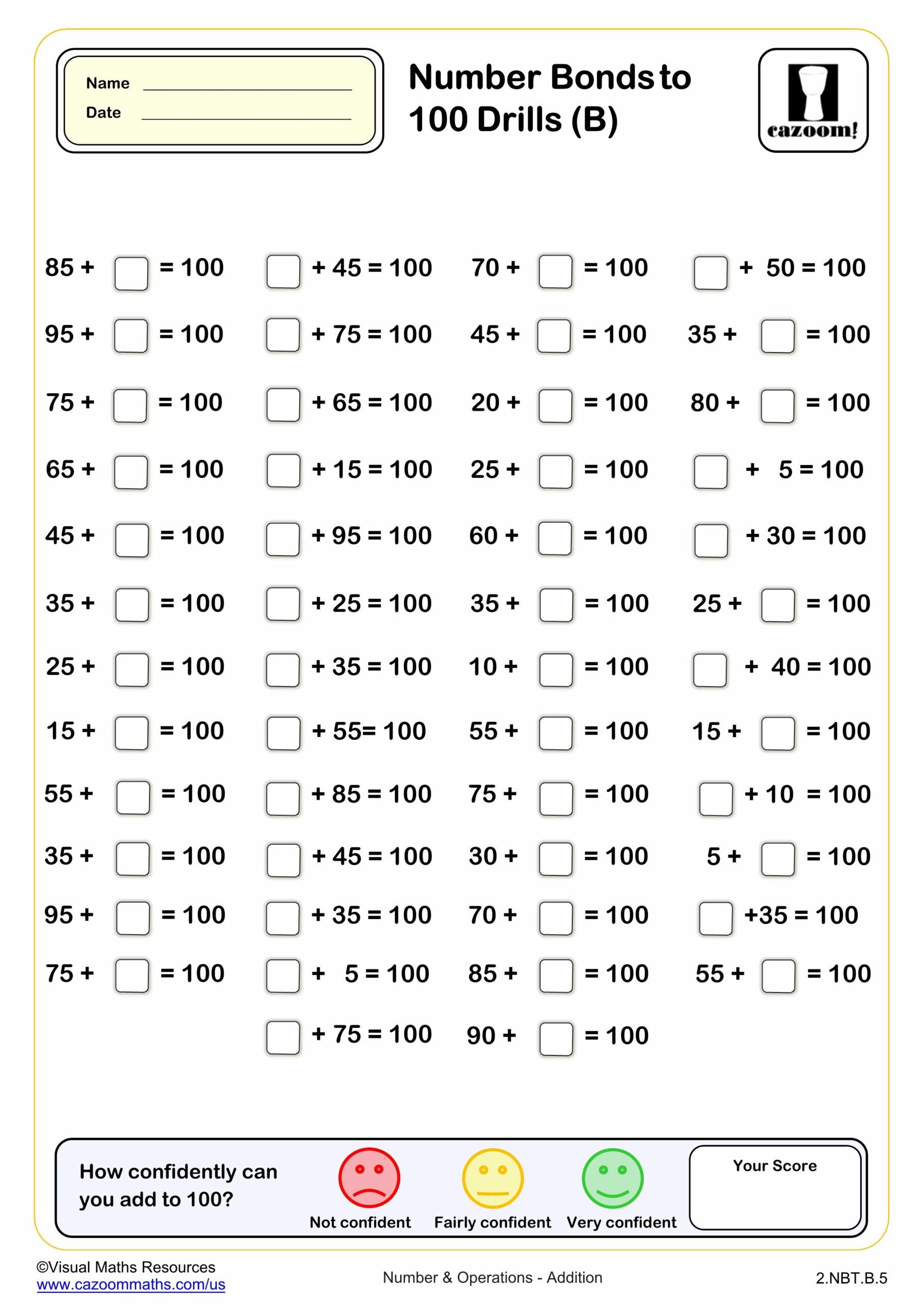
Number bond to 100 Drills (C) (10 questions)
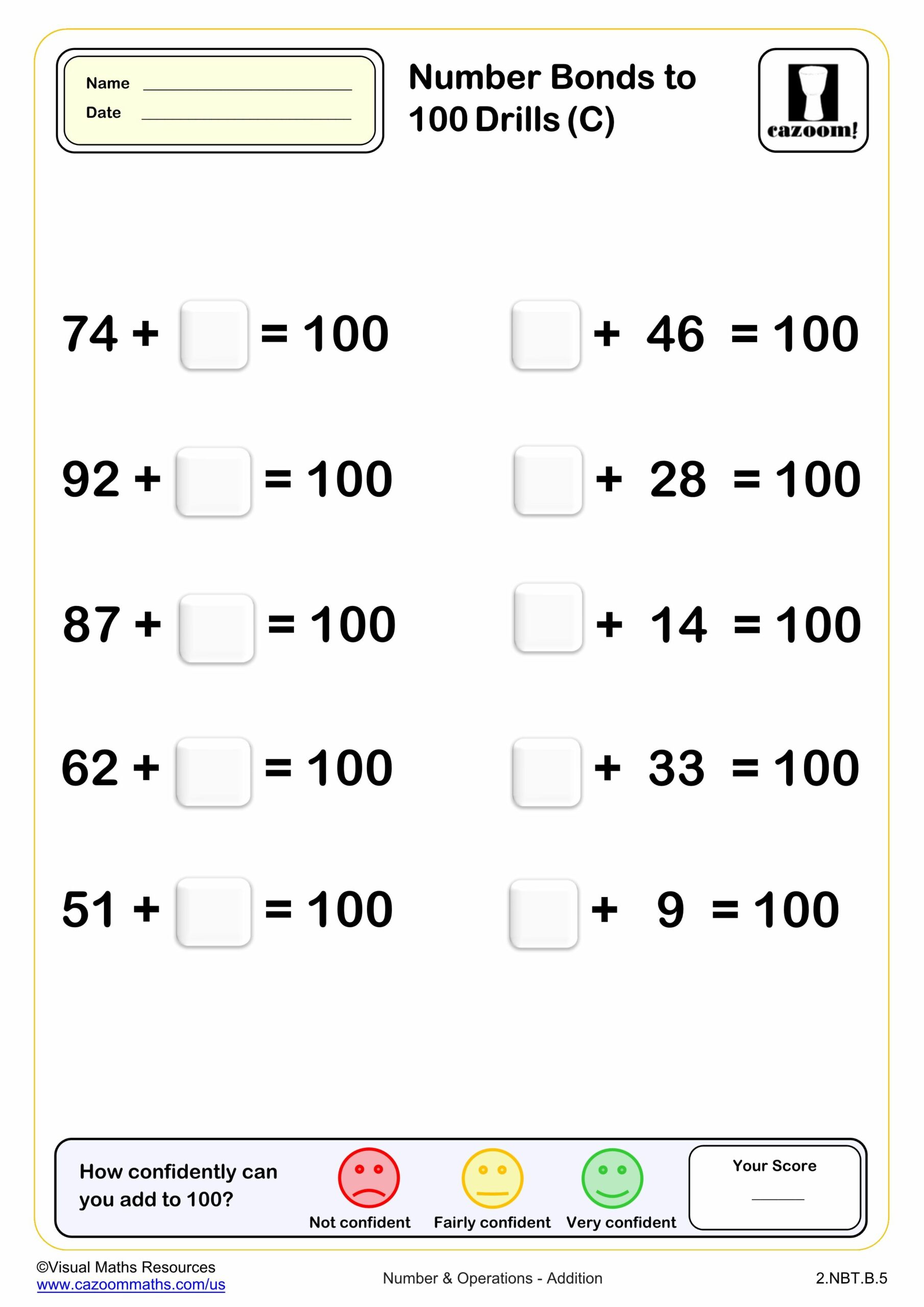
Number bond to 100 Drills (C) (20 questions)
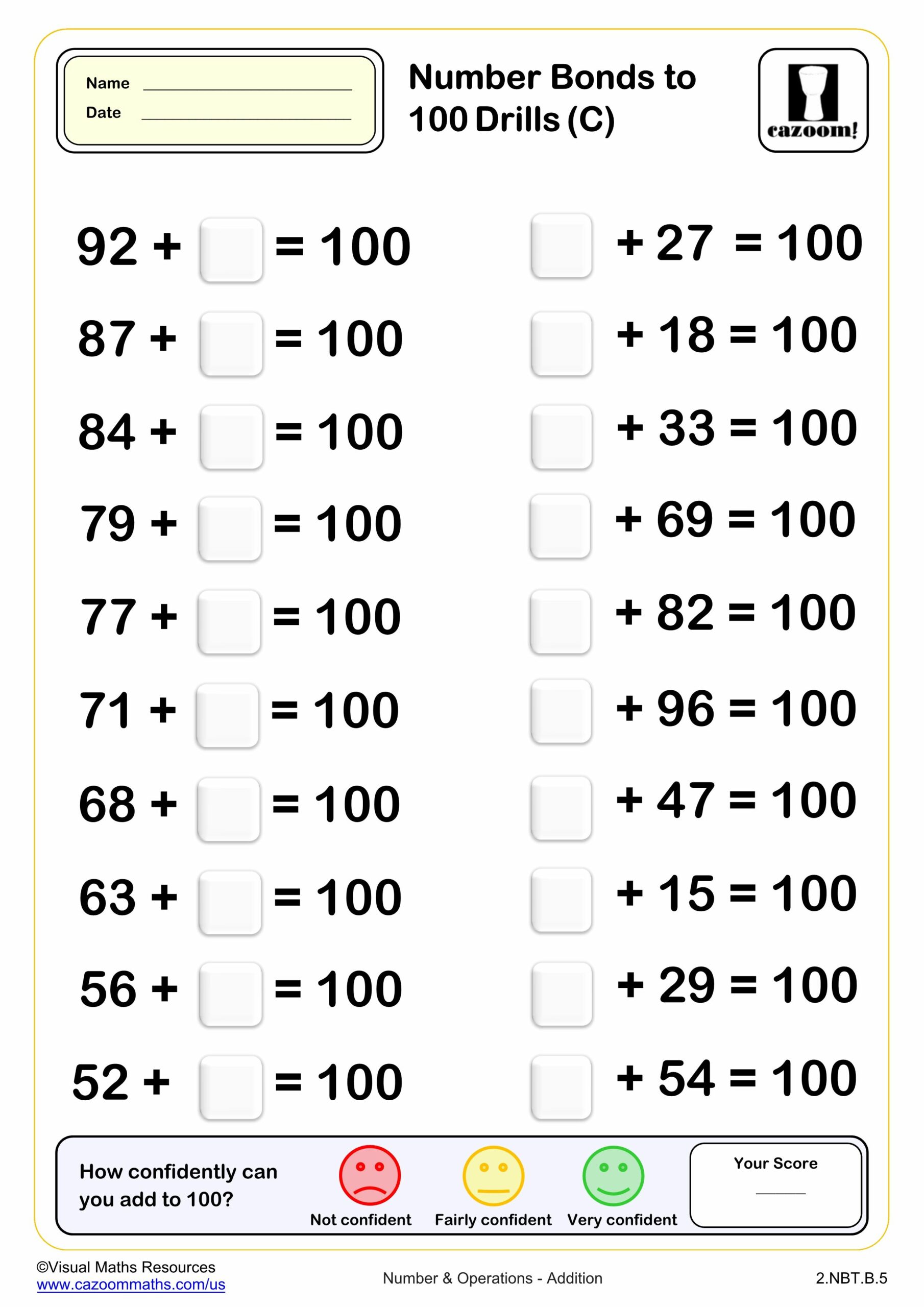
Number bond to 100 Drills (C) (50 questions)
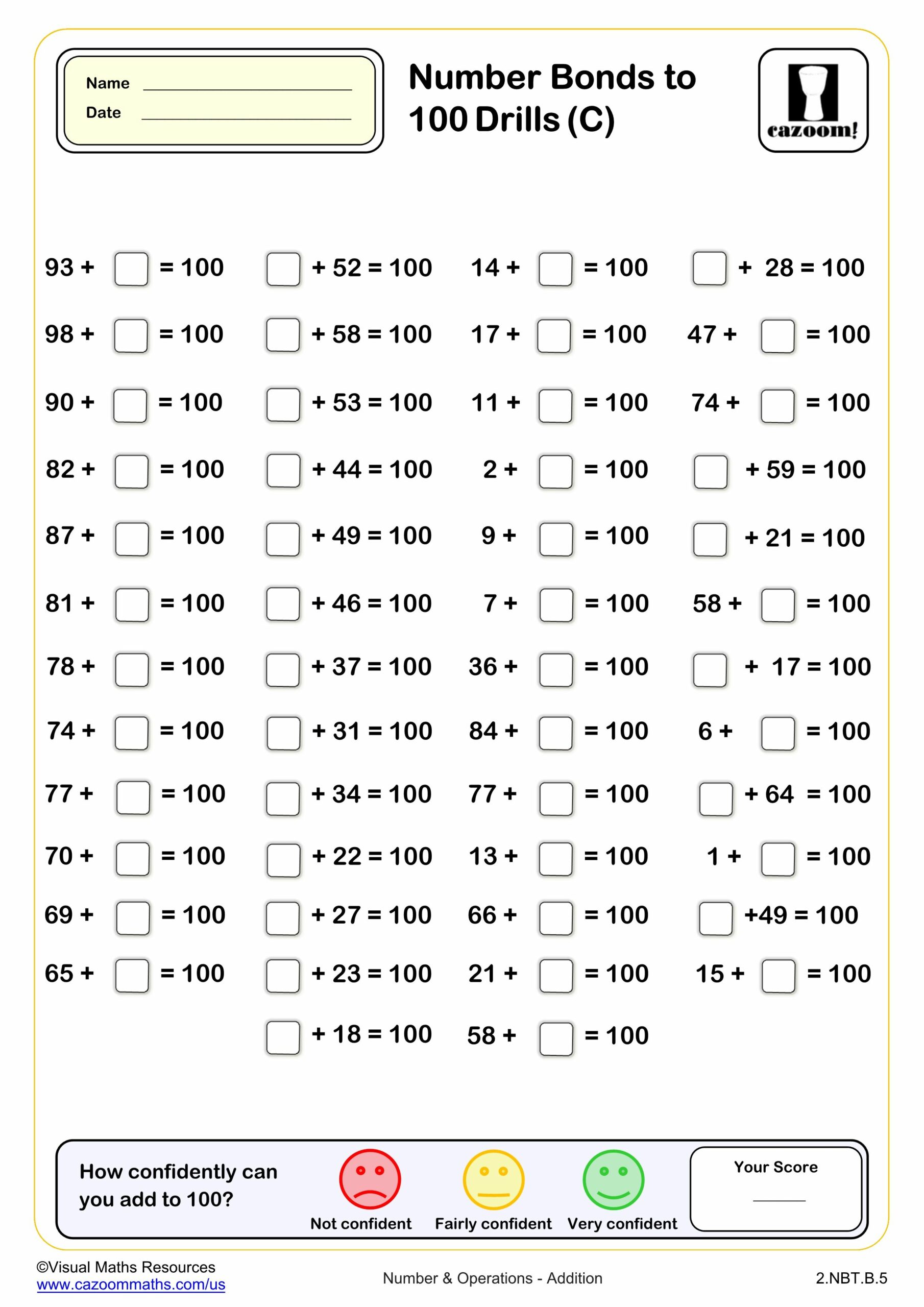
Number bond to 50 Drills (A) (10 questions)
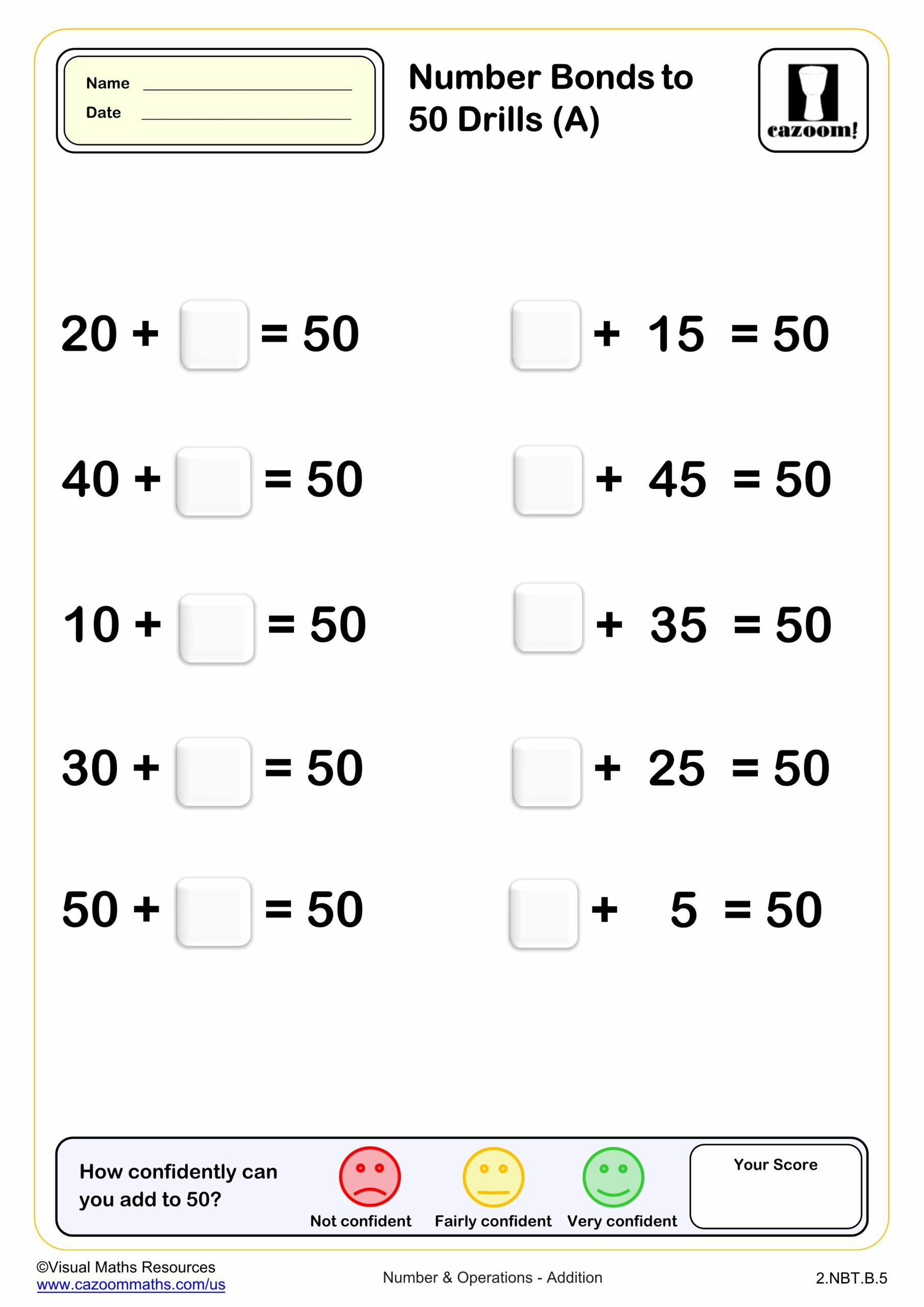
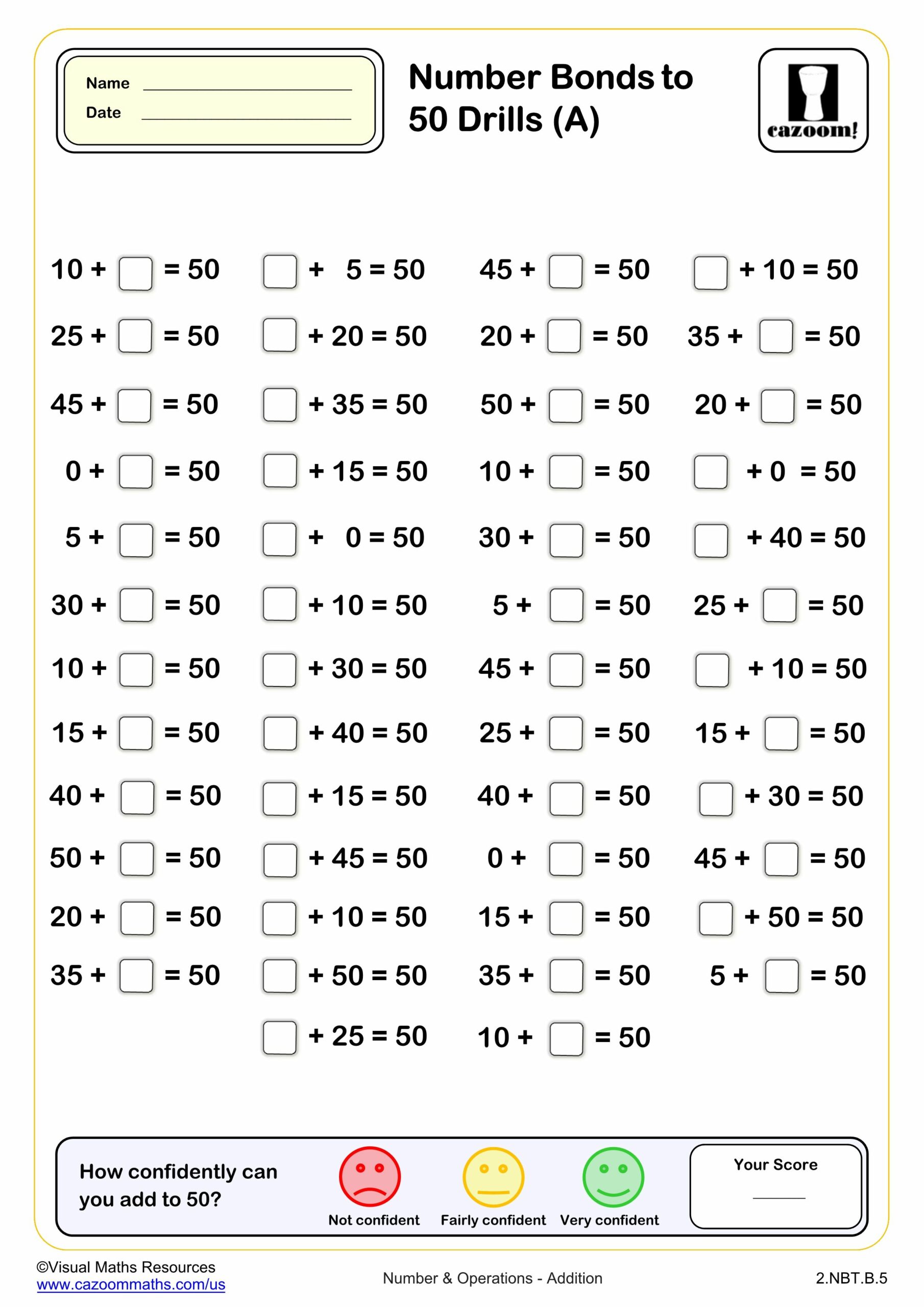
Number bond to 50 Drills (A) (20 questions)
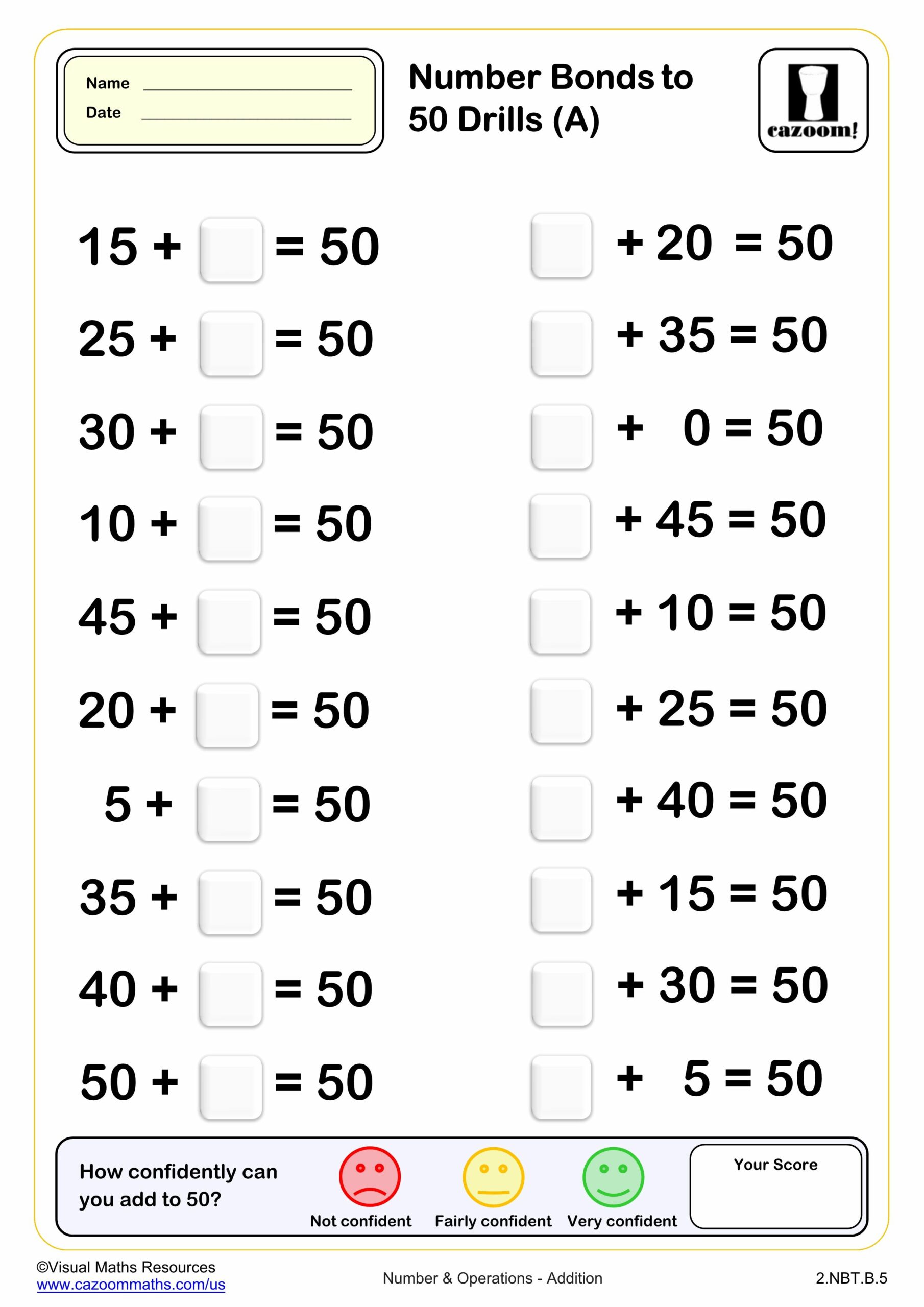
Number bond to 50 Drills (A) (50 questions)
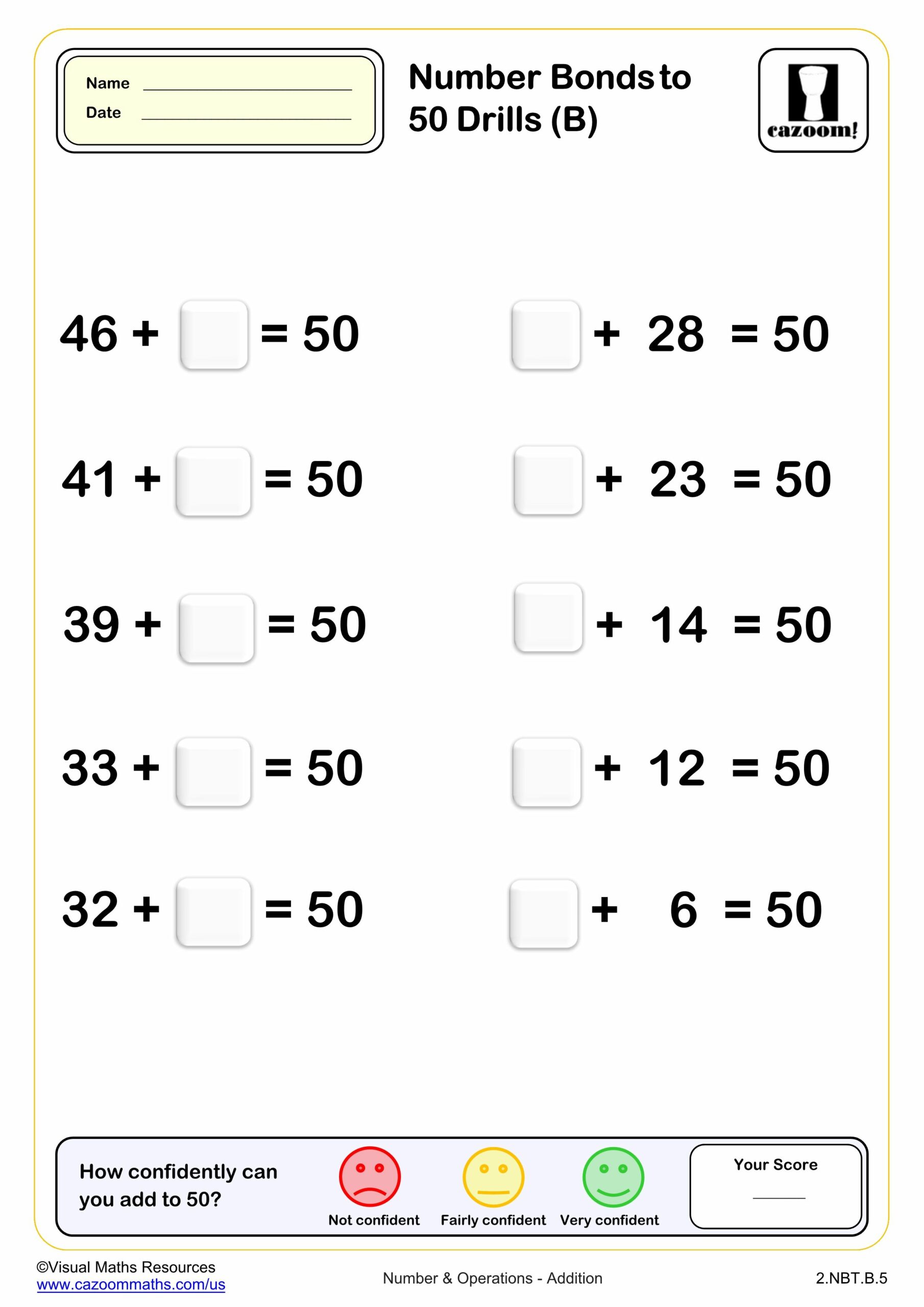
Number bond to 50 Drills (B) (10 questions)
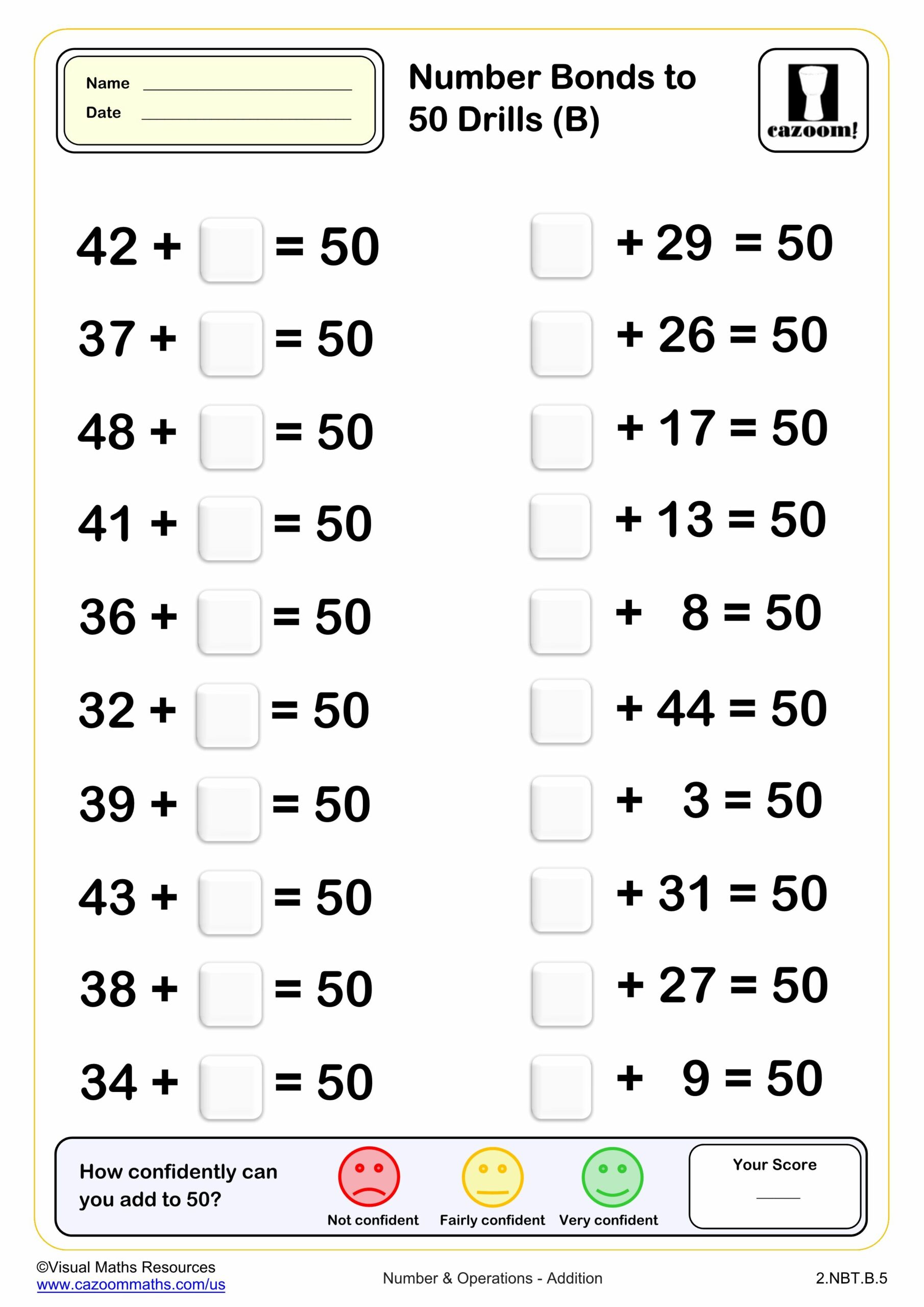
Number bond to 50 Drills (B) (20 questions)
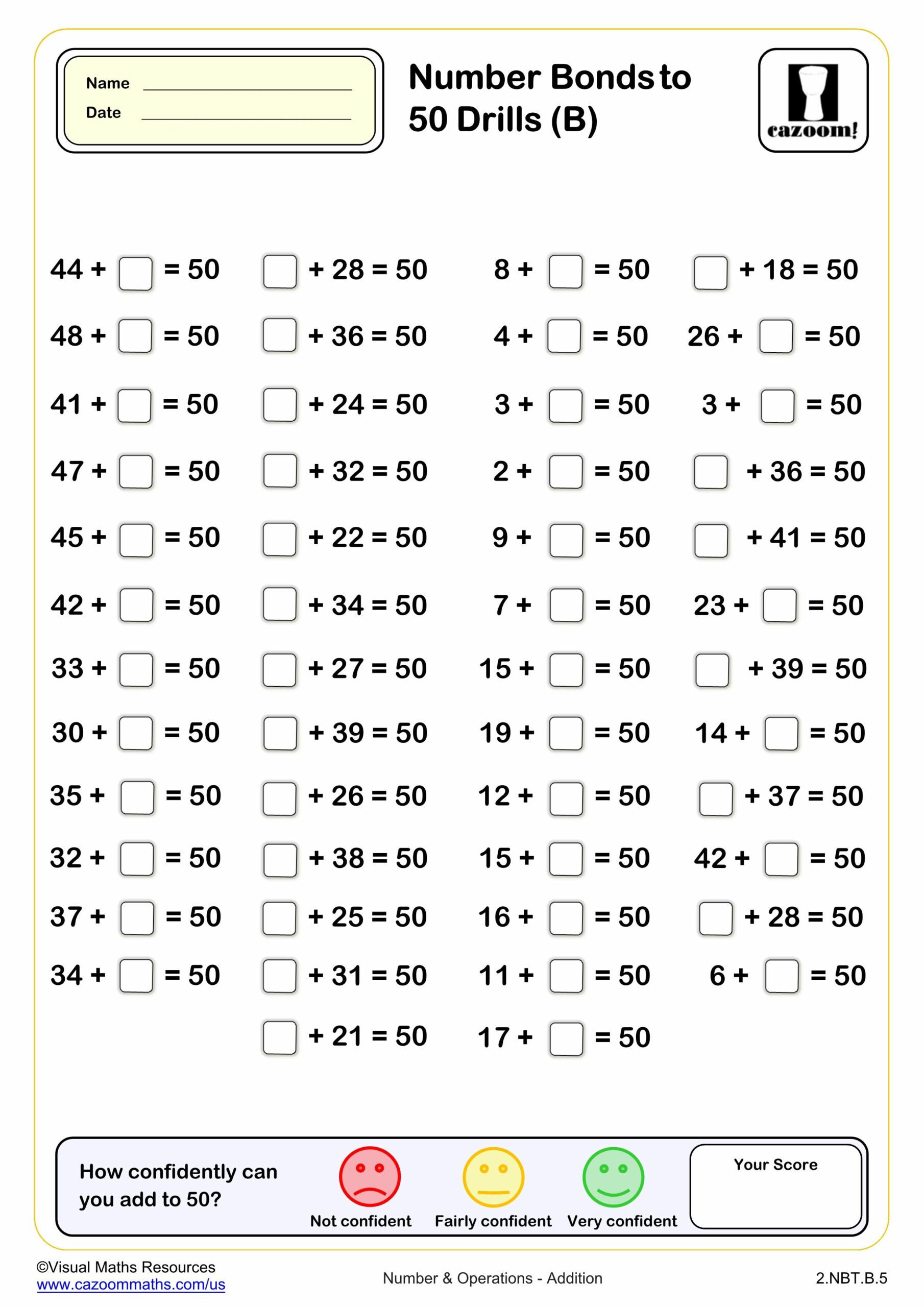
Number bond to 50 Drills (B) (50 questions)
All worksheets are created by the team of experienced teachers at Cazoom Math.
What Are Number Bonds Over 20?
Number bonds over 20 represent the part-whole relationships for numbers larger than 20, showing how larger numbers can be broken down into two or more addends. In second grade, students work with bonds to 35, 100, and 1000, focusing primarily on multiples of 10 and 100 to reinforce place value concepts aligned with Common Core standard 2.NBT.B.5. These bonds build the mental math strategies students need for fluent addition and subtraction.
A common misconception occurs when students try to memorize each bond individually rather than recognizing patterns. For example, when making 100 with two numbers, students often write random pairs without noticing that if one number is 30, the other must be 70 because 3 + 7 = 10. Teachers frequently see students lose points on assessments when they fail to apply this tens-place thinking, writing combinations like 30 + 60 instead.
What Grade Level Practices Number Bonds Over 20?
Number bonds over 20 appear primarily in second grade elementary school curricula, where students extend their understanding of part-whole relationships to larger numbers. At this level, students move beyond the foundational bonds to 10 and 20 they mastered in first grade and begin working with landmark numbers like 35, 100, and 1000 that require stronger place value understanding.
The progression within second grade becomes increasingly sophisticated. Students typically start with making smaller totals like 35 using various addends, then advance to making 100 with multiples of 10, before tackling the more complex challenge of making 1000 using three numbers with multiples of 10 or 100. This scaffolded approach ensures students develop the flexibility with number relationships they'll need for multi-digit addition and subtraction later in the year and into third grade.
How Do Students Make 1000 with Three Numbers?
Making 1000 with three numbers involves decomposing 1000 into three addends, typically using multiples of 10 or 100 to keep calculations manageable for second graders. Students might see a bond showing 400 + 300 + 300 = 1000 or 200 + 500 + 300 = 1000, where they need to fill in missing parts. This skill reinforces the concept that 1000 is composed of 10 hundreds, so students learn to manipulate these hundred-chunks flexibly.
This three-part decomposition connects directly to budgeting and financial literacy concepts students will encounter in real life. When families plan expenses or scientists allocate research funding across multiple categories totaling $1000, they're using exactly this three-addend bond thinking. Engineers also apply this when distributing weight limits across three components that together can't exceed 1000 pounds, making these bonds far more than abstract math exercises.
How Should Teachers Use These Number Bond Worksheets?
These worksheets provide systematic practice with different bond structures, from fill-in-the-blank formats that build flexibility to focused exercises on specific totals like 35, 100, or 1000. The variety of subtopics allows teachers to target exactly where students need support, whether that's recognizing patterns with multiples of 10 or extending thinking to three-number combinations. Answer keys make these worksheets particularly useful for quick formative assessment during whole-class instruction.
Many teachers use these worksheets during math centers or stations, pairing students so they can discuss their reasoning when finding missing numbers. They work equally well for differentiated homework assignments, allowing students who need more practice with making 100 to focus there while others tackle the more challenging 1000 bonds. Teachers also find these valuable for intervention groups, where the clear structure helps struggling students build confidence before rejoining whole-class instruction on multi-digit operations.