2nd Grade Properties of Operations Worksheets
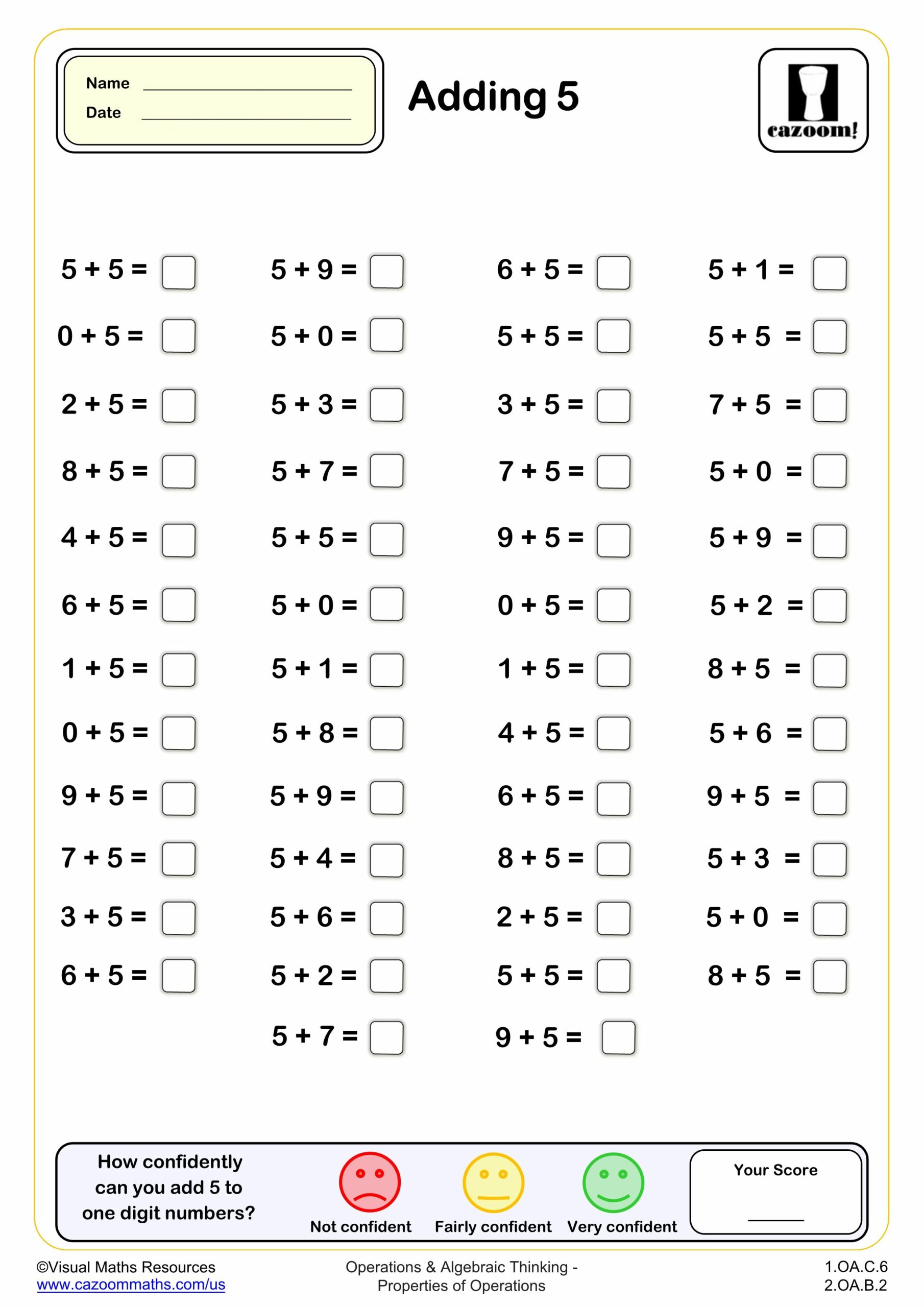
Adding 5 (50 questions)
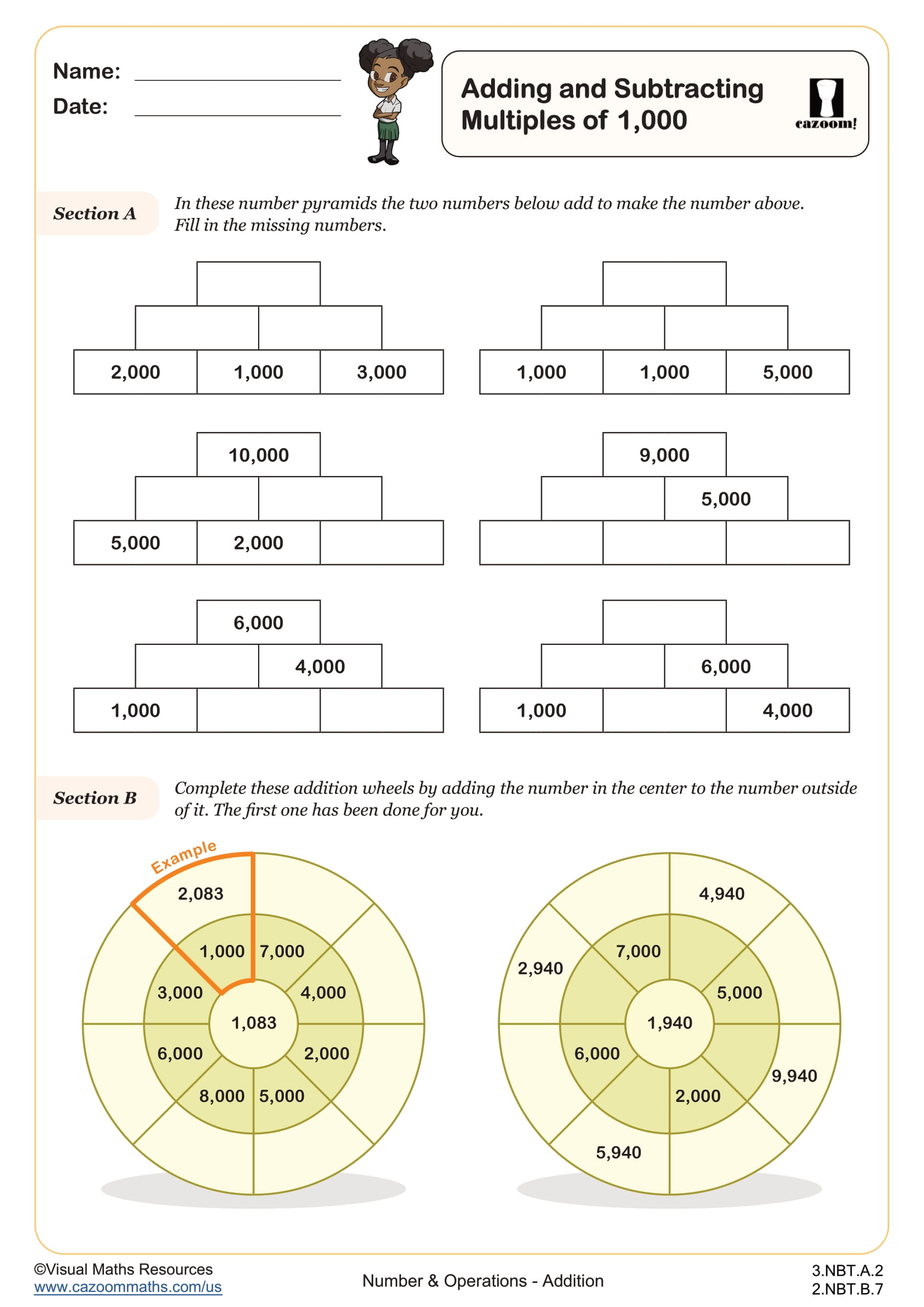
Adding and Subtracting Multiples of 1,000
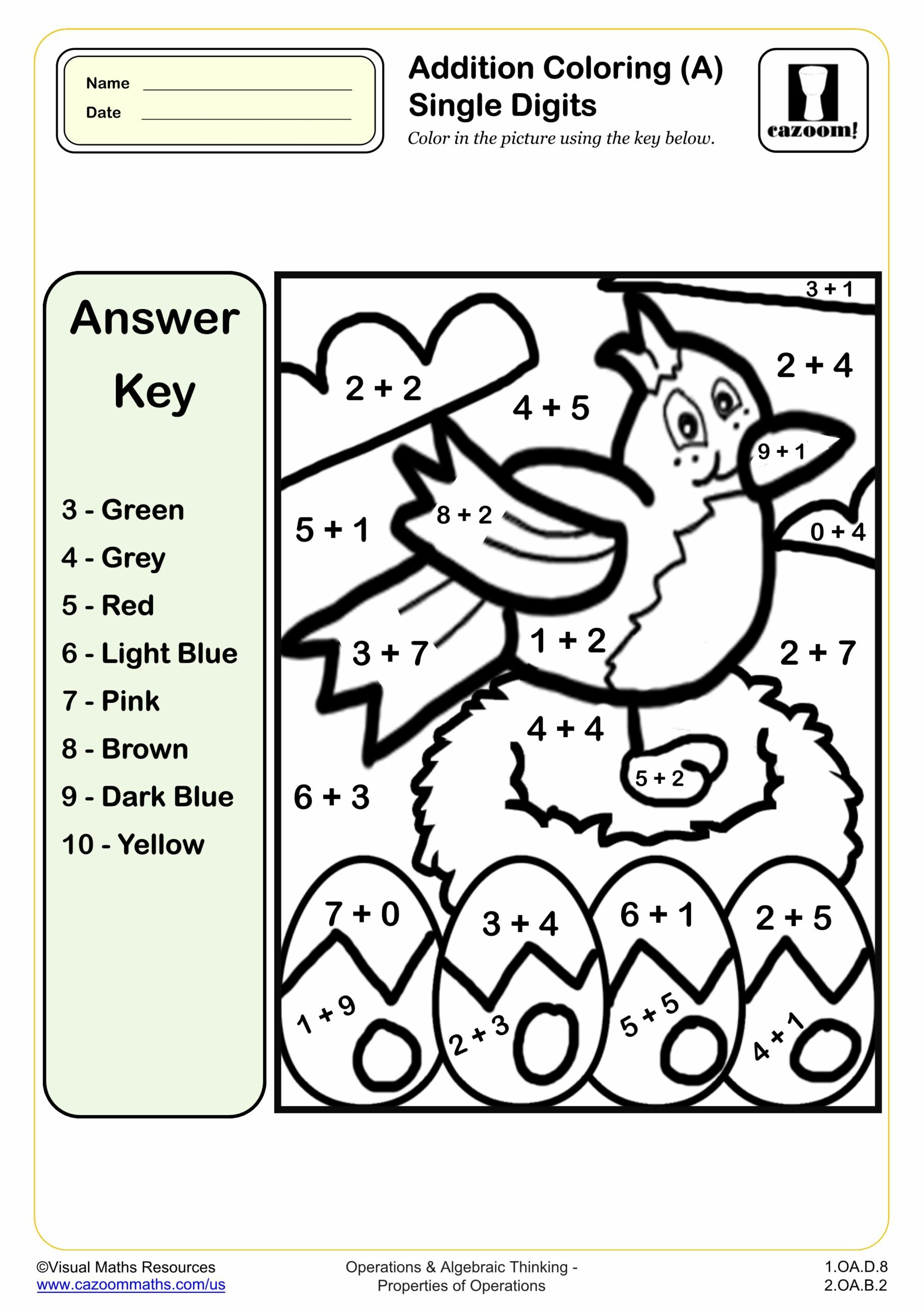
Addition Coloring (A) Single Digits
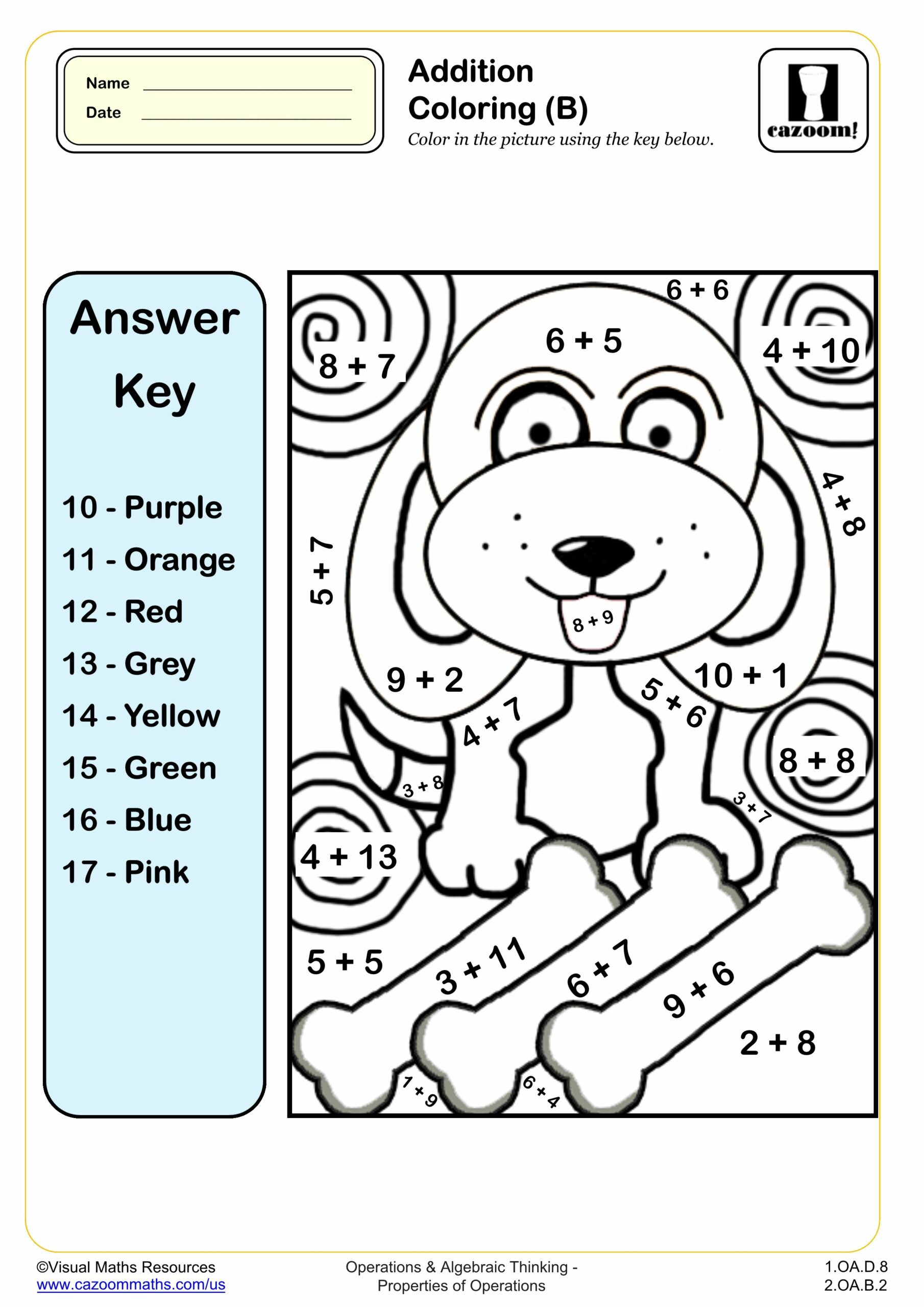
Addition Coloring (B)
Addition Tables up to 10
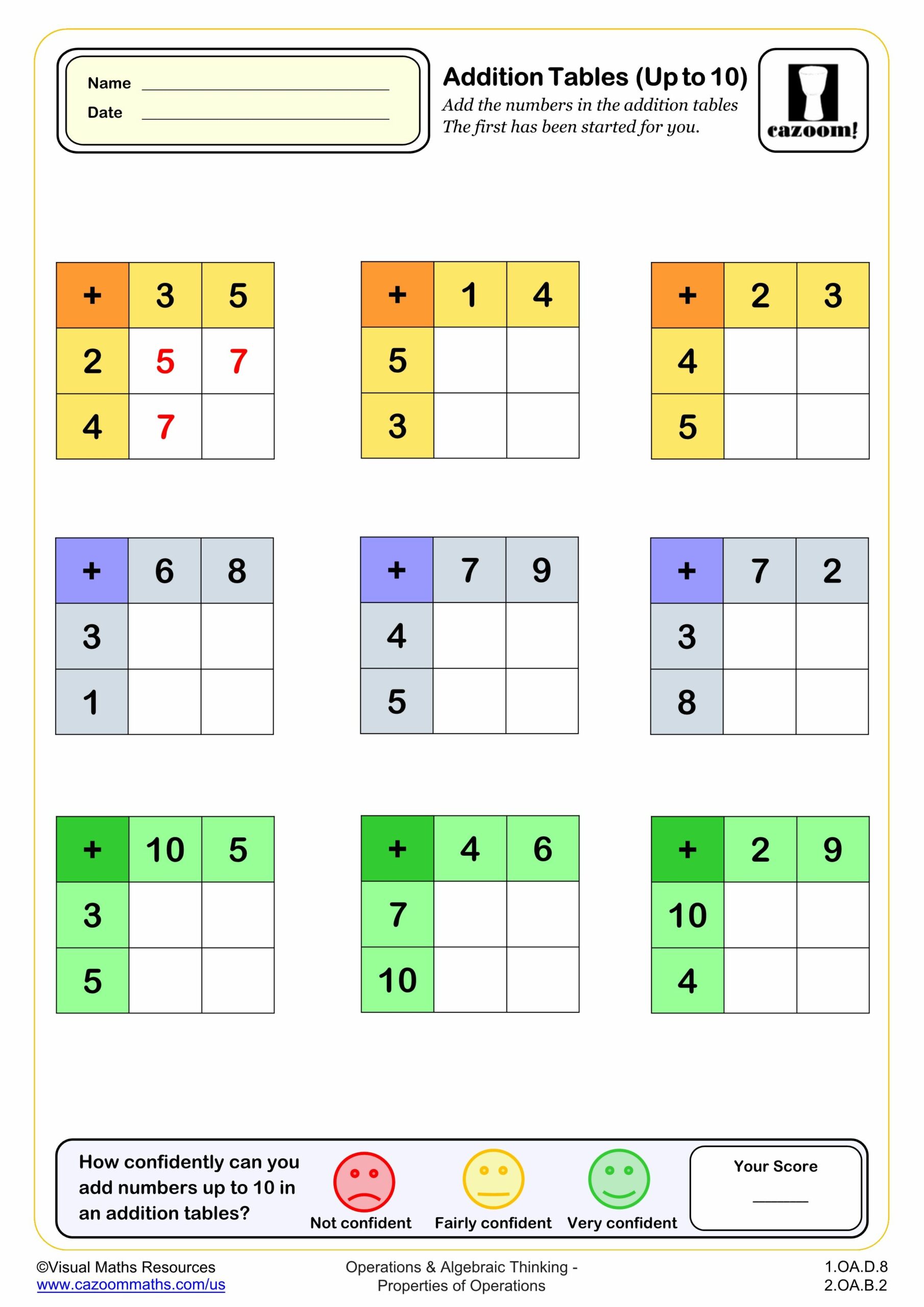
Addition Wheels (adding 1)
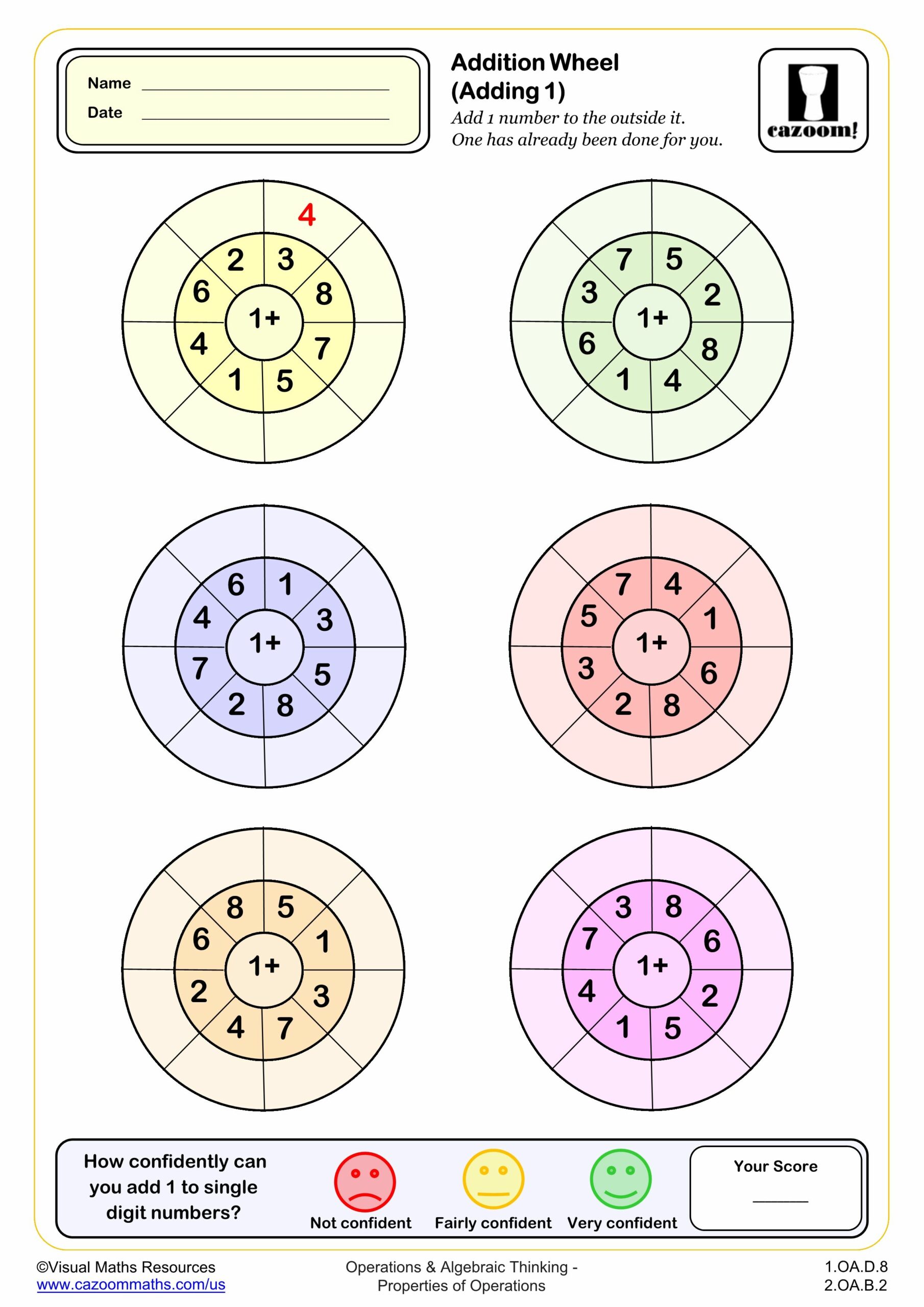
Addition Wheels (adding 2)
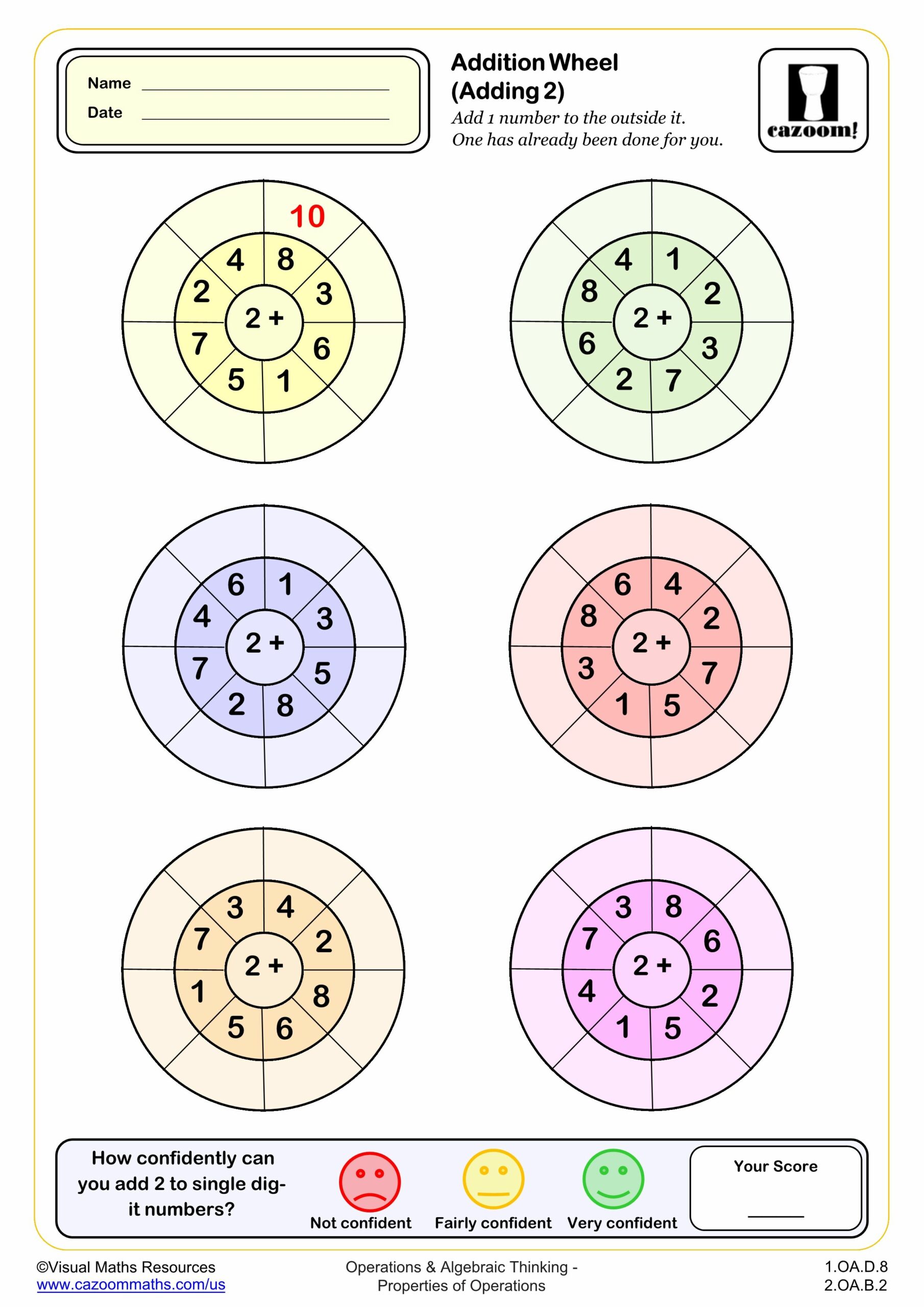
Addition Wheels (Up to 10)
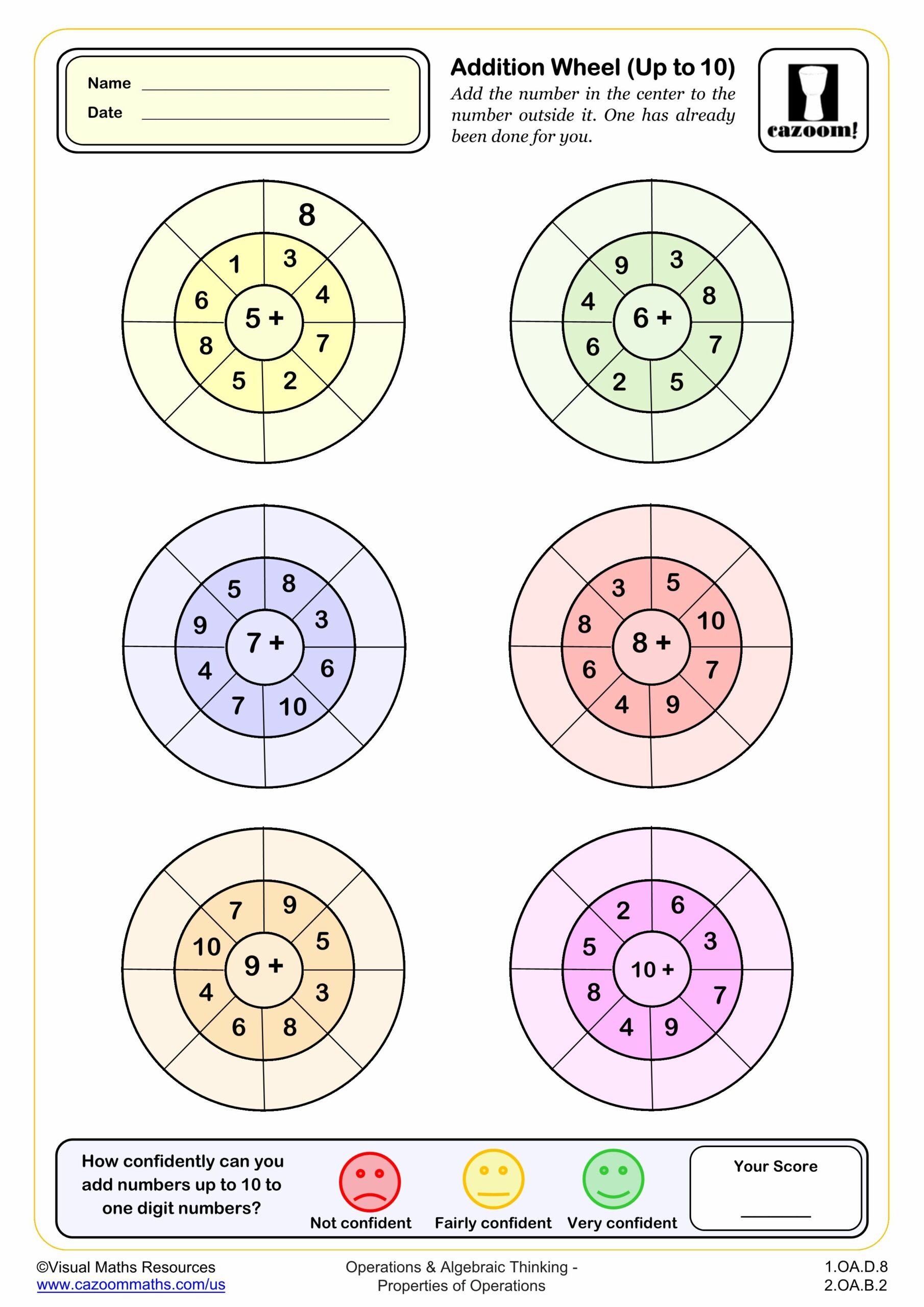
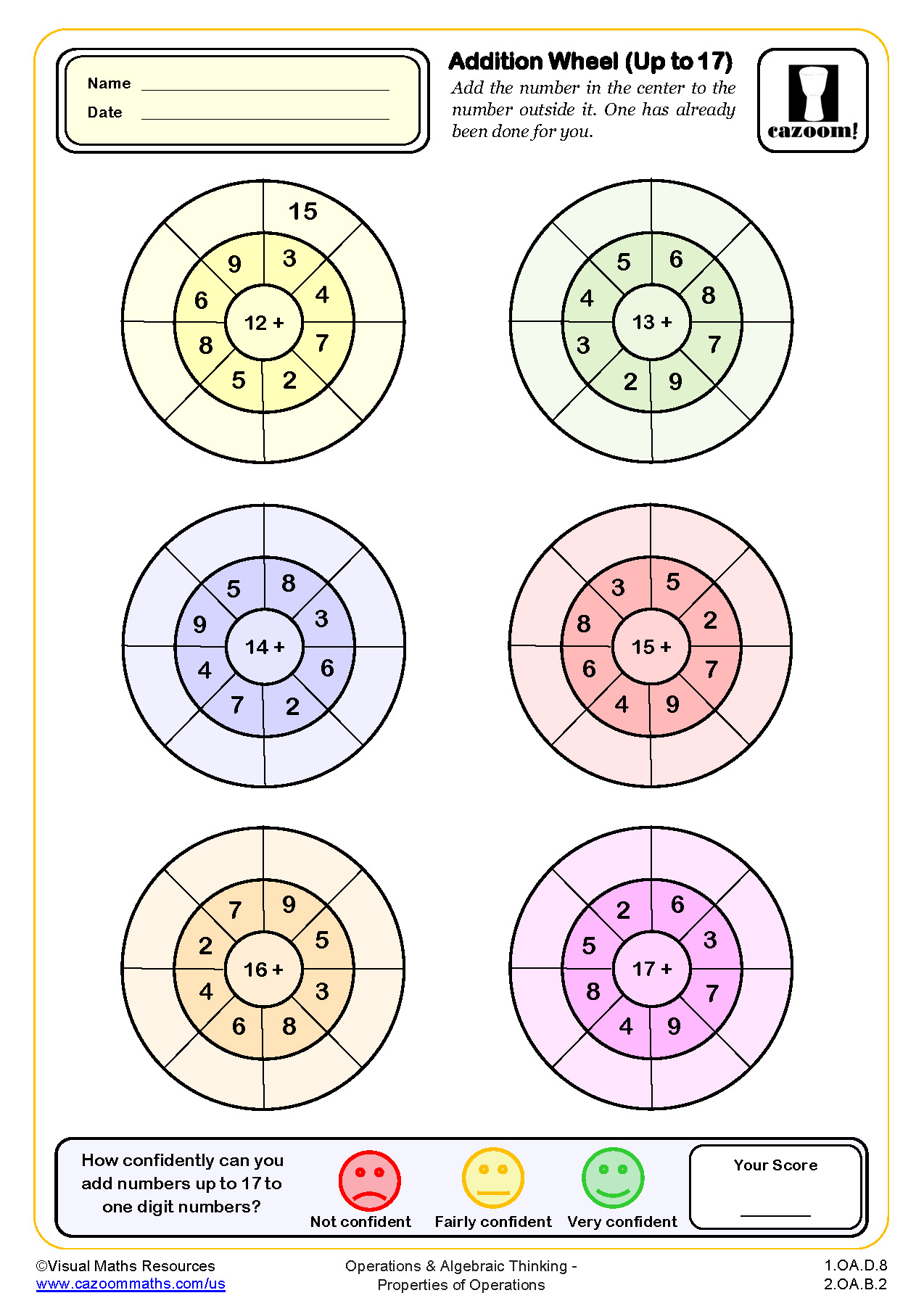
Addition Wheels (Up to 17)
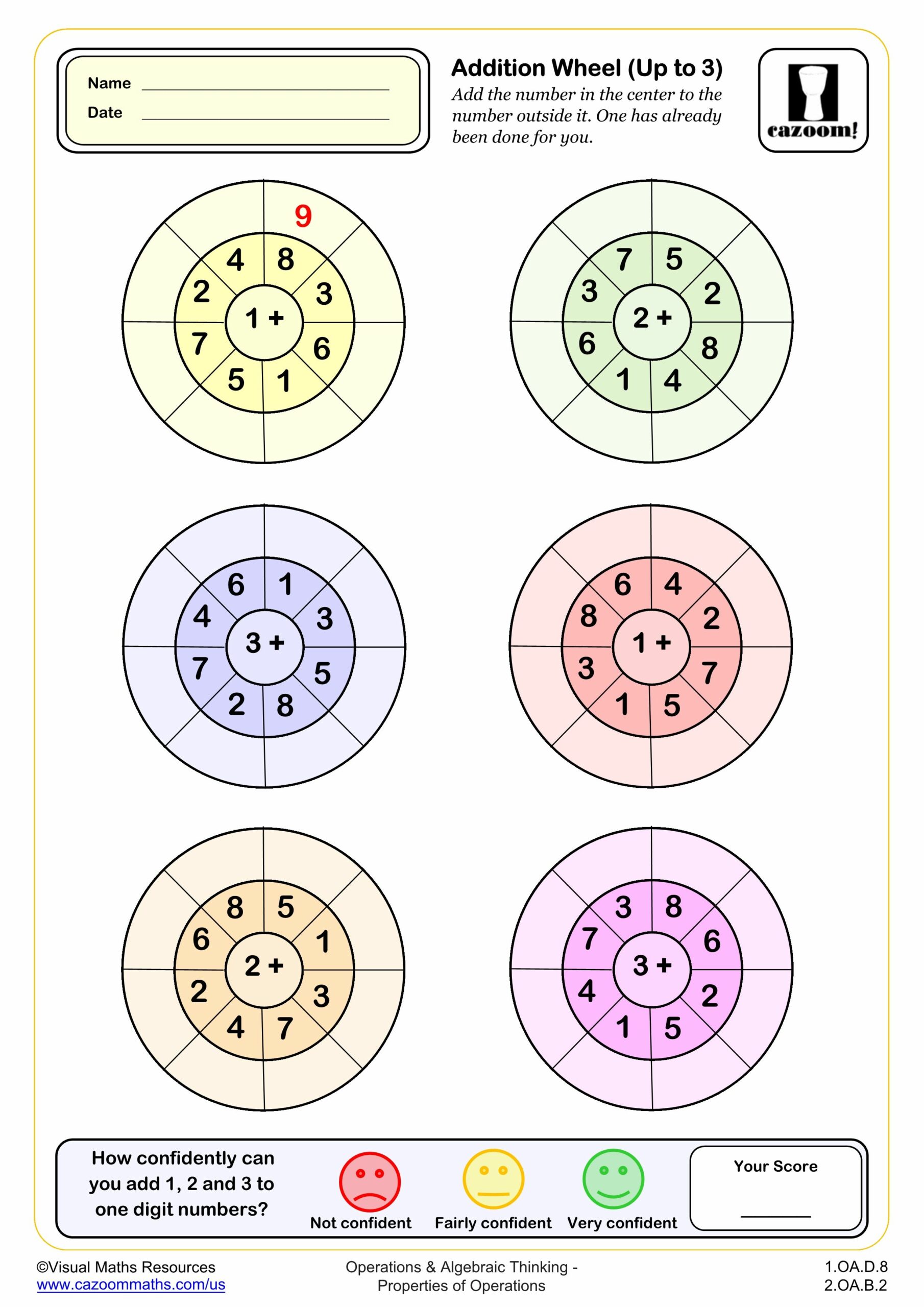
Addition Wheels (Up to 3)
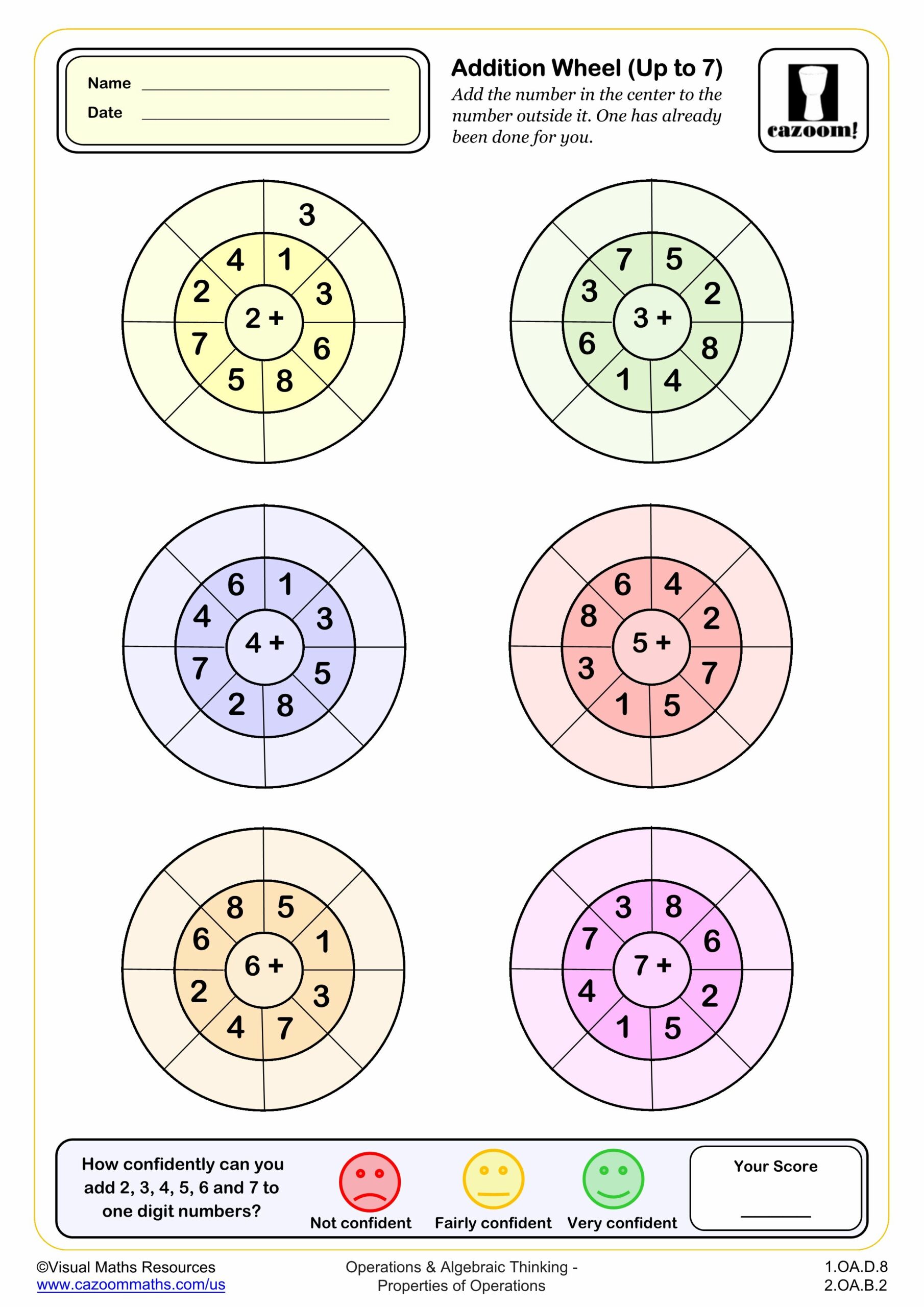
Addition Wheels (Up to 7)
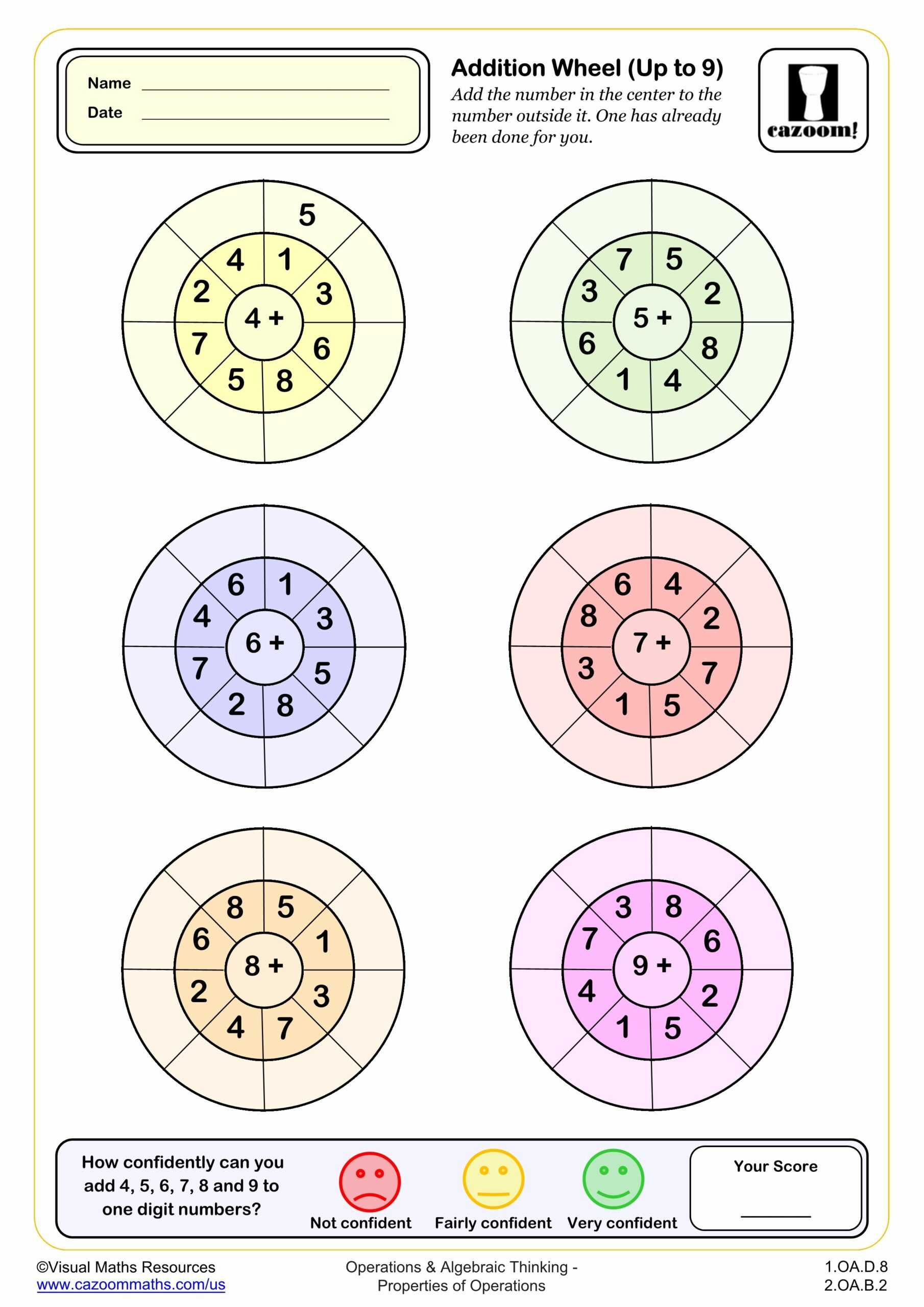
Addition Wheels (Up to 9)
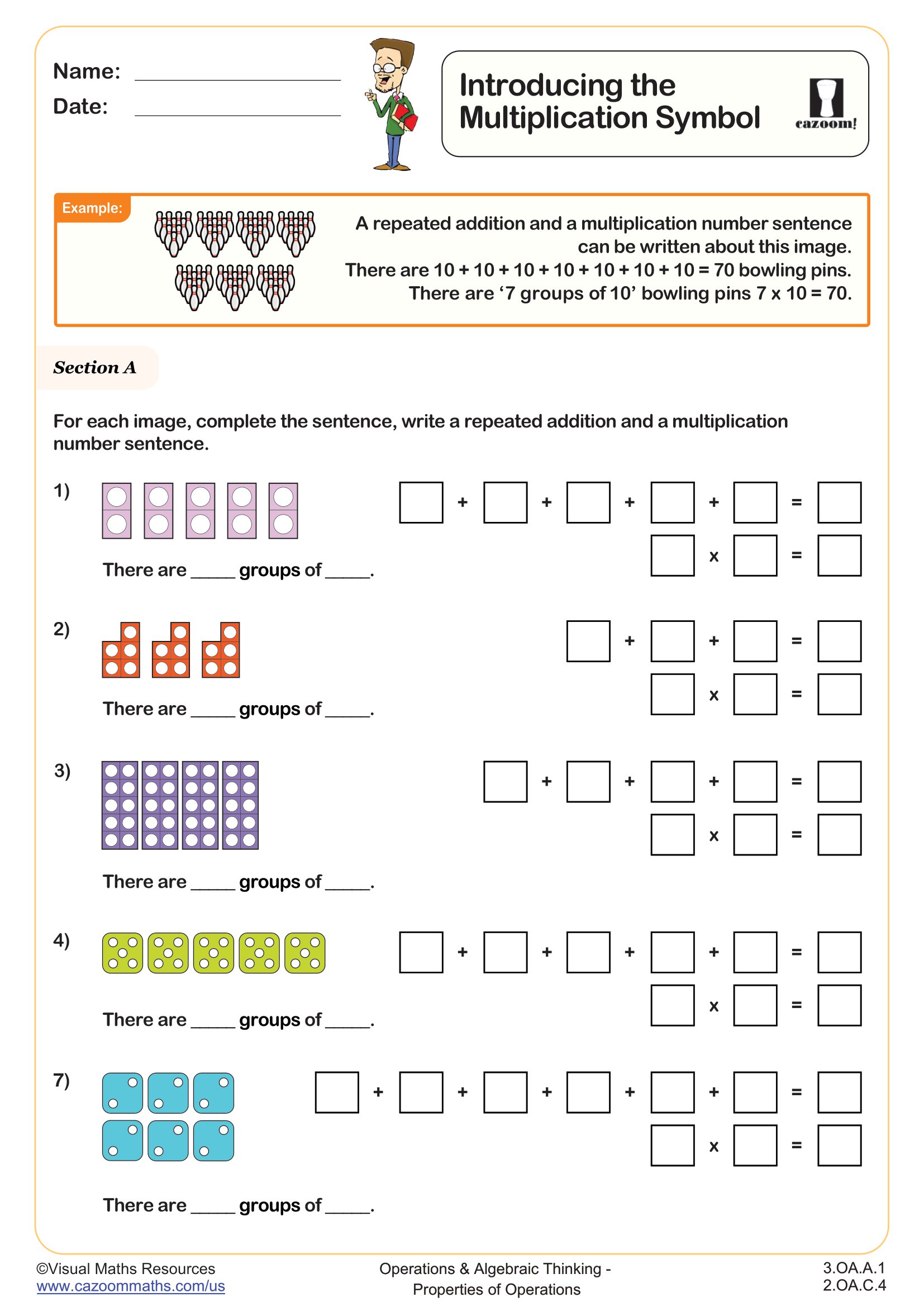
Introducing the Multiplication Symbol
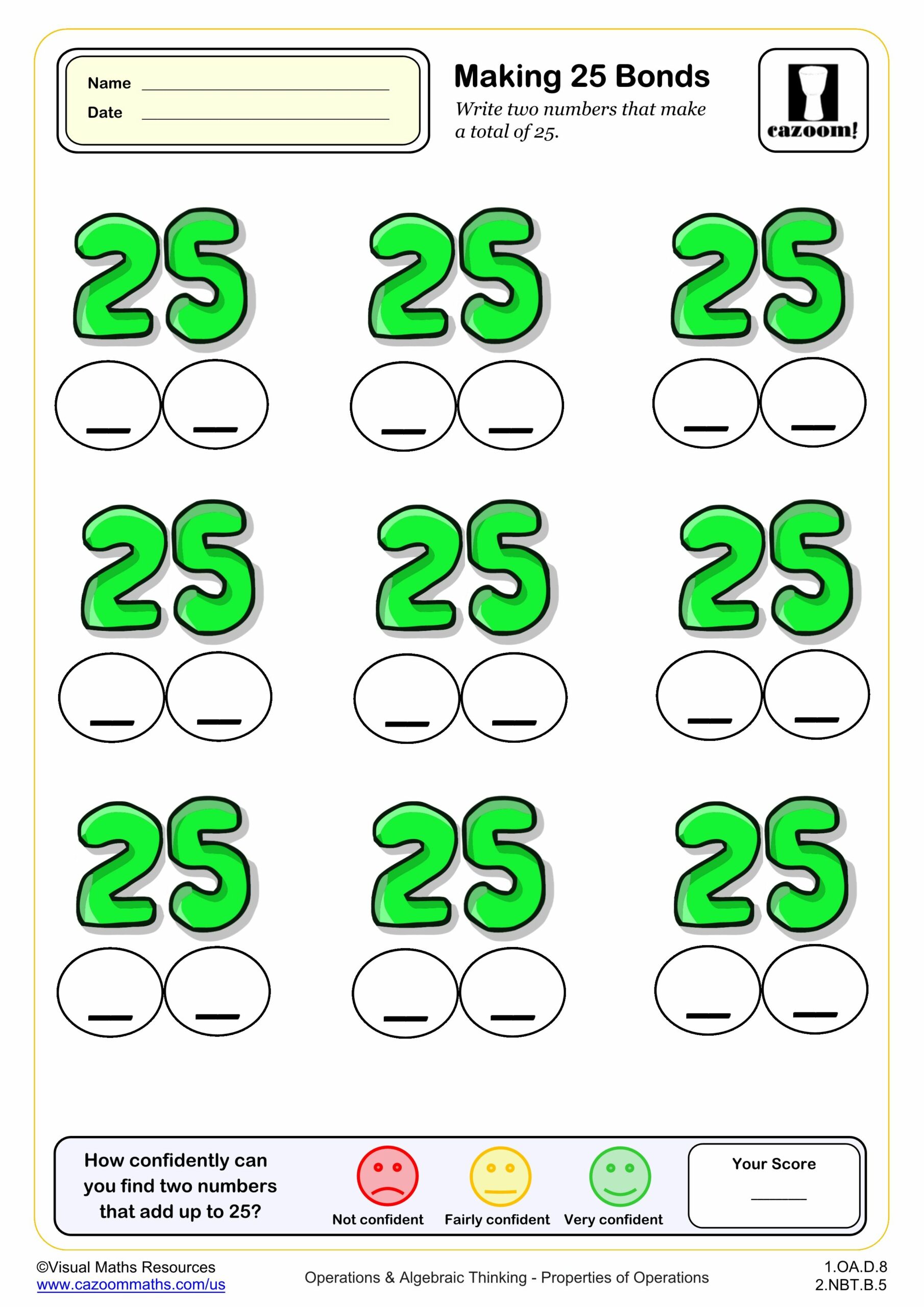
Making 25 (Blanks)
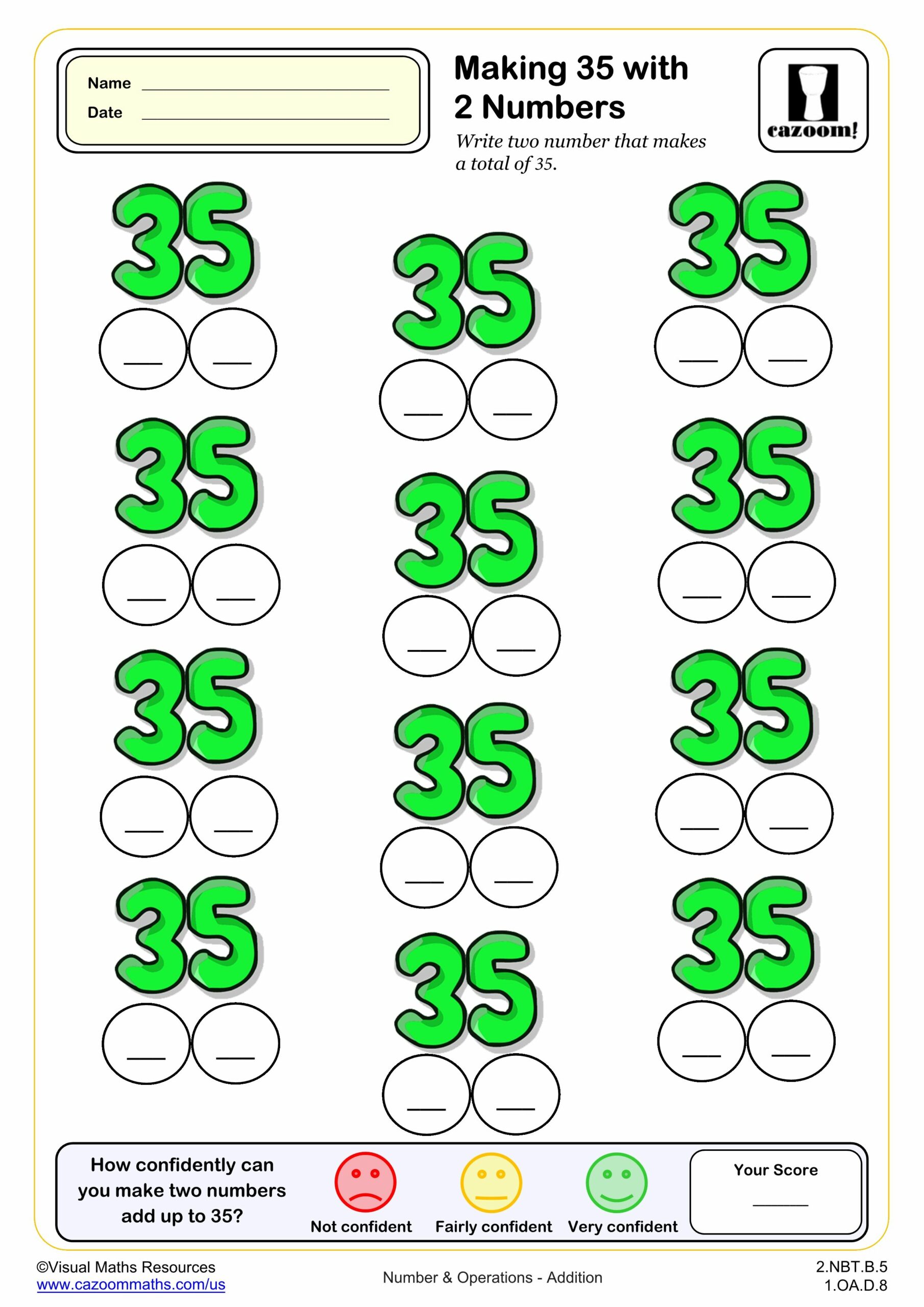
Making 35 (blanks)
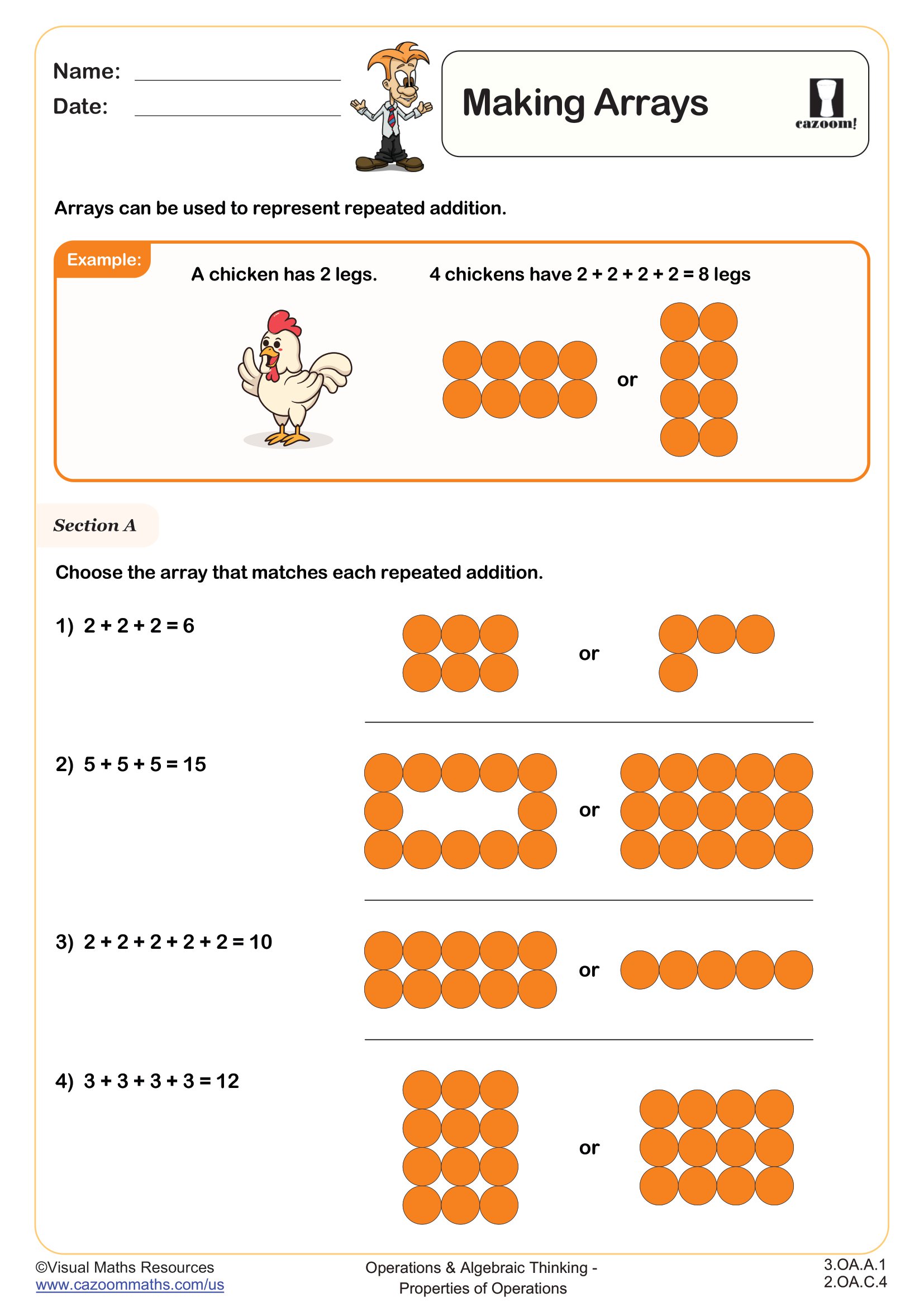
Making Arrays
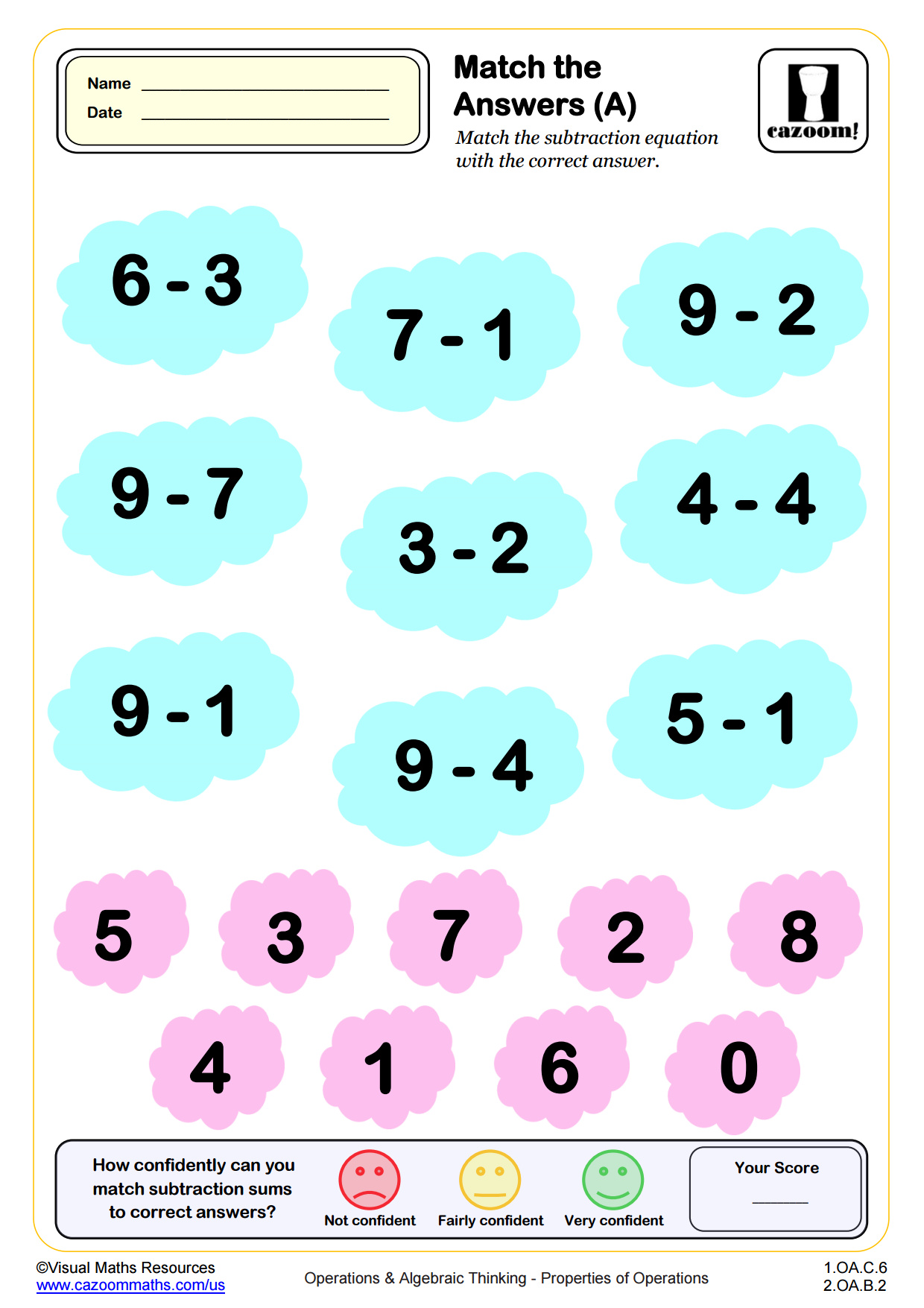
Match the Answers (A)
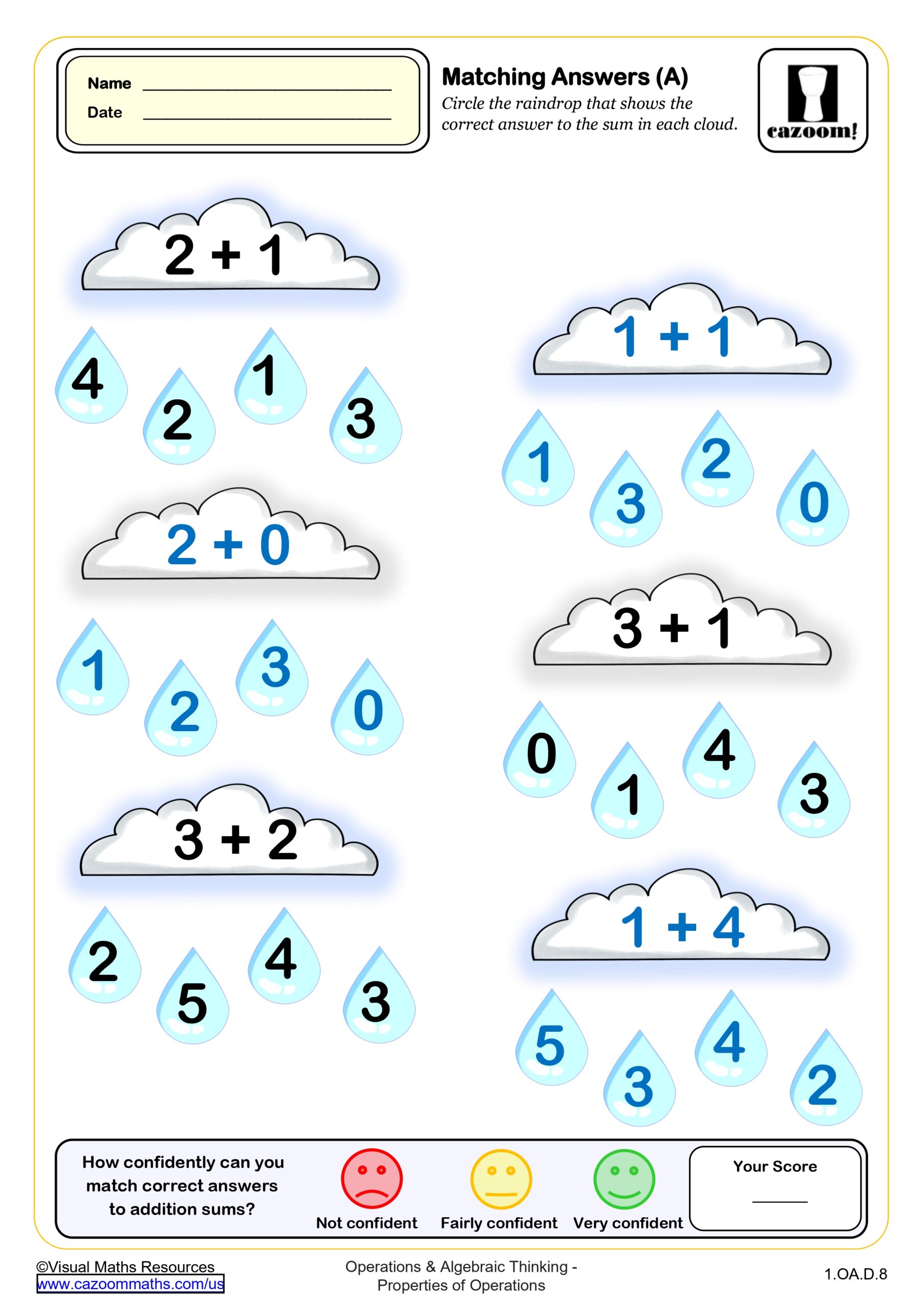
Matching Answers (A)
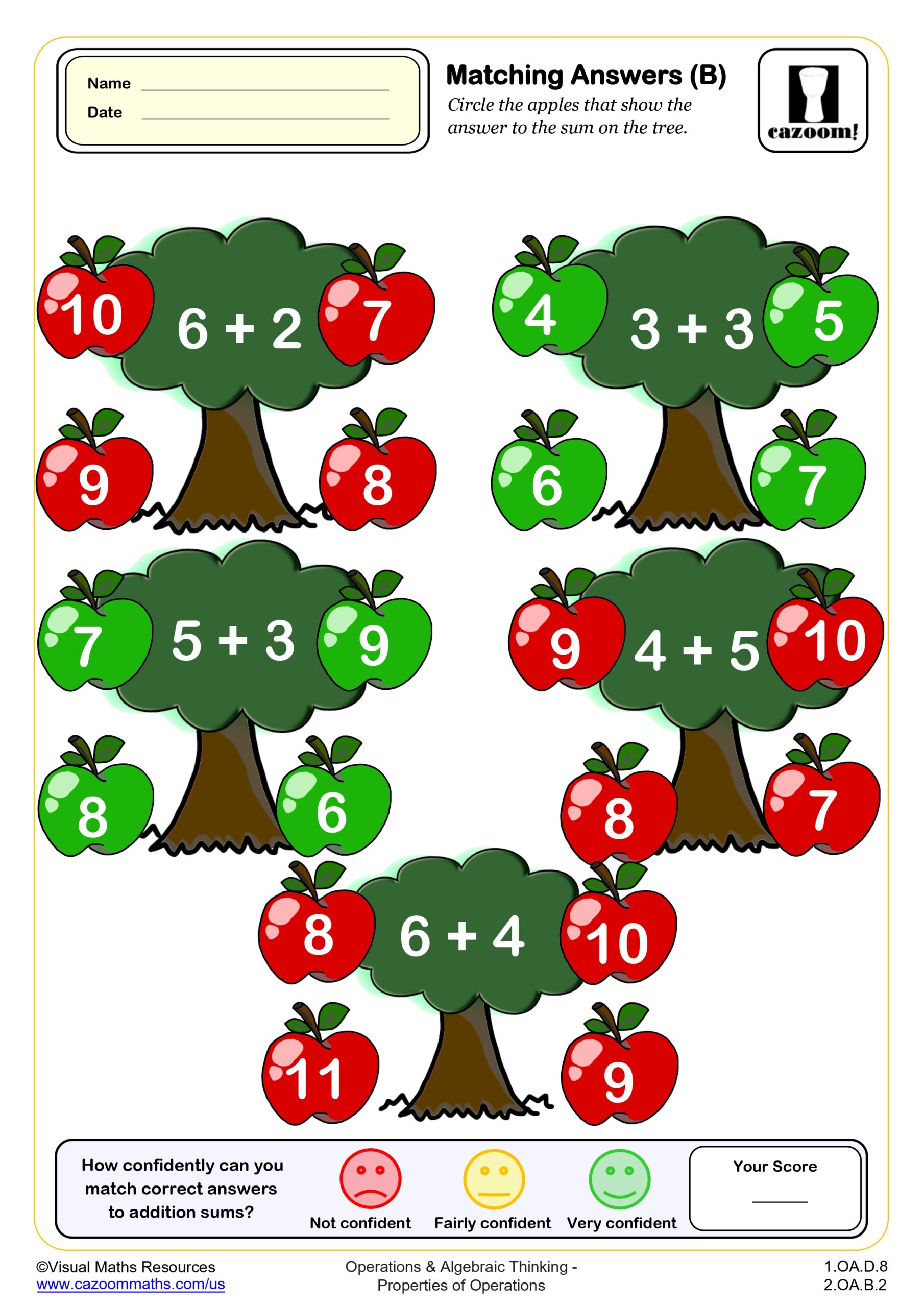
Matching Answers (B)
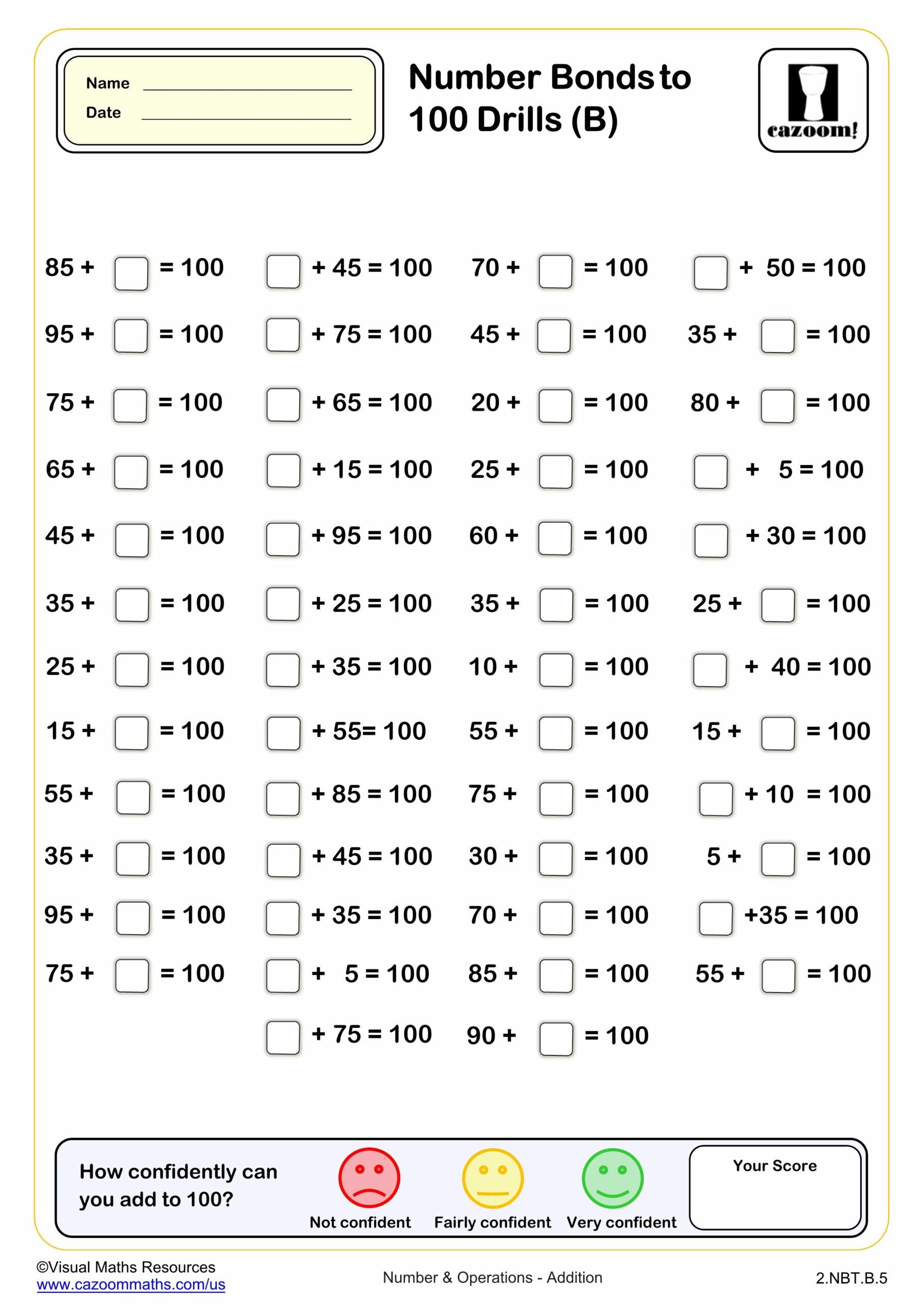
Number bond to 100 Drills (B) (50 questions)
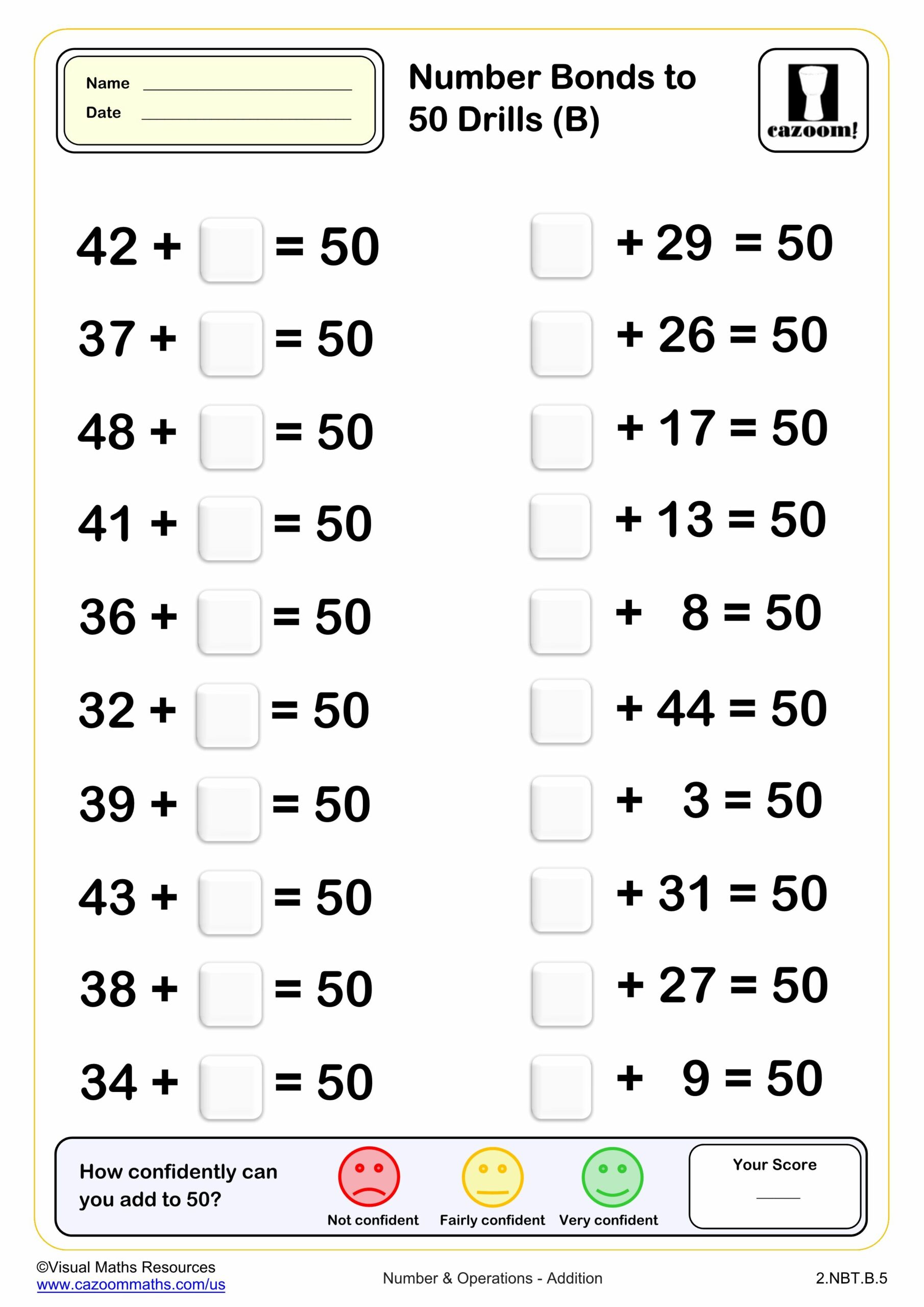
Number bond to 50 Drills (B) (20 questions)
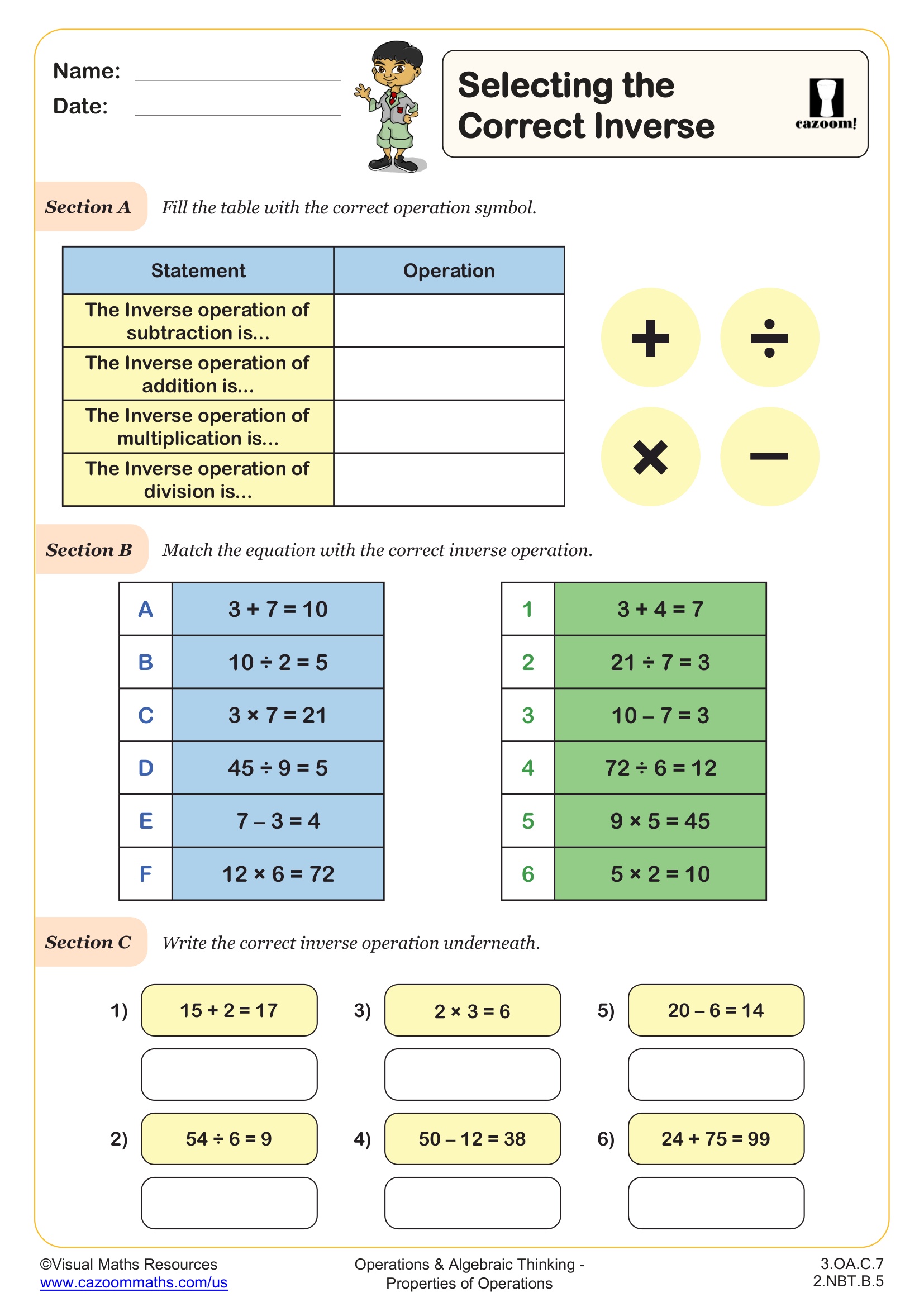
Selecting the Correct Inverse
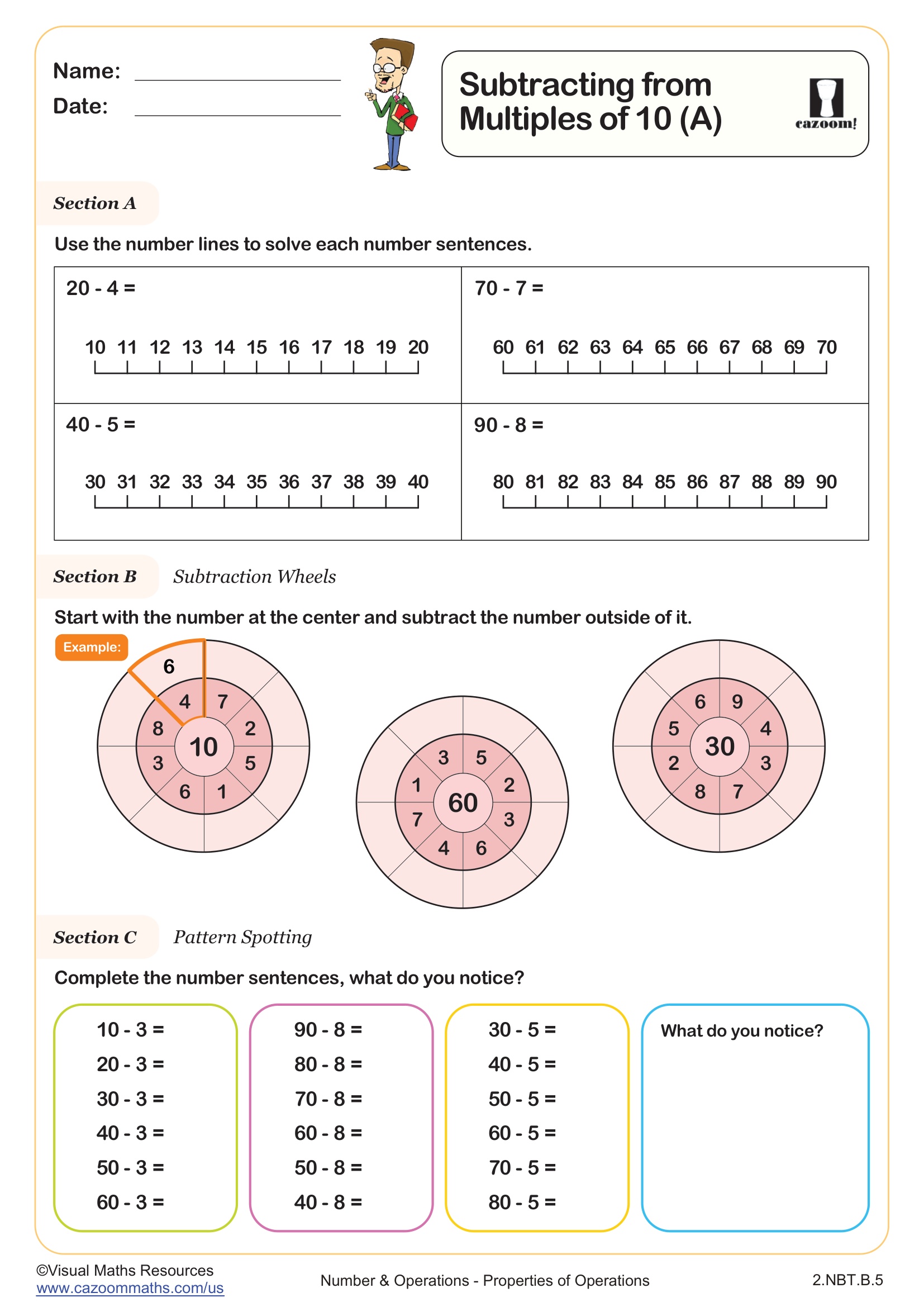
Subtracting from Multiples of 10 (A)
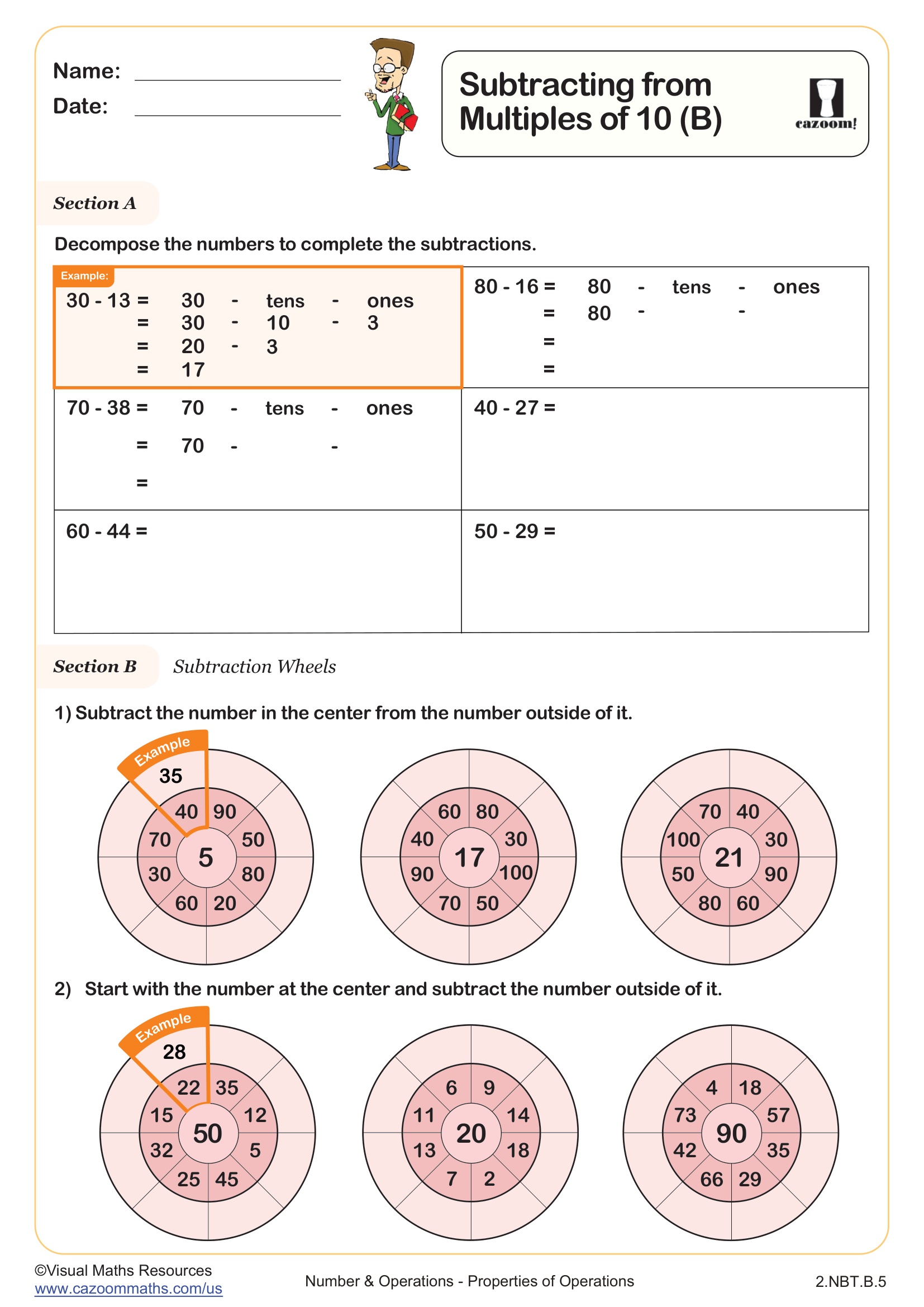
Subtracting from Multiples of 10 (B)
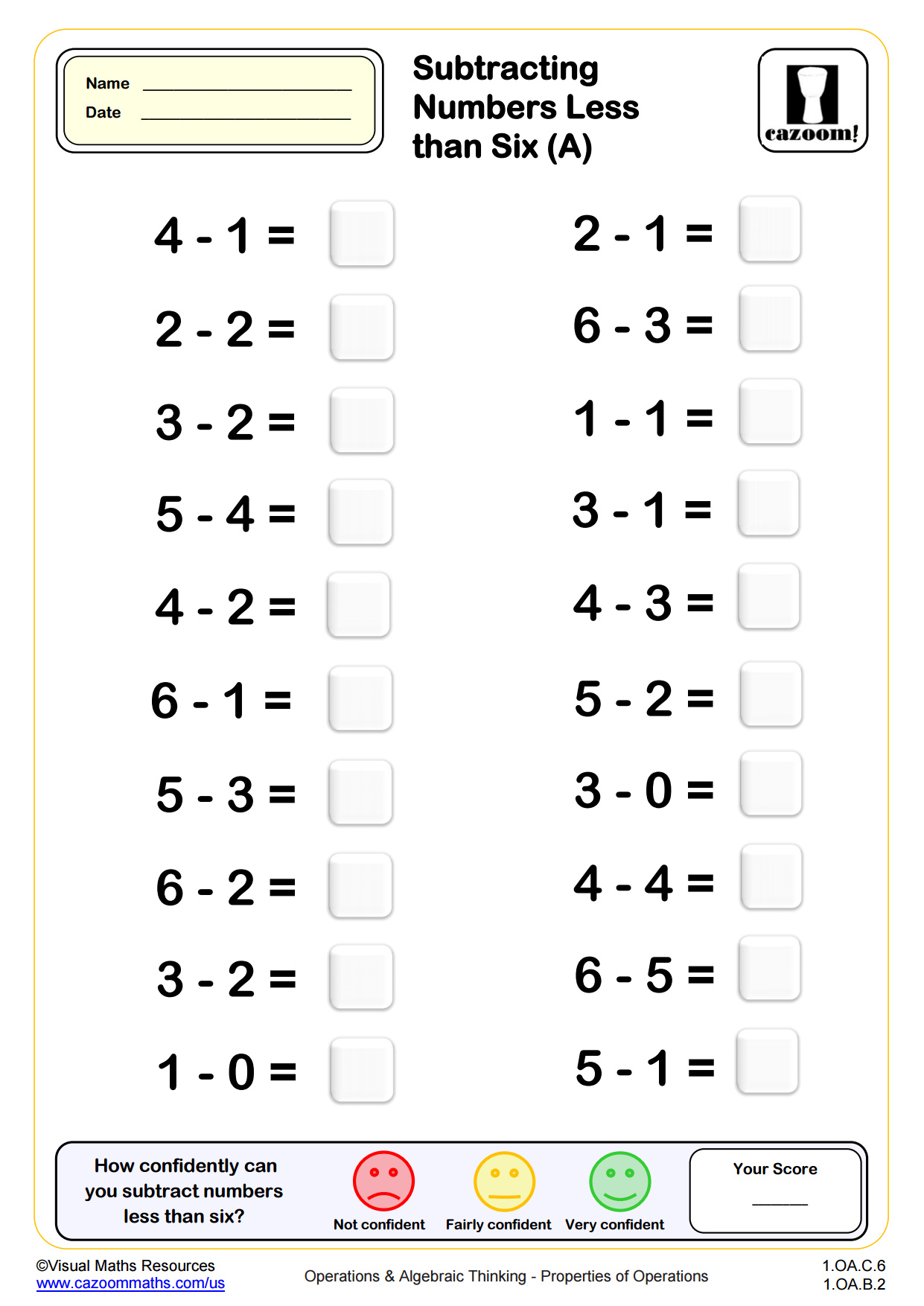
Subtracting Numbers Less Than 6 (A)
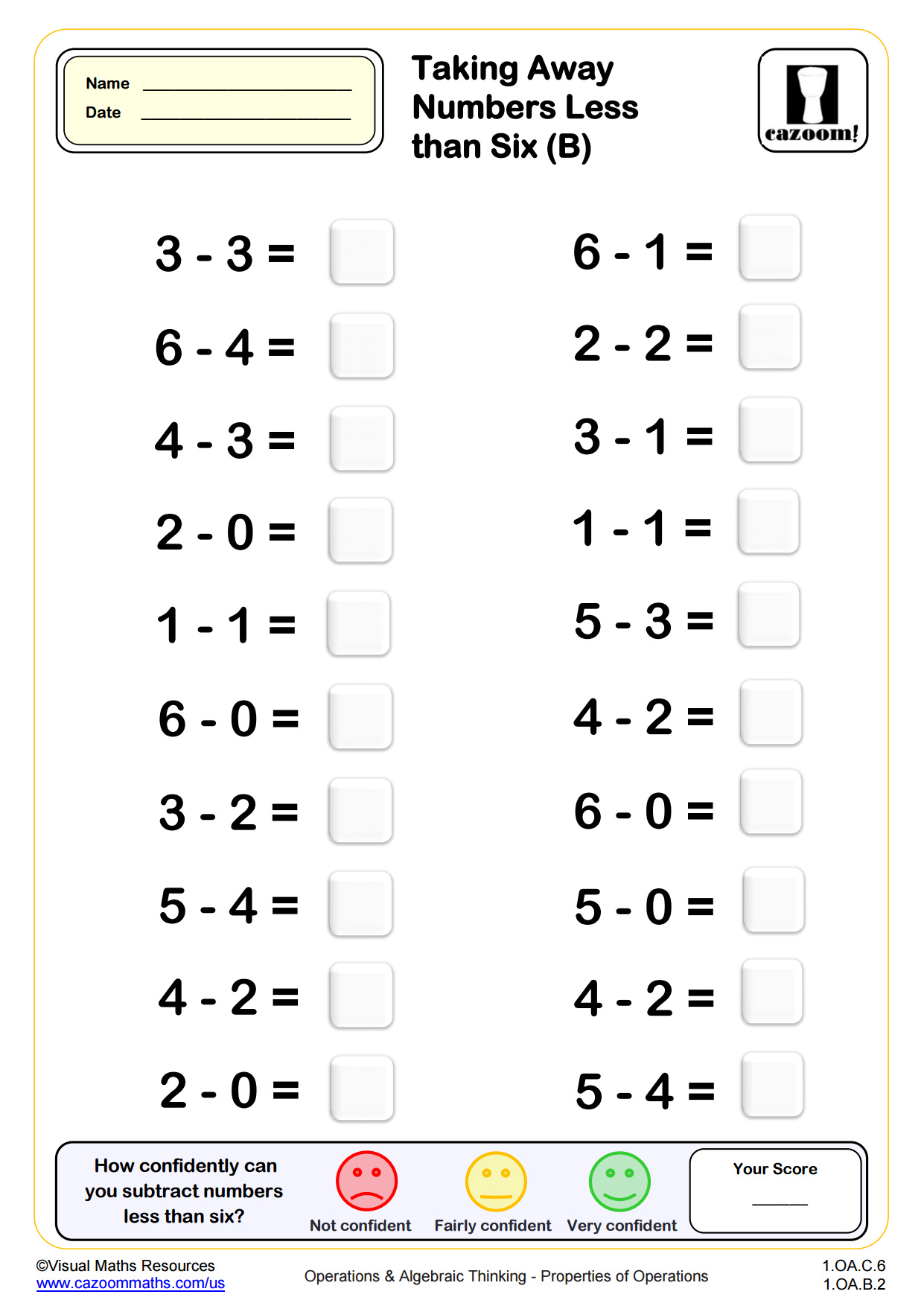
Subtracting Numbers Less Than 6 (B)
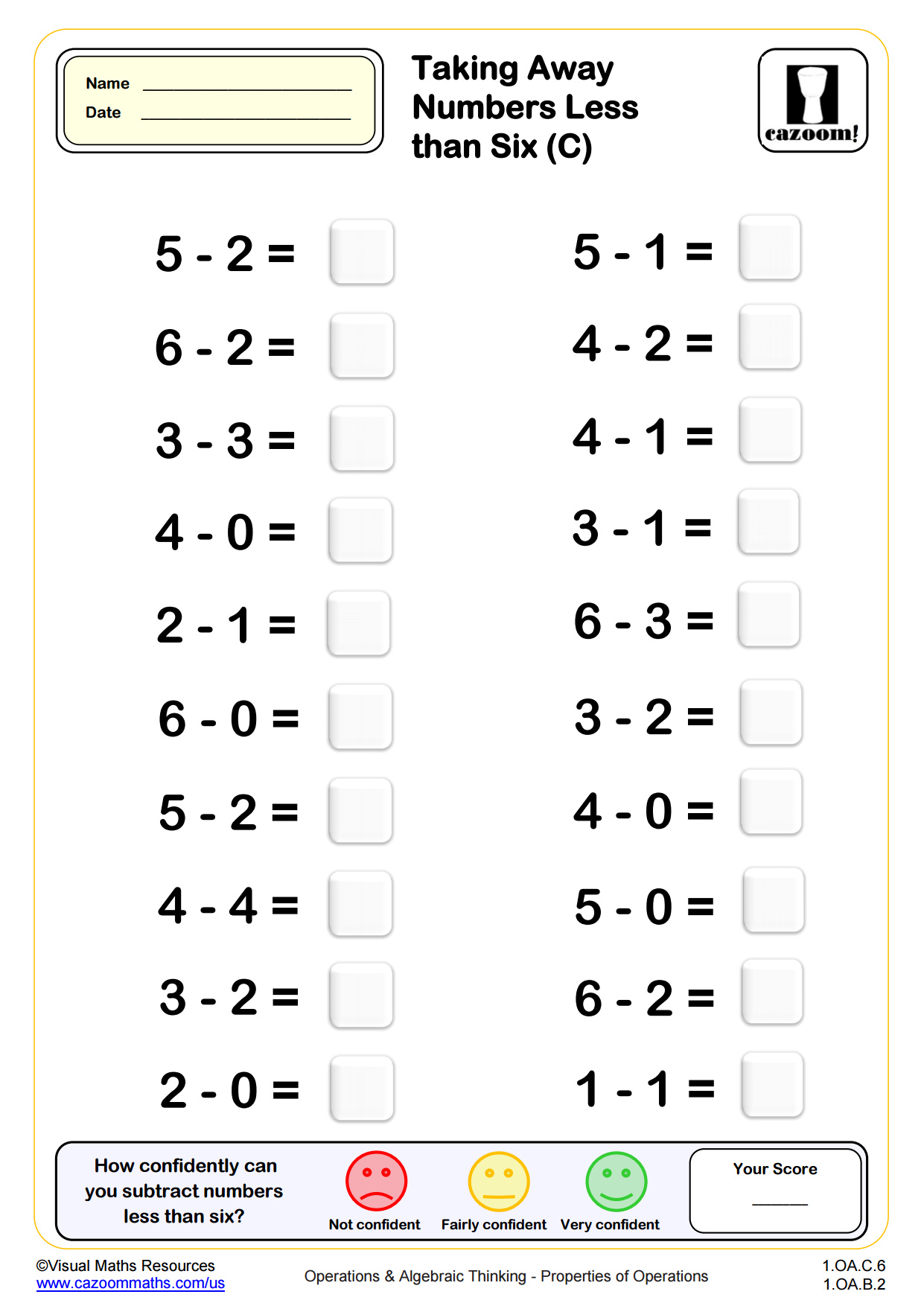
Subtracting Numbers Less Than 6 (C)
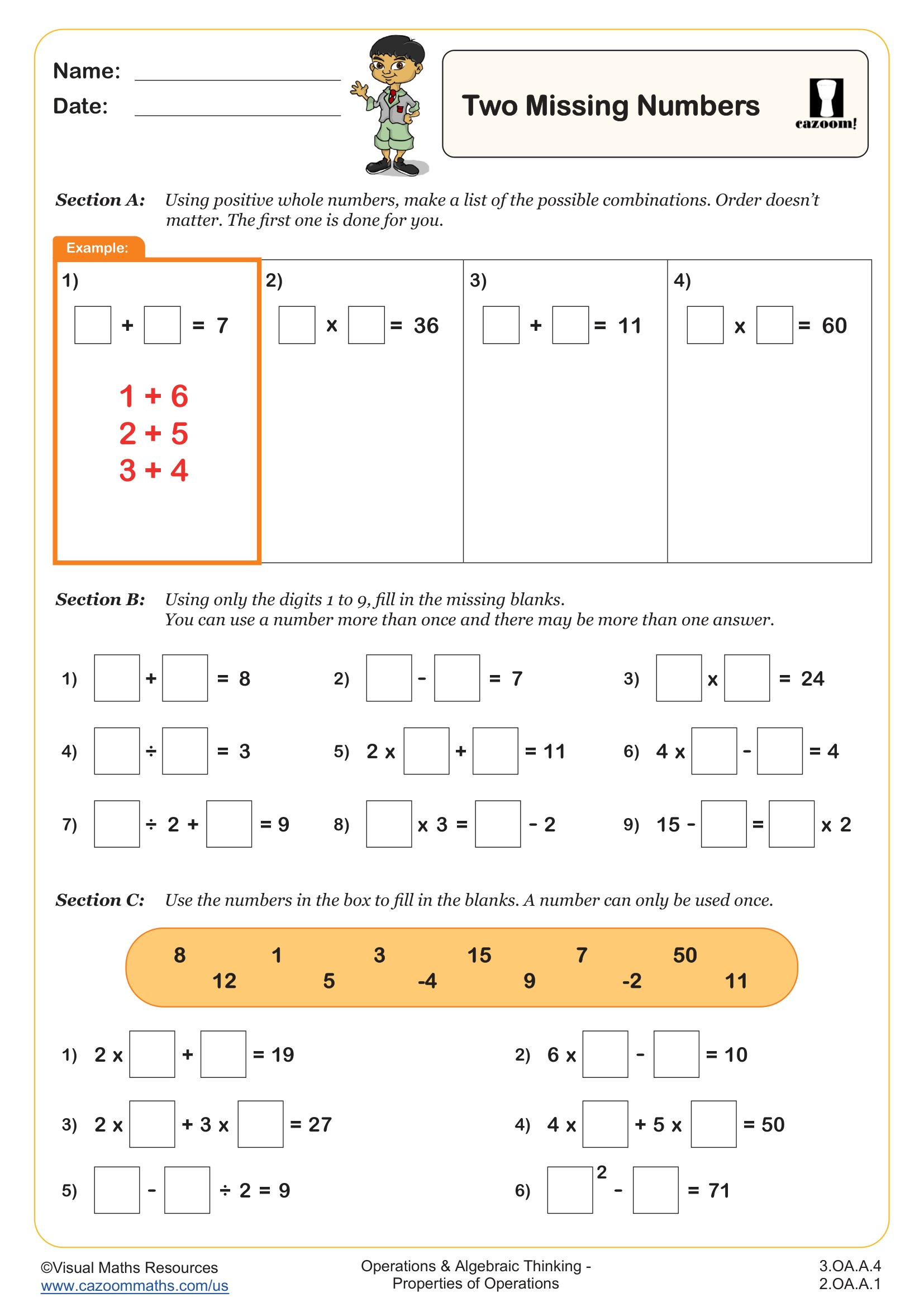
Two Missing Numbers
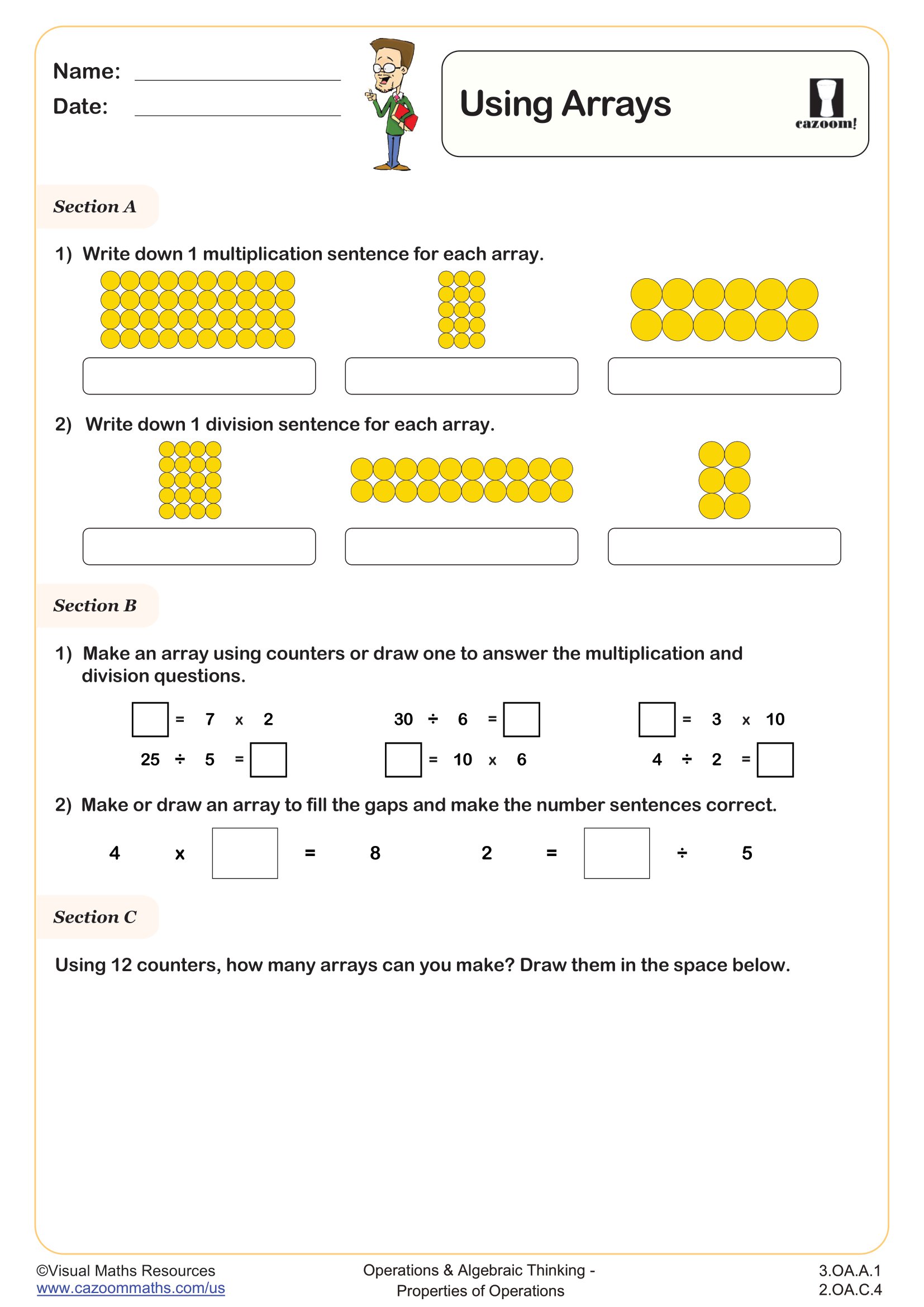
Using Arrays
All worksheets are created by the team of experienced teachers at Cazoom Math.
What makes a properties of addition worksheet grade 2 pdf effective for classroom use?
Effective properties of addition worksheet grade 2 materials align with Common Core State Standards 2.NBT.A.9, which requires students to explain why addition strategies work using place value and properties of operations. Quality worksheets present problems in multiple formats including number sentences, visual models, and real-world contexts that help students connect abstract concepts to concrete understanding.
Teachers notice that students benefit most from worksheets that progress systematically from simple examples like 2 + 4 = 4 + 2 to more complex problems involving three addends. The most successful properties of operations worksheet activities include manipulative suggestions and encourage students to explain their reasoning, not just identify correct answers.
How do properties of addition concepts progress from kindergarten through elementary grades?
Properties of addition formally appear in second grade curriculum, though foundational concepts begin in kindergarten through hands-on counting activities. Second graders focus primarily on the commutative property (order doesn't matter) and identity property (adding zero), while third grade extends to the associative property with three or more addends. Fourth and fifth grades apply these properties to multi-digit addition and connect them to multiplication properties.
Classroom experience shows that students who master these properties in second grade demonstrate stronger mental math skills and algebraic reasoning in later grades. Teachers often use concrete manipulatives like counting bears or base-ten blocks to help students visualize why 7 + 3 equals 3 + 7 before moving to abstract number work.
What are addition pyramids and how do they reinforce properties of operations?
Addition pyramids present numbers in triangular arrangements where students add adjacent numbers to find the number above them, creating multiple pathways to practice properties of addition. These visual organizers naturally demonstrate the associative property as students discover they can group addends differently and still reach the same result. Teachers find that addition pyramid activities help students see number relationships more clearly than traditional worksheets.
Students often make errors when working upward through pyramid levels, forgetting to check their addition facts or losing track of which numbers they've already used. The pyramid format encourages systematic thinking and provides built-in checking opportunities since students can verify answers by working backwards from the top.
How can teachers use properties of addition worksheets to address different learning styles?
Properties of addition worksheets work best when teachers incorporate multiple representation methods to reach visual, auditory, and kinesthetic learners. Visual learners benefit from worksheets that include ten frames, number lines, and pictorial models, while auditory learners respond well when teachers encourage verbal explanation of why properties work. Kinesthetic learners need opportunities to manipulate objects before completing worksheet problems.
Teachers observe that students retain properties concepts longer when worksheets include real-world applications, such as calculating total items in different arrangements or finding multiple ways to group classroom supplies. Pairing worksheet completion with partner discussions helps students articulate their understanding and catch misconceptions before they become ingrained habits.