2nd Grade Reason with Shapes Worksheets
All worksheets are created by the team of experienced teachers at Cazoom Math.
What does reasoning with shapes mean in second grade math?
Reasoning with shapes in second grade means using logical thinking to identify, compare, and analyze geometric figures based on their attributes. Students move beyond simply naming shapes to understanding why a triangle has three sides or how to divide a rectangle into equal parts. This aligns with Common Core standard 2.G.A.1, where students recognize and draw shapes having specified attributes.
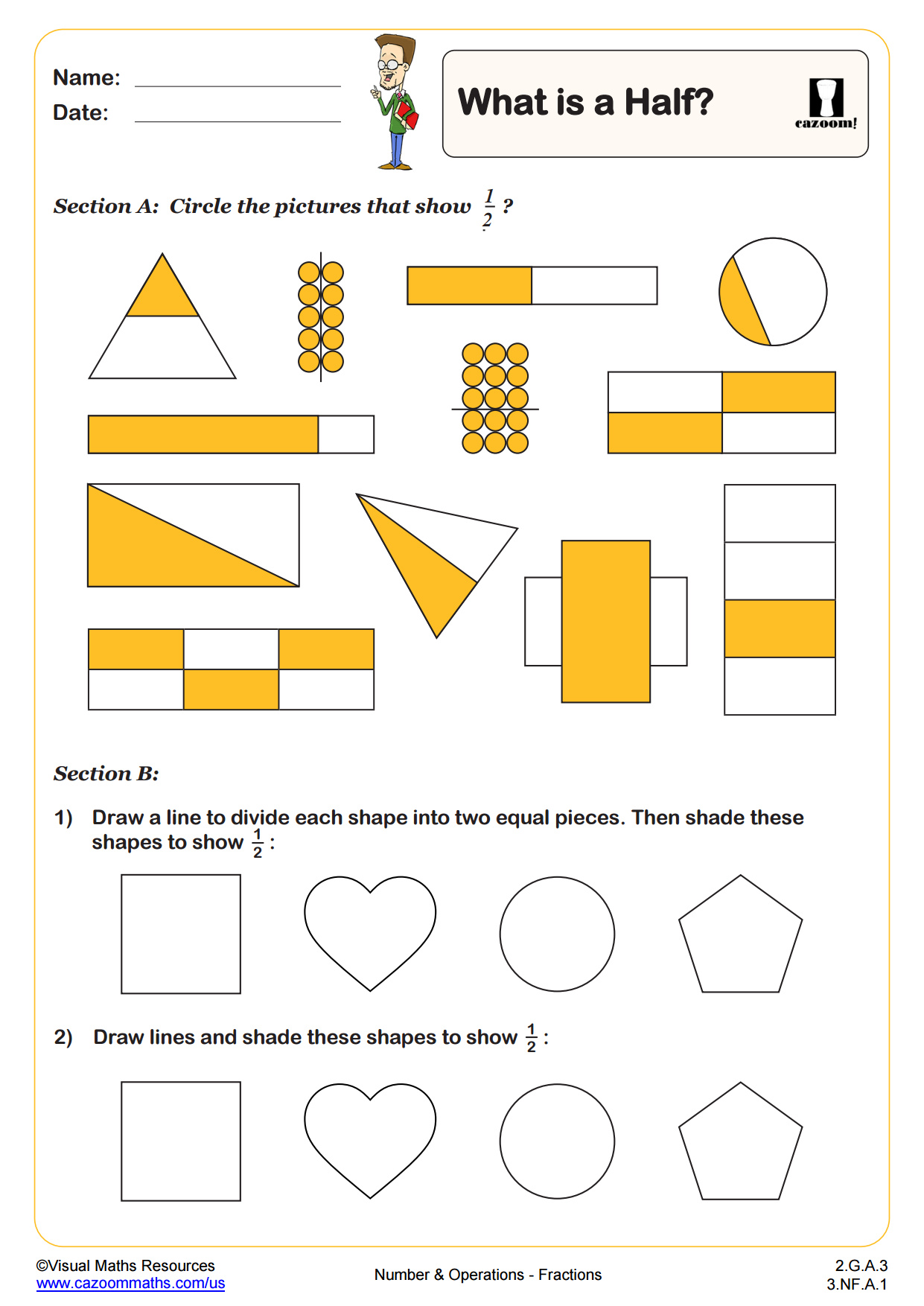
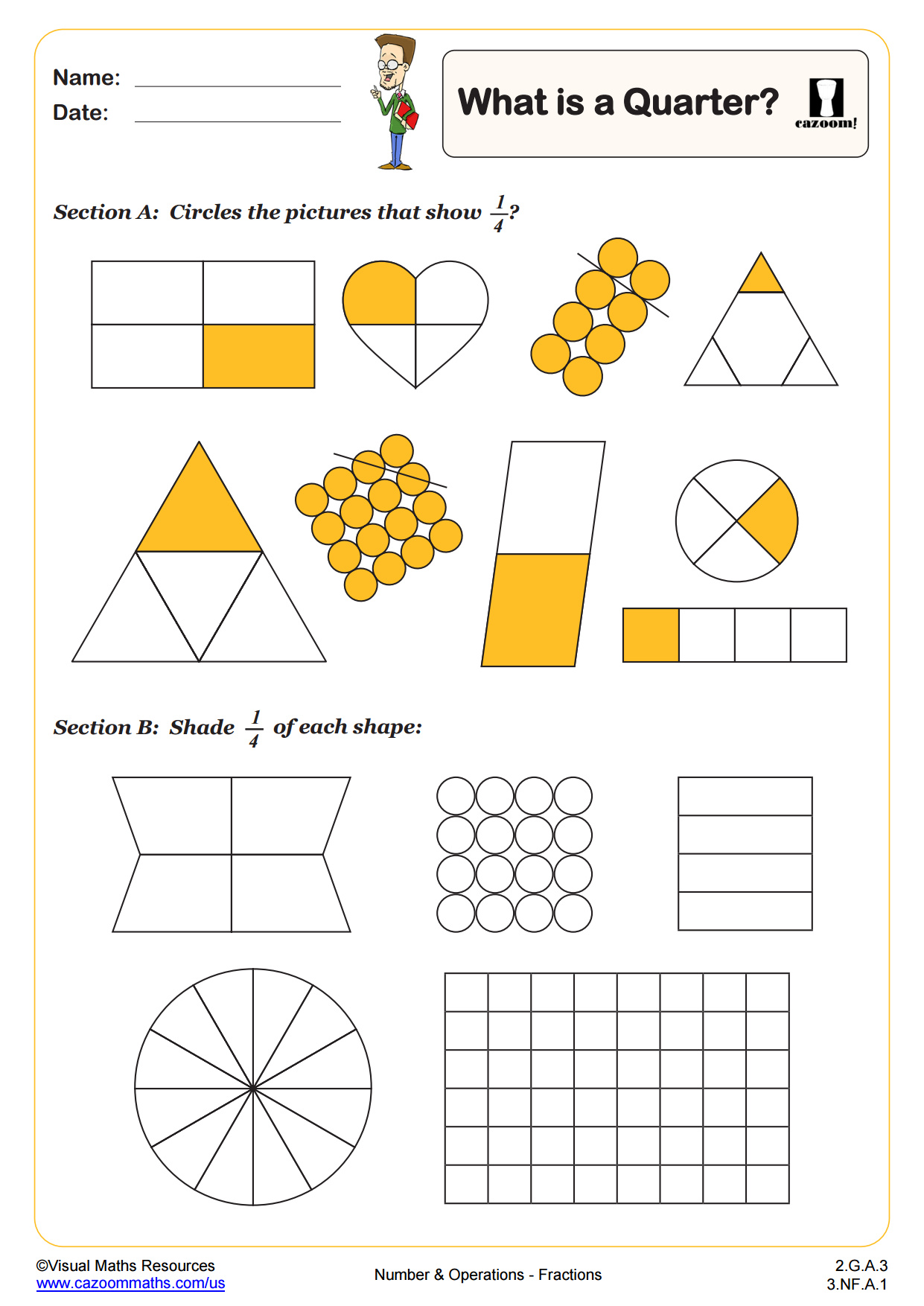
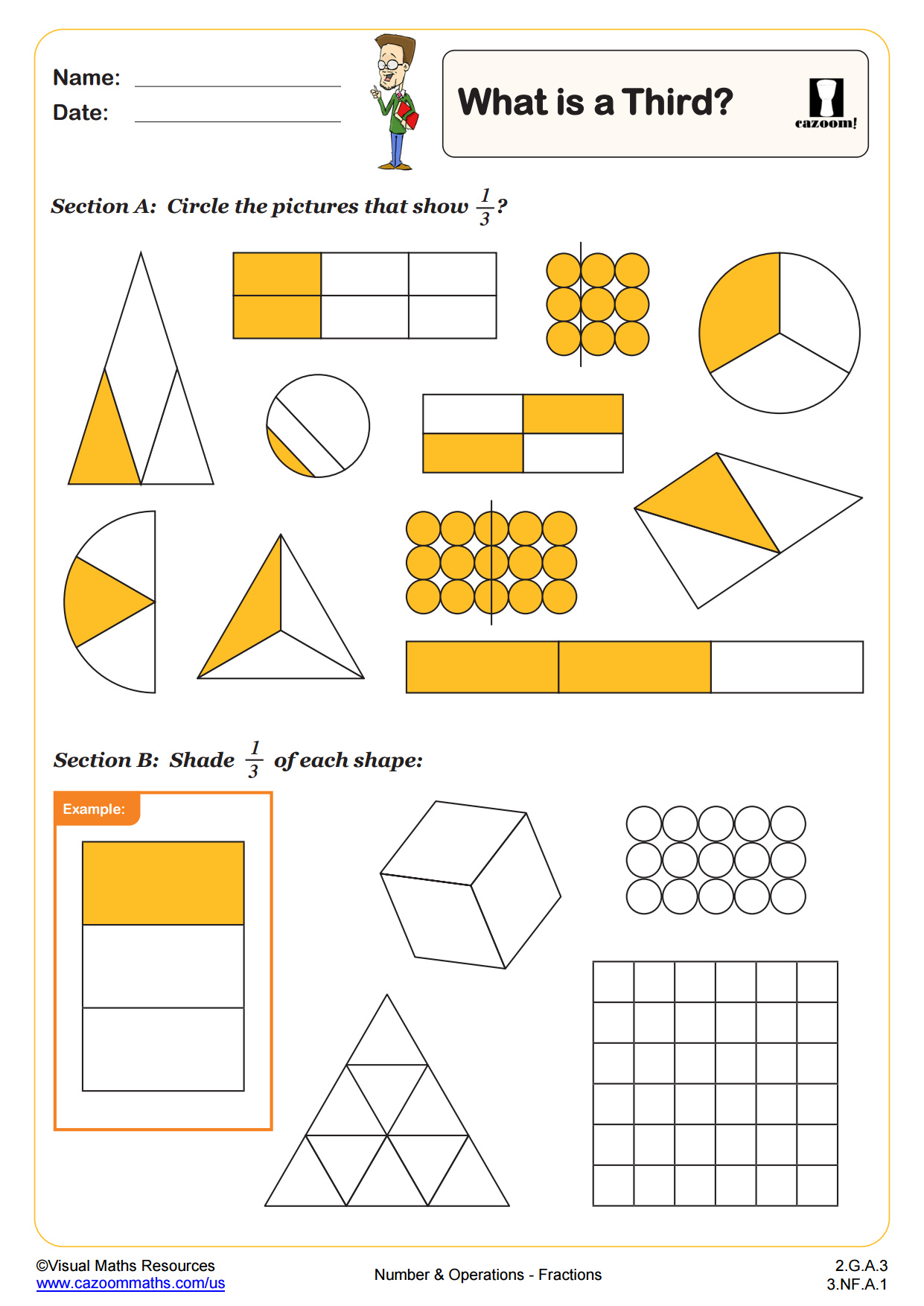
A common misconception occurs when students identify halves or quarters by counting pieces rather than checking for equal size. Teachers often see students divide a shape into two parts and call each piece "a half" without verifying the parts are the same size. This makes hands-on practice with shape partitioning essential before moving to abstract fraction notation.
What grade level learns reasoning with shapes?
This collection targets second grade students in elementary school, typically ages 7-8. At this level, students build on their kindergarten and first grade shape recognition to analyze geometric properties and relationships more deeply. Second graders are expected to partition shapes into equal parts and recognize those parts as fractions of the whole.
The subtopics progress from concrete visualization tasks like using coordinate clues to locate shapes, to more analytical work with triangle properties and midpoints. Students who master these reasoning skills in second grade develop stronger number sense for fractions in third grade, where they'll represent fractions numerically on number lines and compare fraction sizes symbolically.
How do coordinate clues help students locate shapes?
Coordinate clues introduce students to grid-based thinking by providing descriptions that help them identify specific shapes on a coordinate plane. Students might read clues like "the shape in row 3, column 2" or "the triangle to the right of the square" to practice spatial vocabulary and directional reasoning. This builds the foundation for formal coordinate graphing in later grades.
This skill connects directly to real-world navigation and map reading. Classroom seating charts, city street grids, and spreadsheet organization all rely on coordinate-based location systems. Many STEM fields use coordinate systems, from architects designing building layouts to programmers creating graphics on screens. Starting with shape location in second grade makes the transition to plotting points and graphing equations more intuitive in middle school.
How should teachers use these reasoning with shapes worksheets?
The worksheets provide structured practice that moves from visual identification tasks to more challenging analytical problems. Many include scaffolded examples where students first work with shapes already partitioned or labeled, then progress to problems requiring them to draw or identify characteristics independently. The variety across subtopics allows teachers to target specific skills students need to develop.
These worksheets work well for math centers where students can self-check using answer keys, making them valuable for differentiated small group instruction. Teachers often use the coordinate clue worksheets as partner activities, with one student giving clues while another locates shapes. The triangle properties and fraction worksheets serve as effective homework assignments to reinforce concepts introduced with manipulatives during whole-class lessons, or as quick assessments before moving to more advanced geometry topics.