2nd Grade Single Digit Subtraction Worksheets
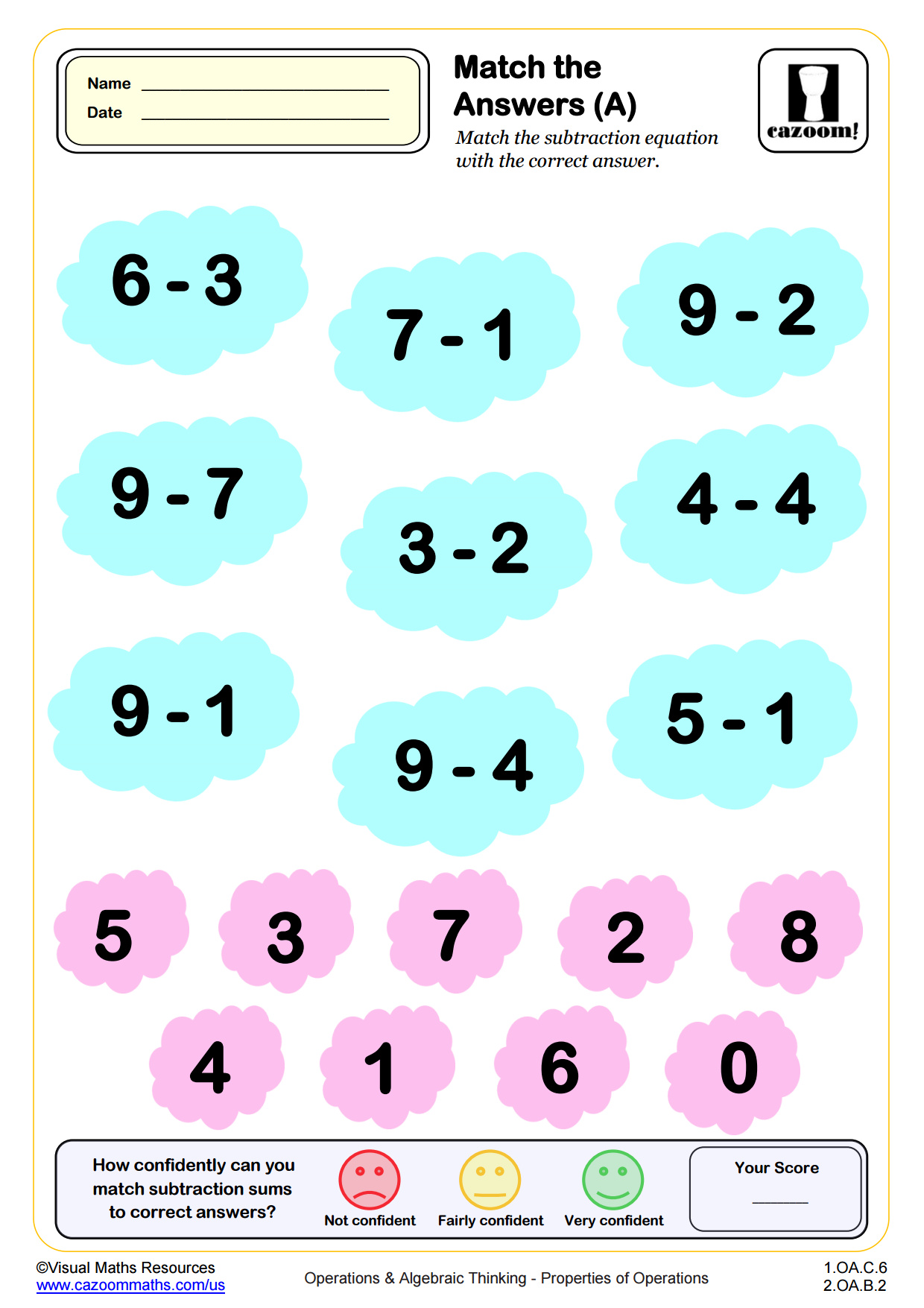
Match the Answers (A)
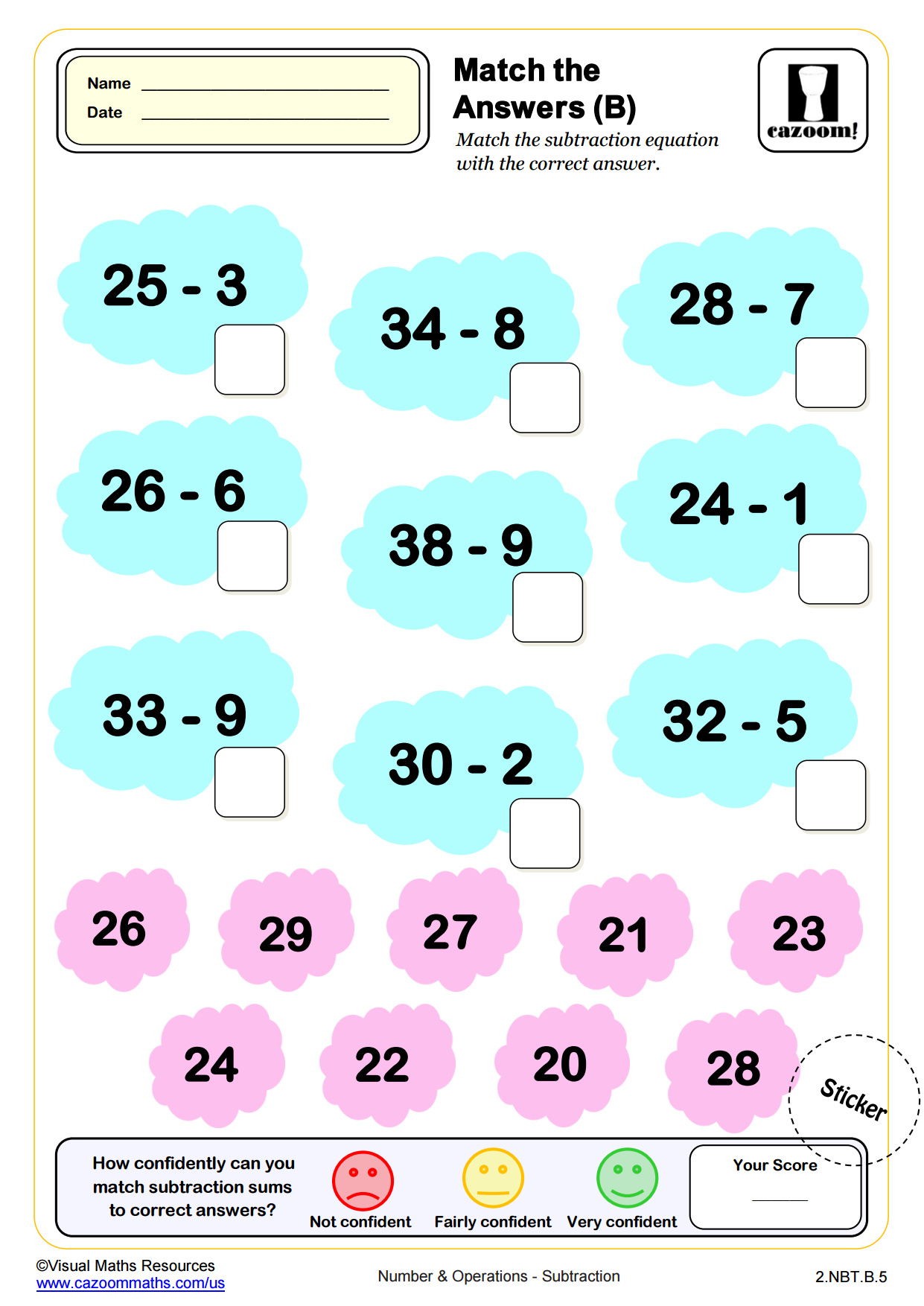
Match the Answers (B)
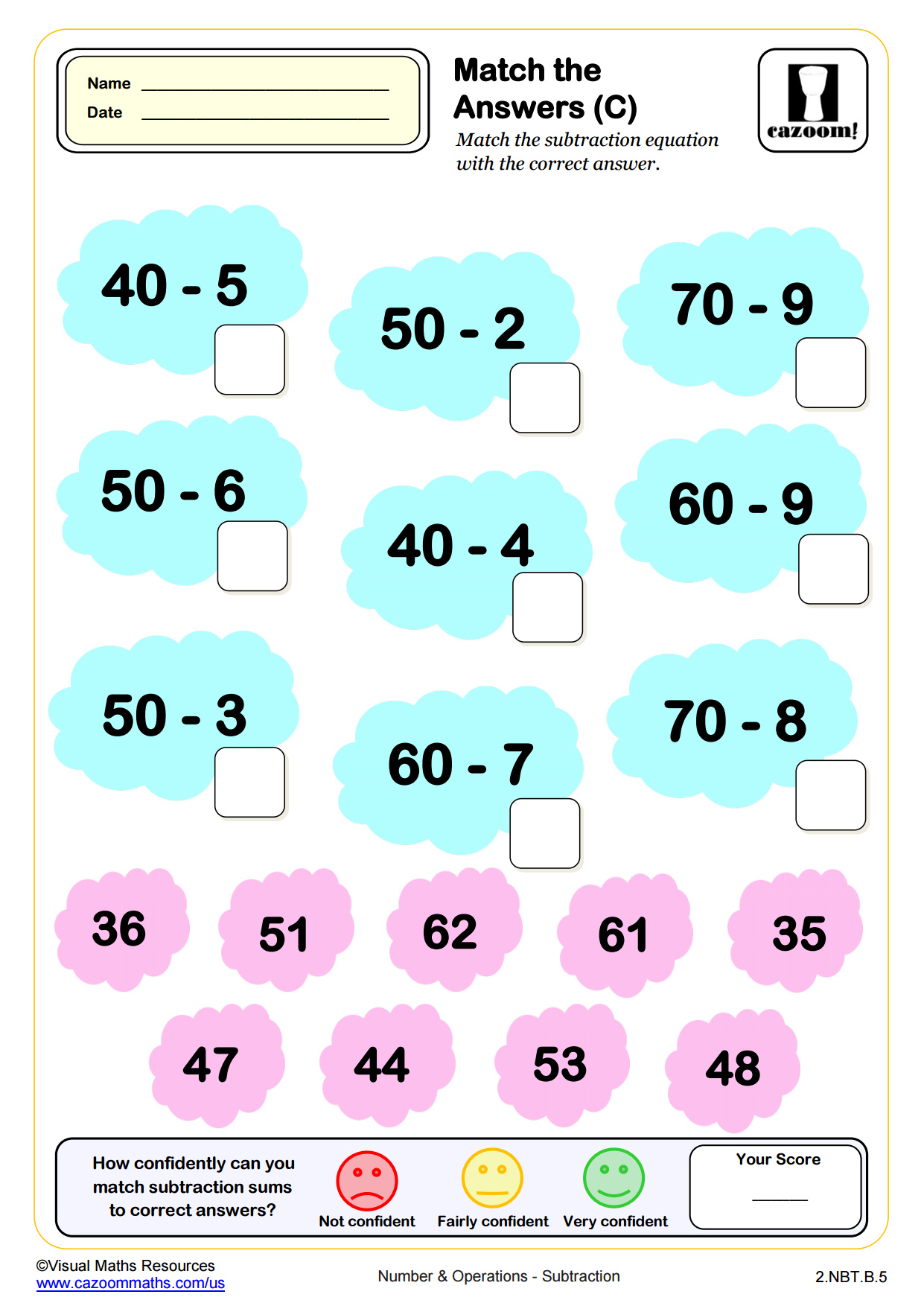
Match the Answers (C)
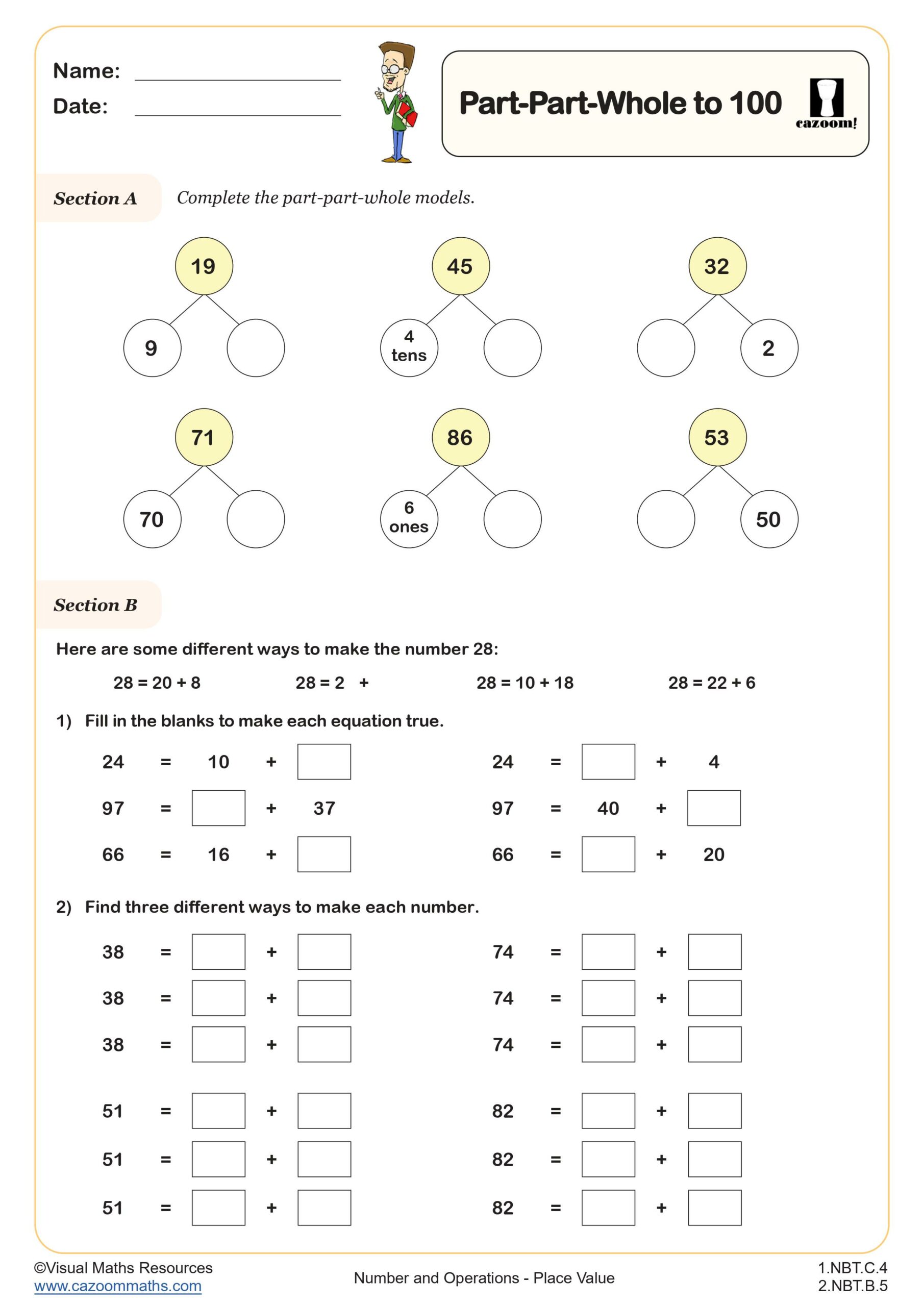
Part Part Whole to 100
Subtracting 1 Digit from 2 Digits (A)
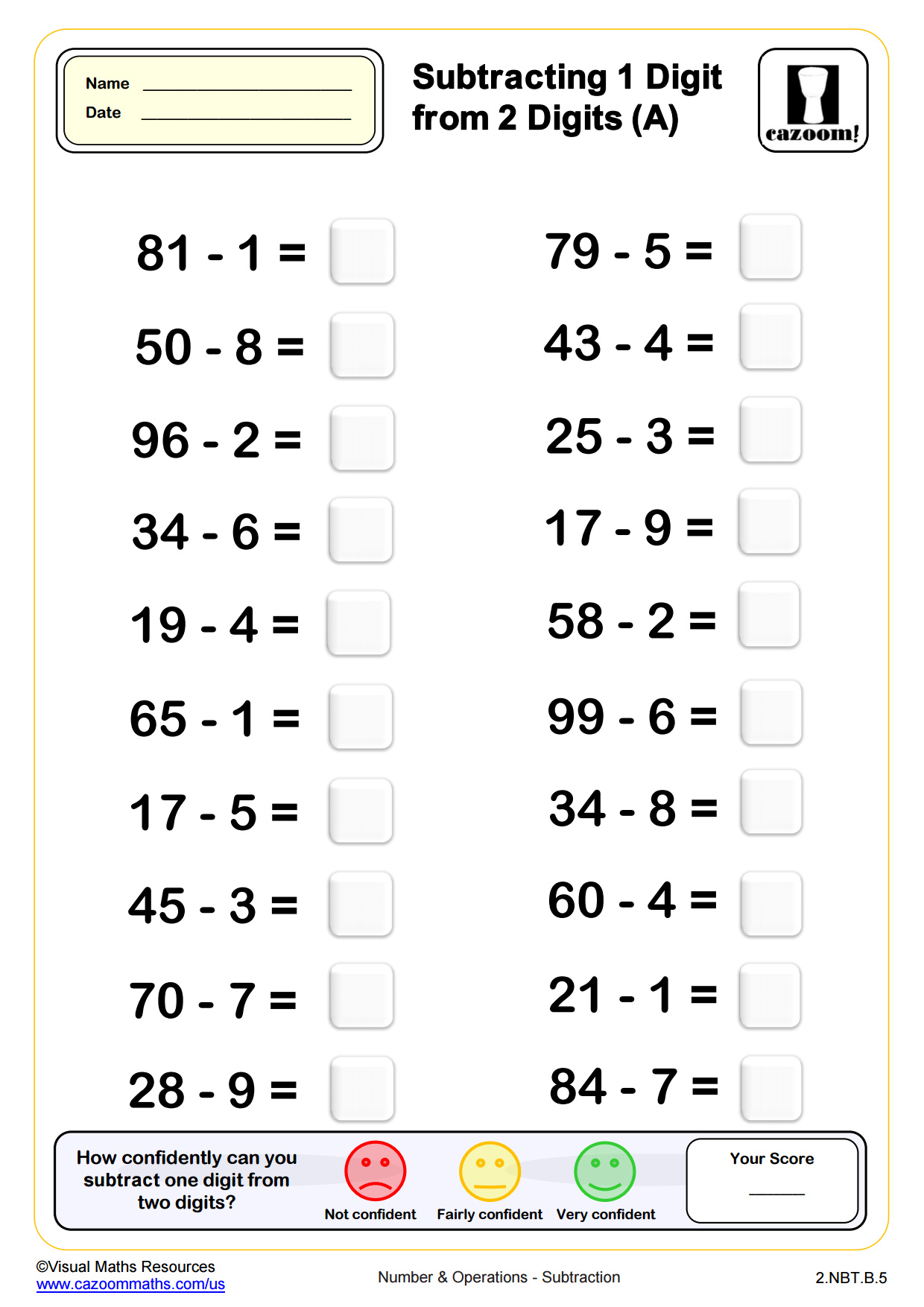
Subtracting 1 Digit from 2 Digits (B)
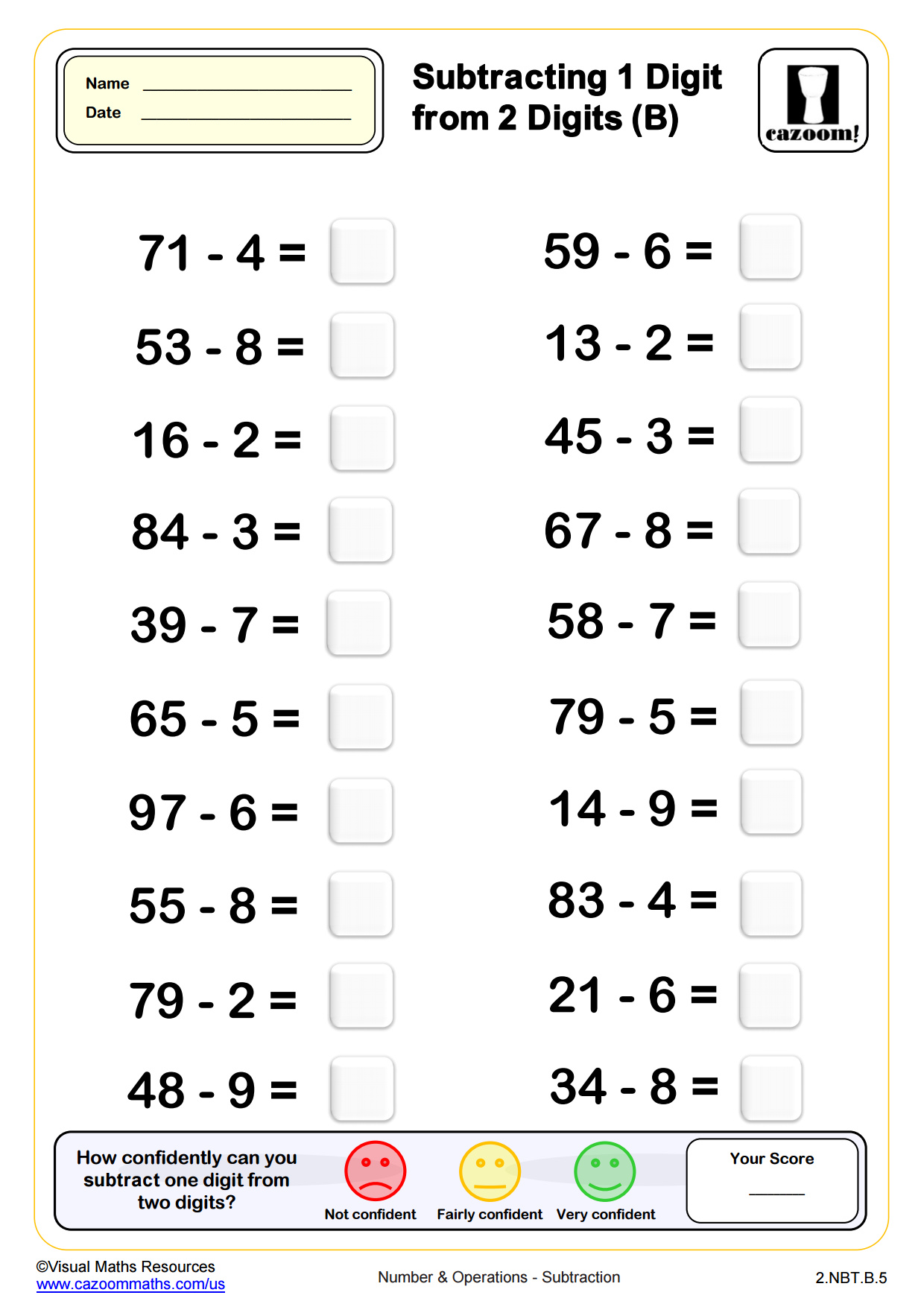
Subtracting 1 Digit from 2 Digits (C)
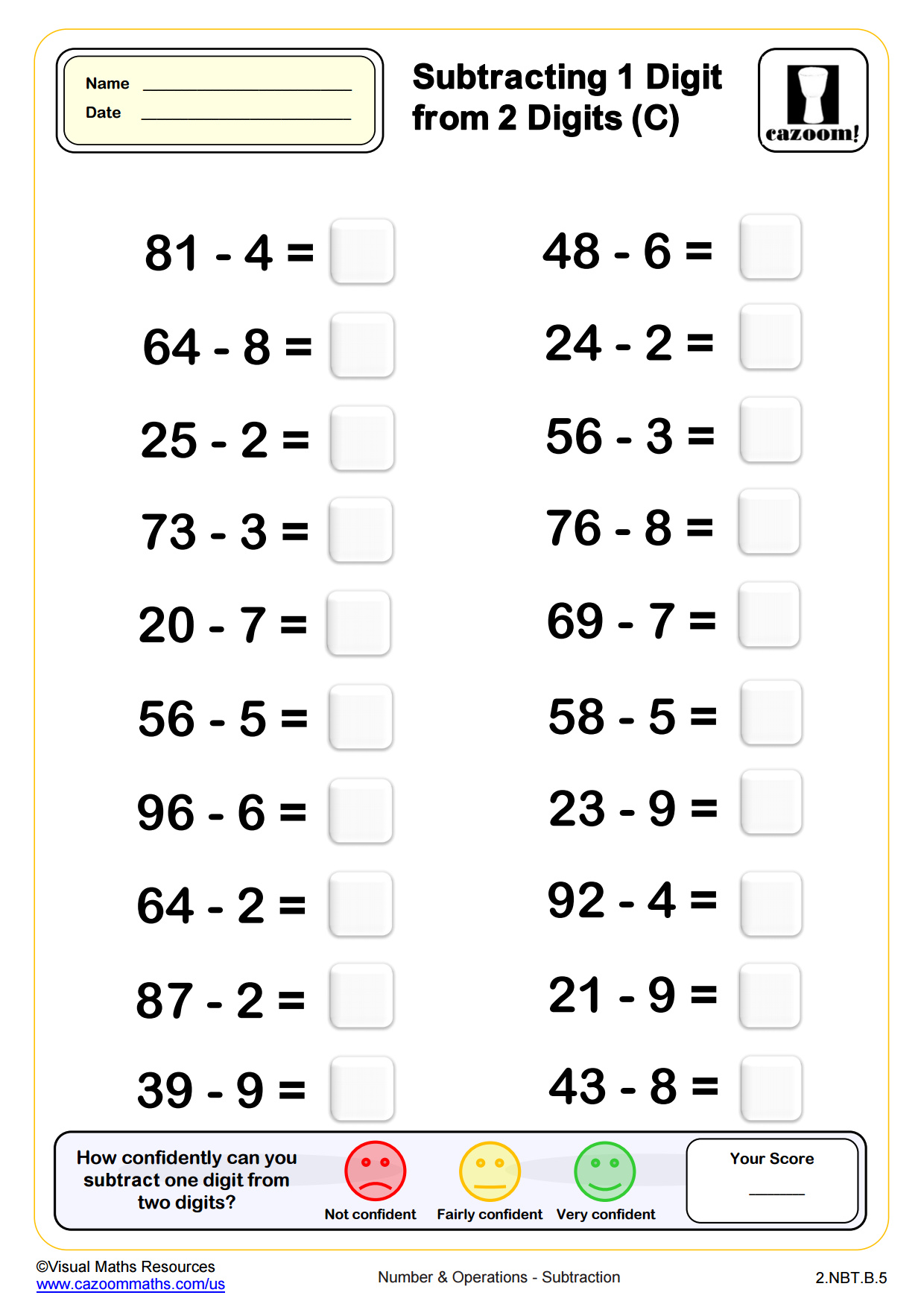
Subtracting 1 from two digit numbers (10 questions)
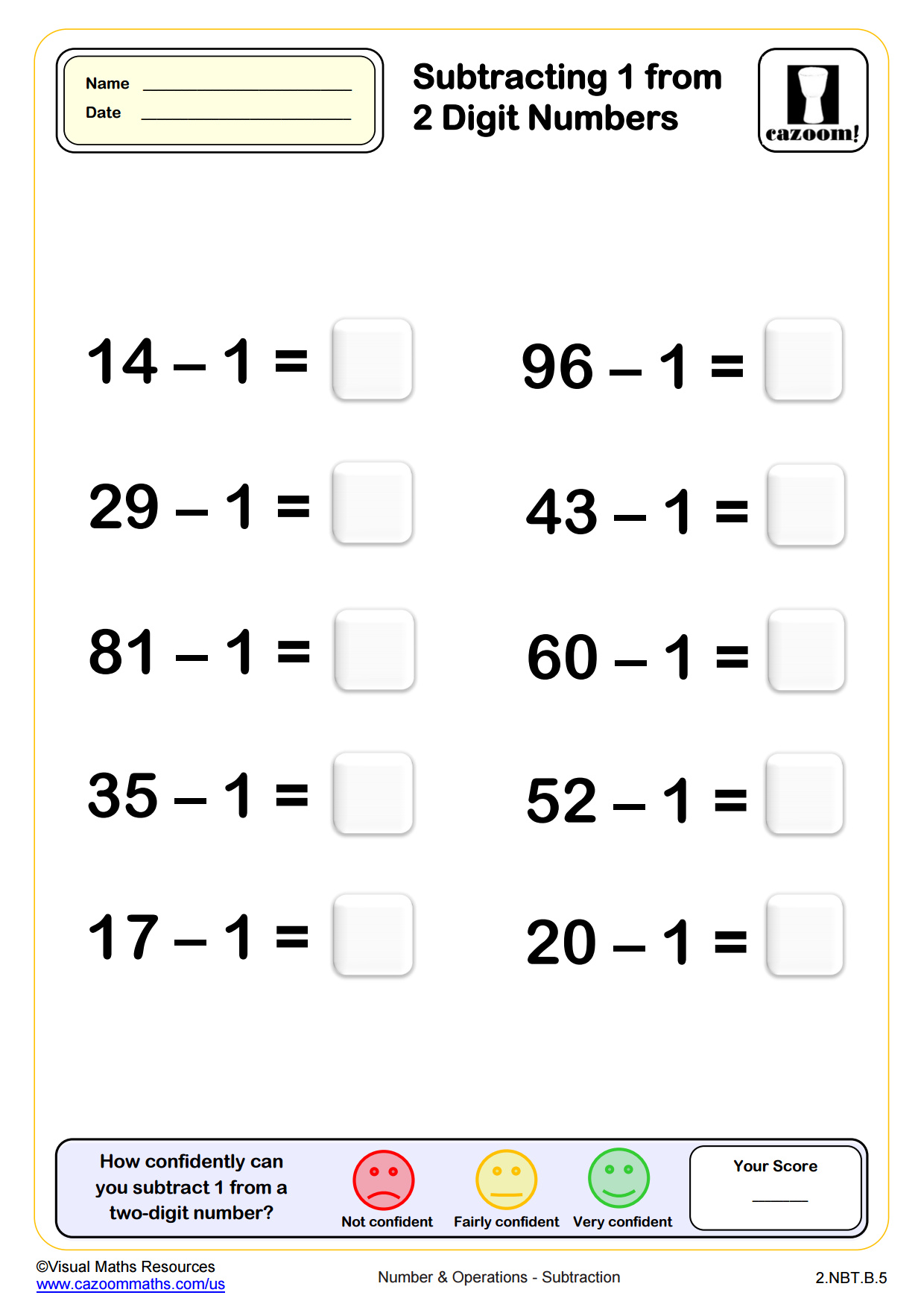
Subtracting 1 from two digit numbers (20 questions)
Subtracting 1 from two digit numbers (50 questions)
Subtracting 2 from two digit numbers (20 questions)
Subtracting 2 from two digit numbers (50 questions)
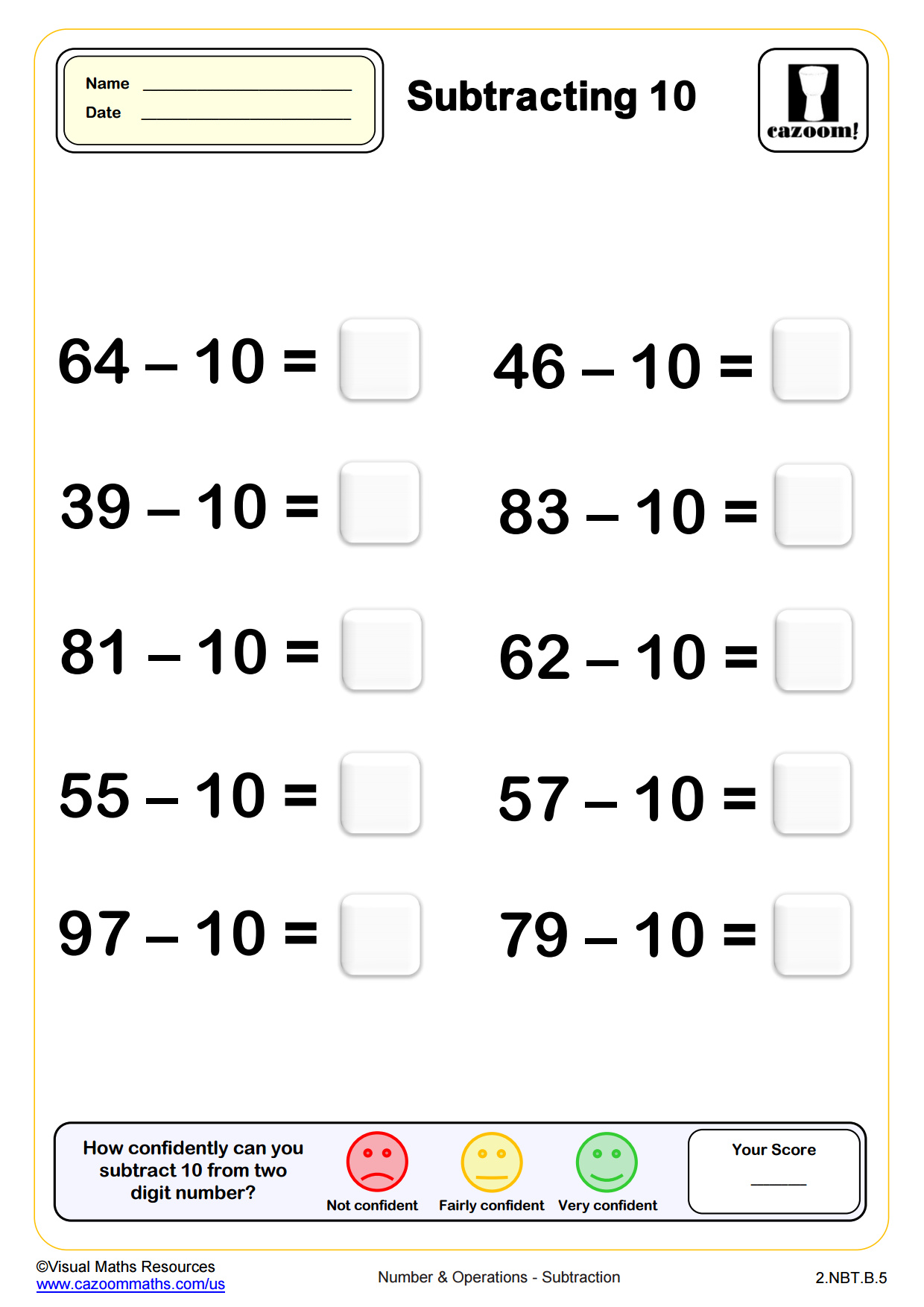
Subtracting 3 from Two Digit Numbers (10 questions)
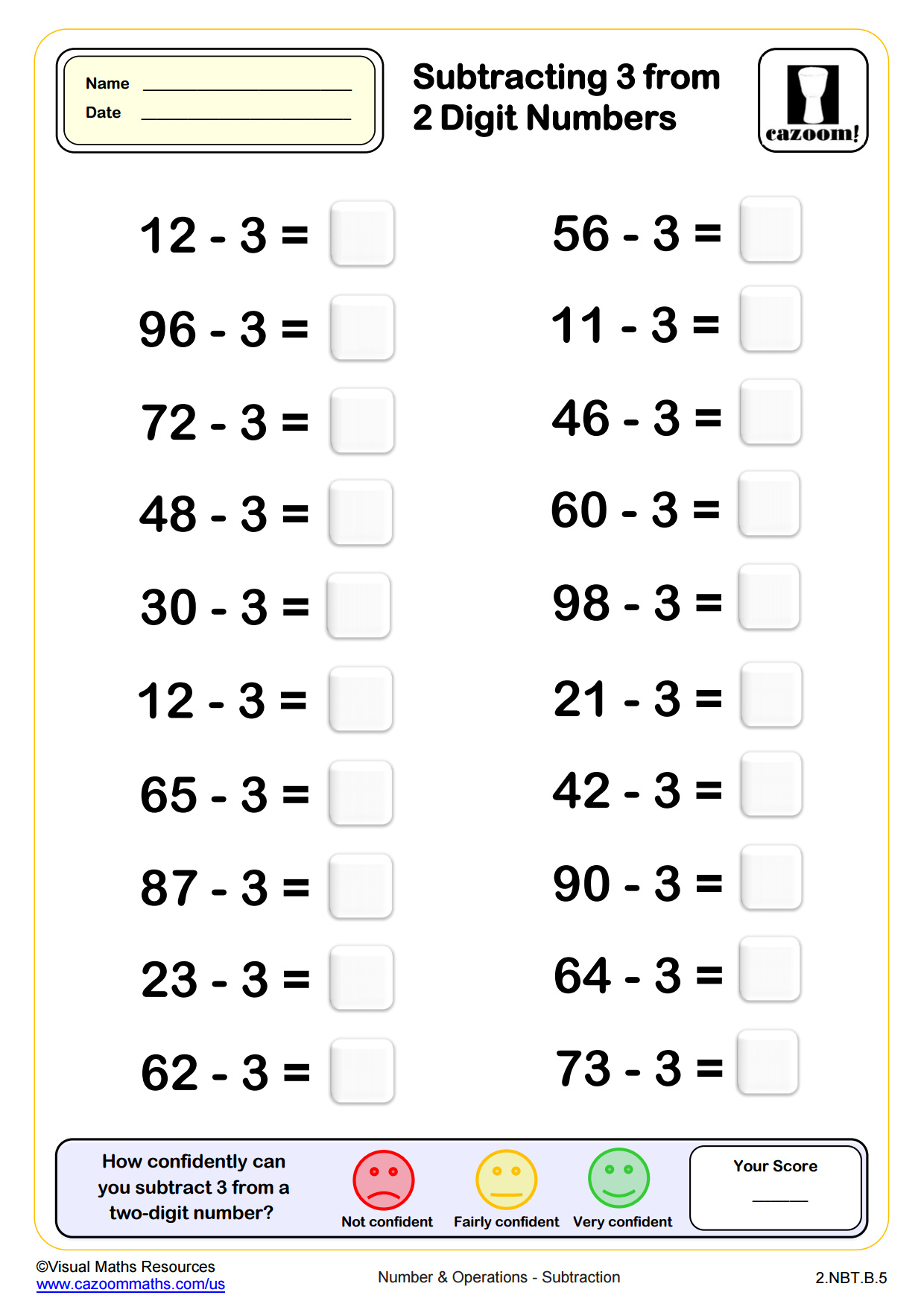
Subtracting 3 from Two Digit Numbers (20 questions)
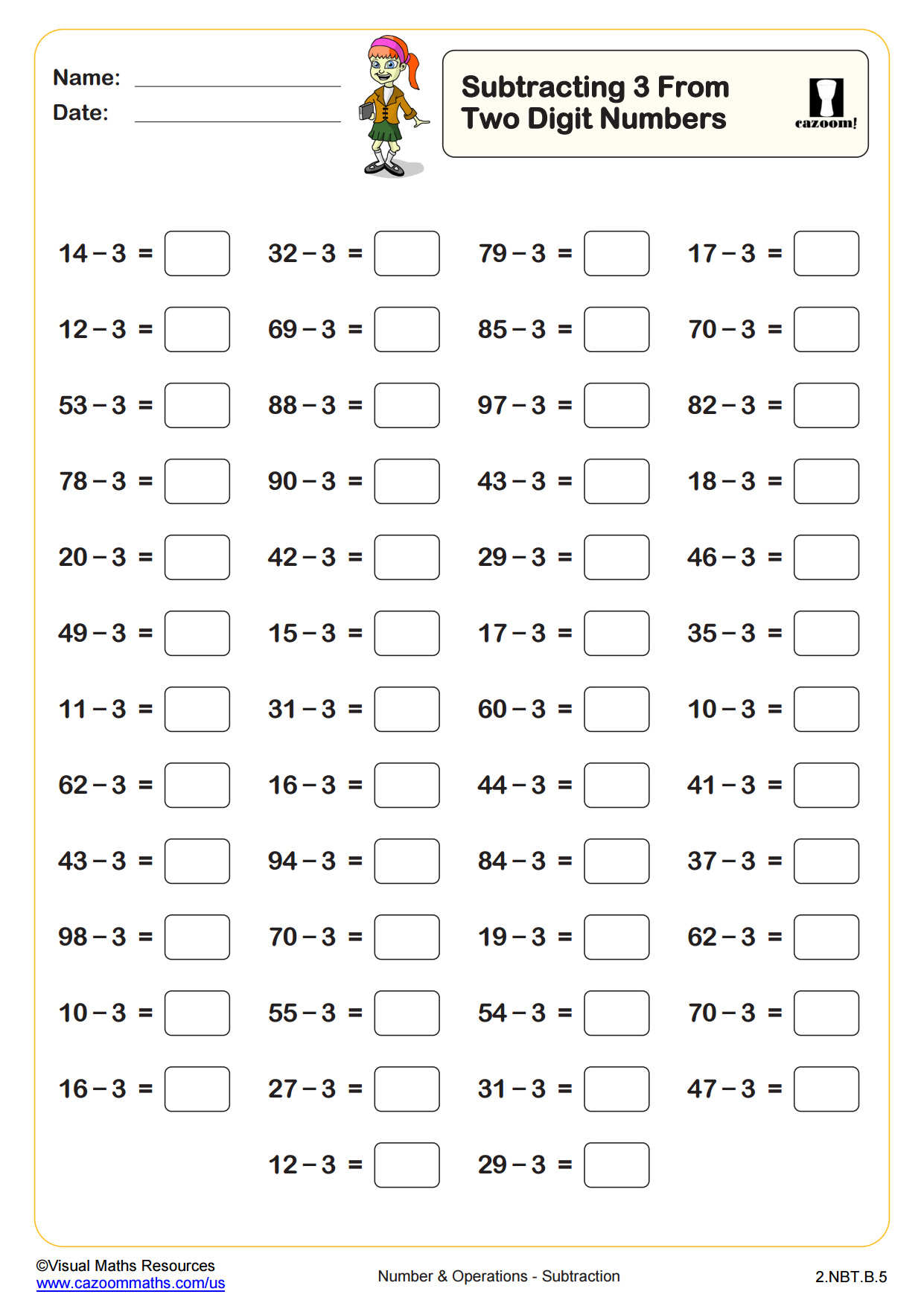
Subtracting 3 from Two Digit Numbers (50 questions)
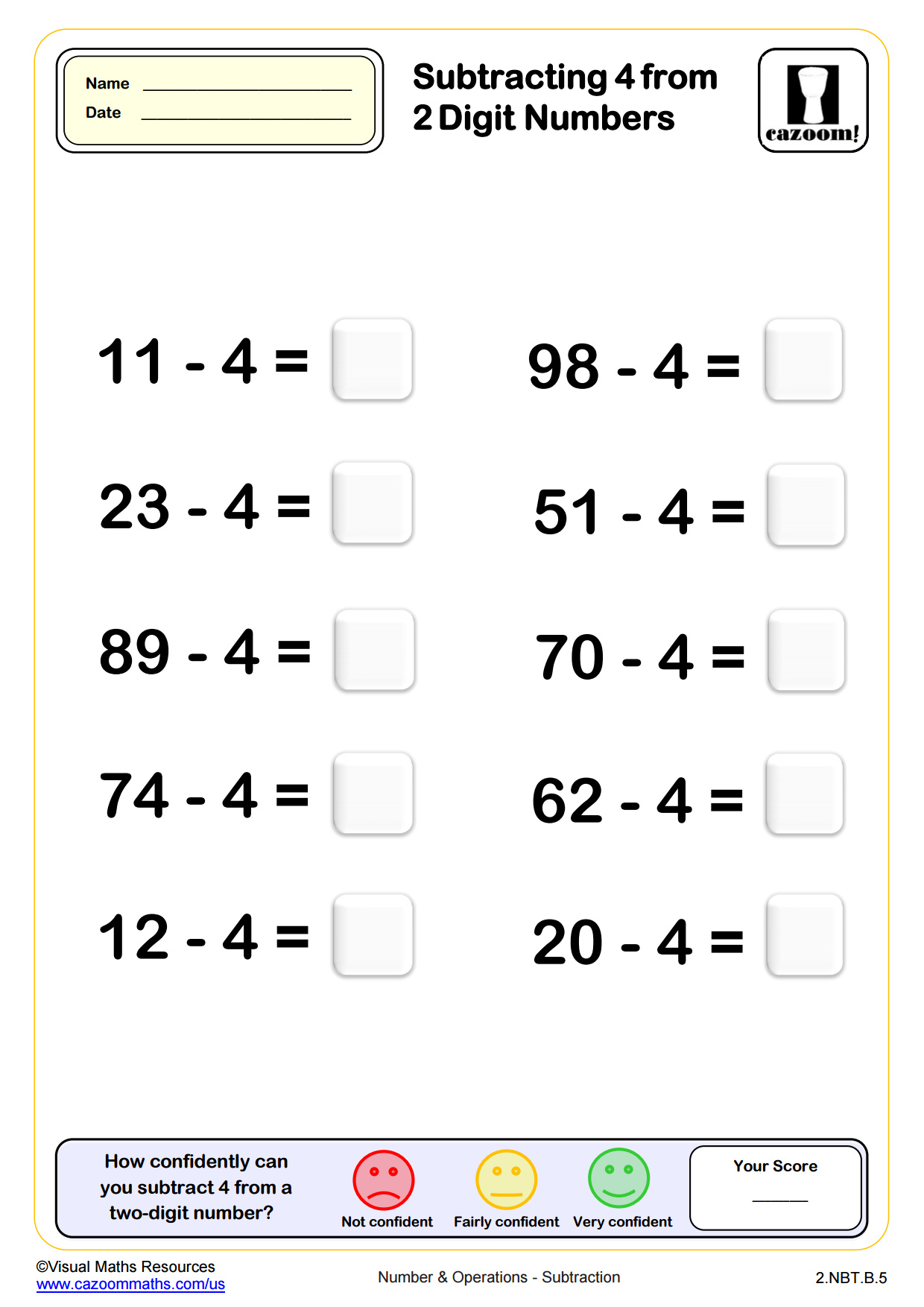
Subtracting 4 from Two Digit Numbers (10 questions)
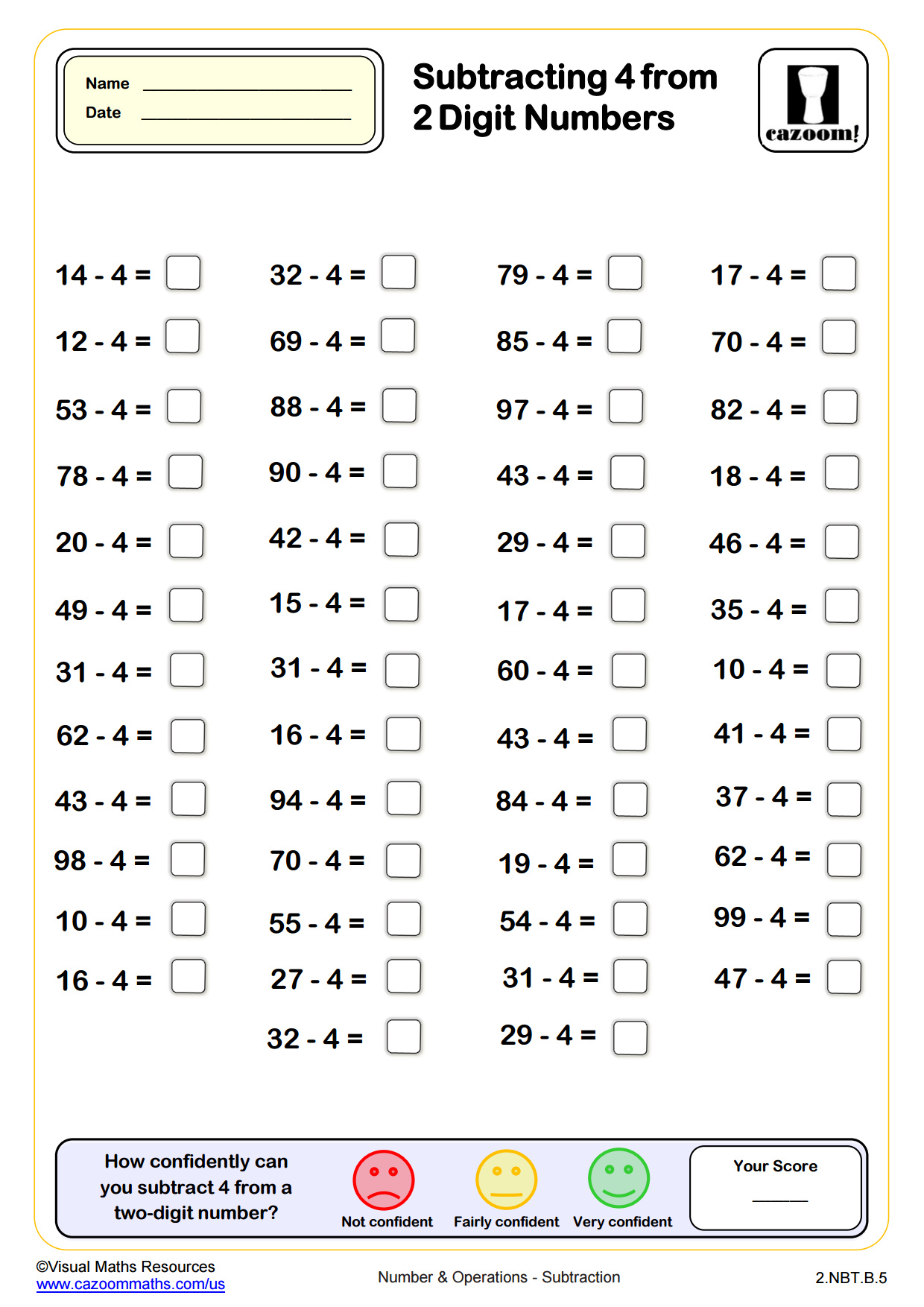
Subtracting 4 from Two Digit Numbers (20 questions)
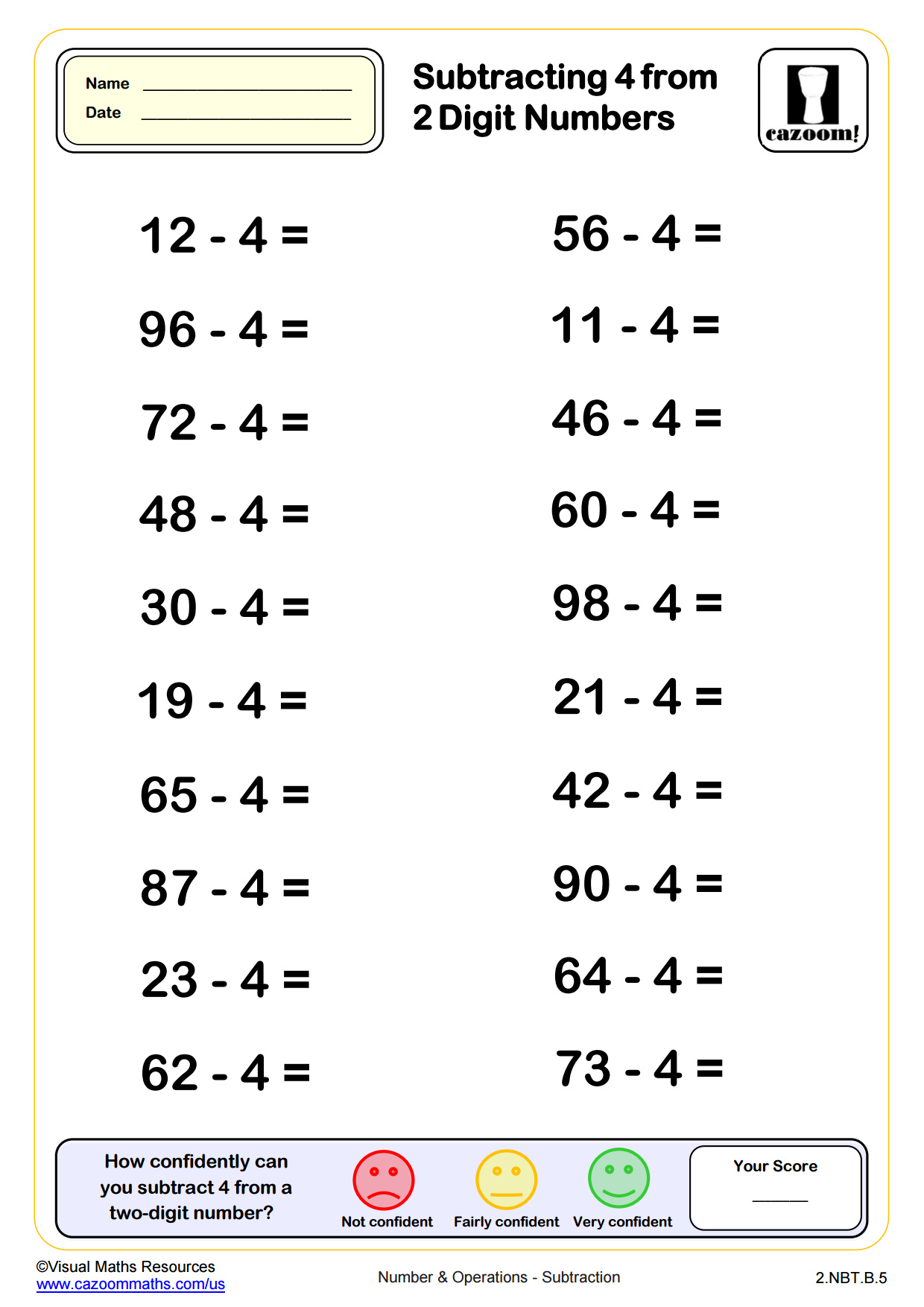
Subtracting 4 from Two Digit Numbers (50 questions)
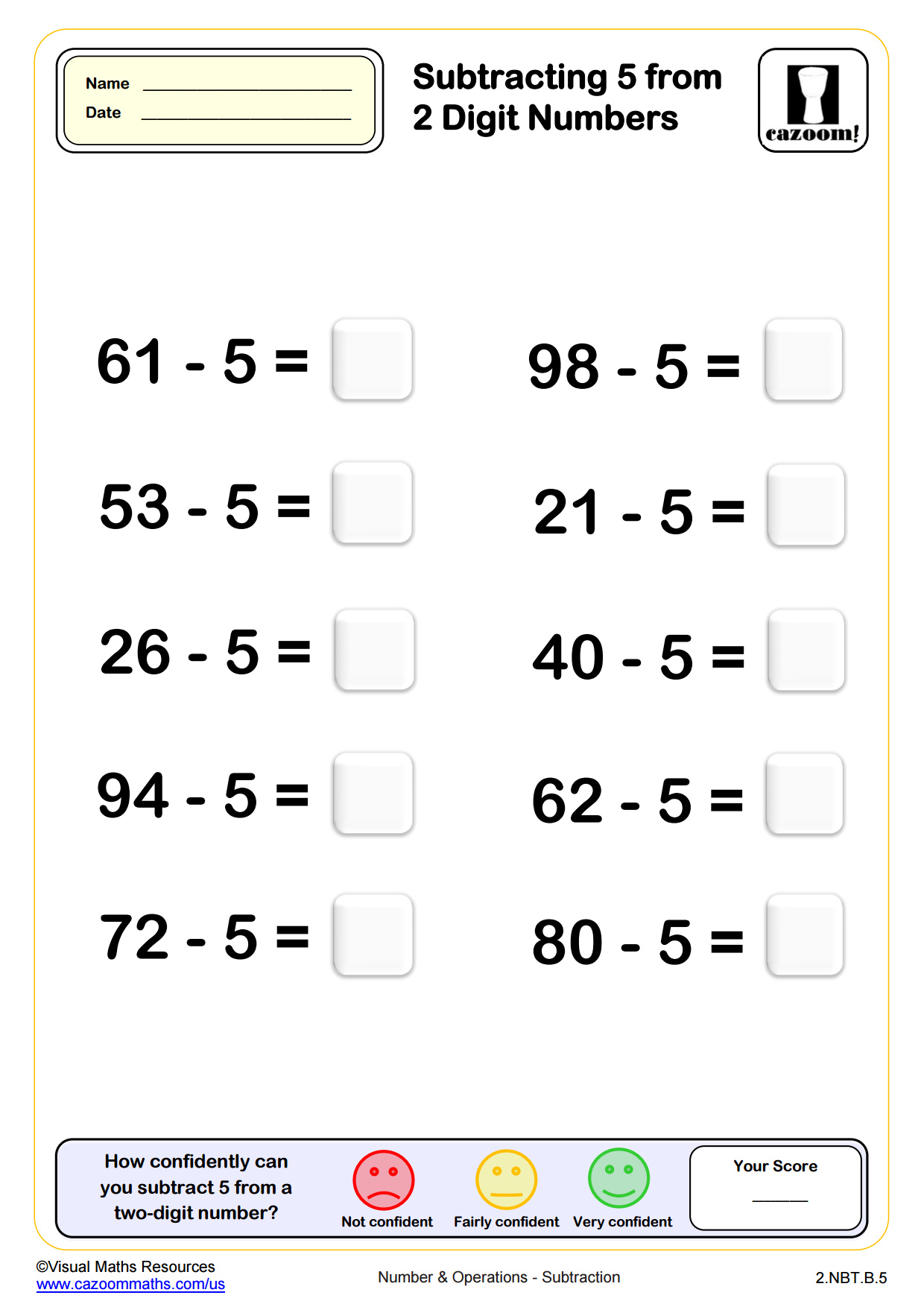
Subtracting 5 from Two Digit Numbers (10 questions)
Subtracting 5 from Two Digit Numbers (20 questions)
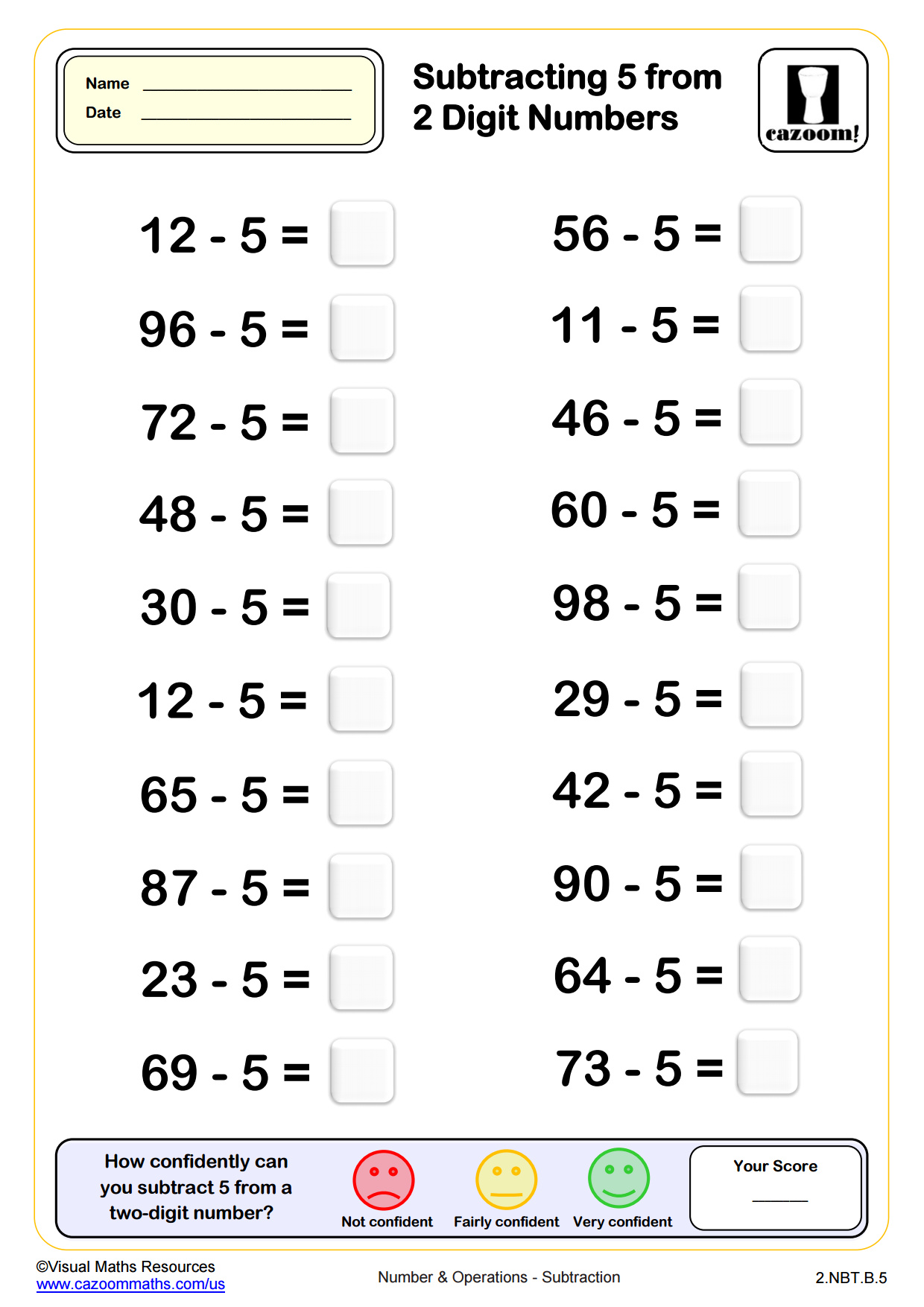
Subtracting 5 from Two Digit Numbers (50 questions)
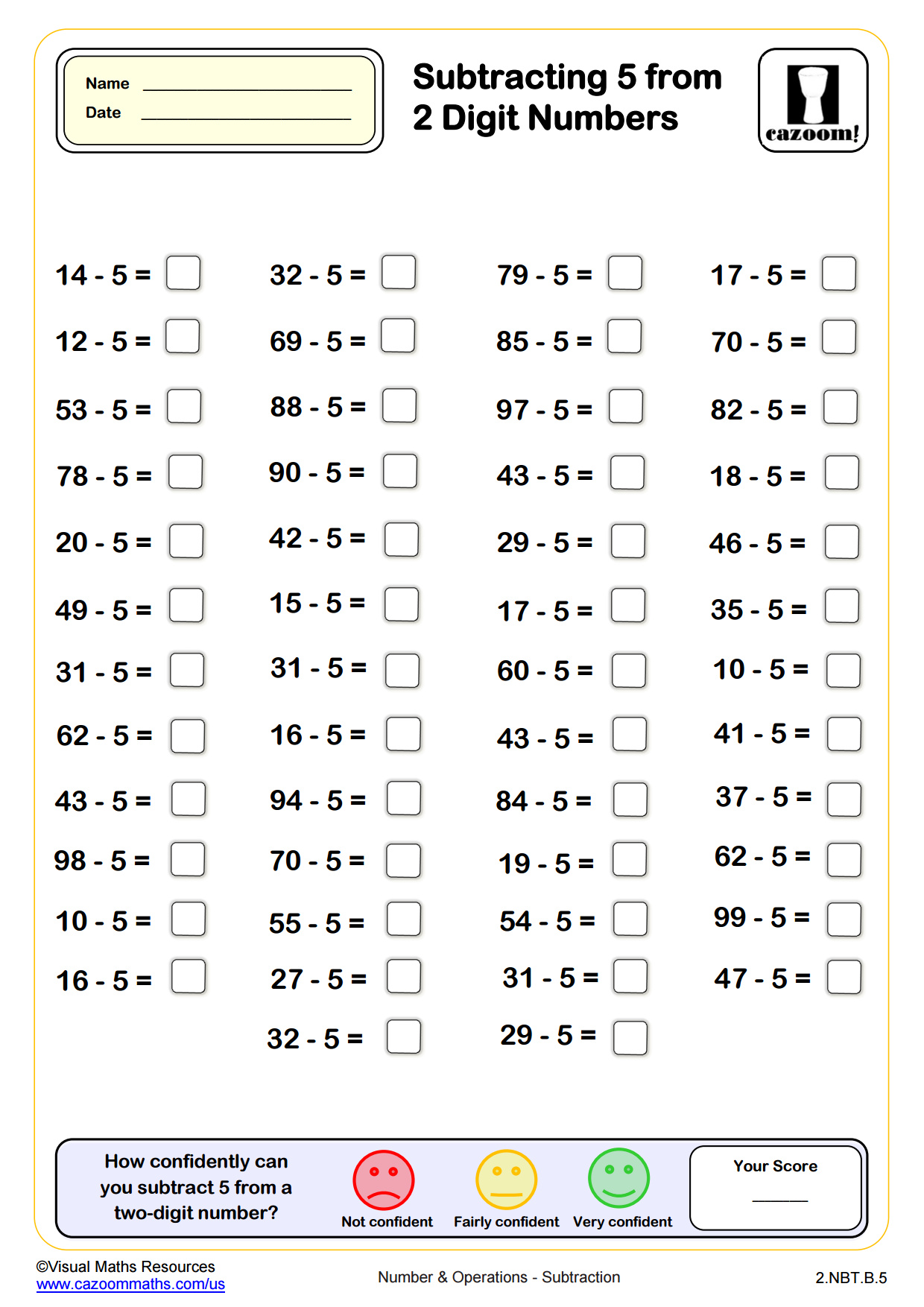
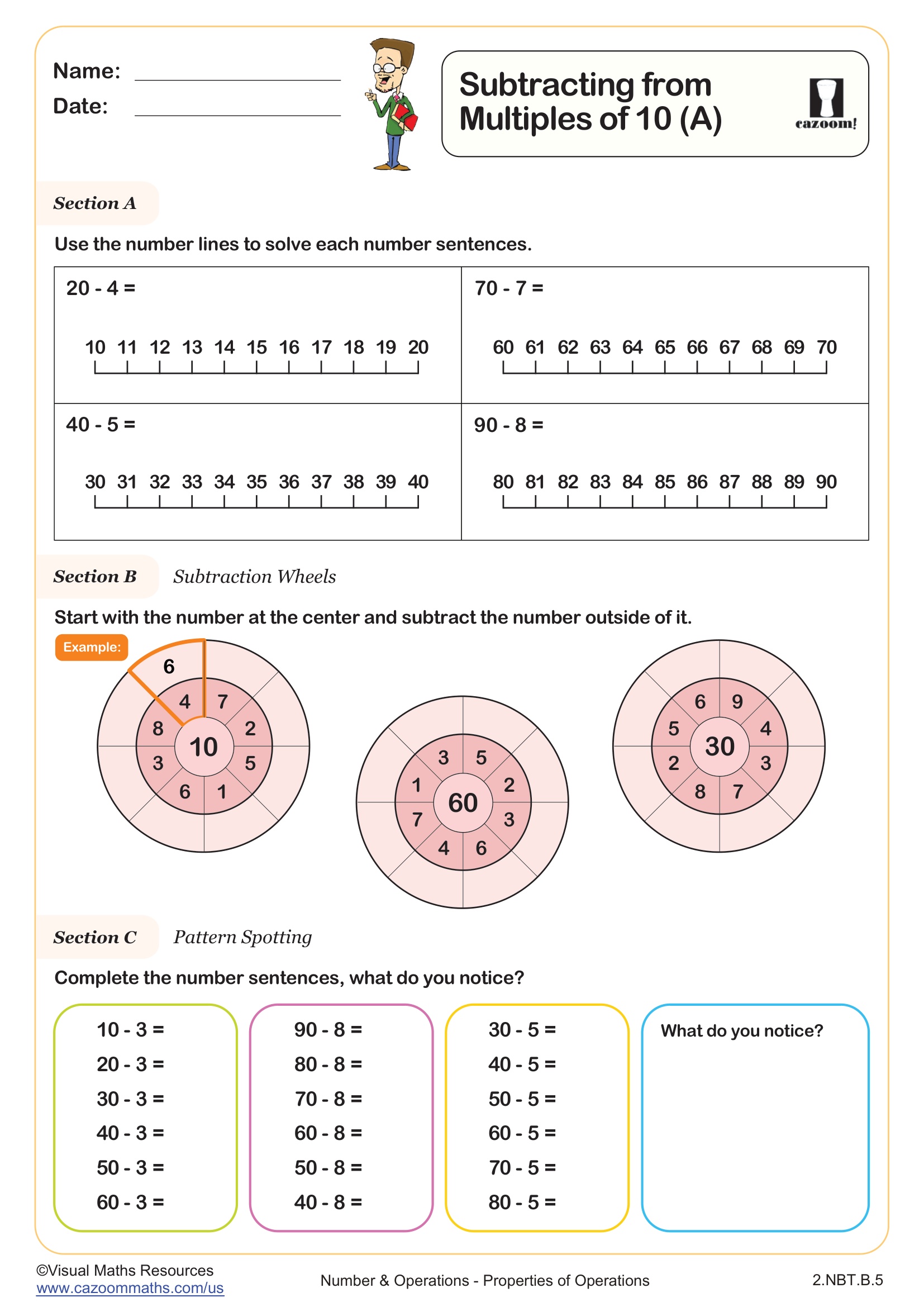
Subtracting from Multiples of 10 (A)
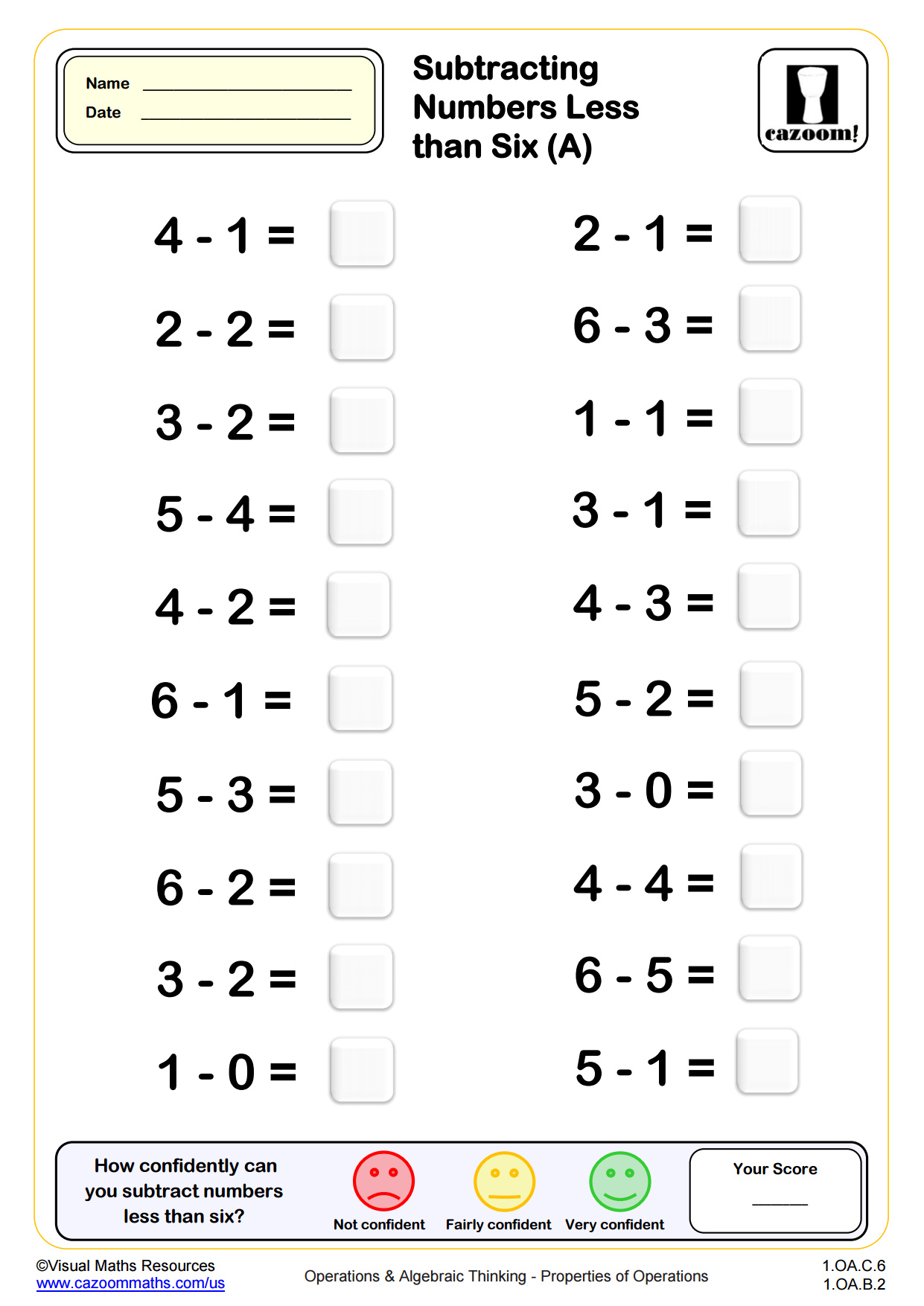
Subtracting Numbers Less Than 6 (A)
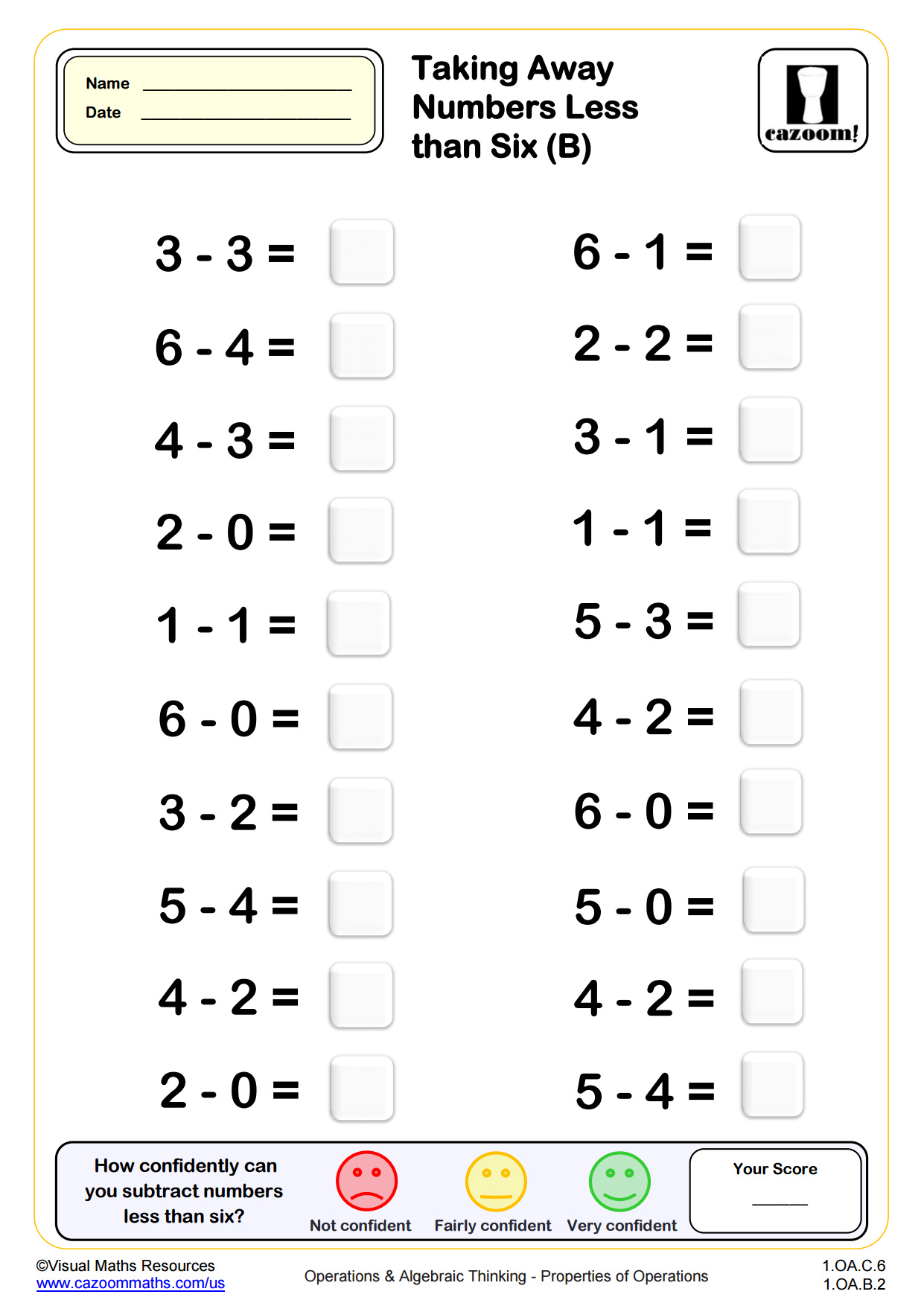
Subtracting Numbers Less Than 6 (B)
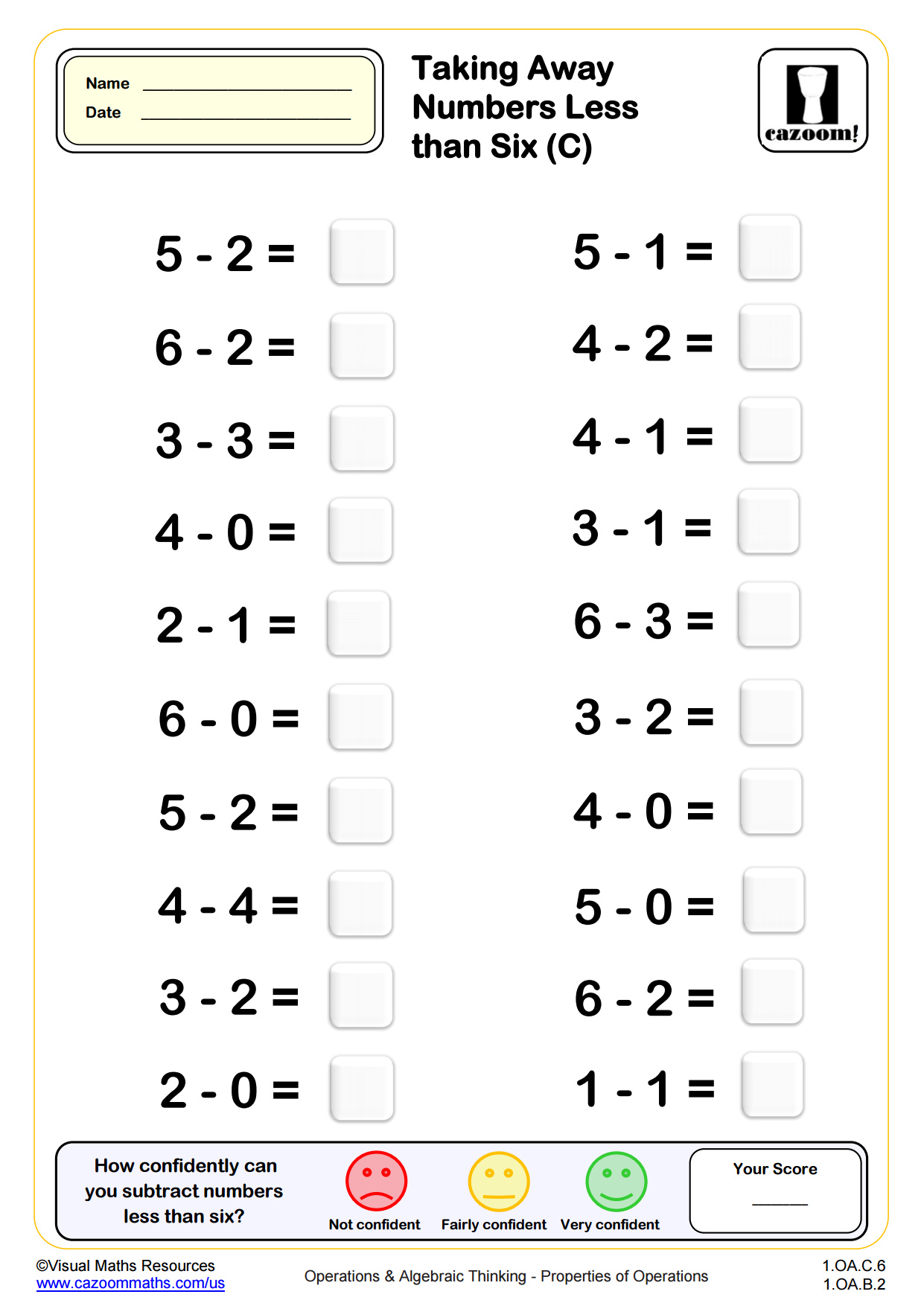
Subtracting Numbers Less Than 6 (C)
All worksheets are created by the team of experienced teachers at Cazoom Math.
What Are the Most Common Mistakes Students Make with Single Digit Subtraction?
The most frequent error occurs when students subtract the smaller number from the larger number regardless of which comes first, turning 3 - 7 into 4 instead of recognizing they need a different strategy or that the answer involves negative numbers beyond second grade scope. Students also struggle with subtraction facts involving zero, often writing that 5 - 0 equals 0 instead of 5, or believing that 0 - 5 somehow works the same way as 5 - 0.
Another pattern teachers notice is that students who haven't mastered counting backward make consistent errors on facts like 12 - 9 or 11 - 8, where the minuend is just slightly larger than 10. These students benefit from number line visualization and the "count up" strategy, where they determine how many steps from 9 to 12 rather than counting backward from 12. Worksheets that present problems in varied formats help students recognize these patterns before they become ingrained mistakes.
Which Grade Levels Use Single Digit Subtraction Worksheets?
These single digit subtraction worksheets are designed specifically for second grade students in elementary school, aligning with Common Core standards that expect mastery of subtraction facts within 20 by the end of second grade. At this level, students transition from using manipulatives and counting strategies to achieving fluent, automatic recall of basic subtraction facts.
The progression within second grade moves from concrete subtraction with visual supports to abstract number manipulation. Early in the year, students might still use counters or drawings, but these worksheets push toward mental math fluency that prepares them for multi-digit subtraction in third grade. Students who don't achieve automaticity with single digit facts by the end of second grade typically struggle with regrouping and borrowing concepts, since they're still using cognitive resources to calculate basic facts rather than applying them to more complex problems.
How Does the "Count Up" Strategy Help with Subtraction Facts?
The count up strategy transforms subtraction into an addition problem by asking "what do I add to the smaller number to reach the larger number?" For a problem like 9 - 6, students think "6 plus what equals 9?" and count up: 6, 7, 8, 9, recognizing they counted three numbers. This approach leverages students' typically stronger addition skills and helps them see subtraction as the inverse of addition, a relationship that Common Core emphasizes throughout elementary mathematics.
This strategy appears frequently in real-world contexts, particularly in making change with money. When a cashier receives a $10 bill for a $6.75 purchase, they often count up from the purchase price to determine change rather than performing subtraction: "$6.75, plus a quarter makes $7, plus three ones makes $10, so your change is $3.25." Understanding subtraction as "finding the difference" prepares students for measurement comparisons in science, gap analysis in data interpretation, and estimation skills they'll use throughout STEM coursework.
How Should Teachers Use These Worksheets in the Classroom?
These worksheets work best when students have already been introduced to subtraction concepts through hands-on activities and are ready to build speed and accuracy. The varied formats, including matching problems to answers and choosing correct numbers to complete equations, prevent students from simply memorizing answers by position and require them to actually process each problem. Teachers can use different worksheet types to assess whether students truly understand subtraction or are relying on patterns and shortcuts that won't transfer to new contexts.
Many teachers use these worksheets for morning work to build daily fact practice, as intervention materials for students who haven't yet achieved automaticity, or as homework that parents can easily support with the included answer keys. The worksheets also work well for partner activities where one student solves while another checks against the answer key, then they switch roles. For formative assessment, teachers can assign a timed worksheet to identify which specific facts individual students still need to master, then create targeted practice groups based on those gaps.