2nd Grade Subtracting with Single Digits Worksheets
All worksheets are created by the team of experienced teachers at Cazoom Math.
What Are the Key Skills Students Practice When Subtracting Single Digits?
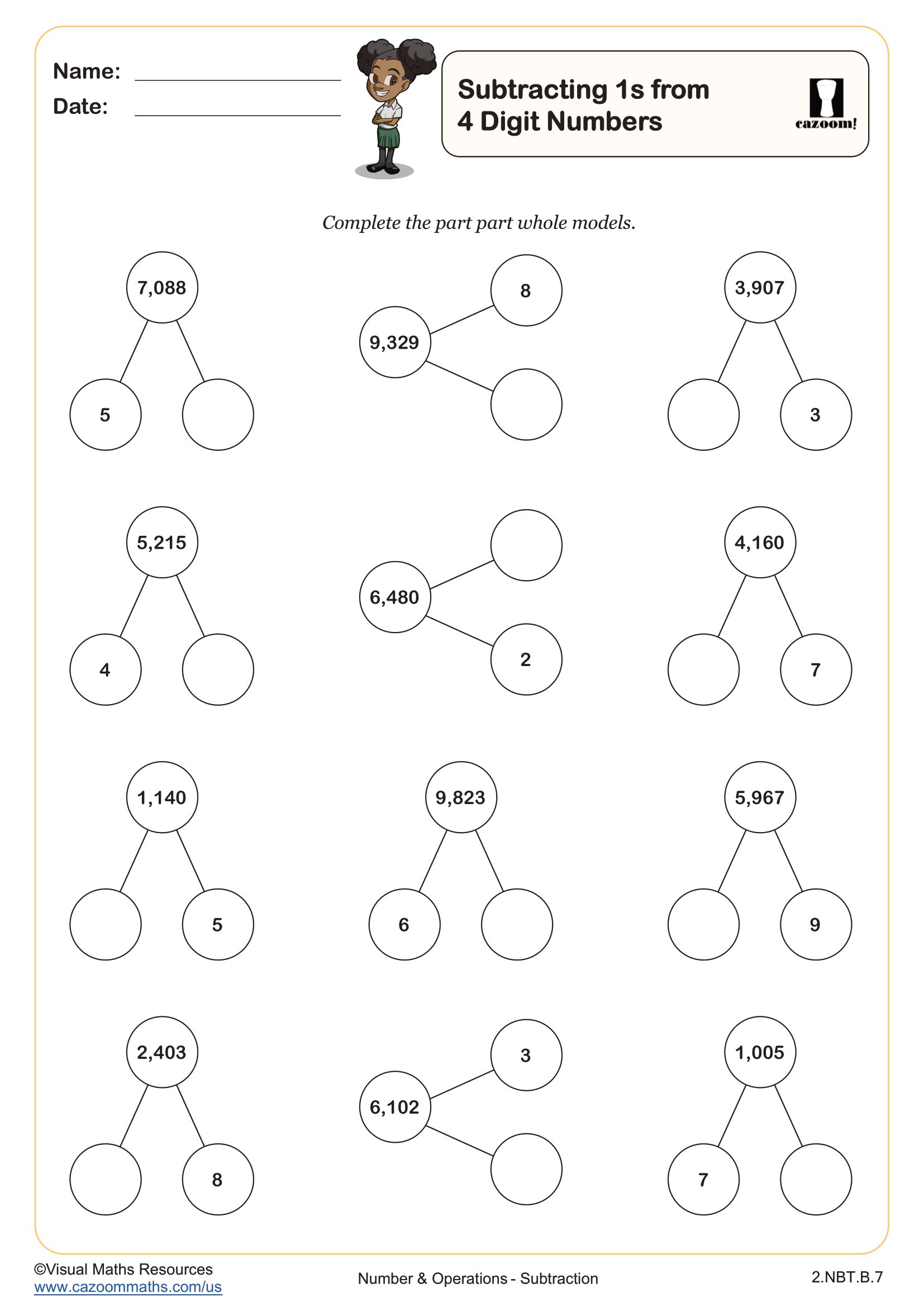
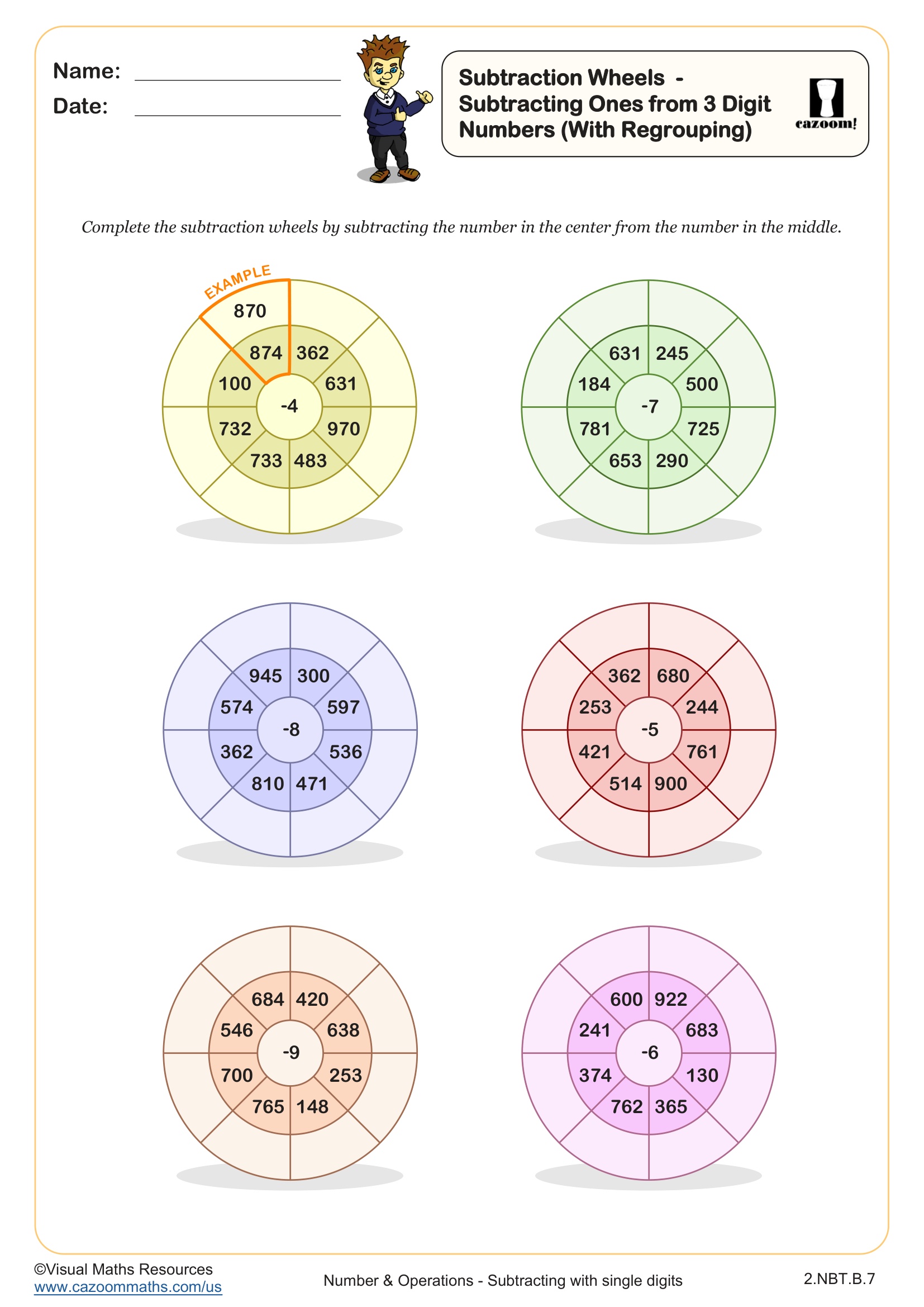
Students practice subtracting single-digit numbers from larger numbers, focusing on understanding place value and when regrouping is necessary. This involves recognizing that when subtracting from the ones place doesn't require borrowing, while sometimes subtracting from tens or hundreds places in multi-digit numbers does. The worksheets progress from simpler subtraction without regrouping to more complex problems where students must regroup across multiple place values.
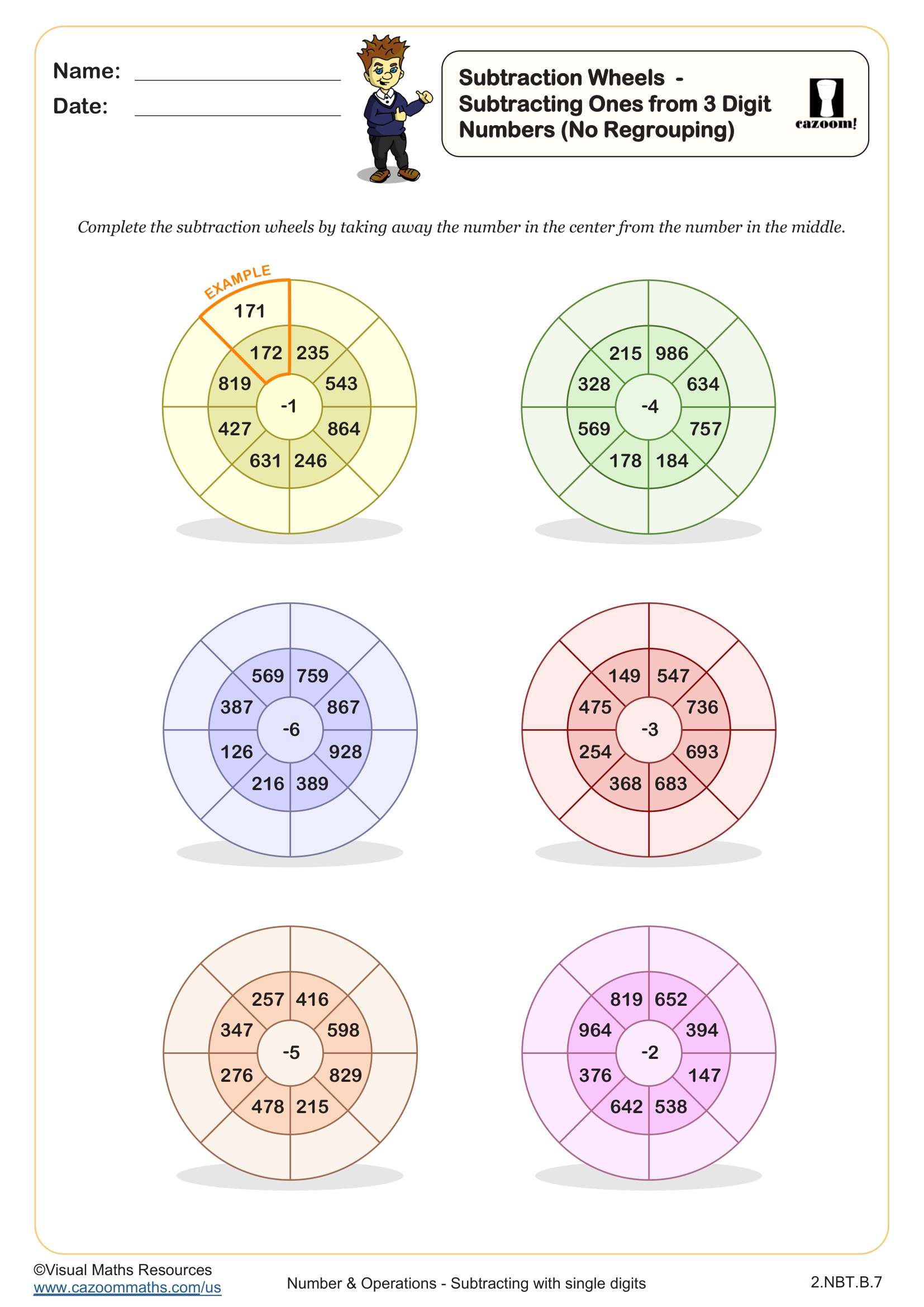
Teachers frequently notice that students struggle most when they subtract a single digit from a number ending in zero, such as 300 - 7, because they must regroup through multiple place values. Students lose points on assessments when they forget to reduce the digit they borrowed from, leaving incorrect numbers in the tens or hundreds place. Subtraction wheels provide varied practice that helps students recognize these patterns more quickly than traditional vertical problems alone.
Which Grade Levels Use Subtracting with Single Digits Worksheets?
These worksheets align with 2nd grade elementary school math standards, where students develop fluency with subtraction facts and extend their understanding to larger numbers. According to Common Core State Standards, second graders should fluently subtract within 20 and use place value understanding to subtract multi-digit numbers. The worksheets support these benchmarks by providing targeted practice at the appropriate developmental level.
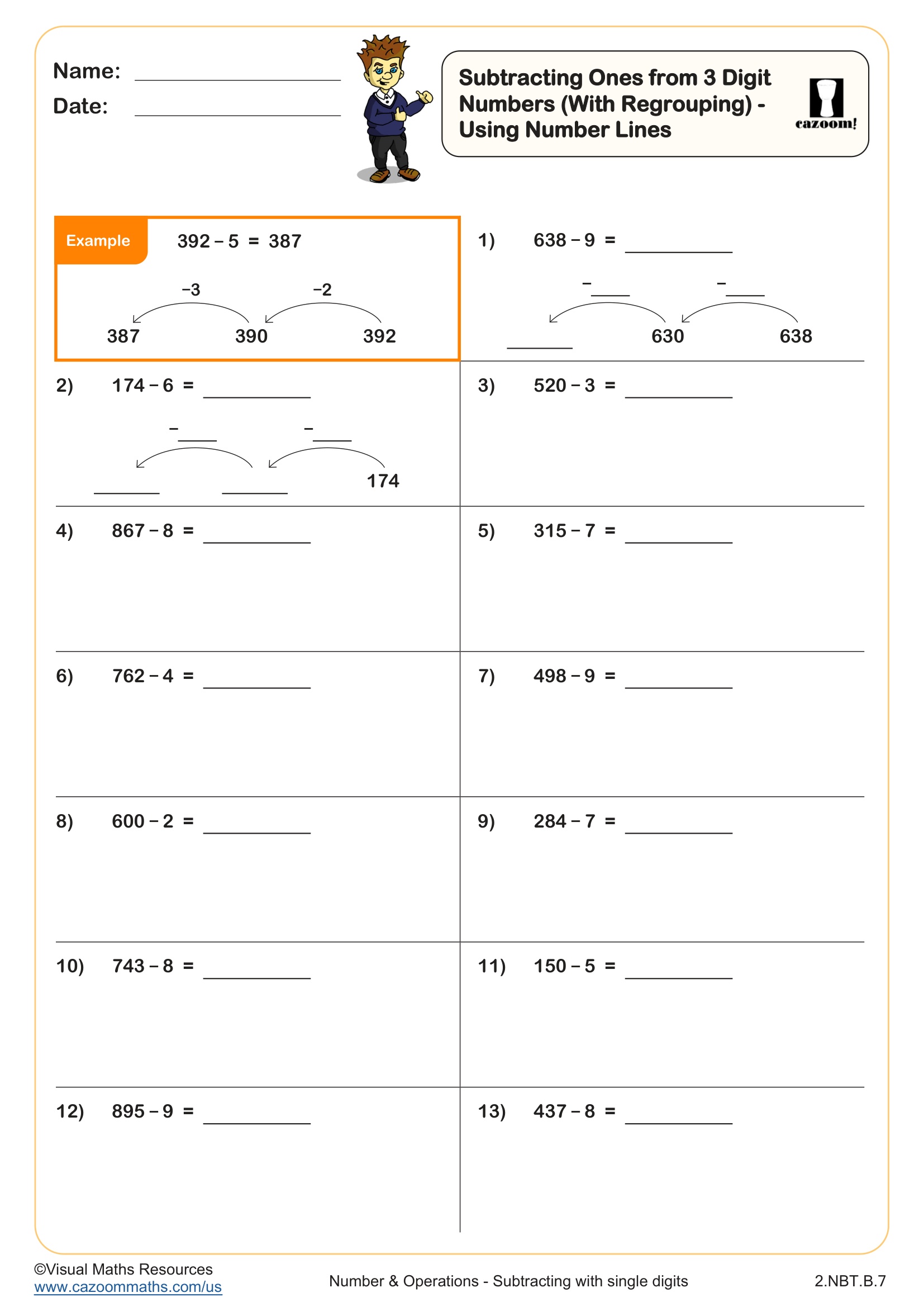
The difficulty progression moves from subtracting ones from 3-digit numbers without regrouping to more challenging problems involving 4-digit numbers where students must carefully track which place value they're working with. Number line strategies appear before traditional algorithms, giving students a visual model that builds conceptual understanding. This scaffolded approach helps students master each step before tackling problems that combine multiple skills, preparing them for 3rd grade where they'll subtract within 1,000 using standard algorithms.
How Do Number Lines Help Students Understand Regrouping in Subtraction?
Number lines provide a visual representation of subtraction that makes regrouping more intuitive than the abstract borrowing algorithm alone. When students use number lines to subtract ones from 3-digit numbers with regrouping, they can literally see themselves jumping backward across a tens boundary, which clarifies why they need to break apart a ten into ones. This concrete model helps students understand that 342 - 8 means jumping back 8 spaces from 342, crossing from the forties into the thirties.
This visualization skill connects directly to real-world measurement scenarios in STEM fields. Engineers and architects frequently work backward from measurements when calculating materials needed or determining spacing. For instance, if a carpenter has a board that's 243 centimeters long and needs to cut off 7 centimeters, understanding that backward movement on a number line translates to practical measuring and marking. Students who master number line subtraction develop stronger spatial reasoning skills that support later work with negative numbers and coordinate planes.
How Can Teachers Use These Worksheets Most Effectively?
The worksheets are structured to build from foundational concepts to more complex applications, allowing teachers to select problems that match their students' current understanding. Starting with subtraction wheels and no-regrouping problems helps students gain confidence before introducing the cognitive demand of regrouping. Teachers can use the answer keys to quickly identify whether errors stem from basic fact recall, place value confusion, or regrouping mistakes, then target instruction accordingly.
Many teachers find these worksheets valuable for differentiated math centers, where students working below grade level practice subtraction without regrouping while others tackle 4-digit problems. The materials work well for homework assignments because the varied formats keep practice from feeling repetitive, and parents can use the answer keys to support learning at home. During intervention time, teachers often assign specific worksheet sections based on assessment data, such as giving only "subtracting 10s from 4-digit numbers" problems to students who struggle with that particular place value concept.