2nd Grade Two Digit Subtraction 0-100 Worksheets
Adding and Subtracting Multiples of 1,000
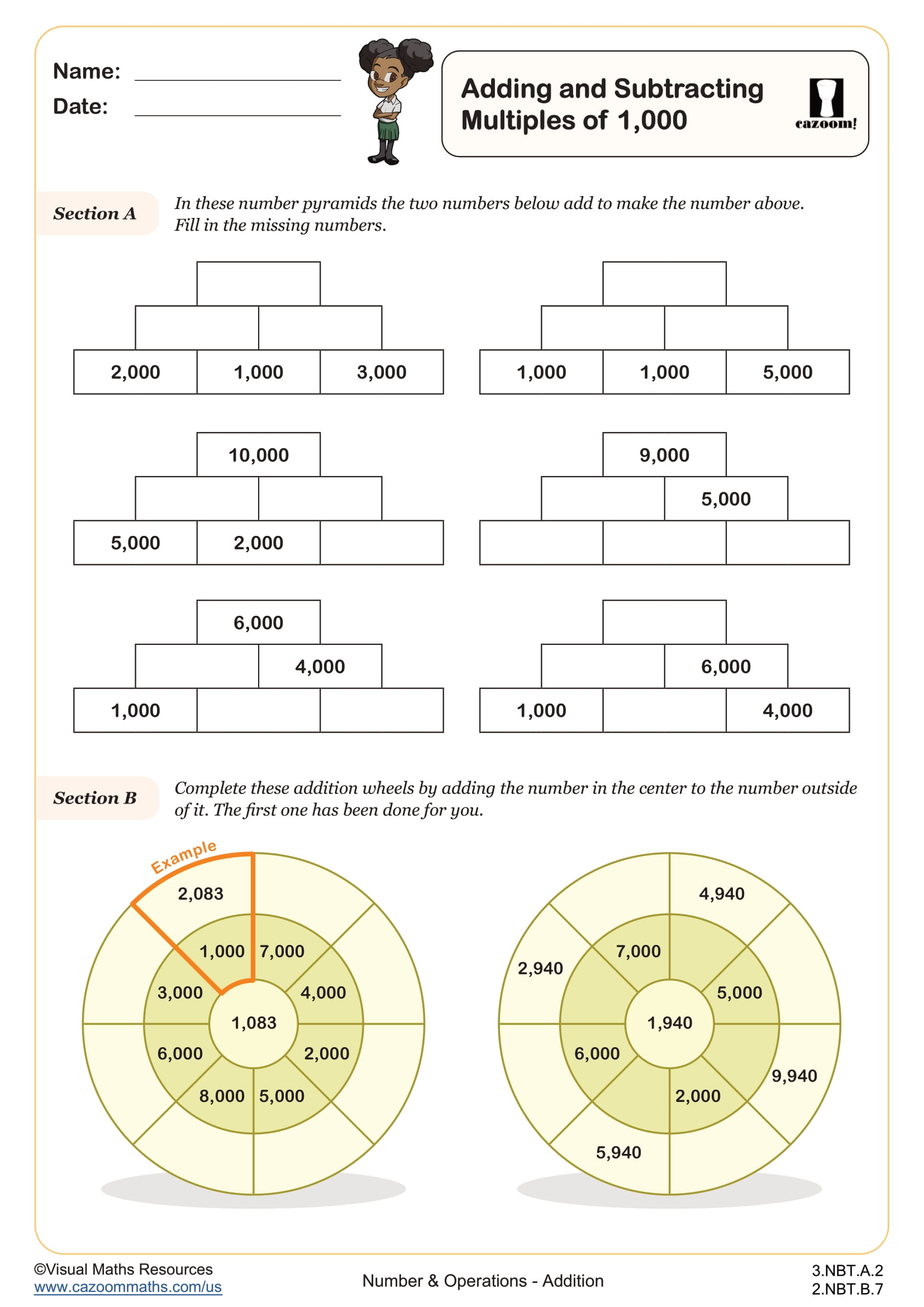
Match the Answers (D)
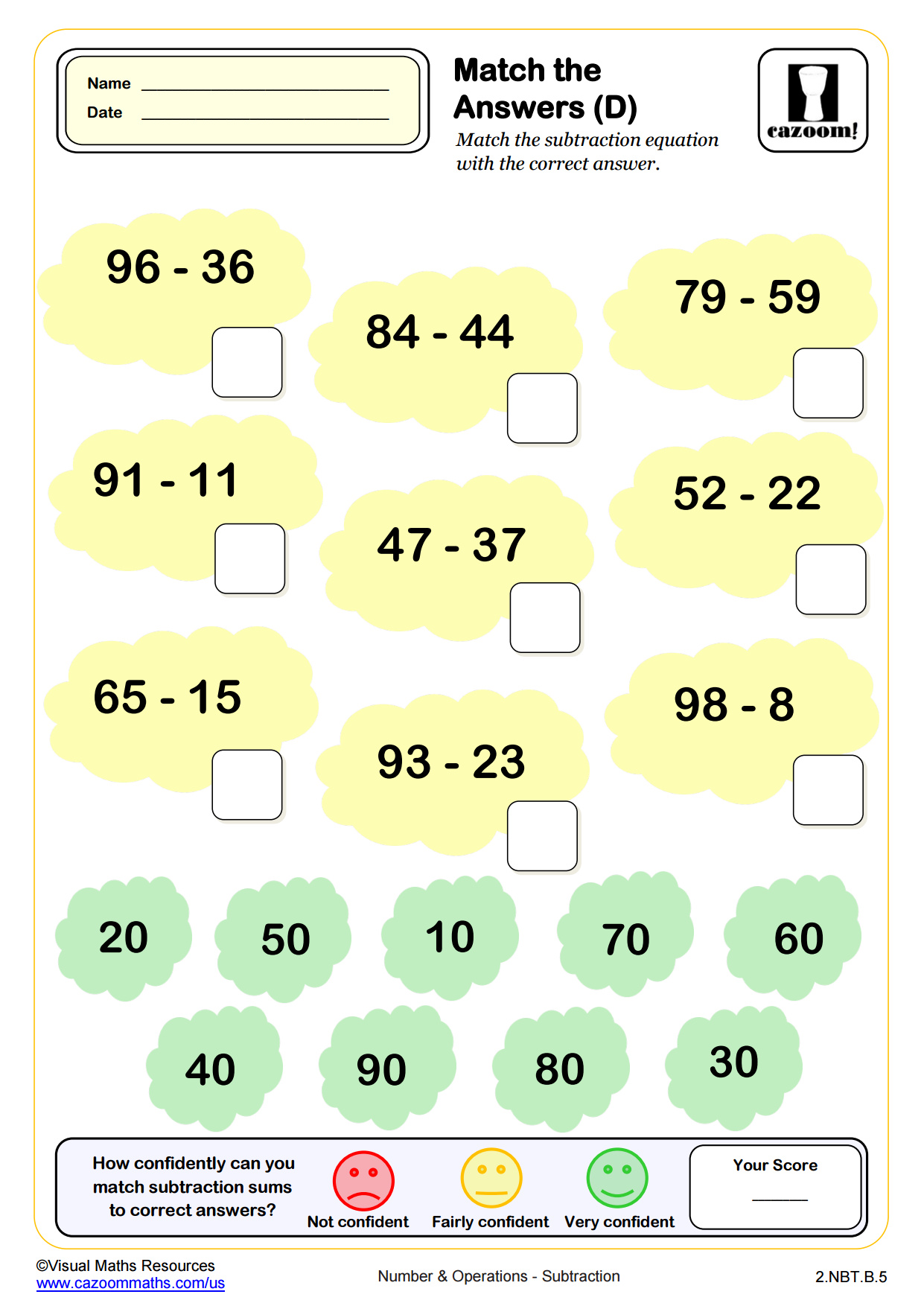
Subtracting 10 (10 questions)
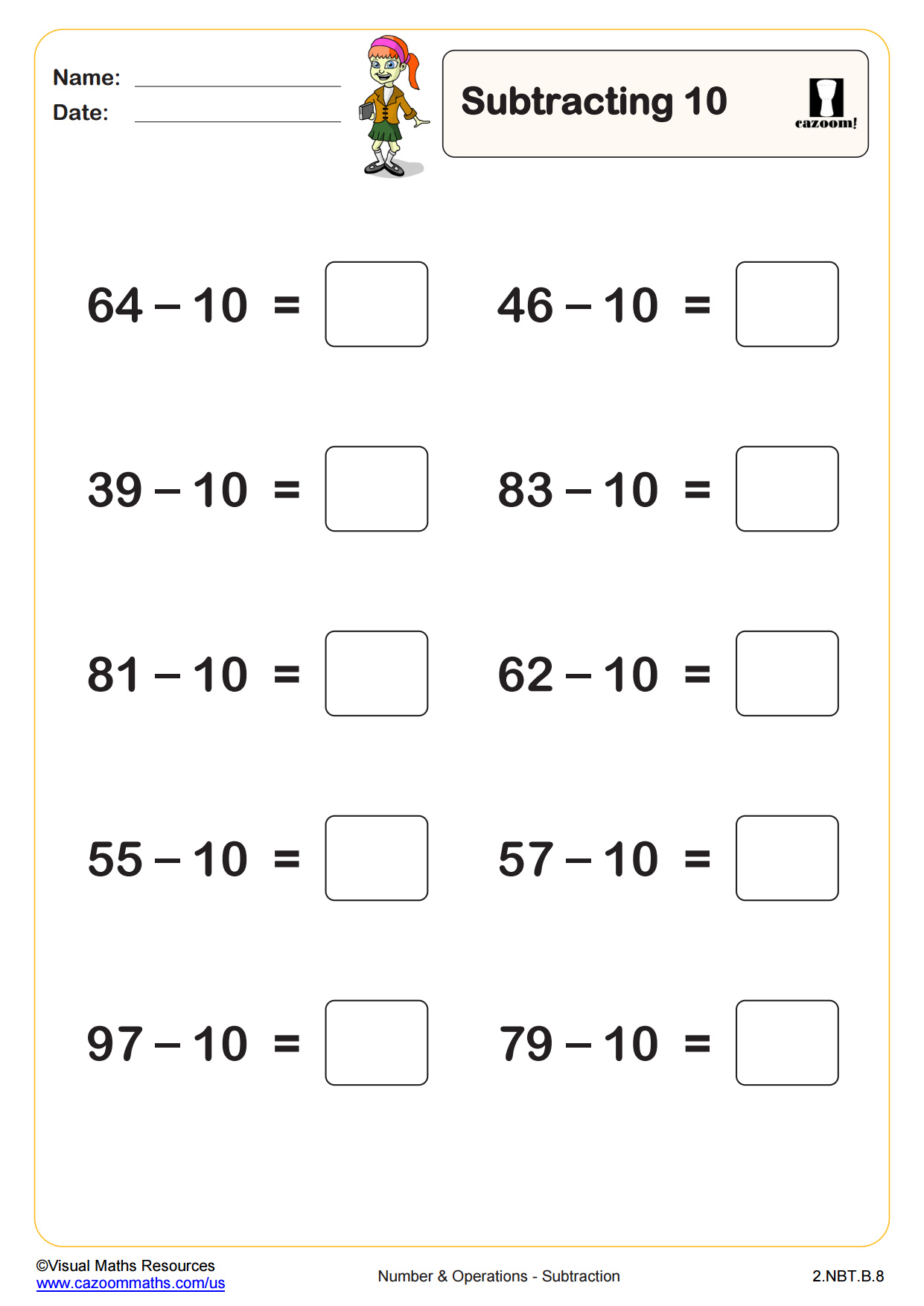
Subtracting 10 (20 questions)
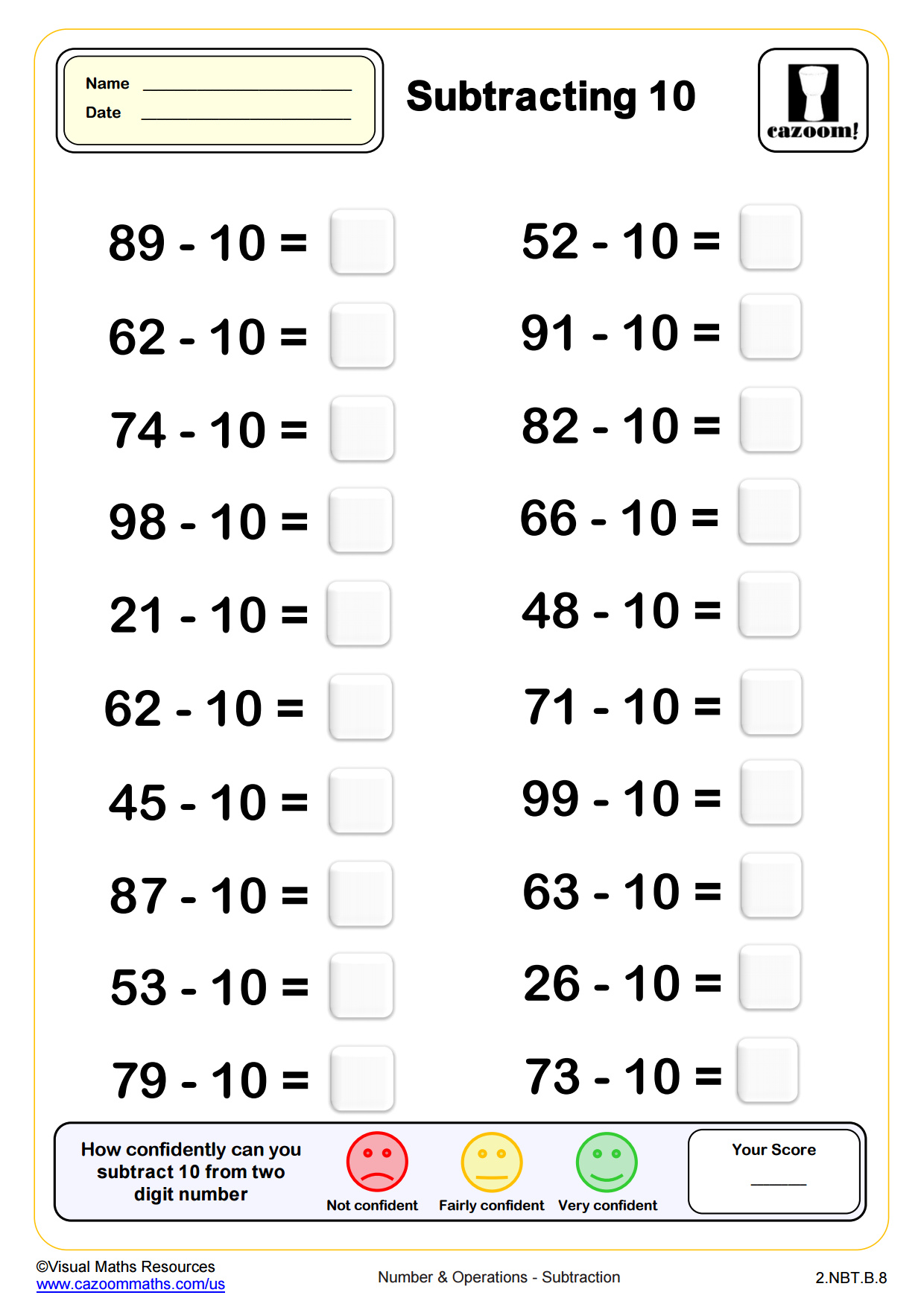
Subtracting 10 (50 questions)
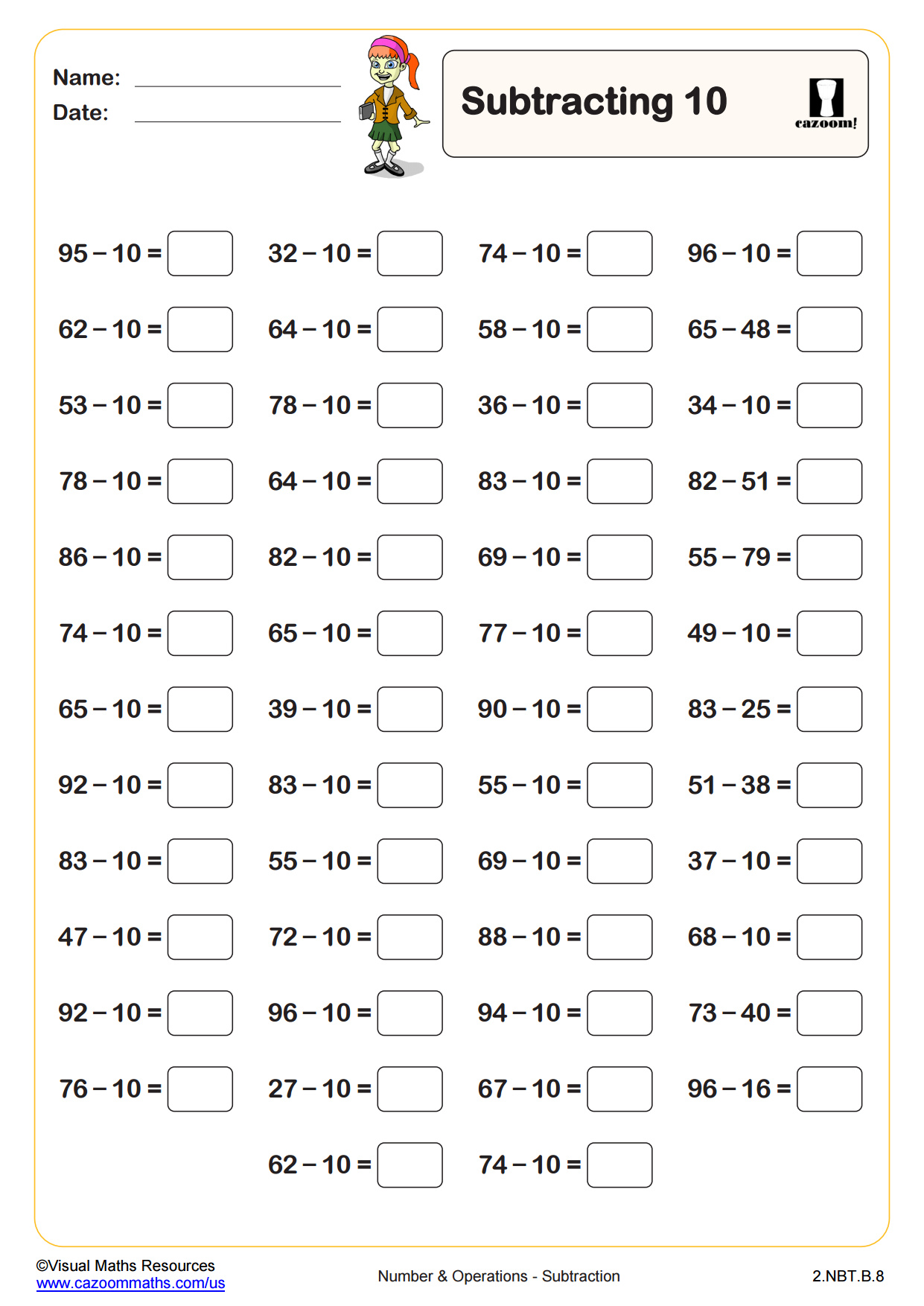
Subtracting 20 (10 questions)
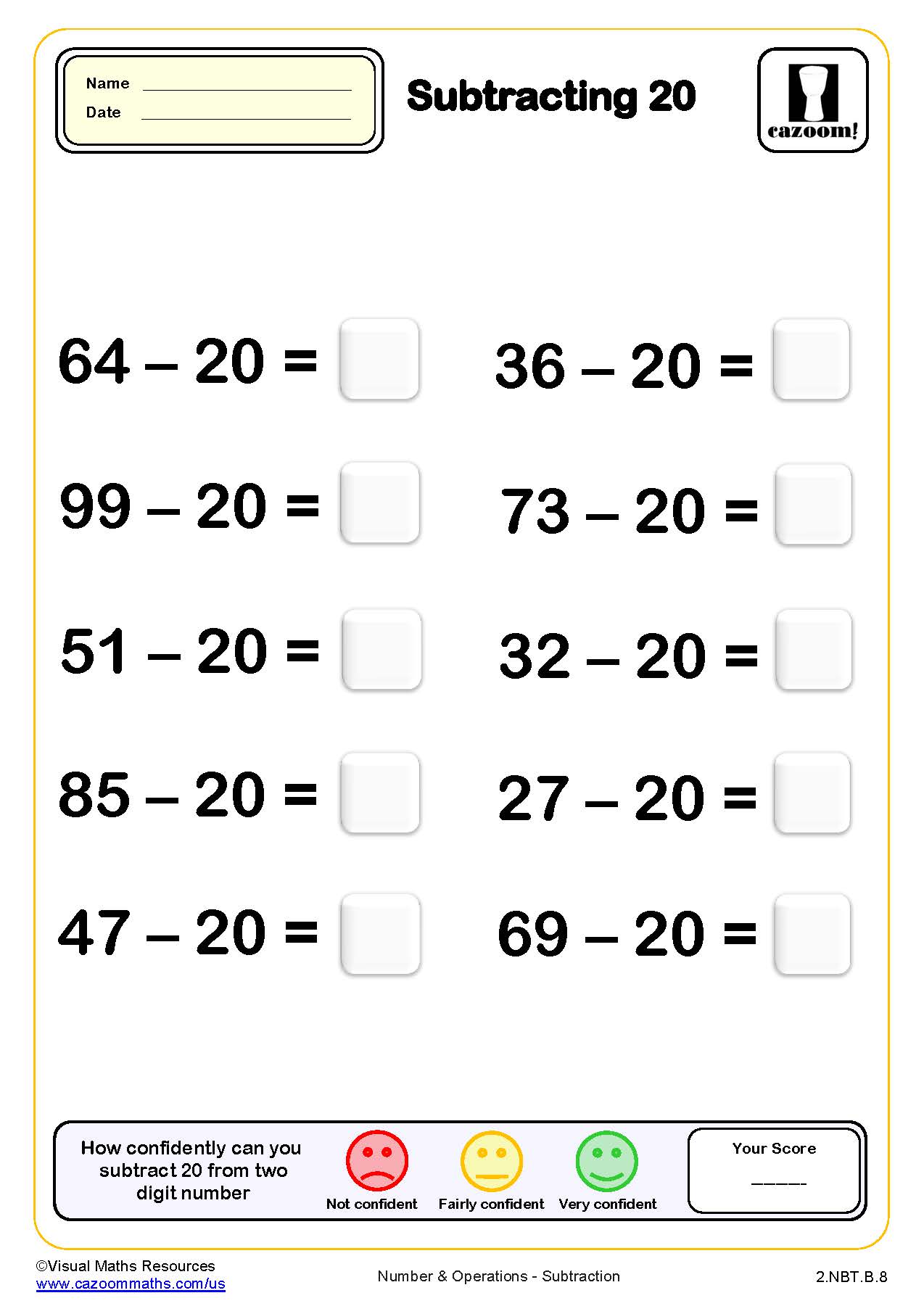
Subtracting 20 (20 questions)
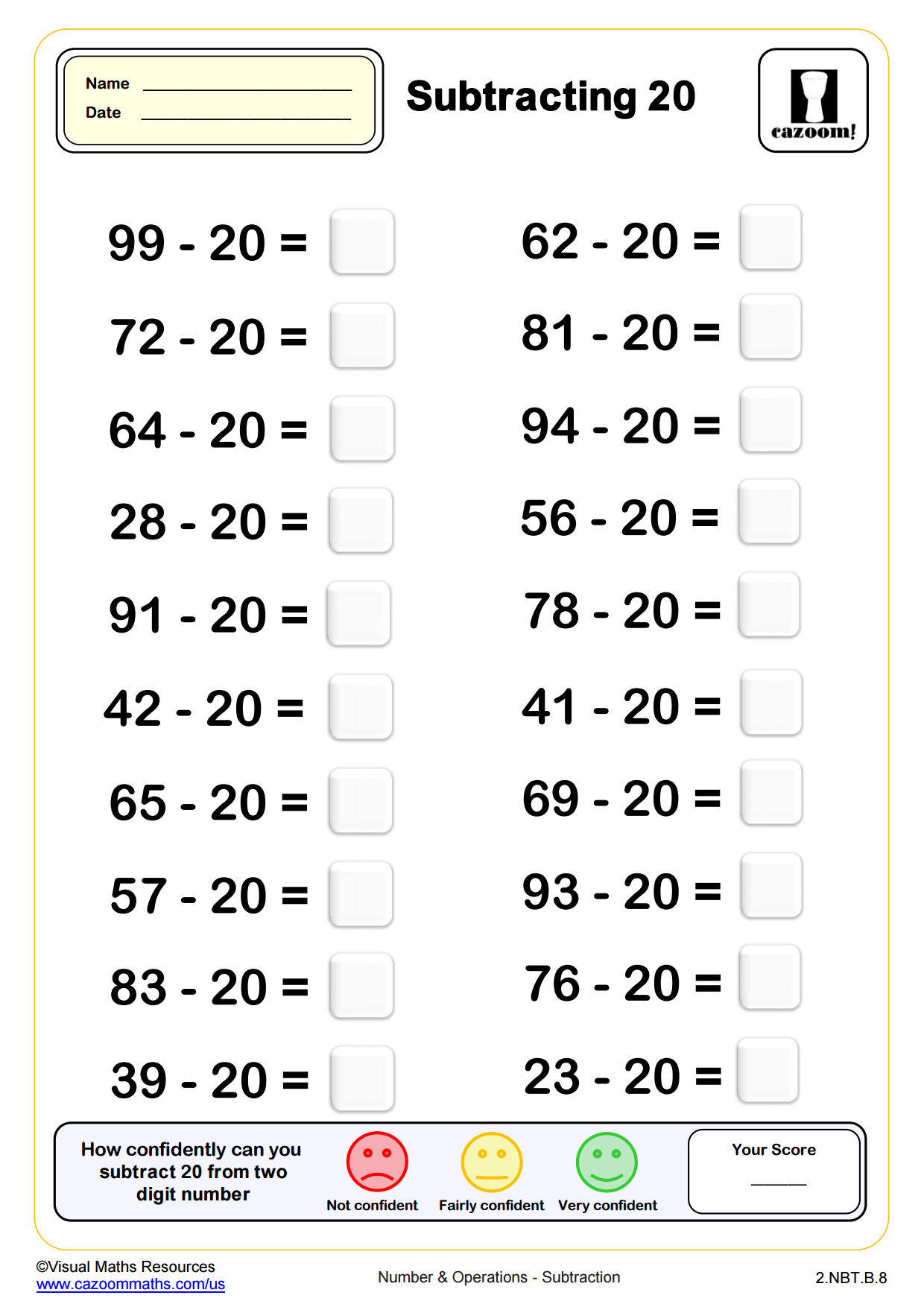
Subtracting 20 (50 questions)
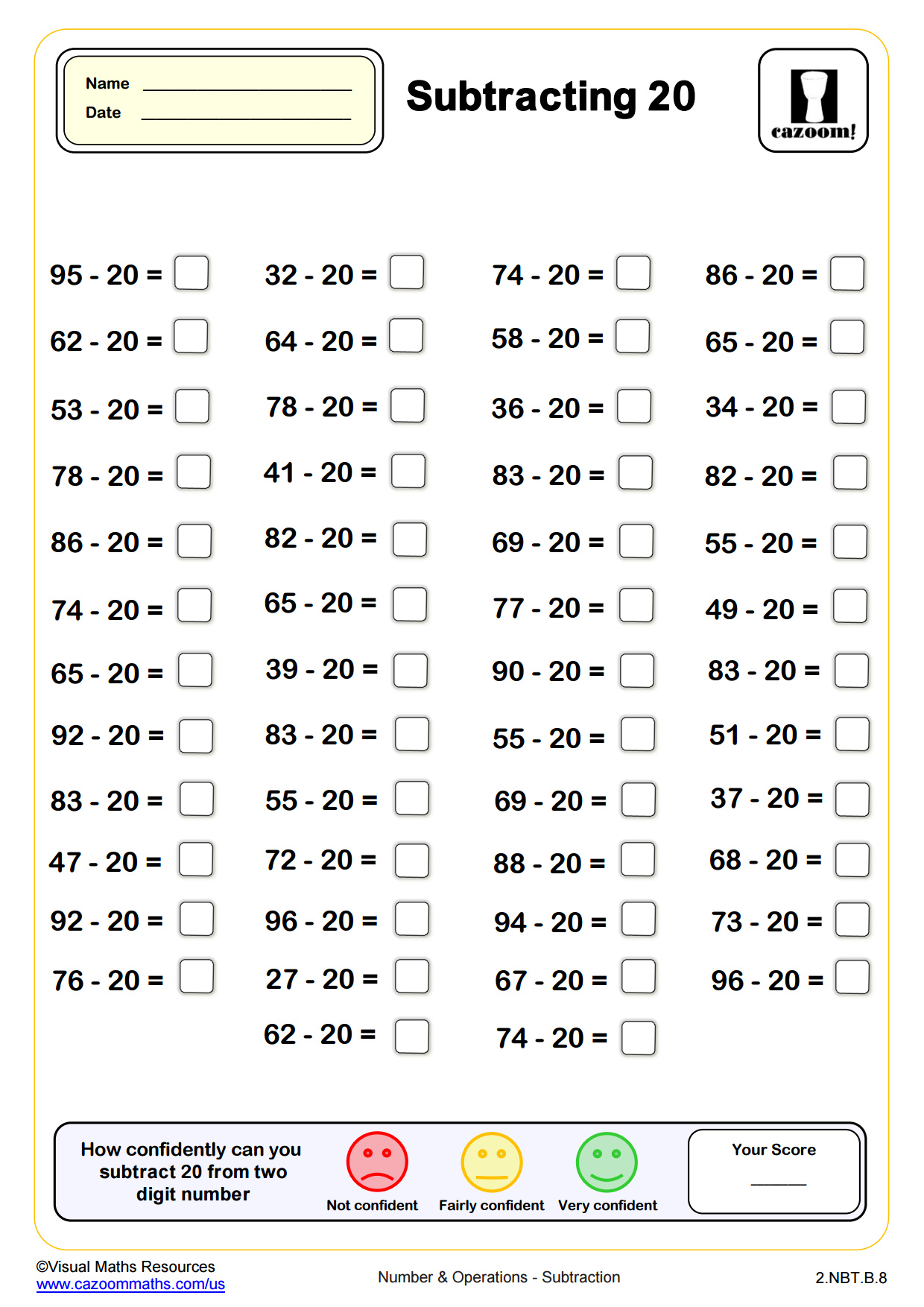
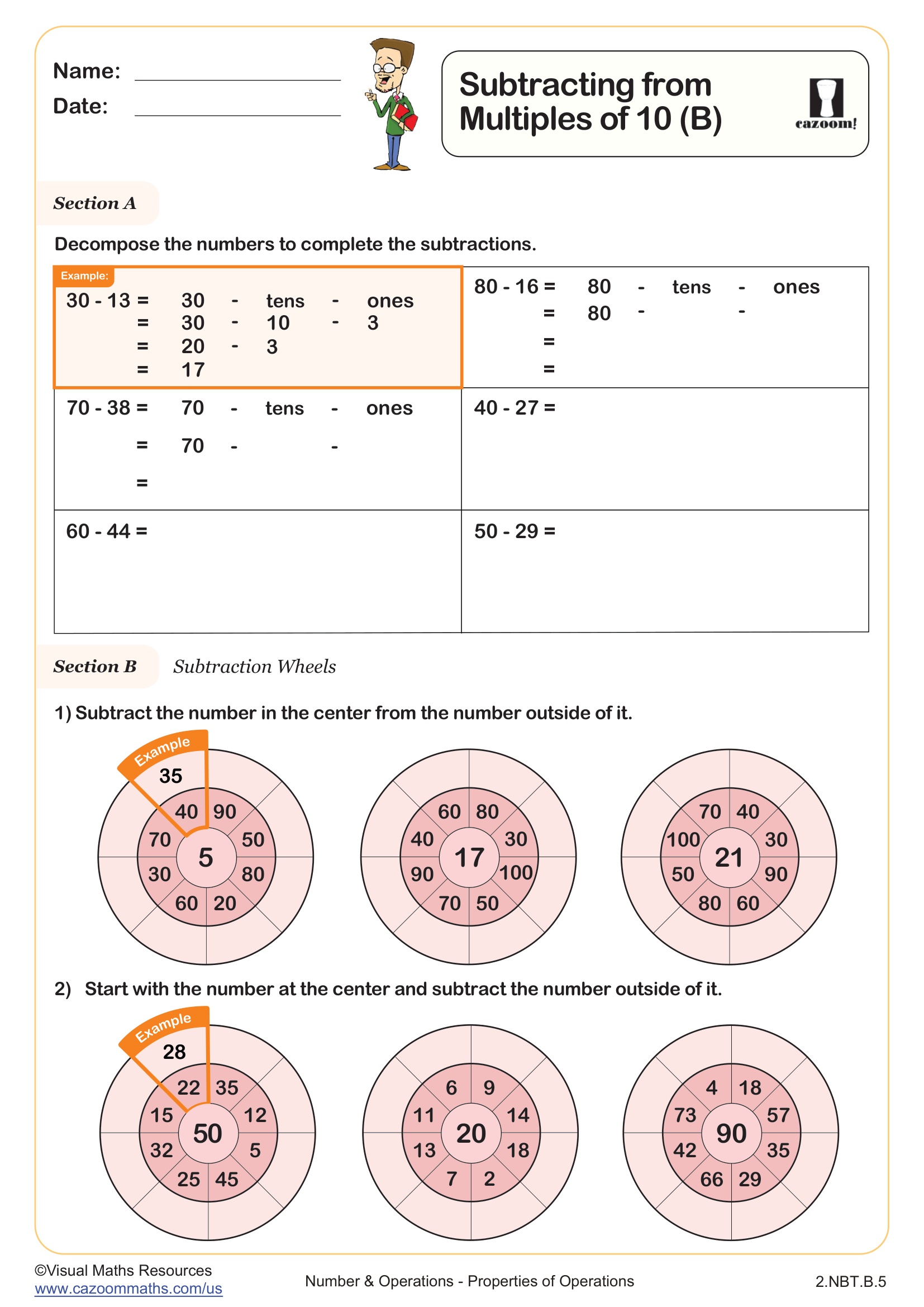
Subtracting from Multiples of 10 (B)
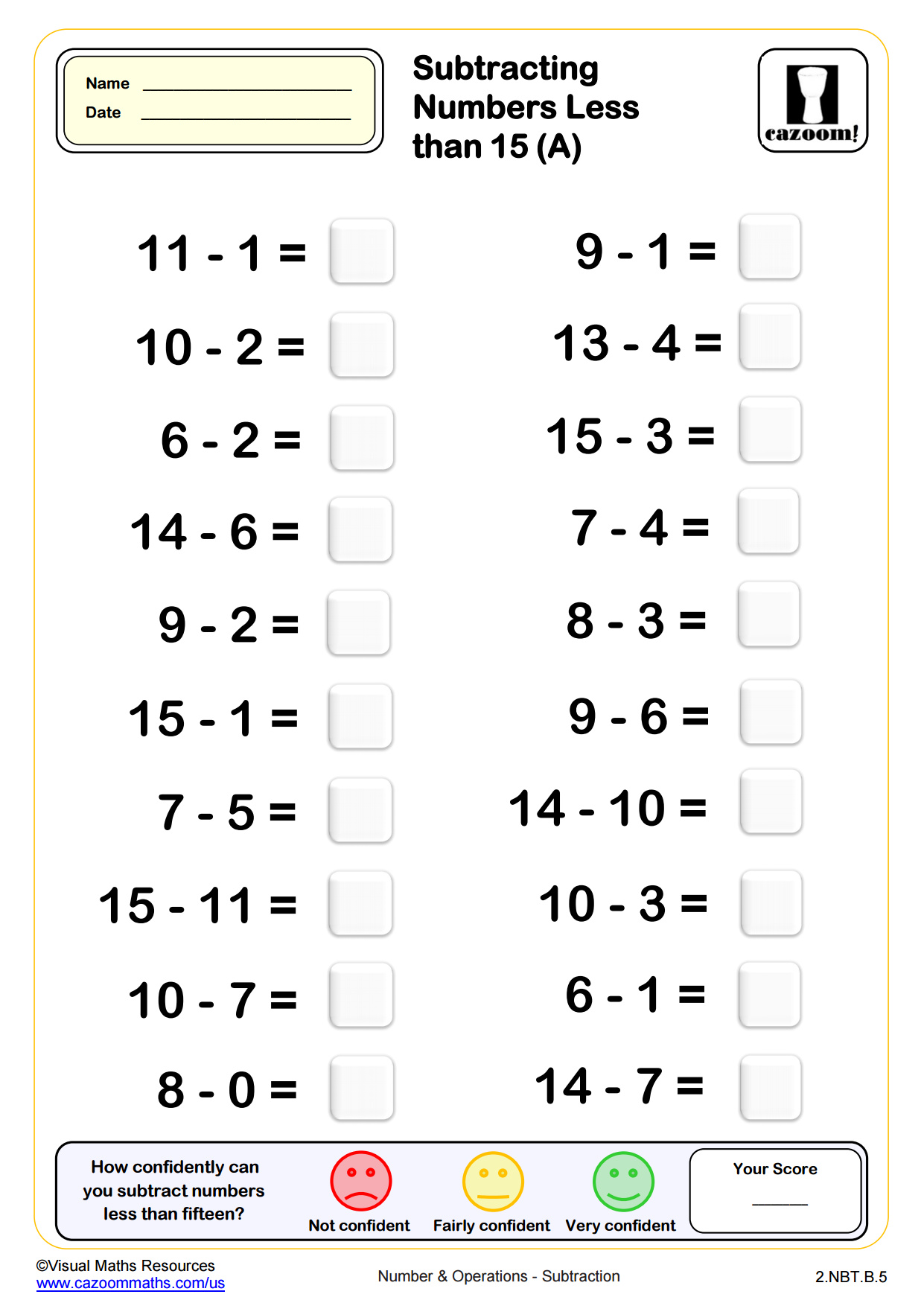
Subtracting Numbers Less Than 15 (A)
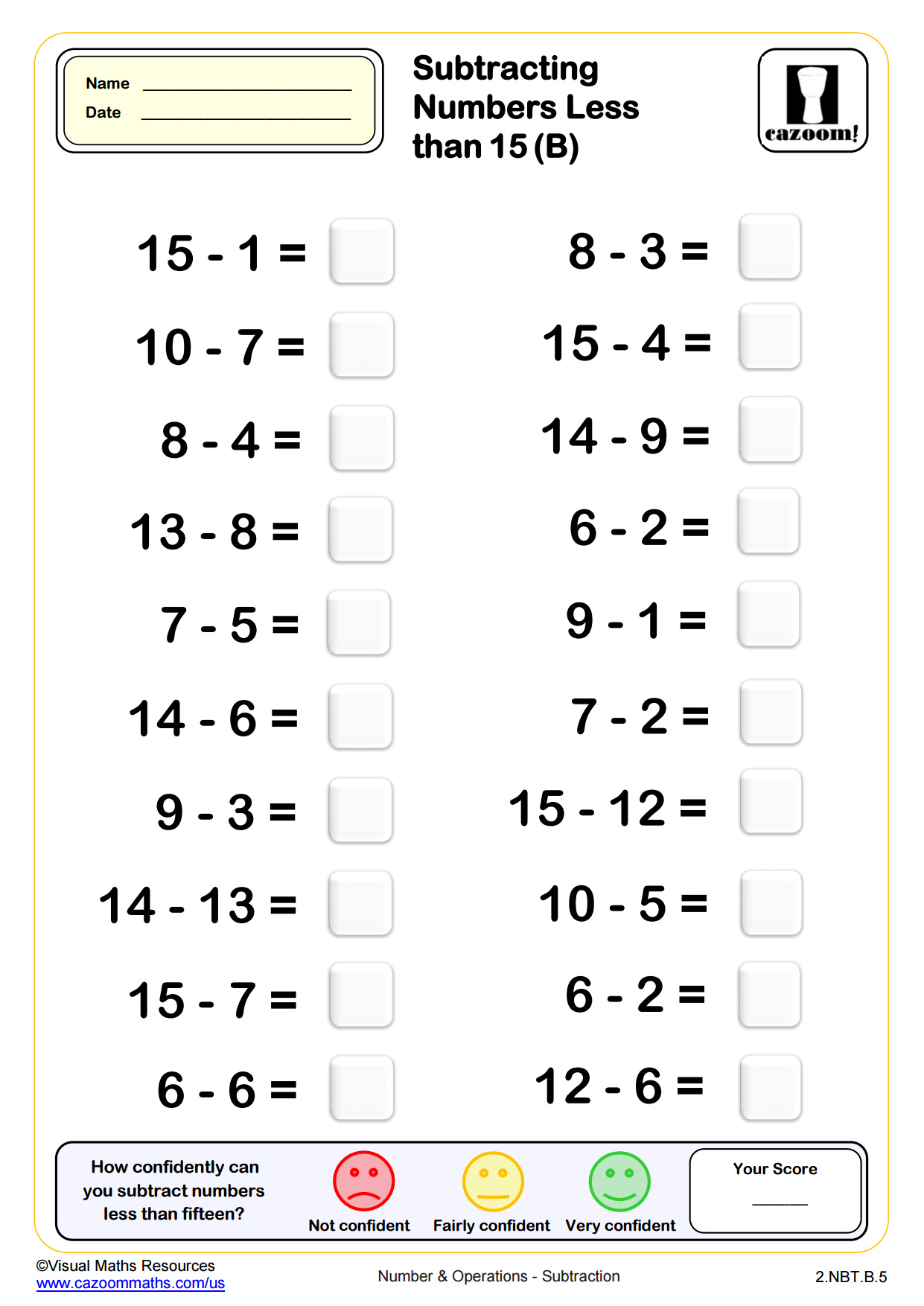
Subtracting Numbers Less Than 15 (B)
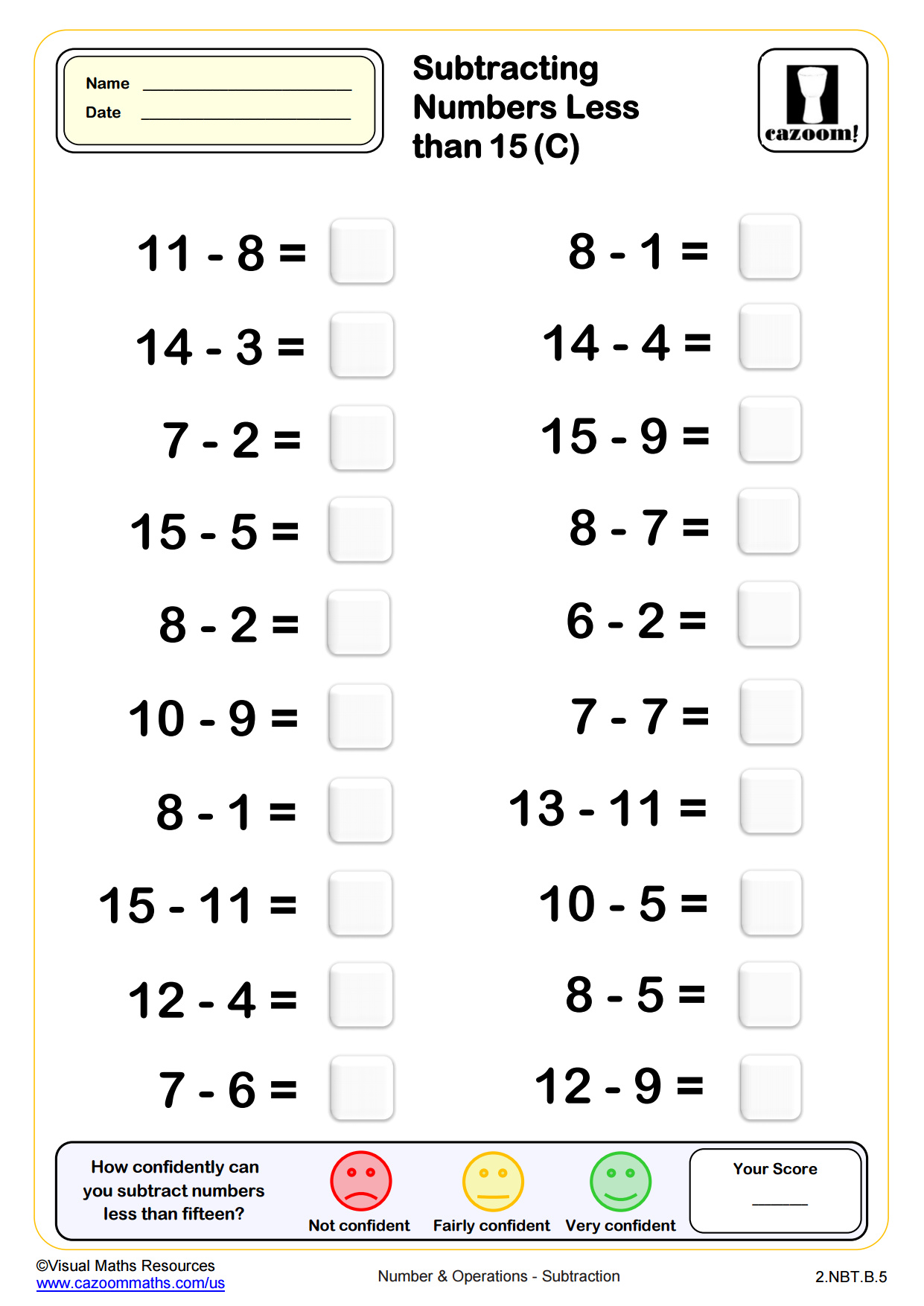
Subtracting Numbers Less Than 15 (C)
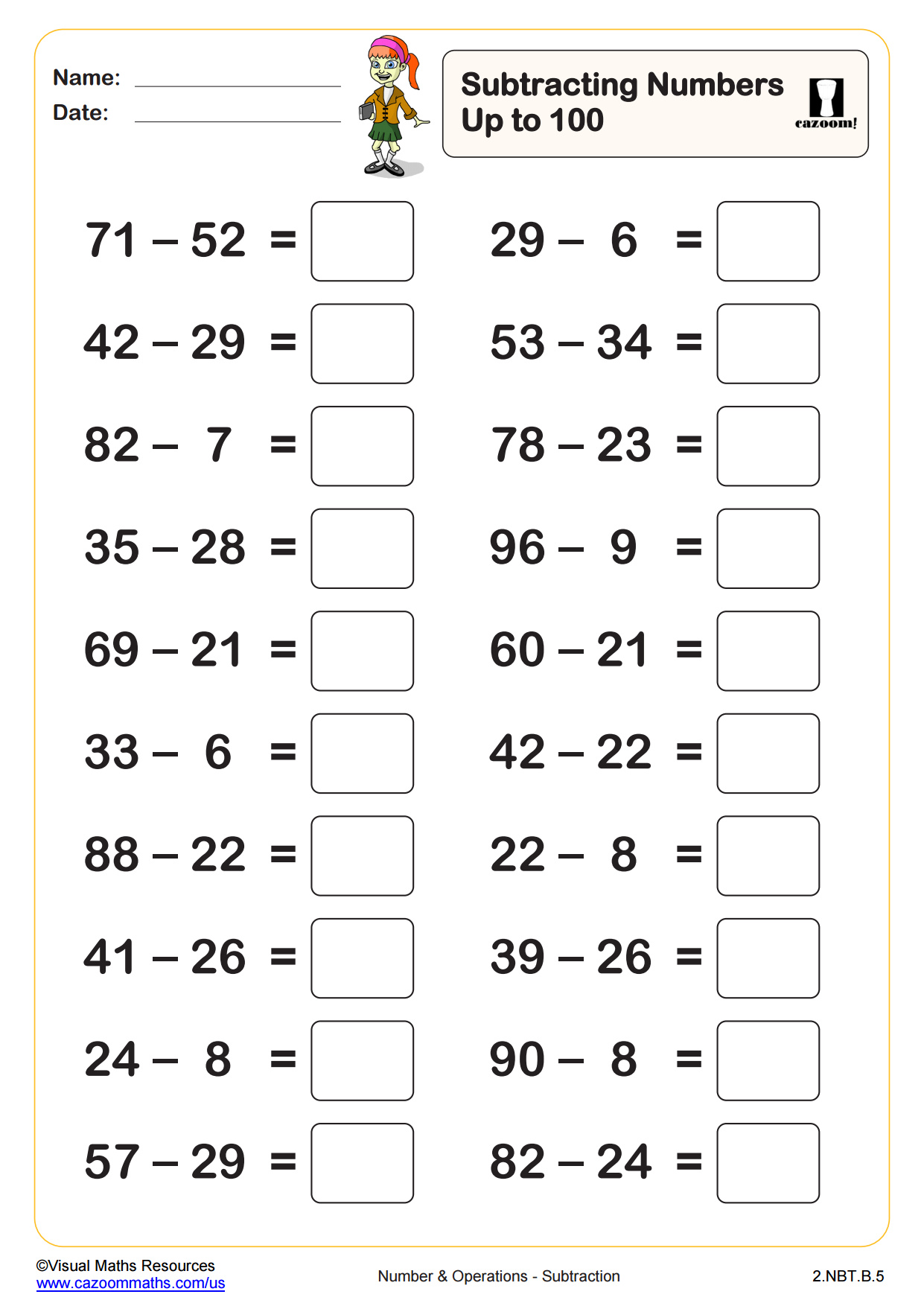
Subtracting Numbers Up to 100
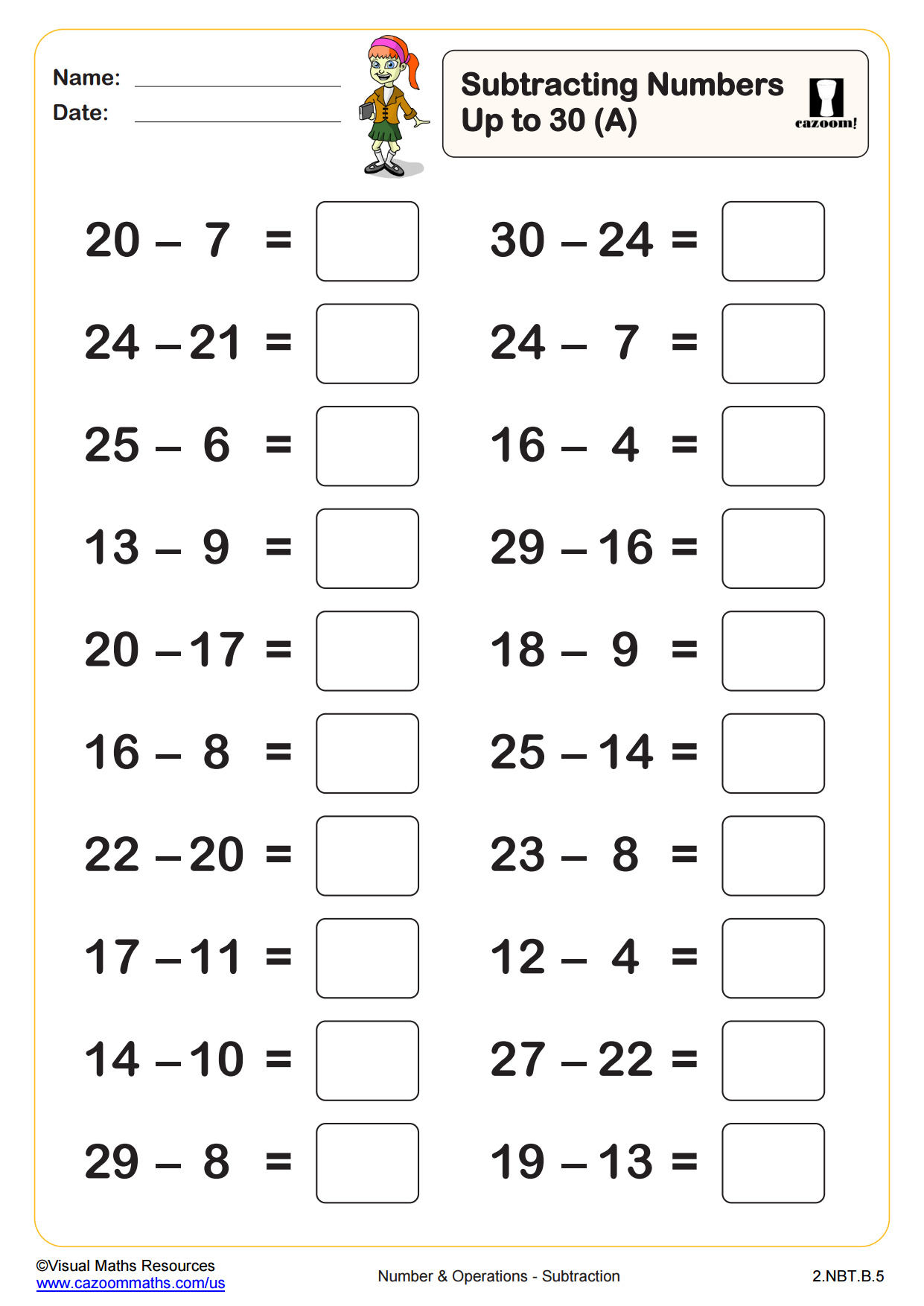
Subtracting Numbers Up to 30 (A)
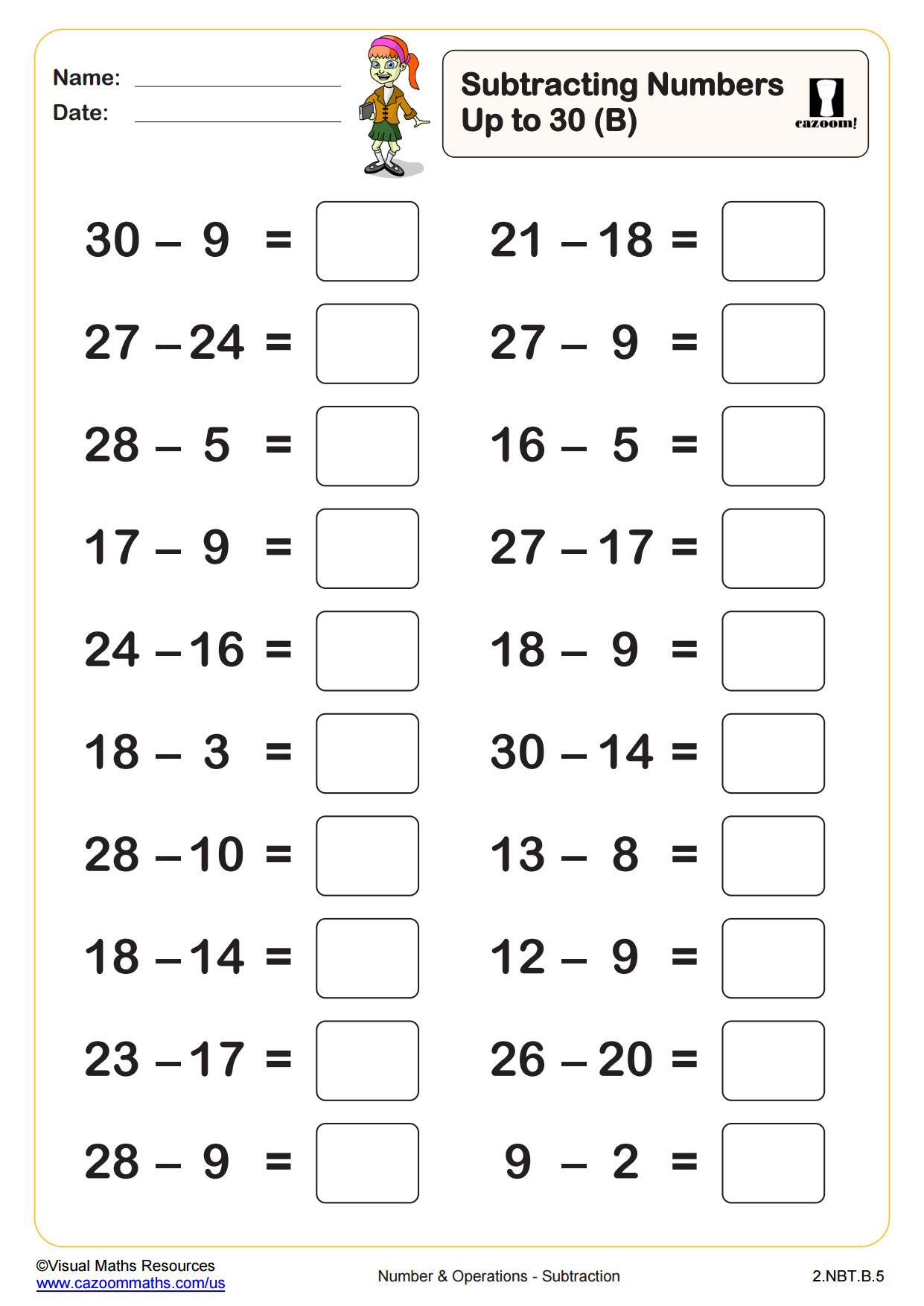
Subtracting Numbers Up to 30 (B)
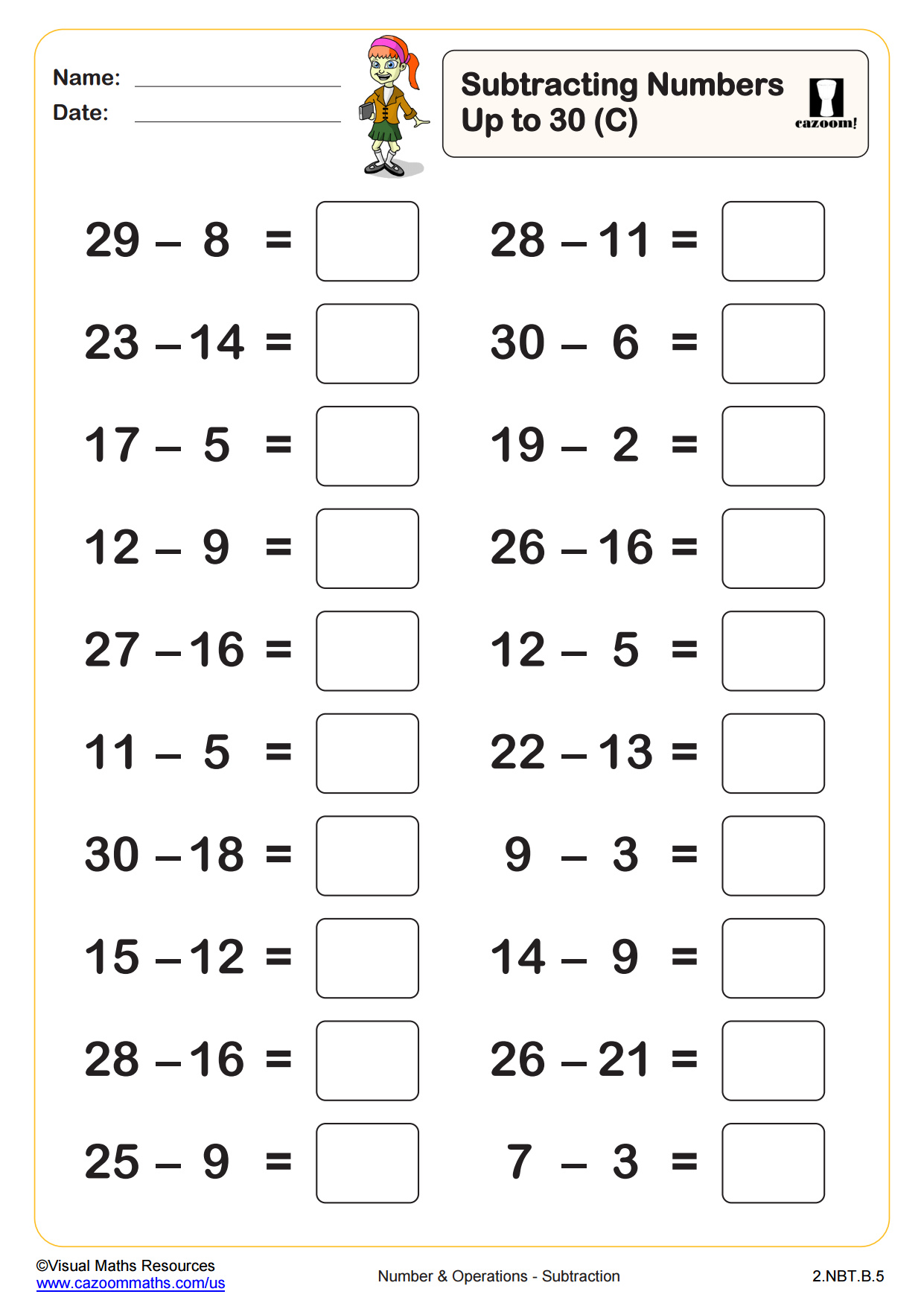
Subtracting Numbers Up to 30 (C)
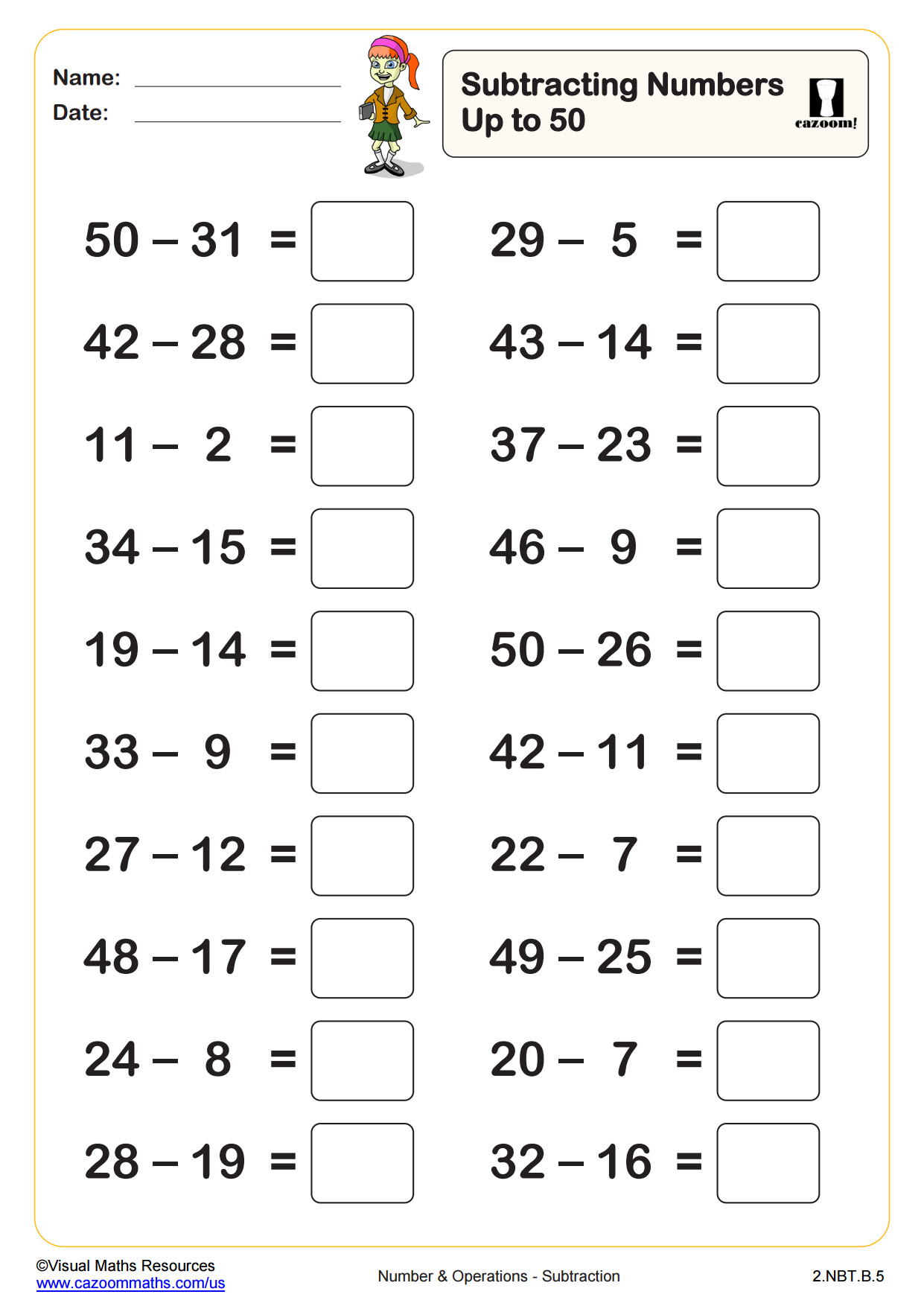
Subtracting Numbers Up to 50
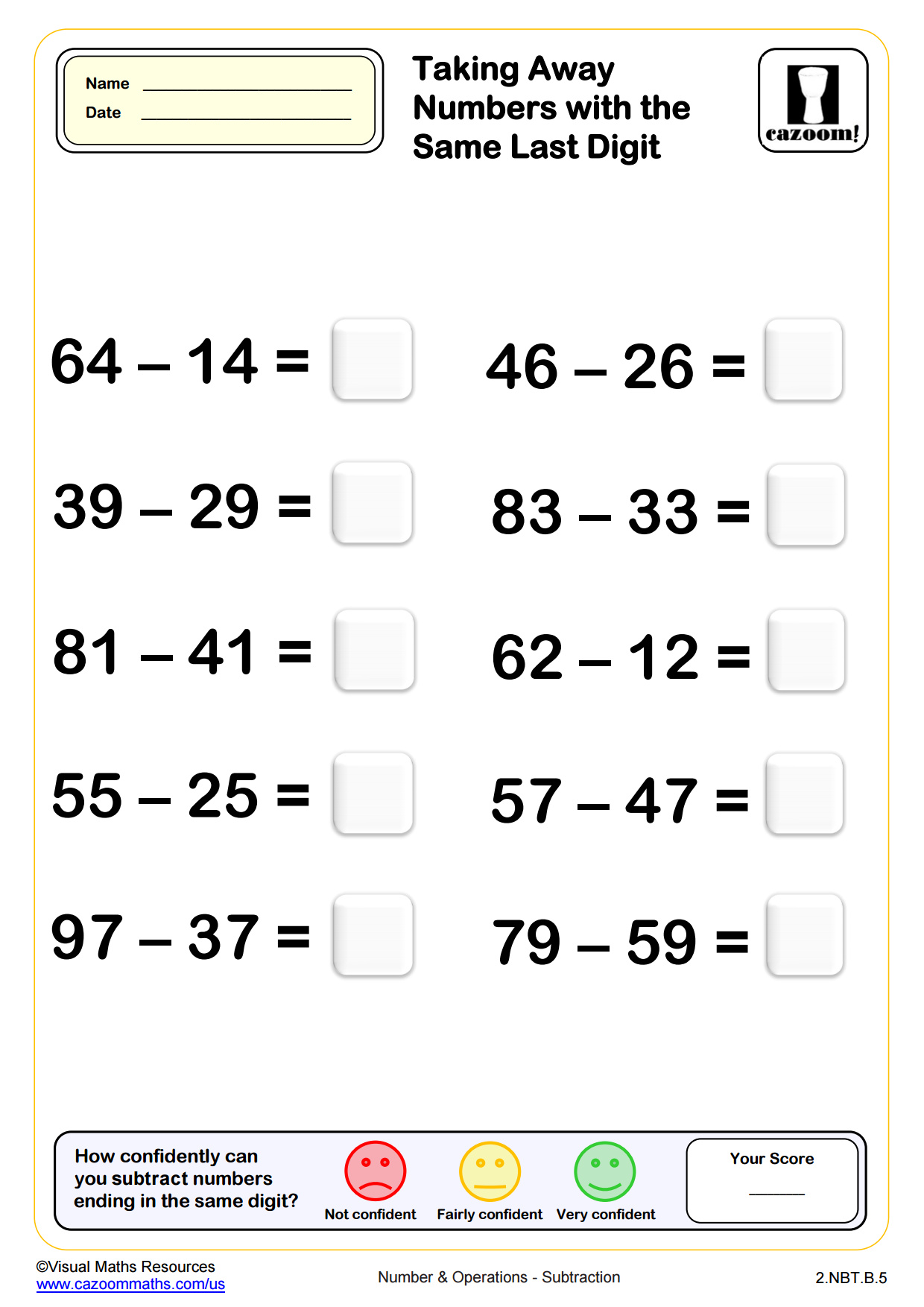
Subtracting Numbers with the Same Last Digit (10 questions)
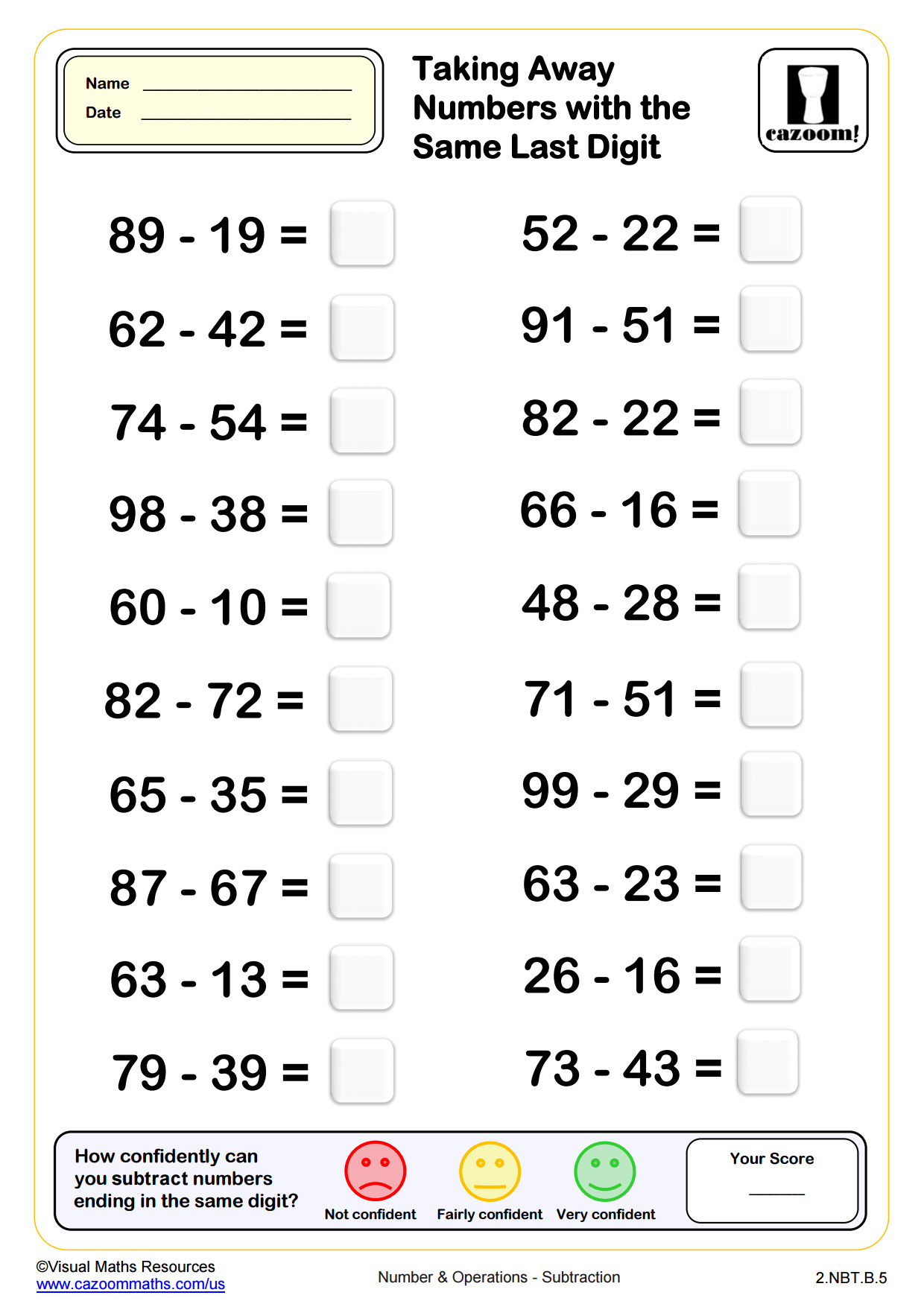
Subtracting Numbers with the Same Last Digit (20 questions)
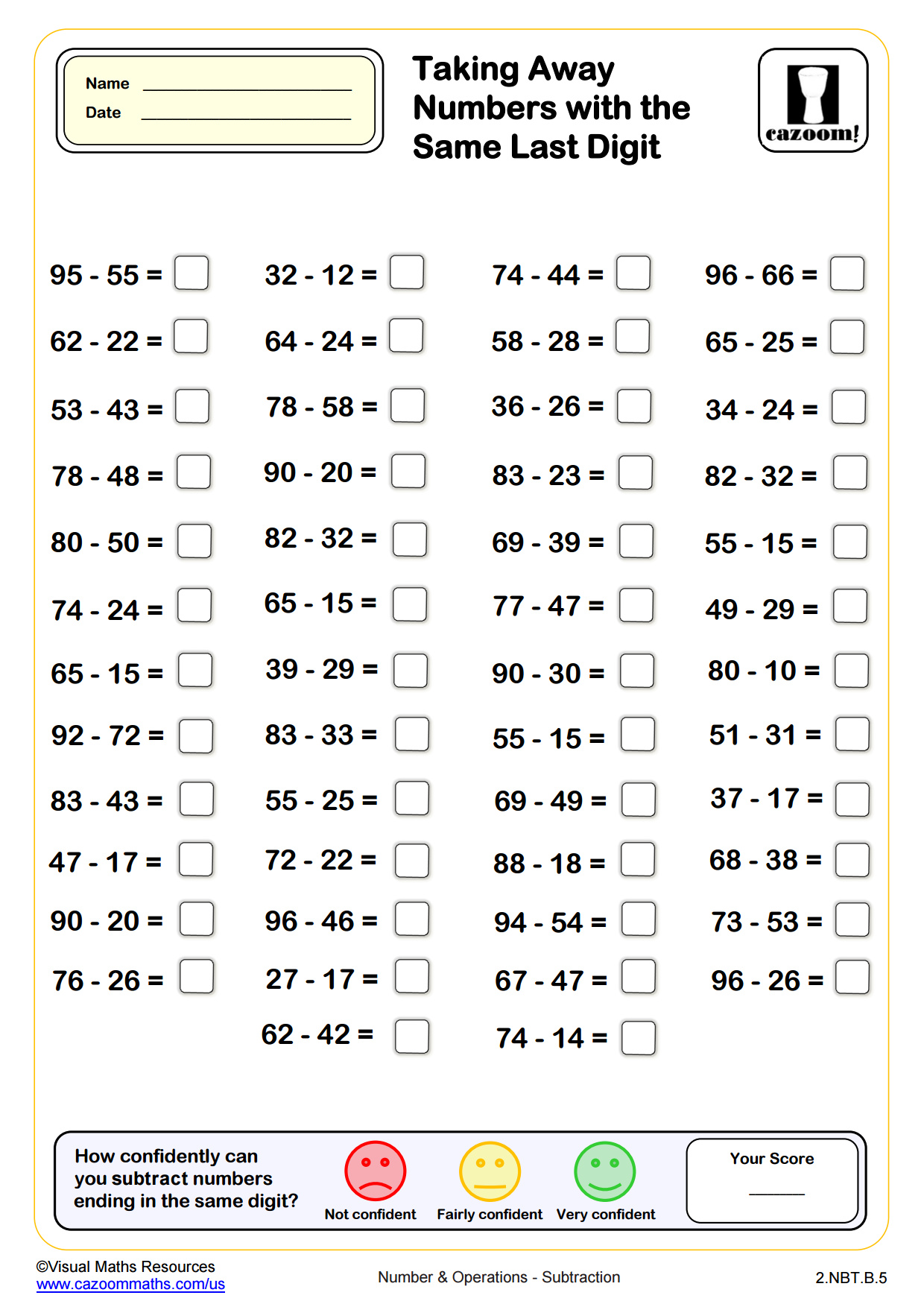
Subtracting Numbers with the Same Last Digit (50 questions)
Subtraction Wheels - Subtracting Tens from 3 Digit Numbers (No Regrouping)
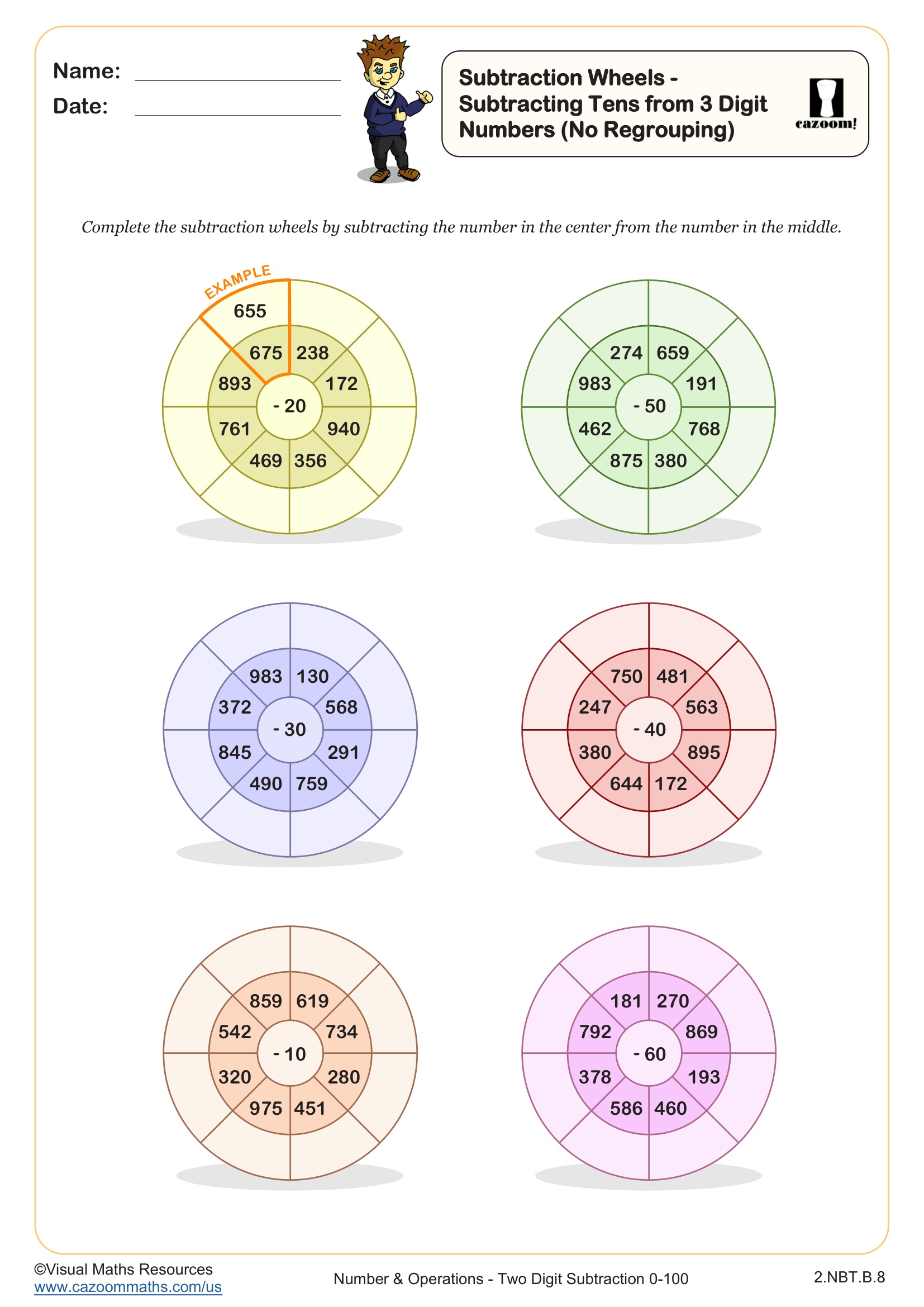
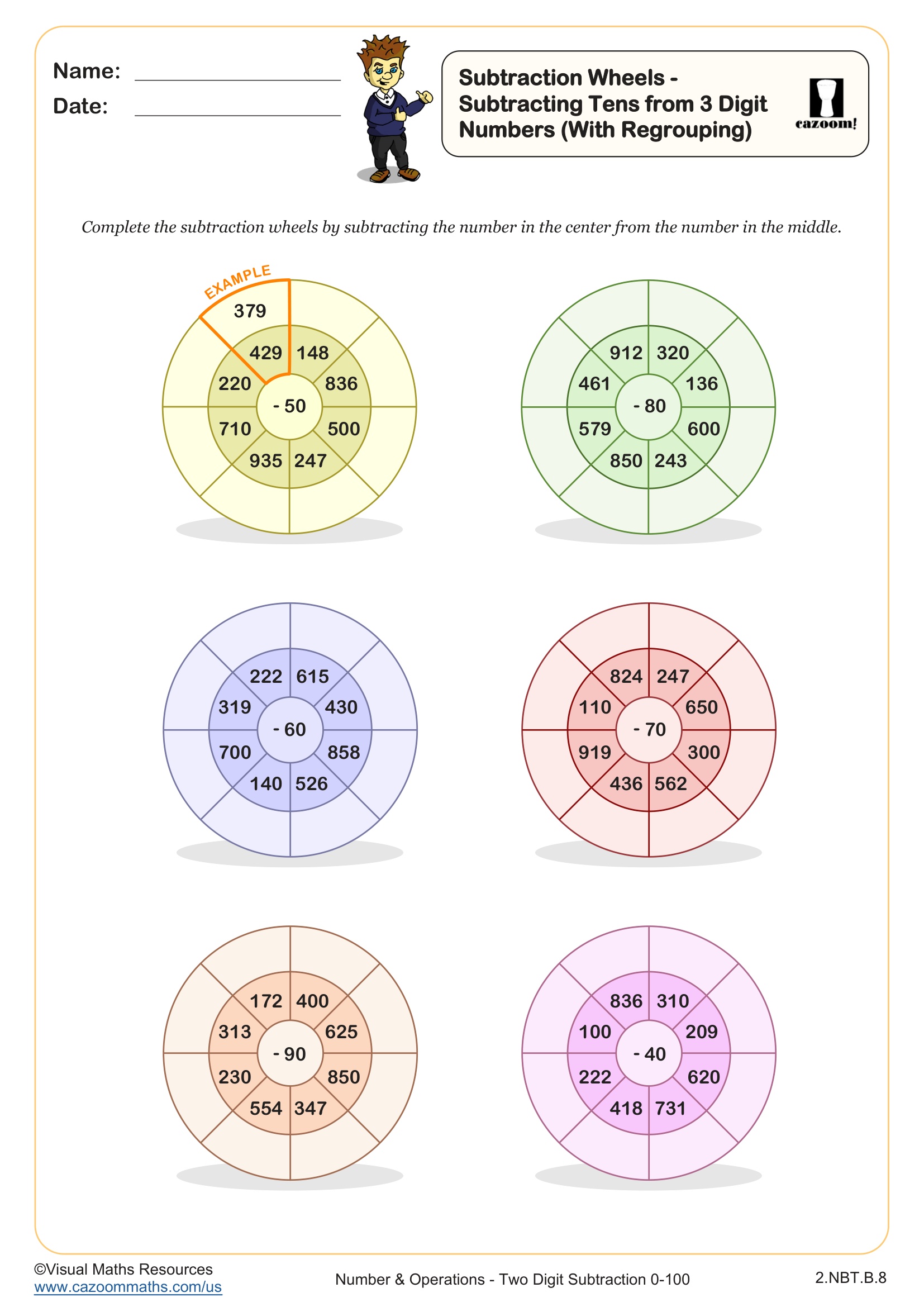
Subtraction Wheels - Subtracting Tens from 3 Digit Numbers (With Regrouping)
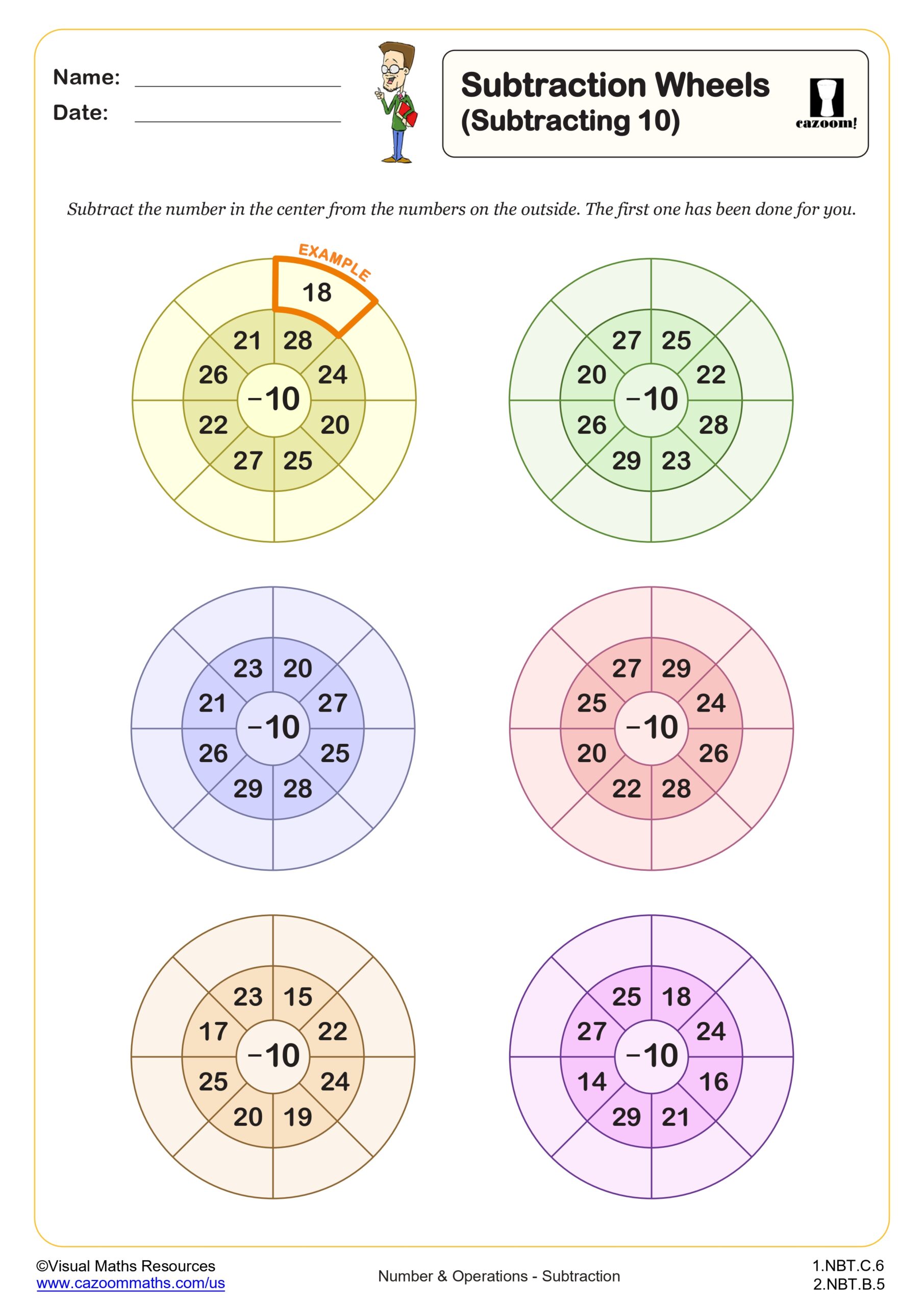
Subtraction Wheels (Subtracting 10)
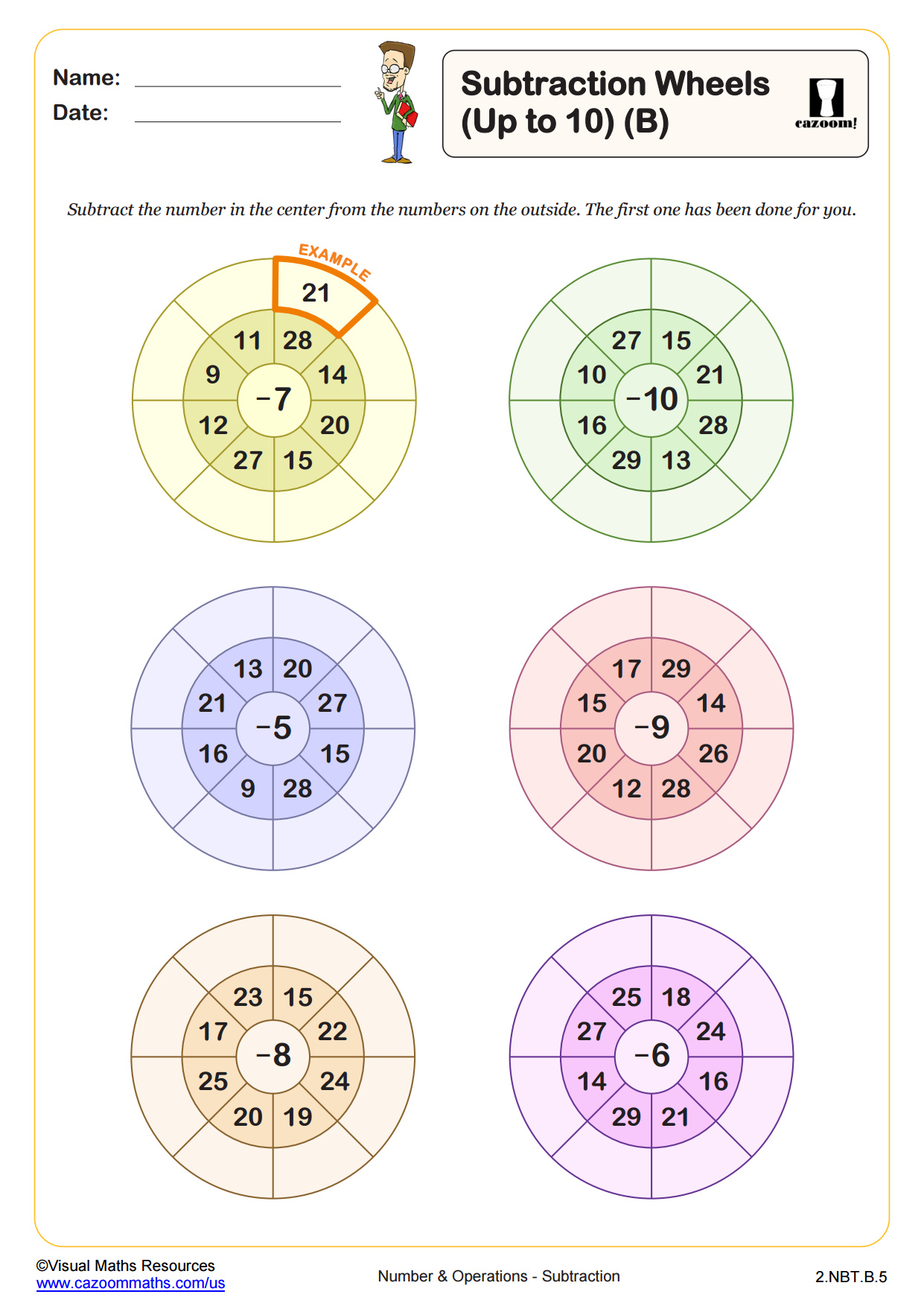
Subtraction Wheels (Up to 10 B)
All worksheets are created by the team of experienced teachers at Cazoom Math.
What strategies do students learn for two-digit subtraction?
Second graders develop multiple strategies for two-digit subtraction, including the standard algorithm with regrouping, counting up from the subtrahend to the minuend, breaking apart numbers by place value, and using compensation methods. These worksheets emphasize both procedural fluency and conceptual understanding, helping students select efficient strategies based on the numbers involved.
Students often make the mistake of subtracting the smaller digit from the larger digit in each place value position without considering which number is the minuend. For example, when solving 52 - 38, they might calculate 8 - 2 in the ones place because 8 is larger, arriving at an incorrect answer of 26 instead of 14. This reveals incomplete understanding of subtraction as finding the difference and highlights why regrouping instruction must connect to place value concepts rather than being taught as a memorized procedure.
Which grade levels use two-digit subtraction worksheets?
These two-digit subtraction worksheets align with second grade elementary school mathematics standards, where students master subtraction within 100 using strategies based on place value and properties of operations. This skill builds directly on first grade addition and subtraction within 20, extending computational thinking to larger numbers that require more sophisticated approaches.
The worksheet collection progresses in difficulty through different problem types. Students begin with matching answers to build recognition, advance to missing number problems with number line support for visual learners, then tackle missing number challenges without scaffolding. This gradual release model helps students transition from concrete visual representations to abstract symbolic thinking, preparing them for three-digit subtraction in third grade where regrouping becomes more complex across multiple place values.
How do number lines support two-digit subtraction learning?
Number lines provide a visual model that helps students understand subtraction as distance or difference between two quantities. When solving 64 - 28 using a number line, students can jump back by tens and ones, or count up from 28 to 64, making the regrouping process more transparent than the standard vertical algorithm alone. This representation particularly benefits students who struggle with abstract symbolic manipulation.
Number line thinking connects directly to measurement skills students encounter throughout STEM learning. When scientists measure temperature changes (a thermometer is essentially a vertical number line) or engineers calculate distances on coordinate grids, they're applying the same mental model developed through these subtraction exercises. Understanding subtraction as movement along a number line also strengthens students' ability to work with negative numbers in later grades and interpret data on graphs where differences between values matter more than absolute quantities.
How can teachers use these subtraction worksheets effectively?
The variety of problem formats within this collection allows teachers to differentiate instruction based on student readiness. Match the Answers activities work well for introducing a lesson or activating prior knowledge, while missing number problems challenge students to think flexibly about subtraction relationships and understand the inverse connection between addition and subtraction. The inclusion of both number line and non-number line versions enables teachers to scaffold support or remove it as students gain confidence.
These worksheets function effectively in multiple classroom contexts. Teachers use them during small group instruction to target specific misconceptions about regrouping, as independent practice following whole-group lessons, or as formative assessments to identify which students need additional support before summative testing. The complete answer keys make them suitable for peer checking activities that build mathematical communication skills, or for homework assignments where families can verify student work. Many teachers keep several copies at different difficulty levels available during math workshop rotations, allowing students to self-select appropriate challenges.