2nd Grade Understanding the Difference Worksheets
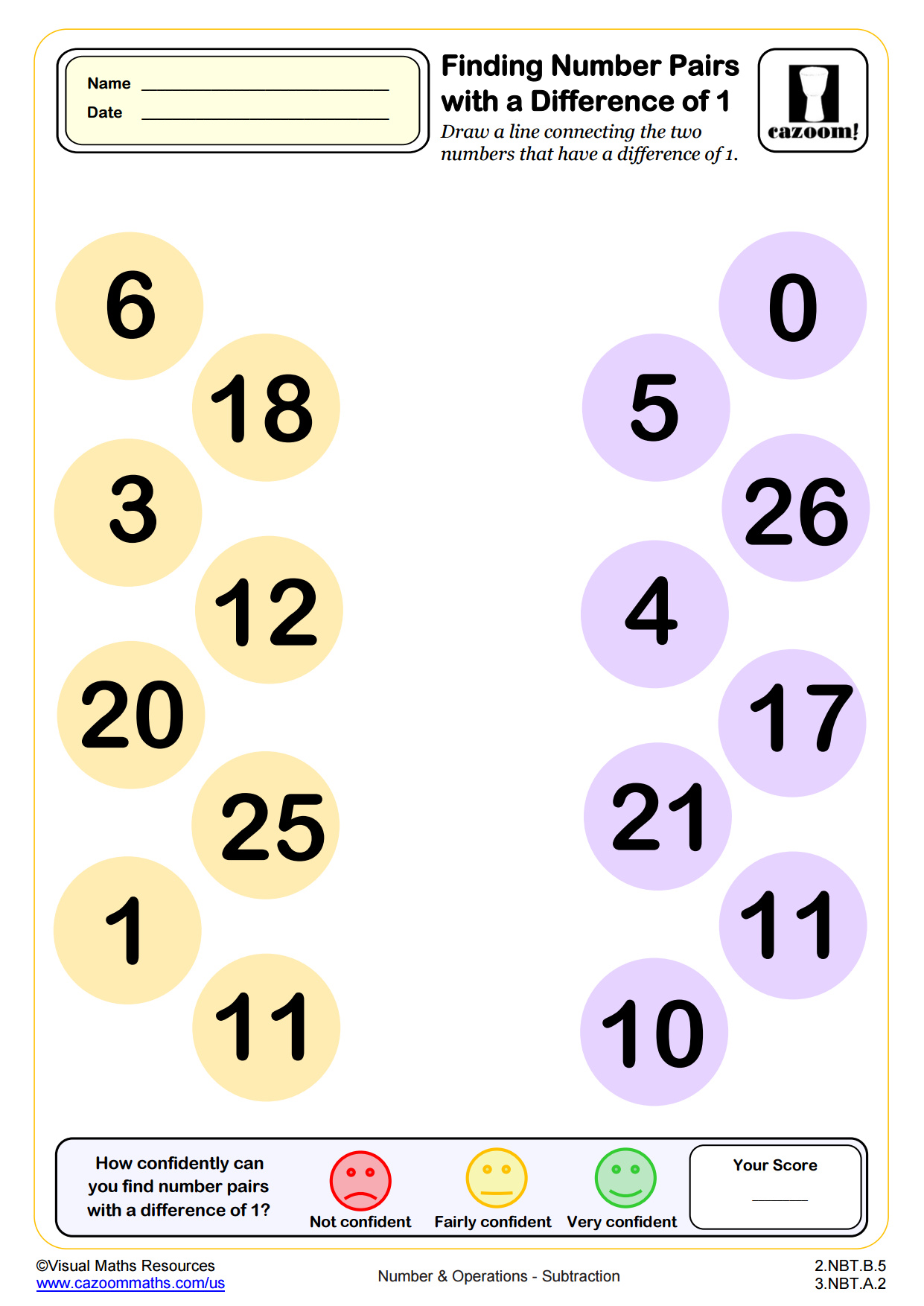
Find Number Pairs with a Difference of 1
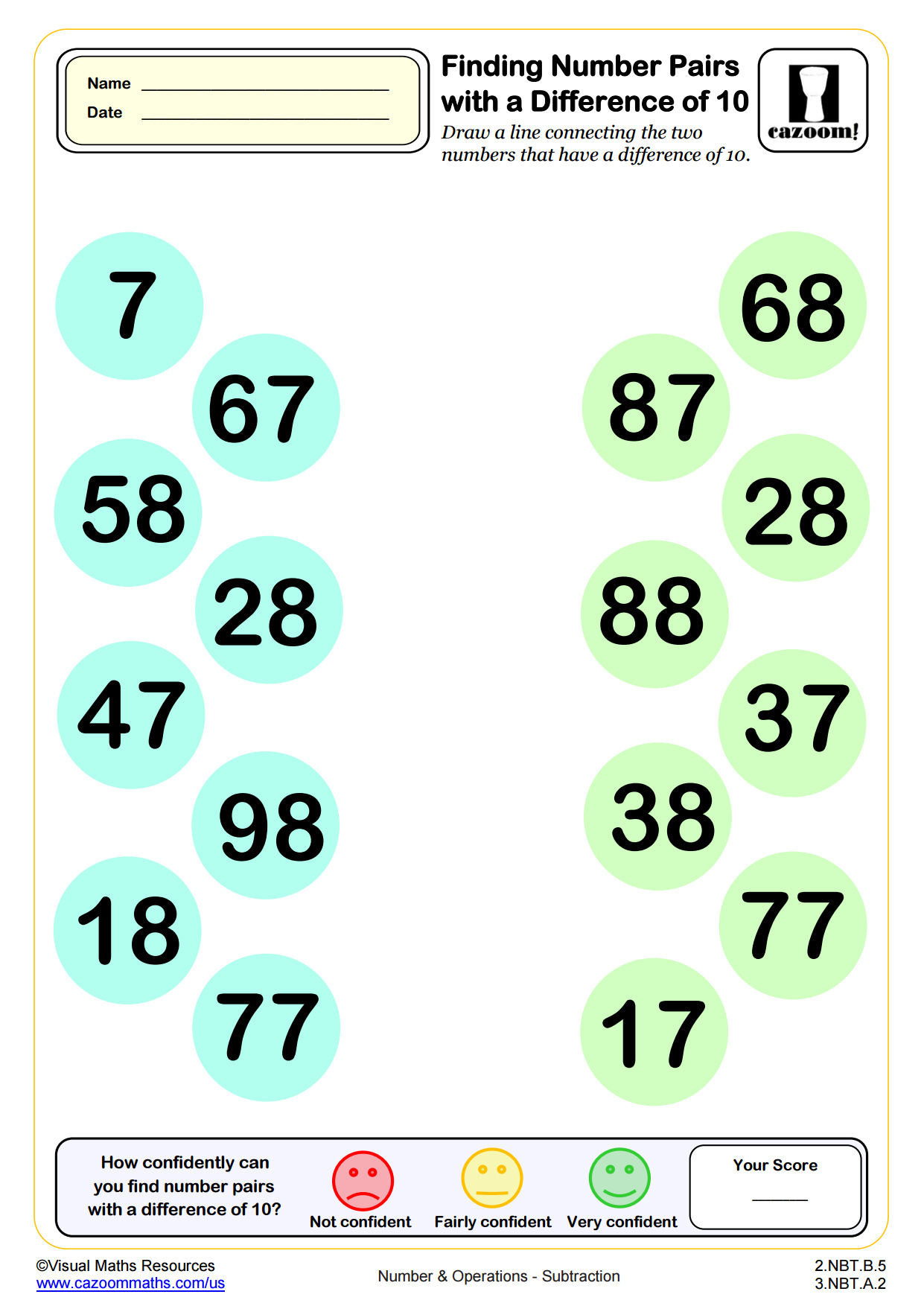
Find Number Pairs with a Difference of 10
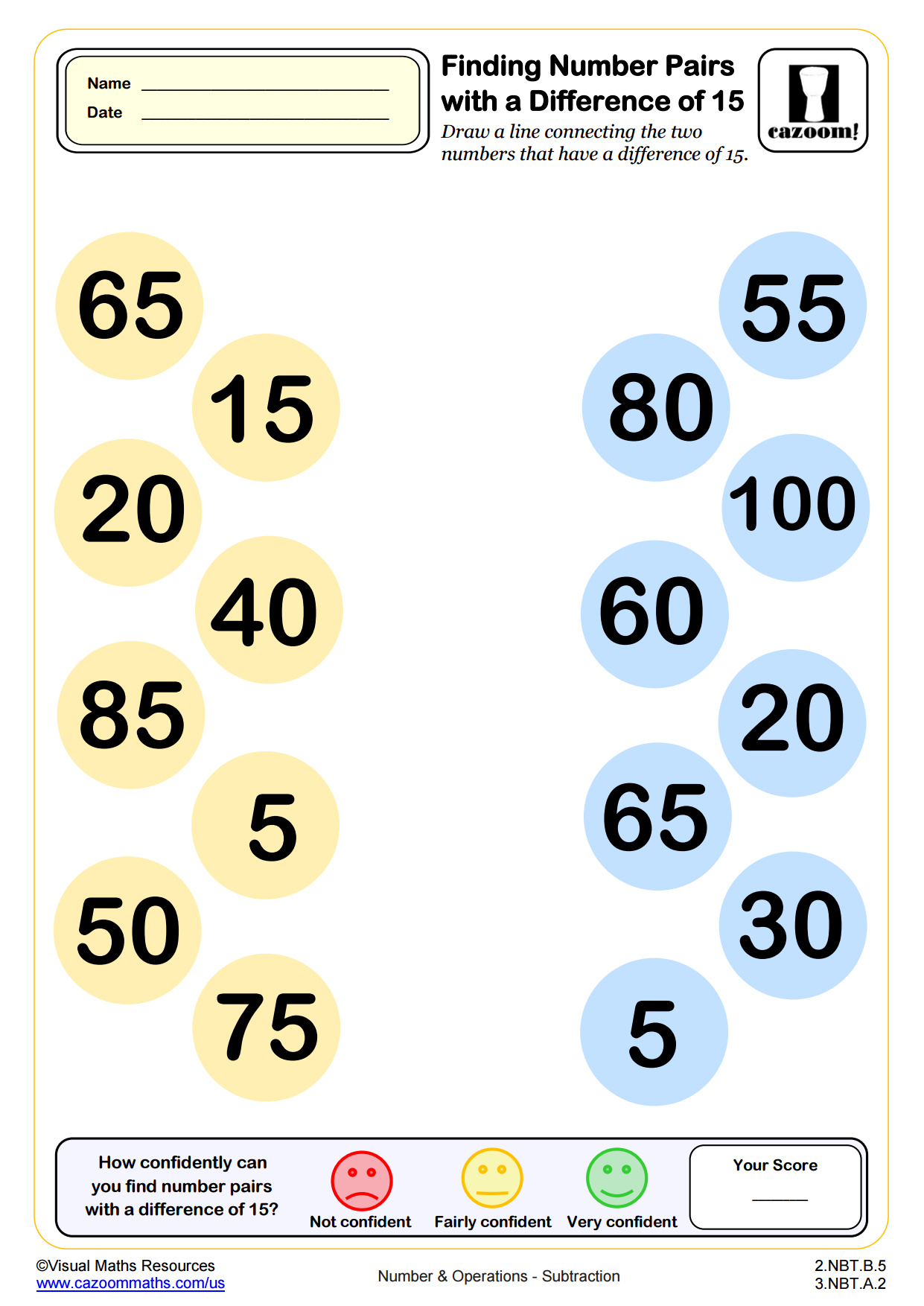
Find Number Pairs with a Difference of 15
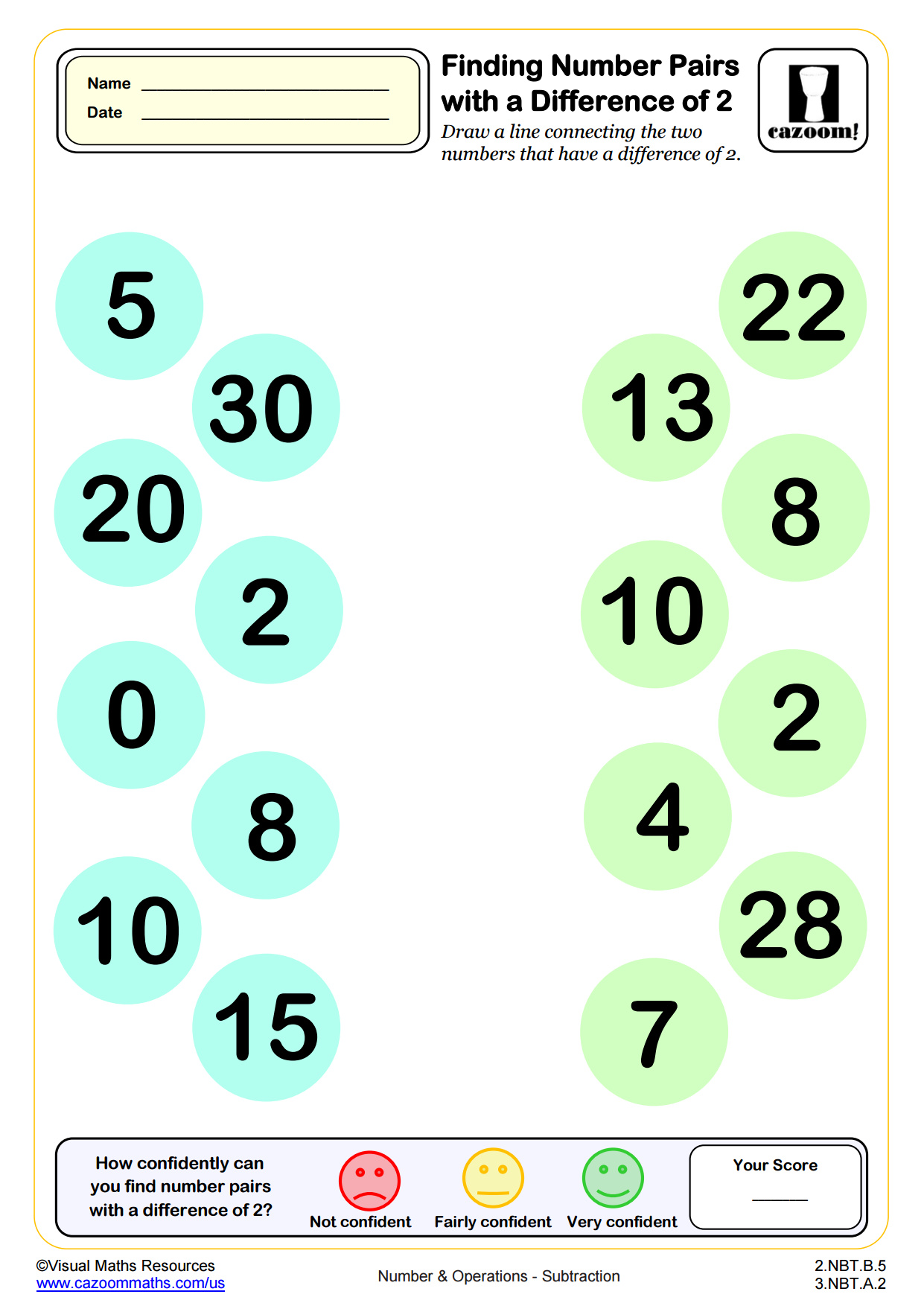
Find Number Pairs with a Difference of 2
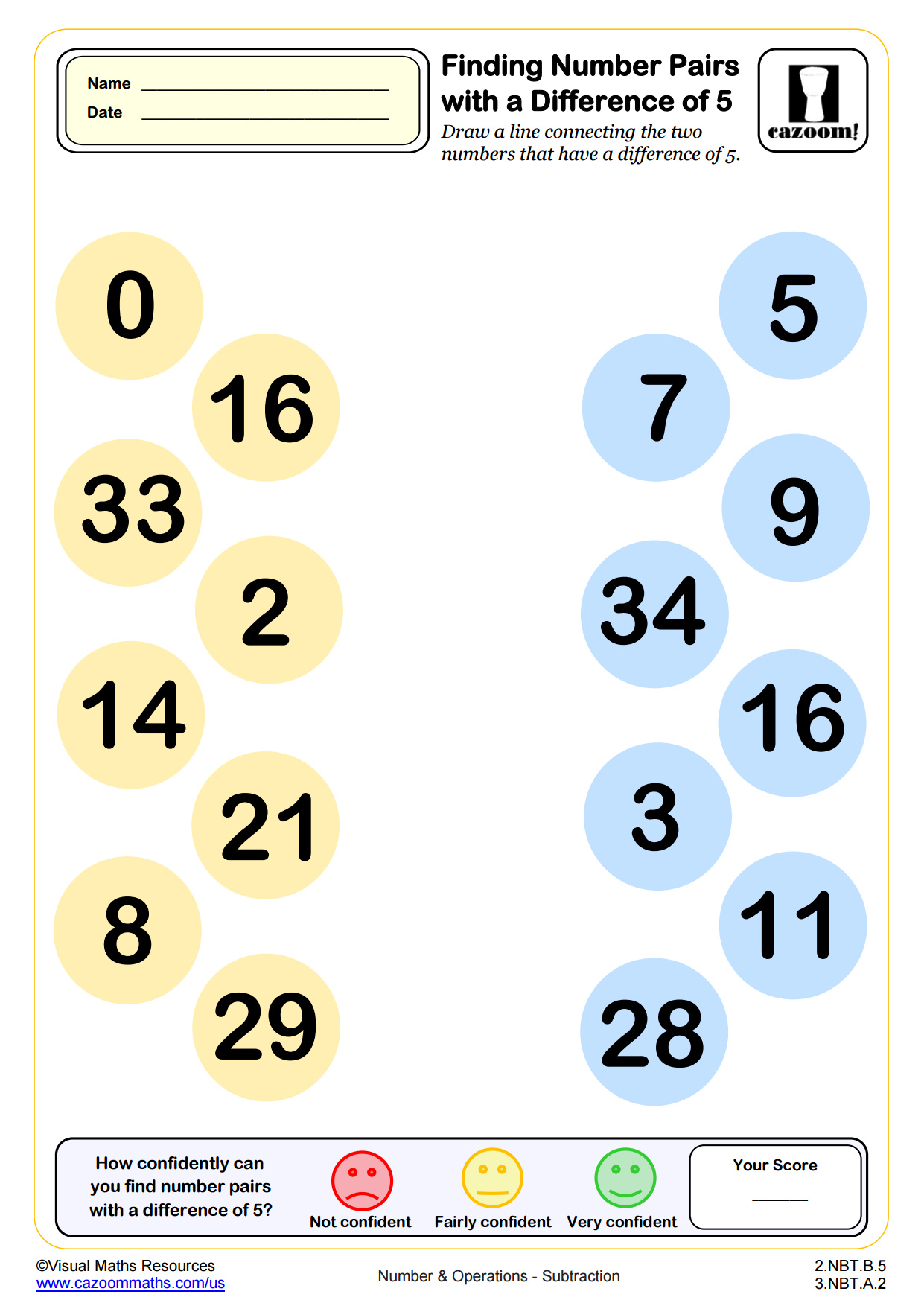
Find Number Pairs with a Difference of 5
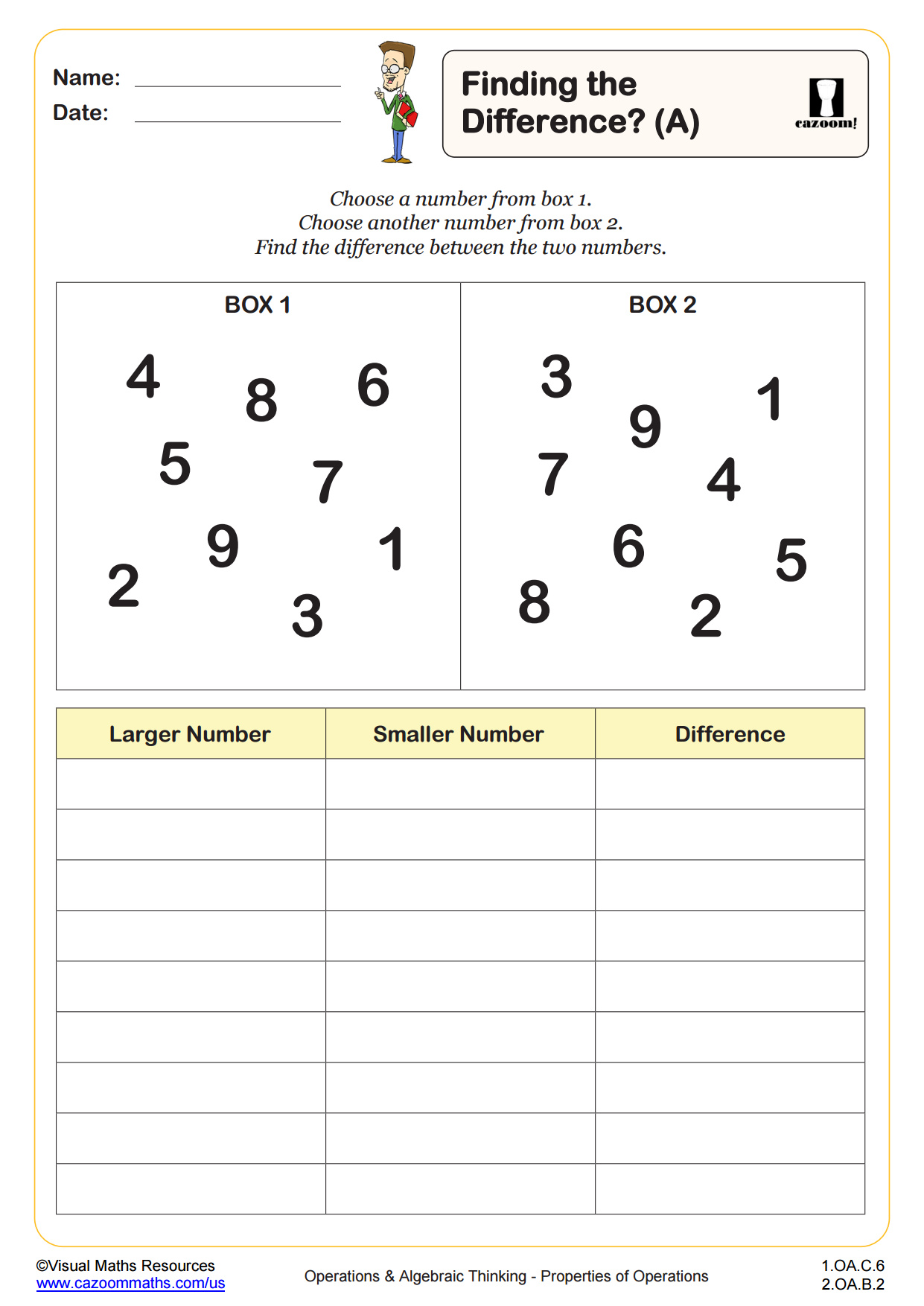
Finding the Difference (A)
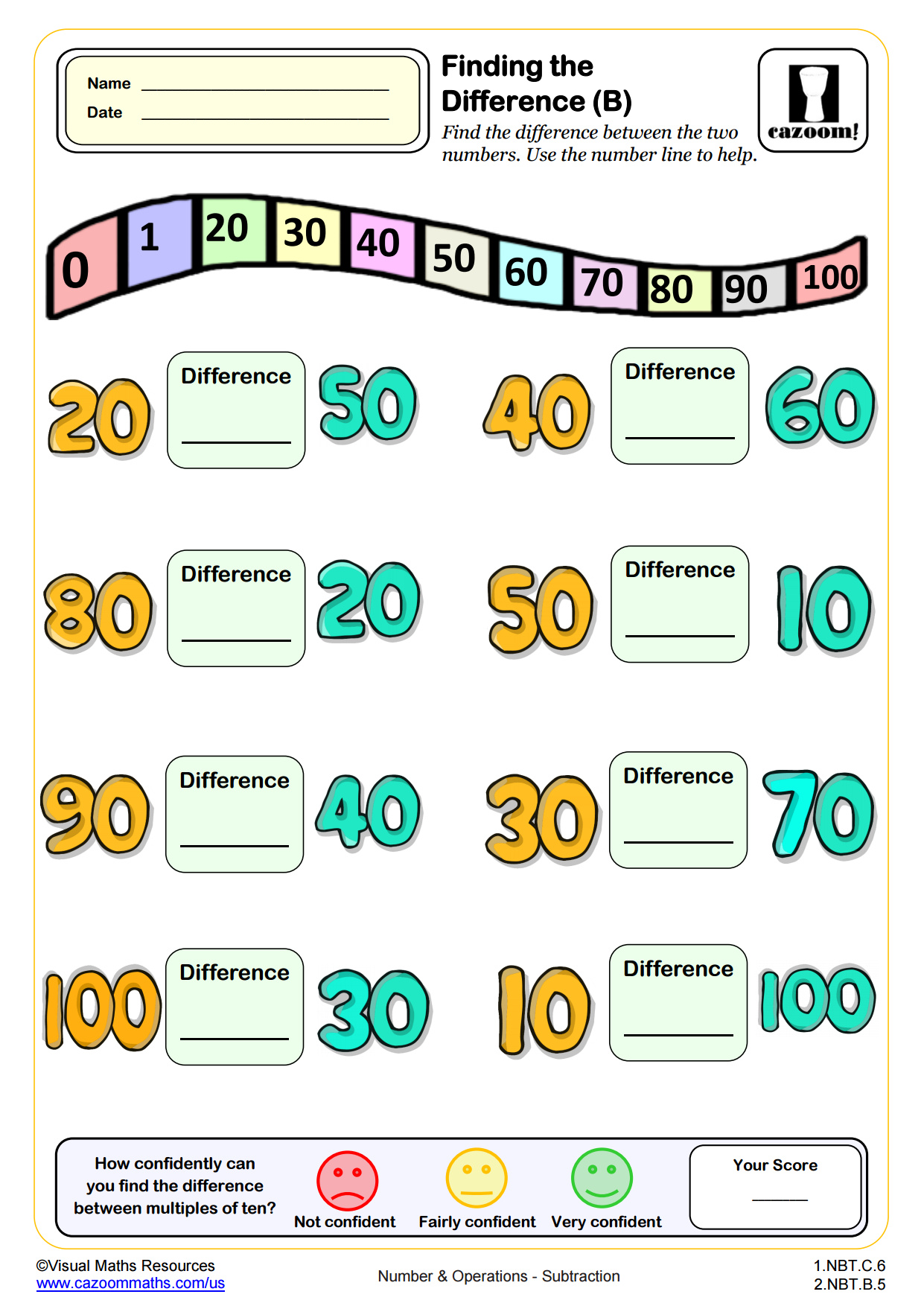
Finding the Difference (B)
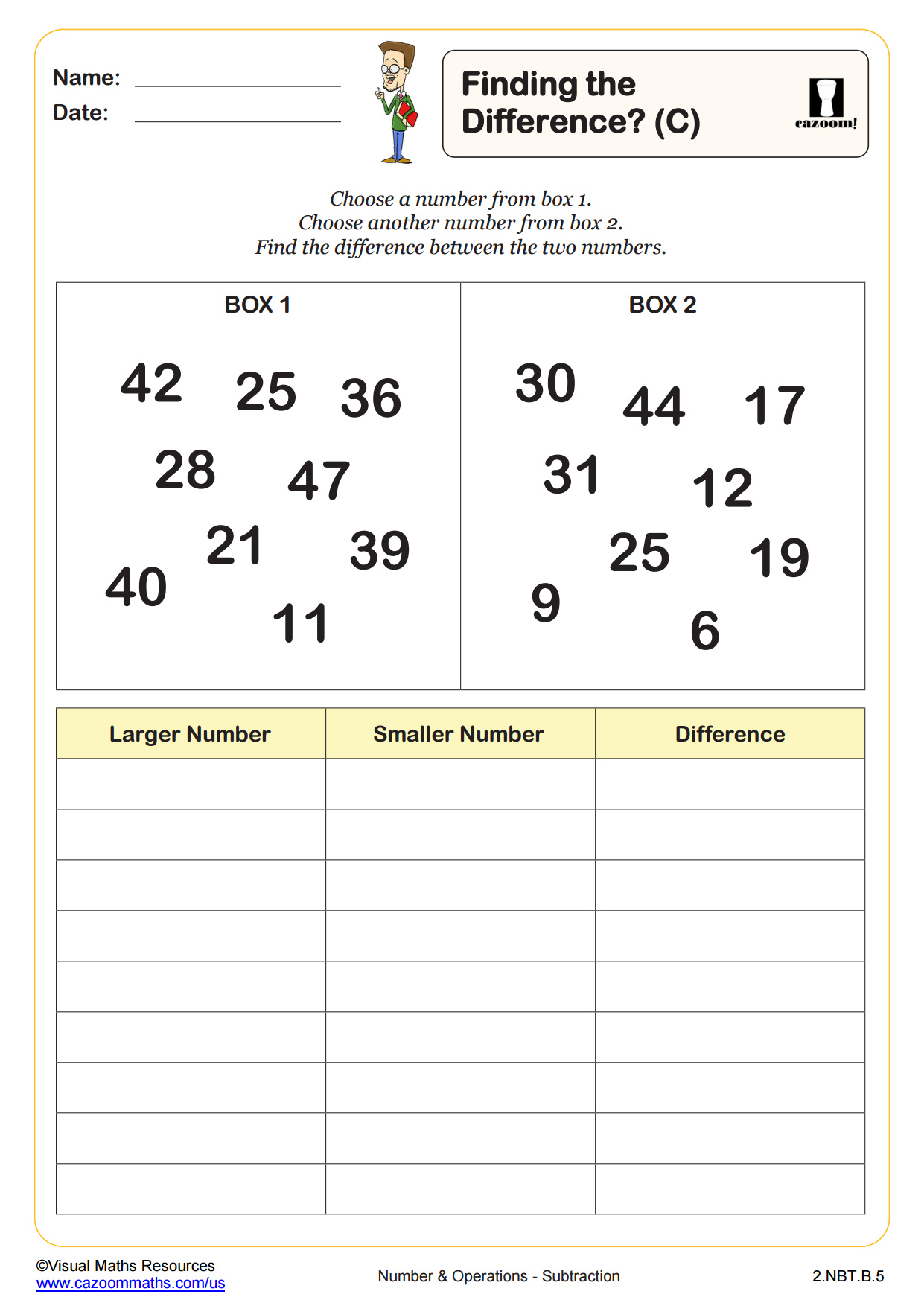
Finding the Difference (C)
Subtraction Wheels - Subtracting Hundreds from 3 Digit Numbers
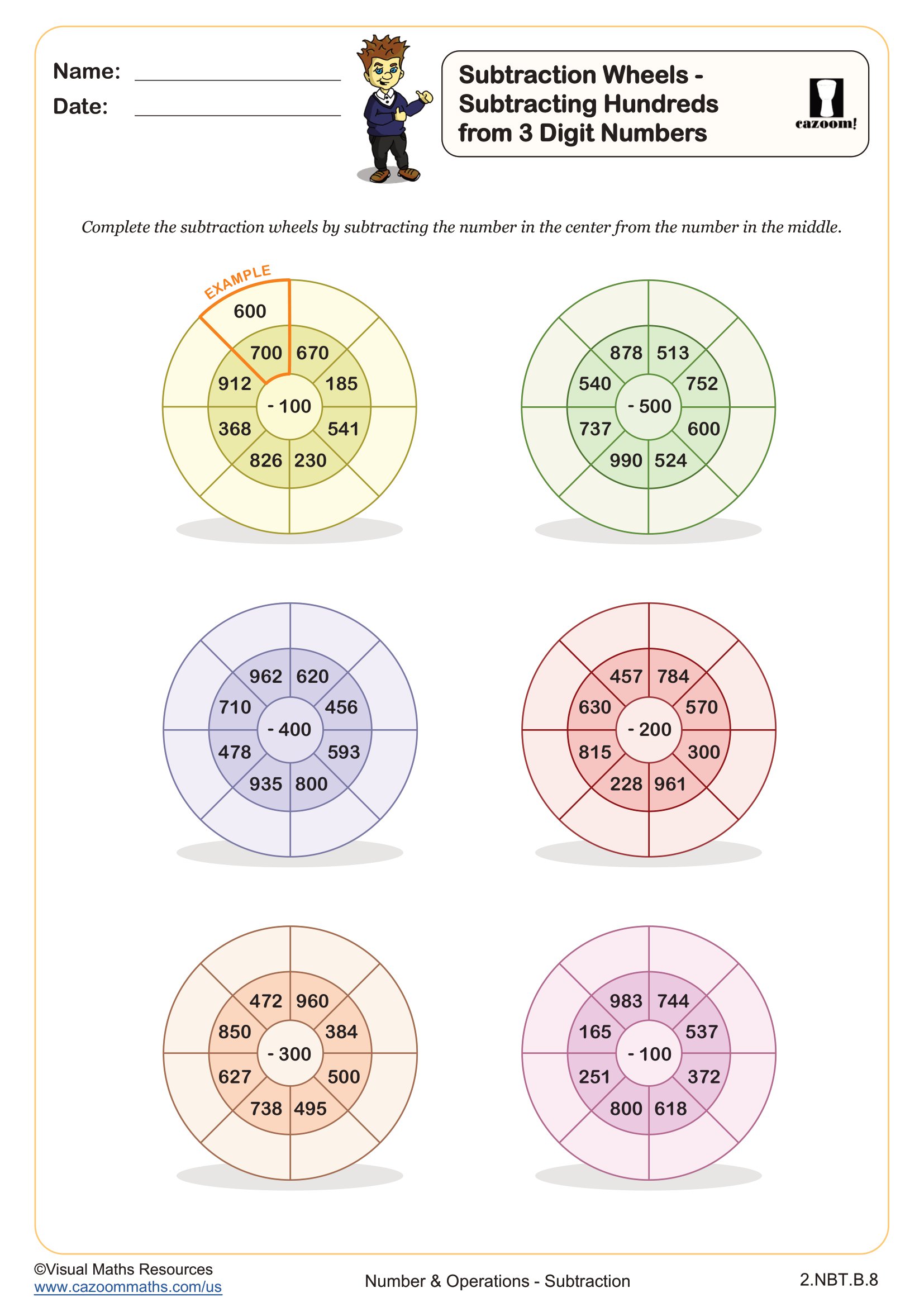
All worksheets are created by the team of experienced teachers at Cazoom Math.
What Does Finding the Difference Mean in Second Grade Math?
Finding the difference means determining how far apart two numbers are by subtracting the smaller number from the larger number. In second grade, this skill aligns with Common Core Standard 2.NBT.B.5, where students subtract within 100 using strategies based on place value. Students learn to interpret difference as the distance between numbers on a number line or the amount needed to make two quantities equal.
A common misconception occurs when students confuse "difference" with simply identifying which number is larger. They might circle the bigger number instead of performing the subtraction. Teachers frequently notice students lose points on word problems asking "How many more apples does Sarah have than Tom?" because they don't recognize this phrasing means finding the difference through subtraction. Explicit modeling with number lines helps students visualize the space between numbers as the difference.
Which Grade Levels Learn About Understanding the Difference?
Understanding the difference worksheets target second grade students in elementary school. At this level, students build on their first grade foundation of adding and subtracting within 20 to tackle more complex comparison problems. Second graders develop fluency with subtraction facts and apply these skills to multi-digit numbers, preparing them for the place value work that intensifies in third grade.
The progression within second grade moves from simple differences with smaller numbers to finding specific number pairs that have targeted differences like 10 or 15. Early worksheets focus on basic subtraction to find differences, while more advanced activities require students to work backward, identifying pairs of numbers that produce a given difference. This reverse thinking strengthens algebraic reasoning and prepares students for the missing addend problems they'll encounter as they advance through elementary math.
How Do Students Find Number Pairs with a Specific Difference?
Finding number pairs with a specific difference requires students to think flexibly about subtraction relationships. If the target difference is 10, students must identify pairs like 15 and 5, 22 and 12, or 38 and 28. This builds pattern recognition as students notice that keeping the same difference means both numbers increase or decrease by the same amount. Students develop systematic approaches, often starting with friendly numbers and then exploring multiple solutions.
This skill connects directly to measurement and data analysis in STEM fields. Scientists frequently compare data points to understand variation, whether measuring temperature differences between cities, height differences in plant growth experiments, or time differences in reaction rates. When students learn to find number pairs with specific differences, they're developing the comparative thinking needed to analyze experimental results and understand the significance of numerical gaps in real-world contexts.
How Can Teachers Use These Understanding the Difference Worksheets?
These worksheets provide scaffolded practice that moves from straightforward subtraction to more complex thinking about number relationships. The progressive structure, from Finding the Difference A through C, allows teachers to match worksheet difficulty to individual student readiness. The specific difference worksheets (difference of 10, difference of 15) offer targeted practice that reinforces fact fluency while building strategic thinking about how numbers relate to each other.
Teachers use these resources effectively for differentiated math centers, where students work at their appropriate challenge level while the teacher provides small-group intervention. The worksheets work well for morning work routines, homework assignments that reinforce classroom learning, or quick formative assessments to identify which students need additional support with comparison problems. Paired work proves particularly effective, as students explain their reasoning to partners and catch calculation errors before checking against the answer keys.