3rd Grade Adding 2 Digit Numbers to 1000 Worksheets
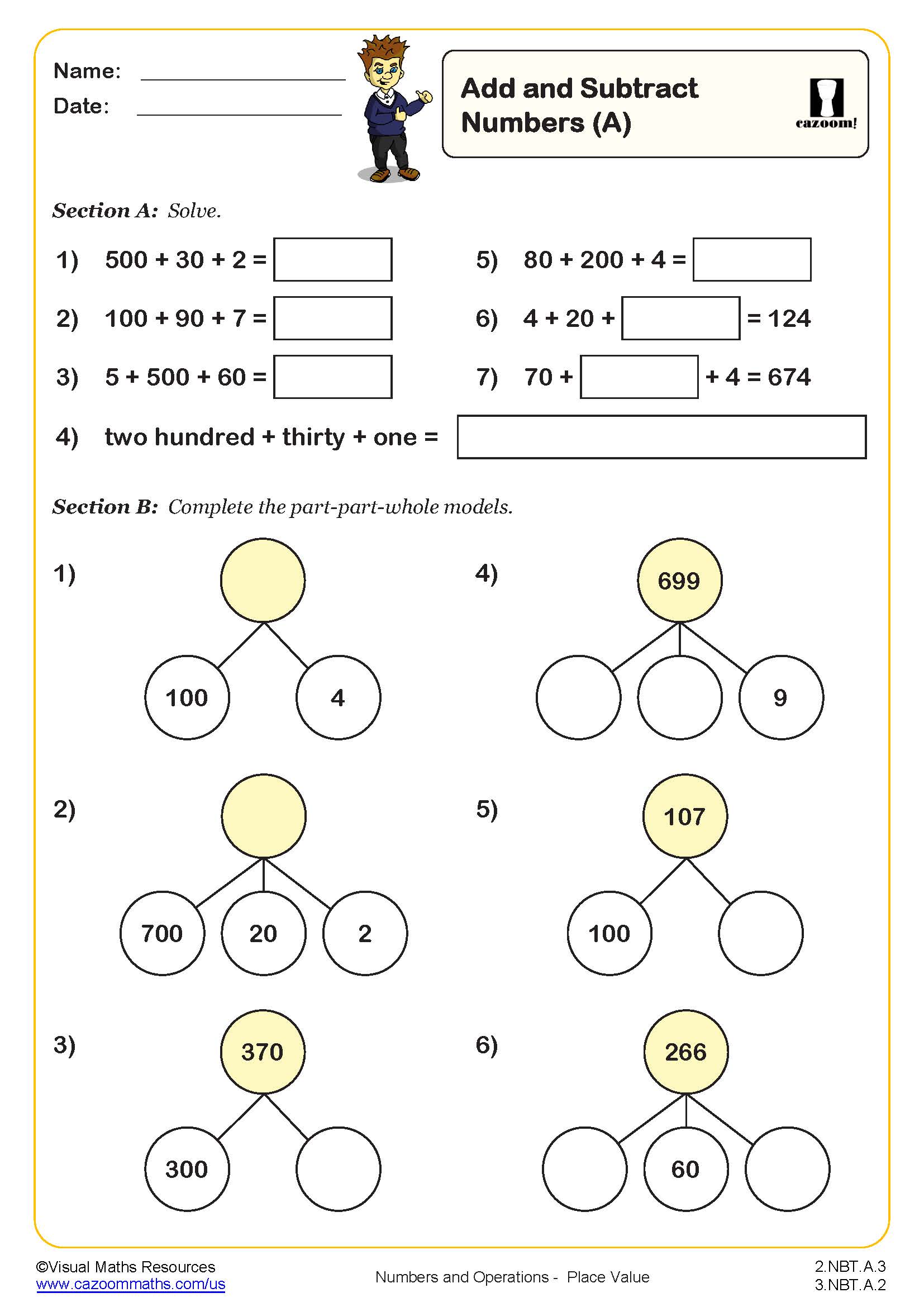
Add and subtract numbers (A)
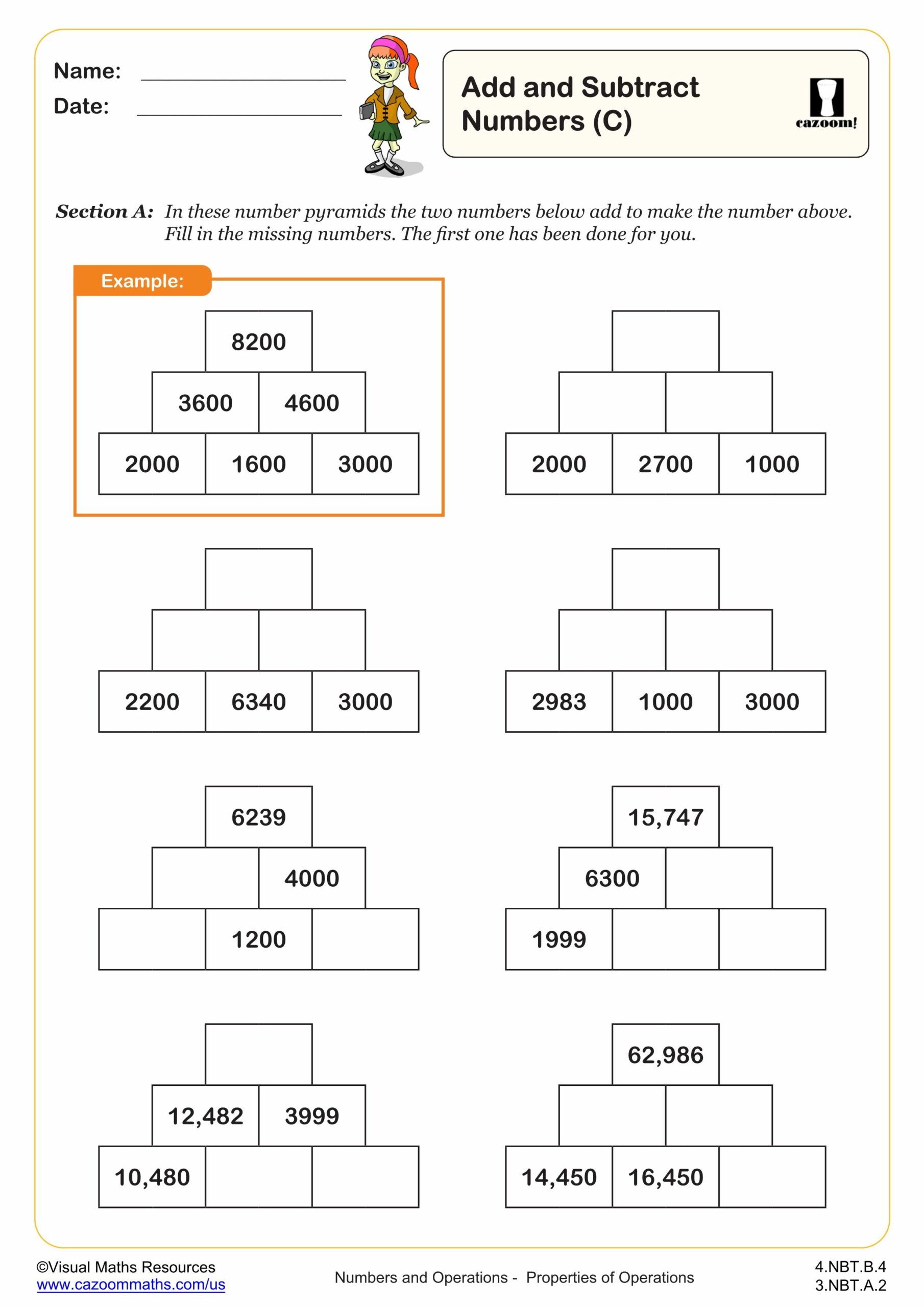
Add and subtract numbers (C)
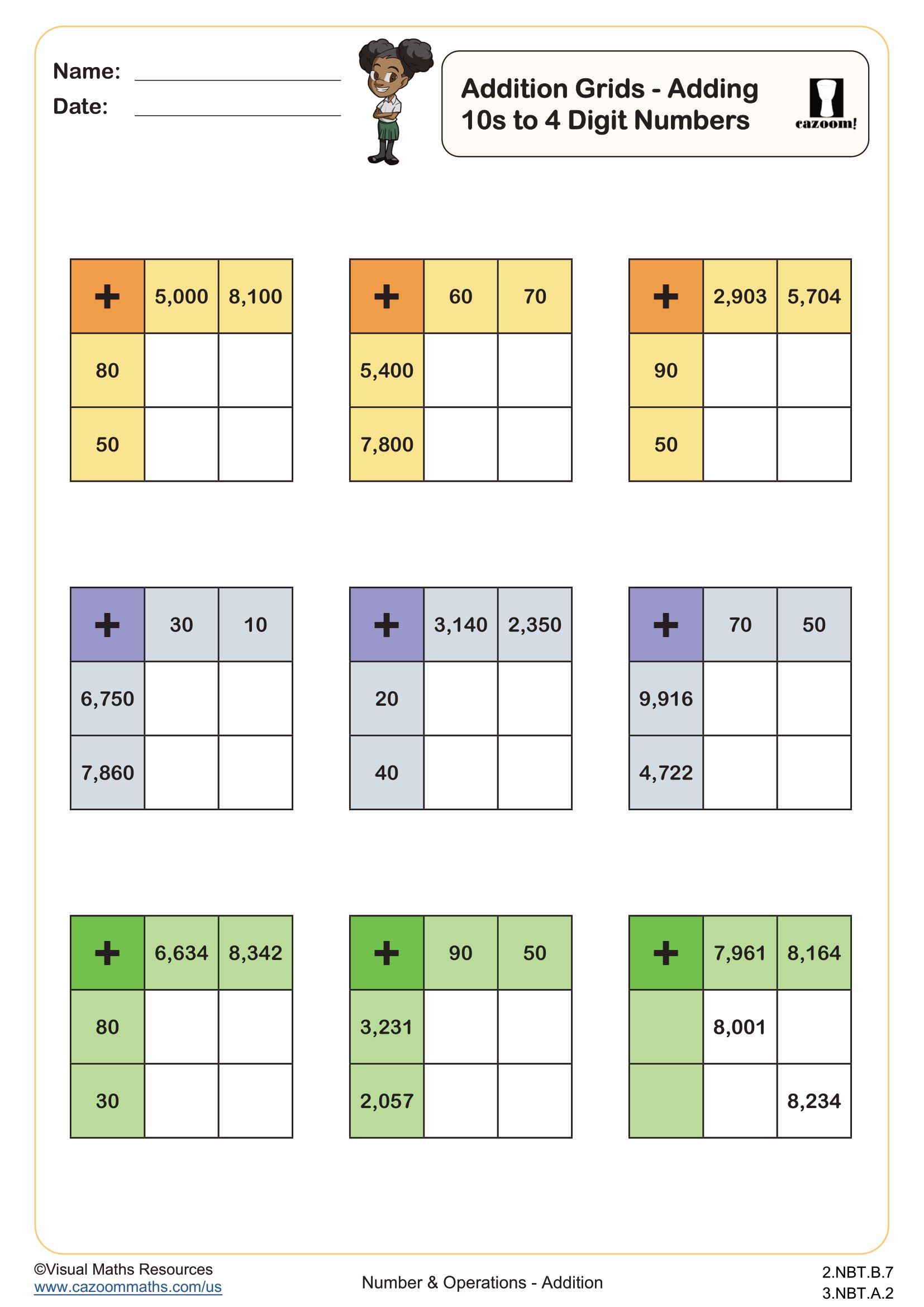
Addition Grids Adding 10s to 4 Digit Numbers
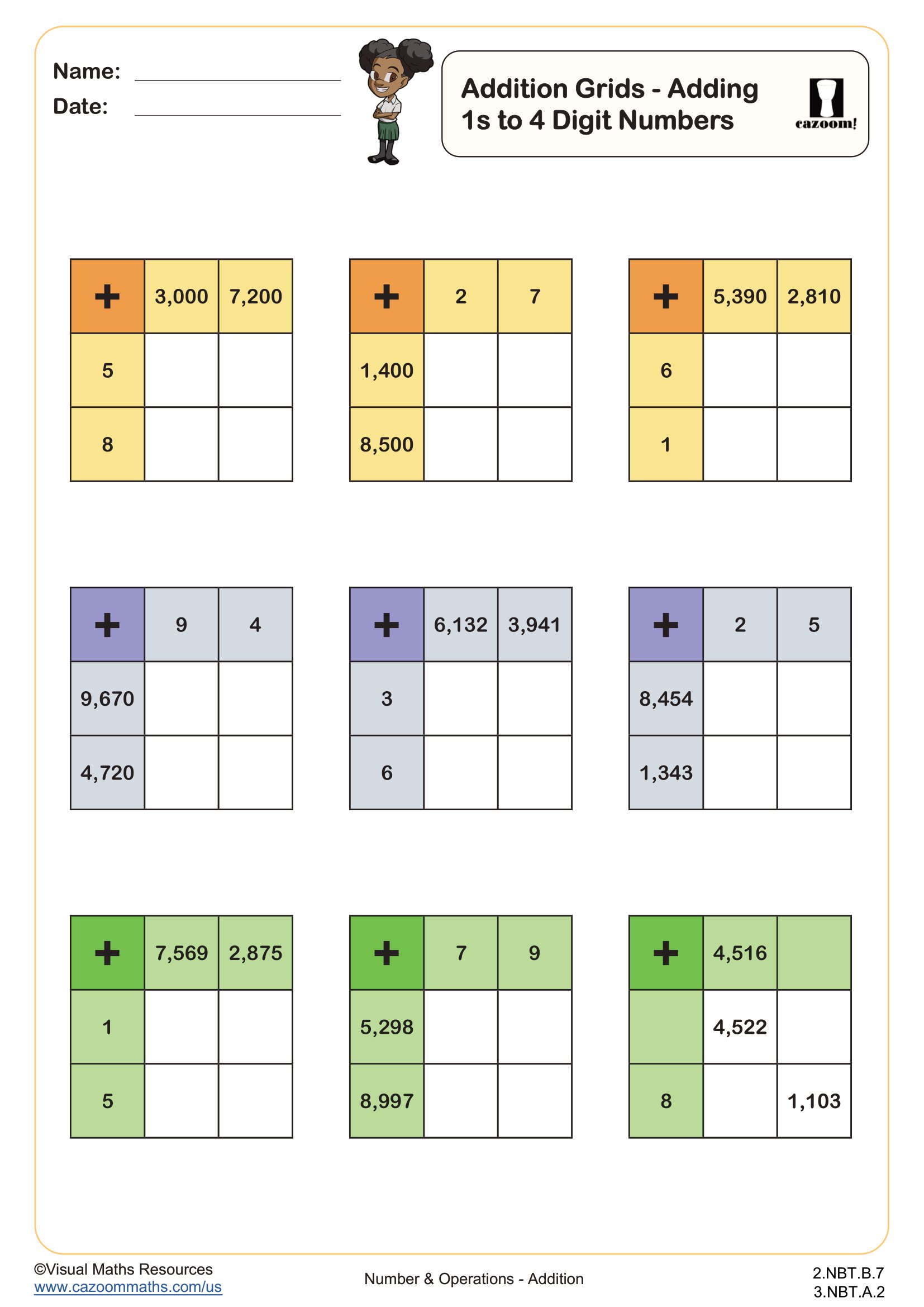
Addition Grids Adding 1s to 4 Digit Numbers
Addition Tables (adding hundreds to a 3 digit number)
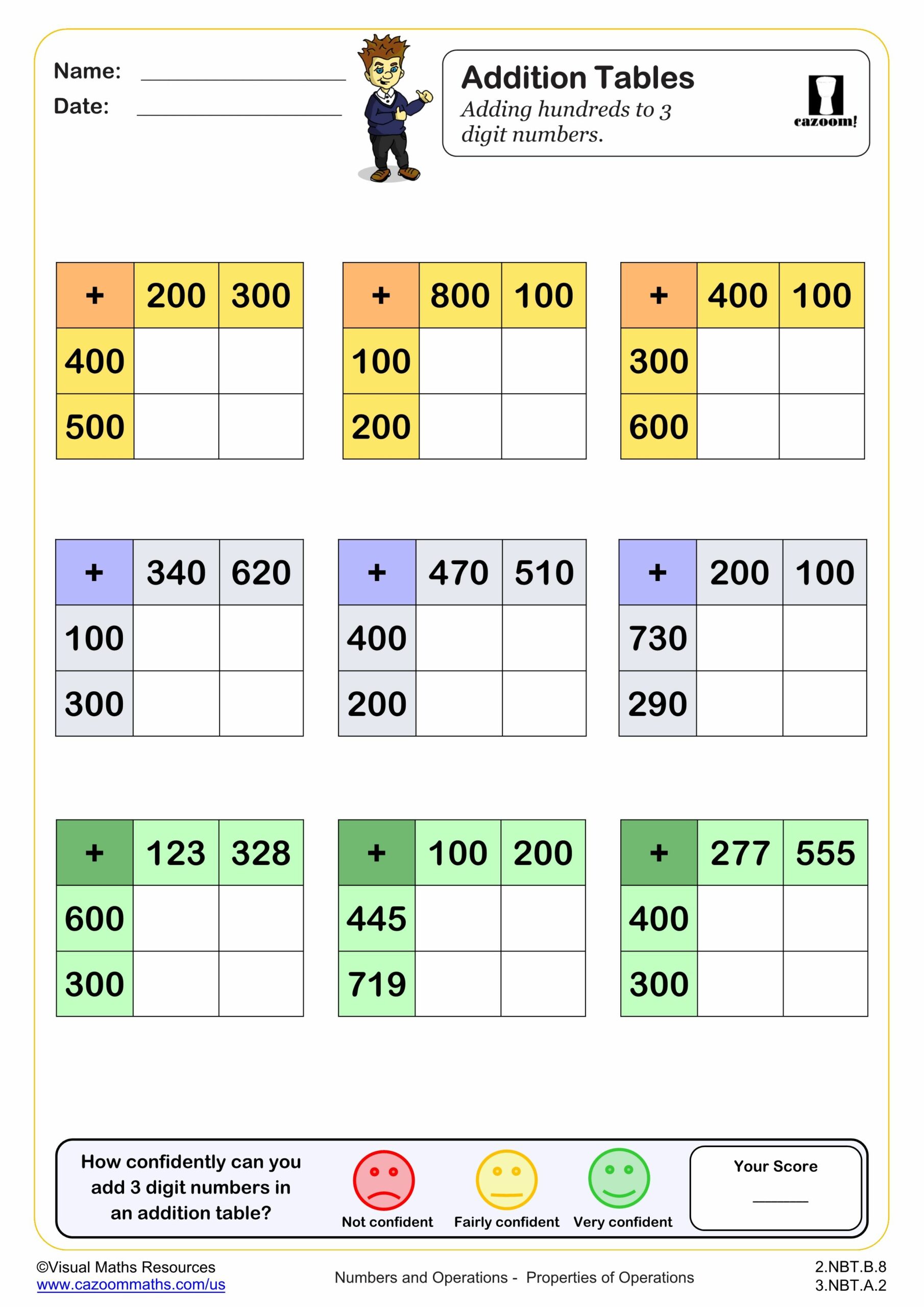
Addition Tables (adding ones to a 3 digit number)
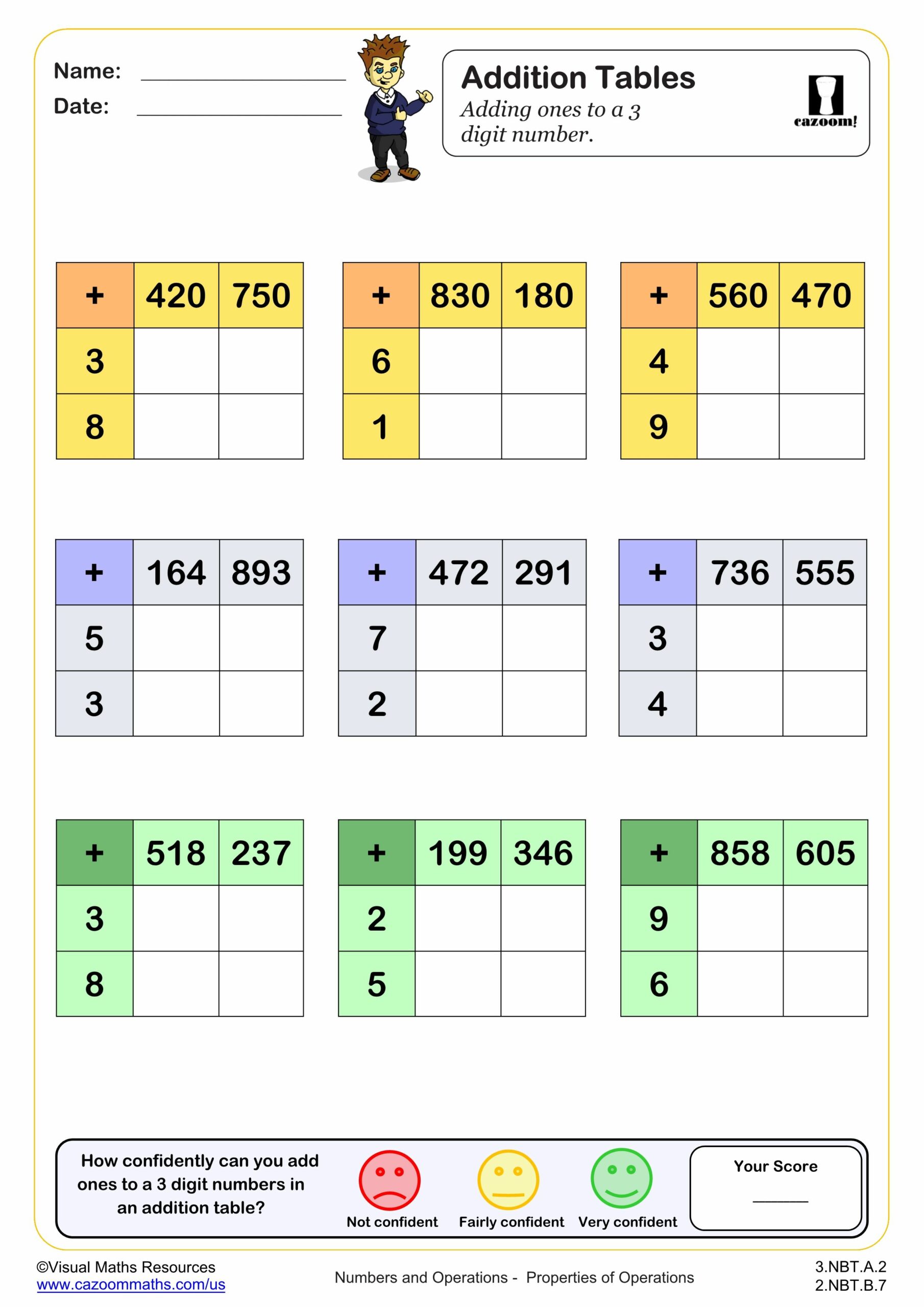
Addition Tables (adding ones, tens and hundreds to 3 digit numbers)
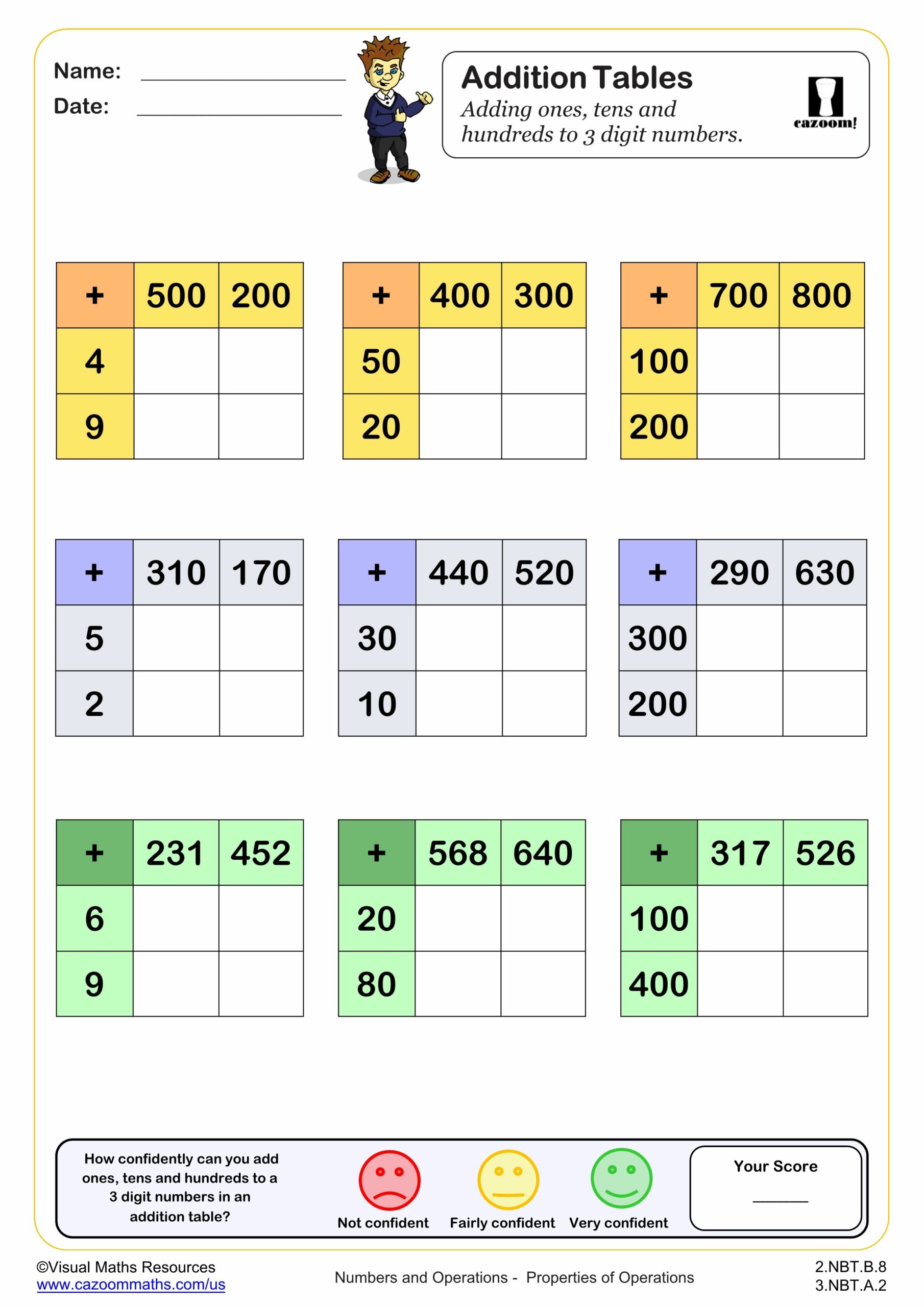
Addition Tables (adding tens to 3 digit numbers)
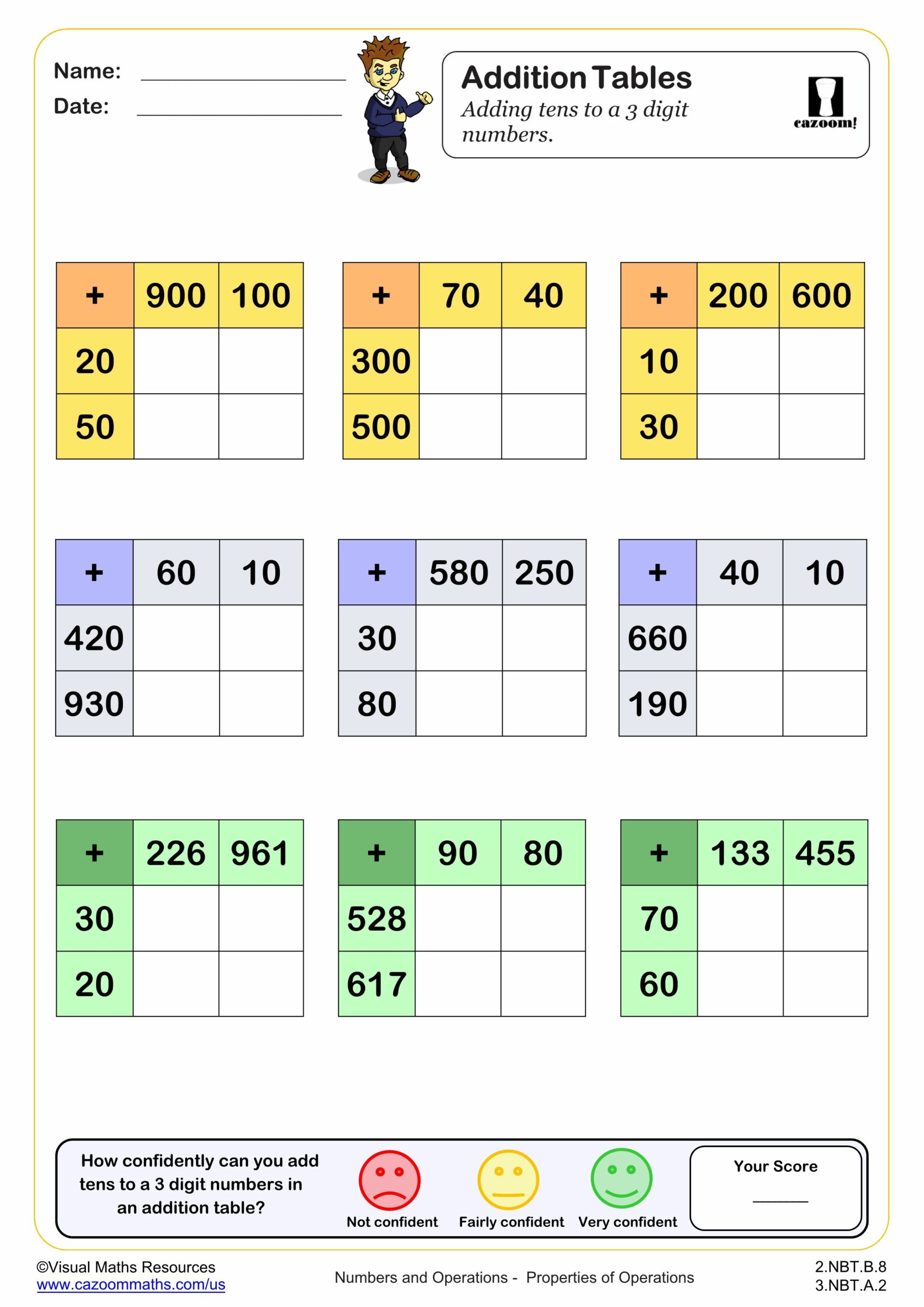
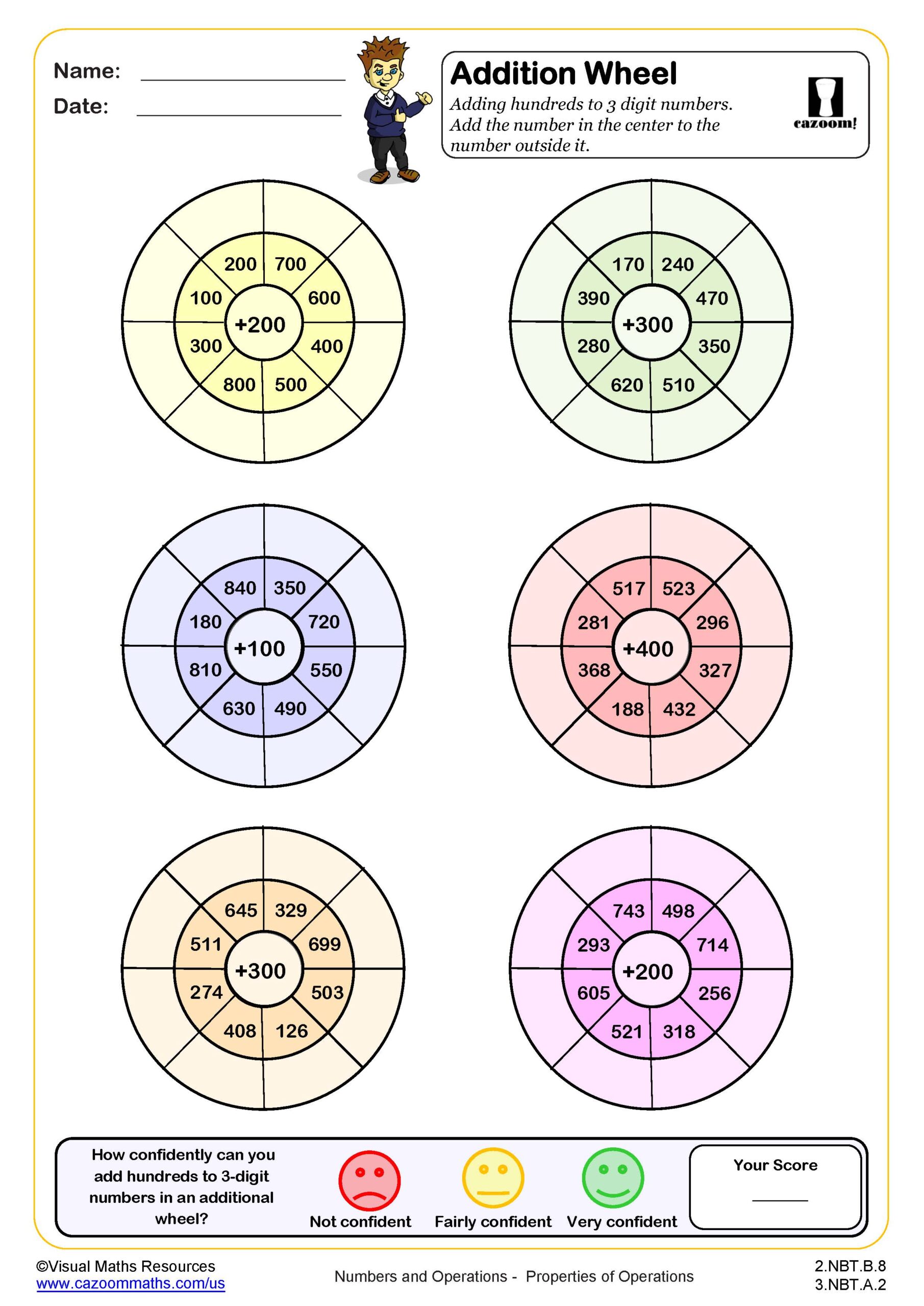
Addition Wheels (adding hundreds to 3 digit numbers)
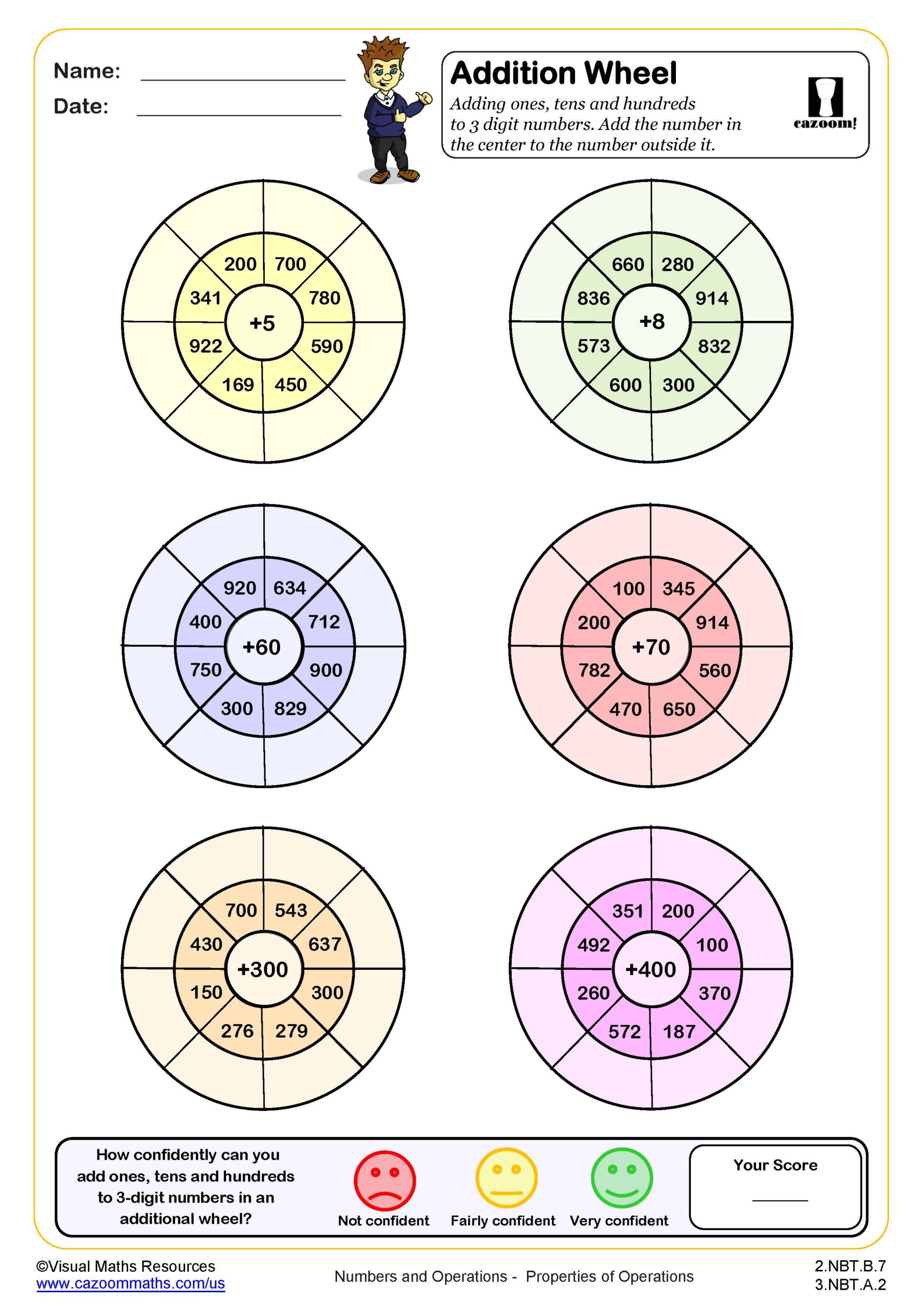
Addition Wheels (adding ones, tens and hundreds to 3 digit numbers)
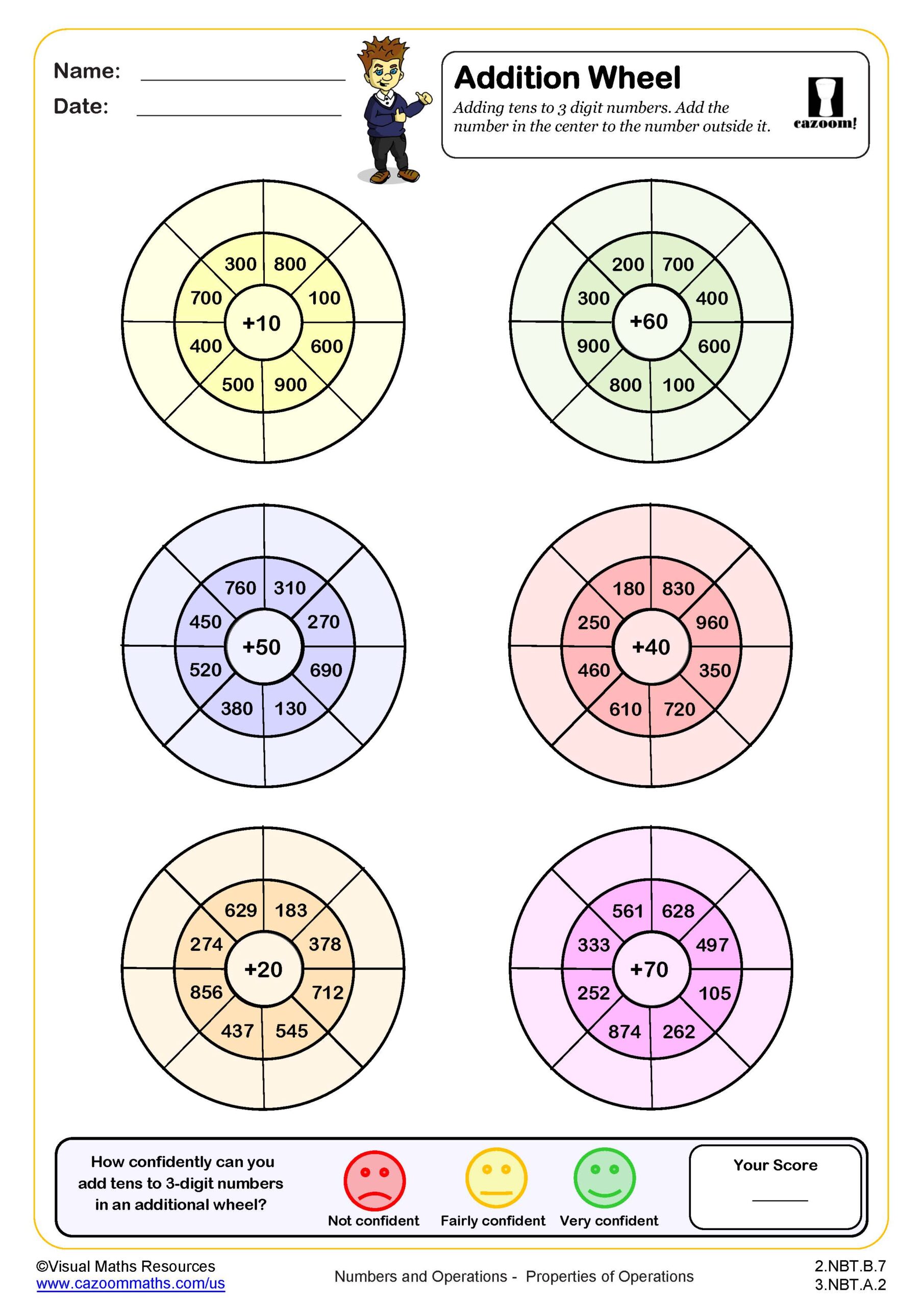
Addition Wheels (adding tens to 3 digit numbers)
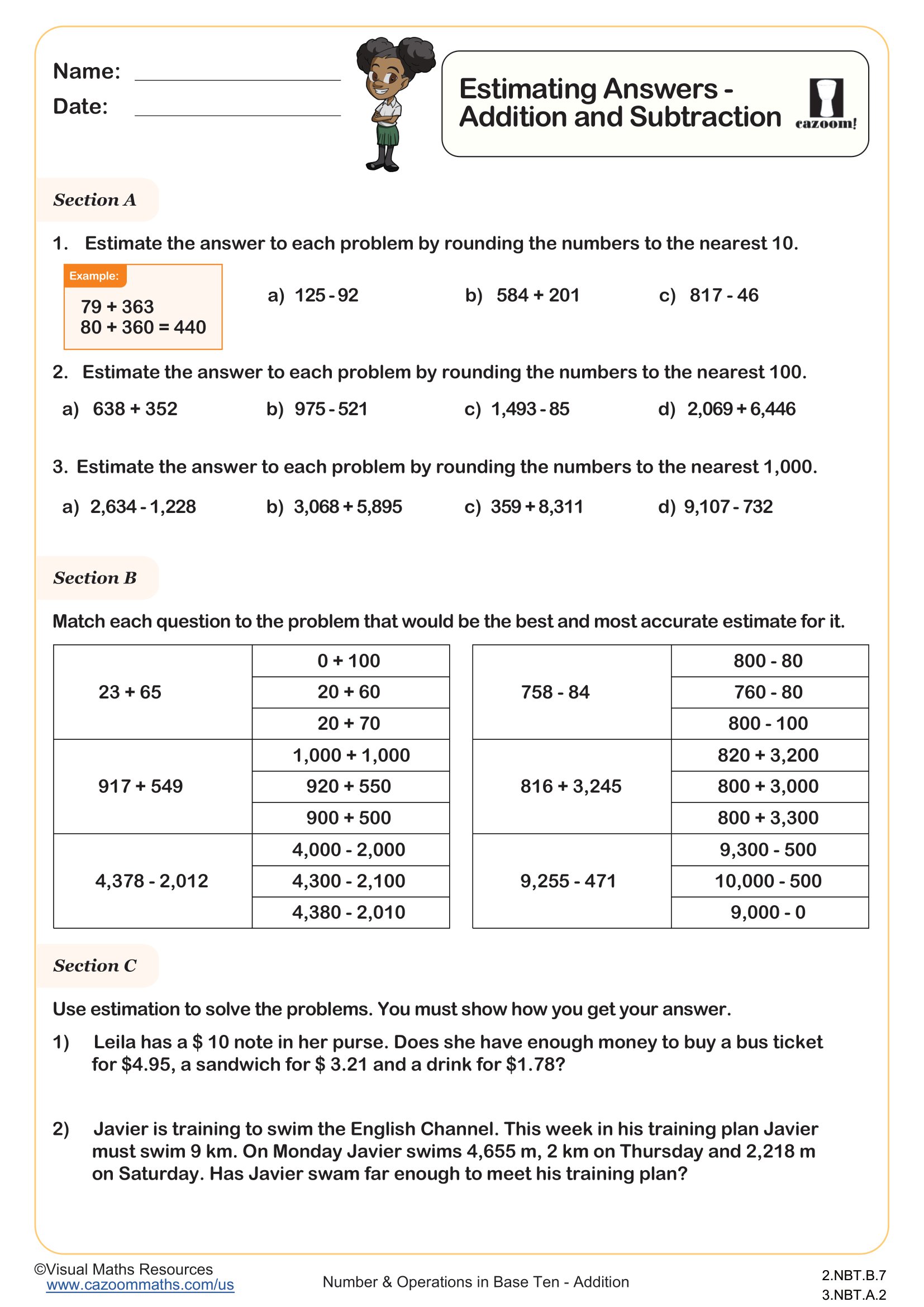
Estimating Answers Addition and Subtraction
Using Related Operations to Check Answers Addition and Subtraction
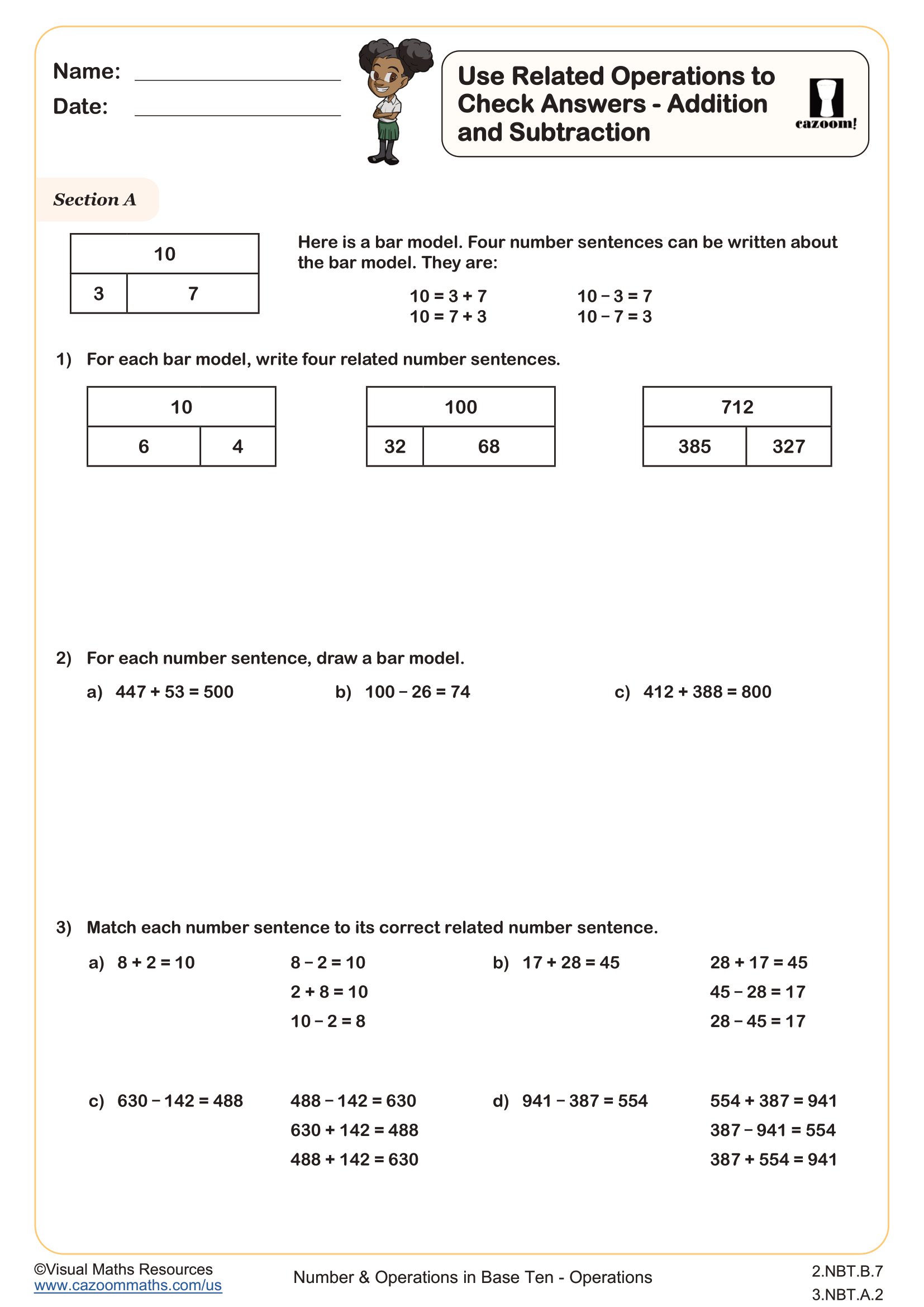
All worksheets are created by the team of experienced teachers at Cazoom Math.
What skills do students practice when adding 2-digit numbers to 1000?
Students practice mental math strategies, place value understanding, and regrouping (carrying) across place values when adding two-digit numbers to reach totals up to 1000. Third graders work with problems that require adding to three and four-digit numbers, which reinforces their understanding that the same addition principles apply regardless of number size. According to Common Core State Standards (3.NBT.A.2), students at this level should fluently add within 1000 using strategies based on place value and properties of operations.
A common misconception occurs when students add the larger digit regardless of place value, writing 325 + 47 = 3615 because they add 3 and 4 to get 7, then 2 and 7 to get 9, without considering which place values align. Students make the breakthrough when they recognize that only digits in the same column can be combined, and that regrouping creates a new ten, hundred, or thousand in the next column over.
What grade levels use worksheets for adding 2-digit numbers to 1000?
These addition worksheets align with third grade elementary school standards, when students transition from basic two-digit addition to working with larger numbers systematically. Third grade marks the year when students are expected to fluently add and subtract within 1000, using their understanding of place value and the relationship between addition and subtraction. State assessments frequently test this skill through both computational problems and word problems requiring multi-digit addition.
The difficulty progresses within the grade level as students move from adding isolated place values (adding only tens or only ones) to combining multiple place values in single problems. Addition grids that target specific place values build confidence before students tackle mixed problems where they add ones, tens, and hundreds simultaneously. This scaffolded approach helps students develop the automaticity needed for more complex operations in fourth grade and beyond.
How do addition grids help students add to 4-digit numbers?
Addition grids present numbers in a structured table format where students add along rows or columns, finding sums that combine a base number with various addends. When working with four-digit numbers, these grids isolate specific place values—students might add only tens to numbers like 3,456 or only ones to numbers like 2,789, which strengthens their understanding that each place value operates independently. This targeted practice prevents the common error of adding digits from different place values together.
This skill connects directly to financial literacy, a key real-world STEM application. When students understand how to add two-digit amounts to larger numbers while maintaining place value, they're practicing the same mental math adults use when calculating totals at stores, adding tips to restaurant bills, or tracking savings goals. Budgeting apps and spreadsheets rely on this precise place value addition, making it a foundational skill for data management across science, engineering, and business contexts.
How can teachers use these addition worksheets effectively in the classroom?
The worksheets scaffold learning by separating addition by place value before combining skills, allowing teachers to diagnose exactly where students need support. Addition tables that focus exclusively on adding hundreds, then ones, then tens help students build confidence with each place value independently before tackling mixed addition problems. Teachers can assign specific worksheet types based on formative assessment results, targeting the precise place value where individual students show confusion.
These worksheets work well for differentiated instruction during math workshop, as intervention practice for students who need additional repetition, or as homework that reinforces classroom lessons. Many teachers use them for warm-up activities at the start of class or as exit tickets to quickly assess understanding. The answer keys make them practical for self-checking in paired work, where students solve problems independently then verify their answers with a partner, building both computational skills and mathematical discussion habits.