3rd Grade Addition Worksheets
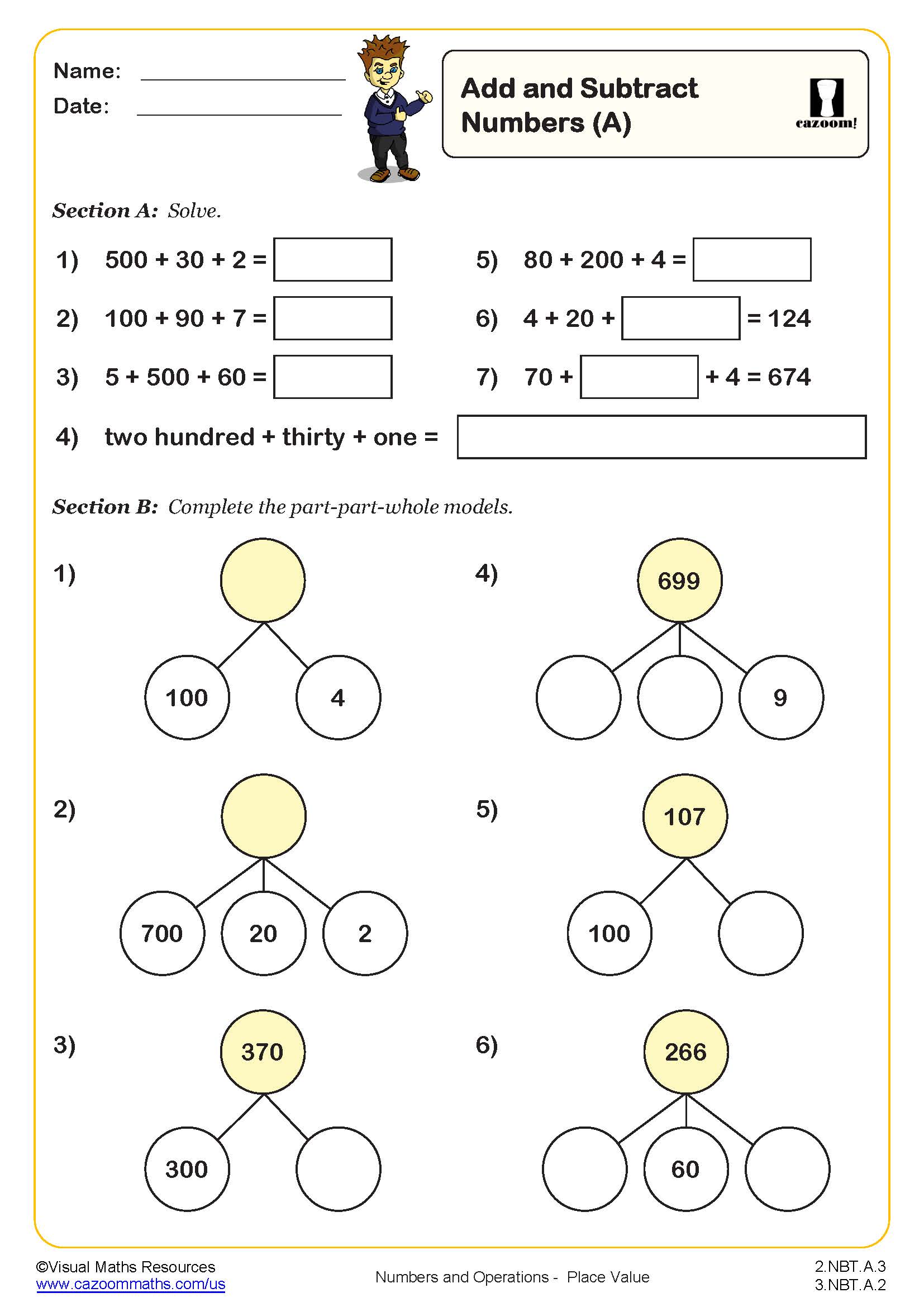
Add and subtract numbers (A)
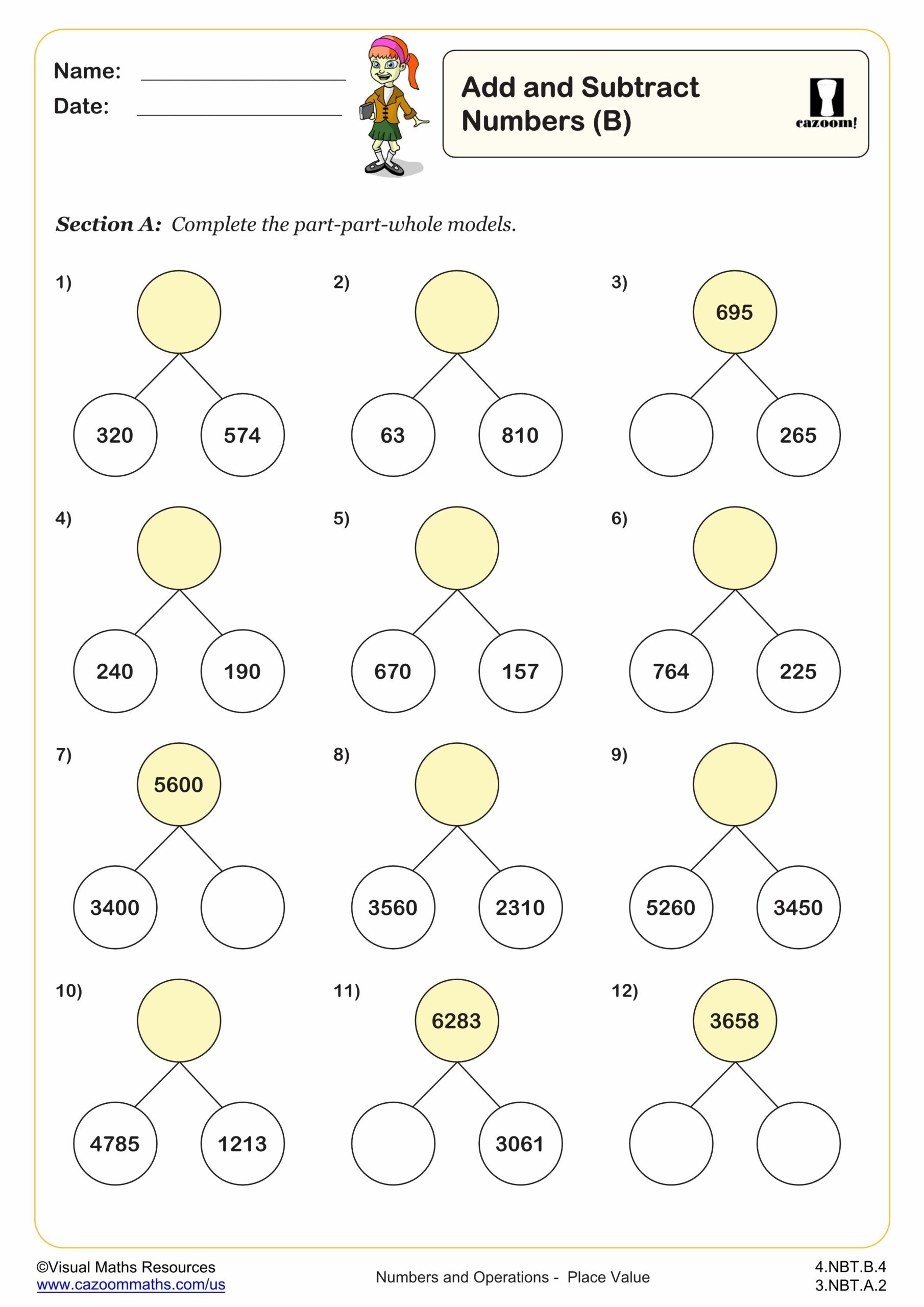
Add and subtract numbers (B)
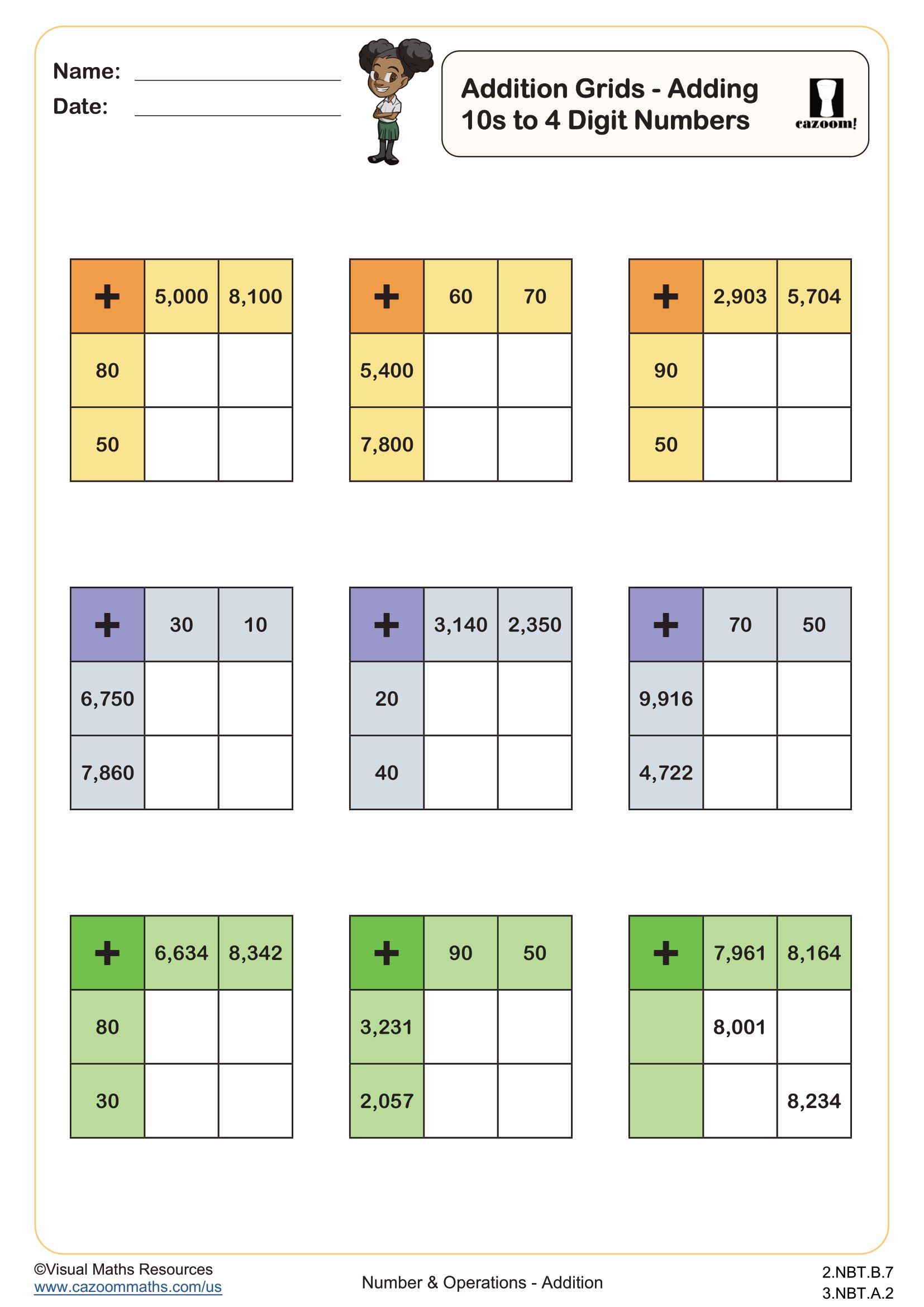
Addition Grids Adding 10s to 4 Digit Numbers
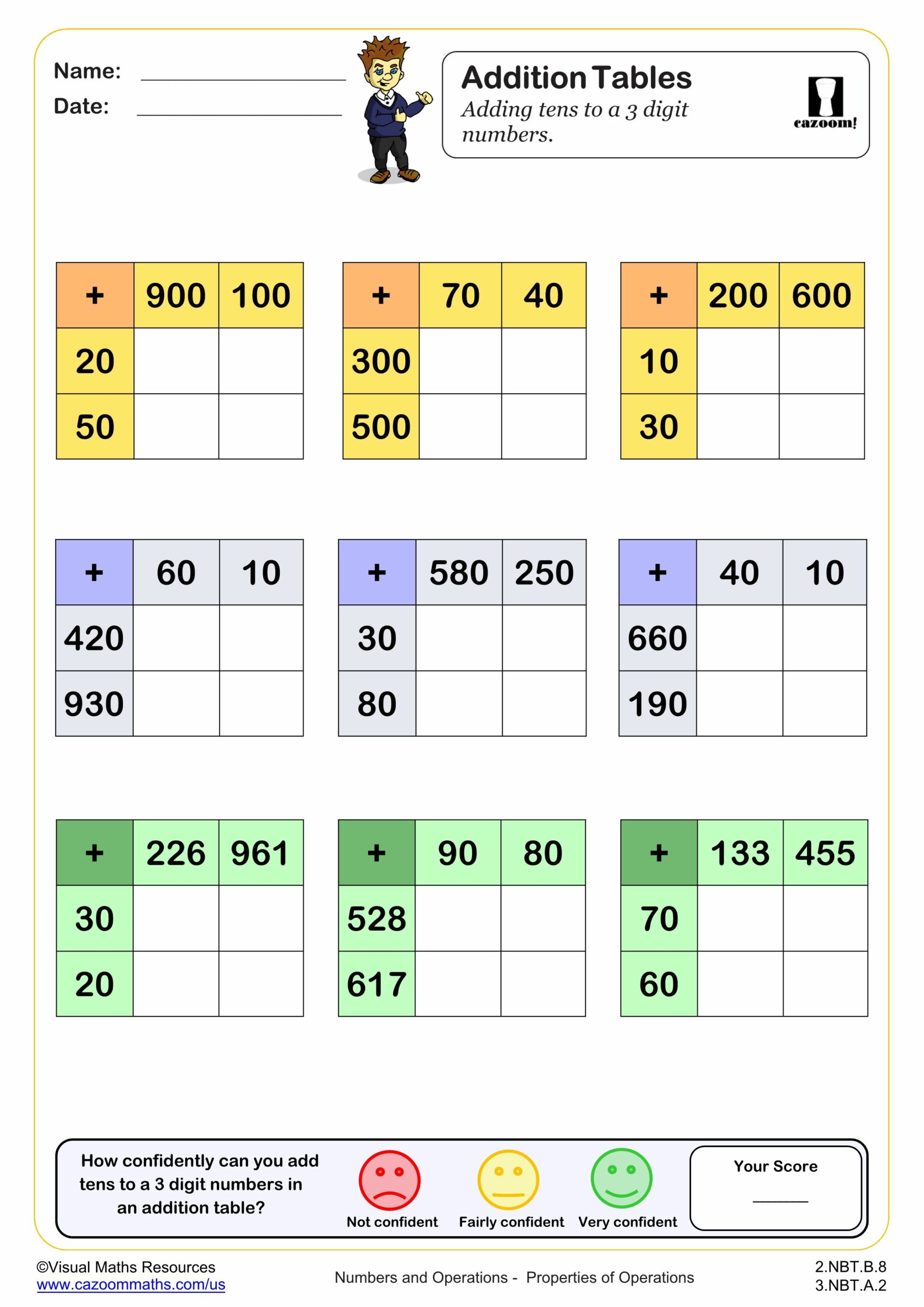
Addition Tables (adding tens to 3 digit numbers)
Addition Tables (Multipes of 10)
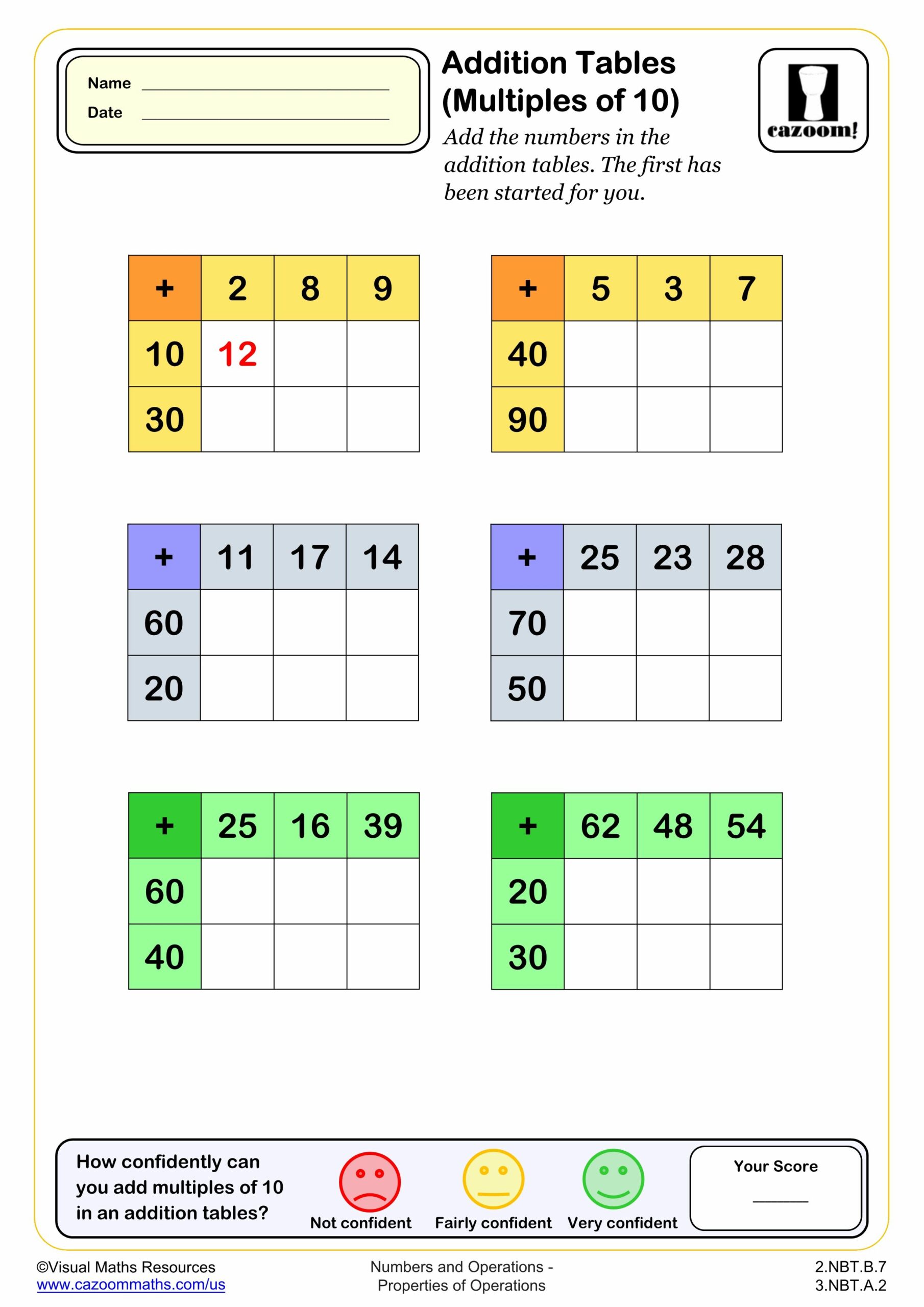
Addition Wheel (adding 9 - 11 to 2 digits)
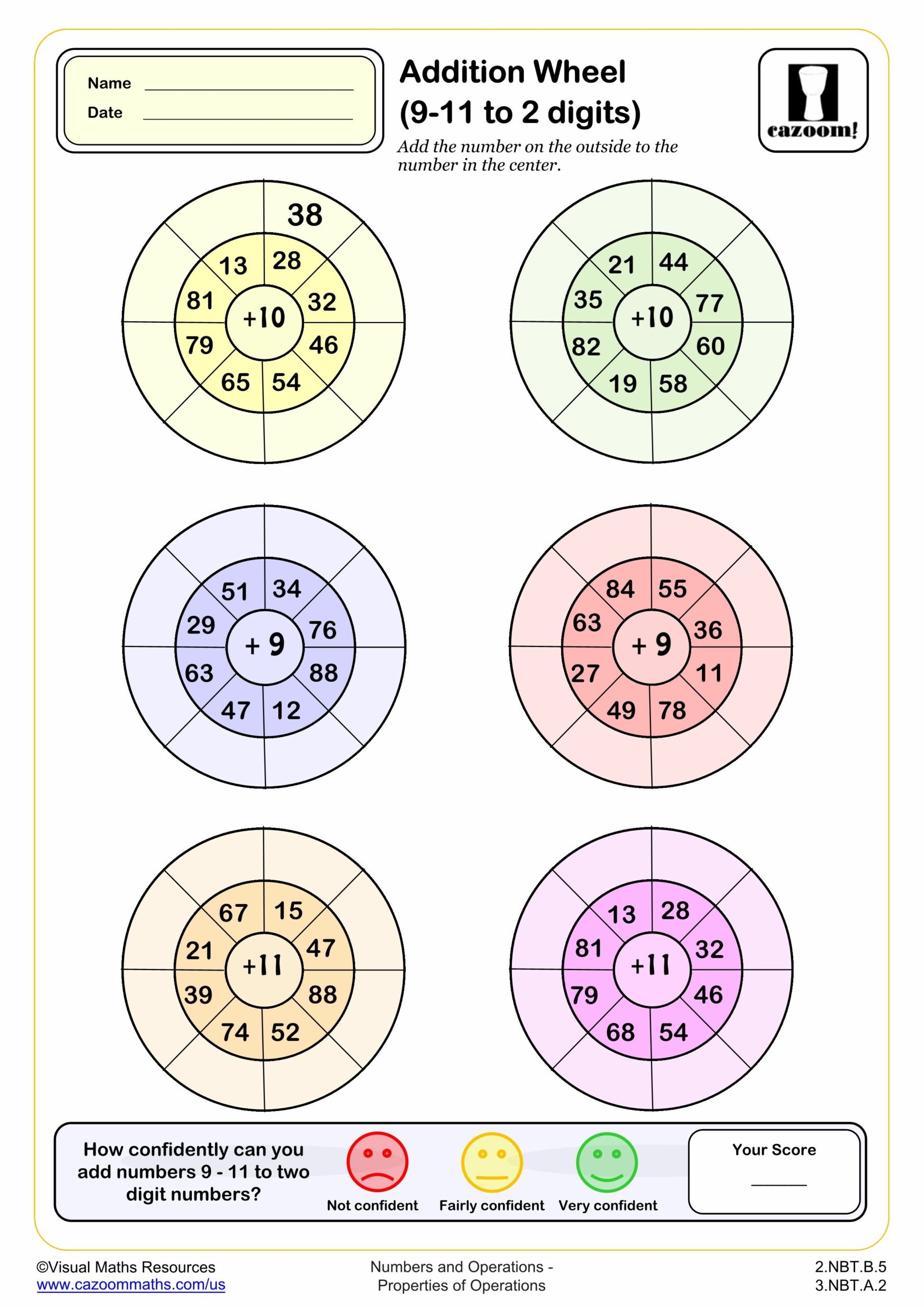
Addition Wheels (adding hundreds to 3 digit numbers)
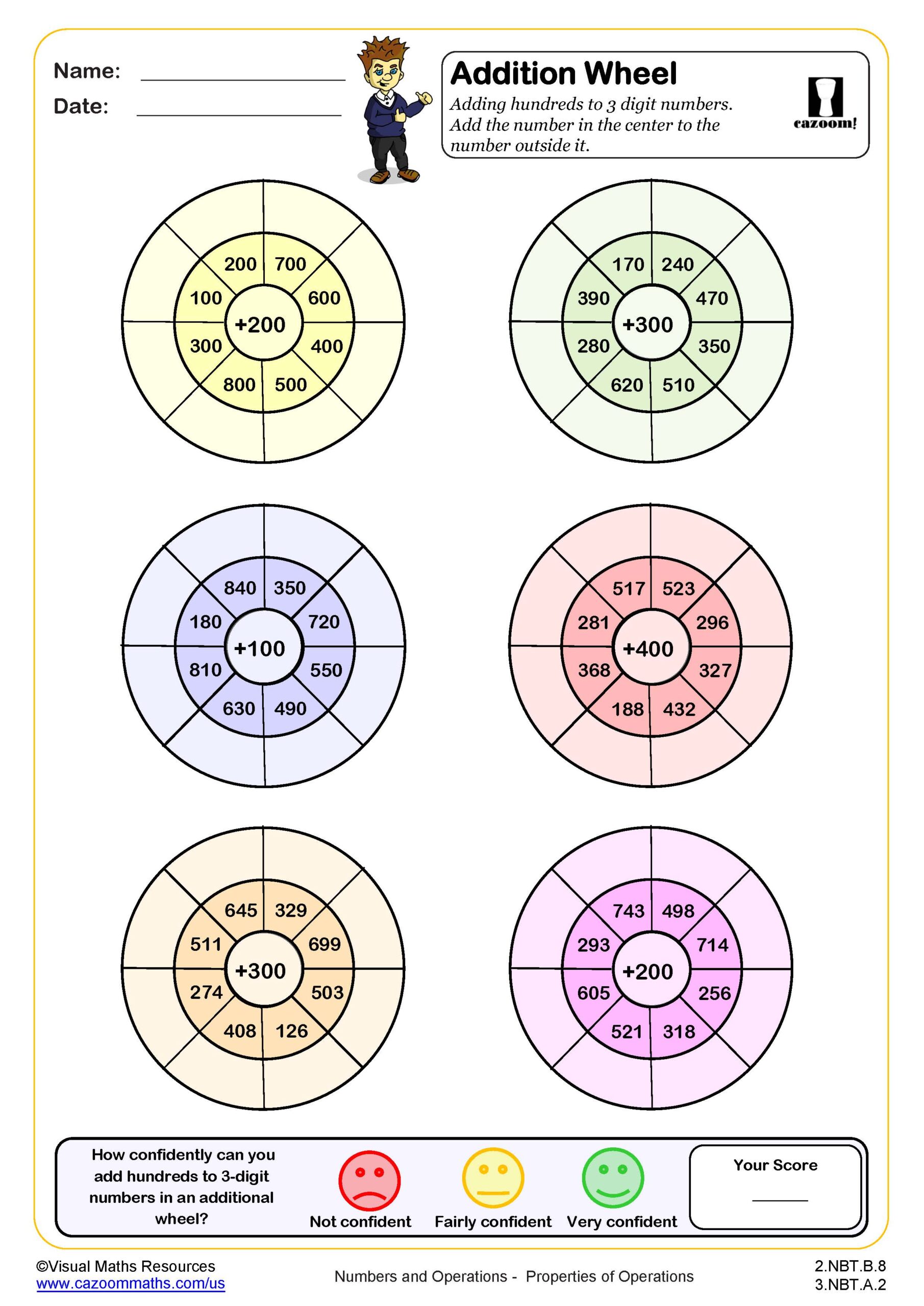
Addition Wheels (adding ones, tens and hundreds to 3 digit numbers)
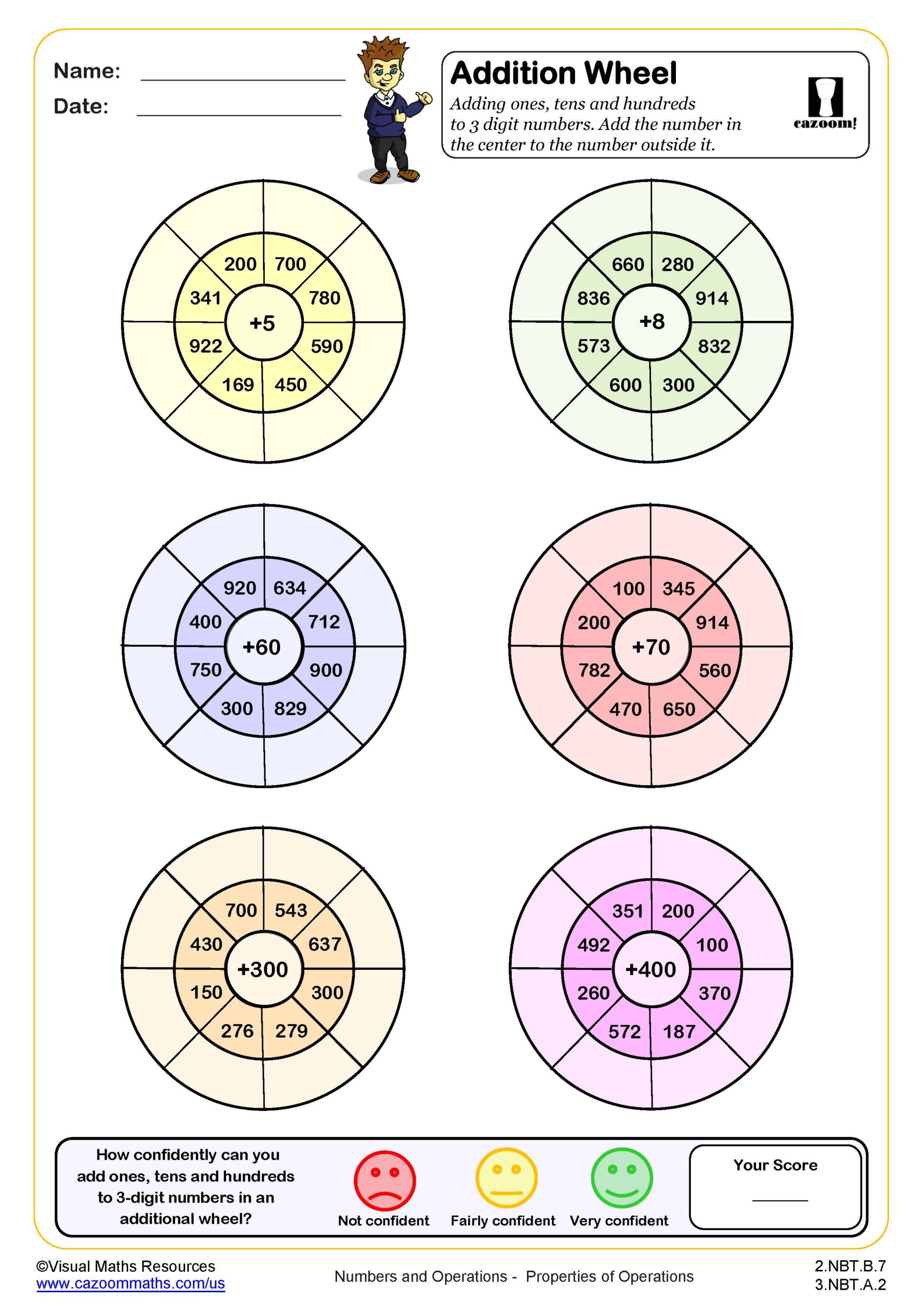
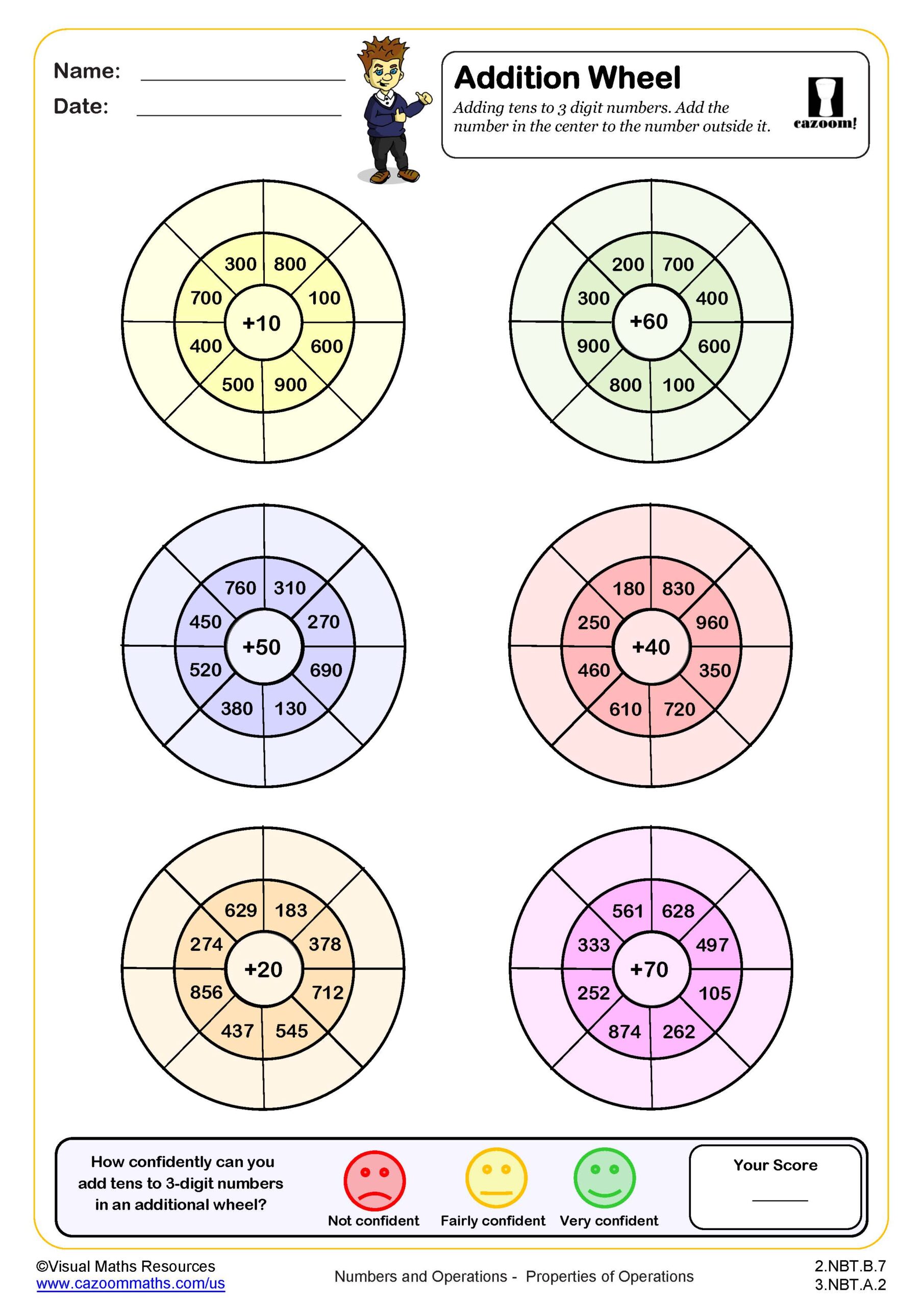
Addition Wheels (adding tens to 3 digit numbers)
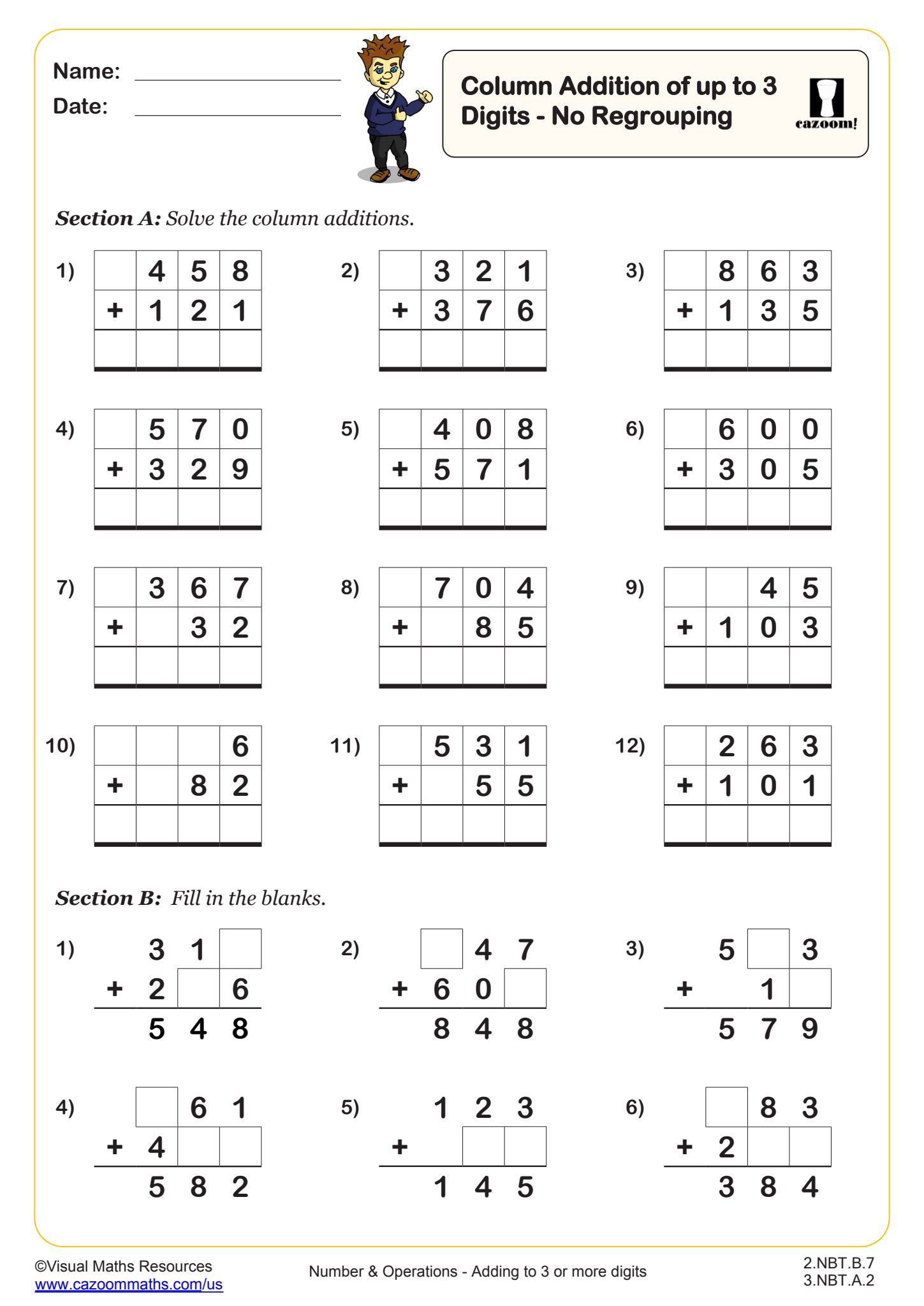
Column Addition (A)
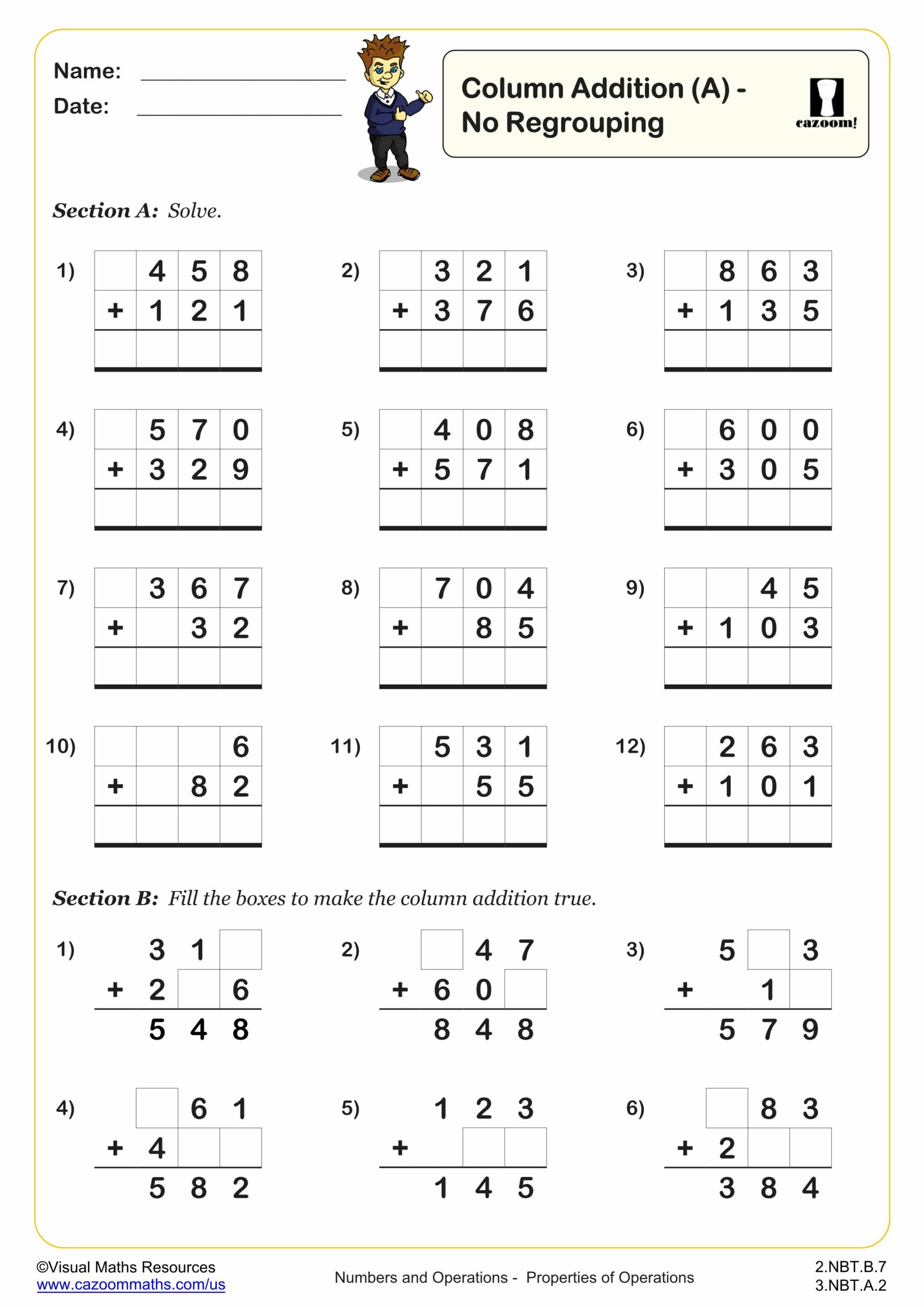
Column Addition Challenge
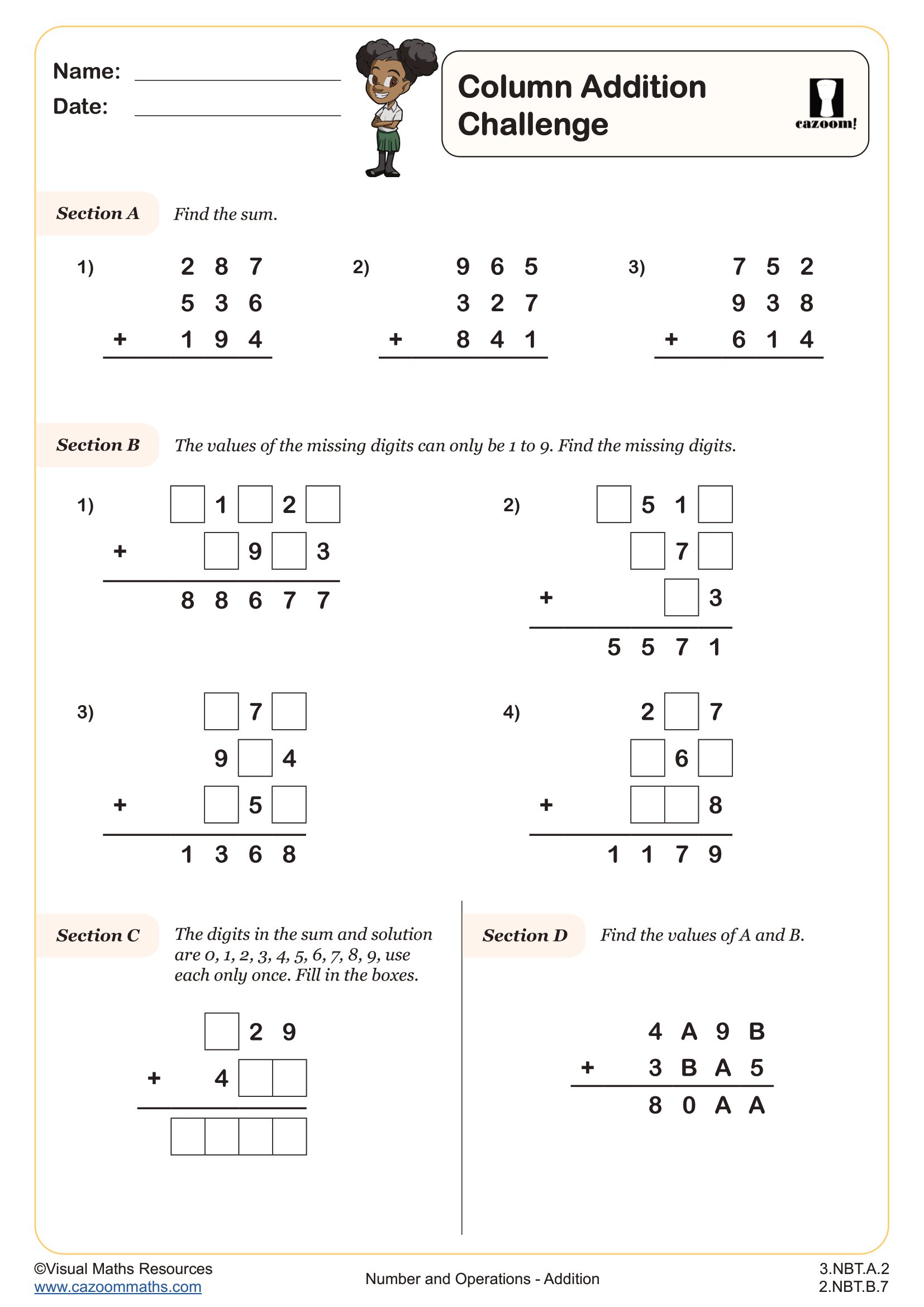
Column Addition of up to 3 Digits - No Regrouping
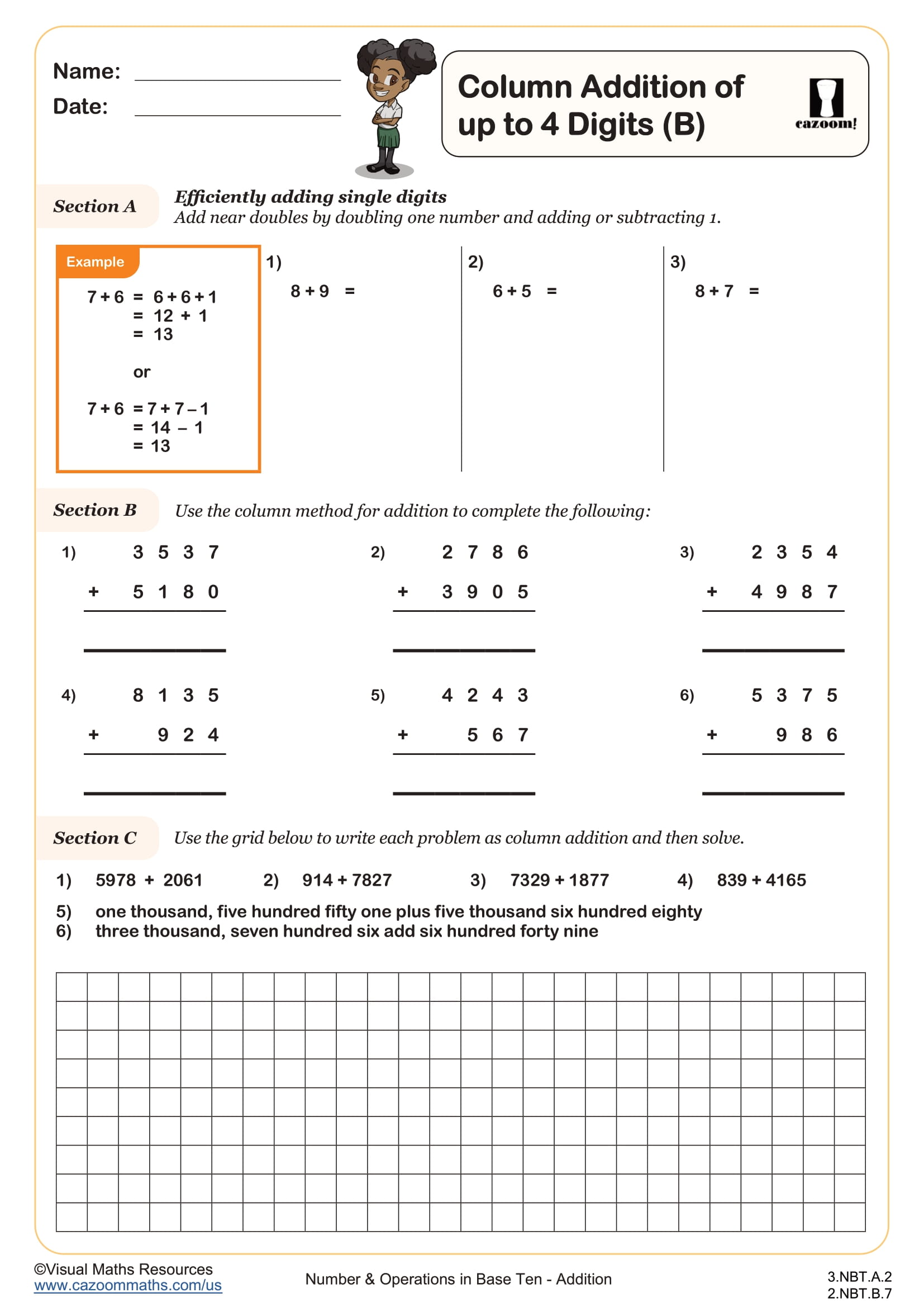
Column Addition of up to 4 Digits (B)
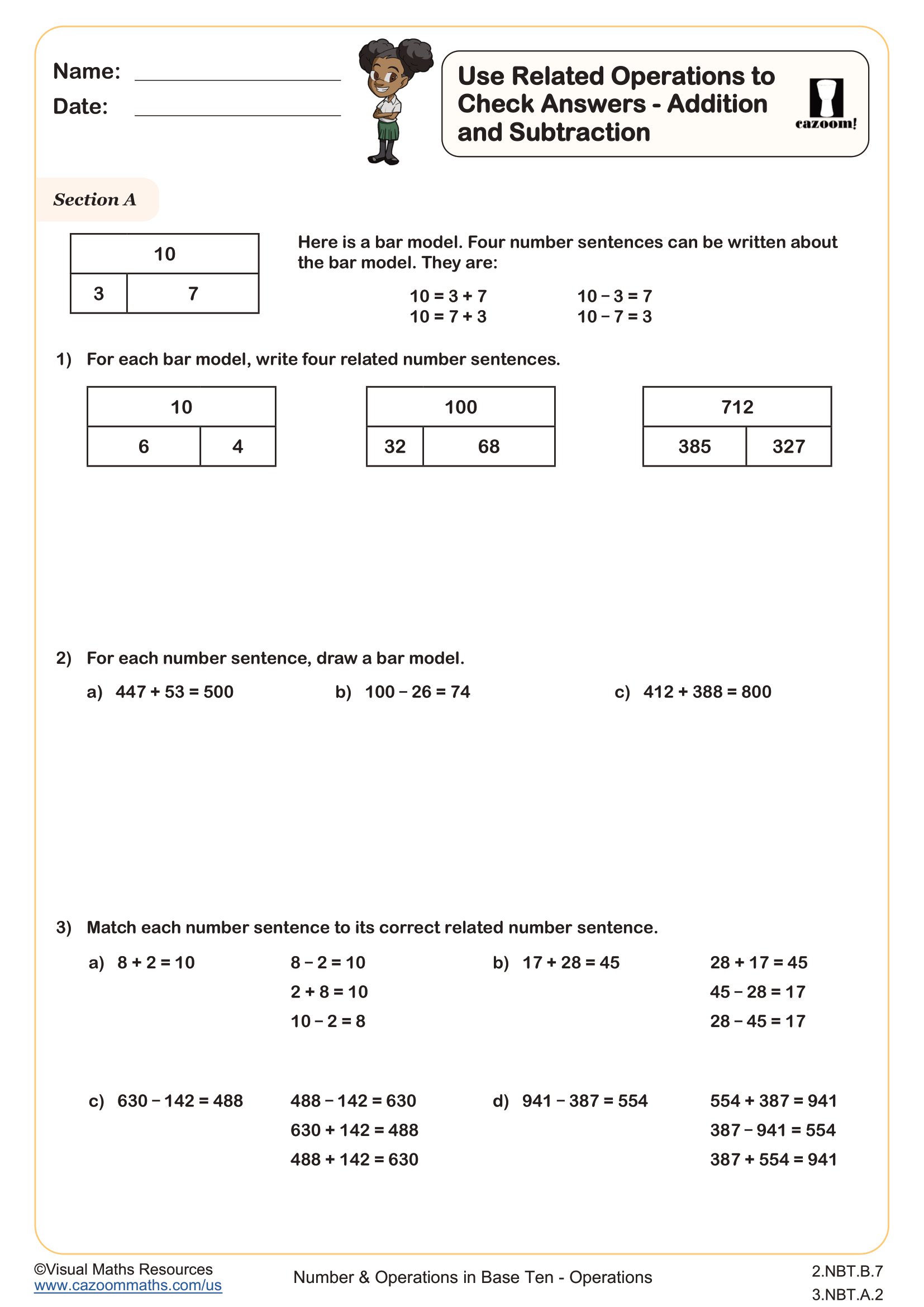
Using Related Operations to Check Answers Addition and Subtraction
All worksheets are created by the team of experienced teachers at Cazoom Math.
What concepts do 3rd grade addition worksheets typically cover?
Addition worksheet grade 3 materials focus on fluency with addition facts through 20, multi-digit addition with and without regrouping, and adding three or more numbers. Students practice vertical and horizontal formats while applying place value concepts to problems involving hundreds, tens, and ones. The worksheets align with Common Core standards that require third graders to use place value understanding and properties of operations to perform multi-digit arithmetic.
Teachers notice that students often reverse the regrouping process, writing the carried digit in the answer line instead of adding it to the next column. Third grade addition worksheets address this misconception through step-by-step problems that highlight the regrouping process, helping students visualize where carried numbers belong in the algorithm.
How do these worksheets build on 2nd grade addition skills?
Second grade students typically work with two-digit addition and begin exploring regrouping concepts. Third grade addition worksheets extend this foundation by introducing three-digit numbers and problems requiring multiple regrouping steps. Students also encounter addition of three or more addends, which requires sustained attention and organizational skills that weren't emphasized in earlier grades.
The transition often reveals gaps in place value understanding that weren't apparent with smaller numbers. Teachers report that students who seemed comfortable with two-digit addition sometimes struggle when the same concepts apply to hundreds. These worksheets provide the repetitive practice needed to solidify these expanded skills before students encounter fourth-grade topics like adding numbers in the thousands.
What strategies do these worksheets teach for mental addition?
3rd grade math worksheets addition materials emphasize breaking apart numbers and using friendly numbers to make mental calculations easier. Students learn to add by place value, round and adjust, and use the associative property to group numbers strategically. These mental math strategies complement the standard algorithm and help students develop number sense beyond rote memorization.
Many teachers observe that students initially resist mental math strategies because the standard algorithm feels more secure. However, problems designed to highlight when mental strategies are more efficient help students recognize their value. For example, adding 298 + 156 becomes much simpler when students think 300 + 156 - 2, demonstrating how flexibility with numbers supports both speed and accuracy in mathematical thinking.
How can teachers use these worksheets most effectively in their classrooms?
Teachers find that using third grade addition worksheets as warm-up activities helps students review previously learned concepts while building toward new learning objectives. The answer keys allow for quick self-checking or peer review, which provides immediate feedback without requiring extensive teacher time for grading. Many educators use these materials for differentiated instruction, selecting specific problem types based on individual student needs.
Successful implementation often involves having students explain their thinking process, not just provide answers. Teachers report that asking students to justify their regrouping decisions or describe their mental math strategies reveals understanding gaps that correct answers might mask. This approach transforms worksheet practice from passive computation into active mathematical reasoning that strengthens conceptual understanding alongside procedural skill development.