3rd Grade Area and Perimeter Worksheets
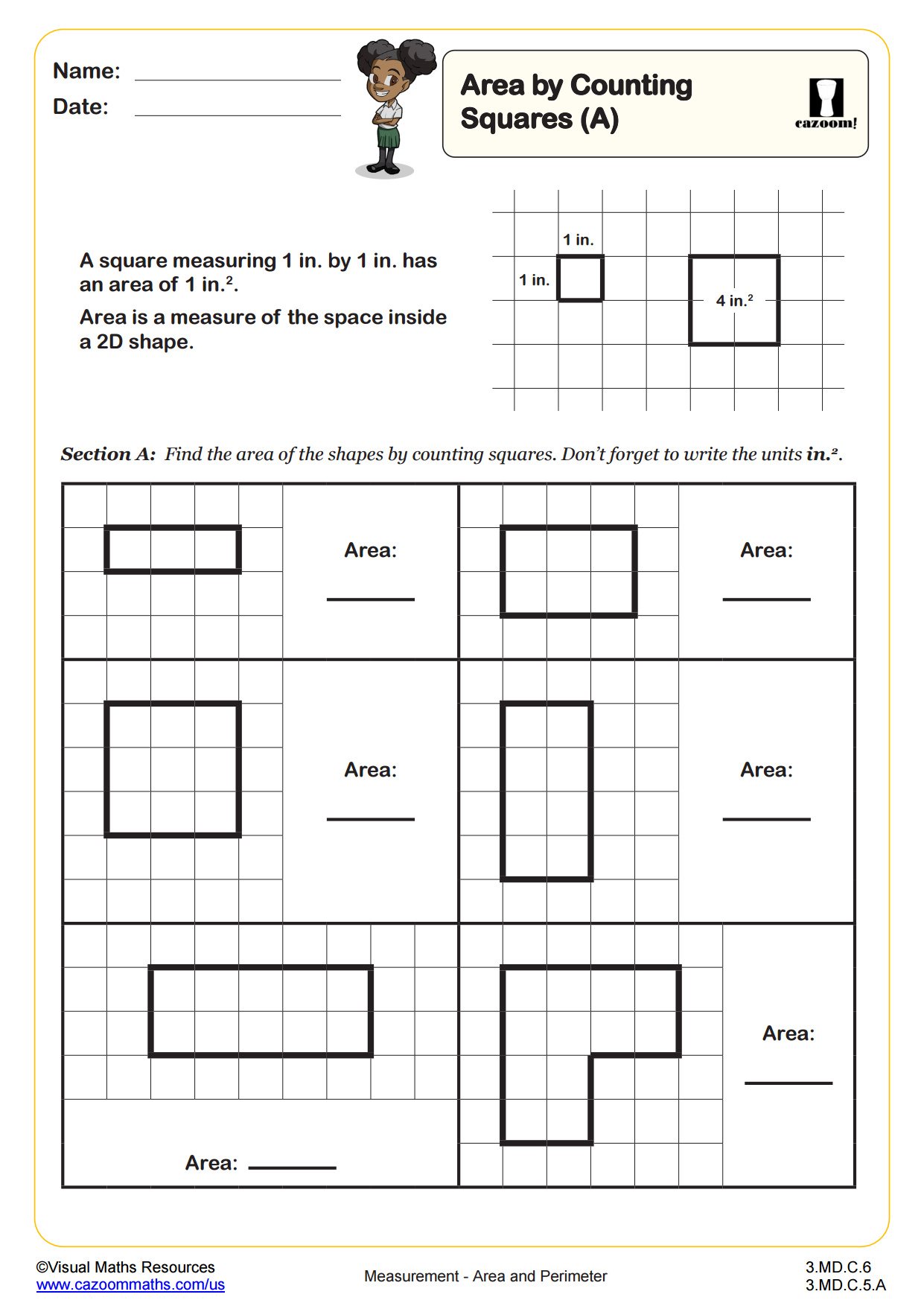
Area by Counting Squares (A)
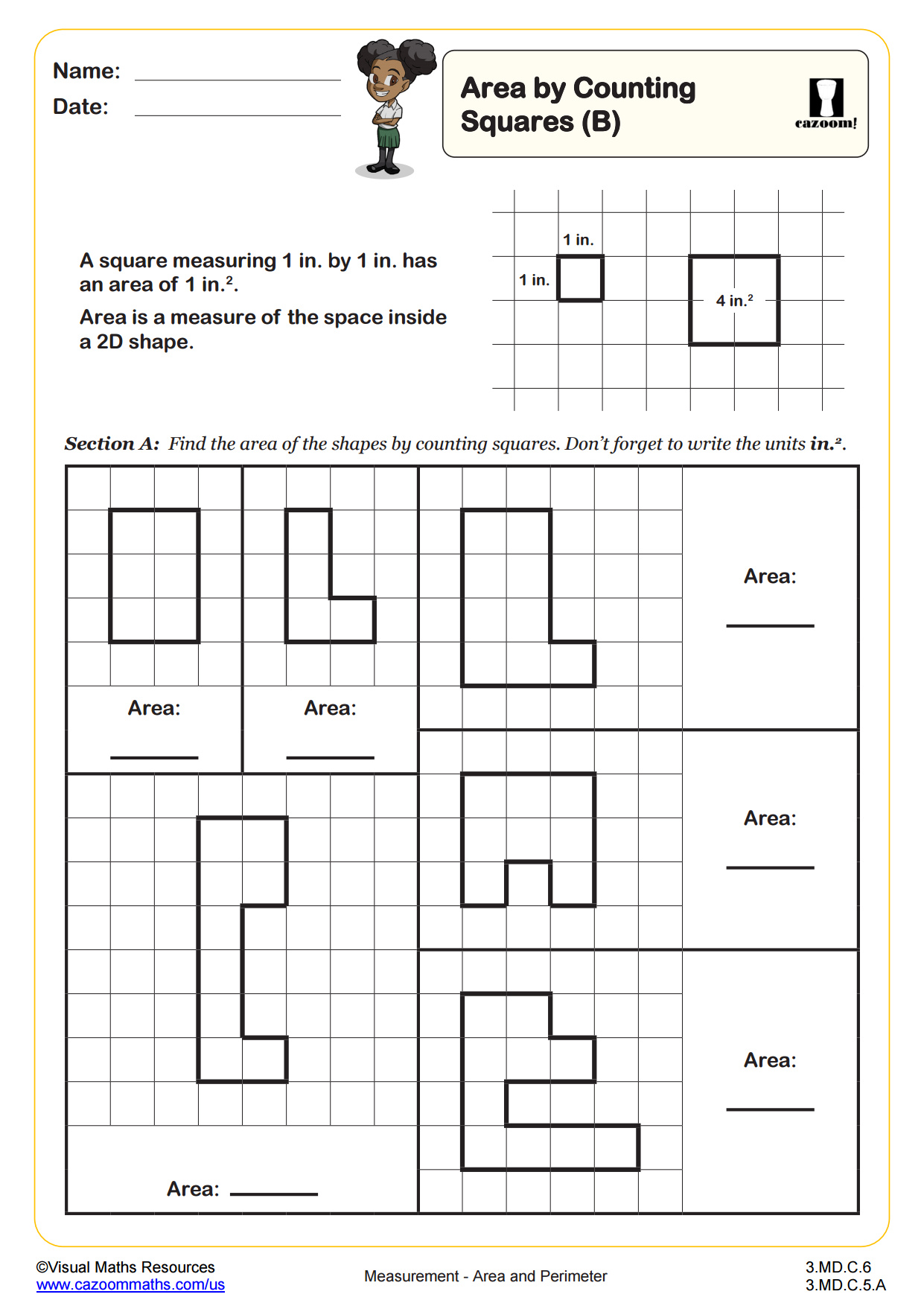
Area by Counting Squares (B)
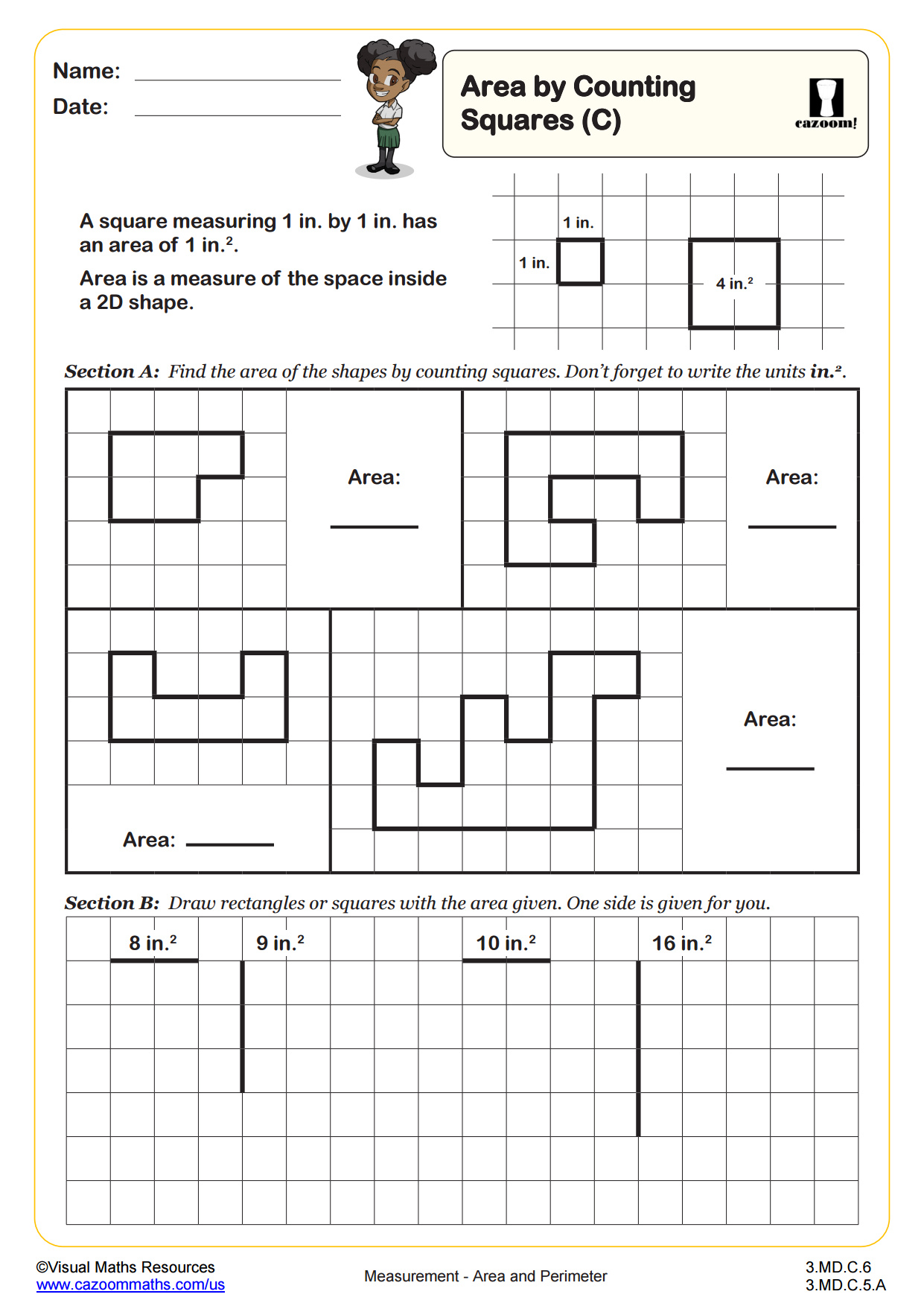
Area by Counting Squares (C)
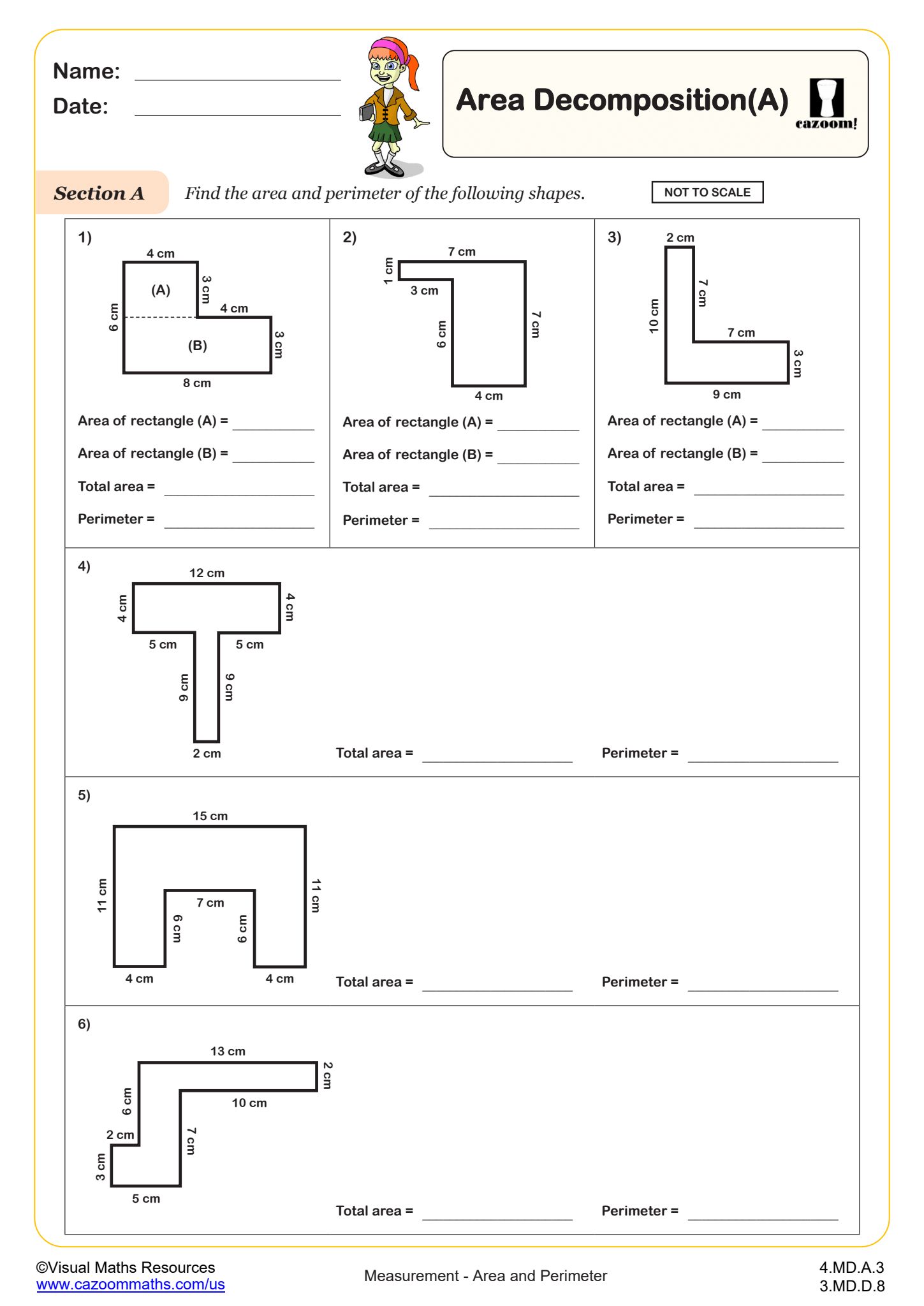
Area Decomposition (A)
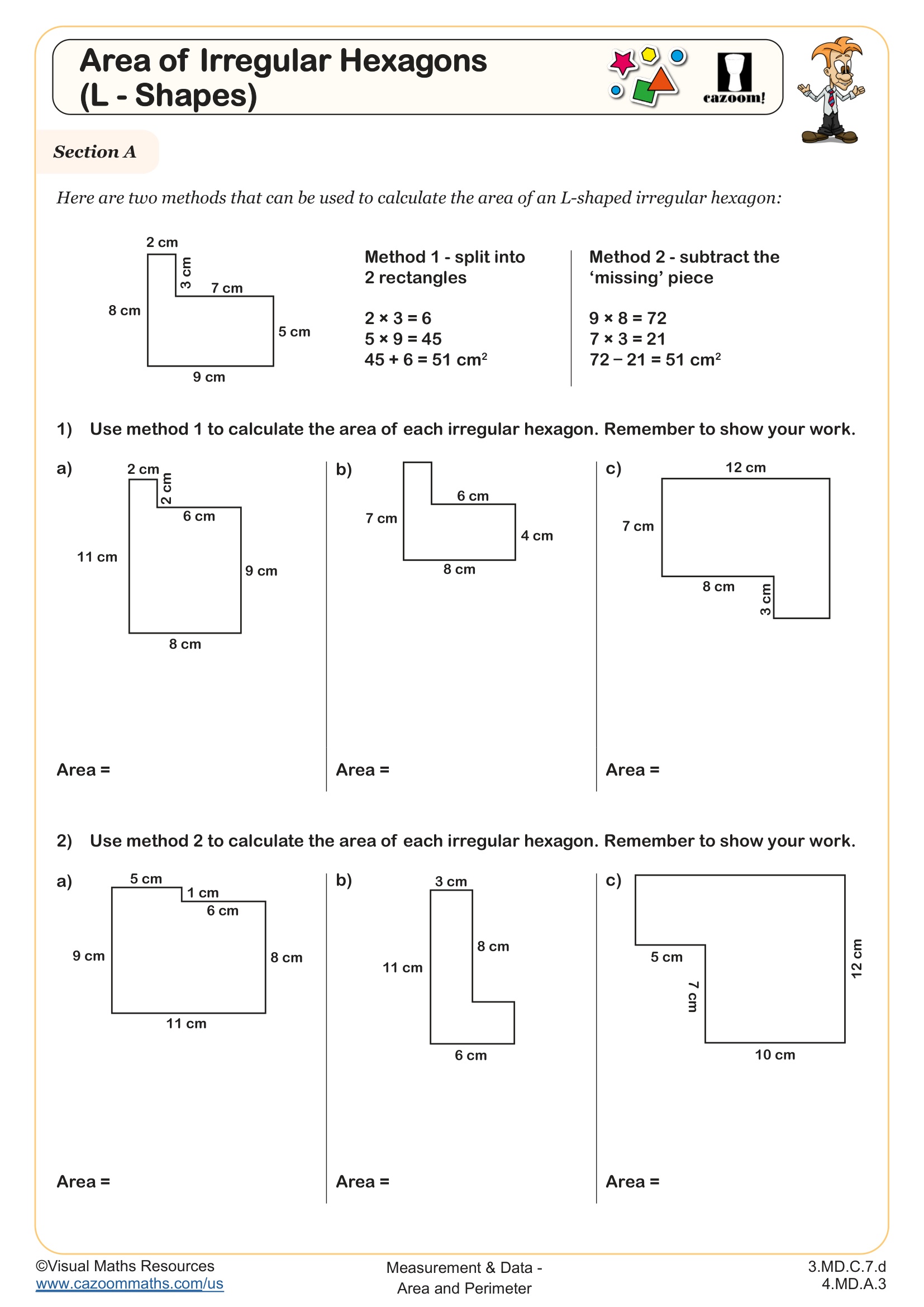
Area of Irregular Hexagons (L - Shapes)
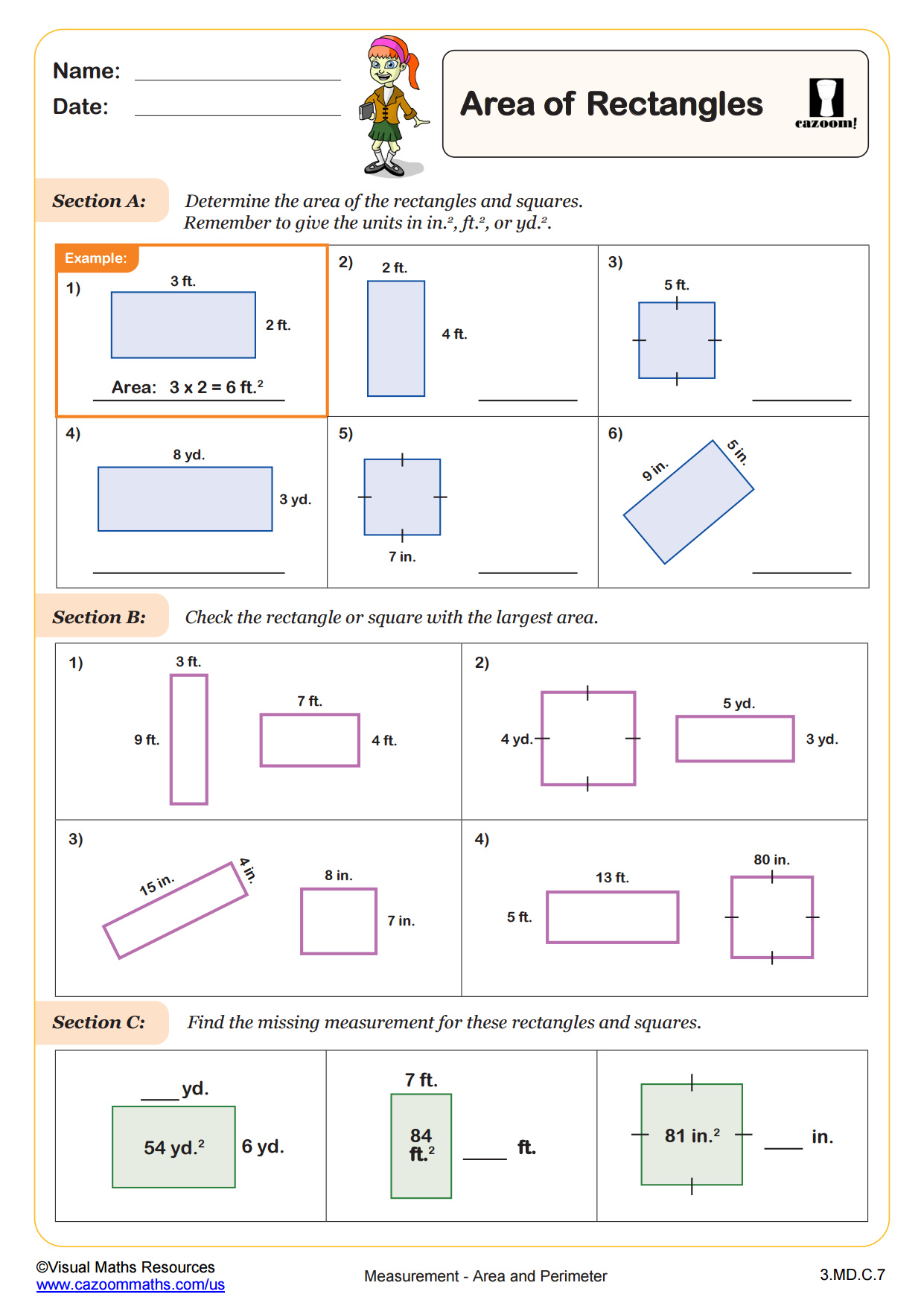
Area of Rectangles
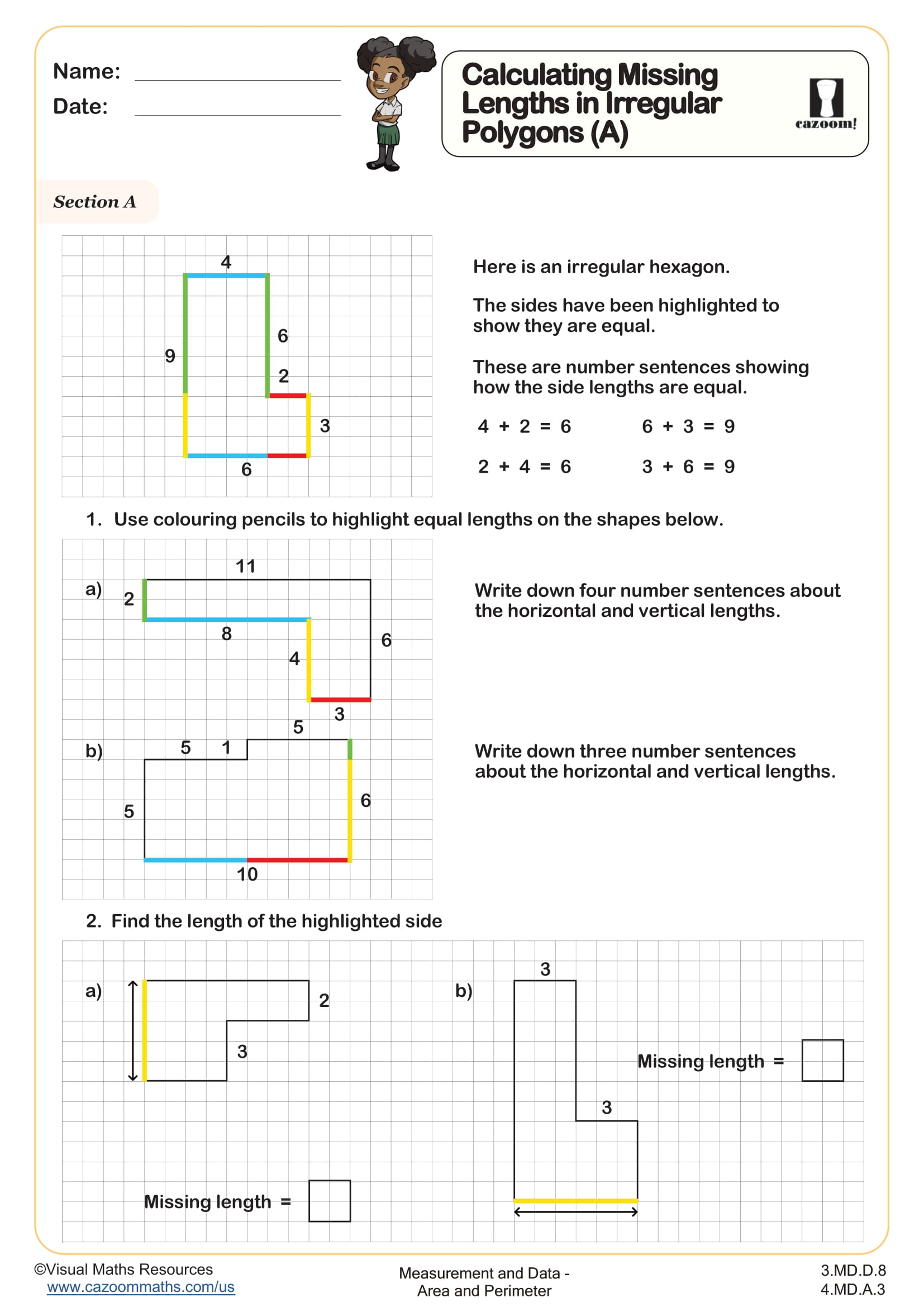
Calculating Missing Lengths in Irregular Polygons (A)
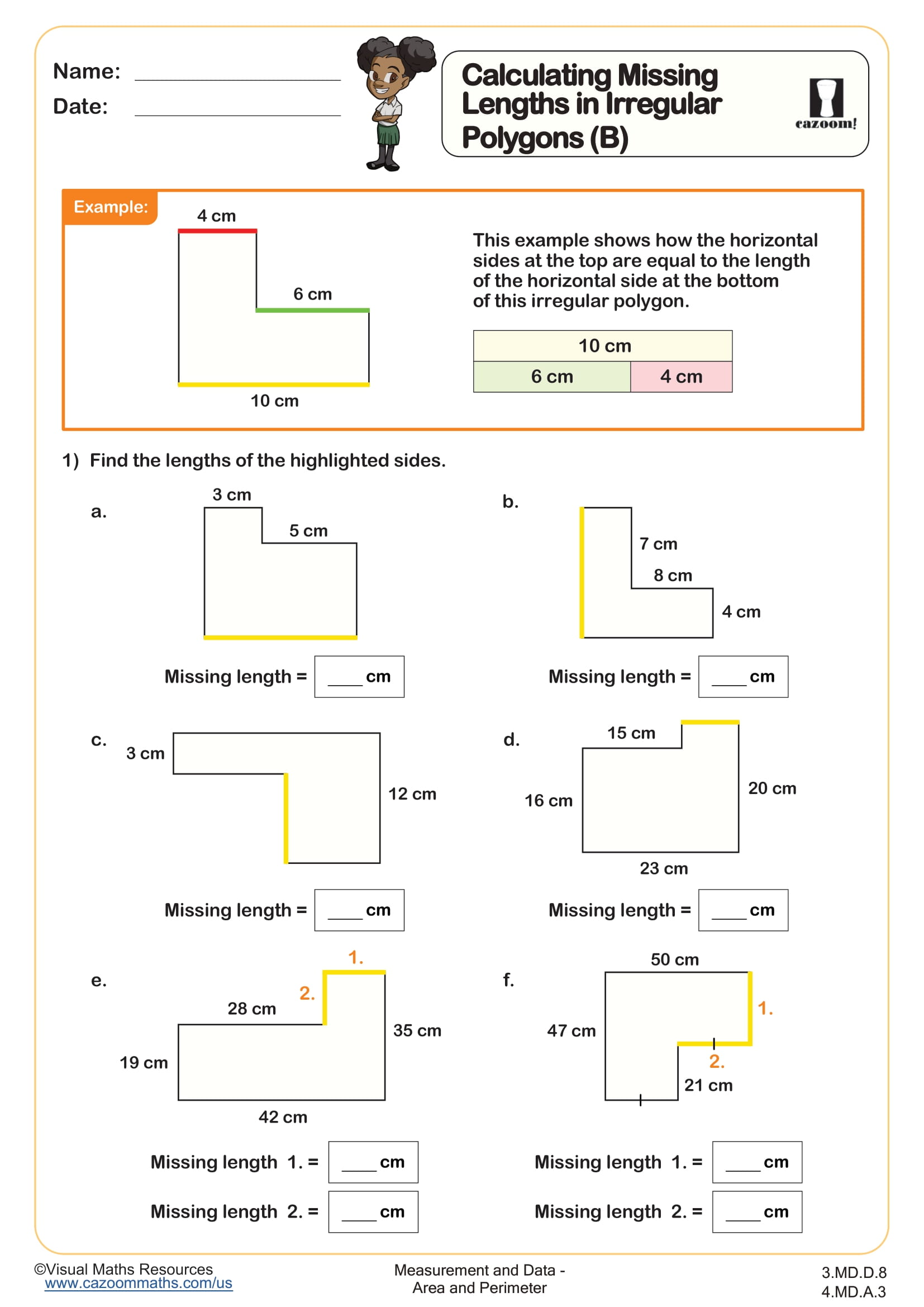
Calculating Missing Lengths in Irregular Polygons (B)
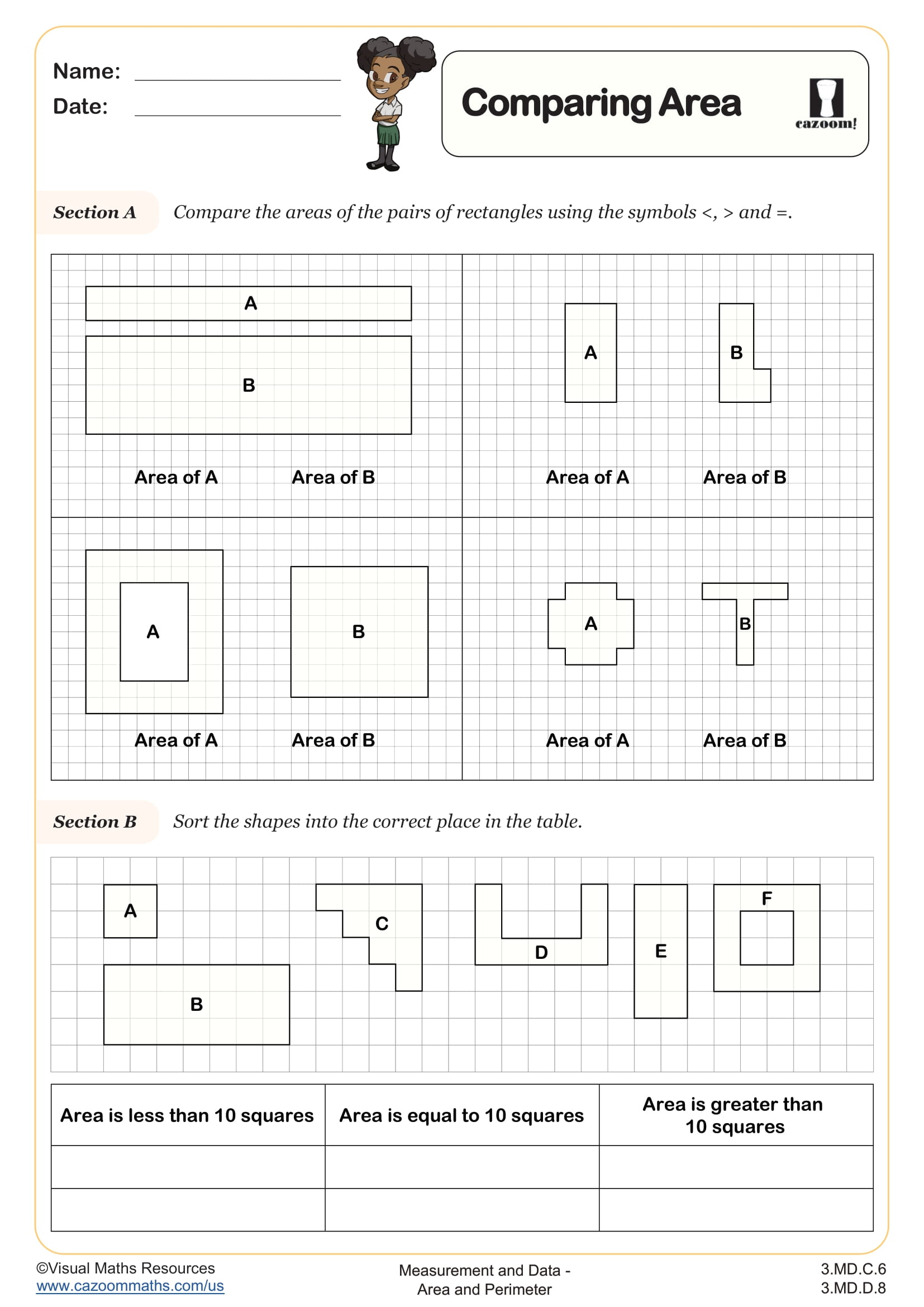
Comparing Area
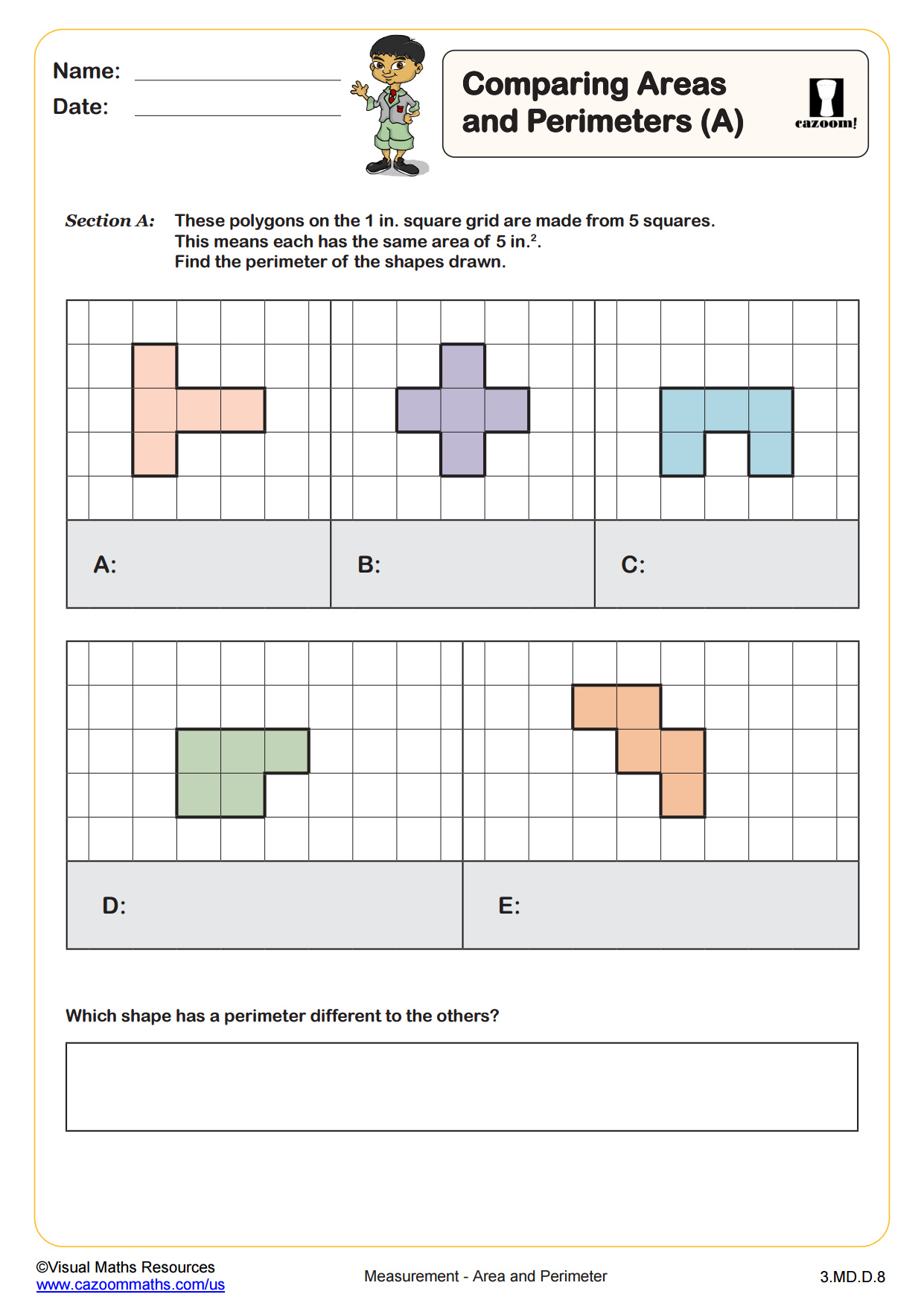
Comparing Areas and Perimeters (A)
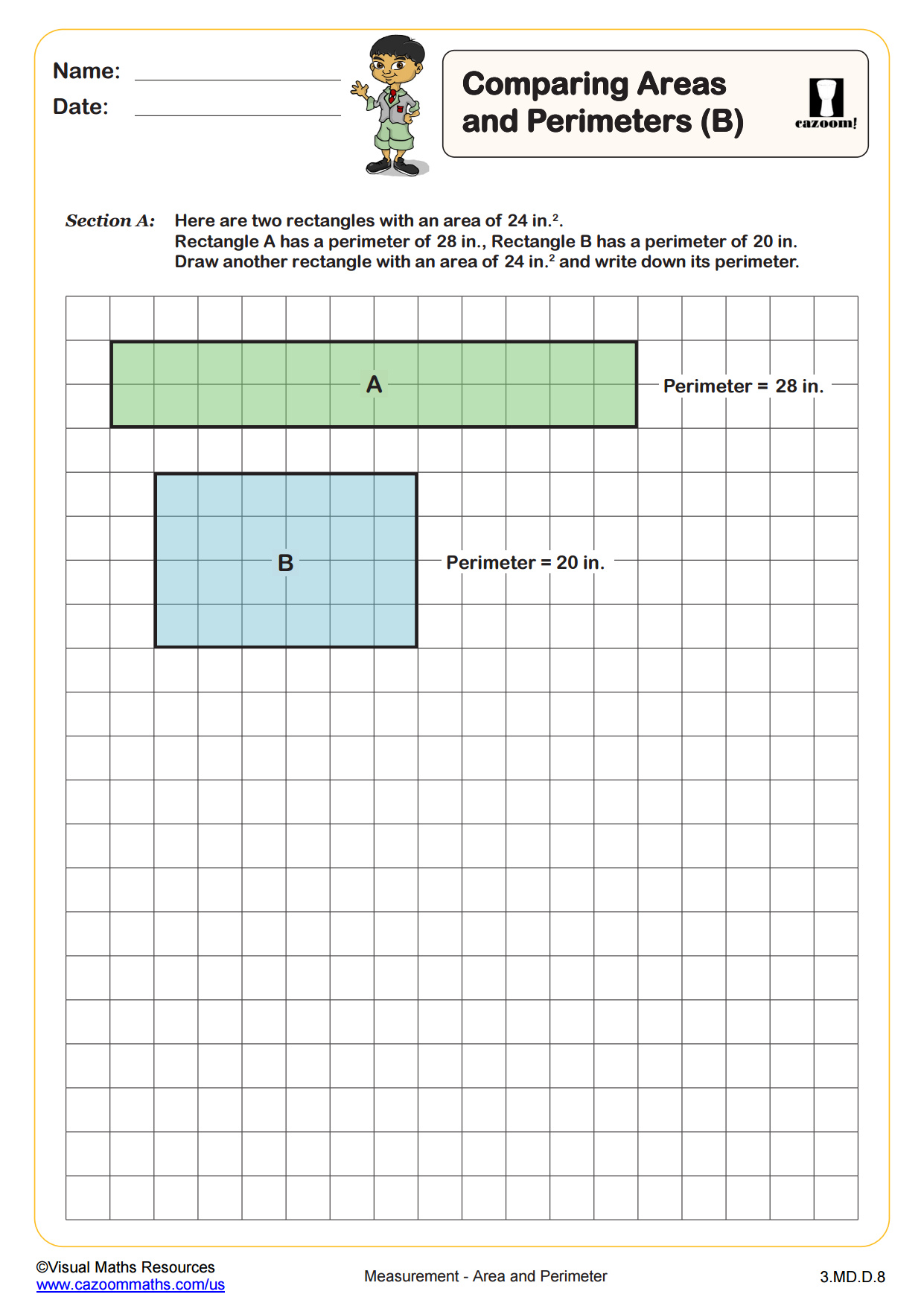
Comparing Areas and Perimeters (B)
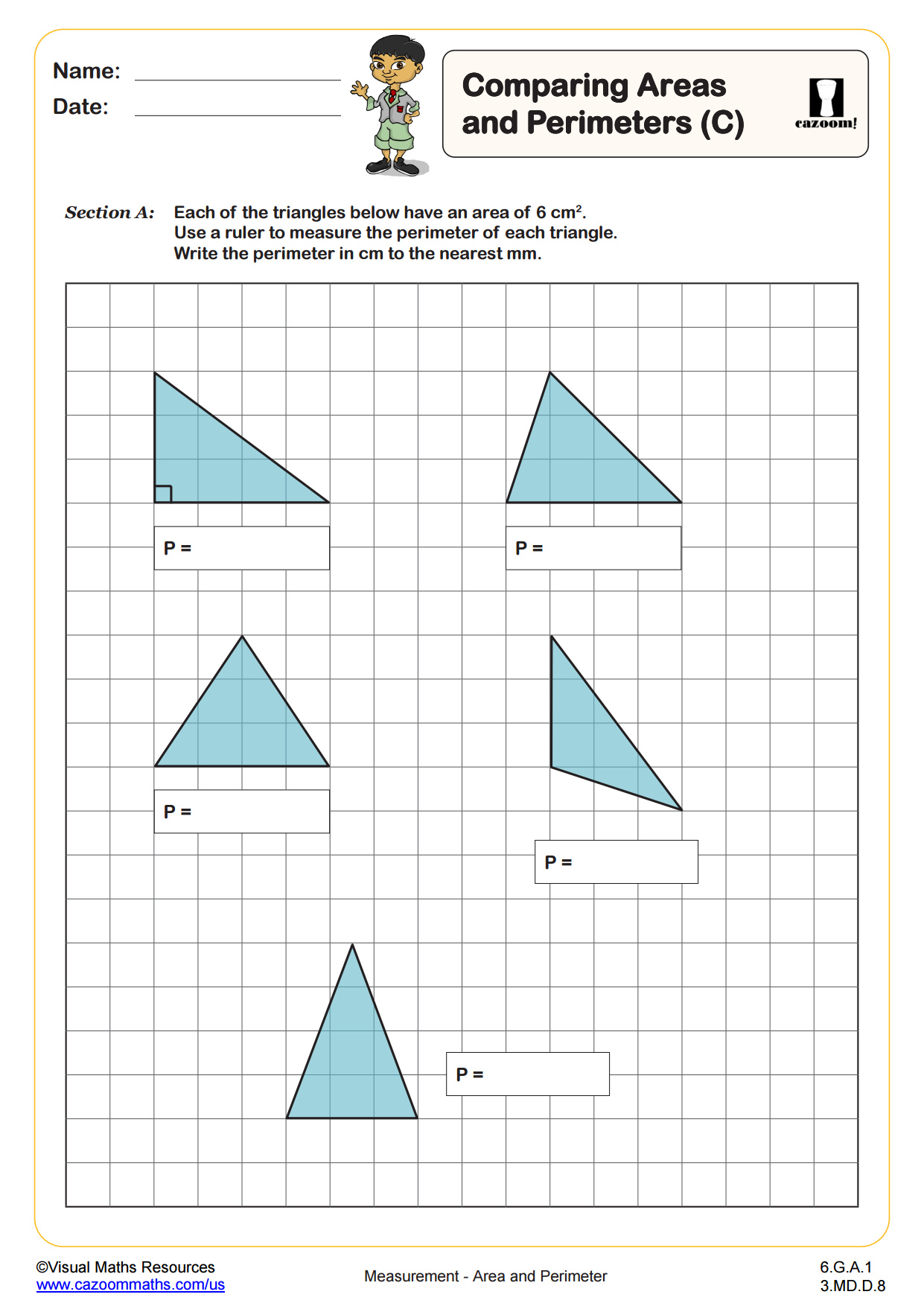
Comparing Areas and Perimeters (C)
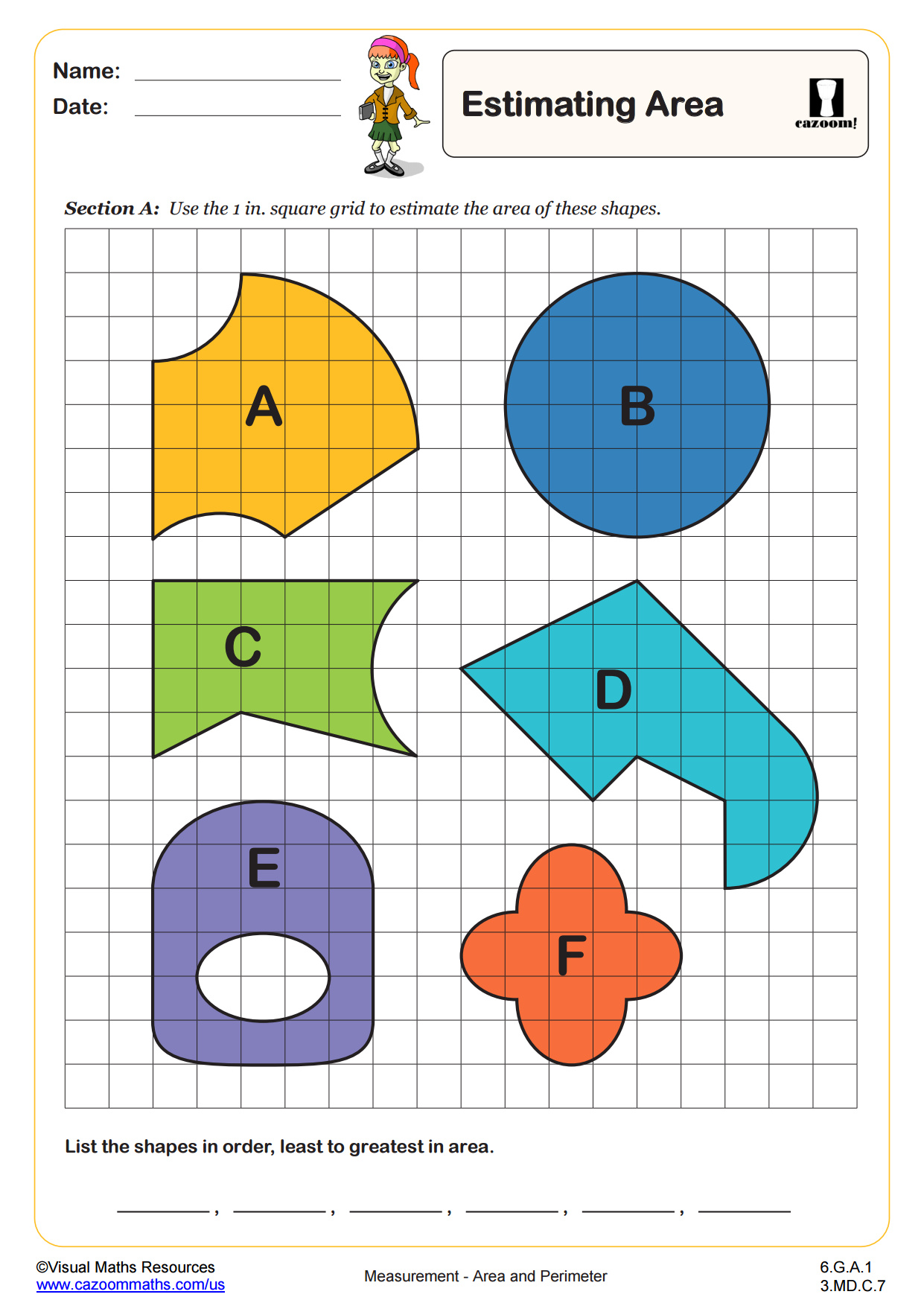
Estimating Area
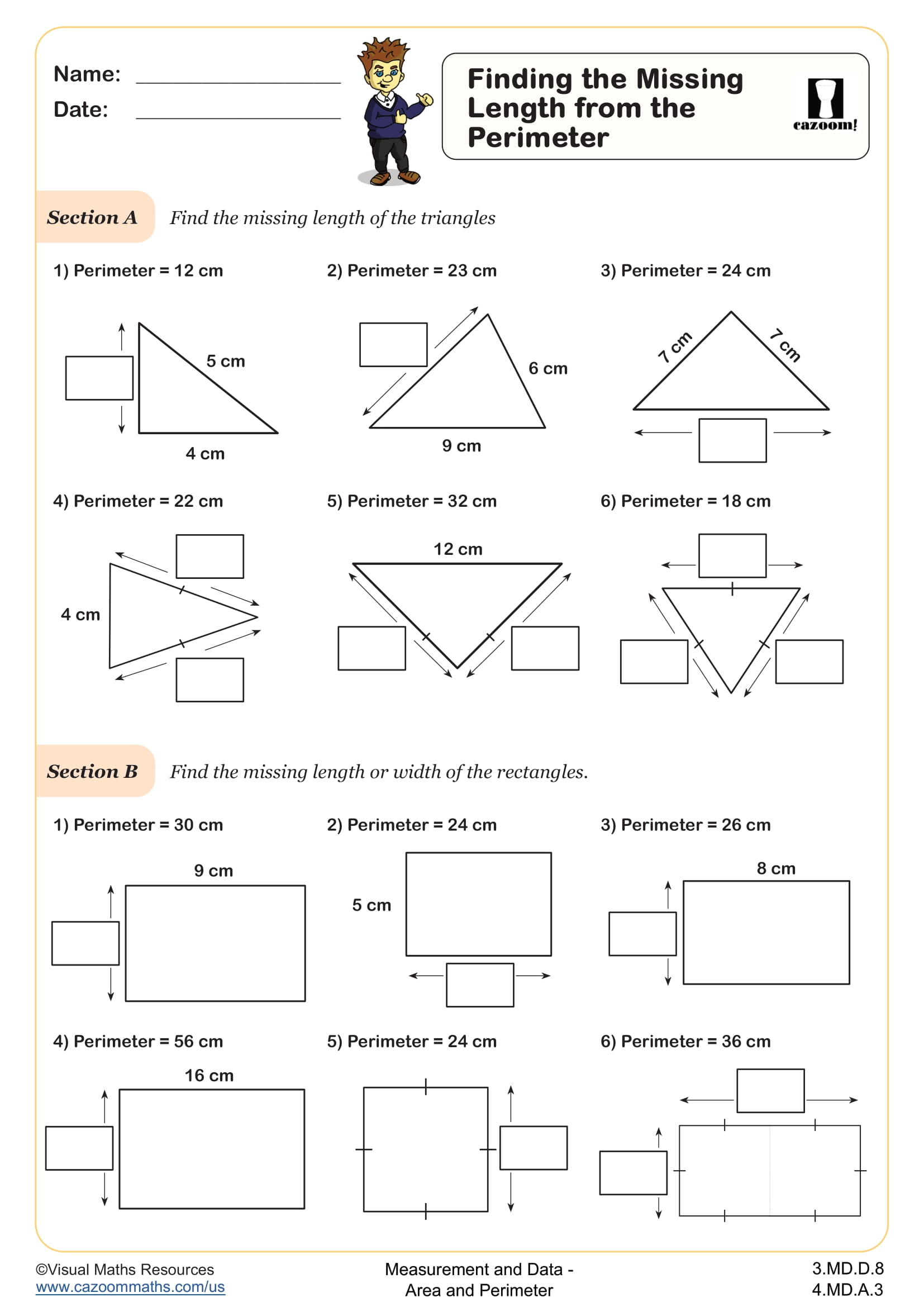
Finding the Missing Length From the Perimeter
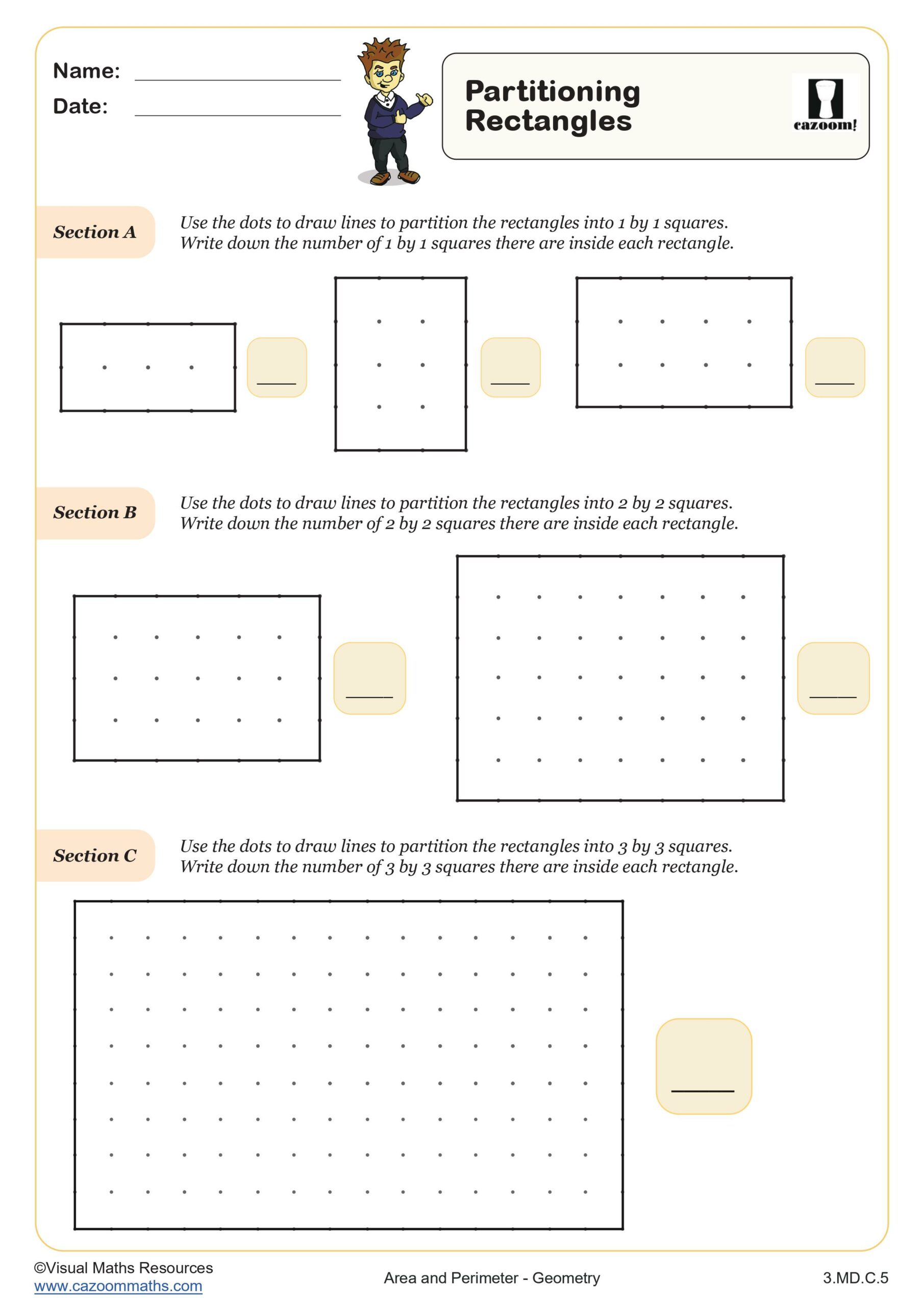
Partitioning Rectangles
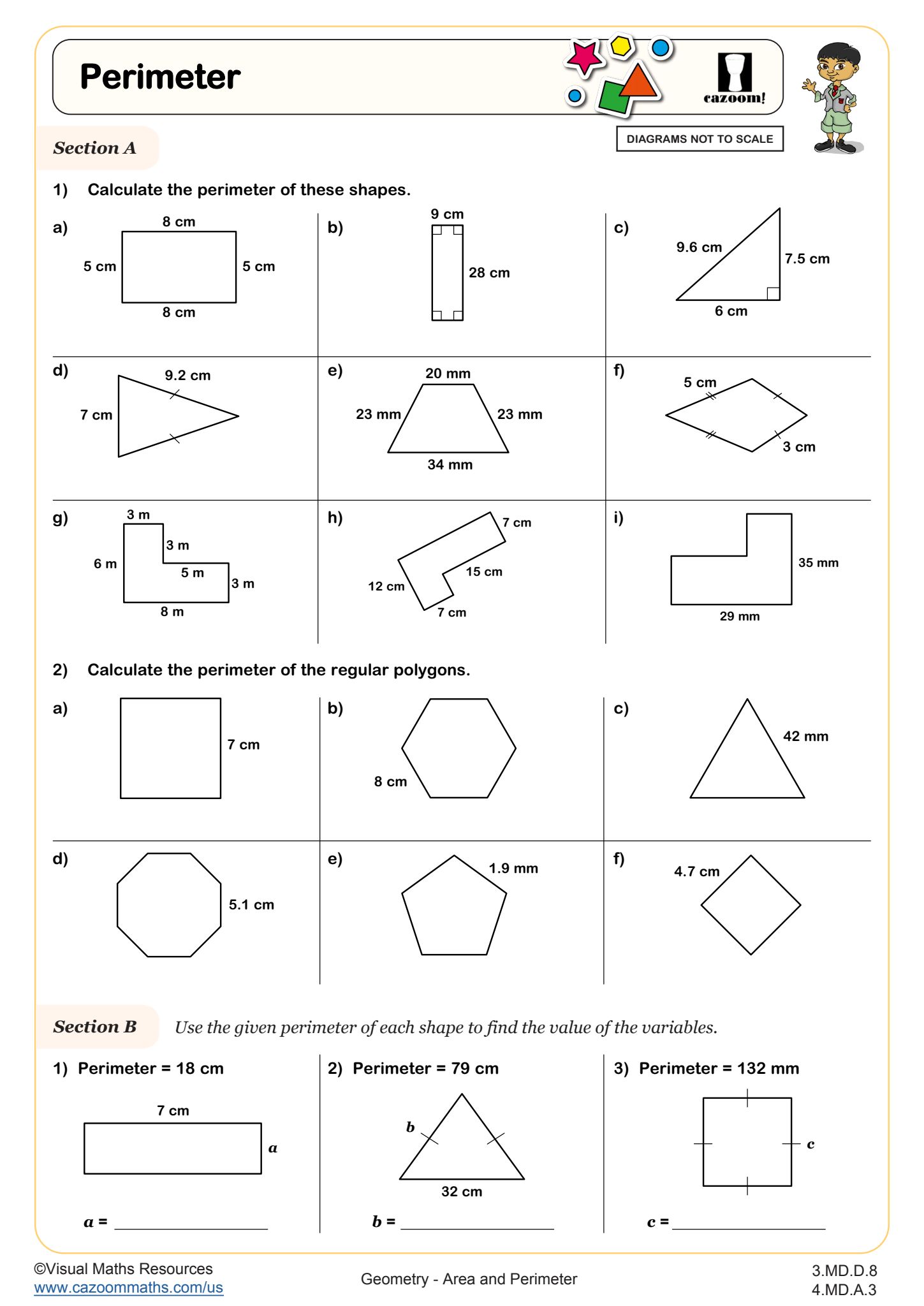
Perimeter
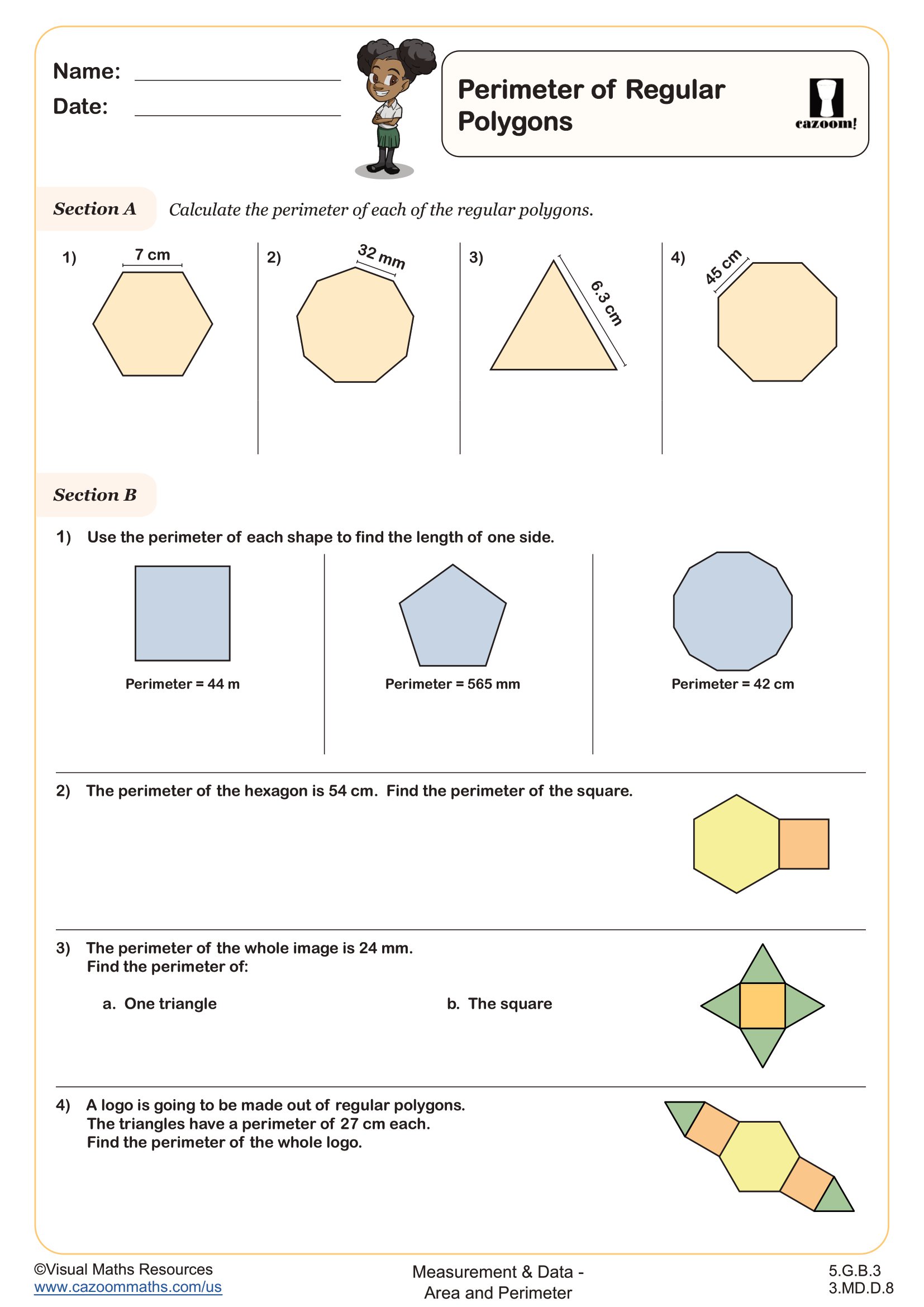
Perimeter of Regular Polygons
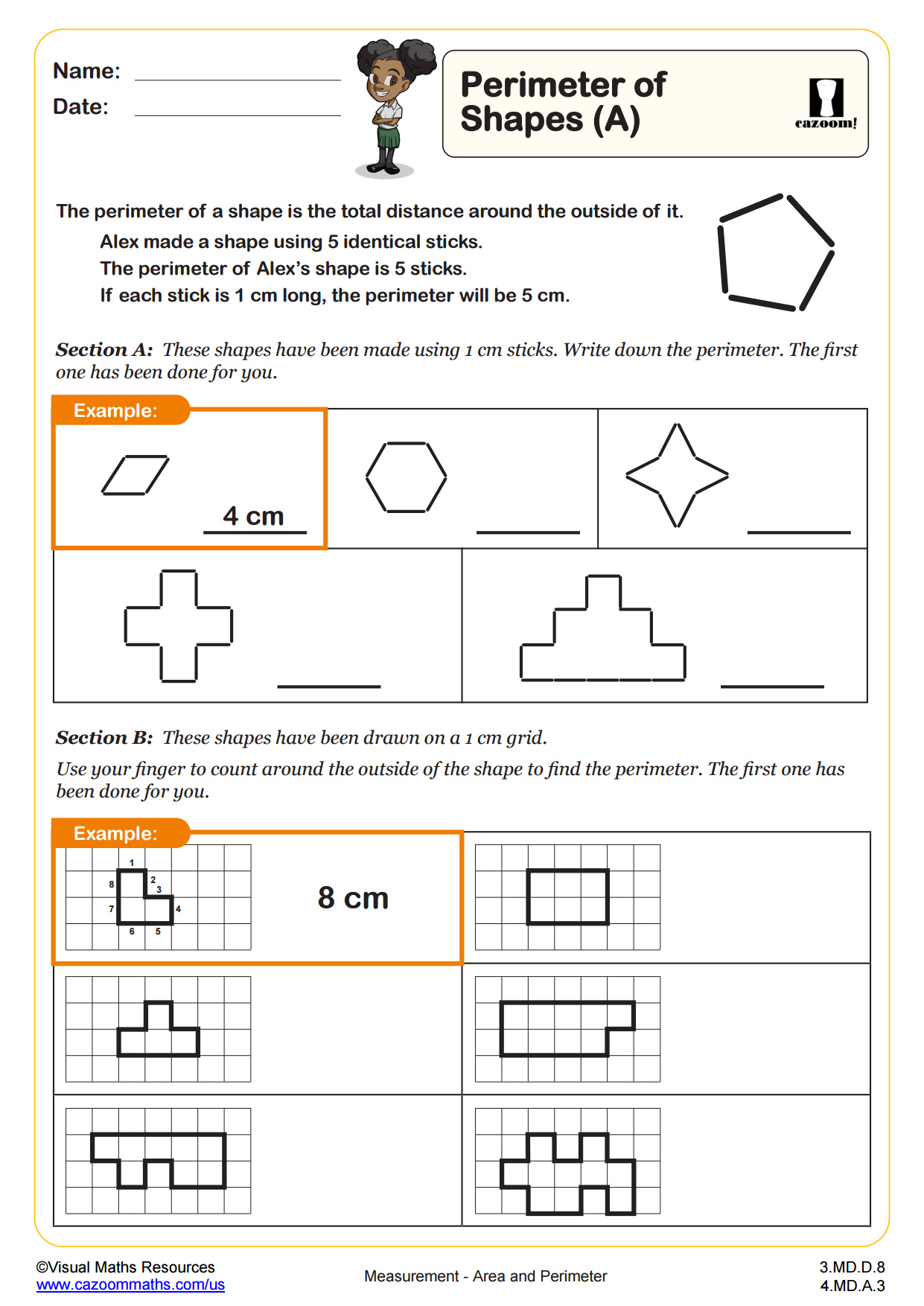
Perimeter of Shapes (A)
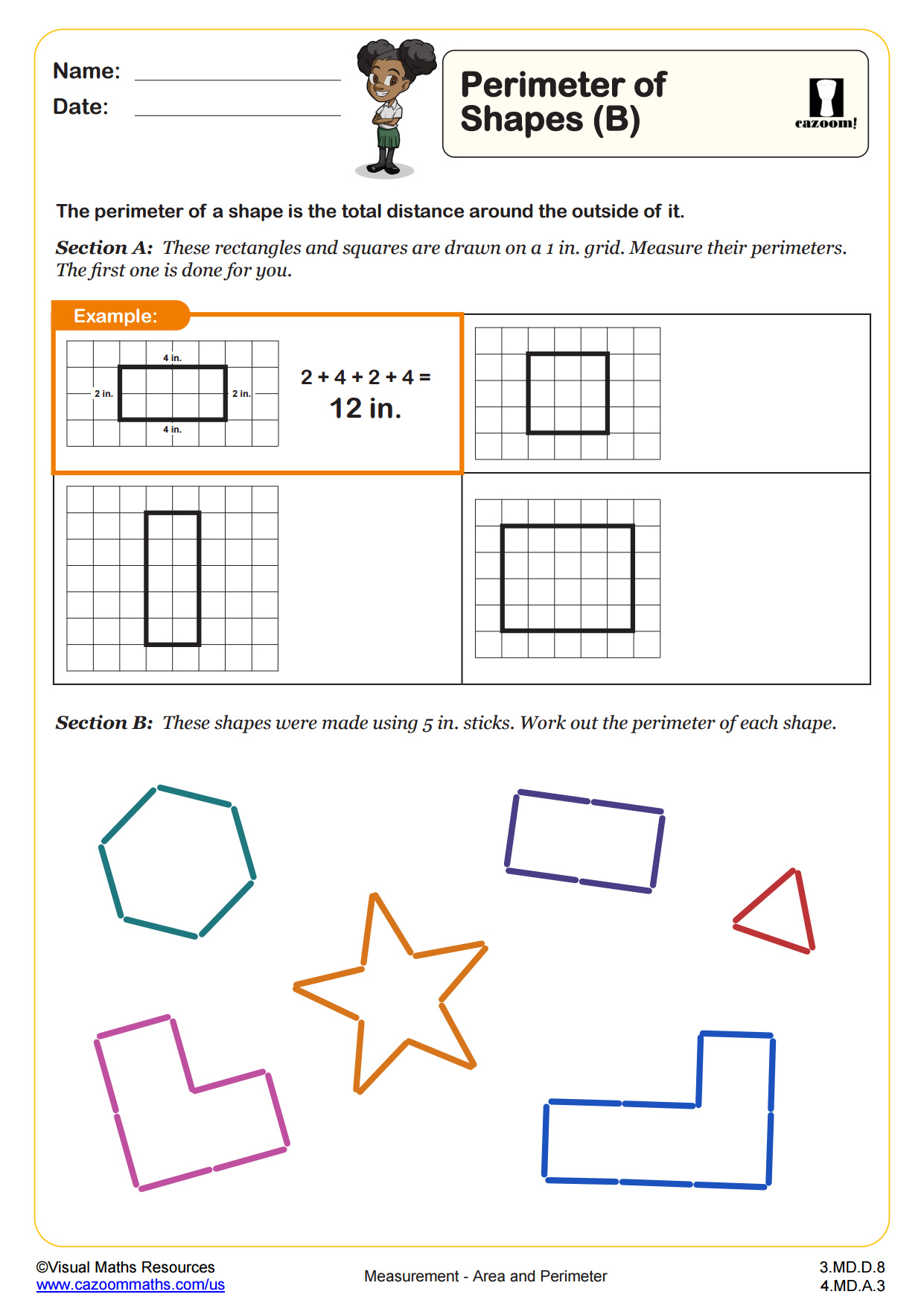
Perimeter of Shapes (B)
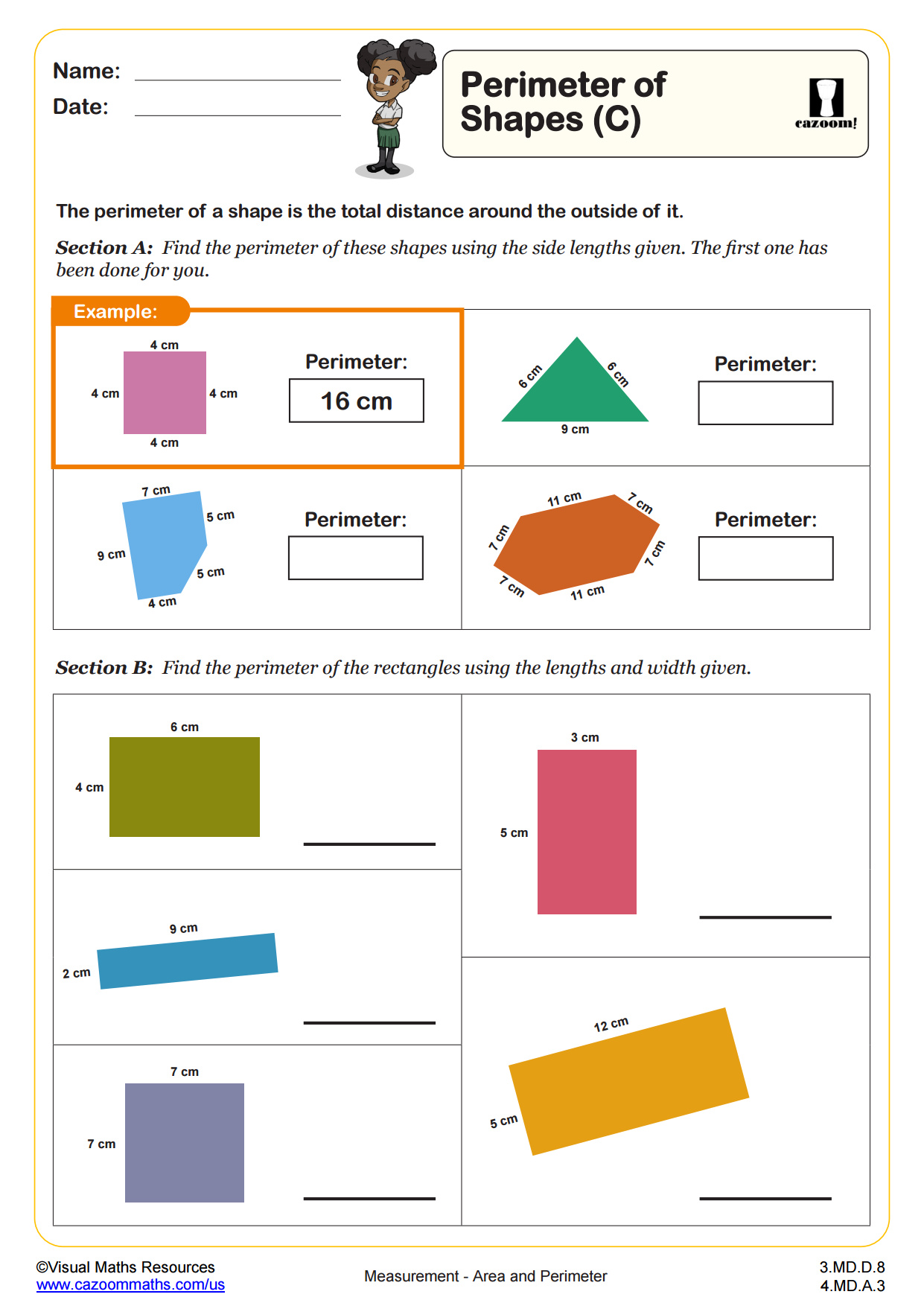
Perimeter of Shapes (C)
All worksheets are created by the team of experienced teachers at Cazoom Math.
What's the difference between area and perimeter?
Area measures the space inside a two-dimensional shape, expressed in square units like square inches or square centimeters. Perimeter measures the distance around the outside of a shape, expressed in linear units like inches or centimeters. Third graders learn these concepts through counting unit squares for area and adding side lengths for perimeter before progressing to formulas.
Students frequently lose points on assessments by mixing up which operation to use. Teachers often see students add dimensions when they should multiply (for area) or multiply when they should add (for perimeter). The breakthrough typically happens when students practice labeling their answers correctly—writing "12 square feet" versus "12 feet" helps reinforce which measurement they're calculating and prevents careless errors on standardized tests.
What grade levels learn area and perimeter?
This collection focuses on 3rd grade elementary school students, aligned with Common Core standards that introduce area as an attribute of plane figures and perimeter as boundary measurement. Third graders begin by counting unit squares and progress to using multiplication for rectangular area, building conceptual understanding before formal formulas.
The progression within third grade moves from concrete to abstract thinking. Students start with counting individual squares on grid paper, then recognize patterns that lead to length times width. Perimeter worksheets similarly begin with counting units around shapes before students discover they can add side lengths more efficiently. Problems involving shaded regions and circles introduce challenge for advanced learners, while formula sheets provide reference support for students still building fluency.
How do students find the area of shaded regions?
Shaded region problems require students to find the area of a larger shape, then subtract the area of a smaller unshaded portion inside it. These problems develop critical thinking because students must identify which shapes to calculate and recognize that subtraction reveals the remaining area. Many students make the connection between shaded region problems and composite figures once they understand they're working with multiple shapes at once.
This skill connects directly to real-world applications in construction and design. Landscape architects calculate shaded regions when planning gardens with paths—they find the total yard area, subtract the walkway area, and determine how much mulch to order. Engineers use similar reasoning when designing components with holes or cutouts, making this more than an abstract math exercise. Students confidently tackle these problems once they recognize the subtraction pattern.
How can teachers use these worksheets effectively?
The worksheets scaffold learning through progressive difficulty, starting with basic shapes on grids and advancing to problems requiring formula application and multi-step reasoning. Formula sheets serve as reference tools while students build memorization, and answer keys allow students to check their work independently, encouraging self-correction and metacognition about common errors.
Teachers frequently use these worksheets for differentiated instruction—struggling students benefit from the counting-based problems while advanced learners tackle shaded regions and circle applications. The variety works well for math centers, where students rotate through different problem types at their own pace. Many teachers assign perimeter problems for homework since they reinforce addition skills, then use class time for area problems that require more guided support with multiplication concepts and square units.