3rd Grade Describe and Compare Shapes Worksheets
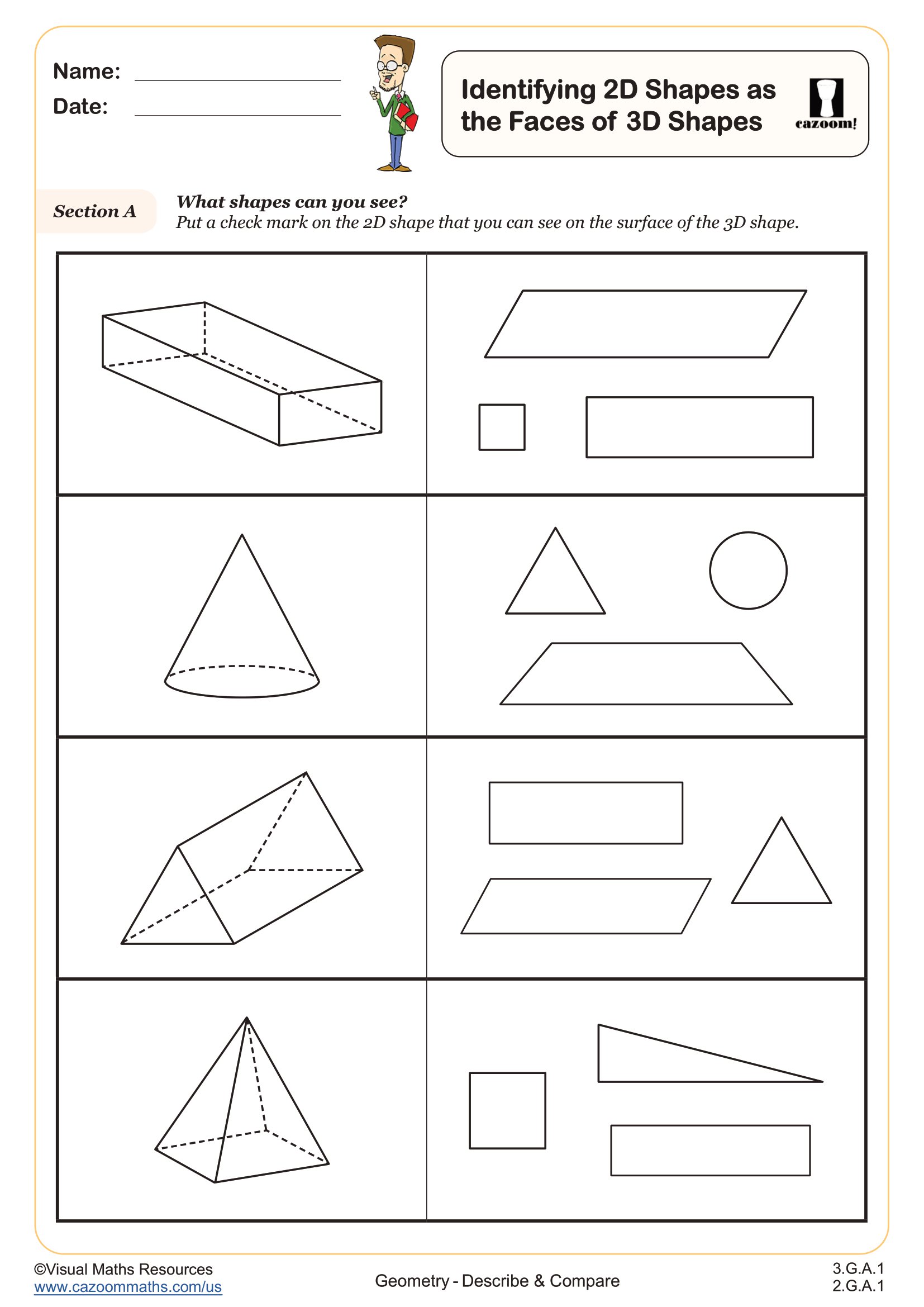
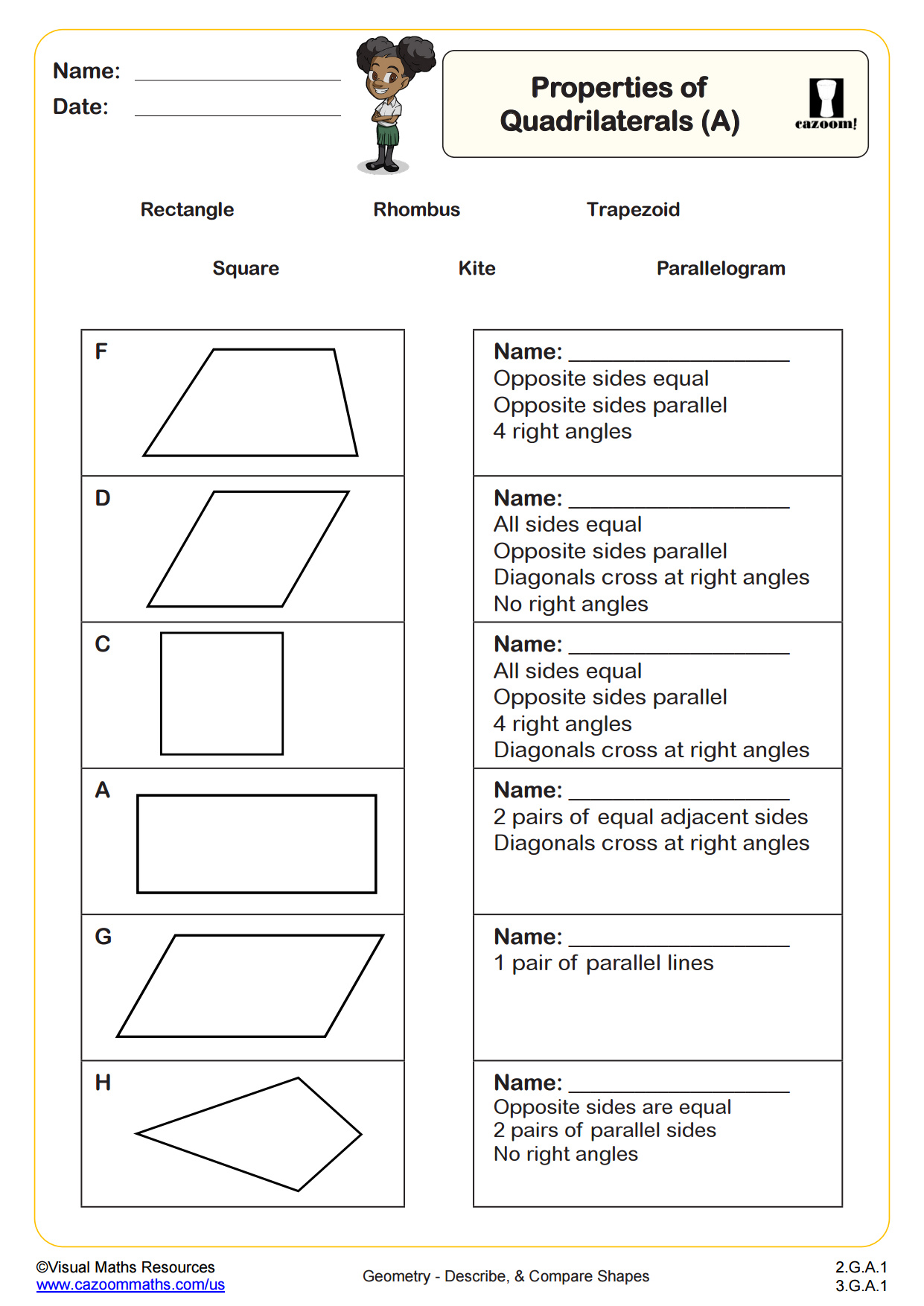
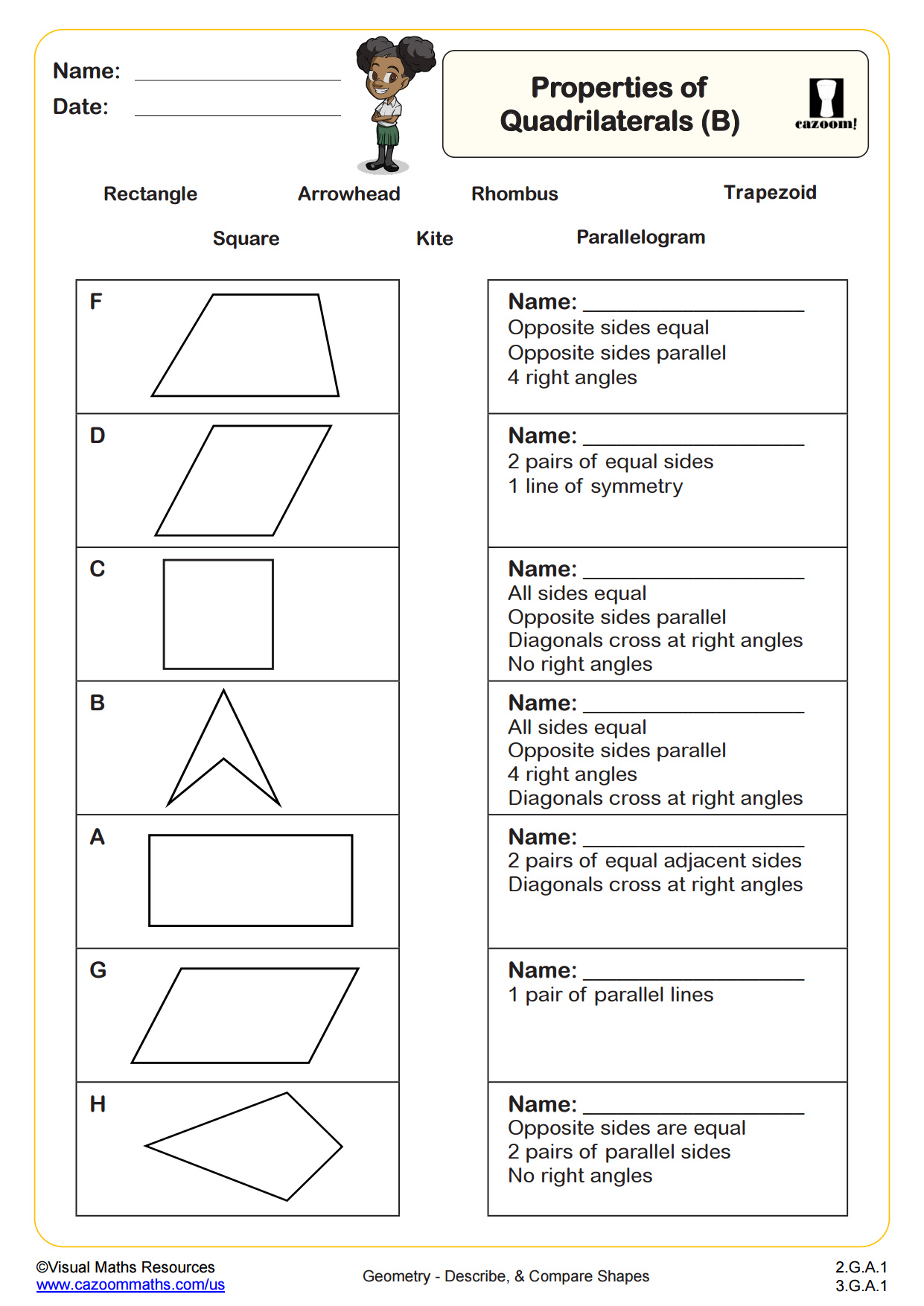
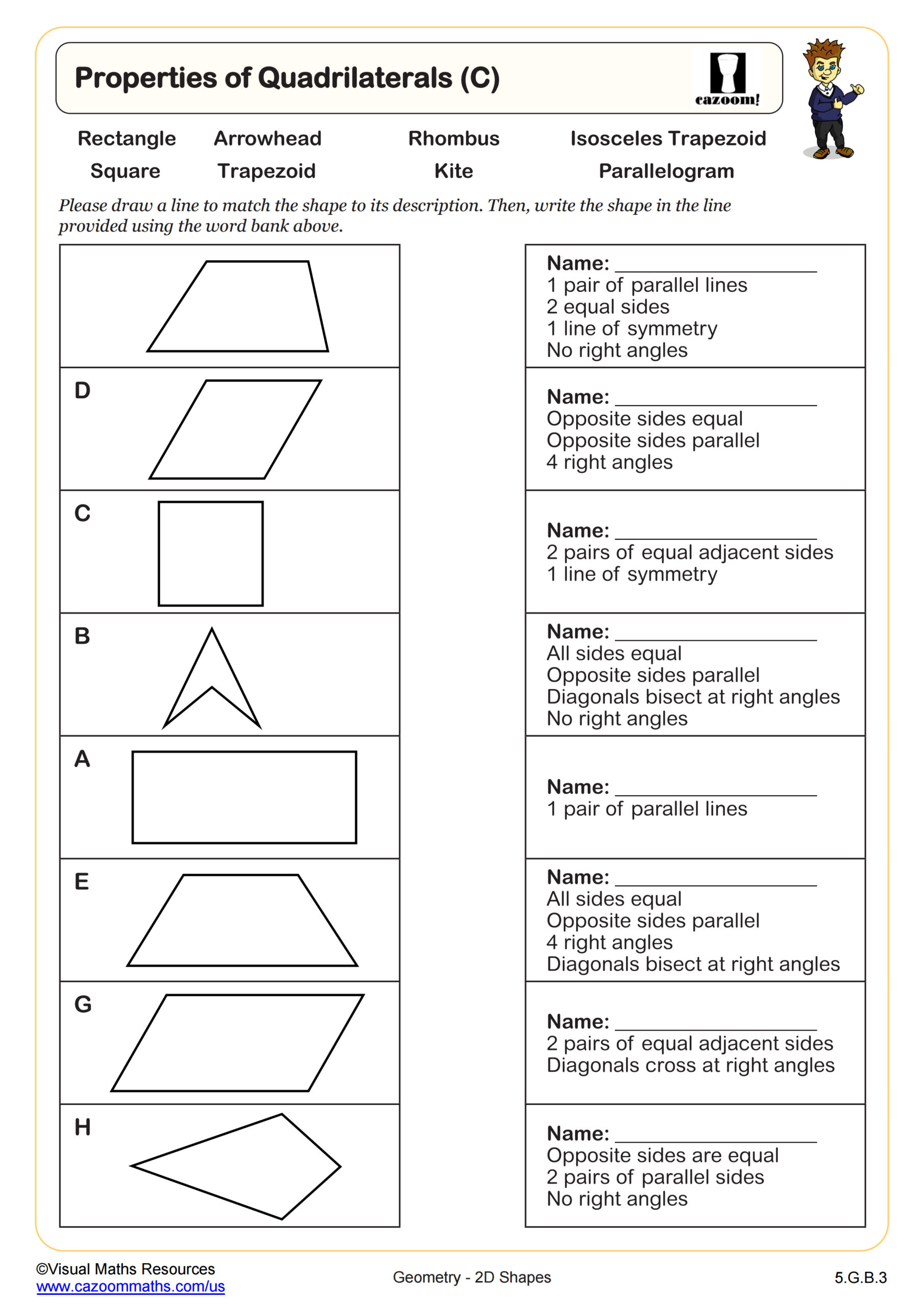
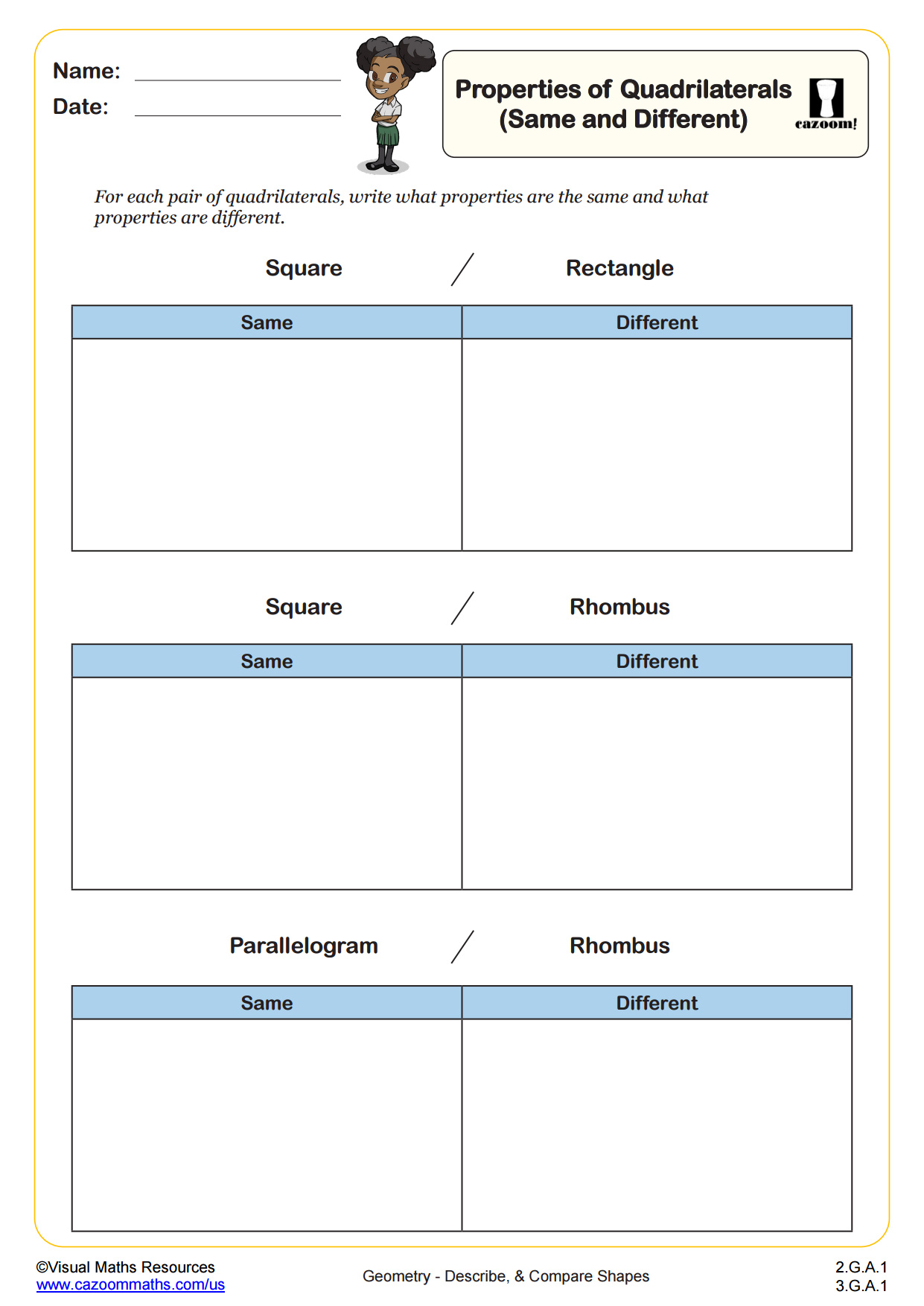
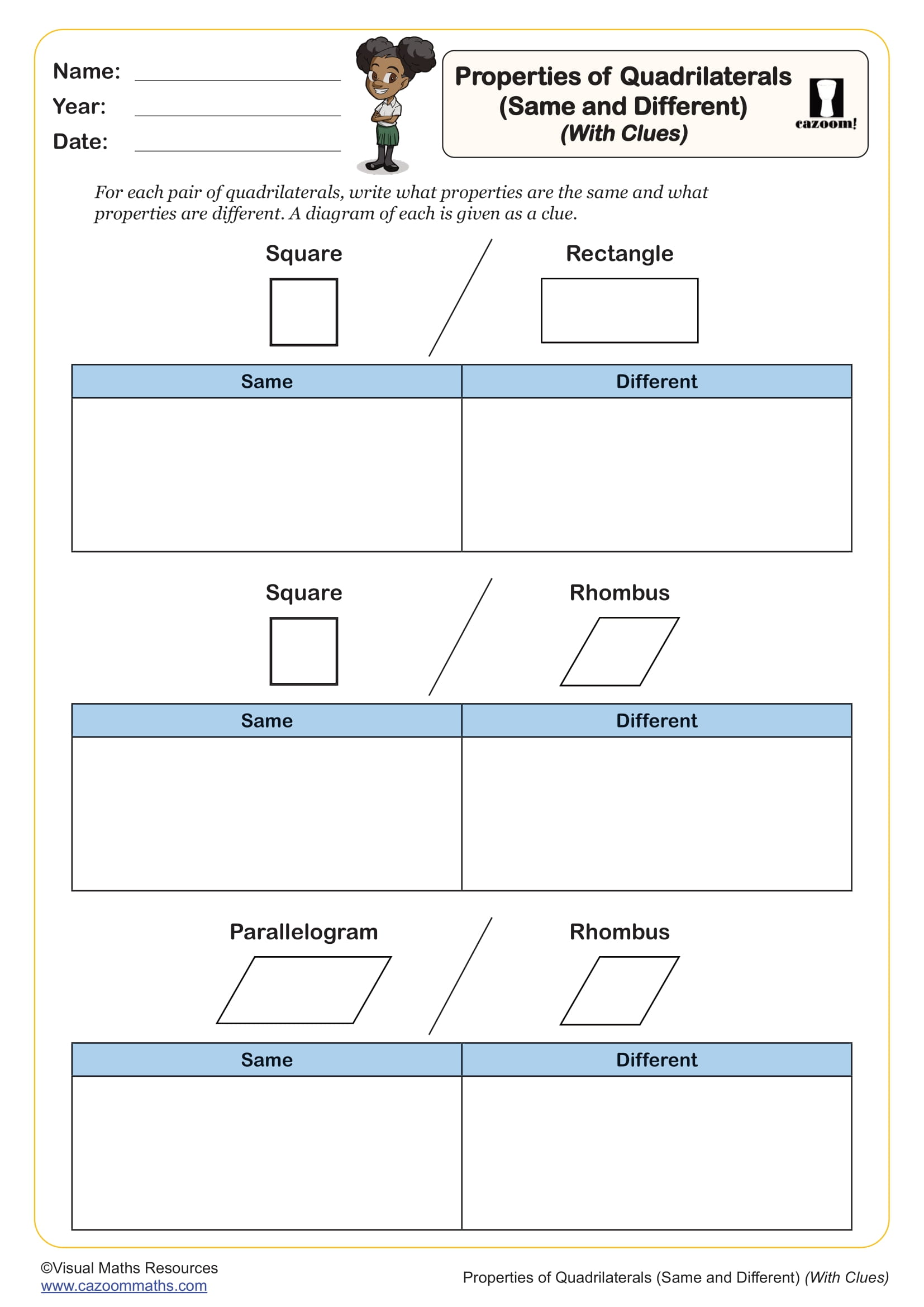
All worksheets are created by the team of experienced teachers at Cazoom Math.
What Shape Properties Do 3rd Graders Need to Describe?
Third graders learn to identify and describe shapes by their defining attributes, including the number of sides, vertices (corners), angles, and whether sides are equal or parallel. The Common Core State Standards expect students to recognize that shapes in different orientations or sizes belong to the same category if they share the same properties, which builds on the foundational shape recognition from earlier grades.
Students frequently lose points on assessments when they count the same vertex twice while tracing around a shape or when they confuse the terms "side" and "corner." Teachers find that using hands-on materials like pattern blocks alongside these worksheets helps students physically trace edges and touch vertices, making the abstract concept concrete before transitioning to written work.
Which Grade Levels Study Describing and Comparing Shapes?
These worksheets target 3rd grade students in elementary school, aligning with geometry standards that build upon the basic shape identification taught in kindergarten through 2nd grade. At this level, students move beyond simply naming shapes to analyzing and comparing their properties systematically.
The difficulty progression within 3rd grade geometry moves from counting sides and vertices on familiar shapes like triangles and squares to working with more complex polygons and understanding transformations like rotations and translations. Students confidently tackle shape comparisons once they recognize that a square is also a rectangle because it meets all the defining properties, even though it has the additional feature of equal sides.
How Do Students Learn About Describing Rotations?
Describing rotations teaches students to recognize that a shape maintains its properties even when turned or flipped. Third graders learn to identify shapes in various orientations and use positional language to describe how shapes have been rotated, which develops spatial reasoning skills essential for advanced geometry.
This skill connects directly to real-world STEM applications, particularly in computer programming and robotics where objects must be recognized regardless of orientation. Video game designers, architects, and engineers regularly work with rotated shapes when creating digital models, designing floor plans, or programming robots to navigate spaces. Understanding that a triangle rotated 90 degrees is still a triangle with the same number of sides and vertices prepares students for these technical fields.
How Can Teachers Use These Worksheets Effectively?
The worksheets provide structured practice that moves from basic shape counting to more complex comparisons and transformations, allowing teachers to differentiate instruction based on student readiness. The included answer keys enable students to self-check their work during independent practice, building confidence and identifying misconceptions before they become ingrained habits.
Many teachers use these worksheets for small group intervention with students who need additional support with geometry vocabulary, as warm-up activities to review previously taught concepts, or as homework assignments that parents can support using the answer keys. The coloring activities work particularly well for kinesthetic learners who benefit from the physical act of identifying and marking shapes, while the counting exercises serve as quick formative assessments to gauge understanding before moving to more challenging transformation concepts.