3rd Grade Estimation Worksheets
All worksheets are created by the team of experienced teachers at Cazoom Math.
What Is Estimation and Why Do Third Graders Learn It?
Estimation teaches students to find approximate values rather than exact answers, a skill aligned with Common Core standard 3.NBT.A.1. At this grade level, estimation primarily involves rounding whole numbers to the nearest ten or hundred to make calculations more manageable. This foundational skill prepares students for estimating sums and differences, checking whether their answers make sense, and developing stronger number intuition.
Many students initially resist estimation because they want to find the "right" answer, viewing approximations as incorrect. Teachers find success when they frame estimation as a mathematical superpower that helps catch errors and make quick decisions. For example, when students estimate 287 + 419 by rounding to 300 + 400 = 700, they can immediately recognize if their exact calculation yields 1,706, signaling they need to recheck their work.
What Should 3rd Grade Students Know About Rounding?
By the end of third grade, students should confidently round three-digit numbers to the nearest ten and hundred using place value understanding. They should recognize that numbers with 5 or more in the ones place round up to the next ten, while numbers with 4 or less round down. Students also need to understand why rounding helps them estimate and check their work rather than viewing it as an isolated skill without purpose.
This builds directly on second grade work with place value and comparing numbers within 1,000. The rounding skills developed in third grade become critical in fourth grade when students round multi-digit numbers to any place and use estimation to assess the reasonableness of calculations. Teachers notice that students who struggle with rounding in third grade often have gaps in place value understanding that need addressing before estimation practice becomes effective.
How Do Rounding Charts Help Students Learn Estimation?
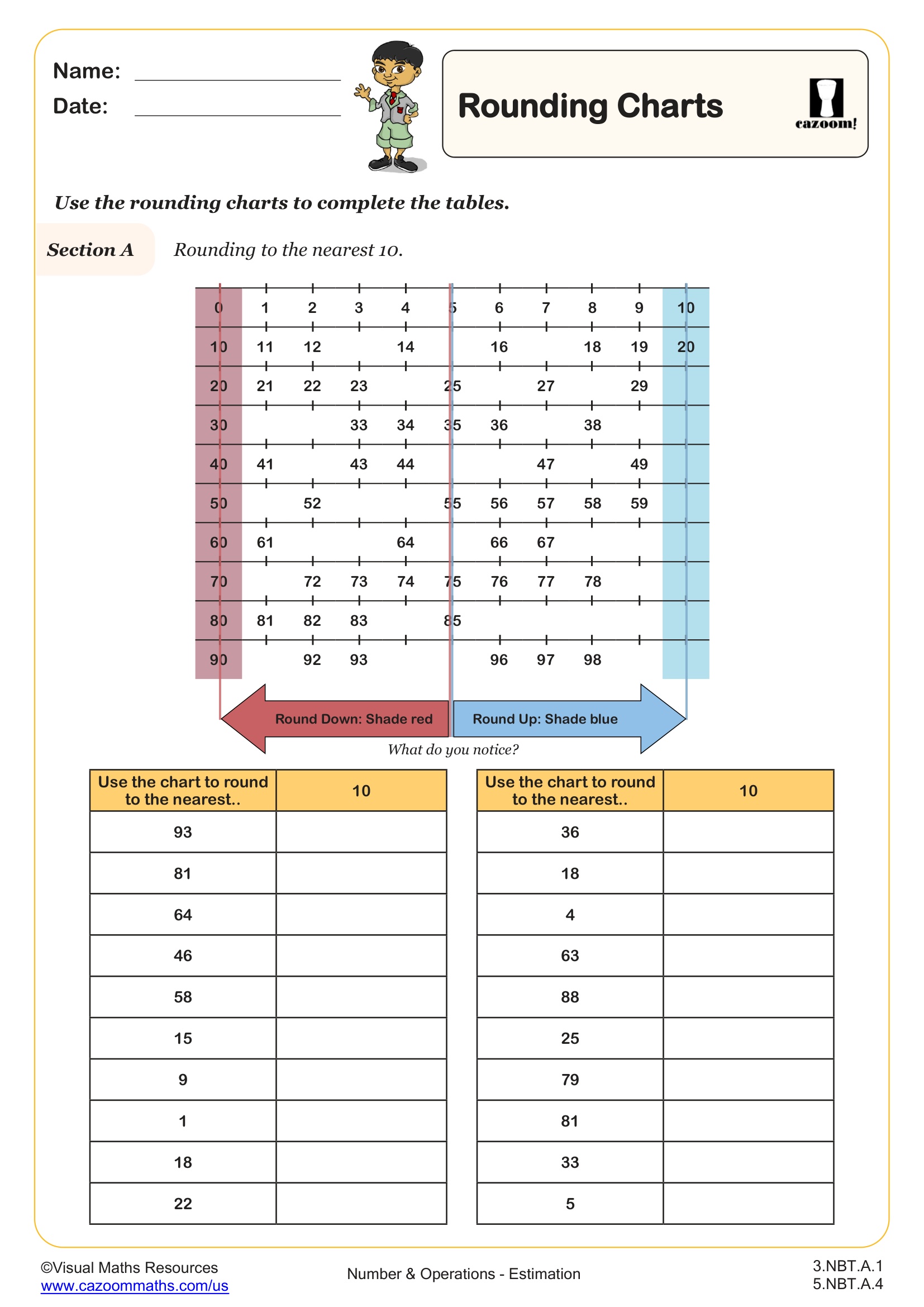
Rounding charts provide visual frameworks that help students see where numbers fall between benchmark values, making the abstract concept of rounding concrete. These charts typically show number lines or hundred charts where students can physically identify whether a number is closer to one benchmark or another. The visual representation helps students move beyond memorizing the "5 or more, raise the score" rhyme to genuinely understanding proximity and place value relationships.
This visual estimation skill transfers directly to real-world contexts students encounter regularly. When shopping, estimating whether three items costing $2.89, $4.15, and $5.92 will exceed a $15 budget requires quick rounding to $3, $4, and $6. Scientists and engineers use similar estimation techniques when making quick calculations in the field, checking whether measurements fall within expected ranges, or determining if more precise calculations are necessary for a given situation.
How Can Teachers Use These Estimation Worksheets Effectively?
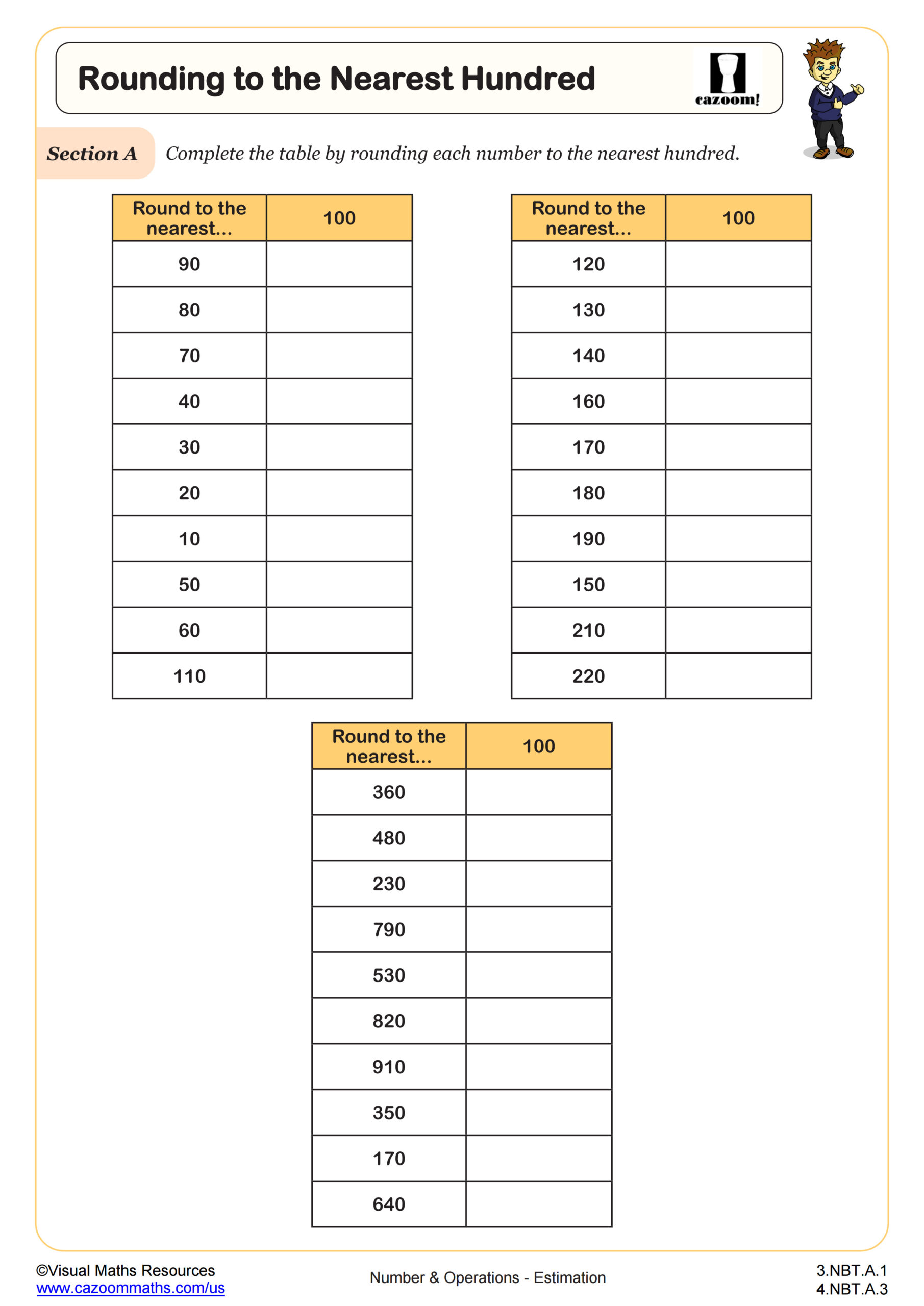
The worksheets provide structured practice that progresses from visual rounding charts to independent rounding problems, allowing students to build confidence with scaffolded support. The rounding charts worksheet helps students develop the conceptual foundation, while the rounding to the nearest hundred worksheet reinforces the procedural fluency needed for automaticity. Complete answer keys enable students to self-check their work during independent practice or allow teachers to quickly assess understanding during formative assessments.
These worksheets work well as bell ringers to activate number sense at the start of math class or as targeted intervention for students who rush through calculations without checking reasonableness. Teachers often assign one section as homework following direct instruction, then use another section for partner work where students explain their rounding decisions to each other. The worksheets also serve effectively as quick reviews before state assessments, helping students refresh estimation strategies they'll need for multi-step word problems where exact calculations aren't always necessary.