3rd Grade Foundations of Multiplication Worksheets
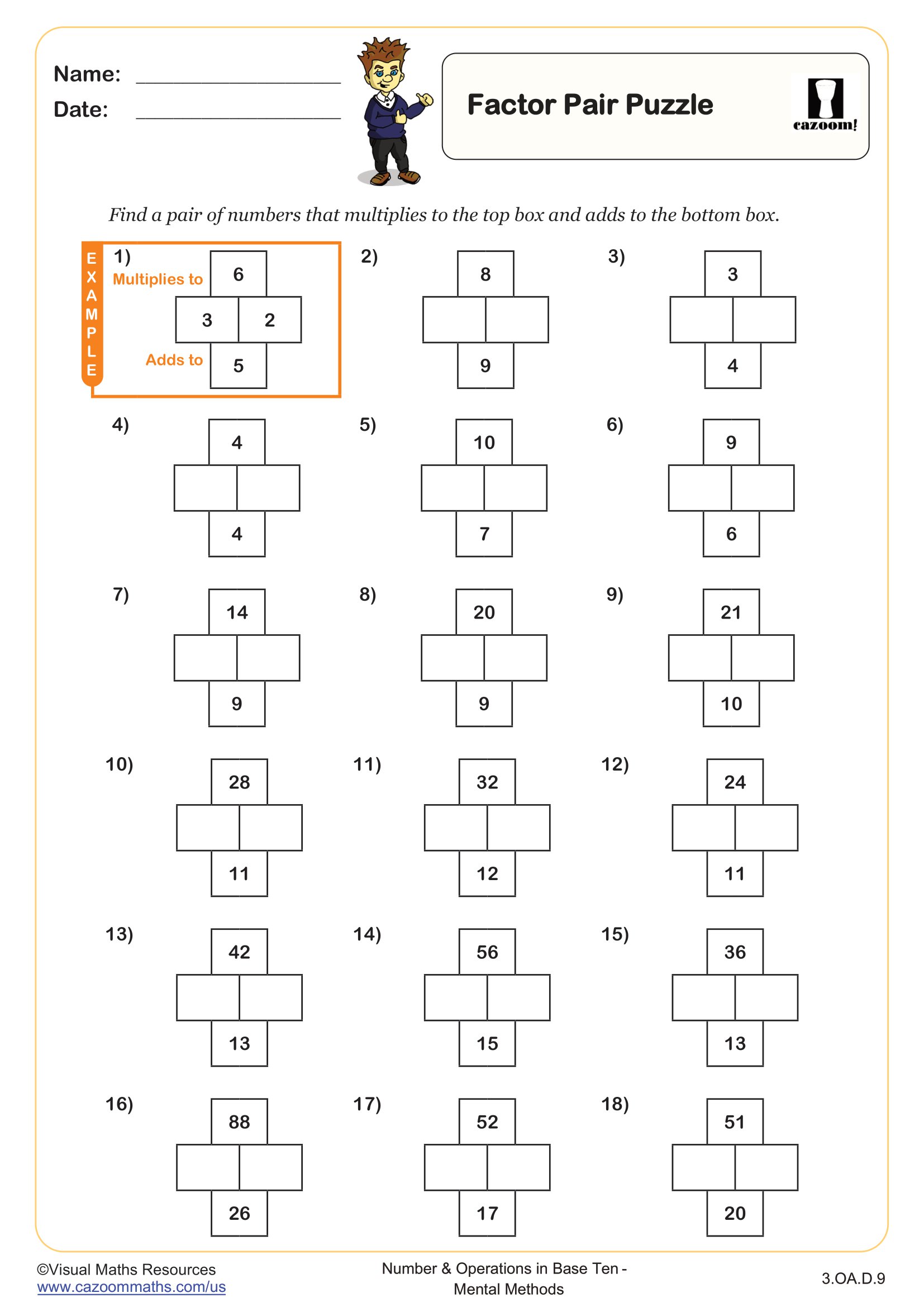
Factor Pair Puzzle
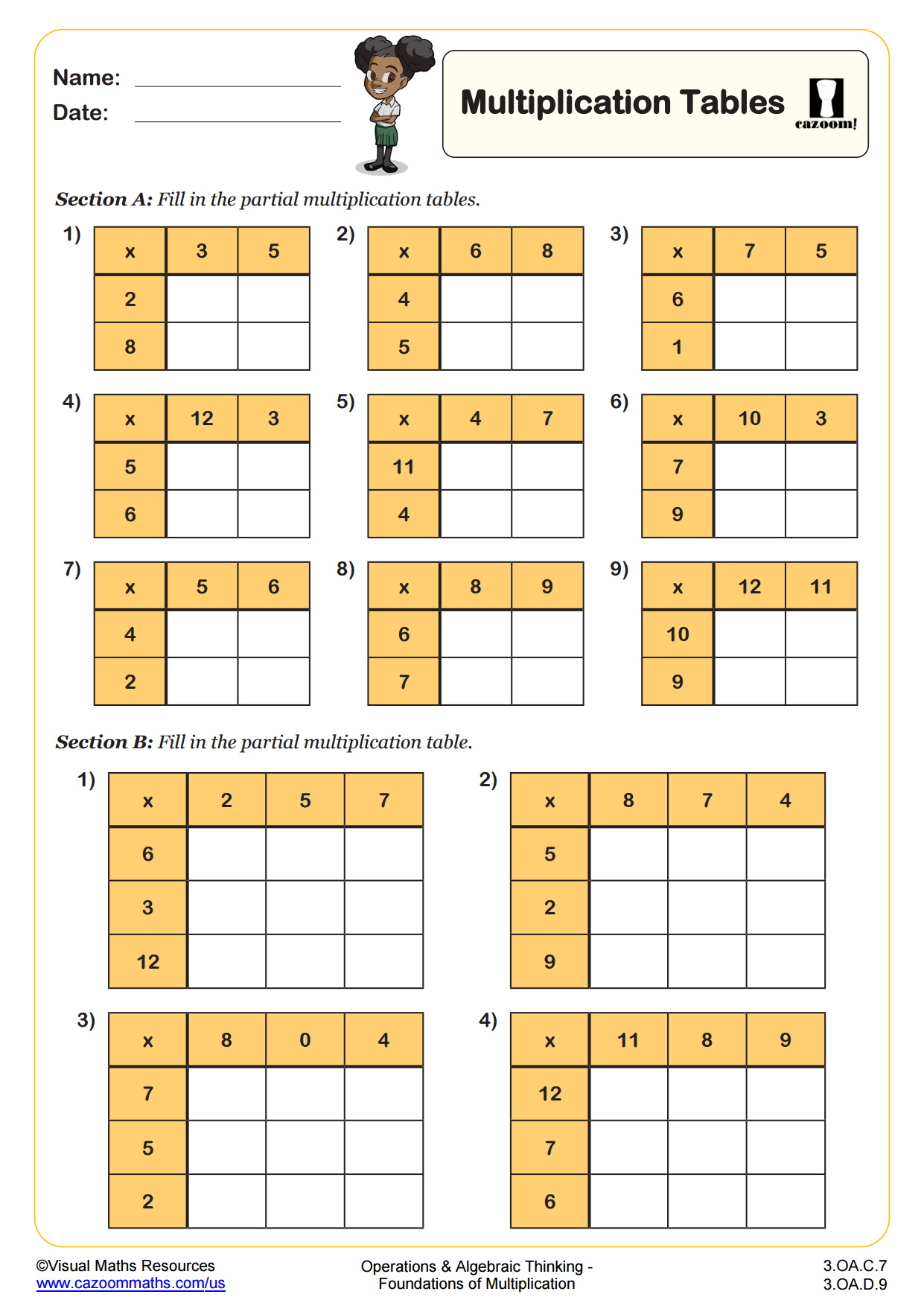
Multiplication Tables
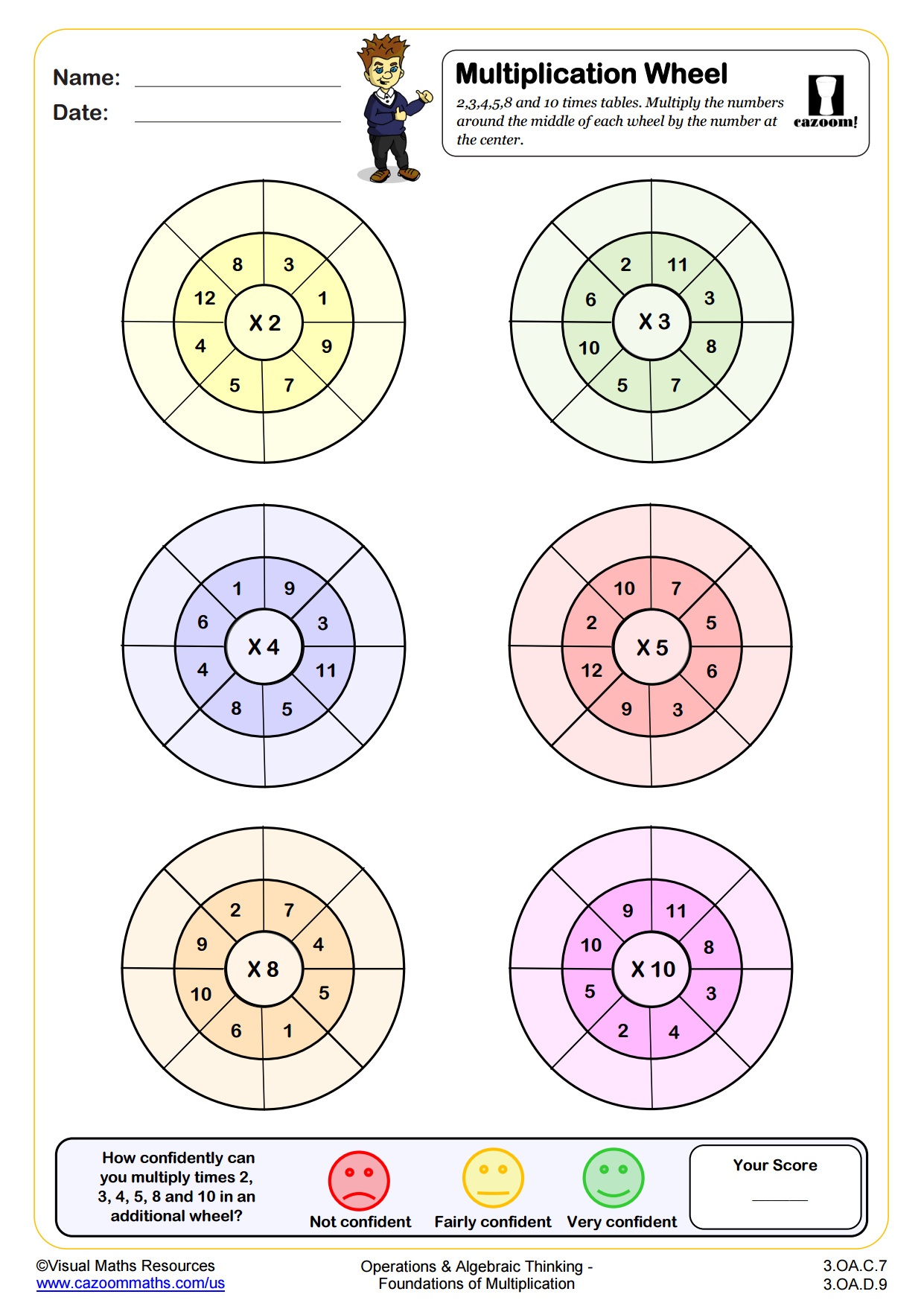
Multiplication Wheels (2,3,4,5,8,&10 Times Tables)
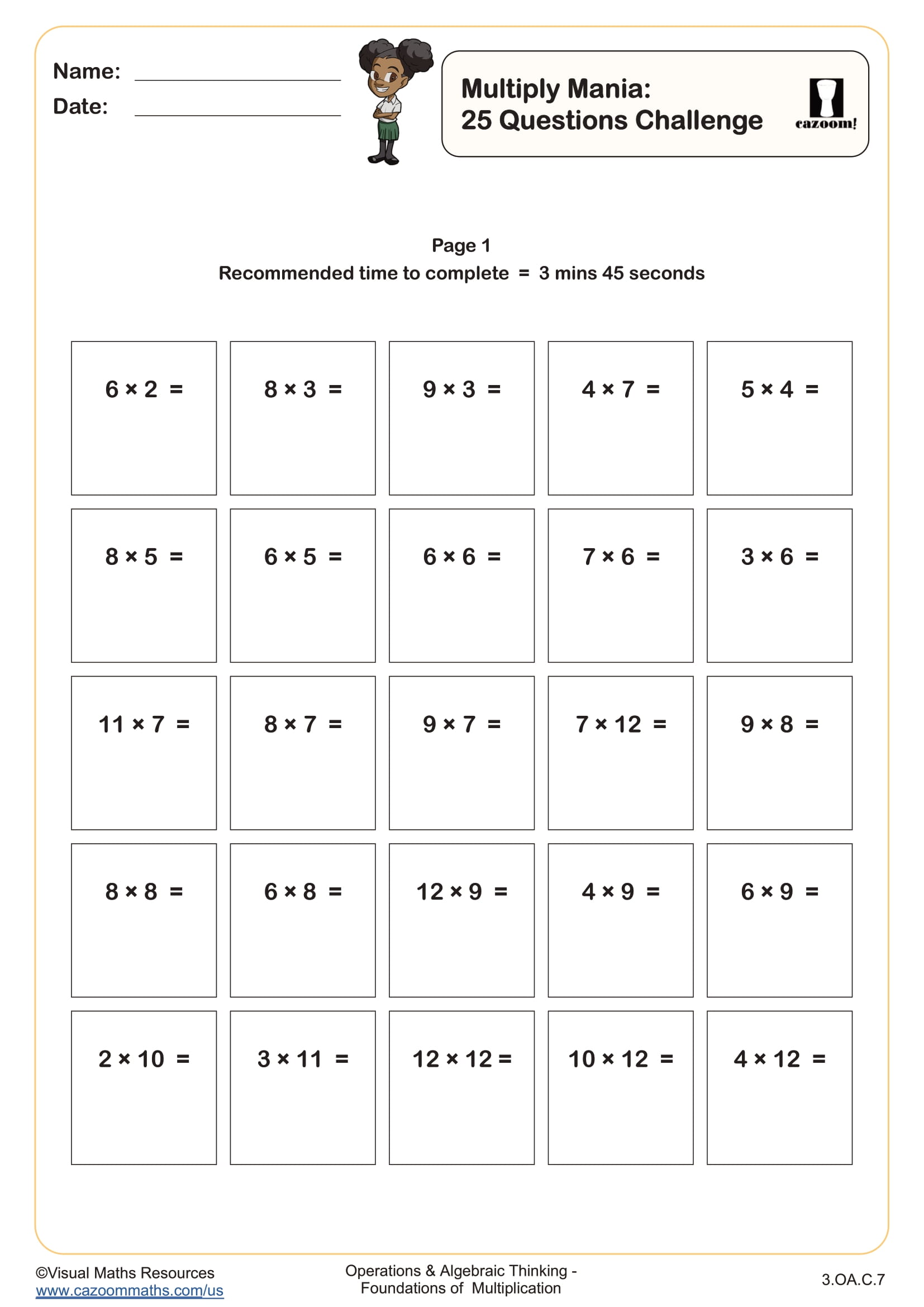
Multiply Mania: 25 Questions Challenge
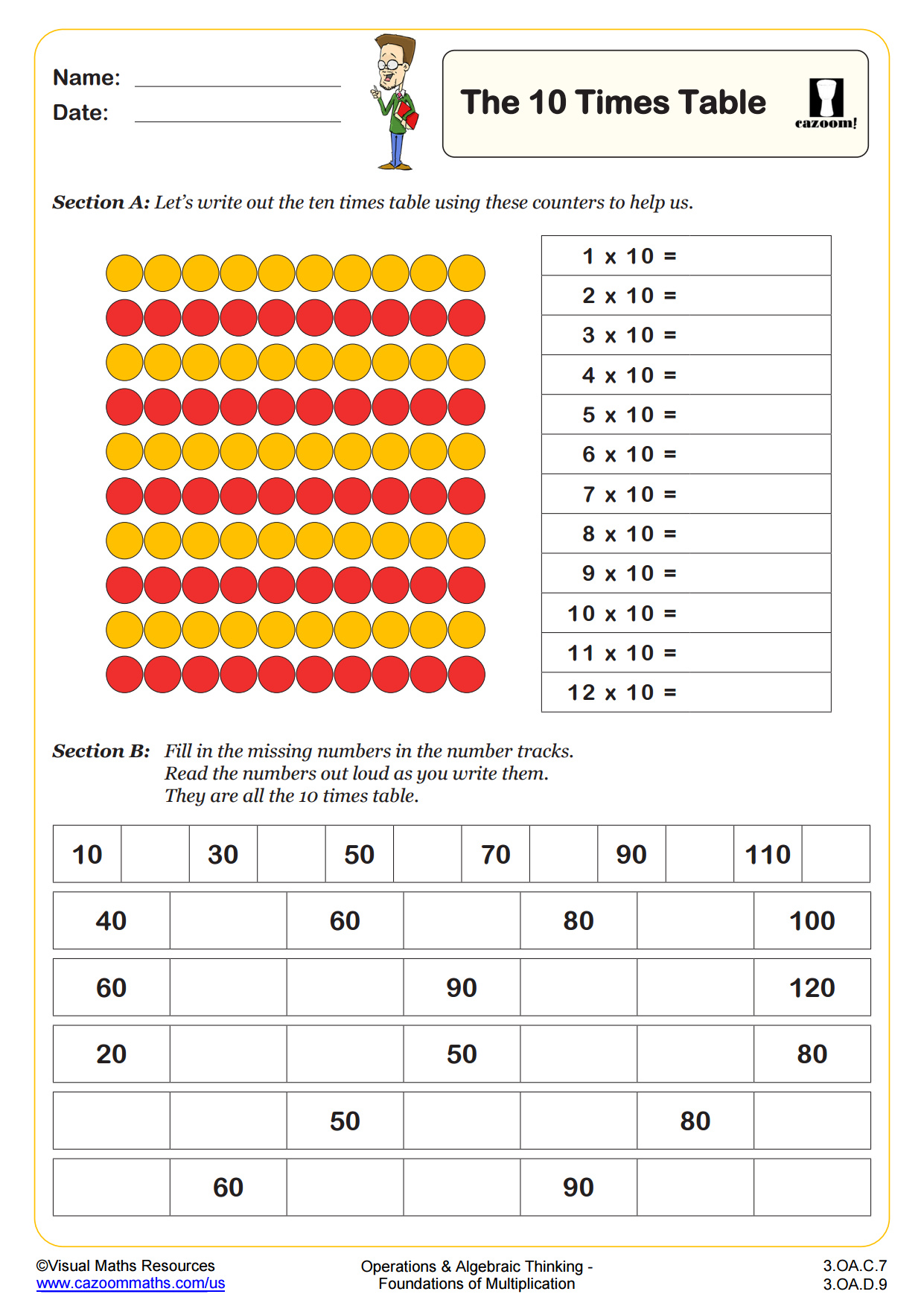
The Eight Times Table
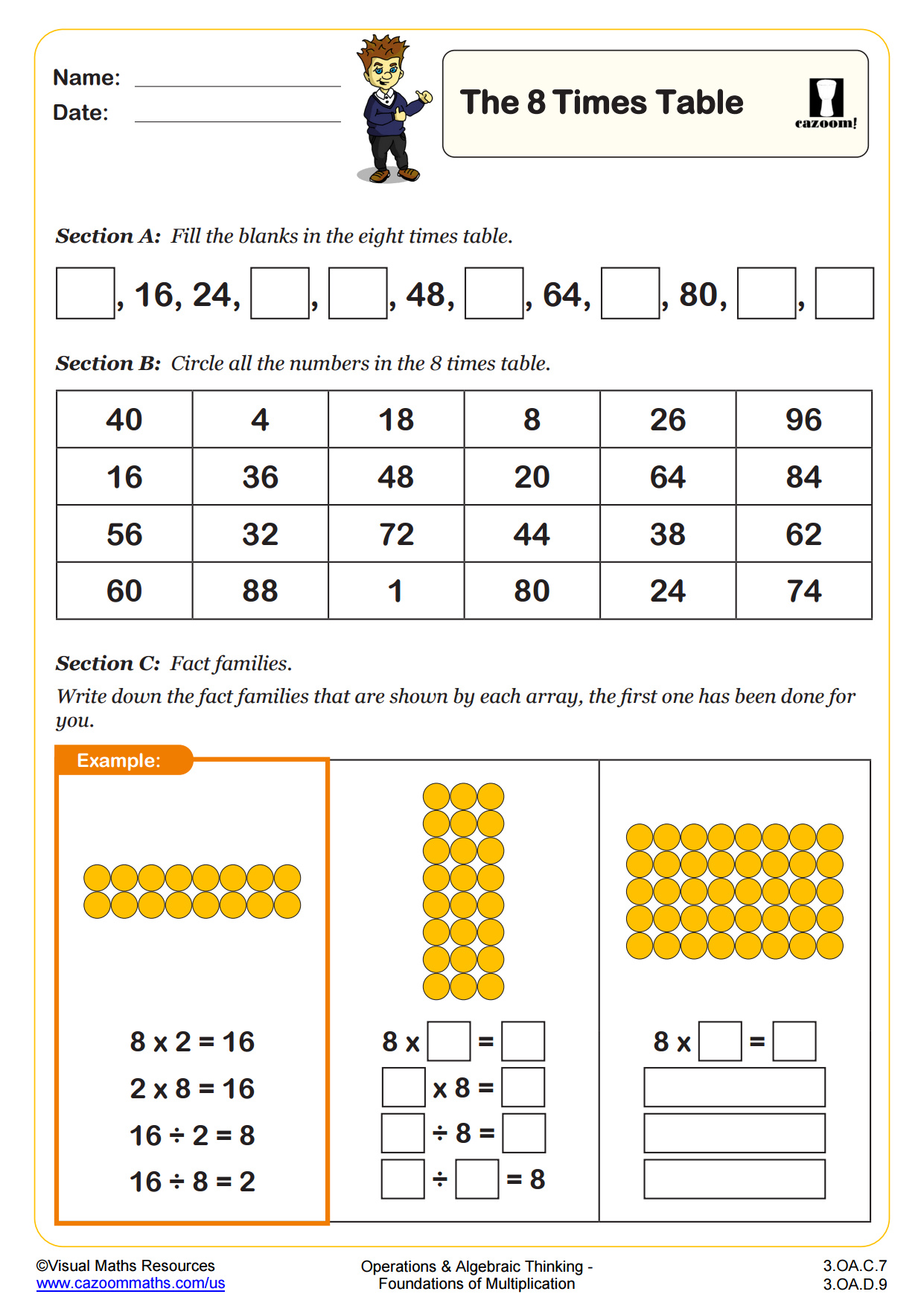
The Five Times Table
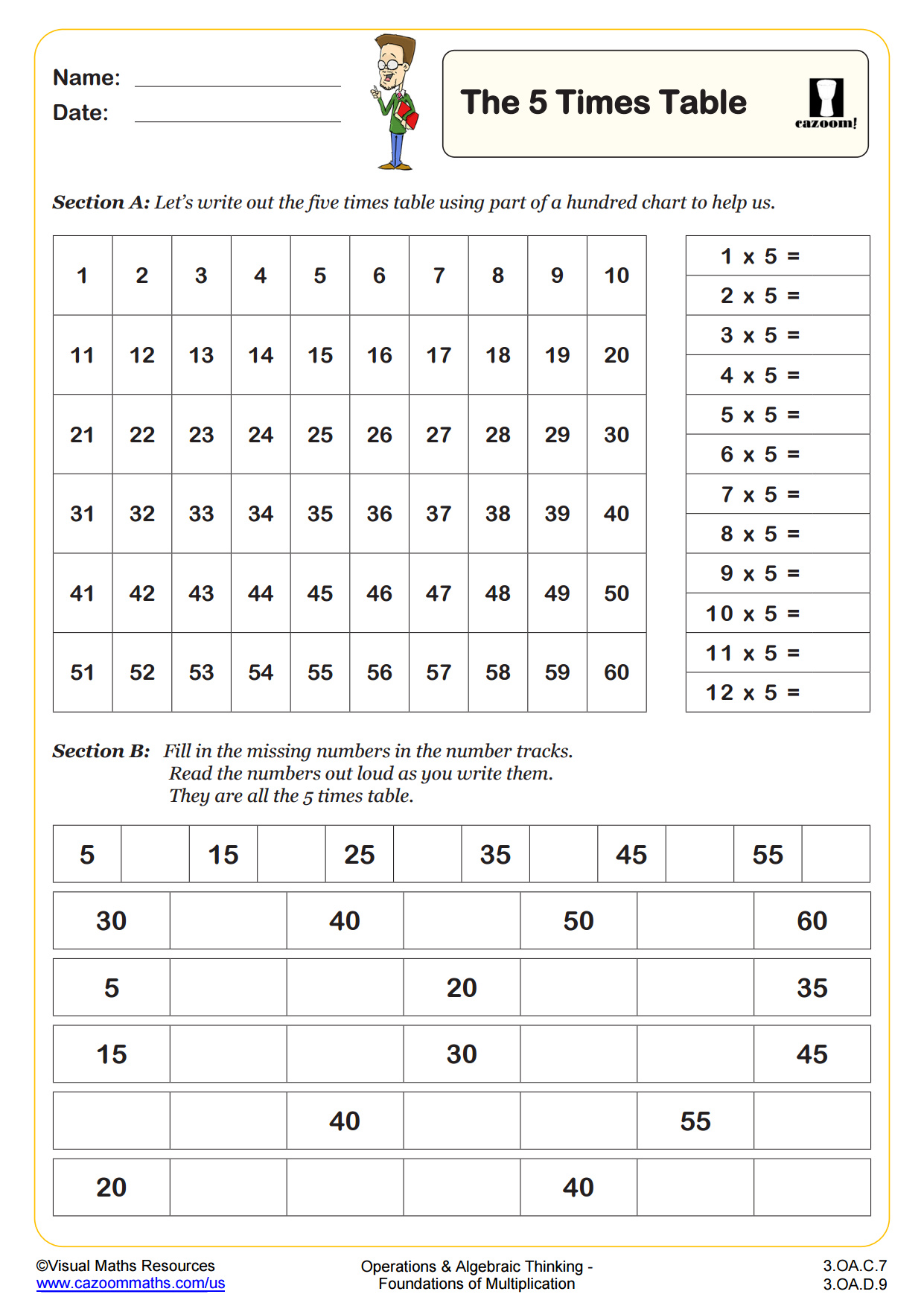
The Four Times Table
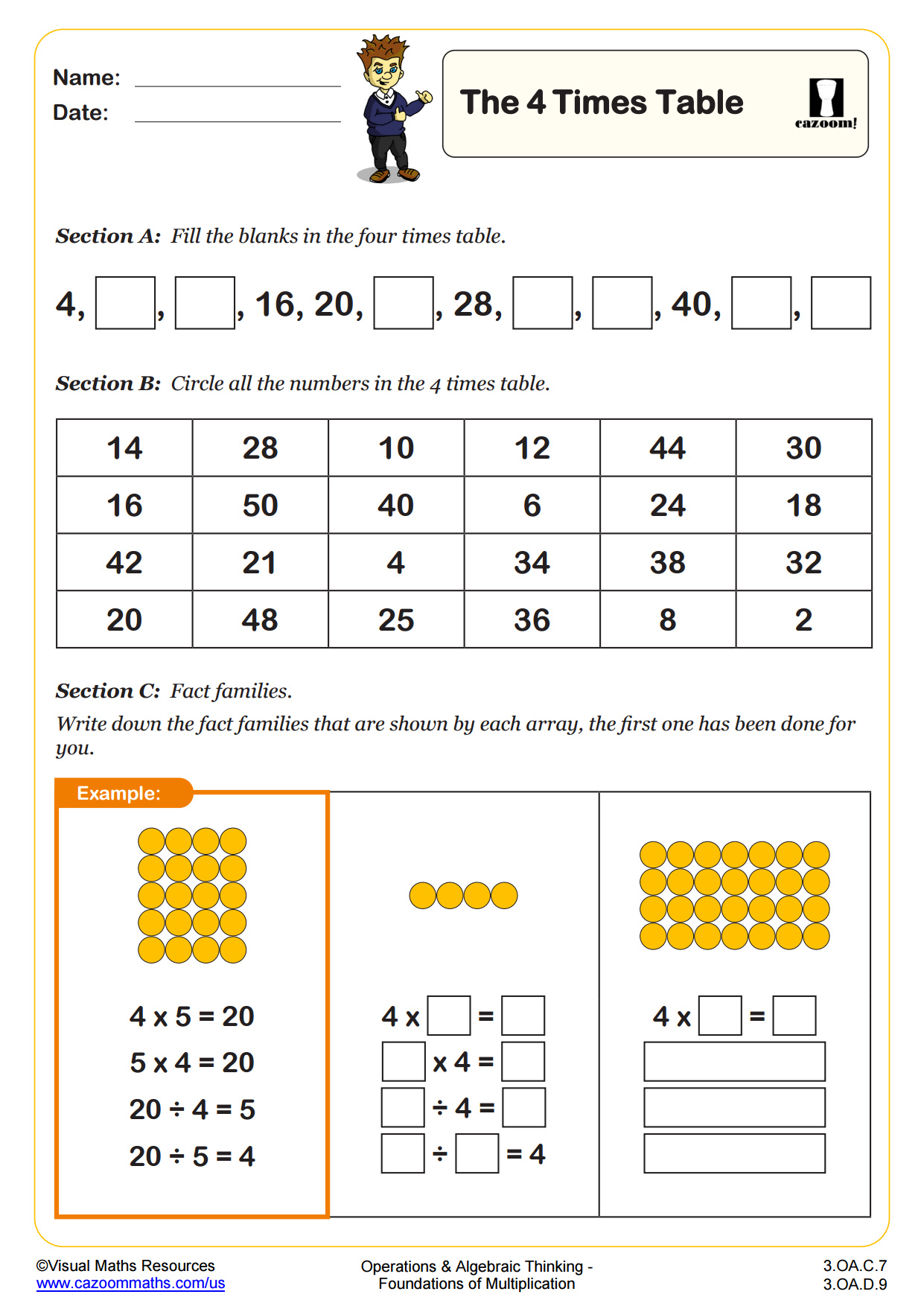
The Ten Times Table
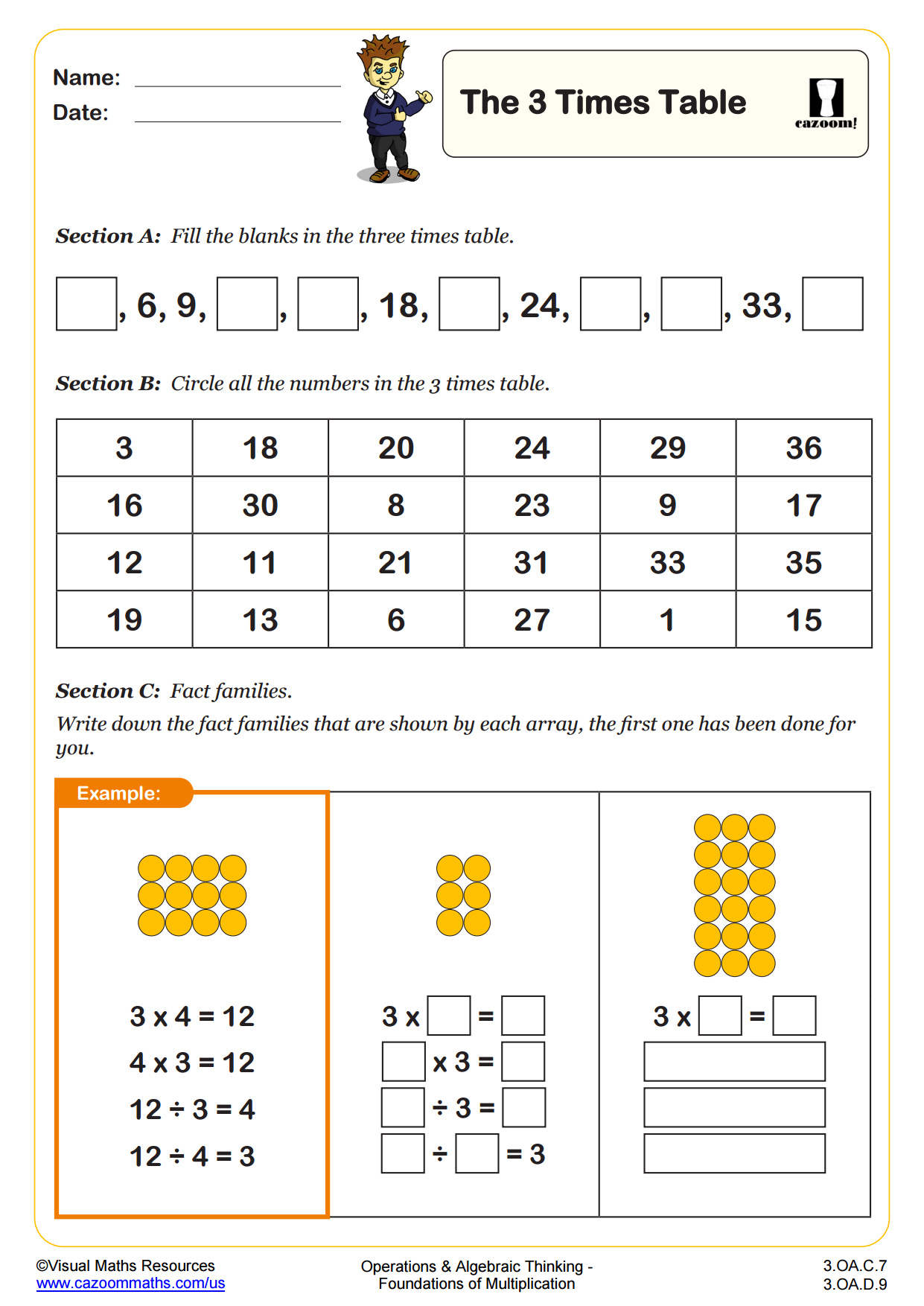
The Three Times Table
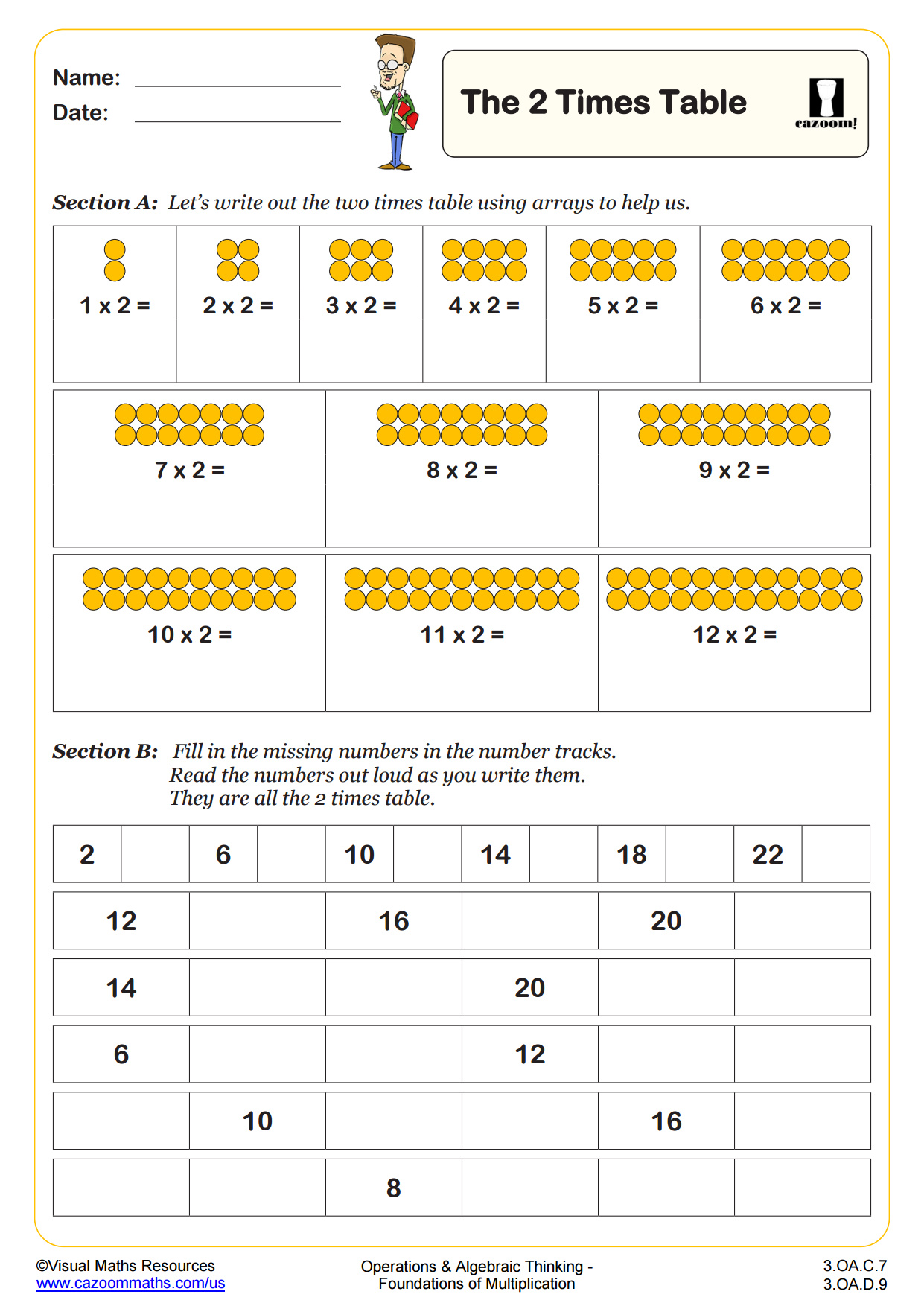
The Two Times Table
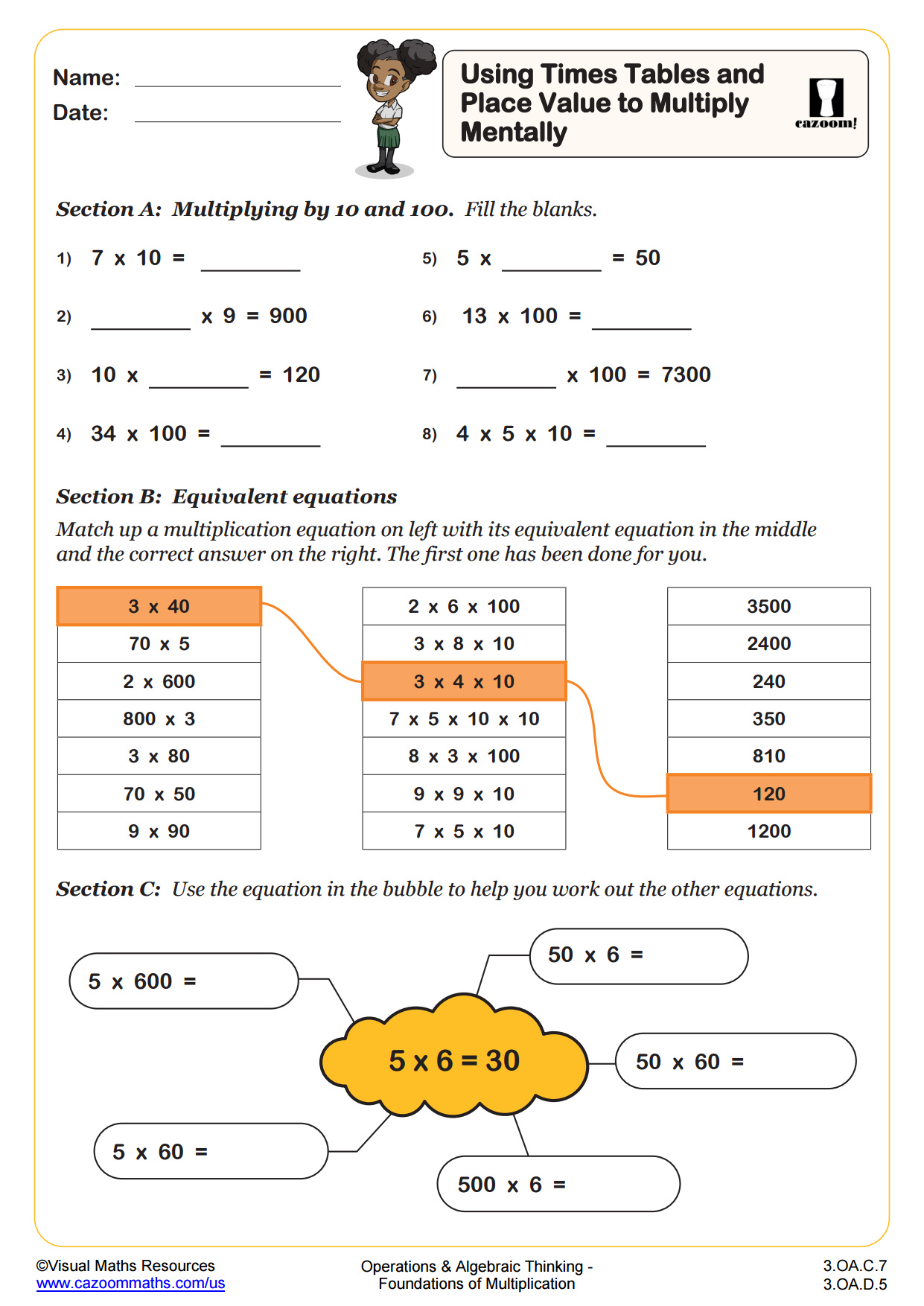
Using Times Tables and Place Value to Multiply Mentally
All worksheets are created by the team of experienced teachers at Cazoom Math.
What Are the Foundations of Multiplication Students Need to Master?
The foundations of multiplication include understanding what multiplication represents (repeated addition and equal groups), identifying factors and multiples, recognizing factor pairs, and achieving fluency with multiplication tables through 12×12. These concepts align with Common Core standards 3.OA.A.1 through 3.OA.C.7, which require third graders to interpret products, understand properties of multiplication, and multiply within 100.
A common misconception emerges when students confuse factors with multiples—they'll sometimes list multiples when asked for factors of 12 (writing 24, 36, 48 instead of 1, 2, 3, 4, 6, 12). Teachers find that using concrete examples helps: factors are the numbers you multiply together, while multiples are the results you get. Factor pair puzzles particularly help students see this relationship because they physically connect two factors to create one product.
Which Grade Levels Study Foundations of Multiplication?
This collection specifically targets third grade students during elementary school, when multiplication concepts are formally introduced and developed. Third grade represents a pivotal year where students transition from addition and subtraction as their primary operations to understanding multiplication and division as related but distinct operations.
The worksheets progress from basic factor identification to more complex factor pair relationships and systematic multiplication table practice. Early worksheets focus on recognizing factors of smaller numbers and understanding what multiplication represents, while later materials challenge students to identify all factor pairs for larger numbers and see patterns within multiplication tables. This scaffolding matches how standardized tests assess multiplication, starting with straightforward fact recall before testing conceptual understanding through word problems and multi-step applications.
How Do Factor Pairs Build Multiplication Understanding?
Factor pairs are two numbers that multiply together to produce a specific product—for example, 3 and 4 are a factor pair for 12 because 3×4=12. Understanding factor pairs helps students see multiplication as a relationship between numbers rather than just isolated facts to memorize. Students learn to systematically find all factor pairs by testing divisibility, which simultaneously strengthens their division skills and number sense.
This concept directly connects to real-world problem solving in fields like architecture and design, where professionals determine dimensions that create specific areas. When a landscape architect designs a rectangular garden that must be 24 square feet, understanding factor pairs (1×24, 2×12, 3×8, 4×6) reveals all possible dimension options. Engineers use the same reasoning when determining gear ratios, while computer programmers apply factor knowledge when organizing data into arrays and optimizing algorithms.
How Can Teachers Use These Multiplication Worksheets Effectively?
The worksheets provide structured practice that moves from conceptual understanding to computational fluency, with varied formats that keep students engaged while reinforcing the same underlying concepts. The progression from basic factors through multiplication tables allows teachers to match worksheet difficulty to individual student needs, using earlier sheets for students who need additional support while challenging advanced learners with factor pair puzzles that require more strategic thinking.
Many teachers use these materials during math centers or stations, where students can work independently with immediate access to answer keys for self-checking. The worksheets work well for intervention groups targeting specific gaps in multiplication understanding, as homework assignments that reinforce classroom instruction, or as warm-up activities that maintain skills between units. Teachers also find them valuable for paired work, where one student solves problems while their partner checks answers, promoting mathematical discussion about why certain numbers are factors and others aren't.