3rd Grade Fractions Decimals Percentages Worksheets
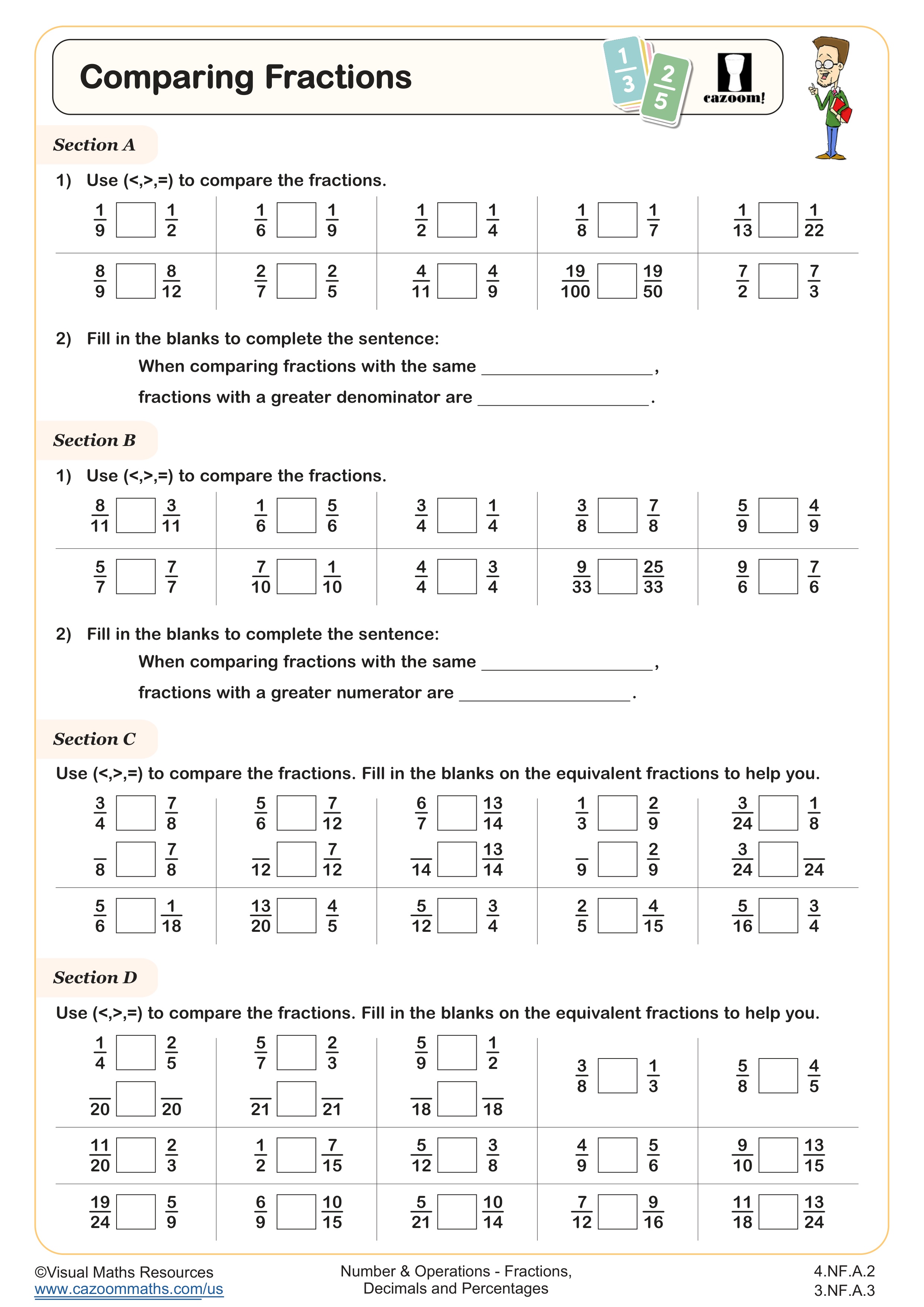
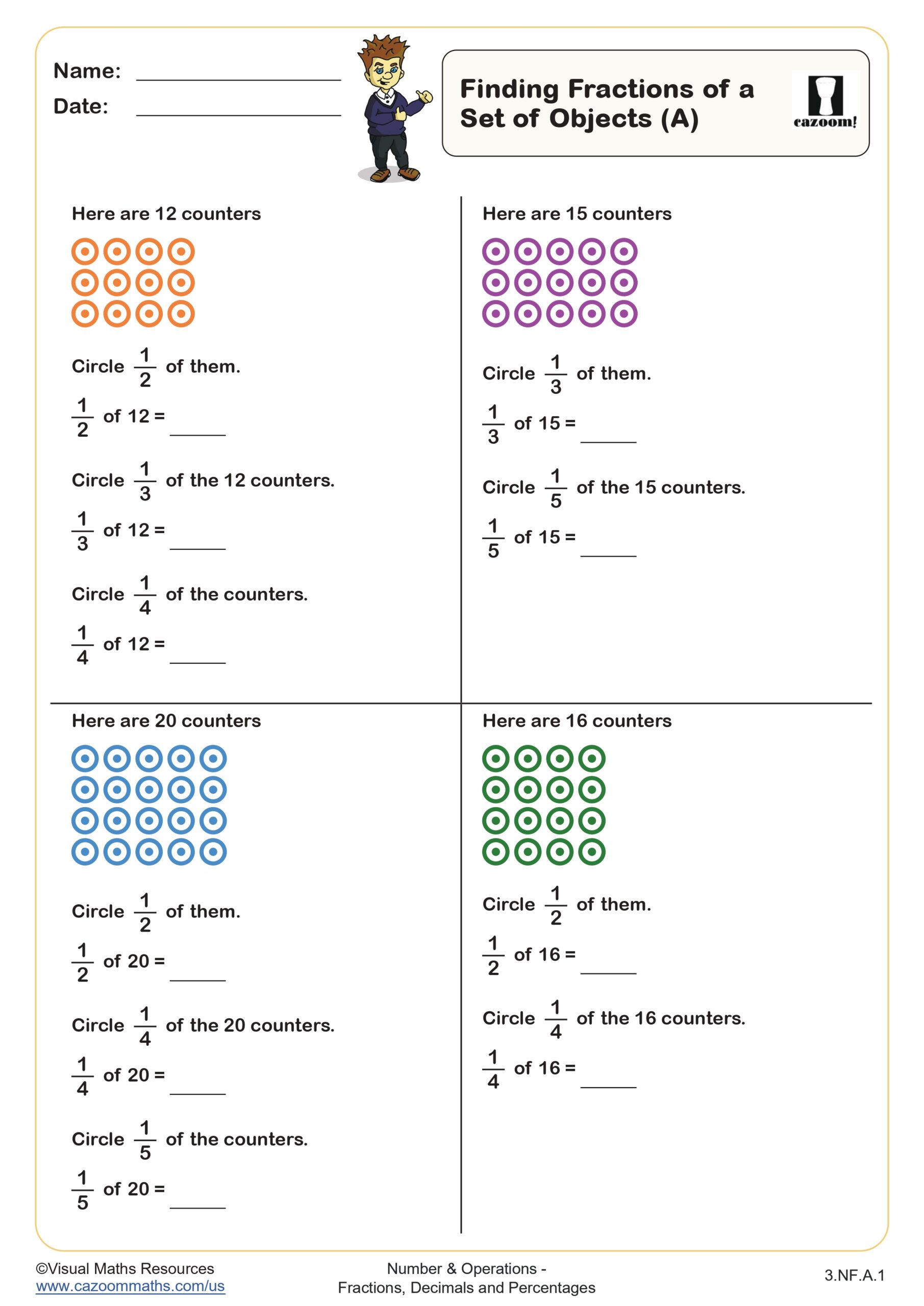
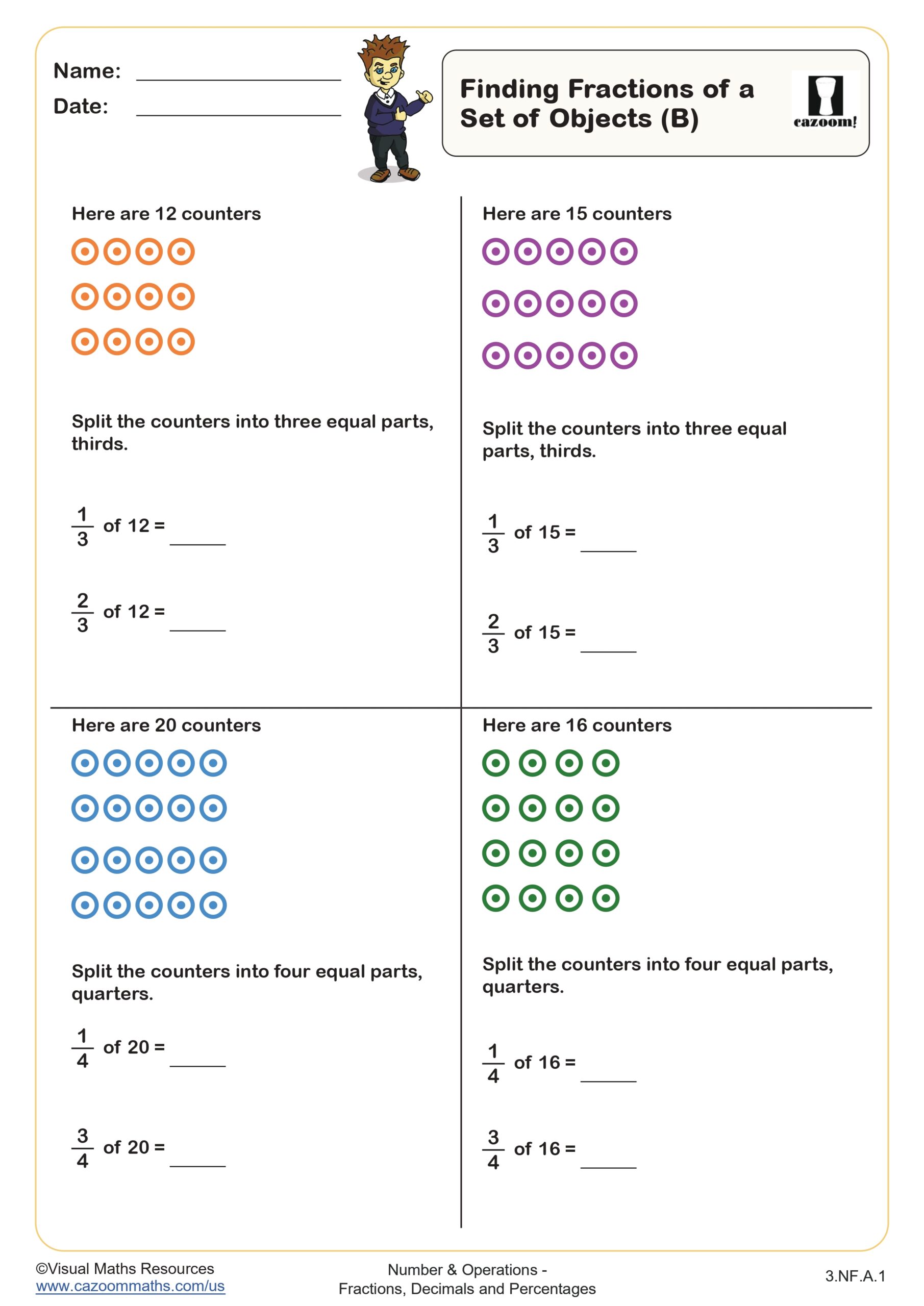
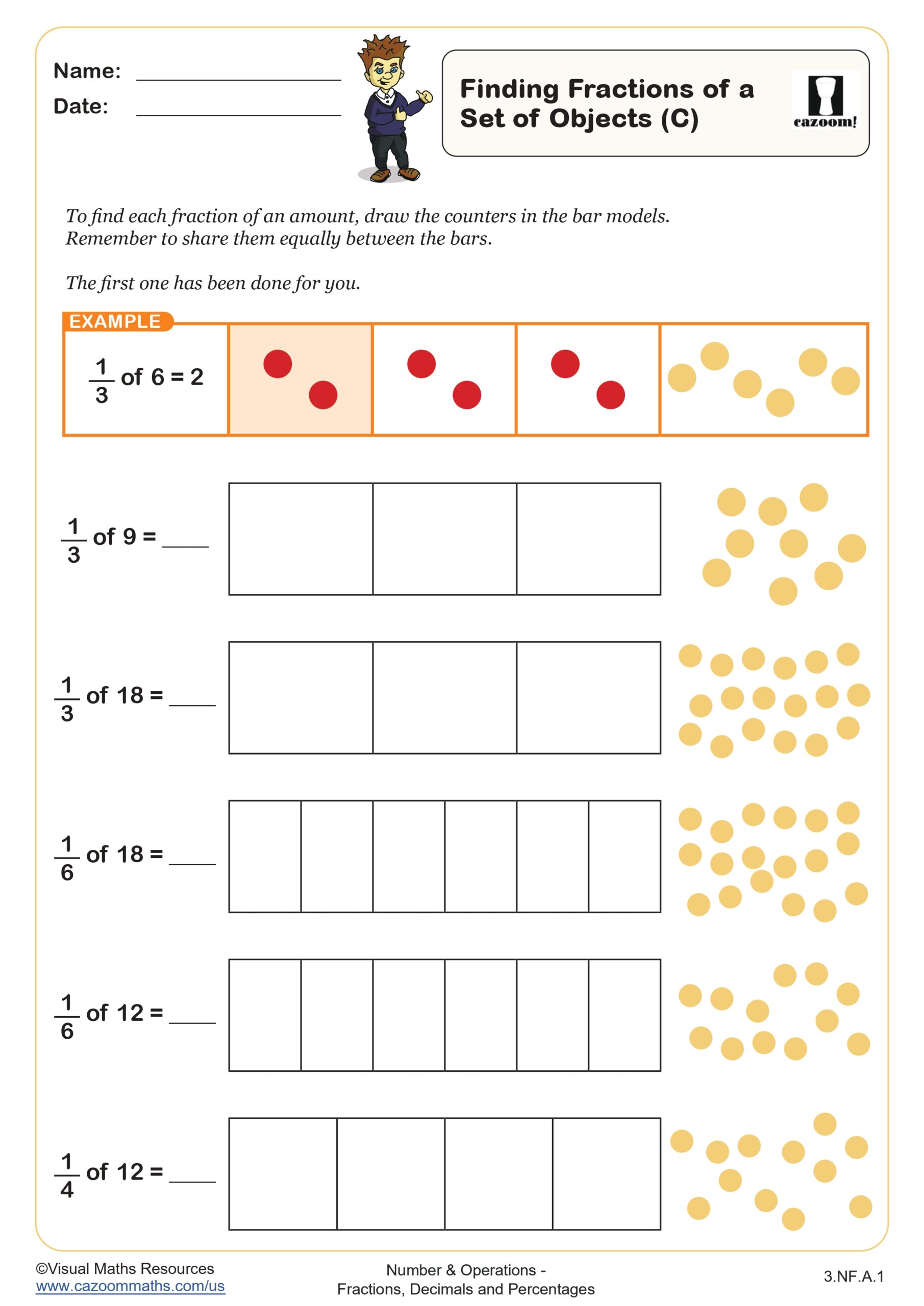
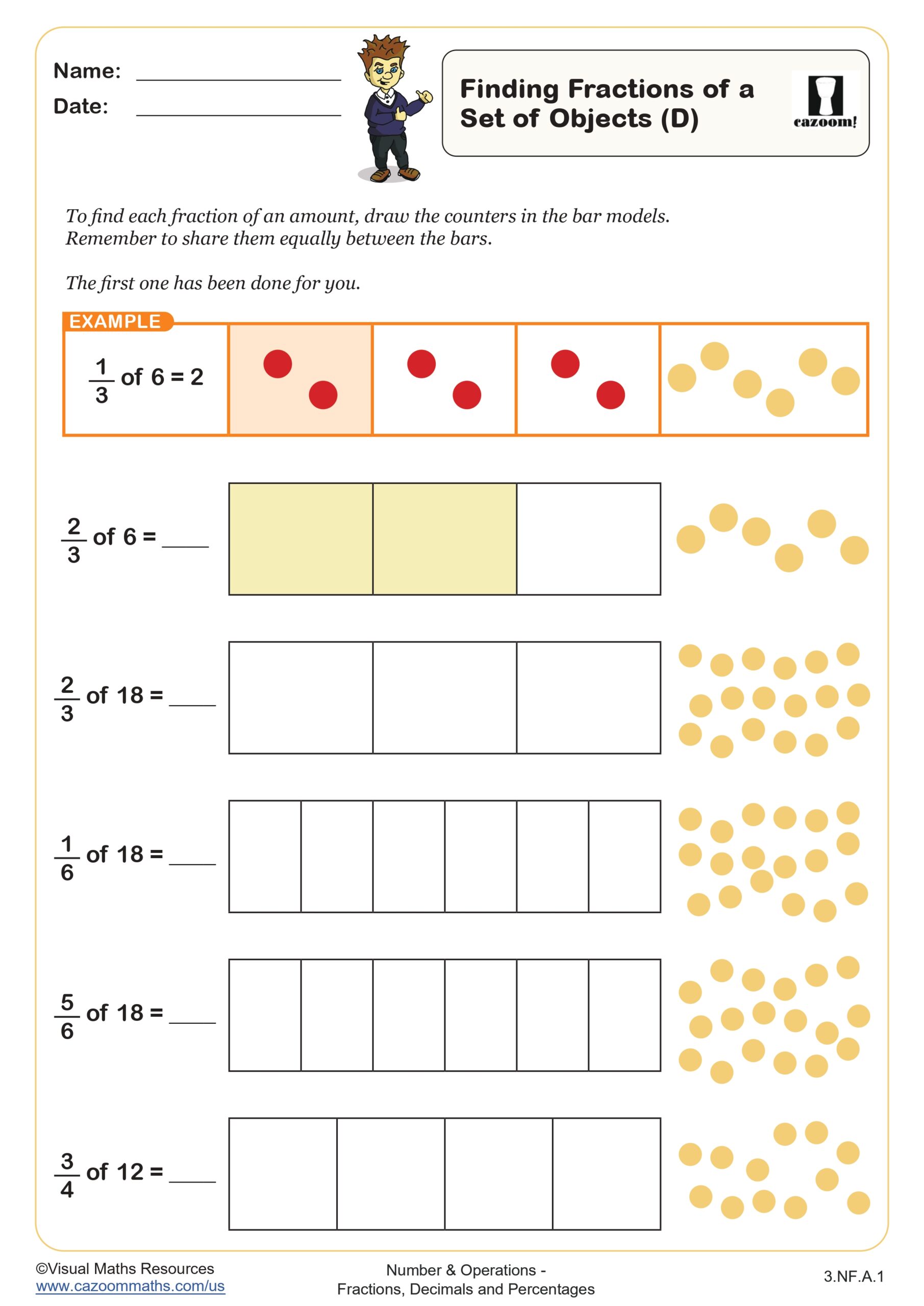
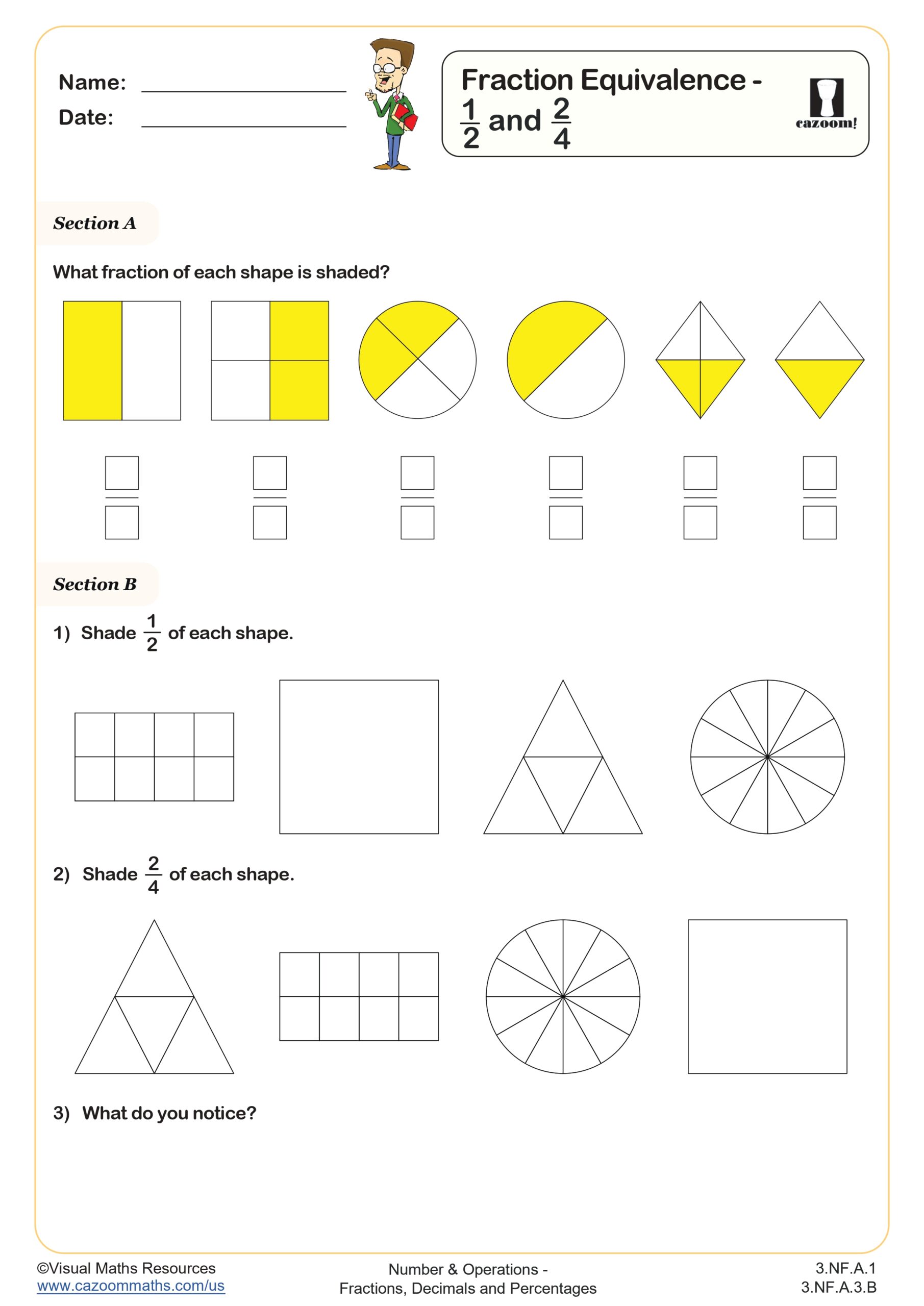
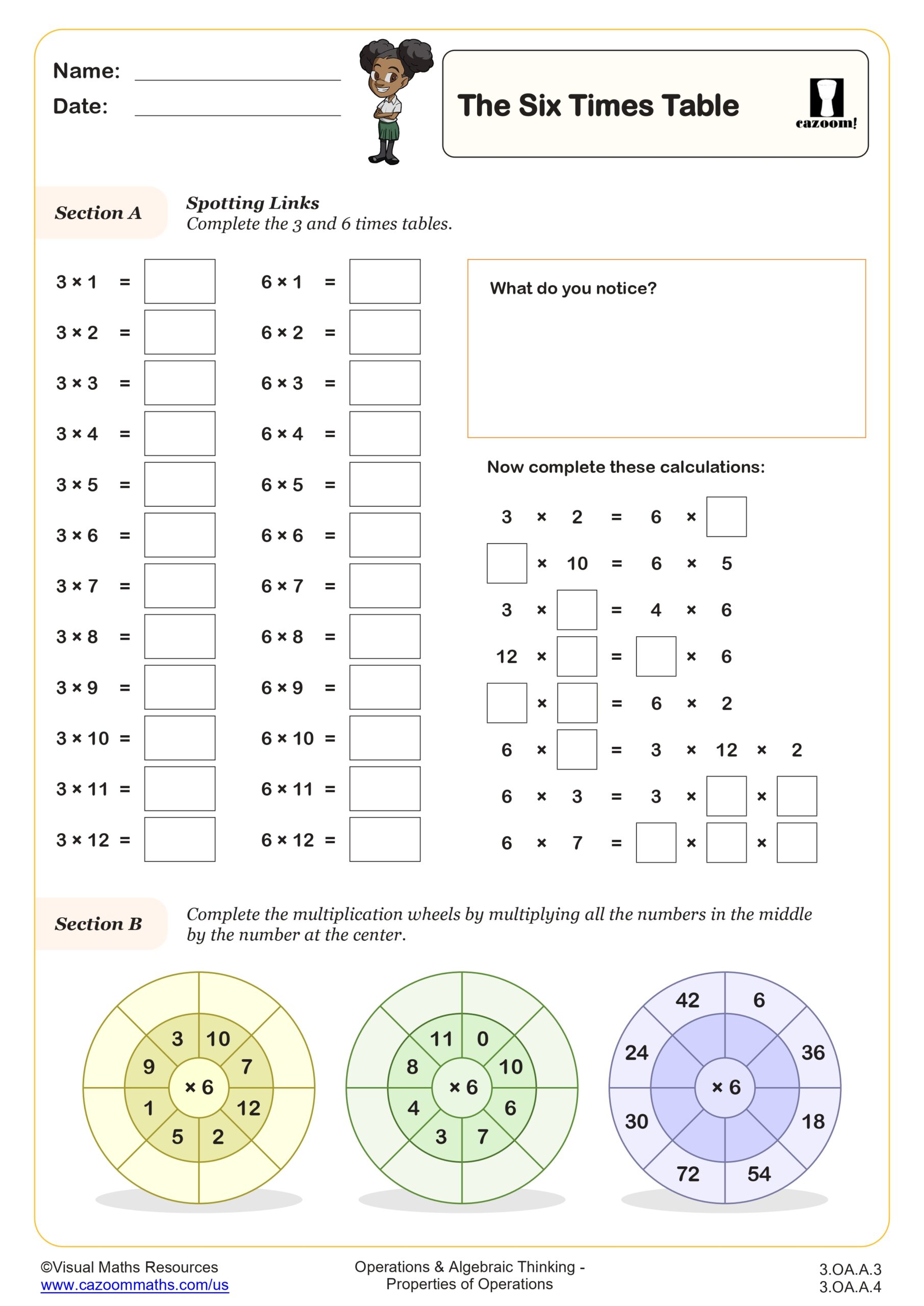
All worksheets are created by the team of experienced teachers at Cazoom Math.
What Are Fractions, Decimals, and Percentages?
Fractions, decimals, and percentages are three different ways to represent parts of a whole or values between whole numbers. A fraction like 3/4 shows a part-to-whole relationship, a decimal like 0.75 expresses the same value using place value, and a percentage like 75% describes it as parts per hundred. Understanding that these three forms are interchangeable representations of the same quantity builds number sense that students need throughout middle and high school mathematics.
Students often struggle when they memorize conversion procedures without understanding equivalence. Teachers notice significant improvement when students use visual models like number lines or hundreds grids to see that 1/4, 0.25, and 25% occupy the same position. A common error occurs when students convert 1/2 to a decimal and write 0.12 instead of 0.5, confusing the numerator and denominator with decimal place values rather than performing the division operation.
What Grade Levels Study Fractions, Decimals, and Percentages?
These worksheets target 3rd grade students in elementary school, aligning with standards that introduce the foundational concepts of fractions and decimals. At this level, students begin comparing simple decimals, understanding fractions as parts of a whole, and exploring the connections between different number forms. The worksheets provide developmentally appropriate practice that builds on whole number understanding while preparing students for more complex rational number work.
The progression within 3rd grade moves from concrete to abstract understanding. Students start by estimating with familiar contexts like shopping bills before moving to comparing decimals and converting between representations. Teachers notice that students handle tenths and hundredths more confidently when they first master benchmark fractions like 1/2, 1/4, and 1/10. The recurring decimals and multi-step conversions in this collection challenge advanced 3rd graders while still remaining accessible through scaffolded problem sets.
How Do You Convert Between Fractions, Decimals, and Percentages?
Converting between fractions, decimals, and percentages requires understanding the relationships between these representations. To convert a fraction to a decimal, divide the numerator by the denominator (3/4 becomes 0.75). To change a decimal to a percentage, multiply by 100 and add the percent symbol (0.75 becomes 75%). Converting percentages to fractions involves writing the percentage over 100 and simplifying (75% becomes 75/100, which simplifies to 3/4). Students lose points on assessments when they skip the simplification step or misplace decimal points during conversion.
These conversion skills have direct applications in real-world financial literacy and data interpretation. When students compare sale prices showing "25% off" versus "save $0.25 on every dollar," they apply decimal and percentage equivalence. Scientists use decimal and percentage conversions when analyzing experimental results, calculating error rates, or reporting data findings. Understanding that a 0.03 error rate equals 3% helps students interpret scientific accuracy and precision in STEM contexts they'll encounter throughout their education.
How Should Teachers Use These Fractions, Decimals, and Percentages Worksheets?
The worksheets provide structured practice with varying difficulty levels, allowing teachers to differentiate instruction based on student readiness. Each worksheet focuses on a specific skill within the broader topic, so teachers can assign targeted practice after introducing concepts through hands-on activities or direct instruction. The answer keys enable quick assessment of student understanding and help identify patterns in errors that might indicate conceptual gaps needing reteaching.
Many teachers use these worksheets during math centers or stations, pairing students for collaborative problem-solving where they can discuss their reasoning. The estimating shopping bills problems work well as warm-up activities that connect to students' everyday experiences, while the conversion worksheets provide valuable homework practice that reinforces classroom learning. Teachers also find these useful for intervention with students who need additional repetition or as challenge material for students ready to move beyond grade-level expectations. The consistent format across worksheets helps students focus on mathematical thinking rather than decoding unfamiliar directions.