3rd Grade Fractions Worksheets
Compare and Order Fractions
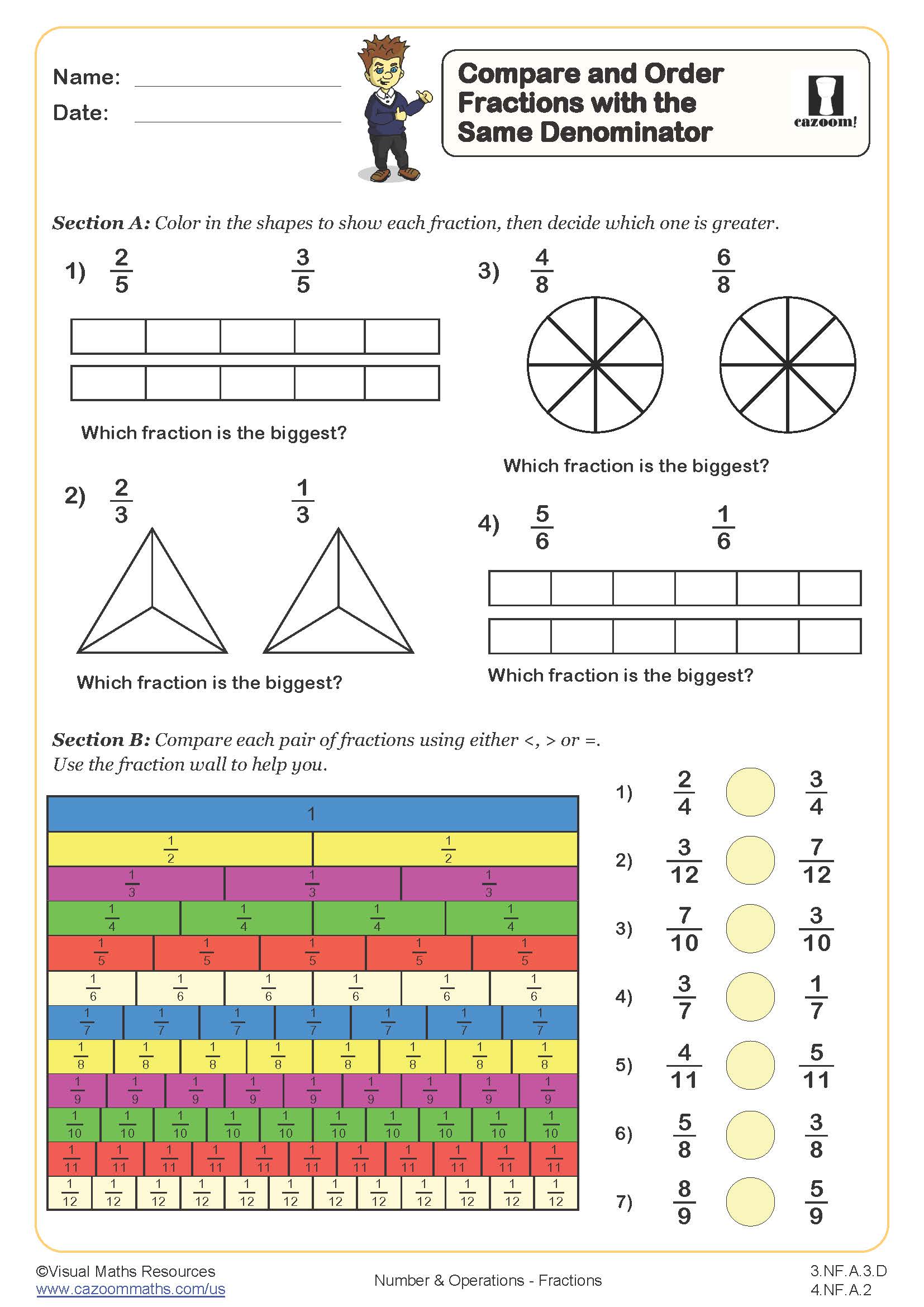
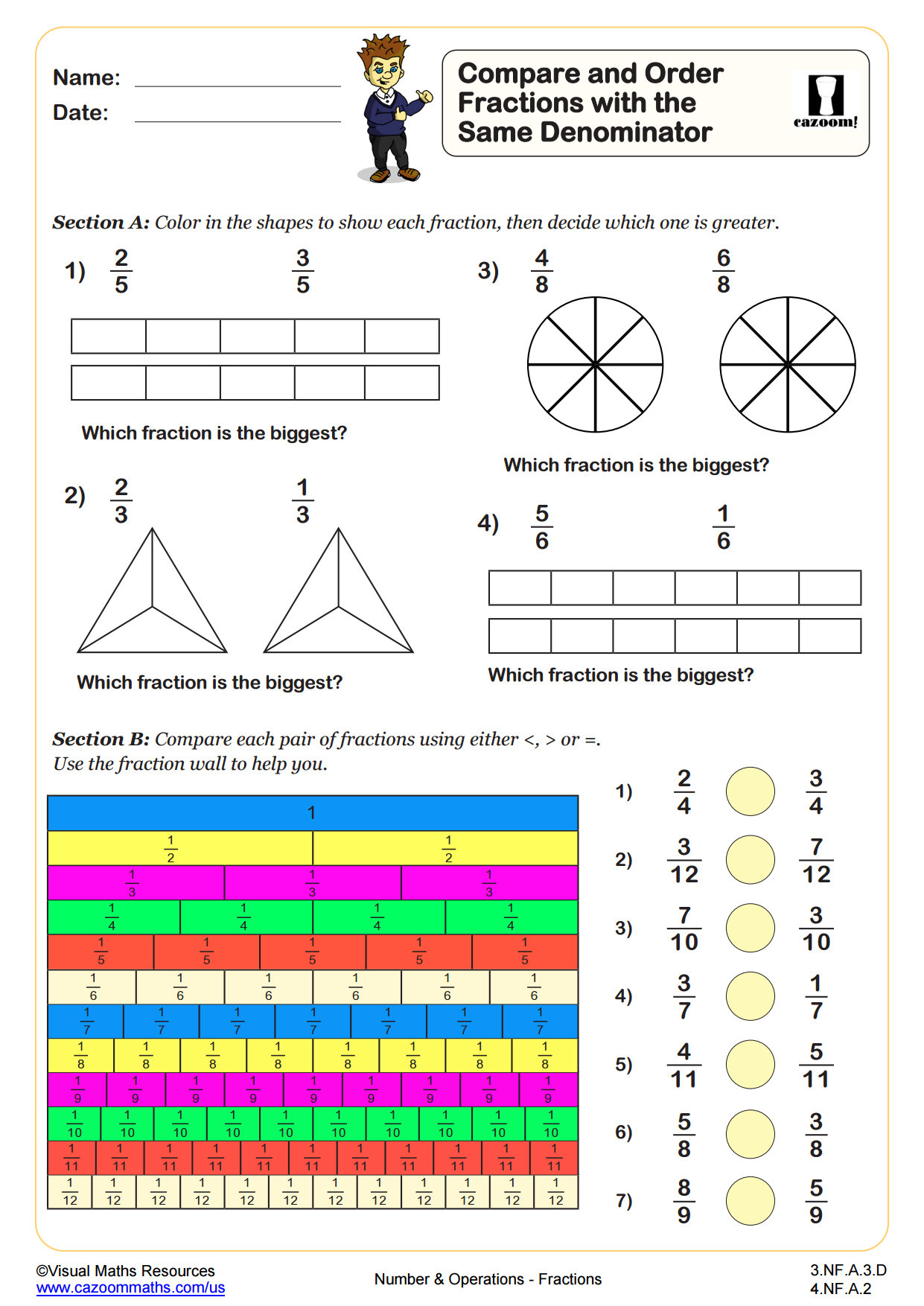
Compare and Order Fractions with the Same Denominator
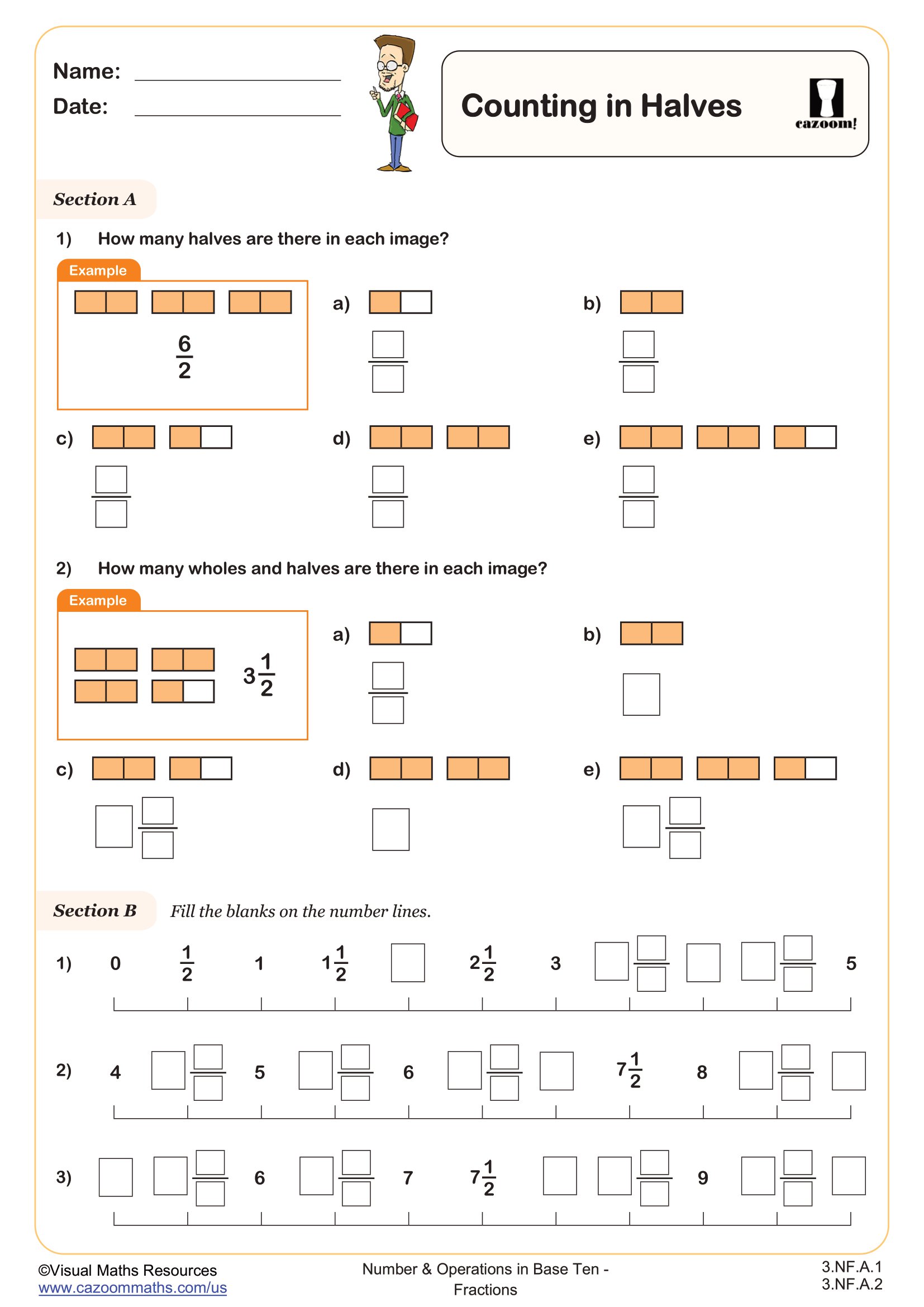
Counting in Halves
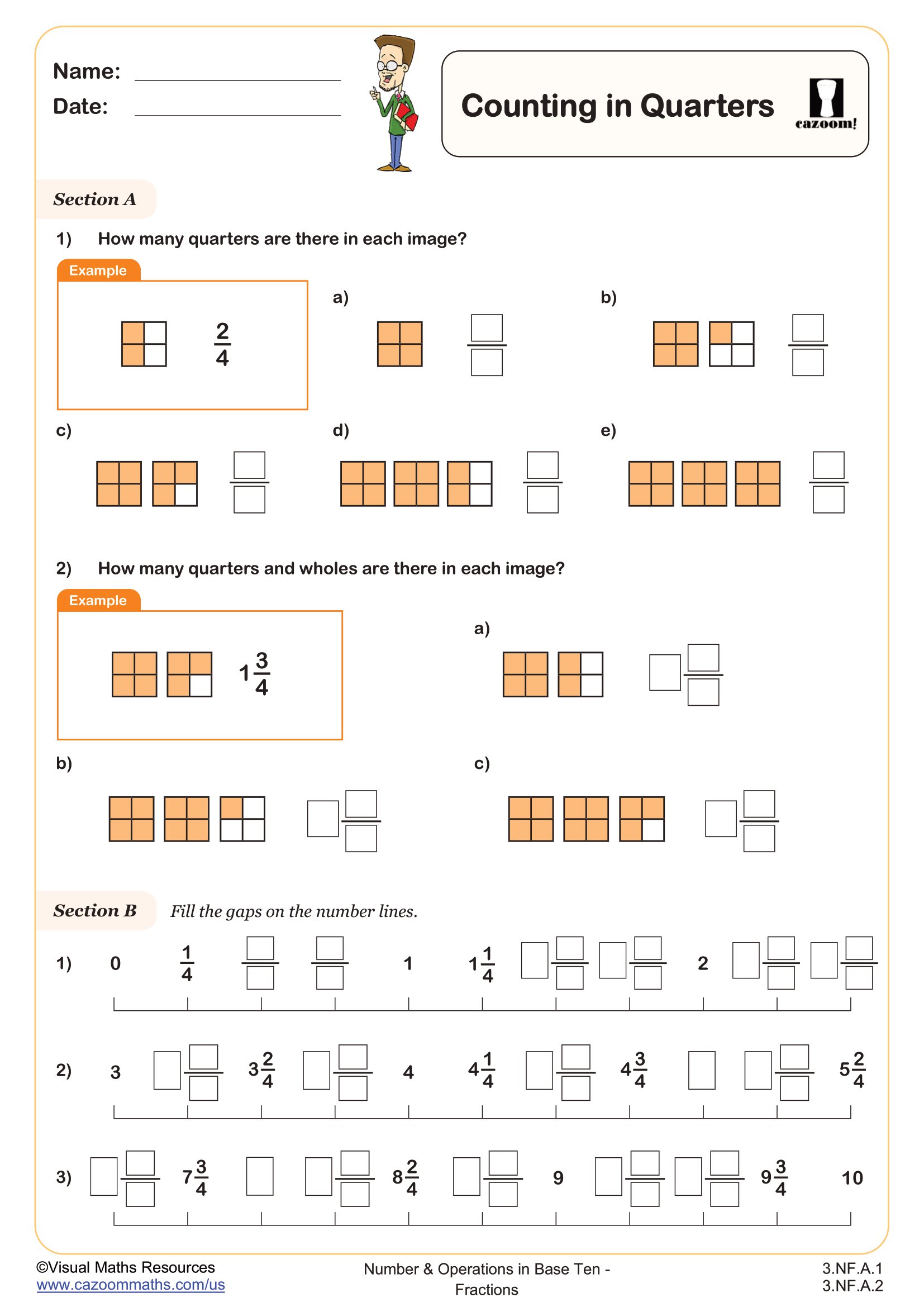
Counting in Quarters
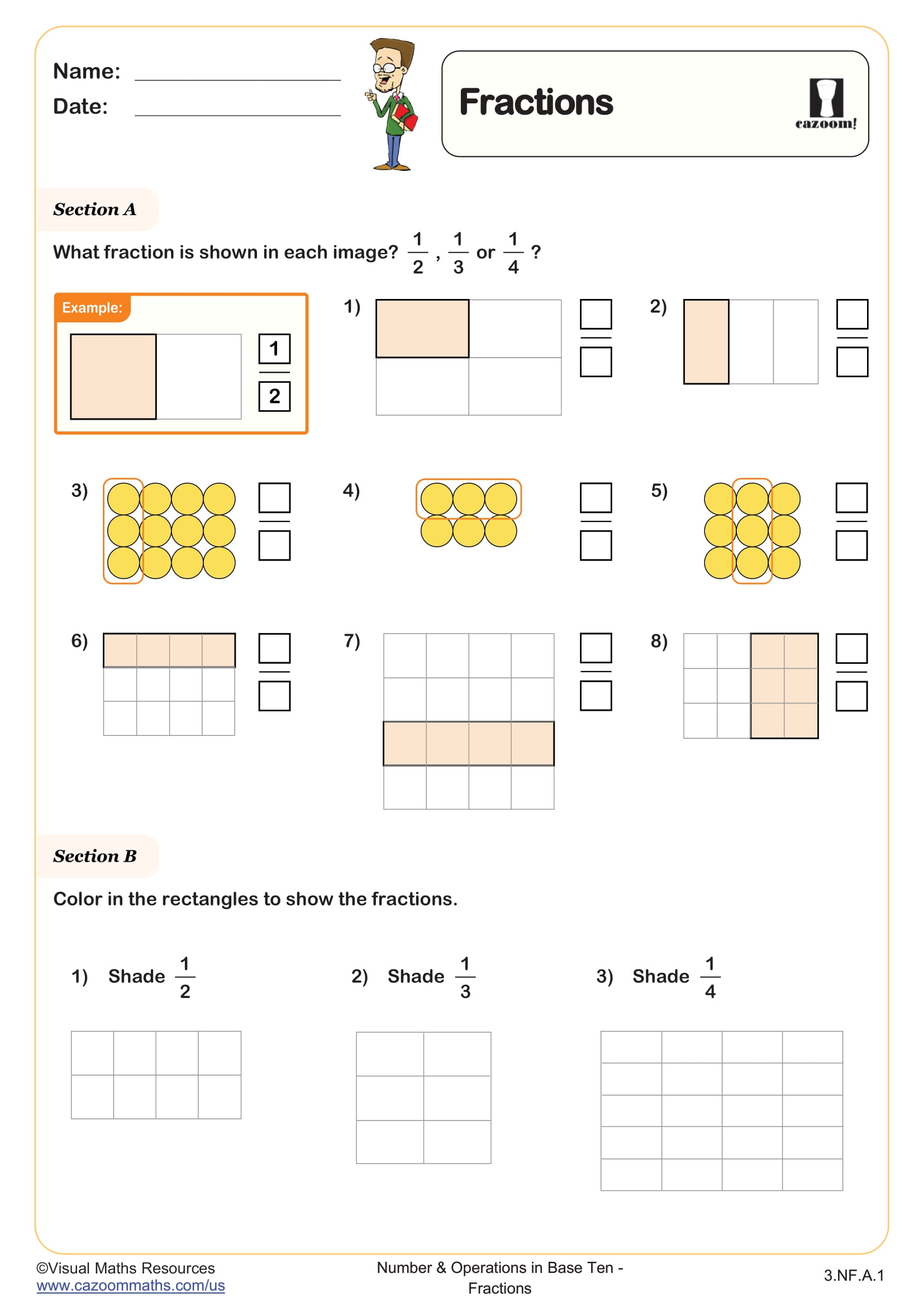
Fractions
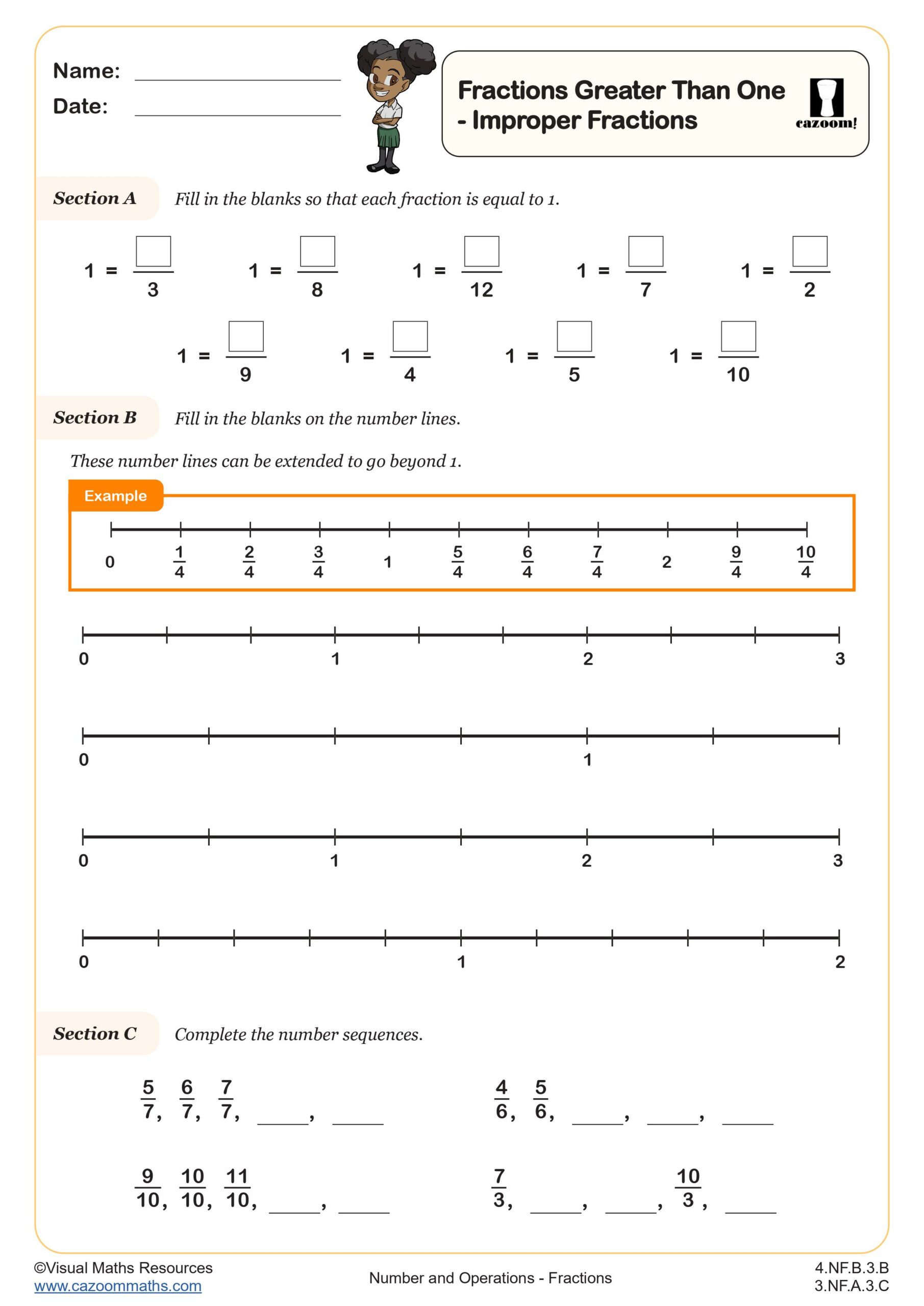
Fractions Greater Than One - Improper Fractions
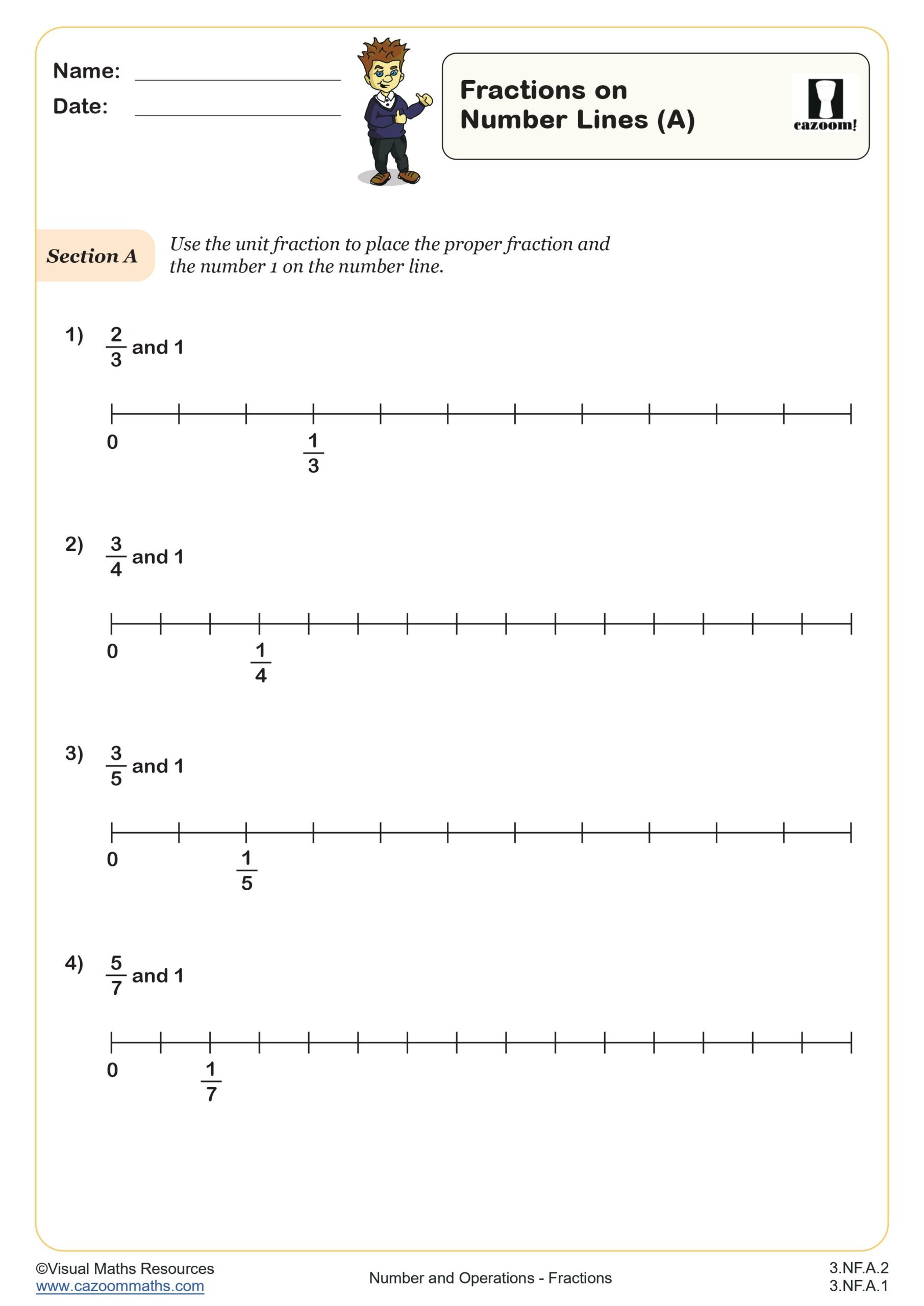
Fractions on Number Lines (A)
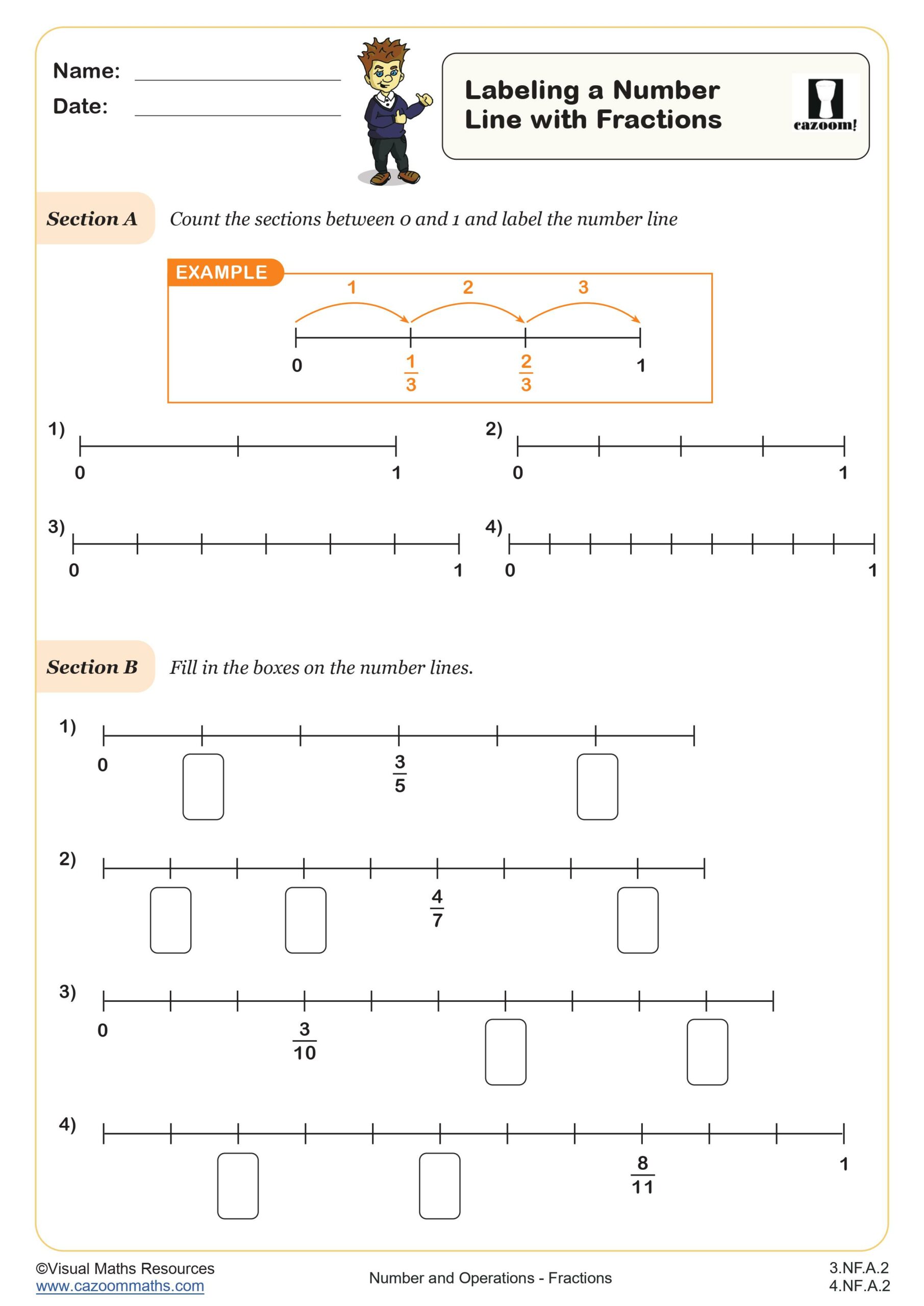
Labeling a Number Line with Fractions
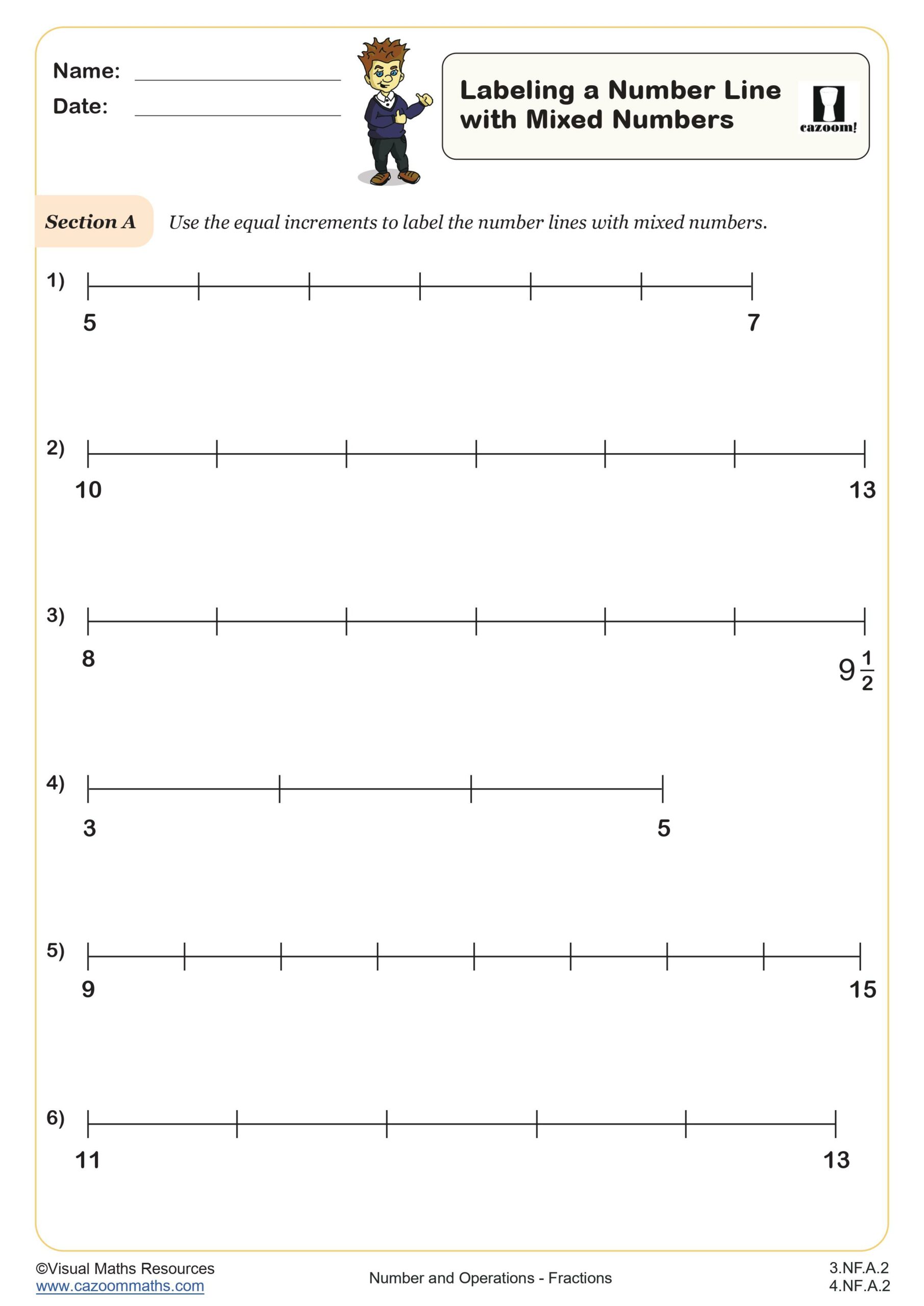
Labeling a Number Line with Mixed Numbers
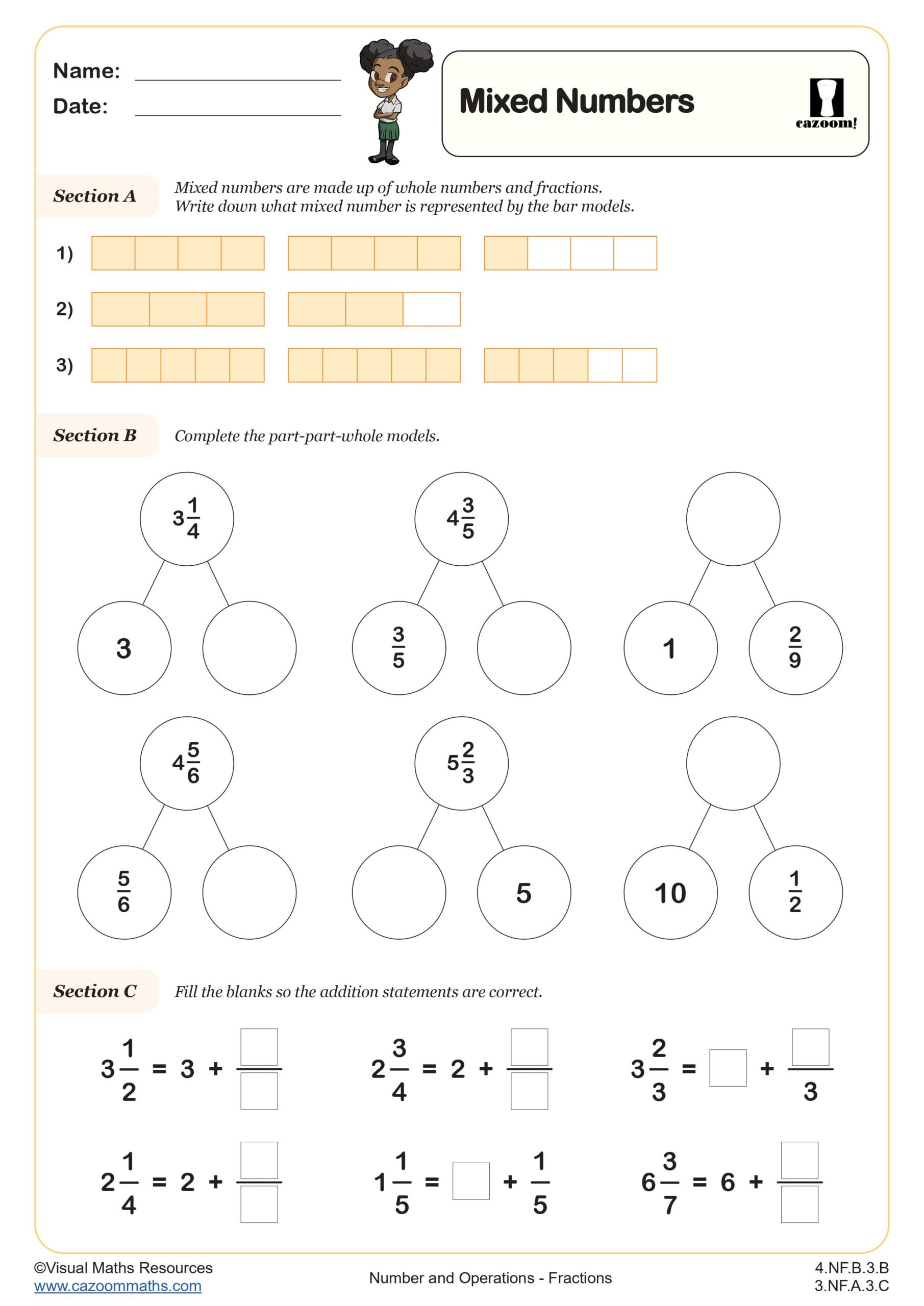
Mixed Numbers
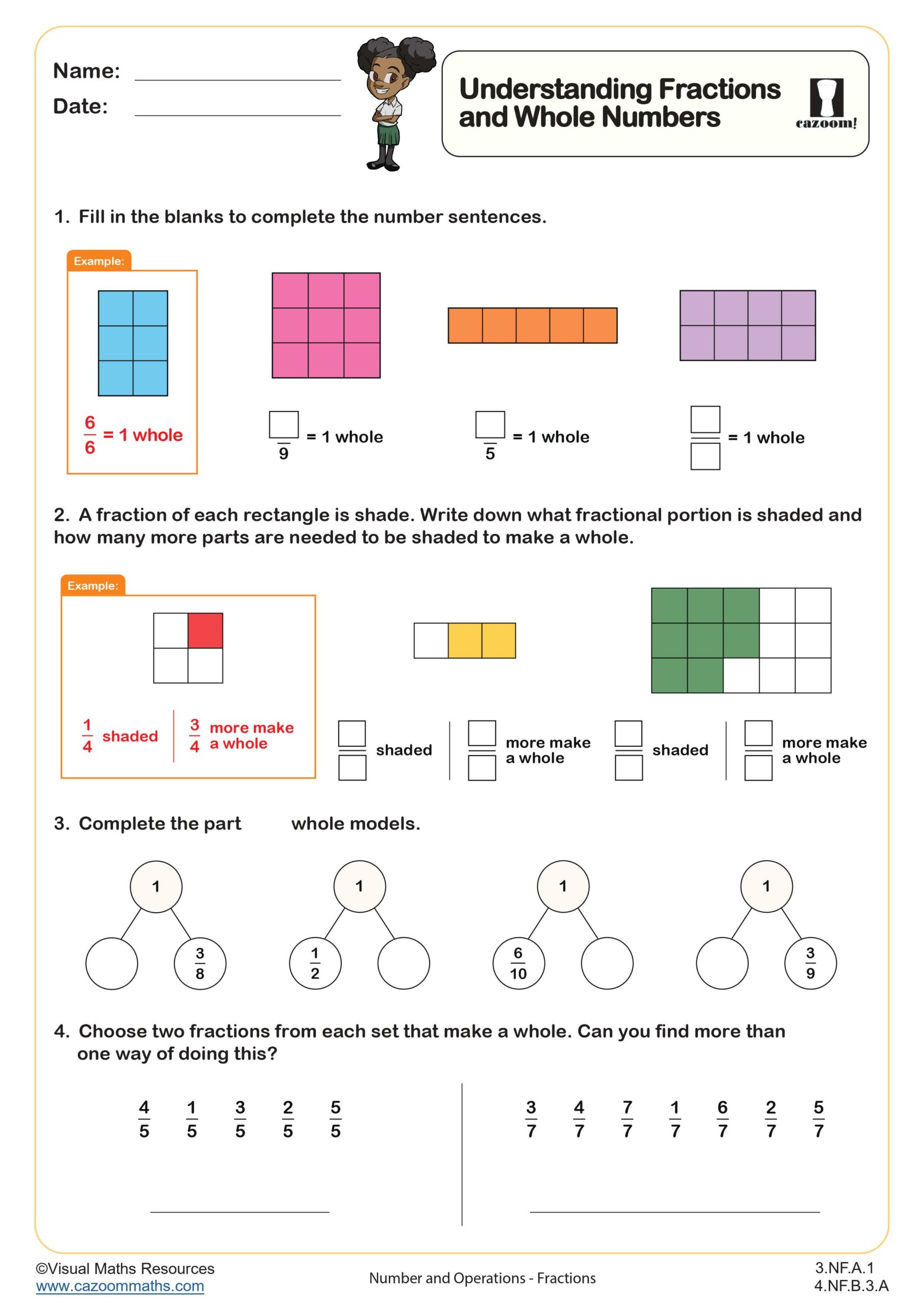
Understanding Fractions and Whole Numbers
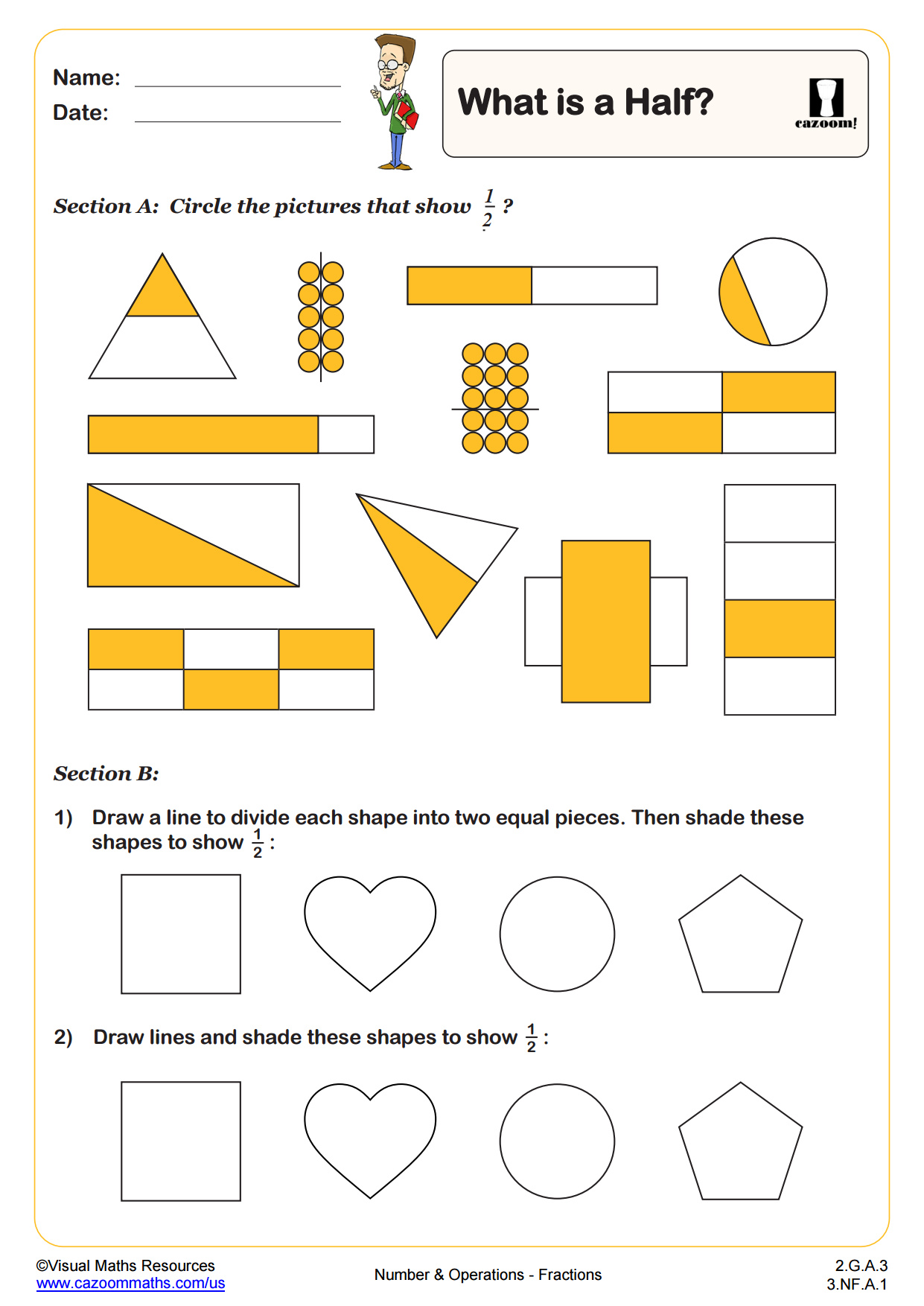
What is a Half
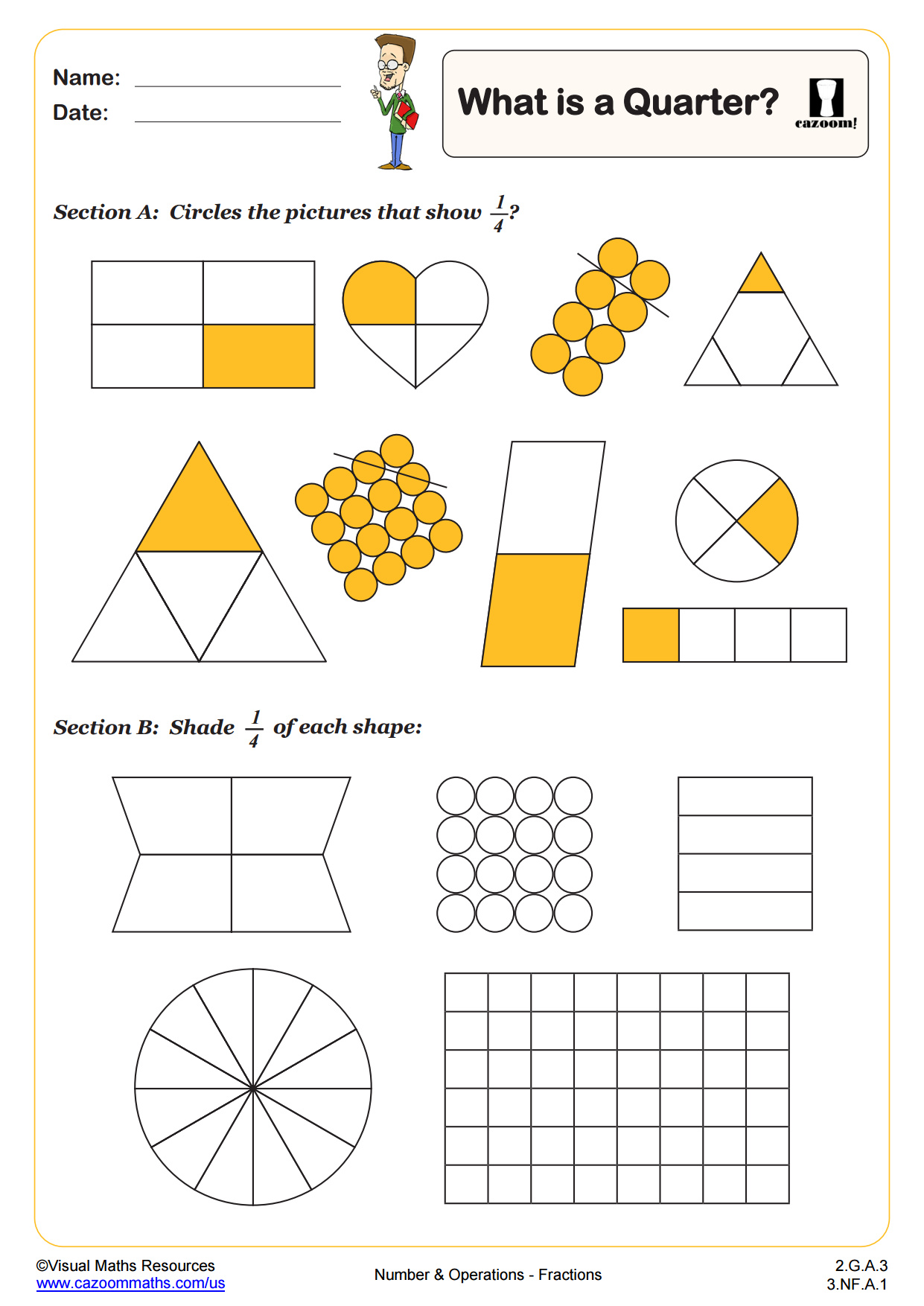
What is a Quarter
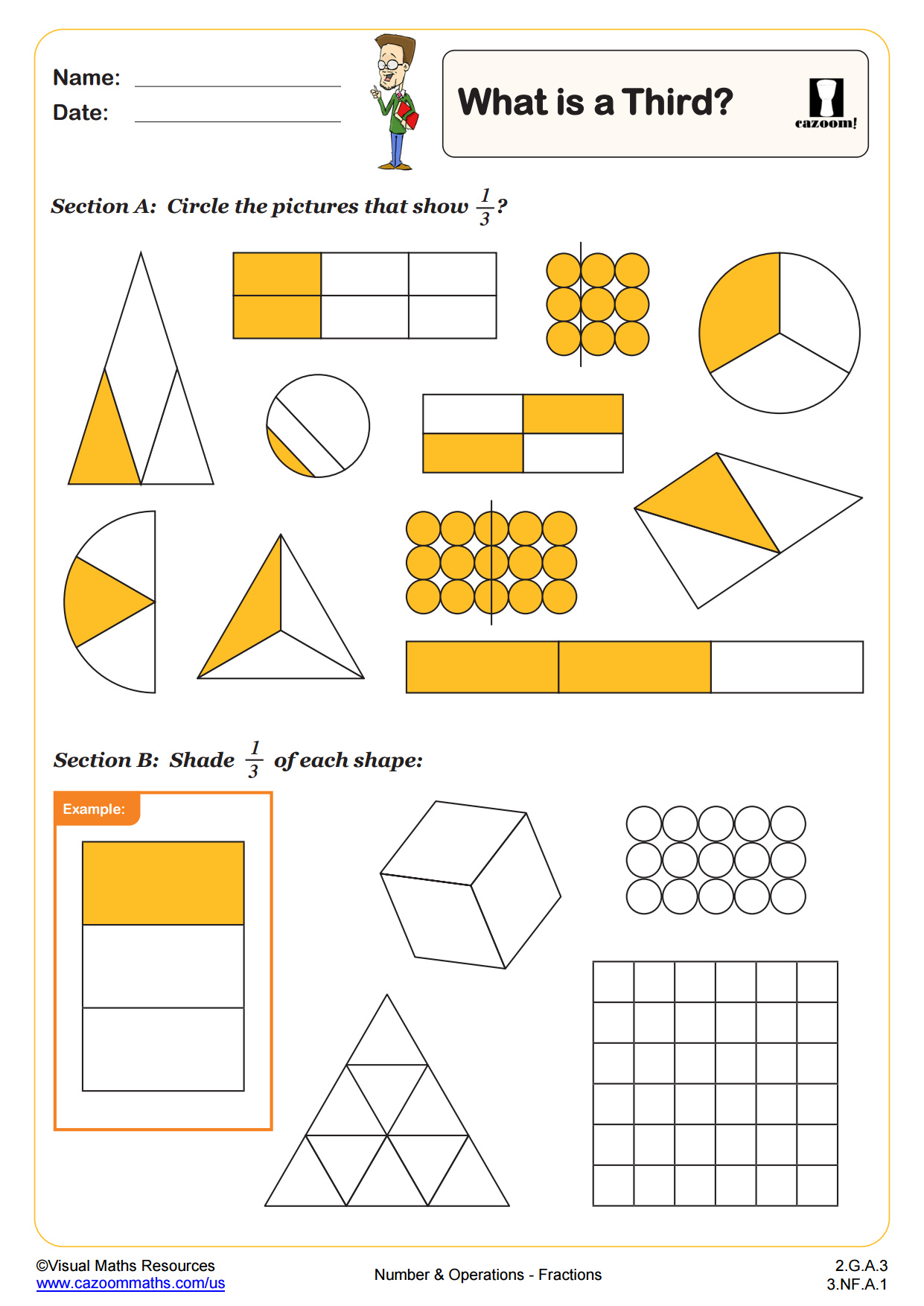
What is a Third
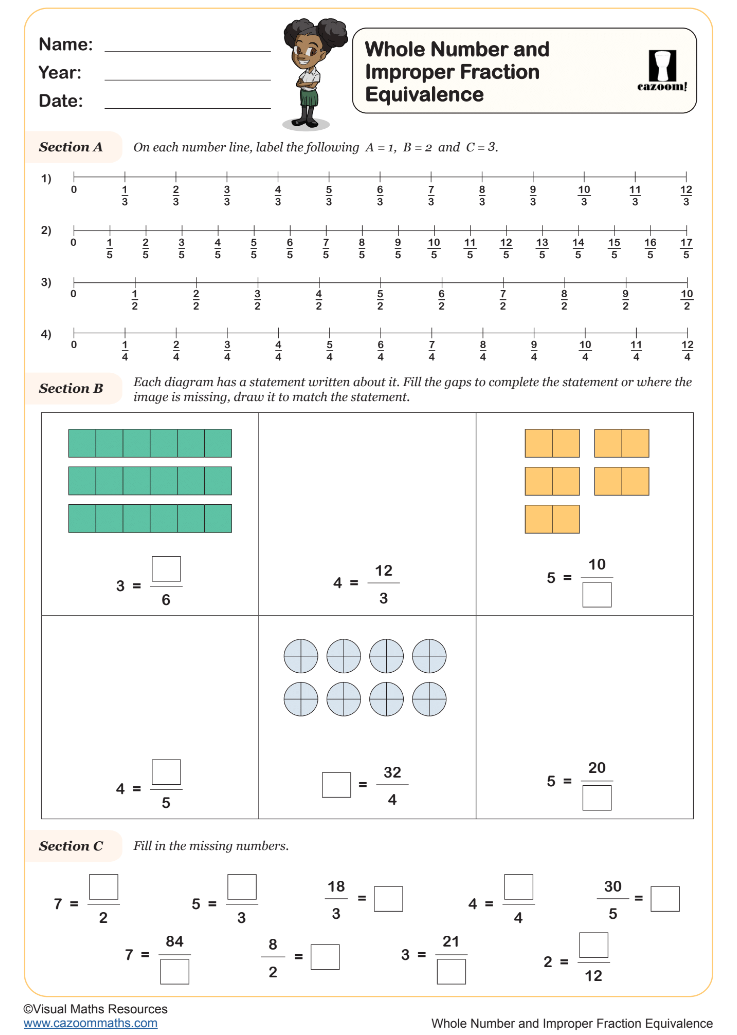
Whole Number and Improper Fraction Equivalence
All worksheets are created by the team of experienced teachers at Cazoom Math.
What Are the Key Fraction Concepts for 3rd Grade?
Third grade fractions focus on understanding fractions as numbers that represent equal parts of a whole. Students work with unit fractions (fractions with numerator 1) and simple fractions with denominators like 2, 3, 4, 6, and 8. The grade level emphasizes representing fractions on number lines, understanding fractions as division, recognizing equivalent fractions like 2/2 = 1, and comparing fractions with the same numerator or denominator.
Many students make the common error of thinking the larger denominator means a larger fraction, often believing 1/8 is bigger than 1/4 because 8 is bigger than 4. Teachers frequently address this misconception by using visual models like fraction strips or circles, where students can physically see that more pieces (larger denominator) means smaller individual pieces. This hands-on comparison builds intuition that translates to symbolic work.
What Should 3rd Graders Know About Fractions by Year End?
By the end of 3rd grade, students should understand fractions as numbers on the number line between whole numbers and recognize that the interval from 0 to 1 can be divided into equal parts. They should identify and represent unit fractions and fractions with small denominators on number lines, understand whole numbers as fractions (like 3 = 3/1), and compare two fractions with the same numerator or denominator using reasoning about their size.
This builds directly on 2nd grade work with equal shares (halves, thirds, fourths) and prepares students for 4th grade equivalent fractions and fraction operations. Students who master number line representation in 3rd grade find fraction addition and subtraction significantly easier the following year because they already visualize fractions as points between whole numbers. Teachers notice that strong 3rd grade fraction foundations prevent the fraction anxiety many students experience in upper elementary grades.
How Do You Teach Fractions on Number Lines?
Teaching fractions on number lines starts with partitioning the interval between 0 and 1 into equal parts matching the denominator. For 1/4, students divide the space into four equal segments, then count one segment from zero. Teachers often use the strategy of labeling all fraction tick marks first (0/4, 1/4, 2/4, 3/4, 4/4) so students see the pattern and recognize 4/4 equals 1. Students confidently place fractions once they understand that the denominator tells how many equal jumps fit between whole numbers.
Number line work connects directly to measurement in STEM contexts. When students measure lengths with rulers marked in halves, fourths, or eighths of an inch, they're reading fractions on a number line. Scientists use this same skill when plotting data points on graphs with fractional intervals. Understanding that 3/4 sits three-quarters of the way between 0 and 1 translates directly to reading graduated cylinders, thermometers, and other measurement tools in science labs.
How Can Teachers Use These Fraction Worksheets Effectively?
The worksheets scaffold fraction understanding by moving from concrete visual representations to more abstract symbolic work. Students benefit from starting with worksheets that include number lines or area models before progressing to problems with fewer visual supports. The answer keys allow students to check their own work during practice, which helps them identify misconceptions immediately rather than reinforcing errors through repeated incorrect practice.
Teachers find these worksheets valuable for differentiated math centers, where students work at their own pace through fraction skills. They work well as intervention materials for students who struggled with initial fraction instruction, as homework to reinforce classroom lessons, or as quick formative assessments to identify which students need additional support. Paired work with these worksheets encourages mathematical discussion, as students explain their reasoning to partners and catch each other's errors before checking answers.