3rd Grade Measurement Worksheets
Choosing the Correct Units for Imperial Measure
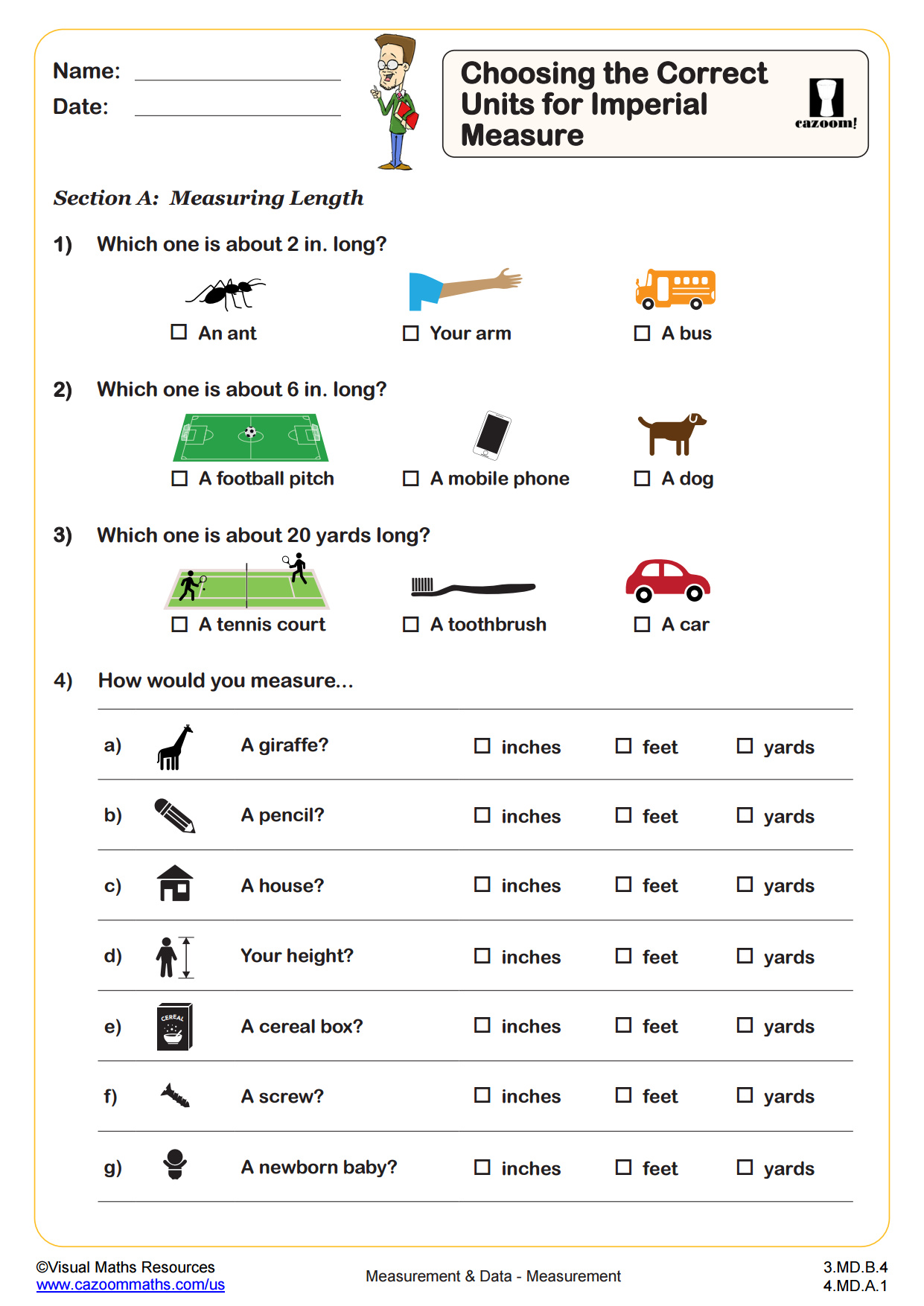
Choosing the Correct Units of Measure
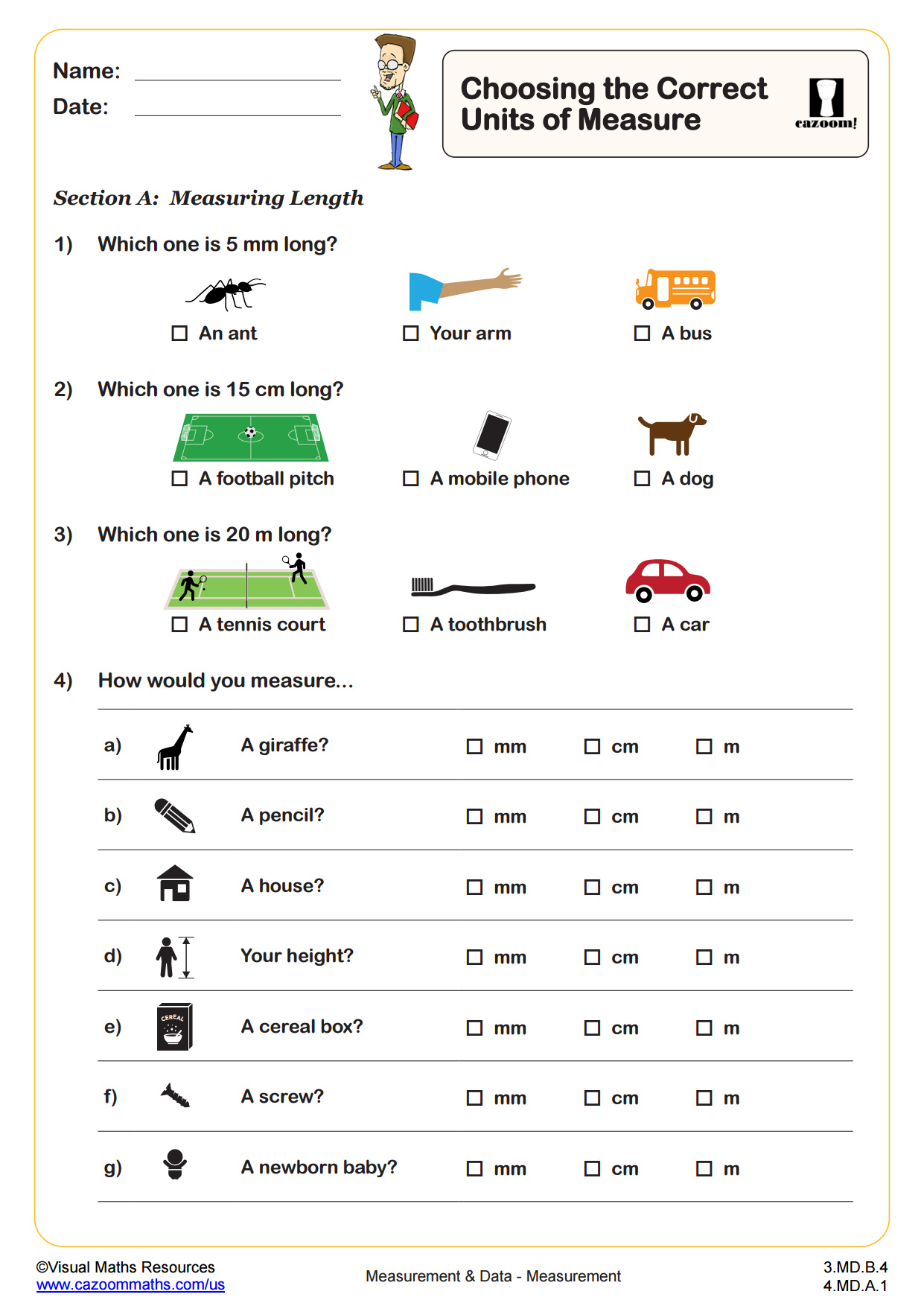
Estimating Metric Measures
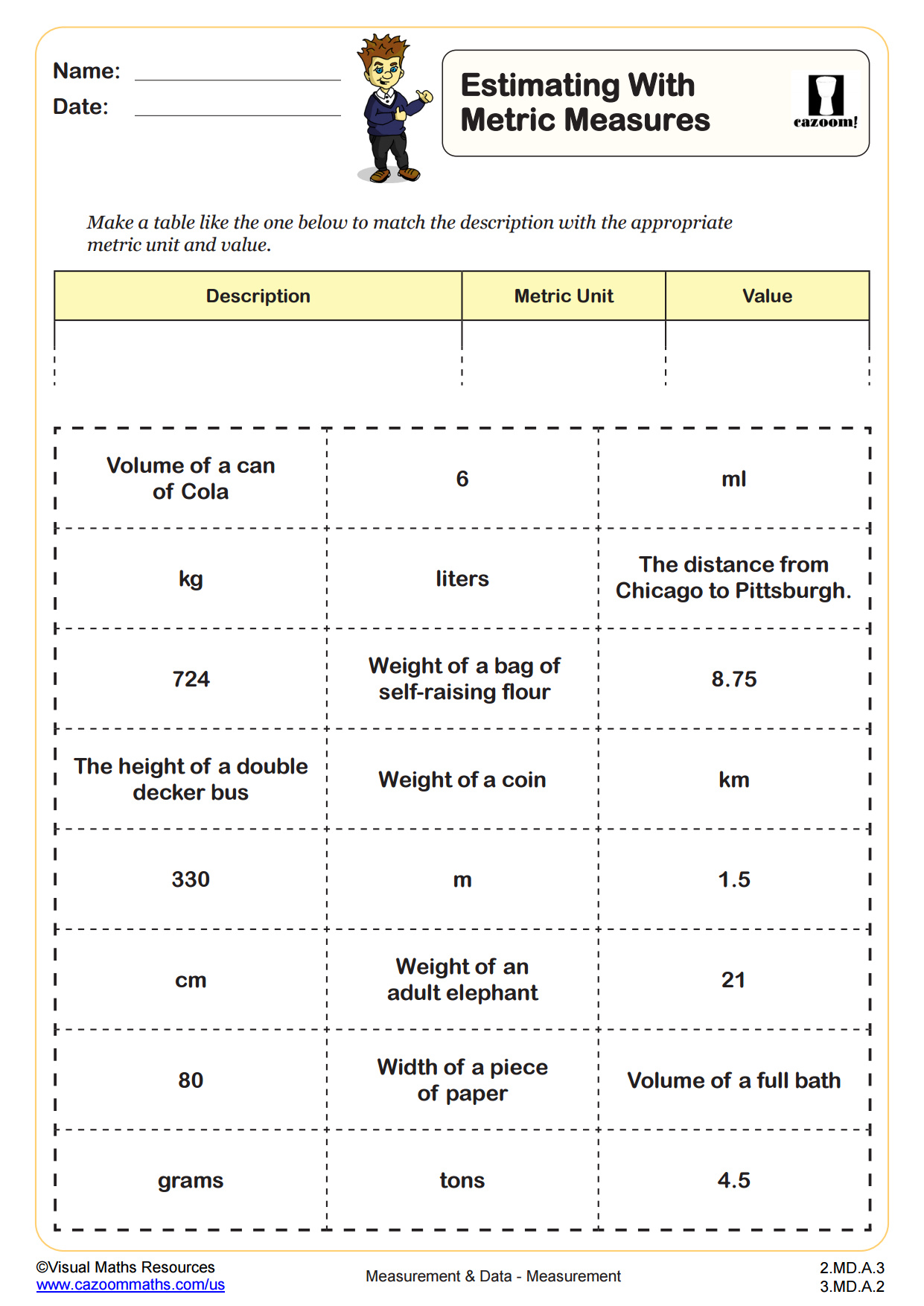
Imperial and Metric Lengths
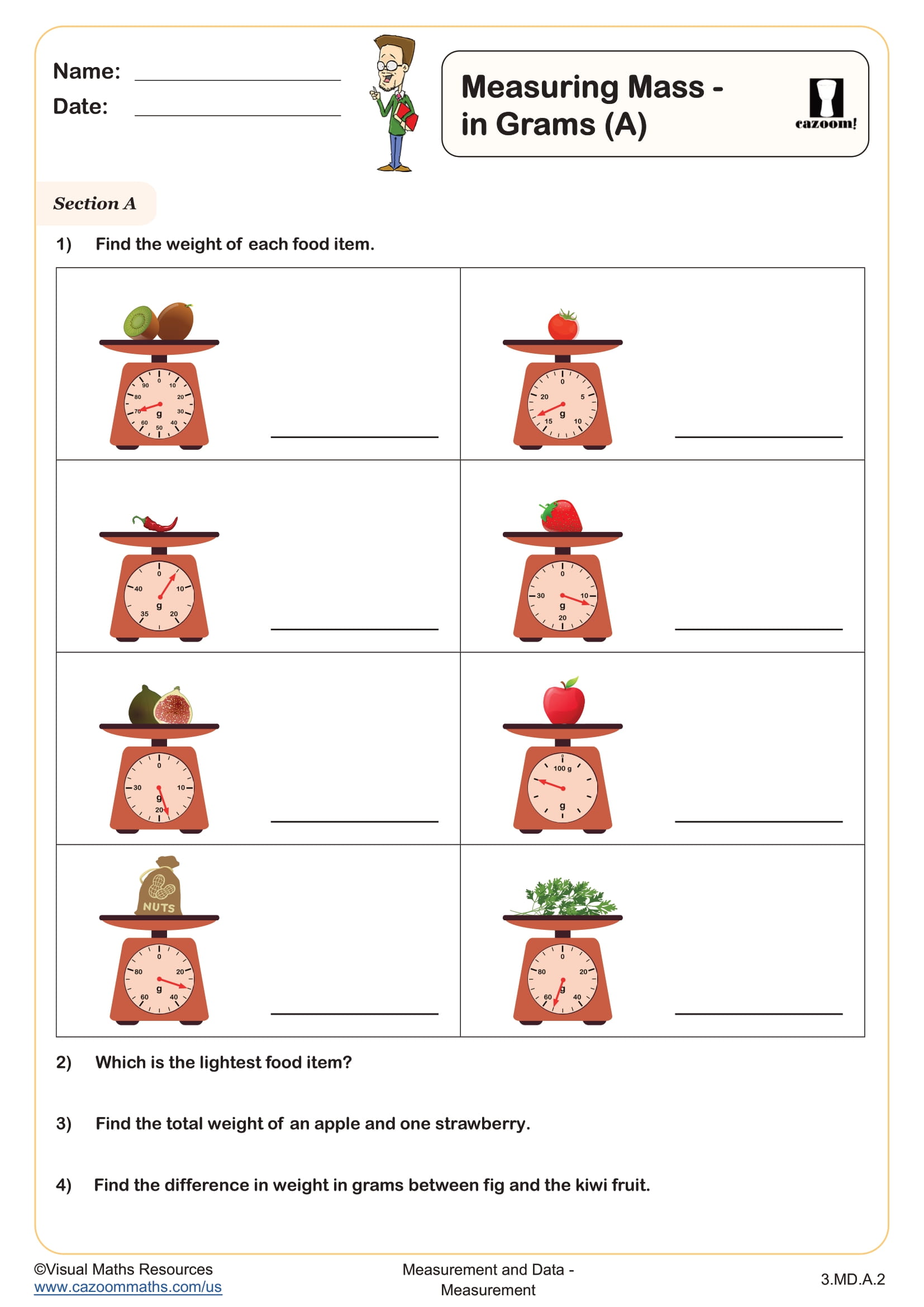
Measure Mass In Grams (A)
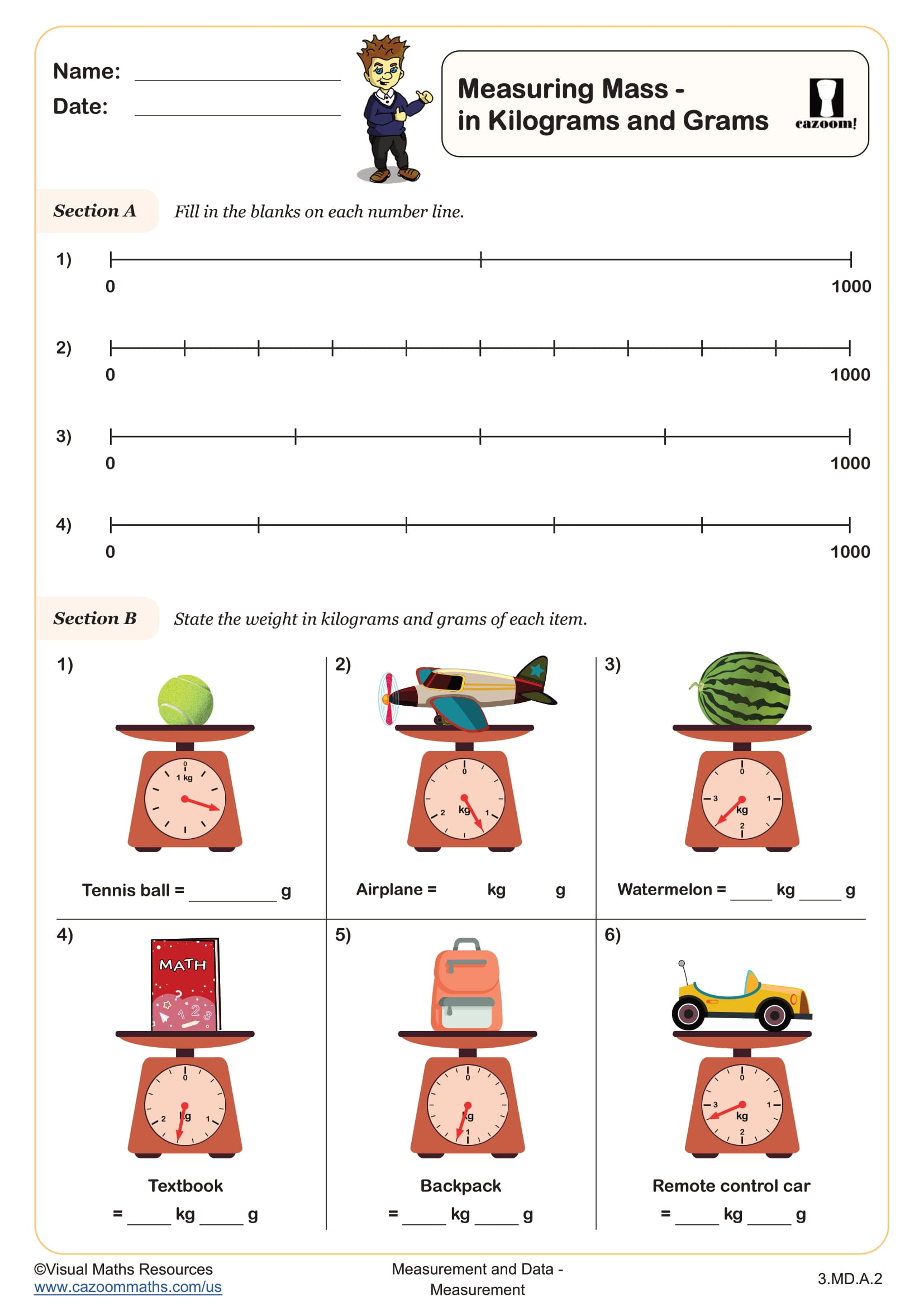
Measure Mass in Kilograms and Grams
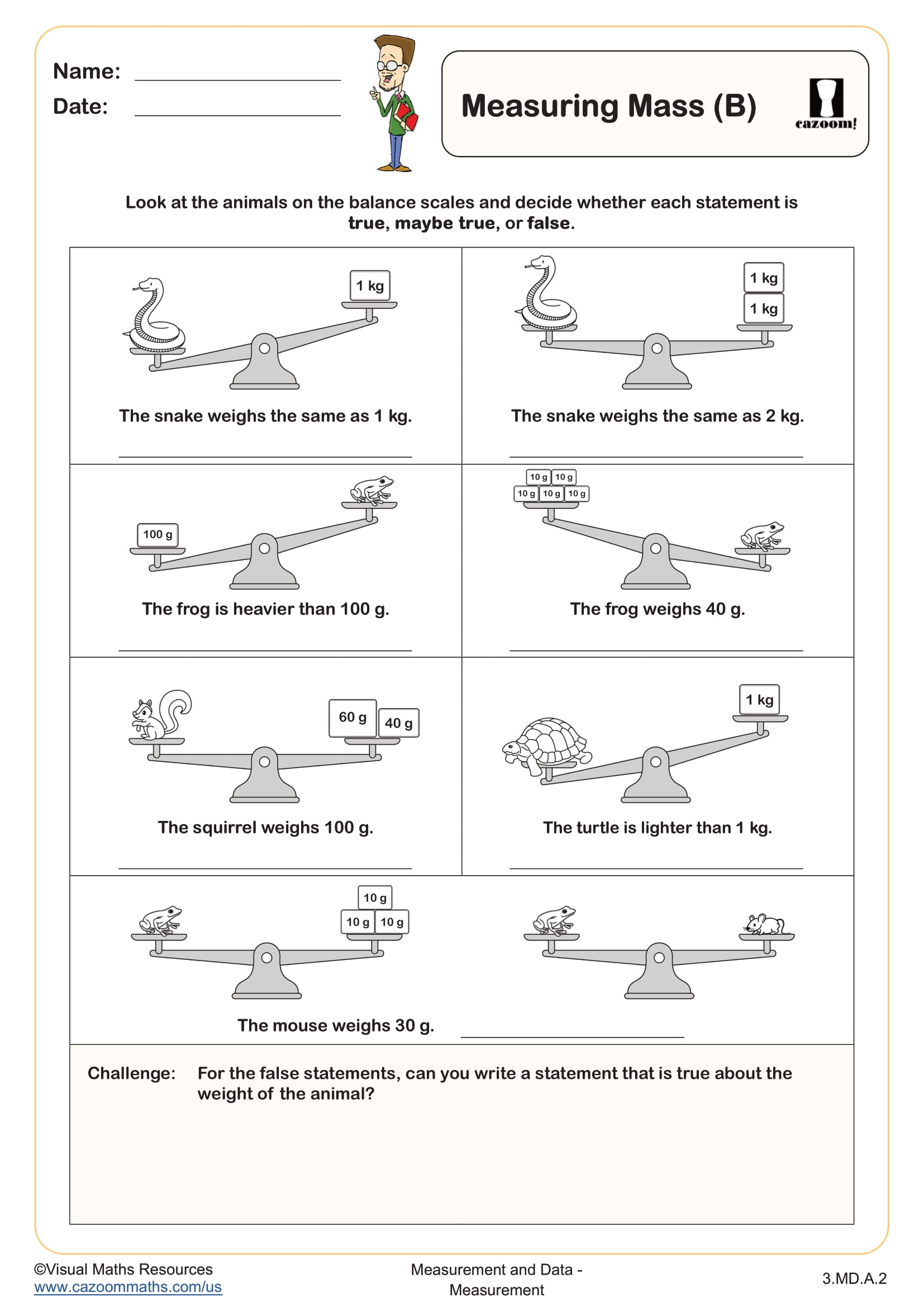
Measuring Mass (B)
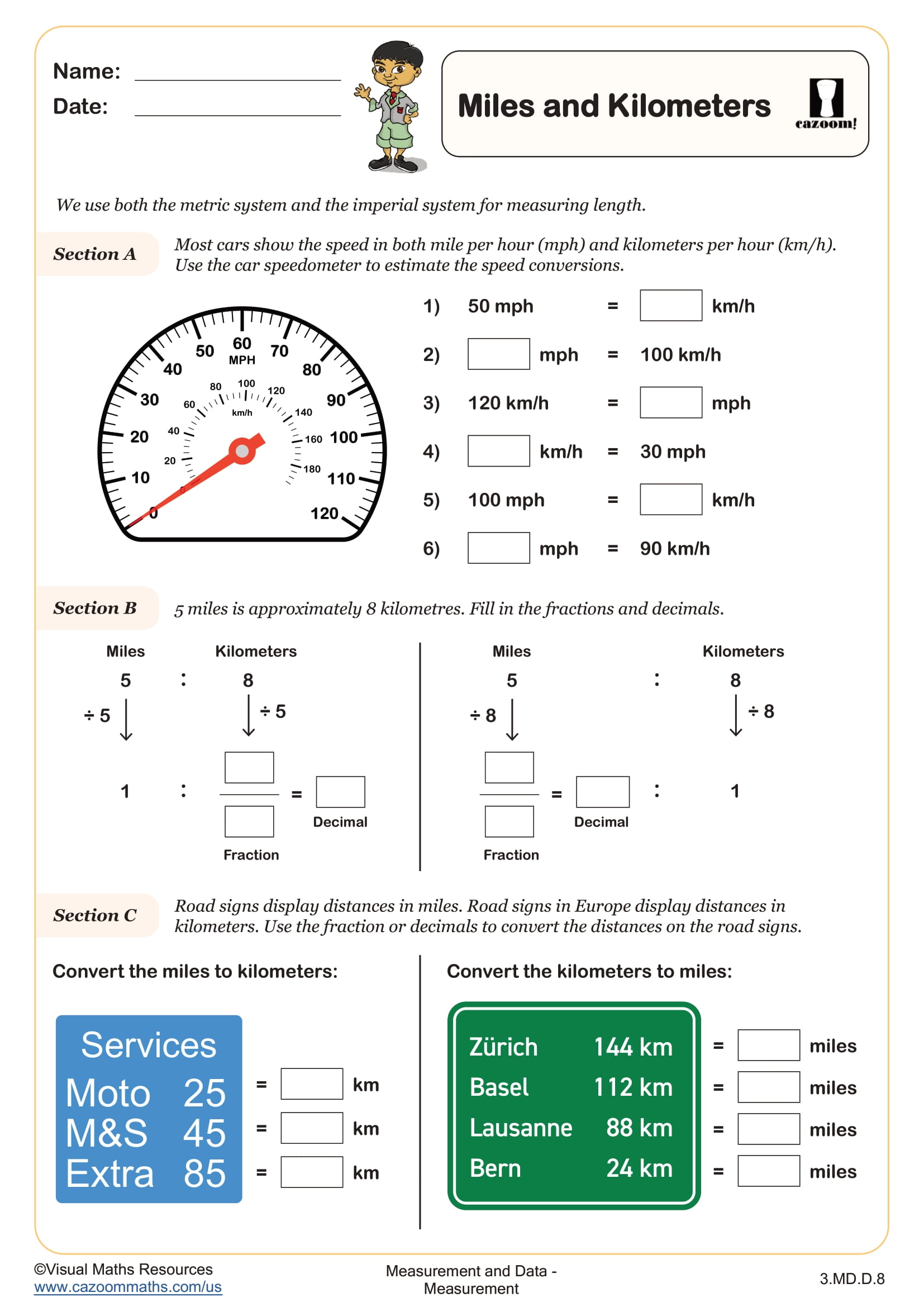
Miles and Kilometres
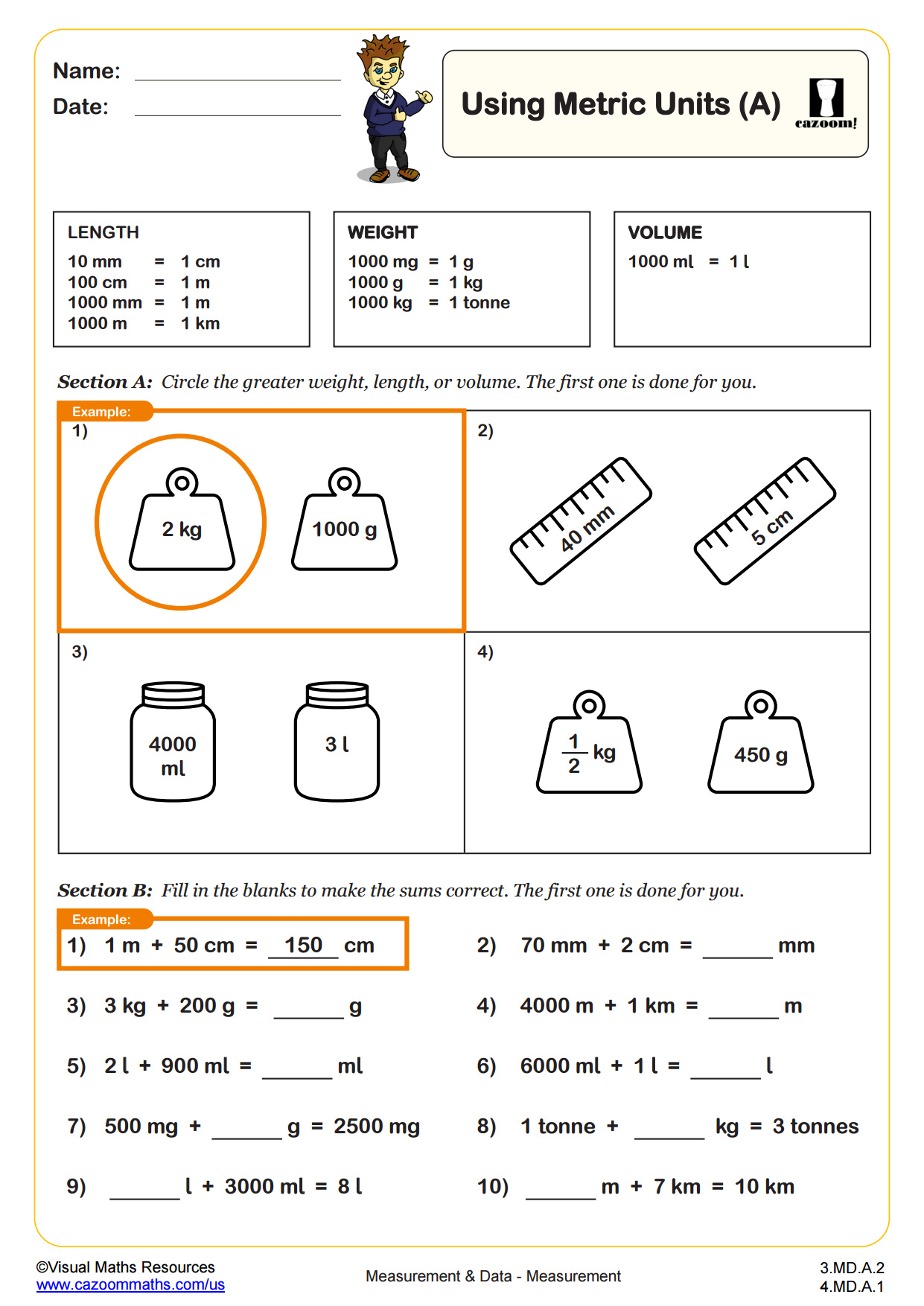
Using Metric Units (A)
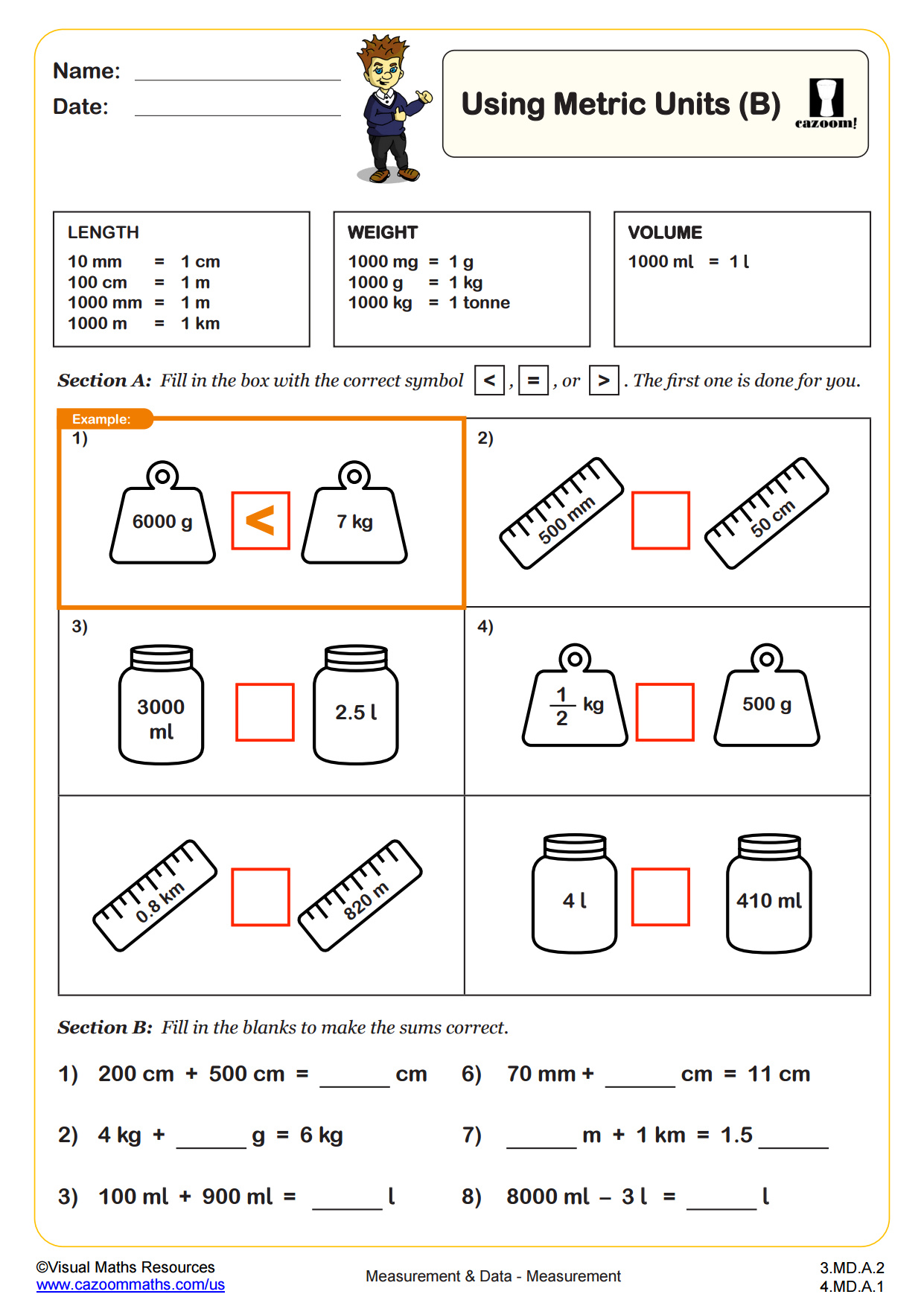
Using Metric Units (B)
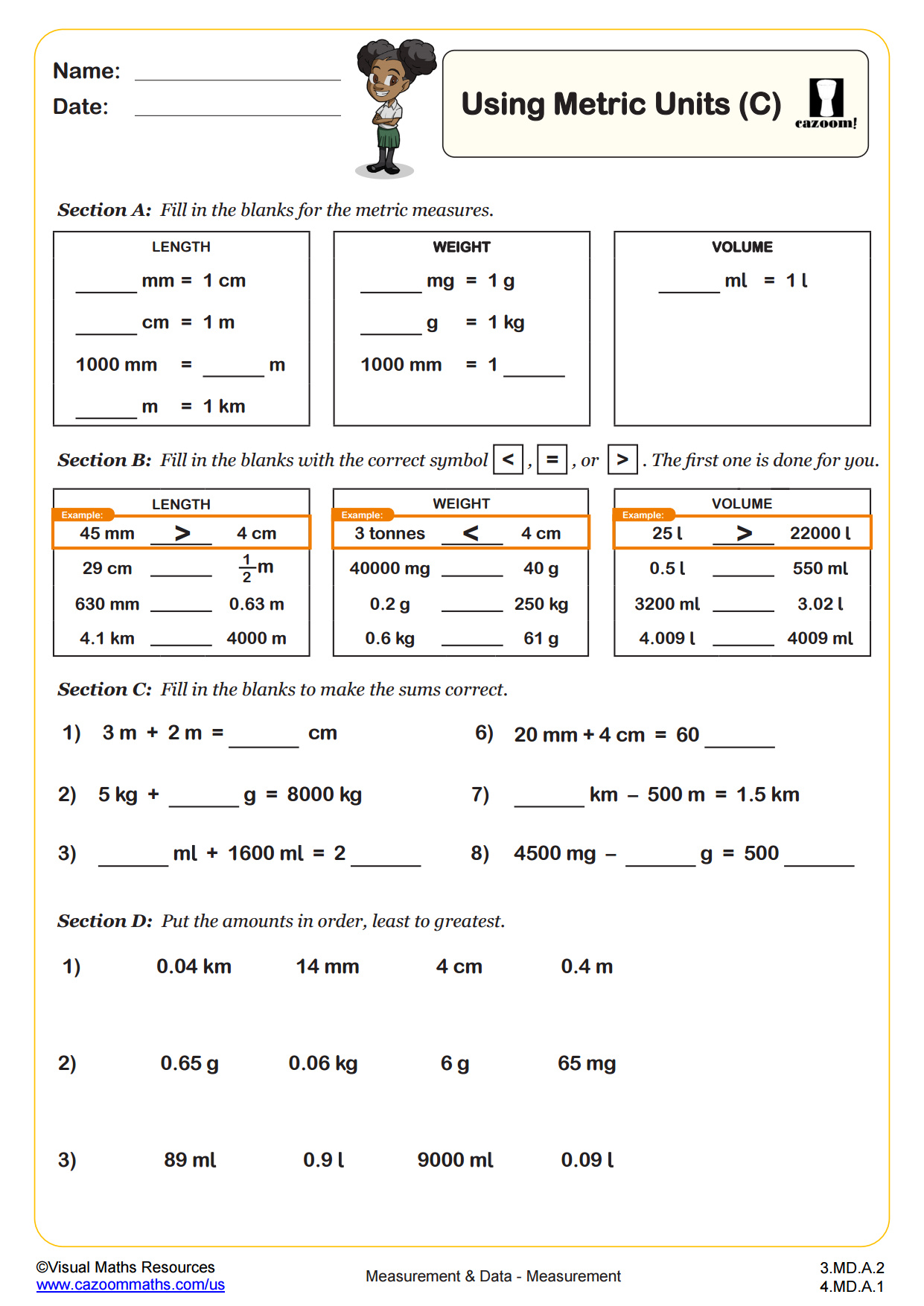
Using Metric Units (C)
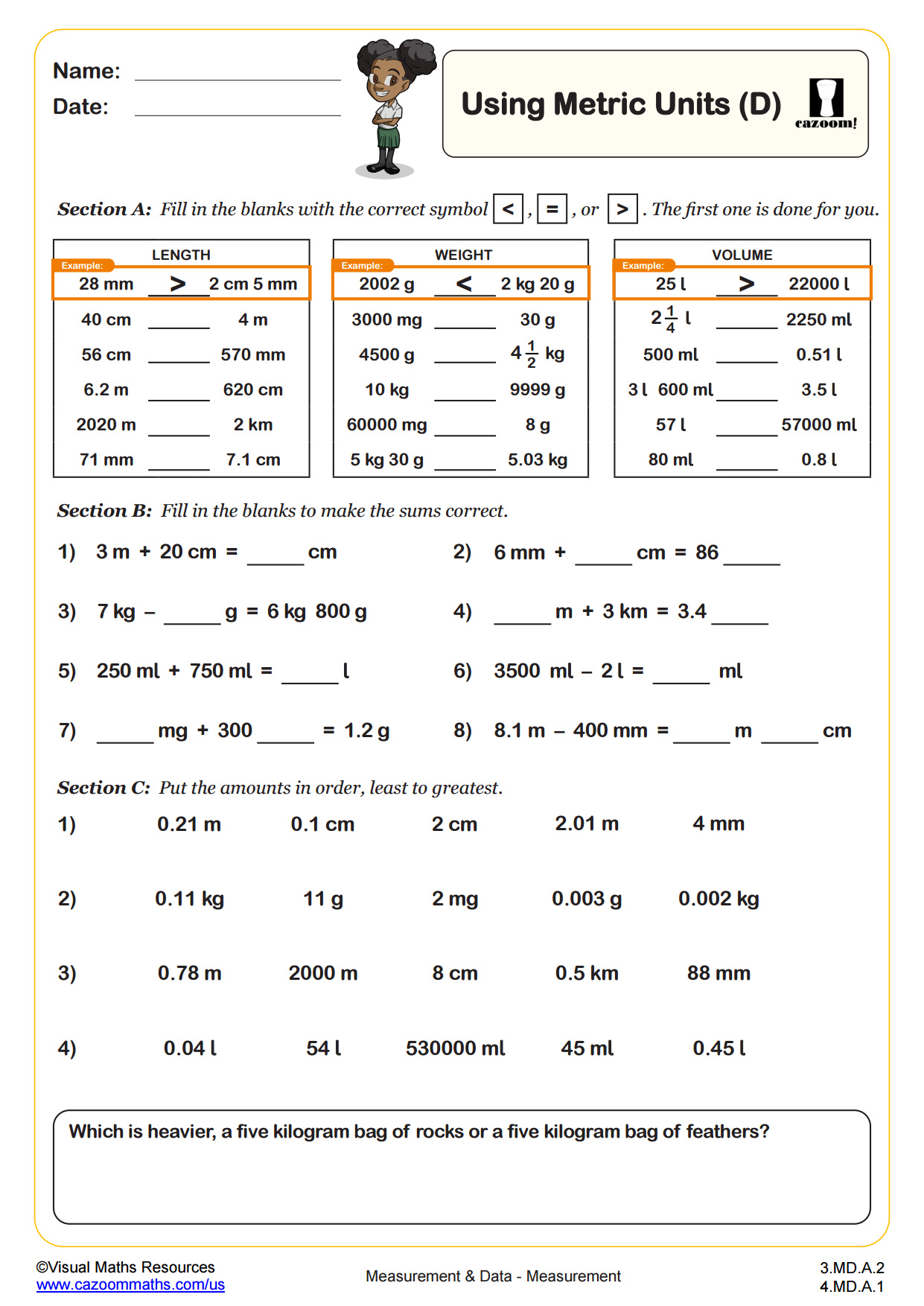
Using Metric Units (D)
All worksheets are created by the team of experienced teachers at Cazoom Math.
What topics do grade 3 measurement worksheets typically cover?
Grade 3 measurement worksheets focus on four main areas aligned with Common Core Standard 3.MD: measuring length to the nearest quarter-inch, understanding liquid volume and mass using metric and customary units, solving time problems involving elapsed time, and interpreting data in picture graphs and bar graphs. Students practice with rulers, measuring tapes, scales, and clocks while working through real-world scenarios.
Many teachers notice that students initially confuse weight and volume concepts, often saying a large balloon weighs more than a small rock. The worksheets address this through direct comparison activities and multiple choice questions that require students to justify their reasoning about which measurement tool to use in different situations.
How do third grade measurement skills build from second grade?
Third grade measurement extends second grade skills by introducing standard units and more precise measurements. While second graders estimate and measure using non-standard units like paper clips or blocks, third graders work with inches, feet, centimeters, grams, liters, and other standard units. The progression includes reading rulers to the nearest quarter-inch rather than just whole numbers.
Teachers observe that students who mastered comparative language in second grade (longer, shorter, heavier) adapt more quickly to numerical measurements in third grade. However, students often need extra practice converting between related units, such as understanding that 12 inches equals 1 foot, which becomes key groundwork for fourth grade multi-step measurement problems.
Why do students struggle with elapsed time problems in measurement units?
Elapsed time combines measurement concepts with multi-step thinking that challenges many third graders. Students must read analog and digital clocks accurately, then calculate the difference between start and end times while accounting for hour and minute changes. The complexity increases when problems cross hour boundaries, such as finding elapsed time from 2:45 PM to 4:15 PM.
Classroom observations reveal that students often subtract incorrectly when minutes in the end time are smaller than minutes in the start time. For example, when calculating from 3:40 to 5:20, they might subtract 20-40 and get confused by negative numbers. Worksheets that provide visual timelines and step-by-step examples help students develop systematic approaches to these problems.
How can teachers use measurement worksheets for differentiated instruction?
Teachers can differentiate measurement worksheet grade 3 activities by adjusting the complexity of units and problem types. Struggling students benefit from worksheets focusing on single-unit measurements with visual aids, while advanced learners can tackle multi-step problems involving unit conversions and real-world applications like recipe adjustments or garden planning.
Many educators create measurement stations where students rotate through different worksheet activities at their instructional level. Some students might measure classroom objects to the nearest inch while others work on quarter-inch precision or metric conversions. The answer keys allow for immediate feedback during station work, helping students self-correct and build confidence with measurement concepts before moving to more complex applications.