3rd Grade Methods for Addition Worksheets
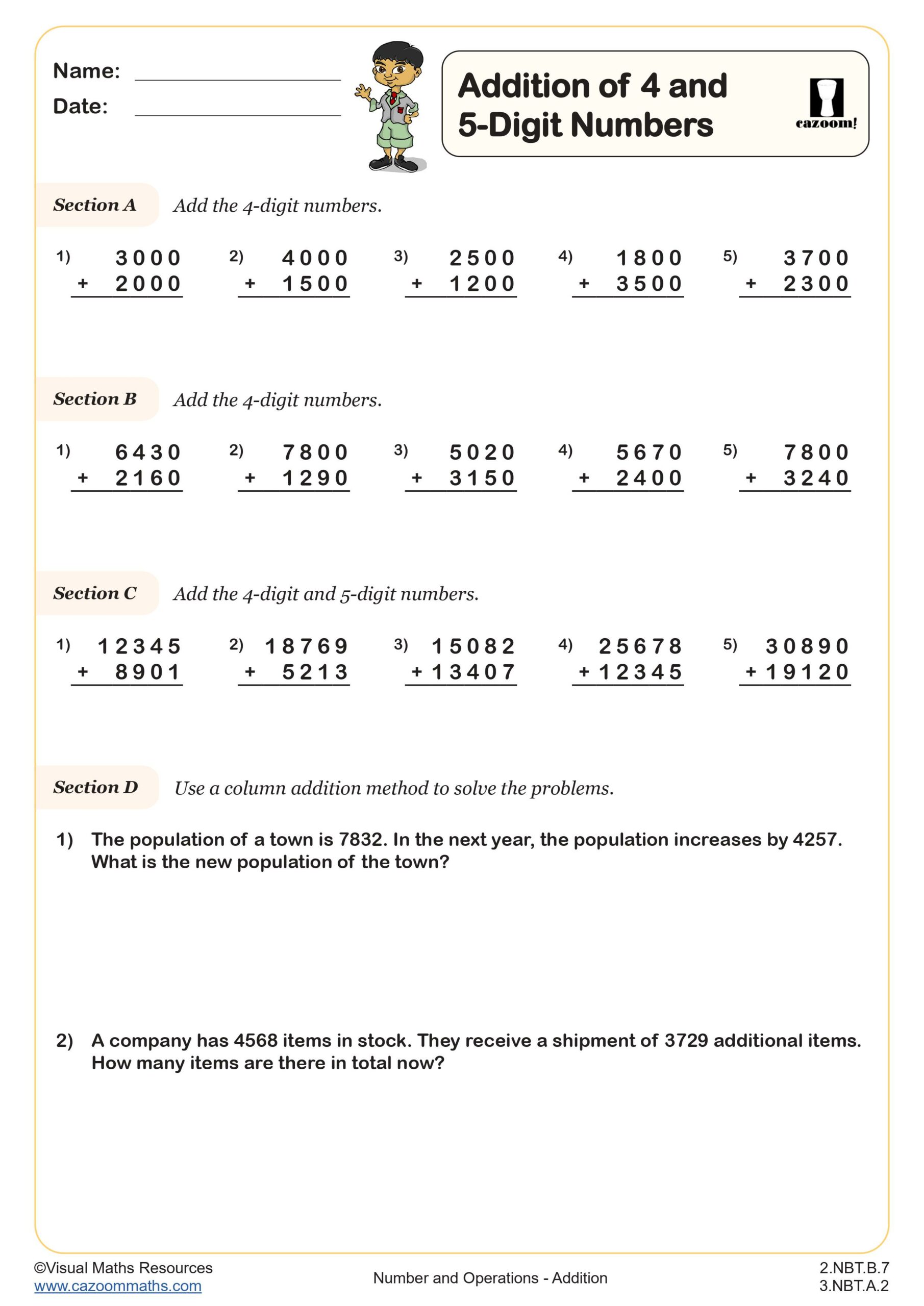
Addition of 4 and 5-digit Numbers
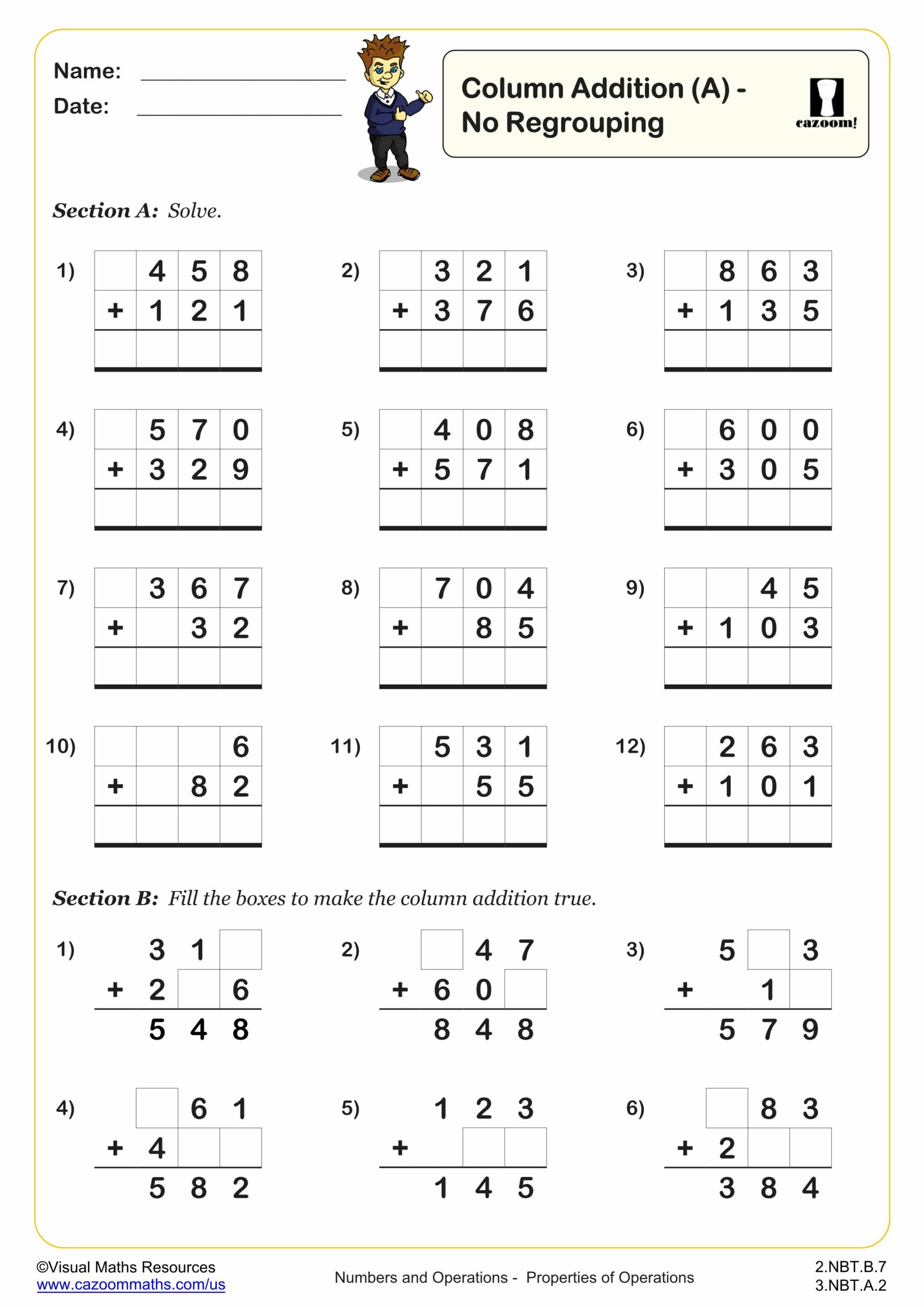
Column Addition (A)
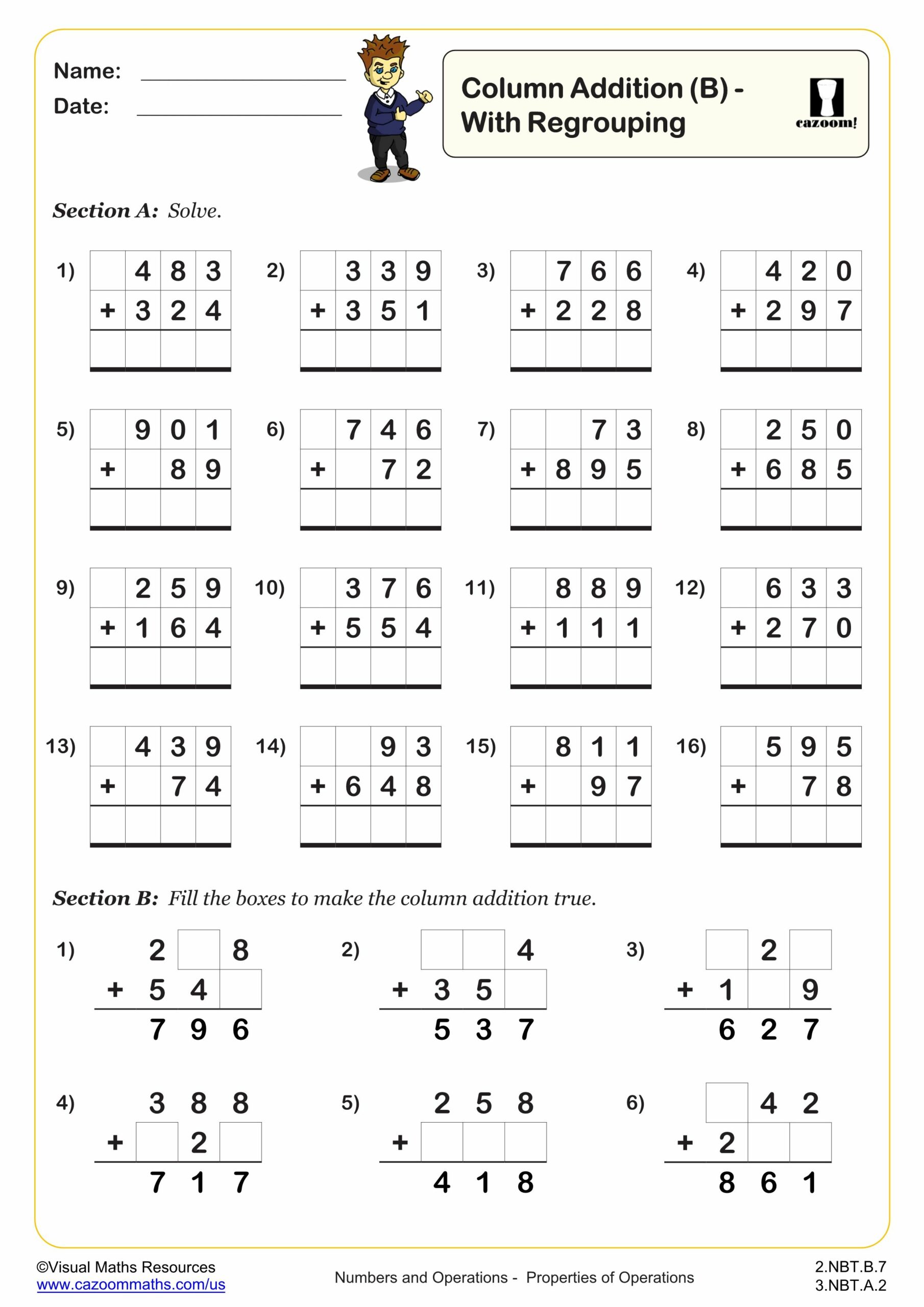
Column Addition (B)
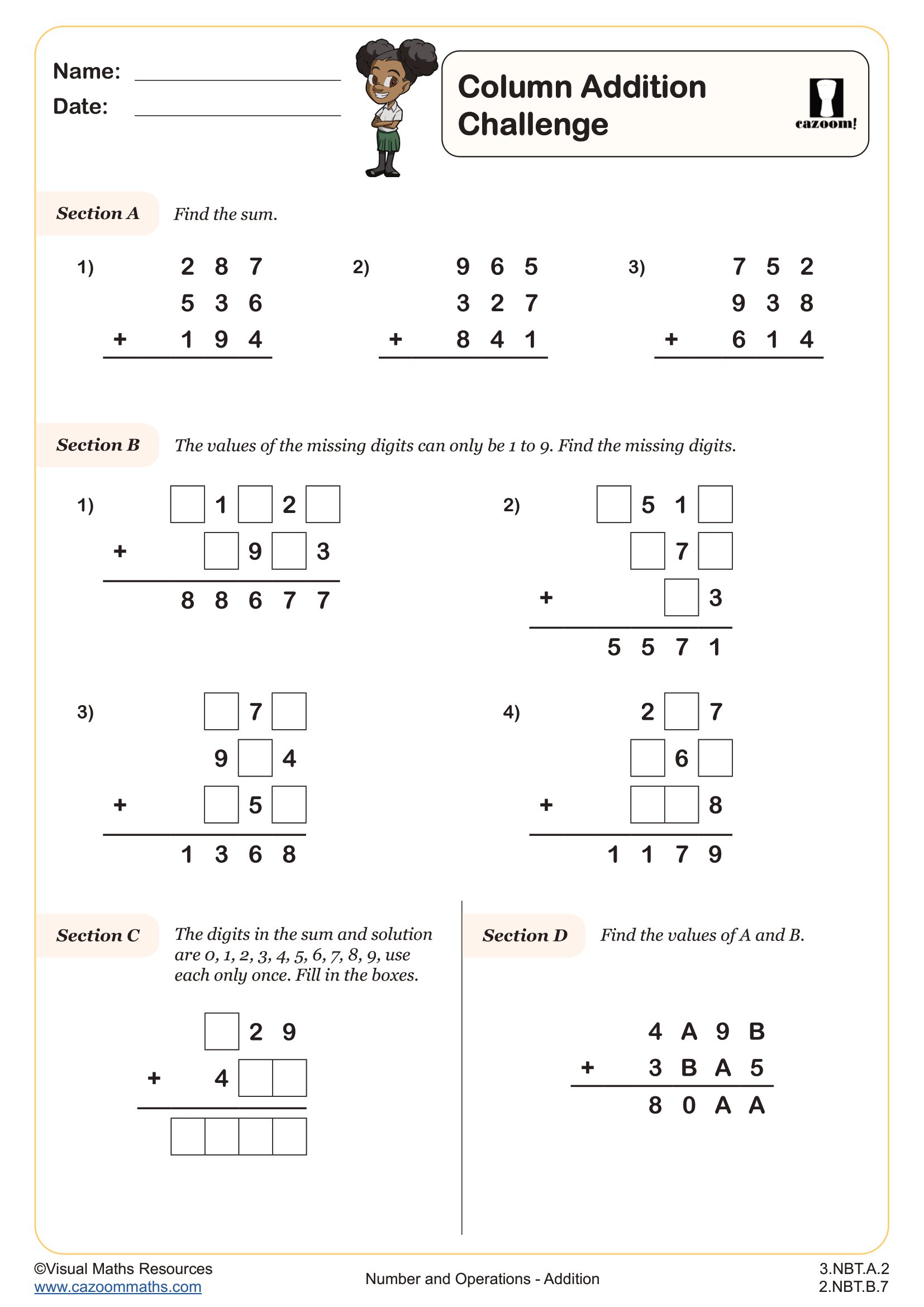
Column Addition Challenge
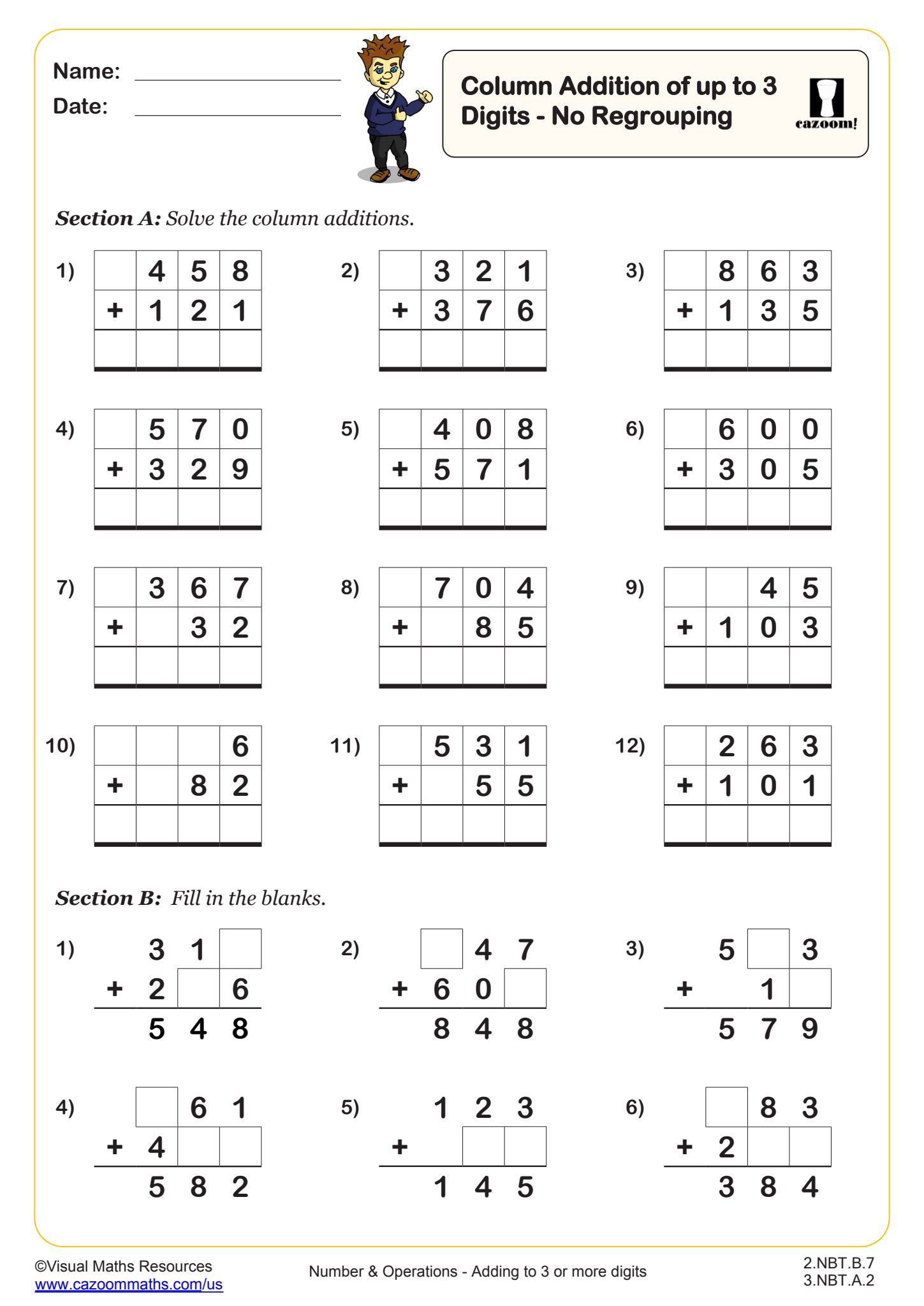
Column Addition of up to 3 Digits - No Regrouping
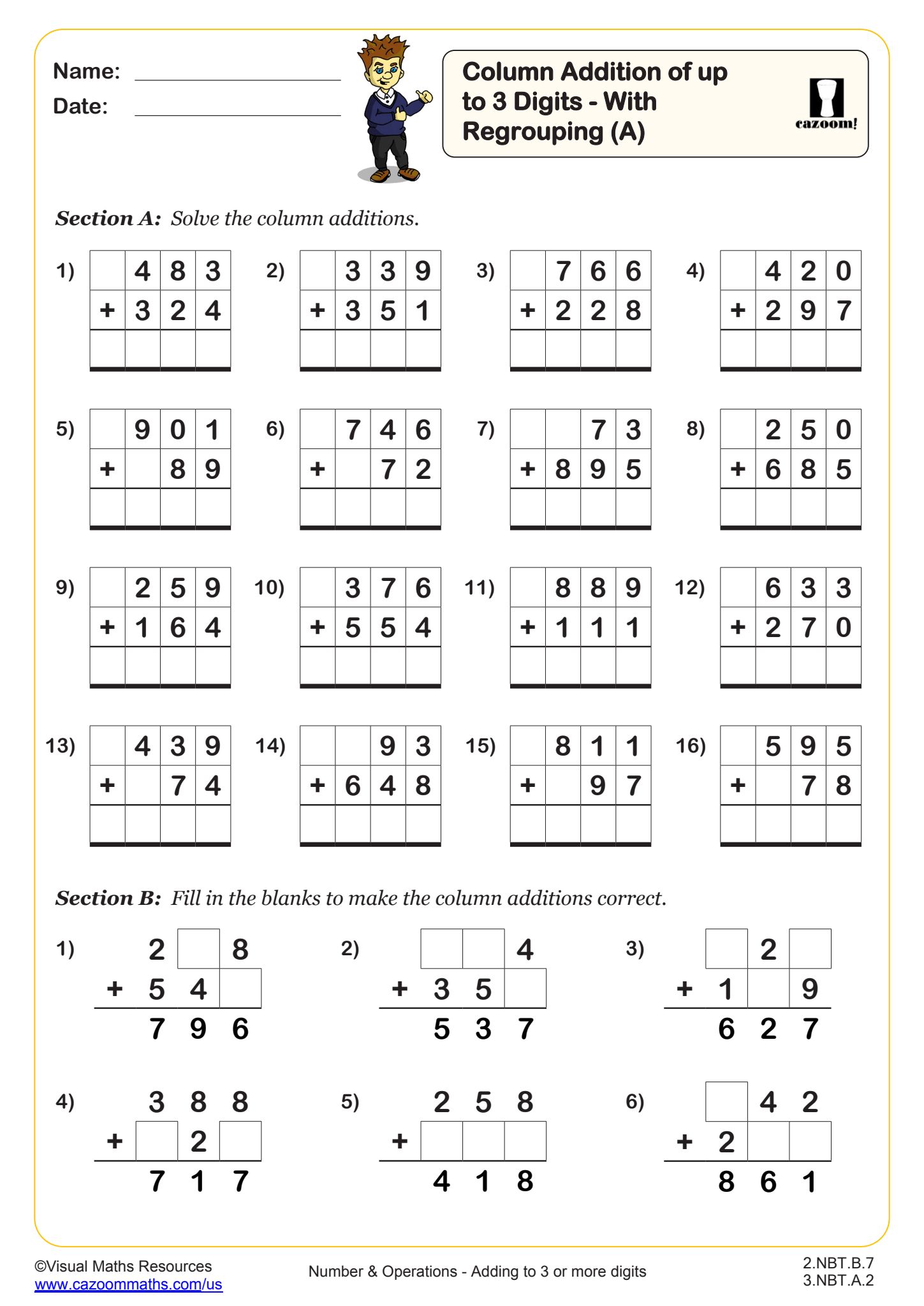
Column Addition of up to 3 Digits - With Regrouping (A)
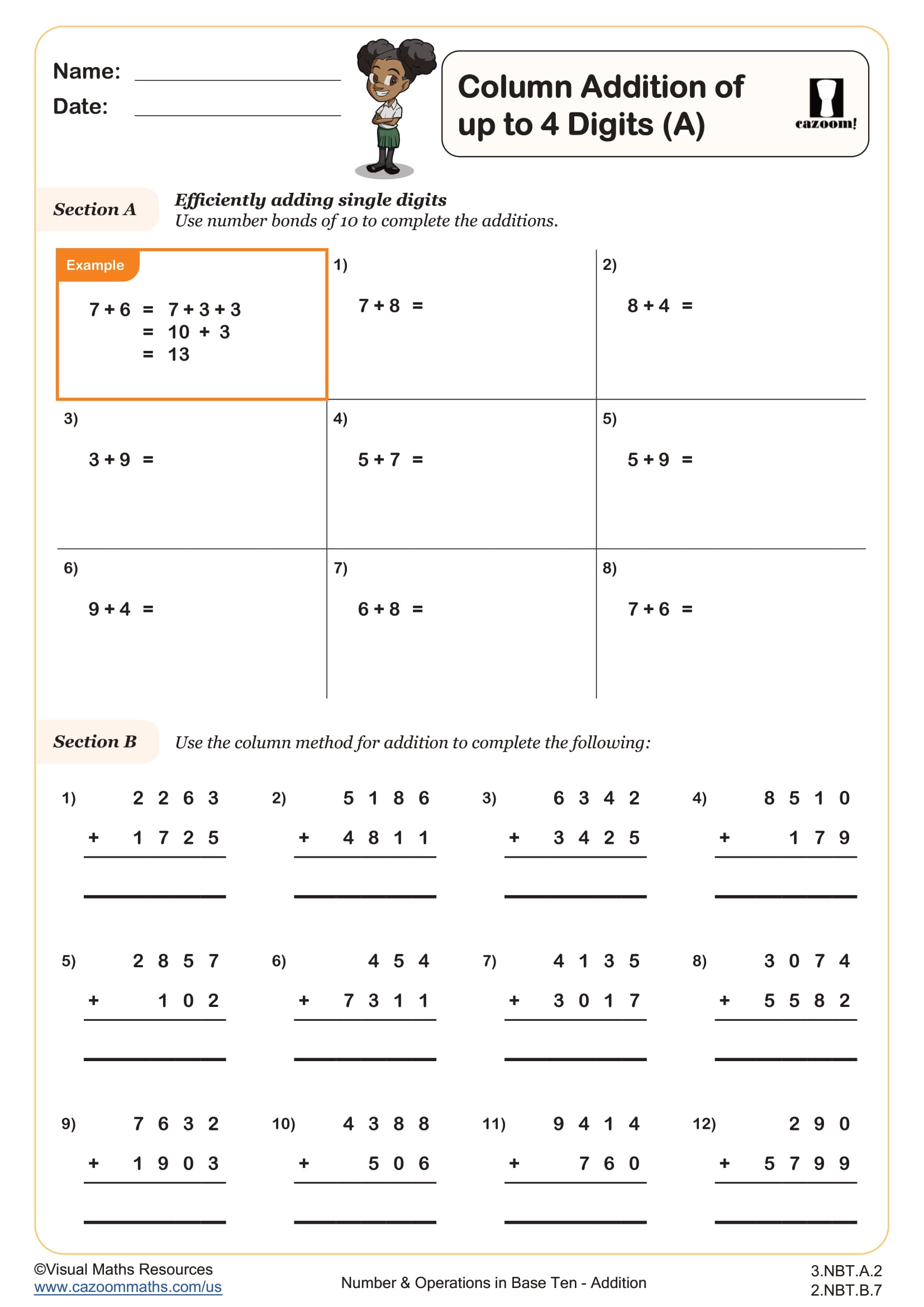
Column Addition of up to 4 Digits (A)
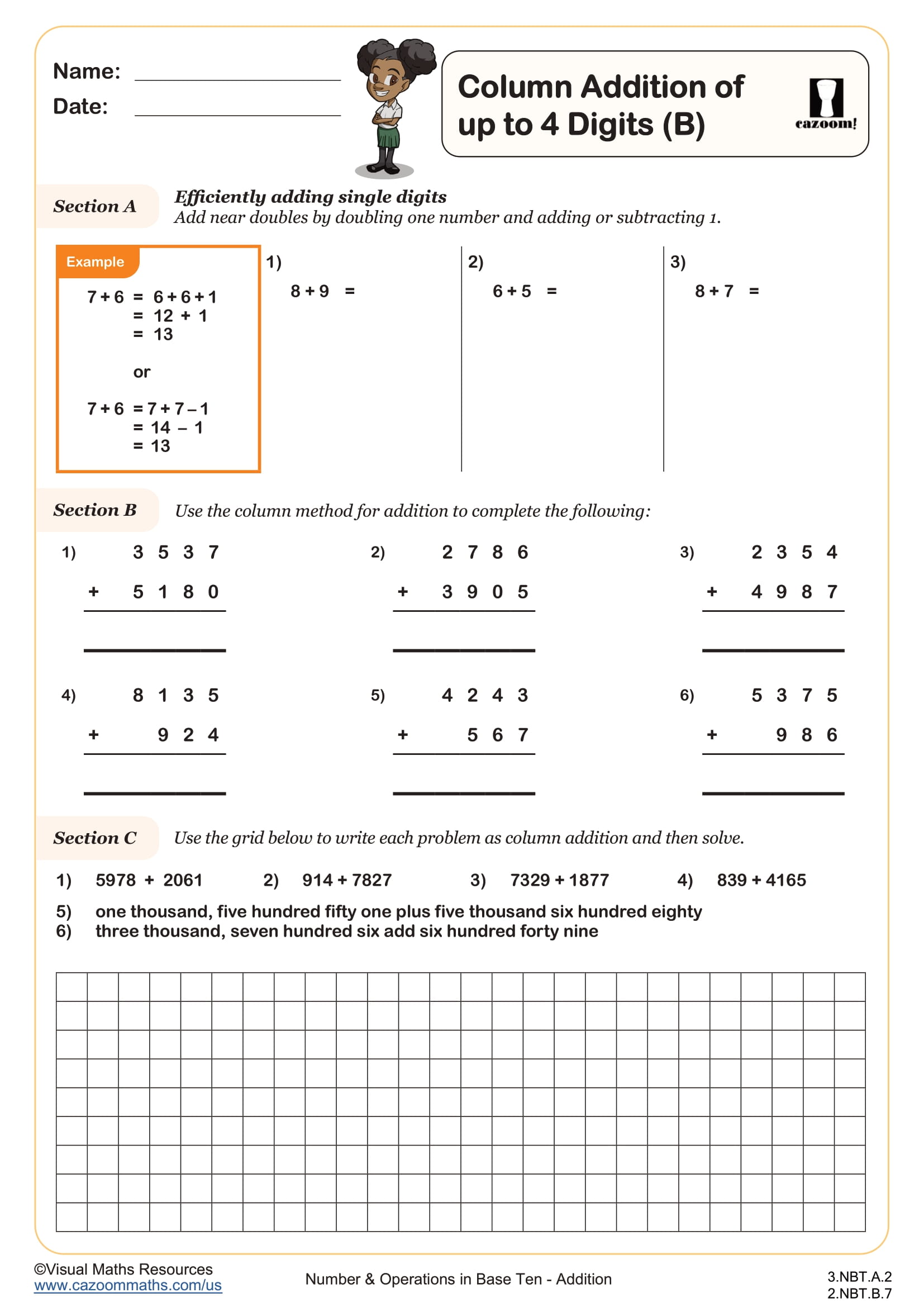
Column Addition of up to 4 Digits (B)
Use Formal Methods For Addition of Integers
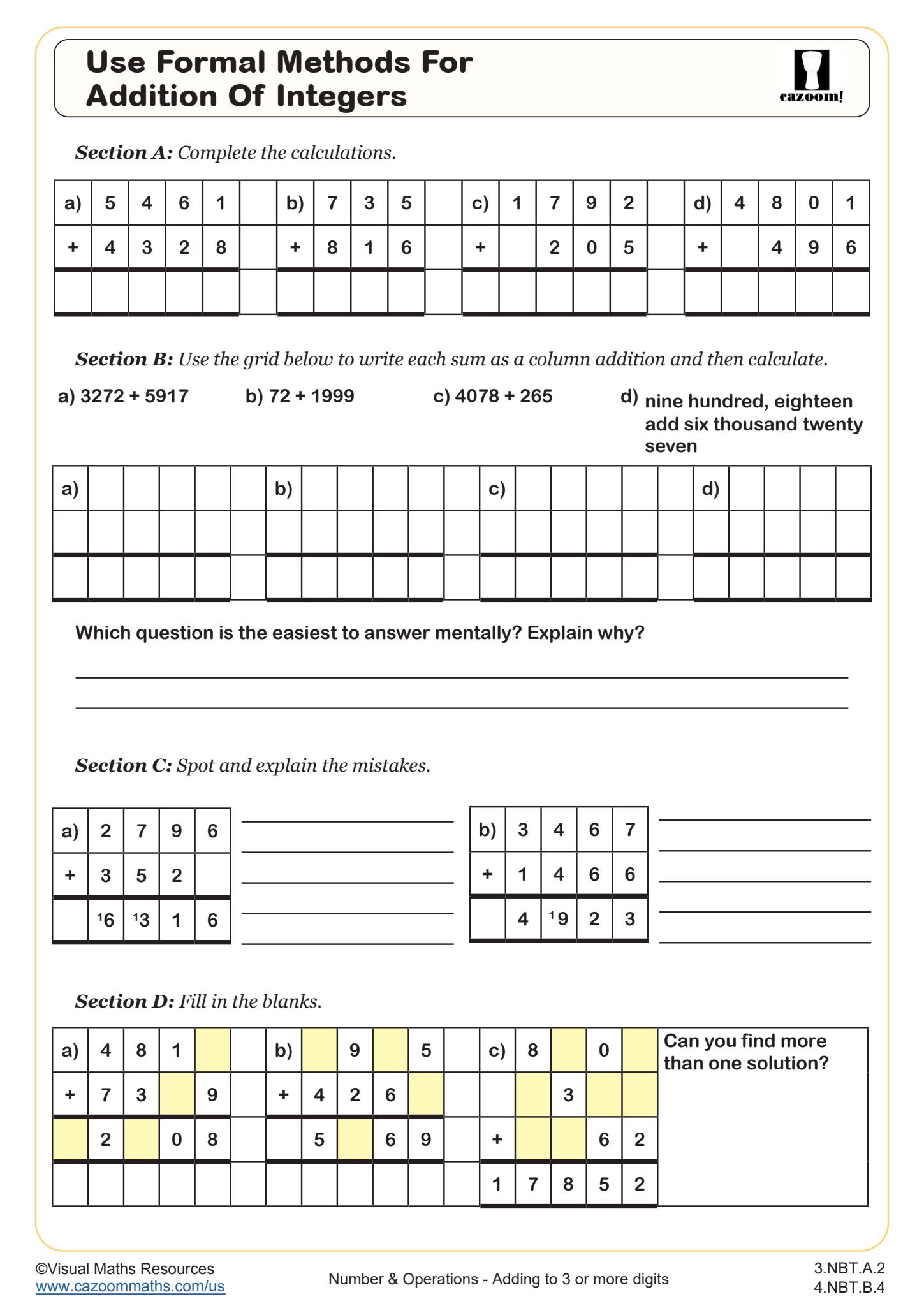
All worksheets are created by the team of experienced teachers at Cazoom Math.
What Are Methods for Addition and Why Do Third Graders Need Them?
Methods for addition refer to different strategies students use to solve addition problems beyond traditional column addition, including decomposing numbers, using properties of addition, and recognizing relationships between operations. Third grade is the critical year when Common Core State Standards (3.NBT.A.2) expect students to fluently add within 1000 using strategies based on place value and properties of operations, making this the foundation for all future computation work.
Students often struggle when they rely on a single method for every problem, particularly when numbers don't lend themselves to that approach. Teachers notice that standardized tests present addition problems in varied formats specifically to assess whether students can flexibly choose appropriate strategies, so practicing multiple methods prepares students for both classroom assessments and state testing situations.
Which Grade Levels Use These Addition Methods Worksheets?
These worksheets are designed specifically for third grade students in elementary school, aligning with the computational expectations for this pivotal year. Third grade marks the transition from basic fact fluency to multi-digit computation with strategy selection, making it the ideal time to formalize various addition methods that students may have explored informally in second grade.
The progression within third grade moves from simpler two-digit problems using familiar strategies to more complex three-digit additions where students must evaluate which method works most efficiently. Teachers observe that students who practice different methods early in third grade show greater confidence tackling regrouping challenges later in the year, as they understand addition as a flexible process rather than a rigid procedure.
How Do Products and Sums Connect Addition to Multiplication?
Products and sums problems ask students to find combinations of numbers where the product (result of multiplication) and sum (result of addition) both equal specific target numbers, integrating two operations simultaneously. This approach strengthens understanding of how operations relate to each other while building strategic thinking about number relationships. Students learn to work systematically through possibilities, testing factor pairs and checking whether their sum meets the requirement.
This skill connects directly to real-world applications in engineering and construction, where professionals calculate dimensions that must satisfy multiple constraints simultaneously. For example, landscape architects designing rectangular garden beds must consider both the perimeter (related to fencing costs) and area (related to planting space), requiring them to find dimensions where both the sum and product of length and width meet project specifications.
How Can Teachers Use These Addition Methods Worksheets Effectively?
The worksheets provide varied practice opportunities that allow students to encounter addition problems requiring different strategic approaches, helping them develop the judgment to select efficient methods. The inclusion of complete answer keys enables teachers to quickly review student work and identify patterns in strategy selection, revealing whether students are defaulting to less efficient methods when better options exist.
Many teachers find these worksheets valuable for differentiated math centers, where students working at different paces can independently practice while the teacher provides targeted small-group instruction. They also work well as warm-up activities to activate prior knowledge before introducing more complex topics, or as homework assignments that give families insight into the varied strategies students learn in modern mathematics instruction beyond traditional algorithms.