3rd Grade Metric Measures Worksheets
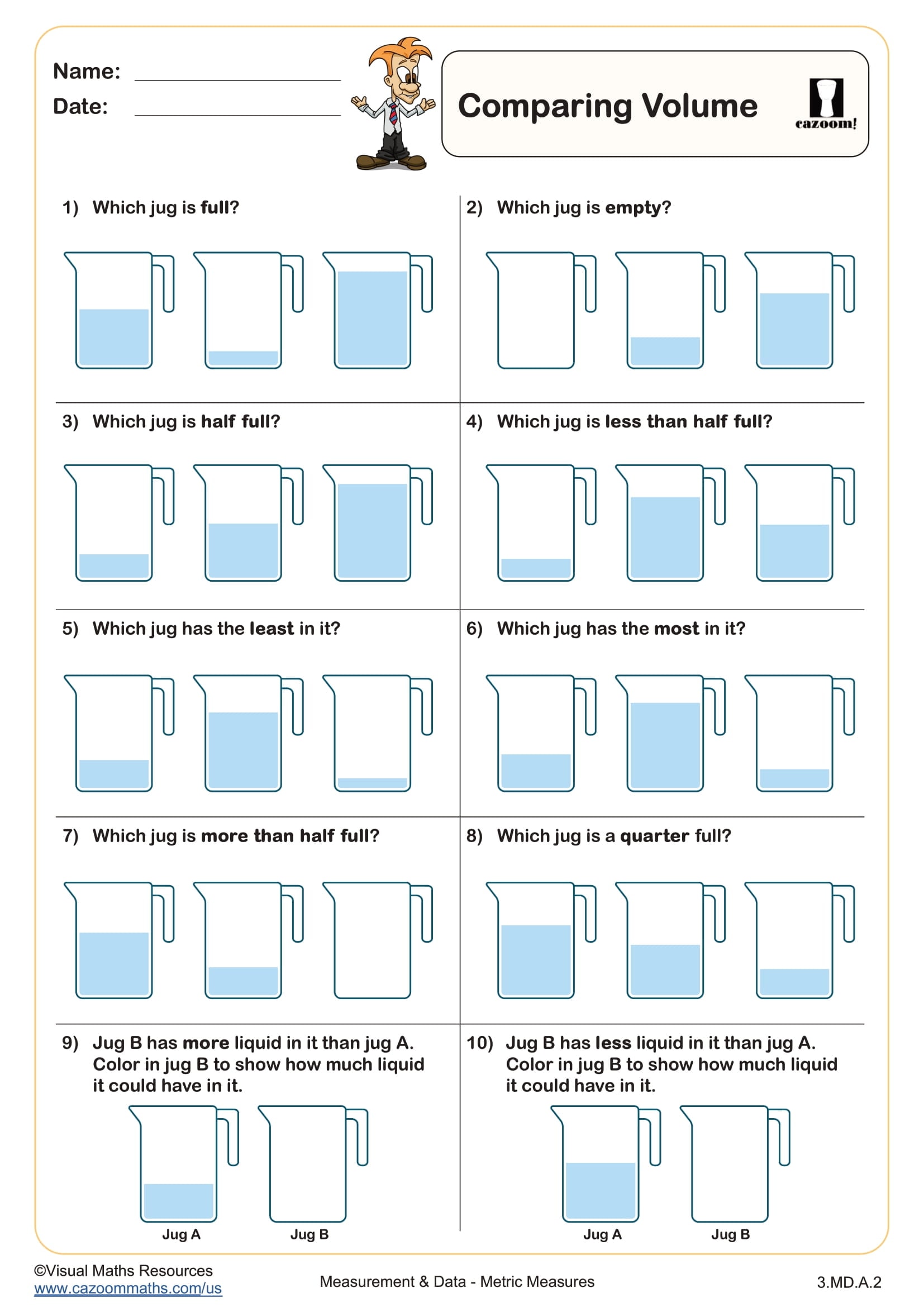
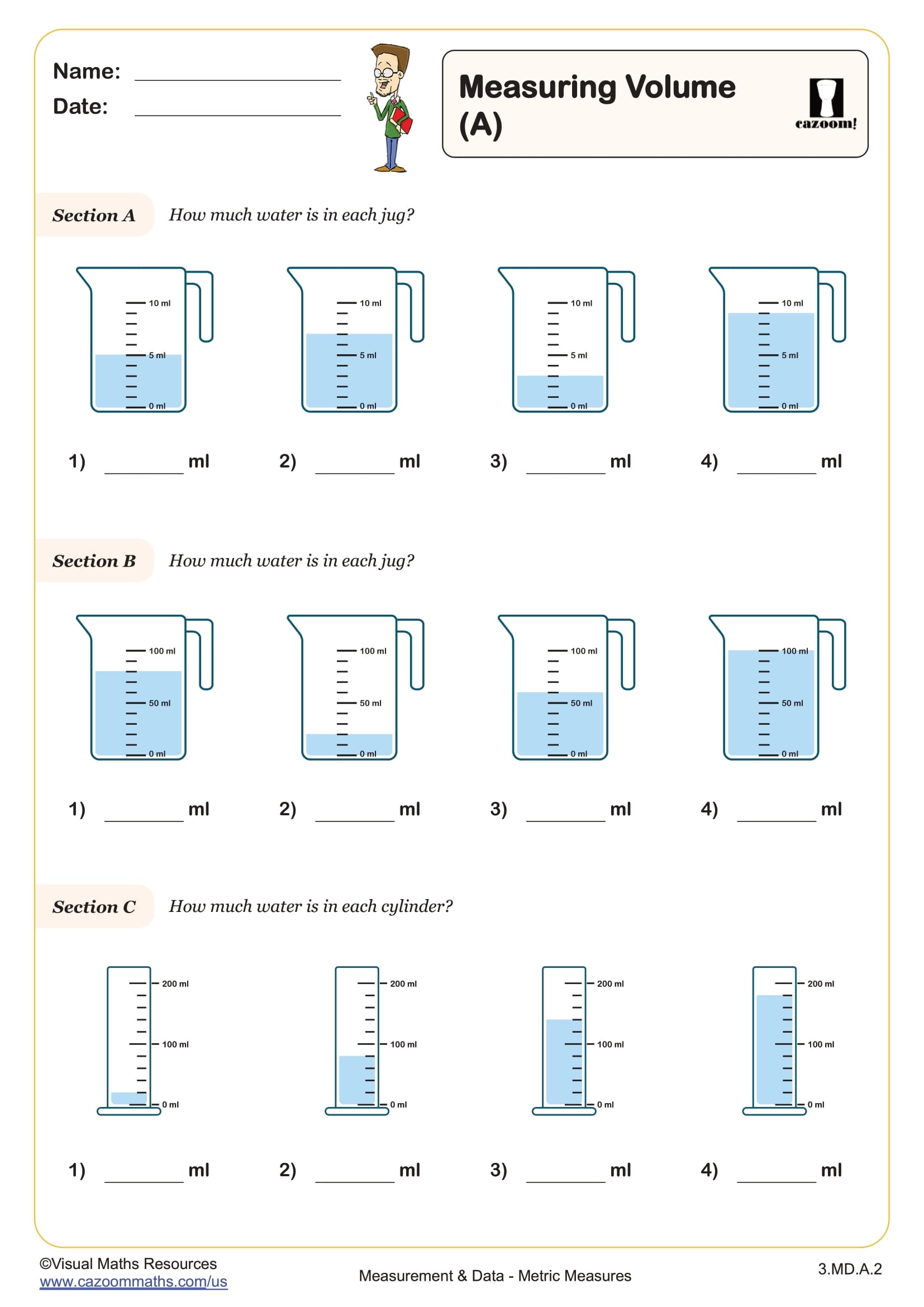
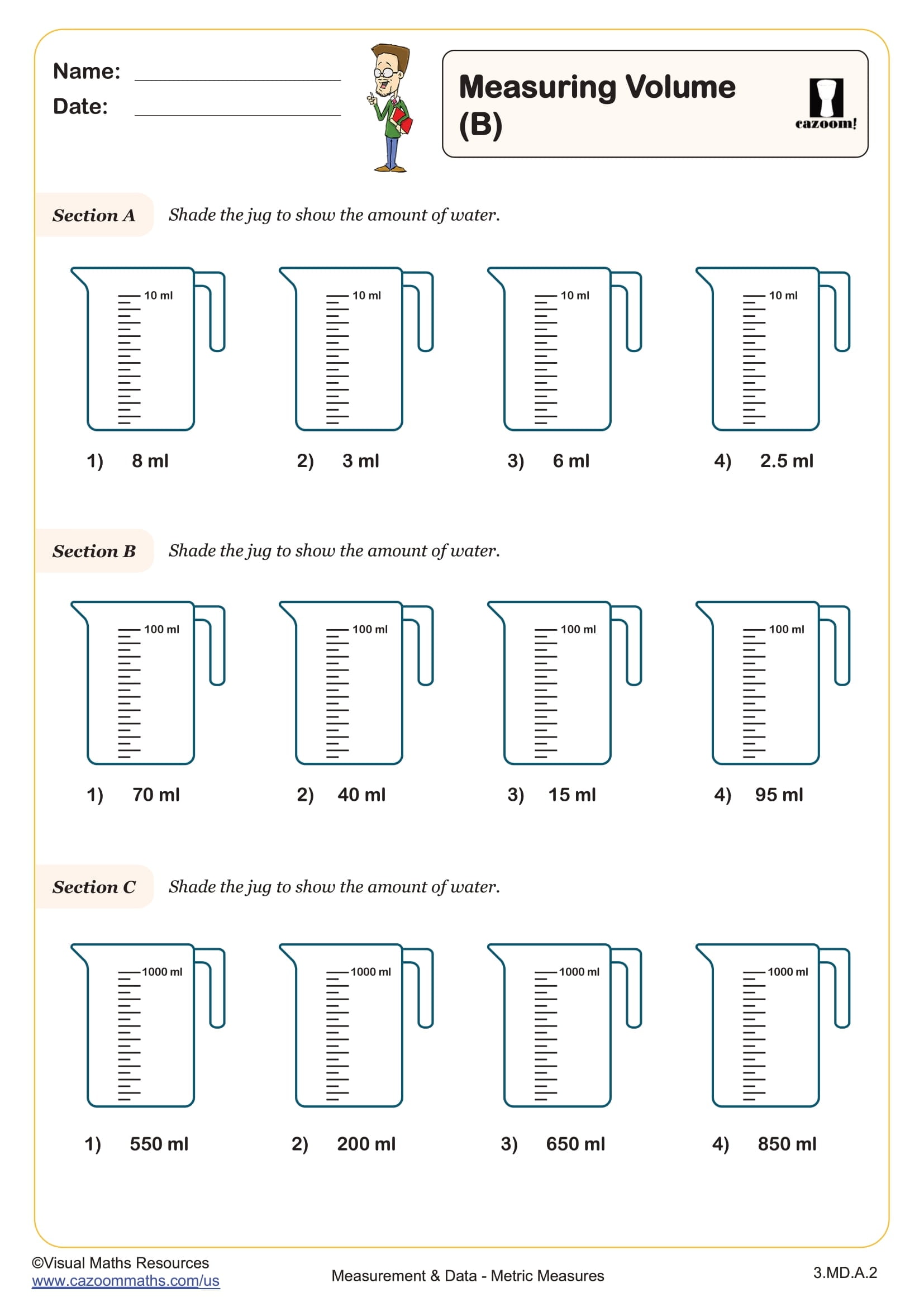
All worksheets are created by the team of experienced teachers at Cazoom Math.
What Are Metric Measures and Why Do Third Graders Learn Them?
Metric measures introduce students to a standardized system of measurement based on powers of ten, focusing primarily on length (meters), mass (grams), and volume (liters) at the elementary level. Third grade marks the point where students move beyond informal measurement units to understanding how scientists, engineers, and most of the world measure quantities precisely. The Common Core State Standards expect third graders to measure and estimate liquid volumes using standard metric units, building the foundation for more complex measurement work in upper grades.
A common misconception students hold is treating milliliters and liters as completely separate units rather than understanding that 1,000 milliliters equal one liter. Students often lose points on assessments when they fail to recognize that converting between metric units follows the same place value logic as converting between ones, tens, and hundreds. Teachers see significant improvement when students use visual models like graduated cylinders or beakers that show the relationship between units clearly.
Which Grade Levels Study Metric Measures?
These worksheets target third grade students in elementary school, aligning with when the curriculum introduces formal metric measurement and volume concepts. Third graders are expected to measure liquid volumes in standard units, solve word problems involving metric measurements, and understand the relationship between liters and milliliters as foundational metric units.
The progression in third grade moves from simply identifying metric units to actually measuring volumes with tools, comparing quantities, and solving multi-step problems that involve decimals in measurement contexts. Students begin by measuring whole liters, then work with combinations of liters and milliliters, and eventually solve problems requiring them to add, subtract, or compare volumes expressed as decimals. This scaffolded approach prepares students for fourth grade work with more complex metric conversions and multi-unit measurements.
How Do Students Measure and Compare Volume in Metric Units?
Measuring volume in metric units requires students to read graduated scales on containers marked in liters and milliliters, determine appropriate units for different quantities, and compare volumes using reasoning about place value. Students learn that volume measures the amount of liquid a container holds, and they practice reading measurements where each marking on a scale represents a specific increment. The decimal connection becomes critical when students realize that 0.5 liters equals 500 milliliters, linking their understanding of decimals to practical measurement.
This skill connects directly to STEM fields where precise liquid measurement is essential. Scientists measure chemical solutions in milliliters when conducting experiments, pharmacists measure medication doses using metric volume, and environmental engineers measure water quality by collecting samples in specific metric volumes. Understanding volume measurement helps students grasp how recipes scale up in food science, how hydration needs are calculated for athletes, and how beverage companies determine container sizes for different products.
How Can Teachers Use These Metric Measures Worksheets Effectively?
The worksheets provide structured practice that moves from concrete measurement tasks to abstract problem-solving with metric units. Each worksheet focuses on a specific aspect of metric measurement, allowing teachers to target the exact skill where students need support. The variety of problem types helps students see metric measures in different contexts, from comparing container volumes to solving word problems involving decimals in measurement situations.
These worksheets work well for differentiated instruction during math centers, where students who struggle with decimals can focus on comparing whole-number volumes while advanced students tackle problems involving decimal operations. Teachers use them as quick formative assessments to identify which students still confuse metric units or struggle with the decimal-to-fraction connection. The complete answer keys make these worksheets practical for homework assignments where families can support student learning, and they're equally useful for intervention groups that need focused practice before state assessments that test measurement standards.