3rd Grade Multiplication Worksheets
All worksheets are created by the team of experienced teachers at Cazoom Math.
What multiplication skills should 3rd graders focus on?
Third graders should develop fluency with multiplication facts through 10 × 10, understand multiplication as repeated addition and equal groups, and begin recognizing the commutative and associative properties. The Common Core State Standards expect students to multiply one-digit whole numbers by multiples of 10 and solve two-step word problems using the four operations by year's end.
Students often lose points on assessments when they confuse multiplication with addition, particularly in word problems that require interpreting "groups of" language. Teachers notice that students who practice skip counting alongside standard multiplication drills develop faster fact recall, as the rhythmic pattern helps cement the number relationships in memory before transitioning to instant recall.
How does 3rd grade multiplication build on earlier learning?
By third grade, students should already understand addition and subtraction fluently, which allows them to see multiplication as a shortcut for repeated addition. Second graders typically work with equal groups and arrays as foundational concepts, while third grade formalizes these into multiplication facts and introduces the multiplication symbol and terminology.
This year's multiplication work directly prepares students for fourth grade multi-digit multiplication and division with remainders. Teachers observe that students who struggle with multiplication facts in third grade often face compounding difficulties with long division, fraction operations, and even algebra later on, making fact fluency a priority that pays dividends across all future math courses.
What are times tables and why do they matter?
Times tables are organized lists showing the products of a given number multiplied by integers, typically from 1 through 12. Students learn these patterns to build automatic recall, which frees up mental energy for more complex problem-solving. Mastering times tables helps students recognize relationships between numbers, such as how the 4 times table doubles the 2 times table, or how the 9 times table produces digits that sum to 9.
In real-world contexts, multiplication appears constantly in engineering and design. Architects use multiplication to calculate square footage, materials needed, and spacing for structural elements. Computer programmers rely on multiplication for array indexing, graphics rendering, and data processing. Students who see multiplication as more than isolated facts begin recognizing its role in organizing information efficiently, whether they're arranging chairs in equal rows or calculating the total cost of multiple items.
How can teachers use these multiplication worksheets effectively?
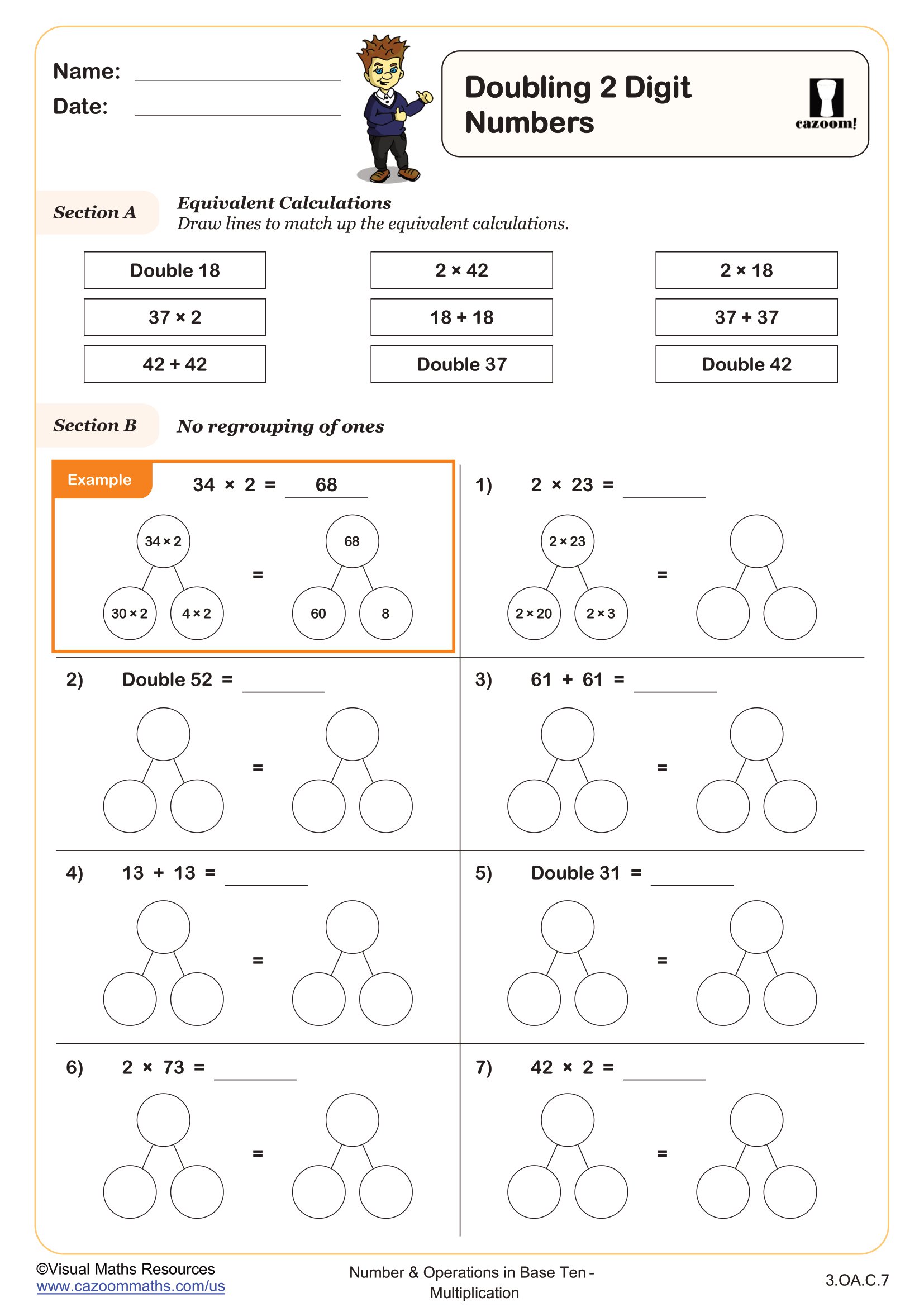
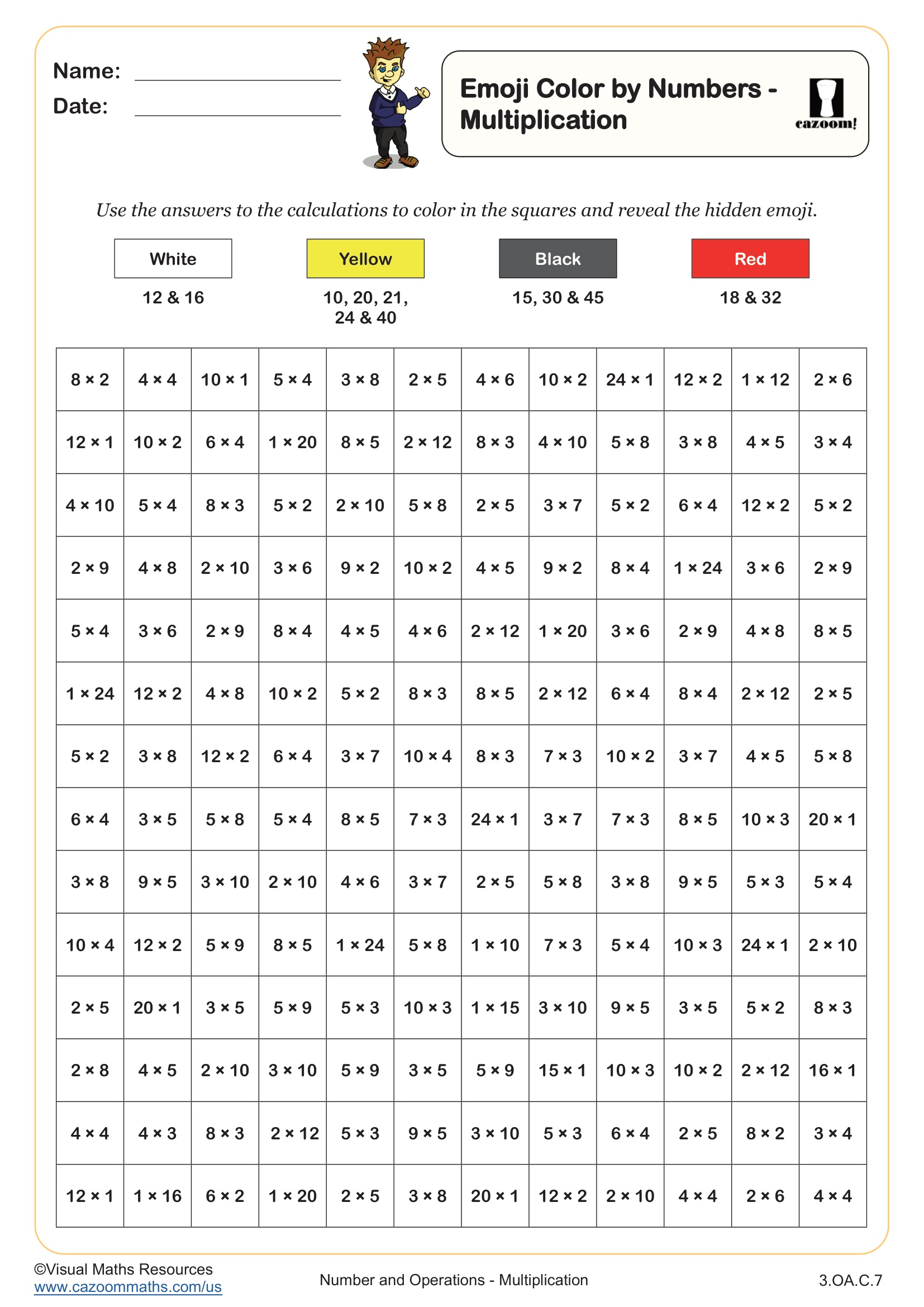
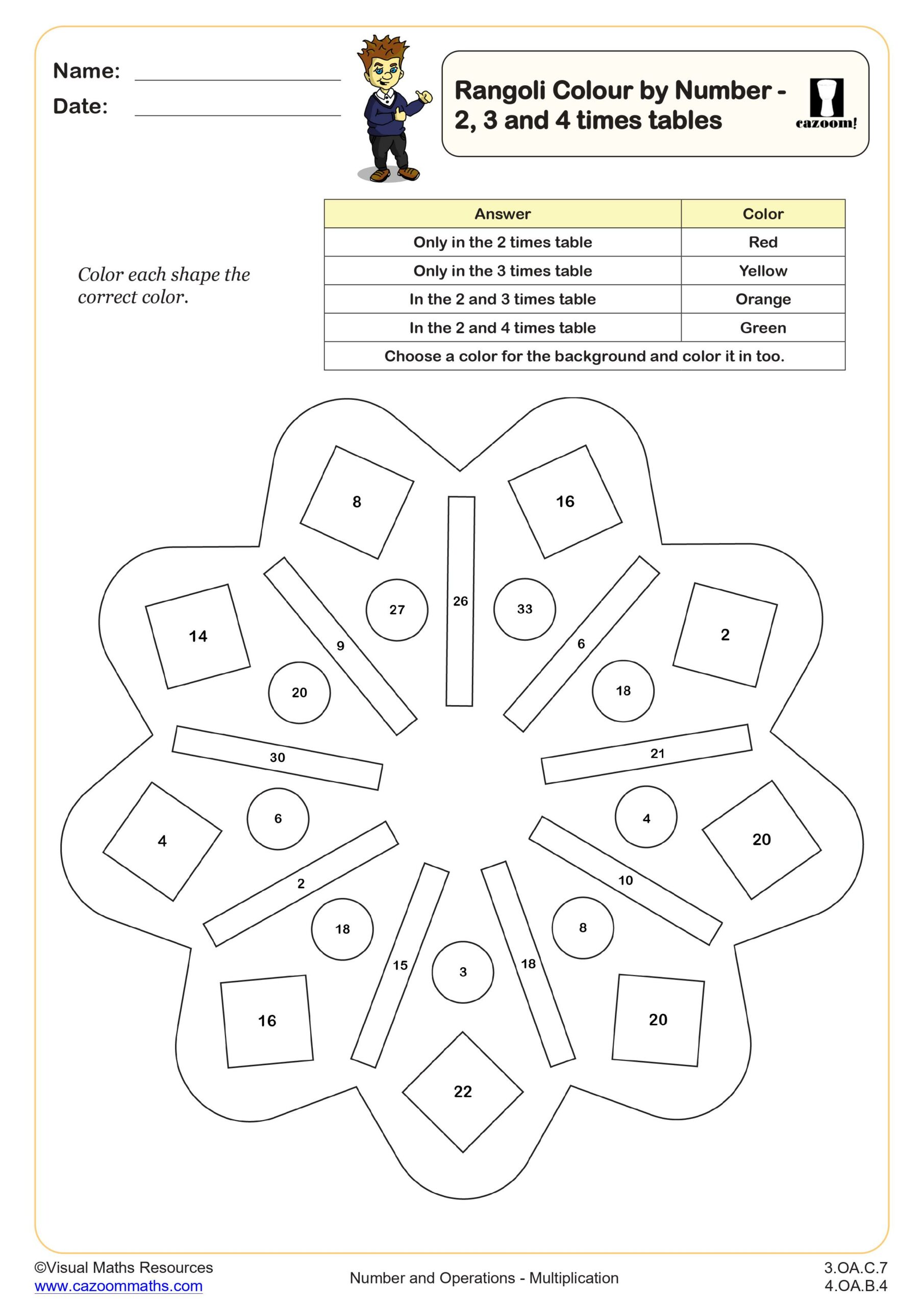
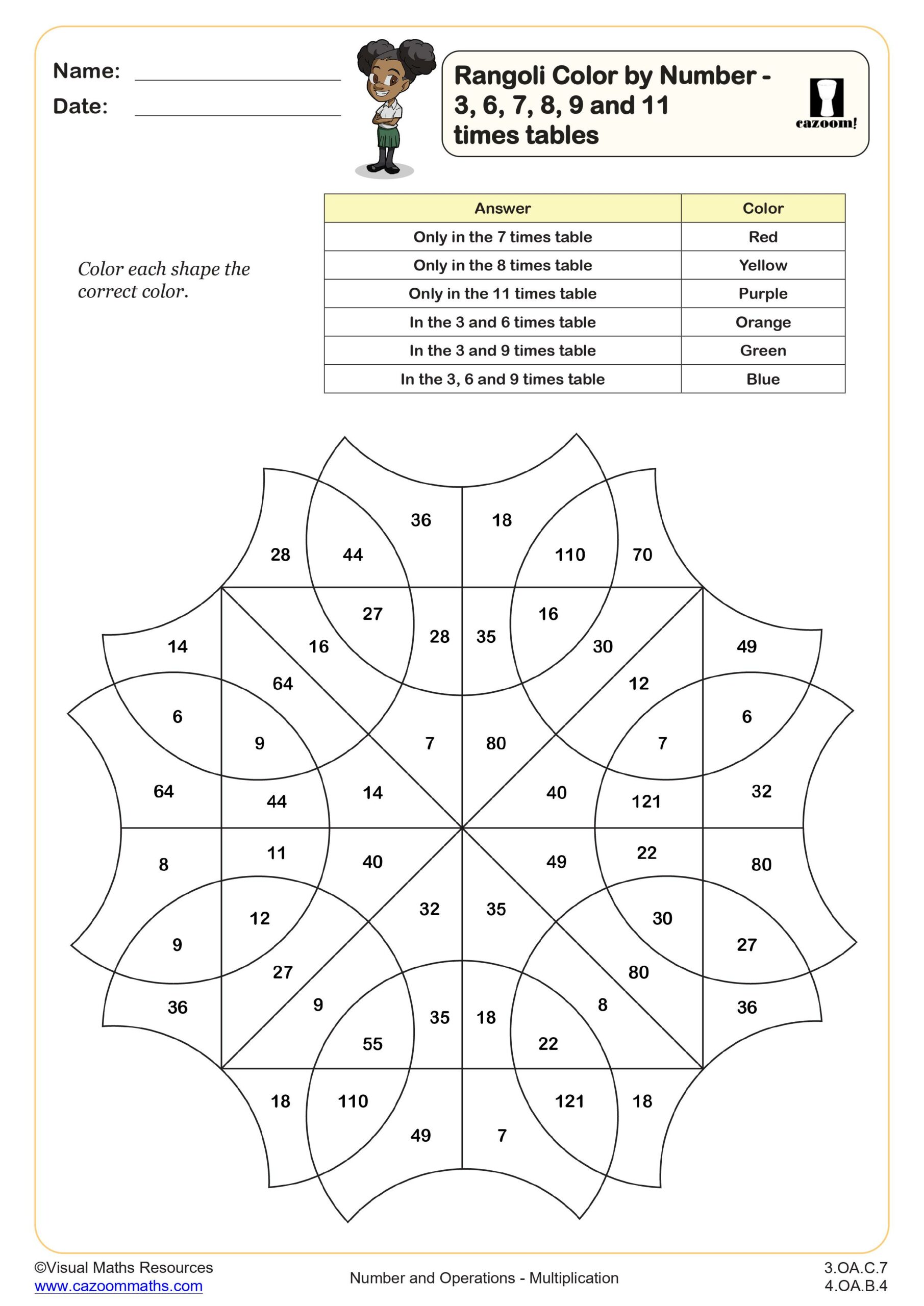
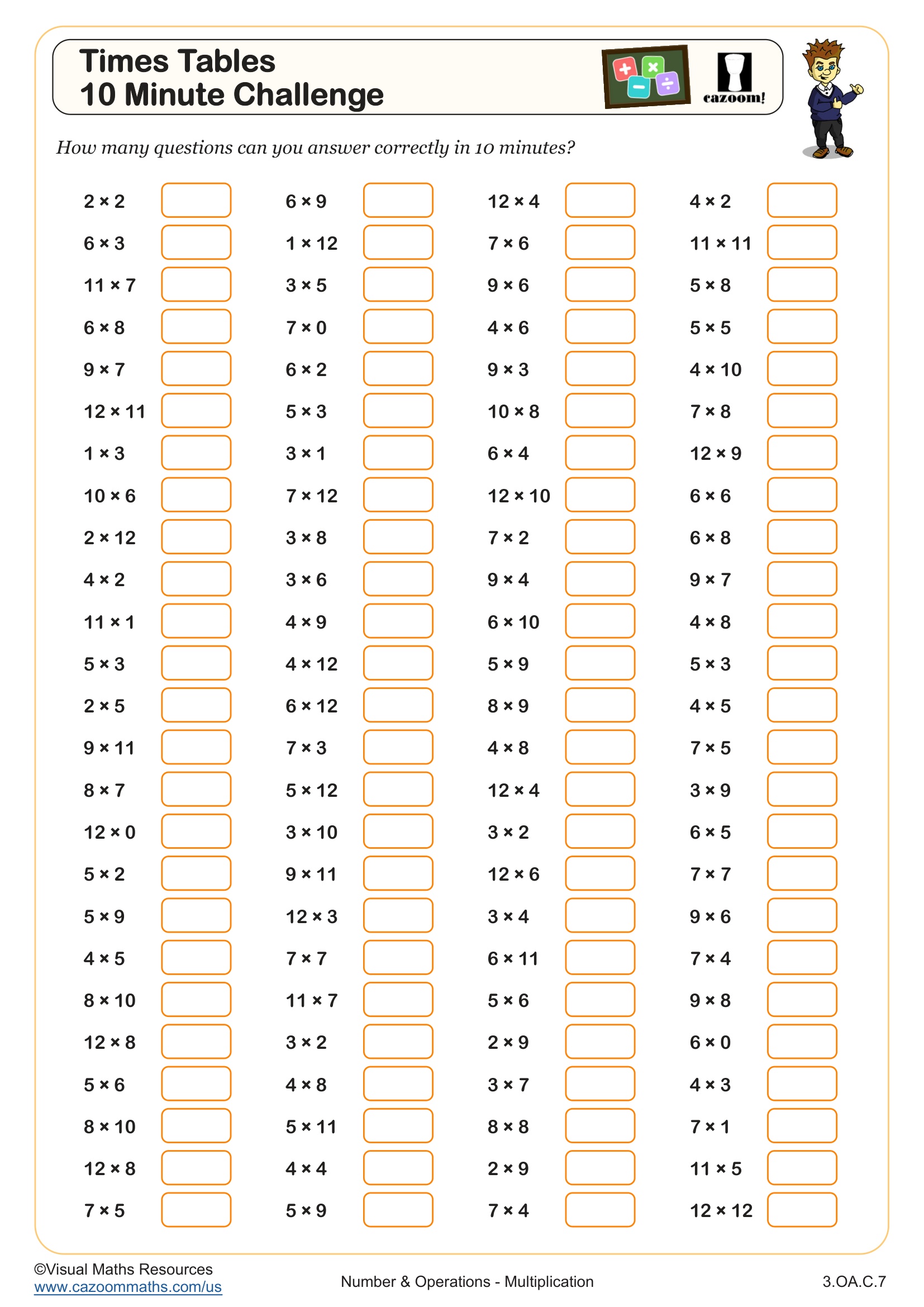
The worksheets provide varied practice formats including timed challenges, color-by-number activities, and fact families that connect multiplication to division. This variety helps reach different learning styles while maintaining engagement across multiple practice sessions. The included answer keys allow students to self-check their work, promoting independence and immediate feedback that reinforces correct strategies.
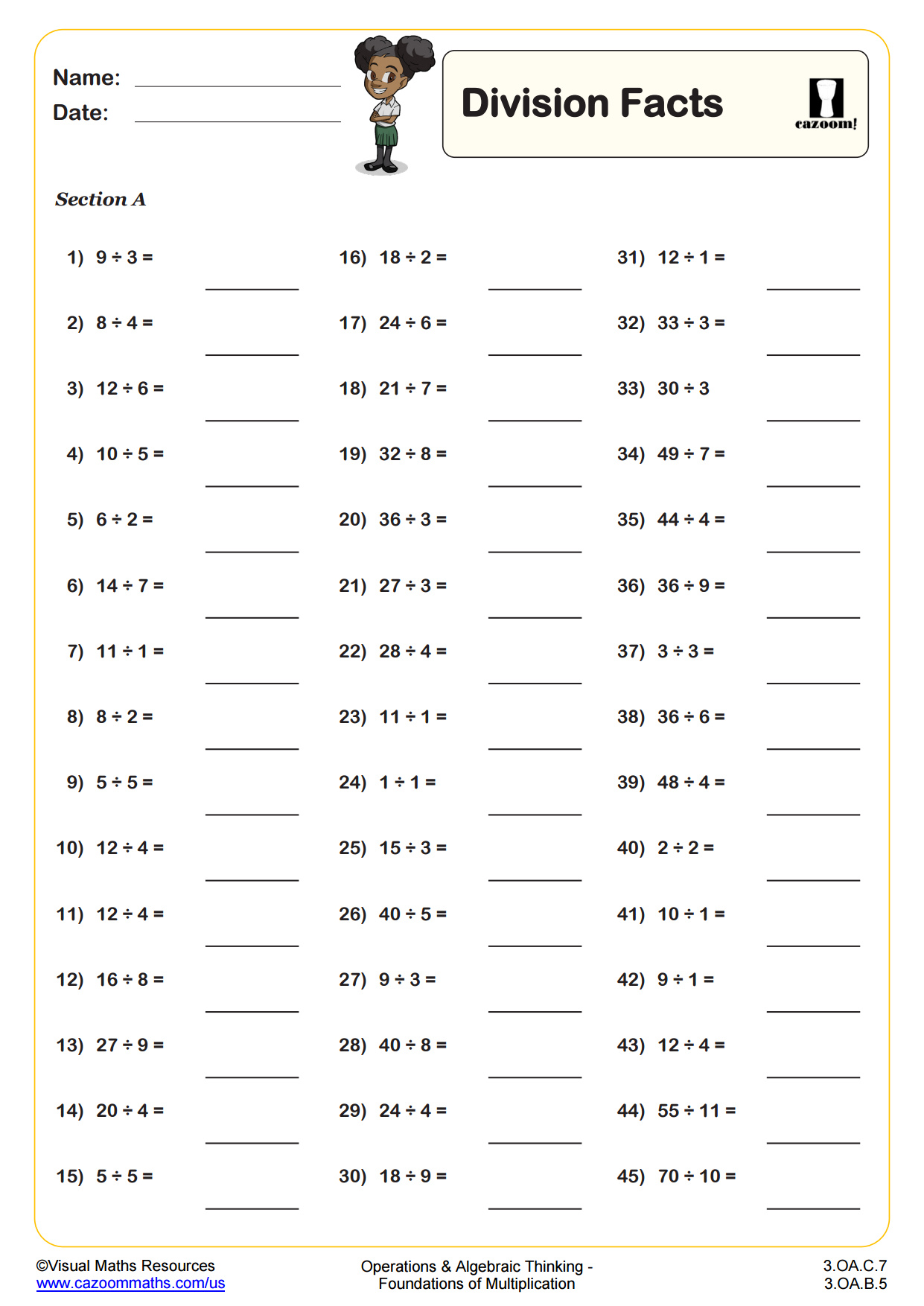
Many teachers use the timed challenges for quick morning warm-ups or exit tickets to assess ongoing progress, while the color-by-number sheets work well as Friday activities or rewards for completing other assignments. The division facts worksheet pairs naturally with multiplication practice during intervention time, helping students see the inverse relationship between operations. Some teachers assign different worksheets to small groups based on which times tables students need to strengthen, using the answer keys to facilitate peer tutoring among students who have already mastered certain facts.