3rd Grade Pie Charts and Bar Charts Worksheets
All worksheets are created by the team of experienced teachers at Cazoom Math.
What Are Pie Charts and Bar Charts in 3rd Grade Math?
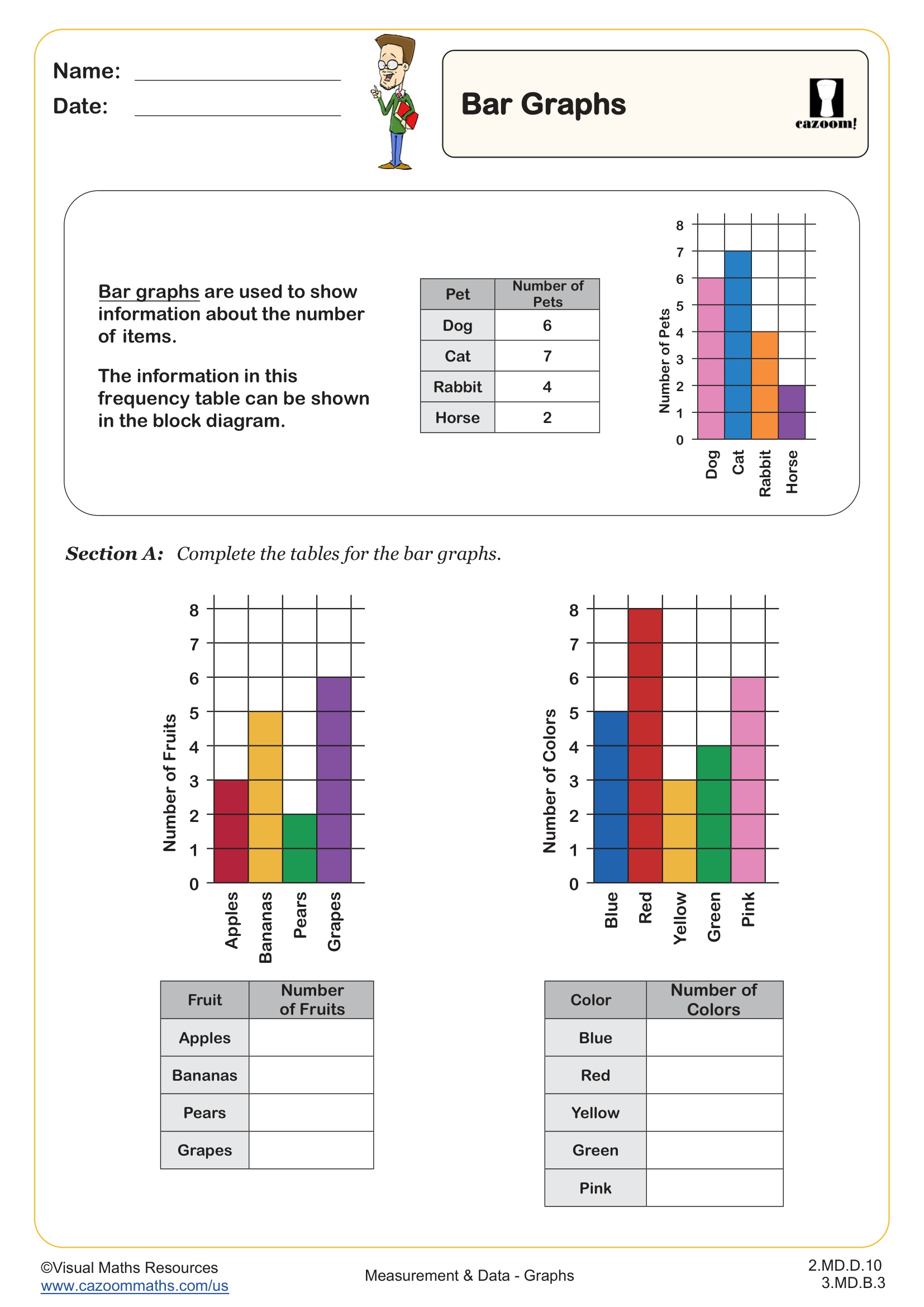
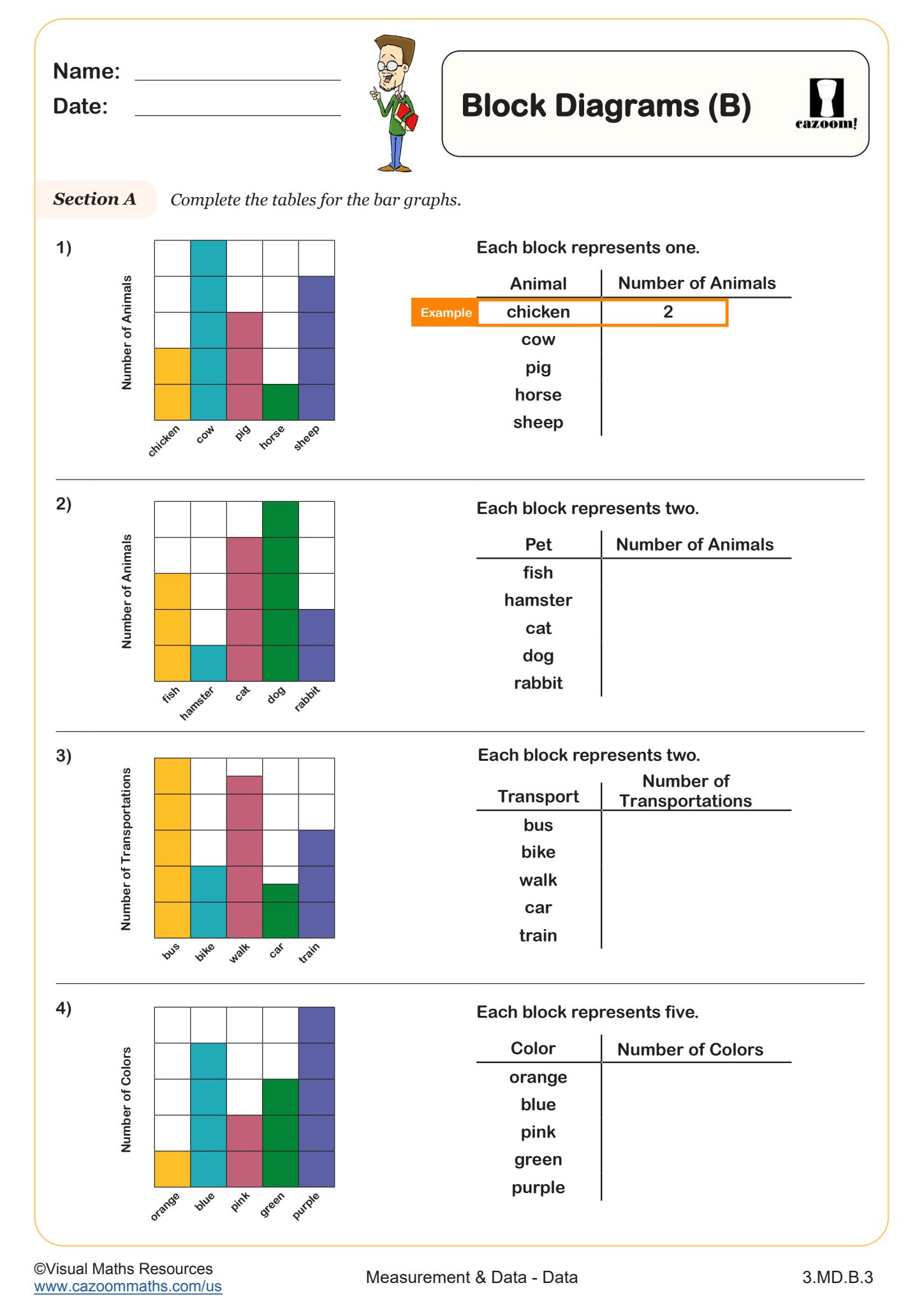
Pie charts and bar charts are visual representations that help students organize and interpret data. At the 3rd grade level, students focus primarily on reading and creating simple bar graphs with clear categories and scales, while pie charts introduce the concept of parts of a whole. These align with Common Core State Standards that emphasize measurement and data strands in elementary mathematics.
Students frequently lose points when they forget to include titles or labels on their graphs, even when the bars themselves are drawn correctly. Teachers notice that practicing with both pre-made graphs to interpret and blank templates to complete helps students understand that every graph needs context—a reader should know what the data represents and what each axis measures without additional explanation.
Which Grade Levels Use Pie Charts and Bar Charts Worksheets?
These worksheets are designed specifically for 3rd grade students in elementary school. At this stage, students transition from simple picture graphs and tally charts in earlier grades to scaled bar graphs and introductory circular graphs that show data relationships more abstractly.
The progression within 3rd grade moves from reading existing graphs to creating their own representations of collected data. Early worksheets might ask students to answer questions about a completed bar graph showing favorite sports or monthly rainfall, while later activities require students to organize raw data into tables, then choose whether a bar graph or pie chart better displays the information. This decision-making process develops critical thinking about how data presentation affects interpretation.
What Are Two-Way Tables and How Do They Connect to Graphs?
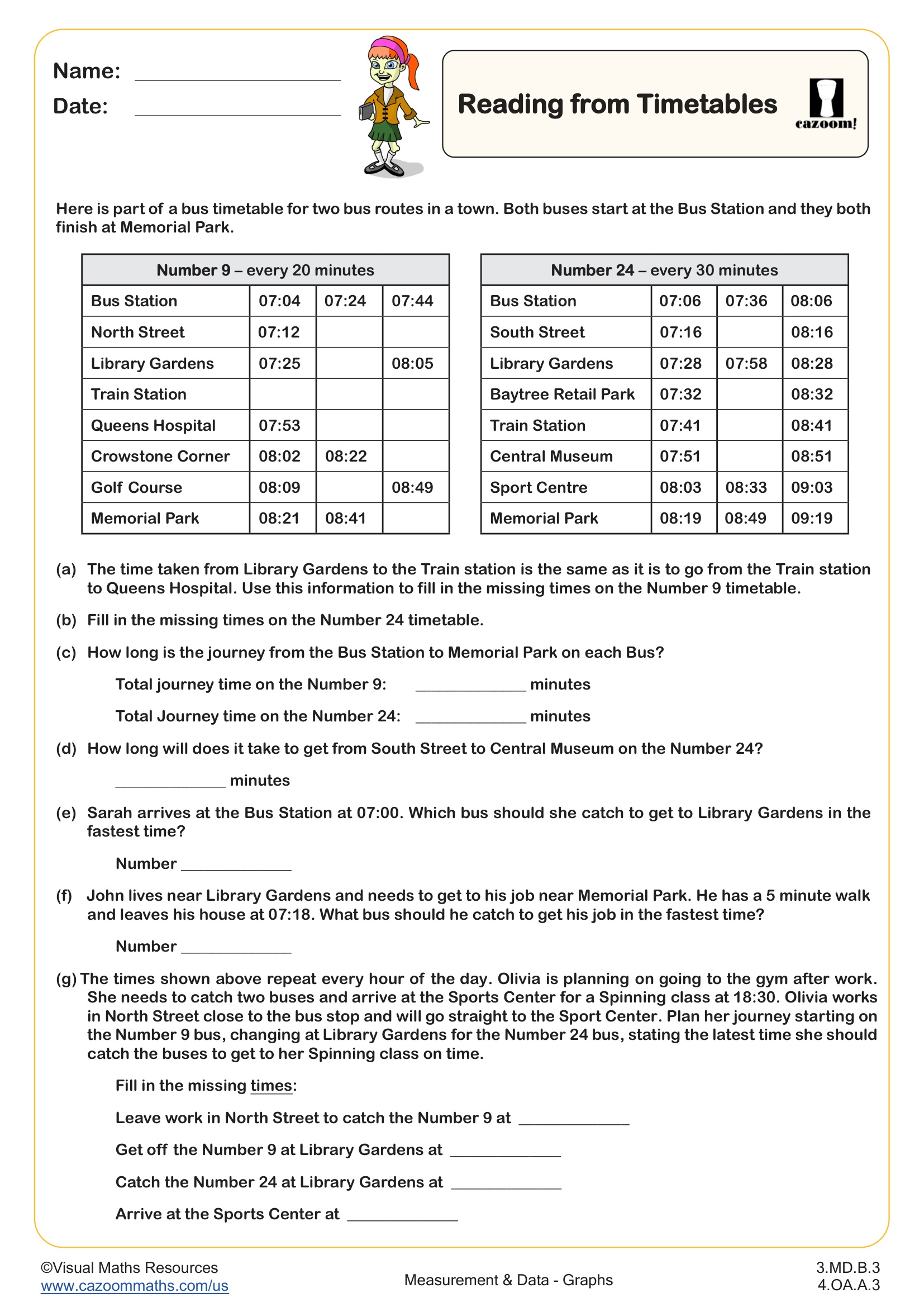
Two-way tables organize data using rows and columns to show relationships between two categories simultaneously. For example, a table might display favorite lunch items across different classrooms, with lunches in rows and classroom names in columns. Students learn to read across and down to find specific information, then use these tables as a foundation for creating bar graphs that compare the data visually.
This skill connects directly to real-world applications in science and social studies. When students track weather patterns over a month, record plant growth under different conditions, or survey classmates about preferred activities, they use two-way tables to organize findings before graphing results. Scientists and researchers use this exact process to communicate experimental data, making this an authentic STEM skill that extends far beyond math class.
How Can Teachers Use These Pie Charts and Bar Charts Worksheets Effectively?
The worksheets provide scaffolded practice that begins with interpreting completed graphs, then moves toward constructing graphs from given data sets. Students benefit from seeing worked examples that demonstrate proper labeling, appropriate scale selection, and accurate representation of quantities. The variety of subtopics allows teachers to target specific skills students need to strengthen.
Many teachers use these worksheets during math centers for independent practice while working with small groups on intervention. They also work well as homework assignments since the answer keys let parents support learning at home. Pairing students to compare their graph creations and discuss which representation shows the data most clearly builds communication skills. The downloadable format makes it simple to print only the specific graph types needed for a particular lesson or review session before assessments.