3rd Grade Properties of Operations Worksheets
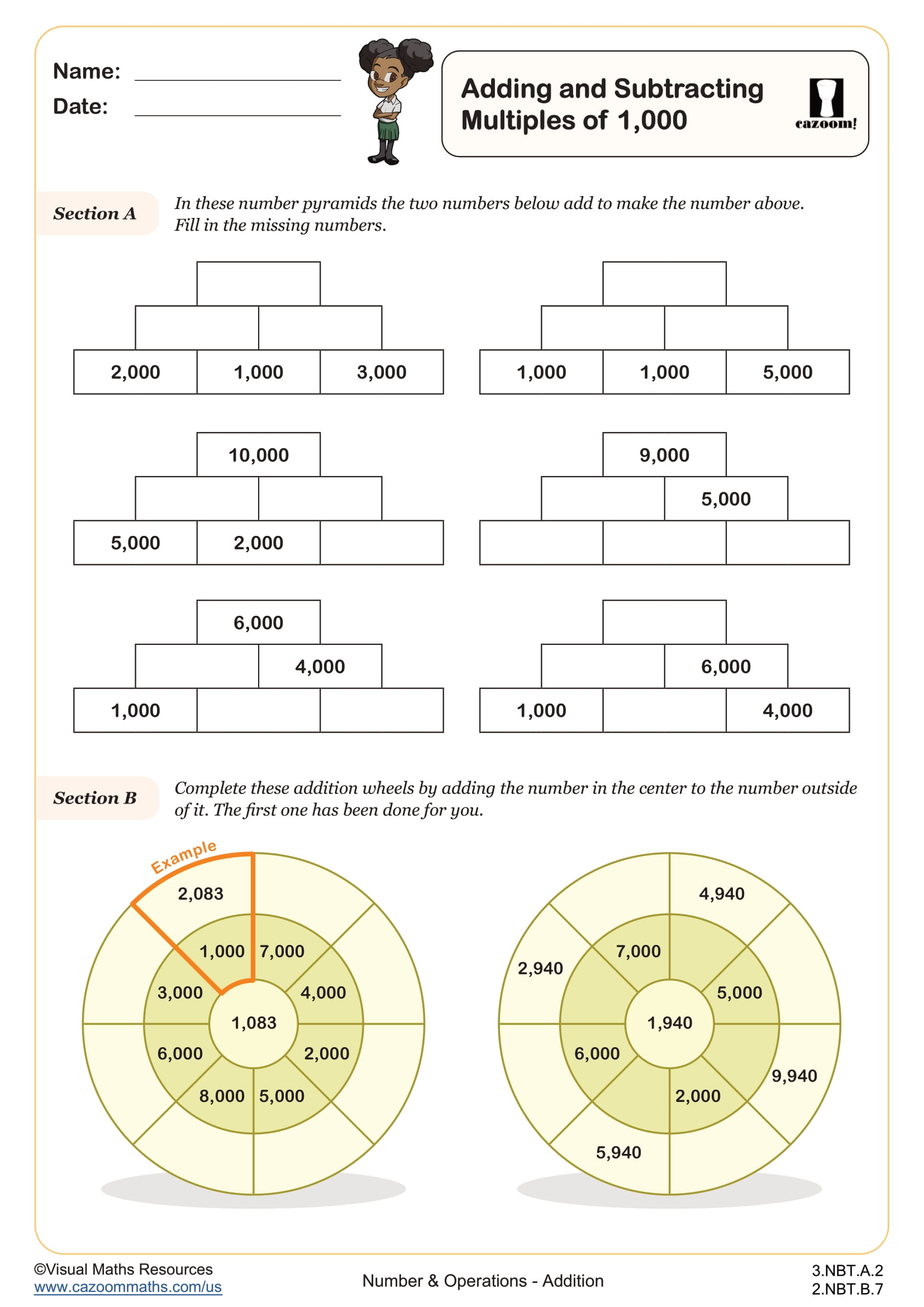
Adding and Subtracting Multiples of 1,000
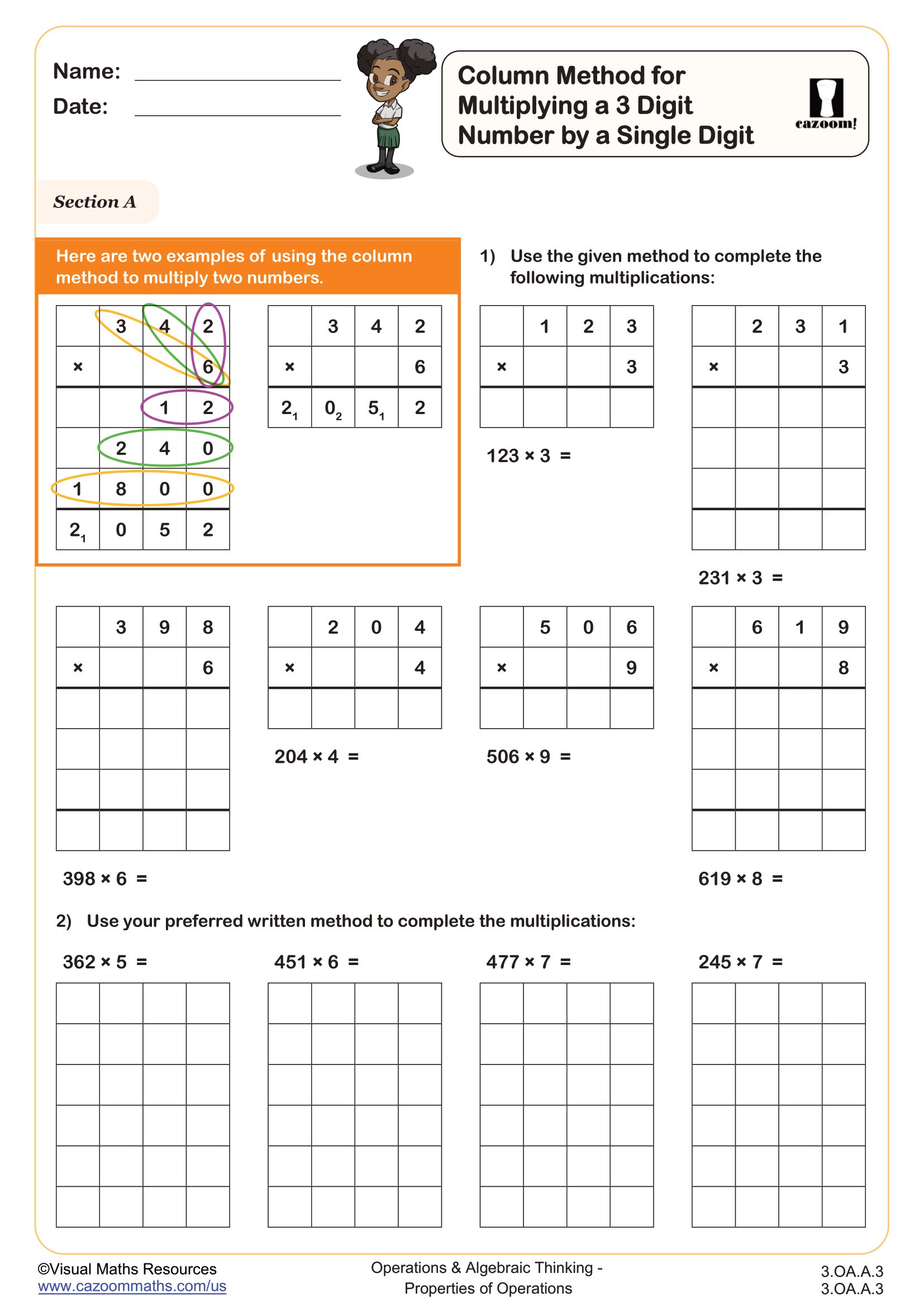
Column Method for Multiplying a 3 Digit Number by a Single Digit
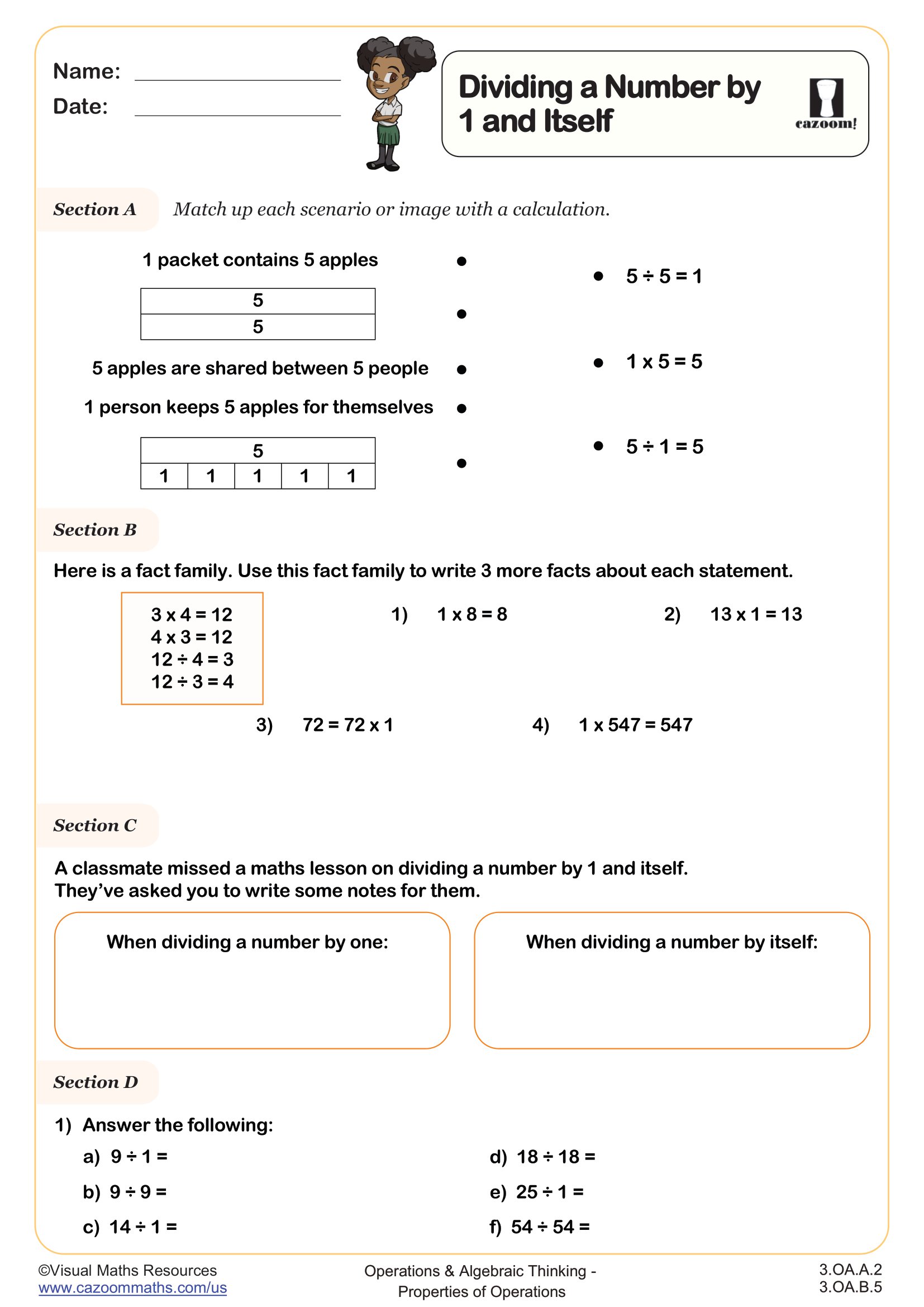
Dividing a Number by 1 and Itself
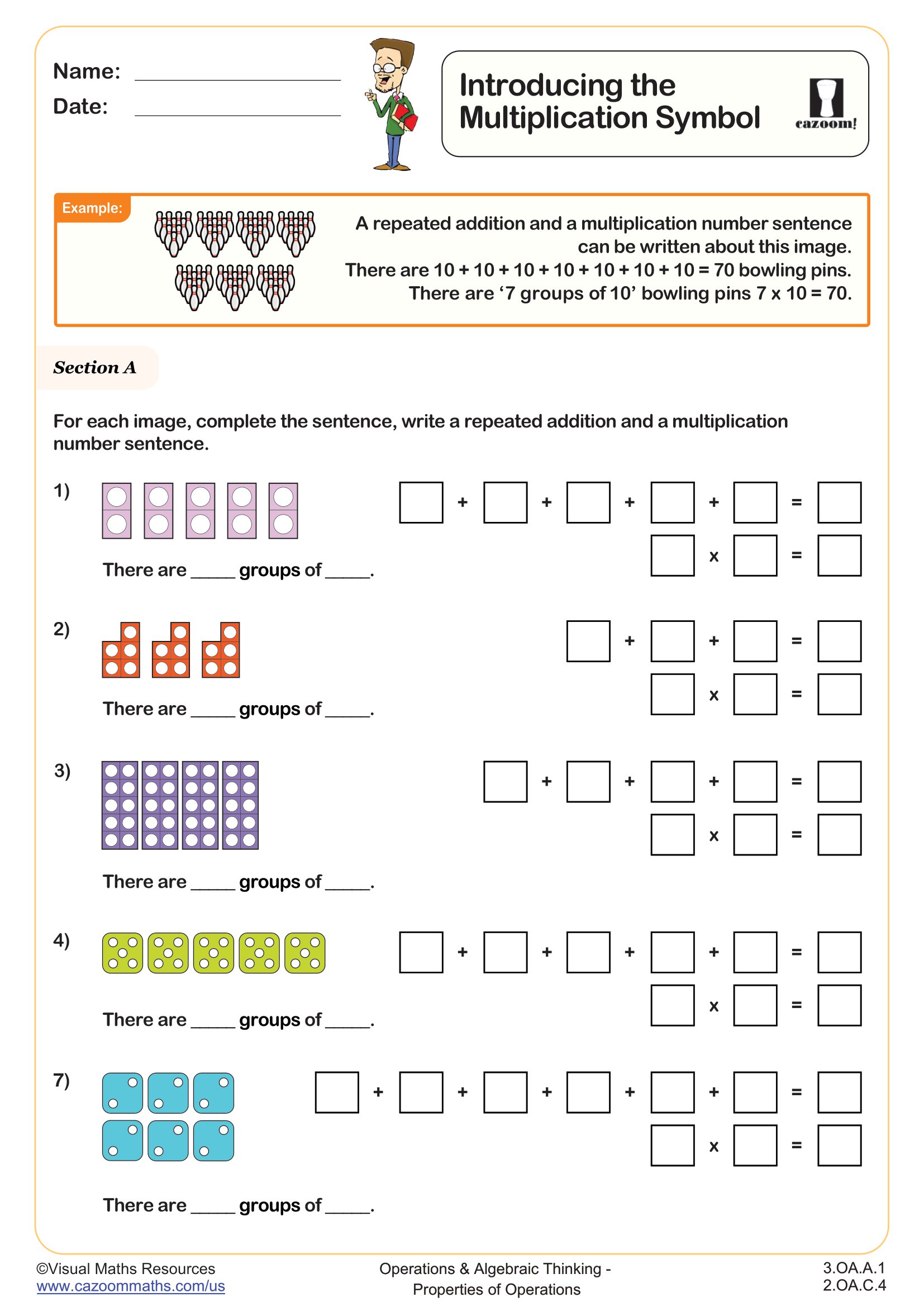
Introducing the Multiplication Symbol
Making Arrays
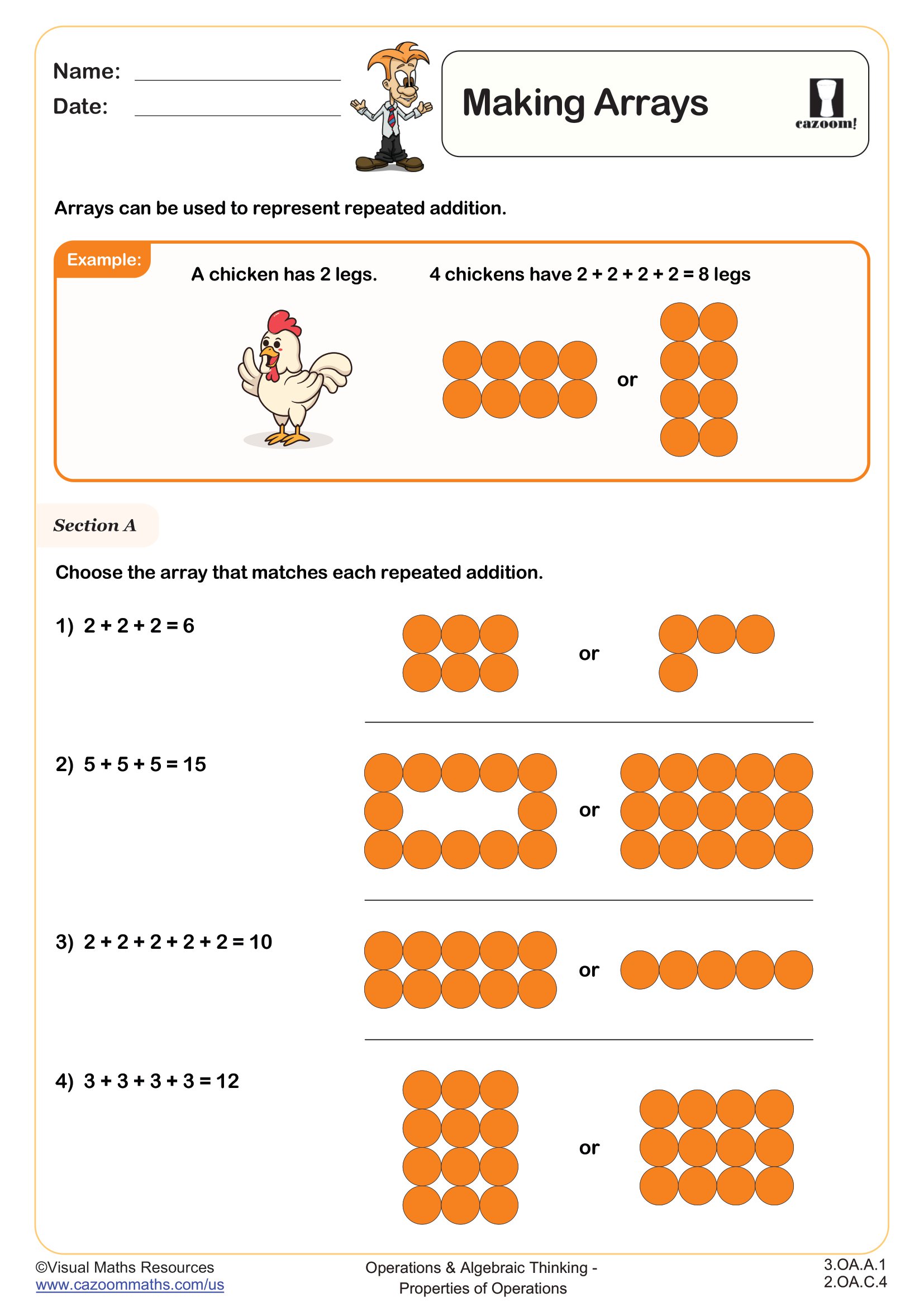
Multiplication and Division Fact Families
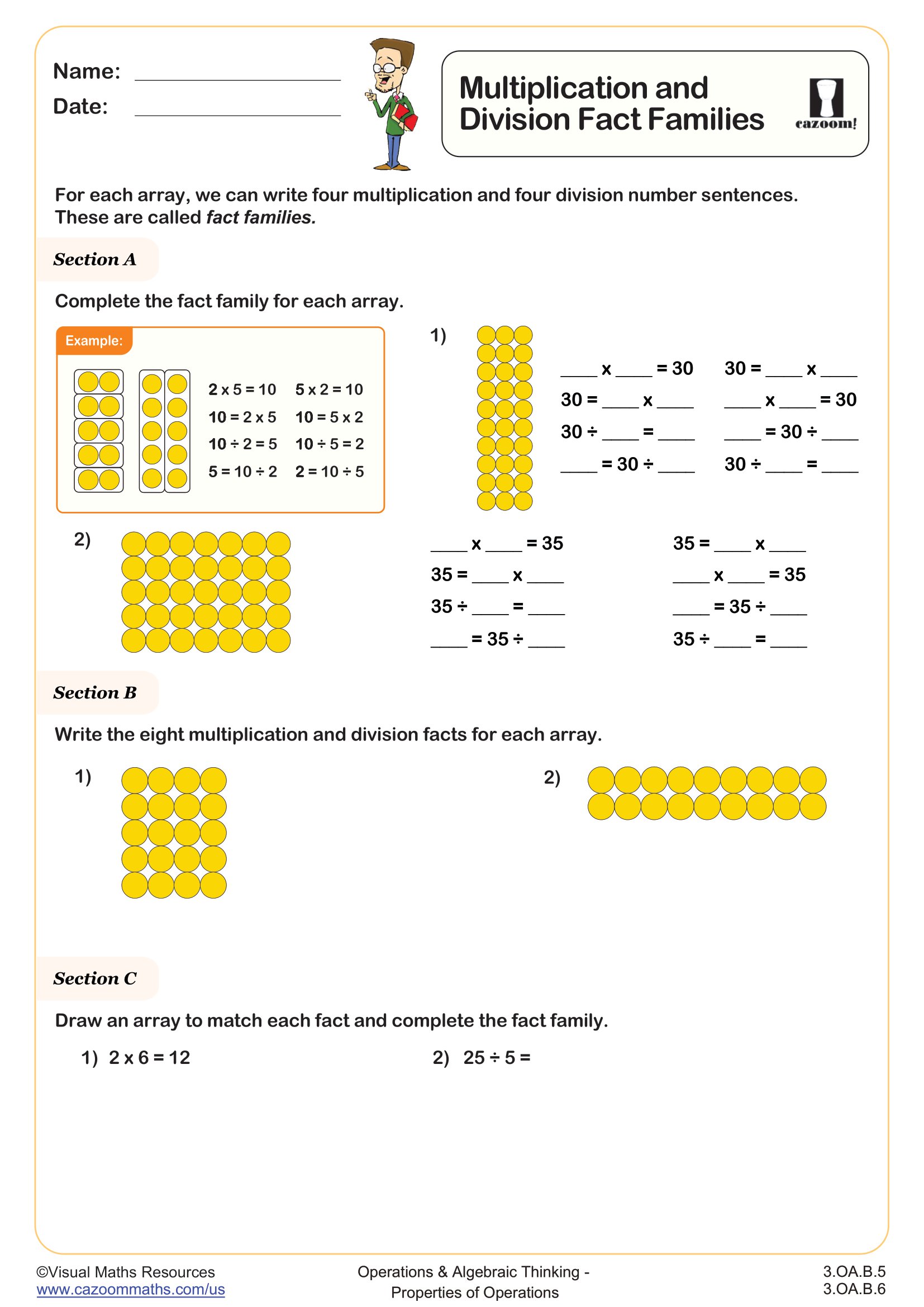
Multiplication Arithmagons
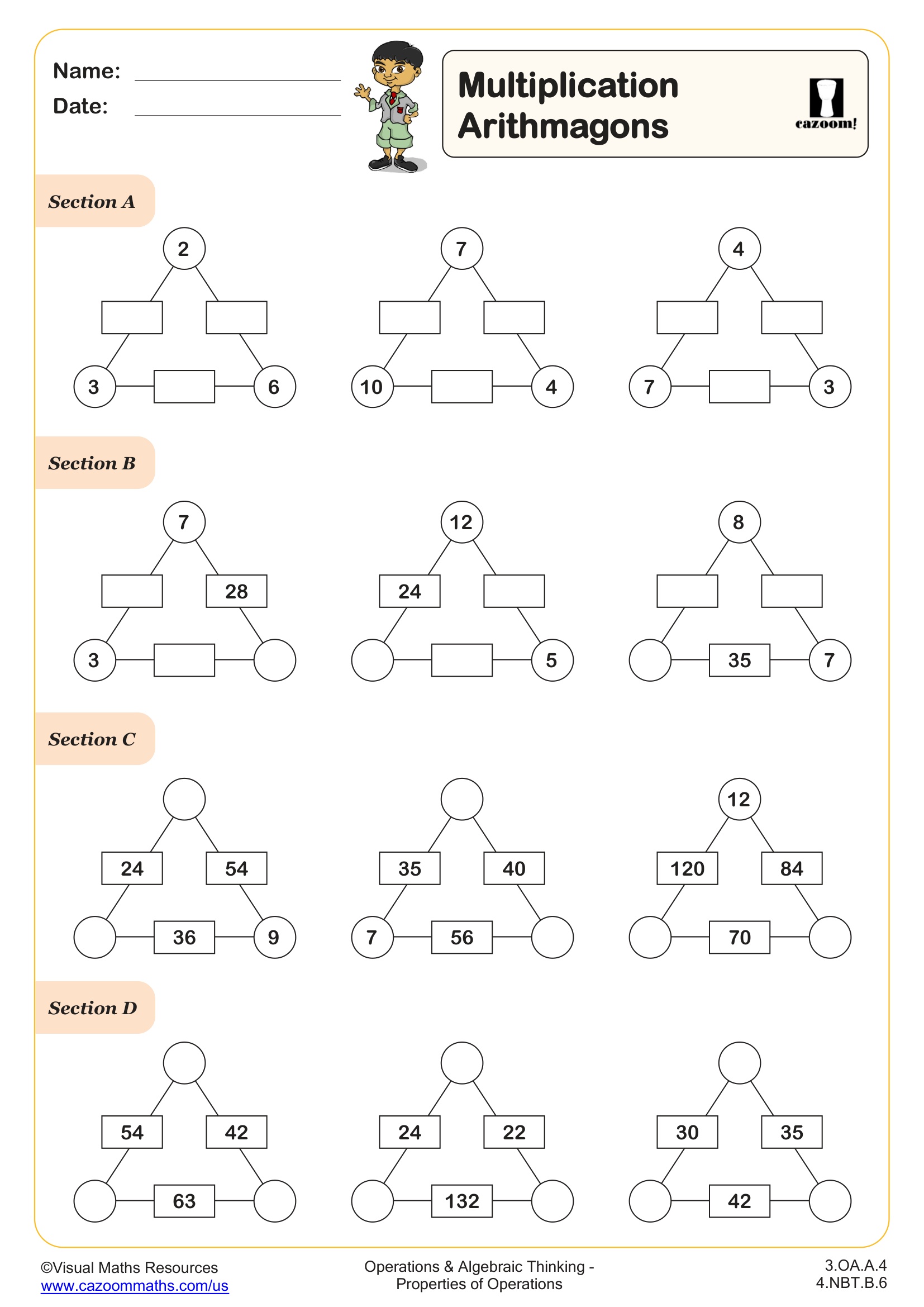
Multiplying by 1 and 0 (A)
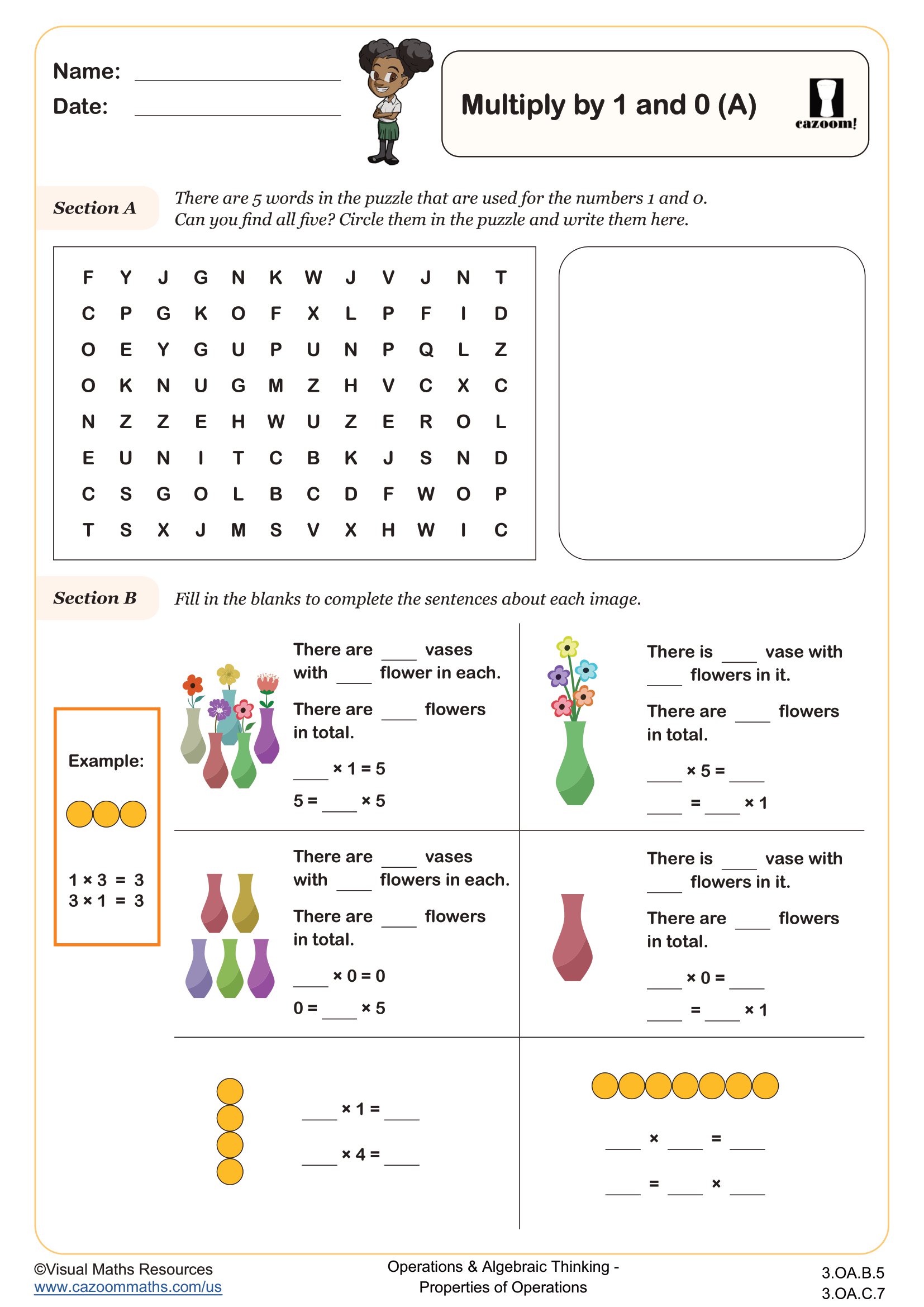
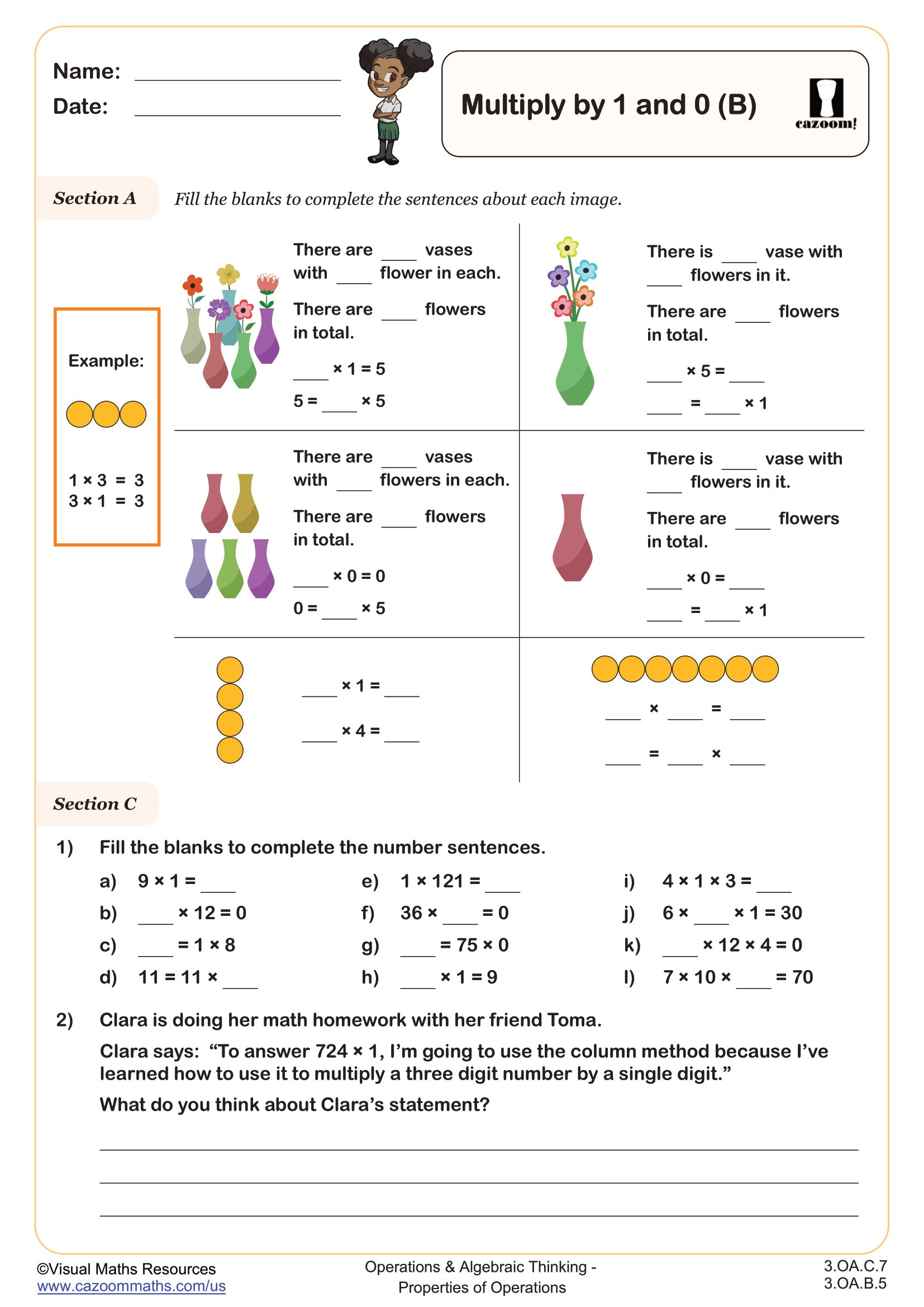
Multiplying by 1 and 0 (B)
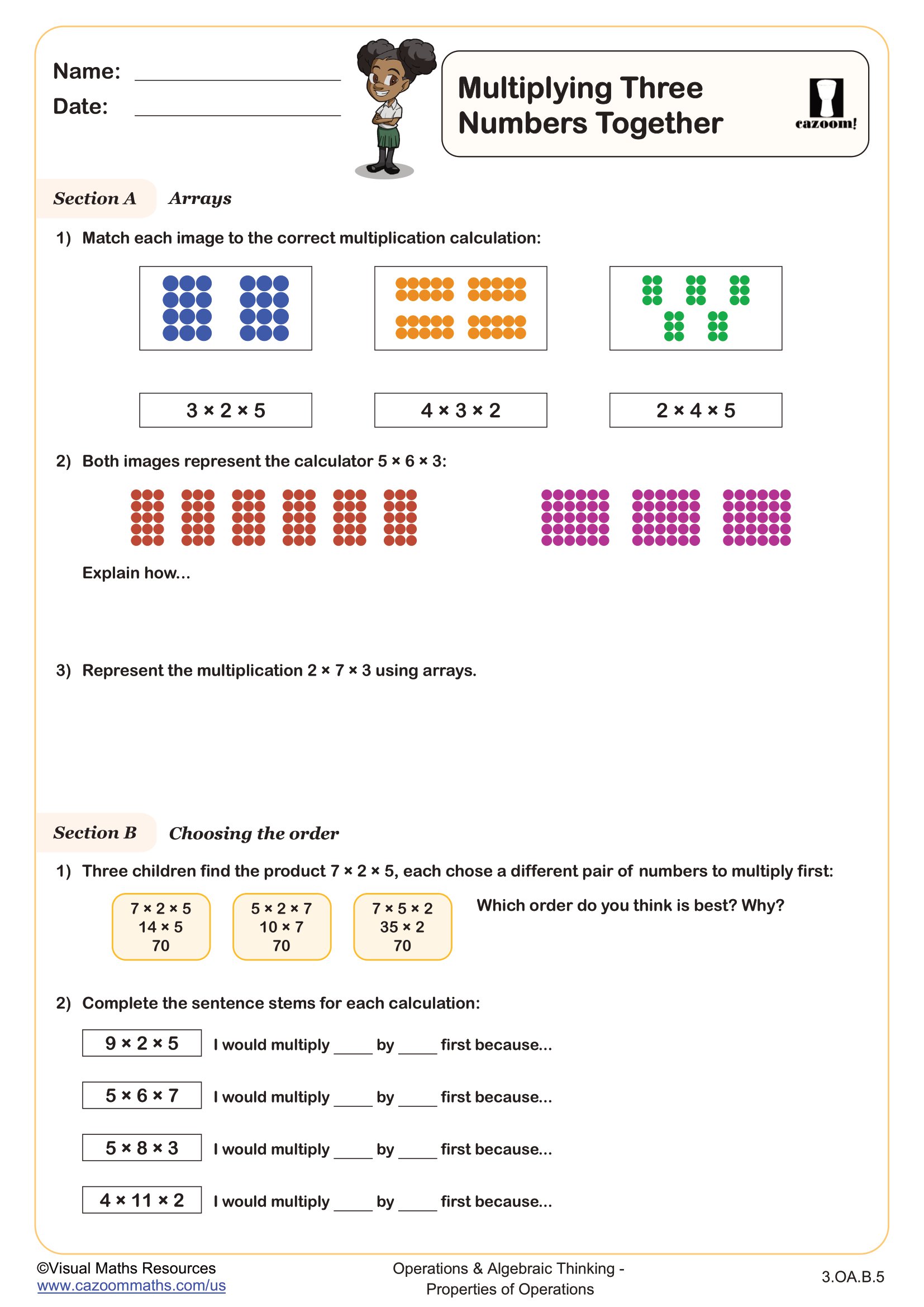
Multiplying Three Numbers Together
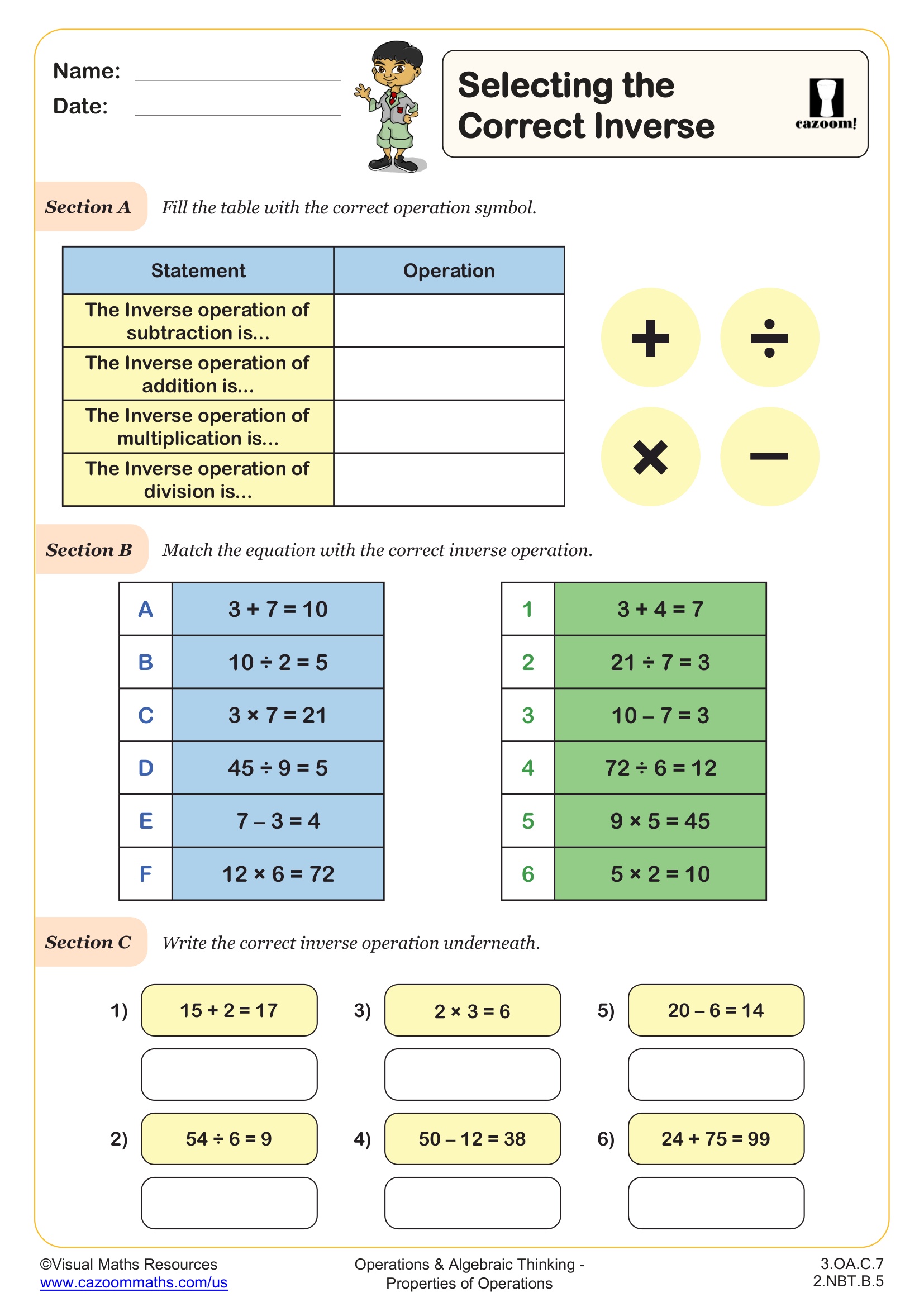
Selecting the Correct Inverse
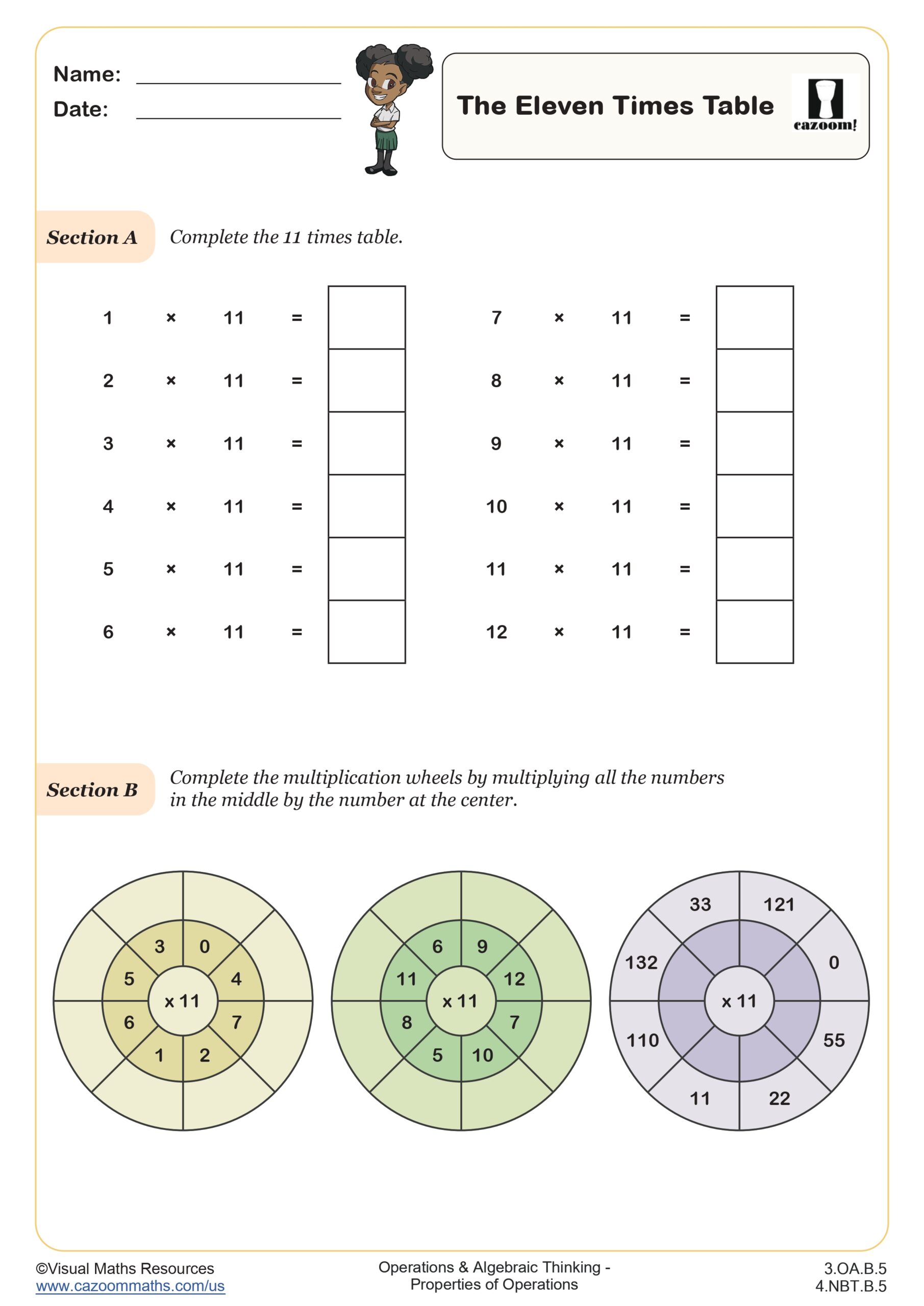
The 11 Times Table
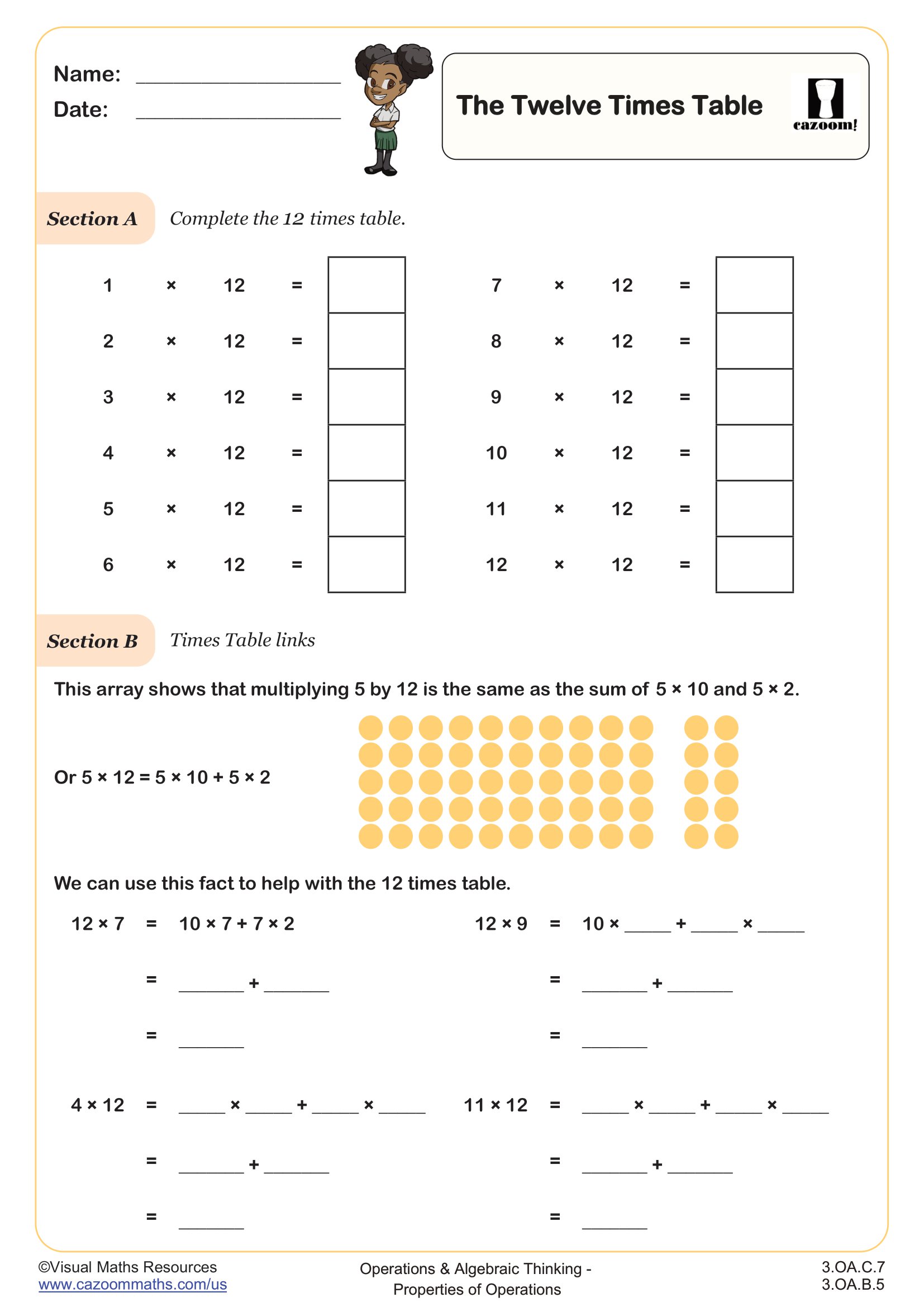
The 12 Times Table
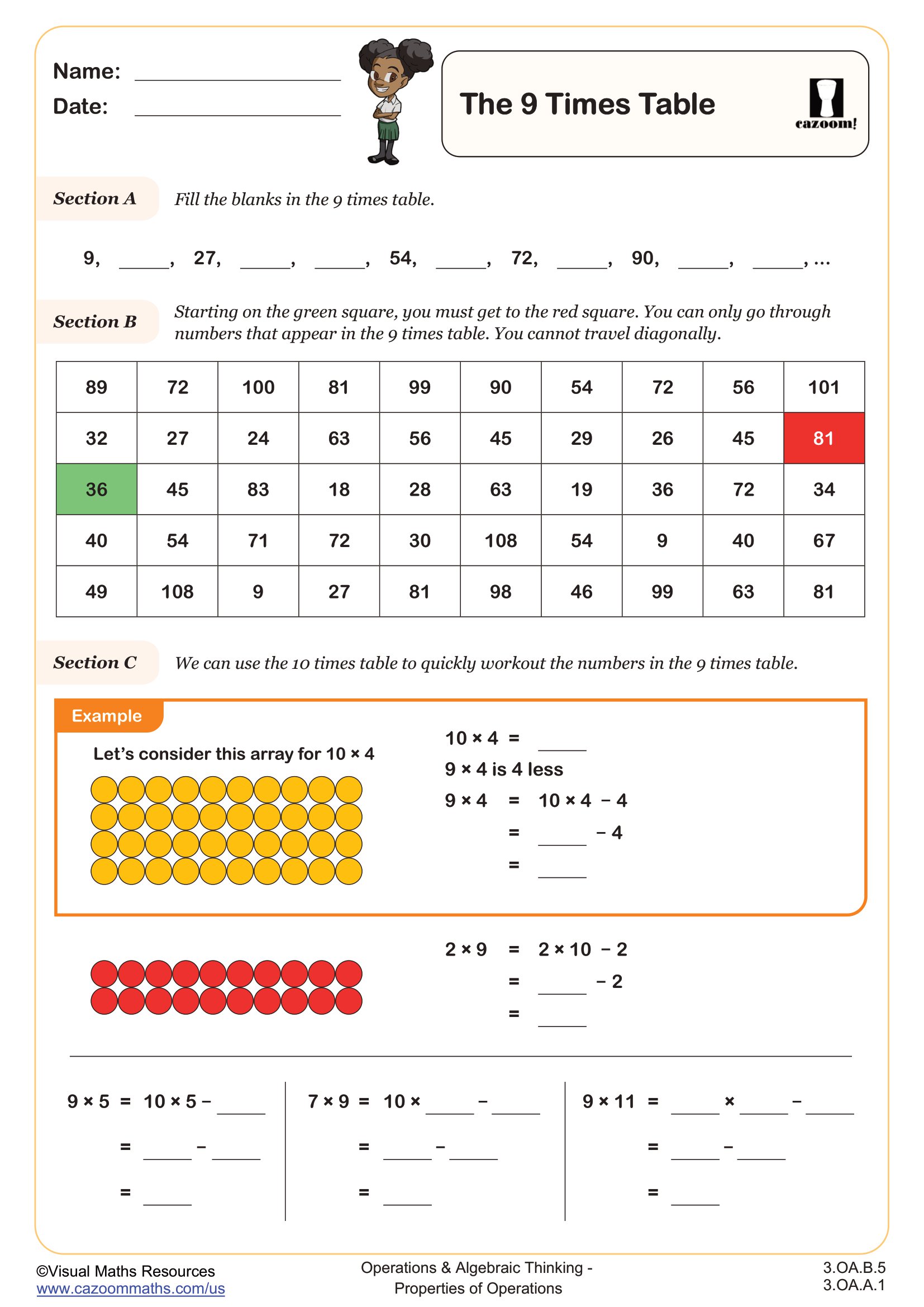
The 9 Times Table
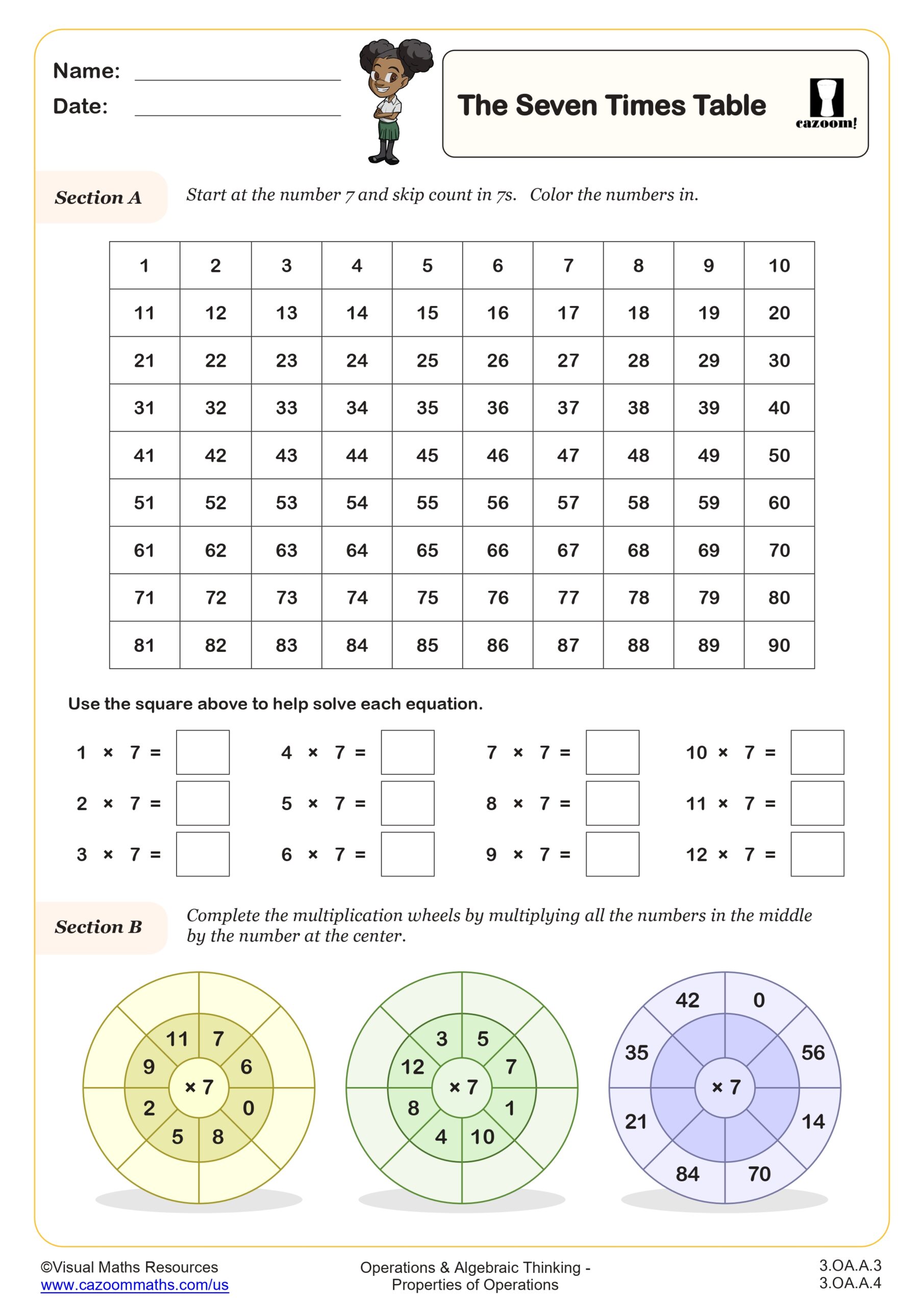
The Seven Times Table
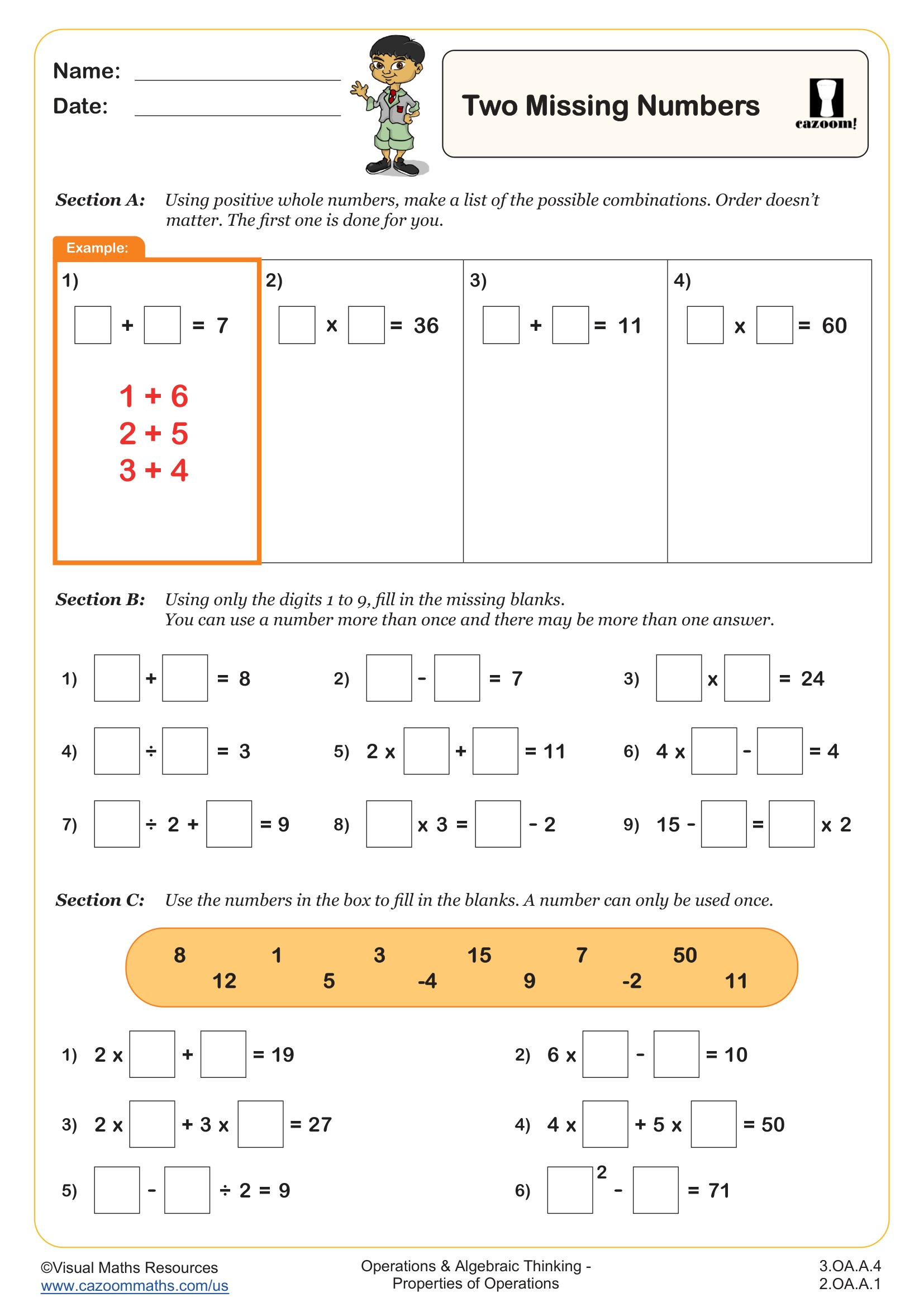
Two Missing Numbers
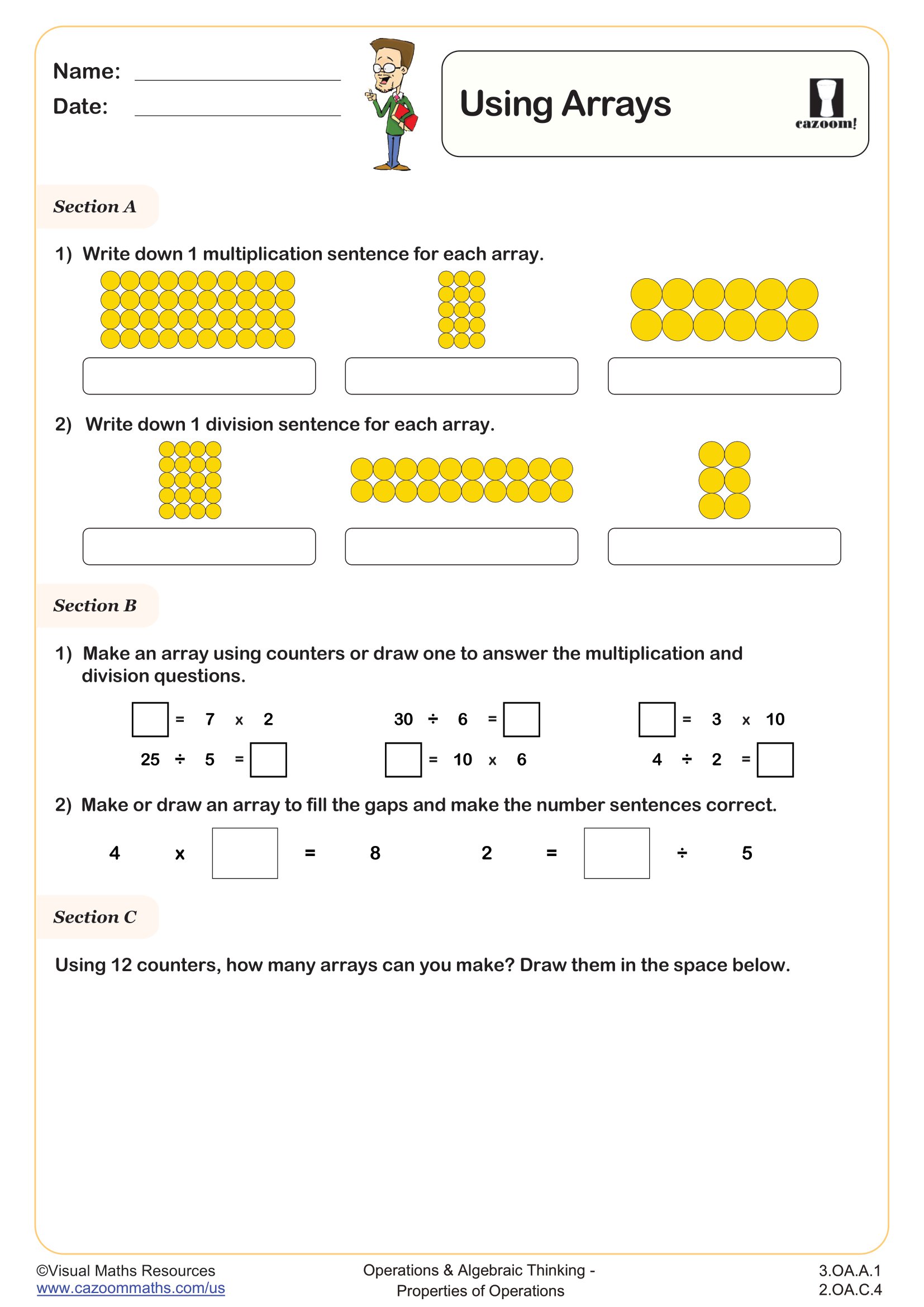
Using Arrays
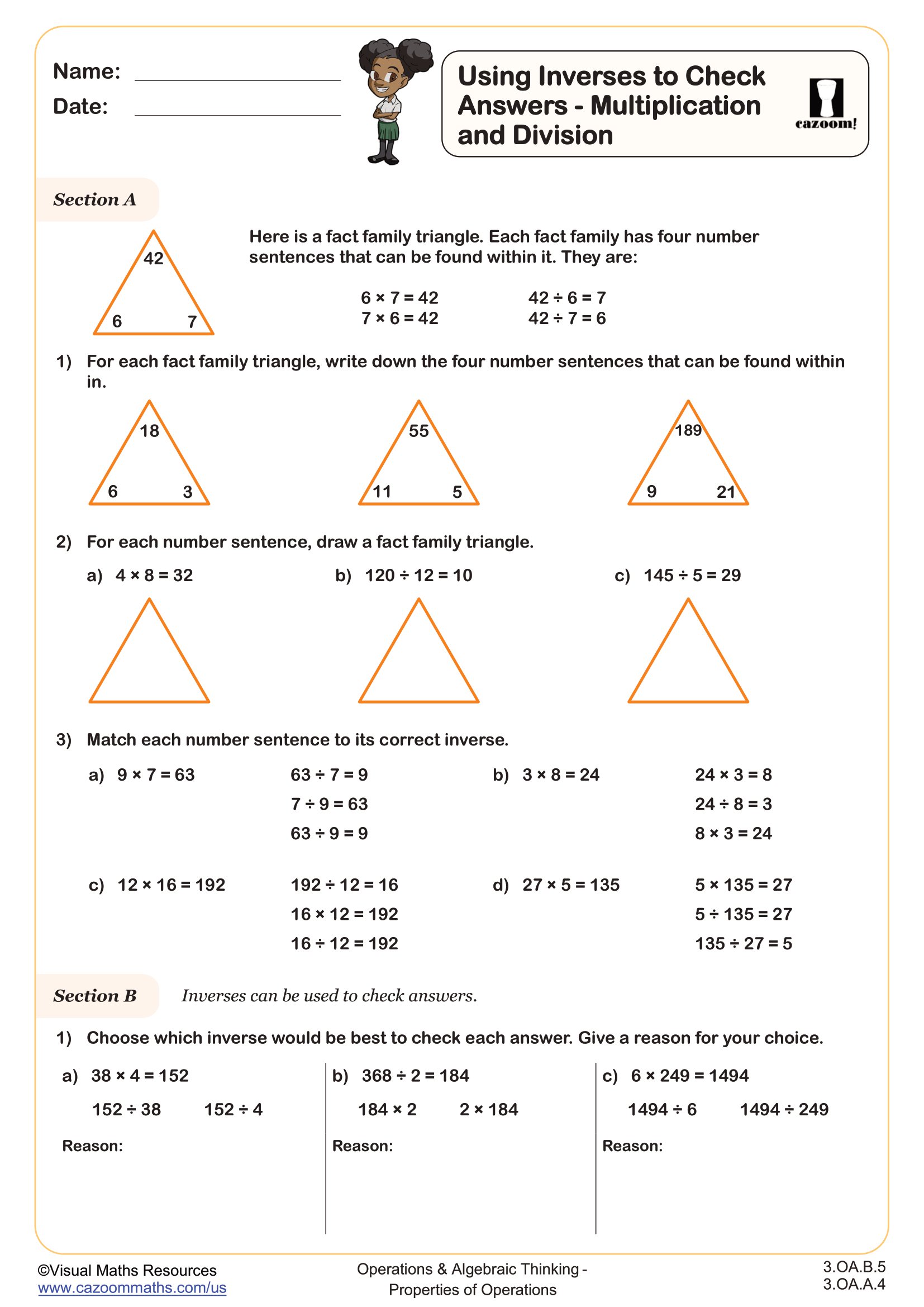
Using Inverses to Check Answers - Multiplication and Division
All worksheets are created by the team of experienced teachers at Cazoom Math.
What topics are covered in a properties of operations worksheet?
A properties of operations worksheet typically covers the commutative property (3 × 4 = 4 × 3), associative property ((2 × 3) × 5 = 2 × (3 × 5)), and distributive property (3 × (4 + 2) = 3 × 4 + 3 × 2) for multiplication and addition. The identity property of multiplication (any number times 1 equals itself) also appears frequently in third grade materials aligned with Common Core standards.
Properties of operations worksheets often include fill-in-the-blank equations where students identify missing numbers to make true statements. Teachers notice that students frequently confuse the associative property with the commutative property, so effective worksheets provide clear visual cues like parentheses placement to distinguish between changing order versus changing grouping.
Are these properties of operations worksheets appropriate for all third grade students?
Properties of multiplication worksheets grade 3 align with Common Core standard 3.OA.B.5, which expects students to apply properties of operations as strategies for multiplication and division. Most third graders can access these concepts when worksheets progress from concrete examples with small numbers to more abstract applications.
Teachers often differentiate by starting struggling students with the commutative property using manipulatives before moving to symbolic representation. Advanced students benefit from worksheets that connect properties to real-world contexts, such as calculating the total number of items in rectangular arrays using the distributive property to break apart larger multiplication problems.
How does the identity property of multiplication appear in third grade worksheets?
The identity property multiplication concepts appear in worksheets through equations like 7 × 1 = 7 and 1 × 9 = 9, helping students recognize that multiplying by one leaves any number unchanged. This property often connects to skip counting patterns and serves as a foundation for understanding multiplicative identity in algebra.
Many teachers observe that students initially find this property too obvious to be useful, but worksheets that embed the identity property within mixed practice help students recognize its strategic value. For example, when students decompose 8 × 6 into (8 × 1) × 6 or see how 1 serves as a neutral element in factor trees, they begin appreciating this property's mathematical significance.
How should teachers use these worksheets most effectively in their math instruction?
Teachers find that properties of operations worksheets work best as reinforcement after students explore these concepts through hands-on activities and number talks. The worksheets serve as formative assessment tools to identify which students can apply properties flexibly versus those who rely on memorized procedures without understanding.
Effective implementation includes having students explain their reasoning when completing worksheet problems, particularly when multiple properties could apply to solve the same equation. Teachers often use the answer keys to facilitate peer checking and mathematical discussions, where students defend their solutions and identify which property makes a calculation strategy most efficient.