3rd Grade Reason with Shapes Worksheets
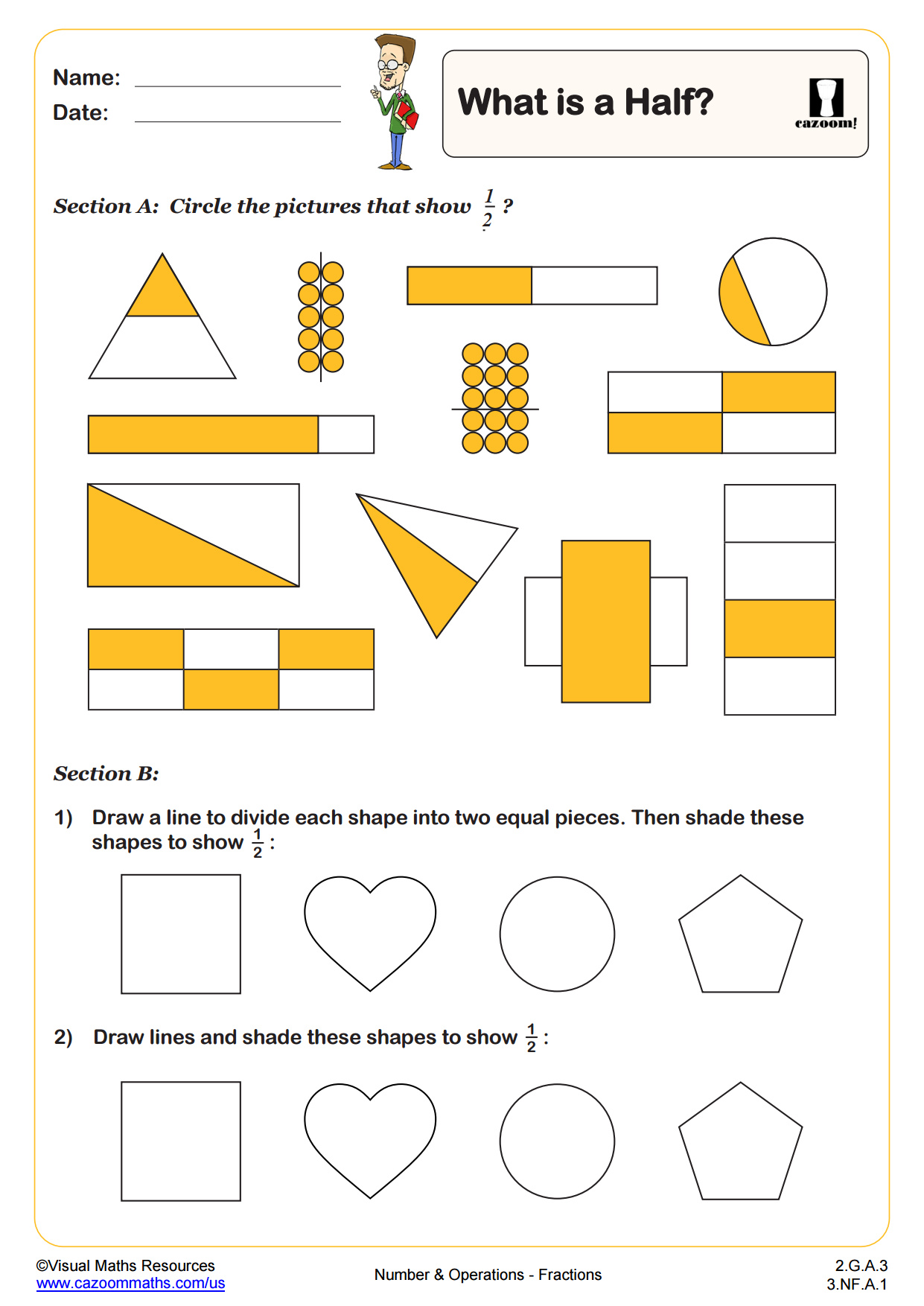
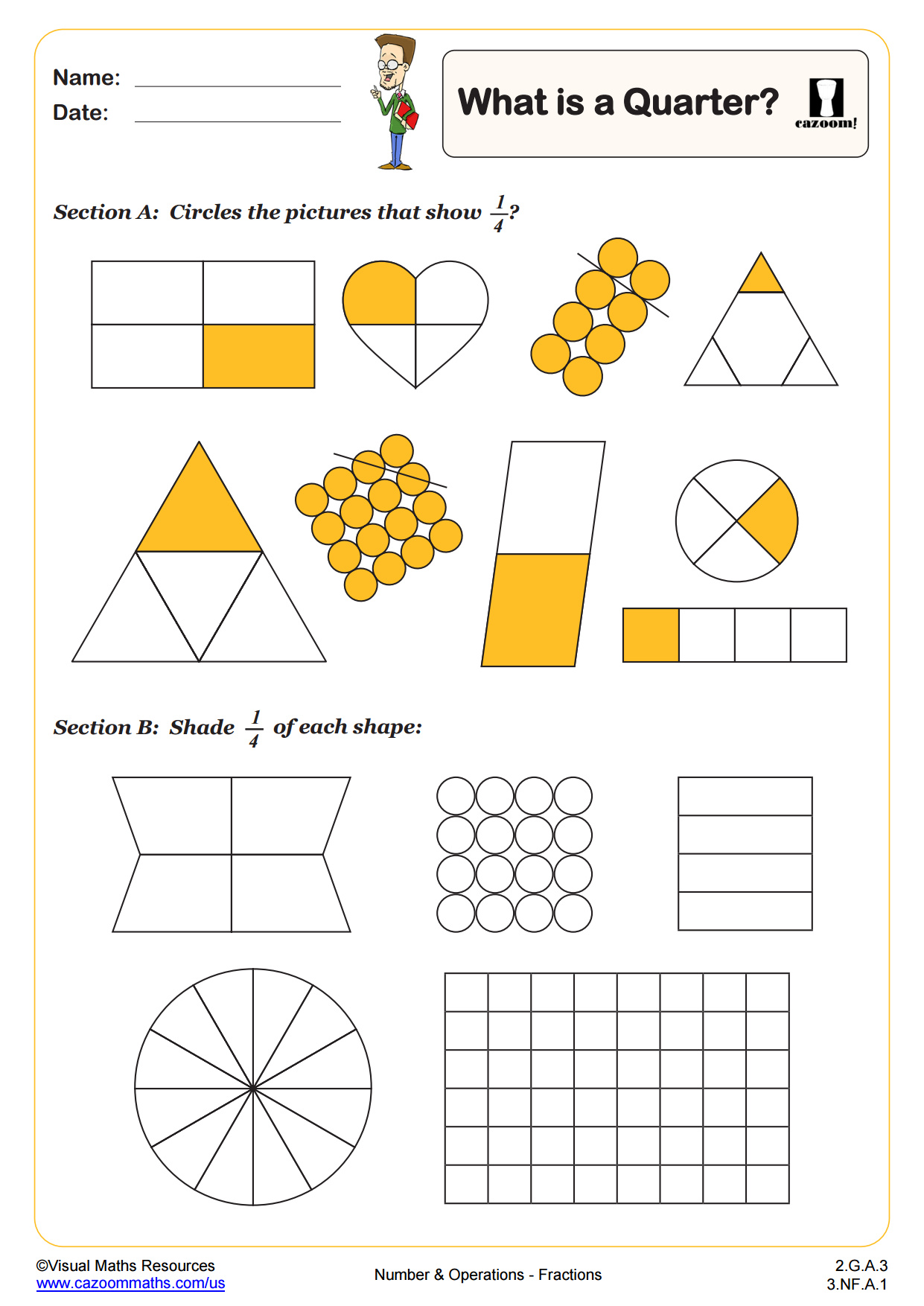
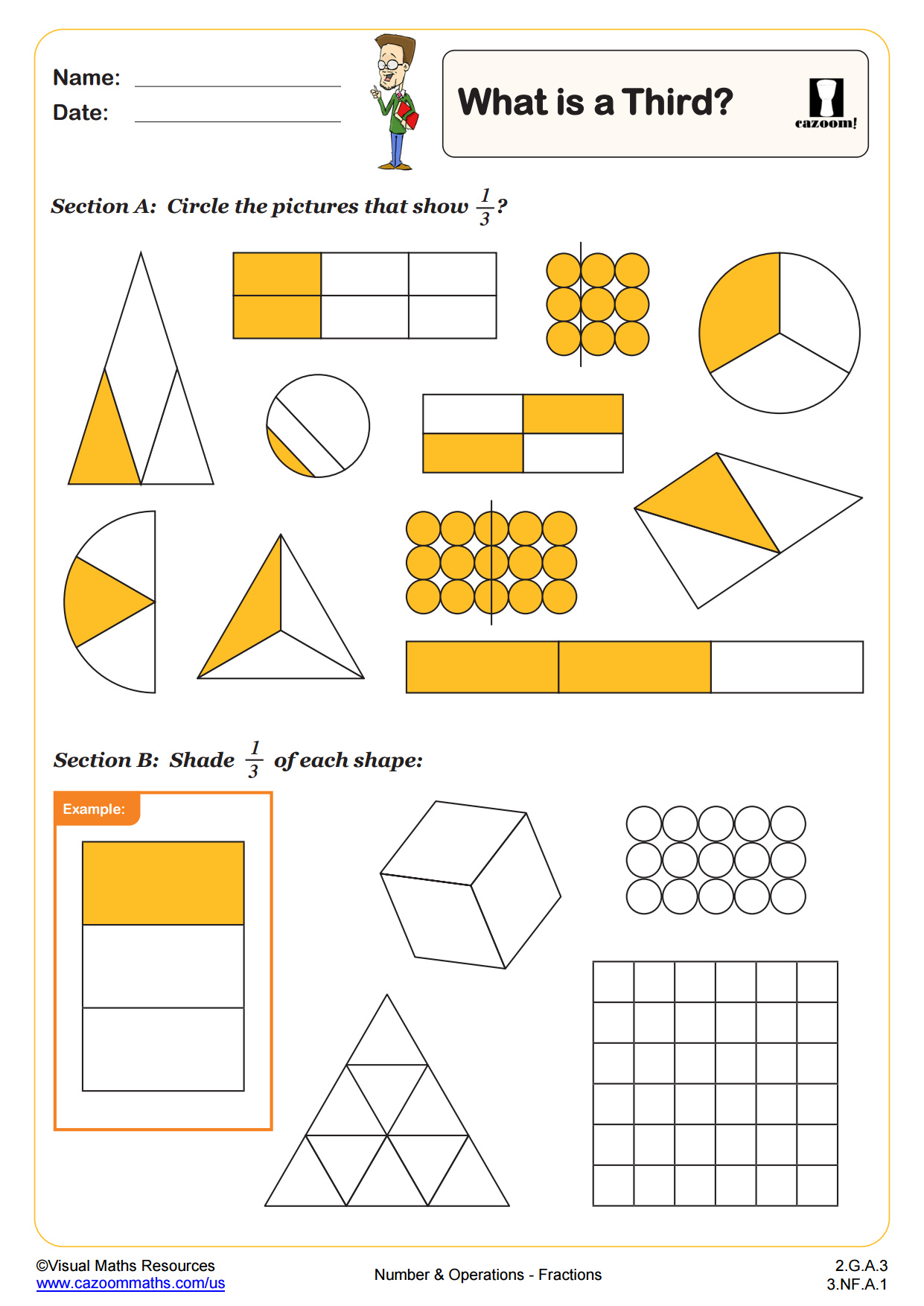
All worksheets are created by the team of experienced teachers at Cazoom Math.
What Does It Mean to Reason with Shapes in Third Grade Math?
Reasoning with shapes means moving beyond simply naming shapes to analyzing their properties, relationships, and positions. Third graders learn to describe shapes using mathematical vocabulary, identify attributes like number of sides or angles, locate shapes on coordinate grids, and partition shapes into equal parts. This analytical approach builds the foundation for later work with area, perimeter, symmetry, and geometric proofs.
A common misconception students bring to this topic is thinking that a shape's orientation changes what it is—many third graders initially claim a rotated square is now a diamond or a different shape entirely. Teachers notice this especially when working with triangles in different positions. Worksheets that present the same shape in multiple orientations help students recognize that properties like number of sides or angles remain constant regardless of how a shape is turned or positioned on the page.
Which Grade Levels Learn Reasoning with Shapes?
These worksheets specifically target third grade students in elementary school, aligning with the geometry and fractions standards for this level. Third grade represents a pivotal year when students shift from informal shape work to more formal geometric reasoning, making this collection particularly valuable for building that transition.
The difficulty progression within third grade moves from concrete to abstract thinking. Students begin with coordinate graphing using clues to identify shapes, then tackle midpoints on number lines and line segments, explore specific triangle properties, and finally apply their understanding to partition shapes into halves and quarters. Students who master early coordinate work with whole numbers find the midpoint concept more accessible since they've already developed comfort locating positions on a number line. This scaffolded approach supports diverse learners while challenging advanced students.
How Do Students Learn About Midpoints on Line Segments?
Finding midpoints introduces students to the concept of a point exactly halfway between two endpoints on a line segment. Third graders typically work with whole number coordinates on number lines or simple grids, identifying the middle position by counting or using visual cues. This skill builds number sense and prepares students for more advanced coordinate geometry in later grades where they'll calculate midpoints using formulas.
Midpoint skills appear constantly in real-world STEM applications. Architects and engineers use midpoints when designing symmetrical buildings or bridges, ensuring that structural supports are evenly distributed. Computer programmers use midpoint algorithms to draw smooth lines and curves on screens. Even carpenters rely on finding midpoints when centering shelves or dividing boards into equal lengths. When students understand that the midpoint concept ensures balance and symmetry, they see geometry as a practical tool rather than abstract theory.
How Should Teachers Use These Geometry Worksheets in the Classroom?
These worksheets work best when they complement hands-on geometry activities with manipulatives, geoboards, or coordinate grid mats. The structured format helps students practice specific reasoning skills systematically, while the variety of subtopics prevents the monotony that sometimes comes with pure drill work. Teachers can select worksheets that match current instruction or use them to spiral review previously taught concepts.
Many teachers assign these worksheets during math centers, allowing students to work at their own pace while the teacher provides small-group instruction. The complete answer keys make them particularly effective for homework since parents can check work alongside their child, reinforcing learning at home. Some teachers use the coordinate shapes worksheets for partner activities where one student describes the location while another plots points, building both mathematical vocabulary and collaborative skills. The properties of triangles worksheets work well as quick assessments to identify which students need additional support before moving to more complex polygon work.