3rd Grade Subtraction Worksheets
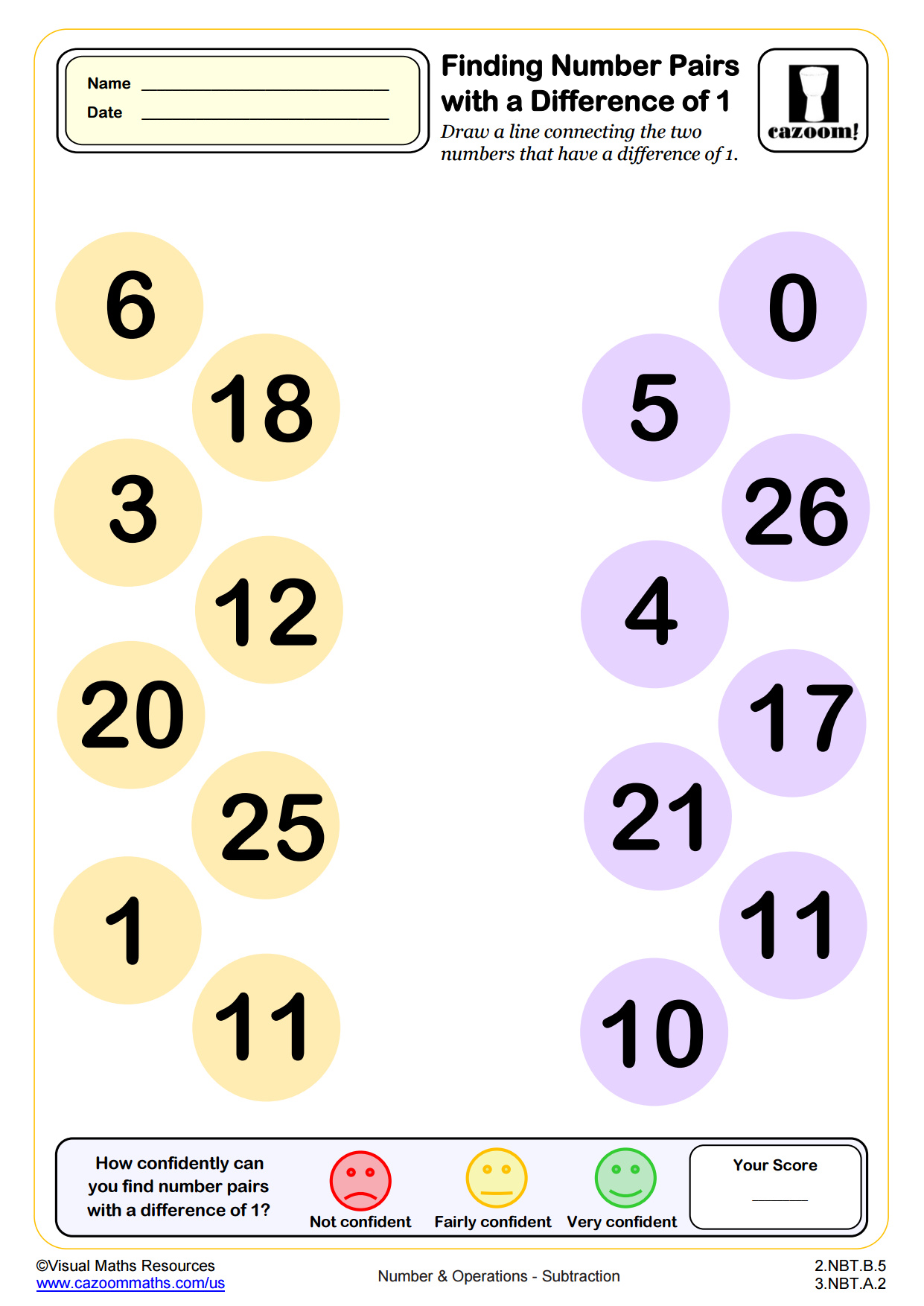
Find Number Pairs with a Difference of 1
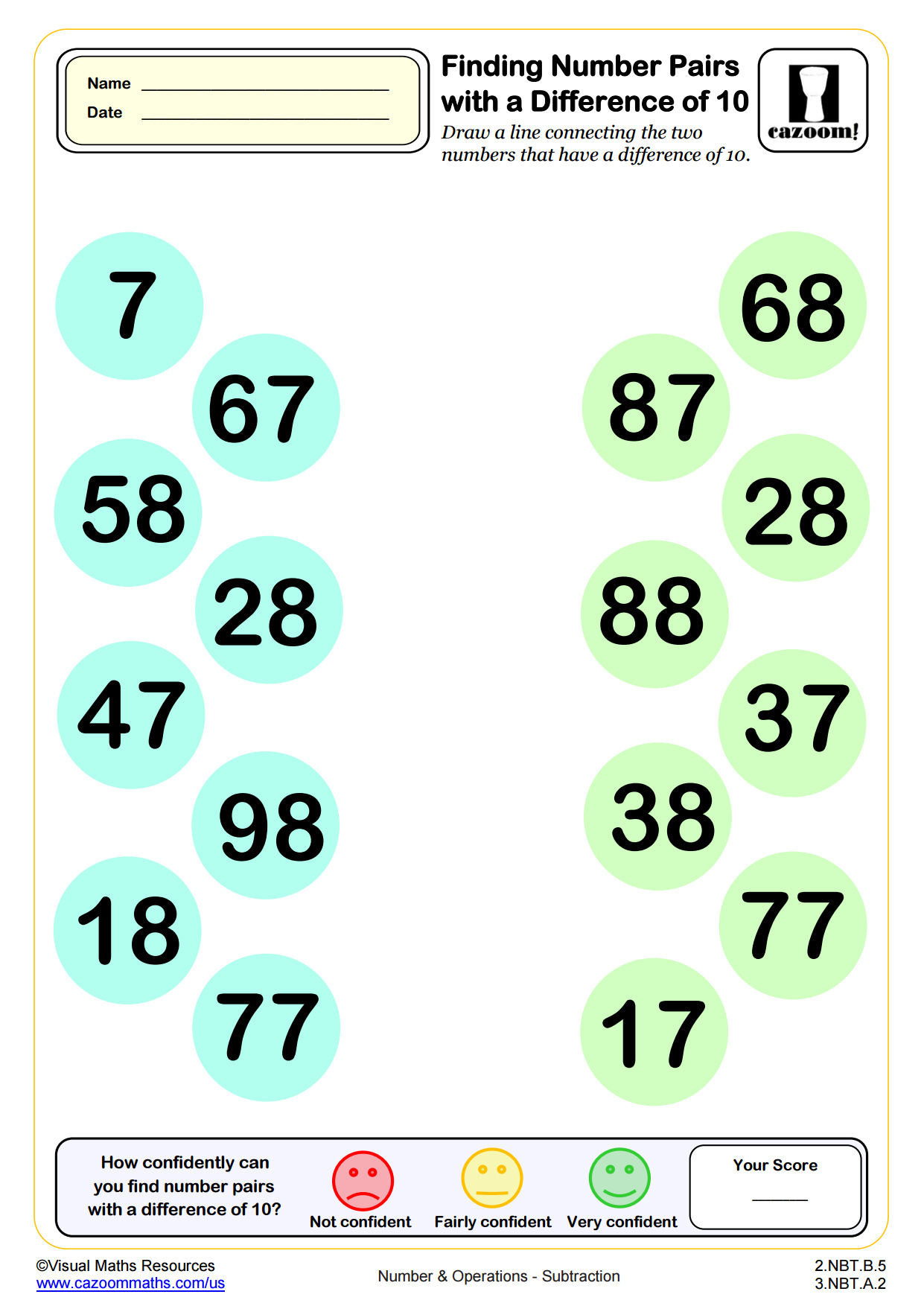
Find Number Pairs with a Difference of 10
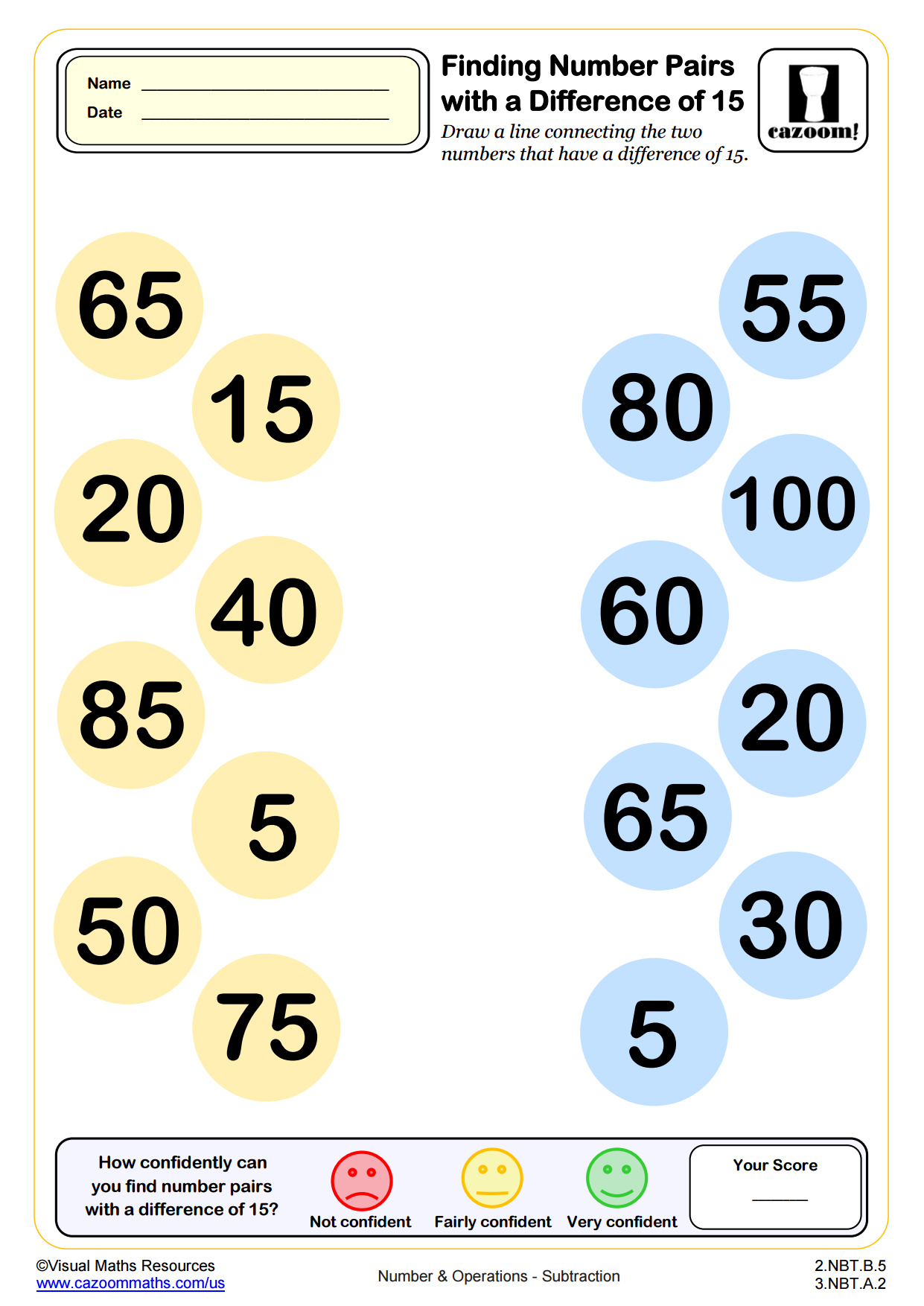
Find Number Pairs with a Difference of 15
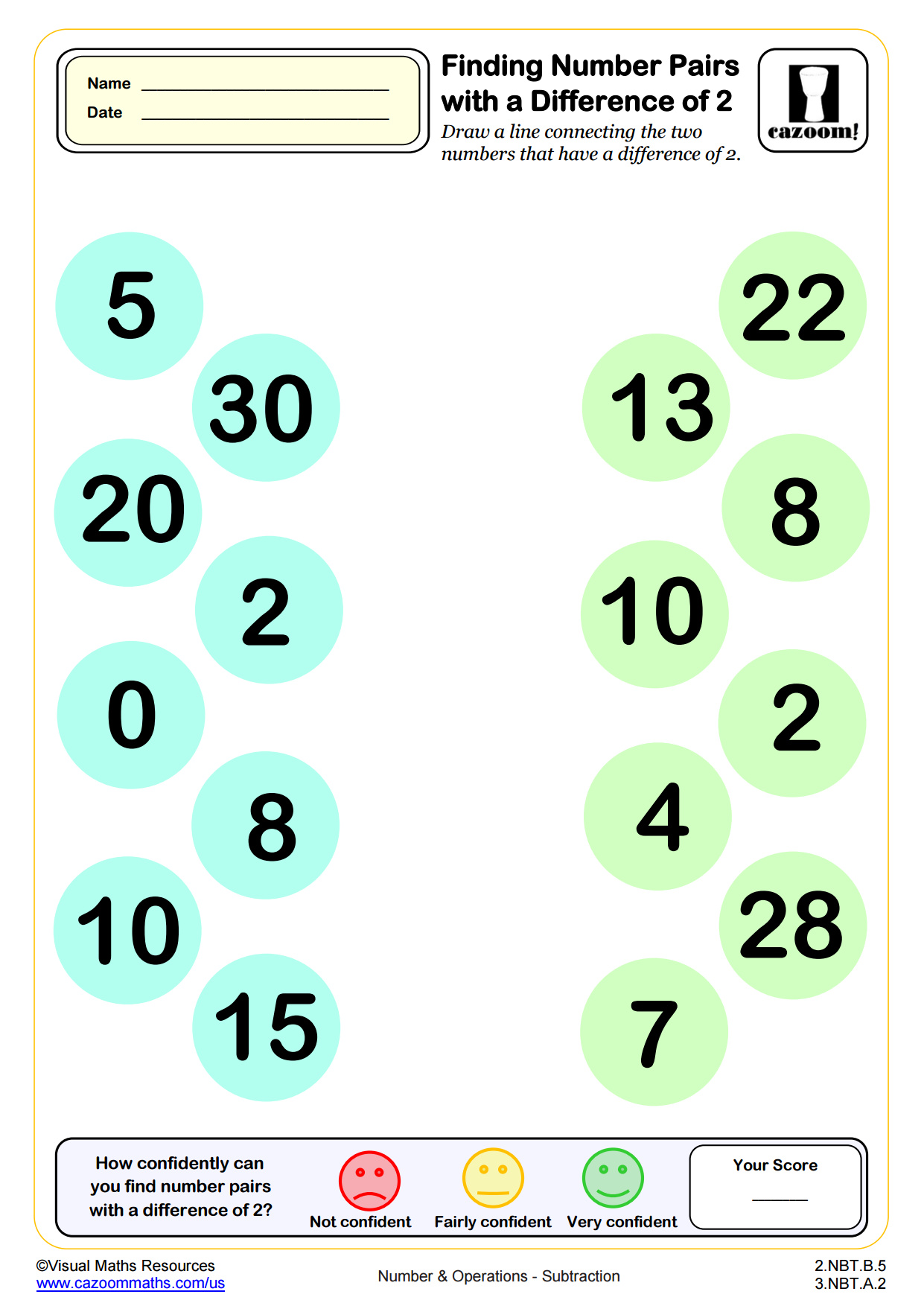
Find Number Pairs with a Difference of 2
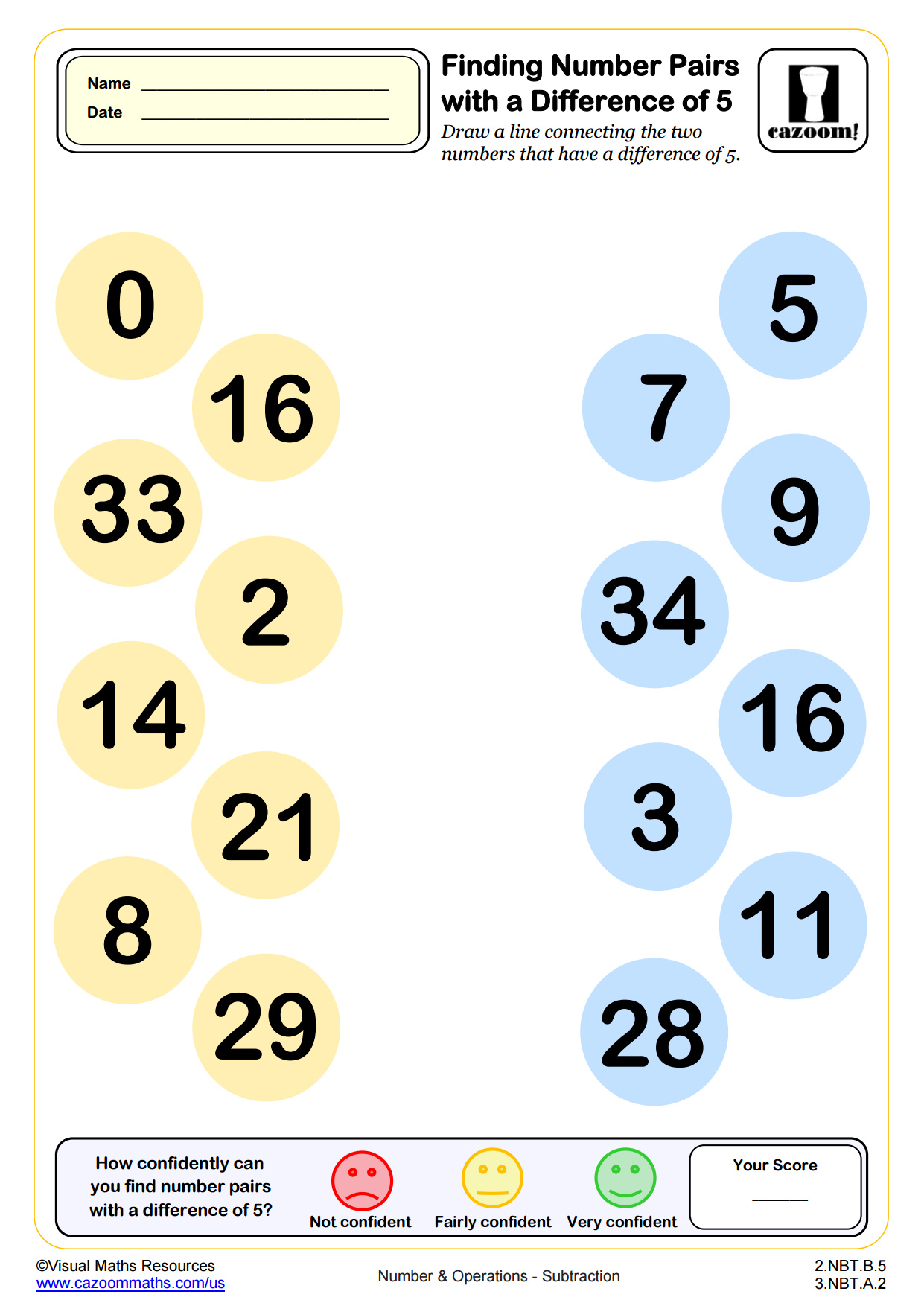
Find Number Pairs with a Difference of 5
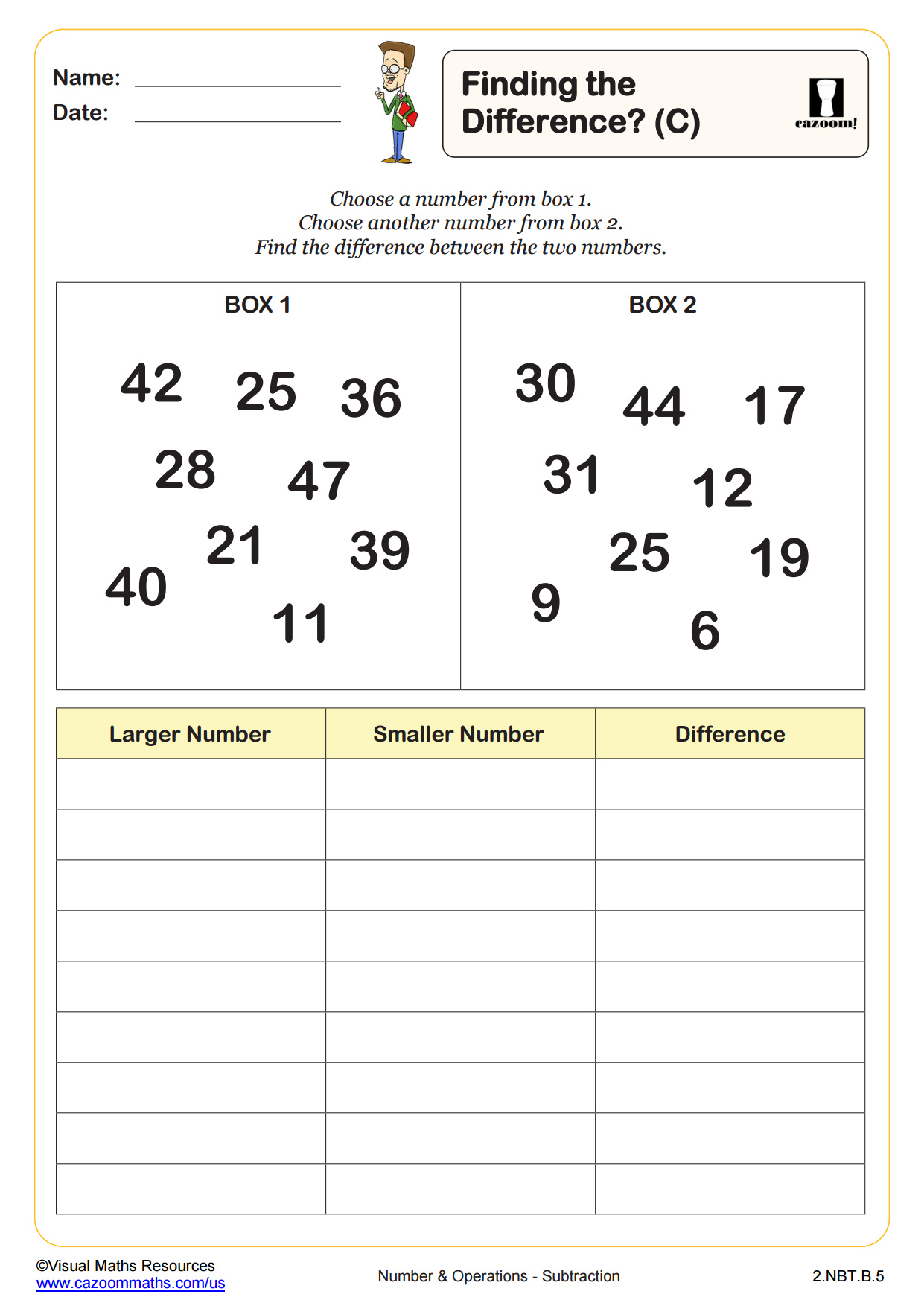
Finding the Difference (C)
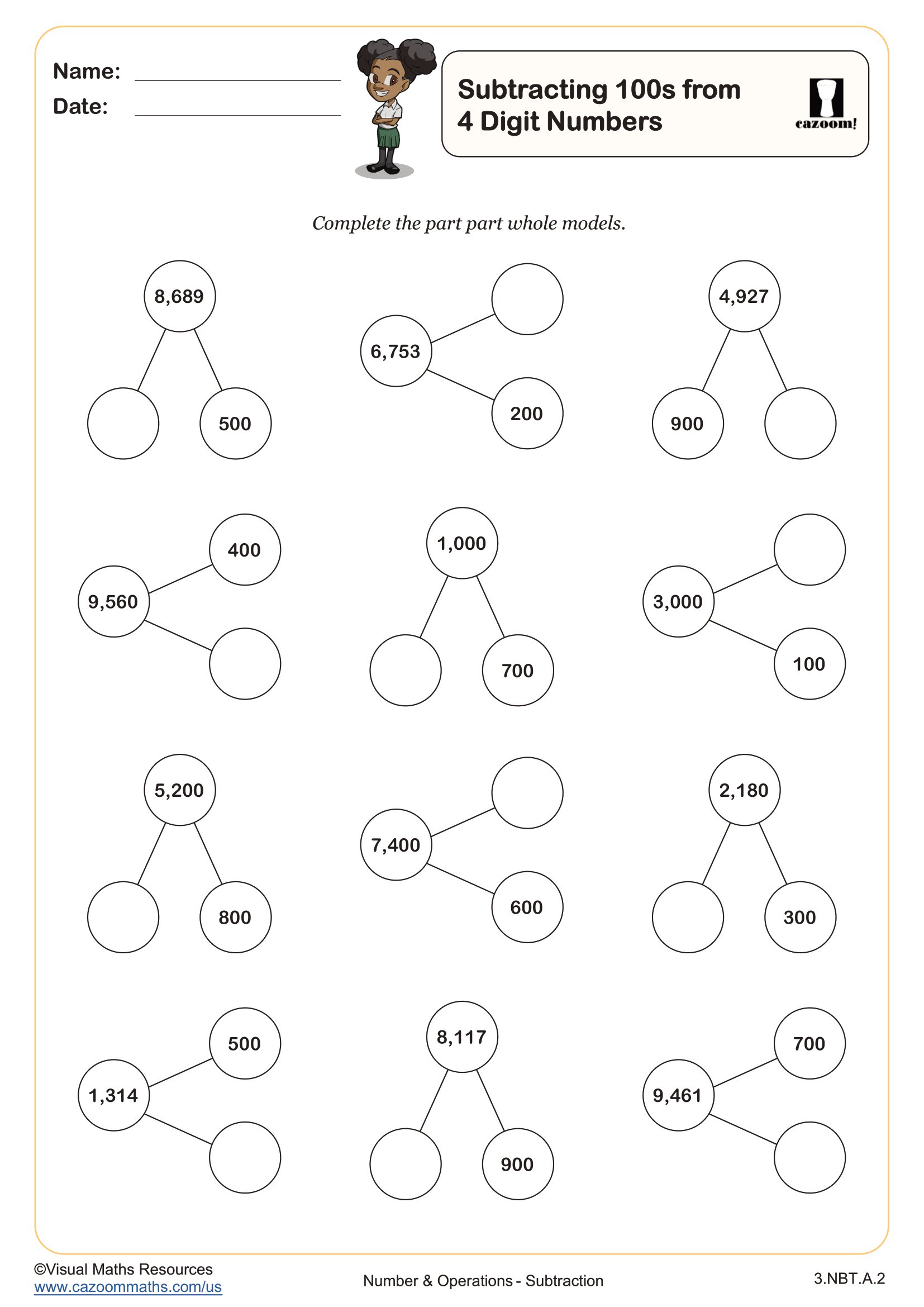
Subtracting 100s from 4 Digit Numbers
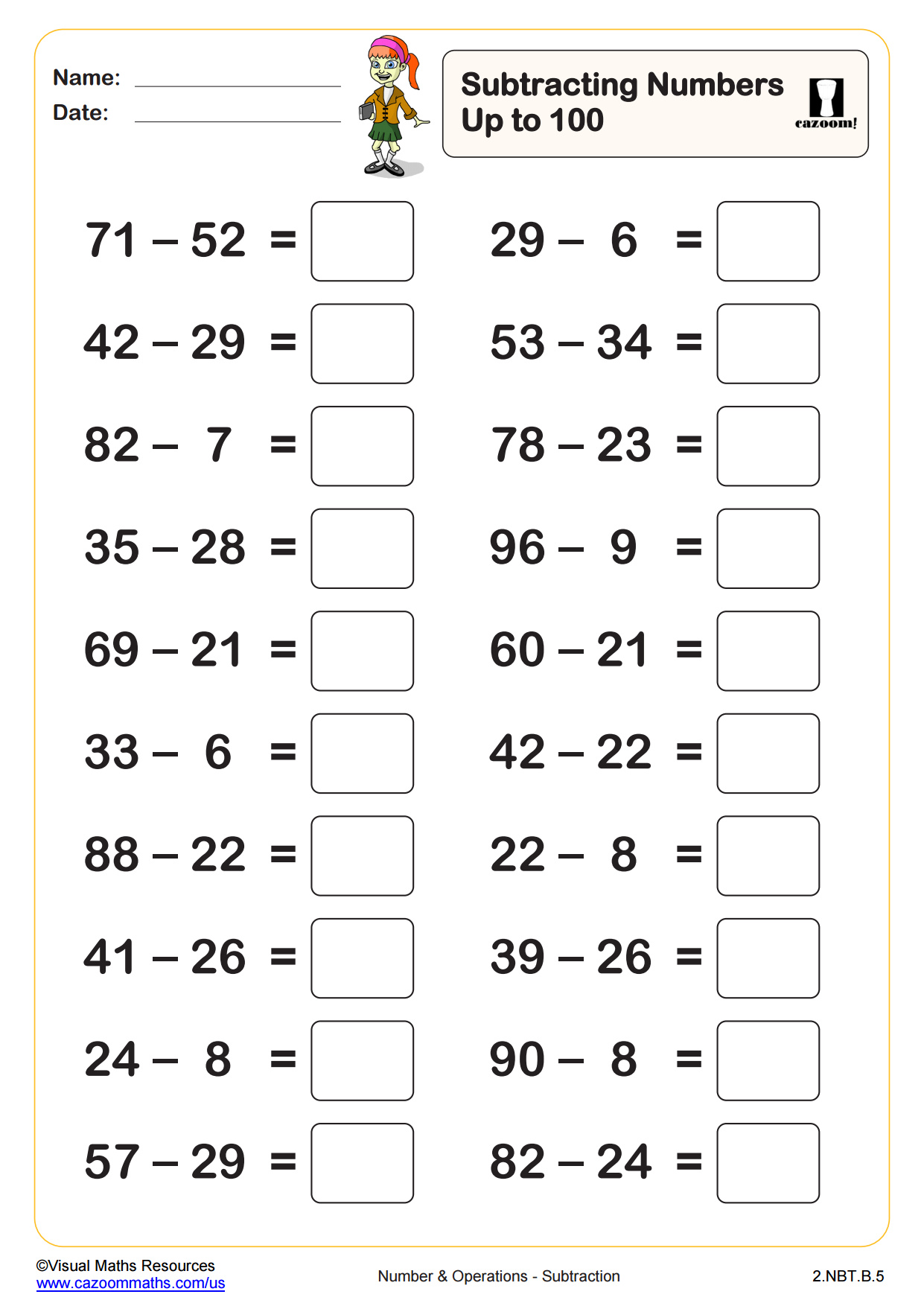
Subtracting Numbers Up to 100
Subtracting Numbers Up to 50
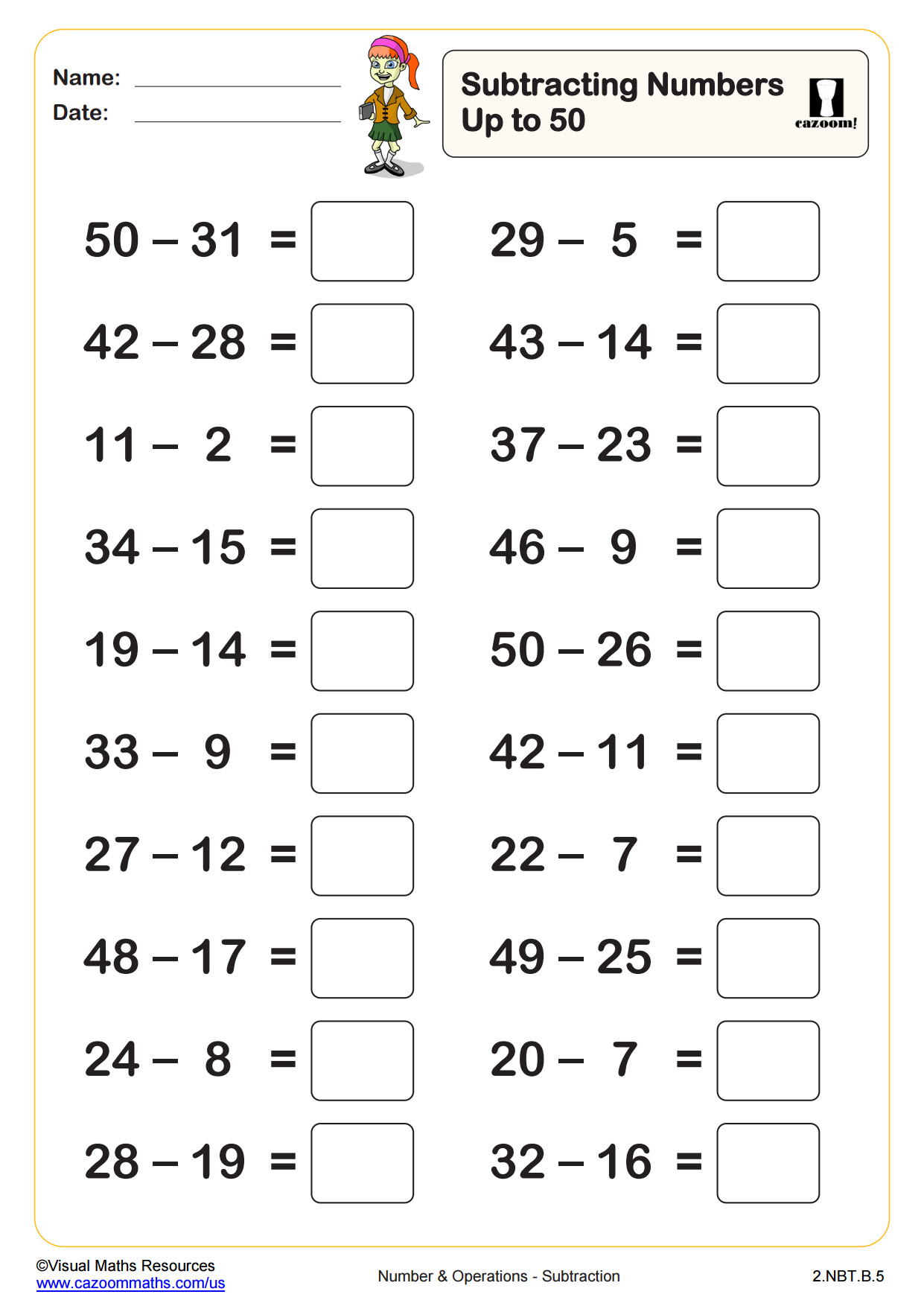
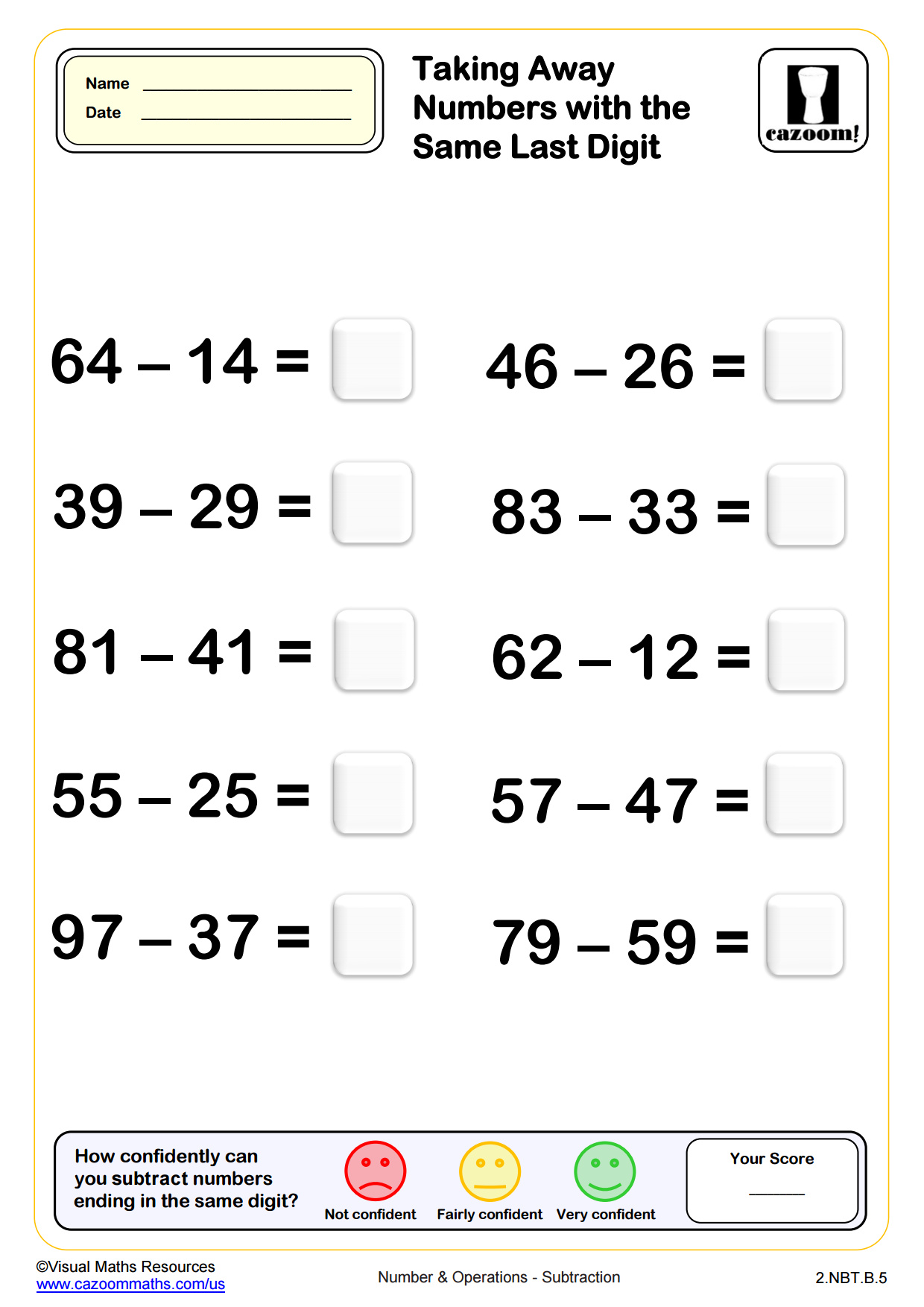
Subtracting Numbers with the Same Last Digit (10 questions)
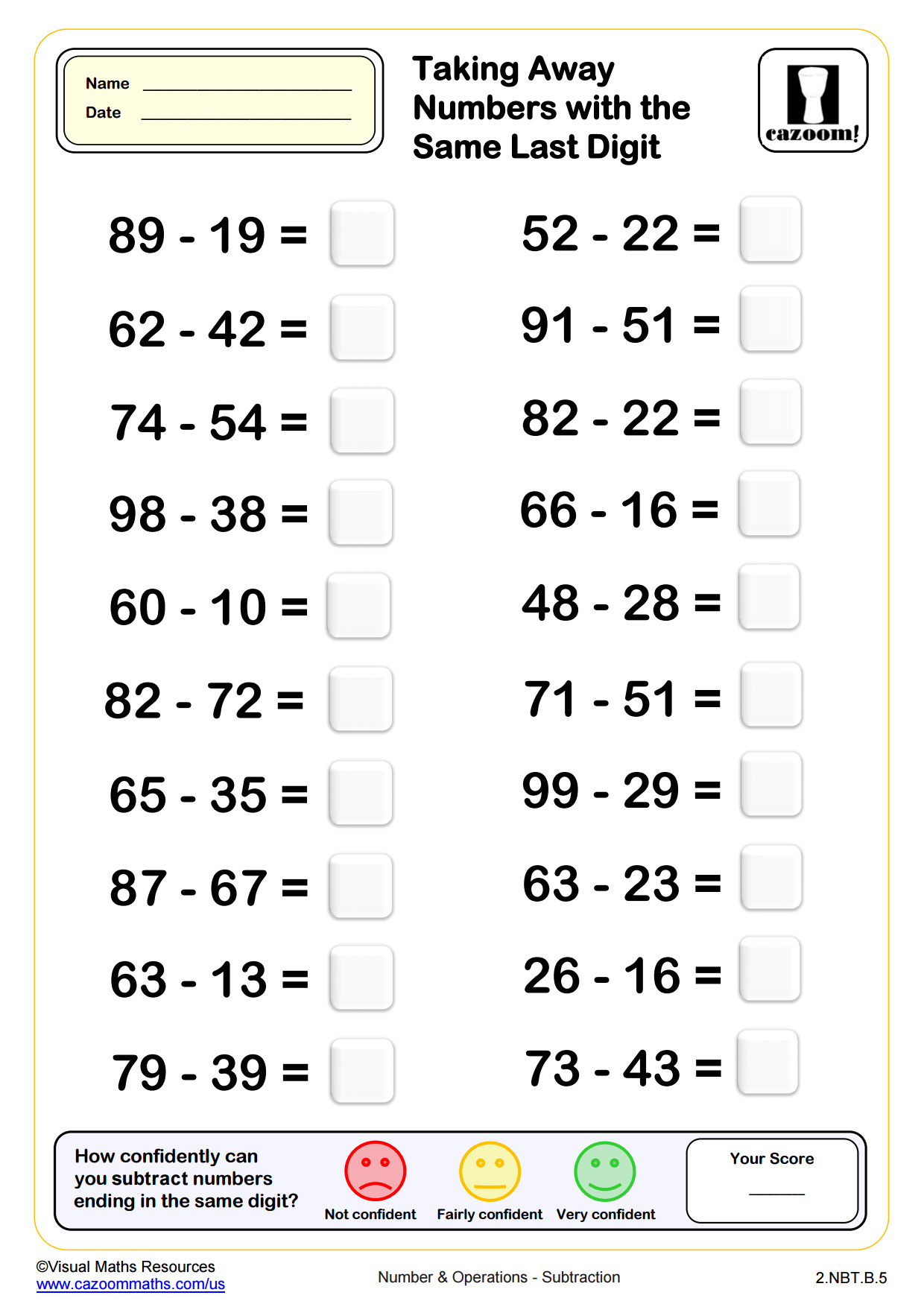
Subtracting Numbers with the Same Last Digit (20 questions)
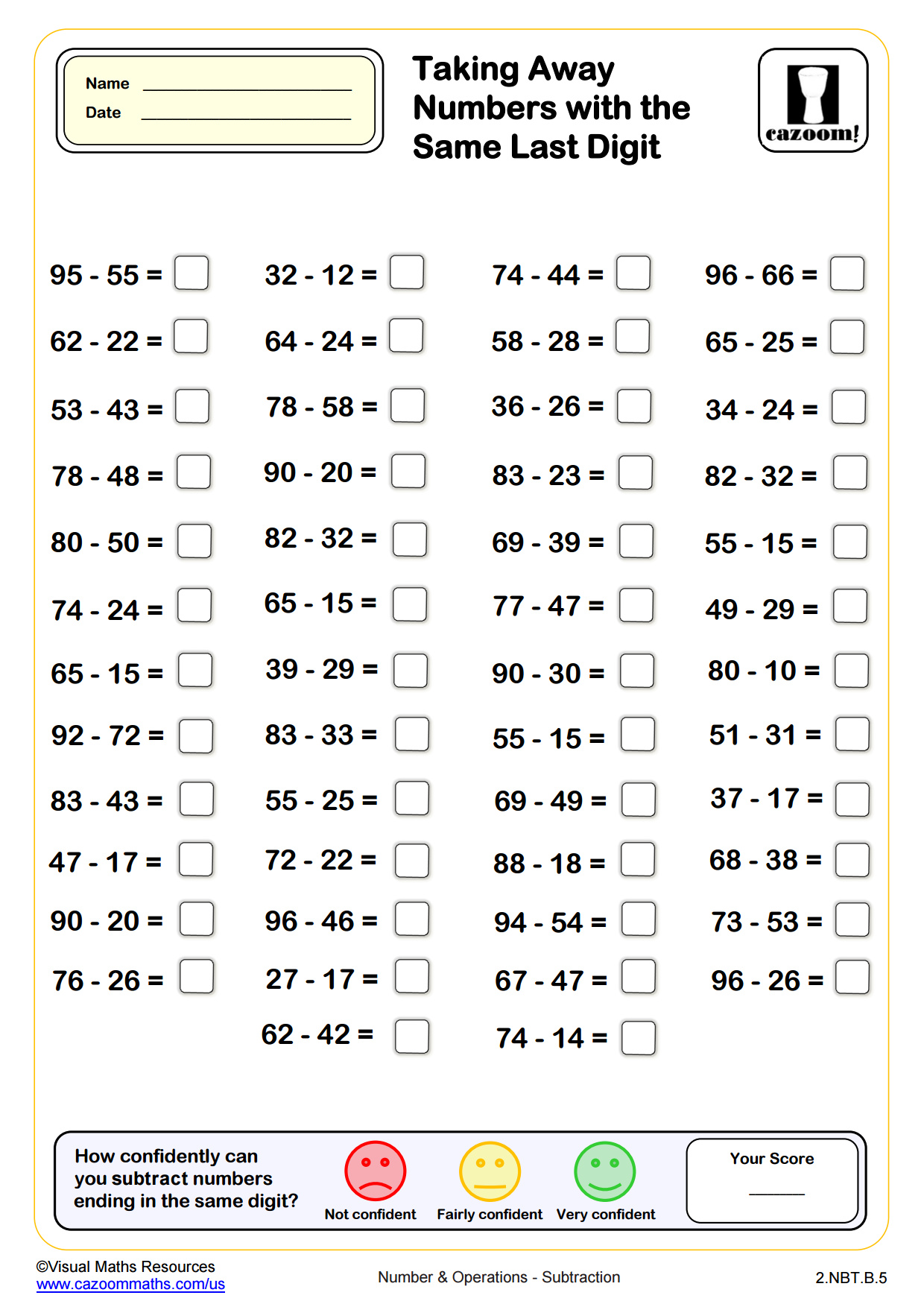
Subtracting Numbers with the Same Last Digit (50 questions)
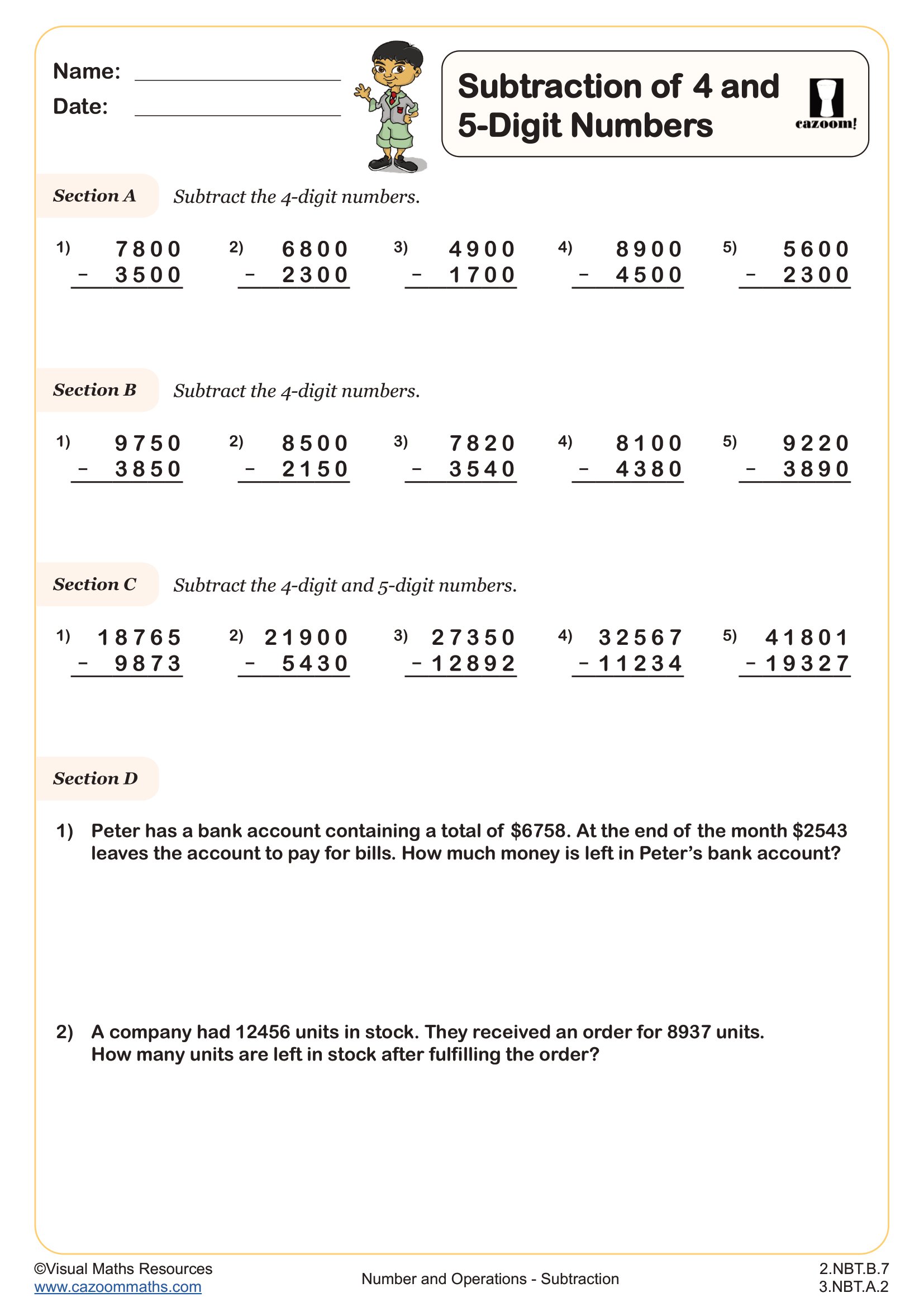
Subtraction of 4 and 5-digit Numbers
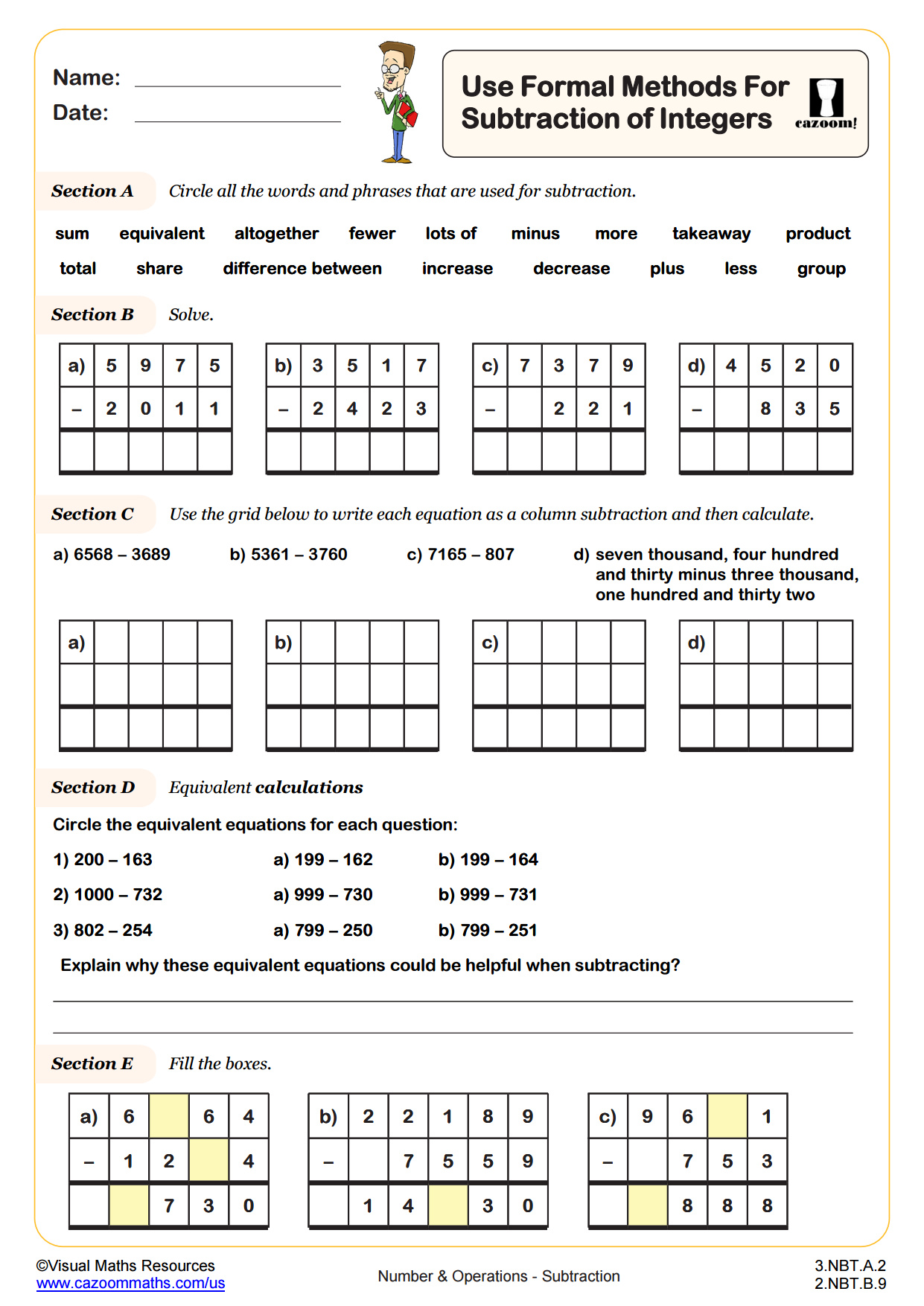
Use Formal Methods For Subtraction of Integers
All worksheets are created by the team of experienced teachers at Cazoom Math.
What is the find the difference subtraction strategy for third grade students?
The find the difference subtraction strategy teaches students to think about subtraction as finding the distance between two numbers on a number line or using mental math techniques. This approach aligns with Common Core's emphasis on multiple problem-solving methods and helps students develop number sense rather than relying solely on the traditional algorithm.
Teachers notice that students using this strategy often perform better on word problems because they visualize subtraction as comparison rather than just "taking away." For example, when solving 84 - 27, students might count up from 27 to 84 (27 + 3 = 30, then 30 + 54 = 84, so the difference is 3 + 54 = 57). This method particularly helps students who struggle with regrouping in traditional subtraction algorithms.
Are these subtraction worksheets appropriate for all third grade students?
These 3rd grade subtraction worksheets are designed to meet the diverse needs of third-grade classrooms, covering everything from basic two-digit subtraction to more challenging three-digit problems with multiple regrouping steps. The progression matches typical third-grade pacing, starting with problems students can solve mentally before advancing to those requiring the standard algorithm.
Teachers can differentiate instruction by selecting worksheets that match individual student readiness levels. Some students may need additional practice with two-digit subtraction without regrouping, while others are ready for grade 3 subtraction worksheets involving money problems or real-world contexts. The variety allows teachers to provide appropriate challenges while ensuring all students master the foundational skills needed for fourth-grade mathematics.
How do these worksheets help students master regrouping in subtraction?
The subtraction worksheets for grade 3 systematically build regrouping skills through carefully sequenced problems that progress from simple borrowing to complex multi-step regrouping. Students encounter problems designed to reinforce the concept that regrouping means trading one ten for ten ones, or one hundred for ten tens.
Classroom experience shows that students often make errors when regrouping across zeros, such as in problems like 300 - 147. The worksheets include specific practice with these challenging scenarios, helping students understand that they must sometimes regroup multiple times. Visual models and step-by-step examples support students who need concrete representations before moving to abstract number manipulation, ensuring solid conceptual understanding alongside procedural fluency.
How can teachers use these worksheets most effectively in their math instruction?
Teachers find these grade 3 worksheet math resources most effective when used as part of a balanced approach that includes direct instruction, guided practice, and independent work. The worksheets work well for homework assignments, math centers, or assessment preparation, with answer keys enabling quick feedback to identify students who need additional support.
Many teachers use the worksheets for spiral review, mixing current subtraction topics with previously learned skills to maintain fluency. The variety of problem types, from basic computation to word problems involving money and measurement, helps students see connections between subtraction and real-world applications like calculating change or finding differences in data collection projects common in third-grade science and social studies curricula.