3rd Grade Two Digit Subtraction 0-100 Worksheets
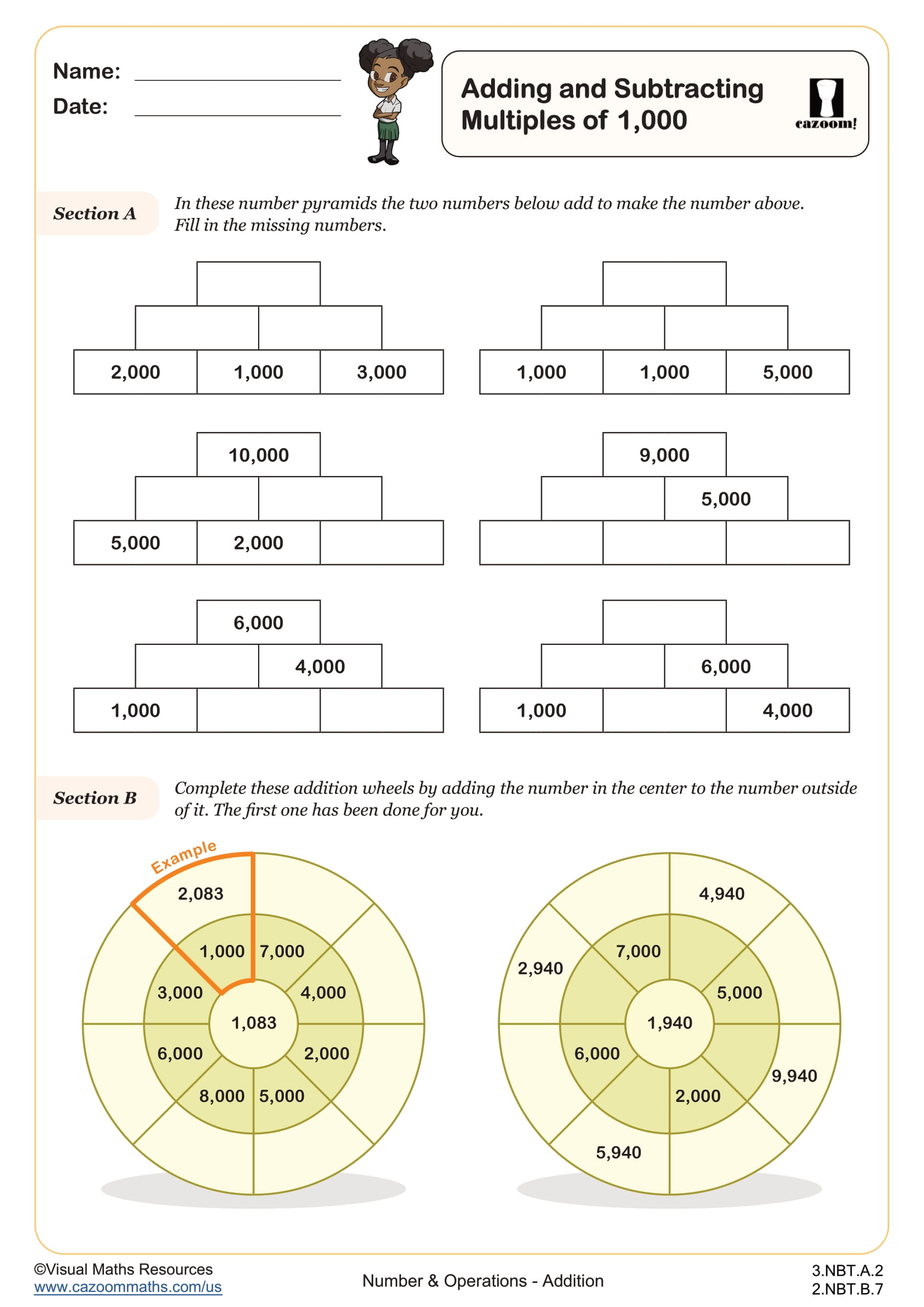
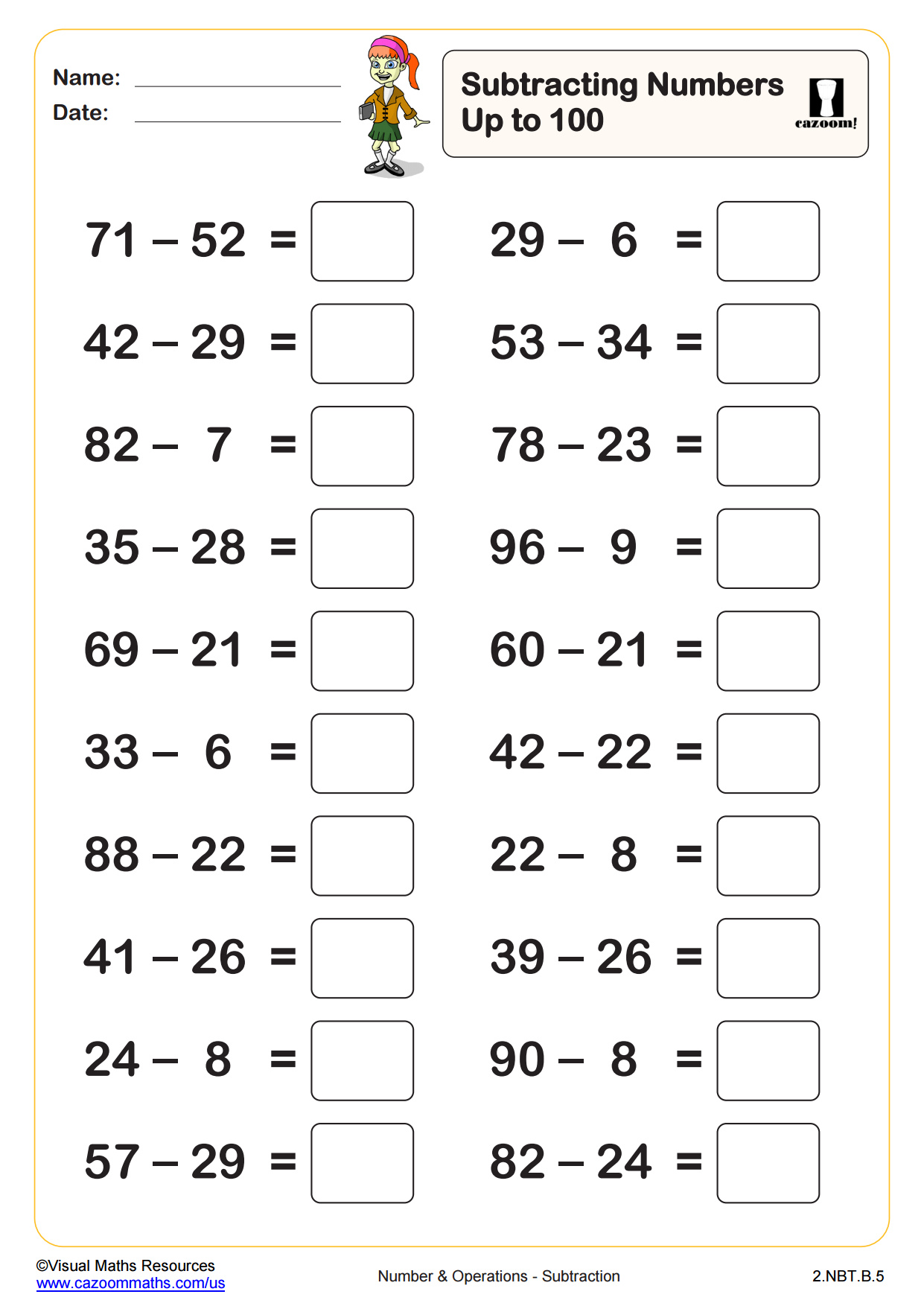
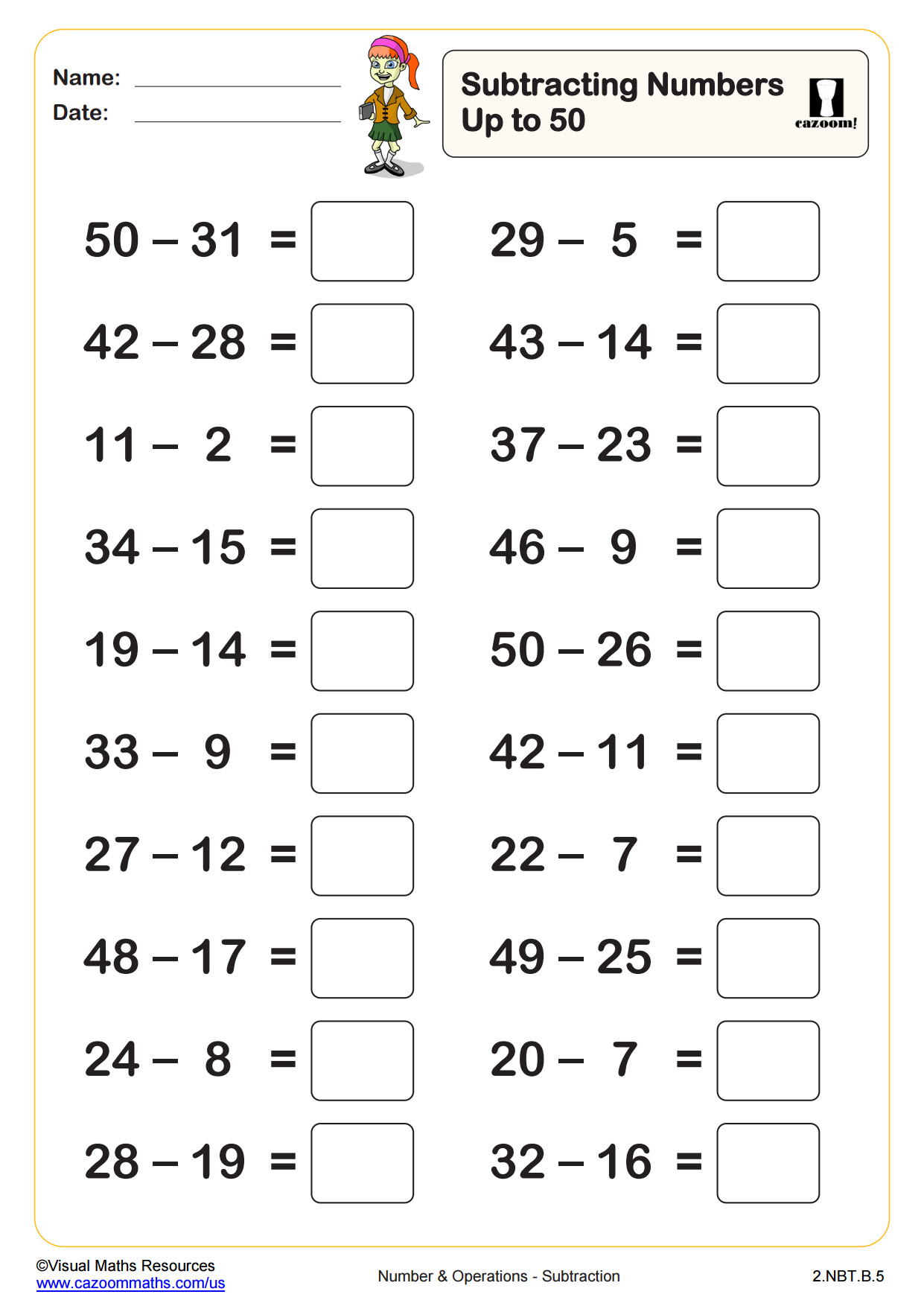
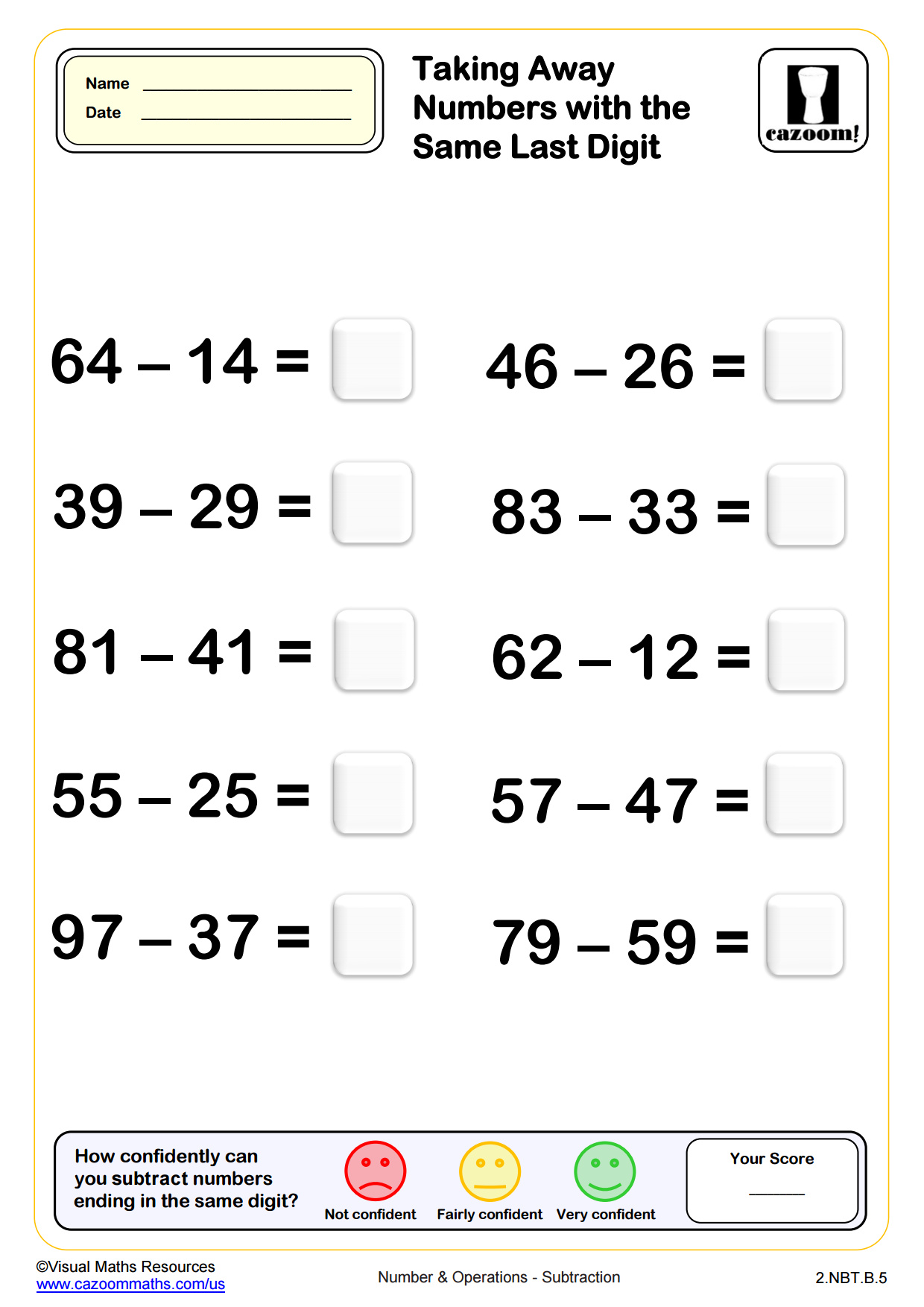
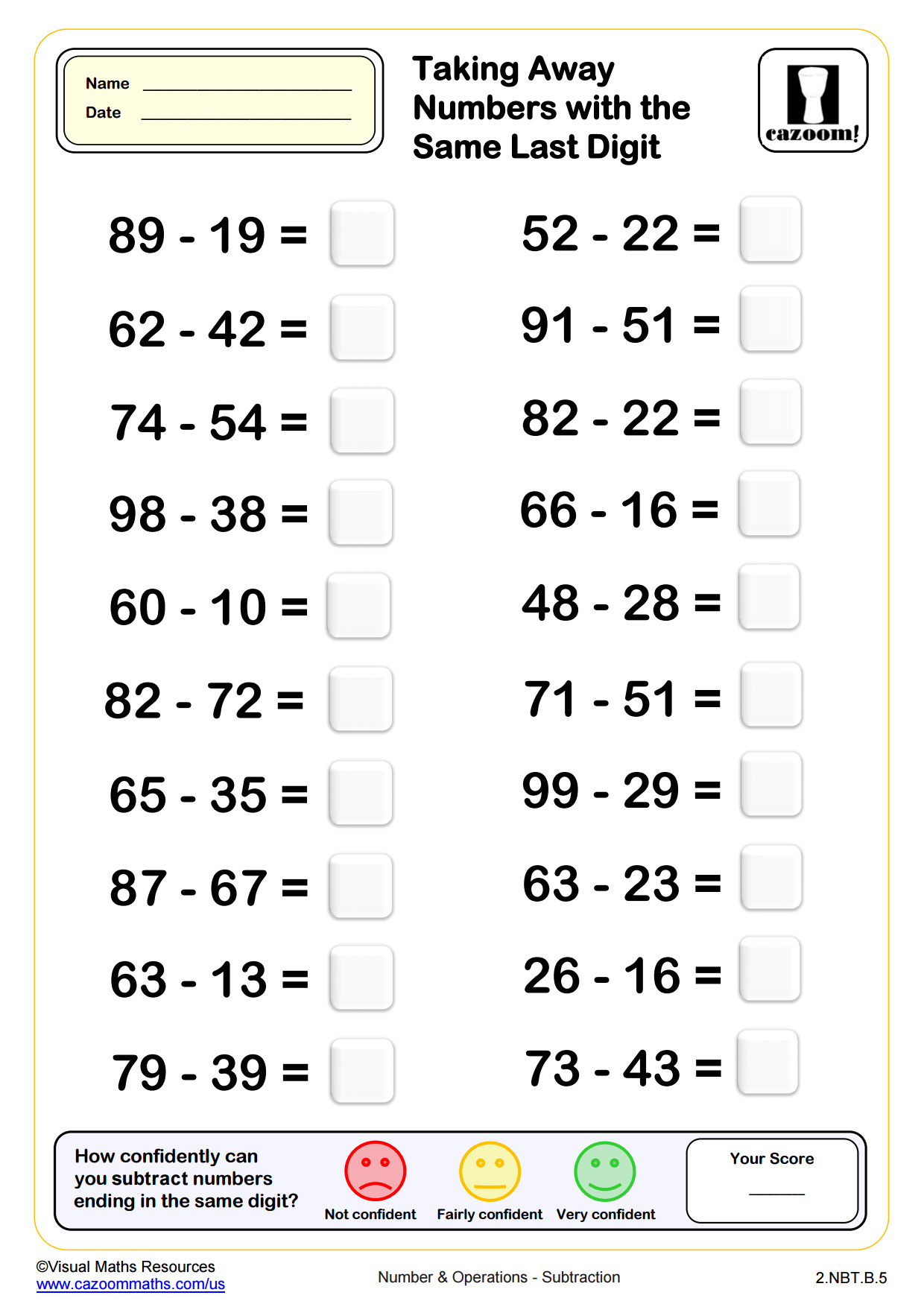
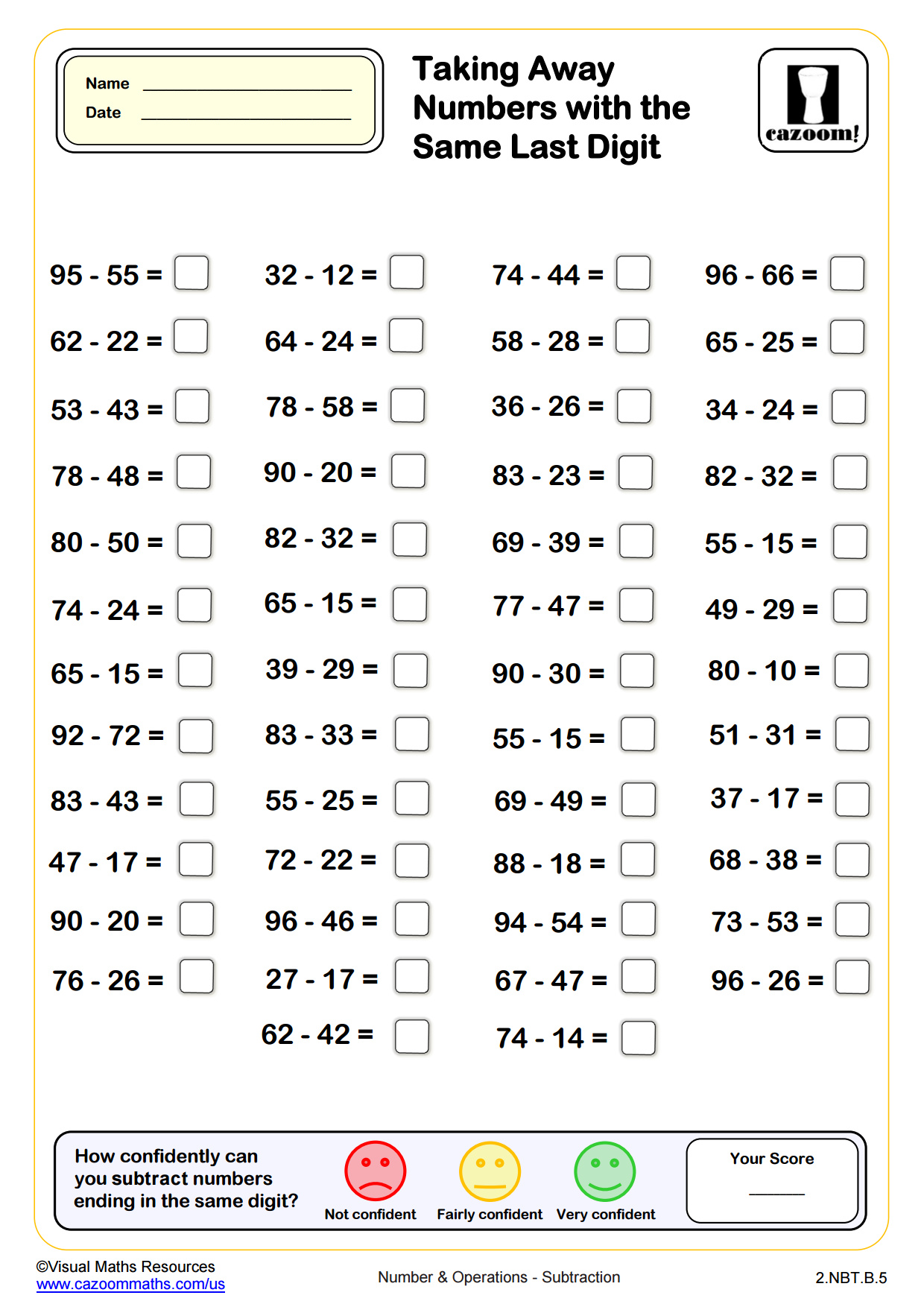
All worksheets are created by the team of experienced teachers at Cazoom Math.
What regrouping strategies should students master for two-digit subtraction?
Two-digit subtraction within 100 requires students to understand when and how to regroup (borrow) from the tens place when the ones digit being subtracted is larger than the ones digit in the minuend. Students should recognize that regrouping means exchanging one ten for ten ones, maintaining the same total value while making subtraction possible. The standard algorithm typically taught in 3rd grade involves crossing out the tens digit, reducing it by one, and adding ten to the ones place before subtracting.
A common error pattern emerges when students subtract 34 - 17 and get 23 instead of 17 because they subtract 4 - 7 by reversing the order to 7 - 4. Teachers often see students lose points on assessments when they fail to show their regrouping work, making it difficult to identify where calculation errors occur. The number line approach helps visual learners see subtraction as counting backward in chunks, which builds number sense alongside procedural fluency.
What grade level learns two-digit subtraction from 0-100?
Two-digit subtraction within 100 is a core 3rd grade elementary school skill, aligning with Common Core State Standards that expect students to fluently add and subtract within 1000 using strategies based on place value. While students begin exploring two-digit subtraction in 2nd grade with simpler problems, 3rd grade focuses on building fluency with regrouping and applying subtraction to word problems and real-world contexts.
The progression typically moves from concrete manipulatives like base-ten blocks to pictorial representations including number lines, then to abstract algorithms. Students who master two-digit subtraction with confidence in 3rd grade find three-digit subtraction significantly more manageable in 4th grade, as the same regrouping principles apply across additional place values. Missing number problems that require working backward build algebraic reasoning skills that become essential for solving equations in later grades.
How do number lines help students understand two-digit subtraction?
Number lines provide a visual model for subtraction that helps students see the operation as distance or movement rather than just a calculation procedure. When students use number lines for problems like 52 - 28, they learn to break apart the subtrahend into tens and ones (subtracting 20 first, then 8 more), which reinforces place value concepts and develops mental math strategies. This decomposition method often makes more intuitive sense than the traditional algorithm, especially for students who think spatially.
Number line strategies connect directly to measurement and data analysis in STEM fields. Scientists and engineers frequently use number lines when working with positive and negative temperatures, sea level measurements, or timeline calculations. When students subtract 45 - 18 to find the temperature drop from 45°F to 27°F, they're using the same number line reasoning that meteorologists apply when analyzing weather patterns. This real-world application helps students recognize subtraction as a tool for comparing quantities and finding differences, not just a classroom exercise.
How can teachers use these two-digit subtraction worksheets effectively?
These worksheets provide scaffolded practice that moves students from concrete visual support to abstract problem-solving. The missing number formats (with and without number lines) challenge students to think flexibly about the relationship between addends and differences, strengthening their understanding of inverse operations. Match the answers activities offer self-checking opportunities where students can identify whether their calculations produce reasonable results before checking against the answer key.
Teachers frequently use these worksheets for differentiated math centers, assigning number line supports to students who need visual scaffolding while giving purely numerical problems to those ready for independent work. The worksheets work well as warm-up activities to review previously taught concepts, intervention resources for small group instruction, or homework assignments that parents can support using the included answer keys. Paired work allows students to explain their regrouping steps to each other, which often reveals misconceptions more effectively than individual practice alone.