3rd Grade Understanding the Difference Worksheets
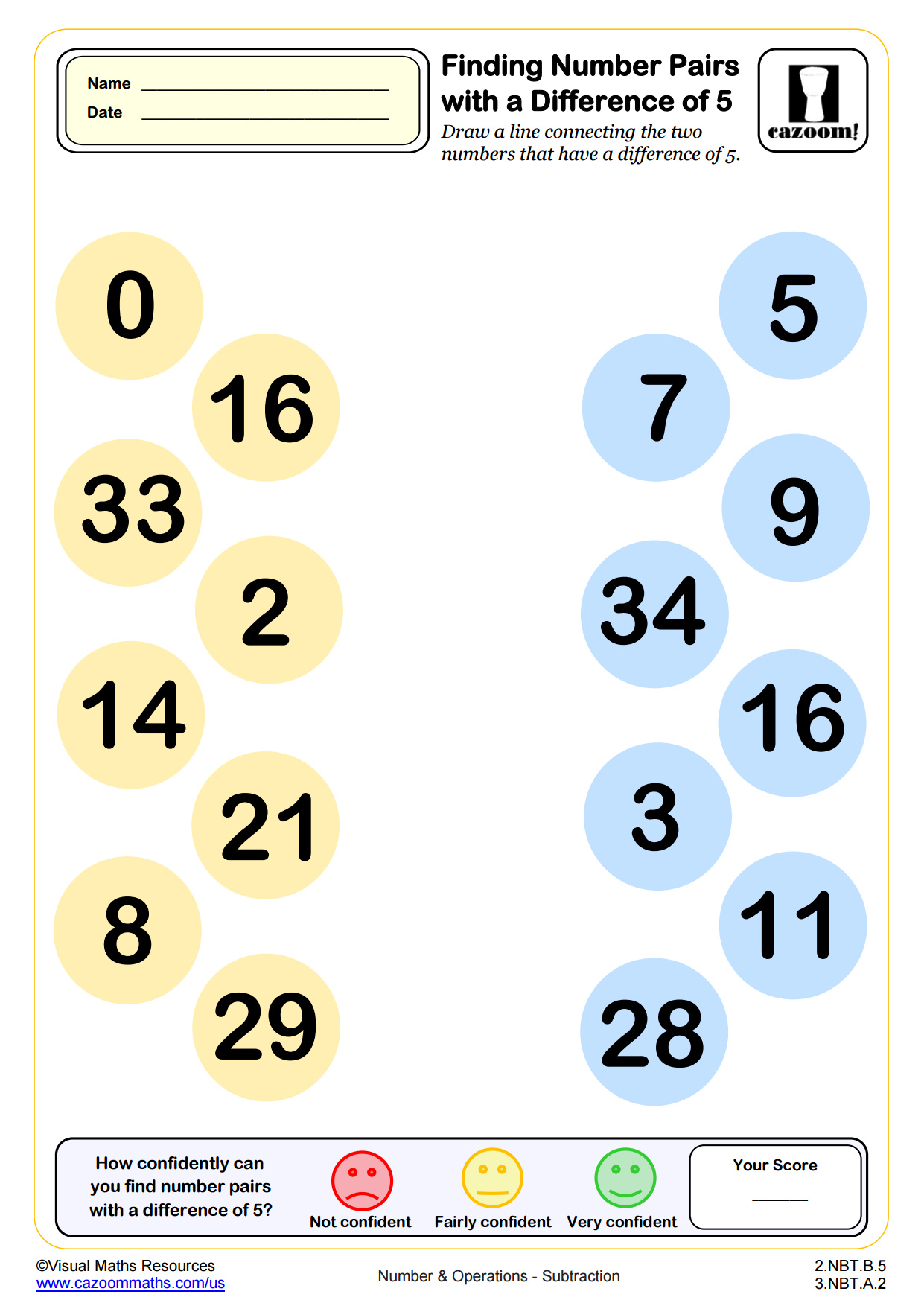
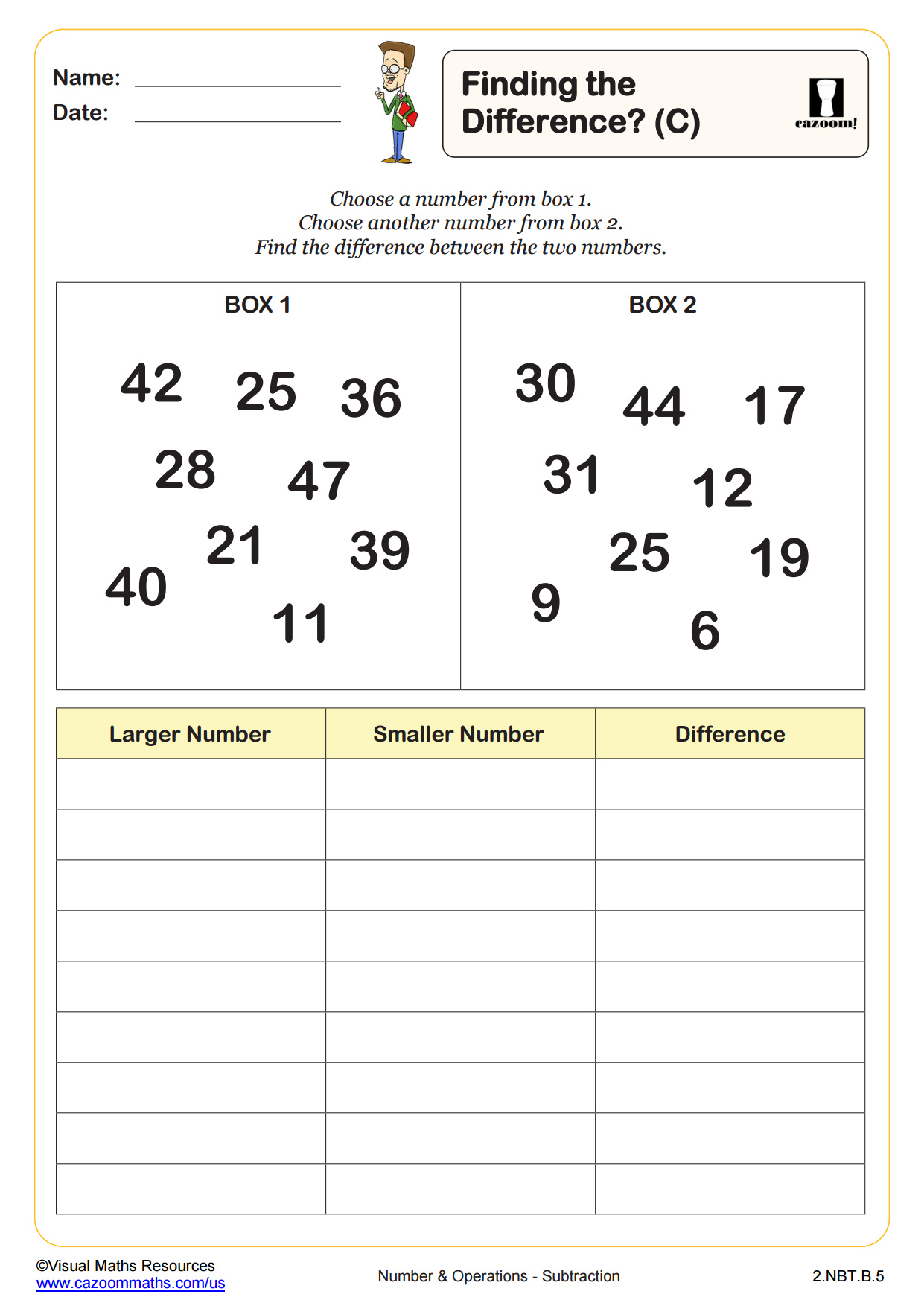
All worksheets are created by the team of experienced teachers at Cazoom Math.
What Does Understanding the Difference Mean in Third Grade Math?
Understanding the difference means recognizing subtraction as a comparison between two quantities rather than just "taking away." Third graders learn to see subtraction problems through multiple lenses: the difference between 58 and 43 is 15 because 43 plus 15 equals 58. This comparative thinking aligns with Common Core standard 3.NBT.A.2, where students use place value understanding to perform multi-digit arithmetic, and builds the mental flexibility needed for later algebraic thinking.
A common misconception occurs when students always subtract the smaller number from the larger one, regardless of problem context. Teachers frequently see students write 45 - 52 = 7 instead of recognizing this requires negative numbers or reframing the question. Worksheets that present differences in varied formats help students recognize when subtraction represents comparison ("How much more?") versus removal ("How many are left?"), building deeper conceptual understanding beyond memorized procedures.
Which Grade Levels Use Understanding the Difference Worksheets?
These worksheets target third grade students in elementary school, aligning with the developmental stage where students move from concrete subtraction strategies to more abstract number relationships. Third graders are expected to fluently subtract within 1,000 and understand how addition and subtraction relate as inverse operations, making difference-focused practice particularly valuable during this academic year.
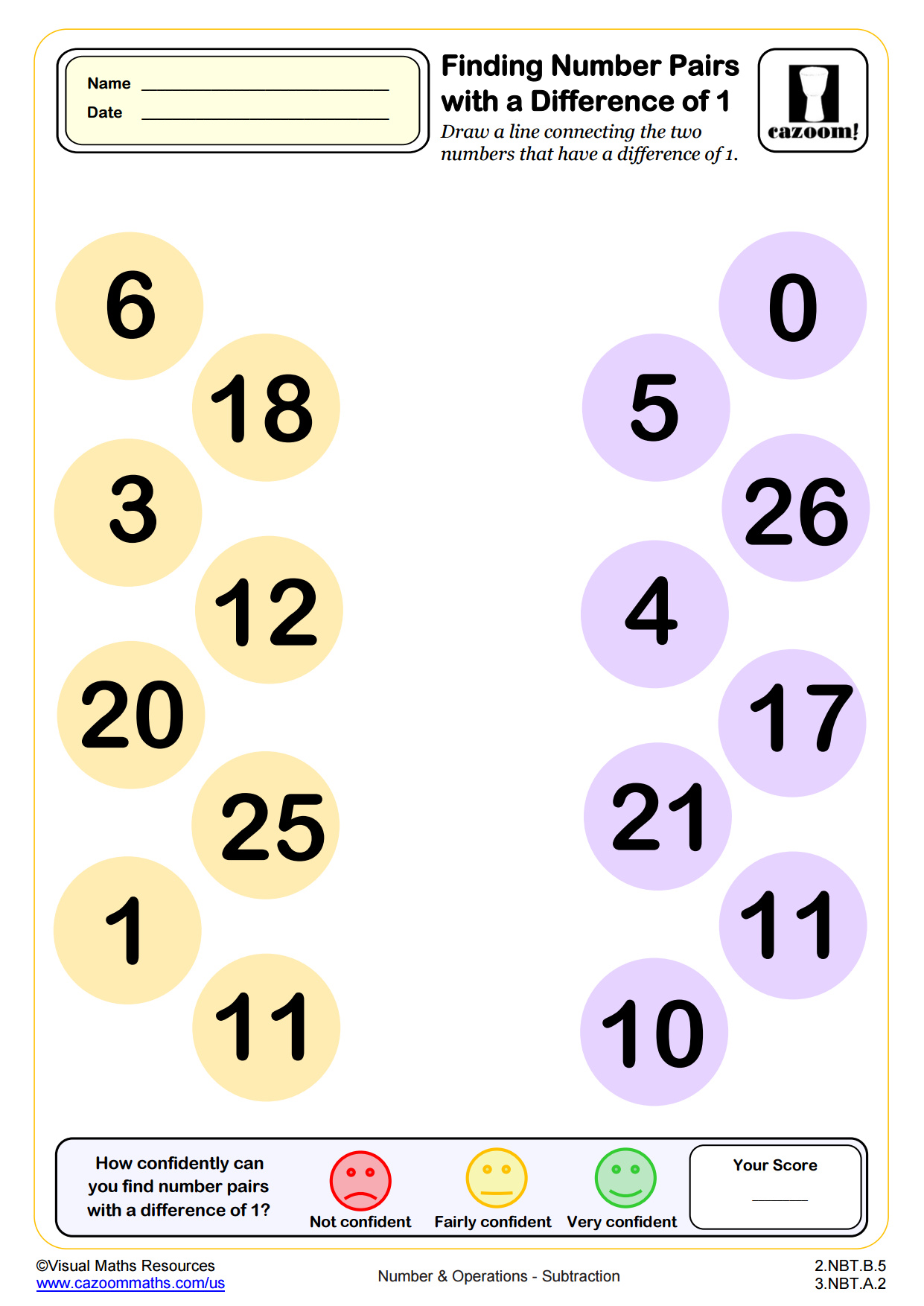
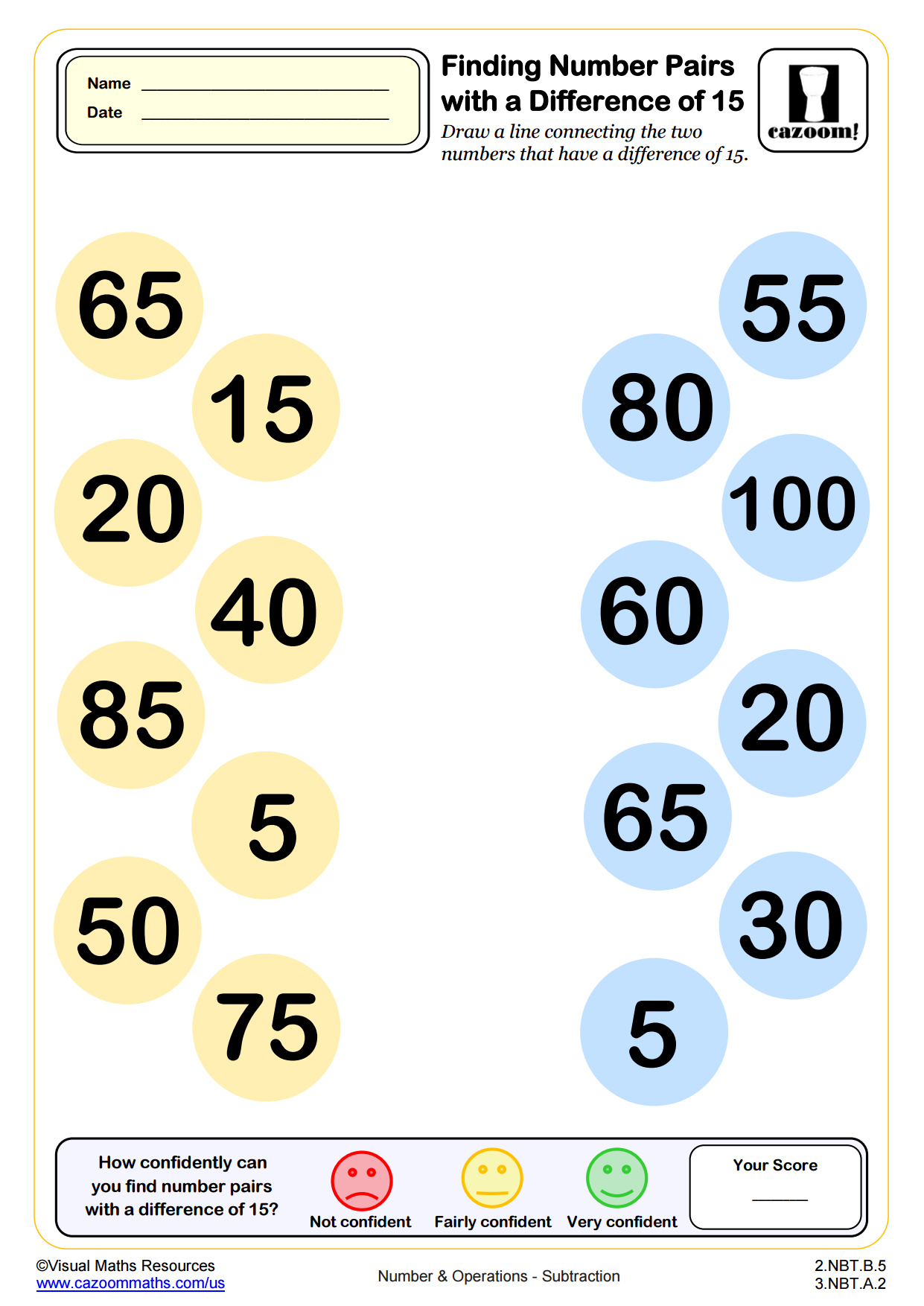
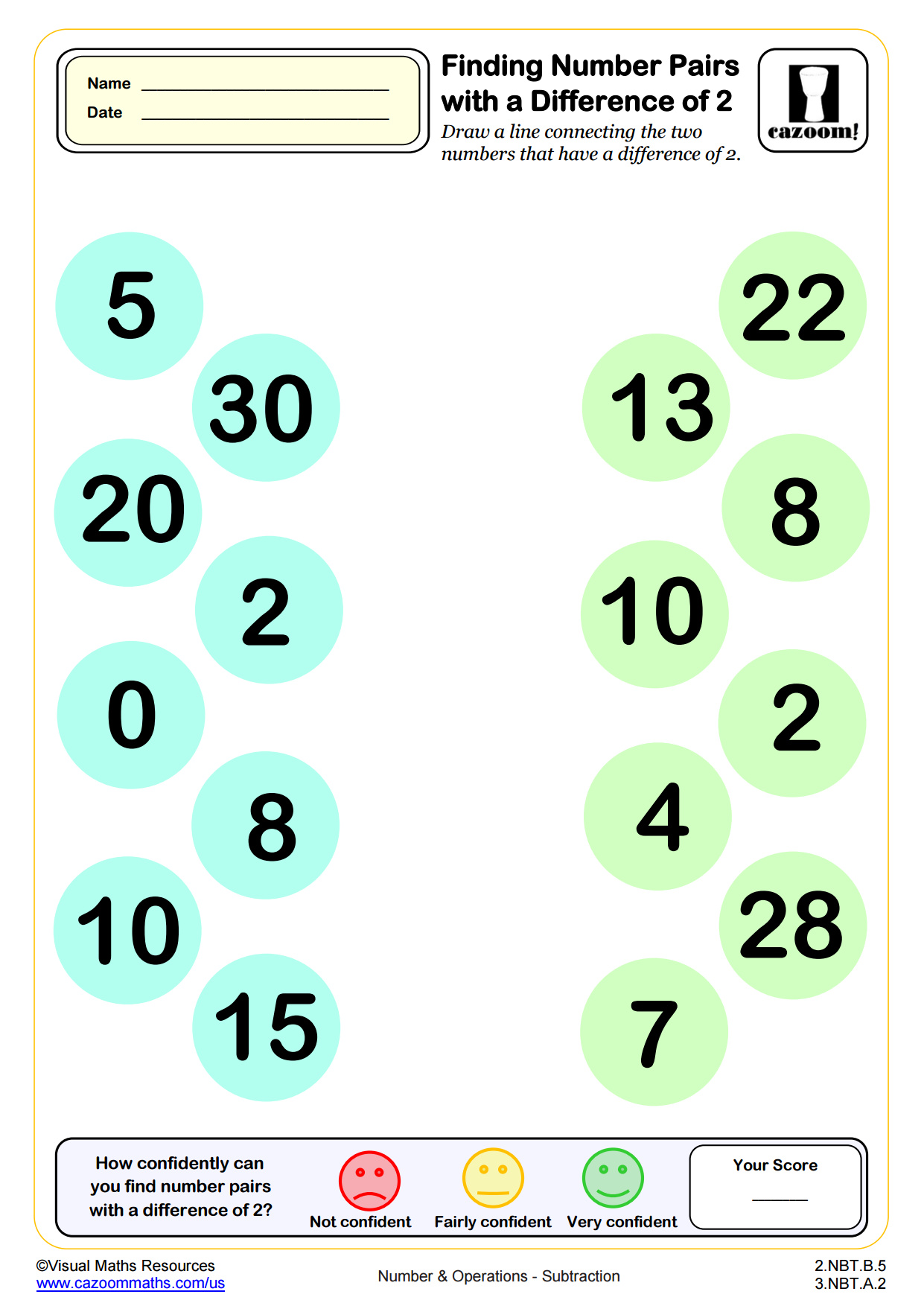
The progression within third grade materials moves from straightforward difference calculations to more strategic thinking about number pairs. Early worksheets build computational fluency with finding differences, while later exercises ask students to identify multiple number pairs that share a specific difference, like finding all pairs with a difference of 15. This shift from calculation to analysis represents the increasing cognitive demand expected as students advance through the elementary grades and prepare for fourth grade multiplication and division.
How Do Students Find Number Pairs with Specific Differences?
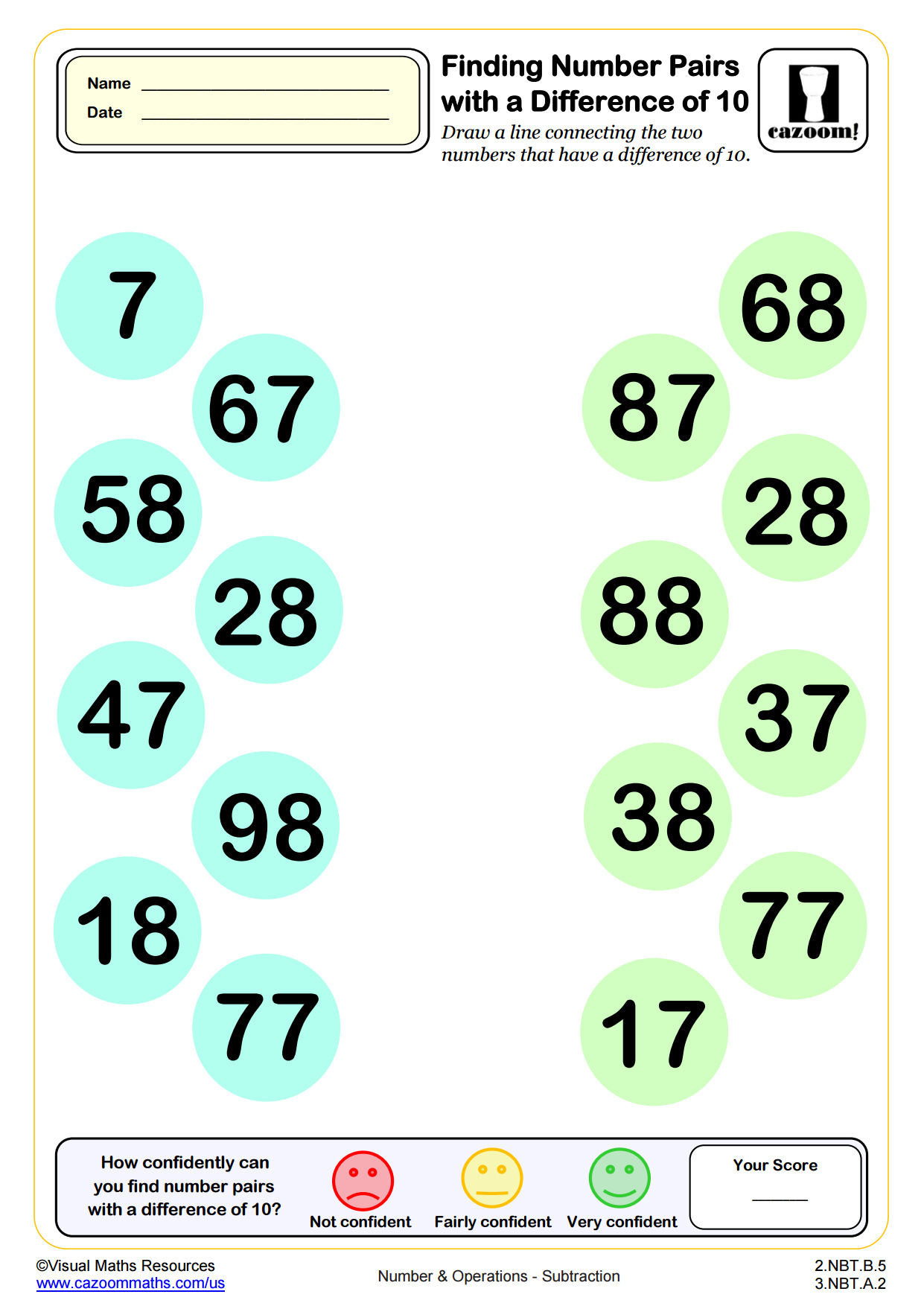
Finding number pairs with a given difference requires students to think flexibly about the relationship between addition and subtraction. When searching for pairs with a difference of 10, students recognize that any number and the number 10 greater form a valid pair: 25 and 35, 47 and 57, or 83 and 93. This pattern-recognition develops algebraic thinking, as students essentially solve equations like x + 10 = y while exploring multiple solutions rather than seeking one correct answer.
This skill connects directly to real-world budgeting and comparison situations. When students see two items priced at $18 and $33, recognizing the $15 difference helps them quickly determine if they have enough money for both or evaluate which purchase fits their budget. Scientists and engineers constantly compare measurements with target values, asking "How far off are we?" rather than performing separate calculations, making difference-finding a practical STEM skill beyond elementary arithmetic.
How Should Teachers Use These Understanding the Difference Worksheets?
The worksheets provide scaffolded practice that builds from direct calculation to strategic thinking about number relationships. The progression through Finding the Difference (A), (B), and (C) allows teachers to differentiate instruction, with earlier versions supporting students who need more computational practice while later versions challenge students ready for multi-step thinking. The specific difference worksheets (difference of 10, difference of 15) work particularly well after students have mastered basic subtraction facts, as they emphasize patterns rather than just computation.
Many teachers use these worksheets during math centers or small group instruction, where students can work at their own pace while the teacher circulates to address misconceptions. The answer keys make them effective for independent practice or homework, allowing students to self-check their understanding. Teachers also find them valuable for quick intervention when formative assessments reveal gaps in subtraction fluency, and they work well as warm-up activities before introducing related topics like comparing multi-digit numbers or solving word problems involving differences.