4th Grade 2D Shapes Worksheets
All worksheets are created by the team of experienced teachers at Cazoom Math.
What properties of 2D shapes do 4th graders need to master?
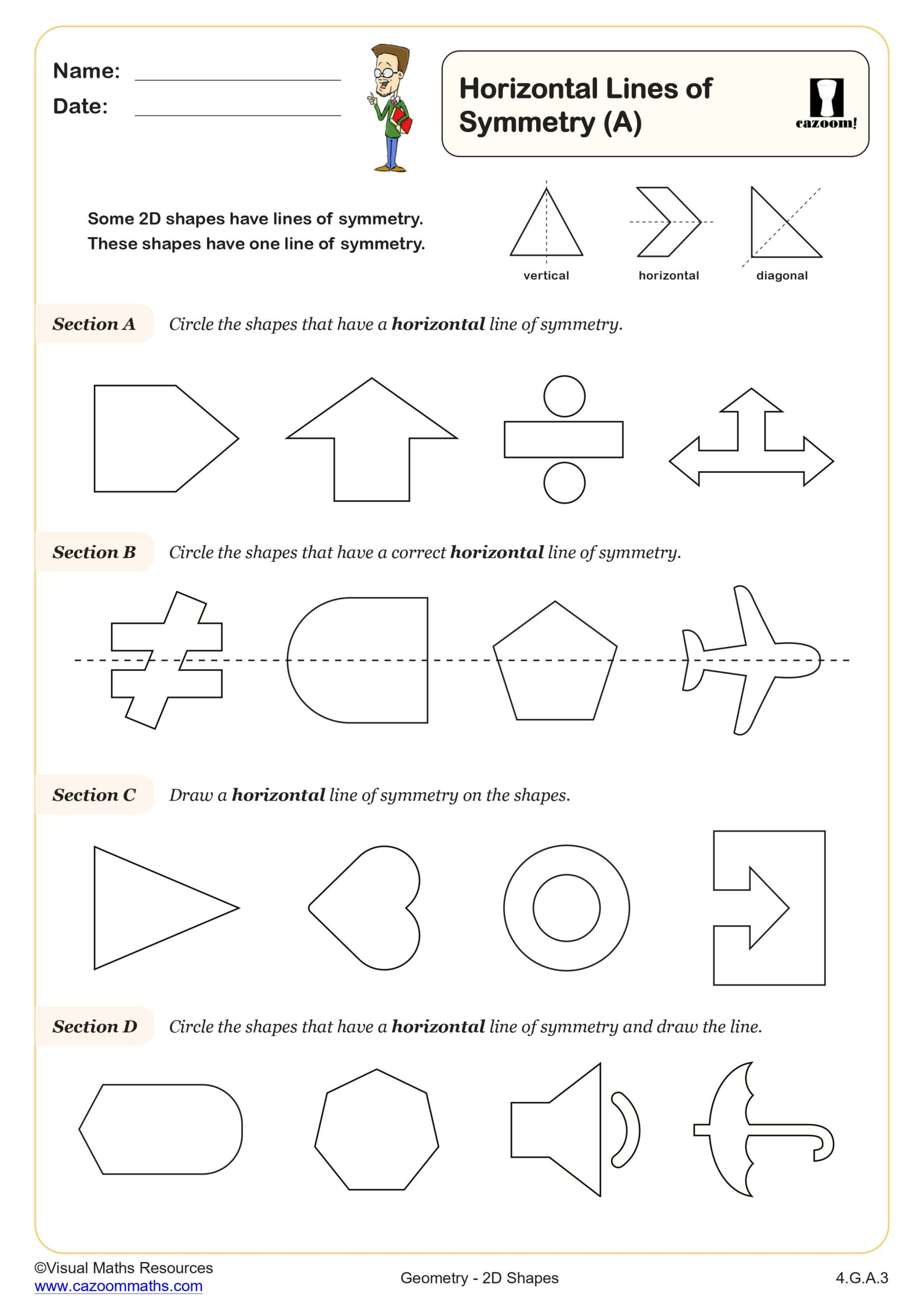
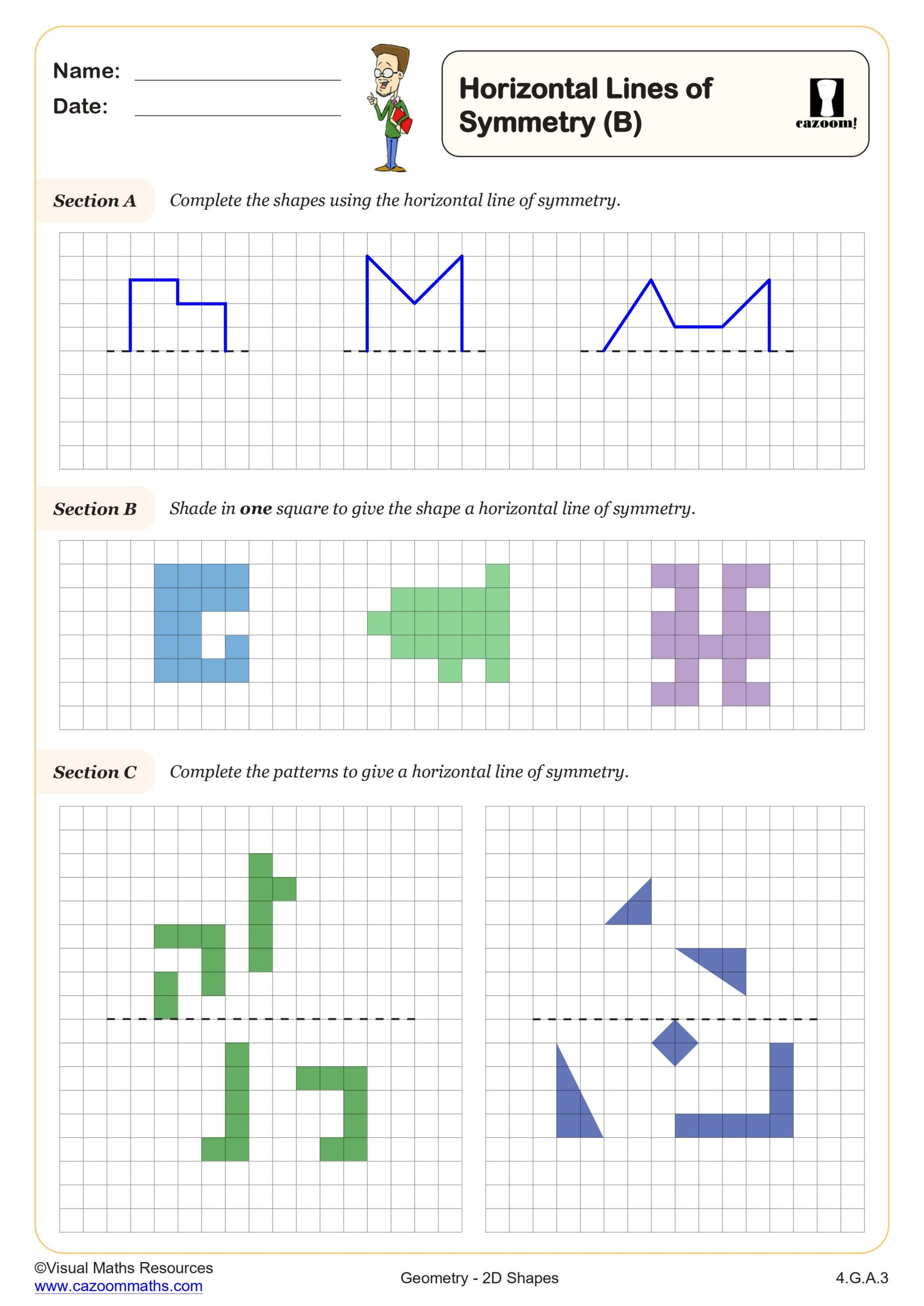
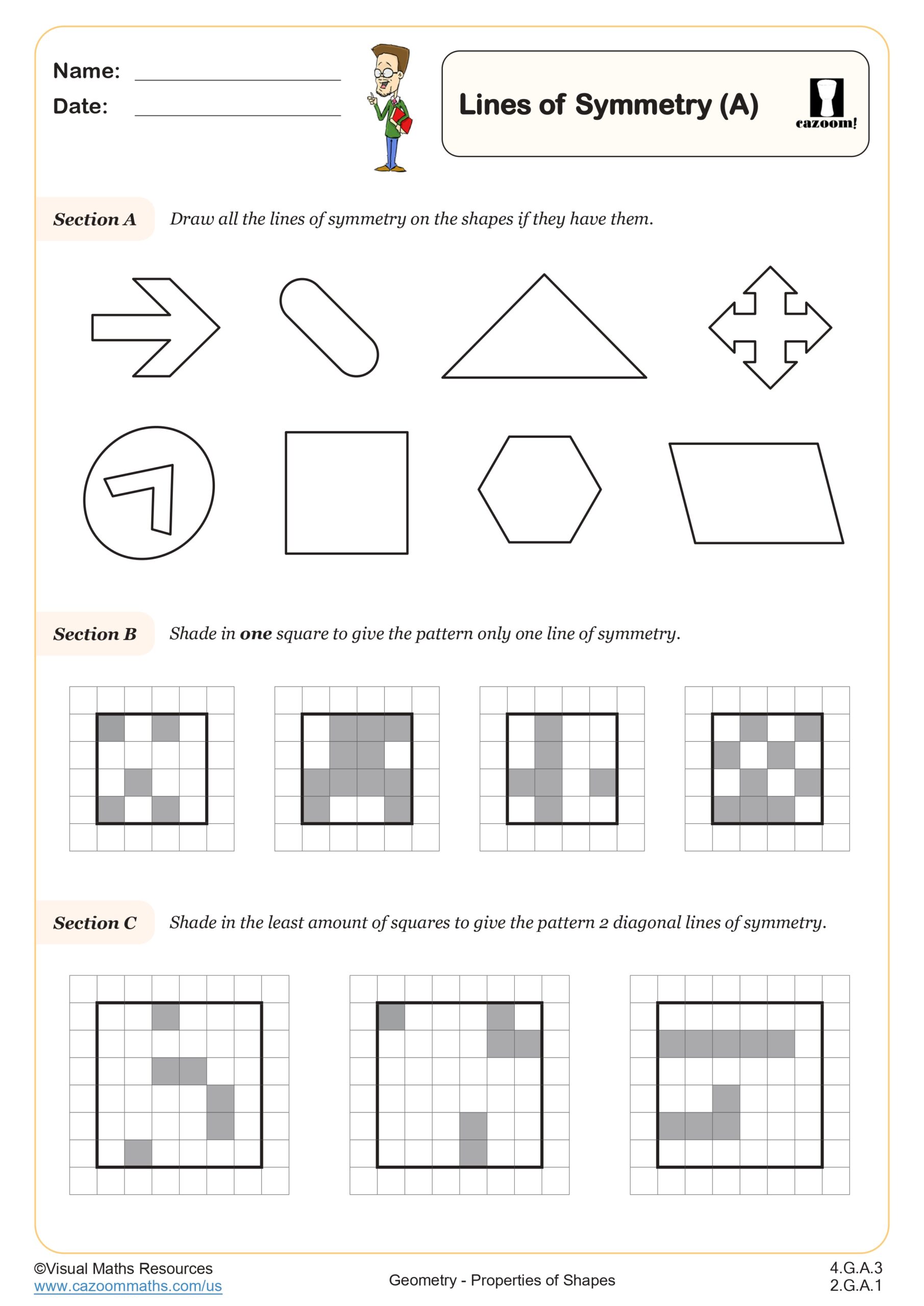
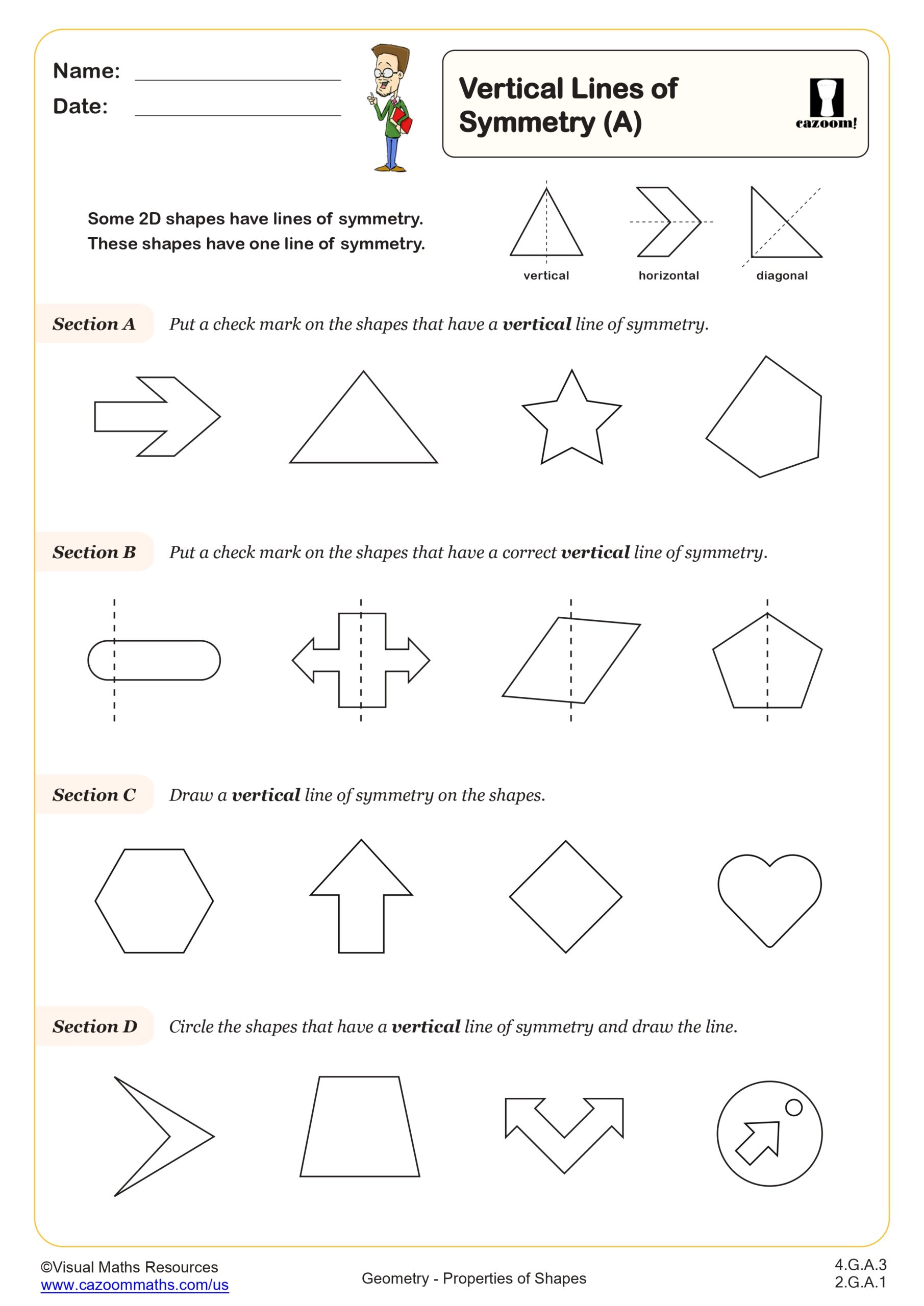
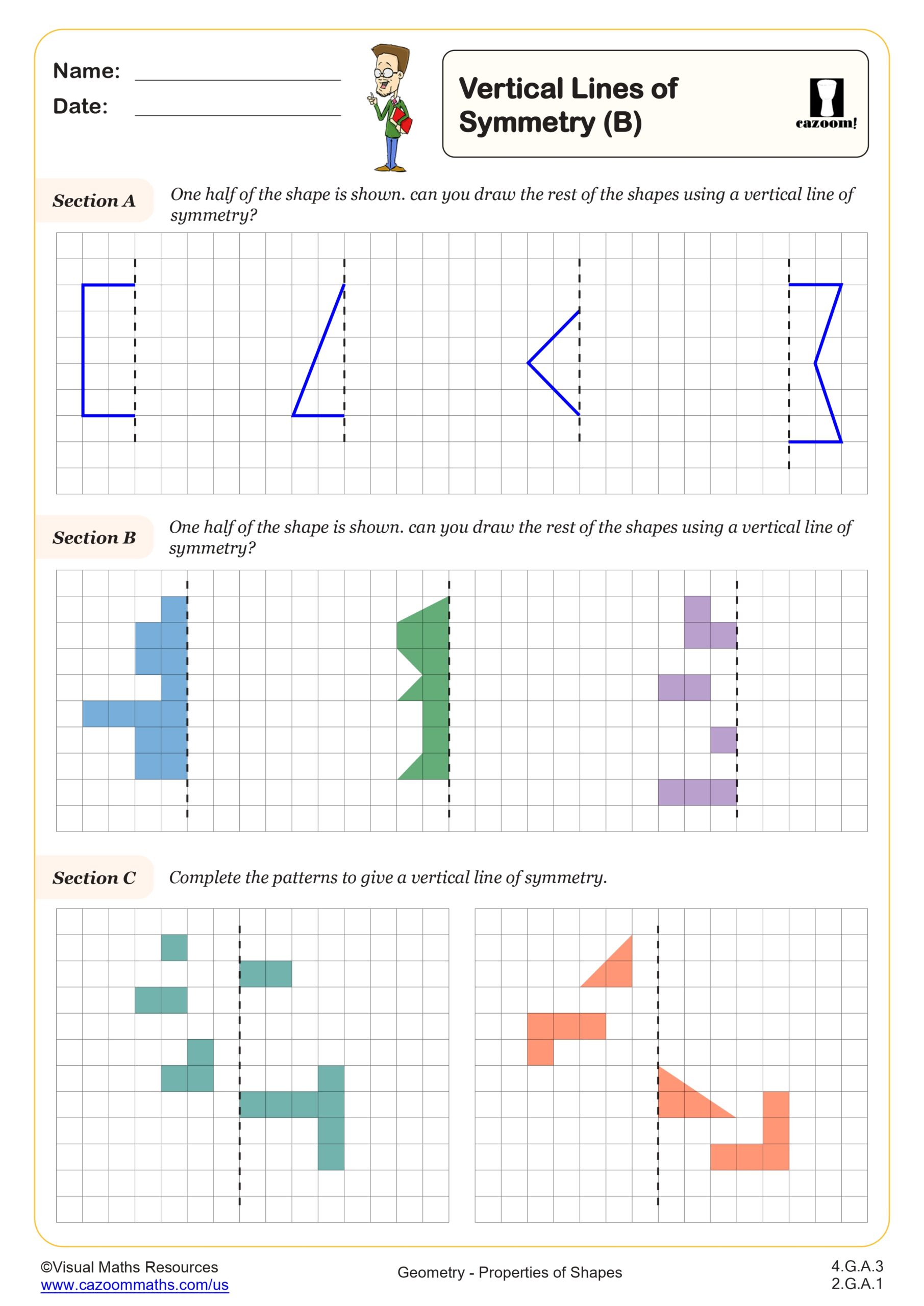
Fourth graders focus on classifying two-dimensional shapes based on defining attributes such as parallel sides, perpendicular sides, angles, and symmetry. Students analyze quadrilaterals to distinguish between squares, rectangles, rhombuses, parallelograms, and trapezoids. They explore how shapes relate hierarchically, understanding that a square possesses all rectangle properties plus additional characteristics. Students also work with polygons like hexagons, identifying regular versus irregular forms.
A common error occurs when students categorize shapes using superficial features rather than mathematical properties. Teachers frequently see students claim a tilted square isn't a square because it looks like a diamond, or insist that a shape can't be both a rectangle and a rhombus. Students make breakthroughs when they create Venn diagrams or sorting activities that reveal how shapes can belong to multiple categories simultaneously based on their defining properties.
Which grade levels study 2D shapes in this collection?
This collection specifically targets 4th grade elementary school students, aligning with Common Core standards that emphasize classifying shapes by their properties and understanding the relationships between different categories of shapes. Fourth grade represents a pivotal year when geometric thinking shifts from simple identification to analytical reasoning about why shapes belong to certain classifications.
The worksheets progress in complexity to match typical 4th grade development. Early activities focus on identifying and drawing specific shapes like hexagons, squares, and circles with increasing precision. Later worksheets require students to compare and contrast quadrilateral properties, a more sophisticated skill that demands recognizing subtle differences between parallelograms, rectangles, and rhombuses. This progression builds the foundation students need before tackling coordinate plane geometry and more complex polygon work in 5th grade.
How do students compare and contrast properties of quadrilaterals?
Comparing quadrilateral properties involves analyzing multiple attributes simultaneously, including side lengths, parallel sides, perpendicular sides, and angle measures. Students examine whether opposite sides are parallel, whether adjacent sides are perpendicular, whether all angles are right angles, and whether all sides are congruent. This systematic analysis helps students understand why a square meets all rectangle requirements but not vice versa, and how a rhombus differs from a generic parallelogram.
Architects and engineers rely heavily on quadrilateral properties when designing structures. Rectangular floor plans maximize usable space in buildings, while parallelogram-shaped support beams distribute weight efficiently in bridge construction. Students studying quadrilaterals develop the spatial reasoning needed for careers in architecture, engineering, and computer-aided design. Recognizing that a building's rectangular window frame needs four right angles and parallel opposite sides connects classroom geometry to practical construction requirements that ensure structural stability and aesthetic appeal.
How can teachers use these 2D shapes worksheets effectively?
These worksheets provide structured practice that moves from concrete shape recognition to abstract property analysis. The printable hexagons, squares, and circles serve as manipulatives for cutting, tracing, and hands-on exploration before students analyze written descriptions. The property comparison worksheets scaffold thinking by prompting students to examine specific attributes systematically rather than guessing based on appearance. Answer keys allow teachers to quickly identify which properties students misunderstand, enabling targeted reteaching.
Teachers use these worksheets during math centers for independent practice while working with small intervention groups on challenging concepts. The shape printables work well for collaborative sorting activities where student pairs debate whether shapes meet certain criteria, developing mathematical argumentation skills. Many teachers assign property comparison worksheets as homework after direct instruction, then use common errors as warm-up discussion starters the following day. The worksheets also provide review material before state assessments that test geometric reasoning.