4th Grade Area and Perimeter Worksheets
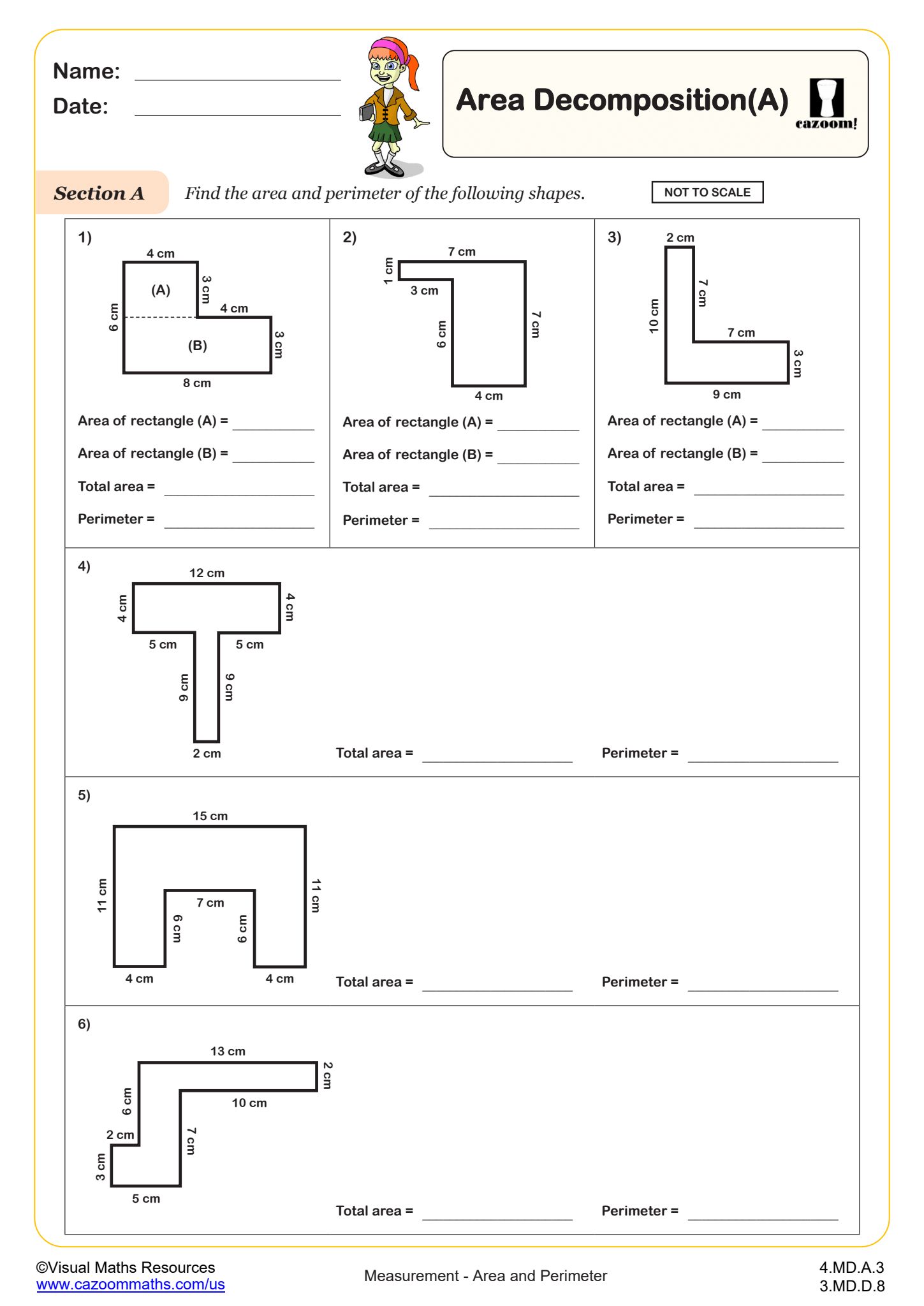
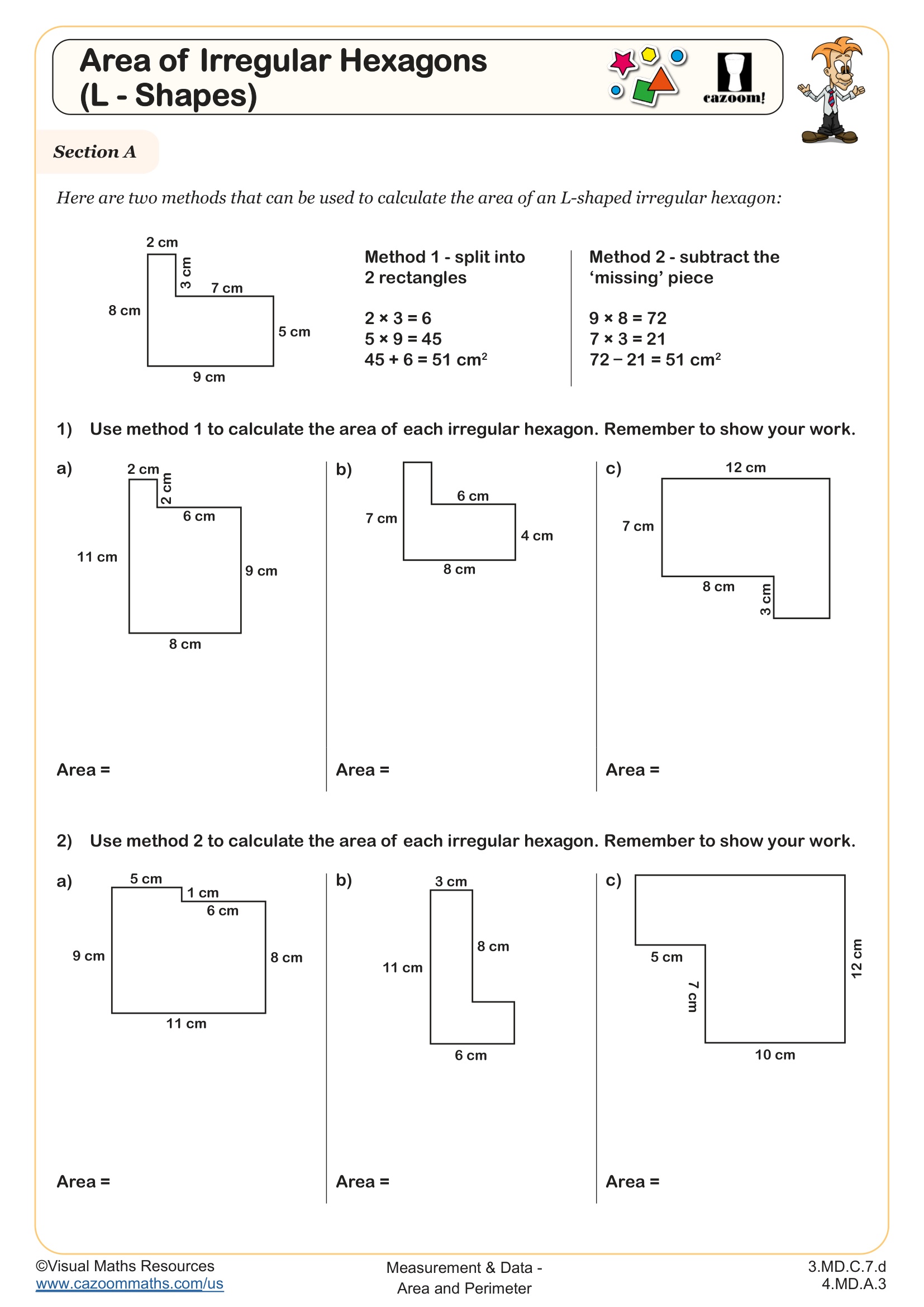
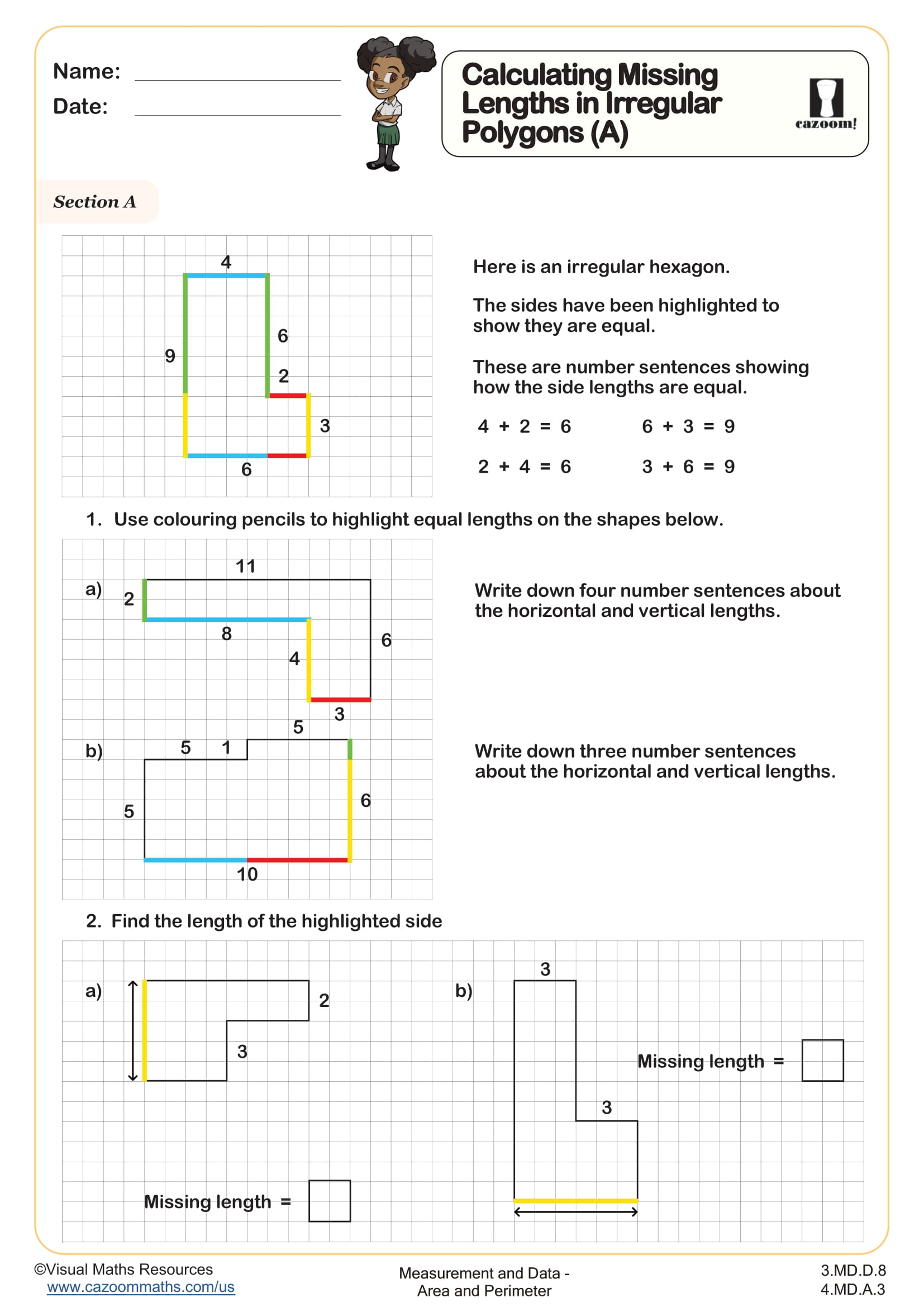
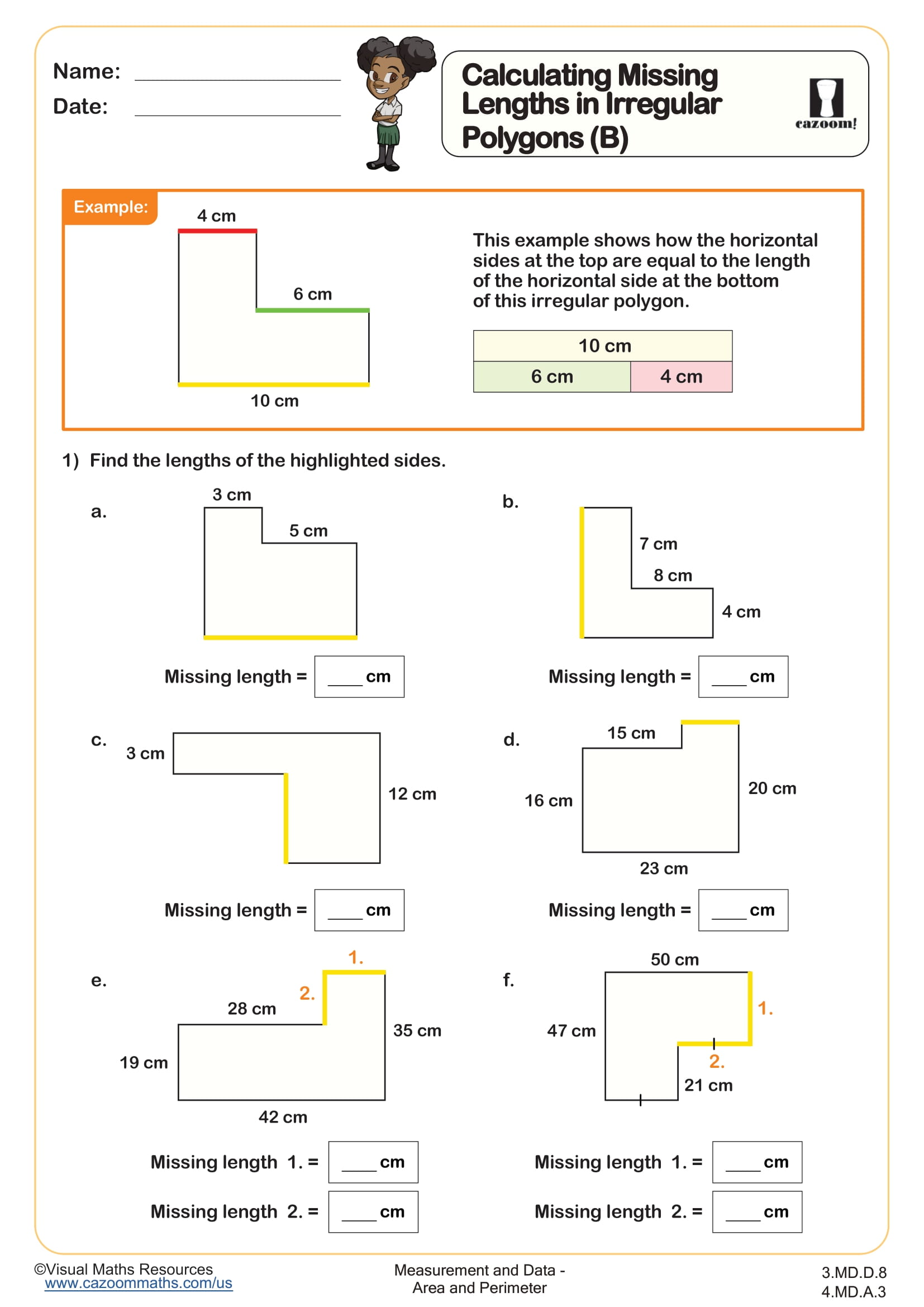
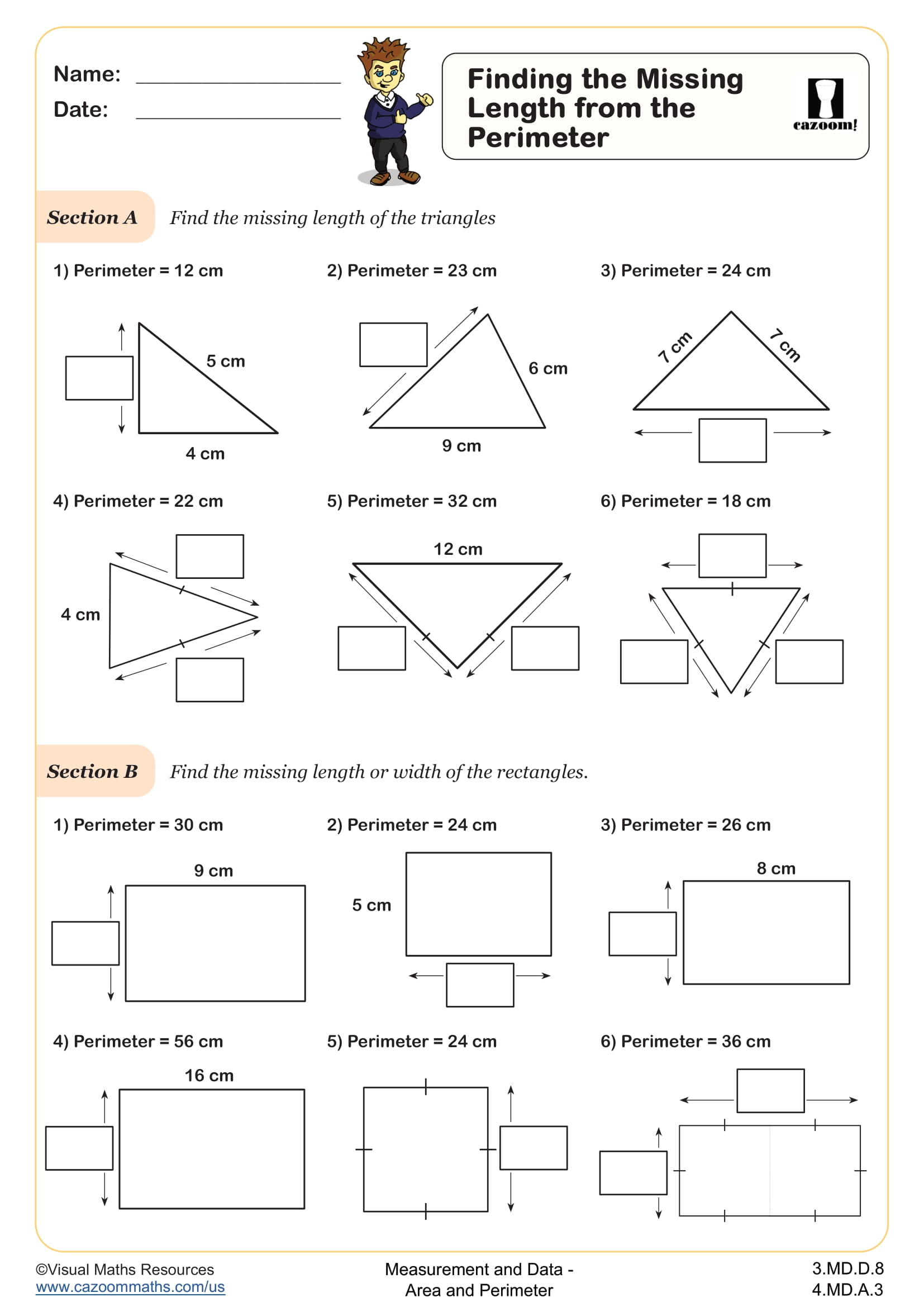
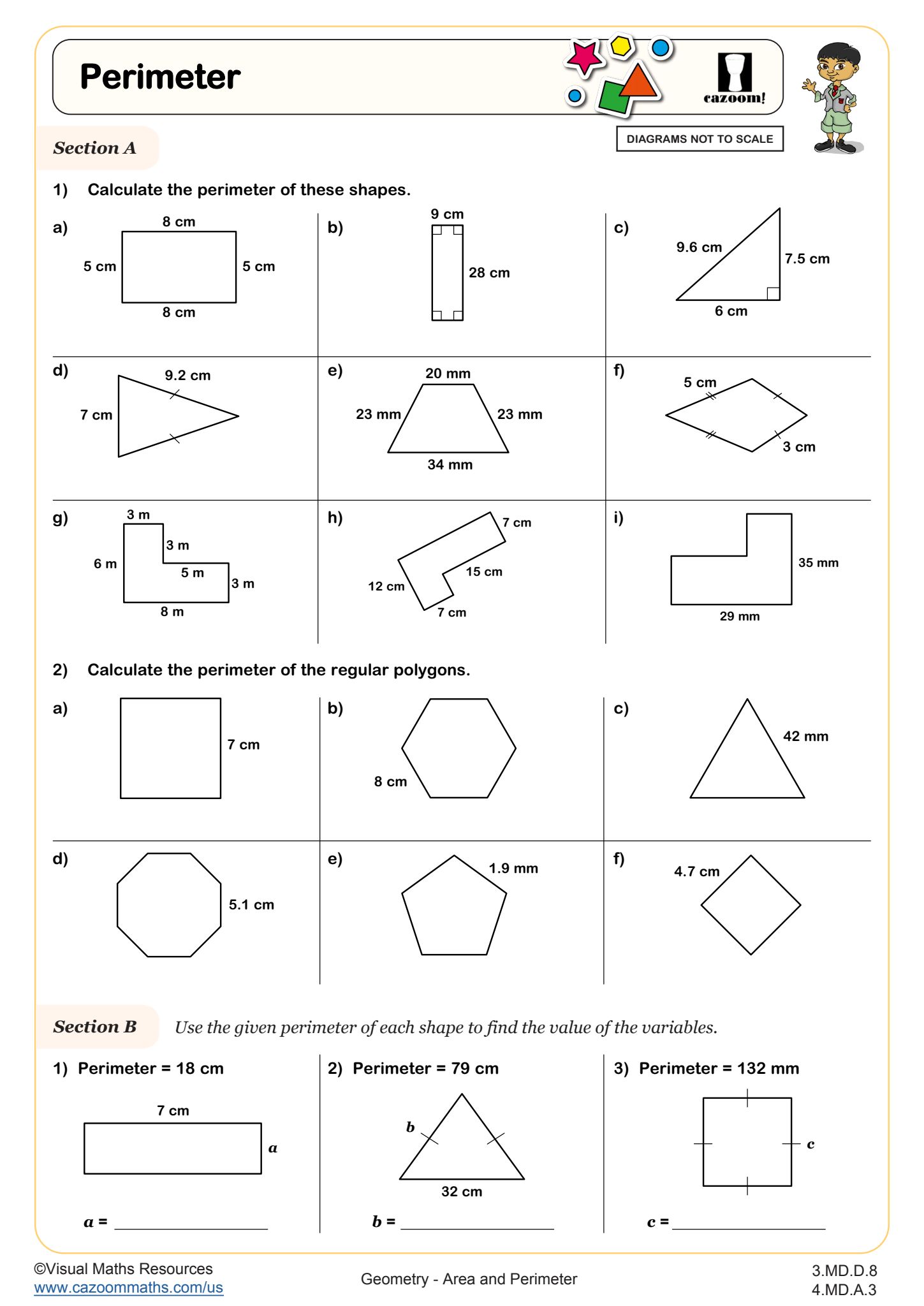
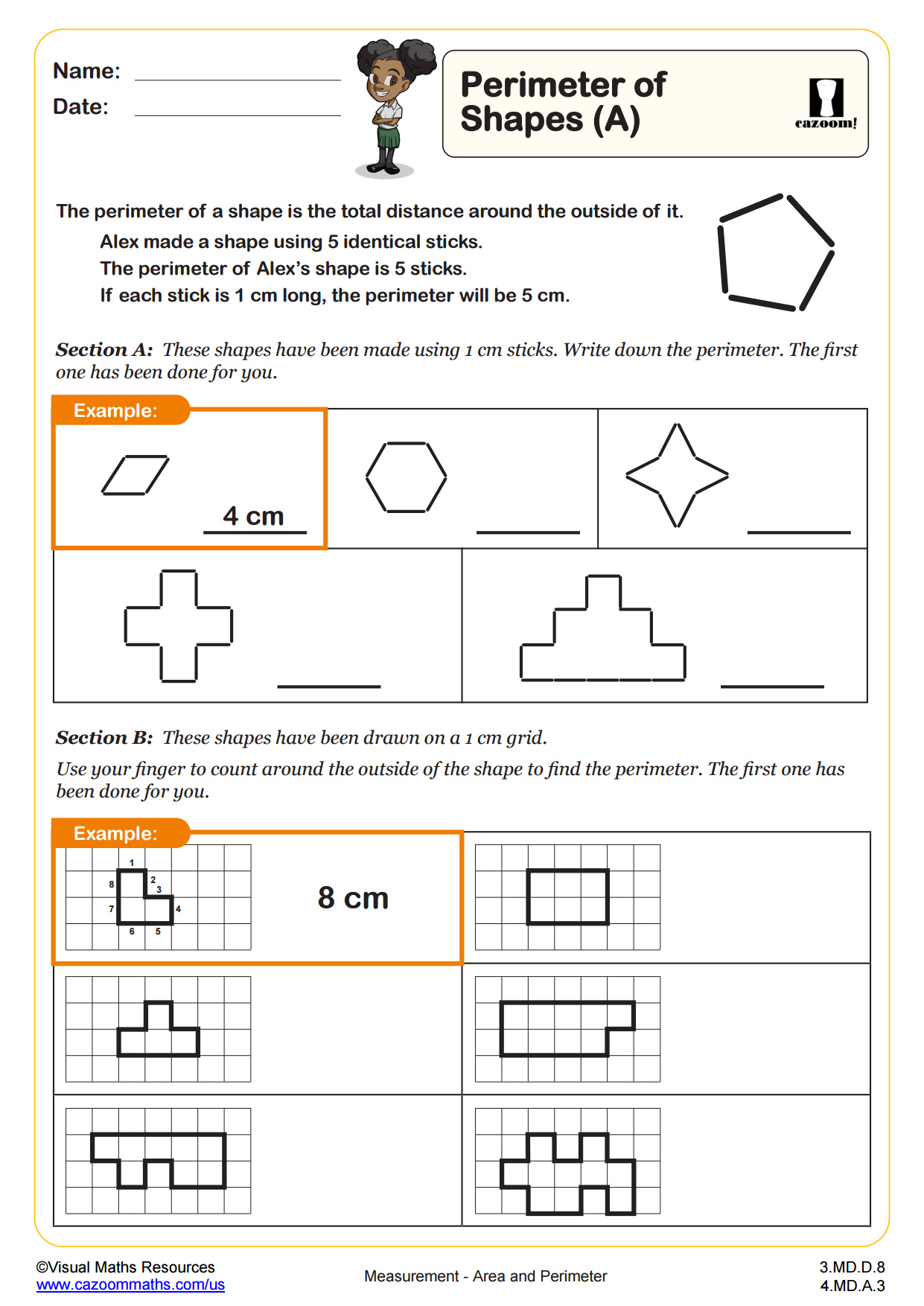
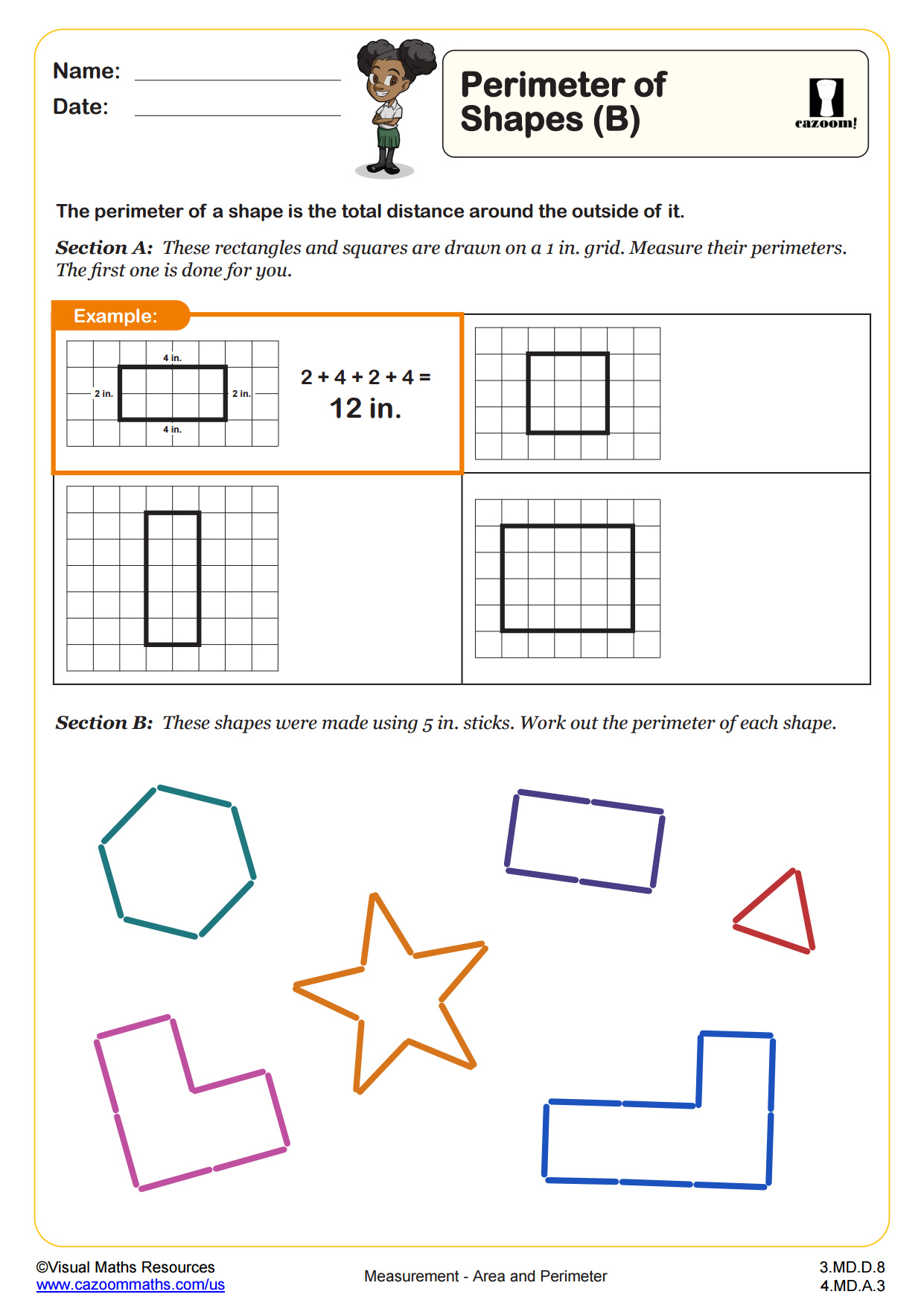
All worksheets are created by the team of experienced teachers at Cazoom Math.
What concepts do 4th grade area and perimeter worksheets cover?
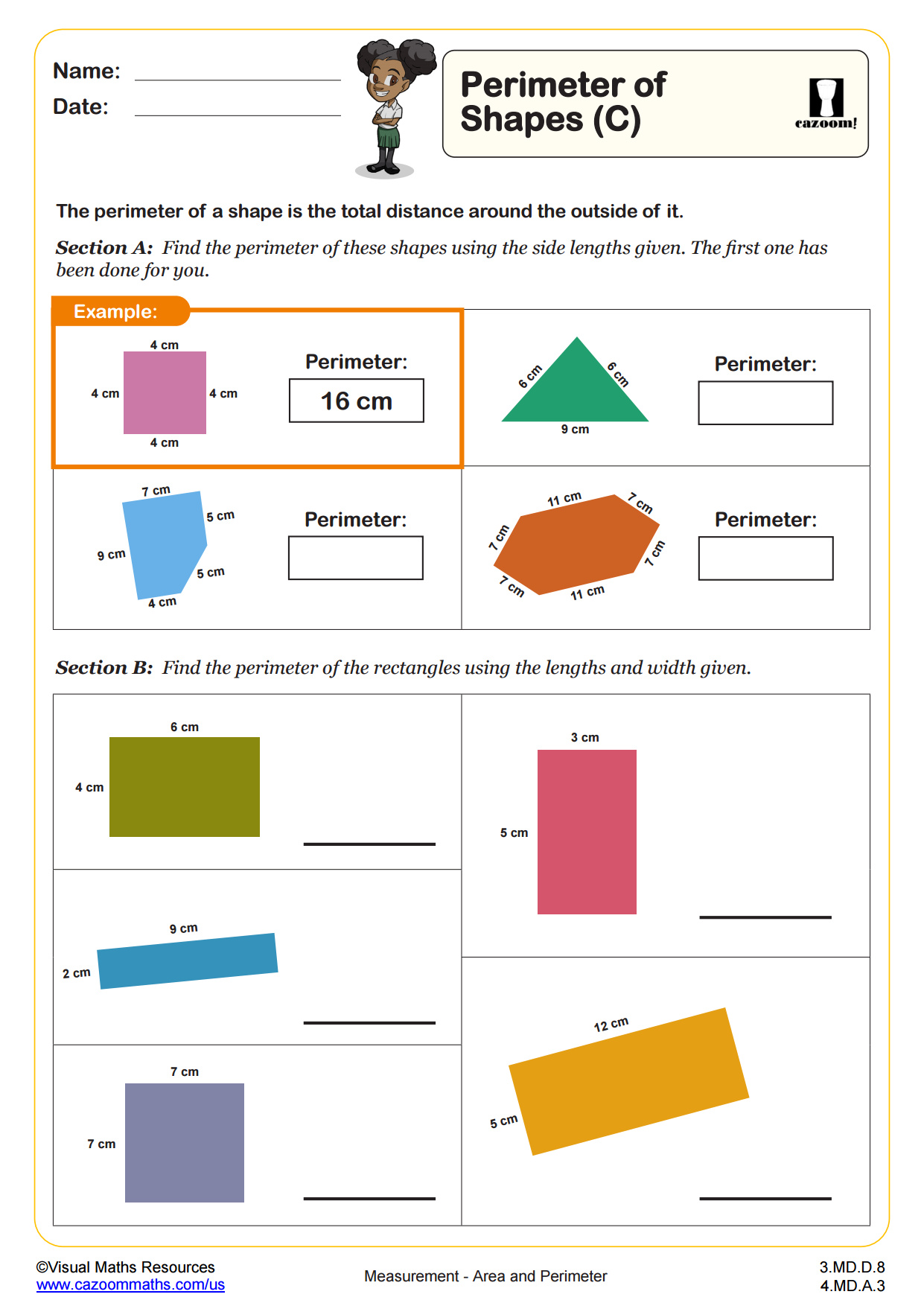
Fourth grade area and perimeter worksheets focus on rectangular shapes, aligning with Common Core Standard 4.MD.A.3 which requires students to apply area and perimeter formulas for rectangles. Students practice finding perimeter by adding all four sides and calculating area using length times width or by counting unit squares.
Many teachers observe that students initially struggle with distinguishing between these two measurements. The perimeter and area 4th grade worksheets include visual representations and word problems that help students connect the abstract formulas to concrete situations, such as finding how much fencing is needed around a playground versus how many tiles cover its surface.
Are these worksheets appropriate for students below or above 4th grade level?
While designed for fourth grade, these area and perimeter 4th grade resources can support differentiated instruction across grade levels. Advanced third graders who have mastered basic multiplication may benefit from the introductory problems, while struggling fifth graders can use these worksheets for remediation and confidence building.
Teachers find that the visual nature of area and perimeter problems makes them accessible to students with varying mathematical abilities. The worksheets progress from simple rectangles with whole number dimensions to more complex word problems, allowing educators to select appropriate challenges based on individual student needs rather than strictly adhering to grade-level expectations.
How do these worksheets help students understand the relationship between area and perimeter?
The worksheets include problems where students explore how shapes can have the same area but different perimeters, or vice versa. This helps fourth graders understand that area and perimeter measure different attributes and change independently when shape dimensions are altered.
Classroom experience shows that students often assume larger perimeters always mean larger areas. The 4th grade perimeter worksheets include comparison activities where students measure rectangles with identical areas but different perimeters, helping them recognize these as distinct mathematical concepts. This understanding becomes crucial in middle school geometry and real-world applications like optimizing garden layouts or construction projects.
What's the most effective way to use these area and perimeter worksheets in instruction?
Teachers report best results when introducing area and perimeter concepts through hands-on activities before moving to worksheet practice. Students benefit from physically measuring classroom objects or using manipulatives to build rectangles before calculating on paper.
The area worksheets 4th grade work well as guided practice during the initial learning phase, then as independent practice once students demonstrate conceptual understanding. Many educators use the answer keys to create self-checking stations or peer review activities, allowing students to identify their own mistakes and develop problem-solving persistence while freeing up teacher time for individualized support.