4th Grade Constructions Worksheets
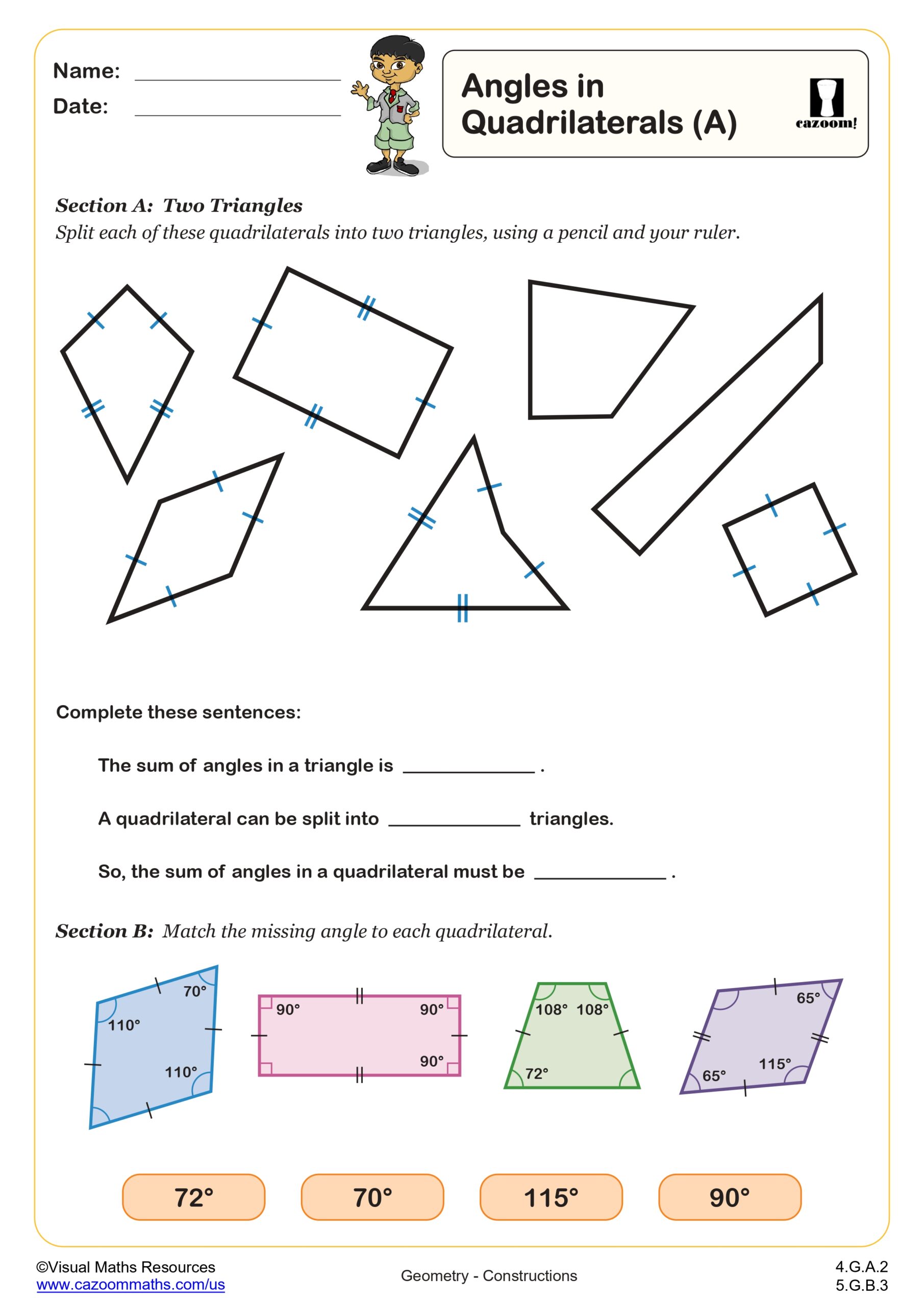
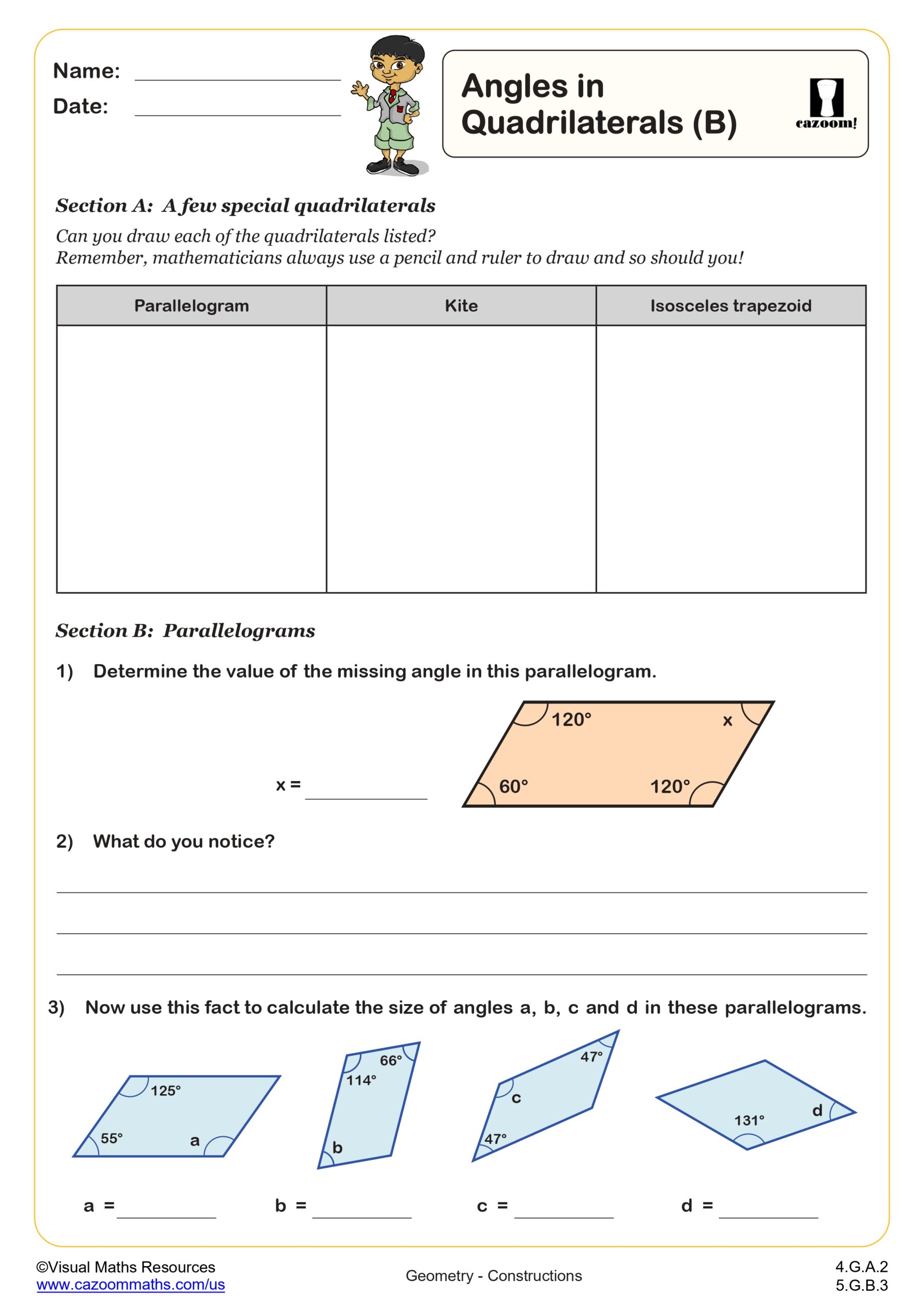
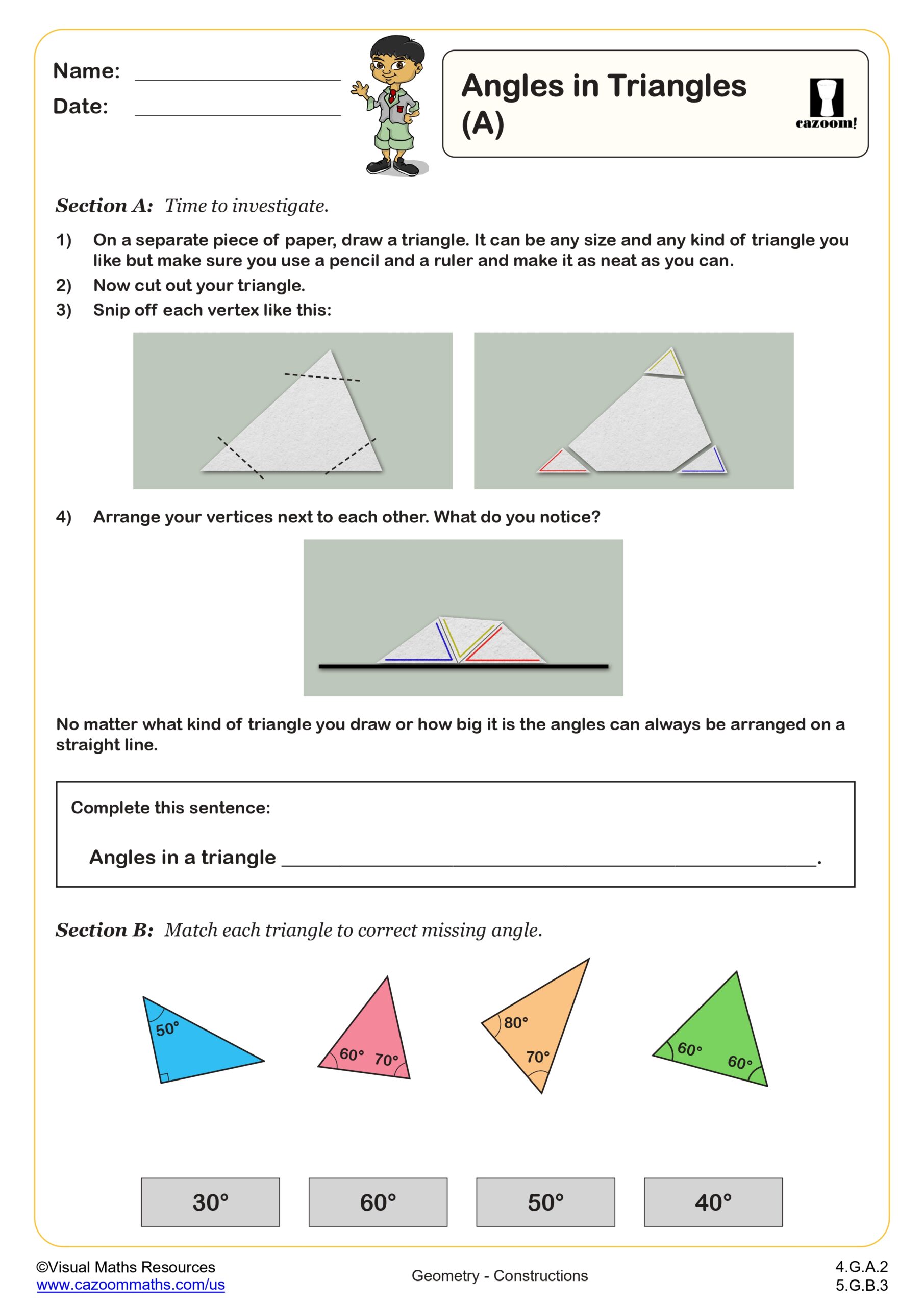
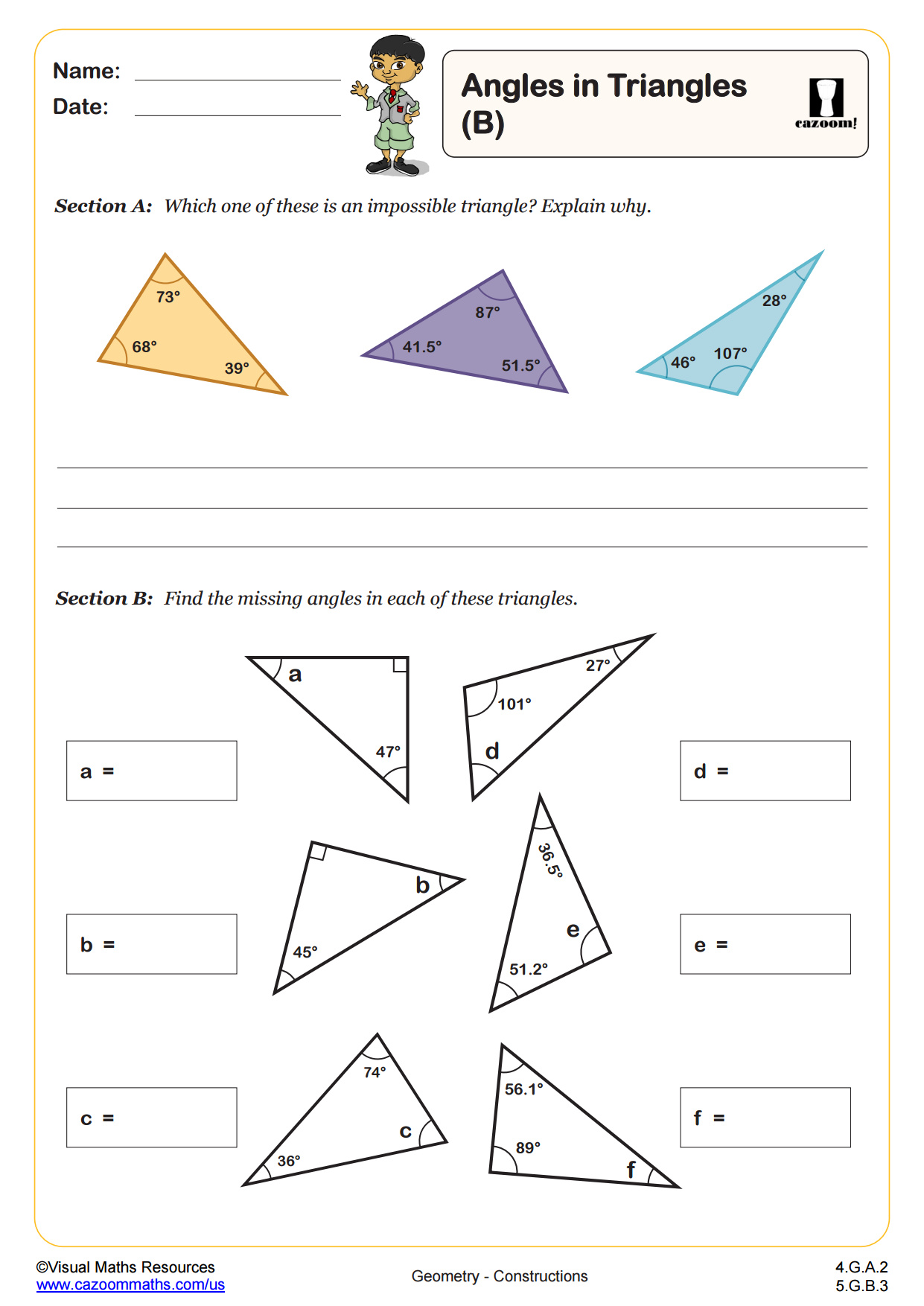
-7-9-11.jpg?w=3840)
-Combining-Test-%20for-Composite-Factors.jpg?w=3840)
All worksheets are created by the team of experienced teachers at Cazoom Math.
What Are Geometric Constructions in 4th Grade Math?
Geometric constructions are methods for creating precise shapes, lines, and angles using only a compass and straightedge, without relying on measurement markings. In 4th grade, students begin developing these foundational skills by learning to bisect angles, construct perpendicular lines, and create basic triangle configurations. This hands-on approach deepens understanding of geometric properties rather than simply measuring with a protractor.
Students often make the mistake of treating constructions like freehand drawing, leading to inaccurate results. Teachers notice that breakthrough happens when students recognize that each arc intersection creates a specific mathematical relationship—suddenly constructions shift from seeming arbitrary to making geometric sense. Practicing perpendicular bisectors, for instance, reinforces that every point on the bisector is equidistant from the endpoints, connecting visual construction to algebraic properties.
Which Grade Levels Cover Constructions Worksheets?
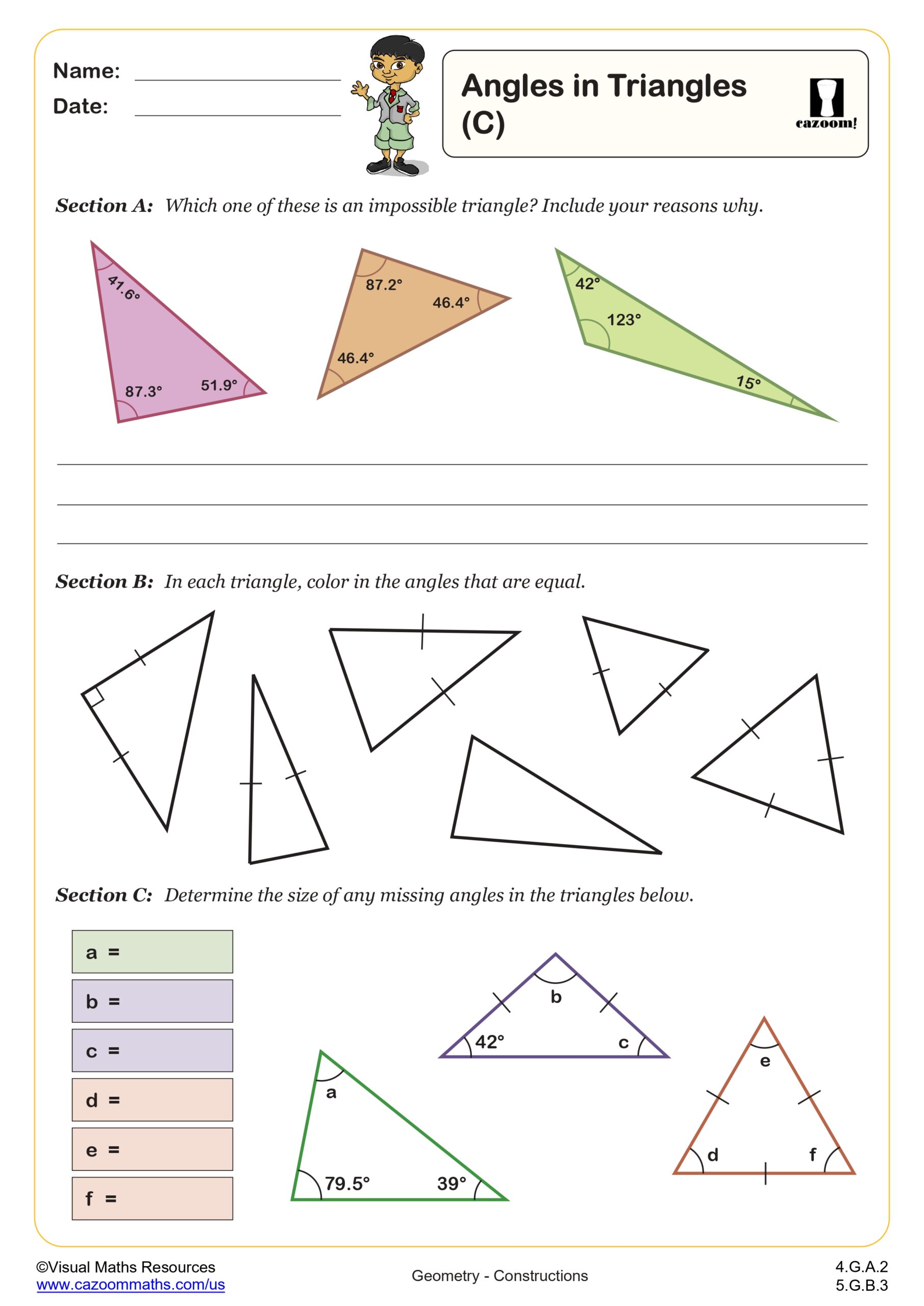
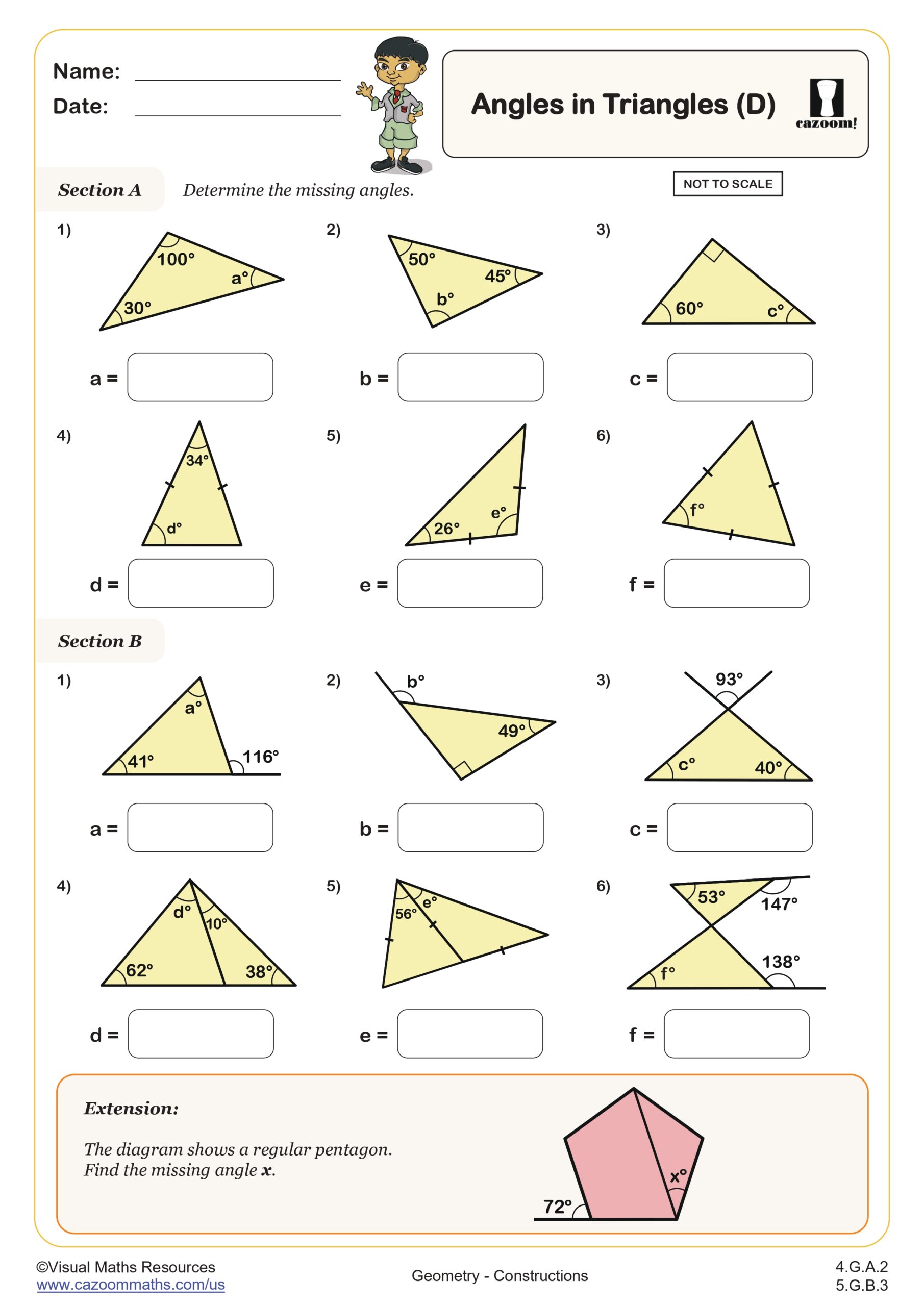
These construction worksheets target 4th grade students in elementary school, introducing compass-and-straightedge techniques alongside angle relationships in polygons. Fourth grade represents a pivotal year where students move beyond basic shape identification to understanding how geometric figures are built and how their parts relate mathematically. This aligns with Common Core standards emphasizing geometric reasoning and precise mathematical communication.
Within the 4th grade collection, difficulty progresses from isolated skills like constructing single perpendicular bisectors to more complex tasks involving multiple steps and triangle construction requirements. Early worksheets focus on bisecting one angle or line segment, while later practice combines these techniques—students might construct a triangle with specific angle measures, requiring them to apply bisector skills within a larger geometric challenge. This scaffolding prepares students for more formal geometric proofs in middle school.
How Do Students Construct Perpendicular Bisectors?
Constructing a perpendicular bisector involves using a compass to create two arcs from each endpoint of a line segment, then drawing a line through the intersection points of those arcs. This construction simultaneously divides the segment into two equal parts and creates a 90-degree angle at the midpoint. Students set their compass width to more than half the segment length, place the compass point on one endpoint, draw an arc above and below the segment, then repeat from the other endpoint.
This skill connects directly to real-world applications in engineering and architecture, where finding exact midpoints and right angles is critical. Surveyors use perpendicular bisector principles when establishing property boundaries, and designers rely on these constructions when creating symmetrical layouts. Understanding that bisectors locate points equidistant from two reference points explains how GPS triangulation determines location—the same mathematical principle students practice when their compass arcs intersect precisely.
How Should Teachers Use These Construction Worksheets?
The worksheets provide structured practice with varied problem types, allowing students to master individual construction techniques before tackling mixed practice that combines multiple skills. Answer keys show the expected construction marks—the arcs and auxiliary lines that prove the construction was completed correctly, not just the final shape. This helps teachers assess whether students understand the process or simply guessed at placements.
Many teachers use these worksheets for differentiated small group instruction, pairing students who grasp constructions quickly with those still developing compass control. The worksheets work well as follow-up practice after hands-on demonstration with physical tools, reinforcing the connection between technique and geometric properties. Teachers also assign specific worksheets as homework when students need additional repetition with perpendicular bisectors or triangle construction before assessments, using answer keys to help students self-check their precision and identify where their technique needs adjustment.