4th Grade Estimation Worksheets
All worksheets are created by the team of experienced teachers at Cazoom Math.
What topics do rounding and estimating worksheets for grade 4 PDF cover?
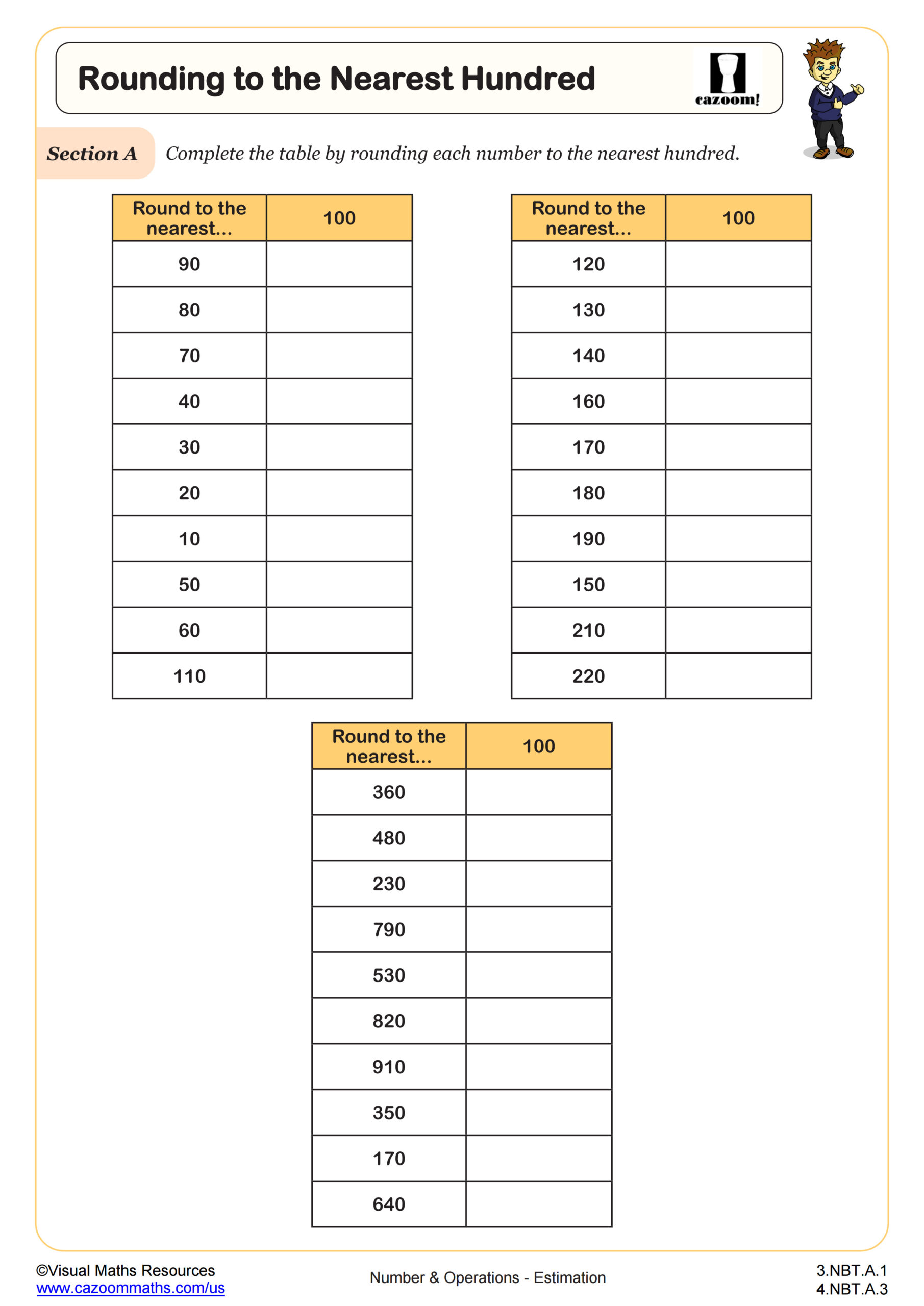
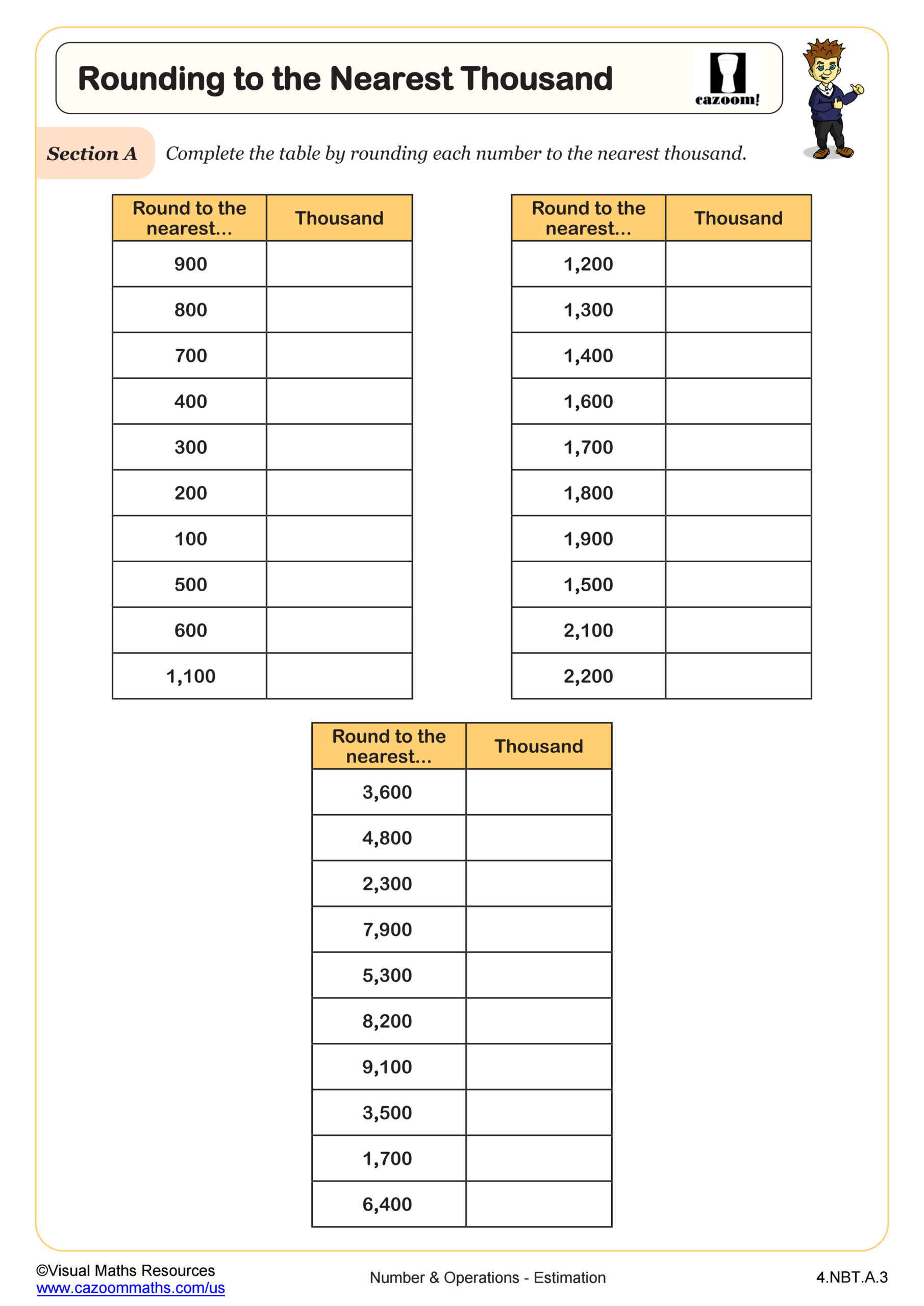
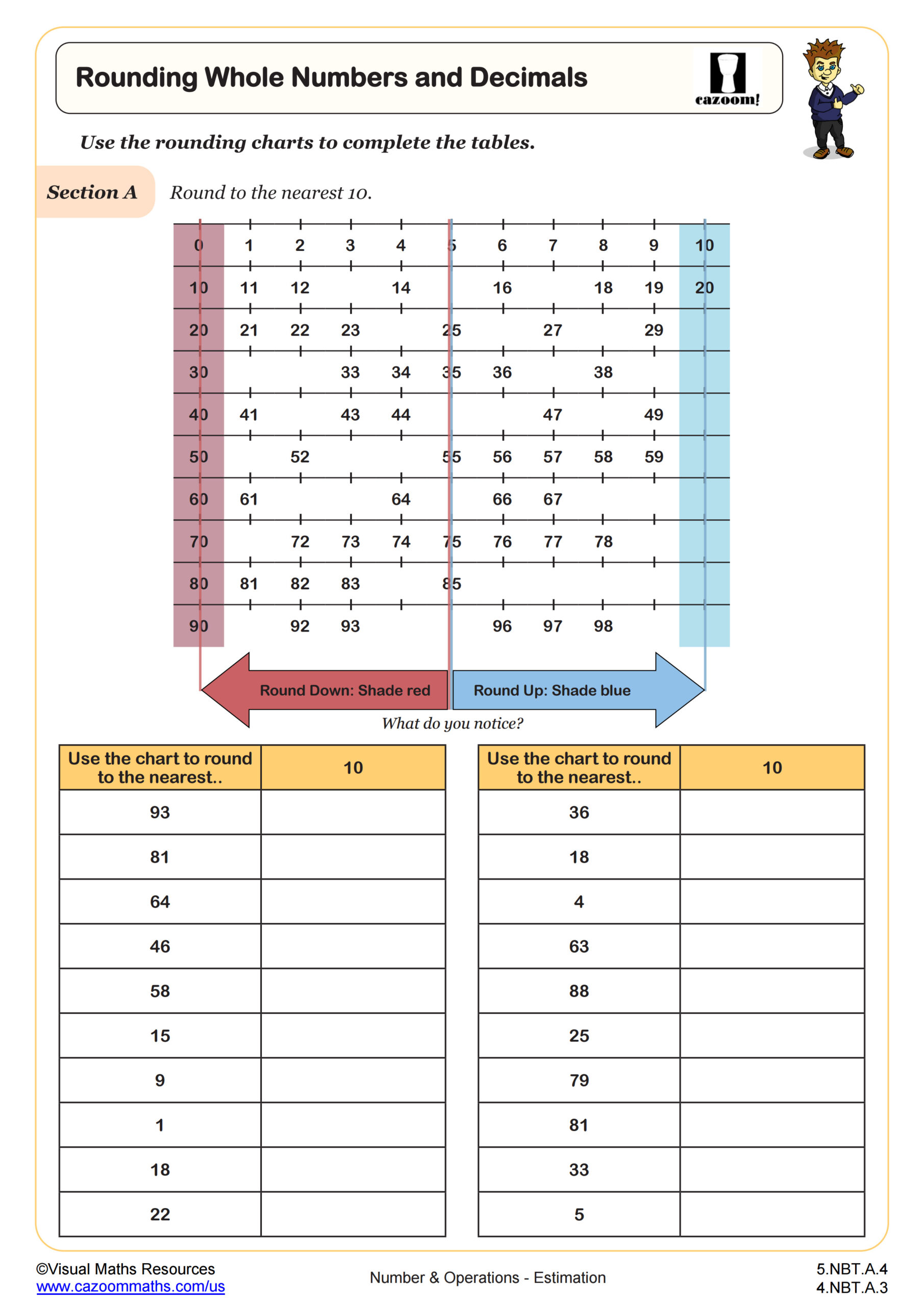
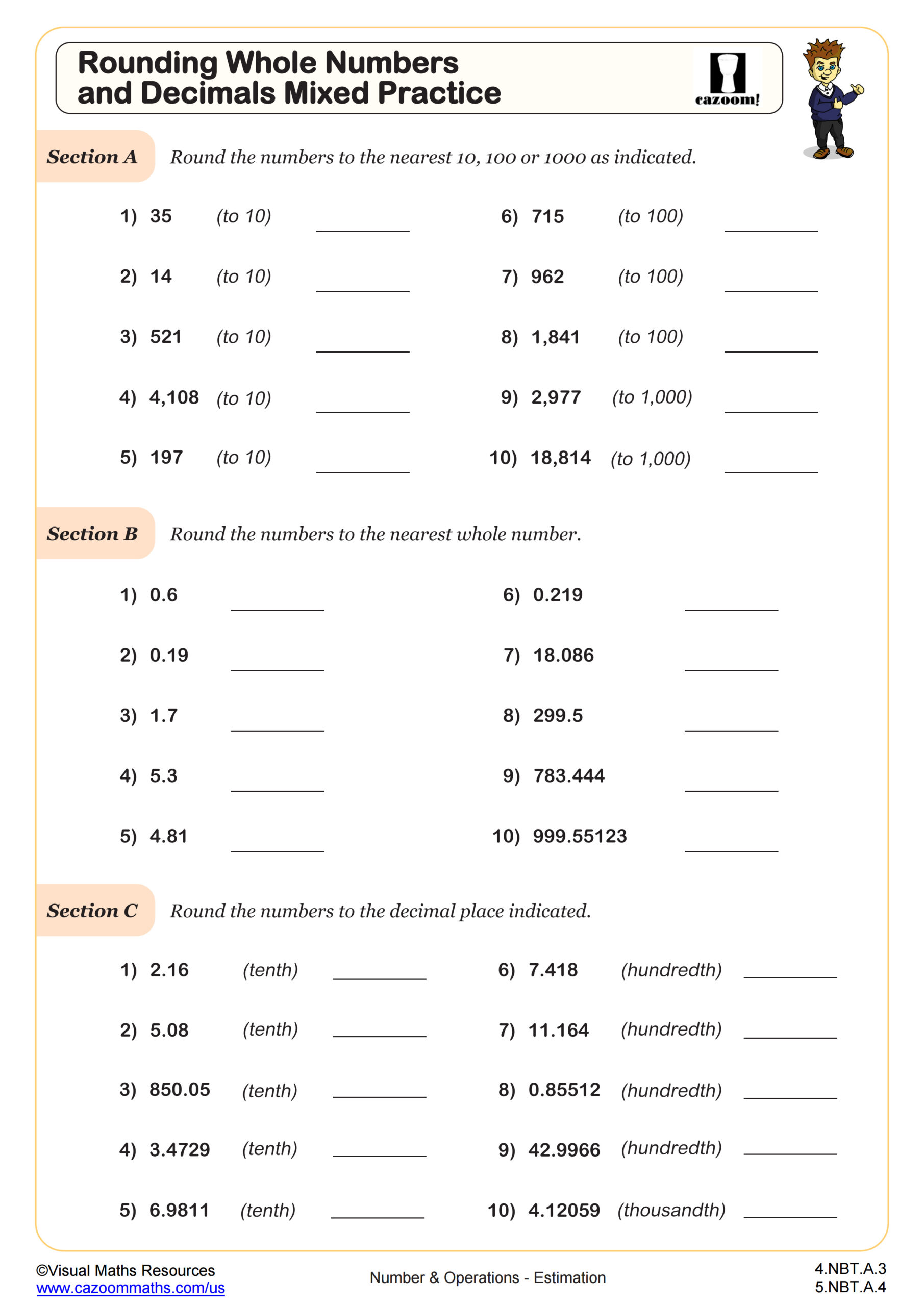
Grade 4 rounding and estimation worksheets align with Common Core standards 4.NBT.3, covering rounding multi-digit whole numbers to any place value and using rounding for estimation in problem-solving contexts. Students practice rounding numbers to the nearest 10, 100, and 1,000, plus estimation strategies for addition, subtraction, multiplication, and basic division problems.
Estimation word problems 4th grade worksheets often feature scenarios like estimating grocery costs, travel distances, or attendance figures at school events. Teachers frequently observe that students initially round every number in a problem rather than identifying which numbers benefit most from estimation, making explicit instruction about when and why to estimate particularly valuable for building mathematical reasoning skills.
How does 4th grade estimation differ from earlier grade levels?
Fourth grade estimation builds on third grade rounding to the nearest 10 and 100 by introducing rounding to the nearest 1,000 and applying estimation strategies to larger, more complex problems. Students move beyond basic rounding practice to using estimation as a problem-solving tool, particularly for checking the reasonableness of calculated answers in multi-step problems.
The complexity increases significantly as students encounter numbers in the thousands and begin estimating products and quotients, not just sums and differences. Teachers notice that 4th graders benefit from explicit instruction about compatible numbers and front-end estimation strategies, as these concepts require more sophisticated number sense than the straightforward rounding rules learned in earlier grades.
What estimation strategies do these worksheets teach beyond basic rounding?
Beyond standard rounding rules, these estimation grade 4 worksheets introduce compatible numbers, front-end estimation, and clustering strategies that help students make reasonable approximations quickly. Students learn to identify numbers that are easy to work with mentally, such as changing 48 × 22 to 50 × 20 for easier calculation.
Front-end estimation focuses on the leftmost digits to get quick approximations, while clustering works well when several numbers are close to the same value. Teachers observe that students initially resist these flexible strategies, preferring rigid rounding rules, but with practice they recognize how different situations call for different estimation approaches, particularly in real-world contexts like calculating tips or comparing shopping prices.
How should teachers use these 4th grade estimation worksheets most effectively?
Teachers find success when they begin each estimation lesson by discussing why the skill matters in everyday situations, then model the thinking process aloud before students tackle independent practice. Starting with concrete examples like estimating classroom supplies or lunch money helps students understand estimation as a practical tool rather than just another math rule to memorize.
The answer keys prove valuable for student self-checking and peer review activities, allowing teachers to focus on circulating and addressing misconceptions about place value and strategy selection. Many teachers incorporate estimation warm-ups using these worksheets throughout the year, as regular practice helps students maintain fluency with number sense concepts that support all other mathematical operations and problem-solving scenarios.