4th Grade Foundations of Multiplication Worksheets
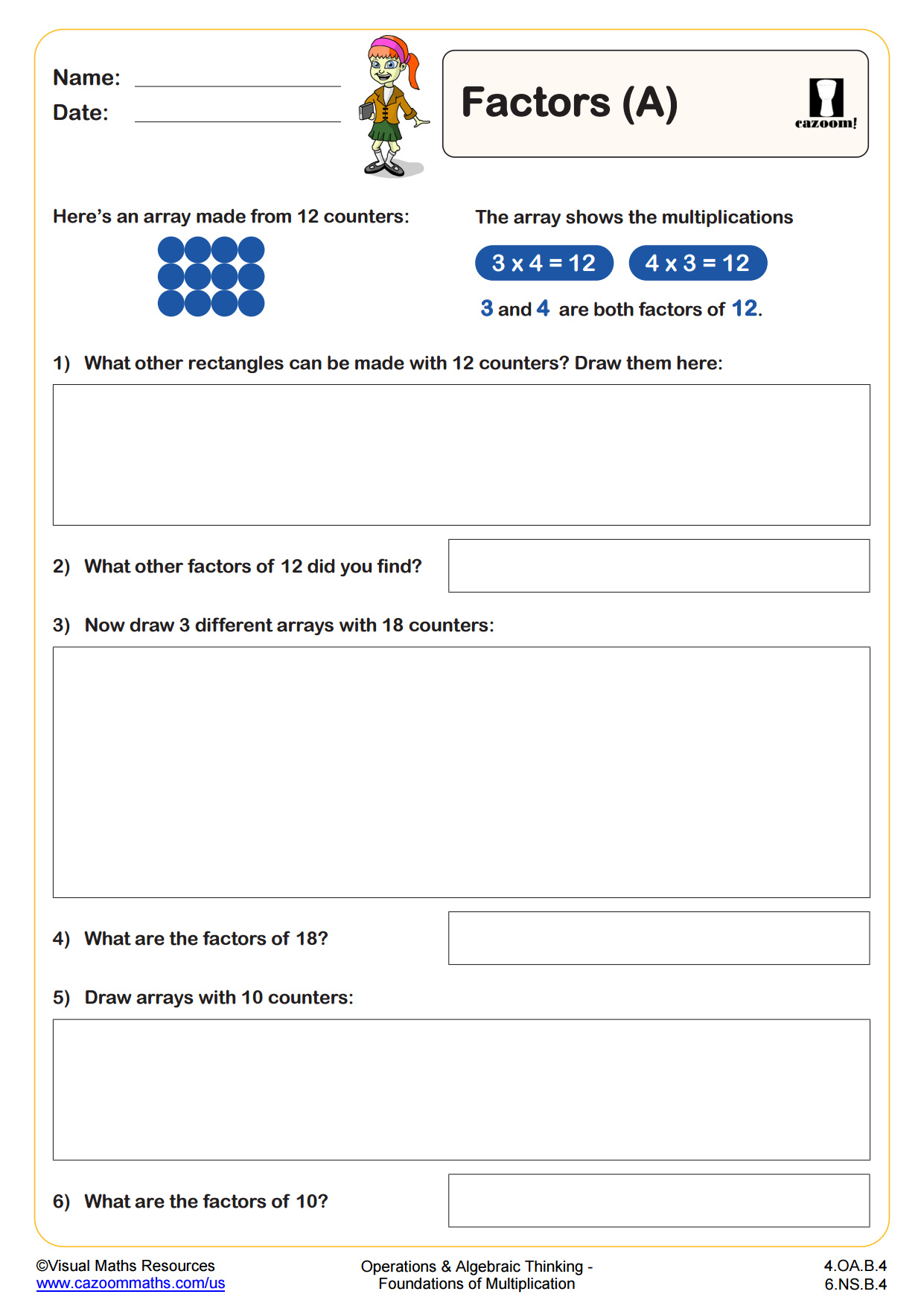
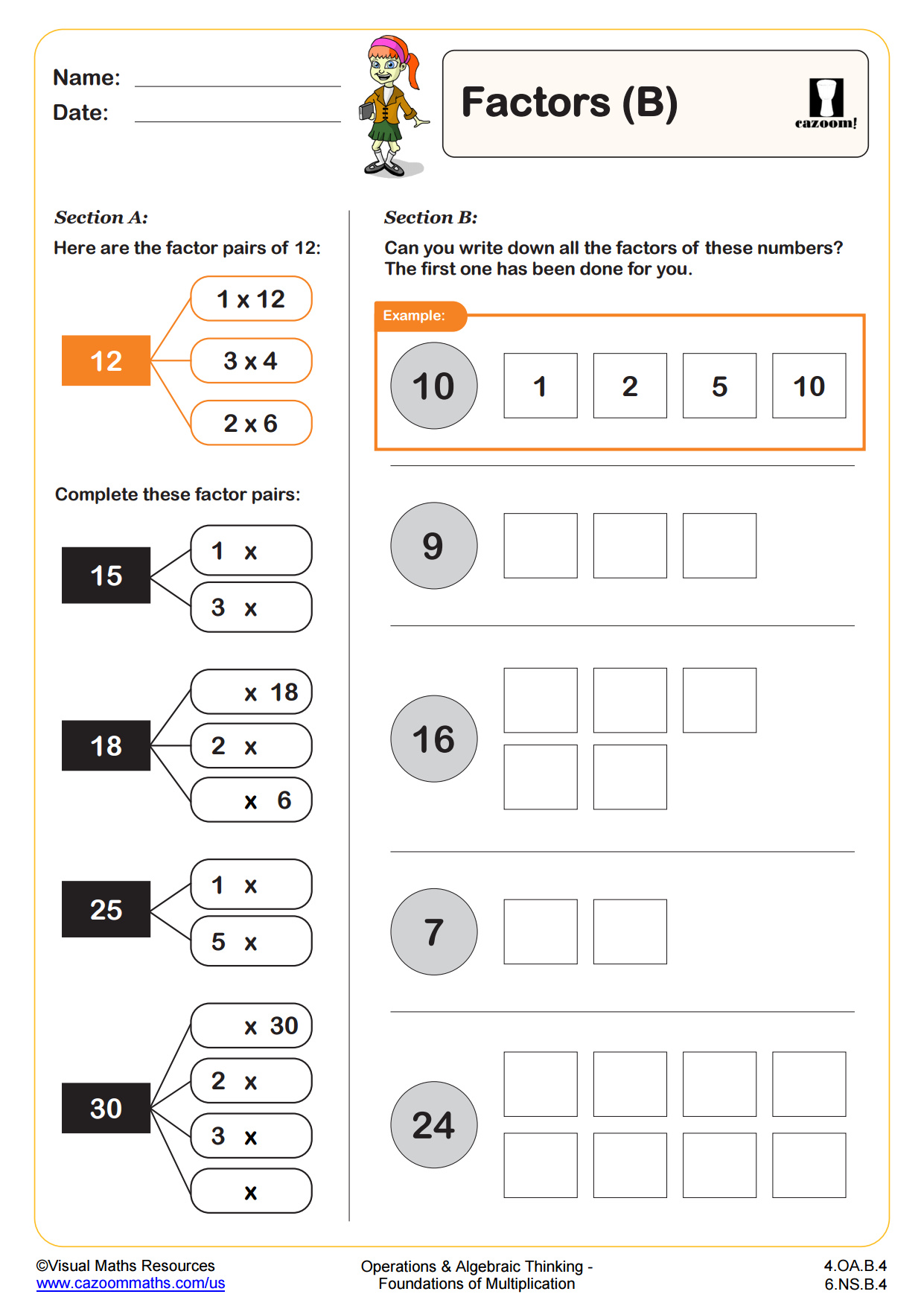
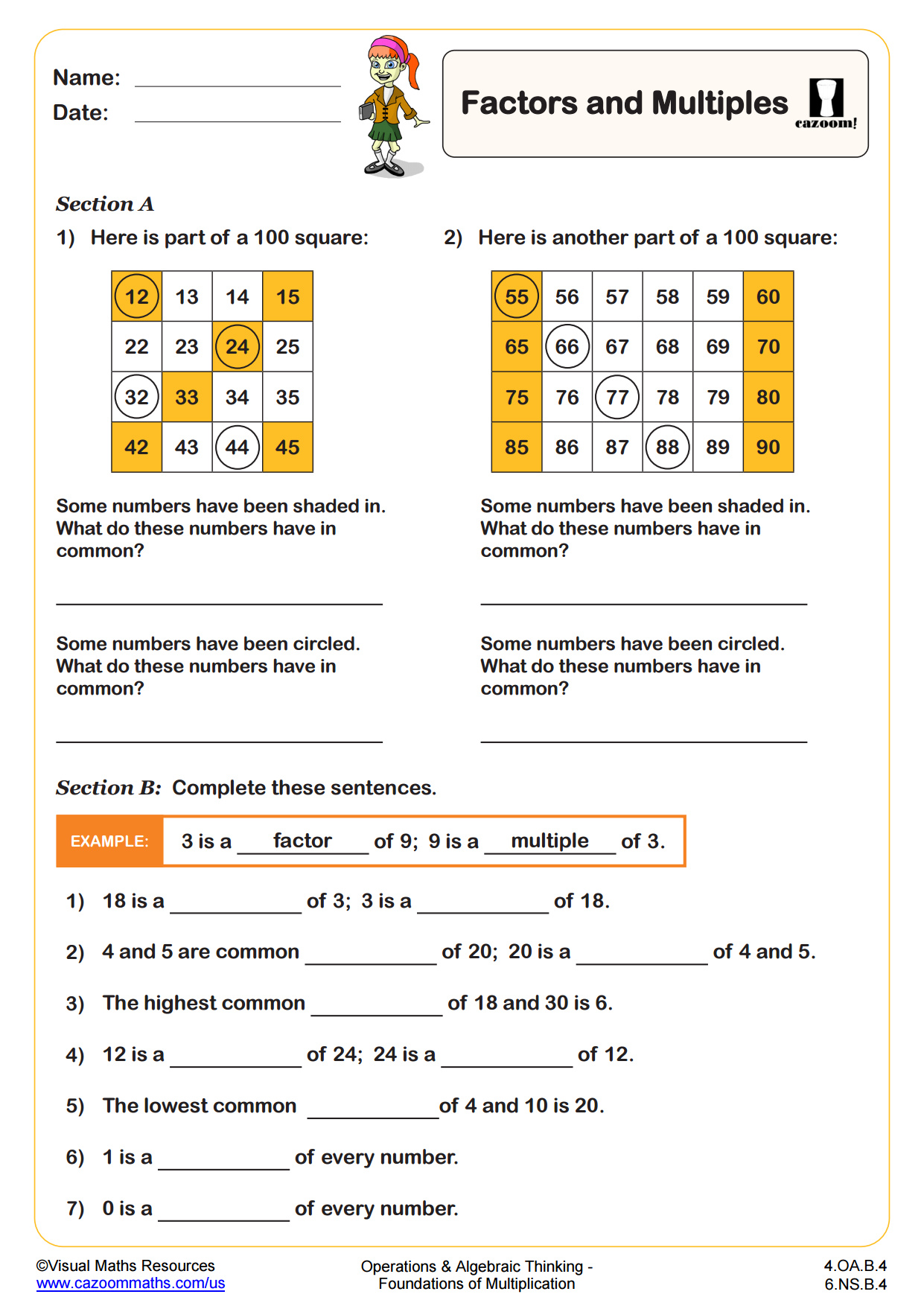
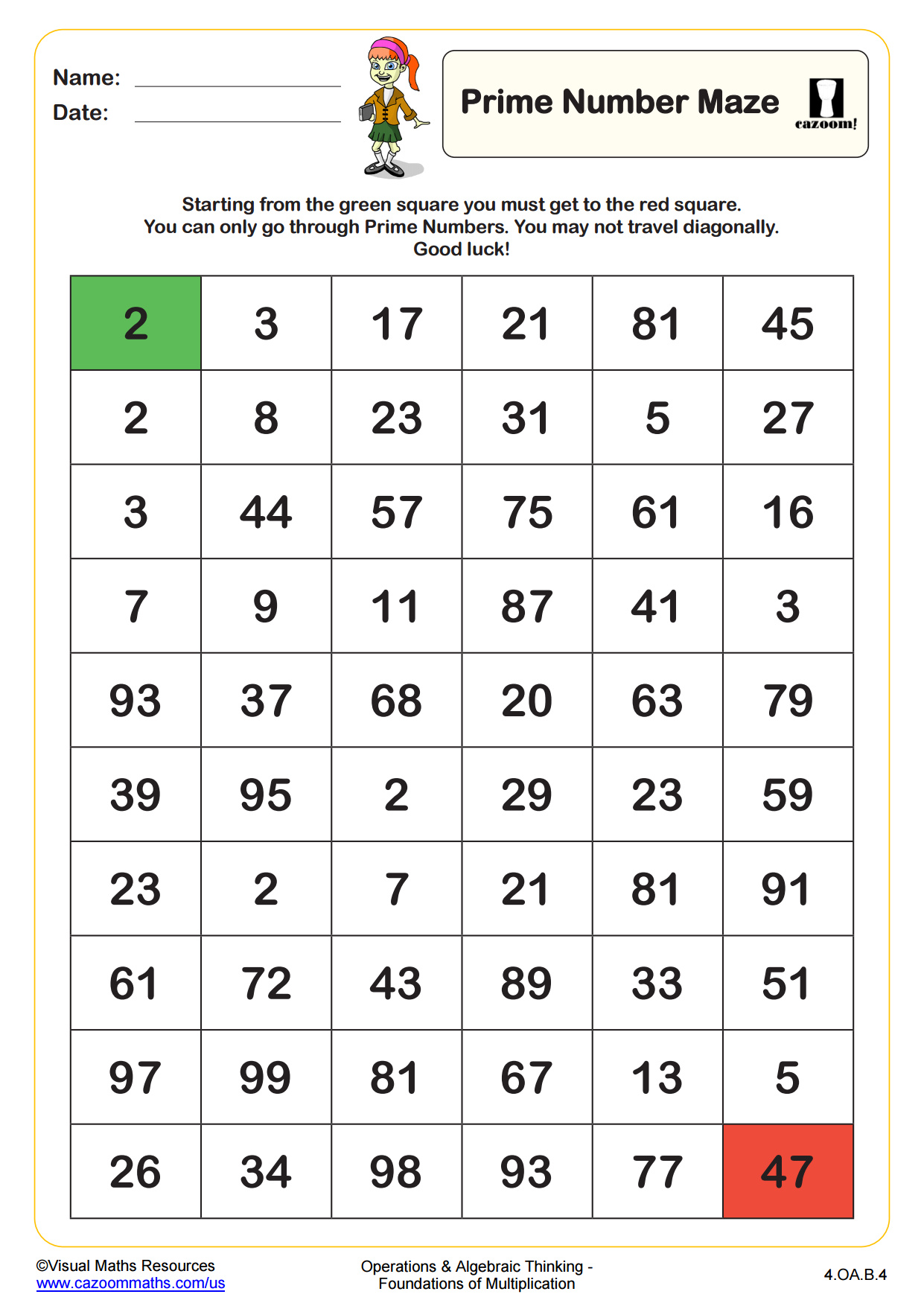
All worksheets are created by the team of experienced teachers at Cazoom Math.
What are the foundations of multiplication and why do fourth graders need them?
The foundations of multiplication include understanding factors, multiples, factor pairs, and multiplication table patterns that extend beyond basic recall. Fourth graders build on their earlier memorization of times tables to explore the relationships between numbers, recognizing that multiplication is about more than getting the right answer—it's about understanding why numbers relate the way they do. This deeper understanding prepares students for multi-digit multiplication, division with remainders, and eventually fractions and area models.
Students often lose points on standardized tests when asked to find all factors of a number because they list factors randomly rather than systematically pairing them (1 and 24, 2 and 12, 3 and 8, 4 and 6 for the number 24). Teaching students to work through factor pairs in order prevents them from missing factors and builds organizational skills that transfer to more complex problem-solving later.
Which grade levels use foundations of multiplication worksheets?
These worksheets target fourth grade students in elementary school, aligning with the grade level where students transition from memorizing multiplication facts to analyzing the structure and properties of multiplication. Fourth grade marks the point in the Common Core State Standards where students explore factors, multiples, and patterns in multiplication tables as mathematical concepts rather than just computation tools.
While third graders focus primarily on fluency with multiplication facts up to 10 × 10, fourth graders examine why those facts work and how they connect to other operations. Students move from "What is 6 × 7?" to questions like "What are all the factor pairs of 42?" and "Which numbers have exactly two factors?" This progression develops number sense that supports fraction work, prime factorization, and algebraic thinking in later grades.
How do factor pairs help students understand multiplication?
Factor pairs are two numbers that multiply together to produce a specific product, such as 3 and 8 being a factor pair of 24. Understanding factor pairs helps students see multiplication as a relationship between numbers rather than isolated facts to memorize. When students recognize that every multiplication fact has a corresponding division fact (if 5 × 6 = 30, then 30 ÷ 5 = 6), they build flexibility in solving problems and checking their work.
This concept connects directly to real-world applications in architecture and design. When planning a rectangular garden with 36 square feet, students can list all factor pairs of 36 to find possible dimensions: 1×36, 2×18, 3×12, 4×9, or 6×6. Engineers use the same thinking when designing solar panel arrays or determining how to arrange items efficiently in manufacturing. Understanding that the same area can have different dimensions builds spatial reasoning essential for STEM careers.
How should teachers use these multiplication foundations worksheets?
These worksheets provide scaffolded practice that moves from concrete factor identification to more abstract pattern recognition across multiplication tables. The variety of worksheet types—from factor puzzles to systematic factor listing—allows teachers to differentiate instruction based on student readiness. Students who still struggle with basic recall benefit from worksheets that reinforce multiplication tables, while students ready for challenge can tackle factor pair puzzles that require strategic thinking and organization.
Many teachers use these worksheets during math centers, pairing struggling students with partners who can explain their thinking process aloud. The answer keys make these ideal for intervention periods where students work independently while the teacher supports small groups. Teachers also assign specific worksheets for homework based on errors noticed during class—if several students miss problems involving finding all factors, targeted practice helps address the gap before moving to prime and composite numbers or fraction simplification.